Connect with us

Published

on

August 19 began with Australia trying to save its Women’s Hockey World Cup campaign and ended with Belgium surviving a Malaysian challenge that came much closer to an upset than the final score suggested.

In between, the FIH Hockey World Cup produced one of its busiest and most revealing days yet.

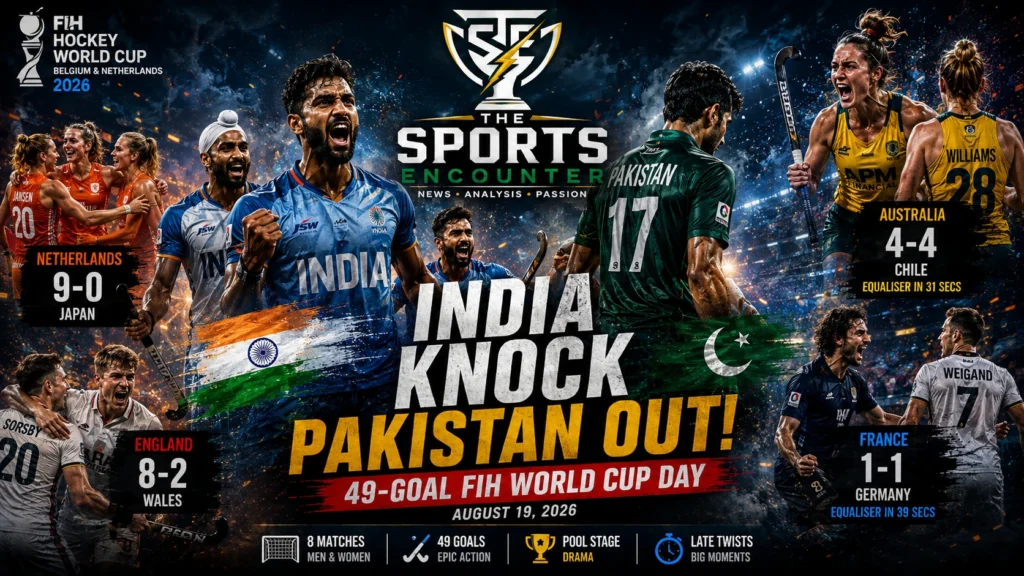
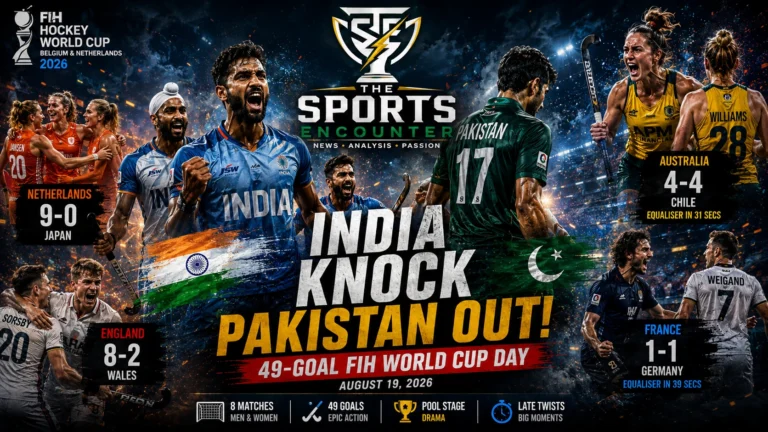
Eight matches across the men’s and women’s tournaments delivered 49 goals. The Netherlands women scored nine of them. England’s men added eight. India and Pakistan revived one of international hockey’s fiercest rivalries with eight more between them. Chile came within 31 seconds of beating Australia, while France waited until the final 39 seconds to deny defending men’s champions Germany victory.

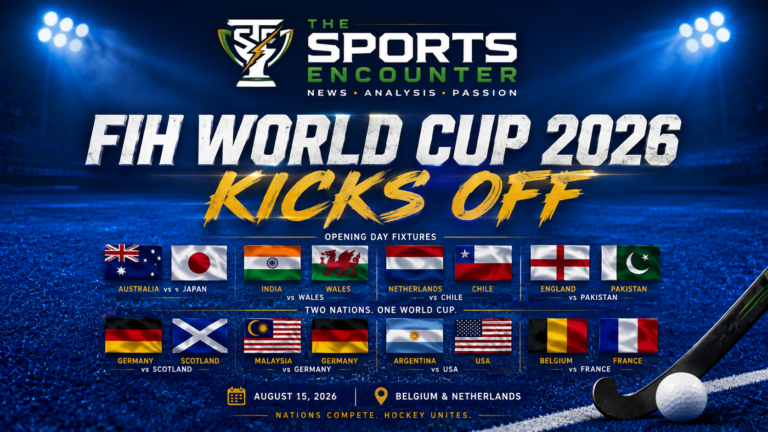
By the end of Wednesday, the picture had also become much clearer. Pool A and Pool B were settled in the women’s competition, while Pools B and D reached their conclusions on the men’s side. Under the 2026 format, the top two teams from each opening pool advance to the Second Stage and remain in championship contention, while the bottom two move into the Classification Stage.

The official FIH Hockey World Cup 2026 tournament center provides the full schedule, standings and match information as the competition moves forward.

For readers following hockey across its different international forms, The Sports Encounter’s hockey coverage hub tracks the sport’s major competitions, players and wider storylines.

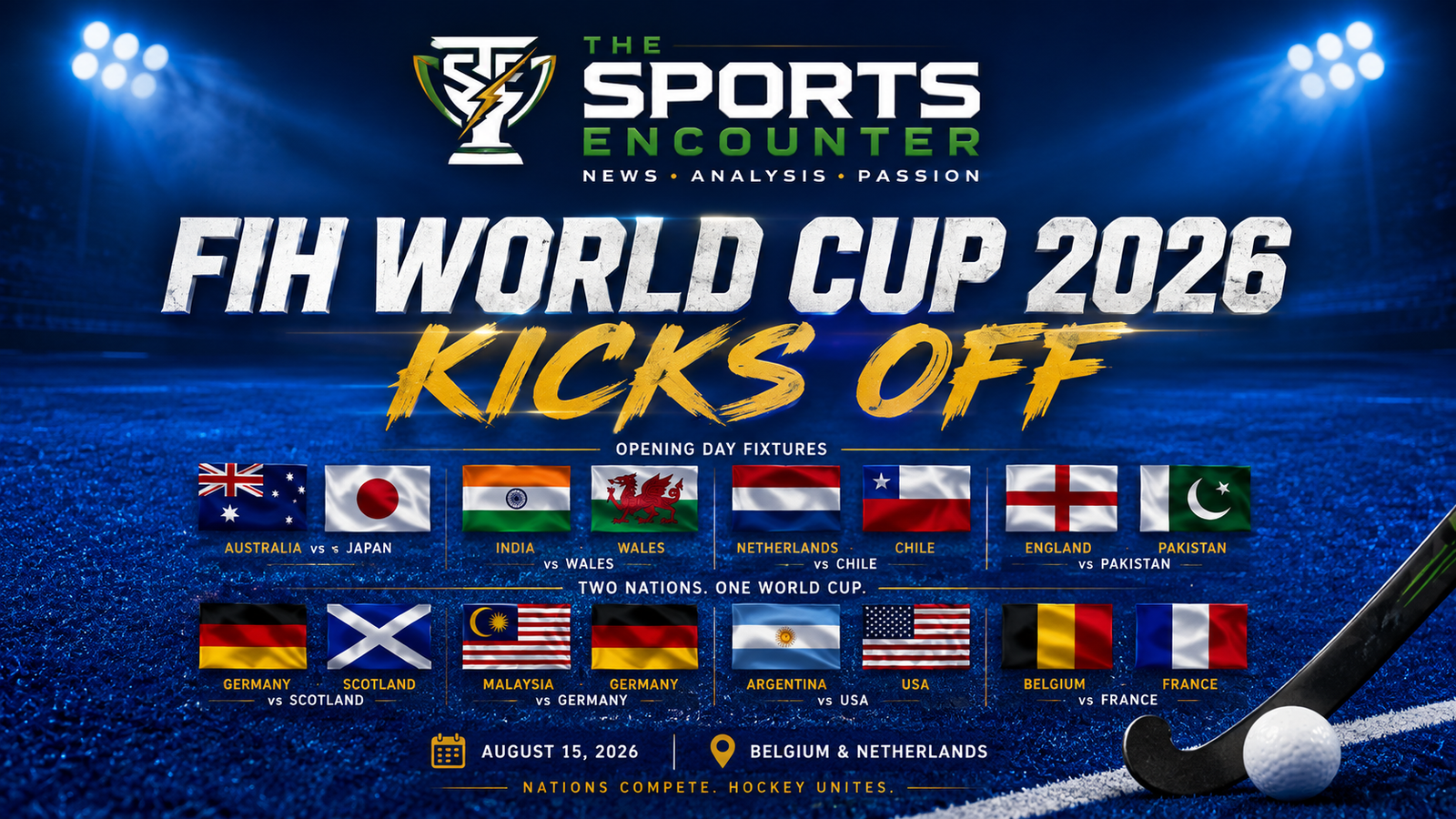
FIH Hockey World Cup 2026: August 19 Results

CompetitionPoolMatchResultPlayer of the Match
WomenAChile vs Australia4-4Mariah Williams, Australia
WomenBArgentina vs ScotlandArgentina 2-0Victoria Miranda, Argentina
WomenBUnited States vs GermanyGermany 3-1Jette Fleschütz, Germany
WomenANetherlands vs JapanNetherlands 9-0Luna Fokke, Netherlands
MenDEngland vs WalesEngland 8-2Tom Sorsby, England
MenDPakistan vs IndiaIndia 5-3Abhishek, India
MenBFrance vs Germany1-1Michel Struthoff, Germany
MenBBelgium vs MalaysiaBelgium 5-3Tom Boon, Belgium

Those results were confirmed in the official FIH August 19 tournament review.

Women’s World Cup: Netherlands Turn Pool A Into a Warning

The Netherlands did considerably more than win Pool A.

They made another statement about the gap their best hockey can create.

Japan ran into the full force of the defending champions in Amstelveen and lost 9-0. The Dutch were already five goals clear by halftime before adding four more after the break.

Yibbi Jansen produced the day’s most destructive individual scoring performance.

She scored four.

Marijn Veen and Felice Albers contributed two goals each, while Frederique Matla completed the scoring.

Japan goalkeeper Akio Tanaka still made several excellent saves, which tells its own story about the volume and quality of Dutch pressure.

Yibbi Jansen Gives the Netherlands Another Route to Goal

Scoring four goals in a World Cup match would dominate almost any individual performance discussion.

What makes Jansen’s contribution more concerning for the Netherlands’ rivals is the attack around her.

The Dutch did not rely on a single scorer to manufacture nine goals. Veen and Albers both struck twice. Matla also scored. Japan had to defend threats coming from several areas while Jansen repeatedly punished them.

The result completed a perfect opening phase for the Netherlands and sent them into the Second Stage as Pool A winners.

Australia advanced alongside them in second place.

That second outcome only became secure after a match that nearly went badly wrong for the Hockeyroos.

Chile 4-4 Australia: Thirty-One Seconds Save the Hockeyroos

Australia’s tournament was moving toward a very different conversation when the clock entered its final minute.

Chile led 4-3.

Then Mariah Williams found the loose ball that kept Australia alive.

Her equalizer came with only 31 seconds remaining and completed one of the most dramatic matches of the tournament so far.

Courtney Schonell had initially put Australia ahead just 11 seconds before halftime. Laura Müller equalized early in the third quarter before Abigail Wilson converted a penalty stroke to restore the Hockeyroos’ advantage.

Australia then lost control of both its discipline and the match.

At one stage, the Hockeyroos were reduced to nine players. Chile removed its goalkeeper to create an even larger numerical advantage and Manuela Urroz converted that pressure into a 47th-minute equalizer.

Claire Colwill made it 3-2 to Australia from a penalty corner five minutes later.

Chile responded again.

Florencia Barrios scored her first senior international goal to make it 3-3 before Fernanda Villagran converted a penalty stroke in the 55th minute.

For the first time all afternoon, Chile led.

They were half a minute from a famous victory when Williams reacted fastest inside the circle and made it 4-4.

Why the Draw Mattered More Than the Score Suggests

Australia’s equalizer eventually proved sufficient to send the Hockeyroos through in second place after the Netherlands completed their rout of Japan.

Yet qualification should not disguise the warning.

Australia repeatedly lost leads, suffered costly disciplinary problems and allowed Chile to dictate the final-quarter pressure.

The Hockeyroos survived. The next stage may not be so forgiving.

Argentina 2-0 Scotland: Las Leonas Win Pool B Without Needing Their Best Hockey

Argentina’s 2-0 victory over Scotland carried a different tone.

There was little chaos and no nine-goal explosion.

Las Leonas simply found the moments they needed.

Scotland began positively, but María Granatto punished Argentina’s first significant opening by converting from a penalty corner in the 11th minute.

Argentina increasingly controlled the match during the second quarter without adding another goal.

Lara Casas finally created separation in the 41st minute, scrambling the ball home from close range.

The victory eventually secured first place in Pool B for Argentina.

That is important because World Cups are rarely won by playing at maximum intensity in every pool match. Championship teams learn how to win games that never fully open up.

Argentina did exactly that.

Germany 3-1 USA: Fleschütz Wins the Pool B Qualification Fight

Germany and the United States entered their meeting with considerably more at stake.

Second place in Pool B was effectively on the table.

Germany took it.

Jette Fleschütz opened the scoring from a penalty stroke in the 20th minute. Lisa Nolte doubled Germany’s advantage early in the second half.

The Americans refused to disappear.

Ashley Sessa produced an outstanding individual goal to reduce the deficit and briefly reopen the contest.

Germany’s response was immediate enough to prevent the match from changing direction.

Fleschütz converted another penalty stroke four minutes later to complete her brace and restore the two-goal advantage.

Germany won 3-1 and finished second behind Argentina.

Women’s Pool A and Pool B Winners

PoolWinnerSecondWhat Happened August 19
ANetherlandsAustraliaNetherlands beat Japan 9-0; Australia drew Chile 4-4
BArgentinaGermanyArgentina beat Scotland 2-0; Germany beat USA 3-1

Men’s World Cup: England Produce the Day’s First Avalanche

Before the Netherlands women scored nine, England’s men had already set the attacking standard.

Wales were beaten 8-2 in a Pool D match that England controlled almost from the opening whistle.

Sam Ward scored after two minutes.

Will Calnan then struck twice in seven minutes, pushing the lead to 3-0 before Wales had found any meaningful control.

Tom Sorsby added the fourth in the 22nd minute.

Zach Wallace made it 5-0 during the third quarter.

England were still not finished.

Three more goals arrived between the 48th and 54th minutes as Wales’ defense finally gave way under sustained pressure.

Goalkeeper Toby Reynolds-Cotterill prevented the score from becoming even more severe with a series of saves.

Gareth Furlong scored twice for Wales in the final three minutes, but those goals could only soften the margin.

England had already made its point.

An 8-2 victory gave them first place in Pool D and reinforced their status as one of the early men’s teams capable of creating goals in clusters.

India 5-3 Pakistan: The Rivalry Delivers, but India’s Start Decides It

The match carrying the greatest emotional weight on Wednesday was never difficult to identify.

India against Pakistan remains one of hockey’s defining rivalries, carrying decades of Olympic history, World Cup memories and regional sporting tension.

The 2026 meeting produced eight goals.

India won 5-3.

The decisive damage came early.

Harmanpreet Singh opened the scoring from a penalty corner. Abhishek doubled the advantage before Harmanpreet struck again to make it 3-0.

Pakistan suddenly faced a problem larger than simply chasing the game. They had to do so against an opponent with enough control to punish the spaces created by that chase.

Pakistan found one response.

Abhishek quickly answered with his second goal, restoring India’s three-goal cushion at 4-1.

Sufyan Khan then hammered home a drag flick for Pakistan to make it 4-2.

Any realistic comeback needed Pakistan to score next.

Instead, Hardik Singh converted a penalty stroke early in the second half and India were 5-2 ahead.

Hannan Shahid scored his second goal during the final quarter, but Pakistan could not complete the recovery.

India held on for a 5-3 victory and second place in Pool D behind England.

Abhishek Earns Player of the Match

Harmanpreet’s penalty-corner work gave India early authority, but Abhishek’s contribution changed the match’s shape.

His first goal stretched the lead. His second arrived after Pakistan had finally found a response.

That second strike mattered particularly because rivalry matches can change emotionally after one goal.

Pakistan had a route back at 3-1.

Abhishek closed it almost immediately.

FIH named him Player of the Match.

France 1-1 Germany: Thirty-Nine Seconds Change the Pool B Finish

Germany were 39 seconds from ending their opening stage with another victory.

France refused to accept it.

Justus Weigand had put the defending champions ahead in the 42nd minute after Thies Prinz’s effort found him positioned in front of goal.

Germany carried that 1-0 lead deep into the final quarter.

France then made the gamble teams increasingly use when a tournament result is slipping away.

The goalkeeper came off.

An extra outfield player went on.

Germany were also reduced to 10 players, creating the opening France needed.

Louis Haertelmeyer finally found it.

With 39 seconds left, his upright reverse-stick finish beat the German defense and rescued a 1-1 draw.

Germany still finished first in Pool B, but France had denied the defending champions a clean ending to the phase.

Belgium 5-3 Malaysia: Tom Boon Scores Four, but Malaysia Refuse to Fold

The final match of August 19 looked comfortable on paper.

World No. 1 Belgium beat Malaysia 5-3.

The match itself was considerably less comfortable.

Tom Boon scored four goals for Belgium, producing the men’s individual performance of the day. Thibeau Stockbroekx supplied Belgium’s other goal.

Malaysia kept creating enough pressure to stop the contest from becoming routine.

Aiman Rozemi scored while making his 200th appearance for Malaysia, giving his milestone night a World Cup goal against one of the tournament favorites.

More importantly, Malaysia had an opportunity to make the finish even more uncomfortable.

A penalty stroke in the closing minutes went unconverted.

Belgium survived and secured a 5-3 victory, confirming second place in Pool B behind Germany.

Tom Boon’s Four Goals Carry More Weight Than the Final Margin

Belgium needed Boon’s finishing because Malaysia kept asking questions.

That makes his four-goal performance more valuable than a similar total accumulated during a one-sided rout.

Belgium’s wider championship credentials will be tested later, but elite tournaments often turn on whether a leading scorer can convert difficult matches into victories.

Boon did that on Wednesday.

Readers interested in how individual scorers shape hockey’s biggest games can also explore The Sports Encounter’s coverage of Finland’s inaugural 3ICE World Cup title, another international hockey tournament where finishing quality became decisive.

Men’s Pool B and Pool D Winners

PoolWinnerSecondAugust 19 Decisive Results
BGermanyBelgiumGermany drew France 1-1; Belgium beat Malaysia 5-3
DEnglandIndiaEngland beat Wales 8-2; India beat Pakistan 5-3

The Numbers That Defined August 19

CategoryFigure
Matches played8
Women’s matches4
Men’s matches4
Total goals49
Women’s goals24
Men’s goals25
Biggest victoryNetherlands 9-0 Japan
Highest-scoring men’s matchEngland 8-2 Wales, 10 goals
Highest-scoring women’s matchesChile 4-4 Australia and Netherlands 9-0 Japan, 8 and 9 goals respectively
Leading individual scorersYibbi Jansen and Tom Boon, 4 goals each
Latest equalizerMariah Williams, Australia, 31 seconds remaining
Other late equalizerLouis Haertelmeyer, France, 39 seconds remaining

Jansen and Boon Owned the Scoreboard, but the Day Was About Pressure

Yibbi Jansen and Tom Boon will understandably dominate the individual headlines.

Both scored four times.

Their performances came in very different circumstances.

Jansen was the central scorer inside a Dutch attack that overwhelmed Japan from multiple directions. Boon supplied four of Belgium’s five goals in a match where Malaysia kept forcing the hosts to find another response.

Elsewhere, the day’s most important contributions were often smaller.

Mariah Williams needed one goal to change Australia’s tournament.

Louis Haertelmeyer needed one touch with 39 seconds remaining to change France’s evening.

Abhishek’s two goals helped India control the emotional momentum of the Pakistan rivalry.

Jette Fleschütz converted two penalty strokes in a match carrying direct qualification consequences.

That variety explains why Wednesday felt significant.

World Cups reveal teams through different types of pressure.

What August 19 Told Us About the Women’s World Cup

The Netherlands remain the clearest statement team from the pools decided on Wednesday.

Nine goals against Japan reinforced the depth of their attack and their ability to turn territorial superiority into scoreboard damage.

Argentina showed something different.

Las Leonas did not need a spectacular performance to beat Scotland. They remained patient, found two goals and won Pool B.

Germany handled a direct qualification contest against the United States with greater efficiency in the circles.

Australia advanced, but the Chile draw exposed problems that stronger Second Stage opponents will study carefully.

The Hockeyroos’ discipline and inability to protect repeated leads could become significant if left unresolved.

What August 19 Told Us About the Men’s World Cup

England may have made the loudest statement.

Eight goals against Wales showed how quickly their attack can turn control into separation.

Germany’s draw with France was less convincing, although the defending champions still won Pool B.

Belgium’s 5-3 victory also came with a warning. Malaysia stayed close enough to make the world No. 1 side work until late in the match.

India’s position is particularly interesting.

The 5-3 victory over Pakistan showed attacking quality and penalty-corner danger, but the three goals conceded also leave defensive questions before the level rises again.

The result itself, however, carries enormous value.

India entered one of world hockey’s most emotionally demanding fixtures and controlled enough of it to advance in second place.

TSE Matchday Awards

AwardSelectionReason
Women’s performance of the dayNetherlandsNine unanswered goals against Japan
Men’s performance of the dayEnglandEight goals and complete control against Wales
Women’s individual performanceYibbi JansenFour goals against Japan
Men’s individual performanceTom BoonFour of Belgium’s five goals against Malaysia
Most dramatic momentMariah WilliamsEqualized for Australia with 31 seconds remaining
Late escapeFranceHaertelmeyer equalized against Germany with 39 seconds left
Rivalry performanceAbhishekTwo goals and Player of the Match in India’s 5-3 win over Pakistan
Milestone momentAiman RozemiScored against Belgium on his 200th Malaysia appearance

Why the New World Cup Format Makes These Results More Important

The 2026 tournament does not move directly from conventional four-team pools into quarterfinals.

The top two teams from each opening pool move into a Second Stage, where the championship race continues. The bottom two enter the Classification Stage.

That changes the value of early positioning.

Winning a pool does not deliver an immediate knockout ticket, but it tells us which teams have entered the next phase with momentum and which have already exposed weaknesses.

The official FIH fixtures and results page will track the Second Stage and Classification Stage as the tournament develops.

August 19 Was the Day This World Cup Began to Separate Teams

The opening days of a World Cup tell us who has arrived.

Days like August 19 begin telling us who may stay around.

The Netherlands women look every bit like a team prepared to defend their title. Argentina have moved through their opening pool without requiring constant fireworks. Germany’s women survived a direct qualification test, while Australia escaped a result that could have transformed their tournament.

Among the men, England’s eight-goal performance will demand attention. Germany remain alive to another title defense. Belgium have Tom Boon scoring at frightening volume. India survived the pressure of Pakistan and moved forward.

There were also reminders that reputations offer little protection once the ball starts moving.

Chile pushed Australia to the final 31 seconds. France denied Germany with 39 seconds remaining. Malaysia stayed within striking distance of Belgium. Scotland made Argentina work.

For broader hockey analysis, readers can follow The Sports Encounter’s hockey news archive, revisit our Jonathan Toews career retrospective, or explore our analysis of hockey’s highest-paid players.

The sport’s club and international forms are very different, but the same competitive truth keeps appearing. The biggest games reward teams that manage pressure without losing their structure.

On August 19, some teams mastered that pressure.

Others survived it.

And a few discovered exactly how quickly a World Cup can begin slipping away.

Frequently Asked Questions

What were the FIH Hockey World Cup results on August 19, 2026?

In the women’s tournament, Chile drew 4-4 with Australia, Argentina beat Scotland 2-0, Germany beat the United States 3-1 and the Netherlands defeated Japan 9-0. In the men’s tournament, England beat Wales 8-2, India defeated Pakistan 5-3, France drew 1-1 with Germany and Belgium beat Malaysia 5-3.

Who scored four goals at the Hockey World Cup on August 19?

Yibbi Jansen scored four for the Netherlands women against Japan, while Tom Boon scored four for Belgium’s men against Malaysia.

What was the India vs Pakistan Hockey World Cup score?

India defeated Pakistan 5-3 in their men’s Pool D match. Abhishek scored twice and was named Player of the Match.

Who won England vs Wales?

England defeated Wales 8-2 to finish first in men’s Pool D.

What was the Netherlands vs Japan women’s score?

The Netherlands defeated Japan 9-0. Yibbi Jansen scored four goals, while Marijn Veen and Felice Albers scored twice each.

Did Australia qualify after drawing with Chile?

Yes. Australia’s 4-4 draw, combined with the Netherlands’ victory over Japan, left the Hockeyroos second in women’s Pool A and through to the Second Stage.

Who qualified from women’s Pool B?

Argentina finished first and Germany second, sending both teams into the Second Stage.

Who qualified from men’s Pool D?

England won Pool D and India finished second.

Who qualified from men’s Pool B?

Defending champions Germany finished first, with Belgium taking second place.

Where is the 2026 FIH Hockey World Cup being played?

The men’s and women’s competitions are being staged across Belgium and the Netherlands, with matches at the Belfius Hockey Arena and Wagener Hockey Stadium.

Final Verdict: Eight Matches Changed the Shape of Two World Cups

The raw number from August 19 is 49 goals.

The more useful number is eight.

Eight matches gave the tournament a much clearer hierarchy.

The Netherlands women and England men produced the largest victories. Jansen and Boon supplied the individual scoring explosions. Australia and France found equalizers in the final minute. Germany’s women won a direct qualification battle. India handled the pressure of Pakistan.

Yet none of those results finishes the argument about who will become world champion.

They make the next stage more interesting.

The teams moving forward now carry evidence with them. Some have shown overwhelming attacking power. Others have shown resilience. A few have revealed vulnerabilities their next opponents will already be studying.

That is what August 19 ultimately gave the FIH Hockey World Cup.

Less uncertainty about who survived the opening pools, and far more intrigue about what happens when the survivors begin facing each other.

Follow The Sports Encounter for continuing FIH Hockey World Cup 2026 results, match reports, analysis and major stories from the men’s and women’s tournaments.
A Celebration of 5000 ODIs

A Celebration of 5000 ODIs Match 9: Inzamam Silences Eden Park and Sends Pakistan Into the 1992 World Cup Final

New Zealand appeared headed for a home World Cup final until 22-year-old Inzamam-ul-Haq produced 37 balls of fearless hitting that transformed Pakistan’s destiny.

Hamad Hussain | The Sports Encounter

Published

on

A Celebration of 5000 ODIs Match 9: Inzamam Silences Eden Park and Sends Pakistan Into the 1992 World Cup Final

New Zealand had controlled the tournament, filled Eden Park with expectation and placed 263 runs between Pakistan and a first World Cup final. With Pakistan needing 123 from fewer than 16 overs and four wickets already gone, the co-hosts appeared ready to complete their journey.

Then Inzamam-ul-Haq walked into the pressure.

The 22-year-old had contributed little during Pakistan’s erratic campaign. Few outside the dressing room knew what he could become. Thirty-seven balls later, New Zealand knew his name and Pakistan had found the innings that would change its World Cup history.

Inzamam hammered 60, Javed Miandad finished unbeaten on 57 and Moin Khan completed the chase with six balls remaining. Pakistan won by four wickets and advanced to the final, where Imran Khan’s team would defeat England.

That sudden transformation earns this semifinal its position as Match 9 in A Celebration of 5000 ODIs, The Sports Encounter’s collection of the matches that defined one-day international cricket.

TL;DR

  • Pakistan chased 263 to defeat New Zealand by four wickets at Eden Park.
  • Inzamam-ul-Haq changed the chase with 60 from only 37 balls.
  • Javed Miandad anchored Pakistan with an unbeaten 57 from 69 deliveries.
  • Martin Crowe led New Zealand’s 262 for seven with a brilliant 91.
  • Crowe’s hamstring injury prevented him from fielding and deprived New Zealand of its captain during Pakistan’s chase.
  • The victory sent Pakistan into its first men’s Cricket World Cup final.

Pakistan vs New Zealand 1992 Semifinal: Match Information

DetailInformation
MatchNew Zealand vs Pakistan, first semifinal
Competition1992 Cricket World Cup
DateMarch 21, 1992
VenueEden Park, Auckland
TossNew Zealand won the toss and batted
New Zealand262/7 in 50 overs
Pakistan264/6 in 49 overs
ResultPakistan won by four wickets with six balls remaining
Player of the MatchInzamam-ul-Haq, 60 from 37 balls
Turning PointInzamam attacked after Pakistan slipped to 140/4
Tournament ImpactPakistan reached its first World Cup final

Complete Match Scorecard

New Zealand Batting

BatterDismissalRunsBalls4s6s
Mark Greatbatchb Aaqib Javed172202
John Wrightc Ramiz Raja b Mushtaq Ahmed134410
Andrew Joneslbw b Mushtaq Ahmed215320
Martin CroweRun out918373
Ken Rutherfordc Moin Khan b Wasim Akram506851
Chris Harrisst Moin Khan b Iqbal Sikander131210
Ian SmithNot out181030
Dipak Patellbw b Wasim Akram8610
Gavin LarsenNot out8610
Danny MorrisonDid not bat
Willie WatsonDid not bat
Extras23 (b 4, lb 7, nb 4, w 8)
Total262/7 in 50 overs

Fall of wickets: 35/1, 39/2, 87/3, 194/4, 214/5, 221/6, 244/7.

Pakistan Bowling

BowlerOversMaidensRunsWickets
Wasim Akram100402
Aaqib Javed102451
Mushtaq Ahmed100402
Imran Khan100590
Iqbal Sikander90561
Aamer Sohail10110

Pakistan Batting

BatterDismissalRunsBalls4s6s
Aamer Sohailc Jones b Patel142010
Ramiz Rajac Morrison b Watson445560
Imran Khanc Larsen b Harris449312
Javed MiandadNot out576940
Saleem Malikc substitute b Larsen1200
Inzamam-ul-HaqRun out603771
Wasim Akramb Watson9810
Moin KhanNot out201121
Mushtaq AhmedDid not bat
Iqbal SikanderDid not bat
Aaqib JavedDid not bat
Extras15 (b 4, lb 10, w 1)
Total264/6 in 49 overs

Fall of wickets: 30/1, 84/2, 134/3, 140/4, 227/5, 238/6.

New Zealand Bowling

BowlerOversMaidensRunsWickets
Dipak Patel101501
Danny Morrison90550
Willie Watson102392
Gavin Larsen101341
Chris Harris100721

Martin Crowe Builds a Total Worth Defending

New Zealand’s aggressive tournament strategy had made them the strongest side of the round-robin stage. Seven victories from eight matches earned the co-hosts first place, with Pakistan providing their only defeat.

Pakistan struck early in the semifinal, reducing New Zealand to 39 for two and later 87 for three. Crowe responded with the innings his team needed.

The captain made 91 from 83 deliveries, combining careful placement with controlled aggression. His 107-run partnership with Ken Rutherford, who scored 50, carried New Zealand to 194 for three. Ian Smith, Dipak Patel and Gavin Larsen then added useful late runs as the hosts reached 262 for seven.

Crowe’s innings came at a physical cost. A hamstring injury kept him off the field during Pakistan’s chase, leaving John Wright to manage the defense. New Zealand lost its sharpest tactical mind at the moment it needed him most.

Mushtaq Ahmed and Wasim Akram Limit the Damage

Pakistan’s bowling performance contained enough discipline to keep 263 within reach.

Mushtaq Ahmed claimed two for 40, removing Wright and Andrew Jones before Crowe could fully control the innings. Wasim Akram also finished with two for 40, dismissing Rutherford and Patel during New Zealand’s push through the closing overs.

The hosts still scored 68 from their final eight overs, but Pakistan avoided the kind of complete late collapse that would have pushed the target closer to 290.

Javed Miandad Holds the Chase Together

Pakistan’s reply moved unevenly. Ramiz Raja supplied early momentum with 44, while Imran Khan occupied 93 balls for his 44. The captain’s cautious approach preserved wickets but allowed the required rate to climb.

Imran departed at 134, and Saleem Malik followed six runs later. Pakistan stood at 140 for four in the 35th over, needing 123 from 95 deliveries.

Miandad kept the innings connected. His unbeaten 57 from 69 balls gave Inzamam the freedom to attack without carrying the entire chase. The veteran’s judgment became especially important after New Zealand briefly reopened the contest with late wickets.

Inzamam-ul-Haq Announces Himself to the World

Inzamam began with the clarity of a batter who saw opportunity where others saw danger. He struck seven fours and one six, reaching scoring areas New Zealand had protected effectively throughout the tournament.

His 60 came at a strike rate of 162.16, extraordinary for that era and even more striking under semifinal pressure. The partnership with Miandad added 87 and reduced a demanding equation to 36 runs from five overs.

A direct hit from Chris Harris eventually ran Inzamam out, but his work had changed the emotional and mathematical balance of the chase. The Player of the Match award was inevitable.

The ICC’s history of the 1992 World Cup identifies Inzamam’s innings as the performance that carried Pakistan into its first final.

Moin Khan Finishes What Inzamam Started

Wasim Akram’s dismissal left Pakistan at 238 for six, giving New Zealand a final opening. Moin Khan closed it quickly.

The wicketkeeper struck an unbeaten 20 from 11 balls, including two fours and a six. With four required from the final over, Moin pulled Chris Harris to the boundary and completed the chase with six deliveries unused.

His finishing burst deserves recognition alongside Inzamam and Miandad. Inzamam transformed the equation, Miandad protected the chase, and Moin completed it before pressure could return.

Why Match 9 Belongs in the 5,000 ODIs Collection

This semifinal changed several careers and two nations’ World Cup histories. New Zealand lost despite producing the tournament’s most consistent cricket. Crowe finished as the competition’s leading run-scorer with 456, but injury and Inzamam’s assault denied him a home final.

Pakistan carried the victory into Melbourne and won the World Cup four days later. That triumph became the defining achievement of Imran Khan’s playing career and the foundation of Inzamam’s long international journey.

The match also continues a recurring theme across The Sports Encounter’s 5000 ODIs collection: great one-day contests often turn on a short, violent change in tempo. Steve Waugh’s final-over assault in Lahore carried similar weight, while Australia’s one-run escape against India showed how narrow margins can redirect a tournament.

Other defining World Cup performances include Kapil Dev’s 175 against Zimbabwe, India’s defense of 183 in the 1983 final and Australia’s seven-run victory in the 1987 final.

Eden Park expected to celebrate New Zealand’s first appearance in a World Cup final. Instead, it witnessed the arrival of a young Pakistan batter whose 37-ball intervention changed the direction of the tournament.

Continue Reading

Breaking News

Fans Join Global Revolt Against Infantino as FIFA Presidency Faces Unprecedented Pressure

The pressure on Gianni Infantino has moved beyond football executives and national associations. Supporter groups across Europe, Africa and North America are now demanding his resignation as FIFA faces growing questions over governance, World Cup commercialization, ticket prices and leadership accountability.

Published

on

Gianni Infantino surrounded by protesting football supporters in a cinematic FIFA crisis visual highlighting the global petition demanding his resignation.

Gianni Infantino’s crisis is no longer confined to FIFA offices, confederation boardrooms and national association politics.

It has reached the supporters.

Fan organizations from Europe, Africa and North America have joined roughly 40 national supporter groups in backing a global petition calling for the FIFA president to resign and demanding structural reform of world soccer’s governing body.

The campaign, promoted under the hashtag #InfantinoOut, follows the collapse of Infantino’s controversial attempt to bring private investors into a new commercial structure tied to future World Cup and FIFA revenues.

The proposal was eventually abandoned after fierce resistance from major regional confederations, national federations, senior FIFA figures and other stakeholders.

Now the backlash has taken on another dimension.

Supporters are arguing that the failed investment proposal was not an isolated mistake. Their petition connects it to wider concerns about governance, transparency, executive power, consultation, World Cup ticket pricing and the relationship between FIFA leadership and the people who actually fill stadiums.

That matters because Infantino is already facing the most serious institutional challenge of his presidency.

UEFA, the Asian Football Confederation and CONCACAF have openly challenged FIFA’s leadership. Officials are discussing the possibility of an unprecedented no-confidence move. Several national federations have withdrawn support for Infantino’s 2027 reelection campaign. A senior FIFA executive who criticized the investment project has left the organization.

Infantino still has powerful allies.

That is what makes this crisis more complicated than a simple resignation campaign.

World soccer is dividing into competing political camps, and the supporter petition has now added a public legitimacy battle to a struggle that was already about money, governance and control.

For more global soccer coverage, follow The Sports Encounter’s soccer section.

Infantino Crisis at a Glance

IssueCurrent Position
FIFA presidentGianni Infantino
Main triggerAbandoned proposal involving private investment in FIFA commercial rights
Fan responseGlobal petition calling for Infantino’s resignation and FIFA reform
Major fan organizations involvedFootball Supporters Europe, Football Supporters Africa, Independent Supporters Council and national groups
Confederations opposing leadershipUEFA, AFC and CONCACAF leadership
Potential governance actionDiscussion of a no-confidence vote or Extraordinary Congress
Infantino’s positionIntends to seek reelection in March 2027
Nomination deadlineNovember 18, 2026
Support remainsParts of CAF, CONMEBOL and several Arab national associations

The Fan Petition Changes the Nature of the Crisis

Institutional opposition can be dismissed politically.

Confederations compete for influence.

National associations have electoral interests.

Executives disagree over money and authority.

Supporter anger is harder to frame in the same way.

The petition is being backed by Football Supporters Europe, Football Supporters Africa and North America’s Independent Supporters Council, alongside dozens of national fan groups. Both the Associated Press and Reuters reported the coordinated campaign on August 20. The Associated Press report details the supporter coalition and its calls for resignation and reform. :contentReference[oaicite:0]{index=0}

The central accusation is severe.

Supporters believe the attempt to sell part of FIFA’s future commercial value represented a breach of trust involving the World Cup itself.

The petition does not stop at asking Infantino to leave.

It calls for FIFA to be rebuilt in a way that prevents a similar governance crisis from happening again.

That is the more important demand.

This Is No Longer Only About One Failed Deal

The investment proposal triggered the crisis.

The backlash has expanded beyond it.

Supporter organizations are now linking the controversy to long-running concerns around:

  • concentration of presidential power;
  • limited consultation with football stakeholders;
  • opaque decision-making;
  • World Cup ticket pricing;
  • previous proposals for biennial World Cups;
  • FIFA’s relationship with supporters;
  • and the lack of strong internal checks on executive authority.

That transformation matters.

A dispute over one commercial proposal can theoretically be solved by withdrawing the proposal.

A crisis of trust cannot.

What Infantino Actually Tried to Do

The abandoned plan would have created a new FIFA commercial structure and invited private investment into future revenues generated by the World Cup and other FIFA competitions.

Reuters reported that the proposed arrangement involved selling around 20% of the new commercial entity for approximately $4.2 billion, implying a valuation of roughly $20 billion. Reuters’ timeline traces the proposal from development through its eventual collapse. :contentReference[oaicite:1]{index=1}

The objection was not simply that private investors might make money from football.

Commercial partners already do.

Broadcasters do.

Sponsors do.

Hospitality companies do.

The deeper concern was about governance.

Who approved the idea?

Who was consulted?

How much control would investors receive?

What revenues would be transferred?

How would decisions affecting future World Cups be protected?

Those questions became politically explosive because many senior football officials believed they were being asked to react to a project after too much of the architecture had already been developed.

The Proposal Collapsed, but the Political Damage Did Not

Infantino ultimately abandoned the plan.

That would normally end a policy dispute.

This one kept growing.

UEFA declared that trust had been damaged.

AFC and CONCACAF leadership joined the criticism.

Some national associations withdrew support for Infantino’s reelection.

Senior figures inside FIFA publicly distanced themselves from the project.

The resignation or departure of FIFA officials deepened the perception that the problem was broader than one commercial miscalculation.

The Associated Press reported that former FIFA chief operating officer Kevin Lamour had criticized the proposal and accused the leadership of misleading staff before leaving the organization. :contentReference[oaicite:2]{index=2}

Kevin Lamour’s Exit Intensified the Governance Question

Internal criticism matters differently from external criticism.

A confederation president can be accused of protecting regional interests.

A supporter group can be accused of activism.

When senior executives inside the organization begin challenging how decisions were made, the argument becomes harder to contain.

Lamour’s departure was described by FIFA Vice President Sandor Csanyi as the “final straw” in his own withdrawal of support for Infantino.

That development added another senior figure to the growing list of officials questioning the president’s leadership. :contentReference[oaicite:3]{index=3}

UEFA, AFC and CONCACAF Are Considering an Extraordinary Step

The institutional challenge is potentially historic.

Senior figures familiar with discussions told Reuters that UEFA, the AFC and CONCACAF have considered pursuing a no-confidence vote against Infantino.

Reuters could find no previous case in FIFA’s 122-year history of Congress formally holding such a vote against a sitting president. :contentReference[oaicite:4]{index=4}

That does not mean removing Infantino would be straightforward.

FIFA’s statutes do not contain a specific no-confidence mechanism for the presidency.

The political route would likely begin with an Extraordinary Congress.

How Could FIFA’s Members Force the Issue?

FIFA has 211 member associations.

Under its statutes, an Extraordinary Congress must be called if at least one-fifth of them submit a written request specifying the agenda.

That means 43 associations.

UEFA has 55 members.

The AFC has 47.

Either confederation contains enough national associations in theory to reach the threshold without help from another region.

In practice, confederation leadership cannot simply cast all of those votes as one bloc.

Individual associations would have to support the request.

Reuters’ analysis of the process notes that a simple majority of valid votes is generally sufficient for Congress decisions, although FIFA’s statutes do not explicitly define a presidential no-confidence procedure. The procedural uncertainty is one reason opponents have to consider their strategy carefully. :contentReference[oaicite:5]{index=5}

A Failed Challenge Could Actually Help Infantino

This is the central strategic danger facing his opponents.

A no-confidence effort sounds powerful.

Losing one could strengthen the president.

If opponents force an Extraordinary Congress and Infantino survives comfortably, he would emerge with fresh evidence that the public criticism of his leadership does not reflect FIFA’s voting arithmetic.

That could make challenging him in March 2027 even more difficult.

Reuters reported that senior figures supporting a no-confidence move are aware of precisely this risk. :contentReference[oaicite:6]{index=6}

That is why the crisis cannot be understood through headlines alone.

Infantino is under enormous pressure.

He is not powerless.

FIFA Elections Are Won by Associations, Not Headlines

This distinction is crucial.

Each of FIFA’s 211 members gets one vote.

England gets one.

Brazil gets one.

Malawi gets one.

Tahiti gets one.

The system gives small and large football nations equal electoral weight at Congress.

Infantino has built much of his political strength around that structure.

FIFA Forward development funding and direct relationships with smaller associations have created constituencies that may view his presidency very differently from UEFA leadership or European supporter groups.

That is why counting public critics is not the same thing as counting votes.

Infantino Still Has Significant Support

Six Arab football associations publicly backed him earlier this month.

They included Qatar, Morocco, Egypt, Lebanon, Sudan and Mauritania.

Four of the signatories also sit on the FIFA Council.

CAF President Patrice Motsepe has said Africa continues to support Infantino and that leadership should ultimately be determined democratically by FIFA’s members. :contentReference[oaicite:7]{index=7}

CONMEBOL leadership has also remained supportive.

Mexico and Argentina have publicly offered backing despite the position adopted by CONCACAF leadership, illustrating how little guarantee there is that confederation presidents can deliver unified regional voting blocs. :contentReference[oaicite:8]{index=8}

The AFC Split Shows How Complicated the Politics Are

Asia may provide the clearest example.

AFC President Sheikh Salman bin Ebrahim Al-Khalifa joined UEFA and CONCACAF leaders in criticizing Infantino.

Qatar strongly objected to the AFC position and argued that Sheikh Salman had not adequately consulted member associations before acting.

The dispute became unusually public, with the AFC president defending his responsibility to protect the sport’s interests while Qatar continued supporting Infantino. :contentReference[oaicite:9]{index=9}

That tells us something important.

There is no simple “Asia versus Infantino” story.

There is an internal Asian political argument happening inside the larger FIFA crisis.

European Opposition Is Growing, but It Is Not the Whole Electorate

Several European associations have withdrawn previously declared support for Infantino’s 2027 reelection.

Serbia, Sweden and Wales were among the countries reported to have done so, with further opposition developing elsewhere. :contentReference[oaicite:10]{index=10}

Norway has gone further.

Norwegian federation president Lise Klaveness has publicly called for Infantino to resign and sharply criticized FIFA’s management culture. :contentReference[oaicite:11]{index=11}

Europe can produce enormous political pressure.

It cannot elect or remove a FIFA president by itself unless it builds alliances across other confederations.

New Zealand Shows the Crisis Has Reached Oceania Too

New Zealand Football withdrew support for Infantino’s reelection and called for an independent review following the investment controversy.

The wider Oceania response remains less unified, with some associations continuing to support him.

That pattern is repeating across world football.

Leadership opposition does not automatically equal bloc opposition.

Regional politics remain fragmented. :contentReference[oaicite:12]{index=12}

The Fan Petition Attacks the Source of Infantino’s Legitimacy Differently

National associations determine FIFA elections.

Supporters determine whether FIFA’s competitions retain cultural legitimacy.

That is the leverage fan groups are trying to use.

They cannot vote Infantino out.

They can make staying politically expensive.

They can organize.

They can influence national associations.

They can pressure sponsors.

They can turn governance disputes into public stories.

They can connect elite institutional arguments with ordinary supporters who may care far more about ticket prices than corporate structure.

World Cup Ticket Prices Have Become Part of the Anger

The petition does not treat the investment proposal as an isolated controversy.

It also cites the ticketing policy used for the 2026 World Cup in the United States, Canada and Mexico.

Supporter groups criticized FIFA for introducing record prices without meaningful consultation with organized fan representatives.

Some ticket categories later became available at dramatically reduced prices for loyal supporters after the initial backlash, according to the AP report supplied for this article. :contentReference[oaicite:13]{index=13}

That episode matters because ticketing creates a direct relationship between governance and ordinary fans.

Private equity can feel abstract.

A ticket costing hundreds or thousands of dollars does not.

Fans Are Asking a Fundamental Question About the World Cup

Who is the tournament for?

That question sits underneath both controversies.

FIFA sees the World Cup as a commercial asset capable of generating enormous revenue that can then be redistributed throughout global football.

Supporters see it as a cultural institution that should remain accessible and protected from excessive commercialization.

Both views can coexist up to a point.

The conflict begins when fans believe the commercial logic has started dictating the sporting logic.

FIFA’s Financial Argument Is Not Trivial

There is another side that needs to be acknowledged.

FIFA distributes billions of dollars to national associations around the world.

Many smaller federations depend heavily on FIFA funding for infrastructure, youth programs, coaching, women’s football and national-team development.

Under the abandoned investment proposal, associations could potentially have accessed one-off funding of up to $20 million for development purposes, according to Reuters. :contentReference[oaicite:14]{index=14}

That helps explain why some associations remain supportive.

For a wealthy federation, concerns about long-term commercial governance may dominate.

For a smaller federation, $20 million can transform football infrastructure.

Those competing incentives are real.

The Problem Was How the Proposal Was Governed

This is why the debate cannot simply be reduced to “private money bad” or “development money good.”

The larger issue is process.

Were FIFA’s members fully informed?

Were confederations consulted early enough?

Were commercial assumptions independently tested?

Was the World Cup’s long-term value being protected?

Were conflicts and relationships disclosed appropriately?

Could the same amount of capital have been raised differently?

Those are governance questions rather than ideological ones.

The Supporter Campaign Wants Structural Reform, Not Just a New President

This is probably the most important part of the petition.

Replacing Infantino without changing FIFA’s power structure could leave the same incentives intact.

The campaign calls for stronger transparency, checks and balances, accountability and protection against excessive concentration of authority.

Reuters reported that supporter groups explicitly want reforms capable of preventing future leadership from repeating the current crisis. :contentReference[oaicite:15]{index=15}

What Would Meaningful FIFA Reform Actually Look Like?

A serious reform agenda would have to go beyond slogans.

Potential areas include:

  • clearer FIFA Council approval requirements for major commercial restructurings;
  • independent valuation of material commercial transactions;
  • mandatory disclosure of potential conflicts;
  • earlier consultation with confederations and member associations;
  • formal supporter consultation on ticketing and major fan-facing policies;
  • stronger independent audit and ethics powers;
  • clear presidential authority limits;
  • transparent publication of major FIFA Council decisions;
  • and better protection for senior staff who raise governance concerns.

Some of these measures would restrict executive freedom.

That is the point of institutional checks.

Infantino’s Leadership Style Is Now Part of the Debate

The controversy has moved beyond the merits of one proposal into the way FIFA is managed.

Norway’s Klaveness accused the organization of operating through fear after Lamour’s departure.

Supporter groups describe power as excessively concentrated around the presidency.

Confederation leaders complain about inadequate consultation.

Those accusations do not automatically prove misconduct.

They show that opponents increasingly believe the governance problem is cultural rather than procedural. :contentReference[oaicite:16]{index=16}

FIFA Has Already Apologized for How the Proposal Was Handled

That is important context.

FIFA has acknowledged mistakes around the investment project and withdrew it.

The organization’s leadership has also continued to express support for Infantino.

His allies can therefore argue that the system corrected itself.

A proposal was developed.

Stakeholders objected.

The proposal was abandoned.

The counterargument is that it should never have reached that stage without broader approval.

The entire political crisis turns partly on which interpretation FIFA members accept.

Infantino’s Opponents Still Need a Candidate

Criticizing an incumbent is easier than replacing one.

No major challenger had publicly emerged at the time of the latest reporting.

The nomination deadline is November 18.

The presidential election is scheduled for March 2027.

That gives the opposition limited time to identify someone capable of uniting Europe, parts of Asia, North America and enough associations elsewhere to win.

Premier League chief executive Richard Masters has already publicly called for a candidate who could bring the confederations together. :contentReference[oaicite:17]{index=17}

A Purely European Candidate May Struggle

This is one reason the opposition has a difficult problem.

If the campaign is framed as Europe attempting to retake control of FIFA, many African, Asian, Caribbean and smaller associations may rally around Infantino regardless of their concerns about the investment proposal.

A successful challenger would probably need to campaign on:

  • institutional reform;
  • continued development funding;
  • respect for smaller associations;
  • regional balance;
  • commercial growth without privatizing governance;
  • and protection of the World Cup as a global public sporting asset.

That is a much more difficult coalition to build than a simple anti-Infantino movement.

The Premier League Has Entered the Governance Debate Too

Richard Masters’ intervention illustrates how far the dispute has spread beyond FIFA’s formal voting membership.

The Premier League has no vote in FIFA Congress.

Its economic and political influence is enormous.

Masters said world football needs leadership capable of bringing confederations back together and emphasized the importance of examining FIFA’s governance structure rather than treating the conflict as merely personal. :contentReference[oaicite:18]{index=18}

European Clubs Have Their Own Leverage

European Football Clubs, representing hundreds of clubs, has aligned with demands for governance change.

Reuters reported that clubs have warned they could refuse participation in future Club World Cups if concerns around governance and their relationship with FIFA are not addressed. :contentReference[oaicite:19]{index=19}

Clubs cannot remove the president.

They can damage FIFA competitions commercially.

A Club World Cup without Europe’s biggest clubs would lose enormous broadcast and sponsorship value.

Sponsors Are the Missing Public Voice

One group has remained conspicuously quiet.

FIFA’s commercial partners.

No major sponsor had publicly broken with Infantino over the crisis at the time of Reuters’ reporting. :contentReference[oaicite:20]{index=20}

That silence matters.

Sponsors generally avoid entering governance disputes unless brand risk becomes impossible to ignore.

A growing global supporter campaign could change that calculation.

If public anger begins attaching directly to sponsor brands, pressure can accelerate quickly.

This Is Where the Petition Could Become Politically Important

The number of signatures matters less than what happens after them.

Does the petition become a one-week online story?

Or do supporter groups turn it into sustained pressure?

Potential escalation could include:

  • organized stadium banners;
  • national federation lobbying;
  • letters to FIFA sponsors;
  • coordinated supporter statements;
  • ticketing protests;
  • fan congresses;
  • and pressure on presidential candidates to adopt formal reform commitments.

That would make the campaign much harder to ignore.

World Cup Ticketing Gives Fans a Powerful Organizing Issue

Governance language can feel distant from ordinary supporters.

Ticket prices do not.

The 2026 World Cup became the largest edition ever, with 48 teams and 104 matches across the United States, Canada and Mexico.

Its commercial success has also intensified arguments over affordability and access.

The supporter petition connects those concerns directly to Infantino’s broader leadership record.

That is strategically effective because it gives fans a personal reason to care about a governance dispute.

The World Cup’s Record Revenue Creates a Difficult Optics Problem

FIFA expects enormous revenue from the current commercial cycle.

That makes the argument for external investment harder for critics to understand.

If the World Cup is already generating unprecedented income, why sell part of its future economics?

Supporters naturally ask whether maximizing capital has become an end in itself.

FIFA’s answer would likely focus on accelerating development investment globally.

The credibility of that explanation depends on trust.

Trust is precisely what the crisis has damaged.

The 2026 World Cup Should Have Been Infantino’s Political High Point

This may be the strangest part of the story.

The expanded World Cup was commercially enormous.

Infantino had overseen a tournament of unprecedented scale.

Normally, that should strengthen an incumbent FIFA president heading toward reelection.

Instead, the weeks following the tournament have become the most dangerous period of his leadership.

The investment proposal transformed a moment of commercial triumph into a governance crisis.

The Timing Could Not Be Worse for FIFA

The organization should be using the period after the World Cup to celebrate growth, review sporting outcomes and prepare the next cycle.

Instead, attention is focused on:

  • leadership legitimacy;
  • potential no-confidence action;
  • executive departures;
  • withdrawn electoral support;
  • fan petitions;
  • club threats;
  • and open divisions among confederations.

That is an extraordinary reversal.

Infantino’s Supporters Have a Strong Counterargument

They can point to FIFA’s expansion of development funding.

They can point to revenue growth.

They can point to expanded tournaments.

They can argue that Europe is uncomfortable with an organization increasingly focused on the wider global membership.

They can say that one abandoned proposal should not erase a decade of institutional growth.

Those arguments will resonate with some member associations.

Dismissing them would underestimate the politics of the election.

The Opposition’s Strongest Argument Is About Process

Not geography.

Not personalities.

Process.

If major commercial decisions affecting the future of the World Cup can be developed without sufficiently broad consultation, opponents argue that the governance model itself is too dependent on presidential authority.

That case can potentially unite associations across regions because it is not inherently European.

Every member association has an interest in knowing how FIFA’s largest assets are governed.

The Supporter Petition Reinforces That Argument

Fans are essentially making the same point from another direction.

They want institutions larger than one president.

They want rules capable of surviving leadership changes.

They want consultation before decisions that affect the supporter experience.

They want the World Cup protected from decisions they consider excessively commercial.

Whether one agrees with every accusation in the petition, those demands are structurally significant.

Could Infantino Simply Survive Until the Election?

Yes.

That may remain the most likely political route.

Unless opponents force an Extraordinary Congress or Infantino voluntarily steps aside, the scheduled March 2027 election provides the conventional mechanism for deciding his future.

CAF President Motsepe has explicitly argued that the election is where members should make that choice. :contentReference[oaicite:21]{index=21}

The question is whether the crisis remains stable enough to wait that long.

What Happens if Infantino Is Removed Early?

Reuters reports that FIFA statutes would place the longest-serving vice president into the presidency temporarily until the next election.

That person is currently AFC President Sheikh Salman bin Ebrahim Al-Khalifa. :contentReference[oaicite:22]{index=22}

That possibility adds another layer to the politics because Sheikh Salman is himself one of the confederation leaders challenging Infantino.

Any early removal would therefore create immediate questions about interim authority, reform priorities and electoral neutrality.

There Is Almost No Historical Roadmap

FIFA has experienced leadership crises before.

Sepp Blatter faced enormous internal and external pressure.

Governance scandals have repeatedly damaged the organization.

What FIFA has not developed is a clear constitutional tradition for removing a sitting president through a no-confidence mechanism.

Reuters found that similar political efforts were discussed around Blatter in 2001 and 2002, but no formal no-confidence vote took place. :contentReference[oaicite:23]{index=23}

That makes the current situation institutionally unusual.

The Petition’s Success Should Not Be Measured Only in Signatures

Online petitions are easy to dismiss because many accumulate attention without institutional consequences.

This one is different because established supporter organizations are using it as part of a broader campaign.

Football Supporters Europe already has formal relationships with UEFA and experience influencing issues such as ticket pricing.

The involvement of groups from Africa and North America gives the campaign more legitimacy than a purely European initiative.

The important metric will therefore be access.

Can these organizations get meetings with national federations?

Can they influence election platforms?

Can they force ticketing reform?

Can they persuade sponsors to speak?

The Absence of Supporter Voting Power Is the Structural Problem

Fans ultimately have no formal vote in FIFA governance.

National associations do.

That creates a recurring tension.

The people who consume the sport most passionately have influence but little constitutional authority.

FIFA’s critics argue that stronger supporter consultation mechanisms could reduce that disconnect.

Should Fans Have a Formal FIFA Role?

Direct voting rights would be difficult to design.

Who represents “the fans”?

How are groups selected?

Would wealthy supporter organizations dominate?

Would organized ultras have the same role as family supporters?

Those questions are real.

A formal advisory council is much easier to imagine.

UEFA already works with organized supporter networks on ticketing and fan issues.

FIFA could adopt something similar globally.

The Broader Lesson Is About Stakeholder Governance

Modern sports bodies are no longer accountable only to national federations.

They interact with players.

Clubs.

Leagues.

Broadcasters.

Sponsors.

Governments.

Supporters.

Commercial investors.

Each group has different incentives.

Strong governance requires processes capable of balancing them without allowing one constituency to capture the organization.

FIFA’s Challenge Is Larger Because the World Cup Is Larger

The tournament is no longer merely a sporting competition.

It is one of the world’s largest recurring media and commercial events.

Its scale creates opportunities.

It also makes governance failures more expensive.

A controversial decision affecting a small federation may remain local.

A controversial decision involving the future economics of the World Cup becomes global instantly.

TSE Analysis: The Most Dangerous Change for Infantino Is the Coalition Forming Against Him

No single opponent is decisive yet.

That is exactly why the situation is dangerous.

Confederations are objecting.

National federations are withdrawing support.

Senior FIFA figures have criticized the investment project.

European clubs are threatening leverage.

Premier League leadership is calling for change.

Supporter organizations are demanding resignation.

Those groups do not share identical interests.

They do share a growing concern about how FIFA is governed.

If those separate grievances become one political coalition, Infantino’s position changes dramatically.

The Coalition Is Still Fragile

This point matters just as much.

UEFA and AFC do not always want the same things.

European supporter priorities may differ from African association priorities.

Clubs may want more commercial control themselves.

Smaller federations may fear losing development money under a new leadership structure.

CONMEBOL and CAF remain important sources of support for Infantino.

Turning shared dissatisfaction into 106 or more votes is a completely different task.

Why the Fans’ Entry Could Help Hold the Coalition Together

Supporters provide a simple public message.

Trust.

That is easier to communicate than the details of private equity structures or Congress procedures.

A campaign framed around protecting the World Cup and restoring governance standards can create political cover for national associations considering whether to abandon Infantino.

It can also make neutrality harder.

The Next Three Months Could Decide Everything

The November 18 nomination deadline is approaching.

Before then, several things could happen:

  • a challenger could emerge;
  • more associations could withdraw support;
  • Infantino could rebuild alliances;
  • supporter pressure could grow;
  • sponsors could finally intervene;
  • an Extraordinary Congress request could develop;
  • or the crisis could gradually lose momentum.

Each scenario changes the election.

What Infantino Needs to Do if He Intends to Survive

Simply insisting on his record may not be enough.

A credible recovery would probably require:

  • full transparency around the abandoned commercial proposal;
  • an independent review with published conclusions;
  • clear commitments limiting future unilateral commercial initiatives;
  • direct engagement with confederations;
  • supporter consultation on ticketing;
  • internal protections for dissenting senior staff;
  • and a reform agenda strong enough to convince skeptical associations that the lesson has been learned.

Without that, the opposition can continue portraying the issue as unresolved.

What Infantino’s Opponents Need to Do

They need more than anger.

They need arithmetic.

A credible candidate.

A policy platform.

Commitments to development funding.

Support outside Europe.

Clear governance reforms.

And reassurance that removing Infantino would not simply transfer power from Zurich to another entrenched regional bloc.

That is a much harder campaign than signing a joint statement.

What Supporters Need to Do

If fan groups want the petition to matter institutionally, the next step is organization.

National campaigns need to engage their own football associations.

Questions need to be asked before Congress votes.

Election candidates should be asked publicly what reforms they support.

Ticketing and fan consultation should become measurable commitments rather than general promises.

That is how public anger becomes governance pressure.

The 2027 Election Is Becoming a Referendum on FIFA’s Structure

It may begin as a vote on Gianni Infantino.

It is increasingly becoming something larger.

How powerful should the FIFA president be?

How much consultation should major commercial decisions require?

Who protects the World Cup’s long-term economics?

How should development funding be balanced against commercial risk?

What role should clubs and fans have?

Those questions will remain even if Infantino wins.

Final Verdict: The Crisis Has Escaped FIFA’s Walls

The failed investment proposal could once have been managed as an internal governance dispute.

That moment has passed.

UEFA, AFC and CONCACAF leadership have challenged Infantino.

National federations have withdrawn support.

Senior figures have questioned FIFA’s management culture.

Clubs have threatened commercial leverage.

Now supporters are organizing internationally and demanding resignation.

That does not mean Gianni Infantino is about to lose the FIFA presidency.

His support remains substantial, particularly across parts of Africa, South America, the Arab world and other associations that value the development model built during his presidency.

It does mean the argument has fundamentally changed.

Infantino is no longer defending one failed business proposal.

He is defending the legitimacy of the way FIFA has been governed under his leadership.

His opponents face their own test.

They must turn public anger into a workable reform coalition, find a credible candidate and prove they can protect the interests of all 211 associations rather than simply replace one center of power with another.

The supporter petition makes that political contest harder to contain.

The crisis has moved from the executive suite to the stands.

For FIFA, that may be the point where a governance problem becomes something much more dangerous.

A legitimacy problem.

FAQs

Why are soccer fans calling for Gianni Infantino to resign?

Supporter organizations are protesting Infantino’s failed attempt to bring private investment into a commercial structure linked to future World Cup and FIFA revenues, while also raising broader concerns about governance, consultation and World Cup ticket pricing.

Who is supporting the petition?

Groups include Football Supporters Europe, Football Supporters Africa, the Independent Supporters Council in North America and dozens of national supporter organizations.

What was Infantino’s private investment proposal?

The plan involved creating a new FIFA commercial entity and selling a minority stake to private investors. Reuters reported that approximately 20% could have been sold for around $4.2 billion.

Did FIFA abandon the proposal?

Yes. Infantino withdrew the plan following widespread opposition.

Are UEFA, AFC and CONCACAF trying to remove Infantino?

Senior figures from the three confederations have discussed the possibility of pursuing a no-confidence vote, according to Reuters.

Can FIFA hold a no-confidence vote against its president?

FIFA’s statutes do not specifically define a presidential no-confidence mechanism. However, 43 of FIFA’s 211 associations can require an Extraordinary Congress to be convened.

How many votes would be needed to remove Infantino?

The exact procedure is legally unclear because no specific no-confidence rule exists, although FIFA Congress decisions generally require a simple majority of valid votes.

Does Infantino still have support?

Yes. He retains support from several national associations, including six Arab federations that publicly backed him, as well as important constituencies within Africa and South America.

Is Gianni Infantino running for reelection?

Yes. Infantino intends to seek reelection at the March 2027 FIFA Congress.

When is the deadline for FIFA presidential candidates?

The nomination deadline is November 18, 2026.

Why are World Cup ticket prices part of the controversy?

Supporter groups have criticized FIFA for record 2026 World Cup ticket prices and what they say was insufficient consultation with organized fan representatives.

Could fan pressure actually remove Infantino?

Fans have no direct vote in FIFA elections, but organized supporter pressure can influence national federations, sponsors, clubs and the wider political environment surrounding the 2027 election.

Continue Reading

Breaking News

James Harden Stays in Cleveland on $97M Deal as Cavaliers Double Down on Their Title Window

James Harden is staying in Cleveland on a three-year, $97 million contract as the Cavaliers choose continuity over another major reset. With Donovan Mitchell, Evan Mobley, Jarrett Allen and Peyton Watson around him, Cleveland is betting that Harden can still help turn a conference-finals team into an NBA champion.

Marcos Wetherfield | The Sports Encounter

Published

on

James Harden in a cinematic Cleveland Cavaliers setting after agreeing to a three-year, $97 million contract as Cleveland pushes deeper into its NBA championship window.

Cleveland’s decision on James Harden was never really about whether he could still play.

It was about whether the Cavaliers believed the 36-year-old guard could still help them win the four rounds that matter most.

They have now answered that question with money.

Harden has agreed to a three-year, $97 million contract to remain with Cleveland, according to multiple reports, with the deal including a player option for the 2028-29 season and a trade kicker. He had declined a $42.3 million player option earlier in the summer, opening the door to a longer arrangement that gives him greater security while keeping Cleveland’s championship core together. :contentReference[oaicite:0]{index=0}

The contract is significant because the Cavaliers are not paying Harden to lead a rebuild.

They are paying him to help finish one.

Cleveland reached the Eastern Conference finals last season before being swept by the eventual champion New York Knicks. The postseason exposed enough weaknesses to make change inevitable, especially around ball security, perimeter defense and the need for more two-way support around Donovan Mitchell and Evan Mobley.

Instead of moving away from Harden, Cleveland has doubled down.

The Cavaliers have also added Peyton Watson in a major offseason trade, giving them a younger, longer wing who should help cover some of the defensive pressure created by a Harden-Mitchell backcourt. Watson is expected to sign a four-year, $88 million deal after arriving from Denver. :contentReference[oaicite:1]{index=1}

The result is a roster that looks more balanced than the one Cleveland took into the 2026 playoffs.

Whether it is balanced enough to beat New York, Philadelphia and the other Eastern contenders is now the $97 million question.

For more basketball coverage, visit The Sports Encounter’s NBA section.

James Harden’s New Cavaliers Contract at a Glance

DetailInformation
PlayerJames Harden
TeamCleveland Cavaliers
Contract3 years, $97 million
Player option2028-29 season
Additional clauseTrade kicker
Previous option declined$42.3 million for 2026-27
Age36
NBA season ahead18th
Joined ClevelandFebruary 2026
TradeAcquired from LA Clippers for Darius Garland and a second-round pick

Cleveland Is Betting on the Version of Harden That Still Organizes Winning Offense

Harden is no longer the player who routinely challenged for scoring titles in Houston.

Cleveland does not need him to be.

What the Cavaliers still need is his control.

Harden remains one of the league’s most experienced pick-and-roll operators. He can slow a possession down, manipulate a switch, get a big man involved, create a corner three and manufacture free throws when the offense becomes static.

Those skills matter more in May than they do in January.

Cleveland’s previous playoff failures often became too dependent on Mitchell creating difficult offense late in the shot clock. Harden gives the Cavaliers another player who can initiate actions without requiring the system to collapse into isolation basketball.

That was the logic behind the February trade that sent Darius Garland to the Clippers and brought Harden to Cleveland. NBA.com confirmed the deal at the time, with the Cavaliers making a clear win-now move despite Harden being a decade older than Garland. :contentReference[oaicite:2]{index=2}

The decision to extend Harden now confirms that Cleveland still believes the short-term benefit outweighs the age curve.

There Is One Statistical Discrepancy Worth Clearing Up

The Associated Press report supplied for this story lists Harden at 10.7 points per game across 26 regular-season appearances with Cleveland.

Other current reporting, including Reuters, lists him at 20.5 points and 7.7 assists per game over those 26 contests. Reuters also reports that Harden averaged 25.4 points and 8.1 assists before the February trade while still with the Clippers. :contentReference[oaicite:3]{index=3}

The 20.5-point figure is consistent with the broader statistical record around his Cleveland stint, so that is the figure used for analysis here.

The Playoffs Complicated the Evaluation

Harden’s postseason was not easy to interpret.

His scoring increased.

His mistakes did too.

The source material supplied for this article lists Harden at 19.7 points per game during Cleveland’s playoff run, but also notes that his turnovers rose to 4.7 per game and that he committed at least five turnovers in 10 of the Cavaliers’ 18 postseason games.

That is the tension Cleveland is accepting.

Harden still creates enough offense to improve a contender.

He can also become a target when possessions tighten.

The Knicks made that distinction painfully clear during the Eastern Conference finals.

The Knicks Sweep Is the Context Behind Every Cleveland Move

Cleveland did not lose a competitive seven-game series to New York.

The Cavaliers were swept.

Game 4 became a 130-93 rout as the Knicks reached the NBA Finals for the first time since 1999. New York dominated the glass 60-33, produced a 20-0 run in the first half and never allowed Cleveland to turn the elimination game into a contest. :contentReference[oaicite:4]{index=4}

The Sports Encounter covered the broader significance of that sweep in our analysis of the Knicks reaching the NBA Finals.

That series exposed a harsh truth.

Cleveland had enough talent to reach the conference finals.

It did not have enough answers once the matchup turned against it.

Harden’s Turnovers Were Only Part of the Problem

It would be too easy to make Harden the entire explanation.

Cleveland lost the series collectively.

The Cavaliers struggled to protect the ball.

They struggled defensively against New York’s physicality.

They were beaten on the glass.

The offense became increasingly predictable.

The transition defense suffered when possessions ended badly.

Harden’s turnovers made those weaknesses more visible, but they did not create all of them.

That matters because Cleveland’s front office appears to believe the right answer is to improve the structure around Harden rather than replace him.

Peyton Watson Is the Most Important Clue

The addition of Watson helps explain the Harden extension.

Cleveland needed a wing who could defend bigger players, cover ground and bring more physical length into lineups built around Mitchell and Harden.

Watson fits that description.

Reuters reports that Cleveland acquired the 24-year-old after a breakout 2025-26 season in which he averaged 14.6 points and produced career highs in rebounds, assists and steals. The deal sends an unprotected 2031 first-round pick to Denver, showing how aggressively Cleveland is treating the current window. :contentReference[oaicite:5]{index=5}

This is not a cautious roster.

The Cavaliers are spending future flexibility to solve present problems.

A Projected Starting Five Now Looks More Balanced

PositionPlayerPrimary Role
GuardJames HardenPrimary organizer, pick-and-roll creator
GuardDonovan MitchellLead scorer, late-clock shot creator
ForwardPeyton WatsonPerimeter defense, athleticism, transition play
ForwardEvan MobleyDefensive anchor, secondary scorer
CenterJarrett AllenRim protection, screening, rebounding

That five makes more basketball sense than asking Harden and Mitchell to survive defensively without enough size around them.

Watson can take difficult wing assignments.

Mobley can erase mistakes behind the play.

Allen protects the rim and rebounds.

Harden and Mitchell can carry the creation load.

On paper, the responsibilities are cleaner.

The Harden-Mitchell Fit Is Still the Central Question

Two high-usage guards can work together.

The challenge is defining what happens when neither has the ball.

Mitchell is most dangerous when he attacks quickly and forces the defense to react before it gets organized.

Harden often prefers to manipulate a possession more slowly.

Neither style is wrong.

The Cavaliers have to make them complementary.

That means Harden cannot dominate every half-court possession.

Mitchell cannot spend entire stretches standing away from the action.

The offense needs movement before the pick-and-roll, not only after it.

Harden’s Value Increases If Cleveland Uses Him as an Organizer Rather Than a Volume Scorer

The best version of this team probably does not require Harden to average 25.

It requires him to make the game easier for everyone else.

Get Mobley touches in favorable areas.

Create lob opportunities for Allen.

Find Watson in transition.

Reduce the number of possessions where Mitchell has to beat two defenders by himself.

That version of Harden can still be immensely valuable.

The Cavaliers are effectively paying for intelligence, control and shot creation rather than expecting the Houston scoring machine to return.

Donovan Mitchell Remains the Franchise’s Main Offensive Player

The contract does not change the hierarchy.

Mitchell is still Cleveland’s primary scorer.

The Cavaliers need Harden to strengthen Mitchell’s environment rather than compete with him for control.

That distinction is vital in the postseason.

Mitchell is younger, more explosive and better equipped to carry the scoring load through four rounds.

Harden should become the player who makes sure Mitchell does not have to manufacture every difficult possession.

Evan Mobley May Be the Player Who Makes the Entire Experiment Possible

Cleveland can live with an older Harden defensively because Mobley changes the geometry behind him.

The 2025 NBA Defensive Player of the Year can switch, recover, protect the rim and cover errors in ways most big men cannot.

That does not mean Harden can stop competing defensively.

It means Cleveland has a safety net few teams can replicate.

Mobley’s development may ultimately matter more than Harden’s contract when assessing the Cavaliers’ championship ceiling.

Jarrett Allen Still Gives Cleveland Necessary Size

Allen’s role becomes especially important against teams like New York.

The Cavaliers cannot repeat a conference final in which they are physically overwhelmed on the glass.

Allen gives them an interior presence.

Mobley gives them mobility.

Watson gives them another long defender.

That combination should allow Cleveland to build more defensive lineups around its two guards.

The Contract Is More Reasonable Than the Headline Number Looks

Three years and $97 million sounds substantial for a player entering his late 30s.

The structure matters.

Harden declined $42.3 million for 2026-27 and accepted a multiyear arrangement with a lower annual average.

That gives Cleveland greater year-to-year flexibility than simply paying the option figure and then negotiating again.

The Sports Encounter identified this logic earlier in the offseason in our analysis of Harden’s Cleveland negotiations, where a lower annual salary in exchange for longer security already looked like the sensible outcome.

Harden Also Gets What He Wanted

Security.

He could have taken the $42.3 million option and entered another contract year.

Instead, he gets a three-year framework and an option on the final season.

The trade kicker provides another layer of protection.

For a 36-year-old star, that matters.

For Cleveland, the lower annual salary provides more room to maneuver around one of the NBA’s strictest tax and apron environments.

The Cavaliers’ February Gamble Is Now a Multi-Year Commitment

Trading Garland was already a major philosophical change.

Garland was 26.

Harden was 36.

One represented long-term continuity.

The other represented urgency.

Cleveland chose urgency.

The new contract confirms that choice was not intended to last five months.

The Cavaliers believe the Mitchell-Mobley era has reached a point where waiting carries its own risk.

Why Cleveland Could Not Simply Start Over

Championship windows are rarely as wide as teams imagine.

Mitchell is in his prime.

Mobley is established enough to be a Defensive Player of the Year.

Allen remains a high-level starting center.

Cleveland just reached the conference finals.

The front office could have interpreted the Knicks sweep as proof that the roster had reached its ceiling.

Instead, it interpreted the run as evidence that the Cavaliers were close enough to keep pushing.

The Eastern Conference Has Become More Difficult, Not Less

Cleveland’s biggest problem is that everyone else is moving too.

The Knicks are defending champions.

Philadelphia added LeBron James to a group already featuring Joel Embiid, Tyrese Maxey and Jaylen Brown.

Boston remains dangerous.

Milwaukee still has elite talent.

Other younger teams are improving.

The Sports Encounter recently asked whether Philadelphia now has the NBA’s best starting five, a question that matters directly to Cleveland because any route to the Finals could require surviving that level of star power.

The Knicks Remain Cleveland’s Immediate Measuring Stick

New York ended the Cavaliers’ season.

Then the Knicks finished the job by winning their first NBA championship in 53 years.

The Sports Encounter covered the culmination in our report on New York’s five-game Finals victory over San Antonio.

Cleveland’s offseason has to be judged against that standard.

Can Watson help with the physical matchups?

Can Harden protect the ball better?

Can Mitchell create more efficiently?

Can Mobley punish smaller lineups?

Can Allen keep Cleveland from being overwhelmed on the boards?

Those are the questions the Knicks forced the Cavaliers to answer.

The Champion Knicks Are Not Even Clear Favorites

That gives Cleveland another reason to push now.

The NBA does not have an unbeatable team.

The Sports Encounter’s analysis of early 2026-27 championship odds showed that the defending champion Knicks opened behind San Antonio, Oklahoma City and Boston.

That tells every contender the same thing.

The league is open enough to justify risk.

Cleveland is behaving accordingly.

Could Harden Eventually Become a Smaller Part of the Offense?

He should.

That is not criticism.

It is the natural evolution of a great player moving through his late 30s.

Harden’s value can remain high even as his usage falls.

He can organize second units.

Close some games and sit late in others.

Run possessions through Mobley.

Allow Mitchell to dominate stretches.

The contract should not force the Cavaliers to play Harden like a superstar from 2019.

The Player Option Protects Harden’s Final Years

The option for 2028-29 is important.

Harden controls the final season.

If he remains productive, he can stay under the agreement.

If the market unexpectedly offers something better, he retains leverage.

For Cleveland, the tradeoff is accepting some late-career risk in exchange for keeping the annual salary below the declined option figure.

The Trade Kicker Sends Another Signal

Harden wanted stability.

A trade kicker makes it more expensive or complicated for Cleveland to move him later.

That does not make a future trade impossible.

It makes the contract feel more like a commitment than a temporary bridge.

Harden appears to want Cleveland to be more than the sixth stop in a late-career sequence.

His Career Has Become a Search for the Championship That Still Eludes Him

Harden has accumulated almost every individual credential possible.

NBA MVP.

Eleven All-Star selections.

Scoring titles.

Assists title.

All-NBA honors.

Historic offensive seasons.

The championship remains missing.

That is why Cleveland makes sense.

The Cavaliers are close enough to contend without requiring Harden to carry an entire franchise.

The 2026-27 Season Could Become One of Harden’s Last Serious Chances

Time changes the stakes.

At 26, a playoff loss can be treated as experience.

At 36, each season has more finality.

Cleveland gives Harden Mitchell, Mobley, Allen and Watson around him.

That is enough talent to justify belief.

The question is whether the group can survive four playoff matchups without its weaknesses being exposed again.

The Defensive Problem Has Not Magically Disappeared

Watson helps.

Mobley helps enormously.

Allen protects the paint.

Harden still has to defend.

Playoff teams will test him in screening actions.

They will try to involve him repeatedly.

They will force switches and make him move laterally.

The Cavaliers cannot hide him on every possession.

That means effort and conditioning remain central to whether the deal works.

Turnovers May Be the Bigger Concern

Defense gets more attention because Harden is older.

Ball security may decide Cleveland’s ceiling.

Four or five turnovers against a transition-heavy playoff opponent can become 10 easy points.

Those possessions also prevent Cleveland from establishing its half-court defense, where Mobley and Allen are most valuable.

The 4.7 turnover figure from last postseason is therefore not cosmetic.

It is probably the most important number Harden needs to improve.

Watson Can Help Without Touching the Ball Much

This is why the new wing fit is promising.

Watson does not need Harden-level usage.

He can defend.

Run the floor.

Cut.

Finish plays.

Attack closeouts.

That is exactly the type of player a roster with multiple creators needs.

Cleveland does not need another player asking for 18 shots.

Cleveland Is Spending Draft Capital Like a Team That Knows the Clock Is Running

The unprotected 2031 first-round pick sent out in the Watson move is significant.

Future first-round picks are among the NBA’s most valuable assets because nobody knows where a team will be five years later.

Cleveland gave one up anyway.

That tells us the front office does not want to waste the current Mitchell-Mobley window protecting a future that may look completely different.

The Harden Deal Also Changes Any LeBron-Cleveland Conversation

The Sports Encounter previously ranked Cleveland as a possible late-career destination for LeBron James because of the emotional pull of another homecoming and the quality around Mitchell and Mobley. Our analysis also identified Harden’s fit as one of the major questions.

LeBron has since chosen Philadelphia, but the underlying point remains useful.

Cleveland is operating like a franchise that believes it can win now.

Harden’s extension reinforces that identity.

The Cavaliers Cannot Evaluate This Deal on Regular-Season Wins

That is the key standard.

Cleveland is already good enough to win a lot of regular-season games.

The contract succeeds only if Harden helps solve playoff problems.

Can he control a Game 6 on the road?

Can he protect the ball against elite pressure?

Can he create when Mitchell is trapped?

Can he survive defensively when opponents hunt him?

Those questions determine whether $97 million is good value.

What Harden Must Give Cleveland in 2026-27

  • Reliable half-court organization
  • Fewer live-ball turnovers
  • Enough catch-and-shoot willingness to complement Mitchell
  • Consistent effort defensively
  • Playmaking for Mobley and Allen
  • Controlled minutes that preserve his legs for the playoffs
  • Leadership when postseason possessions become uncomfortable

What Cleveland Must Give Harden

  • A clearly defined offensive role
  • Enough wing defense around the backcourt
  • Regular-season workload management
  • Lineups with sufficient shooting
  • More involvement for Mobley as a creator
  • Alternative ball-handling when Harden sits
  • A system that does not ask a 36-year-old guard to solve every difficult possession

TSE Analysis: The Contract Makes Sense Because Cleveland’s Alternative Was Less Convincing

The Cavaliers could have let Harden leave.

Then what?

They would still need another high-level playmaker.

They would still have a win-now core.

They would still face the pressure created by last season’s conference-finals sweep.

Finding a better creator on a cheaper contract would have been difficult.

Harden is imperfect.

He is also already integrated into the roster, wants to stay and remains capable of running elite offense.

At an annual value below the option he declined, the logic is understandable.

The Real Gamble Is Not the First Two Years

The first two seasons should be the easier part to defend.

The concern is 2028-29.

Harden will be approaching 39.

If his decline accelerates, the player option could become expensive.

That is the price Cleveland is paying for securing a lower annual number now.

Championship teams accept some future pain when the present opportunity is real enough.

Prediction: Cleveland Will Be Better, but Harden Alone Does Not Solve the Knicks Problem

The Cavaliers should enter 2026-27 with a stronger and more balanced roster.

Watson helps defensively.

Harden provides continuity as the primary organizer.

Mitchell remains an elite scorer.

Mobley gives Cleveland one of the league’s best defensive foundations.

That makes another deep playoff run realistic.

It does not make Cleveland the obvious Eastern Conference favorite.

Philadelphia’s star power is enormous.

New York has championship proof.

Boston remains a major threat.

The Cavaliers have moved closer.

They still have something to prove when the postseason becomes physical and every possession matters.

Final Verdict: Cleveland Has Chosen Its Window

The Cavaliers could have treated the Knicks sweep as the end of an experiment.

They treated it as unfinished business.

That is the clearest message behind James Harden’s three-year, $97 million agreement.

Cleveland traded for him because it wanted more immediate control and playoff creation than Garland could provide at that moment.

Five months later, the front office still believes in the idea.

Watson has been added to cover defensive weaknesses.

Mitchell remains the scorer.

Mobley remains the foundation.

Allen remains the interior presence.

Harden remains the organizer.

The Cavaliers are not building for 2031.

They are spending 2031 assets to win now.

That is why the contract should be judged differently from a normal veteran extension.

If Cleveland reaches the Finals, $97 million will look like the cost of keeping a championship window open.

If the Cavaliers suffer another playoff collapse defined by Harden turnovers and defensive targeting, the same contract will become evidence that they doubled down on the wrong solution.

There is no ambiguity anymore.

Cleveland has chosen its core.

Now that core has to prove it can finish the job.

FAQs

How much is James Harden’s new Cavaliers contract worth?

Harden has agreed to a three-year, $97 million deal to remain with Cleveland.

Does James Harden’s new contract include a player option?

Yes. The deal includes a player option for the 2028-29 season.

Did James Harden decline his previous player option?

Yes. Harden declined a $42.3 million option for the 2026-27 season before agreeing to the new multiyear contract.

When did James Harden join the Cavaliers?

Cleveland acquired Harden from the Los Angeles Clippers in February 2026 in a trade that sent Darius Garland and a second-round pick to Los Angeles.

How did James Harden perform for Cleveland?

Reuters reports that Harden averaged 20.5 points and 7.7 assists across 26 regular-season games after joining the Cavaliers.

How did the Cavaliers finish the 2026 playoffs?

Cleveland reached the Eastern Conference finals before being swept 4-0 by the New York Knicks, who went on to win the NBA championship.

Who did Cleveland add this offseason?

The Cavaliers acquired Peyton Watson from Denver in a major trade. Watson is expected to join Cleveland on a four-year, $88 million contract.

What could Cleveland’s starting lineup look like?

A projected starting group features James Harden, Donovan Mitchell, Peyton Watson, Evan Mobley and Jarrett Allen.

Why did Cleveland re-sign Harden?

The Cavaliers still value his playmaking, half-court control and ability to create offense alongside Mitchell. The lower annual value of his new deal compared with the declined option also offers Cleveland greater roster flexibility.

Can the Cavaliers win the 2027 NBA championship?

Cleveland remains a legitimate contender, but the Knicks, 76ers, Celtics and other Eastern Conference teams present major challenges. The Harden extension improves continuity without eliminating the questions exposed during last season’s playoffs.

Continue Reading

FIFA World Cup 2026 Hub

Gianni Infantino at the center of a cinematic FIFA power struggle as UEFA, AFC and CONCACAF weigh a possible no-confidence move against the FIFA president. Gianni Infantino at the center of a cinematic FIFA power struggle as UEFA, AFC and CONCACAF weigh a possible no-confidence move against the FIFA president.
Breaking News5 hours ago

Can FIFA Oust Gianni Infantino? Regional Powerhouses Now Weigh Historic No-Confidence Vote

Gianni Infantino is facing the most serious political challenge of his FIFA presidency as UEFA, the AFC and CONCACAF discuss...

AFC President Sheikh Salman and Qatar football officials depicted in a dramatic split-screen graphic as the Gianni Infantino crisis deepens divisions inside Asian football. AFC President Sheikh Salman and Qatar football officials depicted in a dramatic split-screen graphic as the Gianni Infantino crisis deepens divisions inside Asian football.
Editor's Choice3 days ago

AFC-Qatar Rift Deepens as Infantino Crisis Divides Asian Football

AFC President Sheikh Salman bin Ebrahim Al-Khalifa has hit back at Qatar after its football federation challenged the confederation’s stance...

Kevin Lamour and Gianni Infantino feature in a FIFA governance graphic highlighting Lamour’s departure after criticism of the abandoned World Cup investment plan. Kevin Lamour and Gianni Infantino feature in a FIFA governance graphic highlighting Lamour’s departure after criticism of the abandoned World Cup investment plan.
Breaking News3 days ago

Why FIFA COO Kevin Lamour Was Shown the Exit Way

FIFA COO Kevin Lamour has left the organization weeks after accusing staff of being deceived over the abandoned FIFA Forward...

Gianni Infantino pictured against an Ireland football backdrop as the FAI withdraws support for his FIFA re-election campaign. Gianni Infantino pictured against an Ireland football backdrop as the FAI withdraws support for his FIFA re-election campaign.
Breaking News1 week ago

Ireland Turns on Infantino as FIFA Election Revolt Spreads Beyond Europe’s Heavyweights

Ireland has withdrawn its support for Gianni Infantino’s re-election as FIFA president, adding another national association to a widening governance...

Donald Trump backs Gianni Infantino as UEFA, AFC and CONCACAF intensify pressure on the FIFA president ahead of the 2027 election. Donald Trump backs Gianni Infantino as UEFA, AFC and CONCACAF intensify pressure on the FIFA president ahead of the 2027 election.
Breaking News1 week ago

Donald Trump Comes to Gianni Infantino’s Rescue as FIFA Crisis Turns Political

Donald Trump has thrown his support behind Gianni Infantino as UEFA, AFC and CONCACAF deepen their challenge to the FIFA...

Gianni Infantino appears under intense scrutiny as UEFA, AFC and CONCACAF challenge his FIFA leadership over the abandoned World Cup commercial rights stake-sale plan. Gianni Infantino appears under intense scrutiny as UEFA, AFC and CONCACAF challenge his FIFA leadership over the abandoned World Cup commercial rights stake-sale plan.
Editor's Choice2 weeks ago

UEFA, AFC and CONCACAF Turn on Infantino as FIFA Crisis Becomes a Fight for His Presidency

UEFA, the AFC and CONCACAF have jointly accused FIFA President Gianni Infantino of breaking trust over the abandoned World Cup...

Gianni Infantino stands under intense scrutiny in a cinematic FIFA leadership crisis scene, surrounded by press cameras, officials, global football imagery, and the headline “Infantino Under Pressure.” Gianni Infantino stands under intense scrutiny in a cinematic FIFA leadership crisis scene, surrounded by press cameras, officials, global football imagery, and the headline “Infantino Under Pressure.”
Editor's Choice2 weeks ago

FIFA Says Infantino Is Being Undermined as Leadership Crisis Turns Into a Battle Over Legitimacy

FIFA has escalated its defense of Gianni Infantino, warning of a concerted effort to undermine its president as the fallout...

Lionel Messi raises both index fingers toward the sky in Argentina’s No. 10 jersey during a match, illustrating the uncertainty around when the 39-year-old legend will retire from international football. Lionel Messi raises both index fingers toward the sky in Argentina’s No. 10 jersey during a match, illustrating the uncertainty around when the 39-year-old legend will retire from international football.
Editor's Choice2 weeks ago

When Will Lionel Messi Retire? Argentina President Says Only Messi Has the Answer

Lionel Messi’s retirement remains an open question after his eight-goal 2026 World Cup. Argentina president Claudio Tapia says only Messi...

Cinematic FIFA governance graphic showing a somber football executive at a FIFA Congress podium, a glowing FA letter stamped “Support Withdrawn,” the headline “FA Turns Against Infantino,” international flags, a connected globe, and The Sports Encounter logo. Cinematic FIFA governance graphic showing a somber football executive at a FIFA Congress podium, a glowing FA letter stamped “Support Withdrawn,” the headline “FA Turns Against Infantino,” international flags, a connected globe, and The Sports Encounter logo.
Breaking News2 weeks ago

English FA Turns Its Back on Gianni Infantino, Withdraws Support for Re-Election

The English FA has formally withdrawn its support for Gianni Infantino’s bid for another term as FIFA president, adding major...

A suited FIFA official bows at a crisis meeting beneath a fractured world football graphic, surrounded by delegates, torn $4.2 billion deal papers and the headline “World Cup Not for Sale.” A suited FIFA official bows at a crisis meeting beneath a fractured world football graphic, surrounded by delegates, torn $4.2 billion deal papers and the headline “World Cup Not for Sale.”
Editor's Choice2 weeks ago

FIFA President Apologizes to Member Nations After FIFA World Cup Selloff Plan Fails to Inspire

FIFA has apologized to its member associations after abandoning a controversial plan to sell a 20% stake in a new...

Gianni Infantino stands under pressure as FIFA officials hold crisis talks in Morocco following the rejected World Cup commercial stake sale proposal. Gianni Infantino stands under pressure as FIFA officials hold crisis talks in Morocco following the rejected World Cup commercial stake sale proposal.
Breaking News2 weeks ago

Infantino in Survival Mode After World Cup Stake Sale Idea Results in Global Revolt

Gianni Infantino’s abandoned World Cup commercial rights proposal has triggered an internal FIFA revolt, lost European support, and drawn a...

Gianni Infantino stands isolated at a FIFA podium as Arsène Wenger, Mattias Grafstrom, Prince Ali and divided football officials surround him, with fractured blue-and-red VFX imagery, The Sports Encounter logo, and the headline “Allies Break Ranks.” Gianni Infantino stands isolated at a FIFA podium as Arsène Wenger, Mattias Grafstrom, Prince Ali and divided football officials surround him, with fractured blue-and-red VFX imagery, The Sports Encounter logo, and the headline “Allies Break Ranks.”
Editor's Choice2 weeks ago

Crisis Plagues FIFA as Wenger, Grafstrom and Federations Break Ranks

Gianni Infantino’s grip on FIFA is under growing pressure after senior officials, European federations and former allies distanced themselves from...

Gianni Infantino stands between representatives of smaller football nations and the rejected UEFA and CONCACAF blocs, with a glowing world map, voting imagery, and the headline “Small Nations, Big Power” beneath The Sports Encounter logo. Gianni Infantino stands between representatives of smaller football nations and the rejected UEFA and CONCACAF blocs, with a glowing world map, voting imagery, and the headline “Small Nations, Big Power” beneath The Sports Encounter logo.
Editor's Choice2 weeks ago

Infantino Looks to Smaller Nations After UEFA, CONCACAF Snub

Gianni Infantino’s FIFA future may depend on smaller and emerging nations after UEFA and CONCACAF lost confidence in his leadership....

Gianni Infantino appears under a fractured World Cup trophy as UEFA, AFC, and other football stakeholders reject FIFA’s failed private investment stake plan. Gianni Infantino appears under a fractured World Cup trophy as UEFA, AFC, and other football stakeholders reject FIFA’s failed private investment stake plan.
Editor's Choice3 weeks ago

FIFA’s World Cup Stake Plan Failed in Three Days. The Damage to Gianni Infantino May Last Much Longer

FIFA’s attempt to sell a 20% stake in a new World Cup commercial entity collapsed within days after a global...

Cinematic tribute to Cristiano Ronaldo’s World Cup career, showing his rise, record-breaking goals and six-tournament journey on one side, and his emotional final farewell with Portugal on the other, under the headline “Goals. Records. Farewell.” with The Sports Encounter logo. Cinematic tribute to Cristiano Ronaldo’s World Cup career, showing his rise, record-breaking goals and six-tournament journey on one side, and his emotional final farewell with Portugal on the other, under the headline “Goals. Records. Farewell.” with The Sports Encounter logo.
Editor's Choice3 weeks ago

Cristiano Ronaldo’s World Cup Career: Goals, Records and Final Farewell

Cristiano Ronaldo became the first man to score in six FIFA World Cups, but football’s greatest tournament never gave him...

Cinematic VFX featured image showing fictionalized World Cup legend silhouettes walking toward a glowing stadium tunnel, with farewell confetti, The Sports Encounter logo, and the headline “The Last Dance: World Cup Legends Say Goodbye.” Cinematic VFX featured image showing fictionalized World Cup legend silhouettes walking toward a glowing stadium tunnel, with farewell confetti, The Sports Encounter logo, and the headline “The Last Dance: World Cup Legends Say Goodbye.”
Editor's Choice3 weeks ago

The Golden Generation Saying Goodbye After the FIFA World Cup 2026

The 2026 World Cup did more than crown a champion. It marked the emotional farewell of a generation that shaped...

Cinematic tribute to Neymar Jr.’s World Cup journey, showing his Brazilian flair and rainbow-flick skill on one side and his pain, injuries and emotional heartbreak on the other, with the headline “Skill. Pain. Legacy.” and The Sports Encounter logo. Cinematic tribute to Neymar Jr.’s World Cup journey, showing his Brazilian flair and rainbow-flick skill on one side and his pain, injuries and emotional heartbreak on the other, with the headline “Skill. Pain. Legacy.” and The Sports Encounter logo.
Editor's Choice3 weeks ago

Neymar’s World Cup Career: Skill, Pain, and the Rainbow Flick Legacy

Neymar carried Brazil’s World Cup hopes across four tournaments, producing unforgettable goals while enduring injuries, criticism and elimination heartbreak. His...

Cinematic FIFA World Cup 2030 graphic showing the golden trophy at the center of a global football revolt, with protesting delegates, distressed executives, collapsing financial charts, torn investment documents, and the headline “World Cup 2030: Not for Sale?” alongside The Sports Encounter logo. Cinematic FIFA World Cup 2030 graphic showing the golden trophy at the center of a global football revolt, with protesting delegates, distressed executives, collapsing financial charts, torn investment documents, and the headline “World Cup 2030: Not for Sale?” alongside The Sports Encounter logo.
Editor's Choice3 weeks ago

Is the FIFA World Cup 2030 Not for Sale Anymore?

FIFA’s proposal to sell a minority stake in a $20 billion World Cup commercial company appears to have collapsed after...

A cinematic World Cup 2030 graphic compares a 48-team format with a proposed 64-team expansion, surrounded by national teams, global flags, the trophy, and contrasting calls to grow or protect the tournament. A cinematic World Cup 2030 graphic compares a 48-team format with a proposed 64-team expansion, surrounded by national teams, global flags, the trophy, and contrasting calls to grow or protect the tournament.
Editor's Choice3 weeks ago

FIFA Explores 64-Nation World Cup for 2030: Is Another Expansion Worth It?

FIFA is examining whether the 2030 World Cup should expand from 48 to 64 teams. The proposal could increase global...

Gianni Infantino faces mounting internal opposition at FIFA as Carlos Cordeiro resigns and Kevin Lamour publicly challenges the proposed World Cup stake sale. Gianni Infantino faces mounting internal opposition at FIFA as Carlos Cordeiro resigns and Kevin Lamour publicly challenges the proposed World Cup stake sale.
Editor's Choice3 weeks ago

FIFA Revolt Moves Inside Infantino’s Office as Cordeiro Quits and Kevin Lamour Condemns World Cup Selloff

FIFA’s World Cup stake crisis has moved inside the organization. Carlos Cordeiro has resigned in protest, while chief operating officer...

ASEAN Championship 2026

English Premier League 2026

NHL 2026

The Hundred 2026

Wimbledon 2026

French Open 2026

Lanka Premier League 2026

Global Super League 2026

The World of LeBron James

NFL 2026-27

Boxing Gloves On

US Open 2026

Breaking News