


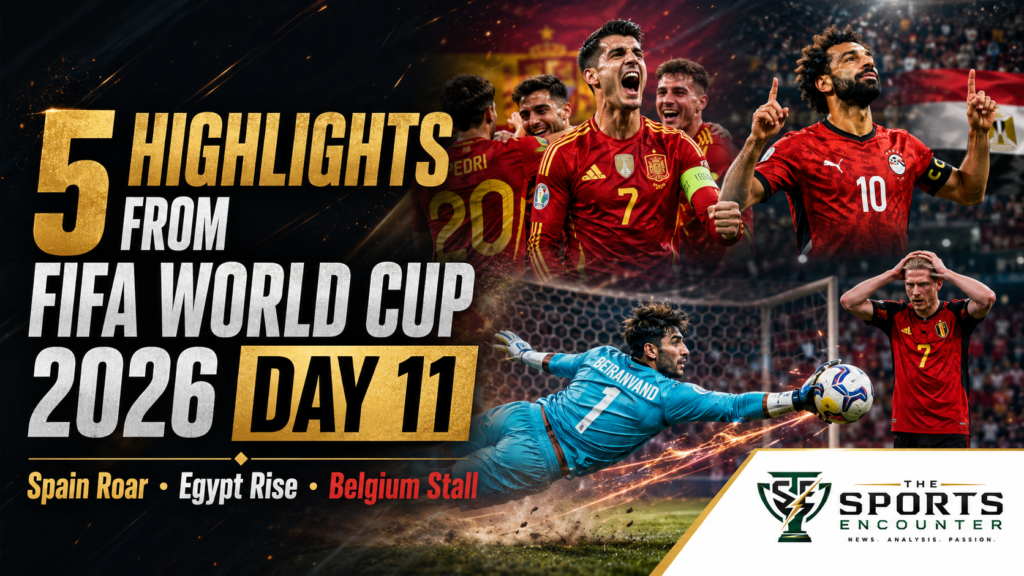
FIFA World Cup 2026 Day 11 had a little bit of everything.
Spain finally looked like Spain again. Belgium looked trapped inside their own uncertainty. Iran found another stubborn point. Cape Verde continued to turn their debut campaign into one of the tournament’s best stories. Egypt, led by Mohamed Salah, wrote a piece of national football history. Japan also sent a reminder that nobody should treat them as background noise in this World Cup.
By the end of the day, Groups G and H looked far more complicated than they did in the morning. Some teams found oxygen. Others walked straight into final-round pressure.
For full tournament coverage, fixtures, match reports, and group-stage analysis, follow The Sports Encounter’s FIFA World Cup 2026 hub.
1. Spain Cut Loose and Found Their Missing Rhythm
Spain needed a response after their opening draw with Cape Verde.
They got one in style.
The 4-0 win over Saudi Arabia was more than a scoreline correction. It was a reminder that Spain’s ceiling still sits very high when their passing has speed, width, and purpose. Lamine Yamal gave the match its early spark, while Mikel Oyarzabal helped turn control into punishment before Spain cruised through the rest of the contest.
Spain had looked too careful in their first match. Against Saudi Arabia, they played with more vertical aggression, moved the ball faster, and forced the Saudi defense into problems it could not solve.
That matters because Spain cannot afford to drift through this group. Their final match against Uruguay now carries a different tone. Win it, and Spain likely control Group H. Stumble again, and the knockout draw could become awkward quickly.
The sharper attacking display also changed the mood around Luis de la Fuente’s side. Spain did not only beat Saudi Arabia. They reminded everyone that their first-game frustration may have been a warning, not a pattern. Read the full match angle here: Spain Cut Loose as Saudi Arabia’s Knockout Hopes Take a Bruising.
2. Belgium’s Attack Remains a Serious Concern
Belgium’s 0-0 draw with Iran may become one of the most worrying results of their group campaign.
The Red Devils had possession, names, and attacking reputation. They did not have enough speed or conviction in the final third. Kevin De Bruyne tried to find pockets. Romelu Lukaku gave them a target. Leandro Trossard and Dodi Lukebakio offered movement. Still, Belgium rarely made Iran feel truly broken.
That is the danger for Belgium now.
Two matches have produced two draws, only one goal, and no clear attacking flow. Tournament football does not care how impressive a squad looks on paper. It rewards timing, tempo, and clarity under pressure. Belgium have not shown enough of those qualities yet.
Nathan Ngoy’s red card made the match even more uncomfortable, but the deeper issue had already been visible. Belgium are playing too slowly for the talent they have. Iran could shift across, close central lanes, and trust Alireza Beiranvand whenever Belgium did break through.
Belgium still have a route through. But after this draw, their final group match against New Zealand looks less like a routine assignment and more like a survival test. More on that tense Group G draw here: Belgium Stumble Again as Iran’s Beiranvand Turns Group G Into a Survival Test.
3. Beiranvand Gives Iran a World Cup Identity
Iran have not won yet, but they have already built a tournament identity.
They fight. They stay compact. They suffer without losing shape. And when pressure rises, Beiranvand gives them belief.
The Iran goalkeeper was the central figure against Belgium. His saves, positioning, and calm handling gave Iran the platform to turn a difficult match into a valuable point. After the wild 2-2 draw with New Zealand, this was a different type of performance. Less chaos. More structure. More discipline.
That is a good sign for Iran before their final Group G match against Egypt.
Iran may still need more attacking ambition. Mehdi Taremi gave Belgium problems, including a disallowed goal, but Iran did not fully gamble even after Belgium went down to 10 men. That may frustrate some fans. It also showed tournament maturity. Iran knew a draw kept them alive.
Now they face Egypt with the group still open. A win could send Iran through. A draw might leave them waiting nervously. A defeat could end the dream.
Iran are not making this easy for anyone.
4. Salah and Egypt Finally Get Their World Cup Moment
Egypt’s 3-1 win over New Zealand gave Day 11 its most emotional breakthrough.
New Zealand started brightly and took the lead, but Egypt did not fold. They responded with control, urgency, and the star presence they needed from Mohamed Salah. By full time, Egypt had not only won a match. They had secured a historic first World Cup victory and moved into a much stronger position in Group G.
For Salah, this mattered.
His club career has produced huge nights, trophies, goals, and global recognition. International football has often carried a heavier kind of pressure. This win gave him a World Cup moment that Egypt supporters will remember properly.
The result also changed the group dynamic. Belgium and Iran had already drawn earlier in the day. Egypt then punished New Zealand and suddenly had the clearest momentum in Group G.
That final match against Iran now looks fascinating. Egypt have confidence. Iran have resilience. Belgium need help from their own result against New Zealand. Group G has become one of the tournament’s most interesting pressure chambers. Read the full Egypt-New Zealand story here: Salah Leads Egypt to Historic First World Cup Win as New Zealand Collapse After Bright Start.
5. Cape Verde and Japan Show the Beauty of This Expanded World Cup
Day 11 also belonged to teams turning opportunity into belief.
Cape Verde’s 2-2 draw with Uruguay kept one of the tournament’s best underdog stories alive. After holding Spain in their opener, they backed it up by taking something from another major football nation. That is not luck anymore. That is a team playing with organization, courage, and zero fear of reputations.
Cape Verde scored their first World Cup goals, refused to disappear after Uruguay took control, and entered the final group match with a real chance of reaching the knockout stage. Their campaign has become a reminder that the expanded World Cup can create stories the old format often left outside the door.
Japan made a different kind of statement with a 4-0 win over Tunisia. It was clean, ruthless, and useful for goal difference. Japan have been building toward this type of tournament authority for years. On Day 11, they looked like a team that knows exactly what it wants to be.
Both results matter beyond their groups.
Cape Verde represent the romance of expansion. Japan represent the strength of a football program that keeps getting sharper. Together, they gave Day 11 a wider meaning.
What Day 11 Means for the FIFA World Cup 2026 Knockout Race
The pressure now moves into the final round of group matches.

Spain have control, but Group H is still alive because Cape Verde keep refusing to behave like debutants. Uruguay need answers. Saudi Arabia need something close to a miracle. In Group G, Egypt have taken the lead in confidence, Iran have stayed alive through structure, Belgium must win to calm the noise, and New Zealand still have one last chance to disrupt the table.
The expanded 48-team format also adds another layer. The top two teams from each group qualify automatically, while the eight best third-placed teams also move into the Round of 32. That means three points may still matter, four points could be valuable, and goal difference may become a quiet battlefield across the final matchday.
For a clear breakdown of how the new format works, read Know All About FIFA World Cup 2026 Qualification Process.
Final Word
Day 11 did not give the World Cup one single headline.
It gave the tournament layers.
Spain found their bite. Belgium lost more certainty. Iran found another way to survive. Egypt finally had their historic moment. Cape Verde kept dreaming. Japan made a statement that should not be ignored.
That is what a good World Cup day does. It moves tables, changes moods, creates pressure, and gives fans fresh reasons to look ahead.
The final group matches now feel sharper because Day 11 did its job.
It made the tournament less predictable.
The Sports Encounter’s World Cup 2026 coverage focuses on fixtures, team news, match analysis, fan stories, tournament trends, and the biggest talking points from football’s global stage.