Connect with us
Ruben Santos | The Sports Encounter

Published

on

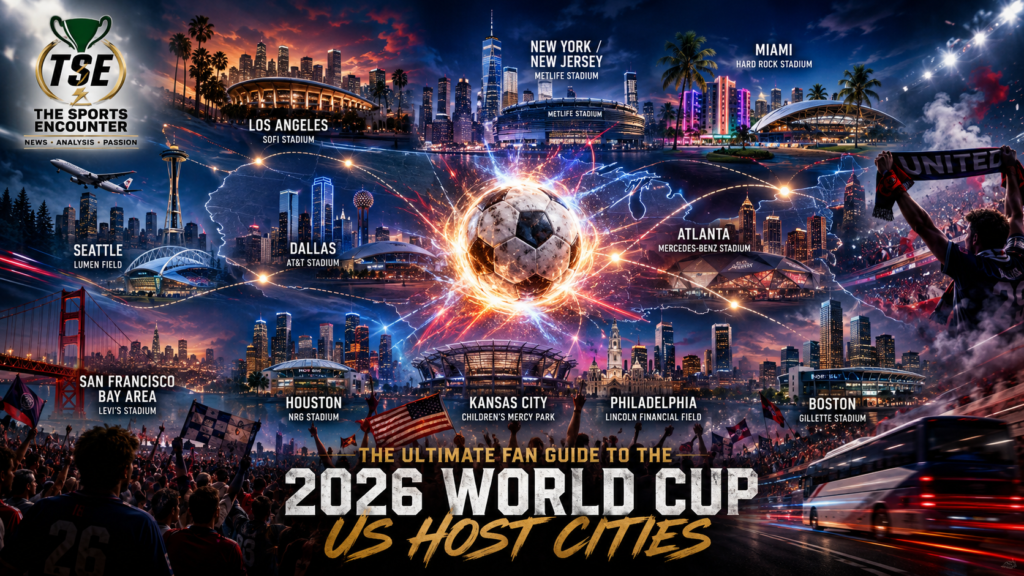
The FIFA World Cup 2026 will not feel the same in every American city. That is the first thing fans should understand.

Los Angeles will bring glamour and diaspora noise. Dallas will bring scale. Seattle will bring real soccer culture. Miami will bring Latin football energy. New York/New Jersey will carry the final. Kansas City may surprise visitors with its passion.

Every U.S. host market will give the tournament a different face.

For fans, that makes this World Cup exciting. It also makes planning harder.

The United States is not a compact host nation. Supporters cannot treat this tournament like a short train ride between neighboring football towns. Many trips will require flights, careful hotel choices, official transport planning, and early decisions around tickets, weather, visas, and stadium access.

This guide explains the 11 FIFA World Cup 2026 U.S. host markets, their stadiums, matchday conditions, fan appeal, and practical travel points.

For the full tournament fixture list, visit The Sports Encounter’s FIFA World Cup 2026 schedule.

For daily coverage, match reports, analysis, and fan guides, follow our FIFA World Cup 2026 hub.

How Many U.S. Cities Are Hosting FIFA World Cup 2026?

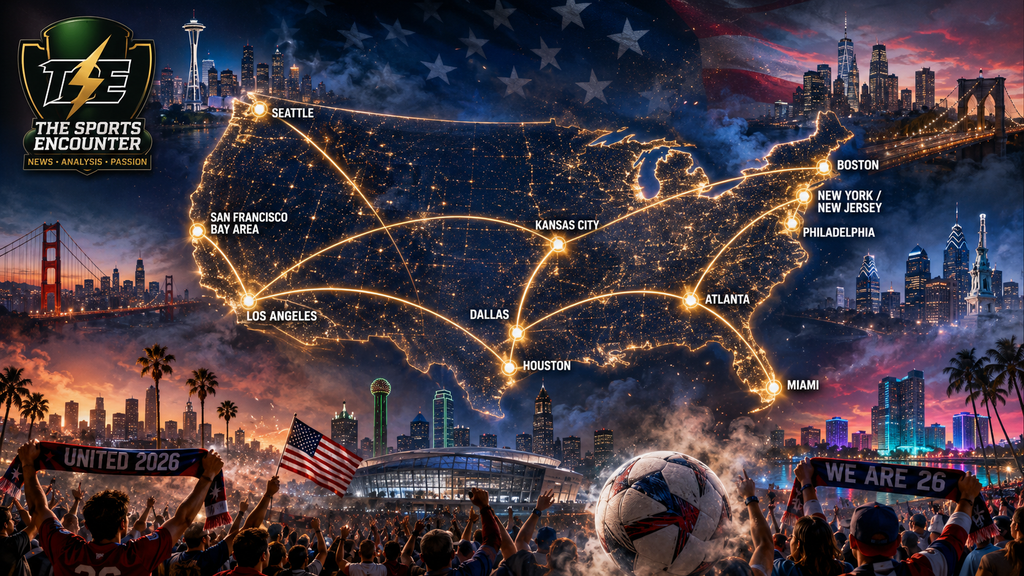
The United States has 11 FIFA World Cup 2026 host markets: Atlanta, Boston, Dallas, Houston, Kansas City, Los Angeles, Miami, New York/New Jersey, Philadelphia, San Francisco Bay Area, and Seattle.

These U.S. markets are part of a wider 16-city tournament across North America. Canada has Toronto and Vancouver. Mexico has Mexico City, Guadalajara, and Monterrey.

The U.S. portion carries the largest match load. It also stages the final on July 19, 2026, at New York New Jersey Stadium in East Rutherford, New Jersey.

Why the U.S. Host Cities Matter

The 2026 World Cup is the first men’s edition with 48 teams and 104 matches. That expanded format makes host-city planning more important than ever.

Some fans will follow one national team. Others will choose a city and watch whatever matches arrive there. Many American supporters will attend their first World Cup match in person. Visiting fans will need to understand how each stadium works before booking hotels and flights.

Because of that, the host cities are not just venues. They are part of the story.

The Big Fan Question

The key question is simple: which U.S. host city gives you the best World Cup experience for your budget, team, travel style, and matchday expectations?

The answer depends on what kind of fan you are.

FIFA World Cup 2026 U.S. Host Cities and Stadiums

Here is the clean U.S. host-city breakdown.

Host MarketFIFA Venue NameCommon Stadium NameLocationMatch Count
AtlantaAtlanta StadiumMercedes-Benz StadiumAtlanta, Georgia8
BostonBoston StadiumGillette StadiumFoxborough, Massachusetts7
DallasDallas StadiumAT&T StadiumArlington, Texas9
HoustonHouston StadiumNRG StadiumHouston, Texas7
Kansas CityKansas City StadiumArrowhead StadiumKansas City, Missouri6
Los AngelesLos Angeles StadiumSoFi StadiumInglewood, California8
MiamiMiami StadiumHard Rock StadiumMiami Gardens, Florida7
New York/New JerseyNew York New Jersey StadiumMetLife StadiumEast Rutherford, New Jersey8
PhiladelphiaPhiladelphia StadiumLincoln Financial FieldPhiladelphia, Pennsylvania6
San Francisco Bay AreaSan Francisco Bay Area StadiumLevi’s StadiumSanta Clara, California6
SeattleSeattle StadiumLumen FieldSeattle, Washington6

Dallas has the highest U.S. match count with nine matches. Atlanta, Los Angeles, and New York/New Jersey each host eight.

Atlanta: A Dome, a Roar, and a Soccer City Ready for Its Close-Up

Atlanta enters World Cup 2026 with one of the strongest modern soccer cultures in the United States.

Mercedes-Benz Stadium gives the city a major indoor-style stage. The venue is built for spectacle, and Atlanta fans have already shown they can turn soccer into a loud local event.

The airport also gives Atlanta an advantage. Hartsfield-Jackson Atlanta International Airport is one of the world’s busiest airports, which should help domestic and international connections.

What Fans Should Know About Atlanta

Atlanta is not difficult to enjoy, but it can feel spread out. Supporters should compare hotels against stadium access, transit options, and official fan-event locations.

Downtown and Midtown may suit fans who want restaurants, nightlife, and easier movement. However, prices can rise quickly near major event zones.

Best Fit for Fans

Atlanta suits supporters who want a loud stadium, strong airport access, and a city already comfortable with big soccer crowds.

Boston: History, Culture, and a Stadium Trip Fans Must Plan Early

Boston gives the World Cup history, universities, sports obsession, and a strong international population.

The stadium, however, is not in central Boston. Gillette Stadium is in Foxborough, which changes the matchday calculation.

That detail matters. A fan staying in Boston should not assume the stadium is a quick city-center trip.

What Fans Should Know About Boston

Transport planning will be crucial. Fans should check official shuttle, rail, parking, and traffic guidance before choosing accommodation.

Boston itself offers plenty away from the match. Historic neighborhoods, waterfront areas, sports bars, and college-town energy can make the trip memorable. Even so, the stadium route deserves careful planning.

Best Fit for Fans

Boston suits supporters who want culture and history around their World Cup trip, but it rewards fans who take transport seriously.

Dallas: The Giant Stage of World Cup 2026

Dallas could become one of the defining U.S. cities of the tournament.

AT&T Stadium in Arlington is built for spectacle. FIFA’s match allocation gives Dallas nine matches, the highest total among U.S. host markets.

That makes the Dallas area a strong base for fans who want to attend multiple matches without flying between cities every few days.

What Fans Should Know About Dallas

The stadium is in Arlington, between Dallas and Fort Worth. That geography matters.

Staying near Arlington may make matchdays easier. Staying in Dallas or Fort Worth may offer better nightlife, food, and hotel choice. Fans should decide what matters more before booking.

Texas heat will also be a factor. Even with modern stadium infrastructure, supporters will spend time outside before and after matches.

Best Fit for Fans

Dallas suits fans who want a massive stadium, multiple match options, and a central U.S. base with big-event energy.

Houston: Heat, Diversity, and a Serious Football Crowd

Houston brings food, culture, heat, and one of America’s most international identities to the World Cup.

That matters because World Cups live through people as much as stadiums. Houston’s global communities should give several matches a strong local base, even before traveling fans arrive.

NRG Stadium also has major event experience, which should help the city manage large crowds.

What Fans Should Know About Houston

Weather will shape the experience. June and July can be hot and humid. Fans should plan hydration, clothing, transport, and outdoor time carefully.

Houston is also a driving city. Distances can look manageable on a map but feel longer in traffic. Hotel location should be chosen with matchday movement in mind.

Best Fit for Fans

Houston suits supporters who want a multicultural World Cup atmosphere, strong food culture, and a serious big-city tournament feel.

Kansas City: The Underdog Host With Real Soccer Soul

Kansas City may not have the global profile of Los Angeles or New York, but it could become one of the tournament’s most enjoyable fan stops.

The city has local sports passion, a strong soccer base, and a stadium famous for noise. Arrowhead Stadium can create a powerful atmosphere when the crowd is fully engaged.

That gives Kansas City an edge that pure glamour cannot buy.

What Fans Should Know About Kansas City

Kansas City may feel more grounded than the coastal mega-markets. It could also offer a different cost profile, although World Cup demand can change hotel and travel prices fast.

Supporters should still plan stadium access early. Event-day traffic, parking rules, and official routes will matter.

Best Fit for Fans

Kansas City suits fans who want noise, local passion, barbecue culture, and a more distinctly American World Cup stop.

Los Angeles: Glamour, Diaspora Energy, and Serious Matchday Pressure

Los Angeles will be one of the most watched U.S. host cities.

The city brings Hollywood visibility, huge immigrant communities, global media attention, and one of the most advanced stadiums in world sport.

SoFi Stadium in Inglewood will carry major tournament attention. The U.S. opener already showed how powerful Los Angeles can look on a World Cup night.

For match context, read Balogun Brace Powers Dream World Cup Start for Co-Hosts.

What Fans Should Know About Los Angeles

Traffic is the headline.

Fans should plan to arrive early, follow official stadium routes, and avoid casual last-minute travel. Inglewood matchdays can get heavy fast, especially when major international teams are involved.

Los Angeles also offers one of the richest diaspora football cultures in the country. For many teams, the crowd may feel like a home-away-from-home environment.

Best Fit for Fans

Los Angeles suits supporters who want star power, global atmosphere, and massive matchday energy. It does not suit poor planning.

Miami: Latin Football Energy Meets a Summer Heat Test

Miami feels built for a World Cup.

The city has deep Latin American football culture, international tourism, beaches, nightlife, and a natural sense of occasion.

Hard Rock Stadium in Miami Gardens will host seven matches. With South American, Caribbean, and Central American communities nearby, Miami could produce some of the liveliest atmospheres of the tournament.

What Fans Should Know About Miami

Heat and humidity will matter.

So will geography. Miami Gardens is not the same as South Beach, Brickell, Wynwood, or downtown Miami. Fans should check actual travel times before choosing hotels.

Accommodation and rideshare prices can climb during major events. Booking early may save money and stress.

Best Fit for Fans

Miami suits supporters who want color, music, beaches, Latin football energy, and a vacation-style World Cup trip.

New York/New Jersey: The Final Stage

New York/New Jersey will host the biggest match of all.

The FIFA World Cup 2026 final will be played at MetLife Stadium in East Rutherford, New Jersey, on July 19. That gives the market a permanent place in World Cup history.

Yet fans should understand the geography. The stadium is close to New York City, but it is not in Manhattan.

What Fans Should Know About New York/New Jersey

Hotel choice will shape the trip.

Staying in Manhattan gives fans the full New York experience. Staying in New Jersey may simplify stadium access, depending on official transport plans.

This market will attract huge numbers of neutral fans, sponsors, media, celebrities, and football officials. Demand around knockout matches and the final will be intense.

Best Fit for Fans

New York/New Jersey suits fans chasing the biggest stage, the final, and a full global-city World Cup experience.

Philadelphia: History, Edge, and a Compact Sports District

Philadelphia brings a tough, emotional sports identity to the World Cup.

The city is known for passionate fans, historic landmarks, and a sports complex that makes major event hosting feel concentrated.

Lincoln Financial Field should offer a strong stadium environment. The city itself gives fans food, history, and a useful East Coast route.

What Fans Should Know About Philadelphia

Philadelphia may be easier to understand than some larger host markets because much of its major stadium infrastructure sits in one sports complex area.

Still, matchday crowds will be heavy. Fans should follow official transport guidance and leave enough time.

The city also works well for supporters combining matches with trips to New York/New Jersey, Washington, D.C., or Boston.

Best Fit for Fans

Philadelphia suits supporters who want history, edge, walkable city experiences, and a strong American sports atmosphere.

San Francisco Bay Area: Beautiful, Expensive, and Easy to Misread

The San Francisco Bay Area gives the tournament one of its most scenic and recognizable U.S. regions.

The stadium, however, is in Santa Clara. It is not in central San Francisco.

That detail may save fans from a major planning mistake.

What Fans Should Know About the Bay Area

Accommodation can be expensive across the region. Supporters should compare San Francisco, San Jose, Santa Clara, and nearby cities before booking.

The cheapest hotel may not be the smartest option if matchday transport becomes difficult. Fans should plan around Levi’s Stadium, not around postcard images of San Francisco.

Best Fit for Fans

The Bay Area suits supporters who want a scenic West Coast trip, but it demands careful planning around Santa Clara.

Seattle: One of America’s Best Soccer Cities Gets Its World Cup Moment

Seattle is one of the strongest soccer cities in the United States.

The fan culture is real. The stadium location is strong. The city understands matchday rhythm better than many American markets.

Lumen Field sits close to downtown, which gives Seattle an advantage over more suburban stadium markets. That can help the city feel like a true tournament hub.

What Fans Should Know About Seattle

Weather may be milder than in many other U.S. host cities. That could make Seattle attractive for summer travelers.

The city also offers scenery, coffee culture, waterfront areas, and a football crowd that knows how to show up.

Hotel prices near downtown may rise quickly, so fans should book early and track official fan-zone updates.

Best Fit for Fans

Seattle suits supporters who want real soccer culture, a downtown stadium experience, and a cooler summer host city.

Best U.S. Host Cities for Different Types of World Cup Fans

Every fan wants a different World Cup trip.
Best U.S. Host Cities for Different Types of World Cup Fans

Some want the final. Others want lower stress, stronger nightlife, better weather, or more matches in one city.

Best City for the Final

New York/New Jersey is the answer because it hosts the final. It will also bring the highest demand and serious pressure on tickets, hotels, and transport.

Best City for Multiple Matches

Dallas leads with nine matches. Atlanta, Los Angeles, and New York/New Jersey also offer heavy match schedules.

Best City for Soccer Culture

Seattle stands out. Los Angeles, Atlanta, Kansas City, and Miami also bring strong football energy in different ways.

Best City for International Fan Atmosphere

Los Angeles, Miami, Houston, New York/New Jersey, and the San Francisco Bay Area should deliver powerful diaspora-driven crowds.

Best City for East Coast Travel

Philadelphia, New York/New Jersey, and Boston work well for fans planning an East Coast route. However, stadium access differs sharply, so compare real travel times before booking.

U.S. World Cup Travel Tips Every Fan Should Know

The U.S. can give fans a brilliant World Cup trip. Still, travel here works differently from many football nations.

Distances are larger. Local laws vary. Public transport quality changes by city. Stadium rules can be strict.

Buy Tickets Only Through Official Channels

Use official FIFA ticketing platforms and trusted official channels. Unofficial resale tickets can create serious problems at the gate.

Check Visa and Entry Rules Early

International fans should check U.S. visa or ESTA requirements before booking. Anyone crossing from Canada or Mexico should also confirm border rules.

Do Not Assume Every Stadium Is Downtown

Several stadiums sit outside the city center. Boston, Dallas, New York/New Jersey, Miami, and the Bay Area all require careful location planning.

Book Accommodation Around Matchday Movement

A hotel may look close on a map but still create a difficult matchday route. Fans should check official transit plans, shuttle routes, rideshare zones, parking rules, and expected traffic.

Prepare for Weather

Houston, Dallas, Miami, Kansas City, Atlanta, and Los Angeles can bring serious summer heat. Seattle and the Bay Area may feel milder. Weather should influence clothing, hydration, arrival time, and daily plans.

How to Choose the Right U.S. Host City

Choose your host city based on more than the match name.

The best trip depends on budget, team schedule, weather comfort, travel distance, stadium access, and how much time you want outside the match.

Ask These Questions Before Booking

  • Which team or match do I want to see most?
  • Is the stadium in the city center or outside it?
  • How far is the airport from my hotel and the stadium?
  • Can I attend a FIFA Fan Festival without a match ticket?
  • Will I need to fly between host cities?
  • Can my budget cover tickets, hotels, food, transport, and emergency costs?
  • Do I need a visa, ESTA, or proof of onward travel?

The Smart Fan Rule

Choose the match first. Then choose the city. After that, plan the stadium route.

That order will save money, time, and stress.

Why the U.S. Host Cities Could Define World Cup 2026

The FIFA World Cup 2026 is the biggest edition in tournament history.

Its scale is obvious: 48 teams, 104 matches, three host countries, and 16 host markets. Yet the U.S. cities may decide how much of this tournament becomes a lasting American soccer memory.

If stadiums are full, transport works, fan festivals thrive, and local communities embrace the event, World Cup 2026 could become a turning point for soccer in the United States.

If access feels too expensive or logistics become frustrating, the tournament may also intensify the debate about football’s relationship with ordinary fans.

We explored that wider issue in our analysis of affordability at FIFA World Cup 2026.

Either way, the U.S. host cities will do more than stage matches. They will test whether America can turn a global football event into something alive beyond the stadium walls.

FIFA World Cup 2026 U.S. Host Cities FAQs

How many U.S. cities are hosting FIFA World Cup 2026 matches?

Eleven U.S. host markets will stage FIFA World Cup 2026 matches: Atlanta, Boston, Dallas, Houston, Kansas City, Los Angeles, Miami, New York/New Jersey, Philadelphia, San Francisco Bay Area, and Seattle.

Which U.S. city hosts the FIFA World Cup 2026 final?

The FIFA World Cup 2026 final will be played at New York New Jersey Stadium, commonly known as MetLife Stadium, in East Rutherford, New Jersey, on July 19, 2026.

Which U.S. host city has the most World Cup 2026 matches?

Dallas has the highest U.S. match count with nine matches. Atlanta, Los Angeles, and New York/New Jersey each host eight.

Are all FIFA World Cup 2026 U.S. stadiums in city centers?

No. Some stadiums are outside the main city center. Boston Stadium is in Foxborough, Dallas Stadium is in Arlington, New York New Jersey Stadium is in East Rutherford, and San Francisco Bay Area Stadium is in Santa Clara.

Will there be FIFA Fan Festivals in the United States?

Yes. FIFA Fan Festivals are part of the wider World Cup fan experience. Fans should check official local updates for each host city before traveling.

What is the best U.S. host city for international fans?

Los Angeles, Miami, Houston, New York/New Jersey, and the San Francisco Bay Area should be especially strong for international fan culture because of their large global communities.

Should fans rent a car for World Cup 2026 in the U.S.?

It depends on the city. Some host markets may work better with public transport and official shuttles. Others may require rideshares, rental cars, or planned transfers. Fans should check official local transport guidance before deciding.

Final Word: The U.S. Host Cities Are Part of the Tournament

The FIFA World Cup 2026 U.S. host cities will give fans 11 different versions of the same tournament.

Los Angeles will bring glamour. Seattle will bring soccer culture. Dallas will bring scale. Miami will bring Latin energy. New York/New Jersey will bring the final. Kansas City may surprise visitors with its local passion.

Every city has a role.

For fans, the best World Cup trip will come down to preparation. Buy official tickets. Check entry rules. Plan stadium routes. Book smart accommodation. Track weather. Leave early on matchdays.

Then enjoy the rare chance to watch the world’s biggest football tournament unfold across America.

The Sports Encounter’s World Cup 2026 coverage focuses on fixtures, team news, match analysis, fan stories, tournament trends, and the biggest talking points from football’s global stage.

Ruben Santos is a North America-focused sports writer covering the NBA, NHL, NFL, MLB, MLS, and major international competitions across the United States, Canada, and Mexico. His work follows the leagues, teams, players, trades, roster decisions, playoff races, and major developments shaping sports conversations across the region. At The Sports Encounter, Ruben contributes breaking news, game coverage, league analysis, player-focused features, and stories examining the wider business, governance, and cultural forces influencing modern sport. His reporting combines clear news judgment with statistical context, historical perspective, and an understanding of the fan experience surrounding major teams and competitions. He also covers FIFA and international soccer stories when they intersect with North American sport, major tournaments, and global sports governance.

Breaking News

FIFA Accuses UEFA of “Smear Campaign” as Infantino Fight Enters US Courts

FIFA has accused UEFA of using U.S. court proceedings as part of a smear campaign against Gianni Infantino as the fallout from the abandoned FIFA Forward Enterprise plan deepens. The dispute now centers on governance, possible Swiss legal action, FIFA’s 2027 presidential election and who has the authority to shape world soccer’s commercial future.

Ruben Santos | The Sports Encounter

Published

on

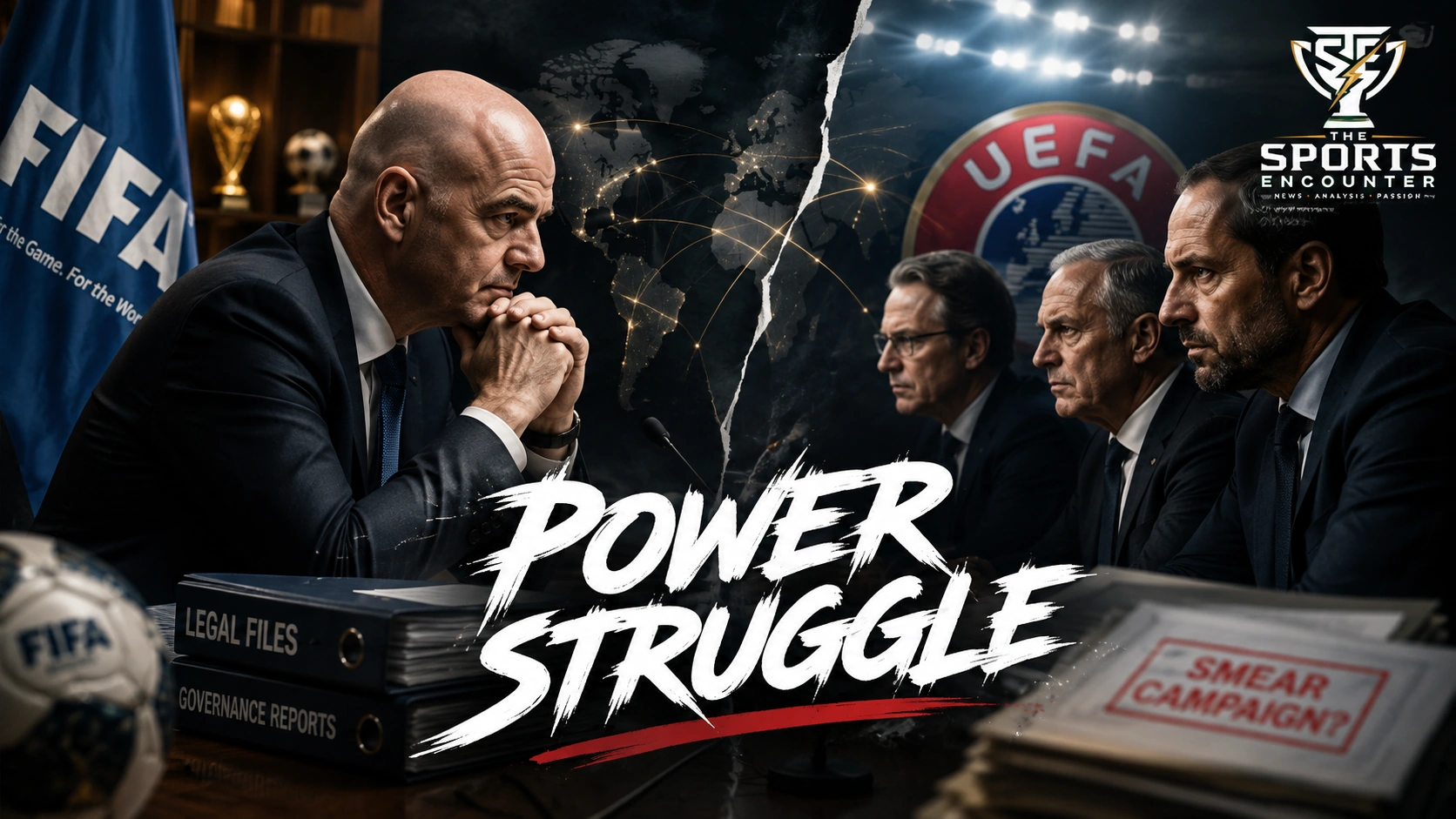
Gianni Infantino and UEFA officials featured in a cinematic FIFA governance graphic highlighting the escalating legal and political fight over the abandoned FIFA Forward Enterprise plan.

The battle over Gianni Infantino’s abandoned FIFA Forward Enterprise plan has entered a more dangerous phase.

FIFA is now accusing UEFA of using U.S. court proceedings as part of a “smear campaign” against the organization and its president after European soccer’s governing body sought access to documents and testimony connected to the failed World Cup commercial-rights proposal.

The legal fight matters because the original plan is already dead.

Infantino withdrew FIFA Forward Enterprise, or FFE, on July 31 after a global revolt that included UEFA’s 55 associations, CONCACAF, other confederations, national federations and senior figures inside FIFA itself.

What remains is a fight over how the proposal was conceived, who knew about it, whether FIFA’s governance processes were followed, whether its commercial assets were properly valued, and whether the conduct surrounding the plan could justify legal action in Switzerland.

UEFA has asked U.S. courts for permission to obtain evidence from entities connected to FIFA and the proposed transaction for use in a contemplated Swiss criminal complaint against Infantino and potentially other FIFA officials or advisers.

FIFA has responded aggressively.

In its latest filing, the governing body argues that UEFA’s applications are less about obtaining evidence than damaging FIFA and Infantino politically. FIFA also disputes UEFA’s characterization of the legal situation, arguing that the criminal proceedings referenced by UEFA do not currently exist.

The Sports Encounter has followed this crisis from the moment FIFA’s commercial plan triggered a revolt. Our analysis of why the World Cup stake plan collapsed concluded that the damage would outlive the proposal itself. The latest court fight is the clearest confirmation yet.

FIFA vs UEFA Legal Fight: What Is Happening Now?

Issue Current position
Original dispute FIFA Forward Enterprise, a plan to place major FIFA commercial rights into a new subsidiary and sell a minority stake to private investors
Status of FFE Withdrawn by FIFA on July 31, 2026
UEFA’s latest move Seeking U.S. court-authorized discovery for a contemplated Swiss criminal complaint
Potential target Gianni Infantino and potentially other FIFA officials or advisers
UEFA’s concern How the deal was conceived, valued, structured and approved
FIFA’s response Accuses UEFA of a smear campaign and fishing expedition
FIFA’s legal argument Says UEFA is describing contemplated proceedings as if an existing criminal investigation already exists
Political backdrop Infantino is seeking re-election in March 2027

What Exactly Is UEFA Asking U.S. Courts to Do?

UEFA is attempting to use American discovery procedures to obtain documents and testimony that it believes could be relevant to a future criminal complaint in Switzerland.

The requests concern entities and individuals with connections to the proposed FIFA Forward Enterprise transaction.

Earlier filings sought evidence from FIFA-linked entities in the United States and from parties involved in the potential investment structure.

UEFA argues that evidence held in America may help establish how FFE was developed, how the proposed valuation was reached, what advice FIFA received, which officials participated, and whether the appropriate FIFA governance bodies were consulted.

The contemplated Swiss complaint is understood to concern possible criminal mismanagement.

That wording is important.

UEFA has not obtained a criminal conviction, and the latest developments do not establish that Infantino committed a crime. UEFA is gathering material it believes could support a complaint, while FIFA is contesting both the legal basis and the political motivation behind the requests.

Why Is FIFA Calling UEFA’s Court Strategy a “Smear Campaign”?

FIFA’s response goes beyond technical legal objections.

The organization argues that UEFA is using court filings to reinforce a public narrative against Infantino.

According to FIFA’s filing, UEFA’s applications resemble public-relations documents more than neutral efforts to collect evidence.

FIFA also disputes the premise that UEFA is seeking evidence for an existing criminal proceeding.

The distinction is central to FIFA’s defense.

A contemplated complaint is not the same thing as an open criminal prosecution or a formal finding by Swiss authorities.

FIFA therefore argues that UEFA is presenting allegations in a way that risks creating the public impression that criminal wrongdoing has already been established.

This is consistent with FIFA’s broader defense since August.

In an official statement earlier in the crisis, FIFA said there was a “concerted and ongoing effort” to undermine the organization and its president, while insisting that leadership changes must occur through FIFA’s statutes and democratic processes.

Why Does UEFA Believe Further Investigation Is Necessary?

Because UEFA believes withdrawing the proposal did not answer the governance questions that the plan exposed.

The European confederation’s criticism has consistently focused on process as much as economics.

UEFA argues that a project involving FIFA’s most valuable commercial properties was developed without sufficient consultation with the FIFA Council, confederations, national associations and wider stakeholders.

When the plan became public, UEFA’s 55 associations unanimously opposed it.

The Sports Encounter covered that extraordinary vote in our report on UEFA’s 55-0 boycott decision.

UEFA’s official position was unusually blunt.

Its joint statement with all 55 national associations argued that the World Cup should not be treated as an investment product and said Europe would refuse to participate in FIFA competitions while the proposal remained alive.

FIFA eventually withdrew FFE, removing the immediate boycott threat.

UEFA’s position is that cancellation does not remove the need to understand how the plan reached such an advanced stage.

What Was FIFA Forward Enterprise?

FFE was the proposed commercial subsidiary at the center of the conflict.

FIFA wanted to bring together commercial rights and operational activities connected to major competitions, including:

  • broadcast rights,
  • sponsorship,
  • ticketing,
  • hospitality,
  • licensing,
  • new commercial ventures,
  • and tournament-related operations.

Private investors could then have acquired a minority stake in the company while FIFA retained majority ownership and sporting control.

The proposed enterprise was discussed at a valuation of approximately $20 billion, with outside investment potentially raising billions in immediate capital.

Infantino argued that the money could transform global soccer development.

FIFA’s official explanation of the proposal said standard FIFA Forward distributions could rise dramatically during the 2027-2030 cycle, helping fund pitches, youth development, women’s soccer and national-team infrastructure.

The economic argument was powerful.

The governance argument proved stronger.

Why Did the FFE Proposal Collapse So Quickly?

The plan failed because opposition spread beyond UEFA before FIFA could build a stable coalition around it.

CONCACAF rejected the proposal, widening the revolt beyond Europe. The Sports Encounter documented that moment in our analysis of CONCACAF’s rejection.

Resistance also moved inside FIFA.

Senior adviser Carlos Cordeiro resigned, while then-chief operating officer Kevin Lamour publicly challenged how the project had been handled.

Our report on the internal revolt examined how criticism from FIFA insiders made it harder for Infantino to portray the dispute simply as a familiar power struggle between Zurich and UEFA.

FIFA withdrew the proposal on July 31.

Infantino’s official statement said the project would not proceed because the level of division had become inconsistent with its stated objective of strengthening football globally.

The withdrawal statement also pledged renewed consultation with FIFA stakeholders.

Why Did Withdrawal Fail to End the Crisis?

Because the dispute had already moved beyond the commercial merits of FFE.

By the time FIFA abandoned the project, critics were asking deeper questions about institutional authority.

Who initiated the proposal?

Which departments evaluated it?

When did the FIFA Council receive the full details?

Who approved the proposed valuation?

How were investors selected?

Why did major confederations claim they had not been adequately consulted?

Why did senior FIFA officials distance themselves from the process?

Those questions survived the withdrawal.

The Sports Encounter’s report on FIFA officials and federations breaking ranks argued that the crisis had changed form. The project was gone, but confidence in how FIFA was being governed had become the real issue.

Why Does FIFA Reject UEFA’s Version of the Governance Story?

FIFA says its proposal was still part of a consultation process and had not reached final approval.

Infantino repeatedly argued that FFE would proceed only if FIFA’s member associations and formal governing bodies ultimately supported it.

FIFA also contends that critics have exaggerated the idea that control of the World Cup itself would have been sold.

Under the proposal, FIFA maintained that it would retain sporting authority and majority control while private investors participated in a commercial subsidiary.

That distinction was always central to FIFA’s argument.

Opponents responded that commercial control and sporting control cannot be completely separated when the value of a company depends on how tournaments are expanded, scheduled, marketed and monetized.

Why Is the $20 Billion Valuation Still Important?

Because valuation is one of the areas UEFA reportedly wants examined.

If FIFA’s commercial assets were worth considerably more than the proposed enterprise valuation, selling a permanent minority stake could have raised questions about whether FIFA was receiving adequate long-term value.

If the valuation was reasonable, FIFA could argue that opponents inflated concerns about a transaction designed to unlock capital for development.

This is why documents from advisers and prospective investors matter.

Valuation is not simply an abstract number.

It determines what percentage of future FIFA commercial income private investors would receive in exchange for their initial capital.

Why Does Joshua Kushner’s Thrive Capital Matter?

Thrive Capital was connected to the proposed investment group through an affiliated vehicle.

The involvement became politically sensitive because Joshua Kushner is the brother of Jared Kushner, a prominent political figure with close connections to the Trump family.

There is no evidence in the material reviewed by The Sports Encounter that Thrive or Joshua Kushner committed wrongdoing.

Kushner has since said his firm underestimated the political complexity surrounding global soccer governance and would not have entered the process had it understood how divisive the transaction would become.

That admission matters because it reinforces the idea that FFE became politically toxic even for investors who believed the underlying economic logic was defensible.

Why Is the Fight Becoming More Personal Between FIFA and UEFA?

The language has changed.

At the beginning, UEFA opposed a commercial proposal.

Then it questioned FIFA’s governance.

Now FIFA is accusing UEFA of deliberately attempting to damage the reputation of Infantino and the institution itself.

That escalation makes reconciliation more difficult.

UEFA’s legal strategy indicates it no longer considers internal FIFA review sufficient.

FIFA’s response indicates it views UEFA’s campaign as politically motivated rather than neutral oversight.

The dispute therefore contains two fundamentally incompatible narratives.

UEFA’s position FIFA’s position
The proposal exposed potential governance failures requiring independent scrutiny The project was a consultation-stage development initiative unfairly portrayed as misconduct
External evidence gathering is necessary UEFA is using courts to create political pressure
Withdrawal does not answer how the proposal was created The proposal was withdrawn after stakeholder feedback
FIFA cannot credibly investigate itself FIFA’s democratic institutions and statutes should govern accountability
Infantino’s leadership requires deeper examination Infantino retains a mandate from FIFA’s 211 associations

How Does This Affect Gianni Infantino’s 2027 Re-Election?

The timing is impossible to separate from the politics.

Infantino has formally announced that he will seek another term when FIFA elects its president in March 2027.

Before the FFE crisis, he appeared to be entering that election from a position of considerable strength.

The 2026 World Cup had delivered enormous commercial success, FIFA revenues were strong and Infantino maintained deep relationships with national federations around the world.

FFE changed the political environment.

European federations withdrew support. Other confederations challenged the project. Senior officials departed. Calls for governance reform grew louder.

The Sports Encounter explored those dynamics in our analysis of the emerging no-confidence movement.

A criminal complaint, even if never converted into charges, would inevitably become part of the election debate.

Can UEFA Remove Infantino Through Political Pressure Alone?

No.

FIFA’s structure gives Infantino an important political defense.

Each of FIFA’s 211 member associations has one vote.

Germany has one vote.

Brazil has one.

Cameroon has one.

Maldives has one.

Commercial power does not translate directly into electoral power.

That is why support from Africa, Asia, the Caribbean and smaller associations remains so important.

Samuel Eto’o recently urged African federations to continue supporting Infantino, arguing that FIFA’s development policies have benefited countries that operate with dramatically fewer resources than Europe’s biggest associations.

The Sports Encounter examined that political divide in our analysis of Infantino’s support among smaller football nations.

Why Is FIFA Development Funding Central to Infantino’s Defense?

Because Infantino’s strongest political argument is that FIFA should redistribute more of global soccer’s commercial value beyond wealthy markets.

FFE was built around that proposition.

Many national federations depend heavily on FIFA funding to build pitches, run youth programs, support women’s teams, improve national training centers and finance international competition.

Infantino’s supporters argue that Europe’s financial power creates a structural imbalance.

They see additional FIFA development money as a way to narrow that gap.

UEFA does not dispute the need for development funding.

The disagreement concerns whether selling a permanent equity interest in FIFA’s commercial structure was an appropriate way to produce it.

Why Are Nordic Federations Taking the Fight Beyond Football?

Finland, Sweden and Denmark have asked for discussions with the European Commission over FIFA governance concerns.

That move matters because it pushes the dispute outside traditional soccer institutions.

The federations have raised issues involving transparency, consultation and decision-making and have referred to the response to the failed European Super League as an example of wider institutional intervention in soccer governance.

If European political institutions begin treating FIFA governance as a regulatory concern rather than an internal sports dispute, the pressure on Zurich could expand significantly.

Could UEFA Still Boycott FIFA Competitions?

The immediate boycott threat has receded because FFE was withdrawn.

UEFA originally said its national teams would refuse to participate in FIFA competitions while the proposal remained active.

Once FIFA abandoned the project, that specific condition disappeared.

However, the underlying confrontation has not been resolved.

A future proposal resembling FFE, an escalation in legal proceedings or another breakdown in consultation could revive discussion of stronger measures.

For now, UEFA appears to be pursuing legal and governance pressure rather than competition withdrawal.

What Happens Next in the U.S. Courts?

The immediate question is whether the judges hearing UEFA’s applications allow the requested discovery.

FIFA is seeking to challenge or delay those efforts.

If discovery is granted, relevant entities could be required to produce documents, communications or testimony connected to the FFE proposal.

That evidence could then influence UEFA’s decision on whether to proceed with a criminal complaint in Switzerland.

If discovery is denied or significantly narrowed, FIFA would gain an important legal victory and could argue that UEFA’s strategy had overreached.

Does a UEFA Criminal Complaint Mean Infantino Would Be Charged?

No.

This distinction should remain clear.

A complaint is an allegation submitted for consideration.

Swiss authorities would still have to assess the material and determine whether any investigation, prosecution or other legal action is justified.

FIFA is emphasizing precisely this gap between allegation and established criminal proceedings.

UEFA believes independent scrutiny is necessary.

Neither position determines what Swiss authorities would ultimately conclude.

Why This Crisis Matters Beyond Infantino and Čeferin

The dispute goes to the heart of who controls soccer’s commercial future.

FIFA owns and administers some of the most valuable sporting competitions on earth.

But their value depends on players developed by clubs, national teams supplied by associations, calendars shared with confederations, stadiums supported by governments, and audiences created over generations.

That makes major commercial restructuring inherently political.

FFE tested how far FIFA could move on its own before the institutions around it demanded a veto.

The answer was clear.

Not very far.

Why FIFA’s “Smear Campaign” Claim Changes the Story

Because FIFA is no longer defending only a failed proposal.

It is defending the legitimacy of its president against an organized political and legal challenge.

That is a much larger fight.

UEFA believes the abandoned transaction exposed governance problems that require external examination.

FIFA believes UEFA is using allegations and court filings to weaken a president it cannot easily defeat through FIFA’s electoral structure.

The Sports Encounter’s earlier analysis of FIFA’s claim that Infantino was being undermined showed that this defense was already developing before the latest legal filing.

Now the accusation has moved into court.

Final Verdict: The World Cup Stake Plan Is Dead, but the Fight Over FIFA’s Power Is Getting Bigger

FIFA Forward Enterprise lasted only days as a public proposal.

Its consequences may last considerably longer.

The original argument concerned whether FIFA should sell a minority interest in a commercial company built around the World Cup and other competitions.

That question has already been answered.

FIFA withdrew the plan.

The new argument is about how the proposal existed in the first place.

UEFA wants documents, testimony and potentially a Swiss legal examination of the process.

FIFA says those efforts are part of a political campaign designed to damage Infantino and weaken his position before the 2027 election.

Both sides now have incentives to keep pushing.

UEFA cannot easily retreat after arguing that FIFA is incapable of investigating itself.

FIFA cannot accept UEFA’s narrative without allowing the abandoned proposal to become evidence against the legitimacy of its own leadership.

That makes compromise increasingly difficult.

The legal outcome remains uncertain. No court has established that Infantino committed criminal wrongdoing, and UEFA’s contemplated complaint should not be confused with a conviction or even a prosecution.

But politically, the damage is already measurable.

A commercial project intended to generate more development money has triggered a boycott threat, confederation revolt, executive departures, demands for governance reform, European political involvement and now litigation in the United States.

The most important question is no longer whether FIFA Forward Enterprise will return.

It is whether the institutions fighting over it can still agree on who has the authority to shape FIFA’s future.

Frequently Asked Questions

Why is FIFA accusing UEFA of a smear campaign?

FIFA says UEFA is using U.S. court applications and allegations surrounding the abandoned FIFA Forward Enterprise proposal to damage FIFA and President Gianni Infantino politically.

Is Gianni Infantino facing criminal charges?

No criminal conviction or formal prosecution has been established. UEFA is seeking evidence for a contemplated criminal complaint in Switzerland, while FIFA disputes UEFA’s characterization of the legal situation.

What is FIFA Forward Enterprise?

FIFA Forward Enterprise was a proposed FIFA-controlled commercial subsidiary that would have consolidated commercial and operational rights linked to major FIFA competitions while allowing private investors to acquire a minority stake.

Why did FIFA withdraw the FFE proposal?

FIFA withdrew the plan on July 31 after widespread opposition from confederations, national associations and FIFA insiders made the proposal politically unsustainable.

Why did UEFA oppose FIFA Forward Enterprise?

UEFA argued that the World Cup should not be treated as an investment asset and objected to what it considered inadequate consultation, governance safeguards and transparency around the proposal.

What is UEFA asking U.S. courts for?

UEFA is seeking permission to obtain documents and testimony from U.S.-based entities connected to FIFA and the proposed FFE transaction for potential use in Switzerland.

Could UEFA still boycott FIFA competitions?

UEFA suspended the immediate boycott threat after FIFA withdrew FFE. The broader dispute over governance and Infantino’s leadership remains unresolved.

Is Gianni Infantino running for FIFA president again?

Yes. Infantino has announced that he intends to seek re-election in 2027.

Why does the 2027 FIFA election matter to this dispute?

The legal and governance controversy is unfolding months before FIFA’s presidential election, making Infantino’s leadership and the support of FIFA’s 211 national associations central to the political battle.

Who decides whether Infantino remains FIFA president?

FIFA’s member associations elect the president. Each eligible association has one vote, regardless of the size or commercial power of its national soccer market.

Continue Reading

Breaking News

FIFA Hits Argentina with Heavy World Cup Sanctions as Paredes Gets 10-Game Ban

FIFA has handed Argentina major disciplinary sanctions after the 2026 World Cup final brawl, including a 10-game suspension for Leandro Paredes, a seven-game ban for Nahuel Molina, fines, and home crowd restrictions for the AFA.

Ruben Santos | The Sports Encounter

Published

on

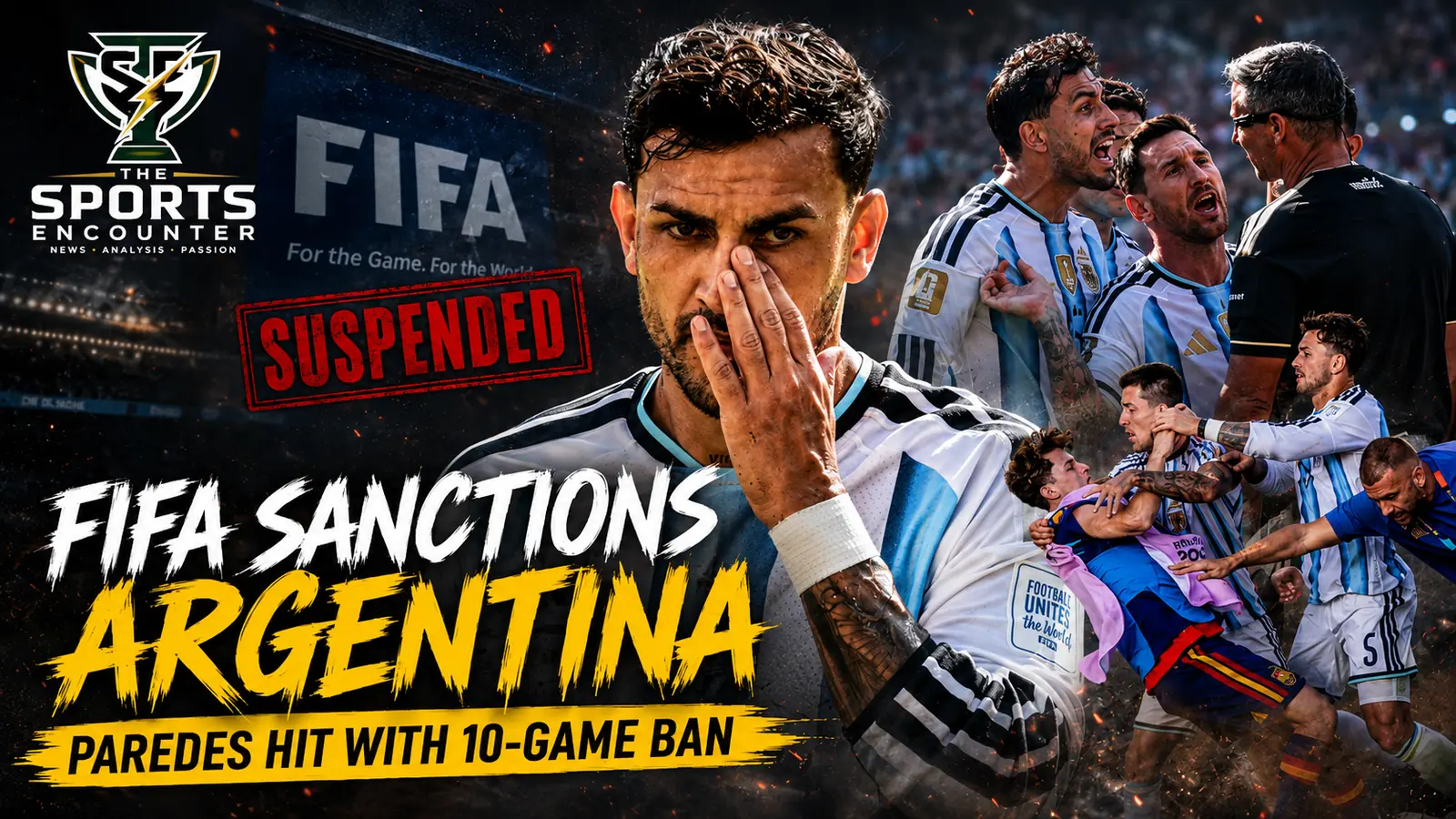
Leandro Paredes and Argentina players during the fallout from the 2026 FIFA World Cup final as FIFA announces suspensions and disciplinary sanctions.

More than a month after Spain lifted the FIFA World Cup trophy in New Jersey, the fallout from the chaotic scenes that followed the final has landed heavily on Argentina.

FIFA has suspended Leandro Paredes for 10 international matches and Nahuel Molina for seven, while also handing penalties to Thiago Almada, Argentina assistant Roberto Ayala and Spain midfielder Gavi over incidents surrounding the July 19 final.

The punishment goes well beyond individual players. The Argentine Football Association has been fined $321,000 for a wider series of disciplinary breaches during the tournament, while Argentina will also face restrictions on spectator capacity at upcoming home internationals.

The sanctions bring a disciplinary conclusion to a World Cup campaign that ended with Spain beating Argentina 1-0 after extra time at New York New Jersey Stadium. The Sports Encounter’s full World Cup final report detailed how Ferran Torres scored the decisive goal in the 106th minute after Spain had controlled long periods of the match.

FIFA Sanctions After Spain vs Argentina World Cup Final

Player / OrganizationSanctionFineReason / Context
Leandro Paredes10-match suspension$90,000Three assault counts linked to the post-final confrontation
Nahuel Molina7-match suspension$90,000Two assault counts plus an unsporting-behavior charge
Thiago Almada1-match suspension$30,000Unsporting behavior
Roberto Ayala3-match suspension$30,000Assault-related disciplinary case
Gavi1-match suspension$30,000Unsporting behavior
Argentine Football AssociationStadium-capacity sanctions and anti-discrimination requirements$321,000Multiple breaches across the World Cup

According to Reuters, Paredes received the longest suspension after facing three assault counts. Molina was charged over two alleged assault incidents, including one attempted act, as well as unsporting behavior.

Almada and Gavi were each suspended for one match for unsporting behavior, while Ayala received a three-game ban after being charged in connection with the confrontation.

What Happened After the World Cup Final?

The trouble began after the final whistle on July 19.

Spain had just completed a historic victory that secured the country’s second men’s world title. Ferran Torres’ extra-time goal finally broke Argentina’s resistance after Emiliano Martínez had produced an extraordinary goalkeeping performance.

As Spanish substitutes and staff moved onto the field to celebrate, tempers flared. Paredes became involved in a confrontation with Gavi, and a larger group of players and staff quickly gathered around the incident.

The images created an uncomfortable final scene for a tournament that had already produced enough controversy around officiating, security, crowd behavior and political messaging.

FIFA formally announced on July 29 that its Disciplinary Committee had opened proceedings following the final. The governing body’s official disciplinary update identified Paredes, Molina and Ayala in relation to potential assault violations, while Molina, Almada and Gavi also faced proceedings related to unsporting behavior.

Those proceedings have now produced punishments that will follow Argentina well beyond the World Cup.

Paredes Pays the Heaviest Price

Paredes’ 10-game suspension is the most significant individual penalty arising from the final.

Ten international matches can cover a substantial portion of a national team’s competitive calendar, meaning the punishment could disrupt Argentina’s plans well into their post-World Cup transition.

The midfielder had been an important part of Argentina’s tournament squad, particularly as Lionel Scaloni managed difficult knockout matches that often required experience and physical control.

Argentina’s road to the final had repeatedly tested that depth. The defending champions needed extra time to beat Switzerland 3-1 in the quarterfinal, a match covered in The Sports Encounter’s report on Argentina’s hard-fought win over Switzerland.

They then produced one of the tournament’s most dramatic comebacks against England, recovering from a late deficit to win 2-1 and reach the final. Our Argentina vs England semifinal report captured how Lionel Messi helped create both late goals.

The semifinal also generated controversy away from the football.

AFA Punishment Covers More Than the Final Brawl

The $321,000 fine imposed on the Argentine Football Association is tied to several disciplinary issues from across the World Cup rather than only the post-final confrontation.

FIFA’s original proceedings cited possible breaches involving team misconduct, discriminatory chants and gestures, security protocols, inappropriate messages and the use of sporting events for non-sporting demonstrations.

One prominent case involved a banner displayed following Argentina’s semifinal victory over England bearing the message “Las Malvinas Son Argentinas,” referring to the Falkland Islands dispute.

The political controversy featured prominently in The Sports Encounter’s analysis of what went wrong for England against Argentina, which examined both the tactical collapse that cost England a place in the final and the tension surrounding the post-match scenes.

FIFA had already made clear in its July disciplinary announcement that using a sporting event for demonstrations of a non-sporting nature could constitute a violation of its disciplinary code.

Argentina Face Home Crowd Restrictions

The AFA’s punishment also carries consequences for Argentina supporters.

FIFA ordered Argentina to play its next two home internationals with attendance limited to 50 percent of stadium capacity. However, part of the sanction has been suspended subject to a probationary period.

Reuters reported that implementation of one of the two capacity-restricted matches, along with $100,000 of the financial sanction, has been suspended. That distinction means Argentina faces one immediate restricted-capacity home fixture, while the additional sanction remains hanging over the association depending on compliance during the probationary period.

FIFA has also directed that $100,000 be invested in an anti-discrimination plan.

That turns the punishment into something broader than a fine. The governing body is attaching future conduct and remedial measures to the disciplinary outcome.

Gavi’s Ban Adds a Spanish Footnote to the Fallout

Spain did not escape the disciplinary process entirely.

Gavi received a one-game suspension and a $30,000 fine for unsporting behavior.

The punishment is minor compared with those imposed on Paredes and Molina, but it ensures the final’s disorder also carries a sporting consequence for the world champions.

Spain had arrived at the final after producing one of the most controlled knockout runs of the tournament. They beat France 2-0 in the semifinal, with The Sports Encounter’s Spain vs France analysis highlighting the tactical discipline that eventually carried into the final.

That control defined Spain’s football throughout the decisive stages. FIFA itself later described the champions as a team that had controlled virtually every phase of the tournament, from pressing and possession to transition play and set pieces, in its post-tournament review of Spain’s title.

The Final Already Had Enough Football Drama

The disciplinary fallout feels especially unfortunate because the final itself had produced a compelling football story without needing anything after the whistle.

Spain entered the match as a side increasingly comfortable controlling possession and territory, while Argentina arrived with Messi still driving a title defense that had survived several difficult knockout tests.

The scale of the occasion was evident well before kickoff. The Sports Encounter’s Argentina vs Spain final preview followed the ticket demand, team news, tactical questions and global attention surrounding the matchup.

Once the game began, Spain controlled the ball while Argentina defended deeper and relied heavily on Martínez. Enzo Fernández’s second yellow card left Argentina with 10 players heading into extra time, and Torres eventually scored the winner.

The result placed Spain’s 2026 generation alongside the champions of 2010. Our feature on Spain’s two World Cup-winning generations explored the connection between Andrés Iniesta’s Johannesburg winner and Torres’ decisive moment in New Jersey.

The brawl then shifted attention from that football history toward disciplinary hearings that lasted into August.

Argentina Are Preparing an Appeal

The case may not be finished.

The AFA intends to challenge the sanctions and plans to request the full grounds behind FIFA’s decisions before submitting an appeal.

According to Reuters, the association is particularly focused on reducing the suspensions imposed on Paredes and Molina. Argentine officials have also indicated that the dispute could eventually reach the Court of Arbitration for Sport if necessary.

That creates two separate questions.

The first is whether FIFA’s Appeal Committee reduces any of the individual bans or organizational sanctions. The second is how much of the punishment Argentina ultimately serves before the legal process is exhausted.

Until an appeal succeeds, the sanctions remain the operative disciplinary outcome.

What the Suspensions Mean for Argentina

Paredes and Molina are experienced internationals, and losing them for extended periods complicates the rebuilding process after a World Cup in which several members of Argentina’s core were already approaching the later stages of their international careers.

Messi’s tournament had again placed him among the competition’s most influential players. He ranked prominently in The Sports Encounter’s Top 10 Players of the FIFA World Cup 2026 as Argentina continued relying on his creativity throughout the knockout rounds.

The team must now move forward from the loss to Spain while also managing suspensions, institutional sanctions and the possibility of a prolonged appeals process.

Molina’s seven-game absence could be particularly disruptive because full-back continuity matters to Argentina’s defensive structure. Paredes’ 10-game ban removes an experienced midfield option who has spent years operating inside Scaloni’s tactical system.

Almada’s one-match suspension is easier to absorb, but the combined penalties create another layer of change for a national team already facing questions about its next cycle.

A World Cup Story That Refuses to End

The 2026 World Cup officially ended on July 19, but several of its most contentious stories have continued well beyond the final.

Spain left New Jersey with the trophy. Argentina left with defeat, frustration and a disciplinary case that has now produced some of the tournament’s heaviest post-event sanctions.

The punishment also illustrates the range of conduct FIFA is prepared to address under its disciplinary framework. Physical confrontations, discriminatory behavior, political messaging, crowd conduct and security failures have all been folded into the Argentina case.

For supporters who followed the full tournament through The Sports Encounter’s FIFA World Cup 2026 coverage and schedule, the sanctions provide another reminder that the consequences of a World Cup can continue long after the final whistle.

Argentina can appeal. Paredes and Molina may yet see their bans reduced. Parts of the AFA punishment are already suspended conditionally.

For now, however, FIFA’s message is clear. The confrontation at the end of the World Cup final, combined with the wider disciplinary problems surrounding Argentina’s campaign, has carried a substantial price into the next international cycle.

Continue Reading

Breaking News

Can FIFA Oust Gianni Infantino? Regional Powerhouses Now Weigh Historic No-Confidence Vote

Gianni Infantino is facing the most serious political challenge of his FIFA presidency as UEFA, the AFC and CONCACAF discuss a possible no-confidence move. With club pressure rising and the 2027 election approaching, the battle is becoming a test of who really controls world soccer.

Jovana Zlatova

Published

on

Gianni Infantino at the center of a cinematic FIFA power struggle as UEFA, AFC and CONCACAF weigh a possible no-confidence move against the FIFA president.

Gianni Infantino survived the collapse of his most controversial commercial proposal.

He may now have to survive something much more dangerous.

Senior figures familiar with discussions inside world soccer say UEFA, the Asian Football Confederation and CONCACAF are considering whether to pursue a vote of no confidence against the FIFA president, potentially opening the first such challenge to a sitting leader in the governing body’s 122-year history.

The development moves FIFA’s governance crisis into a new phase.

This is no longer only about angry statements, resignations, commercial disagreements or promises to revisit internal processes. The discussion has reached the question of whether Infantino should remain in office at all.

According to Reuters, the three confederations are weighing a possible no-confidence move after the collapse of Infantino’s proposal to sell private investors a minority stake in a new commercial entity that would have controlled major FIFA commercial rights, including those linked to the World Cup.

Infantino has said he intends to seek re-election at the scheduled FIFA Congress in March 2027.

His opponents are now discussing whether to wait that long.

For continued coverage of the politics, business and competitive consequences surrounding world soccer, follow The Sports Encounter’s soccer coverage and our FIFA World Cup 2026 hub.

The FIFA Crisis at a Glance

IssueCurrent Position
FIFA PresidentGianni Infantino
Next scheduled electionMarch 2027 FIFA Congress
Presidential nomination deadlineNovember 18, 2026
Confederations discussing no-confidence optionUEFA, AFC and CONCACAF
FIFA member associations211
Associations needed to require an Extraordinary CongressAt least one-fifth of membership, equivalent to 43 associations
Current formal no-confidence ruleFIFA statutes contain no specific provision governing such a vote
Infantino supportStill significant, particularly in Africa and among several Arab associations
Club pressureEuropean Football Clubs has warned of possible future Club World Cup non-participation

Why the No-Confidence Discussion Changes Everything

The pressure on Infantino has been building for weeks.

Opposition hardened after FIFA explored creating a commercial entity involving private investors and placing major revenue-generating assets under that structure.

UEFA, the AFC and CONCACAF opposed the proposal and later accused FIFA’s leadership of failures involving transparency, consultation and governance.

That was already an extraordinary level of institutional resistance.

A no-confidence discussion is different.

It moves the dispute from disagreement over policy into a direct confrontation over leadership.

Reuters reported that it could find no previous instance of a FIFA Congress holding a no-confidence vote against a sitting president.

If such a process were attempted, FIFA would be entering largely untested territory.

The Question Is No Longer Whether Infantino Has Critics

He clearly does.

The more important question is whether those critics can organize enough member associations to turn political anger into constitutional action.

That distinction matters because FIFA is not governed according to the commercial power of leagues or the global popularity of individual national teams.

Its Congress operates through national associations.

Each attending member association has one vote.

Brazil gets one.

Germany gets one.

Malawi gets one.

Qatar gets one.

Canada gets one.

That structure has always been central to FIFA politics, and it remains Infantino’s strongest protection.

How Could an Extraordinary FIFA Congress Be Triggered?

Under FIFA’s statutes, the FIFA Council can convene an Extraordinary Congress at any time.

It is also required to call one when at least one-fifth of FIFA’s 211 member associations submit a written request specifying the agenda items they want considered.

That works out to 43 associations.

Once the threshold is reached, the Extraordinary Congress must be convened within three months.

The procedural route therefore exists.

The harder question comes afterward.

FIFA’s statutes do not contain a dedicated provision setting out exactly how a no-confidence vote against the president should operate.

That means any attempt to remove Infantino would likely involve close scrutiny of FIFA’s statutes, Congress powers and applicable Swiss association law.

The Reuters report on the discussions makes clear that the constitutional uncertainty is part of the political calculation facing Infantino’s opponents.

Forty-Three Associations Can Call the Meeting. That Does Not Mean They Can Win It.

This is where the numbers become politically important.

UEFA alone has enough member associations in theory to clear the 43-association threshold required to demand an Extraordinary Congress.

But a request for a meeting and a successful removal vote are entirely different things.

Confederations are not monolithic voting blocs.

A national association can disagree with its confederation president.

It can publicly support governance reform while declining to remove Infantino.

It can criticize the commercial proposal but still prefer to settle the issue through the March 2027 election.

That is why the combined political weight of UEFA, the AFC and CONCACAF cannot simply be added together and treated as a guaranteed anti-Infantino vote.

Their influence is enormous.

Their control over every individual member vote is not.

The Biggest Risk for Infantino’s Opponents: Call the Vote and Lose

This may be the most important strategic issue in the entire crisis.

One senior figure told Reuters that an unsuccessful no-confidence attempt could strengthen Infantino rather than weaken him.

The logic is straightforward.

If his opponents call an unprecedented Congress, campaign openly for his removal and then fail to secure enough votes, Infantino could claim something far more powerful than internal management support.

He could claim democratic validation from FIFA’s membership.

That result would arrive only months before the scheduled March 2027 presidential election.

It could discourage potential challengers.

It could expose divisions within UEFA, Asia and CONCACAF.

It could allow Infantino to portray the revolt as a failed attempt by powerful regional interests to override smaller national associations.

That is why anger alone will not be enough.

His opponents need arithmetic.

Why the World Cup Investment Proposal Caused Such a Rupture

The crisis grew out of Infantino’s attempt to reshape the commercial architecture surrounding FIFA’s biggest assets.

The abandoned proposal centered on a new FIFA commercial entity in which private investors would have been able to acquire a minority stake.

The entity would have controlled commercial rights connected to FIFA’s flagship properties, including the World Cup.

For FIFA’s leadership, the argument was that outside capital could accelerate investment and provide member associations with major new development funding.

Under the proposal described by Reuters, associations could have accessed up to $20 million in one-off capital for projects covering infrastructure, coaching, national teams, competitions, grassroots soccer and the women’s game.

For critics, the financial upside did not answer the governance question.

Who would control the commercial future of the World Cup?

How much influence would private investors gain?

How had such a fundamental proposal reached an advanced stage without broader consultation?

Those concerns turned a financing proposal into a fight over ownership, transparency and authority.

A $15 Billion Cycle Makes the Stakes Enormous

This is not a dispute over a minor commercial department.

FIFA expects revenue for its 2023-2026 cycle to exceed $15 billion, with the 2026 World Cup generating the largest share of that income.

The tournament has become a financial engine supporting FIFA’s development programs across 211 associations.

Infantino has repeatedly argued that FIFA’s revenue allows the organization to fund soccer around the world, particularly in countries whose domestic associations could not sustain the same level of activity without FIFA support.

That argument matters politically.

For wealthy European associations, questions about commercial control may dominate the debate.

For smaller federations, the first question may be much simpler.

What happens to our funding?

That is where the political fight becomes complicated.

Infantino Still Has Support, Especially in Africa

Anyone writing Infantino’s political obituary now would be moving much too quickly.

CAF President Patrice Motsepe has said Africa continues to support him and that FIFA’s membership should decide his future through the electoral process.

That backing matters because CAF represents one of FIFA’s largest regional voting blocs.

Several Arab associations have also publicly supported Infantino.

Reuters reported that six Arab football associations, including Qatar and 2030 World Cup co-host Morocco, backed him last week.

FIFA’s management leadership also reaffirmed support for Infantino after a crisis meeting in Morocco earlier this month.

Those endorsements do not guarantee survival.

They do show why the opposition remains wary of testing his support prematurely.

Smaller Associations May Decide the Future of the Most Powerful Man in Soccer

This is where FIFA’s one-country, one-vote system becomes decisive.

The governing body’s political structure gives smaller national associations influence that bears little relationship to commercial market size.

That is intentional.

It prevents the largest soccer economies from formally controlling FIFA by themselves.

For Infantino, it has also created a political base built around development investment and direct relationships with associations far beyond Europe’s biggest federations.

Football Association of Malawi President Fleetwood Haiya captured that reality when he challenged Infantino’s opponents to explain what they would offer instead.

His position was pragmatic.

If someone wants Malawi’s vote, that person needs to explain what a different FIFA would mean for Malawi.

That is the campaign any challenger will eventually have to fight.

The November 18 Deadline Is Becoming More Important by the Day

Infantino intends to seek another term at the March 2027 FIFA Congress.

Yet no challenger has publicly entered the race.

The deadline for presidential nominations is November 18.

That leaves his opponents with a strategic problem.

Removing a sitting president is one challenge.

Replacing him with someone capable of holding together 211 associations is another.

If UEFA, the AFC and CONCACAF want leadership change, the absence of an agreed alternative could become a major weakness.

A campaign built entirely around removing Infantino eventually has to answer a question that every federation will ask:

Who comes next?

Kevin Lamour’s Departure Deepens the Internal Governance Problem

The crisis escalated further this week with the departure of FIFA Chief Operating Officer Kevin Lamour.

Lamour had criticized the private-investment proposal and said employees had been deceived over what he characterized as the project of one person.

FIFA did not publicly give a reason for his departure in the account reported by Reuters.

From a governance perspective, the optics are difficult.

A controversial commercial proposal collapses.

Senior confederations challenge the president.

An executive who openly criticized the project then leaves the organization.

Even where individual events have separate explanations, the cumulative effect is a perception of institutional fracture.

Sandor Csanyi’s Withdrawal of Support Is Symbolically Important

FIFA Vice President Sandor Csanyi also withdrew his support for Infantino this week.

He described Lamour’s departure as the final straw.

One official changing position does not determine a FIFA presidency.

But defections matter because they can change perceptions.

Political leadership often survives controversy while allies believe the leader will ultimately remain in power.

Once senior insiders start moving away, other officials begin reassessing the cost of staying.

That does not mean a cascade is inevitable.

It means Infantino can no longer treat every senior endorsement as permanent.

UEFA, AFC and CONCACAF Are an Extraordinary Coalition

The institutional alignment itself deserves attention.

UEFA represents Europe’s national associations and the richest domestic soccer ecosystem in the world.

The AFC covers Asia, including some of the fastest-growing commercial markets and some of the biggest state-backed investment in global soccer.

CONCACAF governs North America, Central America and the Caribbean, including the region that just hosted the 2026 World Cup.

These three organizations do not naturally agree on every question.

For their leadership to arrive at a common accusation of a fundamental breach of trust reflects how serious the commercial dispute became.

But again, confederation leadership and individual national votes are not interchangeable.

Then There Is the Club World Cup Threat

Infantino’s problem is no longer confined to federations.

European Football Clubs, chaired by Paris Saint-Germain president Nasser Al-Khelaifi and representing more than 800 clubs, is aligned with those pushing for change, according to Reuters.

The organization has warned FIFA that its members could refuse to participate in future men’s and women’s Club World Cups unless governance concerns and the relationship between FIFA and clubs are addressed.

Clubs do not vote in FIFA presidential elections.

They possess another kind of power.

Players.

Brands.

Television audiences.

Sponsors.

Supporters.

Commercial value.

A Club World Cup without leading European clubs would remain a tournament in name.

Its global market value would be a different question entirely.

Could Clubs Really Boycott a FIFA Competition?

Threatening non-participation and actually carrying it out are different steps.

Clubs have contractual, domestic and international obligations.

Players themselves may want to compete.

Broadcast agreements and sponsorship relationships complicate collective action.

There would also be enormous pressure on individual clubs tempted to break ranks.

Still, FIFA cannot dismiss the warning.

The modern Club World Cup depends heavily on elite clubs because FIFA is trying to turn the tournament into a global commercial property capable of competing for the same attention as the Champions League and major domestic competitions.

If those clubs question FIFA’s governance, the argument becomes commercial as well as political.

The Real Battle May Be Over Who Controls World Soccer

The Infantino crisis has exposed a deeper tension that existed long before the current commercial proposal.

Who ultimately controls the game?

FIFA has 211 national associations and claims global authority.

The confederations control major regional competitions.

Domestic leagues create much of the week-to-week audience.

Elite clubs employ the world’s best players and generate enormous commercial value.

Players are increasingly challenging overloaded calendars.

Supporters fund the entire ecosystem through tickets, television subscriptions, merchandise and attention.

Those interests overlap.

They also collide.

The World Cup investment dispute has become a focal point because it touches the most valuable symbolic asset in international soccer.

Who gets to commercialize the World Cup, and under what authority?

That is not merely a finance question.

It is a power question.

Infantino’s Strongest Argument Is FIFA’s Development Model

Infantino’s political strength has always been easier to understand when viewed outside Europe’s major soccer economies.

FIFA Forward funding has helped finance pitches, training centers, competitions, women’s soccer, youth development and national association operations across many countries.

For federations with limited domestic commercial revenue, those grants are not abstract.

They can determine whether infrastructure gets built.

The proposed investment plan offered the possibility of dramatically larger one-time funding.

That helps explain why opposition was not universal.

A federation president in a developing market may look at the same proposal as a European governing body and reach a completely different conclusion.

One sees commercial risk.

The other sees a new national training center.

Why Governance Still Matters Even if the Money Is Attractive

Financial benefit does not remove the need for process.

That is the heart of the criticism being directed toward FIFA.

A proposal affecting the commercial rights of the World Cup cannot be judged only by how much money it might raise.

The process matters.

The ownership structure matters.

The investors matter.

Decision rights matter.

Transparency matters.

Long-term obligations matter.

The question raised by UEFA, the AFC and CONCACAF is whether FIFA’s leadership adequately consulted the wider soccer structure before advancing a proposal with consequences that could have lasted well beyond one presidency.

Could FIFA Operate Normally if Infantino Survives but Loses the Major Confederations?

This may be the uncomfortable question even if Infantino wins every formal vote.

Former International Olympic Committee marketing executive Michael Payne put the dilemma sharply in comments to Reuters.

Winning a narrow majority through smaller associations would establish electoral legitimacy.

It would not automatically repair relations with the biggest soccer markets.

A FIFA president theoretically could survive with UEFA leadership, AFC leadership, CONCACAF leadership and powerful clubs publicly hostile to him.

Governing effectively in that environment would be another matter.

Major tournaments require cooperation.

Commercial negotiations require trust.

Calendar agreements require compromise.

Political victory and institutional functionality are not always the same thing.

Could the March 2027 Election Become the Safer Battlefield?

Infantino’s opponents may eventually decide that an unprecedented removal attempt carries too much risk.

The scheduled election offers a clearer constitutional mechanism.

Find a credible challenger.

Build a coalition.

Campaign among the 211 associations.

Win the vote.

The problem is time.

The nomination deadline is November 18.

A challenger needs more than name recognition.

He or she would need relationships across Africa, Asia, Oceania, the Caribbean, Europe and South America.

A candidate presented as Europe’s answer to Infantino may struggle elsewhere.

A genuine challenge requires a global coalition.

Why Infantino Could Still Win Again

The current headlines can create the impression that his position is collapsing everywhere.

The evidence is more complicated.

He still has declared support.

He still controls the presidency.

FIFA’s management leadership has backed him.

CAF remains supportive.

Several Arab associations remain supportive.

No confirmed challenger has entered the election.

No 43-association request for an Extraordinary Congress has been reported as formally submitted.

No no-confidence vote has been scheduled.

Those facts are important.

At present, this is an escalating political threat rather than a completed removal process.

What Would Have to Happen Next?

Several developments would transform the situation from political pressure into formal action.

  • At least 43 FIFA associations formally request an Extraordinary Congress.
  • The proposed agenda explicitly addresses Infantino’s leadership.
  • UEFA, AFC and CONCACAF demonstrate that their national associations will actually vote together.
  • More associations currently backing Infantino defect.
  • A credible presidential alternative emerges before November 18.
  • Major clubs coordinate a genuine Club World Cup boycott threat rather than individual warnings.

Until some of those things happen, Infantino remains in office and remains a candidate for another term.

No Sponsor Has Publicly Broken With FIFA

One group has remained conspicuously quiet.

FIFA’s major commercial partners.

Reuters reported that no sponsor had publicly criticized Infantino over the crisis.

That does not necessarily mean sponsors are unconcerned.

Large corporations often avoid entering governance disputes until financial or reputational risk becomes unavoidable.

Payne suggested that sponsors were watching the situation with disbelief after FIFA had come through a commercially successful World Cup only to enter a governance crisis immediately afterward.

If major sponsors begin publicly demanding answers, the political equation would change again.

The Timing Could Hardly Be Worse for FIFA

The 2026 World Cup should have been a victory lap.

The first 48-team tournament had concluded across the United States, Canada and Mexico.

FIFA could point to enormous revenues, expanded participation and unprecedented commercial scale.

Instead, attention has shifted rapidly from the tournament itself to the governance of the institution behind it.

That is why the current crisis feels particularly damaging.

FIFA has moved from its biggest showcase directly into a battle over whether its president can retain the confidence of some of the most powerful institutions in the game.

A No-Confidence Vote Would Be Historic, but History Does Not Guarantee Success

The absence of precedent gives the idea enormous headline value.

It also creates uncertainty.

FIFA has survived extraordinary scandals before.

Presidents have resigned.

Officials have been suspended.

Investigations have transformed leadership structures.

But a Congress directly confronting a sitting FIFA president through a no-confidence motion would take world soccer into unfamiliar territory.

That uncertainty may explain why the three confederations appear to be weighing their options rather than immediately triggering the process.

TSE Analysis: The Votes Matter More Than the Headlines

Infantino is facing the most dangerous political moment of his presidency.

That much is difficult to dispute.

UEFA, the AFC and CONCACAF discussing a no-confidence mechanism represents a level of coordinated institutional opposition that would have seemed almost unthinkable immediately after the World Cup.

The departure of Kevin Lamour adds internal pressure.

Sandor Csanyi’s withdrawal of support adds another visible defection.

The Club World Cup warning gives clubs their own leverage.

Yet none of those developments, individually or collectively, removes a FIFA president.

Votes do.

Forty-three associations could force the extraordinary meeting.

A much broader coalition would be needed to make the political outcome safe enough for Infantino’s opponents to risk the confrontation.

That is why the next stage will probably take place less in public statements and more in private conversations with national associations.

Who is willing to sign?

Who is willing to vote?

Who changes sides if a credible successor appears?

And who decides that keeping Infantino remains financially or politically preferable to entering an uncertain post-Infantino FIFA?

The Bigger Question Is What FIFA Looks Like After This

Even if Infantino survives until March.

Even if he wins another election.

Even if the no-confidence idea never reaches a Congress.

The relationship between FIFA and several of world soccer’s most powerful institutions has changed.

The investment proposal exposed a disagreement over commercial control.

The aftermath exposed a disagreement over trust.

Those are harder to repair.

The World Cup will continue.

Regional competitions will continue.

Clubs will continue playing.

But the machinery connecting those parts of the sport depends on cooperation among people who currently appear to have very different ideas about how FIFA should be governed.

That is why the most consequential line in this story is not whether Infantino resigns tomorrow.

It is that three regional power centers are now discussing whether they should try to remove him at all.

Once a conversation reaches that point, returning to business as usual becomes much harder.

FAQs

Are UEFA, AFC and CONCACAF trying to remove Gianni Infantino?

Reuters reported on August 20 that senior figures familiar with the discussions said UEFA, the AFC and CONCACAF were considering whether to pursue a no-confidence vote against the FIFA president. No such vote had been formally scheduled at the time of the report.

Can FIFA hold a vote of no confidence in its president?

FIFA’s statutes contain no specific provision governing a presidential no-confidence vote. However, FIFA Congress is the organization’s supreme legislative body, and an Extraordinary Congress can be called under the statutes. Any removal attempt would therefore involve interpretation of Congress powers and the relevant legal framework.

How many countries are needed to call an Extraordinary FIFA Congress?

At least one-fifth of FIFA’s 211 member associations must make a written request. That means 43 associations.

Does UEFA have enough members to trigger an Extraordinary Congress by itself?

In numerical terms, yes. UEFA has more than 43 member associations. Whether enough individual federations would formally sign such a request is a separate political question.

When is the next FIFA presidential election?

Infantino intends to seek re-election at the scheduled FIFA Congress in March 2027.

When is the deadline for candidates to challenge Infantino?

The nomination deadline reported for the presidential election is November 18, 2026.

Why are UEFA, AFC and CONCACAF angry with Infantino?

The dispute centers on FIFA’s abandoned proposal to sell private investors a minority stake in a new commercial entity controlling major FIFA commercial rights. Critics have raised concerns about transparency, consultation and governance.

Does Infantino still have support?

Yes. He retains meaningful support among FIFA member associations, particularly in Africa, while several Arab associations have also publicly backed him.

What role can European clubs play if they have no FIFA vote?

European Football Clubs has warned that clubs could refuse to participate in future men’s and women’s Club World Cups if governance concerns are not addressed. Clubs cannot vote in FIFA Congress but hold substantial sporting and commercial leverage.

Has any FIFA president faced a no-confidence vote before?

Reuters said it could find no previous instance in FIFA’s 122-year history of Congress holding a no-confidence vote against a sitting president.

Continue Reading

FIFA World Cup 2026 Hub

Gianni Infantino and UEFA officials featured in a cinematic FIFA governance graphic highlighting the escalating legal and political fight over the abandoned FIFA Forward Enterprise plan. Gianni Infantino and UEFA officials featured in a cinematic FIFA governance graphic highlighting the escalating legal and political fight over the abandoned FIFA Forward Enterprise plan.
Breaking News4 days ago

FIFA Accuses UEFA of “Smear Campaign” as Infantino Fight Enters US Courts

FIFA has accused UEFA of using U.S. court proceedings as part of a smear campaign against Gianni Infantino as the...

Leandro Paredes and Argentina players during the fallout from the 2026 FIFA World Cup final as FIFA announces suspensions and disciplinary sanctions. Leandro Paredes and Argentina players during the fallout from the 2026 FIFA World Cup final as FIFA announces suspensions and disciplinary sanctions.
Breaking News2 weeks ago

FIFA Hits Argentina with Heavy World Cup Sanctions as Paredes Gets 10-Game Ban

FIFA has handed Argentina major disciplinary sanctions after the 2026 World Cup final brawl, including a 10-game suspension for Leandro...

Gianni Infantino at the center of a cinematic FIFA power struggle as UEFA, AFC and CONCACAF weigh a possible no-confidence move against the FIFA president. Gianni Infantino at the center of a cinematic FIFA power struggle as UEFA, AFC and CONCACAF weigh a possible no-confidence move against the FIFA president.
Breaking News3 weeks ago

Can FIFA Oust Gianni Infantino? Regional Powerhouses Now Weigh Historic No-Confidence Vote

Gianni Infantino is facing the most serious political challenge of his FIFA presidency as UEFA, the AFC and CONCACAF discuss...

AFC President Sheikh Salman and Qatar football officials depicted in a dramatic split-screen graphic as the Gianni Infantino crisis deepens divisions inside Asian football. AFC President Sheikh Salman and Qatar football officials depicted in a dramatic split-screen graphic as the Gianni Infantino crisis deepens divisions inside Asian football.
Editor's Choice3 weeks ago

AFC-Qatar Rift Deepens as Infantino Crisis Divides Asian Football

AFC President Sheikh Salman bin Ebrahim Al-Khalifa has hit back at Qatar after its football federation challenged the confederation’s stance...

Kevin Lamour and Gianni Infantino feature in a FIFA governance graphic highlighting Lamour’s departure after criticism of the abandoned World Cup investment plan. Kevin Lamour and Gianni Infantino feature in a FIFA governance graphic highlighting Lamour’s departure after criticism of the abandoned World Cup investment plan.
Breaking News3 weeks ago

Why FIFA COO Kevin Lamour Was Shown the Exit Way

FIFA COO Kevin Lamour has left the organization weeks after accusing staff of being deceived over the abandoned FIFA Forward...

Gianni Infantino pictured against an Ireland football backdrop as the FAI withdraws support for his FIFA re-election campaign. Gianni Infantino pictured against an Ireland football backdrop as the FAI withdraws support for his FIFA re-election campaign.
Breaking News4 weeks ago

Ireland Turns on Infantino as FIFA Election Revolt Spreads Beyond Europe’s Heavyweights

Ireland has withdrawn its support for Gianni Infantino’s re-election as FIFA president, adding another national association to a widening governance...

Donald Trump backs Gianni Infantino as UEFA, AFC and CONCACAF intensify pressure on the FIFA president ahead of the 2027 election. Donald Trump backs Gianni Infantino as UEFA, AFC and CONCACAF intensify pressure on the FIFA president ahead of the 2027 election.
Breaking News4 weeks ago

Donald Trump Comes to Gianni Infantino’s Rescue as FIFA Crisis Turns Political

Donald Trump has thrown his support behind Gianni Infantino as UEFA, AFC and CONCACAF deepen their challenge to the FIFA...

Gianni Infantino appears under intense scrutiny as UEFA, AFC and CONCACAF challenge his FIFA leadership over the abandoned World Cup commercial rights stake-sale plan. Gianni Infantino appears under intense scrutiny as UEFA, AFC and CONCACAF challenge his FIFA leadership over the abandoned World Cup commercial rights stake-sale plan.
Editor's Choice4 weeks ago

UEFA, AFC and CONCACAF Turn on Infantino as FIFA Crisis Becomes a Fight for His Presidency

UEFA, the AFC and CONCACAF have jointly accused FIFA President Gianni Infantino of breaking trust over the abandoned World Cup...

Gianni Infantino stands under intense scrutiny in a cinematic FIFA leadership crisis scene, surrounded by press cameras, officials, global football imagery, and the headline “Infantino Under Pressure.” Gianni Infantino stands under intense scrutiny in a cinematic FIFA leadership crisis scene, surrounded by press cameras, officials, global football imagery, and the headline “Infantino Under Pressure.”
Editor's Choice4 weeks ago

FIFA Says Infantino Is Being Undermined as Leadership Crisis Turns Into a Battle Over Legitimacy

FIFA has escalated its defense of Gianni Infantino, warning of a concerted effort to undermine its president as the fallout...

Lionel Messi raises both index fingers toward the sky in Argentina’s No. 10 jersey during a match, illustrating the uncertainty around when the 39-year-old legend will retire from international football. Lionel Messi raises both index fingers toward the sky in Argentina’s No. 10 jersey during a match, illustrating the uncertainty around when the 39-year-old legend will retire from international football.
Editor's Choice4 weeks ago

When Will Lionel Messi Retire? Argentina President Says Only Messi Has the Answer

Lionel Messi’s retirement remains an open question after his eight-goal 2026 World Cup. Argentina president Claudio Tapia says only Messi...

Cinematic FIFA governance graphic showing a somber football executive at a FIFA Congress podium, a glowing FA letter stamped “Support Withdrawn,” the headline “FA Turns Against Infantino,” international flags, a connected globe, and The Sports Encounter logo. Cinematic FIFA governance graphic showing a somber football executive at a FIFA Congress podium, a glowing FA letter stamped “Support Withdrawn,” the headline “FA Turns Against Infantino,” international flags, a connected globe, and The Sports Encounter logo.
Breaking News1 month ago

English FA Turns Its Back on Gianni Infantino, Withdraws Support for Re-Election

The English FA has formally withdrawn its support for Gianni Infantino’s bid for another term as FIFA president, adding major...

A suited FIFA official bows at a crisis meeting beneath a fractured world football graphic, surrounded by delegates, torn $4.2 billion deal papers and the headline “World Cup Not for Sale.” A suited FIFA official bows at a crisis meeting beneath a fractured world football graphic, surrounded by delegates, torn $4.2 billion deal papers and the headline “World Cup Not for Sale.”
Editor's Choice1 month ago

FIFA President Apologizes to Member Nations After FIFA World Cup Selloff Plan Fails to Inspire

FIFA has apologized to its member associations after abandoning a controversial plan to sell a 20% stake in a new...

Gianni Infantino stands under pressure as FIFA officials hold crisis talks in Morocco following the rejected World Cup commercial stake sale proposal. Gianni Infantino stands under pressure as FIFA officials hold crisis talks in Morocco following the rejected World Cup commercial stake sale proposal.
Breaking News1 month ago

Infantino in Survival Mode After World Cup Stake Sale Idea Results in Global Revolt

Gianni Infantino’s abandoned World Cup commercial rights proposal has triggered an internal FIFA revolt, lost European support, and drawn a...

Gianni Infantino stands isolated at a FIFA podium as Arsène Wenger, Mattias Grafstrom, Prince Ali and divided football officials surround him, with fractured blue-and-red VFX imagery, The Sports Encounter logo, and the headline “Allies Break Ranks.” Gianni Infantino stands isolated at a FIFA podium as Arsène Wenger, Mattias Grafstrom, Prince Ali and divided football officials surround him, with fractured blue-and-red VFX imagery, The Sports Encounter logo, and the headline “Allies Break Ranks.”
Editor's Choice1 month ago

Crisis Plagues FIFA as Wenger, Grafstrom and Federations Break Ranks

Gianni Infantino’s grip on FIFA is under growing pressure after senior officials, European federations and former allies distanced themselves from...

Gianni Infantino stands between representatives of smaller football nations and the rejected UEFA and CONCACAF blocs, with a glowing world map, voting imagery, and the headline “Small Nations, Big Power” beneath The Sports Encounter logo. Gianni Infantino stands between representatives of smaller football nations and the rejected UEFA and CONCACAF blocs, with a glowing world map, voting imagery, and the headline “Small Nations, Big Power” beneath The Sports Encounter logo.
Editor's Choice1 month ago

Infantino Looks to Smaller Nations After UEFA, CONCACAF Snub

Gianni Infantino’s FIFA future may depend on smaller and emerging nations after UEFA and CONCACAF lost confidence in his leadership....

Gianni Infantino appears under a fractured World Cup trophy as UEFA, AFC, and other football stakeholders reject FIFA’s failed private investment stake plan. Gianni Infantino appears under a fractured World Cup trophy as UEFA, AFC, and other football stakeholders reject FIFA’s failed private investment stake plan.
Editor's Choice1 month ago

FIFA’s World Cup Stake Plan Failed in Three Days. The Damage to Gianni Infantino May Last Much Longer

FIFA’s attempt to sell a 20% stake in a new World Cup commercial entity collapsed within days after a global...

Cinematic tribute to Cristiano Ronaldo’s World Cup career, showing his rise, record-breaking goals and six-tournament journey on one side, and his emotional final farewell with Portugal on the other, under the headline “Goals. Records. Farewell.” with The Sports Encounter logo. Cinematic tribute to Cristiano Ronaldo’s World Cup career, showing his rise, record-breaking goals and six-tournament journey on one side, and his emotional final farewell with Portugal on the other, under the headline “Goals. Records. Farewell.” with The Sports Encounter logo.
Editor's Choice1 month ago

Cristiano Ronaldo’s World Cup Career: Goals, Records and Final Farewell

Cristiano Ronaldo became the first man to score in six FIFA World Cups, but football’s greatest tournament never gave him...

Cinematic VFX featured image showing fictionalized World Cup legend silhouettes walking toward a glowing stadium tunnel, with farewell confetti, The Sports Encounter logo, and the headline “The Last Dance: World Cup Legends Say Goodbye.” Cinematic VFX featured image showing fictionalized World Cup legend silhouettes walking toward a glowing stadium tunnel, with farewell confetti, The Sports Encounter logo, and the headline “The Last Dance: World Cup Legends Say Goodbye.”
Editor's Choice1 month ago

The Golden Generation Saying Goodbye After the FIFA World Cup 2026

The 2026 World Cup did more than crown a champion. It marked the emotional farewell of a generation that shaped...

Cinematic tribute to Neymar Jr.’s World Cup journey, showing his Brazilian flair and rainbow-flick skill on one side and his pain, injuries and emotional heartbreak on the other, with the headline “Skill. Pain. Legacy.” and The Sports Encounter logo. Cinematic tribute to Neymar Jr.’s World Cup journey, showing his Brazilian flair and rainbow-flick skill on one side and his pain, injuries and emotional heartbreak on the other, with the headline “Skill. Pain. Legacy.” and The Sports Encounter logo.
Editor's Choice1 month ago

Neymar’s World Cup Career: Skill, Pain, and the Rainbow Flick Legacy

Neymar carried Brazil’s World Cup hopes across four tournaments, producing unforgettable goals while enduring injuries, criticism and elimination heartbreak. His...

Cinematic FIFA World Cup 2030 graphic showing the golden trophy at the center of a global football revolt, with protesting delegates, distressed executives, collapsing financial charts, torn investment documents, and the headline “World Cup 2030: Not for Sale?” alongside The Sports Encounter logo. Cinematic FIFA World Cup 2030 graphic showing the golden trophy at the center of a global football revolt, with protesting delegates, distressed executives, collapsing financial charts, torn investment documents, and the headline “World Cup 2030: Not for Sale?” alongside The Sports Encounter logo.
Editor's Choice1 month ago

Is the FIFA World Cup 2030 Not for Sale Anymore?

FIFA’s proposal to sell a minority stake in a $20 billion World Cup commercial company appears to have collapsed after...

ASEAN Championship 2026

English Premier League 2026

NHL 2026

The Hundred 2026

Wimbledon 2026

French Open 2026

Lanka Premier League 2026

Global Super League 2026

The World of LeBron James

NFL 2026-27

Boxing Gloves On

US Open 2026

Breaking News