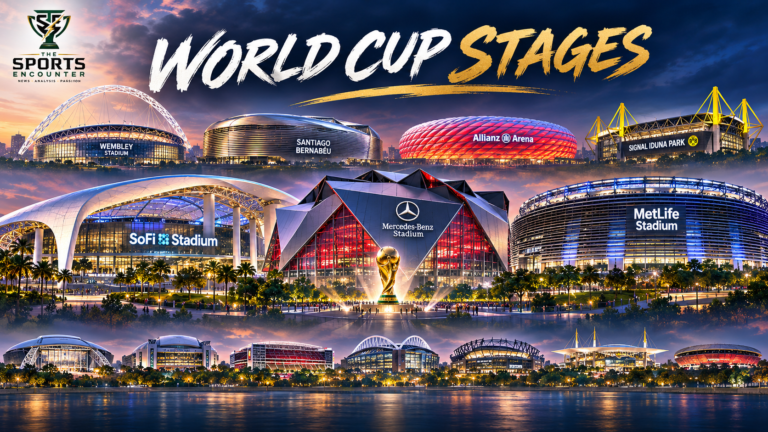
NEW YORK, United States, November 22, 2026: A shimmering silver roof stretching across an enormous sports complex in Los Angeles. Eight retractable roof panels opening like a camera shutter above a soccer field in Atlanta. A giant video screen suspended over the playing surface in Dallas. These were among the extraordinary architectural sights that greeted fans during the 2026 FIFA World Cup. For many international visitors, the stadiums themselves became as fascinating as the matches played inside them.
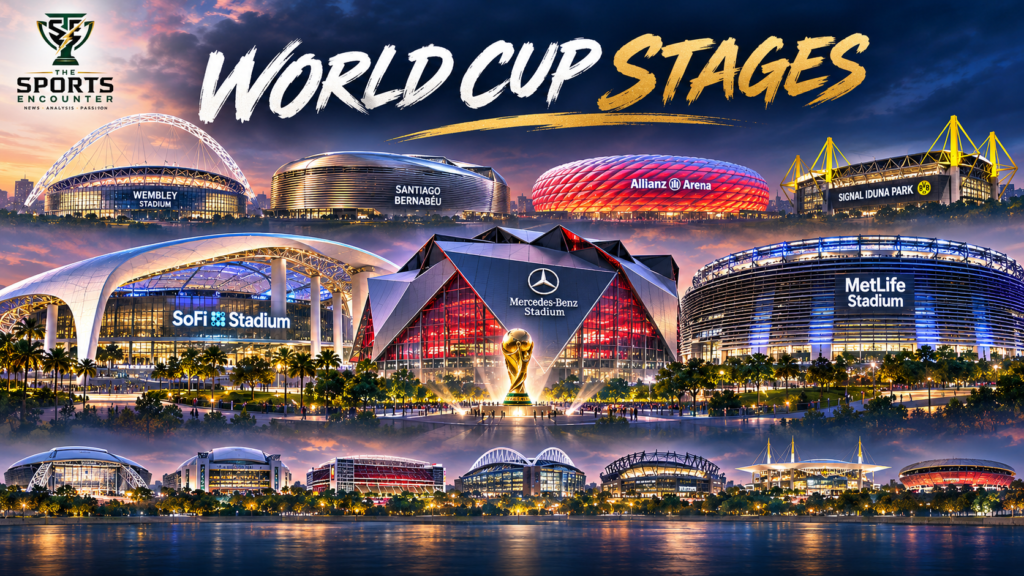
The United States provided 11 of the tournament’s 16 venues, showcasing buildings designed around much more than soccer. The FIFA World Cup 2026 stadiums in America represented a different approach to sports architecture, one shaped by the National Football League, premium hospitality, concerts, major entertainment events and commercial development. Their technology and scale invited comparisons with Wembley Stadium in England, Real Madrid’s renovated Santiago Bernabéu in Spain, Bayern Munich’s Allianz Arena in Germany and Istanbul’s passionate soccer grounds. Yet the most revealing differences concerned how these venues were designed, how they earned money and what kind of experience they offered spectators.
Key Takeaways
- The United States provided 11 of the tournament’s 16 venues, showcasing buildings designed around much more than soccer.
- AT&T Stadium in Arlington, Texas, opened in 2009 and remains one of the most recognizable buildings in American sports.
- MetLife Stadium in East Rutherford, New Jersey, hosted the biggest match of the 2026 tournament.
- One of the least visible architectural challenges of the 2026 World Cup involved the playing surface.
What Made the FIFA World Cup 2026 Stadiums in America So Different?
The distinction begins with the purpose behind their construction.
Story at a glance
What Made the FIFA World Cup 2026 Stadiums in America So Different?
The distinction begins with the purpose behind their construction.
All 11 U.S. FIFA World Cup 2026 Stadiums: Capacity, Home Teams and Other Uses
The following capacities are FIFA’s official tournament configurations, announced in June 2026. They should not be confused with standard NFL seating capacities, which may differ because of field dimensions, broadcasting arrangements, temporary seating and tournament requirements.
SoFi Stadium, Los Angeles: The Arena That Looks Like the Future
Few modern sporting structures have the visual presence of SoFi Stadium in Inglewood, California.
Mercedes-Benz Stadium, Atlanta: Architecture That Moves
Atlanta’s Mercedes-Benz Stadium offers perhaps the most immediately recognizable roof design among America’s World Cup venues.
AT&T Stadium, Dallas: Where Bigger Was Part of the Design
AT&T Stadium in Arlington, Texas, opened in 2009 and remains one of the most recognizable buildings in American sports.
Most of Europe’s legendary soccer stadiums were built around clubs whose supporters attend matches throughout a long domestic season. Their architecture emphasizes proximity to the pitch, crowd acoustics, visibility and a sense of belonging.
American football stadiums have historically followed another commercial model.
An NFL team normally plays only a handful of regular-season home games each year, making the stadium’s ability to generate revenue beyond those fixtures particularly important.
The building must therefore function as a major entertainment destination.
That requirement influences almost every design decision, from the roof and seating bowl to food concessions, luxury suites, loading facilities, digital displays and parking infrastructure.
The 2026 World Cup brought those competing philosophies into direct comparison.
Many American venues offered remarkable scale and technology. European grounds often countered with stronger soccer traditions, supporter identity and stadium configurations specifically designed around the sport.
Neither approach is automatically superior.
The most successful modern stadiums increasingly borrow ideas from both.
All 11 U.S. FIFA World Cup 2026 Stadiums: Capacity, Home Teams and Other Uses
The following capacities are FIFA’s official tournament configurations, announced in June 2026. They should not be confused with standard NFL seating capacities, which may differ because of field dimensions, broadcasting arrangements, temporary seating and tournament requirements.
| World Cup host market | Stadium | FIFA capacity | Regular major tenants |
|---|---|---|---|
| New York/New Jersey | MetLife Stadium | 80,663 | New York Giants, New York Jets |
| Los Angeles | SoFi Stadium | 70,492 | Los Angeles Rams, Los Angeles Chargers |
| Dallas | AT&T Stadium | 70,649 | Dallas Cowboys |
| Atlanta | Mercedes-Benz Stadium | 68,239 | Atlanta Falcons, Atlanta United |
| Kansas City | GEHA Field at Arrowhead Stadium | 69,045 | Kansas City Chiefs |
| San Francisco Bay Area | Levi’s Stadium | 68,827 | San Francisco 49ers |
| Houston | NRG Stadium | 68,777 | Houston Texans |
| Philadelphia | Lincoln Financial Field | 68,324 | Philadelphia Eagles |
| Seattle | Lumen Field | 66,925 | Seattle Seahawks, Seattle Sounders |
| Miami | Hard Rock Stadium | 64,478 | Miami Dolphins, Miami Hurricanes football |
| Boston/Foxborough | Gillette Stadium | 64,146 | New England Patriots, New England Revolution |
Source: FIFA’s final World Cup stadium capacities. Tenant information reflects the regular sporting use of each venue.
The numbers reveal an interesting feature of the American selection.
Every U.S. World Cup stadium had a tournament capacity exceeding 64,000.
MetLife Stadium, the venue for the July 19 final, had the largest FIFA configuration among the 11 American grounds.
Even the smallest U.S. host venue was larger than Tottenham Hotspur Stadium’s 62,850-seat standard capacity.
However, the ability to accommodate tens of thousands of fans tells only part of the story.
The architectural differences are far more revealing.
SoFi Stadium, Los Angeles: The Arena That Looks Like the Future
<stadium_photo_placeholder>
Few modern sporting structures have the visual presence of SoFi Stadium in Inglewood, California.
Opened in 2020, the stadium serves as the shared home of the Los Angeles Rams and Los Angeles Chargers.
Its most striking characteristic is an enormous translucent canopy covering the stadium and adjoining public areas.
From above, the roof resembles a sleek, flowing metallic surface.
The architecture follows the contours of the surrounding landscape rather than resembling a conventional enclosed dome.
The design creates an indoor-outdoor atmosphere, with a roof providing protection while open sides encourage natural ventilation.
Inside, the stadium features the spectacular Infinity Screen, an enormous double-sided, suspended video display that follows the shape of the seating bowl.
The screen gives spectators access to replays and information from different viewing angles.
SoFi was designed as the centerpiece of Hollywood Park, a large mixed-use development incorporating entertainment, public spaces and other commercial activities.
That wider development is central to understanding the stadium’s business model.
Why SoFi Is More Than an NFL Stadium
The stadium hosts two NFL franchises, which gives it more regular football activity than a typical single-team venue.
It has also staged the Super Bowl, major concerts, international soccer matches and other major events.
The venue was designed to support large-scale productions and television broadcasts.
Its premium hospitality spaces, suites, sponsorship opportunities and event calendar create revenue possibilities beyond ordinary ticket sales.
The surrounding development provides another commercial dimension.
Restaurants, entertainment facilities and other nearby businesses can benefit from visitors who come to the district throughout the year.
This combination makes SoFi an interesting comparison with the renovated Santiago Bernabéu in Madrid.
Both projects recognize that a modern stadium can operate as an entertainment destination rather than simply a building used on matchdays.
Mercedes-Benz Stadium, Atlanta: Architecture That Moves
<stadium_photo_placeholder>
Atlanta’s Mercedes-Benz Stadium offers perhaps the most immediately recognizable roof design among America’s World Cup venues.
Opened in 2017, the stadium features eight massive retractable panels arranged around a central opening.
When those panels move, the roof resembles the aperture of a camera.
The design is visually distinctive and also serves a practical purpose by allowing the stadium to adapt to different weather conditions.
Inside, a large halo-shaped video board encircles the roof opening.
The display provides spectators with an uninterrupted ring of images, information and replays.
The stadium also has an unusual advantage over most of the American World Cup grounds.
It is the regular home of both the Atlanta Falcons of the NFL and Atlanta United of Major League Soccer.
That makes it a genuine multipurpose football stadium, used regularly by professional teams from two different sports.
The Atlanta Stadium Revenue Model
Mercedes-Benz Stadium benefits from two major league tenants, premium seating, sponsorship agreements, concessions, concerts and major sporting events.
The venue has hosted the Super Bowl, college football championship events, soccer fixtures and large-scale entertainment productions.
Its location near central Atlanta also distinguishes it from several suburban American stadiums.
The stadium is integrated into an established metropolitan area with transport connections, hotels and entertainment facilities.
The result is a building that combines architectural spectacle with a broader urban role.
Compared with a traditional soccer stadium, Atlanta’s greatest strength is flexibility.
Its design can accommodate different sporting calendars while maintaining the facilities expected by modern professional clubs.
AT&T Stadium, Dallas: Where Bigger Was Part of the Design
AT&T Stadium in Arlington, Texas, opened in 2009 and remains one of the most recognizable buildings in American sports.
The home of the Dallas Cowboys features a retractable roof, monumental steel arches, expansive interior spaces and enormous digital displays.
Its central video board became one of the defining features of the stadium when it opened.
The building’s scale is immediately apparent.
The roof structure spans an enormous seating bowl, while large glass end-zone doors contribute to its distinctive appearance.
AT&T Stadium was designed to accommodate much more than the Cowboys’ home schedule.
The venue has hosted college football, international soccer, basketball, boxing, professional wrestling, motorsport events and concerts.
FIFA selected Dallas to stage nine World Cup matches, including a semifinal, illustrating the stadium’s ability to support major international productions.
How Dallas Makes Its Stadium Commercially Valuable
AT&T Stadium illustrates the premium-event model particularly clearly.
A typical stadium can earn income from tickets, food, beverages, parking and sponsorship.
Dallas adds extensive luxury suites, club seating, corporate hospitality, stadium tours and a broad calendar of major events.
Its large internal spaces can accommodate exhibitions and productions that would be difficult to stage in more compact venues.
The comparison with Wembley is revealing.
Both can host enormous crowds and international events.
However, Wembley remains deeply associated with English soccer and national occasions, while AT&T Stadium has a commercial identity closely tied to the Dallas Cowboys and the broader entertainment market.
MetLife Stadium, New York/New Jersey: A Monumental Stage for the World Cup Final
MetLife Stadium in East Rutherford, New Jersey, hosted the biggest match of the 2026 tournament.
Its World Cup configuration accommodated 80,663 spectators.
Opened in 2010, the stadium serves as the shared home of the New York Giants and New York Jets.
Its external design is more restrained than SoFi’s sculptural roof or Atlanta’s retractable panels.
The facade uses metallic elements and lighting to create a modern architectural appearance.
The stadium’s strongest qualities lie in its enormous seating capacity, extensive hospitality infrastructure and established experience hosting major events.
MetLife has staged the Super Bowl, international soccer, concerts and numerous large-scale entertainment events.
Its location in the New York metropolitan area also offers access to one of the world’s largest commercial and media markets.
The stadium’s revenue potential therefore extends beyond ticket sales.
Corporate hospitality, advertising, premium seating, major-event rental arrangements and partnerships all contribute to its commercial appeal.
Compared with Wembley, MetLife offers similar large-event ambitions but a different architectural experience.
Wembley’s arch creates an instantly recognizable London landmark.
MetLife emphasizes a vast, adaptable arena supported by the commercial reach of New York and New Jersey.
Allegiant Stadium Wasn’t a World Cup Venue, but It Explains the American Model
One of America’s most striking modern stadiums did not host World Cup matches.
Allegiant Stadium in Las Vegas is home to the NFL’s Raiders.
Its black-and-silver exterior, enclosed environment and adaptable playing surface make it an important comparison when examining American stadium architecture.
The building uses a movable natural-grass field that can be brought into the stadium for football games.
Its event calendar includes NFL fixtures, soccer, concerts and major entertainment productions.
Allegiant illustrates how stadium design can become part of a city’s broader tourism and entertainment economy.
Las Vegas already attracts visitors for hotels, conventions, concerts and major events.
The stadium adds another attraction to that ecosystem.
Its absence from the 2026 host list also provides a reminder that FIFA venue selection involves more than architectural quality.
Host-city arrangements, operational requirements, commercial agreements and tournament planning all influence the selection process.
The Other Seven American Stadiums: Different Designs, Different Strengths
Hard Rock Stadium, Miami: A Global Entertainment Campus
Hard Rock Stadium is home to the Miami Dolphins and University of Miami football.
Its roof canopy provides shade for much of the seating bowl while preserving an open-air playing environment.
The wider campus also accommodates the Miami Open tennis tournament and infrastructure associated with Formula 1’s Miami Grand Prix.
That gives the property a diversified sporting identity.
It can attract NFL spectators, international soccer supporters, tennis audiences, motorsport fans and concertgoers.
Few major European soccer stadium complexes combine such different events within one recognizable sporting campus.
Levi’s Stadium, San Francisco Bay Area: The Sustainability Experiment
Levi’s Stadium in Santa Clara is home to the San Francisco 49ers.
Its architecture emphasizes operational flexibility and environmental initiatives.
The complex incorporates solar generation, a green roof, water-efficiency measures and spaces that can support events outside NFL games.
The stadium has hosted major soccer matches, concerts, wrestling and other events.
Its sustainable design features make it a useful comparison with Allianz Arena in Munich, whose distinctive illuminated facade uses ETFE panels.
Both buildings demonstrate that stadium architecture increasingly involves environmental performance alongside aesthetics and spectator comfort.
Lumen Field, Seattle: An American Stadium With a Soccer Soul
Seattle’s Lumen Field offers one of the strongest bridges between American and European stadium traditions.
It is home to the Seattle Seahawks and Seattle Sounders.
Unlike many NFL grounds that host occasional soccer events, Lumen Field has a regular MLS tenant and an established soccer-supporter culture.
Its roof structures cover large sections of the stands while leaving the field open.
The configuration helps reinforce crowd noise and creates a distinctive atmosphere.
Among the U.S. World Cup venues, Seattle offers one of the clearest examples of a large American stadium developing a genuine identity around both football codes.
GEHA Field at Arrowhead Stadium, Kansas City: Crowd Noise as Architecture
Arrowhead Stadium opened in 1972 and is home to the Kansas City Chiefs.
Its bowl-shaped design and passionate supporter culture have made it famous for exceptionally loud crowds.
The stadium’s appeal comes from the relationship between seating geometry, spectator concentration and atmosphere.
Unlike newer stadiums, its architectural identity developed through decades of sporting history.
That makes Arrowhead comparable in spirit to Germany’s Signal Iduna Park.
Both venues demonstrate how a stadium’s emotional impact can depend more on supporters and spatial design than on gigantic screens or luxury amenities.
NRG Stadium, Houston: The Flexible Dome
Houston’s NRG Stadium opened in 2002 and serves as the home of the Houston Texans.
Its retractable roof and climate-controlled facilities are particularly valuable in the Texas climate.
The stadium is also associated with the Houston Livestock Show and Rodeo, a major example of American multipurpose venue operations.
It has hosted soccer matches, concerts, football championships and other large gatherings.
The ability to adapt its playing surface and event infrastructure is central to its commercial usefulness.
Lincoln Financial Field, Philadelphia: Built for Football, Ready for Soccer
Lincoln Financial Field opened in 2003 and is home to the Philadelphia Eagles.
Its design prioritizes large crowds, extensive concourses, hospitality areas and clear sightlines.
The venue has hosted major soccer matches and concerts in addition to NFL football.
Although its architecture is less visually experimental than SoFi or Mercedes-Benz Stadium, its functionality has made it suitable for major international events.
Its identity remains strongly linked to the Eagles and Philadelphia’s passionate sporting culture.
Gillette Stadium, Boston: A Multipurpose Home for Two Football Codes
Gillette Stadium in Foxborough is home to the New England Patriots and New England Revolution.
Opened in 2002, the stadium has been used regularly for NFL and MLS fixtures.
It has also hosted international soccer, concerts and other entertainment events.
The venue demonstrates how a stadium can support two professional teams with different sporting calendars.
Its ongoing modernization reflects the importance of keeping hospitality, technology and spectator facilities competitive over time.
How America’s World Cup Venues Compare With Europe’s Great Soccer Stadiums
The architectural comparison becomes more interesting when European stadiums enter the discussion.
Some European venues exceed American stadiums in capacity.
Others place spectators closer to the playing surface.
Several have developed commercial facilities that rival, or in certain areas surpass, their American counterparts.
| Stadium | Country | Approximate capacity or relevant status | Defining feature |
|---|---|---|---|
| Wembley Stadium | England | 90,000 | Iconic arch, national events |
| Santiago Bernabéu | Spain | Around 80,000 | Retractable roof and pitch |
| Spotify Camp Nou | Spain | Nearly 105,000 planned after redevelopment | Enormous club stadium, major redevelopment |
| Signal Iduna Park | Germany | Around 81,000 domestically | Famous Yellow Wall |
| Allianz Arena | Germany | 75,024 domestically | Illuminated ETFE facade |
| Tottenham Hotspur Stadium | England | 62,850 | Retractable soccer pitch, dedicated NFL surface |
| RAMS Park | Turkey | Approximately 53,400 | Galatasaray’s intense home atmosphere |
| Atatürk Olympic Stadium | Turkey | Approximately 77,500 | Major international event capacity |
| SoFi Stadium | United States | 70,492 for FIFA 2026 | Translucent canopy and immersive screens |
| Mercedes-Benz Stadium | United States | 68,239 for FIFA 2026 | Eight-panel retractable roof |
| MetLife Stadium | United States | 80,663 for FIFA 2026 | Massive multipurpose event capacity |
Capacities are not directly interchangeable. FIFA figures represent specific tournament configurations; European figures may reflect domestic competitions or redevelopment plans. Spotify Camp Nou’s full planned capacity was not yet in regular operation in November 2026.
Wembley Stadium: England’s Historic Identity Against American Technology
Wembley Stadium is one of the most recognizable soccer venues in the world.
The 90,000-seat stadium opened in its modern form in 2007.
Its enormous arch dominates the London skyline and provides an instantly recognizable architectural signature.
Wembley hosts England international matches, major domestic cup finals, concerts and NFL games.
Its business model is therefore already multipurpose.
However, the stadium’s identity remains deeply rooted in English soccer.
The emotional significance of an FA Cup final at Wembley is difficult to reproduce through technology alone.
American stadiums may offer more extensive video displays or innovative roof systems, but Wembley possesses something that takes generations to develop: a powerful association with national sporting history.
Santiago Bernabéu: Real Madrid’s Answer to America’s Entertainment Arenas
Real Madrid’s renovated Santiago Bernabéu may be the most compelling European answer to the modern American stadium.
Its transformation introduced a striking metallic exterior, a retractable roof and a retractable pitch system.
The field can be moved into an underground storage and maintenance arrangement, allowing the stadium to accommodate other activities while protecting the playing surface.
The renovation also expanded premium hospitality and commercial opportunities.
This is particularly important because Real Madrid’s business model extends well beyond ordinary ticket sales.
The stadium supports tours, museum visits, corporate events, hospitality, retail and non-matchday activities.
In July 2026, Real Madrid reported that Bernabéu-related revenue had more than doubled compared with the period before the renovation.
That is a meaningful commercial result, although it does not mean the stadium earns more than every American venue.
It demonstrates that Europe’s leading soccer clubs are adopting the same strategic principle: generate revenue from the stadium throughout the year.
The Bernabéu may therefore be the strongest example of a traditional soccer institution combining European sporting heritage with the commercial ambition of a modern American arena.
Allianz Arena and Signal Iduna Park: Germany’s Two Very Different Approaches
Germany offers two contrasting stadium models.
Allianz Arena in Munich is a masterpiece of modern exterior design.
Its facade consists of thousands of translucent ETFE panels, creating a distinctive illuminated appearance.
The structure gives the building an identity that remains recognizable even when no match is taking place.
Inside, Bayern Munich benefit from modern hospitality, retail, museum and event facilities.
Signal Iduna Park in Dortmund offers a different experience.
Its most famous feature is the Yellow Wall, the enormous southern terrace that creates one of European soccer’s most recognizable atmospheres.
The Yellow Wall accommodates more than 24,000 standing supporters during applicable domestic fixtures.
Its impact cannot be measured solely through seating capacity.
It represents the close relationship between architecture, supporter behavior and club identity.
Comparing Dortmund with Dallas or Los Angeles reveals an important difference.
American stadium architecture often emphasizes technology, scale and hospitality.
Dortmund demonstrates how thousands of supporters concentrated in one steep stand can create a visual and emotional spectacle without relying on elaborate electronic displays.
Istanbul’s Stadiums: How Turkey Creates Atmosphere That Money Alone Cannot Buy
Istanbul’s soccer grounds offer another instructive comparison.
Galatasaray’s RAMS Park has a capacity of approximately 53,400 and is internationally recognized for the intensity of its home support.
The stadium’s steep stands and concentrated supporter sections create an atmosphere that can intimidate visiting teams.
Beşiktaş’s Tüpraş Stadium offers a different architectural identity, combining a modern venue with an exceptional location near the Bosphorus.
Its setting gives spectators a connection with Istanbul’s urban landscape that a large suburban stadium cannot easily reproduce.
The Atatürk Olympic Stadium operates on a different scale.
With a capacity of approximately 77,500, it has hosted major international soccer events, including UEFA Champions League finals.
However, its athletics-track configuration creates a different relationship between spectators and the playing surface.
The comparison reinforces an important principle.
A stadium’s beauty and sporting atmosphere are not determined by capacity alone.
Location, sightlines, stand geometry, history and supporter culture can be equally influential.
The Revenue Question: How Do These Stadiums Make Money?
The most important business difference between stadiums is not always the number of spectators they can accommodate.
It is the range of commercial activities they can support.
American stadiums often operate within large commercial ecosystems that include professional franchises, event promoters, naming-rights sponsors, corporate clients and entertainment partners.
European soccer stadiums historically relied more heavily on season tickets, matchday income and club-associated activity, although their commercial models have become increasingly sophisticated.
The Main Revenue Streams
| Revenue source | Typical American model | European examples |
|---|---|---|
| Regular sporting events | NFL, MLS, college football | Domestic league and cup matches |
| Premium hospitality | Luxury suites, club seating, lounges | VIP boxes, hospitality packages |
| Naming rights | Major commercial sponsorships | Allianz Arena, RAMS Park, Spotify Camp Nou |
| Concerts | Large-scale touring productions | Wembley, Bernabéu, Tottenham |
| Other sports | Basketball, boxing, motorsport, rodeo | NFL, boxing, rugby and other events |
| Tours and museums | Stadium tours, franchise experiences | Bernabéu Tour, Bayern museum |
| Corporate events | Conferences, exhibitions, private events | Corporate hospitality and venue rental |
| Retail and development | Surrounding entertainment districts | Club shops, museums, mixed-use projects |
| Food and beverages | Concessions, premium dining | Matchday and non-matchday hospitality |
The commercial comparison requires an important qualification.
Revenue earned by a stadium, revenue earned by a team and revenue earned by surrounding businesses are not necessarily the same thing.
For example, ticketing agreements, sponsorship rights, operating expenses, franchise ownership and event-promoter contracts determine who actually receives money from a particular event.
It would therefore be misleading to assign an annual revenue figure to each World Cup stadium without examining its audited accounts and contractual arrangements.
Continue the FIFA World Cup 2026 Story
 FIFA World Cup 2026The World Cup Won America’s Attention. Can Soccer Keep Its 75 Million Fans?
 FIFA World Cup 2026UEFA Backs Philippe Diallo Against Infantino in the Biggest FIFA Presidency Election Test
 FIFA World Cup 2026Belgium Turns Balogun Red-Card Row Into Direct Challenge to Infantino’s FIFA Re-Election
However, the broad business logic is clear.
A stadium capable of hosting major events throughout the year has more opportunities to recover construction and operating costs than a facility used only for a limited number of home games.
FIFA World Cup 2026 Stadiums and the Economics of Year-Round Use
The 2026 venues illustrated how major stadium investments increasingly depend on diversified commercial activity.
A naming-rights sponsor purchases association with a recognizable venue.
Premium hospitality sells a different experience to corporate clients and high-spending spectators.
Concerts attract audiences who may have no interest in the regular home team.
Conferences and private events make use of meeting rooms and hospitality areas outside the sporting calendar.
Tours, museums and retail extend the venue’s commercial life beyond matchdays.
However, operating costs also increase when a stadium supports many different events.
Changing the field configuration, protecting the playing surface, managing security, staffing events and maintaining advanced technology all require substantial expenditure.
The most commercially successful stadium is therefore not necessarily the one that hosts the greatest number of events.
It is the one that can generate sufficient revenue from its event calendar and surrounding operations while controlling costs.
Why Natural Grass Was a Bigger Challenge Than Many Fans Realized
One of the least visible architectural challenges of the 2026 World Cup involved the playing surface.
Several American venues were designed primarily for NFL football, where artificial playing surfaces are common.
International soccer requires careful attention to field size, grass quality, drainage, traction and consistency.
FIFA spent years researching appropriate grass systems for the tournament.
The program involved research institutions in the United States and examined how natural grass could perform across different climates and stadium configurations.
This was especially important in enclosed or partially covered stadiums where natural sunlight and airflow may be limited.
The work included testing grass installation over existing stadium floors and studying how different surfaces respond to professional soccer demands.
The challenge demonstrates why an impressive building does not automatically become an ideal soccer stadium.
A spectacular roof may improve spectator comfort and visual appeal while creating additional technical demands for the playing surface.
European clubs have addressed similar issues through hybrid grass systems, retractable fields, ventilation, lighting and specialized maintenance facilities.
For the 2026 tournament, successfully adapting American stadiums for elite soccer was an achievement of engineering and operations as well as architecture.
Are America’s Stadiums Actually More Beautiful Than Europe’s?
Beauty is subjective, but the design philosophies can be compared.
American stadiums often make a strong first impression through scale, unusual roof structures, enormous video displays and entertainment infrastructure.
SoFi Stadium resembles a futuristic architectural landmark.
Mercedes-Benz Stadium stands out through its moving roof.
AT&T Stadium emphasizes monumental engineering.
MetLife demonstrates the scale required for major global events.
European stadiums offer different forms of architectural excellence.
Wembley’s arch is iconic.
The Bernabéu’s renovation blends tradition with advanced engineering.
Allianz Arena creates an extraordinary illuminated exterior.
Dortmund’s Yellow Wall offers a powerful example of crowd-focused design.
RAMS Park demonstrates the importance of concentrated supporter energy.
Tottenham Hotspur Stadium combines a soccer-specific home ground with an adaptable NFL playing surface.
The most useful comparison is therefore between different design priorities.
| Design criterion | Notable examples |
|---|---|
| Futuristic architecture | SoFi Stadium |
| Innovative moving roof | Mercedes-Benz Stadium |
| Monumental event scale | AT&T Stadium, MetLife Stadium |
| Historic soccer identity | Wembley Stadium |
| Advanced soccer-oriented redevelopment | Santiago Bernabéu |
| Adaptable playing surfaces | Tottenham Hotspur Stadium, Bernabéu |
| Distinctive illuminated exterior | Allianz Arena |
| Intense supporter atmosphere | Signal Iduna Park, RAMS Park |
| Urban setting | Tüpraş Stadium |
| Integrated motorsport and entertainment campus | Hard Rock Stadium |
| Environmental design features | Levi’s Stadium |
These distinctions are editorial assessments of architectural characteristics, not an official ranking of the world’s best stadiums.
Each venue excels in areas shaped by its location, sporting purpose and commercial priorities.
The Most Important Lesson From America’s World Cup Stadiums
The 2026 tournament gave international soccer audiences an opportunity to examine an approach to stadium development that has evolved rapidly in the United States.
The venues demonstrated how engineering, technology, hospitality and entertainment can be integrated into buildings designed for enormous crowds.
They also highlighted a question confronting stadium owners everywhere.
How can a venue remain financially useful when its main team is not playing?
The United States has pursued an answer through premium hospitality, multiple event types, naming rights, large entertainment districts and adaptable stadium facilities.
Europe is pursuing many of the same opportunities while preserving the traditions that make its soccer grounds distinctive.
Real Madrid’s renovated Bernabéu and Tottenham Hotspur Stadium show how closely the two approaches are beginning to converge.
The future may belong to venues that combine the best characteristics of both.
Supporters should feel close to the action.
Players need consistently excellent surfaces.
Operators need reliable revenue beyond matchdays.
Cities need transport systems and public spaces capable of accommodating major crowds.
And the stadium itself should possess an identity that makes people want to visit even when no match is scheduled.
What the 2026 World Cup Taught Us About the Future of Stadium Architecture
The architectural legacy of the tournament extends beyond the number of spectators who passed through its gates.
The United States demonstrated the value of adaptable stadiums capable of staging multiple forms of sport and entertainment.
Its most impressive venues combined visual ambition with sophisticated commercial infrastructure.
European stadiums provided an equally important point of comparison.
The continent’s finest soccer grounds show how design can strengthen the relationship between a club, its supporters and the surrounding city.
America’s newest venues have advanced the idea of the stadium as a major entertainment destination.
Europe’s great soccer arenas continue to demonstrate the importance of identity, atmosphere and sporting tradition.
The enduring significance of the FIFA World Cup 2026 stadiums is that they showed how modern sports architecture can serve athletes, supporters, broadcasters, event organizers and commercial partners within the same building.
The next generation of stadiums will be judged by how successfully they balance those competing demands.
A magnificent roof may attract attention. Exceptional atmosphere can make a stadium unforgettable. Long-term commercial viability determines whether the building continues delivering value long after the final whistle.
For the world’s leading stadium designers, owners and soccer clubs, the lessons of 2026 will remain relevant for years to come.
FIFA World Cup 2026
- FIFA World Cup 2026 Stadiums: Why America’s Spectacular Arenas Rival Europe’s Football Cathedrals
- The World Cup Won America’s Attention. Can Soccer Keep Its 75 Million Fans?
- FIFA Wants to Rewrite the Rule That Saved Balogun’s World Cup Ban, but Can It Repair the Damage?
- Tim Ream Comes Home for USMNT Farewell as St. Louis Honors 86-Cap World Cup Captain
- Spain Hand De la Fuente a 2032 Deal as World Champions Lock In Their Long-Term Architect