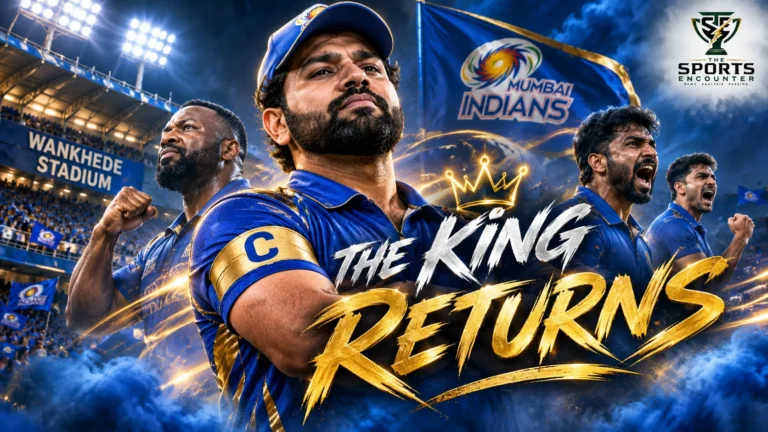
MUMBAI, India, November 27, 2026: Mumbai Indians have turned to Rohit Sharma to end a six-season Indian Premier League title drought, restoring their five-time championship-winning captain after three seasons under Hardik Pandya. The 39-year-old will work alongside new head coach Kieron Pollard and inherit a bowling attack strengthened by Arshdeep Singh, who arrived from Punjab Kings in exchange for Pandya earlier this month.
Mumbai have effectively exchanged a seam-bowling all-rounder for a specialist fast bowler and restored a captain who no longer bowls regularly. That creates a fascinating tactical problem ahead of the 2027 season: the franchise has strengthened its ability to take wickets but must reconstruct the batting and bowling flexibility that Pandya once provided.
Key Takeaways
- Mumbai Indians have turned to Rohit Sharma to end a six-season Indian Premier League title drought, restoring their five-time championship-winning captain after three seasons under Hardik Pandya.
- Mumbai won the 2017 final against Rising Pune Supergiant and the 2019 final against Chennai by a single run on each occasion.
- The IPL’s official trade announcement on November 11 confirmed the exchange.
- The official auction inventory lists Mumbai’s revised remaining purse at ₹30.25 crore.
Rohit Sharma Returns to a Franchise That Has Lost Its Winning Rhythm
The franchise’s announcement on Friday confirmed the leadership change. Rohit first became captain during the 2013 season, succeeding Ricky Ponting, and delivered Mumbai’s maiden IPL title that year. Four more followed in 2015, 2017, 2019 and 2020.
He won 87 of his 158 IPL matches as captain before accounting for tied games, with 67 defeats and four ties. His five championships put him alongside MS Dhoni, whose retirement from IPL cricket means the two most successful captains in tournament history will occupy very different roles next season.
Mumbai won the 2017 final against Rising Pune Supergiant and the 2019 final against Chennai by a single run on each occasion. Those two finishes illustrate why the allocation of bowling overs matters as much as the batting order when a championship depends on defending a narrow margin.
Mumbai reached the playoffs in 2025 but won only four of their 14 league games in 2026, finishing ninth. The appointment of Rohit Sharma restores a familiar leadership structure without restoring the squad that won consecutive championships in 2019 and 2020.
Arshdeep and Bumrah Give Mumbai a Different Bowling Identity
The IPL’s official trade announcement on November 11 confirmed the exchange. Arshdeep offers left-arm swing and a contrasting release angle to Jasprit Bumrah, giving Mumbai two established Indian fast bowlers who can operate during the powerplay and closing overs.
Their combined eight-over allocation could cover four of the first six overs and four of the last five. That is one possible deployment rather than a prediction: Rohit Sharma could also hold Bumrah back for a difficult middle-overs matchup. With Trent Boult and Deepak Chahar released, the remaining seamers will have to provide enough control to preserve that flexibility.
The trade also removes a middle-order hitter who could supply seam overs. As TSE’s analysis of the Impact Player rule explains, a specialist substitution can compensate for some of that lost versatility, but it cannot reproduce every tactical option of a genuine all-rounder. Chennai and Hyderabad’s recent four-player exchange illustrates the same trade-off from another direction.
Continue the Indian Premier League Story
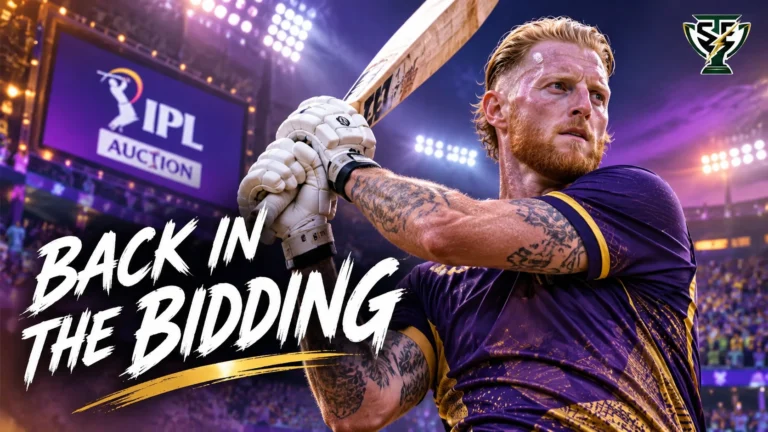


What Mumbai Need From the IPL Auction
The official auction inventory lists Mumbai’s revised remaining purse at ₹30.25 crore. Sixteen players are already on the roster, leaving nine vacancies, including two overseas places. Filling every vacancy would leave an average of approximately ₹3.36 crore per acquisition, although Mumbai need not use all available slots.
Rohit Sharma and Pollard have an established batting core comprising Suryakumar Yadav, Tilak Varma and Naman Dhir, with Will Jacks and Mitchell Santner offering additional skills. A dependable Indian seam-bowling all-rounder and spin depth would give them more ways to balance the XI. TSE’s analysis of the latest player releases outlines the changing market, while Ben Stokes’ auction registration illustrates the availability risks attached to established overseas all-rounders.
Pollard and the Leadership Succession
The new captain said in Mumbai’s statement that the focus would be on “playing our brand of cricket, competing together and enjoying the game.” His familiarity with Pollard, a teammate during all five IPL title campaigns, gives the leadership partnership a shared history. It does not remove the need to prepare a successor.
Rohit Sharma turns 40 during the 2027 season. Managing his workload and identifying an alternative captain if he is unavailable should form part of Mumbai’s preparation. The December 16 auction in Goa offers the first opportunity to assess whether the franchise is rebuilding around its returning leader or also building for the years beyond him.