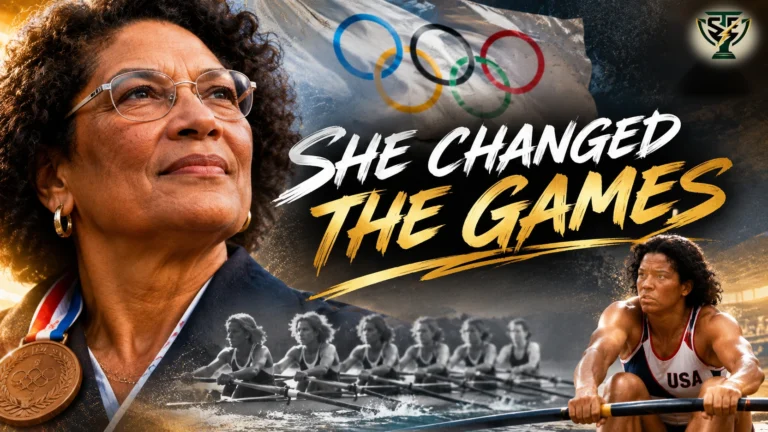
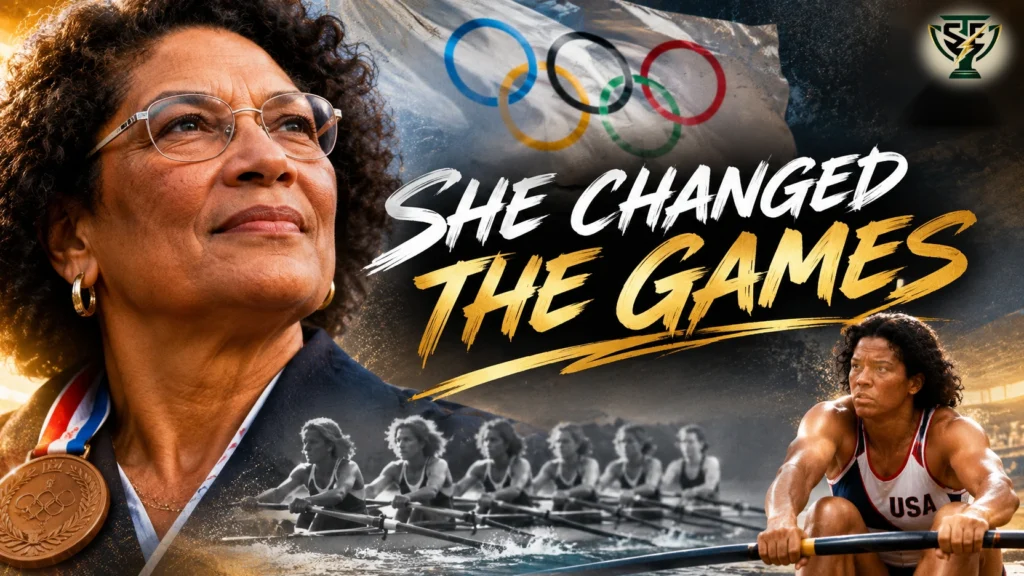
NEW YORK, United States, November 26, 2026: Anita DeFrantz spent years preparing for a second Olympic appearance that never came. The American rower had already won bronze in Montreal when the United States boycotted the 1980 Moscow Games, taking away her opportunity to pursue another medal. She challenged that decision in court, lost, and subsequently devoted much of her life to ensuring that athletes had a greater influence over the institutions governing their careers.
Anita DeFrantz died on November 25 at 74, USRowing confirmed. The International Olympic Committee’s tribute recognized a career that stretched from the inaugural women’s Olympic rowing competition to the highest levels of international sports administration. Her legacy can be understood through three places: the rowing course where she earned her medal, the courtroom where she defended her fellow athletes and the Olympic meeting rooms where she helped expand opportunities for women.
Key Takeaways
- Born in Philadelphia on October 4, 1952, and raised in Indianapolis, DeFrantz initially played basketball at Connecticut College.
- Following the Soviet invasion of Afghanistan in December 1979, President Jimmy Carter pressed the United States Olympic Committee to withdraw from the Moscow Olympics.
- By 1984, Anita DeFrantz had moved into the organization of the Olympics themselves, serving as a vice president of the Los Angeles organizing committee.
- In 1986, she became the first Black American and the first American woman elected to IOC membership.
How Anita DeFrantz Found Rowing at Connecticut College
Born in Philadelphia on October 4, 1952, and raised in Indianapolis, DeFrantz initially played basketball at Connecticut College. A conversation with rowing coach Bart Gullong during her sophomore year led her toward a sport that would eventually shape her life. Her introduction to rowing coincided with a period when opportunities for American women in collegiate athletics were beginning to expand.
Story at a glance
How Anita DeFrantz Found Rowing at Connecticut College
Born in Philadelphia on October 4, 1952, and raised in Indianapolis, DeFrantz initially played basketball at Connecticut College. A conversation with rowing coach Bart Gullong during her sophomore year led her toward a sport that would eventually shape her life. Her introduction to rowing coincided with a period when opportunities for American women in collegiate athletics were beginning to expand.
The Montreal Bronze That Opened a New Chapter in Olympic Rowing
Women’s rowing entered the Olympic program at Montreal 1976, with six medal events. The women’s eight final on July 24 brought the United States into direct competition with the powerful East German and Soviet crews.
The Moscow Olympics and the Fight Anita DeFrantz Could Not Win
Following the Soviet invasion of Afghanistan in December 1979, President Jimmy Carter pressed the United States Olympic Committee to withdraw from the Moscow Olympics. On April 12, 1980, its House of Delegates approved a resolution against sending an American team by a vote of 1,604 to 798.
Turning the Los Angeles Olympics Into a Community Legacy
By 1984, Anita DeFrantz had moved into the organization of the Olympics themselves, serving as a vice president of the Los Angeles organizing committee. Her responsibilities included athlete accommodation, giving her a practical understanding of how administrative decisions shaped the experience of competitors.
How Anita DeFrantz Helped Change the Olympic Leadership
In 1986, she became the first Black American and the first American woman elected to IOC membership. According to her 2024 NCAA interview, she was only the fifth woman to enter an organization of approximately 100 members. In 1997, she became the first female IOC vice president, returning to that office for another term between 2017 and 2021.
Her progress was far from straightforward. During her final year at college, she dropped to the junior varsity crew. Yet she graduated in 1974, continued training with Philadelphia’s Vesper Boat Club and pursued a law degree at the University of Pennsylvania. She earned selection to the national rowing team in 1975 and completed her legal education in 1977.
Those parallel commitments gave Anita DeFrantz an unusual combination of experience. She understood the physical demands of international competition while acquiring the legal training that would later allow her to question the authority of sports administrators. Her education became particularly important when decisions made far from the rowing course began determining whether she could compete at all.
The Montreal Bronze That Opened a New Chapter in Olympic Rowing
Women’s rowing entered the Olympic program at Montreal 1976, with six medal events. The women’s eight final on July 24 brought the United States into direct competition with the powerful East German and Soviet crews.
Olympedia’s historical results show that the Americans held second place at the 250-meter, 500-meter and 750-meter checkpoints of the 1,000-meter race. The Soviet crew overtook them in the final quarter. East Germany secured gold in 3:33.32, the Soviet Union took silver in 3:36.17 and the Americans crossed in 3:38.68.
The US crew finished only 2.51 seconds behind the silver medalists. Anita DeFrantz became the first Black woman to earn an Olympic rowing medal. Her achievement came in an event requiring eight rowers to coordinate their movements under the direction of a coxswain, where individual strength had to serve the rhythm of an entire boat.
That achievement belongs alongside the breakthrough performances of other women whose medals expanded their countries’ sporting horizons, including Ecuador’s Elvira Espinosa at the Dakar Youth Olympics. DeFrantz continued competing after Montreal, winning a world championship silver medal in the coxed four in 1978 and accumulating six national titles over her rowing career.
The Moscow Olympics and the Fight Anita DeFrantz Could Not Win
Following the Soviet invasion of Afghanistan in December 1979, President Jimmy Carter pressed the United States Olympic Committee to withdraw from the Moscow Olympics. On April 12, 1980, its House of Delegates approved a resolution against sending an American team by a vote of 1,604 to 798.
Anita DeFrantz and other athletes challenged the decision. Their lawsuit raised questions about the committee’s statutory authority, the effect of government pressure and athletes’ rights after years of preparation for the Games. The federal district court judgment in DeFrantz v. United States Olympic Committee preserves the legal arguments of that extraordinary dispute.
Why Anita DeFrantz Lost in Court but Her Argument Endured
The court ruled that the committee possessed the authority to decide whether to send a national team. It also concluded that the committee’s decision did not constitute government action of the kind required for the athletes’ constitutional claims. The lawsuit failed to reverse the boycott.
For the athletes, the consequences extended beyond that summer. Another Olympic opportunity was four years away, and selection depended on fitness, form and competition from younger rivals. The IOC awarded DeFrantz the bronze Olympic Order in 1980, recognizing her efforts even though she had been denied another Olympic race.
The underlying conflict remains relevant. TSE’s examination of Russia’s prospective Olympic return illustrates how political decisions can continue to affect athletes’ access to international competitions, although the legal and geopolitical circumstances differ from those of 1980.
Turning the Los Angeles Olympics Into a Community Legacy
By 1984, Anita DeFrantz had moved into the organization of the Olympics themselves, serving as a vice president of the Los Angeles organizing committee. Her responsibilities included athlete accommodation, giving her a practical understanding of how administrative decisions shaped the experience of competitors.
Her subsequent work at the LA84 Foundation demonstrated that an Olympic legacy could reach far beyond the venues and the closing ceremony. The foundation received 40% of the 1984 Games’ financial surplus. DeFrantz led it from 1987 to 2015. By January 2024, the NCAA reported that the foundation had invested more than $225 million in over 2,000 youth sports organizations.
Continue the Athletics Story



That model offers a useful perspective on the debate over future Olympic host cities. Financial performance matters, but so does what organizers leave behind for residents who may never attend an Olympic event. DeFrantz helped turn the proceeds from one edition of the Games into opportunities for children across successive generations.
How Anita DeFrantz Helped Change the Olympic Leadership
In 1986, she became the first Black American and the first American woman elected to IOC membership. According to her 2024 NCAA interview, she was only the fifth woman to enter an organization of approximately 100 members. In 1997, she became the first female IOC vice president, returning to that office for another term between 2017 and 2021.
Her work on the Olympic program helped secure the inclusion of women’s soccer and softball, both of which made their Olympic debuts in Atlanta in 1996. She chaired the IOC’s Women and Sport Commission from 1995 to 2014. Her influence lay in helping translate the principle of gender equality into actual places on competition schedules and within sporting institutions.
Women accounted for roughly one-fifth of competitors when she rowed in Montreal. At Paris 2024, the IOC allocated athlete quota places equally between men and women. Many athletes, administrators and advocates contributed to that progress. The significance of Anita DeFrantz lies in her sustained participation in the institutional work that made those changes possible.
The next chapter will unfold at the Los Angeles 2028 Olympic Games, where access to the competition will depend on detailed selection systems, including the new athletics qualification standards. Equal representation on a program must still translate into meaningful opportunities to train, qualify and compete.
Remembering the Athlete Who Kept Fighting After the Finish Line
In 2024, the NCAA honored DeFrantz with its Gerald R. Ford Award. In 2025, she entered the U.S. Olympic and Paralympic Hall of Fame. Both honors recognized a life whose influence had long since outgrown a single Olympic result.
There is no way to know whether she would have won another medal in Moscow. That unanswered question is part of her story and deserves to remain unanswered. What the historical record does establish is that she refused to let the loss of an Olympic opportunity end her involvement in sport.
For The Sports Encounter’s Tributes to the Heroes series, Anita DeFrantz deserves remembrance for the bronze medal she earned, the athletes she defended and the opportunities she helped create for people she would never meet. Her greatest contribution to the Olympics can be seen every time another woman takes her place on a starting line that an earlier generation was denied.