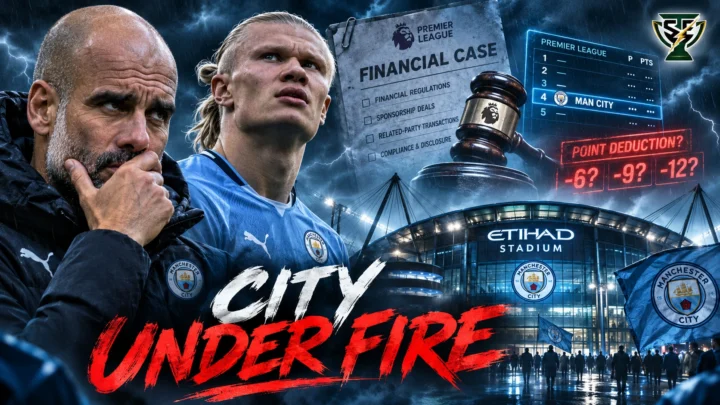
LONDON, England, November 25, 2026: Manchester City face the possibility of a regulatory investigation into their ownership and senior management if the adverse findings in their Premier League financial case survive appeal. Independent Football Regulator (IFR) chair David Kogan told lawmakers on Wednesday that his organization was prepared to act against the club, regardless of its size or influence.
The intervention comes at a particularly sensitive moment. English soccer’s first statutory licensing application window is already open, and the watchdog’s powers to assess existing owners and executives are in force. Even after City resolve their dispute with the Premier League, they may have to establish that the people running the club meet a separate set of legal standards.
Key Takeaways
- Manchester City face the possibility of a regulatory investigation into their ownership and senior management if the adverse findings in their Premier League financial case survive appeal.
- Speaking to the Culture, Media and Sport Committee, Kogan indicated that the regulator’s response would depend on the evidence and the outcome of City’s appeal.
- On September 29, the league announced that an independent commission had upheld all charges concerning serious financial-rule breaches across the nine seasons from 2009-10 to 2017-18, and most charges concerning noncooperation.
- Our previous investigation into the Manchester City financial case examined the reported collapse of a proposed $2 billion loan to City Football Group.
Why Manchester City Face a Different Kind of Regulatory Risk
Speaking to the Culture, Media and Sport Committee, Kogan indicated that the regulator’s response would depend on the evidence and the outcome of City’s appeal. Reuters reported his warning that the IFR would exercise its statutory responsibilities if the circumstances required it.
The distinction between the two authorities is fundamental. The Premier League commission examined whether the club broke competition rules. The IFR has a broader responsibility for the financial health and governance of English clubs, including the suitability of those who control or manage them. Its assessment could therefore concern people whose positions are unaffected by a points deduction.
On September 29, the league announced that an independent commission had upheld all charges concerning serious financial-rule breaches across the nine seasons from 2009-10 to 2017-18, and most charges concerning noncooperation. The findings included commercial arrangements that the commission concluded misrepresented the club’s finances. Manchester City reject the conclusions and lodged an appeal on October 1, arguing that the decision contains material factual and legal errors.
Our previous investigation into the Manchester City financial case examined the reported collapse of a proposed $2 billion loan to City Football Group. That financing setback demonstrated how an unresolved disciplinary dispute can affect business relationships. Kogan’s remarks raise a different question: who will be legally permitted to exercise control over the club in the future?
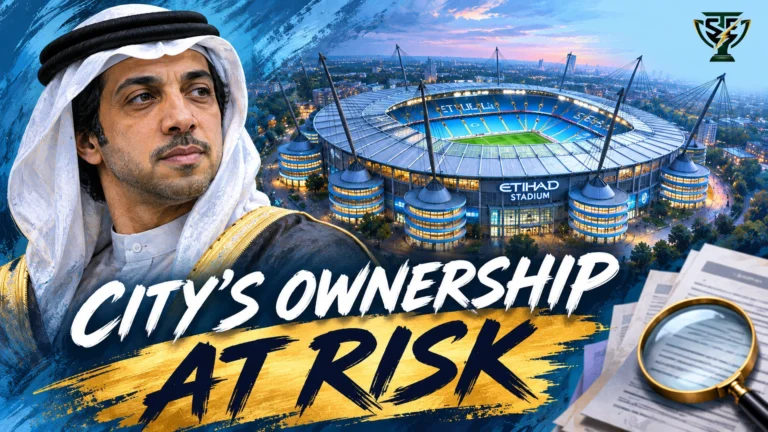
Could Sheikh Mansour Be Forced to Sell?
How the Manchester City ownership assessment would work
Part 4 of the Football Governance Act 2025 establishes the framework for assessing existing owners and officers. Section 34 allows the regulator to examine an individual owner’s fitness when information gives it grounds for concern. Sections 35 and 37 address officers and relevant assessment factors, including honesty and integrity. Section 36 requires an opportunity to make representations before a proposed adverse finding.
Should the applicable statutory conditions be met, Section 39 provides for an owner to be directed to take reasonable steps to relinquish ownership within a specified period. Section 43 provides a further mechanism, an ownership removal order, under prescribed circumstances. The latter can involve trustees empowered to help achieve the removal of an unsuitable owner.
For Manchester City, the commission’s findings could provide evidence relevant to such an assessment. They do not automatically establish that Sheikh Mansour personally fails the statutory test. The regulator would need to establish the relevant facts and apply the legal criteria to the person or position concerned. A director’s removal would also have different consequences from a change of controlling ownership.
There is a useful distinction between a negotiated sale, such as the ownership transition explored in TSE’s analysis of Leicester City’s proposed sale, and a divestment required by law. In the latter situation, the existing owner could lose control over the timetable or the ability to remain invested in the club.
The Licensing Deadline Creates a Second Pressure Point
The IFR’s licensing framework requires clubs in England’s top five divisions to obtain provisional operating licenses ahead of the 2027-28 season. Applications opened on November 2 and close on February 26, 2027. The process requires financial forecasts, a strategic business plan and governance information.
Manchester City consequently have to navigate the transition to statutory licensing while their historic financial case remains unresolved. The licensing assessment is concerned with the club’s ability to satisfy regulatory requirements going forward. It offers a mechanism to address prospective governance and financial risks even when a separate dispute concerns historical conduct.
Consider the difference between the two processes: a league fine would create an expense that must be funded, whereas a regulatory condition could require changes to how the club is governed or financed. Compliance could involve continuing commitments rather than one payment. The precise conditions, if any, remain for the regulator to determine.
| Process | Decision-maker | Potential consequence |
|---|---|---|
| Financial-rule appeal | Premier League appeal panel | Findings upheld, modified or overturned |
| Sporting sanctions | Premier League disciplinary process | Possible fine, points deduction or other authorized sanctions |
| Owner or officer suitability | Independent Football Regulator | Potential removal or restrictions following statutory findings |
| Operating license | Independent Football Regulator | License decision and applicable compliance conditions |
How the Uncertainty Could Affect the Football Operation
Manchester City spent approximately £458 million during the summer transfer window, according to TSE’s league-wide transfer spending analysis. That investment reflects substantial commitments made during Enzo Maresca’s rebuild. A change in ownership would raise practical questions about how existing contractual obligations, future recruitment and long-term investment plans would be funded.
Continue the Premier League Story

Players and employees would still need to be paid, irrespective of who controls the business. A prospective owner would have to consider those obligations alongside the cost of acquiring control. None of this establishes that Manchester City currently lack funds, face a transfer ban or have to sell players.
The sporting challenge is already familiar. TSE examined the pressure surrounding the first post-verdict fixture in its preview of City’s trip to Anfield. As noted in our subsequent Premier League coverage, Maresca rejected suggestions that the legal case caused his team’s run of defeats. The distinction between institutional uncertainty and evidence of declining on-field performance remains important.
What Would Actually Put City’s Ownership in Jeopardy?
An appeal that overturns the relevant findings would alter the evidence available for a potential suitability investigation. An appeal that leaves significant findings intact could strengthen the case for an assessment, but would not itself constitute an adverse IFR decision. A formal investigation, a reasoned determination and any subsequent removal action would be separate developments.
The regulator must also consider the consequences of its actions for the institution and its supporters. Removing an owner while preserving a viable football club requires planning for continuity, investment and oversight. A dramatic sanction that leaves a club unable to meet its commitments would present a challenge to the watchdog’s financial sustainability objectives.
For Manchester City, the immediate threat is that resolving the Premier League proceedings may no longer settle the future of the people in charge. The next significant evidence will come from the appeal, any formal IFR action and the licensing process. Until those decisions are made, the club’s ownership is exposed to genuine regulatory risk, but no forced sale has been ordered.
Manchester City
- Manchester City Face a New Threat as Football Regulator Puts Ownership Under Scrutiny
- Champions League: Arsenal Face Dortmund, City Host Napoli as European Soccer Giants Test Their Limits
- Arsenal’s Lead, City’s Losing Streak and United’s Survival Fight Feature Premier League Weekend Action
- Manchester City Financial Case: Three Risks Beyond Points
- Manchester United Face a Relegation Fight, Manchester City Lose Invincibility: One City, Two Different Crises