England needed two wickets. Australia needed 70 runs, and the man walking out at No. 10 had already delivered a performance that should have settled his contribution for the day.
Andy Bichel had taken seven wickets for 20 runs. Now, with Australia stranded at 135/8, he had to help Michael Bevan repair the chase his bowling had made possible.
Their unbeaten 73-run partnership carried Australia to a two-wicket victory with two balls remaining at Port Elizabeth on March 2, 2003. This double rescue earns its place as Match 19 in A Celebration of 5000 ODIs.
TL;DR
- Australia chased England’s 204/8, finishing on 208/8 in 49.4 overs.
- Player of the Match Bichel took 7/20 and scored an unbeaten 34.
- Bevan anchored the recovery with 74 not out.
- Andy Caddick’s four wickets helped England seize control.
- Bichel’s late boundaries transformed the final equation.
- Australia completed the group stage unbeaten; England’s qualification hopes depended on other results.
Match Information
| Detail | Information |
|---|---|
| Match | Australia vs England, 37th match, 2003 World Cup |
| Stage | Pool A |
| Date | March 2, 2003 |
| Venue | St George’s Park, Port Elizabeth, now Gqeberha |
| Toss | England elected to bat |
| England | 204/8, 50 overs |
| Australia | 208/8, 49.4 overs |
| Result | Australia won by two wickets, two balls remaining |
| Player of the Match | Andy Bichel: 7/20 and 34* |
| Leading batters | Michael Bevan 74*; Alec Stewart 46 |
| Leading England bowler | Andy Caddick, 4/35 |
| Decisive partnership | Bevan–Bichel: 73* for the ninth wicket |
Complete Match Scorecard
England Batting
| Batter | Dismissal | R | B | 4s | 6s |
|---|---|---|---|---|---|
| Marcus Trescothick | c Martyn b McGrath | 37 | 36 | 6 | 1 |
| Nick Knight | c Martyn b Bichel | 30 | 33 | 4 | 0 |
| Michael Vaughan | c Gilchrist b Bichel | 2 | 5 | 0 | 0 |
| Nasser Hussain (c) | b Bichel | 1 | 3 | 0 | 0 |
| Alec Stewart (wk) | b Bichel | 46 | 92 | 1 | 0 |
| Paul Collingwood | c Gilchrist b Bichel | 10 | 16 | 0 | 1 |
| Andrew Flintoff | c Gilchrist b Bichel | 45 | 80 | 3 | 1 |
| Craig White | Not out | 16 | 21 | 1 | 0 |
| Ashley Giles | c Bevan b Bichel | 2 | 7 | 0 | 0 |
| Andy Caddick | Not out | 5 | 11 | 0 | 0 |
| James Anderson | Did not bat | — | — | — | — |
| Extras | lb 3, w 3, nb 4 | 10 | |||
| Total | 50 overs, eight wickets | 204 |
Fall of wickets: 66/1 (Knight), 72/2 (Vaughan), 74/3 (Hussain), 74/4 (Trescothick), 87/5 (Collingwood), 177/6 (Flintoff), 180/7 (Stewart), 187/8 (Giles).
Australia Bowling
| Bowler | O | M | R | W |
|---|---|---|---|---|
| Glenn McGrath | 9 | 2 | 41 | 1 |
| Brett Lee | 9 | 0 | 58 | 0 |
| Andy Bichel | 10 | 0 | 20 | 7 |
| Brad Hogg | 10 | 1 | 28 | 0 |
| Darren Lehmann | 10 | 0 | 34 | 0 |
| Andrew Symonds | 2 | 0 | 20 | 0 |
Australia Batting
| Batter | Dismissal | R | B | 4s | 6s |
|---|---|---|---|---|---|
| Adam Gilchrist (wk) | c Vaughan b Caddick | 22 | 18 | 5 | 0 |
| Matthew Hayden | c Giles b Caddick | 1 | 4 | 0 | 0 |
| Ricky Ponting (c) | c Giles b Caddick | 18 | 21 | 2 | 1 |
| Damien Martyn | lbw b Caddick | 0 | 3 | 0 | 0 |
| Darren Lehmann | c Stewart b White | 37 | 62 | 3 | 0 |
| Michael Bevan | Not out | 74 | 126 | 6 | 1 |
| Andrew Symonds | c & b Giles | 0 | 5 | 0 | 0 |
| Brad Hogg | c Stewart b Giles | 1 | 3 | 0 | 0 |
| Brett Lee | Run out (White) | 6 | 23 | 0 | 0 |
| Andy Bichel | Not out | 34 | 36 | 3 | 1 |
| Glenn McGrath | Did not bat | — | — | — | — |
| Extras | b 4, lb 4, w 4, nb 3 | 15 | |||
| Total | 49.4 overs, eight wickets | 208 |
Fall of wickets: 15/1 (Hayden), 33/2 (Gilchrist), 33/3 (Martyn), 48/4 (Ponting), 111/5 (Lehmann), 112/6 (Symonds), 114/7 (Hogg), 135/8 (Lee).
England Bowling
| Bowler | O | M | R | W |
|---|---|---|---|---|
| Andy Caddick | 9 | 2 | 35 | 4 |
| James Anderson | 9 | 0 | 66 | 0 |
| Andrew Flintoff | 9.4 | 1 | 26 | 0 |
| Craig White | 10 | 2 | 21 | 1 |
| Ashley Giles | 10 | 0 | 42 | 2 |
| Michael Vaughan | 2 | 0 | 10 | 0 |
Andy Bichel Changes Both Innings
England’s opening stand reached 66 before Bichel removed Knight. Vaughan and Hussain followed quickly, while McGrath dismissed Trescothick. England slipped to 74/4, then 87/5.
Bichel repeatedly forced batters to play, collecting edges behind the wicket and bowling Hussain and Stewart. Hogg and Lehmann supported him with economical spells, preventing England from rebuilding freely.
His seven wickets supplied the damage; his economy restricted the recovery. In an ICC retrospective interview, Bichel identified this match as his favorite World Cup playing memory.
Alec Stewart and Andrew Flintoff Give England Something to Defend
Stewart’s 46 and Flintoff’s 45 formed a 90-run sixth-wicket partnership. Their measured recovery ensured England completed their overs, although neither could produce a decisive acceleration.
Bichel returned to dismiss both. England’s competitive opening had become a total requiring exceptional bowling.
Andy Caddick Makes 205 Look Distant
Caddick delivered that response, removing Hayden, Gilchrist, Martyn and Ponting to leave Australia 48/4.
White conceded only 21 from ten overs and broke the Bevan–Lehmann partnership. Giles then dismissed Symonds and Hogg. Lee’s run-out at 135/8 appeared to finish England’s work.
The defending champions had survived comparable danger in the 1996 semifinal against West Indies. Here, their survival depended on batting patience.
Michael Bevan Keeps the Chase Alive
Bevan’s 74 occupied 126 deliveries. Its value lay in preserving a route to victory while partners disappeared.
With Bichel, he could share responsibility rather than protect an entirely defensive tailender. Their partnership gradually reduced the requirement without exposing McGrath. Cricket Australia’s retrospective recognizes both men’s contributions to the escape.
The Final Turning Point
Australia needed 14 from 12 balls. Hussain chose Anderson for the penultimate over despite Caddick having an over available.
Bichel struck a six and a four, helping take 12 from the over. Australia needed two from six; Bevan eventually struck Flintoff for the winning boundary.
Continue A Celebration of 5000 ODIs
 A Celebration of 5000 ODIsA Celebration of 5000 ODIs Match 62: Afghanistan Deny India Victory With Rashid Khan’s Last-Over Drama
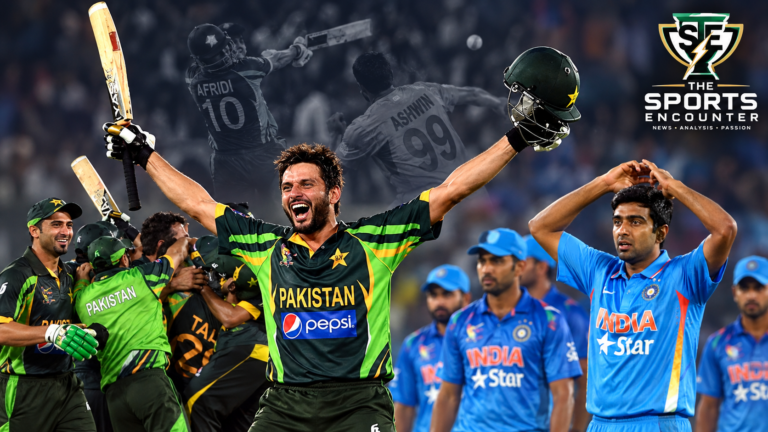 A Celebration of 5000 ODIsA Celebration of 5000 ODIs Match 61: Pakistan Need 10 With One Wicket Left, Afridi Smashes Ashwin for Two Sixes to Break India’s Heart
 A Celebration of 5000 ODIsA Celebration of 5000 ODIs Match 60: Sri Lanka Set Just 139, but Malinga’s Four Wickets Leave New Zealand One Blow From Defeat
England’s disciplined support bowling had created the opportunity. Their inability to separate the final partnership allowed it to disappear.
Why Match 19 Belongs in This Collection
Unlike Australia’s seven-run victory in the 1987 final or the 1999 semifinal tie, this escape came before the knockout rounds.
Its significance grew afterward. England eventually exited in the group stage, while Australia won all 11 matches and retained the trophy, as the ICC’s tournament overview records.
Following Lara’s intervention in the tournament opener, our 5000 ODIs collection turns to a different form of match-winning excellence, explored throughout our cricket coverage.
Bichel had already done enough to deserve the headlines. Australia still needed him to win the match a second time.
England
- How Rocky Flintoff Is Breaking Andrew Flintoff’s Records: Stats, Milestones, and Career Story
- The Straight Re(a)d: England’s Wembley Warning, Haaland’s Habit and Manchester City’s Reckoning
- From Prime Time to 4 A.M.: How Asia-Pacific Fans Live a Premier League Weekend
- From Chelsea’s Swagger to Arsenal’s Control: How a London Rivalry Flipped in a Decade
- A Celebration of 5000 ODIs Match 39: England Win the World Cup on Boundary Count After New Zealand Tie Them Twice