


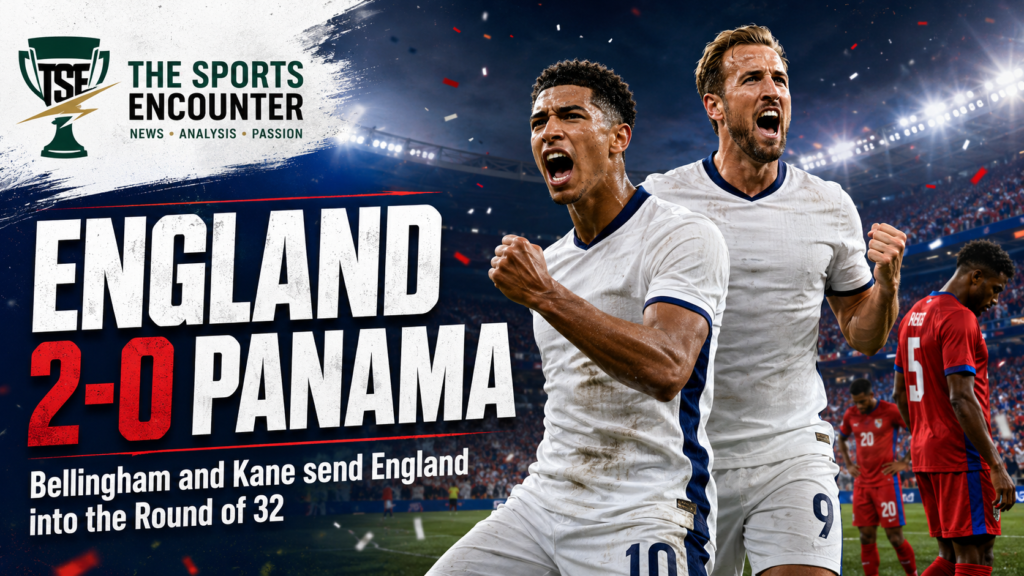
England needed patience before they found control in New Jersey, and that might matter more than the scoreline. A 2-0 win over Panama gave Thomas Tuchel’s side top spot in Group L, a clean sheet, and a Round of 32 meeting with DR Congo. It also gave England another reminder that knockout football will punish slow starts, loose rhythm, and any sense that talent alone can settle matches.
Jude Bellingham broke Panama’s resistance in the 62nd minute before Harry Kane added the second five minutes later. The result looked comfortable by full time, but England had to work through more than an hour of frustration against a Panama team that defended with discipline, narrowed the central spaces, and forced the Three Lions to solve the match rather than simply dominate possession.
For England, that became the real story. They won the group. They avoided late drama. Kane moved again into the heart of the tournament narrative. Yet the performance still carried enough warning signs to keep the dressing room honest before the knockout phase.
For wider tournament tracking, knockout updates, and daily coverage, follow The Sports Encounter’s FIFA World Cup 2026 coverage and our latest look at the World Cup 2026 knockout picture.
Match Key Information
| Match | Panama vs England |
|---|---|
| Competition | FIFA World Cup 2026, Group L |
| Venue | New York New Jersey Stadium |
| Final Score | Panama 0-2 England |
| Half-time Score | 0-0 |
| England Goals | Jude Bellingham 62’, Harry Kane 67’ |
| Yellow Cards | José Fajardo 53’, Jarell Quansah 60’, Andrés Andrade 84’ |
| Red Cards | None |
| England Finish | Group L winners |
| England Round of 32 Opponent | DR Congo |
England Win, But the First Hour Raises Questions
England started with enough control to avoid panic but not enough sharpness to overwhelm Panama. The ball moved across the pitch, but too many attacks slowed near the penalty area. Panama’s defensive block stayed compact, and England’s wide players had to deal with tight angles and limited service.
Tuchel made five changes for the match, which gave England fresh legs but also contributed to a slightly uneven rhythm. Bukayo Saka and Marcus Rashford offered directness, while Bellingham searched for pockets between Panama’s midfield and back line. Kane often dropped to connect play, but England struggled to turn territory into clean chances during the first half.
That lack of fluency has followed England at points during this group stage. Their earlier draw with Ghana had already turned Group L into a final-round fight, and this match again showed why England cannot let games drift for too long.
Their quality has protected them, but the bigger concern is tempo. Against deeper defensive teams, England sometimes allow the game to become too comfortable for the opponent. Panama did not need to dominate the ball to frustrate England. They only needed to keep the center blocked, defend crosses, and stay alive for counterattacking moments.
The second half changed because England raised the pressure and Bellingham became more decisive.
Bellingham Gives England the Breakthrough
Bellingham’s goal in the 62nd minute settled the match and changed the mood around England’s performance. Until then, Panama had turned the game into a test of concentration and patience. Once Bellingham found the opener, the spaces appeared, and England looked more like a side with control over the match rather than a team searching for answers.
The Real Madrid midfielder again carried the emotional weight of England’s attack. He did not just score at an important moment. He also shifted the pace of the game. His movement forced Panama to adjust, and his influence helped Kane get the second goal in the 67th minute.
Kane’s finish gave England breathing room. It also underlined his continued value in tournament football. Even when England lack rhythm, Kane gives them a reliable end point. His ability to read movement, attack space, and punish one defensive lapse keeps England dangerous in tight games.
That matters now because knockout matches often live inside narrow margins. Fans still adjusting to the expanded format can also read our guide on how FIFA World Cup 2026 qualification works, including the Round of 32 and third-place routes.
Panama Defend With Pride, But Their Campaign Ends
Panama left the tournament without the result they needed, but they did not leave this match without dignity. They made England uncomfortable for long periods, especially before the opening goal. Their defensive work showed planning, discipline, and a clear understanding of how to slow a stronger opponent.
José Fajardo’s yellow card in the 53rd minute showed the growing pressure Panama had to absorb after halftime. Andrés Andrade was later booked in the 84th minute, but Panama avoided a red card and kept competing until the final whistle.
Their main problem was attacking depth. Panama had moments when they broke forward, but they lacked the final pass and finishing quality to turn those counters into real damage. Against a team with England’s defensive structure, effort alone could not bridge that gap.
Panama’s chances of reaching the next round are now gone. Their group-stage campaign ended with another lesson about the demands of World Cup football. They can defend well, stay organized, and make matches difficult. To advance at this level, they need more punch in the final third and more control when they win the ball back.
Still, this performance gave their supporters something to respect. Panama did not collapse. They made England earn the win. Their tournament also included a tough 1-0 defeat to Croatia, where they paid for missed chances in another disciplined display. Read more on that earlier Panama performance here: Croatia stay alive as gutsy Panama pay for missed chances.
Quansah Concern Adds a Defensive Issue for Tuchel
Jarell Quansah’s booking in the 60th minute was only one part of his eventful night. England already entered the match with Reece James unavailable, and Quansah’s later ankle concern gives Tuchel another defensive issue before the knockout round.
That matters because England now face DR Congo, a team arriving with momentum and belief after reaching the Round of 32. DR Congo will not carry the same name recognition as some traditional knockout opponents, but they bring speed, emotion, and a dangerous sense of freedom.
England’s challenge will be different from Panama’s. DR Congo can defend deep, but they also have transition threat, physical presence, and the confidence that comes from making national history. England will need cleaner ball circulation, better spacing between midfield and attack, and a sharper start than they produced in New Jersey.
What England Must Fix Before DR Congo
England’s group-stage finish looks strong on paper. Seven points, top of Group L, and a clean sheet in the final group match all point toward a team moving in the right direction. The eye test offers a more cautious reading.
England have enough individual quality to beat disciplined teams, but they cannot keep depending on second-half surges. Knockout opponents will study how Ghana and Panama kept them quiet for long spells. DR Congo will likely see the same opportunity: stay compact, deny central space, force England wide, and turn the match into a test of patience.
Tuchel’s team must play faster through midfield. Bellingham needs runners around him. Saka and Rashford need earlier service. Kane needs support close enough to prevent him from becoming isolated between defenders.
England also need to protect themselves from emotional swings. Panama did not punish their slow start. A knockout opponent might.
A Result That Moves England Forward, But Does Not End the Debate
England did what they came to do. They beat Panama, topped the group, and moved into the Round of 32 with their World Cup dream intact. Bellingham delivered the moment that broke the match, Kane finished the job, and the defense held firm.
The debate around England will continue because the performance left room for doubt. That is normal for a tournament contender. Very few teams move through a World Cup without awkward games, tactical friction, or uncomfortable questions.
The useful part for England is that they are still winning while solving those issues. The dangerous part is that the margin for correction now shrinks.
DR Congo wait in Atlanta. From here, England’s World Cup becomes less about group management and more about knockout nerve. The talent is clear. The next test will show whether the rhythm, decision-making, and urgency can finally match it.
The Sports Encounter’s World Cup 2026 coverage focuses on fixtures, team news, match analysis, fan stories, tournament trends, and the biggest talking points from football’s global stage.