


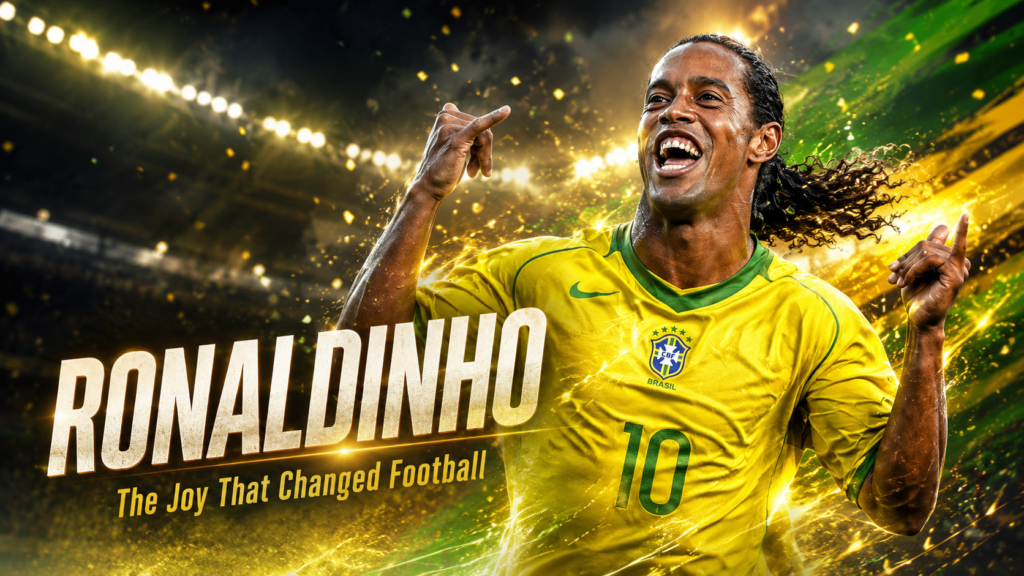
Some footballers win trophies. Some dominate numbers, while others become icons because they make supporters remember exactly where they were when they first saw them touch a ball. Ronaldinho belonged to the rarest group.
He made soccer feel less like a sport being managed by systems and more like a secret language spoken through rhythm, balance, mischief, and nerve. He played as if the pitch belonged to children again, even when the pressure belonged to grown men. That is why his name still hits differently. Ronaldinho did more than entertain fans. He changed what fans expected football to feel like.
The Smile That Became a Football Philosophy
Ronaldinho arrived at the top of European football with something that looked almost dangerous in elite sport: joy.
At a time when soccer was becoming faster, more tactical, more structured, and more physically demanding, he reminded the world that imagination could still break a defensive line. The stepovers, no-look passes, elastico turns, shoulder drops, chipped finishes, and impossible ball control were not party tricks. They were solutions.
Defenders prepared for systems. Ronaldinho gave them uncertainty.
That was his genius. He never made the game look forced. He played with the calm of someone who knew pressure was real but refused to let it steal the fun. His smile became part of the performance. It told fans that football could still surprise them.
That matters even more today, when many modern players are shaped by data, pressing triggers, tactical zones, and expected goals models. Ronaldinho played within tactics, but he never let tactics erase personality.
For more football stories built around players, memories, tournament drama, and moments that changed the game, visit The Sports Encounter’s FIFA World Cup 2026 coverage hub.
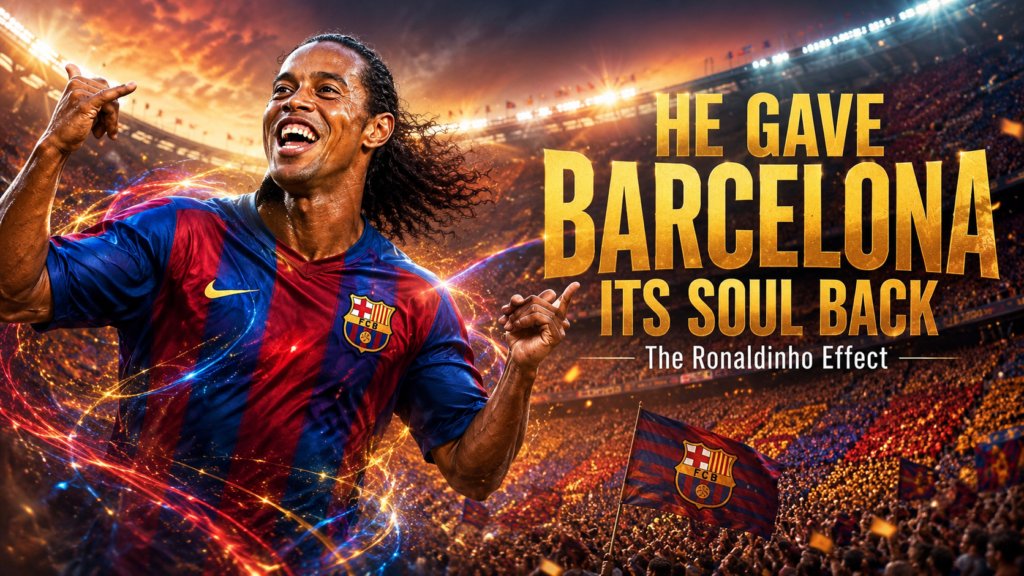
Ronaldinho Gave Barcelona Its Soul Back
When Ronaldinho joined Barcelona in 2003, the club needed more than a star. It needed belief.
Barcelona had history, culture, and identity, but the early 2000s were not kind to the club. Ronaldinho did not simply add goals and assists. He changed the mood around the Camp Nou. Supporters came back expecting magic. Teammates played with more freedom. Opponents started fearing Barcelona again.
His peak years at Barça created one of football’s great emotional resets. Before Pep Guardiola’s tactical revolution, before Lionel Messi became the defining player of his generation, Ronaldinho restored the feeling that Barcelona could be beautiful, bold, and feared at the same time.
His numbers at Barcelona were strong, but numbers alone do not explain his impact. He gave the club a face, a rhythm, and a reason to smile again. His football became a bridge between Rivaldo’s Brazil, Ronaldo Nazário’s explosiveness, and Messi’s coming era.
That is why many fans still see Ronaldinho as the emotional spark behind modern Barcelona.
The Bernabéu Applause Said Everything
Some moments become football folklore because they need no explanation. Ronaldinho’s standing ovation at the Santiago Bernabéu in 2005 belongs in that category.
Real Madrid fans do not casually applaud Barcelona players. Rivalry does not usually make room for admiration. Yet Ronaldinho forced the room open.
That night, he scored two stunning solo goals in El Clásico. He ran through Real Madrid’s defense with the confidence of a man dribbling through cones in training. The Bernabéu crowd understood what it had witnessed. The applause was not surrender. It was recognition.
Football fans love loyalty, rivalry, and tribal emotion. Still, once in a while, a player does something so pure that even the opposition must stand up. Ronaldinho did that.
Moments like that explain why football history needs more than scorelines. They also show why legendary players can live beyond club colors. For another story on how one decision can reshape a football generation, read The Sports Encounter’s feature on Zinedine Zidane’s injury before the 2002 World Cup.
Ronaldinho Made Skill Serious Again
There is a lazy way to describe Ronaldinho as a showman. That undersells him.
His tricks had purpose. His flair moved defenders. His no-look passes opened angles. His sudden change of pace broke lines. His body feints created space before the ball even moved. He made the spectacular functional.
Young players across the world copied the elastico, the free-kick stance, the celebration, and the swagger. Street footballers saw themselves in him. Academy players saw a new standard. Fans who had grown tired of rigid football found a player who made improvisation feel elite.
Ronaldinho’s influence still shows up today. Neymar carried parts of that Brazilian street-football spirit into the modern game. Messi’s early Barcelona years were shaped by Ronaldinho’s protection, warmth, and creative environment. Countless wingers, attacking midfielders, futsal players, and content-era footballers learned that skill could build identity, not just highlight reels.
That may be his deepest legacy. Ronaldinho made individual expression feel legitimate at the highest level.
Brazil’s Joy Had a Global Face
Brazil always had footballing mythology before Ronaldinho. Pelé, Garrincha, Zico, Romário, Rivaldo, Ronaldo, and many others built that legacy. Yet Ronaldinho became the perfect global ambassador for Brazilian joy in the internet age.
He came at a time when football clips were starting to travel faster across the world. Fans watched his moves on television, then replayed them on early video platforms, DVDs, and social media compilations. His style was built for memory and replay. One touch could become a viral moment before the word viral dominated sports culture.
He was also central to Brazil’s 2002 World Cup-winning squad, a team that carried attacking flair, star power, and national confidence. His famous free kick against England remains one of the most debated and replayed World Cup moments of the modern era.
That Brazil team had Ronaldo’s finishing, Rivaldo’s intelligence, Roberto Carlos’ power, Cafu’s leadership, and Ronaldinho’s imagination. Together, they gave fans a version of football that felt fearless.
That same emotional pull explains why World Cup history still belongs to moments of shock, genius, and collapse. For readers who enjoy revisiting football drama, The Sports Encounter’s feature on the friendly that changed France’s 2002 World Cup captures how quickly one moment can alter a tournament’s story.
His Greatness Was Bigger Than Longevity
Ronaldinho’s career often invites one debate: did he stay at the top long enough?

That question has value, but it can also miss the point. Football greatness does not follow one shape. Some players build greatness through long dominance. Others burn so brightly that their peak changes the sport’s emotional memory.
Ronaldinho’s prime was not endless, but it was unforgettable.
At his best, he was the player fans wanted to watch even when they had no stake in the match. He made neutral supporters choose Barcelona games. He made children fall in love with football. He made defenders look confused, goalkeepers look helpless, and stadiums feel lighter.
Longevity matters in legacy debates. Impact matters too. Ronaldinho’s impact survives because it lives in people’s first memories of football beauty.
Modern football now measures almost everything, but emotional influence still separates great players from unforgettable ones. That is why stories around Cristiano Ronaldo, Lionel Messi, Neymar, Kylian Mbappé, and the next generation always circle back to one question: who makes fans feel something? The Sports Encounter explored a different side of that pressure in its feature on Cristiano Ronaldo’s World Cup question with Portugal.
Ronaldinho: The Player Who Made Fans Feel Like Children Again
Ronaldinho changed soccer because he made elite football feel human.
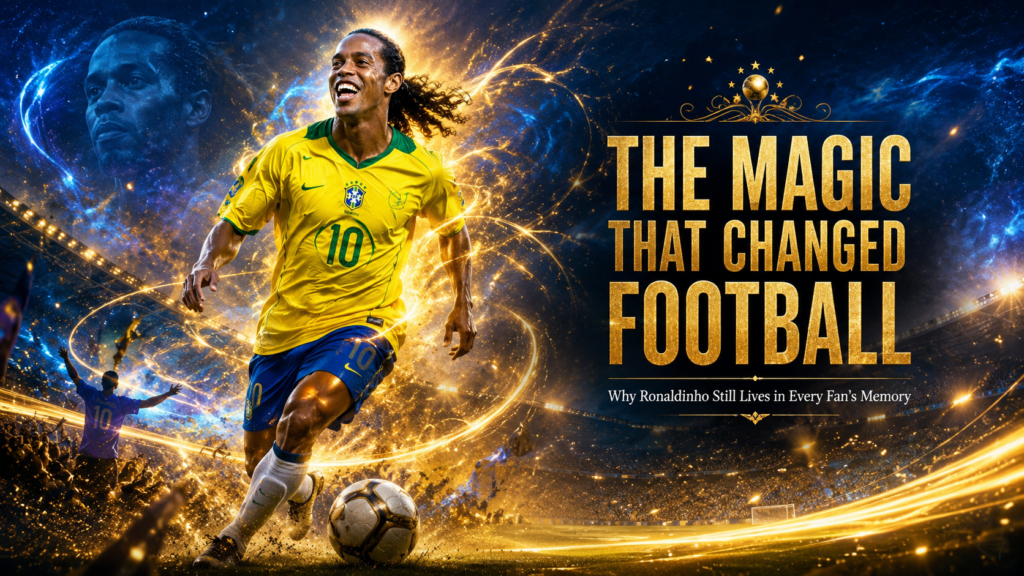
He laughed. He danced. He risked failure. He tried things other players would not dare try. Sometimes they worked. Sometimes they did not. Fans loved him because he gave them the feeling that something impossible might happen every time he received the ball.
Modern football has become sharper, richer, faster, and more analyzed. Yet every generation still needs players who remind people why they fell in love with the game before tactics, transfers, betting odds, and broadcast debates took over.
Ronaldinho was one of those players.
He did not just leave fans in awe. He left them grateful.
Grateful that for a few years, football had a wizard who played with a smile, treated pressure like music, and turned the world’s most competitive sport into something beautifully free.
The Sports Encounter’s World Cup 2026 coverage focuses on fixtures, team news, match analysis, fan stories, tournament trends, and the biggest talking points from football’s global stage.