


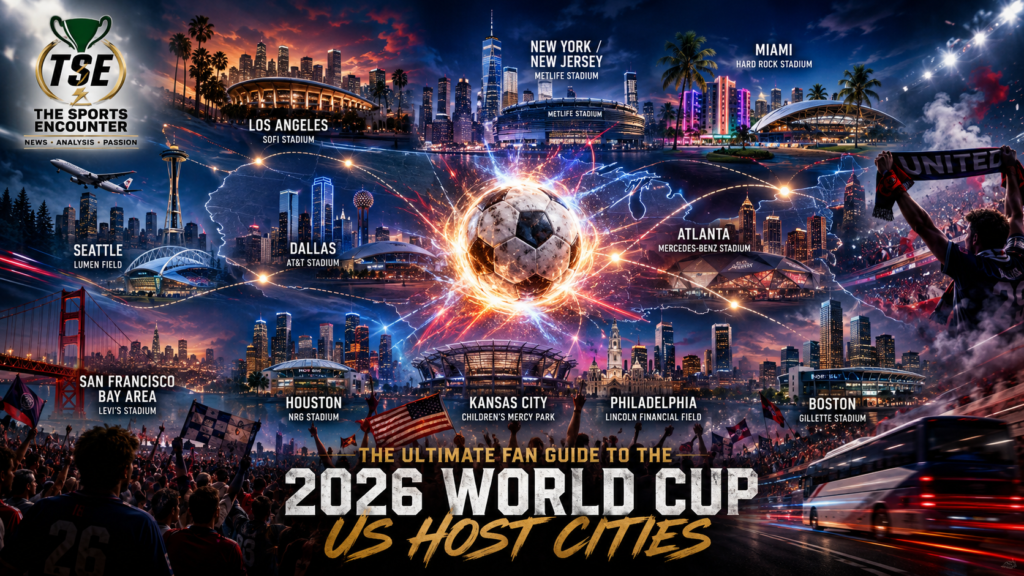
The FIFA World Cup 2026 will not feel the same in every American city. That is the first thing fans should understand.
Los Angeles will bring glamour and diaspora noise. Dallas will bring scale. Seattle will bring real soccer culture. Miami will bring Latin football energy. New York/New Jersey will carry the final. Kansas City may surprise visitors with its passion.
Every U.S. host market will give the tournament a different face.
For fans, that makes this World Cup exciting. It also makes planning harder.
The United States is not a compact host nation. Supporters cannot treat this tournament like a short train ride between neighboring football towns. Many trips will require flights, careful hotel choices, official transport planning, and early decisions around tickets, weather, visas, and stadium access.
This guide explains the 11 FIFA World Cup 2026 U.S. host markets, their stadiums, matchday conditions, fan appeal, and practical travel points.
For the full tournament fixture list, visit The Sports Encounter’s FIFA World Cup 2026 schedule.
For daily coverage, match reports, analysis, and fan guides, follow our FIFA World Cup 2026 hub.
How Many U.S. Cities Are Hosting FIFA World Cup 2026?
The United States has 11 FIFA World Cup 2026 host markets: Atlanta, Boston, Dallas, Houston, Kansas City, Los Angeles, Miami, New York/New Jersey, Philadelphia, San Francisco Bay Area, and Seattle.
These U.S. markets are part of a wider 16-city tournament across North America. Canada has Toronto and Vancouver. Mexico has Mexico City, Guadalajara, and Monterrey.
The U.S. portion carries the largest match load. It also stages the final on July 19, 2026, at New York New Jersey Stadium in East Rutherford, New Jersey.
Why the U.S. Host Cities Matter
The 2026 World Cup is the first men’s edition with 48 teams and 104 matches. That expanded format makes host-city planning more important than ever.
Some fans will follow one national team. Others will choose a city and watch whatever matches arrive there. Many American supporters will attend their first World Cup match in person. Visiting fans will need to understand how each stadium works before booking hotels and flights.
Because of that, the host cities are not just venues. They are part of the story.
The Big Fan Question
The key question is simple: which U.S. host city gives you the best World Cup experience for your budget, team, travel style, and matchday expectations?
The answer depends on what kind of fan you are.
FIFA World Cup 2026 U.S. Host Cities and Stadiums
Here is the clean U.S. host-city breakdown.
| Host Market | FIFA Venue Name | Common Stadium Name | Location | Match Count |
|---|---|---|---|---|
| Atlanta | Atlanta Stadium | Mercedes-Benz Stadium | Atlanta, Georgia | 8 |
| Boston | Boston Stadium | Gillette Stadium | Foxborough, Massachusetts | 7 |
| Dallas | Dallas Stadium | AT&T Stadium | Arlington, Texas | 9 |
| Houston | Houston Stadium | NRG Stadium | Houston, Texas | 7 |
| Kansas City | Kansas City Stadium | Arrowhead Stadium | Kansas City, Missouri | 6 |
| Los Angeles | Los Angeles Stadium | SoFi Stadium | Inglewood, California | 8 |
| Miami | Miami Stadium | Hard Rock Stadium | Miami Gardens, Florida | 7 |
| New York/New Jersey | New York New Jersey Stadium | MetLife Stadium | East Rutherford, New Jersey | 8 |
| Philadelphia | Philadelphia Stadium | Lincoln Financial Field | Philadelphia, Pennsylvania | 6 |
| San Francisco Bay Area | San Francisco Bay Area Stadium | Levi’s Stadium | Santa Clara, California | 6 |
| Seattle | Seattle Stadium | Lumen Field | Seattle, Washington | 6 |
Dallas has the highest U.S. match count with nine matches. Atlanta, Los Angeles, and New York/New Jersey each host eight.
Atlanta: A Dome, a Roar, and a Soccer City Ready for Its Close-Up
Atlanta enters World Cup 2026 with one of the strongest modern soccer cultures in the United States.
Mercedes-Benz Stadium gives the city a major indoor-style stage. The venue is built for spectacle, and Atlanta fans have already shown they can turn soccer into a loud local event.
The airport also gives Atlanta an advantage. Hartsfield-Jackson Atlanta International Airport is one of the world’s busiest airports, which should help domestic and international connections.
What Fans Should Know About Atlanta
Atlanta is not difficult to enjoy, but it can feel spread out. Supporters should compare hotels against stadium access, transit options, and official fan-event locations.
Downtown and Midtown may suit fans who want restaurants, nightlife, and easier movement. However, prices can rise quickly near major event zones.
Best Fit for Fans
Atlanta suits supporters who want a loud stadium, strong airport access, and a city already comfortable with big soccer crowds.
Boston: History, Culture, and a Stadium Trip Fans Must Plan Early
Boston gives the World Cup history, universities, sports obsession, and a strong international population.
The stadium, however, is not in central Boston. Gillette Stadium is in Foxborough, which changes the matchday calculation.
That detail matters. A fan staying in Boston should not assume the stadium is a quick city-center trip.
What Fans Should Know About Boston
Transport planning will be crucial. Fans should check official shuttle, rail, parking, and traffic guidance before choosing accommodation.
Boston itself offers plenty away from the match. Historic neighborhoods, waterfront areas, sports bars, and college-town energy can make the trip memorable. Even so, the stadium route deserves careful planning.
Best Fit for Fans
Boston suits supporters who want culture and history around their World Cup trip, but it rewards fans who take transport seriously.
Dallas: The Giant Stage of World Cup 2026
Dallas could become one of the defining U.S. cities of the tournament.
AT&T Stadium in Arlington is built for spectacle. FIFA’s match allocation gives Dallas nine matches, the highest total among U.S. host markets.
That makes the Dallas area a strong base for fans who want to attend multiple matches without flying between cities every few days.
What Fans Should Know About Dallas
The stadium is in Arlington, between Dallas and Fort Worth. That geography matters.
Staying near Arlington may make matchdays easier. Staying in Dallas or Fort Worth may offer better nightlife, food, and hotel choice. Fans should decide what matters more before booking.
Texas heat will also be a factor. Even with modern stadium infrastructure, supporters will spend time outside before and after matches.
Best Fit for Fans
Dallas suits fans who want a massive stadium, multiple match options, and a central U.S. base with big-event energy.
Houston: Heat, Diversity, and a Serious Football Crowd
Houston brings food, culture, heat, and one of America’s most international identities to the World Cup.
That matters because World Cups live through people as much as stadiums. Houston’s global communities should give several matches a strong local base, even before traveling fans arrive.
NRG Stadium also has major event experience, which should help the city manage large crowds.
What Fans Should Know About Houston
Weather will shape the experience. June and July can be hot and humid. Fans should plan hydration, clothing, transport, and outdoor time carefully.
Houston is also a driving city. Distances can look manageable on a map but feel longer in traffic. Hotel location should be chosen with matchday movement in mind.
Best Fit for Fans
Houston suits supporters who want a multicultural World Cup atmosphere, strong food culture, and a serious big-city tournament feel.
Kansas City: The Underdog Host With Real Soccer Soul
Kansas City may not have the global profile of Los Angeles or New York, but it could become one of the tournament’s most enjoyable fan stops.
The city has local sports passion, a strong soccer base, and a stadium famous for noise. Arrowhead Stadium can create a powerful atmosphere when the crowd is fully engaged.
That gives Kansas City an edge that pure glamour cannot buy.
What Fans Should Know About Kansas City
Kansas City may feel more grounded than the coastal mega-markets. It could also offer a different cost profile, although World Cup demand can change hotel and travel prices fast.
Supporters should still plan stadium access early. Event-day traffic, parking rules, and official routes will matter.
Best Fit for Fans
Kansas City suits fans who want noise, local passion, barbecue culture, and a more distinctly American World Cup stop.
Los Angeles: Glamour, Diaspora Energy, and Serious Matchday Pressure
Los Angeles will be one of the most watched U.S. host cities.
The city brings Hollywood visibility, huge immigrant communities, global media attention, and one of the most advanced stadiums in world sport.
SoFi Stadium in Inglewood will carry major tournament attention. The U.S. opener already showed how powerful Los Angeles can look on a World Cup night.
For match context, read Balogun Brace Powers Dream World Cup Start for Co-Hosts.
What Fans Should Know About Los Angeles
Traffic is the headline.
Fans should plan to arrive early, follow official stadium routes, and avoid casual last-minute travel. Inglewood matchdays can get heavy fast, especially when major international teams are involved.
Los Angeles also offers one of the richest diaspora football cultures in the country. For many teams, the crowd may feel like a home-away-from-home environment.
Best Fit for Fans
Los Angeles suits supporters who want star power, global atmosphere, and massive matchday energy. It does not suit poor planning.
Miami: Latin Football Energy Meets a Summer Heat Test
Miami feels built for a World Cup.
The city has deep Latin American football culture, international tourism, beaches, nightlife, and a natural sense of occasion.
Hard Rock Stadium in Miami Gardens will host seven matches. With South American, Caribbean, and Central American communities nearby, Miami could produce some of the liveliest atmospheres of the tournament.
What Fans Should Know About Miami
Heat and humidity will matter.
So will geography. Miami Gardens is not the same as South Beach, Brickell, Wynwood, or downtown Miami. Fans should check actual travel times before choosing hotels.
Accommodation and rideshare prices can climb during major events. Booking early may save money and stress.
Best Fit for Fans
Miami suits supporters who want color, music, beaches, Latin football energy, and a vacation-style World Cup trip.
New York/New Jersey: The Final Stage
New York/New Jersey will host the biggest match of all.
The FIFA World Cup 2026 final will be played at MetLife Stadium in East Rutherford, New Jersey, on July 19. That gives the market a permanent place in World Cup history.
Yet fans should understand the geography. The stadium is close to New York City, but it is not in Manhattan.
What Fans Should Know About New York/New Jersey
Hotel choice will shape the trip.
Staying in Manhattan gives fans the full New York experience. Staying in New Jersey may simplify stadium access, depending on official transport plans.
This market will attract huge numbers of neutral fans, sponsors, media, celebrities, and football officials. Demand around knockout matches and the final will be intense.
Best Fit for Fans
New York/New Jersey suits fans chasing the biggest stage, the final, and a full global-city World Cup experience.
Philadelphia: History, Edge, and a Compact Sports District
Philadelphia brings a tough, emotional sports identity to the World Cup.
The city is known for passionate fans, historic landmarks, and a sports complex that makes major event hosting feel concentrated.
Lincoln Financial Field should offer a strong stadium environment. The city itself gives fans food, history, and a useful East Coast route.
What Fans Should Know About Philadelphia
Philadelphia may be easier to understand than some larger host markets because much of its major stadium infrastructure sits in one sports complex area.
Still, matchday crowds will be heavy. Fans should follow official transport guidance and leave enough time.
The city also works well for supporters combining matches with trips to New York/New Jersey, Washington, D.C., or Boston.
Best Fit for Fans
Philadelphia suits supporters who want history, edge, walkable city experiences, and a strong American sports atmosphere.
San Francisco Bay Area: Beautiful, Expensive, and Easy to Misread
The San Francisco Bay Area gives the tournament one of its most scenic and recognizable U.S. regions.
The stadium, however, is in Santa Clara. It is not in central San Francisco.
That detail may save fans from a major planning mistake.
What Fans Should Know About the Bay Area
Accommodation can be expensive across the region. Supporters should compare San Francisco, San Jose, Santa Clara, and nearby cities before booking.
The cheapest hotel may not be the smartest option if matchday transport becomes difficult. Fans should plan around Levi’s Stadium, not around postcard images of San Francisco.
Best Fit for Fans
The Bay Area suits supporters who want a scenic West Coast trip, but it demands careful planning around Santa Clara.
Seattle: One of America’s Best Soccer Cities Gets Its World Cup Moment
Seattle is one of the strongest soccer cities in the United States.
The fan culture is real. The stadium location is strong. The city understands matchday rhythm better than many American markets.
Lumen Field sits close to downtown, which gives Seattle an advantage over more suburban stadium markets. That can help the city feel like a true tournament hub.
What Fans Should Know About Seattle
Weather may be milder than in many other U.S. host cities. That could make Seattle attractive for summer travelers.
The city also offers scenery, coffee culture, waterfront areas, and a football crowd that knows how to show up.
Hotel prices near downtown may rise quickly, so fans should book early and track official fan-zone updates.
Best Fit for Fans
Seattle suits supporters who want real soccer culture, a downtown stadium experience, and a cooler summer host city.
Best U.S. Host Cities for Different Types of World Cup Fans
Every fan wants a different World Cup trip.
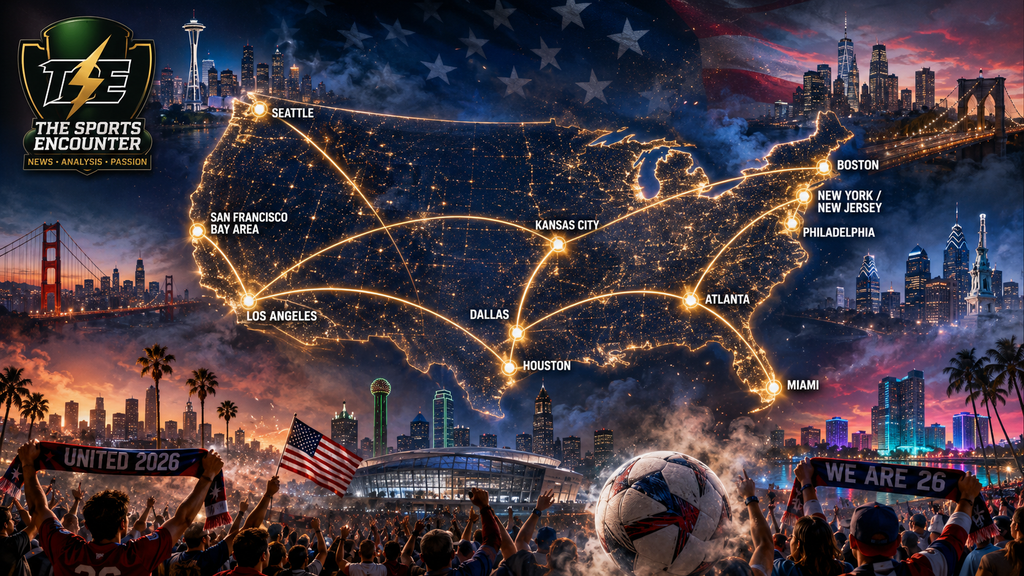
Some want the final. Others want lower stress, stronger nightlife, better weather, or more matches in one city.
Best City for the Final
New York/New Jersey is the answer because it hosts the final. It will also bring the highest demand and serious pressure on tickets, hotels, and transport.
Best City for Multiple Matches
Dallas leads with nine matches. Atlanta, Los Angeles, and New York/New Jersey also offer heavy match schedules.
Best City for Soccer Culture
Seattle stands out. Los Angeles, Atlanta, Kansas City, and Miami also bring strong football energy in different ways.
Best City for International Fan Atmosphere
Los Angeles, Miami, Houston, New York/New Jersey, and the San Francisco Bay Area should deliver powerful diaspora-driven crowds.
Best City for East Coast Travel
Philadelphia, New York/New Jersey, and Boston work well for fans planning an East Coast route. However, stadium access differs sharply, so compare real travel times before booking.
U.S. World Cup Travel Tips Every Fan Should Know
The U.S. can give fans a brilliant World Cup trip. Still, travel here works differently from many football nations.
Distances are larger. Local laws vary. Public transport quality changes by city. Stadium rules can be strict.
Buy Tickets Only Through Official Channels
Use official FIFA ticketing platforms and trusted official channels. Unofficial resale tickets can create serious problems at the gate.
Check Visa and Entry Rules Early
International fans should check U.S. visa or ESTA requirements before booking. Anyone crossing from Canada or Mexico should also confirm border rules.
Do Not Assume Every Stadium Is Downtown
Several stadiums sit outside the city center. Boston, Dallas, New York/New Jersey, Miami, and the Bay Area all require careful location planning.
Book Accommodation Around Matchday Movement
A hotel may look close on a map but still create a difficult matchday route. Fans should check official transit plans, shuttle routes, rideshare zones, parking rules, and expected traffic.
Prepare for Weather
Houston, Dallas, Miami, Kansas City, Atlanta, and Los Angeles can bring serious summer heat. Seattle and the Bay Area may feel milder. Weather should influence clothing, hydration, arrival time, and daily plans.
How to Choose the Right U.S. Host City
Choose your host city based on more than the match name.
The best trip depends on budget, team schedule, weather comfort, travel distance, stadium access, and how much time you want outside the match.
Ask These Questions Before Booking
- Which team or match do I want to see most?
- Is the stadium in the city center or outside it?
- How far is the airport from my hotel and the stadium?
- Can I attend a FIFA Fan Festival without a match ticket?
- Will I need to fly between host cities?
- Can my budget cover tickets, hotels, food, transport, and emergency costs?
- Do I need a visa, ESTA, or proof of onward travel?
The Smart Fan Rule
Choose the match first. Then choose the city. After that, plan the stadium route.
That order will save money, time, and stress.
Why the U.S. Host Cities Could Define World Cup 2026
The FIFA World Cup 2026 is the biggest edition in tournament history.
Its scale is obvious: 48 teams, 104 matches, three host countries, and 16 host markets. Yet the U.S. cities may decide how much of this tournament becomes a lasting American soccer memory.
If stadiums are full, transport works, fan festivals thrive, and local communities embrace the event, World Cup 2026 could become a turning point for soccer in the United States.
If access feels too expensive or logistics become frustrating, the tournament may also intensify the debate about football’s relationship with ordinary fans.
We explored that wider issue in our analysis of affordability at FIFA World Cup 2026.
Either way, the U.S. host cities will do more than stage matches. They will test whether America can turn a global football event into something alive beyond the stadium walls.
FIFA World Cup 2026 U.S. Host Cities FAQs
How many U.S. cities are hosting FIFA World Cup 2026 matches?
Eleven U.S. host markets will stage FIFA World Cup 2026 matches: Atlanta, Boston, Dallas, Houston, Kansas City, Los Angeles, Miami, New York/New Jersey, Philadelphia, San Francisco Bay Area, and Seattle.
Which U.S. city hosts the FIFA World Cup 2026 final?
The FIFA World Cup 2026 final will be played at New York New Jersey Stadium, commonly known as MetLife Stadium, in East Rutherford, New Jersey, on July 19, 2026.
Which U.S. host city has the most World Cup 2026 matches?
Dallas has the highest U.S. match count with nine matches. Atlanta, Los Angeles, and New York/New Jersey each host eight.
Are all FIFA World Cup 2026 U.S. stadiums in city centers?
No. Some stadiums are outside the main city center. Boston Stadium is in Foxborough, Dallas Stadium is in Arlington, New York New Jersey Stadium is in East Rutherford, and San Francisco Bay Area Stadium is in Santa Clara.
Will there be FIFA Fan Festivals in the United States?
Yes. FIFA Fan Festivals are part of the wider World Cup fan experience. Fans should check official local updates for each host city before traveling.
What is the best U.S. host city for international fans?
Los Angeles, Miami, Houston, New York/New Jersey, and the San Francisco Bay Area should be especially strong for international fan culture because of their large global communities.
Should fans rent a car for World Cup 2026 in the U.S.?
It depends on the city. Some host markets may work better with public transport and official shuttles. Others may require rideshares, rental cars, or planned transfers. Fans should check official local transport guidance before deciding.
Final Word: The U.S. Host Cities Are Part of the Tournament
The FIFA World Cup 2026 U.S. host cities will give fans 11 different versions of the same tournament.
Los Angeles will bring glamour. Seattle will bring soccer culture. Dallas will bring scale. Miami will bring Latin energy. New York/New Jersey will bring the final. Kansas City may surprise visitors with its local passion.
Every city has a role.
For fans, the best World Cup trip will come down to preparation. Buy official tickets. Check entry rules. Plan stadium routes. Book smart accommodation. Track weather. Leave early on matchdays.
Then enjoy the rare chance to watch the world’s biggest football tournament unfold across America.
The Sports Encounter’s World Cup 2026 coverage focuses on fixtures, team news, match analysis, fan stories, tournament trends, and the biggest talking points from football’s global stage.