
Editor's Choice
FIFA World Cup 2026 Curtain Raiser: The B(oldest) Event Ever?

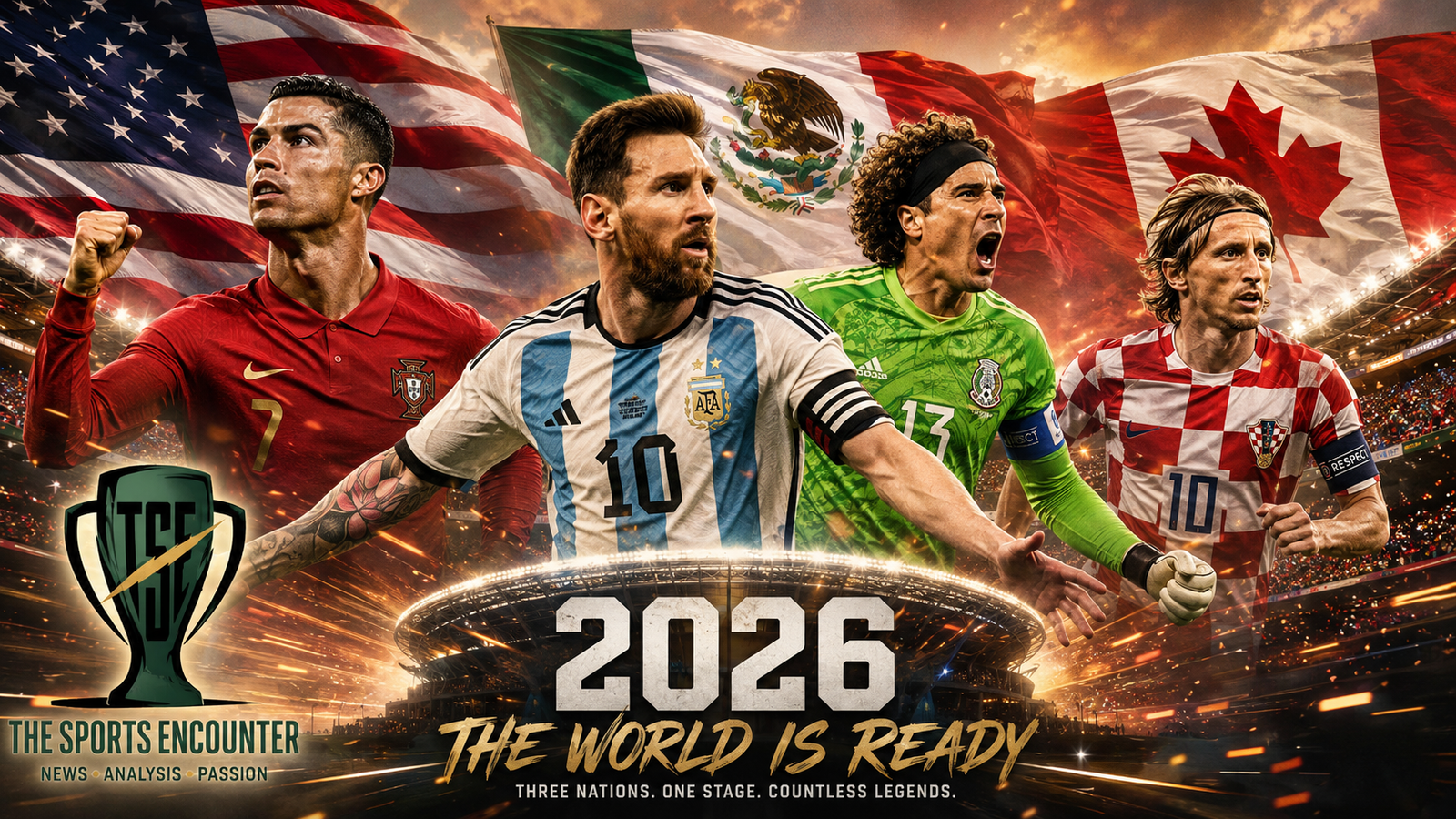
The FIFA World Cup 2026 begins with Mexico facing South Africa at Mexico City Stadium, launching the biggest edition in tournament history. This World Cup will feature 48 teams, 104 matches, three host nations, and a record wave of players aged 40 or above, making it football’s boldest and, in one important sense, oldest World Cup yet.
Cristiano Ronaldo is still here. Guillermo Ochoa is still here. Craig Gordon is still here. Lionel Messi, just short of 40, is still part of the wider late-career conversation. Other veteran names arrive with the same message: modern football no longer pushes every aging star out of the frame as quickly as it once did.
Hello and welcome to the exclusive coverage of the FIFA World Cup 2026 at TheSportsEncounter.com.
The first match is only a few hours away. Mexico and South Africa will start the tournament in Mexico City. But the opening whistle will also begin a deeper conversation about football’s future.
Can the largest World Cup also become the most memorable?
Can expanded access improve the tournament without thinning its quality?
Can old legs still shape young dreams?
And can football’s grandest stage carry both fresh nations and fading legends without losing its competitive edge?
This is the World Cup where scale meets memory.
The Biggest World Cup Ever Starts With a Familiar Kind of Pressure
Every World Cup begins with noise, color, ceremony, and expectation. Yet the opening match always carries something heavier.
Mexico will not simply play South Africa. Mexico will walk into a stadium loaded with national emotion, tournament history, and the burden of beginning the largest World Cup ever held.
The host nation has the first responsibility to give the tournament life.
A strong Mexico performance will lift the crowd, energize Group A, and immediately give the World Cup a sense of occasion. A nervous Mexico performance will turn the opener into something more tense, especially against a South African team that understands the value of surviving the first storm.
ALSO READ: 3 Biggest Challenges for the FIFA World Cup 2026 Organizers
Opening matches often create unusual football. Players make simple passes with tighter legs. Coaches speak calmly but feel the weight of months of preparation. Fans arrive in celebration mode, then quickly realize that the tournament has no respect for ceremony once the ball starts moving.
South Africa will know this.
The underdog in an opening match often gets one advantage: freedom. The host has to carry the occasion. The visitor can use it.
That makes Mexico vs South Africa a fascinating opener, especially because the two nations already share World Cup opening-match history. South Africa opened the 2010 World Cup against Mexico, and Siphiwe Tshabalala’s goal became one of the most replayed moments in modern tournament memory.
Now, 16 years later, they meet again in another opener.
Football loves this kind of loop.
Why FIFA World Cup 2026 Feels Different
The FIFA World Cup 2026 is different before a ball is kicked.
The numbers alone tell the story.
Forty-eight teams.
One hundred and four matches.
Sixteen host cities.
Three host nations.
A new Round of 32.
A wider route into the tournament for nations that previously watched from the outside.
This expansion changes how fans will experience the World Cup. It also changes how teams must plan for it.
The old 32-team version had a rhythm that fans understood. Group stage. Round of 16. Quarterfinals. Semifinals. Final. The path felt familiar. The 2026 edition adds more countries, more knockout pressure, more travel demands, and more chances for smaller nations to create moments that live beyond the tournament.
That is the beauty and the risk.
A bigger World Cup can produce more stories. It can also produce more uneven matches. It can open football’s biggest stage to more nations. It can also test viewer attention across a packed schedule.
The tournament now has to prove that expansion creates value, not just volume.
That question will follow FIFA throughout the month.
The B-oldest World Cup: Why Age Is the Story Nobody Should Ignore
The most original storyline of this World Cup may come from the players who have refused to disappear.
A record number of players aged 40 or above have been selected for this tournament. That matters because football has spent years telling us the game belongs to speed, pressing, acceleration, data, intensity, and young legs.
Those things still matter.
But longevity now matters too.
Modern players understand recovery, sleep, nutrition, load management, conditioning, and personalized training better than any previous generation. Goalkeepers can extend careers through positioning, experience, and game reading. Elite forwards can adapt their movement and choose moments instead of chasing every ball. Captains can influence matches with timing, communication, and emotional control.
That does not mean age has become an advantage by itself. A 40-year-old player still has to survive the hardest tournament in football. Every sprint, duel, recovery run, and second ball exposes the body. The World Cup is emotional, but it is also ruthless.
Still, the presence of so many veterans gives this tournament a unique texture.
It creates a generational bridge.
Young players arrive trying to announce themselves. Older players arrive trying to finish their stories properly. Some are chasing one last trophy. Some are chasing one last match. Some are there because their national teams still trust them more than younger alternatives.
This is why the title works.
The 2026 World Cup is football’s boldest era because it is the biggest experiment the tournament has ever staged.
It is also the B-oldest era because the sport’s oldest elite performers are refusing to leave quietly.
Cristiano Ronaldo and the Power of the Final Chapter
Cristiano Ronaldo’s presence changes the emotional temperature of any World Cup conversation.
At 41, Ronaldo is no longer viewed through the same lens as the younger version who terrorized defenders with speed, leap, stepovers, and pure physical dominance. The question now is different.
Can he still decide a moment?
That is the question that matters for older stars.
Tournament football does not always need 90 minutes of control from a veteran. Sometimes it needs one movement, one header, one penalty, one free kick, one dressing-room speech, one moment of refusal.
Ronaldo has built a career around refusal.
Refusal to be written off.
Refusal to age quietly.
Refusal to treat history as something already completed.
This World Cup could give him one last stage to turn a match, even if his role looks different from the past. That is part of the fascination. Fans are no longer watching only for what Ronaldo was. They are watching to see what remains when a superstar has to negotiate with time.
That is a deeply human sports story.
Every fan understands aging, even if they never played professional football. Every fan knows the feeling of wanting one more chance to prove something. Ronaldo’s World Cup is built on that emotional connection.
Guillermo Ochoa and the World Cup Specialist Myth
Some players seem designed for World Cups.
Guillermo Ochoa has become one of those names.
For many fans, Ochoa is not just a goalkeeper. He is a tournament memory. He is the kind of player who can turn a normal group-stage match into a highlight reel. He has made World Cup goalkeeping feel theatrical, especially because his biggest performances often came when the pressure looked impossible.
If he features again in 2026, the symbolism will be powerful. A Mexican veteran, in a World Cup hosted partly by Mexico, standing in a tournament that has often brought out his best.
Goalkeepers age differently from outfield players, but they also face a different kind of scrutiny. They may cover less ground, yet one mistake becomes massive. A striker can miss a chance and still score later. A goalkeeper can misread one cross and carry the blame for years.
That is why veteran goalkeepers are fascinating in World Cup football. Experience helps them read danger. Age can sharpen judgment. But reflexes, timing, and confidence must still hold under pressure.
Ochoa’s story fits the B-oldest theme perfectly.
He represents the tournament veteran who has become almost inseparable from the competition itself.
The Messi Shadow Over the FIFA World Cup 2026
Lionel Messi may not belong to the over-40 list, but he belongs to the wider late-career storyline.
He enters this World Cup era as a player whose relationship with the tournament has already been transformed. For years, the World Cup was the missing piece in his legacy debate. Qatar 2022 changed that forever.
Now every Messi appearance carries a different feeling.
The desperation has gone. The romance remains.
That makes his late-career presence fascinating. He no longer needs the World Cup to validate his greatness. Fans watch him now with a different emotional rhythm, more gratitude than pressure, more memory than argument.
Still, football rarely allows legends to simply enjoy a farewell. Opponents will press him. Younger players will chase him. Defenders will want their own place in the story. Argentina will carry expectations as long as Messi wears the shirt.
His role in this tournament, whether central or managed, will tell us something about how elite teams handle aging genius.
Do you build around it?
Do you protect it?
Do you save it for decisive moments?
Do you let the team evolve while still giving the legend space to create?
Those questions make Argentina one of the tournament’s most emotionally layered teams.
FIFA World Cup 2026: Youth Still Owns the Future
The veteran storyline is powerful, but this World Cup will not only belong to old stars.
The next generation is ready to take the stage.
Every World Cup introduces players who become household names in a matter of days. A teenage winger burns past a fullback. A young midfielder controls a match against a famous nation. A goalkeeper from a smaller country makes eight saves and becomes a global hero. A defender nobody outside his league followed suddenly earns transfer rumors overnight.

That is the World Cup’s gift to young players.
It can collapse years of anonymity into one unforgettable match.
The 2026 edition should create more of those stories because more teams are involved. More nations mean more unknown players. More unknown players mean more chances for discovery. For fans, this is one of the joys of an expanded tournament.
You may start the World Cup following Ronaldo, Messi, Mbappe, Bellingham, Vinicius Jr., Musiala, Yamal, or another global name.
You may leave it remembering someone you barely knew before June.
That is how World Cups work.
The Real Football Test: Can Favorites Handle a Bigger Format?
The traditional powers will still draw the most attention.
Argentina. Brazil. France. England. Germany. Spain. Portugal. The Netherlands. Italy, if involved in the wider tournament conversation. These names carry history before they carry form.
But 2026 will test them in a slightly different way.
More matches and a Round of 32 create more possible traps. A favorite may survive a poor group-stage result, but that result can affect confidence, route, rotation, and public pressure. A team that wins the group cleanly may still face a knockout opponent with nothing to lose.
The expanded format may help favorites recover from early mistakes. It may also expose teams that lack depth.
That is the key.
This tournament could punish squads that are too dependent on one superstar, one midfield structure, or one defensive partnership. Injuries, suspensions, heat, travel, and fixture rhythm can all change a campaign quickly.
The best team on paper may struggle if the 18th player cannot perform.
The smartest squad may beat the most glamorous squad.
That should excite fans because tournament football becomes richer when planning matters as much as talent.
Travel, Heat, Altitude and Recovery Could Decide Matches
The 2026 World Cup will stretch across a huge geographic area. That makes logistics part of the football story.
In some tournaments, teams mostly worry about opponents. In this one, they must also manage distance, climate, time zones, recovery windows, and venue conditions.
Mexico City brings altitude.
Some U.S. venues may bring heat.
Long travel can affect rhythm.
Different climates can change tempo.
Teams that manage these details well may gain an edge that does not show up in pre-tournament predictions.
This is especially important for older players. The B-oldest World Cup theme is not only romantic. It is practical. Older bodies need smarter management. Coaches will have to decide when to start veterans, when to protect them, and when to unleash them.
That could shape knockout games.
A 41-year-old Ronaldo, a 40-year-old goalkeeper, or a late-career midfield leader can still influence a match. But they may need the tournament managed around energy peaks rather than reputation alone.
Modern football talks constantly about data. This World Cup may show whether teams use that data intelligently under tournament pressure.
Set Pieces Could Become the Great Equalizer
The bigger the tournament, the more important set pieces become.
When smaller nations face technically stronger teams, they often look for controlled moments. Corners, free kicks, long throws, and second balls offer those moments.
A favorite may dominate possession for 70 minutes and still trail from one corner.
A lower-ranked side may defend deep, stay patient, and wait for one delivery.
A veteran defender may become more valuable than a young attacking fullback in a tight match because he knows how to win first contact.
Set pieces also help older players stay relevant. Timing, strength, positioning, communication, and nerve matter as much as open-field speed. A 40-year-old goalkeeper can organize a wall. A veteran striker can attack the back post. A senior center-back can read the flight of the ball before younger players react.
This is another reason the over-40 storyline deserves serious football attention.
Experience still has tactical value.
What Mexico Must Get Right Against South Africa
Mexico’s first challenge is emotional control.
The stadium will be loud. The occasion will be massive. The country will expect a statement. But opening matches punish teams that rush.
Mexico must start with energy without becoming frantic.
They need clean passing through midfield, early width, and controlled pressure after losing the ball. If they allow the match to become stretched, South Africa can grow into it. If Mexico keep the ball moving quickly and avoid cheap turnovers, they can force South Africa to defend deeper than planned.
The first goal will matter enormously.
If Mexico score early, the match could open. If South Africa score first, the entire stadium dynamic changes. Even a 0-0 score after 30 minutes could increase tension around the host.
That is the beauty of the opener.
It gives us football and psychology at the same time.
What South Africa Must Get Right
South Africa need patience.
They do not need to win the opening 10 minutes. They need to survive them.
The best underdog performances usually begin with discipline. Defensive spacing, compact lines, calm clearances, and smart fouls can frustrate a host nation. South Africa must avoid emotional mistakes, especially early yellow cards, panic passes near their own box, and unnecessary turnovers in central areas.
They also need courage when counterattacking.
A team that only defends eventually breaks. South Africa must give Mexico something to fear. That could come through pace in wide areas, direct balls into space, or quick midfield transitions after regaining possession.
If they can quiet the crowd, even briefly, the match changes.
And if they can repeat even a fraction of the emotional force of their 2010 opener, this match could become much more than a ceremonial beginning.
What American Fans Should Watch Throughout the Tournament
For American fans, this World Cup is a once-in-a-generation home event.
The United States has hosted the World Cup before, but the soccer landscape has changed dramatically since 1994. MLS has grown. European football has become part of weekend viewing culture. Youth soccer has deeper roots. Streaming and social media have made international stars familiar to casual fans.
Now the tournament arrives at a time when U.S. soccer can reach beyond its existing base.
The biggest question is whether the event creates lasting fans or only temporary attention.
That will depend on match quality, U.S. team performance, stadium experience, broadcast accessibility, and the tournament’s ability to generate national conversation. A memorable U.S. run would help. A classic match on American soil would help even more.
But the opportunity is broader than one team.
This World Cup can make millions of American fans feel the sport’s global force in their own cities.
That matters.
What Global Fans Need From Coverage
The 2026 World Cup will be harder to follow than some previous tournaments because of time zones, match volume, and travel spread.
Fans across the Middle East, South Asia, Europe, Africa, and East Asia will need clear daily guidance.
That creates an editorial opportunity for The Sports Encounter.
During this tournament, fans will not only search for scores. They will search for meaning.
What happened?
Why did it matter?
Who qualified?
Who is under pressure?
Which matches should I watch today?
What time is the match in my region?
Which player changed the game?
What does this result mean for the group?
That is where our coverage must win.
We should publish with clarity, not clutter. Every article should help fans understand the tournament faster than they could by scrolling through scattered updates.
Why This Is the World Cup of Extremes
The 2026 World Cup is a tournament of extremes.
The biggest field ever.
The longest match list ever.
The widest host footprint ever.
The strongest late-career veteran presence ever.
The clearest test yet of whether football can expand without losing intensity.
That is the real curtain-raiser angle.
This tournament stretches in both directions. It opens the door to more countries while keeping some of the oldest elite players in the room. It sells the future while giving legends one last platform. It creates space for unknown names while still depending on global icons to pull casual fans into the story.
That tension is powerful.
Football is changing, but it has not fully let go of its past. The World Cup is becoming bigger, but it still leans on memories. The sport wants new audiences, new markets, and new stories, yet it still understands the emotional power of familiar faces.
That is why 2026 feels special.
It is not simply bigger.
It feels layered.
What Will Define the First Week
The first week will answer several questions quickly.
Can Mexico handle the opening-night pressure?
Can South Africa turn the opener into a contest?
Will the expanded format produce early surprises?
Will older players look like useful tournament assets or symbolic selections?
Will favorites play with control or caution?
Will fans embrace the wider tournament rhythm?
Will the travel and climate concerns show early signs of impact?
The answers will shape the tone of the competition.
World Cups do not wait for the knockout rounds to create meaning. Sometimes the first week tells us which teams are emotionally ready, which teams are tactically confused, and which teams arrived with reputation rather than structure.
That is why the opener matters.
It does not decide the World Cup.
It starts the mood.
Why Fans Should Watch Beyond the Score
A curtain raiser should never reduce the tournament to predictions.
Football rarely obeys them.
The better way to watch this World Cup is to follow patterns.
Watch how teams manage substitutions.
Watch which coaches trust their benches.
Watch which older players are protected and which are overused.
Watch how younger players handle their first big pressure moment.
Watch which teams defend set pieces properly.
Watch which favorites conserve energy.
Watch which underdogs repeat their game plan across matches.
Watch which fan bases turn stadiums into home grounds.
The scores will tell us who won.
The patterns will tell us who can last.
Conclusion: The Ball Is Ready to Move
The wait is almost over.
Mexico and South Africa will step onto the field, the ceremony will fade, the noise will rise, and the biggest World Cup in history will finally become a football tournament.
That moment always changes everything.
Before kickoff, every team has hope. Every fan has an argument. Every prediction sounds possible. Once the ball moves, the tournament starts writing its own story.
FIFA World Cup 2026 arrives as the boldest edition football has ever attempted. It is bigger in format, wider in geography, heavier in logistics, and richer in storylines.
It is also the B-oldest World Cup in spirit, a tournament where football’s aging icons stand beside teenage dreamers and remind the world that greatness does not always leave when the calendar says it should.
The next month will belong to goals, nerves, flags, heartbreak, late winners, missed penalties, and moments nobody can script.
The biggest stage is ready.
The boldest era begins now.
FAQs
When does the FIFA World Cup 2026 begin?
The FIFA World Cup 2026 begins on June 11, 2026, with Mexico facing South Africa at Mexico City Stadium.
Why is the 2026 World Cup called the biggest edition ever?
The tournament has expanded to 48 teams and 104 matches, making it the largest FIFA World Cup ever staged.
Why does the title say football’s “Boldest Era”?
The title reflects the scale of the tournament and also plays on the “B-oldest” angle, as World Cup 2026 features a record number of players aged 40 or above.
How many over-40 players are at the 2026 World Cup?
A record eight players aged 40 or above have been selected for the tournament, more than the combined total from all previous World Cups.
Why are older players still important in modern football?
Older players bring experience, leadership, set-piece value, game management, and emotional control. Modern recovery, nutrition, and load management have also helped elite players extend their careers.
What makes Mexico vs South Africa an important opening match?
Mexico carry the pressure of opening the tournament at home, while South Africa have a chance to spoil the hosts’ party and repeat the competitive spirit of their 2010 World Cup opener against Mexico.
What should fans watch in the first week?
Fans should watch how favorites handle pressure, how older players are used, whether underdogs can stay competitive, how travel and climate affect teams, and which young players make an early breakthrough.
What is the biggest question of World Cup 2026?
The biggest question is whether the expanded format can create more drama, representation, and fan value while preserving the competitive quality that makes the World Cup special.


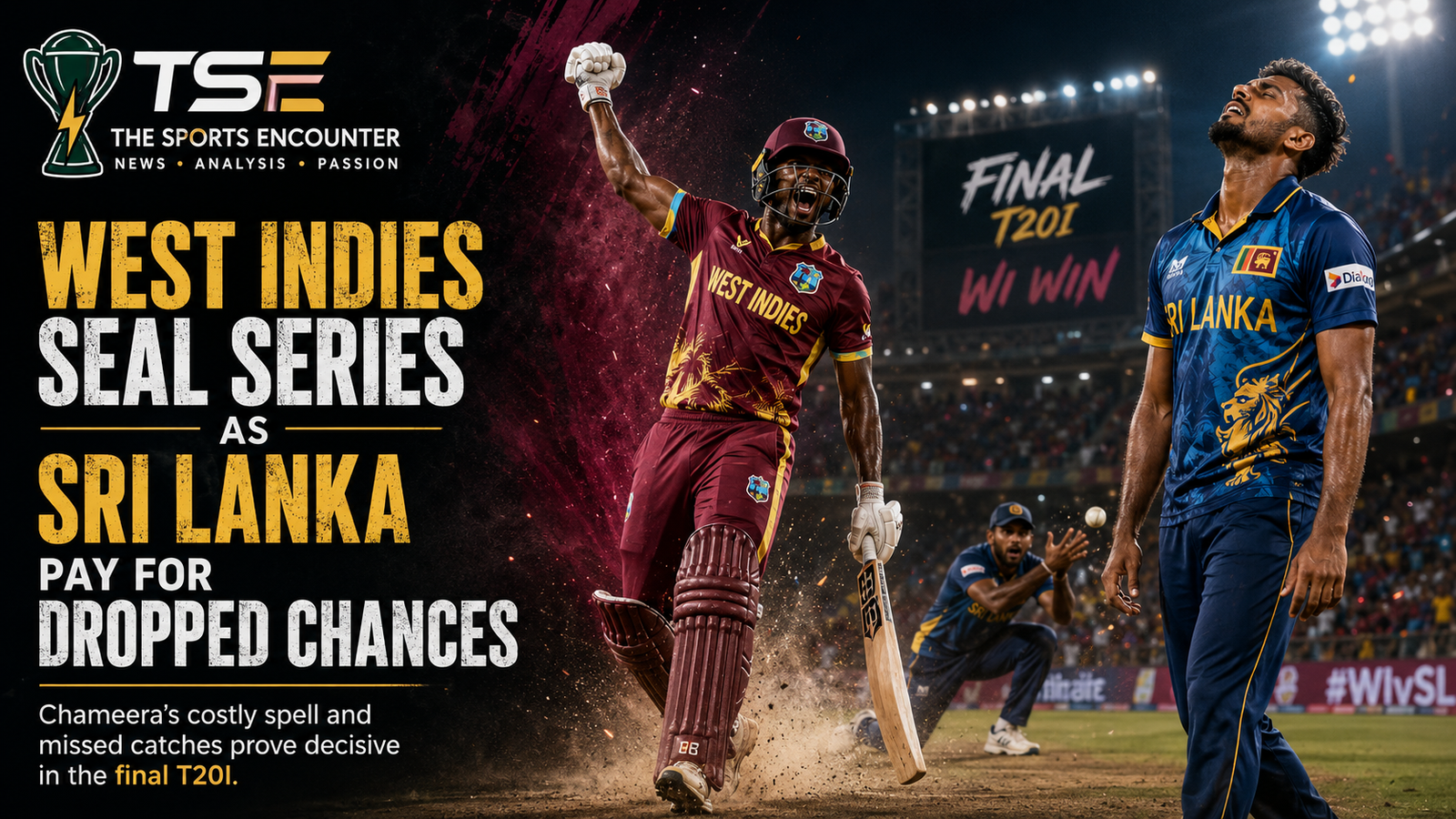
West Indies turned a difficult chase into a series-clinching win as Sri Lanka paid the full price for dropped catches, poor death bowling, and one disastrous spell from Dushmantha Chameera in the final T20I at Sabina Park, Kingston.
Sri Lanka had enough runs on the board. They had West Indies under pressure. They had the spinners controlling the game. Then the match slipped away through their own hands.
Chasing 170, West Indies reached 170/5 in 19.4 overs to win by five wickets and take the T20I series. Sherfane Rutherford held the chase together with an unbeaten 54 from 40 balls, while Jason Holder produced the late explosion, smashing 21 not out from only five deliveries.
For more cricket coverage, visit our Cricket Hub.
Sri Lanka Build a Competitive Total but Lose Momentum Late
Sri Lanka were bowled out for 169 in 20 overs after West Indies chose to field first. It was a decent score on a surface where the ball did not always come on cleanly, but it also felt like Sri Lanka left runs behind.
Pathum Nissanka gave Sri Lanka early momentum with 26 from 17 balls, while Kamil Mishara added 28 from 23. Kamindu Mendis scored 20, and Dasun Shanaka made 16, but the innings needed a stronger middle-order push.
That came from Dunith Wellalage, who played one of the most important Sri Lankan innings of the match. His 43 from 28 balls gave Sri Lanka a fighting total when the innings could have fallen apart earlier. Wanindu Hasaranga also added a useful 21 from 13 balls.
Still, Sri Lanka lost too many wickets at the wrong moments. From 160/6 in 18.4 overs, they collapsed to 169 all out. That final-over damage mattered badly by the end of the night.
Shamar Joseph was the standout bowler for West Indies. He took 5/33 in four overs and was later named both Player of the Match and Player of the Series.
West Indies Stumble Early Before Hetmyer Opens the Chase
Sri Lanka could hardly have asked for a better start with the ball. Shai Hope fell for a duck in the first over, and West Indies were soon in trouble.
The scoreboard read 53/4 after 8.2 overs. At that point, Sri Lanka had control of the match. Hasaranga and Maheesh Theekshana were bowling with control, variation, and pressure. Theekshana removed Ackeem Auguste, while Hasaranga dismissed Brandon King and Shimron Hetmyer.
Hetmyer’s 32 from 19 balls had kept West Indies alive, but his wicket should have opened the door for Sri Lanka to finish the job.
Instead, Sri Lanka let the game breathe again.
Dropped Catches Cost Sri Lanka the Match and the Series
The biggest turning point was Sri Lanka’s fielding.
Rutherford was the batter Sri Lanka needed to remove. He was not racing away at the start, but he was staying long enough to become dangerous at the back end. Sri Lanka gave him chances, and West Indies made them pay.
Dropped catches in a T20 chase are rarely isolated mistakes. They change bowling plans. They force captains to move fielders. They give batters emotional oxygen. They make bowlers chase wickets instead of executing plans.
That is exactly what happened here.
Sri Lanka had West Indies at 53/4. From there, Rovman Powell and Rutherford added 81 for the fifth wicket. That stand did not just rebuild the innings. It changed the emotional balance of the match.
West Indies started believing. Sri Lanka started tightening up.
A related Sri Lanka match report can be added here: Read more Sri Lanka cricket coverage.
Chameera’s Spell Turns Into a Disaster
Dushmantha Chameera’s spell became the defining Sri Lankan failure of the night.
His final figures told the story: 4 overs, 64 runs, 1 wicket, economy rate 16.00.
In a match decided with only two balls to spare, that spell was brutal.
Chameera had pace, but he did not have control. His yorker plan failed repeatedly. Instead of hitting the base of the stumps, he missed his length and offered balls that West Indies could swing through the line.
Powell punished him first. Then Holder finished the job.
The 19th over was the killer. With West Indies still needing 30 from 12 balls, Sri Lanka had a path back into the match. Chameera then conceded 23 runs in the over as Holder struck three sixes.
That over did more than damage the scoreboard. It broke Sri Lanka’s defense.
Holder’s cameo was short, violent, and decisive. His 21 from five balls came at a strike rate of 420.00. For West Indies, it was perfect finishing. For Sri Lanka, it was a collapse in execution under pressure.
Hasaranga and Theekshana Deserved Better
Sri Lanka’s spinners had done enough to keep the team in the match.
Hasaranga bowled a brilliant spell, taking 2/17 from four overs. Theekshana was also excellent with 1/26 from four overs. Together, they created the squeeze Sri Lanka needed in the middle overs.
The problem was that Sri Lanka could not support that control with clean catching and disciplined pace bowling.
T20 cricket is unforgiving that way. One good phase rarely wins a match if the fielding drops chances and the death bowling falls apart. Sri Lanka had the tactical foundation. They failed in the finishing details.
For broader tournament and cricket coverage, follow The Sports Encounter’s latest cricket updates.
Rutherford Shows Composure, Holder Supplies the Violence
Rutherford’s innings was not just about big hitting. It was about survival, timing, and reading the chase.
He absorbed pressure when West Indies were four wickets down. He allowed Powell to rebuild with him. Then, when Sri Lanka’s seamers missed their lengths, Rutherford stayed composed enough to guide the chase deep.
His unbeaten 54 from 40 balls included three fours and four sixes. He did not finish the match with one wild burst. He finished it by staying there.
Holder then gave the chase its knockout punch. His three sixes in the 19th over turned a tense finish into a West Indies advantage.
By the final over, West Indies needed only six. Rutherford completed his half-century and guided the hosts home with two balls remaining.
Final Verdict
Sri Lanka did plenty right in this match, but the mistakes they made were too costly to survive.
They posted 169. They reduced West Indies to 53/4. Their spinners controlled the middle overs. On paper, that should have been enough to win a series decider.
But dropped catches kept Rutherford alive. Chameera’s death bowling gave West Indies the release they were looking for. Holder’s five-ball assault turned pressure into celebration.
West Indies deserved credit for staying calm after a poor start. Rutherford gave them control. Holder gave them the finish. Shamar Joseph gave them the earlier bowling performance that kept Sri Lanka within reach.
Sri Lanka will look back at this match as one they should have won. In truth, they lost it twice: once in the field, and then again in Chameera’s nightmare spell.
West Indies took the match, took the series, and reminded Sri Lanka of cricket’s oldest lesson.
You cannot drop chances in a decider and expect the game to forgive you.

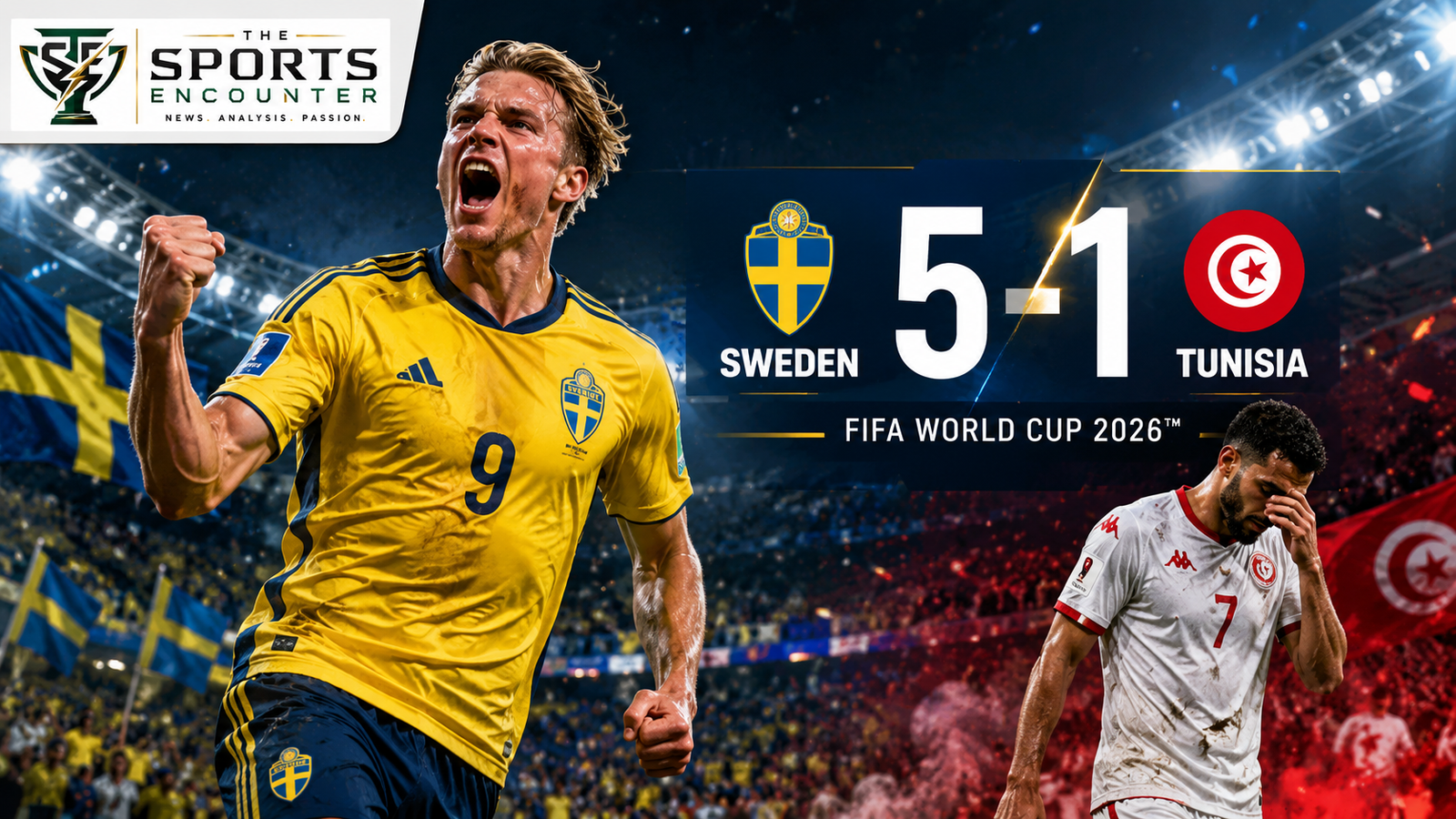
Sweden made one of the loudest early statements of the FIFA World Cup 2026 with a commanding 5-1 win over Tunisia in their Group F opener in Monterrey.
It was a ruthless, confident, and surprisingly one-sided performance from Graham Potter’s side, who punished Tunisia’s defensive mistakes, pressed with purpose, and used the attacking chemistry of Alexander Isak, Viktor Gyökeres, and Yasin Ayari to take control of the match before Tunisia could settle.
For more tournament coverage, follow our FIFA World Cup 2026 hub.
Sweden Start Fast and Never Let Tunisia Breathe
Sweden did not need much time to expose Tunisia’s defensive uncertainty.
The tone was set early when Tunisia goalkeeper Mouhib Chamakh failed to deal cleanly with a direct ball forward. Viktor Gyökeres reacted quickly, Sweden kept the move alive, and Yasin Ayari finished with power to give the European side the perfect start.
That early goal changed the emotional shape of the match.
Tunisia had arrived needing discipline, patience, and defensive calm. Instead, they were dragged into a game Sweden clearly preferred. Potter’s side looked stronger in transition, cleaner in the final third, and far more comfortable when the match opened up.
Sweden’s second goal came through Alexander Isak, whose low effort found a way past Chamakh. It was another painful moment for Tunisia, not only because of the scoreline, but because the goal reflected a broader problem. Their defensive structure lacked confidence, and their goalkeeper looked badly shaken.
Tunisia Find a Brief Way Back
Tunisia did show one flash of real quality before halftime.
Hannibal Mejbri, one of the few Tunisian players willing to demand the ball and carry responsibility, delivered from the right side. Omar Rekik met the cross and guided his header in to reduce the deficit.
That goal gave Tunisia a lifeline.
For a short spell, they looked more willing to step higher, play with bravery, and ask Sweden questions. The problem was that their comeback needed control, not emotion. Sweden remained dangerous every time Tunisia gave the ball away, and the North African side never truly looked settled enough to build sustained pressure.
Gyökeres and Isak Turn the Match Into a Rout
The second half belonged to Sweden’s front line.
Gyökeres was central to almost everything good Sweden produced. His movement stretched Tunisia’s defenders, his physical presence disrupted their rhythm, and his finishing gave Sweden the third goal that killed Tunisia’s comeback hopes.
Isak also played with the intelligence of a forward who understood when to combine, when to press, and when to attack space. His role in Sweden’s fourth goal showed that clearly, as Mattias Svanberg came off the bench and finished sharply after Sweden again found room inside Tunisia’s defensive shape.
By that point, the match had moved beyond Tunisia’s reach.
Ayari then added his second late in the game, sealing a personal performance that will be remembered as one of the standout individual displays of the early group stage.
Key Match Points
What Went Wrong for Tunisia?
Tunisia’s biggest issue was not effort. It was control.
Their defensive line looked uncomfortable against Sweden’s direct running. The midfield struggled to protect the back four when Sweden moved quickly through transition. Most damaging of all, individual mistakes gave Sweden the kind of chances a strong attacking team rarely wastes.
Sabri Lamouchi’s side also had a difficult emotional balance to manage. After going behind early, Tunisia tried to become more adventurous. That created moments of promise, especially through Mejbri, but it also left space for Sweden to attack.
Against a side with Isak and Gyökeres leading the line, that was a dangerous trade.
Tunisia now face serious pressure in their remaining Group F matches against Japan and the Netherlands. Their tournament is not over, but this result leaves them with very little room for error.
Read more of our tournament analysis in the FIFA World Cup 2026 coverage section.
What This Win Means for Sweden
For Sweden, this was more than three points.
It was a statement that their attack can hurt teams quickly and repeatedly. Potter’s side looked balanced, confident, and tactically clear. Sweden used a 3-4-1-2 structure that allowed width, central combinations, and direct access into their two main forwards.
Ayari’s performance added another layer to the story. His two goals gave Sweden a different type of threat from midfield, while Gyökeres and Isak gave Tunisia constant problems with their movement and power.
Sweden will face stronger tests, especially against the Netherlands and Japan, but this result gives them a major platform in Group F. Goal difference could matter later, and a four-goal winning margin is a valuable early advantage.
Player of the Match: Yasin Ayari
Yasin Ayari was the clear standout.
His first goal gave Sweden control. His second completed the rout. Beyond the goals, he played with energy, timing, and composure in key moments.
There was also a personal twist to his performance. Ayari was born in Sweden to a Tunisian father, which made his double against Tunisia one of the more emotional subplots of the match.
Football often writes these strange stories. On this night, Ayari wrote Sweden’s first major chapter of the tournament.
Final Verdict
Sweden were clinical. Tunisia were careless. That was the simple truth of the match.
Potter’s team looked like a side with structure, attacking confidence, and belief. Tunisia looked like a team still trying to discover its identity under pressure.
A 5-1 scoreline can sometimes flatter a team. This one did not feel unfair. Sweden earned the margin because they forced mistakes, attacked them quickly, and kept pushing until the final whistle.
Group F now has its first major statement.
Sweden have momentum.
Tunisia have questions.
And the rest of the group has been warned.
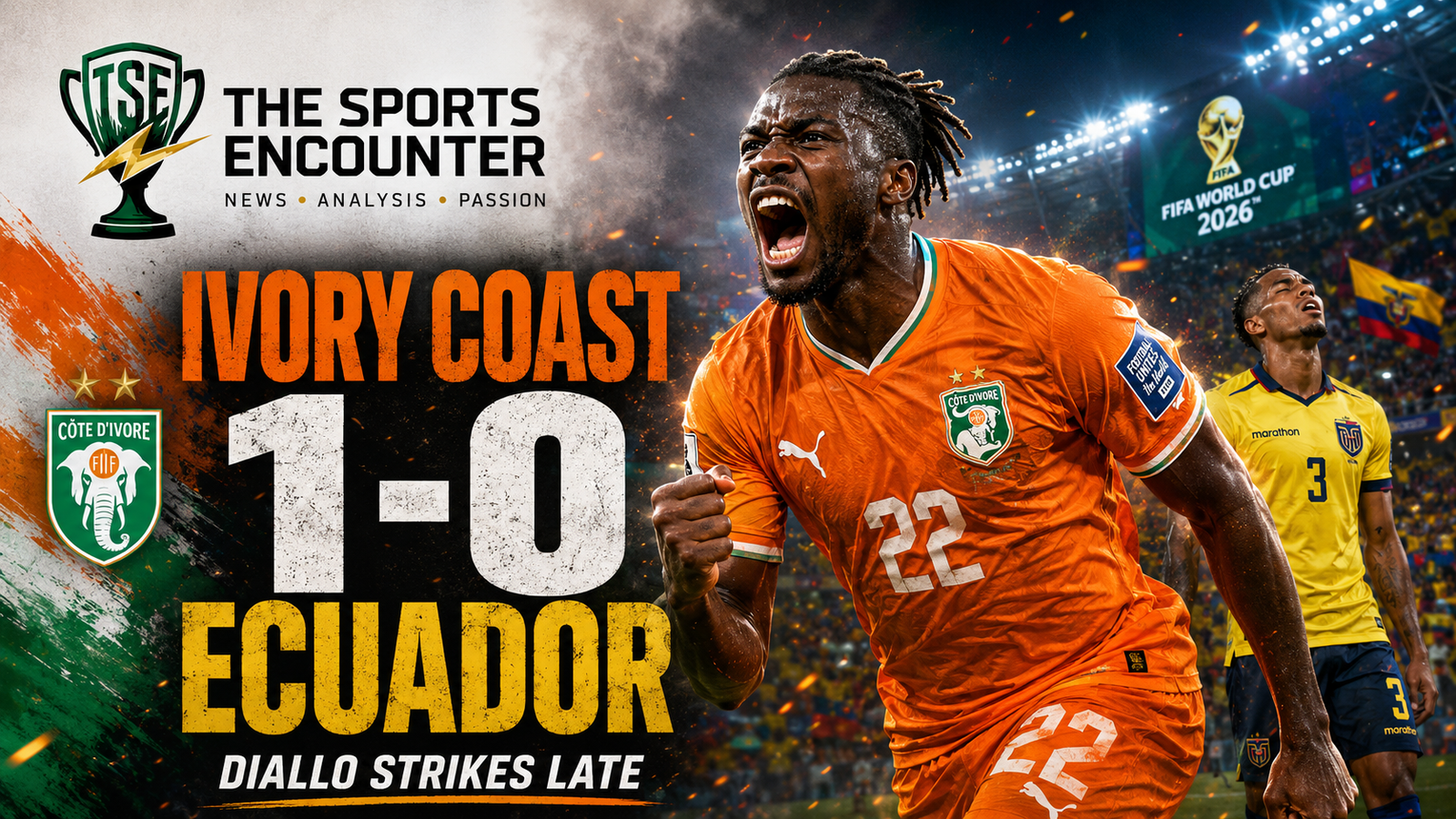
Ivory Coast waited until the final minute to announce their return to the FIFA World Cup stage, but when the moment came, Amad Diallo made sure it counted.
The Manchester United forward came off the bench and scored a composed 90th-minute winner as Ivory Coast defeated Ecuador 1-0 in their opening Group E match at the FIFA World Cup 2026 in Philadelphia.
It was a tight, physical, and emotionally charged contest between two teams that looked evenly matched for most of the night. Ecuador had spells of control, hit the woodwork twice, and moved the ball with more rhythm in midfield. Ivory Coast, however, stayed alive, stayed compact, and found the one moment that changed everything.
For more tournament coverage, fixtures, and match reports, visit our FIFA World Cup 2026 hub.
The Decisive Moment: Amad Diallo Punishes Ecuador Late
The match looked set for a goalless draw until Ivory Coast produced their best attacking move at the most important time.
Wilfried Singo pushed forward down the right and found space to deliver the ball inside. Amad Diallo, who had started the game on the bench, arrived with control and confidence. His finish from the edge of the box found the far corner and gave Ivory Coast three huge points.
It was the kind of goal that can reshape a group-stage campaign. Ecuador had defended well for 89 minutes, but one lapse, one delayed reaction, and one clean strike turned their solid performance into a painful defeat.
For Ivory Coast, the goal was more than a late winner. It was a reward for patience, defensive discipline, and the belief that their attacking quality could still decide the game even when Ecuador looked difficult to break down.
Ecuador Had Chances but Could Not Finish
Ecuador will leave this match frustrated.
They had enough possession to make the game feel balanced. They also created some of the better moments, including two efforts that struck the woodwork. Their midfield, led by Moisés Caicedo, gave them control in key phases, while Enner Valencia remained a constant reference point in attack.
The problem came in the final action.
Ecuador could move the ball into threatening areas, but they lacked the final touch that separates a competitive performance from a winning one. Against a team as physically strong and defensively organized as Ivory Coast, missed chances carry a heavy cost.
That cost arrived in the final minute.
Ivory Coast’s Defensive Shape Deserves Credit
This was not a free-flowing attacking performance from Ivory Coast. It was a mature tournament performance.
They protected central areas well, stayed aggressive in duels, and kept Ecuador from turning possession into regular clear chances. Yahia Fofana and the defensive line had to stay alert, especially when Ecuador stretched the play and looked for quick combinations around the box.
Wilfried Singo’s late involvement in the winning goal also showed why Ivory Coast’s wide defenders can be important in this group. His defensive work mattered, but his forward run in the decisive move gave Ivory Coast the attacking spark they needed.
In a group featuring Germany, Ecuador, and Curacao, opening with a clean sheet gives Ivory Coast a valuable foundation.
Yan Diomande’s Start Shows Ivory Coast’s New Energy
One of the most interesting selection calls came before kickoff, with teenager Yan Diomande starting in attack alongside experienced names such as Nicolas Pepe.
That decision gave Ivory Coast more pace, directness, and unpredictability. Diomande did not need to dominate the game to show why the coaching staff trusted him. His movement helped stretch Ecuador, while the presence of young attacking talent gave Ivory Coast a different edge.
This could become an important theme for Ivory Coast during the tournament. They are not only relying on experience. They are blending senior leadership with younger players who can change the rhythm of a match.
What This Result Means for Group E
The win gives Ivory Coast three points and a strong start in Group E.
Germany’s heavy win over Curacao means goal difference could still become important, but Ivory Coast have already done the most important thing in their opener. They avoided a draw, beat a direct rival, and gave themselves room before facing Germany.
Ecuador now face pressure earlier than expected. They played well enough in phases to suggest they can still compete in the group, but losing the opening match to a direct qualification rival changes the mood quickly.
Their next match now carries real weight. They need points, and they may also need goals.
Key Match Takeaways
Ivory Coast showed tournament patience.
They did not panic when Ecuador controlled possession for spells. They waited for the right moment and took it.
Amad Diallo changed the match.
His 90th-minute goal was calm, clinical, and decisive.
Ecuador’s finishing let them down.
Two efforts against the woodwork and limited shots on target told the story.
Group E is already taking shape.
Germany look dangerous, Ivory Coast have momentum, and Ecuador now need a response.
Ivory Coast’s clean sheet matters.
In a tight group, defensive structure can be as valuable as attacking flair.
Final Verdict
Ivory Coast’s 1-0 win over Ecuador was not built on dominance. It was built on discipline, timing, and one moment of quality from Amad Diallo.
Ecuador may feel they deserved more from the game, especially after hitting the woodwork twice, but World Cup football rarely rewards control without precision. Ivory Coast stayed in the match long enough to find their chance, then punished Ecuador when the opportunity came.
This was a powerful opening statement from an Ivory Coast side that looks organized, athletic, and dangerous in late-game situations.
Their next test against Germany will reveal much more, but this victory already gives them belief, control, and a real path forward in Group E.