

MELBOURNE, Australia, September 15, 2026: Australian cricket has spent so long worrying about opponents that it has been easy to overlook the one adversary even its greatest teams cannot beat.
Time.
Steve Smith is 37. Nathan Lyon is 38. Mitchell Starc is 36. Josh Hazlewood is 35. Alex Carey is 35. Pat Cummins is 33. Scott Boland is 37. Michael Neser is 36.
Usman Khawaja has already gone.
Story at a glance

Is Australia’s Cricket Team Too Old?
Australia are old by modern international-team standards, particularly in Test cricket.
What Did Mark Taylor Say About Australia’s Ageing Squad?
Taylor’s warning focused on the number of senior players clustered around the same stage of their careers.
What Is the Average Age of Australia’s Test Squad?
The current South Africa squad averages roughly 32.7 years.
Why Australia’s Ageing Problem Is Really a Succession-Timing Problem
Great teams rarely collapse because they suddenly run out of talented cricketers.
Who Are Australia’s Best Young Cricketers?
This is where the discussion becomes much more encouraging.
The generation that won an ODI World Cup, a World Test Championship, major Ashes contests and almost every bilateral trophy available to it is approaching the part of its story where succession becomes impossible to postpone.
Former Australia captain Mark Taylor has been among those warning about the concentration of senior players near the back end of their careers. A widely shared version of his concern grouped Khawaja, Smith, Starc, Hazlewood and Lyon together and asked what happens when several disappear within the same two- or three-year period.
The Khawaja reference is already dated. He retired after the 2025-26 Ashes.
That hardly weakens the argument.
It shows the handover has started.
Australia’s challenge now is unusually complicated because this is not one ageing superstar waiting for one obvious successor. Several highly specialized roles may become vacant within roughly the same competitive cycle.
Who replaces Smith’s problem-solving?
Who absorbs Lyon’s workload?
Where does the next left-arm strike bowler come from when Starc finally finishes?
Which quick can offer Hazlewood’s control?
How long can Cummins remain both captain and attack leader?
And can Australia’s next generation answer those questions quickly enough to preserve the standards established by the one before it?
The comforting answer is that Australian cricket still produces talent.
The more difficult answer is that talent alone has never guaranteed succession.
Is Australia’s Cricket Team Too Old?
Australia are old by modern international-team standards, particularly in Test cricket.
The 16-player squad selected for October’s three-Test tour of South Africa has an average age of approximately 32.7 years as of September 15.
| Player | Age | Role | Transition Significance |
|---|---|---|---|
| Nathan Lyon | 38 | Off-spinner | Australia’s premier Test spinner |
| Steve Smith | 37 | Senior batter | Elite middle-order problem solver |
| Scott Boland | 37 | Fast bowler | Experienced pace reserve |
| Mitchell Starc | 36 | Left-arm fast bowler | Strike bowler and rare left-arm angle |
| Michael Neser | 36 | Seam-bowling all-round option | Experienced pace depth |
| Josh Hazlewood | 35 | Fast bowler | Control and new-ball accuracy |
| Alex Carey | 35 | Wicketkeeper-batter | Established Test keeper |
| Pat Cummins | 33 | Captain, fast bowler | Leadership and attack spearhead |
| Travis Head | 32 | Top-order batter | Likely senior bridge into next era |
| Marnus Labuschagne | 32 | Top-order batter | Experienced but under selection pressure |
| Beau Webster | 32 | All-rounder | Current Test balance option |
| Josh Inglis | 31 | Wicketkeeper-batter | Carey succession option |
| Matthew Renshaw | 30 | Opening batter | Short-term opening option |
| Matthew Kuhnemann | 29 | Left-arm spinner | Alternative spin option |
| Cameron Green | 27 | Batting all-rounder | Central bridge between generations |
| Cooper Connolly | 23 | Batting all-rounder | Youngest member of current Test squad |
Those numbers require context.
Being 35 does not suddenly make a great cricketer ineffective.
Starc supplied the latest reminder only weeks ago.
After Australia’s historic defeat in Darwin, he took 10 wickets in Mackay as Australia demolished Bangladesh inside two days.
Lyon remains capable of controlling Test innings.
Smith remains Australia’s most proven crisis batter.
Hazlewood’s precision has not disappeared because his birth certificate has changed.
The age profile matters because several of these players perform skills that Australia has spent a decade building its entire Test identity around.
What Did Mark Taylor Say About Australia’s Ageing Squad?
Taylor’s warning focused on the number of senior players clustered around the same stage of their careers.
The concern was simple: Australia could lose a large percentage of its established Test core within a relatively short period.
The viral version of those comments still lists Khawaja alongside Smith, Starc, Hazlewood and Lyon.
Khawaja’s retirement in January has already removed one member of that group.
Australia have spent much of 2026 trying to solve the opening position he left behind.
Jake Weatherald was given an extended opportunity before being dropped after the first Bangladesh Test. Renshaw returned. Travis Head has also been used at the top.
That uncertainty reinforces Taylor’s broader concern.
Replacing a senior player is rarely a matter of taking the next name from the Sheffield Shield averages and moving on.
Roles develop around individuals.
When those individuals leave, teams often discover that they were replacing several functions at once.
What Is the Average Age of Australia’s Test Squad?
The current South Africa squad averages roughly 32.7 years.
Cricket Australia’s 13-player squad for the Bangladesh series had already pushed above 33, prompting renewed discussion around regeneration.
Head coach Andrew McDonald resisted calls for wholesale change after the Darwin defeat and argued that the existing senior players still had substantial cricket left in them.
His position is understandable.
Australia’s veterans remain good enough to win.
The Sports Encounter’s analysis of Bangladesh’s historic victory in Darwin found that the central problem was not simply age. Australia failed tactically and technically, particularly through a fragile top order.
Seven days later, many of the same senior players produced an overwhelming response.
That contradiction defines Australia’s transition.
The old team is still capable of being excellent.
The new team cannot wait until every senior player disappears before learning how to become excellent itself.
McDonald’s full comments on regeneration are available through Cricket Australia’s official coverage of the debate.
Why Australia’s Ageing Problem Is Really a Succession-Timing Problem
Great teams rarely collapse because they suddenly run out of talented cricketers.
They struggle when elite players leave faster than the replacements can acquire elite-level experience.
Australia’s danger lies in the concentration of departures.
Consider what could happen over the next two or three years.
Smith could finish.
Lyon could finish.
Starc could finish.
Hazlewood could finish.
Boland and Neser are already older than some of the players they currently back up.
Carey could also be approaching the final stage of his international career by then.
That would not remove six interchangeable players.
It would remove six entirely different capabilities.
Australia would lose one of the finest Test batters of his generation, its most successful off-spinner, a 150kph left-arm wicket-taker, one of modern cricket’s most accurate fast bowlers, senior pace depth and potentially its established wicketkeeper within broadly the same cycle.
This is why comparisons with earlier Australian transitions can be misleading.
The great side of the late 1990s and 2000s regularly had future internationals sitting outside the XI.
Australia’s dominance was built partly on the absurd luxury of players such as Michael Hussey, Damien Martyn, Darren Lehmann and Stuart MacGill spending years waiting behind established stars.
The Sports Encounter’s A Celebration of 5000 ODIs project repeatedly shows how deep those Australian teams were.
In 1999, even a side that appeared almost eliminated from the World Cup could summon the experience to survive. Steve Waugh’s Headingley rescue remains one example, revisited in our feature on the innings that kept Australia’s 1999 World Cup alive.
The modern pipeline is talented.
It has not yet produced the same queue of obvious finished products.
Who Are Australia’s Best Young Cricketers?
This is where the discussion becomes much more encouraging.
Australian cricket does not lack prospects.
Several are already playing international cricket, while others are being deliberately exposed through Australia A tours.
| Player | Age | Primary Role | Why Australia Are Watching |
|---|---|---|---|
| Sam Konstas | 20 | Opening batter | Already Test-capped, high ceiling, aggressive against elite pace |
| Ollie Peake | 20 | Left-handed batter | Youngest specialist batter to debut in an ODI for Australia |
| Mahli Beardman | 21 | Fast bowler | Raw pace, U19 World Cup pedigree, senior T20I exposure |
| Campbell Kellaway | 23 | Opening batter | Australia A selection and strong first-class development |
| Cooper Connolly | 23 | Batting all-rounder | Already in the Test squad and established in white-ball plans |
| Todd Murphy | 25 | Off-spinner | Test experience and clearest Lyon-style succession route |
| Fergus O’Neill | 25 | Fast bowler | Australia A selection and strong domestic red-ball credentials |
| Liam Scott | 25 | All-rounder | Selected across Australia A formats |
| Jack Edwards | 26 | All-rounder | Australia A opportunities and multi-format domestic value |
| Cameron Green | 27 | Batting all-rounder | Already an international regular and potential next-generation cornerstone |
| Nathan McSweeney | 27 | Top-order batter | Test experience, Australia A role and leadership credentials |
| Xavier Bartlett | 27 | Fast bowler | Already part of Australia’s white-ball pace transition |
The important detail is that several pathways are operating simultaneously.
Konstas and Kellaway are being developed as long-term red-ball top-order options.
Peake has already been accelerated into ODI cricket.
Connolly has entered the current Test squad.
Murphy has Test experience.
Beardman has genuine pace.
O’Neill continues to build the sort of domestic record selectors traditionally value.
The question concerns conversion.
Australia need prospects to become dependable internationals, not merely exciting names.
Is Sam Konstas Still Part of Australia’s Future?
Yes, although his route is less direct than it appeared when he burst into Test cricket as a teenager.
Konstas was left off Cricket Australia’s initial 2026-27 contract list after missing the Ashes squad.
That can look like a dramatic demotion.
It is more useful to see it as a reset.
At 20, he has already experienced international cricket, elite fast bowling, selection pressure and the unusual scrutiny that follows young Australian batters expected to become the next long-term opener.
He is now part of the Australia A squad travelling to India.
That tour may be more valuable than another protected domestic summer because it asks him to solve conditions Australian top-order batters have historically found difficult.
The challenge for Konstas is no longer proving he possesses talent.
It is developing an innings that survives when attacking instinct alone cannot control the contest.
Who Will Replace Steve Smith in Australia’s Test Team?
There probably will not be one Steve Smith replacement.
That expectation is unfair to every young batter in the system.
Smith has spent years solving innings that did not suit anyone else.
He has batted through movement, spin, hostile pace, awkward surfaces and collapses.
His value also extends beyond the raw run total because Australia’s batting order has repeatedly been constructed around the assumption that Smith can absorb difficult periods.
His 71 during the Darwin Test was another example. Even that innings produced one of the season’s strangest episodes when Smith admitted he believed he had edged a ball that technology could not detect.
Australia’s future batting lineup is more likely to replace Smith collectively.
Green can become a central pillar.
Connolly could eventually occupy a major middle-order role.
Peake has the technique and temperament selectors clearly admire.
Konstas and Kellaway can reshape the top order if their development continues.
McSweeney remains young enough to return permanently.
The next Australian batting unit may therefore look structurally different rather than containing another batter attempting to imitate Smith.
Is Cooper Connolly Australia’s Next All-Format Star?
Connolly has quietly become one of the most important players in Australia’s succession planning.
He is 23.
He has already played all three international formats.
He made 149 in an ODI against Bangladesh earlier this year.
He is now included in the Test squad for South Africa.
His value comes partly from versatility.
Australia can view him as a batter who bowls rather than forcing him into a rigid all-rounder template.
That matters because the next Test lineup may need flexibility while multiple senior roles change.
The Sports Encounter’s recent analysis of Australia’s South Africa Test squad identified Connolly’s inclusion as one of the strongest signs that selectors are widening their options around an increasingly unstable top order.
He does not need to become Smith, Green or Lyon.
He needs to become valuable enough that selectors can build around what he does best.
Who Will Replace Nathan Lyon?
This is one of the succession questions Australia may actually be closest to answering.
Todd Murphy is 25 and already has Test experience.
He has bowled in India.
He has spent several years operating behind Lyon rather than being forced to learn the role after Lyon leaves.
Matthew Kuhnemann provides a different left-arm option.
Corey Rocchiccioli remains inside the Australia A pathway.
That does not guarantee Australia another Lyon.
Lyon has taken hundreds of Test wickets partly because he has combined durability, tactical intelligence and the ability to bowl long spells across vastly different surfaces.
A replacement spinner may need years before acquiring that level of trust.
Murphy’s advantage is that the learning process has already started.
Who Will Replace Mitchell Starc, Josh Hazlewood and Pat Cummins?
This may be Australia’s most dangerous succession problem.
Australia have fast-bowling depth.
What they do not yet have is another proven Test trio comparable with Cummins, Starc and Hazlewood.
The alternatives cover several different profiles.
Bartlett has established himself in white-ball cricket.
O’Neill is building a serious red-ball case.
Beardman offers genuine speed.
Jhye Richardson still possesses international quality when fit.
Lance Morris can produce extreme pace but has also fought injuries.
Brendan Doggett has moved closer to Test selection.
Neser and Boland remain excellent immediate replacements, but neither solves the long-term age problem.
That last point matters.
A depth chart can look healthy while the first two backup options are 36 and 37.
Australia need the generation behind Boland and Neser to become Test-ready before the senior trio disappear.
The white-ball team has shown encouraging evidence. Spencer Johnson’s breakthrough performances helped Australia complete a 3-0 T20I sweep of Bangladesh, demonstrating that the pace attack can already function with a different cast.
Test cricket is a much harder examination.
Twenty overs across several spells asks different questions from four overs at full intensity.
Why Is the Australia A Tour of India So Important?
The strongest evidence that Cricket Australia understands the succession problem is not a press conference.
It is the schedule.
Australia A begin two four-day matches against India A in Puducherry on September 22, followed by three one-day matches.
The red-ball squad includes Konstas, Kellaway, McSweeney, Murphy, O’Neill, Rocchiccioli, Liam Scott, Jack Edwards and others.
Cricket Australia’s official Australia A squad announcement makes the purpose unusually clear.
The tour is preparation for Australia’s five-Test Border-Gavaskar Trophy campaign in India in early 2027.
Selectors have increasingly emphasized repeat exposure to Indian conditions.
That is smart succession planning because it gives emerging players experience before they are required to solve the same problem while carrying the national side.
Australia’s older generation learned many of its hardest lessons after entering the Test team.
The new group is increasingly being asked to learn them before selection.
Why Australia’s Test Transition Is Harder Than Its White-Ball Rebuild
Australia have already begun turning over their limited-overs teams more aggressively.
Smith has retired from ODIs.
Starc has left T20 internationals.
Ollie Peake became Australia’s youngest specialist ODI batting debutant earlier this year.
Connolly is firmly inside white-ball planning.
Joel Davies has been selected for the African ODI tour.
Bartlett, Nathan Ellis and other quicks increasingly carry responsibility without the established Test attack around them.
The transformation has produced uneven results.
Australia lost the ODI series in Bangladesh before responding strongly in T20 cricket. Our report on Australia’s opening T20I victory in Chattogram showed how different personnel were already being asked to reset a difficult tour.
Selectors can experiment more freely in bilateral white-ball cricket.
Test cricket offers less room.
A Test position can require five days of concentration, technical resilience and repeated decision-making under changing conditions.
Replacing an ageing Test great therefore demands more than identifying someone who dominates domestic cricket for six weeks.
Can Australia’s Young Players Win the 2027 ODI World Cup?
That question is already influencing selection.
Australia enter the 2027 tournament as defending champions, but the side that won in Ahmedabad in 2023 will not simply be reproduced.
Smith has retired from the format.
Labuschagne has been left out of the current ODI plans.
Peake, Connolly and Davies have entered the conversation.
Australia’s September matches in Zimbabwe and South Africa are especially valuable because the World Cup will be staged across South Africa, Zimbabwe and Namibia.
This is where the generational handover becomes easier to visualize.
Head remains an elite senior batter.
Green should be approaching his prime.
Connolly could be significantly better by the World Cup.
Peake has time to grow without needing to carry the lineup immediately.
The bowling picture is similarly open.
Australia can still hope Cummins, Starc and Hazlewood reach the tournament, but planning cannot depend on all three being healthy simultaneously.
A successful World Cup defense may therefore become the first major global test of Australia’s new-old hybrid rather than the final tournament of the existing generation.
Could Australia Decline Like the West Indies Did?
The comparison is tempting because West Indies also remained formidable while many great players aged together.
Then the departures accelerated.
The analogy should not be stretched too far.
Australian cricket has structural advantages the West Indies did not enjoy during its decline.
Its domestic competition remains professionally funded.
Its states maintain deep development systems.
Big Bash contracts keep more players inside elite cricket.
Australia A tours are being used deliberately rather than occasionally.
The Under-19 pathway continues producing players who move quickly toward state cricket.
Cricket Australia’s 2026-27 national contract list also shows how selectors are trying to maintain a pool that covers Test, ODI and T20 requirements rather than protecting one fixed XI.
Complete institutional collapse therefore looks unlikely.
A temporary fall in performance is much easier to imagine.
If Smith, Lyon and two senior fast bowlers disappear before their replacements are ready, Australia could remain talented while becoming noticeably less ruthless.
That is the scenario worth guarding against.
What Did Australia’s Bangladesh Series Reveal About the Future?
The two Tests offered an almost perfect case study.
Darwin exposed Australia’s vulnerability.
The top order failed.
Bangladesh won.
Questions about age, regeneration and selection immediately intensified.
Mackay then produced the opposite image.
Starc took 10 wickets.
Cummins remained dangerous.
Lyon helped finish the contest.
Smith contributed another useful innings.
Australia won inside two days.
The series finished 1-1.
The senior core had simultaneously supplied evidence for both sides of the debate.
They remain capable of crushing international opposition.
Australia remain heavily dependent on them doing so.
That dependence is the part the selectors must gradually reduce.
How Should Australia Manage the Generational Change?
Do Not Replace Five Veterans in the Same Summer
The ideal transition happens through overlap.
A young spinner learns while Lyon still plays.
A young quick tours while Cummins and Hazlewood can help him understand Test preparation.
A young batter shares a dressing room with Smith rather than inheriting Smith’s place after Smith has disappeared.
This is less dramatic than a rebuild.
It is usually safer.
Give Australia A Tours Real Selection Consequences
Development cricket loses value when strong performances do not influence senior selection.
The India tour should therefore matter.
Konstas, Kellaway, Murphy, O’Neill and McSweeney need to know that adapting successfully in Puducherry can materially improve their chances of touring with the Test side four months later.
Protect the Fast Bowlers Without Protecting Them From Cricket
Beardman’s back injury is a reminder of the problem facing every country trying to develop extreme pace.
Young quicks need workloads to become durable.
Too much workload can break them before durability develops.
Australia learned this with Cummins himself.
The solution requires carefully increasing first-class exposure rather than hiding every high-speed prospect inside short-form cricket.
Build Roles Rather Than Search for Clones
The next spinner does not have to bowl exactly like Lyon.
The next No. 4 does not have to bat like Smith.
The next left-arm quick does not have to reproduce Starc’s career.
Australia’s next great side will probably win differently from the current one.
Selectors should build around the strongest skills available rather than forcing young players into inherited job descriptions.
Does Australia Have Enough Talent to Stay a Cricket Power?
Yes.
The evidence across age-group cricket, Sheffield Shield, Australia A and recent white-ball selections is too strong to argue otherwise.
The harder question is whether the next group contains enough exceptional players.
International dominance requires more than competent replacements.
Smith is not merely competent.
Lyon is not merely reliable.
Starc, Cummins and Hazlewood have operated together at a level most countries would consider generational.
Replacing greatness with solidity can keep Australia competitive.
It may not keep Australia dominant.
That difference explains why Taylor’s warning deserves attention even while the senior players remain productive.
Australia’s Biggest Test Is the Handover
Australian cricket has survived retirements before.
Border handed over to Taylor.
Taylor’s generation gave way to Waugh’s.
Waugh’s eventually became Ponting’s.
Ponting, Warne, McGrath, Gilchrist and Hayden left behind a transition far less comfortable than the dynasty preceding it.
The lesson should be familiar.
Great players can hide structural uncertainty until the day they are no longer available.
Australia’s current veterans are still good enough to win Test matches and global tournaments.
That creates opportunity.
The younger generation does not need to take over tomorrow.
It needs to be ready before tomorrow arrives.
Konstas has time.
Peake has time.
Connolly is already moving closer.
Murphy has begun his apprenticeship.
Green is entering the stage of his career when potential must become authority.
Beardman, O’Neill, Kellaway, McSweeney and others are receiving higher-level opportunities.
Australia’s next era is visible.
Its quality remains unproven.
That is what makes the next 18 months so fascinating.
The argument should no longer revolve around whether Australian cricket has young talent.
It does.
The question Taylor has helped push into the conversation is much more demanding.
Can Australia turn promising replacements into international winners before one of its greatest generations walks away together?
For continuing Australian cricket, international analysis and player-development coverage, visit The Sports Encounter Cricket hub.
Continue the Cricket Story
 CricketAustralia Bring Their World Cup Questions to a Zimbabwe Side That No Longer Fears Them
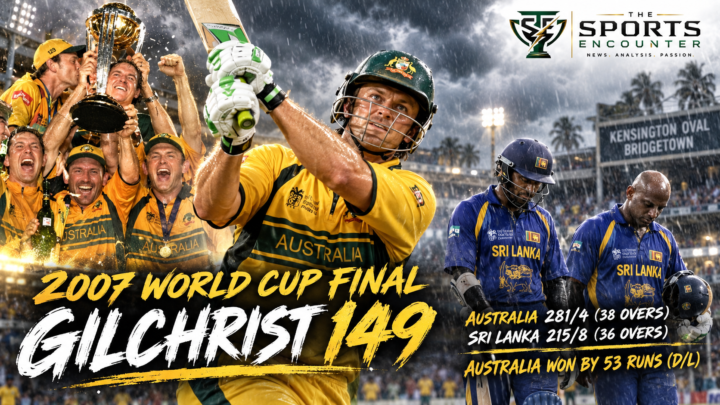
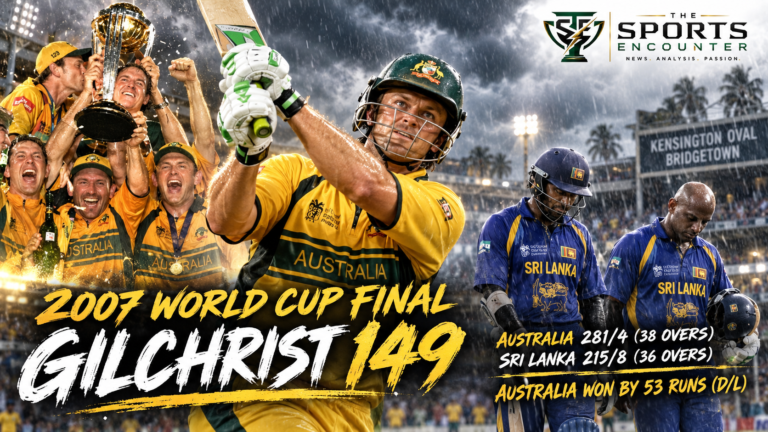 A Celebration of 5000 ODIsA Celebration of 5000 ODIs Match 24: Adam Gilchrist’s 149 Outshines a Chaotic World Cup Final
 ILT20ILT20 Season 5 Turns Up the Pace as Brett Lee and Shoaib Akhtar Set the UAE Countdown
Frequently Asked Questions About Australia’s Ageing Cricket Team
Is the Australian cricket team too old?
Australia’s current Test squad has one of the older age profiles in international cricket, with several key players in their mid-to-late 30s. The concern is less about immediate performance and more about how many specialized roles may need replacing within the same period.
What is the average age of Australia’s current Test squad?
The 16-player squad selected for the 2026 South Africa Test tour has an average age of approximately 32.7 years as of September 15, 2026.
How old is Steve Smith?
Steve Smith is 37 and remains one of Australia’s most experienced Test batters.
How old is Mitchell Starc?
Mitchell Starc is 36. He remains a major Test and ODI strike bowler and recently took 10 wickets against Bangladesh in Mackay.
How old is Nathan Lyon?
Nathan Lyon is 38 and remains Australia’s first-choice Test spinner.
Who will replace Steve Smith?
Australia do not have an obvious like-for-like successor. Cameron Green, Cooper Connolly, Ollie Peake, Sam Konstas and other developing batters could form part of the next batting structure rather than one player directly replacing Smith.
Who will replace Nathan Lyon?
Todd Murphy is currently the clearest long-term off-spin succession candidate. Matthew Kuhnemann and Corey Rocchiccioli provide additional spin options.
Who are Australia’s best young cricketers?
Leading prospects include Sam Konstas, Ollie Peake, Cooper Connolly, Campbell Kellaway, Todd Murphy, Mahli Beardman and Fergus O’Neill. Cameron Green, at 27, is already established and could become the bridge between generations.
Is Sam Konstas still in Australia’s Test plans?
Yes. Konstas is part of the Australia A squad touring India in September 2026 and remains one of the country’s leading young top-order prospects.
How old is Ollie Peake?
Peake is 20. He became Australia’s youngest specialist batter to make an ODI debut when he first played against Pakistan earlier in 2026.
Is Cooper Connolly in Australia’s Test squad?
Yes. Connolly has been selected in the 16-player squad for Australia’s October 2026 Test series against South Africa.
Who could replace Starc and Hazlewood?
Australia’s developing pace options include Xavier Bartlett, Fergus O’Neill, Mahli Beardman, Brendan Doggett, Jhye Richardson and Lance Morris, although none has yet established a Test record comparable with Starc or Hazlewood.
Why is Australia A touring India in 2026?
The tour is designed partly to prepare potential Test players for Australia’s five-Test Border-Gavaskar Trophy series in India in early 2027. Australia A will play two four-day matches and three one-day games.
Can Australia win the 2027 ODI World Cup with a younger squad?
Australia remain capable of defending the title, but the team is already changing. Younger players such as Connolly and Peake are being incorporated while selectors assess how many established senior players will remain available for the tournament in southern Africa.
Has Usman Khawaja retired?
Yes. Khawaja retired from international cricket after the 2025-26 Ashes, meaning Australia’s generational transition has already begun.
Australia
- How Australia’s Ageing Problem Puts the Next Generation in the Spotlight
- Australia Bring Their World Cup Questions to a Zimbabwe Side That No Longer Fears Them
- Glasgow 2026 Day 6 Wrap-Up: Australia Passes 100 Medals as Records Fall Across the Games
- Glasgow 2026 Day 5 Wrap-Up: Records Fall, Jersey Ends a 36-Year Wait and Australia Tightens Its Grip