Connect with us
Hamad Hussain | The Sports Encounter

Published

on

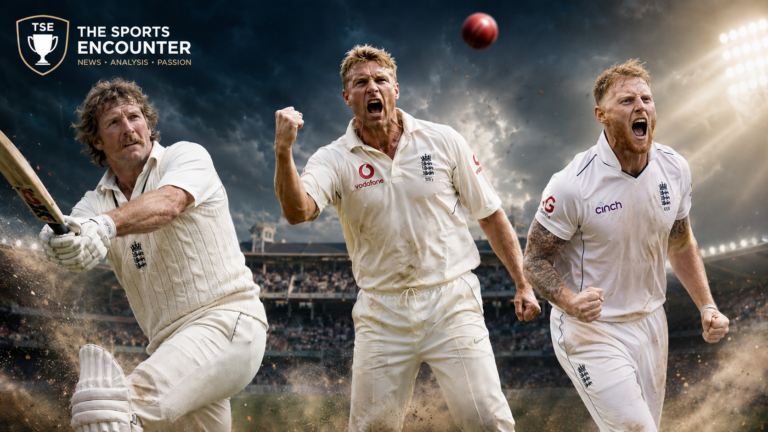
How should England measure an all-rounder who could change a Test with the bat, open a path through a batting order with the ball, lift an entire dressing room, and make the public believe a lost match could still be won?

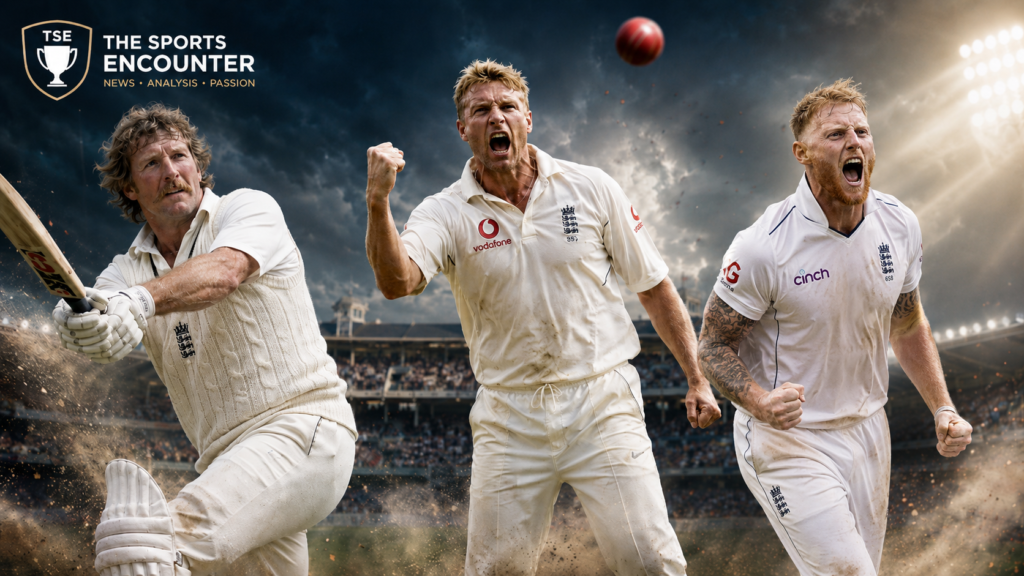
Sir Ian Botham, Andrew Flintoff, and Ben Stokes each carried that burden.

Botham competed during the golden age of Test all-rounders, sharing the stage with Imran Khan, Richard Hadlee, Kapil Dev, and some of the most intimidating West Indian teams ever assembled. Flintoff became the emotional and physical center of England’s unforgettable 2005 Ashes victory. Stokes arrived in a more heavily analyzed, tightly scheduled, technology-driven era and eventually helped Brendon McCullum reshape England’s entire red-ball identity.

Their careers overlapped in spirit rather than time. Each became indispensable, controversial, vulnerable, and capable of performances that entered English cricket folklore.

The statistics produce one answer. Match-winning impact creates another. Leadership and cultural influence complicate the verdict further.

TL;DR

  • Sir Ian Botham has the strongest traditional all-round record, with 5,200 Test runs, 383 wickets, 14 centuries, and 27 five-wicket hauls.
  • Ben Stokes produced the broadest overall career, combining 7,273 runs, 252 wickets, iconic fourth-innings performances, and transformational captaincy.
  • Andrew Flintoff’s career numbers fall behind the other two, but his influence during the 2005 Ashes remains one of the greatest single-series contributions by an England player.
  • Botham competed most directly with an extraordinary generation of all-rounders, including Imran Khan, Richard Hadlee, and Kapil Dev.
  • Stokes changed how England approached Test cricket under the Bazball philosophy, although injuries, disciplinary issues, and tactical excesses complicated his final years.
  • Final verdict: Botham remains England’s greatest complete Test all-rounder, while Stokes built the widest leadership and pressure-performance legacy.

Botham vs Flintoff vs Stokes: Test Career Comparison

CategorySir Ian BothamAndrew FlintoffBen Stokes
Test career1977–19921998–20092013–2026
Matches10279122
Runs5,2003,8457,273
Batting average33.5431.7734.46
Highest score208167258
Centuries14514
Half-centuries222637
Wickets383226252
Bowling average28.4032.7830.98
Best innings bowling8/345/586/22
Five-wicket hauls2736
Ten-wicket matches400
Catches12052115
Tests as captain121144
Defining legacyComplete statistical all-rounder2005 Ashes heroPressure player and transformative captain

Career figures place Botham clearly ahead as a bowler, while Stokes leads comfortably in total runs, matches, and leadership influence. Flintoff’s averages appear modest beside both men, although raw career numbers cannot fully explain the physical pressure he created at his peak.

Sir Ian Botham: The Strongest Traditional All-Rounder

Botham’s case begins with the balance of his record.

Scoring 5,200 Test runs at 33.54 would represent a strong career for a middle-order batter. Taking 383 wickets at 28.40 would make him one of England’s finest specialist bowlers. Combining both achievements across 102 Tests places him in a different statistical class from Flintoff and Stokes.

His 27 five-wicket hauls matter enormously in this comparison. Flintoff managed three and Stokes six. Botham also recorded four ten-wicket matches, something neither of the other two achieved.

The numbers show that Botham regularly controlled complete matches rather than contributing in only one discipline. He could score a century, take the new ball, break partnerships, field in the slips, and remain involved for most of the five days.

For a deeper look at his career, The Sports Encounter has already examined Sir Ian Botham’s legacy as England’s ultimate all-rounder and cricket’s great showman.

Botham Faced the Greatest All-Rounder Generation

Botham’s career also unfolded during an exceptional period for Test cricket.

Imran Khan developed into a fast-bowling master and elite middle-order batter. Richard Hadlee carried New Zealand’s attack with remarkable precision. Kapil Dev gave India pace, durability, lower-order power, and leadership. Vivian Richards led a West Indies batting order supported by one of the fiercest fast-bowling groups the sport has known.

Botham therefore faced elite competition for recognition within his own role. He was never the only outstanding all-rounder of his generation.

The Sports Encounter’s analysis of Imran Khan’s remarkable dominance during the 1980s explains how demanding that comparison became. Our feature on Kapil Dev’s records and influence on Indian cricket provides another measure of the company Botham kept.

His early peak was extraordinary. Across the first half of his career, Botham averaged close to 39 with the bat and took more than 200 wickets at an elite rate. During his first five years outside the captaincy, he produced specialist-level batting and bowling figures simultaneously. Injuries, heavy workloads, and declining pace reduced his effectiveness later, but his final totals remained comfortably ahead of Flintoff and Stokes as a wicket-taker.

Botham’s Ashes Changed His Place in English Culture

The 1981 Ashes remains the central chapter of Botham’s mythology.

After resigning as captain, he responded with one of the most famous individual series in cricket history. His unbeaten 149 at Headingley turned an apparently hopeless position into an England victory after Australia had enforced the follow-on. He then took five wickets for one run at Edgbaston and struck another aggressive century at Old Trafford.

Those performances established the standard by which later English all-rounders would be judged. Flintoff’s 2005 series and Stokes’ Headingley miracle in 2019 both carried echoes of Botham’s ability to make an entire Ashes contest feel personal.

The Decline and Controversies

Botham’s career was not consistently dominant from beginning to end.

Back problems reduced his pace and movement. His bowling average deteriorated significantly during the second half of his career, while his batting also became less reliable. His period as England captain produced no victories in 12 Tests.

Life away from the field added further complications. Botham’s outspoken personality, clashes with authority, tabloid attention, and cannabis-related suspension in 1986 ensured that controversy followed him. Yet England repeatedly returned to him because few players could offer the same combination of skill, confidence, and public magnetism.

Andrew Flintoff: England’s Greatest Single-Series Force

Flintoff’s career numbers do not win this debate.

He scored 3,845 runs at 31.77 and took 226 wickets at 32.78. Five Test centuries and three five-wicket hauls place him behind Botham and Stokes across most traditional measurements.

His greatness lives elsewhere.

At his best, Flintoff gave England something their scorecard could not calculate. He bowled fast, attacked the body, reversed the old ball, intimidated established batters, and changed the emotional temperature of a match.

The 2005 Ashes captured all of it.

Why the 2005 Ashes Defined Flintoff

Australia arrived in England as the dominant force in world cricket. Their team included Ricky Ponting, Shane Warne, Glenn McGrath, Adam Gilchrist, Matthew Hayden, Justin Langer, and Brett Lee.

Flintoff met that challenge with 402 runs and 24 wickets across five Tests.

At Edgbaston, he scored 68 from 62 balls in the first innings and 73 from 86 in the second before taking seven wickets in the match. England won by two runs. His spell to Ponting and Langer on the fourth morning became one of the defining passages of the series.

He followed it with a century at Trent Bridge and decisive contributions throughout the contest. The image of Flintoff consoling Brett Lee immediately after England’s Edgbaston victory also showed a side of sporting character that outlived the scorecard.

No other series made Flintoff’s presence feel so essential. England regained the Ashes after 18 years, and Flintoff stood at the center of the national celebration.

Why Flintoff’s Career Never Fully Matched His Peak

The physical demands eventually caught up with him.

Flintoff’s action placed enormous pressure on his ankles and knees. Repeated surgeries interrupted his rhythm and restricted his availability. His batting lacked the consistency needed to produce Botham-level totals, while his bowling often delivered pressure without enough five-wicket hauls.

He also endured severe early-career struggles. During England’s 2001 tour of India, his confidence fell so sharply that he reportedly broke down in the dressing room. He rebuilt himself through fitness work and technical improvement, eventually becoming one of the most feared cricketers in the world.

Off-field behavior created further pressure. The 2007 World Cup “Fredalo” incident, when Flintoff had to be rescued after taking a pedalo out following a drinking session, led England to remove him as vice-captain. Questions about fitness, alcohol, and responsibility followed him through parts of his career.

Still, his teammates and England supporters understood his importance. When Flintoff was fit, the team could select an extra batter or bowler because he covered both roles. His presence provided tactical balance even when his personal figures looked ordinary.

Ben Stokes: The Greatest Pressure Player and Leader

Stokes finished with the most Test runs of the three.

His 7,273 runs at 34.46 included 14 centuries, matching Botham’s total. He also took 252 wickets at 30.98 and became only the second player after Jacques Kallis to complete the Test double of 7,000 runs and 250 wickets.

That achievement confirms his longevity and versatility. Yet Stokes’ case rests less on steady statistical accumulation than on the weight of his defining moments.

Cape Town in 2016 brought a brutal 258 from 198 balls. Headingley in 2019 produced an unbeaten 135 as England chased 359 after falling to 286 for nine. Stokes farmed the strike with Jack Leach, attacked Australia’s bowlers, and completed one of the greatest fourth-innings recoveries in Test history.

His ability to operate under extreme pressure became his signature.

How Technology Changed Stokes’ Challenge

Stokes played under a level of analysis Botham never encountered.

Video databases exposed technical weaknesses almost instantly. Hawk-Eye mapped scoring zones and bowling plans. Decision Review System technology challenged on-field calls. Workload information tracked physical decline. Social media ensured that every mistake, incident, tactical decision, and emotional reaction could become a global discussion within minutes.

Technology offered preparation advantages, but opponents received the same information. Stokes rarely entered a series with secrets. Teams knew his preferred scoring areas, his vulnerability outside off stump, and the physical limitations affecting his bowling.

Modern scheduling created another burden. International cricket, franchise competitions, travel, rehabilitation, and year-round scrutiny narrowed recovery time. Stokes’ recurring knee, hamstring, finger, and shoulder problems illustrated the cost.

The Sports Encounter examined that wider issue in its analysis of whether modern workload management is changing the art of fast bowling.

Stokes, McCullum, and the Bazball Revolution

Stokes became England’s permanent Test captain in 2022 with the team trapped in a cycle of cautious batting and poor results.

His partnership with Brendon McCullum changed the atmosphere almost immediately. England encouraged batters to score freely, bowlers to pursue wickets, and fielders to remain aggressive. The team won 10 of its first 12 Tests under the new approach and completed a historic 3-0 series victory in Pakistan.

Stokes captained England in 44 Tests and recorded 24 victories, placing him among the country’s most successful leaders by total wins.

He also used declarations, attacking fields, unconventional bowling changes, and personal trust to expand what England believed was possible.

However, the approach eventually became less disciplined. Aggression sometimes replaced match awareness. Batters attacked when conditions demanded patience. England failed to convert ambition into major series victories against Australia and India, while later defeats exposed tactical stubbornness.

The Sports Encounter explored that full rise and decline in how Bazball changed and eventually exposed England.

Stokes’ Controversies and Personal Battles

Stokes’ career included serious off-field disruption.

A 2017 nightclub incident in Bristol led to his arrest, suspension from England duty, and removal as vice-captain. He was later acquitted of affray, but the episode damaged his reputation and forced a difficult public reassessment.

In 2021, Stokes stepped away from cricket to protect his mental well-being while recovering from a finger injury. The decision revealed the human cost behind his aggressive public image. The ECB supported his break, acknowledging the cumulative mental and physical pressure placed on elite players.

His final international year brought further disciplinary scrutiny, injury problems, and questions about England’s direction. Stokes retired after the June 2026 Test against New Zealand, ending a 122-match career. The ECB described him as a generational figure who had given England a batter, bowler, captain, and talisman in one player.

Readers can revisit the circumstances through The Sports Encounter’s coverage of Ben Stokes’ sudden international retirement and England’s painful defeat in his final Test.

Who Was the Best Batter?

Stokes wins on total runs and produced the highest individual score.

Botham’s batting peak, however, was stronger than his final average suggests. During his early years, he scored heavily enough to justify selection as a specialist batter. His 14 centuries came in 161 innings, while Stokes required 220 innings to reach the same total.

Flintoff possessed destructive power and could dominate elite attacks, but five centuries across 130 innings leave him clearly behind.

Verdict: Stokes for longevity and pressure innings, Botham for peak all-round batting efficiency.

Who Was the Best Bowler?

Botham wins decisively.

He took 383 wickets at 28.40, with 27 five-wicket hauls and four ten-wicket matches. Stokes took 252 wickets at 30.98, while Flintoff claimed 226 at 32.78.

Flintoff may have bowled faster and created sustained pressure at his peak, but Botham dismissed batters more frequently and produced far more complete innings-winning spells.

Verdict: Botham by a substantial margin.

Who Produced the Greatest Match-Winning Performances?

This category is much closer.

Botham owned the 1981 Ashes. Flintoff drove England through the 2005 Ashes. Stokes delivered Headingley 2019, Cape Town 2016, and numerous rescue missions with bat, ball, and captaincy.

Flintoff’s greatest work was concentrated within a shorter peak. Botham repeatedly dominated entire Tests. Stokes produced extraordinary innings across a longer modern career and added leadership decisions to his influence.

Verdict: Stokes narrowly, with Botham almost level.

England All-Rounder Legacy Scorecard

CategoryWinnerReason
Batting volumeBen StokesMost runs and half-centuries
Batting peakIan BothamStronger early-career batting dominance
Bowling recordIan Botham383 wickets and 27 five-wicket hauls
Greatest Ashes seriesAndrew Flintoff402 runs and 24 wickets in 2005
Pressure performancesBen StokesHeadingley and repeated rescue innings
CaptaincyBen Stokes24 Test wins and a transformed playing identity
Traditional all-round credentialsIan BothamStrongest balance between batting and bowling
LongevityBen Stokes122 Tests across 13 years
Cultural influenceTieEach defined a different England generation
Overall Test greatnessIan BothamSuperior complete all-round record

Who Can Replace Ben Stokes for England?

England are unlikely to find one direct replacement.

Stokes offered four functions: middle-order batting, seam bowling, captaincy, and emotional leadership. A single player capable of covering all four does not currently exist.

Sam Curran has publicly expressed interest in reclaiming a Test role. His left-arm swing, batting ability, and experience make him a possible short-term option, although he has not played a Test since August 2021 and has yet to prove that his bowling can remain consistently threatening in all red-ball conditions.

Jacob Bethell offers long-term batting talent, athletic fielding, and useful spin. His immediate challenge is a knee injury that ruled him out of the 2026 Hundred, although England hope he can recover before the Pakistan Test series.

Will Jacks provides another batting all-round option, particularly when England want spin. Rehan Ahmed could offer greater wicket-taking potential, while seamers such as Jamie Overton or younger county all-rounders may eventually compete for the balance position.

The most realistic solution involves dividing Stokes’ responsibilities:

  • Harry Brook or another senior batter can assume the captaincy.
  • A specialist seamer can replace Stokes’ bowling overs.
  • Bethell, Curran, Jacks, or Rehan can compete for the all-round role.
  • Joe Root and the senior players must share the leadership burden.

England’s next generation will have to fill several pairs of shoes rather than one.

For continuing developments, team selections, and long-form analysis, readers can follow The Sports Encounter’s Cricket Hub and wider breaking sports coverage.

Final Verdict: Who Is England’s Greatest Test All-Rounder?

Sir Ian Botham remains England’s greatest Test all-rounder when batting and bowling receive equal weight.

His 383 wickets, 27 five-wicket hauls, 14 centuries, and 5,200 runs represent the strongest complete record of the three. He competed during the greatest era of Test all-rounders and still emerged as England’s defining match-winner.

Ben Stokes built the broadest legacy. He scored more runs, played more Tests, produced some of England’s greatest pressure innings, and changed the team’s philosophy as captain. His statistical bowling record cannot match Botham’s, but his influence extended into selection, tactics, belief, and the public identity of England Test cricket.

Andrew Flintoff ranks third across the full career comparison. That position should not diminish his importance. For several weeks in 2005, he became the cricketer England had spent almost two decades waiting to find.

The final distinction is clear:

Botham was England’s greatest traditional all-rounder. Flintoff produced its greatest modern Ashes series. Stokes became its greatest pressure player and most influential all-round captain.

When every part of Test cricket is measured together, Botham still holds the narrowest and strongest claim to the crown.
Hamad Hussain is the Dubai-based Founder and Senior Editor of The Sports Encounter, where he leads editorial direction, coverage standards, and the publication’s reader-first approach to sports journalism. His primary focus is cricket, with additional work across sports opinion, athlete performance, team selection, match analysis, tournament developments, and major international sporting stories. Hamad brings more than 22 years of leadership experience across corporate governance, operations, finance, HR, administration, and business development. That background shapes a structured, decision-focused approach to sports analysis, particularly when examining team strategy, selection calls, leadership, performance trends, and the wider consequences of results. Before taking on his current editorial leadership role, Hamad worked with The Sports Encounter as a Sports Analyst from 2010 to 2015. Today, his writing combines fan perspective with statistical context, historical comparison, and practical analysis of the decisions that shape teams, players, and competitions.

Breaking News

Fiorentina 1-2 Torino: Mandragora Haunts Former Club as Viola Lose Third Straight Serie A Game

Fiorentina finally scored their first Serie A goal of the season through Mateo Pellegrino, but Rolando Mandragora and Ché Adams completed a second-half Torino comeback. The 2-1 defeat leaves the Viola with three losses from three despite creating more chances and producing the stronger xG.

Published

on

Rolando Mandragora celebrates after scoring against former club Fiorentina in Torino’s 2-1 Serie A comeback win at the Stadio Artemio Franchi.

FLORENCE, September 5, 2026: Fiorentina finally scored their first Serie A goal of the season on Saturday. It still was not enough to earn their first point.

Mateo Pellegrino gave Fabio Grosso’s side the lead two minutes after halftime at the Stadio Artemio Franchi, briefly offering the home crowd the response it had been waiting for after two damaging opening defeats.

Torino overturned the game in eight second-half minutes.

Rolando Mandragora, who returned to Torino from Fiorentina only four days earlier, equalized in the 74th minute before Ché Adams completed the comeback in the 82nd, giving Ignazio Abate his first Serie A victory of the season and deepening Fiorentina’s alarming start.

The final score was Fiorentina 1-2 Torino.

The underlying numbers make the result even more uncomfortable for the Viola. Fiorentina produced 14 shots to Torino’s seven, generated 1.55 expected goals compared with Torino’s 0.63 and created considerably more attacking volume. Torino nevertheless left Florence with all three points.

For a club that entered the summer with major investment, a new coach and ambitions of climbing sharply from last season’s 15th-place finish, three defeats from three league games has already changed the tone around the project.

The Sports Encounter’s complete Serie A 2026-27 preview identified Fiorentina as one of the league’s most aggressive rebuilds and warned that a young, heavily changed squad would need results quickly enough to create patience around Grosso’s work.

That patience is now being tested much earlier than Fiorentina expected.

Fiorentina 1-2 Torino: Match at a Glance

Match Detail Information
Competition Serie A 2026-27
Matchday 3
Venue Stadio Artemio Franchi, Florence
Final Score Fiorentina 1-2 Torino
Fiorentina Goal Mateo Pellegrino 47′
Torino Goals Rolando Mandragora 74′, Ché Adams 82′
Possession Fiorentina 39% – 61% Torino
Shots Fiorentina 14 – 7 Torino
Expected Goals Fiorentina 1.55 – 0.63 Torino
Fiorentina League Record Played 3, Lost 3
Torino League Record Played 3, Won 1, Lost 2

Fiorentina Needed a Response After a Brutal Opening Two Weeks

The pressure surrounding this match existed before kickoff.

Fiorentina had opened their league season with a 4-0 defeat at Roma before suffering an even more emotionally damaging 3-0 home loss to promoted Frosinone during the club’s centenary celebrations.

Two matches had produced zero points, zero goals and seven conceded.

The Sports Encounter’s analysis of Roma’s explosive start provided some context for that opening defeat. Roma have subsequently looked like one of the strongest teams in Italy, but the scale of Fiorentina’s loss still exposed how far Grosso’s new structure had to travel.

The Frosinone result removed some of that contextual protection.

Fiorentina were playing at home, on a weekend designed to celebrate 100 years of the club, against a promoted opponent. Losing 3-0 turned an early-season concern into something much more serious.

Torino arrived with problems of their own.

They had lost 2-1 at home to AC Milan in the opening round and followed that with a 1-0 defeat against Monza. Like Fiorentina, they entered Matchday 3 without a point.

The Sports Encounter’s Serie A opening-weekend wrap documented Torino’s defeat to Milan and the wider uncertainty around several clubs adjusting to major summer changes.

Saturday therefore brought together two teams that needed evidence their new seasons were moving somewhere.

Fabio Grosso Changed the Team Again

Grosso continued searching for the right combination.

Fiorentina lined up in a 4-3-3 with David de Gea in goal, João Mário, Radu Drăgușin, Viery and Valde across the defense, and Nicolò Fagioli, Christ Inao Oulaï and Marco Brescianini in midfield.

Franco Mastantuono and Alieu Njie operated around Pellegrino in attack.

The selection underlined how quickly the summer rebuild has changed the squad.

Wilfried Gnonto, Pedro Gonçalves and Beto were all available from the bench after arriving late in the window, while Fiorentina were still trying to integrate several younger players into a team carrying immediate pressure.

The broader scale of Fiorentina’s recruitment was examined in The Sports Encounter’s early Serie A title-race and team-reset analysis.

Torino Arrived With Fiorentina DNA Everywhere

The most intriguing part of Torino’s lineup was how familiar several names looked to the home crowd.

Pietro Comuzzo started in the back three.

Niccolò Fortini played at wing-back.

Mandragora operated centrally.

All had Fiorentina connections.

Mandragora’s presence carried the strongest storyline because his move had been completed on September 1. Lega Serie A confirmed that Torino brought the midfielder back to the club as part of a late-window triple signing that also included Nathan Patterson and Daniel Bragança.

Four days later, Mandragora was back at the Franchi wearing granata.

By the end of the afternoon, he had scored the goal that changed the match.

Fiorentina Create More, Torino Control More of the Ball

The game developed along an unusual statistical split.

Torino finished with 61 percent possession, giving Abate’s side greater control of the ball.

Fiorentina created the larger quantity of attacking opportunities.

The Viola attempted 14 shots, twice Torino’s total of seven, and accumulated 1.55 xG. Torino generated only 0.63.

Those numbers normally point toward Fiorentina taking something from the match.

They did not.

This is where the defeat becomes particularly concerning.

Against Roma, Fiorentina could argue they faced a team playing at an exceptionally high level.

Against Frosinone, they were punished heavily during a poor team performance.

Against Torino, Fiorentina created enough attacking volume to win and still lost because the decisive moments belonged to their opponent.

Mateo Pellegrino Finally Ends Fiorentina’s Goal Drought

After two complete league matches without scoring, Fiorentina finally broke through almost immediately after halftime.

Radu Drăgușin supplied the assist and Pellegrino finished in the 47th minute.

The significance stretched well beyond making the score 1-0.

It was Fiorentina’s first Serie A goal of the new season.

For a team that had endured more than 180 league minutes without finding the net, the timing should have provided both tactical freedom and emotional relief.

Grosso could now ask Torino to chase the game.

Fiorentina could attack the spaces created when Abate’s players stepped forward.

The next phase instead became the point where the match gradually escaped them.

Mandragora Returns to Florence and Scores

Torino stayed patient.

Abate made changes in the 56th minute, introducing Rafik Belghali and Nathan Patterson. Giovanni Simeone and Daniel Bragança followed in the 70th.

The equalizer arrived four minutes later.

Eray Cömert provided the assist and Mandragora scored against the club he had left days earlier.

There was no need to manufacture symbolism around the moment.

The timing supplied enough of it.

Mandragora had been part of Fiorentina’s midfield until the closing days of the transfer market. His return to Torino was one of the most notable late Serie A moves officially confirmed after the window.

Now Fiorentina had watched their first lead of the season disappear through a player who knew the club, the stadium and many of the teammates standing around him.

Ché Adams Completes Torino’s Comeback Eight Minutes Later

The match was level for only eight minutes.

Belghali, one of Abate’s second-half substitutes, supplied the decisive pass in the 82nd minute.

Adams finished to make it 2-1.

Torino had overturned the match despite producing fewer shots and less xG than Fiorentina.

The winner also gave Adams an important early-season contribution in a Torino attack still searching for stability.

Abate’s substitutions deserve credit.

Belghali had entered in the 56th minute and created the winning goal. Bragança and Simeone arrived shortly before Mandragora’s equalizer, giving Torino fresher legs and more control through the final phase.

Fiorentina’s own attacking changes failed to produce the same return.

Gnonto and Arthur Atta came on at halftime. Beto and Pote followed later.

Despite the additional attacking options, Fiorentina could not recover after Adams put Torino ahead.

Fiorentina’s 14 Shots and 1.55 xG Make This Defeat Harder to Explain Away

Expected goals should never be treated as the final judgment on a football match.

They do help explain whether a scoreline matches the opportunities created.

Here, Fiorentina’s 1.55 xG compared with Torino’s 0.63 suggests the home side generated the stronger overall shot quality.

The raw shot count, 14 to seven, points in the same direction.

Torino still won.

That means Fiorentina’s problem on Saturday was less about failing to reach attacking positions and more about execution at both ends.

They did not convert enough of what they created.

They allowed Torino to turn a relatively modest attacking output into two goals.

That combination is extremely expensive.

Fiorentina Now Have One Goal and Nine Conceded After Three Games

Match Result Fiorentina Goals Goals Conceded
Roma vs Fiorentina Lost 4-0 0 4
Fiorentina vs Frosinone Lost 3-0 0 3
Fiorentina vs Torino Lost 2-1 1 2
Total 0 points 1 9

Those numbers make uncomfortable reading.

Three games remain a tiny portion of a 38-match season, but Fiorentina’s starting position now creates pressure of its own.

Every future match becomes slightly heavier when the first points have still not arrived.

The team cannot simply evaluate development in terms of promising sequences, new-player integration or tactical progress.

Results have to begin supporting the project.

Fiorentina’s Summer Investment Raises the Pressure on Grosso

The frustration surrounding the start is amplified by what happened during the summer.

Fiorentina did not enter the season pretending to maintain the status quo.

The club changed coach and invested heavily.

The rebuild brought in players such as Gnonto, Pote and Beto, while younger talents were added to a squad designed to move much higher than last season’s 15th-place finish.

The Sports Encounter’s full-season Serie A analysis considered a European push possible if Grosso could turn the new pieces into a coherent side quickly enough.

That prediction now faces its first serious challenge.

Fiorentina are already nine goals down on aggregate across three defeats.

Their only league goal came in a match they subsequently lost.

The time required for a rebuild remains real.

Serie A does not pause while a rebuild develops.

Torino Finally Turn a Competitive Performance Into Points

Torino’s position is much healthier after Saturday.

The opening defeat against Milan was disappointing but competitive. AC Milan needed a second-half turnaround to win 2-1 in Turin.

The Sports Encounter’s coverage of Milan’s perfect early start showed how effectively Rúben Amorim’s side carried that opening victory into Matchday 2.

Torino then lost narrowly to Monza.

At Florence, Abate finally received a result for the work being done.

His side showed patience after falling behind, used the bench effectively and converted two of the limited high-value opportunities Fiorentina allowed.

The victory gives Torino three points and something more important at this stage of a new coaching cycle: evidence.

Ignazio Abate’s Changes Won the Second Half

Managers are often judged on substitutions only when a replacement scores.

Abate’s work here deserves broader credit.

Belghali directly assisted the winner.

Bragança gave Torino additional control after entering in the 70th minute.

Simeone added movement against a Fiorentina defense beginning to tire.

Patterson refreshed the right side.

The changes did not simply add new players.

They changed the rhythm of Torino’s performance.

Fiorentina had started the second half strongly and taken the lead.

Torino finished it as the side making the decisive actions.

Mandragora’s Goal May Become One of Matchday 3’s Best Stories

The transfer market regularly creates reunions.

Few happen this quickly.

Mandragora left Fiorentina for Torino on September 1.

Four days later, he started against Fiorentina.

In the 74th minute, he scored the equalizer.

The goal became even more significant because Torino completed the comeback minutes later.

This was therefore not an irrelevant consolation strike from a former player.

It was the moment that changed the direction of the match.

Serie A’s Early Weeks Are Already Producing Sharp Contrasts

Fiorentina’s crisis looks even more striking when placed beside teams whose new projects have accelerated immediately.

Roma have opened with dominant victories and eight goals across their first two games, a start examined in our Roma 4-0 Lecce report.

Atalanta have also found ways to win difficult matches, including Lazar Samardžić’s 96th-minute goal against Bologna. The Sports Encounter covered that in our Atalanta 1-0 Bologna analysis.

Those examples matter because early-season adaptation is happening at different speeds around the league.

Fiorentina currently sit at the uncomfortable end of that spectrum.

Fiorentina vs Torino Scorecard

Team Goals Scorers
Fiorentina 1 Mateo Pellegrino 47′
Torino 2 Rolando Mandragora 74′, Ché Adams 82′

Key Turning Points

  • 47th minute: Mateo Pellegrino scores Fiorentina’s first Serie A goal of the season after an assist from Radu Drăgușin.
  • 56th minute: Torino introduce Rafik Belghali and Nathan Patterson as Abate begins reshaping the match.
  • 70th minute: Giovanni Simeone and Daniel Bragança enter, adding fresh energy before Torino’s comeback.
  • 74th minute: Former Fiorentina midfielder Rolando Mandragora equalizes from Eray Cömert’s assist.
  • 82nd minute: Belghali creates the winner for Ché Adams.
  • Full time: Fiorentina finish with 14 shots and 1.55 xG but suffer a third consecutive Serie A defeat.

The Sports Encounter Verdict

Fiorentina produced their most competitive league performance of the season.

That makes losing it more painful.

They finally scored.

They created more chances than Torino.

They generated more than twice their opponent’s expected goals.

They led at home.

And they still finished with zero points.

For Grosso, the challenge has moved beyond creating better attacking situations. Fiorentina must become more efficient inside both penalty areas because positive phases of football are currently disappearing underneath decisive errors and missed opportunities.

Torino will view the afternoon very differently.

Abate’s team did not need to dominate the attacking numbers. They remained close enough to the match for their second-half changes to matter, and when the important opportunities arrived, they took them.

Mandragora’s equalizer gave the comeback its emotional centerpiece.

Adams gave it the result.

Fiorentina now leave Matchday 3 with three defeats, one goal scored and nine conceded.

Torino leave Florence with their first league victory and the feeling that their season has finally begun.

For more Italian football coverage, tactical analysis and live match reports, visit The Sports Encounter Soccer Hub.

Official competition and club information is available through Lega Serie A, ACF Fiorentina and Torino FC.


Frequently Asked Questions

What was the Fiorentina vs Torino score?

Torino beat Fiorentina 2-1 at the Stadio Artemio Franchi in Serie A on September 5, 2026.

Who scored for Fiorentina against Torino?

Mateo Pellegrino scored Fiorentina’s goal in the 47th minute after an assist from Radu Drăgușin.

Who scored for Torino against Fiorentina?

Rolando Mandragora equalized in the 74th minute before Ché Adams scored Torino’s winner in the 82nd.

Did Rolando Mandragora score against his former club Fiorentina?

Yes. Mandragora scored Torino’s equalizer only days after completing his move from Fiorentina back to Torino.

Was Fiorentina’s goal their first of the Serie A season?

Yes. Pellegrino’s 47th-minute goal was Fiorentina’s first league goal of the 2026-27 season.

How many Serie A games have Fiorentina lost this season?

Fiorentina have lost all three of their opening Serie A matches.

How many goals have Fiorentina conceded after three games?

Fiorentina have conceded nine goals through their first three Serie A matches and scored once.

Was this Torino’s first Serie A win of the season?

Yes. Torino entered the match after losses to AC Milan and Monza and earned their first three points by winning in Florence.

Who had more shots in Fiorentina vs Torino?

Fiorentina attempted 14 shots compared with Torino’s seven.

What was the expected goals total for Fiorentina vs Torino?

Fiorentina generated 1.55 xG while Torino recorded 0.63, despite Torino winning the match 2-1.

Continue Reading

Breaking News

Newcastle 2-2 Bournemouth: Ramsey Completes Late Fightback as Cherries Blow Another Lead

Newcastle United came back from two goals down to draw 2-2 with Bournemouth at St James’ Park, with Harvey Barnes and Jacob Ramsey rescuing Matthias Jaissle’s unbeaten side after Marcus Tavernier and a Malick Thiaw own goal had put the Cherries in control.

Elma Victors

Published

on

Jacob Ramsey celebrates Newcastle United’s late equalizer in a 2-2 Premier League draw with Bournemouth at St James’ Park.

NEWCASTLE, September 5, 2026: Jacob Ramsey came off the bench to score an 88th-minute equalizer as Newcastle United recovered from two goals down to draw 2-2 with Bournemouth at St James’ Park, preserving Matthias Jaissle’s unbeaten Premier League start while extending one of the strangest early-season patterns in English soccer.

Bournemouth had looked capable of putting the game beyond Newcastle before halftime. Marcus Tavernier opened the scoring in the ninth minute, Malick Thiaw diverted Alex Scott’s cross into his own net in the 35th, and Marco Rose’s aggressive pressing structure repeatedly forced Newcastle into mistakes inside their own half.

Harvey Barnes changed the mood almost immediately. His curling finish 101 seconds after Bournemouth’s second goal brought Newcastle back into the contest before the interval, and Ramsey eventually completed the recovery with two minutes of normal time remaining.

The 2-2 draw leaves Newcastle unbeaten through their opening three Premier League matches under Jaissle. Bournemouth remain without a league victory under Rose despite scoring first in all three games.

That second part is where the result becomes more than another four-goal Premier League draw.

Bournemouth are now the first team in Premier League history to score the opening goal in each of their first three matches of a season and fail to win any of them.

For readers following the wider campaign, The Sports Encounter’s complete Premier League 2026-27 season preview identified both Newcastle and Bournemouth as teams entering significant managerial transitions. Three matches in, both transitions are already producing clear identities, but very different problems.

Newcastle 2-2 Bournemouth: Match at a Glance

Match Detail Information
Competition Premier League 2026-27
Venue St James’ Park
Final Score Newcastle United 2-2 Bournemouth
Bournemouth Goals Marcus Tavernier 9′, Malick Thiaw own goal 35′
Newcastle Goals Harvey Barnes 37′, Jacob Ramsey 88′
Halftime Score Newcastle 1-2 Bournemouth
Bournemouth xG 1.50
Newcastle xG 0.66
Newcastle League Record Unbeaten after three matches
Bournemouth League Record Two draws, one defeat

Marcus Tavernier Punishes Newcastle After Nine Minutes

Bournemouth began the match with the confidence of a team that had studied where Newcastle were vulnerable.

Jaissle’s side had collected four points from their opening two league fixtures, drawing 2-2 with Liverpool before beating Tottenham 2-0, but those results did not mean Newcastle had controlled every phase of either game.

Bournemouth attacked that weakness immediately.

Alex Scott’s shot in the ninth minute took a deflection off Nico González and dropped into a dangerous area. Tavernier reacted faster than the Newcastle defense, beating goalkeeper Lukas Hornicek to the loose ball and giving Bournemouth the lead.

It was another fast start from Rose’s side.

Bournemouth had already scored first against Manchester City and Everton in their opening two Premier League matches. Their problem had come later.

The Sports Encounter’s opening-weekend Premier League review highlighted how Bournemouth had pushed Manchester City into serious trouble before two late goals turned a potential statement result into a 2-1 defeat.

The same theme would eventually return at St James’ Park.

Bournemouth’s Press Overwhelms Newcastle

The opening goal did not cause Bournemouth to retreat.

Rose’s side kept pushing Newcastle’s buildup aggressively, and the home team struggled to create clean passing lanes through midfield.

Sven Botman almost presented Evanilson with a second goal when a poor pass was intercepted, but the Brazilian striker curled his effort over the bar.

Tavernier then had another chance after Adrien Truffert found him in space, only for the Bournemouth midfielder to shoot too close to Hornicek.

The warning signs kept coming.

By halftime, Bournemouth had attempted 13 shots. According to Opta, that was their second-highest first-half total in a Premier League match and the most first-half attempts by an away team at St James’ Park since Leeds United recorded 13 in September 2021.

That volume reflected how successfully Bournemouth were forcing Newcastle into uncomfortable situations.

The visitors did not dominate through sterile possession. They dominated through pressure, recoveries, second balls and quick attacks once Newcastle’s structure broke.

Malick Thiaw Own Goal Makes It 2-0

The second goal arrived in the 35th minute and captured Bournemouth’s first-half superiority.

Justin Kluivert’s speculative effort hit the post and then struck Hornicek before staying out. Newcastle still had an opportunity to clear the danger.

Scott refused to allow the move to die.

He recycled possession and sent another ball into the area, where the cross took a touch off Thiaw and found the Newcastle net.

The own goal made it 2-0.

At that point Bournemouth appeared close to finally converting one of their encouraging early-season performances into three points.

Harvey Barnes Changes the Match in 101 Seconds

Newcastle’s response was immediate.

Only 101 seconds after falling two goals behind, Barnes collected the ball on the left, moved inside Tyler Adams and curled an excellent finish beyond Djordje Petrović into the far corner.

The quality of the strike mattered because Newcastle had created very little before it.

Barnes did not finish a sustained passing sequence or benefit from a prolonged spell of home pressure. He created the opening through individual execution.

That single moment prevented Bournemouth from carrying a two-goal advantage into halftime and gave the home crowd something to believe in after a deeply uncomfortable opening 35 minutes.

Newcastle’s resilience has already appeared several times under Jaissle. His appointment followed a turbulent summer, and The Sports Encounter documented the first signs of his rebuild in Newcastle’s preseason comeback win over Valencia.

The team is still evolving, but it has already shown a willingness to stay in difficult matches.

Newcastle Improve After Halftime but Bournemouth Keep Them Quiet

The second half produced far less attacking activity than the first.

Joe Willock had an excellent opportunity shortly after the restart, but his header went wide from close range.

Beyond that, Bournemouth controlled the dangerous areas well enough to prevent Newcastle from turning the game into constant pressure.

Neither side registered a second-half shot on target until the 88th minute.

That statistic makes the eventual equalizer even more painful for Bournemouth.

For almost the entire second half, they kept Newcastle at arm’s length.

Then one loose moment changed everything.

Jacob Ramsey Comes Off the Bench and Rescues Newcastle

Jaissle introduced Ramsey during the second half, and the substitution eventually produced the decisive moment.

Newcastle sent a late free-kick into the Bournemouth penalty area. The visitors failed to fully clear the danger, Barnes struck a powerful effort that ricocheted into Ramsey’s path, and the midfielder reacted quickly enough to side-foot the ball into the bottom-right corner.

It was Newcastle’s second shot on target of the match.

It was also enough to make the score 2-2.

Ramsey has developed a useful habit of scoring important Premier League goals. His last four league strikes have either brought his team level or put his side ahead.

This one preserved Newcastle’s unbeaten start under a manager still trying to reconstruct the squad after one of the club’s most disruptive summers in years.

Why Bournemouth Should Have Won This Match

The final score does not completely reflect the balance of the game.

Bournemouth won the expected-goals battle 1.50 to 0.66.

They created more first-half chances, generated more pressure around Newcastle’s penalty area and repeatedly forced mistakes through their press.

Newcastle finished the match with only two shots on target.

Bournemouth had enough opportunities to make the second half irrelevant before halftime.

Evanilson’s missed chance after intercepting Botman’s pass was particularly costly. Tavernier also had an opportunity to extend the lead before Thiaw’s own goal eventually made it 2-0.

That failure to turn dominance into a decisive margin created the conditions for Newcastle’s comeback.

Bournemouth Have Now Dropped Seven Points From Winning Positions

This is the statistic that will concern Marco Rose most.

Bournemouth have taken the lead in all three Premier League games this season.

They have won none of them.

Match Bournemouth Position Final Result Late Turning Point
Manchester City vs Bournemouth Led 1-0 Lost 2-1 City scored twice from the 84th minute onward
Bournemouth vs Everton Led 1-0 Drew 1-1 Everton equalized in the 91st minute
Newcastle vs Bournemouth Led 2-0 Drew 2-2 Jacob Ramsey equalized in the 88th minute

Bournemouth have therefore dropped seven points from winning positions through only three matches.

No other Premier League team had dropped more than half that number entering the rest of Saturday’s fixtures.

They are also the first team in Premier League history to score first in their opening three matches of a season and fail to win any of them.

The pattern is becoming impossible to dismiss as bad luck alone.

Marco Rose Has Built a Competitive Team, but the Final Phase Is Failing

There is plenty for Rose to like.

Bournemouth’s pressing shape is aggressive.

Scott is influencing matches centrally.

Tavernier remains dangerous between midfield and the final third.

The team has shown it can trouble Manchester City and Newcastle away from home.

The problem arrives when the game enters its final phase.

Late defensive control has disappeared repeatedly.

Against City, Bournemouth conceded twice after the 84th minute.

Everton equalized in stoppage time.

Ramsey scored in the 88th minute here.

Three separate matches have produced essentially the same outcome.

The issue is therefore tactical and psychological.

Bournemouth must learn how to maintain enough aggression to avoid becoming passive while also controlling space, possession and game tempo when protecting a lead.

The Sports Encounter identified Bournemouth as one of the league’s most interesting teams outside the traditional elite in our ranking of the Premier League’s strongest 2026-27 contenders. Their performances still support that assessment.

The results currently do not.

Alex Scott Was Central to Bournemouth’s Best Work

Scott deserves individual attention because much of Bournemouth’s control came through him.

His influence appeared in both goals.

The opening strike began with his deflected effort, which Tavernier followed in quickest to convert.

For the second, Scott kept the attack alive after Kluivert hit the post and delivered the cross that eventually deflected off Thiaw.

His performance went beyond direct involvement.

Scott repeatedly received the ball under pressure, moved Bournemouth through midfield and helped Rose’s team maintain its aggressive territorial position.

That kind of midfield authority explains why Bournemouth looked so comfortable for large parts of the first half.

Harvey Barnes Was Newcastle’s Most Important Attacker

Barnes provided the first goal and played a major role in the second.

His 37th-minute finish required individual quality at precisely the moment Newcastle needed it.

His late volley then created the rebound from which Ramsey equalized.

Without Barnes, Newcastle’s attacking numbers would have looked particularly thin.

His performance also highlighted the value of direct attacking players in a match where Bournemouth’s press made structured buildup difficult.

Newcastle could not always pass through Rose’s pressure.

Barnes gave them another route.

Matthias Jaissle Remains Unbeaten in the Premier League

Three matches into his first Premier League season, Jaissle has five points and no defeats.

The sequence reads:

Fixture Result
Newcastle vs Liverpool 2-2 draw
Tottenham vs Newcastle Newcastle won 2-0
Newcastle vs Bournemouth 2-2 draw

Five points from those three games represents a respectable return given the instability that surrounded Newcastle before the season.

The club lost major figures during the summer and entered a new managerial cycle after Eddie Howe’s departure.

The Sports Encounter’s coverage of Bruno Guimarães’ move away from Newcastle captured one of the most significant pieces of that transition.

Jaissle has therefore inherited a team that needed tactical restructuring as well as replacement leadership.

Newcastle’s Defensive Warning Has Not Disappeared

The unbeaten record is encouraging.

The defensive data is less comfortable.

Newcastle entered the Bournemouth match having already conceded 44 shots across their opening two Premier League games, the highest total in the division at that point.

Bournemouth then produced 13 attempts in the first half alone.

That volume should concern Jaissle because it suggests Newcastle are allowing opponents too many opportunities before their attacking quality or resilience rescues them.

A team can survive isolated matches that way.

Maintaining it across an entire Premier League season becomes much harder.

Newcastle’s Summer Rebuild Is Still Visible on the Pitch

The wider squad context matters.

Newcastle were among the Premier League clubs reshaped by an extraordinary transfer market in which total spending reached approximately £3.46 billion.

The Sports Encounter examined that environment in our analysis of the record-breaking 2026 Premier League transfer window.

Matias Fernandez-Pardo, the £51 million deadline-day addition, made his Newcastle debut from the bench against Bournemouth.

His introduction attracted attention, but Ramsey ultimately produced the decisive contribution.

That contrast is useful.

Transfer fees create expectations immediately, while matches are often decided by the player who reads one loose ball correctly.

The broader inflation in Premier League recruitment has been a recurring theme this summer, explored further in The Sports Encounter’s analysis of the league’s record transfer market.

Bournemouth’s Recent Record Against Newcastle Remains Strong

Newcastle have now failed to beat Bournemouth in nine consecutive Premier League meetings.

Their last league victory over the Cherries came in July 2020.

That run includes Bournemouth’s 2-1 victory at St James’ Park in April 2026.

Newcastle have changed manager since then, lost several major players and begun another rebuild, but Bournemouth continue to create problems for them.

The stylistic reason is easy to understand.

Bournemouth’s intensity makes Newcastle uncomfortable during buildup, particularly when the home side attempts to move slowly through central areas.

Rose inherited many of the pressing principles that made Bournemouth effective under Andoni Iraola, even though the new manager is now reshaping them in his own way.

What the 2-2 Draw Means for Newcastle

Newcastle move to five points from three matches.

They remain unbeaten.

Jaissle has therefore negotiated Liverpool, Tottenham and Bournemouth without losing.

The concern is how often Newcastle have needed resilience because the underlying control has been inconsistent.

The team showed against Tottenham that it can defend efficiently and counterattack with purpose.

Against Bournemouth, those qualities appeared much later.

Jaissle’s next challenge is producing them consistently rather than relying on late recovery.

For broader context on how Newcastle fit into the season, readers can follow The Sports Encounter’s Premier League coverage hub.

What the Result Means for Bournemouth

Bournemouth now have two points from three matches.

That total looks poor compared with the quality of some of their football.

They led Manchester City.

They led Everton.

They led Newcastle 2-0.

Seven potential points have disappeared from winning positions.

If Bournemouth solve that problem, their performances suggest they can move quickly up the table.

If they do not, good football will continue producing disappointing results.

The team has already demonstrated enough attacking and pressing quality to compete with strong opponents.

The missing piece is control when the match begins to move toward its conclusion.

Match Scorecard

Team Goals Key Scorers
Newcastle United 2 Harvey Barnes 37′, Jacob Ramsey 88′
Bournemouth 2 Marcus Tavernier 9′, Malick Thiaw own goal 35′

Key Match Turning Points

  • 9th minute: Marcus Tavernier reacts quickest to Alex Scott’s deflected effort and gives Bournemouth the lead.
  • Early first half: Evanilson wastes a major opportunity after intercepting Sven Botman’s pass.
  • 35th minute: Malick Thiaw turns Scott’s cross into his own goal after Newcastle fail to clear Bournemouth’s sustained attack.
  • 37th minute: Harvey Barnes curls home an excellent finish only 101 seconds later, changing the mood before halftime.
  • Second half: Bournemouth restrict Newcastle to very little attacking output and appear increasingly close to their first league win.
  • 88th minute: Jacob Ramsey reacts to Barnes’ blocked volley and scores Newcastle’s equalizer.

The Sports Encounter Verdict

Bournemouth played the better first half and produced the stronger underlying attacking numbers.

Newcastle produced the more important late moments.

That is why both managers can leave St James’ Park with conflicting emotions.

Jaissle will value the resilience of a team that recovered from 2-0 down and remains unbeaten after three league matches. He will also know that Bournemouth created far too much pressure before halftime and that Newcastle cannot continue conceding this volume of chances against stronger finishing teams.

Rose faces the opposite problem.

His system is already producing competitive performances. Bournemouth have scored first against Manchester City, Everton and Newcastle. They have pressed well, created chances and made established Premier League teams uncomfortable.

Yet after three matches, they still have no victory.

The statistics make the issue unusually clear: seven points have been dropped from winning positions, and every match has been changed by a goal conceded in the 84th minute or later.

Bournemouth do not need evidence that their football can work.

They need evidence that they can finish what they start.

Newcastle, meanwhile, continue to find ways through difficult moments.

Ramsey’s 88th-minute goal preserved that unbeaten beginning and ensured that another chaotic afternoon at St James’ Park ended with Jaissle’s team still standing.

For continuing English soccer coverage, match analysis and Premier League stories, visit The Sports Encounter Soccer Hub.

Official competition and club information is available through the Premier League, Newcastle United and AFC Bournemouth.


Frequently Asked Questions

What was the final score between Newcastle and Bournemouth?

Newcastle United and Bournemouth drew 2-2 at St James’ Park in the Premier League on September 5, 2026.

Who scored for Newcastle against Bournemouth?

Harvey Barnes scored Newcastle’s first goal in the 37th minute before substitute Jacob Ramsey equalized in the 88th minute.

Who scored for Bournemouth against Newcastle?

Marcus Tavernier scored Bournemouth’s opening goal in the ninth minute. Their second came through a Malick Thiaw own goal in the 35th minute.

How did Newcastle come back from 2-0 down?

Barnes scored only 101 seconds after Bournemouth’s second goal to make it 2-1 before halftime. Ramsey then scored the equalizer in the 88th minute.

Is Newcastle still unbeaten in the Premier League?

Yes. Newcastle remain unbeaten after their opening three Premier League matches under Matthias Jaissle, with one win and two draws.

Has Bournemouth won a Premier League game under Marco Rose?

No. Bournemouth have two draws and one defeat from their opening three league matches under Rose.

How many points have Bournemouth dropped from winning positions?

Bournemouth have dropped seven points from winning positions through their opening three Premier League matches.

What record did Bournemouth set against Newcastle?

Bournemouth became the first team in Premier League history to score first in each of their opening three matches of a season and fail to win any of them.

Who was Newcastle’s key player against Bournemouth?

Harvey Barnes was central to Newcastle’s comeback, scoring their first goal and producing the shot that led to Jacob Ramsey’s late equalizer.

Who stood out for Bournemouth?

Alex Scott played a major role in Bournemouth’s first-half control and was involved in the buildup to both goals.

Continue Reading

A Celebration of 5000 ODIs

A Celebration of 5000 ODIs Match 17: Inzamam and Wasim Deny Australia in a Headingley Thriller

Inzamam-ul-Haq rebuilt Pakistan’s innings before Wasim Akram and Saqlain Mushtaq stopped Michael Bevan’s pursuit, sealing a tense 10-run World Cup victory at Headingley.

Hamad Hussain | The Sports Encounter

Published

on

A Celebration of 5000 ODIs Match 17: Inzamam and Wasim Deny Australia in a Headingley Thriller

Australia still needed 62 runs when Michael Bevan watched Steve Waugh’s off stump fly out of the ground. The target remained possible, but Pakistan had released Shoaib Akhtar at precisely the moment when the chase appeared ready to turn.

Bevan carried on. Australia reached 265 with seven deliveries available, leaving 11 runs between Pakistan and a victory that had repeatedly threatened to escape.

Wasim Akram settled the argument himself. Damien Martyn fell to the fourth ball of the final over, and Glenn McGrath lost his stumps two deliveries later. Pakistan had defended 275 by 10 runs after a contest shaped by recoveries, counterattacks and a constant sense that either team could seize control.

The tension and quality on both sides explain why Pakistan versus Australia at Headingley is Match 17 in A Celebration of 5000 ODIs.

TL;DR

  • Pakistan beat Australia by 10 runs in their 1999 World Cup group match at Headingley.
  • Inzamam-ul-Haq scored 81 after Pakistan slipped to 46/3 and earned Player of the Match.
  • Abdul Razzaq supported Inzamam with 60 in a match-defining 118-run partnership.
  • Moin Khan’s 31 from 12 balls lifted Pakistan to 275/8.
  • Michael Bevan made 61 and kept Australia alive deep into the final over.
  • Wasim Akram finished with 4/40, including the final two wickets.

Pakistan vs Australia 1999 World Cup Match Information

DetailInformation
MatchPakistan vs Australia, 16th match, Group B
Tournament1999 ICC Cricket World Cup
DateMay 23, 1999
VenueHeadingley, Leeds
TossAustralia won the toss and fielded
Pakistan275/8 in 50 overs
Australia265 all out in 49.5 overs
ResultPakistan won by 10 runs
Player of the MatchInzamam-ul-Haq, 81 from 104 balls
Best bowlingWasim Akram, 4/40
Turning pointAustralia fell from 214/4 to 251/8
Tournament impactPakistan strengthened its Group B position; Australia slipped to a second defeat

The ICC’s World Cup history of Headingley also identifies Inzamam and Razzaq’s recovery as the foundation of Pakistan’s victory.

Complete Match Scorecard

Pakistan Batting

BatterDismissalRunsBalls4s6s
Wajahatullah Wastic Steve Waugh b McGrath93110
Saeed Anwarc Gilchrist b Reiffel252350
Abdul Razzaqc Fleming b Warne609931
Ijaz Ahmedlbw b Fleming0600
Inzamam-ul-Haqrun out (Fleming)8110461
Yousuf Youhanarun out (Warne/Lehmann)291641
Wasim Akramc Gilchrist b Fleming131210
Moin Khannot out311223
Azhar Mahmoodrun out (Martyn/McGrath)1100
Saqlain Mushtaqnot out0000
Shoaib Akhtardid not bat
Extras1 bye, 5 leg byes, 15 wides, 5 no-balls26
Total8 wickets, 50 overs275

Fall of wickets: 32/1, 44/2, 46/3, 164/4, 216/5, 230/6, 262/7, 265/8.

Australia Bowling

BowlerOversMaidensRunsWickets
Damien Fleming103372
Paul Reiffel101491
Glenn McGrath101541
Shane Warne100501
Steve Waugh60370
Damien Martyn20250
Darren Lehmann20170

Australia Batting

BatterDismissalRunsBalls4s6s
Adam Gilchristb Wasim Akram0300
Mark Waughc Moin Khan b Razzaq414960
Ricky Pontingc Saeed Anwar b Saqlain476070
Darren Lehmannc Moin Khan b Saqlain5910
Steve Waughb Shoaib Akhtar496521
Michael Bevanc Ijaz Ahmed b Wasim Akram618031
Damien Martynb Wasim Akram182500
Shane Warnerun out (Ijaz Ahmed)1600
Paul Reiffelc Wasim Akram b Saqlain1400
Damien Flemingnot out4300
Glenn McGrathb Wasim Akram0200
Extras7 byes, 10 leg byes, 14 wides, 7 no-balls38
TotalAll out, 49.5 overs265

Fall of wickets: 0/1, 91/2, 100/3, 101/4, 214/5, 238/6, 248/7, 251/8, 265/9, 265/10.

Pakistan Bowling

BowlerOversMaidensRunsWickets
Wasim Akram9.51404
Shoaib Akhtar100461
Azhar Mahmood100610
Saqlain Mushtaq101513
Abdul Razzaq100501

Inzamam-ul-Haq Rebuilds Pakistan From 46/3

Pakistan’s innings threatened to unravel when Ijaz Ahmed’s dismissal left the score at 46/3. Australia had removed both openers and found enough movement to challenge every new batter.

Inzamam responded with patience rather than panic. He absorbed pressure, picked off loose deliveries and allowed Pakistan to rebuild without letting the required acceleration disappear from view.

His partnership with Razzaq added 118 for the fourth wicket. Inzamam eventually scored 81 from 104 balls, with six fours and a six. It was the highest score of the match and earned him the Player of the Match award.

He later described the 81 as his best World Cup score while reflecting on Pakistan’s 1999 campaign for the ICC.

Abdul Razzaq Gives Pakistan the Stability It Needed

Razzaq was only 19, yet he handled Australia’s experienced attack with striking maturity.

His 60 from 99 deliveries gave Inzamam a reliable partner during the innings’ most vulnerable phase. The scoring rate remained measured, but Pakistan could afford that restraint because both batters preserved wickets for the final assault.

Razzaq also removed Mark Waugh after Australia had recovered from Gilchrist’s first-over duck. That all-around contribution made him one of the match’s most valuable performers.

Moin Khan Changes the Value of Pakistan’s Total

Pakistan reached 230/6 with 22 deliveries remaining. A finish around 255 would have given Australia a far less demanding chase.

Moin Khan transformed the equation.

The wicketkeeper struck three sixes and two fours in an unbeaten 31 from 12 balls. Pakistan collected 45 from the final 22 deliveries, turning a respectable innings into a total capable of surviving Bevan’s expertise.

His late acceleration was the difference between making Australia uncomfortable and forcing them to chase aggressively until the final over.

Michael Bevan Brings Australia Back From 101/4

Australia’s reply began with Wasim bowling Gilchrist for a duck. Mark Waugh and Ponting repaired the damage, but Saqlain removed Ponting and Lehmann in the space of three deliveries.

At 101/4, Australia needed another recovery.

Steve Waugh and Bevan provided it through a 113-run fifth-wicket stand. Bevan controlled the required rate while Waugh worked through a demanding spell from Pakistan’s fast bowlers.

The partnership carried Australia to 214/4. With 62 required from 51 balls and six wickets available, the chase had tilted toward the batting side.

Wasim Akram and Saqlain Mushtaq Close the Door

Shoaib’s dismissal of Steve Waugh for 49 reopened the contest. Wasim then removed Bevan for 61, denying Australia the specialist finisher they wanted at the crease for the final overs.

Saqlain’s contribution was equally important. His 3/51 included Ponting, Lehmann and Reiffel, while Warne’s run-out intensified Australia’s late collapse.

Martyn took the chase to the final over, but Wasim retained control. Two wickets in three balls gave the Pakistan captain figures of 4/40 and completed the 10-run victory.

Pakistan and Australia Performance Analysis

Pakistan won because its players answered each setback with the right type of response. Inzamam and Razzaq repaired the top-order damage. Moin supplied the acceleration. Wasim and Saqlain then attacked when Australia’s chase entered its decisive phase.

Australia’s bowlers performed well early and Fleming conceded only 37 from his 10 overs. However, the fifth and sixth options proved expensive, while Moin’s closing assault added runs that became increasingly significant.

The batting effort contained three substantial partnerships, but Australia repeatedly lost wickets in clusters. The collapse from 214/4 to 251/8 left Martyn with too much responsibility and too little support.

Why Match 17 Belongs in the Celebration

A 10-run finish would already merit attention. The deeper value lies in how many times control changed hands.

Pakistan recovered from 46/3. Australia rebuilt from 101/4. Bevan and Waugh appeared to have positioned the chase for a composed finish before Pakistan’s attack struck again.

The result also created an intriguing contrast with the teams’ next meeting. Pakistan reached the Lord’s final, where Australia reversed the outcome emphatically to become world champion.

That wider journey connects Match 17 with Pakistan’s 1987 semifinal defeat to Australia, Inzamam’s breakthrough in the 1992 semifinal and Australia’s extraordinary 1999 semifinal escape.

Readers can also revisit Steve Waugh’s Headingley rescue against South Africa and Henry Olonga’s late intervention against India.

Every installment is available through the A Celebration of 5000 ODIs collection, alongside wider reporting and analysis in The Sports Encounter’s cricket coverage hub.

Final Takeaway

Headingley offered an early look at two teams whose paths would converge again at Lord’s. On this afternoon, Pakistan possessed the stronger middle-order recovery, the more destructive late surge and the bowlers capable of surviving Bevan’s challenge.

Inzamam built the victory. Moin enlarged it. Wasim finished it.

Continue Reading

FIFA World Cup 2026 Hub

Gianni Infantino and UEFA officials featured in a cinematic FIFA governance graphic highlighting the escalating legal and political fight over the abandoned FIFA Forward Enterprise plan. Gianni Infantino and UEFA officials featured in a cinematic FIFA governance graphic highlighting the escalating legal and political fight over the abandoned FIFA Forward Enterprise plan.
Breaking News3 days ago

FIFA Accuses UEFA of “Smear Campaign” as Infantino Fight Enters US Courts

FIFA has accused UEFA of using U.S. court proceedings as part of a smear campaign against Gianni Infantino as the...

Leandro Paredes and Argentina players during the fallout from the 2026 FIFA World Cup final as FIFA announces suspensions and disciplinary sanctions. Leandro Paredes and Argentina players during the fallout from the 2026 FIFA World Cup final as FIFA announces suspensions and disciplinary sanctions.
Breaking News2 weeks ago

FIFA Hits Argentina with Heavy World Cup Sanctions as Paredes Gets 10-Game Ban

FIFA has handed Argentina major disciplinary sanctions after the 2026 World Cup final brawl, including a 10-game suspension for Leandro...

Gianni Infantino at the center of a cinematic FIFA power struggle as UEFA, AFC and CONCACAF weigh a possible no-confidence move against the FIFA president. Gianni Infantino at the center of a cinematic FIFA power struggle as UEFA, AFC and CONCACAF weigh a possible no-confidence move against the FIFA president.
Breaking News2 weeks ago

Can FIFA Oust Gianni Infantino? Regional Powerhouses Now Weigh Historic No-Confidence Vote

Gianni Infantino is facing the most serious political challenge of his FIFA presidency as UEFA, the AFC and CONCACAF discuss...

AFC President Sheikh Salman and Qatar football officials depicted in a dramatic split-screen graphic as the Gianni Infantino crisis deepens divisions inside Asian football. AFC President Sheikh Salman and Qatar football officials depicted in a dramatic split-screen graphic as the Gianni Infantino crisis deepens divisions inside Asian football.
Editor's Choice3 weeks ago

AFC-Qatar Rift Deepens as Infantino Crisis Divides Asian Football

AFC President Sheikh Salman bin Ebrahim Al-Khalifa has hit back at Qatar after its football federation challenged the confederation’s stance...

Kevin Lamour and Gianni Infantino feature in a FIFA governance graphic highlighting Lamour’s departure after criticism of the abandoned World Cup investment plan. Kevin Lamour and Gianni Infantino feature in a FIFA governance graphic highlighting Lamour’s departure after criticism of the abandoned World Cup investment plan.
Breaking News3 weeks ago

Why FIFA COO Kevin Lamour Was Shown the Exit Way

FIFA COO Kevin Lamour has left the organization weeks after accusing staff of being deceived over the abandoned FIFA Forward...

Gianni Infantino pictured against an Ireland football backdrop as the FAI withdraws support for his FIFA re-election campaign. Gianni Infantino pictured against an Ireland football backdrop as the FAI withdraws support for his FIFA re-election campaign.
Breaking News3 weeks ago

Ireland Turns on Infantino as FIFA Election Revolt Spreads Beyond Europe’s Heavyweights

Ireland has withdrawn its support for Gianni Infantino’s re-election as FIFA president, adding another national association to a widening governance...

Donald Trump backs Gianni Infantino as UEFA, AFC and CONCACAF intensify pressure on the FIFA president ahead of the 2027 election. Donald Trump backs Gianni Infantino as UEFA, AFC and CONCACAF intensify pressure on the FIFA president ahead of the 2027 election.
Breaking News4 weeks ago

Donald Trump Comes to Gianni Infantino’s Rescue as FIFA Crisis Turns Political

Donald Trump has thrown his support behind Gianni Infantino as UEFA, AFC and CONCACAF deepen their challenge to the FIFA...

Gianni Infantino appears under intense scrutiny as UEFA, AFC and CONCACAF challenge his FIFA leadership over the abandoned World Cup commercial rights stake-sale plan. Gianni Infantino appears under intense scrutiny as UEFA, AFC and CONCACAF challenge his FIFA leadership over the abandoned World Cup commercial rights stake-sale plan.
Editor's Choice4 weeks ago

UEFA, AFC and CONCACAF Turn on Infantino as FIFA Crisis Becomes a Fight for His Presidency

UEFA, the AFC and CONCACAF have jointly accused FIFA President Gianni Infantino of breaking trust over the abandoned World Cup...

Gianni Infantino stands under intense scrutiny in a cinematic FIFA leadership crisis scene, surrounded by press cameras, officials, global football imagery, and the headline “Infantino Under Pressure.” Gianni Infantino stands under intense scrutiny in a cinematic FIFA leadership crisis scene, surrounded by press cameras, officials, global football imagery, and the headline “Infantino Under Pressure.”
Editor's Choice4 weeks ago

FIFA Says Infantino Is Being Undermined as Leadership Crisis Turns Into a Battle Over Legitimacy

FIFA has escalated its defense of Gianni Infantino, warning of a concerted effort to undermine its president as the fallout...

Lionel Messi raises both index fingers toward the sky in Argentina’s No. 10 jersey during a match, illustrating the uncertainty around when the 39-year-old legend will retire from international football. Lionel Messi raises both index fingers toward the sky in Argentina’s No. 10 jersey during a match, illustrating the uncertainty around when the 39-year-old legend will retire from international football.
Editor's Choice4 weeks ago

When Will Lionel Messi Retire? Argentina President Says Only Messi Has the Answer

Lionel Messi’s retirement remains an open question after his eight-goal 2026 World Cup. Argentina president Claudio Tapia says only Messi...

Cinematic FIFA governance graphic showing a somber football executive at a FIFA Congress podium, a glowing FA letter stamped “Support Withdrawn,” the headline “FA Turns Against Infantino,” international flags, a connected globe, and The Sports Encounter logo. Cinematic FIFA governance graphic showing a somber football executive at a FIFA Congress podium, a glowing FA letter stamped “Support Withdrawn,” the headline “FA Turns Against Infantino,” international flags, a connected globe, and The Sports Encounter logo.
Breaking News1 month ago

English FA Turns Its Back on Gianni Infantino, Withdraws Support for Re-Election

The English FA has formally withdrawn its support for Gianni Infantino’s bid for another term as FIFA president, adding major...

A suited FIFA official bows at a crisis meeting beneath a fractured world football graphic, surrounded by delegates, torn $4.2 billion deal papers and the headline “World Cup Not for Sale.” A suited FIFA official bows at a crisis meeting beneath a fractured world football graphic, surrounded by delegates, torn $4.2 billion deal papers and the headline “World Cup Not for Sale.”
Editor's Choice1 month ago

FIFA President Apologizes to Member Nations After FIFA World Cup Selloff Plan Fails to Inspire

FIFA has apologized to its member associations after abandoning a controversial plan to sell a 20% stake in a new...

Gianni Infantino stands under pressure as FIFA officials hold crisis talks in Morocco following the rejected World Cup commercial stake sale proposal. Gianni Infantino stands under pressure as FIFA officials hold crisis talks in Morocco following the rejected World Cup commercial stake sale proposal.
Breaking News1 month ago

Infantino in Survival Mode After World Cup Stake Sale Idea Results in Global Revolt

Gianni Infantino’s abandoned World Cup commercial rights proposal has triggered an internal FIFA revolt, lost European support, and drawn a...

Gianni Infantino stands isolated at a FIFA podium as Arsène Wenger, Mattias Grafstrom, Prince Ali and divided football officials surround him, with fractured blue-and-red VFX imagery, The Sports Encounter logo, and the headline “Allies Break Ranks.” Gianni Infantino stands isolated at a FIFA podium as Arsène Wenger, Mattias Grafstrom, Prince Ali and divided football officials surround him, with fractured blue-and-red VFX imagery, The Sports Encounter logo, and the headline “Allies Break Ranks.”
Editor's Choice1 month ago

Crisis Plagues FIFA as Wenger, Grafstrom and Federations Break Ranks

Gianni Infantino’s grip on FIFA is under growing pressure after senior officials, European federations and former allies distanced themselves from...

Gianni Infantino stands between representatives of smaller football nations and the rejected UEFA and CONCACAF blocs, with a glowing world map, voting imagery, and the headline “Small Nations, Big Power” beneath The Sports Encounter logo. Gianni Infantino stands between representatives of smaller football nations and the rejected UEFA and CONCACAF blocs, with a glowing world map, voting imagery, and the headline “Small Nations, Big Power” beneath The Sports Encounter logo.
Editor's Choice1 month ago

Infantino Looks to Smaller Nations After UEFA, CONCACAF Snub

Gianni Infantino’s FIFA future may depend on smaller and emerging nations after UEFA and CONCACAF lost confidence in his leadership....

Gianni Infantino appears under a fractured World Cup trophy as UEFA, AFC, and other football stakeholders reject FIFA’s failed private investment stake plan. Gianni Infantino appears under a fractured World Cup trophy as UEFA, AFC, and other football stakeholders reject FIFA’s failed private investment stake plan.
Editor's Choice1 month ago

FIFA’s World Cup Stake Plan Failed in Three Days. The Damage to Gianni Infantino May Last Much Longer

FIFA’s attempt to sell a 20% stake in a new World Cup commercial entity collapsed within days after a global...

Cinematic tribute to Cristiano Ronaldo’s World Cup career, showing his rise, record-breaking goals and six-tournament journey on one side, and his emotional final farewell with Portugal on the other, under the headline “Goals. Records. Farewell.” with The Sports Encounter logo. Cinematic tribute to Cristiano Ronaldo’s World Cup career, showing his rise, record-breaking goals and six-tournament journey on one side, and his emotional final farewell with Portugal on the other, under the headline “Goals. Records. Farewell.” with The Sports Encounter logo.
Editor's Choice1 month ago

Cristiano Ronaldo’s World Cup Career: Goals, Records and Final Farewell

Cristiano Ronaldo became the first man to score in six FIFA World Cups, but football’s greatest tournament never gave him...

Cinematic VFX featured image showing fictionalized World Cup legend silhouettes walking toward a glowing stadium tunnel, with farewell confetti, The Sports Encounter logo, and the headline “The Last Dance: World Cup Legends Say Goodbye.” Cinematic VFX featured image showing fictionalized World Cup legend silhouettes walking toward a glowing stadium tunnel, with farewell confetti, The Sports Encounter logo, and the headline “The Last Dance: World Cup Legends Say Goodbye.”
Editor's Choice1 month ago

The Golden Generation Saying Goodbye After the FIFA World Cup 2026

The 2026 World Cup did more than crown a champion. It marked the emotional farewell of a generation that shaped...

Cinematic tribute to Neymar Jr.’s World Cup journey, showing his Brazilian flair and rainbow-flick skill on one side and his pain, injuries and emotional heartbreak on the other, with the headline “Skill. Pain. Legacy.” and The Sports Encounter logo. Cinematic tribute to Neymar Jr.’s World Cup journey, showing his Brazilian flair and rainbow-flick skill on one side and his pain, injuries and emotional heartbreak on the other, with the headline “Skill. Pain. Legacy.” and The Sports Encounter logo.
Editor's Choice1 month ago

Neymar’s World Cup Career: Skill, Pain, and the Rainbow Flick Legacy

Neymar carried Brazil’s World Cup hopes across four tournaments, producing unforgettable goals while enduring injuries, criticism and elimination heartbreak. His...

Cinematic FIFA World Cup 2030 graphic showing the golden trophy at the center of a global football revolt, with protesting delegates, distressed executives, collapsing financial charts, torn investment documents, and the headline “World Cup 2030: Not for Sale?” alongside The Sports Encounter logo. Cinematic FIFA World Cup 2030 graphic showing the golden trophy at the center of a global football revolt, with protesting delegates, distressed executives, collapsing financial charts, torn investment documents, and the headline “World Cup 2030: Not for Sale?” alongside The Sports Encounter logo.
Editor's Choice1 month ago

Is the FIFA World Cup 2030 Not for Sale Anymore?

FIFA’s proposal to sell a minority stake in a $20 billion World Cup commercial company appears to have collapsed after...

ASEAN Championship 2026

English Premier League 2026

NHL 2026

The Hundred 2026

Wimbledon 2026

French Open 2026

Lanka Premier League 2026

Global Super League 2026

The World of LeBron James

NFL 2026-27

Boxing Gloves On

US Open 2026

Breaking News