Connect with us
Marcos Wetherfield | The Sports Encounter

Published

on

Thirty-two teams entered the first knockout round of the expanded FIFA World Cup. Eight of them arrived through a door that had never existed at a men’s World Cup before.

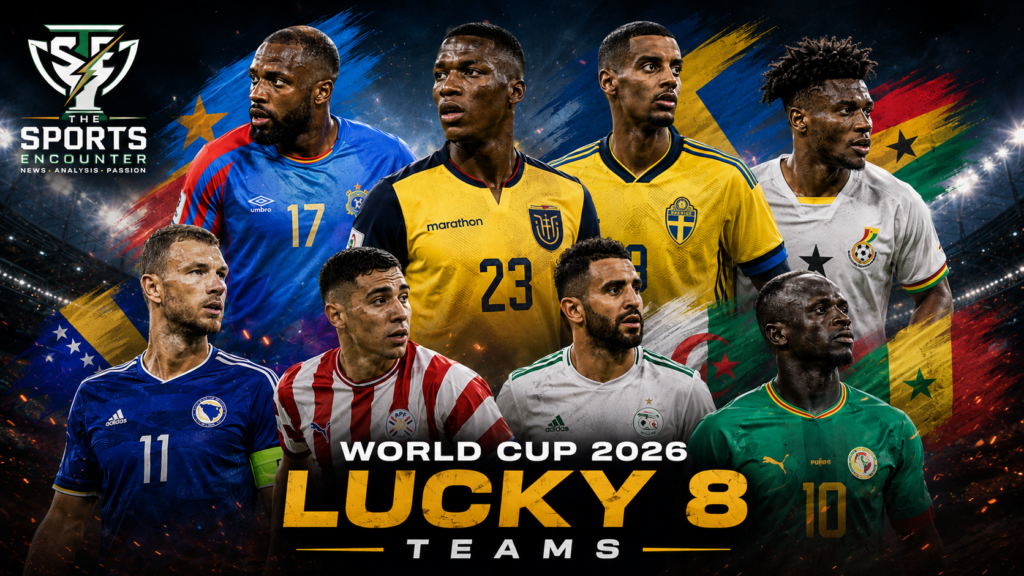
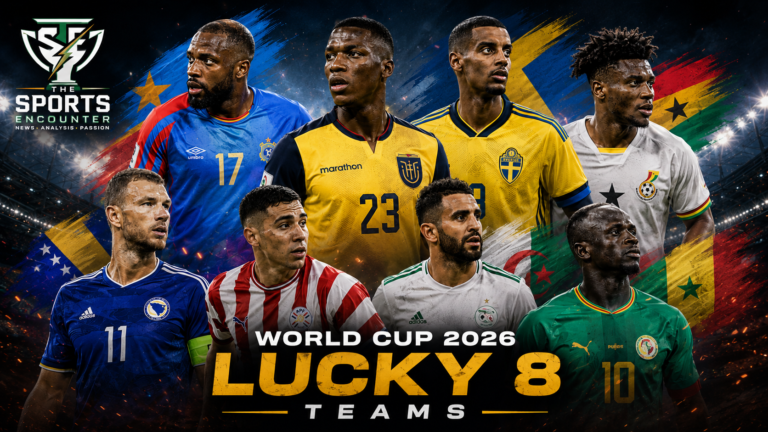
DR Congo, Ecuador, Sweden, Ghana, Bosnia and Herzegovina, Paraguay, Algeria, and Senegal had all finished third in their groups. Their records were imperfect, but the new 48-team format gave them another chance to show that third place did not have to mean second-rate.

The experiment produced seven immediate eliminations, one historic upset, several painful near-misses, and a clear lesson about the difference between surviving a group and managing a knockout match.

TL;DR

  • Paraguay became the only Lucky 8 team to reach the Round of 16.
  • Paraguay eliminated Germany on penalties after a 1-1 draw.
  • France then ended Paraguay’s run with a narrow 1-0 victory.
  • DR Congo led England before losing 2-1.
  • Senegal pushed Belgium into a five-goal contest but lost 3-2.
  • Ecuador, Sweden, Ghana, Bosnia and Herzegovina, and Algeria all exited without scoring.
  • The Lucky 8 won one of their nine combined knockout matches.
  • Seven of the eight teams were eliminated in the Round of 32.
  • Four African Lucky 8 teams were knocked out, but several left with their reputations enhanced.
  • The expanded format created opportunity, though the knockout draw exposed the quality gap between many third-place qualifiers and group winners.

Lucky 8 Knockout Results

Lucky 8 teamRound of 32 opponentResultFinal stage reached
DR CongoEnglandLost 2-1Round of 32
EcuadorMexicoLost 2-0Round of 32
SwedenFranceLost 3-0Round of 32
GhanaColombiaLost 1-0Round of 32
Bosnia and HerzegovinaUnited StatesLost 2-0Round of 32
ParaguayGermanyDrew 1-1, won 4-3 on penaltiesRound of 16
AlgeriaSwitzerlandLost 2-0Round of 32
SenegalBelgiumLost 3-2Round of 32

FIFA’s expanded format sent the top two teams from each of the 12 groups into the knockout stage alongside the eight highest-ranked third-place finishers. The resulting Round of 32 added 16 knockout games and allowed teams with four points, and in Senegal’s case three, to continue their tournaments. The full picture can be followed through FIFA’s official World Cup standings and knockout records.

The Sports Encounter identified the eight teams as the Lucky 8 before the Round of 32 began. Together, they carried a combined group-stage record of eight wins, eight draws, and eight defeats. Seven had collected four points. Senegal advanced with three after scoring eight goals in a chaotic Group I campaign.

What followed showed that all third-place finishes were far from equal.

Paraguay Turned a Lifeline Into a Historic Upset

Paraguay entered the Round of 32 with one win, one draw, one loss, and only two group-stage goals. Their minus-two goal difference offered little reason to expect them to eliminate Germany.

Knockout football gave them a different setting.

Paraguay accepted that Germany would control more of the ball. They protected the middle, defended with patience, and trusted goalkeeper Orlando Gill whenever Germany broke through. A 1-1 draw carried the game into penalties, where Gill and Paraguay held their nerve to win the shootout 4-3.

The result made Paraguay the only Lucky 8 team to cross the first knockout barrier.

That distinction mattered because Paraguay stopped looking like a team that had merely benefited from tournament expansion. They became a legitimate Round of 16 participant by eliminating one of international football’s traditional powers.

Their next assignment exposed the other side of the Lucky 8 route.

France had already crushed Sweden 3-0 and arrived with Kylian Mbappé moving confidently through the tournament. Paraguay again defended deep, reduced space between the lines, and forced France into a slower match than Didier Deschamps would have preferred.

Gill produced another strong performance and kept Paraguay within touching distance. Mbappé eventually broke the resistance from the penalty spot in the 70th minute, giving France a 1-0 victory and closing the Lucky 8 chapter.

The final score carried disappointment, though Paraguay had forced a title contender to work for every opening. Their performance also reinforced the wider argument explored in The Sports Encounter’s original Lucky 8 analysis: a third-place team could still become dangerous if it understood its limitations and managed knockout moments well.

Paraguay’s two knockout games produced a useful measure of their tournament. They conceded twice across 210 minutes, excluding the shootout, while facing Germany and France. Their attack remained limited, but their defensive organization gave them a chance in both matches.

Among the Lucky 8, they were the clearest example of what a second opportunity could become.

DR Congo Came Closest to Joining Paraguay

DR Congo’s 2-1 loss to England carried more emotional weight than the scoreline suggests.

The African side had reached the knockouts from Group K with four points, four goals scored, and three conceded. Their physical strength, direct running, and willingness to challenge opponents made them one of the more uncomfortable third-place qualifiers.

Against England, DR Congo did more than remain competitive. They took the lead and forced one of the tournament favorites into a genuine recovery.

England eventually found two late goals and escaped with a 2-1 victory. The result continued a pattern that followed England deeper into the tournament: falling behind, absorbing pressure, and relying on individual quality to change the match.

For DR Congo, the frustration came from seeing the opportunity so clearly.

They had moved ahead, unsettled England, and brought the game within reach of one of the biggest victories in their football history. Their inability to manage the final phase proved decisive. Legs tired, spaces widened, and England found the moments that strong knockout teams often create when an opponent begins thinking about survival.

The result eliminated DR Congo, yet their performance carried more value than a routine last-32 appearance. They showed that an African third-place qualifier could confront an elite European side with ambition rather than damage limitation.

Of the seven Lucky 8 teams eliminated immediately, DR Congo came closest to changing the wider story.

Senegal Attacked Belgium and Paid for the Open Spaces

Senegal entered the Round of 32 with the strangest Lucky 8 profile.

They had lost twice in the group stage, collected only three points, and still scored eight goals. Their positive goal difference reflected a team that could create chances and produce attacking bursts but could also lose control of matches.

That volatility followed them into their meeting with Belgium.

Senegal scored twice and remained alive in a contest that produced five goals. Their pace, movement, and willingness to commit players forward caused Belgium problems. At several moments, the Lions of Teranga looked capable of turning the match into the Lucky 8’s second great upset.

Belgium’s greater precision ultimately decided the game.

The European side possessed enough creators to punish the spaces Senegal left behind. Belgium won 3-2, ending a Senegal campaign that had supplied plenty of action but little defensive security.

Senegal left the tournament with ten goals scored across four matches. That total reflected attacking talent and ambition. It also came with nine goals conceded, a balance that rarely supports a long knockout run.

Their exit showed that entertainment and tournament control often pull in different directions. Senegal had enough attacking quality to frighten Belgium. They lacked the defensive calm needed to finish the job.

Ecuador’s Strongest Upset Case Faded in Mexico City

Before the Round of 32, Ecuador appeared to have the most credible upset case among the Lucky 8.

They had beaten Germany 2-1 during the group stage. Their overall record of one win, one draw, and one loss came with only two goals conceded. A compact structure and aggressive pressing style looked suitable for a tense knockout match.

The problem was the opponent and the setting.

Mexico entered the game as co-hosts with the crowd, stadium energy, and an unbeaten record behind them. Ecuador needed to control the early emotional surge. Instead, Julián Quiñones and Raúl Jiménez scored before halftime, giving Mexico the kind of game state the hosts wanted.

Ecuador pushed after the break but could not break a Mexican defense that had grown in confidence throughout the tournament.

A stoppage-time red card for Piero Hincapié added frustration to a 2-0 defeat. The sight of one of Ecuador’s most important defenders leaving the field summarized a night when patience disappeared as the possibility of recovery faded.

The match also reinforced a broader World Cup pattern covered throughout The Sports Encounter’s FIFA World Cup 2026 coverage: host nations can turn emotional momentum into a tactical advantage when they score first and force the opponent to chase.

Ecuador’s campaign became difficult to judge.

Their victory over Germany proved they could beat elite opposition. Their inability to score against Mexico suggested that producing one major group-stage result had hidden limitations in their attack.

They entered the knockouts with the strongest Lucky 8 credentials and left without creating the expected upset.

France Made Sweden Look Further Away Than They Were

Sweden’s numbers promised drama.

They scored seven goals and conceded seven in the group stage, finishing third in Group F with four points. Their matches had movement, chances, and vulnerability. France represented the worst possible opponent for that profile.

Kylian Mbappé scored twice, Bradley Barcola added another, and France won 3-0.

Sweden struggled to protect the spaces France attacked most aggressively. Mbappé’s movement stretched the defensive line, while France’s speed turned Swedish turnovers into immediate danger. Once the first goal arrived, Sweden had to chase. That only made the pitch larger for France.

The defeat was the heaviest suffered by any Lucky 8 team in the Round of 32.

Sweden’s exit also exposed the difference between scoring freely in group matches and creating reliable chances against an elite knockout defense. Their seven earlier goals had suggested attacking depth. Against France, they lacked the control needed to bring their forwards into dangerous areas.

The match became another example of how the tournament favorites separated themselves during the knockout stage, a trend that remained central to The Sports Encounter’s ongoing World Cup analysis.

Sweden’s campaign ended with seven goals scored and ten conceded. The numbers told the story of a team that could contribute to exciting matches but could not dictate them.

Ghana Competed With Colombia but Could Not Find the Final Pass

Ghana entered the knockout stage after a group campaign built on narrow margins.

A win over Panama and a draw with England had given the Black Stars enough protection to survive a 2-1 loss to Croatia in their final Group L match. That defeat still sent Ghana through as one of the eight best third-place teams.

Colombia ended that journey with a 1-0 win in Kansas City.

Jhon Arias scored in the 14th minute, allowing Colombia to protect space, defend with aggression, and manage the rhythm of the match. Ghana kept pushing but struggled to turn possession and effort into clear chances.

The Black Stars did enough to keep the contest alive. They could not produce the final pass, run, or finish required to change it.

That distinction matters. Ghana were never overwhelmed. Colombia simply handled the key moments more efficiently.

Knockout matches often punish teams that need several opportunities to settle. Ghana conceded early and spent the rest of the evening trying to repair the damage. Colombia stayed compact and ensured that the equalizer never arrived.

The result fit a wider pattern seen across the Lucky 8’s path into the knockout stage. Several teams were competitive enough to stay close, but very few had the attacking quality to recover once they fell behind.

Ghana finished the tournament with three goals scored across four matches. Their competitive spirit traveled well. Their attacking output did not.

Bosnia and Herzegovina Could Not Silence the Hosts

Bosnia and Herzegovina reached the Round of 32 with four points and five group-stage goals.

Their minus-one goal difference showed both sides of their tournament. They could threaten opponents, though defensive gaps remained. Facing the United States placed those weaknesses under immediate pressure.

The Americans won 2-0 and became one of three host nations to reach the Round of 16.

Bosnia needed to slow the pace, frustrate the crowd, and create uncertainty. The United States instead controlled the major phases and protected its lead with greater energy and depth.

A Round of 32 appearance still carried significance for Bosnia and Herzegovina. Their tournament gave the squad experience in meaningful matches and introduced several players to a global audience. Yet the knockout performance lacked the attacking conviction seen during parts of the group stage.

The expanded field had delivered access. The United States demonstrated the standard required to stay.

For Bosnia, the result became another example of a Lucky 8 side meeting an opponent with more control, greater depth, and home-field momentum.

Algeria’s Hope Disappeared Against Switzerland

Algeria reached the knockout stage after one of the wildest group campaigns among the Lucky 8.

They scored five goals, conceded seven, and finished third in Group J with four points. Their ability to attack made them dangerous. Their defensive record made every match unstable.

Switzerland gave them very little room to turn the Round of 32 into an emotional contest.

A disciplined 2-0 victory sent the Swiss into the Round of 16 and ended Algeria’s run. Riyad Mahrez and Algeria’s other creators struggled to break Switzerland’s shape, while defensive mistakes again carried a heavy cost.

The defeat was especially painful because Algeria had entered the tournament with growing belief that African teams could reshape the expanded World Cup.

Their supporters had seen enough attacking quality to imagine a breakthrough. The knockout match instead highlighted the old problem: promising spells without the consistency required across 90 minutes.

Switzerland later eliminated Colombia on penalties and then pushed Argentina into extra time in the quarterfinal. That later run provided useful context for Algeria’s loss. The Swiss were far more than a convenient Round of 32 opponent. They were one of the tournament’s most difficult teams to break down.

Algeria’s elimination looked disappointing in the moment. Switzerland’s progress made the challenge clearer.

What the Lucky 8 Experiment Really Told Us

Across nine combined knockout matches, including Paraguay’s Round of 16 tie, the Lucky 8 produced one victory, one draw settled by penalties, and eight eliminations.
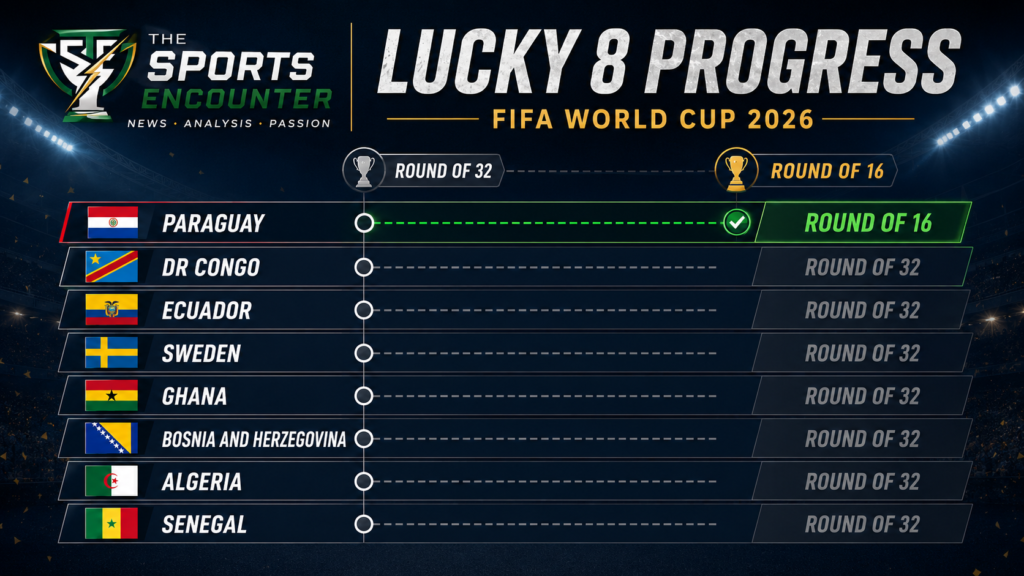
Lucky 8 progress chart showing Paraguay reaching the Round of 16 while DR Congo, Ecuador, Sweden, Ghana, Bosnia and Herzegovina, Algeria, and Senegal exited in the Round of 32.

They scored four goals in those nine matches. DR Congo scored once, Senegal twice, and Paraguay once against Germany. Ecuador, Sweden, Ghana, Bosnia and Herzegovina, and Algeria all left the Round of 32 without scoring.

Their opponents scored 16 times.

Those numbers reveal a substantial gap. Third-place qualification created access to the knockout stage, though it did not erase the consequences of finishing behind two teams in a group.

Several Lucky 8 sides drew group winners or major contenders. Sweden met France. DR Congo faced England. Paraguay drew Germany and then France. Senegal met Belgium. The format therefore rewarded survival with another game, while the bracket often delivered an unforgiving opponent.

That does not make the system meaningless.

Paraguay’s elimination of Germany supplied one of the tournament’s defining shocks. DR Congo nearly removed England. Senegal forced Belgium into a dangerous, open contest. Ghana stayed within one goal of Colombia. Those moments justified the presence of a Round of 32 by giving more nations meaningful knockout football.

The problem lies in treating qualification and competitiveness as the same achievement.

Most Lucky 8 teams entered the knockouts with a flaw already visible in their group records. Sweden, Senegal, Algeria, and Bosnia conceded too easily. Ghana and Paraguay lacked goals. Ecuador’s attack had limited output despite the win over Germany. DR Congo struggled to protect a lead when England increased the pressure.

Knockout opponents found those weaknesses quickly.

African Teams Gained Exposure, but the Results Remained Harsh

DR Congo, Ghana, Algeria, and Senegal carried a large share of Africa’s Lucky 8 representation into the knockout stage.

The results were severe. All four were eliminated, and none reached the Round of 16. Their performances, however, added context to a tournament in which African participation expanded significantly.

DR Congo threatened England. Senegal attacked Belgium. Ghana pushed Colombia. Algeria entered the knockout stage after scoring five group goals.

Their exits should lead to practical questions around game management, defensive consistency, and finishing rather than a simple conclusion that expansion lowered the standard.

The 48-team tournament gave more African nations access to matches that reveal exactly what separates a competitive side from a quarterfinal contender. FIFA’s broader vision for the expanded competition can be reviewed through the official FIFA World Cup 2026 tournament portal.

Exposure carries value when federations use the evidence.

Paraguay Gave the Lucky 8 a Legacy

Without Paraguay, the Lucky 8 story would have ended as a warning about expansion.

Seven teams entered the Round of 32 and lost. Several failed to score. France, Mexico, the United States, Switzerland, and Colombia controlled their ties. The established powers appeared to restore order.

Paraguay changed that interpretation.

Their shootout victory over Germany proved that a third-place qualifier could use the new route to create a genuine World Cup upset. They then held France to one goal and forced a semifinal contender into a demanding Round of 16 match.

The Lucky 8 did not transform the tournament. They did create tension, representation, and one unforgettable result.

That may be the fairest verdict on the experiment.

The expanded format gave eight teams another chance. Seven discovered that a lifeline offers no protection once the knockout whistle blows. Paraguay used theirs to remove Germany, challenge France, and turn a third-place finish into one of the World Cup’s most unexpected journeys.

For the other seven, the Round of 32 became the place where hope met the difference between staying alive and knowing how to survive.

The Sports Encounter’s World Cup 2026 coverage focuses on fixtures, team news, match analysis, fan stories, tournament trends, and the biggest talking points from football’s global stage.


Marcos Wetherfield is a Boca Raton-based fitness expert and sports writer covering WWE, soccer, baseball, NHL, NBA, and major American sports. His background in fitness gives him a specialist perspective on athletic conditioning, strength, mobility, recovery, injury prevention, performance habits, and the physical demands athletes face across long and demanding seasons. At The Sports Encounter, Marcos combines sports reporting with performance-focused analysis, covering breaking news, player development, injuries, roster decisions, major competitions, and the physical factors that can influence careers and results. His work looks beyond statistics to examine how athletes train, recover, adapt, and maintain performance under pressure. Based in Florida, he also brings a strong perspective on American sports culture while covering major leagues, athletes, and global sporting stories.

Breaking News

Man City Agree £125m Enzo Fernández Deal as Deadline Day Redraws Premier League’s Midfield Power

Manchester City have agreed a £125 million fee with Chelsea for Enzo Fernández in a deadline-day move that would equal the British transfer record and reshape the Premier League title race.

Published

on

Enzo Fernández pictured in a deadline-day transfer graphic linking Chelsea and Manchester City after a £125 million agreement.

Manchester City have agreed a £125 million fee with Chelsea for Enzo Fernández in a deadline-day move that would equal the British transfer record and take one of Chelsea’s most influential midfielders directly to a Premier League title rival.

The agreement has cleared the biggest financial obstacle to the Argentina international moving to the Etihad Stadium before the summer transfer window closes at 11:00 PM BST on September 1. Formal completion and club confirmation remained pending at the time of publication.

The fee would match the £125 million Liverpool paid Newcastle United for Alexander Isak and move Fernández above Morgan Rogers, Florian Wirtz and Elliot Anderson among the most expensive transfers in Premier League history.

Yet the more interesting part of the deal sits beyond another enormous number.

City are rebuilding the center of their team after losing the midfield structure that defined the final years of the Pep Guardiola era. Chelsea, meanwhile, are preparing to sell a player who produced 15 goals and seven assists in all competitions last season after spending heavily themselves on Morgan Rogers and another wave of young talent.

Deadline day has therefore produced something more consequential than a superstar changing shirts. One Premier League contender is transferring proven midfield control directly to another.

By The Sports Encounter Editorial Desk
Published: September 1, 2026
Updated: September 1, 2026

Enzo Fernández to Manchester City: Deal at a Glance

Detail Current Position
Player Enzo Fernández
Age 25
Current club Chelsea
Destination Manchester City
Agreed fee £125 million
Reported dollar value Approximately $169 million
Record position Would equal British transfer record
Current status Fee agreed, formal completion pending
Manchester City manager Enzo Maresca
Chelsea manager Xabi Alonso
Premier League transfer deadline September 1, 11:00 PM BST

The Premier League officially confirms that the 2026 summer transfer window closes at 11:00 PM BST on September 1. Clubs that reach an agreement close to the deadline can submit a deal sheet and receive additional time to complete certain documentation.

£125 Million Buys City Something Their Midfield Has Been Missing

Manchester City’s interest makes considerably more sense when viewed through what has happened to their midfield over the past few months.

Rodri left for Barcelona after one of the most decorated spells of any midfielder in Premier League history. The Sports Encounter examined the scale of that departure in our analysis of Rodri leaving Manchester City after winning 14 major trophies.

Bernardo Silva has also departed, removing another player who understood how to manipulate pressure, slow matches down, speed them up and keep City’s positional structure intact.

Those departures created a problem that could never realistically be solved with one direct replacement.

City responded by spending heavily on Elliot Anderson and adding 18-year-old Ayyoub Bouaddi from Lille. Anderson brought Premier League experience, ball recovery and progression. Bouaddi gives Maresca a technically gifted midfielder whose ceiling could be exceptionally high.

Fernández offers something between those profiles.

He is 25, already accustomed to the Premier League, experienced in Champions League football and comfortable receiving possession when opponents press aggressively. He can operate deeper, move forward into attacking positions and play through pressure rather than simply circulating the ball around it.

That flexibility matters for Maresca.

The early weeks of the season have already shown him experimenting with City’s midfield structure. During the 4-1 victory over Crystal Palace, Marc Guéhi operated unusually high alongside Anderson as City distributed the responsibilities once concentrated around Rodri.

Fernández would give Maresca another way to solve that problem without asking one midfielder to imitate Rodri.

The Maresca Connection Makes This More Than a Deadline-Day Gamble

Fernández would also be working with a manager who already knows his game.

Maresca coached Chelsea during the 2024/25 season and moved Fernández into more advanced areas rather than restricting him to the base of midfield.

The effect was significant.

Fernández finished that campaign with nine goals and 17 assists in all competitions. Last season, he followed with 15 goals and seven assists, making him Chelsea’s second-highest scorer behind João Pedro.

Across the 2024/25 and 2025/26 seasons combined, Fernández produced 24 goals and 24 assists.

Those numbers challenge the older idea of Fernández as primarily a deep-lying distributor.

Maresca has already seen how dangerous he can become when given permission to arrive around the penalty area instead of beginning every attack from beside the center-backs.

At City, the question becomes where those attacking instincts fit alongside Phil Foden, Rayan Cherki, Elliot Anderson and Erling Haaland.

City have enough creators.

What Fernández potentially adds is a midfielder capable of linking the first phase of possession with the final one while surviving the physical intensity between them.

That is why this transfer has more tactical logic than the headline fee initially suggests.

Manchester City’s Summer Has Become a Complete Midfield Reset

The scale of City’s recruitment would have seemed extraordinary even by their standards a few years ago.

Anderson arrived for a reported £116 million. Bouaddi followed in another major deal. Fernández would now cost £125 million.

Those three midfield moves alone underline how aggressively City have responded to the end of the Guardiola era.

The Sports Encounter’s ranking of the Premier League’s most expensive transfers already contained Anderson among the top five.

Fernández would enter the list at the very top alongside Isak.

That also means City would have two players among the most expensive midfielders English football has ever seen operating in the same rebuild.

The strategy carries obvious risk.

Large fees compress patience. Anderson cannot spend two years slowly becoming comfortable at City. Fernández would arrive with the expectation that he can influence a title race immediately.

Maresca inherited a club still expected to challenge for every major competition, which is why our 2026/27 Premier League title-contender analysis identified City’s managerial transition and midfield reconstruction as the two major variables surrounding their season.

The transfer market has now supplied Maresca with enough expensive answers.

His next challenge is making them fit together.

Chelsea Are Giving Up a Proven Player After Building Around Morgan Rogers

The Chelsea side of the agreement is just as interesting.

Fernández has developed into one of their most productive players, yet Chelsea spent £117 million this summer to sign Morgan Rogers from Aston Villa.

That deal already indicated where Xabi Alonso wanted to direct the next stage of Chelsea’s attack.

Rogers scored on his competitive debut during Chelsea’s 3-2 opening-weekend victory over Fulham, operating effectively alongside Cole Palmer and João Pedro.

Before the season began, The Sports Encounter argued that Chelsea’s £117 million investment in Rogers left Alonso with very few excuses after another expensive summer.

Selling Fernández changes that equation again.

Chelsea would be removing an established midfield creator just as the new attacking structure begins taking shape.

The financial return is enormous. A £125 million sale would generate one of the largest transfer fees ever received by an English club.

Footballistically, Chelsea must decide who replaces Fernández’s ability to move the ball through midfield, contribute goals and remain comfortable when possession becomes congested.

Rogers can provide creativity further forward.

Moisés Caicedo offers defensive control.

Neither performs precisely the same combination of jobs.

Chelsea’s Transfer Model Is Entering Another Phase

There is another layer to Chelsea’s willingness to conduct such a large sale.

The club’s recruitment model has increasingly involved acquiring young players early, developing them and maintaining enough squad depth to sell valuable assets without immediately dismantling the team.

Geovany Quenda arrived this summer after Chelsea had secured his future well in advance. Andrey Santos moved to Manchester United in another significant transaction, while Marc Guiu has now completed a permanent transfer to RB Leipzig.

The Sports Encounter previously examined Manchester United’s £50 million agreement for Andrey Santos, another example of Chelsea turning a crowded midfield into substantial transfer income.

RB Leipzig have officially confirmed that Marc Guiu has joined the Bundesliga club from Chelsea on a contract until 2031.

Fernández would operate on an entirely different financial scale, but the principle is connected.

Chelsea appear increasingly willing to sell high-value players when the price reaches a level they consider difficult to reject.

The danger is obvious. A recruitment model can generate excellent balance-sheet results while still weakening the football team if too many proven players leave at once.

Alonso now has to ensure this deal belongs to the first category.

Why the British Transfer Record Keeps Moving

The £125 million figure also says something uncomfortable about the Premier League market itself.

Alexander Isak reached that number when Liverpool signed him from Newcastle in 2025.

Then Morgan Rogers moved for £117 million.

Elliot Anderson cost approximately £116 million.

Florian Wirtz’s Liverpool package could reach £116.5 million.

Now Fernández is potentially arriving at City for another £125 million.

These are no longer isolated transactions separated by several transfer cycles.

They are clustering together.

Our earlier analysis of the five biggest Premier League transfer packages found a potential combined value of £589.5 million. Fernández would force that ranking to be rewritten again barely six weeks later.

The accelerating market reflects the Premier League’s financial strength, but it also reflects something more specific: clubs are paying extraordinary premiums for players who already understand elite European football and require minimal adaptation.

Fernández fits that profile almost perfectly.

City know his league.

Maresca knows his game.

Fernández knows the manager.

The £125 million payment therefore reduces sporting uncertainty while dramatically increasing financial expectation.

Gabriel Jesus Leaves Arsenal for Barcelona on the Same Deadline Day

Fernández is dominating the English market, but deadline day has produced significant movement elsewhere.

Barcelona have officially completed the signing of Gabriel Jesus from Arsenal.

The Brazilian striker has signed a three-year contract running until June 30, 2029. Barcelona confirmed the agreement directly, ending Jesus’ four-year spell in north London.

The official Barcelona announcement states that Jesus made 123 appearances for Arsenal, scoring 32 goals and contributing 22 assists.

He was also part of the Arsenal squad that won the 2025/26 Premier League title.

His departure continues a summer of change for the champions, who had entered the new season trying to turn last year’s breakthrough into sustained domestic dominance. The Sports Encounter explored that challenge in our feature asking whether Mikel Arteta can turn Arsenal’s title into the beginning of a dynasty.

Deadline Day Shows How Quickly the Premier League Has Changed

The timing is particularly striking because the Premier League season is already underway.

Most clubs have played two matches while still making decisions capable of changing their first-choice lineups.

City have already shown signs of adapting under Maresca.

Chelsea have already shown signs of Alonso’s new attacking structure.

Arsenal have started their title defense with two victories.

Aston Villa have started poorly while reconstructing a squad that lost several important players.

All of those teams are now changing again.

The Sports Encounter’s complete Premier League 2026/27 preview identified transfers and managerial changes as two of the forces most likely to reshape the season.

Two matchweeks later, that process is still happening.

Deadline day therefore carries more significance than the usual sequence of medicals, private jets and hurried paperwork.

Coaches are adjusting plans they have already used competitively.

Players are leaving teammates with whom they started the season only days ago.

Title rivals are effectively trading pieces while the championship is already in motion.

What Happens Next With Enzo Fernández?

An agreed fee does not by itself complete a transfer.

Fernández must still pass through the remaining medical, contractual and registration procedures before Manchester City can formally announce him as their player.

The Premier League window closes at 11:00 PM BST on Tuesday.

If clubs reach an agreement late enough that all paperwork cannot be completed by that time, Premier League rules allow them to submit a deal sheet between 9:00 PM and 11:00 PM. That can provide another two hours to complete the required domestic documentation.

International registration requirements operate separately through FIFA’s Transfer Matching System.

For that reason, the accurate position at publication is simple:

Manchester City and Chelsea have agreed the £125 million fee. Fernández’s transfer is progressing toward completion, but formal club confirmation remains the final step.

The Sports Encounter Verdict: City Are Buying Certainty at an Extraordinary Price

The easiest reaction to £125 million is to ask whether Enzo Fernández is worth £125 million.

That question rarely produces a useful answer because transfer fees now reflect timing, leverage, contract position, replacement difficulty, Premier League wealth and the identity of the buyer as much as pure football ability.

City’s real calculation is more practical.

They lost Rodri.

They lost Bernardo Silva.

Guardiola left.

A new manager inherited a midfield carrying years of tactical memory that could not simply be preserved by keeping the same formation.

City have responded by rebuilding aggressively around Anderson, Bouaddi and now potentially Fernández.

Fernández already understands Maresca’s football. He already understands English football. He has played under title pressure, Champions League pressure and World Cup pressure.

That reduces the adaptation risk considerably.

Chelsea’s calculation runs in the opposite direction. They are accepting enormous financial value while trusting Alonso and the club’s latest group of expensive young players to replace the football Fernández leaves behind.

That is what makes this deadline-day agreement so compelling.

The £125 million figure will dominate the headline.

The Premier League table will eventually decide which club understood the deal better.

Frequently Asked Questions

Has Enzo Fernández signed for Manchester City?

Manchester City have agreed a £125 million fee with Chelsea for Enzo Fernández. Formal completion and confirmation of the transfer were still pending at the time of publication.

How much will Manchester City pay for Enzo Fernández?

The agreed fee is £125 million, approximately $169 million. If completed on those terms, the transfer would equal the British record.

What is the British transfer record?

The current record is £125 million, the fee Liverpool paid Newcastle United for Alexander Isak in 2025. Fernández would equal that figure if his Manchester City transfer is completed at the agreed price.

Why do Manchester City want Enzo Fernández?

City are rebuilding their midfield following major departures including Rodri and Bernardo Silva. Fernández offers Premier League experience, passing under pressure, creativity and the ability to operate in deeper or more advanced midfield positions.

Has Enzo Fernández worked with Enzo Maresca before?

Yes. Maresca coached Fernández at Chelsea during the 2024/25 season. Fernández produced nine goals and 17 assists in all competitions during that campaign.

How did Enzo Fernández perform for Chelsea last season?

Fernández scored 15 goals and recorded seven assists in all competitions during the 2025/26 season, finishing as Chelsea’s second-highest scorer.

When does the Premier League summer transfer window close?

The 2026 Premier League summer transfer window closes at 11:00 PM BST on Tuesday, September 1. Clubs that submit a valid deal sheet before the deadline can receive additional time to complete certain paperwork.

Did Gabriel Jesus join Barcelona on transfer deadline day?

Yes. Barcelona officially confirmed the permanent signing of Gabriel Jesus from Arsenal. The Brazilian has signed a contract through June 30, 2029.

Has Marc Guiu left Chelsea?

Yes. RB Leipzig officially confirmed the signing of Marc Guiu from Chelsea. The Spanish striker has agreed a contract with the Bundesliga club through 2031.

Would Enzo Fernández become Manchester City’s most expensive signing?

A completed £125 million transfer would place Fernández at the very top end of City’s historical spending and alongside the British transfer record. It would also make him more expensive than City’s £116 million summer acquisition of Elliot Anderson.

Continue Reading

CPL 2026

CPL 2026: Hetmyer’s Record-Equalling 40-Ball Ton Spoils TKR’s Independence Day as Guyana Stay Perfect

Shimron Hetmyer marked his 100th CPL appearance with a stunning unbeaten 111 from 43 balls as Guyana Amazon Warriors defeated Trinbago Knight Riders by nine runs via DLS and extended their perfect start to CPL 2026.

Published

on

Shimron Hetmyer celebrates his unbeaten 111 for Guyana Amazon Warriors against Trinbago Knight Riders in CPL 2026 Match 22.

Trinbago Knight Riders had Guyana Amazon Warriors in exactly the kind of position a home side would want on Independence Day. Guyana were 22 for two after 4.3 overs, rain had interrupted their innings, and TKR’s experienced spinners had already shown they could control the scoring.

What happened after the restart said much more about these two teams than the final nine-run margin.

Guyana adjusted immediately to a match reduced to 16 overs. They retired out a struggling Matthew Nandu, Shimron Hetmyer gave himself just enough time to understand the surface, and then the entire innings changed shape. By the end, Hetmyer had produced an unbeaten 111 from 43 balls in his 100th Caribbean Premier League appearance, equalled the CPL record for the fastest century with a 40-ball hundred, and driven the Warriors to 185 for five.

Trinbago were given a revised target of 182 under the Duckworth-Lewis-Stern method. Nicholas Pooran attacked hard enough to create an opening, Alex Hales kept the chase alive deep into the innings, but Mohammad Nabi’s three-wicket spell broke TKR’s middle order before the required rate became impossible to manage.

The Knight Riders finished on 172 for seven, leaving Guyana with a nine-run DLS victory, four wins from four matches, and a perfect start to the CPL 2026 campaign.

Trinbago Knight Riders vs Guyana Amazon Warriors: Match 22 at a Glance

Match Detail Information
Competition Republic Bank Caribbean Premier League 2026
Match Trinbago Knight Riders vs Guyana Amazon Warriors, Match 22
Date August 31, 2026
Venue Queen’s Park Oval, Port of Spain, Trinidad
Toss Trinbago Knight Riders elected to field
Guyana Amazon Warriors 185/5 in 16 overs
Trinbago Knight Riders target 182 from 16 overs under DLS
Trinbago Knight Riders 172/7 in 16 overs
Result Guyana Amazon Warriors won by 9 runs, DLS method
Player of the Match Shimron Hetmyer, 111* from 43 balls

At 22/2, TKR Had the Match Moving Their Way

The first phase belonged to Trinbago.

Akeal Hosein removed Glenn Phillips without scoring, while CPL debutant Lahiru Kumara dismissed Shai Hope for 16. Guyana were only 19 for two when Hope fell and had reached 22 for two after 4.3 overs when rain sent the players from the field.

For TKR, that was close to the ideal start against the only unbeaten team left in the competition. Hosein had conceded very little, Sunil Narine still had most of his allocation available, and Guyana had yet to establish any meaningful momentum.

The rain break could easily have made the situation worse for the Warriors. Instead, it gave them a different problem to solve.

The Rain Changed the Match, but Guyana Changed Faster

When play resumed, the contest had been reduced to 16 overs per side. Guyana no longer had the time to rebuild a conventional T20 innings, and their response was ruthless.

Matthew Nandu had struggled to 13 from 21 balls. With only seven overs remaining after the ninth, Guyana retired him out at 67 for three rather than allow the innings to remain trapped at the same pace.

That decision deserves attention because it showed the kind of tactical clarity that has defined Guyana’s start to this tournament. They were prepared to remove a set batter from the crease because the match situation had changed. Sentiment did not enter the calculation.

Hetmyer had already started finding his range. Once the batting order opened around him, he took complete control.

Shimron Hetmyer Turns His 100th CPL Match Into a Career Night

Hetmyer’s innings was explosive, but the most revealing part came before the explosion.

After the match, he explained that people close to him had encouraged him to give himself a few more deliveries instead of trying to dominate immediately.

“Just give yourself a few more balls. Just give yourself some time, and you can always catch up.”

That advice could be seen in the way the innings developed. Hetmyer reached his half-century from 27 balls. From there, he needed only another 13 deliveries to reach 100.

His acceleration became brutal once TKR had to return to their seamers. Kumara suffered most heavily, conceding 30 runs in the 13th over as Hetmyer attacked pace with almost no margin for error.

Romario Shepherd then joined him and immediately understood what the situation required. Shepherd struck an unbeaten 27 from only seven deliveries, including two fours and three sixes.

Guyana scored 85 runs from the final four overs.

Hetmyer reached his century from 40 balls, matching the fastest hundred in CPL history. The official CPL match report also confirmed that the innings came in his 100th appearance in the competition.

He finished on 111 not out from 43 balls with eight fours and nine sixes. Of those 111 runs, 86 came in boundaries.

Captain Imran Tahir described the performance simply after the match: “Class is permanent.”

TKR’s Spin Was Excellent. Their Pace Was Punished Again

The bowling numbers explain one of the biggest problems in TKR’s season.

Akeal Hosein, Sunil Narine and Usman Tariq combined to bowl nine overs for only 54 runs while taking three wickets. That is an economy rate of exactly six runs per over in a match where Guyana eventually scored at 11.56 per over.

The contrast with Trinbago’s seam options was enormous.

TKR Bowling Group Overs Runs Wickets Economy
Hosein, Narine and Usman Tariq 9 54 3 6.00
Kumara, Drakes and Greaves 6 113 1 18.83

Lahiru Kumara finished with 1 for 55 from three overs. Dominic Drakes conceded 40 from two, while Justin Greaves went for 18 in his only over.

It was the same weakness Nicholas Pooran identified afterward. He admitted that TKR have “struggled big time” in the fast-bowling department and have tried several combinations without finding enough control to complement their spinners.

That concern had been less visible when Sunil Narine helped TKR end a three-match losing run against Barbados Tridents. In that game, Trinbago bowled 15 overs of spin and controlled almost every phase.

It was exposed far more clearly here. Once rain shortened the innings and forced TKR to use pace during the highest-risk overs, Hetmyer and Shepherd attacked relentlessly.

Pooran Gives TKR the Start They Needed

Chasing 182 from 16 overs required aggression from the beginning, and TKR initially found it.

Sunil Narine made only one before Glenn Phillips completed a superb catch off Dwaine Pretorius, but Colin Munro and Pooran kept the scoring rate moving. Trinbago reached 50 in only 4.3 overs and closed the shortened powerplay on 52 for one.

Pooran was the main reason.

The captain struck 43 from only 16 deliveries, hitting three fours and four sixes at a strike rate of 268.75. For a brief period, Guyana were being forced to defend rather than dictate.

Then Nabi changed the innings.

Mohammad Nabi Takes Three Wickets and Breaks the Chase

Nabi had already played a major role when Guyana opened their CPL campaign by beating Jamaica Kingsmen. Against TKR, his impact came during the most dangerous phase of the chase.

He removed Munro for 22 with the score on 52. Pooran continued attacking, but Nabi struck again at 67 when Quentin Sampson held the catch.

Three balls later, Jyd Goolie was trapped leg before without scoring.

Imran Tahir then bowled Justin Greaves for one soon afterward.

TKR had moved from 52 for one to 68 for five. Four wickets had fallen for only 16 runs.

Pooran’s dismissal carried the most weight because he was scoring fast enough to keep the DLS target within reach. Once he disappeared, every incoming batter inherited a required rate that was becoming harder to manage.

Nabi finished with 3 for 20 from three overs, another significant performance during what Tahir confirmed will be one of his final stretches with the Warriors this season before he leaves the squad.

Alex Hales Refuses to Let the Chase Die

Alex Hales found himself in an awkward position. TKR had lost too many wickets for him to play recklessly, but the required rate gave him no time to rebuild slowly.

He chose attack.

Hales and Akeal Hosein added 43 runs in only 21 deliveries, giving the home crowd another reason to believe a comeback was possible. Hosein contributed 18 from 11 before Khary Pierre removed him at 111 for six.

Hales continued.

He reached his half-century from just 23 balls and eventually made 55 from 24, with seven sixes and one four. His strike rate of 229.16 would normally be enough to decide many T20 matches.

On this night, the collapse around him had left too much work.

Shamar Joseph finally bowled Hales with the score on 150 after 14.4 overs. TKR had only eight deliveries left and still needed 32 runs to reach the target.

The result was effectively decided.

Shepherd Defends the Final Over

Trinbago entered the final over on 158 for seven, needing 24 runs to win.

Romario Shepherd had already damaged TKR with the bat. He was now given responsibility for closing the match with the ball.

Joshua Da Silva and Dominic Drakes continued swinging, and Drakes finished proceedings by launching the final delivery for six. The late boundaries improved the final score but never seriously threatened Guyana’s control of the over.

TKR finished on 172 for seven, nine runs below the DLS par score required to tie the match.

Guyana Have Now Found Four Different Ways to Win

The most encouraging part of Guyana’s four-match start is that the same player has not needed to rescue them every night.

Mohammad Nabi controlled their opening victory over Jamaica. Dwaine Pretorius led the attack when Guyana beat St Lucia Kings by seven wickets. Khary Pierre was Player of the Match when the Warriors demolished Antigua and Barbuda Falcons.

Hetmyer owned Match 22.

Four matches have therefore produced four wins and a changing group of decisive performers. That is a far healthier sign than one batter carrying an otherwise inconsistent team.

Tahir repeatedly returned to the same idea after this victory: team culture. He spoke about senior players helping younger members, players celebrating each other’s success, and training with a clear purpose even after a long break between fixtures.

The Warriors have now completed their first four CPL matches away from home and won all four.

Guyana’s Road Form Makes Their Homecoming Even More Important

Before Match 22, our CPL 2026 playoff race analysis showed why Guyana’s position was already unusually strong. They had six points from only three matches while several rivals had already used most of their schedule.

This victory takes the Warriors to eight points from four games while preserving a 100 percent winning record.

They now return home with six league matches still available, giving them considerable control over their route toward the playoffs and, potentially, a top-two finish.

Tahir refused to look too far forward. He said the team would “hit the reset button” and continue treating each match as if it were their last.

That approach makes sense because the Warriors have already shown what can happen when a successful team carries momentum from one competition into another.

They entered this CPL shortly after defending 85 to retain the Global Super League title against San Francisco Unicorns. One supporter watching this latest win joked that the Warriors were playing “like they’re some kind of Global champions.”

Technically, they are.

TKR’s Season Is Running Out of Comfortable Explanations

Trinbago can point to the rain, the wet ball and problems controlling it after the interruption. Pooran said a team built heavily around spin has been hurt repeatedly when rain arrives at difficult moments.

Those conditions were real, but they do not explain everything.

The seam-bowling numbers remain a concern. So does the inability to keep partnerships intact after making good starts. Against Guyana, TKR reached 52 for one and then lost four wickets for 16 runs.

A similar middle-over collapse proved costly when St Lucia Kings beat Trinbago by 36 runs. Even their recent improvement against Barbados has not removed the wider inconsistency.

Pooran remains optimistic because T20 tables can change quickly. He said TKR need to concentrate on winning their remaining matches and hope other results help them.

Kieron Pollard’s fitness may become important as well. Pooran said the veteran is working to return for the next match and stressed how much TKR need his experience and skill.

The mathematics may still offer hope. Their performances now have to justify it.

Top Performers in CPL 2026 Match 22

Player Team Performance
Shimron Hetmyer Guyana Amazon Warriors 111* from 43 balls, 8 fours, 9 sixes
Mohammad Nabi Guyana Amazon Warriors 3/20 from 3 overs
Romario Shepherd Guyana Amazon Warriors 27* from 7 balls
Alex Hales Trinbago Knight Riders 55 from 24 balls, 7 sixes
Nicholas Pooran Trinbago Knight Riders 43 from 16 balls
Akeal Hosein Trinbago Knight Riders 1/11 from 2 overs and 18 from 11 balls

What Match 22 Told Us

Hetmyer supplied the unforgettable performance, but the deeper story was Guyana’s ability to adjust when the match stopped looking like the one they had prepared for.

Rain reduced the overs. Guyana changed their batting order. Nandu was retired out. Hetmyer adjusted his tempo. Shepherd attacked immediately. Then Nabi responded to Pooran’s counterattack by taking wickets rather than simply trying to defend the boundary.

TKR had strong individual performances too. Their spinners were excellent, Pooran attacked brilliantly and Hales nearly dragged the chase back into contention. The gaps elsewhere were simply too large.

Guyana leave Trinidad unbeaten after four road matches. TKR leave their Independence Day fixture knowing the playoff race is still open but their room for another incomplete performance is becoming smaller.

For updated fixtures, results and official tournament information, visit the Caribbean Premier League match center. Readers can also follow every developing story through The Sports Encounter’s cricket coverage.

Frequently Asked Questions

Who won Trinbago Knight Riders vs Guyana Amazon Warriors in CPL 2026 Match 22?

Guyana Amazon Warriors defeated Trinbago Knight Riders by nine runs under the DLS method at Queen’s Park Oval in Port of Spain.

What did Shimron Hetmyer score against TKR?

Hetmyer scored an unbeaten 111 from 43 balls, hitting eight fours and nine sixes.

Did Shimron Hetmyer equal the CPL fastest-century record?

Yes. Hetmyer reached 100 from 40 deliveries, equalling the CPL record for the fastest century. The innings came in his 100th CPL appearance.

What was the DLS target for Trinbago Knight Riders?

TKR were set a revised target of 182 from 16 overs after rain shortened Guyana’s innings.

Why did Guyana win by nine runs when they scored 185 and TKR scored 172?

The DLS method adjusted Trinbago’s target to 182. A score of 181 would therefore have tied the match. TKR finished on 172, leaving them nine runs below the DLS par score.

Who was Player of the Match?

Shimron Hetmyer was named Player of the Match for his unbeaten 111 from 43 balls.

How many wickets did Mohammad Nabi take?

Nabi took three wickets for 20 runs from three overs. He dismissed Colin Munro, Nicholas Pooran and Jyd Goolie.

Are Guyana Amazon Warriors still unbeaten in CPL 2026?

Yes. Guyana have won all four of their opening matches and have eight points from four games.

Continue Reading

Editor's Choice

FIH Hockey World Cup 2026: Germany Build a Dynasty as Argentina End the Dutch Era

Germany retained the men’s FIH Hockey World Cup with a 1-0 win over Spain, while Argentina ended the Netherlands’ women’s dynasty in a shootout to cap a tournament full of records, surprises and shifting global power.

Published

on

Germany celebrate winning the men’s FIH Hockey World Cup 2026 while Argentina are crowned women’s champions after defeating the Netherlands in a dramatic shootout.

The FIH Hockey World Cup 2026 in Belgium and the Netherlands ended with two champions, two completely different forms of pressure, and one tournament that changed several assumptions about the balance of power in international hockey.

Germany successfully defended the men’s title by beating Spain 1-0 in Wavre, becoming the first men’s nation to win consecutive World Cups on two separate occasions. Argentina’s women produced the more emotional ending, drawing 1-1 with the Netherlands in Amsterdam before winning the shootout 3-1 and ending the Dutch run of three consecutive world titles.

Across 100 matches, 32 national teams and two countries, the tournament produced 421 goals. The men contributed 244 and the women 177. There were 176 penalty-corner goals across the two events, but the final weekend reminded everyone that World Cups are rarely won through volume alone.

Germany scored once in the men’s final.

Argentina needed one regulation-time equalizer and three successful shootout attempts in the women’s final.

Those small margins decided two enormous championships.

The final results also completed a tournament that The Sports Encounter had followed from the moment the 32-team field, pools and new competition format were first mapped out. What began with questions about Germany’s title defense, Dutch women’s dominance, Belgium’s home advantage, Spain’s ceiling, India’s medal ambitions and Pakistan’s attempt to reconnect with its World Cup history ended with answers that were far less predictable than they looked before August 15.

FIH Hockey World Cup 2026: The Final Picture

Competition Champion Runner-up Bronze Fourth
Men Germany Spain Argentina Netherlands
Women Argentina Netherlands Belgium Australia

The official FIH Hockey World Cup 2026 tournament center confirms the full results, standings, statistics and awards from both competitions.

Germany’s Men Did Not Need to Dominate Spain to Become Champions Again

Germany’s 1-0 victory over Spain was almost a summary of how André Henning’s teams approach major tournaments.

They do not always need to look superior for 60 minutes.

They need to understand the match better when the decisive moment arrives.

Spain arguably produced more of the pressure during significant stretches of the final. Borja Lacalle forced Jean-Paul Danneberg into a sharp glove save during the second quarter, and Spain continued creating circle entries after halftime.

Germany absorbed it.

Then, with only 80 seconds remaining in the third quarter, Michel Struthoff appeared across the goalmouth during Germany’s only circle entry of the period and touched the ball into an exposed goal.

One entry.

One finish.

One World Cup-winning goal.

Spain removed goalkeeper Luis Calzado late and pushed desperately for an equalizer. Germany defended the circle, managed the final minutes and walked away with a fourth men’s World Cup title.

Christopher Rühr was named Player of the Match.

His post-match assessment captured the mentality inside the German camp: people had questioned whether this German team remained capable of winning another global title, and the group had carried that doubt with them throughout the competition.

Germany Have Now Won Four Men’s World Cups

The historical sequence places this generation inside elite company.

Germany Men’s World Cup Title Year
First 2002
Second 2006
Third 2023
Fourth 2026

Germany are now the first men’s team to win back-to-back Hockey World Cups twice.

The first consecutive titles came in 2002 and 2006.

The second sequence has now arrived in 2023 and 2026.

That achievement becomes even more impressive when placed beside their recent tournament record. Germany won the 2023 World Cup, reached the Olympic final in Paris in 2024, won the 2025 EuroHockey Championship and have now defended the world crown.

This is no isolated championship.

It is a sustained major-event cycle.

The Men’s Final Explained Germany Better Than Any Earlier Match

Germany had experienced difficult moments before reaching the final.

France held them to a 1-1 draw during the opening phase.

Spain beat them 2-1 during the second stage.

The Sports Encounter’s August 21 World Cup analysis identified that Spanish victory as one of the first signs that the defending champions were vulnerable.

They were vulnerable.

They were not eliminated.

Germany continued progressing through the tournament while other teams produced more spectacular scorelines. They then edged Argentina 2-1 in the semifinal and reached another final carrying the type of pressure they have repeatedly handled well.

Germany’s greatest tournament strength is often psychological structure.

Players remain connected when momentum shifts.

The team does not appear to panic when chances are limited.

Defenders trust their goalkeeper.

Attackers remain prepared for one meaningful opportunity.

The final supplied the cleanest example of all four characteristics.

Jean-Paul Danneberg Was Central to Germany’s Control

Spain’s pressure could have changed the final before Struthoff ever reached the circle.

Danneberg prevented it.

His second-quarter save from Lacalle was one of those interventions that does not always survive in a final scorecard but changes everything around it.

A Spanish goal at that stage would have forced Germany to chase.

The tactical geometry of the match would have changed.

Germany remained level because their goalkeeper kept them there.

That gave the team time to wait for the moment that eventually arrived late in the third quarter.

Spain Lost the Final but Changed Their Position in World Hockey

Spain’s tournament should not be reduced to another silver medal.

The Red Sticks reached their first men’s World Cup final since 1998.

Their semifinal against the Netherlands may have been the most important performance in Spanish men’s hockey for decades.

The Dutch had home advantage.

They scored first.

They looked comfortable early.

Spain responded and eventually won 4-3.

José Basterra scored twice, Pepe Cunill converted from a penalty corner, and Spain punished the Netherlands during a key period when Duco Telgenkamp was serving a 10-minute yellow card.

Luis Calzado produced another major performance in goal and later received the tournament’s Best Goalkeeper award.

Spain’s silver medal was therefore built on much more than one good fortnight.

The competition confirmed that they now belong inside the serious championship tier.

Argentina’s Men Created Their Own Historic Ending

Argentina’s bronze medal carried a different emotional weight.

They defeated the Netherlands 2-1 and reached the World Cup podium for only the second time in their history.

Tomas Domene opened the scoring in the 41st minute with a deft deflection.

The Netherlands equalized through Floris Middendorp eight minutes later.

The match appeared destined for a tense finish when the Dutch had another effort ruled out.

Argentina found one final penalty-corner opportunity.

Matias Rey, still competing internationally at 41, scored in the 59th minute.

The Dutch removed their goalkeeper and won late penalty corners.

Argentina survived them all.

For Rey, Domene and an Argentine generation that had spent the tournament living around narrow margins, the bronze felt closer to validation than consolation.

Tomas Domene Was the Men’s World Cup’s Most Complete Individual Story

Domene finished with nine goals.

He won both the Top Scorer and Best Player awards.

His tournament included three field goals, four penalty-corner goals and two penalty strokes.

That distribution matters because it shows a scorer capable of hurting opponents from multiple phases rather than relying on one set-piece mechanism.

Men’s Leading Scorer Team Goals
Tomas Domene Argentina 9
Mustaphaa Cassiem South Africa 8
Harmanpreet Singh India 8

Domene had already entered the World Cup following an exceptional international season. His continued scoring confirmed that the pressure of a global event did not reduce his influence.

The Netherlands Men Produced Enough Hockey to Win, but Not Enough Control

Fourth place will hurt the Dutch precisely because so much of the tournament appeared to be moving toward a home medal.

The Netherlands progressed strongly, reached the semifinal and possessed enough speed, depth and attacking quality to win the competition.

Spain exposed the weakness.

The semifinal became emotional.

The yellow card to Telgenkamp shifted numbers and momentum.

Spain scored while the Dutch were reduced.

Control disappeared.

The bronze-medal game created another opportunity to finish the tournament positively, but Argentina again punished critical moments.

The Netherlands therefore finished fourth despite hosting the competition and remaining one of the tournament’s strongest technical sides.

It was the first time in 20 years that the Dutch men left a World Cup without a medal.

Australia Finished Fifth Without Ever Fully Entering the Title Conversation

Australia defeated England 2-0 in the fifth-place playoff.

The final ranking is respectable.

It is still below the standard the Kookaburras traditionally carry into a World Cup.

The problem was not a lack of attacking talent.

Australia’s tournament repeatedly contained stretches of excellent direct hockey.

The problem was consistency through the new two-stage format.

Teams could no longer rely on recovering from one disappointing pool match through a straightforward crossover route.

Results carried consequences deeper into the competition.

Australia never created the sustained run needed to reach the semifinals.

England Finished Sixth After an Early Tournament That Promised More

England had looked increasingly dangerous during the opening week.

They beat India 4-2.

They demolished Wales 8-2.

The Sports Encounter’s Day 3 analysis described England as one of the men’s teams beginning to build genuine momentum.

The momentum did not last.

England’s scoring became harder to sustain against stronger second-stage defenses, and a 2-0 defeat to Australia left them sixth.

The tournament nevertheless showed that England’s attacking ceiling is high.

The next step is learning how to carry that threat through games where transitions become fewer and penalty-corner defenses improve.

Belgium’s Seventh Place Was the Men’s Tournament’s Biggest Home Disappointment

Belgium entered the World Cup as the world No. 1 side, reigning Pro League champions and host nation.

They possessed Tom Boon, Alexander Hendrickx, Arthur Van Doren, Victor Wegnez and Vincent Vanasch.

They did not reach the semifinals.

Germany had already produced an early warning by beating Belgium 1-0 during pool play.

Australia later held them.

The new tournament format increased the cost of those points.

Belgium eventually met India in the seventh-place playoff and needed a shootout to win after a 3-3 draw.

Seventh is not a reflection of Belgium suddenly becoming a poor team.

It reflects how little space this World Cup gave strong teams once earlier damage accumulated.

India Finished Eighth After an Eight-Goal Harmanpreet Tournament

India’s World Cup produced both major attacking performances and familiar frustrations.

Harmanpreet Singh scored eight goals, all from penalty corners, and India finished with a tournament-best nine penalty-corner goals as a team.

The most emotionally charged victory came against Pakistan.

India won 5-3 in a match that effectively ended Pakistan’s championship path.

The Sports Encounter’s full India-Pakistan World Cup analysis documented Abhishek’s two-goal performance and how India handled one of international hockey’s most difficult rivalry environments.

India later suffered against stronger second-stage opposition.

Argentina defeated them 5-3 in the match that sent Los Leones into the semifinals.

The late Indian goals made the scoreboard closer but did not hide the earlier damage.

India eventually drew 3-3 with Belgium in the seventh-place playoff and lost the shootout 4-3.

Eighth place feels low for a team with Olympic pedigree and one of the tournament’s strongest set-piece weapons.

Pakistan Finished 11th, but the Tournament Was More Complicated Than the Ranking

Pakistan’s 11th-place finish carries obvious disappointment for the most successful nation in men’s World Cup history.

The numbers need context.

Pakistan drew 3-3 with Wales after allowing a match they appeared capable of winning to escape.

They then lost 5-3 to India.

Those results pushed the former champions away from the medal path early.

The classification stage still contained positive attacking signs.

Hannan Shahid scored four goals, all from open play.

Pakistan eventually faced South Africa in the 11th-place match, drawing 4-4 before winning the shootout 4-3.

The final ranking was therefore:

11th, but with the final match won under pressure.

The larger issue remains structural.

Pakistan can still attack at international pace.

The consistency required across four quarters remains harder to sustain.

That pattern had already appeared when they allowed Wales back into the contest during the opening phase.

New Zealand Finished Ninth and Somehow Scored More Goals Than Every Men’s Team

This was one of the tournament’s strangest statistical outcomes.

New Zealand finished ninth.

They scored 21 goals, the most of any men’s team.

That figure says something important about classification matches and tournament structure.

Scoring volume does not necessarily correlate with medal contention.

New Zealand’s 6-3 win against Ireland in the ninth-place playoff boosted the total, but their championship campaign had already been damaged much earlier.

Argentina’s 7-1 destruction of New Zealand during the opening phase was one of the clearest examples.

The Sports Encounter’s August 20 wrap identified that Argentine performance as the day the men’s tournament began revealing which teams could accelerate suddenly enough to break opponents.

Men’s FIH Hockey World Cup 2026 Final Standings

Position Team
1Germany
2Spain
3Argentina
4Netherlands
5Australia
6England
7Belgium
8India
9New Zealand
10Ireland
11Pakistan
12South Africa
13France
14Japan
15Wales
16Malaysia

The official FIH men’s final standings confirm Germany at No. 1, Spain second, Argentina third and the Netherlands fourth.

Men’s Tournament Awards

Award Winner Team
Best Player Tomas Domene Argentina
Top Scorer Tomas Domene Argentina
Best Goalkeeper Luis Calzado Spain
Rising Star Justus Warweg Germany

The Women’s World Cup Ended the Longest Active Dynasty in the Sport

If the German men’s title felt like confirmation, Argentina’s women produced something closer to liberation.

The Netherlands had won the previous three World Cups.

They were playing the 2026 final at home in Amstelveen.

They had scored more goals than any other women’s team.

Yibbi Jansen was the tournament’s leading scorer.

The Dutch had not lost a World Cup match since 2010.

Argentina still found a way through.

The final finished 1-1.

Las Leonas won the shootout 3-1.

For the first time in 16 years, Argentina were world champions.

Argentina Had to Survive Before They Could Celebrate

The women’s final was tight from the beginning.

The teams shared possession more evenly than many Dutch opponents had managed throughout the tournament.

Clear chances were limited.

Cristina Cosentino produced an important early intervention when Pien Dicke broke through alone.

The Netherlands then found the breakthrough with only 51 seconds remaining before halftime.

A Dutch penalty corner gave Jansen the opportunity.

She fired into the left side of the goal.

1-0 Netherlands.

The timing could have broken Argentina.

They had competed evenly for almost an entire half and still entered the interval behind.

Las Leonas returned to the second half without chasing the game recklessly.

They continued building pressure through penalty corners.

The equalizer did not arrive immediately.

Argentina waited until six minutes remained.

Another penalty-corner sequence broke loose.

María Granatto reacted first to the rebound and drove the ball home.

1-1.

Amsterdam suddenly became nervous.

Cristina Cosentino Owned the Shootout

The final had reached the type of moment where months of preparation become irrelevant if a goalkeeper loses conviction.

Cosentino did the opposite.

Argentina won the shootout 3-1.

Her composure earned her Player of the Match.

Afterward, Cosentino described a team that had been waiting for this moment across multiple major tournaments and believed it had finally earned the right to celebrate.

Her performance became the perfect ending to Argentina’s campaign because the goalkeeper had already been central to their rise before the World Cup.

The shootout simply gave her the largest possible stage.

Argentina Are Women’s World Champions for the Third Time

Argentina Women’s World Cup Title Year
First 2002
Second 2010
Third 2026

All three championships share one remarkable opponent.

Argentina defeated the Netherlands in each of those title-winning tournaments.

That history gave the 2026 final another layer.

Las Leonas were not trying to beat a random defending champion.

They were trying to beat the team that has defined the modern women’s World Cup.

The Netherlands Had Not Lost a World Cup Match Since 2010

This may be the statistic that gives Argentina’s victory its proper scale.

Dutch women had moved through three complete World Cup cycles without defeat.

They won in 2014.

They won in 2018.

They won again in 2022.

Their 2026 campaign looked capable of producing a fourth.

The Netherlands opened with a 2-0 win over Chile, beat Australia 4-2 and destroyed Japan 9-0.

The Sports Encounter’s August 19 World Cup wrap recorded that nine-goal performance, including four goals from Jansen.

The Dutch later became the first women’s side to qualify for the semifinals.

The Sports Encounter’s second-phase analysis showed how efficiently they handled India and carried their early results forward.

Belgium pushed them hard in the semifinal.

The Netherlands won 1-0.

Argentina pushed them harder.

This time they did not escape.

Yibbi Jansen Finished as Top Scorer, but the Final Belonged to Argentina

Jansen scored eight goals and finished as the women’s tournament’s leading scorer.

She also scored the Dutch goal in the final.

Her penalty-corner threat was one of the most reliable attacking weapons anywhere in the competition.

The Netherlands scored 23 goals overall, more than any other women’s team.

Those numbers make the defeat more painful.

The most prolific team and the leading scorer both reached the final and performed.

Argentina still survived.

It was one of the clearest reminders of the difference between tournament dominance and one championship match.

Charlotte Englebert Became the World Cup’s Best Player Without Reaching the Final

Belgium’s Charlotte Englebert won the Best Player of the Tournament award.

That recognition tells its own story about Belgium’s rise.

The Red Panthers did not reach the final.

They nevertheless produced one of the strongest tournaments in their history.

Belgium reached the semifinals and pushed the Netherlands through a 1-0 match.

They then defeated Australia 1-0 in the bronze-medal game.

Englebert scored the decisive goal from Belgium’s first penalty corner in the 20th minute.

Australia pushed hard late and removed its goalkeeper with more than four minutes remaining.

Belgium refused to concede.

The bronze medal ended a 48-year wait for a women’s World Cup podium finish.

Belgium had last medaled in 1978.

Belgium’s Bronze May Matter More Than a Routine Third Place

Belgian hockey has already experienced a transformation through the men’s program.

The Red Lions became Olympic champions, world champions and eventually world No. 1.

The women’s program has been building toward a similar level of credibility.

A home World Cup medal gives that development a tangible landmark.

Belgium entered the tournament with rising expectations.

They leave with proof.

Third place also pushed the Red Panthers into an increasingly strong global position alongside the Netherlands and Argentina.

Australia Finished Fourth but Found the Tournament’s Best Goalkeeper

Jocelyn Bartram was named Best Goalkeeper of the women’s World Cup.

Australia’s fourth-place finish therefore carries mixed emotions.

The Hockeyroos reached the semifinals.

Argentina stopped them 1-0.

Belgium then stopped them by the same score in the bronze match.

Two one-goal defeats separated Australia from a medal.

That is painful.

It also shows how close they were.

Australia’s ability to remain competitive despite a difficult international cycle before the World Cup should give the program something meaningful to build upon.

India’s Women Finished Fifth and Produced One of the Best Classification Responses

India defeated Germany 3-1 in the fifth-place match.

The result gave the women’s side a positive finish after missing the semifinals.

India’s tournament had already included a major six-goal performance earlier in the competition and a 0-0 draw with England during the opening phase.

The new two-stage structure made qualification especially unforgiving.

Fifth place still places India as the highest-finishing Asian women’s team at this World Cup.

For a program targeting sustained global competitiveness, finishing directly behind the four semifinalists represents genuine progress even if a medal remained out of reach.

Germany Women Finished Sixth After a Strong Recovery

Germany’s women experienced one of the tournament’s more uneven arcs.

Argentina beat them 3-2 early.

The United States threatened their qualification path.

Germany responded by winning the matches required to advance.

They later defeated Spain 4-1 during the second stage, one of their strongest performances.

The medal route eventually closed.

India then beat them 3-1 in the fifth-place playoff.

Sixth feels disappointing for a team with Germany’s technical quality, but the tournament exposed a broader issue: the women’s field below the Netherlands and Argentina is becoming much deeper.

Spain Finished Seventh After Showing More Than the Ranking Suggests

Spain’s women had strong moments throughout the competition.

They defeated New Zealand 3-0 during the opening phase and advanced into the championship side of the second stage.

Argentina then struck three times in the opening quarter of their second-stage meeting and won 3-0.

Germany followed with a 4-1 victory.

Spain eventually finished seventh after beating China in a shootout following a 1-1 draw.

The result completed an extraordinary World Cup for Spanish hockey as a whole.

The women finished seventh.

The men reached the final.

The country leaves 2026 with more evidence that its technical pathway is producing teams capable of competing across both competitions.

China Finished Eighth but Remain Asia’s Highest-Ranked Women’s Team

China entered the tournament with medal expectations.

They finished eighth.

That makes their World Cup one of the more obvious underperformances relative to ranking.

The talent remains clear.

China scored five against South Africa during the opening phase and produced high-level defensive stretches elsewhere.

They never assembled enough consistent attacking output against the strongest European and South American teams.

China nevertheless remained fourth in the post-World Cup world rankings, the highest position held by an Asian women’s side.

Women’s FIH Hockey World Cup 2026 Final Standings

Position Team
1Argentina
2Netherlands
3Belgium
4Australia
5India
6Germany
7Spain
8China
9England
10United States
11Japan
12Scotland
13Ireland
14South Africa
15New Zealand
16Chile

The official FIH women’s tournament page confirms Argentina as champions, the Netherlands second, Belgium third and Australia fourth, followed by the complete classification order.

Women’s Tournament Awards

Award Winner Team
Best Player Charlotte Englebert Belgium
Top Scorer Yibbi Jansen Netherlands
Best Goalkeeper Jocelyn Bartram Australia
Rising Star Zoe Diaz Argentina

Argentina’s Zoe Diaz Represents the Next Layer of Las Leonas

Zoe Diaz receiving the Rising Star award matters because Argentina’s title was not built only around established veterans.

Las Leonas have spent decades renewing themselves without losing their identity.

Players change.

The pressure culture remains.

Diaz belongs to the generation expected to carry that identity toward Los Angeles 2028 and the next World Cup cycle.

Winning a global title while young players are already becoming influential creates exactly the kind of transition every successful national program wants.

Justus Warweg Gives Germany a Similar Future Signal

Warweg winning the men’s Rising Star award adds another reason Germany’s championship feels sustainable.

The defending champions did not simply rely on established names such as Rühr and Danneberg.

Younger players contributed meaningful minutes.

Warweg had already scored during Germany’s 5-1 opening victory over Malaysia.

By the end of the tournament he had a world championship and an individual award.

The challenge for the rest of men’s hockey is therefore uncomfortable.

Germany have won again while continuing to refresh the squad.

The New Two-Stage Format Rewarded Teams That Could Carry Pressure Forward

Before the World Cup, the format was one of the biggest unknowns.

The Sports Encounter’s complete tournament guide explained how teams progressed from four initial pools into a second stage while carrying relevant results from matches against other advancing teams.

That structure changed the psychology of pool hockey.

A match could look like an ordinary early-round result and still affect the semifinal race several days later.

Germany’s defeat to Spain mattered.

Belgium’s draw with Australia mattered.

Pakistan’s draw with Wales mattered.

Australia’s women dropping points mattered.

There was less opportunity to mentally reset after leaving the first pool.

Teams carried parts of their history with them.

The Format Also Reduced the Value of One Huge Win

New Zealand’s men eventually scored more goals than anyone else.

The Netherlands women scored nine against Japan.

England men scored eight against Wales.

Argentina men scored seven against New Zealand.

Ireland men scored seven against Malaysia during the second stage.

Those performances were spectacular.

None guaranteed a medal.

The second-stage system rewarded teams capable of collecting the right results against the right opponents.

This is why Germany could lose to Spain and still become champions.

It is also why a high-scoring side could finish outside the top eight.

421 Goals Showed How Attacking International Hockey Has Become

Competition Total Goals Penalty-Corner Goals
Men 244 96
Women 177 80
Combined 421 176

Penalty corners accounted for a huge part of the scoring environment.

India’s men scored nine penalty-corner goals.

Harmanpreet scored eight personally.

Jansen’s drag-flicking threat repeatedly moved the Dutch women through difficult matches.

Domene mixed field goals, corners and strokes.

Modern international hockey increasingly demands that teams can both manufacture and defend penalty corners at elite efficiency.

The knockout phase repeatedly reinforced it.

The World Cup Also Showed That Field Goals Still Decide Championships

Set pieces dominated statistical discussion.

The men’s final was won from open play.

Struthoff’s movement across the goalmouth created the decisive German finish.

The women’s final equalizer came from a penalty-corner rebound, but Granatto’s reaction and finishing instinct were open-play skills inside a broken set-piece phase.

Teams that become overly dependent on the first drag-flick option become easier to scout.

The tournament’s best sides could continue attacking after the initial pattern broke.

Home Advantage Produced Pressure as Often as Energy

Belgium and the Netherlands had unusual advantages.

Both hosted significant parts of the competition.

Both could draw energy from familiar crowds.

Neither won a title.

The Netherlands women reached the final and came within six minutes of another championship before Argentina equalized.

The Dutch men reached the semifinal but finished fourth.

Belgium’s women earned bronze.

The Belgian men finished seventh.

Home support therefore amplified emotion without guaranteeing control.

Germany and Argentina eventually won the two titles on their opponents’ broader home stage.

Belgium and Netherlands Still Benefited From a World Cup Built Around Hockey Culture

The joint-host concept succeeded because the competition was placed inside two countries with deeply established hockey audiences.

Wagener Hockey Stadium in Amstelveen provided the historic Dutch setting.

Belfius Hockey Arena in Wavre gave Belgium a modern home platform for a sport that has grown rapidly there.

The split also allowed the men’s and women’s competitions to retain their own final-day identities.

Argentina won the women’s championship in Amsterdam on August 29.

Germany won the men’s championship in Wavre on August 30.

Two venues.

Two celebrations.

Two completely different stories.

Argentina Became the Tournament’s Most Successful Nation Across Both Events

No country left Belgium and the Netherlands with a stronger combined medal return.

Argentina Team Result
Women World champions
Men Bronze medal

Argentina therefore finished with two medals from two competitions.

Germany won the men’s title but their women finished sixth.

The Netherlands won silver in the women’s event and finished fourth in the men’s.

Belgium earned women’s bronze but finished seventh in the men’s competition.

Argentina’s combined tournament says something important about the depth of the country’s hockey system.

The men and women succeed through slightly different tactical identities, but both remain comfortable inside emotionally intense international matches.

Spain May Have Made the Largest Combined Competitive Leap

Spain’s men finished second.

The women finished seventh.

That may not look as powerful as Argentina’s medal double, but Spain’s men reaching their first World Cup final since 1998 changes how opponents will approach them over the next cycle.

They beat Germany during the second stage.

They beat the Netherlands in the semifinal.

They pushed Germany hard in the final.

Calzado was named the tournament’s best goalkeeper.

Basterra produced decisive semifinal goals.

The Spanish men did not arrive at the medal table because the draw opened conveniently.

They beat champions and hosts along the way.

What the Tournament Told Us About India and Pakistan

South Asian hockey entered the World Cup carrying enormous historical weight.

India have won the men’s World Cup once.

Pakistan have won it four times.

Neither reached the 2026 semifinals.

India finished eighth.

Pakistan finished 11th.

The rivalry match still became one of the tournament’s most emotionally powerful group fixtures, and India’s 5-3 victory deserved its significance.

The deeper lesson is less comfortable.

Both countries continue producing players capable of elite attacking moments.

Harmanpreet’s eight goals prove that.

Hannan Shahid’s four field goals prove that.

The European and South American medal teams currently sustain tactical control for longer periods.

Closing that gap requires more than individual skill.

World Rankings After the World Cup Confirm the Shift

The tournament immediately changed the ranking picture.

The Netherlands women remained world No. 1 because their pre-tournament advantage was large enough to survive the final defeat.

Argentina closed the gap significantly and strengthened their position at No. 2.

Belgium remained third after earning bronze.

China remained fourth despite finishing eighth.

Spain, Germany and England followed closely behind.

The rankings therefore tell a slightly different story from the final standings.

A World Cup captures tournament performance.

World rankings capture results over a broader period.

Argentina’s championship has narrowed the distance between those two pictures.

Germany’s Men Leave With the Hardest Reputation in International Hockey

Every sport develops teams that opponents dislike facing in major events.

Germany have become that team in men’s hockey.

They can win a shootout.

They can defend a one-goal lead.

They can recover from a poor pool result.

They can win without having the most circle entries.

They can absorb home crowds.

They can handle finals.

That profile is difficult to attack tactically because the opponent cannot rely on making Germany uncomfortable.

Germany already expect discomfort.

Argentina’s Women Leave With Something Even More Valuable Than a Trophy

Las Leonas now know they can beat the Netherlands in the exact environment where the Dutch are supposed to be hardest to beat.

At home.

In a World Cup final.

After falling behind.

With the Dutch leading scorer converting.

With six minutes remaining.

Argentina still found the equalizer and then controlled the shootout.

That memory will travel with this generation for years.

The 2026 World Cup Changed the Next Olympic Cycle

Los Angeles 2028 now looks different.

Germany will enter the men’s Olympic cycle as back-to-back world champions.

Spain now possess a World Cup final group with evidence that they can beat the best.

Argentina’s men have another major medal.

The Netherlands will have to process two painful home finishes.

Belgium’s men must understand why a world No. 1 side finished seventh.

On the women’s side, Argentina have ended the psychological monopoly the Netherlands carried into almost every major event.

Belgium have a world medal.

Australia have a best-goalkeeper-level foundation.

India finished fifth.

Los Angeles will not begin from the same hierarchy that existed before August.

Seven Moments That Defined the FIH Hockey World Cup 2026

1. Germany Beat Belgium 1-0

The defending champions walked into the host nation’s arena and immediately demonstrated that their tournament instincts remained intact. Our Day 3 report identified it as one of the first major psychological results of the tournament.

2. India Beat Pakistan 5-3

The rivalry delivered goals, pressure and major qualification consequences. India advanced. Pakistan’s championship route effectively ended.

3. Argentina Men Beat New Zealand 7-1

That was the match in which Argentina stopped looking like a difficult opponent and started looking like a medal team.

4. Spain Beat Germany 2-1

The result foreshadowed the final and confirmed that Spain could beat the defending champions rather than merely compete with them.

5. Spain Beat Netherlands 4-3

The men’s semifinal transformed Spain’s tournament from impressive to historic.

6. María Granatto Equalized With Six Minutes Left

Without that rebound finish, the Netherlands win a fourth consecutive women’s World Cup.

7. Michel Struthoff Scored From Germany’s Only Third-Quarter Circle Entry

The entire German championship mentality existed inside one attacking sequence.

TSE Tournament Verdict: The Teams That Understood Pressure Won

The 2026 Hockey World Cup produced enough attacking hockey to fill highlight reels for months.

There were 421 goals.

There were huge wins.

There were penalty-corner specialists.

There were breakout players.

There were home crowds in two hockey nations.

The final weekend stripped everything back to a simpler question.

What happens when the game becomes uncomfortable?

Germany answered by defending.

Spain attacked and could not score.

Argentina’s women answered by refusing to accept a 1-0 deficit with six minutes remaining.

The Netherlands had spent three World Cups answering every difficult question.

This time Argentina found one they could not solve.

The medal table therefore reflects more than technical quality.

It reflects emotional durability.

Germany have made that quality part of their modern identity.

Argentina rediscovered it at the perfect moment.

Final Analysis: Germany Extended a Dynasty, Argentina Ended One

There may be no better way to summarize the FIH Hockey World Cup 2026.

Germany arrived as defending men’s champions and left as defending champions again.

Their fourth title extended one of the strongest major-event runs in modern men’s hockey.

Spain changed its global position even in defeat.

Argentina won only the second men’s World Cup medal in their history.

The Netherlands left their home tournament without a men’s medal for the first time in two decades.

The women’s event produced an even larger shift.

The Netherlands had owned the World Cup since 2014.

Argentina had spent 16 years waiting to return to the top.

Las Leonas went into Amsterdam, survived Dutch pressure, recovered from Jansen’s late first-half goal and found Granatto’s equalizer with six minutes remaining.

Cosentino then controlled the shootout.

Argentina became world champions.

Belgium completed its own historic tournament by winning a first women’s World Cup medal since 1978.

Australia finished fourth but produced the tournament’s best goalkeeper.

India reached fifth.

The world order remains strong at the top, but it no longer looks static.

The Netherlands women are still No. 1 in the rankings.

They are no longer world champions.

Belgium’s men are still an elite side.

They finished seventh.

Spain had not reached a men’s World Cup final since 1998.

They nearly won this one.

Argentina’s men had only one previous World Cup medal.

Now they have two.

Germany entered the tournament with people questioning whether another championship cycle was realistic.

They answered with the trophy.

That is what this World Cup ultimately gave international hockey.

Not simply winners.

New evidence.

Germany have become the standard for surviving major tournaments.

Argentina’s women have proved the Dutch can be beaten when everything favors the Netherlands.

Spain have become a real men’s championship threat.

Belgium’s women have reached a new level.

And 32 national teams leave Belgium and the Netherlands knowing that the path toward Los Angeles 2028 has changed.

The World Cup is over.

The consequences have only started.

Frequently Asked Questions

Who won the men’s FIH Hockey World Cup 2026?

Germany defeated Spain 1-0 in the final in Wavre to win their fourth men’s Hockey World Cup title and successfully defend the championship they won in 2023.

Who won the women’s FIH Hockey World Cup 2026?

Argentina defeated the Netherlands in a shootout after the final finished 1-1 in regulation time. Las Leonas won the shootout 3-1 and claimed their third women’s World Cup title.

Who scored the winning goal in the men’s World Cup final?

Michel Struthoff scored for Germany with 80 seconds remaining in the third quarter. Germany defended the 1-0 lead for the rest of the match.

Who scored in the women’s World Cup final?

Yibbi Jansen gave the Netherlands a 1-0 lead shortly before halftime. María Granatto equalized for Argentina with six minutes remaining before Las Leonas won the shootout.

Who was the men’s Player of the Tournament?

Argentina’s Tomas Domene was named Best Player and also finished as the tournament’s top scorer with nine goals.

Who was the women’s Player of the Tournament?

Belgium’s Charlotte Englebert was named Best Player after helping the Red Panthers win the bronze medal.

Where did India finish in the 2026 Hockey World Cup?

India’s men finished eighth after losing a shootout to Belgium in the seventh-place match. India’s women finished fifth after defeating Germany 3-1.

Where did Pakistan finish?

Pakistan finished 11th in the men’s tournament after drawing 4-4 with South Africa and winning the classification shootout 4-3.

How many goals were scored at the 2026 Hockey World Cup?

The two tournaments produced 421 goals combined. The men’s competition had 244 goals and the women’s competition had 177.

Who finished as the women’s top scorer?

Netherlands penalty-corner specialist Yibbi Jansen finished with eight goals.

Continue Reading

FIFA World Cup 2026 Hub

Leandro Paredes and Argentina players during the fallout from the 2026 FIFA World Cup final as FIFA announces suspensions and disciplinary sanctions. Leandro Paredes and Argentina players during the fallout from the 2026 FIFA World Cup final as FIFA announces suspensions and disciplinary sanctions.
Breaking News2 weeks ago

FIFA Hits Argentina with Heavy World Cup Sanctions as Paredes Gets 10-Game Ban

FIFA has handed Argentina major disciplinary sanctions after the 2026 World Cup final brawl, including a 10-game suspension for Leandro...

Gianni Infantino at the center of a cinematic FIFA power struggle as UEFA, AFC and CONCACAF weigh a possible no-confidence move against the FIFA president. Gianni Infantino at the center of a cinematic FIFA power struggle as UEFA, AFC and CONCACAF weigh a possible no-confidence move against the FIFA president.
Breaking News2 weeks ago

Can FIFA Oust Gianni Infantino? Regional Powerhouses Now Weigh Historic No-Confidence Vote

Gianni Infantino is facing the most serious political challenge of his FIFA presidency as UEFA, the AFC and CONCACAF discuss...

AFC President Sheikh Salman and Qatar football officials depicted in a dramatic split-screen graphic as the Gianni Infantino crisis deepens divisions inside Asian football. AFC President Sheikh Salman and Qatar football officials depicted in a dramatic split-screen graphic as the Gianni Infantino crisis deepens divisions inside Asian football.
Editor's Choice2 weeks ago

AFC-Qatar Rift Deepens as Infantino Crisis Divides Asian Football

AFC President Sheikh Salman bin Ebrahim Al-Khalifa has hit back at Qatar after its football federation challenged the confederation’s stance...

Kevin Lamour and Gianni Infantino feature in a FIFA governance graphic highlighting Lamour’s departure after criticism of the abandoned World Cup investment plan. Kevin Lamour and Gianni Infantino feature in a FIFA governance graphic highlighting Lamour’s departure after criticism of the abandoned World Cup investment plan.
Breaking News2 weeks ago

Why FIFA COO Kevin Lamour Was Shown the Exit Way

FIFA COO Kevin Lamour has left the organization weeks after accusing staff of being deceived over the abandoned FIFA Forward...

Gianni Infantino pictured against an Ireland football backdrop as the FAI withdraws support for his FIFA re-election campaign. Gianni Infantino pictured against an Ireland football backdrop as the FAI withdraws support for his FIFA re-election campaign.
Breaking News3 weeks ago

Ireland Turns on Infantino as FIFA Election Revolt Spreads Beyond Europe’s Heavyweights

Ireland has withdrawn its support for Gianni Infantino’s re-election as FIFA president, adding another national association to a widening governance...

Donald Trump backs Gianni Infantino as UEFA, AFC and CONCACAF intensify pressure on the FIFA president ahead of the 2027 election. Donald Trump backs Gianni Infantino as UEFA, AFC and CONCACAF intensify pressure on the FIFA president ahead of the 2027 election.
Breaking News3 weeks ago

Donald Trump Comes to Gianni Infantino’s Rescue as FIFA Crisis Turns Political

Donald Trump has thrown his support behind Gianni Infantino as UEFA, AFC and CONCACAF deepen their challenge to the FIFA...

Gianni Infantino appears under intense scrutiny as UEFA, AFC and CONCACAF challenge his FIFA leadership over the abandoned World Cup commercial rights stake-sale plan. Gianni Infantino appears under intense scrutiny as UEFA, AFC and CONCACAF challenge his FIFA leadership over the abandoned World Cup commercial rights stake-sale plan.
Editor's Choice3 weeks ago

UEFA, AFC and CONCACAF Turn on Infantino as FIFA Crisis Becomes a Fight for His Presidency

UEFA, the AFC and CONCACAF have jointly accused FIFA President Gianni Infantino of breaking trust over the abandoned World Cup...

Gianni Infantino stands under intense scrutiny in a cinematic FIFA leadership crisis scene, surrounded by press cameras, officials, global football imagery, and the headline “Infantino Under Pressure.” Gianni Infantino stands under intense scrutiny in a cinematic FIFA leadership crisis scene, surrounded by press cameras, officials, global football imagery, and the headline “Infantino Under Pressure.”
Editor's Choice3 weeks ago

FIFA Says Infantino Is Being Undermined as Leadership Crisis Turns Into a Battle Over Legitimacy

FIFA has escalated its defense of Gianni Infantino, warning of a concerted effort to undermine its president as the fallout...

Lionel Messi raises both index fingers toward the sky in Argentina’s No. 10 jersey during a match, illustrating the uncertainty around when the 39-year-old legend will retire from international football. Lionel Messi raises both index fingers toward the sky in Argentina’s No. 10 jersey during a match, illustrating the uncertainty around when the 39-year-old legend will retire from international football.
Editor's Choice3 weeks ago

When Will Lionel Messi Retire? Argentina President Says Only Messi Has the Answer

Lionel Messi’s retirement remains an open question after his eight-goal 2026 World Cup. Argentina president Claudio Tapia says only Messi...

Cinematic FIFA governance graphic showing a somber football executive at a FIFA Congress podium, a glowing FA letter stamped “Support Withdrawn,” the headline “FA Turns Against Infantino,” international flags, a connected globe, and The Sports Encounter logo. Cinematic FIFA governance graphic showing a somber football executive at a FIFA Congress podium, a glowing FA letter stamped “Support Withdrawn,” the headline “FA Turns Against Infantino,” international flags, a connected globe, and The Sports Encounter logo.
Breaking News4 weeks ago

English FA Turns Its Back on Gianni Infantino, Withdraws Support for Re-Election

The English FA has formally withdrawn its support for Gianni Infantino’s bid for another term as FIFA president, adding major...

A suited FIFA official bows at a crisis meeting beneath a fractured world football graphic, surrounded by delegates, torn $4.2 billion deal papers and the headline “World Cup Not for Sale.” A suited FIFA official bows at a crisis meeting beneath a fractured world football graphic, surrounded by delegates, torn $4.2 billion deal papers and the headline “World Cup Not for Sale.”
Editor's Choice4 weeks ago

FIFA President Apologizes to Member Nations After FIFA World Cup Selloff Plan Fails to Inspire

FIFA has apologized to its member associations after abandoning a controversial plan to sell a 20% stake in a new...

Gianni Infantino stands under pressure as FIFA officials hold crisis talks in Morocco following the rejected World Cup commercial stake sale proposal. Gianni Infantino stands under pressure as FIFA officials hold crisis talks in Morocco following the rejected World Cup commercial stake sale proposal.
Breaking News4 weeks ago

Infantino in Survival Mode After World Cup Stake Sale Idea Results in Global Revolt

Gianni Infantino’s abandoned World Cup commercial rights proposal has triggered an internal FIFA revolt, lost European support, and drawn a...

Gianni Infantino stands isolated at a FIFA podium as Arsène Wenger, Mattias Grafstrom, Prince Ali and divided football officials surround him, with fractured blue-and-red VFX imagery, The Sports Encounter logo, and the headline “Allies Break Ranks.” Gianni Infantino stands isolated at a FIFA podium as Arsène Wenger, Mattias Grafstrom, Prince Ali and divided football officials surround him, with fractured blue-and-red VFX imagery, The Sports Encounter logo, and the headline “Allies Break Ranks.”
Editor's Choice4 weeks ago

Crisis Plagues FIFA as Wenger, Grafstrom and Federations Break Ranks

Gianni Infantino’s grip on FIFA is under growing pressure after senior officials, European federations and former allies distanced themselves from...

Gianni Infantino stands between representatives of smaller football nations and the rejected UEFA and CONCACAF blocs, with a glowing world map, voting imagery, and the headline “Small Nations, Big Power” beneath The Sports Encounter logo. Gianni Infantino stands between representatives of smaller football nations and the rejected UEFA and CONCACAF blocs, with a glowing world map, voting imagery, and the headline “Small Nations, Big Power” beneath The Sports Encounter logo.
Editor's Choice4 weeks ago

Infantino Looks to Smaller Nations After UEFA, CONCACAF Snub

Gianni Infantino’s FIFA future may depend on smaller and emerging nations after UEFA and CONCACAF lost confidence in his leadership....

Gianni Infantino appears under a fractured World Cup trophy as UEFA, AFC, and other football stakeholders reject FIFA’s failed private investment stake plan. Gianni Infantino appears under a fractured World Cup trophy as UEFA, AFC, and other football stakeholders reject FIFA’s failed private investment stake plan.
Editor's Choice4 weeks ago

FIFA’s World Cup Stake Plan Failed in Three Days. The Damage to Gianni Infantino May Last Much Longer

FIFA’s attempt to sell a 20% stake in a new World Cup commercial entity collapsed within days after a global...

Cinematic tribute to Cristiano Ronaldo’s World Cup career, showing his rise, record-breaking goals and six-tournament journey on one side, and his emotional final farewell with Portugal on the other, under the headline “Goals. Records. Farewell.” with The Sports Encounter logo. Cinematic tribute to Cristiano Ronaldo’s World Cup career, showing his rise, record-breaking goals and six-tournament journey on one side, and his emotional final farewell with Portugal on the other, under the headline “Goals. Records. Farewell.” with The Sports Encounter logo.
Editor's Choice1 month ago

Cristiano Ronaldo’s World Cup Career: Goals, Records and Final Farewell

Cristiano Ronaldo became the first man to score in six FIFA World Cups, but football’s greatest tournament never gave him...

Cinematic VFX featured image showing fictionalized World Cup legend silhouettes walking toward a glowing stadium tunnel, with farewell confetti, The Sports Encounter logo, and the headline “The Last Dance: World Cup Legends Say Goodbye.” Cinematic VFX featured image showing fictionalized World Cup legend silhouettes walking toward a glowing stadium tunnel, with farewell confetti, The Sports Encounter logo, and the headline “The Last Dance: World Cup Legends Say Goodbye.”
Editor's Choice1 month ago

The Golden Generation Saying Goodbye After the FIFA World Cup 2026

The 2026 World Cup did more than crown a champion. It marked the emotional farewell of a generation that shaped...

Cinematic tribute to Neymar Jr.’s World Cup journey, showing his Brazilian flair and rainbow-flick skill on one side and his pain, injuries and emotional heartbreak on the other, with the headline “Skill. Pain. Legacy.” and The Sports Encounter logo. Cinematic tribute to Neymar Jr.’s World Cup journey, showing his Brazilian flair and rainbow-flick skill on one side and his pain, injuries and emotional heartbreak on the other, with the headline “Skill. Pain. Legacy.” and The Sports Encounter logo.
Editor's Choice1 month ago

Neymar’s World Cup Career: Skill, Pain, and the Rainbow Flick Legacy

Neymar carried Brazil’s World Cup hopes across four tournaments, producing unforgettable goals while enduring injuries, criticism and elimination heartbreak. His...

Cinematic FIFA World Cup 2030 graphic showing the golden trophy at the center of a global football revolt, with protesting delegates, distressed executives, collapsing financial charts, torn investment documents, and the headline “World Cup 2030: Not for Sale?” alongside The Sports Encounter logo. Cinematic FIFA World Cup 2030 graphic showing the golden trophy at the center of a global football revolt, with protesting delegates, distressed executives, collapsing financial charts, torn investment documents, and the headline “World Cup 2030: Not for Sale?” alongside The Sports Encounter logo.
Editor's Choice1 month ago

Is the FIFA World Cup 2030 Not for Sale Anymore?

FIFA’s proposal to sell a minority stake in a $20 billion World Cup commercial company appears to have collapsed after...

A cinematic World Cup 2030 graphic compares a 48-team format with a proposed 64-team expansion, surrounded by national teams, global flags, the trophy, and contrasting calls to grow or protect the tournament. A cinematic World Cup 2030 graphic compares a 48-team format with a proposed 64-team expansion, surrounded by national teams, global flags, the trophy, and contrasting calls to grow or protect the tournament.
Editor's Choice1 month ago

FIFA Explores 64-Nation World Cup for 2030: Is Another Expansion Worth It?

FIFA is examining whether the 2030 World Cup should expand from 48 to 64 teams. The proposal could increase global...

ASEAN Championship 2026

English Premier League 2026

NHL 2026

The Hundred 2026

Wimbledon 2026

French Open 2026

Lanka Premier League 2026

Global Super League 2026

The World of LeBron James

NFL 2026-27

Boxing Gloves On

US Open 2026

Breaking News