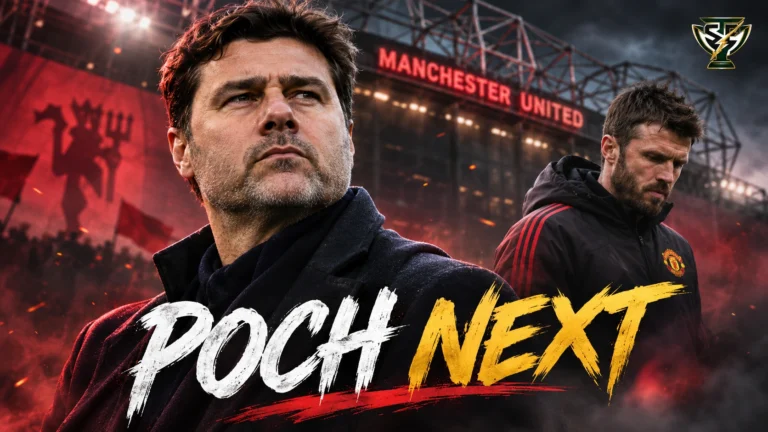
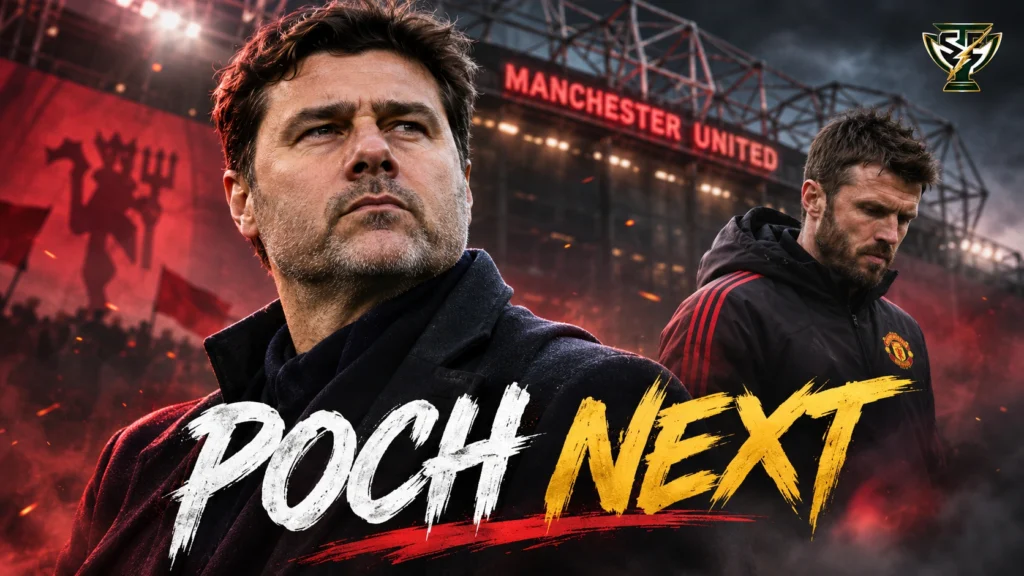
MANCHESTER, England, November 13, 2026: Manchester United have dismissed Michael Carrick after their worst Premier League start in 40 years and are closing in on an agreement to appoint United States men’s national team coach Mauricio Pochettino. The Argentine has emerged as the club’s preferred successor following negotiations involving United’s senior executives and U.S. Soccer, with a contractual release provision making an appointment possible despite his recent commitment to lead the Americans through the 2030 World Cup.
The proposed move for Pochettino to Manchester United has far-reaching consequences. Carrick departs fewer than six months after receiving a permanent contract, the Red Devils occupy the Premier League relegation zone, and the American national team could lose its head coach immediately after upcoming Concacaf Nations League matches against Haiti. United are working toward an appointment before their November 22 visit to Liverpool, but the club has not formally confirmed Pochettino as Carrick’s replacement.
Key Takeaways
- Manchester United have dismissed Michael Carrick after their worst Premier League start in 40 years and are closing in on an agreement to appoint United States men’s national team coach Mauricio Pochettino.
- The proposed move for Pochettino to Manchester United has far-reaching consequences.
- United won 12 of their remaining 17 Premier League matches, moving from seventh to third and securing qualification for the Champions League.
- Manchester United visit Liverpool at Anfield on November 22.
Key Information: Manchester United’s Managerial Change
| Development | Verified Position |
|---|---|
| Departing head coach | Michael Carrick |
| Carrick’s departure | Officially confirmed November 12 |
| Leading replacement | Mauricio Pochettino |
| Pochettino appointment | Advanced negotiations reported; official confirmation pending |
| Current employer | United States men’s national team |
| U.S. contract | Runs through 2030 |
| Reported compensation | Approximately £7 million to £7.5 million, not officially confirmed |
| Manchester United league position | 18th, eight points from ten matches |
| Next Premier League opponent | Liverpool, November 22 |
Why Manchester United Sacked Michael Carrick
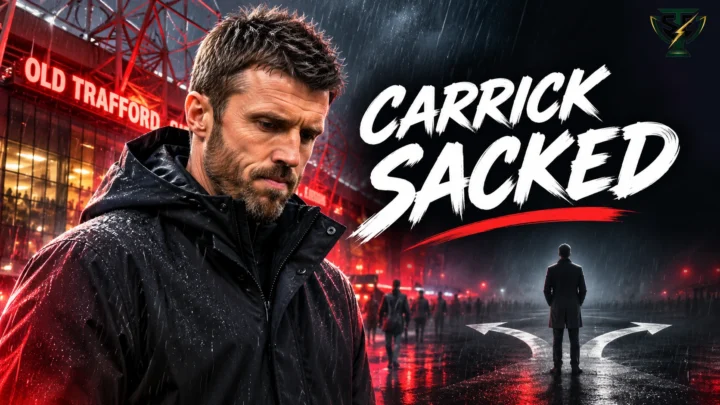
Carrick’s dismissal brings an abrupt end to one of the most dramatic managerial reversals in Manchester United’s modern history.
Story at a glance
Why Manchester United Sacked Michael Carrick
Carrick’s dismissal brings an abrupt end to one of the most dramatic managerial reversals in Manchester United’s modern history.
How Pochettino Became United’s Only Serious Choice
Although several managers were linked with Manchester United, the latest reporting suggests the club’s recruitment process became concentrated on one candidate.
Inside the Decision to Dismiss Carrick
The timing and handling of Carrick’s departure have attracted criticism.
What Manchester United Would Gain From Pochettino
Pochettino offers considerable experience of managing clubs facing high expectations and demanding competitive schedules.
The Three Immediate Problems Awaiting United’s Next Manager
The table identifies practical priorities rather than promising that one coaching appointment will resolve every weakness.
He returned as interim head coach in January following Ruben Amorim’s departure and delivered an immediate improvement.
United won 12 of their remaining 17 Premier League matches, moving from seventh to third and securing qualification for the Champions League.
That recovery convinced the club’s leadership to offer Carrick a two-year contract, keeping him at Old Trafford until 2028.
However, the improvement collapsed during the opening months of the new season.
United won just one of their first ten Premier League fixtures, drawing five and losing four.
Eight points from a possible 30 left them 18th, inside the relegation zone, after their worst opening ten-game sequence since the 1986-87 campaign.
The defensive record was particularly damaging.
United conceded 19 goals, an average of 1.9 per league match, while scoring 14.
Sunday’s extraordinary 4-4 draw against Aston Villa provided the final illustration of their inconsistency.
Carrick’s players recovered from two separate two-goal deficits, demonstrating determination and attacking ability. But conceding four times at Old Trafford reinforced concerns about the team’s defensive organization.
The club’s official statement confirming Carrick’s departure acknowledged his contribution to the previous season while explaining that the disappointing start had made a managerial change necessary.
United also confirmed that they intend to appoint a permanent successor quickly.
The contrast between Carrick’s successful rescue and his subsequent dismissal is examined in The Sports Encounter’s original analysis of his rebuilding project.
The question now is why an improvement strong enough to justify a permanent contract proved so difficult to sustain.
How Pochettino Became United’s Only Serious Choice
Although several managers were linked with Manchester United, the latest reporting suggests the club’s recruitment process became concentrated on one candidate.
Pochettino had been admired by United’s leadership for several years.
He was a leading candidate in 2022, when the club ultimately appointed Erik ten Hag.
United also considered him in 2024 after his departure from Chelsea, but neither side considered the timing suitable.
His subsequent appointment as United States coach appeared to remove him from the immediate market.
That impression strengthened when Pochettino signed a new American contract in August, extending his commitment through the 2030 World Cup.
However, the emergence of a contractual release provision changed the situation.
According to Associated Press reporting based on people familiar with the negotiations, United began the required checks once officials became aware that Pochettino’s contract contained a potential exit route.
The investigation also established that Aston Villa manager Unai Emery was highly regarded inside United.
Emery’s contractual position made him considerably more difficult to recruit, leaving Pochettino as the practical focus of the search.
United’s longstanding interest, combined with the potential release clause and Pochettino’s willingness to return to club management, created the conditions for the current negotiations.
That sequence matters because it challenges the impression that United dismissed Carrick and only afterward began searching for a replacement.
Instead, the club had already examined the contractual feasibility of its preferred candidate.
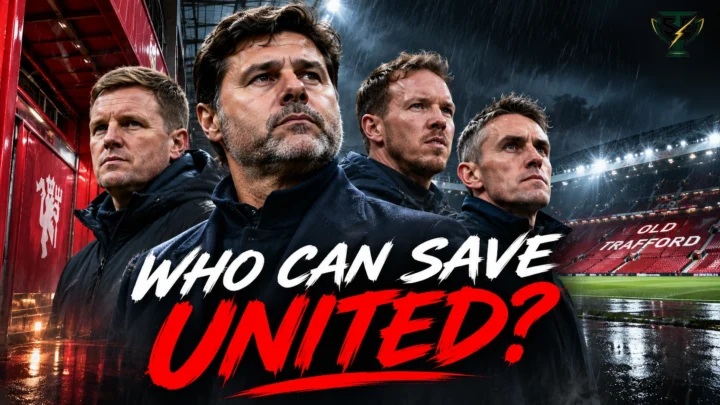
TSE’s earlier comparison of Pochettino, Eddie Howe, Julian Nagelsmann and other managerial candidates assessed their suitability before Carrick’s dismissal.
The latest developments show why Pochettino ultimately moved ahead of the alternatives.
Pochettino to Manchester United: The Decisive Negotiation Timeline
| Stage | Development | Importance |
|---|---|---|
| August | Pochettino signs U.S. contract through 2030 | Appointment initially appears difficult |
| Early November | United’s results trigger renewed managerial review | Carrick’s future becomes uncertain |
| November 11 | United formally approach U.S. Soccer, according to AP | Negotiations move beyond internal discussions |
| November 11 | United executives meet Jim Ratcliffe in Monaco | Recommendation to change manager is approved |
| November 12 | Carrick is informed and his departure confirmed | Vacancy becomes official |
| November 12–13 | Pochettino negotiations reach advanced stage | Appointment expected but not formally announced at reporting cutoff |
The timeline shows how recruitment considerations and Carrick’s dismissal developed alongside one another.
It does not establish that every contractual detail has been completed or that U.S. Soccer has formally released Pochettino.
Inside the Decision to Dismiss Carrick
The timing and handling of Carrick’s departure have attracted criticism.
Reports of his likely dismissal circulated before United formally informed him.
He continued carrying out his responsibilities, including supervising training on Wednesday, while discussions about his future remained unresolved.
According to AP’s reconstruction, chief executive Omar Berrada and director of football Jason Wilcox met minority owner Jim Ratcliffe in Monaco on Wednesday.
The meeting led to a recommendation that United change head coach.
Rather than informing Carrick by telephone, the executives returned to Manchester and communicated the decision in person on Thursday.
That explanation provides context for the delay without eliminating the legitimate concern that Carrick spent several days working under intense speculation about his future.
It also creates a further accountability question.
Berrada and Wilcox played important roles in the decision to appoint Carrick permanently. Less than six months later, they were involved in recommending his dismissal.
The club must explain internally how its assessment changed so dramatically and whether sufficient attention was paid to the underlying weaknesses of the squad.
Those concerns extend beyond one managerial appointment.
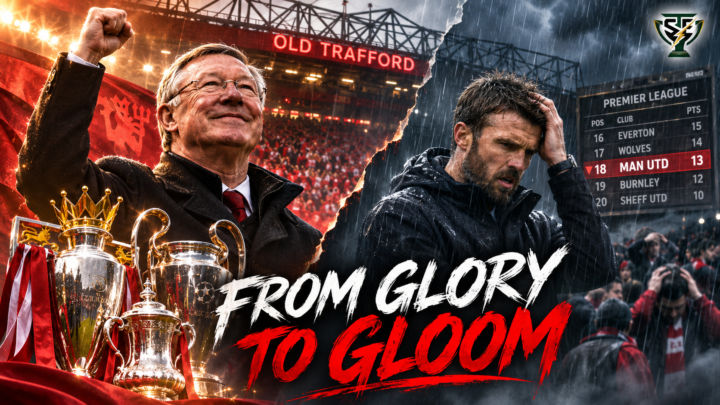
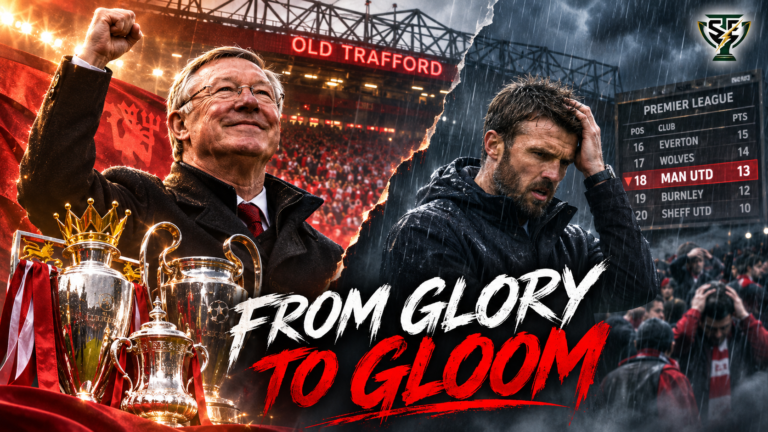
TSE’s historical investigation into Manchester United’s decline since Sir Alex Ferguson examined the repeated cycle of coaching changes, recruitment problems and short-lived recoveries.
Carrick’s departure adds another example to that record.
What Manchester United Would Gain From Pochettino
Pochettino offers considerable experience of managing clubs facing high expectations and demanding competitive schedules.
His Premier League career includes spells at Southampton, Tottenham Hotspur and Chelsea.
At Tottenham, he developed a team known for coordinated pressing, energetic attacking movement and the development of younger players.
He also guided Spurs to the 2019 Champions League final, although they lost to Liverpool.
At Paris Saint-Germain, he won the French league title and domestic honors.
His subsequent spell at Chelsea ended without a major trophy, despite improvement during the latter stages of the 2023-24 season.
The argument for appointing Pochettino is therefore based less on his trophy collection than on his experience of developing collective systems and improving players.
United urgently need those qualities.
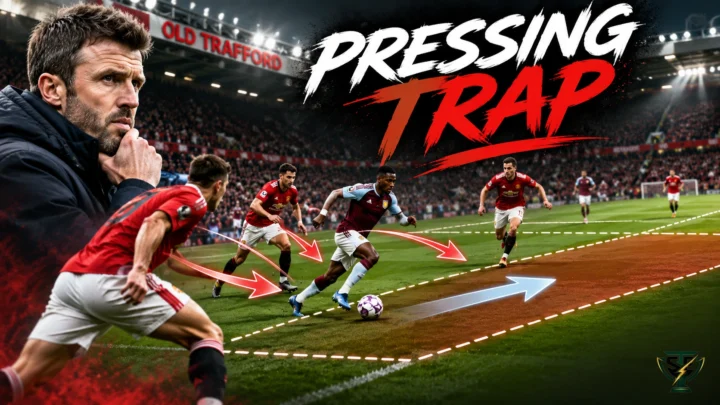
Their defensive organization has deteriorated, their pressing has lacked consistency and opponents have repeatedly exploited space during transitions.
Those weaknesses were apparent long before Carrick was dismissed.
TSE’s investigation into the early warning signs of Carrick’s struggling campaign identified problems involving midfield protection, pressing coordination, finishing and squad continuity.
Pochettino could introduce clearer roles and more demanding off-ball responsibilities.
However, the extent of any improvement would depend on available players, their physical preparation and the support he receives from the football department.
The Three Immediate Problems Awaiting United’s Next Manager
| Problem | Evidence | Practical Priority |
|---|---|---|
| Defensive exposure | 19 league goals conceded in ten games | Improve spacing and transition protection |
| Inconsistent results | One victory and eight points in ten games | Turn competitive performances into victories |
| Structural instability | Another short managerial tenure after a strong recovery | Align recruitment, coaching and long-term objectives |
The table identifies practical priorities rather than promising that one coaching appointment will resolve every weakness.
A more organized defensive structure could reduce the number of clear chances conceded.
Better game management could help United preserve leads and avoid relying on late comebacks.
But recruitment and player development require decisions extending beyond the head coach.
The difficulties facing that wider football operation were examined in TSE’s investigation into Manchester United’s recurring recruitment and leadership failures.
Pochettino’s appointment would become meaningful only if the club also addressed those structural concerns.
U.S. Soccer Faces the Loss of a Coach It Had Just Reappointed
The possibility of Pochettino leaving has created a separate problem for American soccer.
On August 3, U.S. Soccer announced a new agreement extending his contract through the 2030 World Cup.
The extension followed the United States’ performance at the 2026 World Cup, where the Americans reached the round of 16 before losing to Belgium.
Pochettino had been given responsibilities extending beyond the senior national team.
The agreement envisaged his involvement in youth development, coaching education and the broader technical structure of American soccer.
U.S. Soccer presented that commitment as part of a long-term development strategy.
The federation’s official announcement of Pochettino’s contract extension described those responsibilities and the planned continuity through the next World Cup.
His potential departure just three months later therefore raises issues beyond finding a replacement for the senior team.
U.S. Soccer must determine how to preserve the technical development plans associated with his appointment.
The federation would also need to assess the impact on coaching staff, recruitment of eligible players and preparations for upcoming international tournaments.
Why the American Players Have Reason to Be Concerned
United States striker Folarin Balogun was asked about the possibility of Pochettino leaving while preparing for the team’s Nations League matches against Haiti.
Balogun said he had not received confirmation of an appointment and indicated that he would prefer continuity.
His reaction was understandable.
The American squad had recently completed a World Cup campaign under Pochettino and was beginning another international cycle.
Key players, including Christian Pulisic, Weston McKennie and Balogun, had returned for the November fixtures.
An immediate coaching change could require them to adapt to new tactical instructions and selection expectations.
However, the squad has enough established international experience to continue competing during a transition.
The principal risk is disruption to preparation and technical continuity, not an automatic decline in performance.
What Happens to the Haiti Matches?
Pochettino is expected to remain in charge of the United States for its two upcoming Concacaf Nations League quarterfinal matches against Haiti.
The fixtures are scheduled for Saturday, November 14, and Tuesday, November 17.
That arrangement would allow him to complete the current international window before potentially taking over in Manchester.
It would also give U.S. Soccer a short period to begin contingency planning.
No successor has been formally appointed, and the federation has not issued a confirmed public transition timetable.
Any discussion of candidates must therefore be treated as speculation until supported by official statements or reliable reporting.
For Manchester United, allowing Pochettino to complete the Haiti fixtures would leave only a short preparation period before Liverpool.
That creates an immediate scheduling problem.
The new coach would need to assess players returning from international duty, establish his initial tactical priorities and prepare for one of English soccer’s most demanding fixtures.
Continue the Premier League Story
Can Pochettino Be Ready for Liverpool?
Manchester United visit Liverpool at Anfield on November 22.
The match is the club’s first Premier League fixture after the international break.
According to reports, United are working toward having Pochettino available to prepare the team before that game.
However, his arrival date and first training session have not been officially confirmed.
Even if he takes charge immediately after the Haiti fixtures, the preparation window would be limited.
That favors a pragmatic opening approach rather than an extensive tactical overhaul.
Pochettino could begin by improving defensive spacing, defining responsibilities during possession losses and simplifying the pressing structure.
Major changes to player roles may require more time.
The immediate objective would be to make United harder to break down while retaining enough attacking quality to threaten Liverpool.
The fixture will also provide an early test of the club’s decision to dismiss Carrick.
A difficult result would not automatically invalidate the appointment, but United’s position in the relegation zone leaves little room for a prolonged period of adjustment.
Why United’s Leadership Must Share Responsibility
The latest dismissal has intensified criticism of United’s ownership and football executives.
The Manchester United Supporters’ Trust argues that the club’s problems cannot be attributed primarily to successive managers.
Supporters have repeatedly expressed frustration with the Glazer family’s ownership and the football operation established under Jim Ratcliffe’s involvement.
The trust’s position reflects a wider concern about the frequency of managerial changes.
Carrick was appointed after producing an exceptional improvement. He was dismissed after a poor opening ten league games the following season.
That sequence raises questions about the criteria used to make permanent appointments and assess their progress.
The club must distinguish between a coach failing to implement an effective system and a squad whose construction prevents that system from working consistently.
Both circumstances can exist simultaneously.
The responsibility to make that judgment belongs to the wider football leadership, not solely the head coach.
The decisions surrounding Carrick also revive concerns first documented in TSE’s examination of Marcus Rashford’s return and Carrick’s management of established players.
Individual recovery stories can improve morale and performance, but they do not replace a coherent institutional strategy.
What We Know, What Is Reported and What Remains Unconfirmed
| Claim | Evidence Status | Editorial Treatment |
|---|---|---|
| Carrick has left Manchester United | Official club confirmation | Established fact |
| Pochettino is the leading replacement | Multiple independent reports | Strongly reported |
| United have approached U.S. Soccer | AP reporting from informed sources | Attributed reporting |
| Pochettino’s U.S. contract runs to 2030 | Official federation confirmation | Established fact |
| Release compensation is approximately £7m–£7.5m | Media reporting | Not officially confirmed |
| Pochettino will manage United against Liverpool | Expected under reported plans | Not guaranteed |
| United have officially appointed Pochettino | No official appointment announcement verified at reporting cutoff | Do not state as completed |
These distinctions matter because the negotiations are developing quickly.
An agreement in principle is not necessarily the same as an executed contract, and a prospective start date is not a confirmed appointment.
The Associated Press investigation into United’s pursuit of Pochettino provides further detail about the contractual discussions and managerial decision-making.
What the Pochettino to Manchester United Deal Would Ultimately Mean
Manchester United’s decision to dismiss Michael Carrick is complete. The potential appointment of Mauricio Pochettino is close, but the final official confirmation remains outstanding.
The significance of the move extends beyond Old Trafford.
United would acquire a coach with extensive Premier League experience and a reputation for developing collective systems.
U.S. Soccer would lose a manager it had recently committed to retaining through 2030, requiring a new plan for its senior team and potentially its wider technical development program.
Carrick’s departure also leaves United’s executives facing legitimate questions about how a highly successful short-term appointment became another failed permanent tenure.
The upcoming Liverpool fixture gives those issues immediate sporting consequences.
Pochettino would be expected to improve results quickly, but the club’s deeper weaknesses cannot be resolved by one appointment alone.
If Pochettino to Manchester United is finalized, the defining measure of success will not be the speed of the announcement or the stature of the incoming coach. It will be whether United finally create the conditions for a manager to build lasting improvement rather than repeating the cycle that ended Carrick’s tenure.