Key Takeaways
- Approximately 3.3 million people watched the decisive championship game on Saturday, October 31, according to preliminary audience figures reported November 3.
- The combined audience included USA Network and CNBC television viewers measured by Nielsen, alongside Peacock streaming consumption measured by Adobe Analytics.
- The earlier benchmark was approximately 3.25 million viewers for Game 3 of the 1999 WNBA Finals between the New York Liberty and Houston Comets.
- Golden State and Atlanta played seven games between October 17 and October 31.
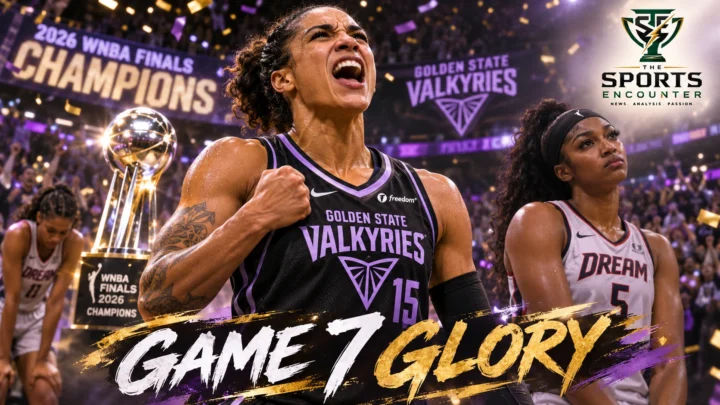
SAN FRANCISCO, United States, November 3, 2026: The Golden State Valkyries’ historic WNBA championship victory over the Atlanta Dream attracted approximately 3.3 million viewers across USA Network, CNBC and Peacock, making Saturday’s Game 7 the most-watched postseason game in league history based on preliminary audience figures. The October 31 winner-take-all contest at Chase Center ended with Golden State prevailing 68-63, as Finals MVP Gabby Williams scored 30 points to deliver the franchise’s first championship in only its second season. The audience surpassed the previous WNBA postseason television benchmark of approximately 3.25 million, established during the New York Liberty’s championship-deciding game against the Houston Comets in 1999.
The record extends beyond one extraordinary evening. The first best-of-seven WNBA Finals averaged approximately 1.89 million viewers across its seven games, exceeding the previous championship-series record of 1.5 million set during the 2024 Liberty-Minnesota Lynx Finals. That represents approximately 26% growth in average audience, despite several schedule changes and a controversial weekday afternoon Game 6. Golden State’s victory also delivered a compelling sporting conclusion to the league’s 30th season, with Williams overcoming a difficult first half to lead a championship comeback. The numbers suggest that demand for the WNBA’s biggest games is expanding, but they also raise a significant commercial question: how much larger could the audience become with more consistent scheduling and access to broadcast television?
WNBA Finals Game 7 Viewership: How Many People Watched Valkyries vs Dream?
Approximately 3.3 million people watched the decisive championship game on Saturday, October 31, according to preliminary audience figures reported November 3.
Story at a glance

WNBA Finals Game 7 Viewership: How Many People Watched Valkyries vs Dream?
Approximately 3.3 million people watched the decisive championship game on Saturday, October 31, according to preliminary audience figures reported November 3.
Every WNBA Finals 2026 Game Rating: How the Audience Built Toward Game 7
Golden State and Atlanta played seven games between October 17 and October 31.
Why the First Best-of-Seven WNBA Finals Produced a Record Audience
The 2026 season marked the first time the WNBA Finals used a best-of-seven format.
Gabby Williams Delivers a 30-Point Championship Performance Before 3.3 Million Viewers
The audience received a championship contest worthy of the occasion.
How Golden State Won a Championship in Just Its Second WNBA Season
Golden State’s victory was historic even before the television audience became public.
The combined audience included USA Network and CNBC television viewers measured by Nielsen, alongside Peacock streaming consumption measured by Adobe Analytics.
The figure is particularly significant because the game was not carried on NBC’s main broadcast network.
Instead, audiences needed access to the relevant cable channels or streaming service to watch Golden State’s championship victory.
Despite that distribution arrangement, Game 7 delivered a larger audience than any previously recorded WNBA postseason game.
The earlier benchmark was approximately 3.25 million viewers for Game 3 of the 1999 WNBA Finals between the New York Liberty and Houston Comets.
Golden State’s audience exceeded that mark by approximately 50,000 viewers, using the rounded 3.3 million preliminary figure.
That is a relatively narrow margin, making final audience confirmation important before treating the precise record difference as definitive.
The preliminary figures were reported by Front Office Sports in its November 3 audience analysis, citing Nielsen and Adobe Analytics measurements.
How Game 7 Compares With Previous WNBA Television Records
| Game | Date | Average Viewers | Historical Significance |
|---|---|---|---|
| New York Liberty vs Los Angeles Sparks | June 21, 1997 | 5.04 million | WNBA inaugural game; remains above the 2026 Game 7 audience |
| Charlotte Sting vs Phoenix Mercury | June 22, 1997 | 3.59 million | Another exceptionally large opening-weekend audience |
| Chicago Sky vs Indiana Fever | August 2026 | Approximately 3.31 million | Major modern regular-season audience benchmark |
| Golden State Valkyries vs Atlanta Dream, Game 7 | October 31, 2026 | Approximately 3.3 million | Preliminary all-time WNBA postseason viewership record |
| New York Liberty vs Houston Comets, Finals Game 3 | 1999 | Approximately 3.25 million | Previous postseason viewership record |
| 2024 WNBA All-Star Game | July 2024 | Approximately 3.4 million | Exhibition game, not included in postseason records |
The distinction between regular-season, postseason and exhibition audiences matters.
Game 7’s 3.3 million viewers do not make it the most-watched WNBA game of all time. The league’s opening weekend in 1997 produced larger audiences, while the 2024 All-Star Game also exceeded the reported Game 7 total.
However, the championship decider stands as the leading postseason audience in the available historical comparisons.
The exact ordering of recent games attracting approximately 3.3 million viewers also depends on final audience measurements and rounding.
Every WNBA Finals 2026 Game Rating: How the Audience Built Toward Game 7
Golden State and Atlanta played seven games between October 17 and October 31.
The series produced wide variations in audience size, reflecting differences in broadcast distribution, scheduling and competitive stakes.
Game 1 opened strongly with approximately 2.1 million viewers on NBC and Peacock, establishing a record audience for a WNBA Finals opener.
Game 2 fell to approximately 1.33 million, while Game 3 recovered to 1.71 million.
Game 4 attracted approximately 1.9 million, followed by 1.4 million for Game 5 and 1.5 million for Game 6.
Then came the winner-take-all finale.
The 3.3 million Game 7 audience was more than twice the reported audience for Game 6.
WNBA Finals 2026: Results, Dates and Television Audiences
| Game | Date | Result | Viewers | Series After Game |
|---|---|---|---|---|
| 1 | October 17 | Valkyries 68-64 Dream | 2.10 million | Golden State 1-0 |
| 2 | October 19 | Dream 79-65 Valkyries | 1.33 million | 1-1 |
| 3 | October 21 | Dream 97-71 Valkyries | 1.71 million | Atlanta 2-1 |
| 4 | October 24 | Valkyries 67-62 Dream | 1.90 million | 2-2 |
| 5 | October 26 | Valkyries 64-55 Dream | 1.40 million | Golden State 3-2 |
| 6 | October 29 | Dream 80-69 Valkyries | 1.50 million | 3-3 |
| 7 | October 31 | Valkyries 68-63 Dream | 3.30 million | Golden State wins 4-3 |
| Series average | Seven games | Golden State champions | 1.89 million | First best-of-seven Finals |
Audience figures are preliminary and rounded. The 1.89 million series average is consistent with the seven reported individual game averages.
The table reveals an important difference between championship interest and everyday viewing behavior.
Game 7 was not simply a slightly stronger version of Game 6. It delivered an audience approximately 120% larger.
The contrast suggests that the certainty of a championship being decided can generate substantially greater interest than an ordinary postseason game.
However, audience growth cannot be attributed exclusively to competitive stakes. Game 6 also suffered from an unusual weekday afternoon schedule, which makes a direct comparison imperfect.
The Sports Encounter previously covered the record-breaking 2.1 million audience for Game 1, when the championship series established an early indication of its commercial potential.
Why the First Best-of-Seven WNBA Finals Produced a Record Audience
The 2026 season marked the first time the WNBA Finals used a best-of-seven format.
Previously, the championship was decided through a shorter series.
The expanded structure created the possibility of a seventh game in which the title would be settled immediately.
Golden State and Atlanta ultimately produced precisely that outcome.
The first six games ended with the teams tied 3-3, setting up the kind of winner-take-all contest that major American sports leagues have long treated as a premium television event.
For the WNBA, this created an opportunity to demonstrate whether its audience would respond to the same competitive structure.
The preliminary Game 7 numbers suggest that viewers did respond.
But the results also highlight the importance of understanding how a longer Finals affects the total audience across an entire series.
2026 WNBA Finals vs Previous Championship Audience Benchmarks
| Audience Measure | 2024 Finals | 2026 Finals | Change |
|---|---|---|---|
| Championship matchup | New York Liberty vs Minnesota Lynx | Golden State Valkyries vs Atlanta Dream | Different finalists |
| Series length | Five games | Seven games | Two additional games |
| Average viewers per game | 1.50 million | 1.89 million | Approximately +26% |
| Estimated sum of game-average audiences | 7.50 million | 13.23 million | Approximately +76.4% |
| Deciding game | Game 5 | Game 7 | First winner-take-all Game 7 |
The 26% increase is calculated by comparing average audiences: 1.89 million minus 1.50 million, divided by 1.50 million.
The larger percentage increase in the sum of game-average audiences reflects both higher average viewership and two additional games.
It is important not to describe that sum as 13.23 million unique individuals. The same viewer may watch several games, meaning the sum of game averages counts repeat viewing across the series.
That measurement can be useful for understanding the total scale of televised game consumption, but it is not a reach or unique-audience statistic.
The figures support the argument that expanding the Finals created additional commercially valuable viewing opportunities. They do not, by themselves, prove how much incremental advertising revenue or profit the broadcaster earned.
Gabby Williams Delivers a 30-Point Championship Performance Before 3.3 Million Viewers
The audience received a championship contest worthy of the occasion.
Golden State defeated Atlanta 68-63 at Chase Center after entering halftime trailing 30-24.
Williams, who had been an important part of the Valkyries’ playoff run, produced the decisive individual performance.
She scored 30 points, grabbed three rebounds, recorded two assists, two steals and four blocks.
Her 30 points were particularly remarkable because she had scored only two in the first half.
Williams therefore scored 28 of her 30 points after halftime, accounting for almost 64% of Golden State’s 44 second-half points.
That contribution transformed the game.
With fewer than three minutes remaining, the teams were tied at 55-55.
Williams then made a crucial three-pointer as Golden State produced a 7-0 run that established separation late in the contest.
Atlanta attempted to respond, but Veronica Burton’s free throws helped secure the final result.
Williams was subsequently named WNBA Finals MVP.
The Sports Encounter’s complete Game 7 match report examines the comeback, the decisive possessions and the performances that delivered Golden State’s first championship.
Game 7: The Statistical Story Behind Golden State’s Comeback
| Measure | Verified Figure | Why It Matters |
|---|---|---|
| Final score | Valkyries 68-63 Dream | Golden State win first title |
| Halftime score | Atlanta lead 30-24 | Golden State trail by six |
| Golden State second-half points | 44 | Major offensive improvement after halftime |
| Gabby Williams total points | 30 | Game-high performance |
| Williams first-half points | 2 | Slow opening |
| Williams second-half points | 28 | Decisive championship contribution |
| Williams’ share of Golden State second-half scoring | 63.6% | Calculated as 28 divided by 44 |
| Score with under three minutes remaining | 55-55 | Championship still undecided |
| Late Golden State run | 7-0 | Creates decisive advantage |
Williams’ extraordinary second half highlights why the final game attracted attention beyond the novelty of its seven-game format.
Fans watching the contest saw a genuine comeback, a close finish and an individual performance that became part of franchise history.
Golden State had already demonstrated resilience during the playoffs, sweeping Las Vegas in the semifinals before overcoming Atlanta in seven games.
Earlier in the Finals, Atlanta’s Angel Reese delivered a major response after a difficult opening game. Our Game 2 report documented Reese’s 30-point performance and the competitive swing that followed.
Those changes in momentum helped establish a series in which neither team could assume victory.
The Golden State Valkyries’ official championship announcement confirms the final result, Williams’ Finals MVP award and the franchise’s historic achievement.
How Golden State Won a Championship in Just Its Second WNBA Season
Golden State’s victory was historic even before the television audience became public.
The Valkyries entered the WNBA as an expansion franchise in 2025.
They reached the playoffs in their first season and captured the championship in their second.
According to the team’s official announcement citing the Elias Sports Bureau, Golden State became the fastest expansion franchise across the major North American professional leagues to win a championship since 1967.
The achievement reflects more than one outstanding performance from Williams.
Coach Natalie Nakase built a team capable of defending effectively, finding contributions from different players and responding when games became difficult.
Veronica Burton played an important role in the team’s ball movement and perimeter defense.
Kiah Stokes provided rebounding and interior defensive protection, while Williams became the defining individual performer of the championship series.
The Sports Encounter’s pre-Finals tactical analysis examined how Golden State’s defensive structure and bench depth compared with Atlanta’s roster.
The championship demonstrated that the franchise had established an effective competitive identity remarkably quickly.
It also created a compelling commercial story.
An expansion team based in a major metropolitan market reached the championship stage, then won in dramatic fashion before a national television and streaming audience.
That combination is attractive to broadcasters and sponsors because it connects sporting success with a franchise capable of generating attention beyond its local supporters.
However, the financial value of Golden State’s championship cannot be calculated directly from the television audience alone.
Broadcast rights, sponsorship agreements, advertising inventory, subscription revenue and franchise valuation depend on additional commercial factors.
Why the WNBA Finals Schedule Created a Major Broadcasting Debate
The 2026 Finals were not played under entirely stable scheduling conditions.
Several games required venue or timing changes because Atlanta’s regular home arena, Gateway Center, could not accommodate the expected demand and scheduling requirements.
Games 3, 4 and 6 were moved to State Farm Arena, a much larger venue.
The difference in seating capacity was substantial.
Gateway Center accommodates approximately 3,500 spectators, while State Farm Arena can host approximately 17,000 for basketball events.
That created an opportunity for Atlanta to welcome more spectators, but the resulting schedule changes complicated the television presentation.
Game 6 was particularly controversial.
The contest was moved to a 12:30 p.m. Eastern Time start on Thursday, October 29.
A weekday afternoon is not an ideal viewing window for many working fans, especially for a potential championship-clinching game.
Despite the unusual timing, the contest attracted approximately 1.5 million viewers.
Atlanta won 80-69, extending the series to a seventh game.
The Sports Encounter previously examined the arena-capacity problem and Atlanta’s move to State Farm Arena, highlighting how the league’s growing popularity was testing existing venue arrangements.
What Did the Scheduling Changes Mean for Audience Access?
| Game | Venue | Main Viewing Platforms | Average Audience |
|---|---|---|---|
| Game 1 | Chase Center, San Francisco | NBC and Peacock | 2.10 million |
| Game 2 | Chase Center, San Francisco | USA Network, CNBC and Peacock | 1.33 million |
| Game 3 | State Farm Arena, Atlanta | USA Network, CNBC and Peacock | 1.71 million |
| Game 4 | State Farm Arena, Atlanta | NBC and Peacock | 1.90 million |
| Game 5 | Chase Center, San Francisco | USA Network, CNBC and Peacock | 1.40 million |
| Game 6 | State Farm Arena, Atlanta | USA Network and additional cable/streaming platforms | 1.50 million |
| Game 7 | Chase Center, San Francisco | USA Network, CNBC and Peacock | 3.30 million |
The comparison suggests that scheduling and distribution matter, but it does not isolate their exact effects.
For example, Games 1 and 4 aired on NBC, a broadly accessible broadcast network, while the other five games were carried through cable and streaming arrangements.
Yet Game 7 exceeded every other audience despite not airing on the main NBC network.
The stakes of a deciding championship game were clearly substantial.
Still, the data cannot establish how many additional viewers would have watched if Game 7 had aired on NBC.
Such a calculation would require more detailed audience modeling and knowledge of alternative programming, distribution and scheduling conditions.
Could a Better WNBA Broadcast Schedule Have Produced an Even Larger Game 7 Audience?
There is a reasonable argument that a championship game with broader television distribution could attract more viewers.
Broadcast networks generally provide greater access than channels requiring specific cable or streaming arrangements.
However, making that argument does not justify inventing an audience projection.
There is no verified basis for claiming Game 7 would have attracted four million, five million or any other specific audience on NBC.
The confirmed result is already significant: approximately 3.3 million viewers watched through the available platforms.
The more useful question for broadcasters is whether future Finals schedules can maximize accessibility without compromising venue availability, player recovery or competitive fairness.
The league’s 2026 experience suggests that those considerations need to be addressed together.
Atlanta’s arena changes demonstrated that physical attendance demand had outgrown the assumptions behind some existing venue arrangements.
The Game 6 controversy showed how a scheduling decision could affect fans’ ability to follow a championship series.
Game 7 demonstrated the level of interest that can emerge when the sporting stakes are highest.
These are valuable lessons for future media-rights planning, particularly as women’s professional basketball continues expanding its commercial position.
WNBA’s 2026 Regular Season Had Already Signaled a Major Television Breakthrough
The Finals ratings did not emerge in isolation.
The WNBA entered its postseason after a regular season that produced record national television reach and several strong audience performances.
According to the league’s official October 14 announcement, more than 90 million unique viewers watched WNBA coverage across national networks during the 2026 regular season.
Fifty-one games averaged at least one million viewers, compared with 19 during the previous season.
That represents an increase of approximately 168% in the number of million-viewer games.
ESPN’s WNBA coverage averaged 1.24 million viewers, a 32% increase.
ABC and CBS also delivered their most-watched WNBA seasons.
These figures establish that the league had already expanded its audience before Golden State’s championship run reached its conclusion.
The Sports Encounter examined the WNBA’s record-setting regular-season viewership and attendance before the Finals began.
How Much Did WNBA Television Audiences Grow in 2026?
| Audience Indicator | Previous Benchmark | 2026 Result | Change or Significance |
|---|---|---|---|
| Regular-season games averaging at least 1 million viewers | 19 in 2025 | 51 | Approximately +168% |
| National regular-season unique viewers | Not compared here | More than 90 million | League-reported record reach |
| ESPN average WNBA audience | Prior-season baseline | 1.24 million | +32% |
| WNBA Finals average audience | 1.50 million in 2024 | 1.89 million | Approximately +26% |
| Finals Game 1 audience | Previous Finals opener record | 2.10 million | New Finals Game 1 record |
| Finals Game 7 audience | Previous postseason high of approximately 3.25 million | Approximately 3.30 million | Preliminary postseason record |
The measures in this table are not interchangeable.
Unique viewers describe the number of different individuals reached during the regular season. Average game viewership measures the audience watching a particular telecast during its duration.
Similarly, the number of games exceeding one million viewers measures the frequency of large audiences, not the total number of distinct viewers.
Keeping those definitions separate is essential when assessing the WNBA’s commercial growth.
The WNBA’s official 30th-season growth report provides the league’s regular-season television, attendance and engagement figures.
What Does the Record Game 7 Audience Mean for WNBA Media Rights?
Television ratings are one of several factors that influence the value of sports media rights.
Broadcasters consider average audiences, the number of attractive live events, advertising demand, subscriber engagement and the ability to retain viewers over an extended season.
The 2026 Finals offer evidence that the WNBA can generate substantial audiences for championship basketball.
They also demonstrate that the league’s most valuable games may attract viewers who do not follow every regular-season contest.
That is not unusual in professional sport.
Major finals, elimination games and championship deciders often reach a broader audience because viewers understand that the result is immediate and consequential.
For the WNBA, the commercial challenge is turning that occasional attention into more consistent regular-season engagement.
The 51 million-viewer telecasts reported during the regular season suggest progress toward that objective.
But the league must also consider whether the growth is distributed widely across teams and markets or concentrated around particular athletes and major events.
That distinction matters when negotiating future broadcasting arrangements.
The Sports Encounter’s broader analysis of the global sports media-rights market explored how live sports audiences influence the business models of broadcasters and professional leagues.
The WNBA’s latest Finals provide another relevant example of why live championship events remain commercially attractive.
However, there is no verified evidence here establishing the precise additional advertising revenue or subscription income generated by Game 7.
Claims about commercial value should therefore distinguish demonstrated audience growth from financial outcomes that have not been disclosed.
Can Golden State Turn Its Championship Into a Lasting WNBA Audience?
Golden State’s second-season championship offers the league another potentially powerful long-term story.
Continue the NBA Story

The franchise has already demonstrated strong support in the Bay Area, with a prominent home venue, enthusiastic crowds and a championship roster.
Its Finals success could increase demand for tickets, merchandise, sponsorships and future broadcasts.
But sustaining that interest requires more than one successful postseason.
The organization must continue developing its roster, retaining important players and competing consistently.
Williams’ Finals MVP performance provides a recognizable sporting figure around whom supporters and broadcasters can build future narratives.
Burton, Stokes and the rest of the championship group contribute to a team identity that extends beyond a single star.
The Sports Encounter previously covered the defensive excellence of Gabby Williams and Angel Reese, highlighting two of the individuals who subsequently helped shape the Finals.
The franchise also operates in a market preparing to host additional major women’s basketball events.
San Francisco has been selected to host the 2027 WNBA All-Star Game, a development discussed in our report on the event coming to the Bay Area.
That combination of a championship, strong local interest and another high-profile event creates an opportunity to strengthen the franchise’s position.
Nevertheless, television viewership from one Finals series cannot establish future franchise valuation or guarantee sustained attendance growth.
Atlanta Dream’s Finals Run Also Deserves Commercial Recognition
Golden State’s championship naturally dominates the headlines, but Atlanta contributed significantly to the seven-game drama.
The Dream forced the series to a deciding contest after winning Game 6 at State Farm Arena.
Angel Reese, Allisha Gray and Rhyne Howard gave Atlanta multiple offensive options throughout the series.
The team’s postseason run also created a compelling story for a franchise trying to establish itself among the league’s leading contenders.
Atlanta’s ability to fill a larger arena during the championship series demonstrated demand beyond the capacity of its regular home venue.
That raised questions about how the organization should approach future high-demand games.
The Sports Encounter previously reported on rising ticket prices for the Valkyries-Dream Finals, an early indication that fan interest was extending beyond the television audience.
The franchise’s next challenge is converting that postseason attention into sustained support and continued competitive success.
Reaching the Finals is an important achievement, but maintaining the level required to challenge for championships creates additional roster and business demands.
Why the 2026 WNBA Finals Could Become a Turning Point
The 2026 Finals brought together several developments that rarely align so clearly.
The WNBA introduced a best-of-seven championship format for the first time.
Two franchises seeking their first titles reached the Finals.
Golden State had the opportunity to win a championship in only its second season.
Atlanta forced the series into a decisive seventh game.
Williams delivered an outstanding individual performance to secure the championship.
And approximately 3.3 million viewers watched the conclusion.
None of those developments alone explains the entire ratings increase.
Together, however, they demonstrate how competitive tension, recognizable players and a compelling championship narrative can attract substantial national attention.
The next test for the WNBA will be ensuring that future seasons provide consistent scheduling, accessible viewing options and enough competitive storylines to sustain interest beyond a single championship event.
The 2026 Finals have established an impressive benchmark.
But the league’s broader objective should be to make audiences of this scale less unusual, while preserving the special appeal of games in which a championship is on the line.
For Golden State, the achievement is already complete: a first championship, a Finals MVP performance from Williams and a Game 7 victory that drew an extraordinary audience.
For the WNBA, the commercial opportunity is only beginning.
WNBA Finals 2026 Viewership: Frequently Asked Questions
How many viewers watched WNBA Finals Game 7 in 2026?
Approximately 3.3 million viewers watched Golden State defeat Atlanta in Game 7 on October 31, according to preliminary Nielsen television and Adobe Analytics streaming figures.
Was Game 7 the most-watched WNBA game ever?
No. The league’s inaugural weekend in 1997 produced larger audiences. However, the preliminary 3.3 million audience established a new WNBA postseason viewership benchmark.
What was the previous WNBA playoff viewership record?
The previous benchmark was approximately 3.25 million viewers for the New York Liberty’s championship-deciding Game 3 against the Houston Comets in the 1999 WNBA Finals.
How many people watched the entire 2026 WNBA Finals on average?
The seven-game championship series averaged approximately 1.89 million viewers per game, the highest reported Finals average in league history.
How much did WNBA Finals viewership increase compared with 2024?
The average audience increased from approximately 1.50 million in the 2024 Finals to 1.89 million in 2026, representing growth of approximately 26%.
Who won the 2026 WNBA championship?
The Golden State Valkyries defeated the Atlanta Dream 4-3 in the best-of-seven Finals, securing their first championship in their second WNBA season.
Who was the 2026 WNBA Finals MVP?
Gabby Williams won Finals MVP after averaging 19.6 points and 2.6 steals per game during the championship series. She scored 30 points in Game 7.
What was the final score of WNBA Finals Game 7?
Golden State defeated Atlanta 68-63 at Chase Center in San Francisco on October 31, 2026.
Where was WNBA Finals Game 7 broadcast?
Game 7 aired across USA Network and CNBC, with streaming available on Peacock. The preliminary audience measurement combined television and digital viewership.
Why was WNBA Finals Game 6 played on a Thursday afternoon?
Game 6 was moved to a 12:30 p.m. Eastern Time start because of venue and scheduling complications involving Atlanta’s use of State Farm Arena. The unusual window generated criticism from fans concerned about accessibility.
How many WNBA regular-season games attracted at least one million viewers in 2026?
Fifty-one nationally televised games averaged at least one million viewers during the regular season, compared with 19 in 2025, according to the WNBA’s official report.
Are the 3.3 million Game 7 ratings final?
The November 3 reports described the audience as preliminary. Final Nielsen and Adobe Analytics measurements should be checked for any subsequent revisions before the precise figure is treated as definitive.