Key Takeaways
- The Argentine Football Association has confirmed two home friendlies during the November international window.
- The 28-player squad combines established World Cup winners with several footballers seeking to establish themselves in the senior national team.
- Argentina experienced another defining transition after Diego Maradona’s international career ended in 1994.
- The longer-term objective is the 2030 FIFA World Cup.
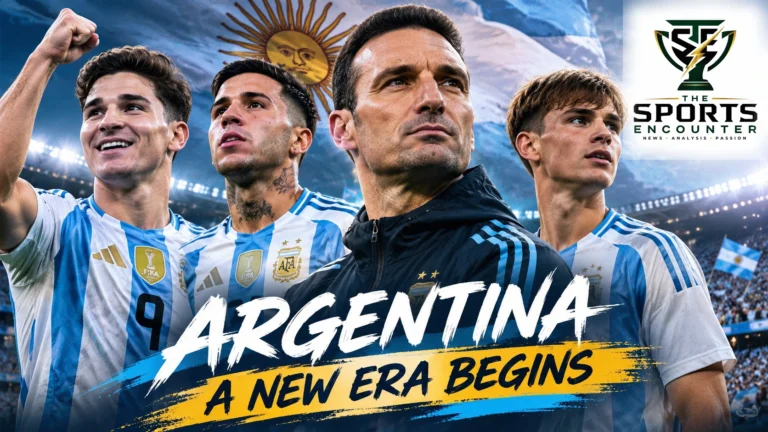
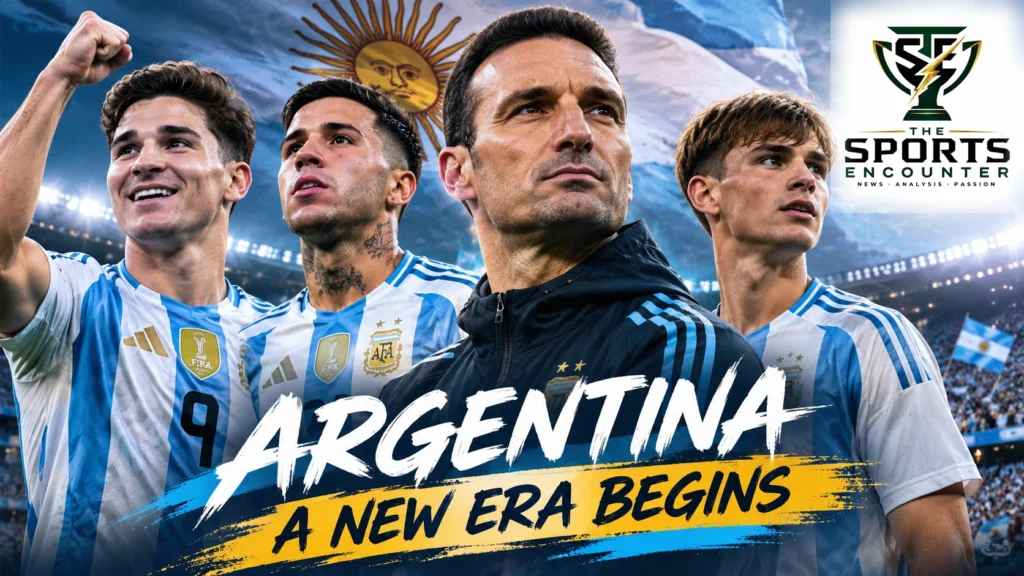
BUENOS AIRES, Argentina, November 3, 2026: Lionel Messi has gone, and Argentina’s first squad without its greatest modern footballer offers an early glimpse of how Lionel Scaloni intends to rebuild the national team. The World Cup-winning coach named 28 players on Tuesday for November friendlies against Uruguay and Costa Rica, handing Chelsea defender Aaron Anselmino his first senior call-up while recalling Gonzalo Montiel and Mariano Troilo. Rodrigo De Paul and Giovani Lo Celso have been omitted, Lautaro Martínez and Cristian Romero are unavailable through injury, and goalkeeper Emiliano Martínez has been selected despite a reported fractured jaw. The decisions signal the beginning of a demanding transition following Messi’s international farewell.
The most revealing part of Scaloni’s selection is the balance between continuity and change. Julián Álvarez, Alexis Mac Allister and Enzo Fernández remain central to Argentina’s plans, while Nico Paz, Matías Soulé, Franco Mastantuono and Thiago Almada provide younger attacking options. Yet replacing Messi’s influence involves much more than finding another playmaker. Argentina must redistribute creative responsibility, establish a new leadership structure and prepare for the 2030 World Cup without the player who guided them to the 2022 title and another final in 2026. The Uruguay friendly at La Bombonera on November 13 will provide the first competitive indication of Scaloni’s preferred direction.
Argentina Squad November 2026: What Has Lionel Scaloni Announced?
The Argentine Football Association has confirmed two home friendlies during the November international window. Argentina will face Uruguay in Buenos Aires before meeting Costa Rica in Córdoba.
Story at a glance
Argentina Squad November 2026: What Has Lionel Scaloni Announced?
The Argentine Football Association has confirmed two home friendlies during the November international window. Argentina will face Uruguay in Buenos Aires before meeting Costa Rica in Córdoba.
Argentina’s Full 28-Man Squad for Uruguay and Costa Rica
Scaloni has selected four goalkeepers, nine defenders, 12 players classified here across midfield and attacking midfield, and three central-forward options. The positional groupings reflect the published squad list and do not establish where individual players will operate in either friendly.
Why Is Aaron Anselmino’s First Argentina Call-Up Important?
Aaron Anselmino is among the clearest examples of Scaloni looking beyond the established international hierarchy.
Why Are Rodrigo De Paul and Giovani Lo Celso Missing?
The omissions of Rodrigo De Paul and Giovani Lo Celso are among the most significant decisions in the squad.
What Has Changed Since Argentina’s 2026 World Cup Squad?
Comparing the November selection with the World Cup squad reveals how rapidly Argentina’s international hierarchy is evolving.
The 28-player squad combines established World Cup winners with several footballers seeking to establish themselves in the senior national team.
| Squad Detail | Information |
|---|---|
| Head coach | Lionel Scaloni |
| Squad announced | November 3, 2026 |
| Total players | 28 |
| Goalkeepers | 4 |
| Defenders | 9 |
| Midfielders and attacking midfielders | 12 |
| Listed central forwards | 3 |
| First senior call-up | Aaron Anselmino |
| Notable returns | Gonzalo Montiel, Mariano Troilo |
| Notable omissions | Rodrigo De Paul, Giovani Lo Celso |
| Injury-related absences | Lautaro Martínez, Cristian Romero |
| Next matches | Uruguay, November 13; Costa Rica, November 17 |
The official Argentine Football Association website carries the latest national-team announcements, including the November squad.
These friendlies are not qualifying fixtures. They offer an opportunity to assess new combinations, establish roles and evaluate players before the next major competitive cycle.
Argentina’s Full 28-Man Squad for Uruguay and Costa Rica
Scaloni has selected four goalkeepers, nine defenders, 12 players classified here across midfield and attacking midfield, and three central-forward options. The positional groupings reflect the published squad list and do not establish where individual players will operate in either friendly.
| Position | Player | Club |
|---|---|---|
| Goalkeeper | Emiliano Martínez | Chelsea |
| Goalkeeper | Gerónimo Rulli | Manchester City |
| Goalkeeper | Juan Musso | Atlético Madrid |
| Goalkeeper | Santiago Beltrán | River Plate |
| Defender | Gonzalo Montiel | River Plate |
| Defender | Agustín Giay | Palmeiras |
| Defender | Aaron Anselmino | Chelsea |
| Defender | Mariano Troilo | Parma |
| Defender | Leonardo Balerdi | Roma |
| Defender | Lisandro Martínez | Manchester United |
| Defender | Facundo Medina | Bayer Leverkusen |
| Defender | Nicolás Tagliafico | Lyon |
| Defender | Román Vega | Zenit Saint Petersburg |
| Midfield | Ezequiel Fernández | Bayer Leverkusen |
| Midfield | Máximo Perrone | Como |
| Midfield | Exequiel Palacios | Ipswich Town |
| Midfield | Valentín Barco | Chelsea |
| Midfield | Alexis Mac Allister | Liverpool |
| Midfield | Enzo Fernández | Manchester City |
| Attacking midfield | Nico Paz | Como |
| Attacking midfield | Matías Soulé | Roma |
| Attacking midfield | Franco Mastantuono | Fiorentina |
| Wide midfield | Giuliano Simeone | Atlético Madrid |
| Wide attack | Gianluca Prestianni | Benfica |
| Attacking midfield | Thiago Almada | River Plate |
| Forward | José Manuel López | Palmeiras |
| Forward | Santiago Castro | Roma |
| Forward | Julián Álvarez | Atlético Madrid |
The squad contains multiple versatile players who can operate in more than one tactical position. That flexibility could become particularly valuable as Scaloni experiments with attacking arrangements previously structured around Messi.
It also means that the number of conventional strikers should not be interpreted as the total number of players capable of scoring goals or operating across Argentina’s front line.
Why Is Aaron Anselmino’s First Argentina Call-Up Important?
Aaron Anselmino is among the clearest examples of Scaloni looking beyond the established international hierarchy.
The 21-year-old Chelsea defender has earned his first senior Argentina call-up at a moment when the team is assessing its long-term defensive options.
His selection is especially interesting because Cristian Romero, one of Argentina’s most influential central defenders, is unavailable through injury.
Anselmino’s inclusion does not automatically make him Romero’s direct replacement. Argentina have other experienced defensive options, including Lisandro Martínez, Leonardo Balerdi and Facundo Medina.
Nevertheless, the November window offers Anselmino an opportunity to train with senior internationals, understand Scaloni’s demands and potentially make his international debut.
The distinction matters because international transitions rarely depend on one dramatic replacement. Successful national teams develop several players capable of handling the same responsibilities.
Why Mariano Troilo and Gonzalo Montiel Have Returned
Mariano Troilo’s return provides another defensive option. The Parma player has previously been involved in Argentina’s setup but has yet to establish himself through regular senior appearances.
Montiel brings a different kind of value.
The River Plate defender was part of Argentina’s 2022 World Cup-winning team and converted the decisive penalty in the final shootout against France.
His experience could help Scaloni manage a transitional squad containing players with significantly less international exposure.
Montiel’s return also reinforces an important feature of Argentina’s rebuilding process: younger players are being introduced alongside footballers who already understand the team’s championship culture.
Why Are Rodrigo De Paul and Giovani Lo Celso Missing?
The omissions of Rodrigo De Paul and Giovani Lo Celso are among the most significant decisions in the squad.
De Paul was one of Messi’s closest on-field allies during Argentina’s most successful modern period. His running, defensive coverage and willingness to operate around Messi helped balance the team’s midfield.
Lo Celso offered different qualities, including technical control, passing combinations and the ability to operate between midfield and attack.
Neither player appears in the November selection.
Their absences do not establish permanent international retirement or confirm that Scaloni has closed the door on future recalls.
They do, however, create room for younger midfielders to demonstrate whether Argentina can function without several of the relationships that supported Messi.
The Sports Encounter previously examined this problem in our analysis of how Argentina could rebuild after Messi’s retirement.
The November squad offers the first concrete selection evidence against which those earlier tactical possibilities can be evaluated.
What Has Changed Since Argentina’s 2026 World Cup Squad?
Comparing the November selection with the World Cup squad reveals how rapidly Argentina’s international hierarchy is evolving.
Messi and Nicolás Otamendi have retired from national-team football. De Paul and Lo Celso are omitted, while Romero and Lautaro Martínez are unavailable through injury.
At the same time, younger players are receiving opportunities alongside established performers.
| Player | 2026 World Cup Context | November 2026 Status |
|---|---|---|
| Lionel Messi | Captain and primary attacking creator | Retired from international football |
| Nicolás Otamendi | Experienced central defender | Retired from international football |
| Rodrigo De Paul | Established midfield presence | Not selected |
| Giovani Lo Celso | Experienced midfield option | Not selected |
| Cristian Romero | Leading central defender | Unavailable through injury |
| Lautaro Martínez | Senior center-forward option | Unavailable through injury |
| Emiliano Martínez | Established goalkeeper | Selected, fitness assessment pending |
| Gonzalo Montiel | World Cup squad member | Recalled after previous omission |
| Aaron Anselmino | Outside World Cup squad | First senior call-up |
| Mariano Troilo | Outside World Cup squad | Returns to senior selection |
The comparison is grounded in the AFA’s official 2026 World Cup squad announcement and the November selection.
The biggest change is structural rather than numerical.
Argentina still possess experienced players in major European leagues. What they have lost is the established relationship between Messi, his supporting midfielders and the attacking players who learned to anticipate his decisions.
Rebuilding those connections may prove more demanding than simply identifying the next talented player to wear the No. 10 shirt.
Emiliano Martínez Is Selected, but Will He Be Fit to Play?
Emiliano Martínez’s inclusion comes with an important qualification.
The goalkeeper reportedly suffered a fractured jaw while playing for Chelsea in October. His fitness will be assessed before the November fixtures.
Selection therefore should not be confused with medical clearance to play.
Martínez remains a significant figure in Argentina’s recent history. His performances at the 2022 World Cup helped deliver the country’s third title, and his saves contributed to another deep tournament run in 2026.
In the 2026 World Cup final against Spain, Martínez kept Argentina competitive for much of the contest before Ferran Torres scored in extra time.
The Sports Encounter’s report on Spain’s victory over Argentina in the World Cup final detailed his contribution and the pressure Argentina faced.
If Martínez cannot play against Uruguay or Costa Rica, Scaloni has Gerónimo Rulli, Juan Musso and Santiago Beltrán available in the squad.
No definitive recovery timetable should be inferred from Martínez’s selection.
Who Will Replace Lionel Messi as Argentina’s Main Creator?
This is the central tactical question facing Scaloni.
Messi’s influence covered several functions at once. He received possession between opposition midfield and defense, dictated attacking tempo, produced final passes, scored goals and forced defenders to adjust their positioning around him.
Argentina are unlikely to transfer all those responsibilities to one player.
Nico Paz, Thiago Almada, Matías Soulé and Franco Mastantuono are among the players capable of contributing creatively, while Mac Allister and Enzo Fernández can influence the team’s progression from deeper positions.
Scaloni must decide how to distribute those functions without weakening the team’s balance.
| Responsibility | Potential Options | Key Tactical Question |
|---|---|---|
| Central chance creation | Nico Paz, Thiago Almada | Who consistently finds space between defensive lines? |
| Progressive midfield passing | Enzo Fernández, Alexis Mac Allister | Can Argentina advance the ball without relying on Messi dropping deep? |
| Right-sided creativity | Matías Soulé, Franco Mastantuono | Who supplies penetration and final passes from the right? |
| Pressing and attacking movement | Julián Álvarez, Giuliano Simeone | Can collective movement create chances without one dominant playmaker? |
| Penalty-area finishing | Julián Álvarez, José Manuel López, Santiago Castro | Who converts opportunities consistently? |
| Attacking set pieces | Almada, Paz, Fernández, other selected specialists | Who takes responsibility for free kicks and deliveries? |
These are potential tactical roles, not confirmed starting positions or an announced succession plan.
Could Nico Paz Become Argentina’s New No. 10?
Nico Paz is one of the most intriguing candidates for greater creative responsibility.
The Como midfielder combines technical ability, close control and the confidence to receive possession in crowded attacking areas.
Those qualities make him a logical option when Argentina need a player operating between the lines.
Yet comparison with Messi requires restraint.
Messi concluded his international career with extraordinary records and an influence developed across two decades. Paz should be evaluated on his own progression and suitability within Scaloni’s team rather than being expected to reproduce that legacy.
The same applies to Almada, Soulé and Mastantuono.
Argentina’s advantage is that they have several players capable of contributing creatively. The challenge is creating a structure in which those abilities complement one another.
Why Julián Álvarez Could Become Argentina’s Most Important Forward
Julián Álvarez is among the most experienced attacking players included in the November squad.
His ability to press, move across the front line and attack space gives Scaloni several tactical options.
Without Messi, Álvarez may be asked to take greater responsibility for initiating the press, connecting midfield with attack and finishing chances.
He has already demonstrated his capacity to influence major international matches.
During Argentina’s 2026 World Cup quarterfinal against Switzerland, Álvarez scored a decisive extra-time goal as the defending champions won 3-1.
The Sports Encounter’s report on Argentina’s quarterfinal victory over Switzerland examined how his strike helped resolve a tense knockout encounter.
With Lautaro Martínez unavailable, the November friendlies also offer opportunities for José Manuel López and Santiago Castro to compete for attacking roles.
Their inclusion may help Scaloni assess combinations that could become important during the next international cycle.
Argentina Must Replace Messi’s Leadership as Well as His Goals
The captaincy question is more complicated than assigning an armband.
Messi’s authority developed through extraordinary performances, years of international disappointment and eventual championship success.
He led Argentina through the 2022 World Cup triumph, the 2024 Copa América title and another World Cup final in 2026.
The Sports Encounter documented his international retirement in our report on the end of his historic Argentina career.
His farewell subsequently took place against Benin at the Estadio Monumental on October 6.
That final appearance gave Argentine supporters an opportunity to celebrate the player who had become the emotional center of their national team.
Our coverage of the planned farewell at the Monumental explained its significance after the disappointment of the World Cup final.
Argentina now face a different leadership model.
Mac Allister, Fernández, Álvarez, Lisandro Martínez and other experienced internationals may need to assume greater collective responsibility.
Emiliano Martínez and Romero remain influential personalities, although their immediate availability presents complications.
The new captaincy hierarchy has not been conclusively established by the squad announcement.
How Argentina’s 2026 World Cup Campaign Explains the Challenge
Argentina’s last World Cup illustrated both the strengths of Scaloni’s system and its continued reliance on Messi.
The national team reached the final despite encountering considerable resistance during the knockout rounds.
Against Switzerland, Álvarez delivered the decisive extra-time breakthrough.
Against England, Messi created two late goals as Argentina overturned a 1-0 deficit to reach the final.
The Sports Encounter’s match report on Argentina’s semifinal comeback against England reconstructed how Enzo Fernández and Lautaro Martínez completed the turnaround.
That semifinal provides an especially revealing example of what Argentina must now replace.
Messi created the opening for Fernández’s equalizer before delivering the cross for Lautaro’s stoppage-time winner.
His ability to turn possession into decisive chances remained central to Argentina’s progress even at 39.
A separate tactical analysis of England’s semifinal collapse examined how Argentina’s sustained pressure eventually overwhelmed their opponents.
The lesson for Scaloni is clear: Argentina have players capable of scoring decisive goals, but they must develop reliable mechanisms for creating those opportunities without Messi’s final pass.
Are Argentina’s Defensive Problems Bigger Than Their Attacking Concerns?
The absence of Cristian Romero and uncertainty around Emiliano Martínez create another challenge.
Romero has been central to Argentina’s defensive organization, while Martínez has provided experience and authority in goal.
Scaloni must now assess whether the younger defensive options are ready to assume greater responsibility.
Anselmino, Troilo, Balerdi and Medina provide alternatives alongside the more experienced Lisandro Martínez and Tagliafico.
The team’s World Cup campaign also demonstrated the importance of maintaining defensive discipline under pressure.
Against Spain, Argentina were reduced to 10 players before ultimately conceding the decisive extra-time goal.
The tournament’s aftermath brought further disciplinary consequences.
The Sports Encounter’s report on FIFA’s sanctions following the World Cup final examined how the disciplinary proceedings affected several Argentine players.
Those developments reinforce the importance of developing depth and discipline throughout the squad.
They should not, however, be confused with the currently reported injury-related absences of Romero and Lautaro Martínez.
Argentina vs. Uruguay and Costa Rica: Confirmed November 2026 Friendlies
The November international window gives Scaloni two matches on home soil.
| Date | Fixture | Venue | Status |
|---|---|---|---|
| November 13, 2026 | Argentina vs. Uruguay | Estadio Alberto J. Armando (La Bombonera), Buenos Aires | Confirmed friendly |
| November 17, 2026 | Argentina vs. Costa Rica | Estadio Mario Alberto Kempes, Córdoba | Confirmed friendly |
The AFA’s official November friendly announcement confirms both opponents, dates and stadiums.
Uruguay should provide a demanding early test because of the historical rivalry and the physical intensity associated with matches between the South American neighbors.
Costa Rica presents a different opportunity to assess Argentina’s attacking structure and squad rotation.
Neither result will provide a complete verdict on the post-Messi transition.
Friendlies can reveal combinations, player readiness and tactical intentions, but the pressures of competitive tournament football are different.
What Should Supporters Watch Against Uruguay?
The Uruguay fixture should offer the clearest early view of Scaloni’s preferred balance between established players and emerging talent.
Five questions deserve particular attention.
First, who occupies the creative spaces Messi previously controlled? Paz, Almada and Soulé offer different interpretations of that role. Their positioning will reveal whether Scaloni prefers one primary creator or a more distributed attacking system.
Second, how do Fernández and Mac Allister divide midfield responsibility? Without De Paul and Lo Celso, the established pair may have to combine defensive coverage with more progressive passing duties.
Third, who leads the press? Álvarez provides energy and movement, but the entire front line must coordinate if Argentina intend to win the ball higher up the field.
Fourth, how does the defense function without Romero? The central-defensive partnerships and defensive transitions will be particularly revealing.
Finally, who takes responsibility when the match becomes difficult? Argentina have been accustomed to Messi providing composure and decisive quality. That responsibility now belongs to the collective.
Could Scaloni Change Argentina’s Formation Without Messi?
Scaloni has several possible tactical options.
A 4-3-3 could provide width while allowing Álvarez to lead the attack.
A 4-2-3-1 could give Paz or Almada a more defined creative role behind a striker.
A 4-4-2 or another two-forward arrangement could become more attractive when Lautaro Martínez returns from injury.
None of these formations has been confirmed for the November fixtures.
The decision depends on player availability, training performances, opposition characteristics and Scaloni’s assessment of his midfield options.
Rather than searching for a direct Messi replacement, Argentina may ultimately develop a system that distributes attacking responsibility more evenly.
How Does This Squad Compare With Argentina’s Previous Generational Transition?
Argentina experienced another defining transition after Diego Maradona’s international career ended in 1994.
For years, creative players were measured against the expectations established by one of football’s greatest figures.
Messi eventually emerged as a different kind of genius, but the comparisons created pressures that extended far beyond his own performances.
Repeating that pattern with Paz, Mastantuono or another young player would be unnecessary and potentially counterproductive.
Argentina now possess an advantage that earlier generations did not always enjoy.
The current national team contains several players who have already experienced major international success.
Mac Allister, Fernández, Álvarez and others know what Scaloni demands and understand the competitive culture established during the championship years.
The Sports Encounter’s comprehensive examination of Messi’s career, records and legacy illustrates why his achievements should be understood in their own historical context.
The next generation needs a credible team identity rather than a new superstar expected to carry the weight of Messi’s career.
What Is Argentina Building Toward After the 2026 World Cup?
The longer-term objective is the 2030 FIFA World Cup.
Argentina will enter that tournament without Messi, who retired after helping the country reach the 2026 final.
The November selection represents an early stage of that rebuilding process.
Several players in the squad should be approaching or within their prime years by 2030.
Álvarez will be 30, Fernández 29, Mac Allister 31, and younger players such as Paz and Mastantuono will have had additional seasons to develop.
Age alone cannot predict whether a player will remain healthy, retain form or earn selection four years from now.
Nevertheless, Argentina possess a plausible foundation for another competitive international cycle.
The challenge is turning individual potential into an effective collective structure.
The importance of managing such transitions was evident even before Messi retired. Our earlier analysis of the uncertainty surrounding Messi’s international future examined why Argentina could not postpone the development of younger players indefinitely.
That uncertainty has now ended.
What Would Count as a Successful November for Scaloni?
Winning both friendlies would be encouraging, but the results alone should not determine how the squad is judged.
A successful window would provide clearer answers about several areas of the team.
Scaloni needs to identify players capable of operating between midfield and attack, establish reliable defensive partnerships, evaluate goalkeeper options and begin building a leadership structure independent of Messi.
The younger players also need meaningful opportunities rather than merely being included on a squad list.
Anselmino’s selection becomes more informative if he receives minutes and demonstrates how he handles international-level pressure.
The same principle applies to Paz, Soulé, Mastantuono and the other developing players.
Not every prospect needs to become an immediate starter.
The important question is whether Argentina leave the window with a clearer understanding of which combinations can serve the team over the coming years.
Argentina’s New Era Begins With Selection Decisions, Not a Search for Another Messi
Scaloni’s first squad after Messi offers a revealing mixture of familiarity and experimentation.
The midfield retains established winners. Álvarez provides an experienced attacking reference. Montiel returns with championship knowledge, while Anselmino and other younger players receive opportunities to establish themselves.
Yet several important uncertainties remain.
Romero and Lautaro Martínez are injured. Emiliano Martínez’s fitness requires assessment. De Paul and Lo Celso are absent, and Argentina have not yet established a settled replacement for Messi’s creative and leadership responsibilities.
The two November friendlies will not resolve every question.
They should, however, reveal how Scaloni intends to begin answering them.
Argentina spent more than two decades discovering what was possible with Lionel Messi. The next chapter begins by discovering what this generation can achieve without him.
Continue the Soccer Story
 MLSMessi’s Late Winner Reclaims Second for Miami, Nashville Matches MLS Record as Vancouver Routs Seattle Before Decision Day
 La LigaTwo Horrific Collisions, One Footballer Dead: Spain’s Segunda División Faces Player-Safety Questions
 AFC Champions League EliteYamakawa Saves Kobe’s Perfect Record With 88th-Minute Header as Ratchaburi Let Asian Champions League Upset Slip Away
Frequently Asked Questions About Argentina’s November 2026 Squad
Has Lionel Messi retired from Argentina?
Yes. Messi announced his international retirement on August 31, 2026, and subsequently made a farewell appearance against Benin on October 6.
How many players did Lionel Scaloni select for November 2026?
Scaloni selected 28 players for friendlies against Uruguay and Costa Rica.
Who received a first Argentina senior call-up?
Chelsea defender Aaron Anselmino received his first senior call-up.
Why is Rodrigo De Paul missing?
De Paul was not included in the November squad. His absence should not be interpreted as permanent international retirement without an official announcement.
Why are Lautaro Martínez and Cristian Romero absent?
Both players are unavailable through reported injuries. The squad announcement does not establish their exact return dates.
Will Emiliano Martínez play against Uruguay?
His participation is uncertain. He has been selected despite a reported fractured jaw, and his fitness must be assessed before the matches.
Who could replace Messi as Argentina’s main playmaker?
Nico Paz, Thiago Almada, Matías Soulé and Franco Mastantuono are among the creative options. Scaloni could also distribute responsibility across several players rather than select a single direct replacement.
When is Argentina vs. Uruguay?
The friendly is scheduled for November 13, 2026, at La Bombonera in Buenos Aires.
When is Argentina vs. Costa Rica?
The friendly is scheduled for November 17, 2026, at the Estadio Mario Alberto Kempes in Córdoba.
Is Argentina preparing for the 2030 World Cup?
The November friendlies form part of Argentina’s longer-term transition after the 2026 World Cup, with the 2030 tournament an important future objective.