Key Takeaways
- Henry Nicholls has been recalled for the first three ODIs, providing New Zealand with a more experienced batting option.
- Dean Foxcroft will join the ODI squad for the fourth and fifth matches after completing New Zealand A’s red-ball series against India A.
- India won the five-match T20I series 3-2, taking the opening three matches before New Zealand responded with victories in Auckland and Hamilton.
- The upcoming five ODIs are valuable preparation for the 2027 ICC Men’s Cricket World Cup in South Africa, Zimbabwe and Namibia.
AUCKLAND, New Zealand, November 2, 2026: New Zealand have lost Rachin Ravindra and Mark Chapman for their entire five-match One-Day International series against India after medical assessments confirmed that neither batter has recovered sufficiently from injury. Ravindra’s right shoulder remains unsuitable for the full demands of white-ball fielding, while Chapman requires approximately two more weeks of rehabilitation for his left hamstring. The series begins at Eden Park on Wednesday, November 4, with Mitchell Santner captaining revised squads that now include Tim Seifert throughout the five matches, Henry Nicholls for the first three and Dean Foxcroft for the last two.
The changes create an immediate test of New Zealand’s batting depth and selection strategy after India won the preceding T20I series 3-2. Seifert enters the ODIs following a spectacular 93 from 50 balls in the final T20I, while Nicholls returns after scoring 119 for Canterbury in the Ford Trophy. Matt Henry has rejoined the squad but must undergo a fitness assessment, and Matt Fisher’s availability has been extended. Beyond the immediate contest lies another priority: the two-Test World Test Championship series against India beginning November 19, which explains why New Zealand are unwilling to risk Ravindra’s recovery.
New Zealand vs India ODIs: What Has Changed?
| Player | Confirmed Position | Matches Affected | Immediate Consequence |
|---|---|---|---|
| Rachin Ravindra | Ruled out, right shoulder recovery | All five ODIs | New Zealand lose a left-handed batting and spin option |
| Mark Chapman | Ruled out, left hamstring rehabilitation | All five ODIs | Middle-order batting options reduced |
| Tim Seifert | Availability extended | All five ODIs | Additional attacking batting and wicketkeeping option |
| Henry Nicholls | Recalled | ODIs 1–3 | Experienced top-order replacement |
| Dean Foxcroft | Added | ODIs 4–5 | Additional batting option for the final segment |
| Matt Fisher | Availability extended | All five ODIs, per NZC statement | Extra seam-bowling cover |
| Matt Henry | Included; readiness being assessed | ODIs 1–3 | Participation depends on fitness clearance |
The distinction between being selected and being available to play is important. Ravindra and Chapman have been ruled out, but Henry remains in the squad pending an assessment of his fitness.
Story at a glance

New Zealand vs India ODIs: What Has Changed?
The distinction between being selected and being available to play is important. Ravindra and Chapman have been ruled out, but Henry remains in the squad pending an assessment of his fitness.
Why Is Rachin Ravindra Missing the Entire ODI Series Against India?
Ravindra’s absence is the most significant setback because it affects multiple aspects of New Zealand’s team balance.
Mark Chapman’s Hamstring Injury Creates Another Middle-Order Problem
Mark Chapman will also miss all five ODIs after an MRI confirmed that his left hamstring requires approximately two additional weeks of rehabilitation.
Tim Seifert’s Promotion Gives New Zealand an Immediate Batting Alternative
Tim Seifert was initially selected for the final two ODIs. He is now available throughout the series.
Henry Nicholls Returns After His 119 for Canterbury
Henry Nicholls has been recalled for the first three ODIs, providing New Zealand with a more experienced batting option.
Likewise, Seifert’s expanded availability does not automatically guarantee a place in the playing XI for every match.
Why Is Rachin Ravindra Missing the Entire ODI Series Against India?
Ravindra’s absence is the most significant setback because it affects multiple aspects of New Zealand’s team balance.
The left-handed batter injured his right shoulder during a promotional shoot in September while attempting a diving catch. He has since been working through rehabilitation, but New Zealand Cricket has determined that the shoulder is not sufficiently recovered for the demands of ODI fielding.
The latest medical assessment does not establish that Ravindra is unable to bat. The concern is whether he can field at full intensity, particularly when diving and reacting quickly to prevent runs.
That distinction explains why the selectors are taking a cautious approach.
Why Is New Zealand Protecting Ravindra Before the India Tests?
The first Test against India begins in Wellington on November 19, only four days after the final ODI at Mount Maunganui.
New Zealand therefore face a narrow preparation window between the white-ball and red-ball series.
Head coach Rob Walter has made clear that the selectors do not want to expose Ravindra to unnecessary risk before the Tests.
The decision is particularly significant because Ravindra provides more than conventional top-order batting. His left-arm spin can also create another bowling option, allowing the captain to adjust the combination of specialist batters and bowlers.
Without him, New Zealand must reconsider how much bowling flexibility its batting order can provide.
The importance of the upcoming Tests is examined in The Sports Encounter’s India-New Zealand Test squad analysis, which explores India’s fast-bowling options and the World Test Championship stakes.
Does Ravindra’s ODI Withdrawal Mean He Will Miss the Tests?
No. His withdrawal from the ODIs does not establish that he will miss the Test series.
The selectors are withholding him precisely because they want to maximize his chances of returning without aggravating the shoulder injury.
His final Test availability will depend on recovery progress and subsequent medical assessment.
No definitive return date should be inferred from the current announcement.
Mark Chapman’s Hamstring Injury Creates Another Middle-Order Problem
Mark Chapman will also miss all five ODIs after an MRI confirmed that his left hamstring requires approximately two additional weeks of rehabilitation.
The injury occurred during the European T20 Premier League in September.
Chapman’s absence removes a left-handed batting option who can contribute through the middle overs and provide acceleration when a platform has already been established.
With Ravindra simultaneously unavailable, New Zealand lose two players who would ordinarily offer different ways of constructing an ODI innings.
Why Does Losing Both Left-Handers Matter?
Batting variety becomes important when teams face sustained spin or disciplined pace bowling.
Left-right combinations can influence bowling lines, field placement and the captain’s choice of matchups.
Ravindra and Chapman are not identical players, but their simultaneous absence reduces the number of established left-handed combinations available.
Devon Conway and the recalled Henry Nicholls can provide left-handed batting options, while other selected players will have to cover the additional responsibilities.
The impact will depend on the final batting order. New Zealand can still field a competitive lineup, but selectors have less freedom than they expected when the original squads were named.
Tim Seifert’s Promotion Gives New Zealand an Immediate Batting Alternative
Tim Seifert was initially selected for the final two ODIs. He is now available throughout the series.
The timing of that change is particularly interesting because Seifert has just produced one of his most impressive innings against India.
In the fifth T20I at Hamilton on November 1, he struck 93 from 50 deliveries as New Zealand reached 195/3 in 18 overs to defeat India by seven wickets.
Glenn Phillips added an unbeaten 65 from 38 balls, helping New Zealand complete a second consecutive victory after losing the first three matches.
The result reduced India’s winning series margin to 3-2.
For the complete match scorecard and analysis, read TSE’s fifth T20I report on Seifert’s 93 and Phillips’ finishing contribution.
Can Seifert Repeat His T20I Success in 50-Over Cricket?
Seifert’s recent innings demonstrates excellent form and aggressive intent, but ODI cricket places different demands on a batter.
He may be required to occupy the crease longer, rotate the strike through the middle overs or respond to a period of sustained pressure rather than simply accelerate from the outset.
His wicketkeeping provides another selection option, although Tom Latham remains part of the first-three-ODI squad.
New Zealand must decide whether Seifert is most valuable as an opener, a middle-order attacking batter or a wicketkeeper-batter in particular combinations.
His impact during the T20I series was not limited to the final match. He was also involved in the opening contest, when New Zealand scored 225/4 before India successfully chased the target.
That extraordinary game was analyzed in TSE’s report on India’s record 226-run chase at Christchurch.
The ODI series now presents an opportunity for Seifert to demonstrate that his value extends beyond short bursts of attacking cricket.
Henry Nicholls Returns After His 119 for Canterbury
Henry Nicholls has been recalled for the first three ODIs, providing New Zealand with a more experienced batting option.
The recall follows his 119 for Canterbury against Wellington in the Ford Trophy, his 13th List A century.
Nicholls has represented New Zealand in 92 ODIs and was part of the tour to the West Indies in July.
His selection offers the coaching staff a player familiar with the demands of building longer innings against international attacks.
What Can Nicholls Offer That Seifert Does Not?
The distinction is primarily about role and approach rather than a simple comparison of ability.
Seifert’s immediate attraction is his attacking form and ability to change a match quickly.
Nicholls provides the possibility of a more measured top-order innings, particularly if New Zealand lose an early wicket or need to negotiate a difficult passage against India’s pace and spin attack.
Both could be useful in the same lineup, although that would require the selectors to balance the middle order and wicketkeeping positions carefully.
The opportunity is also limited to the opening three matches because New Zealand are separating their ODI and Test preparation groups.
Dean Foxcroft Gets the Final Two ODIs as New Zealand Change Their Squad
Dean Foxcroft will join the ODI squad for the fourth and fifth matches after completing New Zealand A’s red-ball series against India A.
His inclusion reflects the selectors’ willingness to examine different batting combinations across the five-match assignment.
Foxcroft has previous international ODI involvement, including New Zealand’s recent fixtures against the West Indies.
He replaces part of the batting depth that would otherwise have been provided by Chapman.
Why Is the New Zealand ODI Squad Split Into Two Groups?
The arrangement was established before the latest injuries.
New Zealand Cricket originally selected different groups for ODIs 1–3 and ODIs 4–5 so that important Test players could leave the white-ball program early and begin preparing for the Wellington Test.
That policy creates opportunities for players such as Finn Allen, Lockie Ferguson, Kristian Clarke, Nick Kelly and Foxcroft during the final two matches.
It also means that the team selected for the fourth ODI could look substantially different from the side that opens the series in Auckland.
Continuity of captaincy and core players will become important as the personnel changes.
New Zealand’s Revised Squads for the Five India ODIs
New Zealand Squad for the First Three ODIs
| Player | Role or Selection Note |
|---|---|
| Mitchell Santner (captain) | Spin-bowling all-rounder and captain |
| Michael Bracewell | Batting and off-spin option |
| Devon Conway | Left-handed top-order batter |
| Jacob Duffy | Fast bowler |
| Matt Henry | Fast bowler; readiness subject to assessment |
| Kyle Jamieson | Fast bowler |
| Tom Latham (wicketkeeper) | Experienced wicketkeeper-batter |
| Daryl Mitchell | Middle-order batter |
| Henry Nicholls | Recalled for ODIs 1–3 |
| Glenn Phillips | Attacking batter and fielding specialist |
| Tim Seifert | Added for the full series |
| Nathan Smith | Seam-bowling all-rounder |
| Will Young | Top-order batter |
| Blair Tickner | Fast bowler |
Roster verification note: The table reproduces New Zealand Cricket’s published 14-name list for ODIs 1–3. Its accompanying announcement says Matt Fisher will be available for all five matches, but omits him from this list. Other contemporary reports include Fisher in the first-three-ODI group. His availability should be treated as announced, while the official list discrepancy remains flagged for editorial verification.
New Zealand Squad for the Last Two ODIs
| Player | Role or Selection Note |
|---|---|
| Mitchell Santner (captain) | Captain and spin all-rounder |
| Finn Allen | Aggressive top-order batter |
| Michael Bracewell | Batting and spin option |
| Kristian Clarke | Bowling all-rounder |
| Jacob Duffy | Fast bowler |
| Matt Fisher | Fast bowler |
| Dean Foxcroft | Added for ODIs 4–5 |
| Lockie Ferguson | Fast bowler |
| Mitchell Hay (wicketkeeper) | Wicketkeeper-batter |
| Nick Kelly | Batter |
| Tim Seifert (wicketkeeper) | Available throughout the series |
| Blair Tickner | Fast bowler |
| Will Young | Top-order batter |
The last-two-ODI squad contains 13 named players in New Zealand Cricket’s November 2 release.
Seven players appear in both published lists: Santner, Bracewell, Duffy, Seifert, Tickner, Young and, subject to the noted discrepancy, Fisher.
Without counting Fisher in the first list, there are six names common to both published squad lists.
The difference matters because New Zealand must preserve tactical consistency while several players join or depart during the series.
Matt Henry’s Fitness Creates Another Important Bowling Question
Matt Henry has joined the squad in Auckland, but New Zealand Cricket has not confirmed whether he is ready to play the opening ODI.
He missed the final three T20Is against India after suffering a quadriceps injury.
His availability is important because New Zealand would otherwise be managing the loss of two batters alongside uncertainty involving an experienced fast bowler.
Jacob Duffy, Kyle Jamieson, Nathan Smith, Blair Tickner and Fisher give the selectors other seam options, although the precise selection depends on readiness, conditions and the desired batting balance.
What Happens if Henry Cannot Play the First ODI?
New Zealand would need to choose its pace attack from the remaining available bowlers and assess whether it requires an additional seamer or more batting depth.
Duffy enters the series with confidence after producing 4/23 during New Zealand’s 87-run victory over India in the fourth T20I.
Glenn Phillips also made 107 from 49 deliveries in that match, helping New Zealand reach 259/7.
For a detailed account of how the hosts took control of the contest, see The Sports Encounter’s fourth T20I analysis.
That performance illustrates the value of New Zealand’s remaining resources. However, T20I success does not automatically establish that the same combinations will deliver in a 50-over game.
Seifert, Nicholls and Foxcroft: Who Replaces What?
The three batting additions offer New Zealand different options rather than identical replacements for Ravindra and Chapman.
| Player | Primary Strength | Potential ODI Use | Selection Question |
|---|---|---|---|
| Tim Seifert | Attacking batting and wicketkeeping | Top-order acceleration or flexible batting role | Can he translate T20I form into longer innings? |
| Henry Nicholls | Experienced batting and innings construction | Top-order stability | Where does he fit alongside Conway and Young? |
| Dean Foxcroft | Batting versatility | Middle-order depth in ODIs 4–5 | Can he make an impact in limited opportunities? |
| Rachin Ravindra, unavailable | Left-handed batting and left-arm spin | Top order and additional overs | Who replaces both roles? |
| Mark Chapman, unavailable | Left-handed middle-order batting | Stability and acceleration | How does New Zealand preserve batting variety? |
The important distinction is that neither Seifert nor Nicholls directly replaces the bowling value of Ravindra.
Mitchell Santner and Michael Bracewell therefore remain particularly important to the team’s ability to cover spin-bowling overs.
The final choice of players will depend on how many specialist bowlers the selectors want and whether they consider the batting lineup sufficiently deep.
India’s Recent T20I Victory Makes the ODI Challenge More Complex
India won the five-match T20I series 3-2, taking the opening three matches before New Zealand responded with victories in Auckland and Hamilton.
The hosts’ recovery was encouraging, but the approaching ODI series introduces different tactical demands and a new selection structure.
Seifert’s 93 and Phillips’ unbeaten 65 in Hamilton showed that New Zealand can produce substantial attacking performances against India.
Yet India had already demonstrated impressive batting resilience earlier in the series, most notably by chasing 226 in Christchurch.
The Sports Encounter documented the key decisions and missed opportunities behind that result in its opening T20I report.
The final match offered a different picture, with Seifert and Phillips controlling the chase and giving New Zealand renewed momentum.
Read our full fifth T20I scorecard and series review for the complete batting and bowling performances.
Why Does the T20I Series Not Predict the ODI Winner?
ODIs require a different balance between powerplay aggression, middle-over accumulation, wicket preservation and final-over acceleration.
Teams also require bowlers who can operate effectively across ten overs rather than four.
New Zealand’s changes may alter the batting order and bowling combinations significantly, particularly when the first-three-ODI group gives way to the final-two-ODI squad.
Continue the Cricket Story
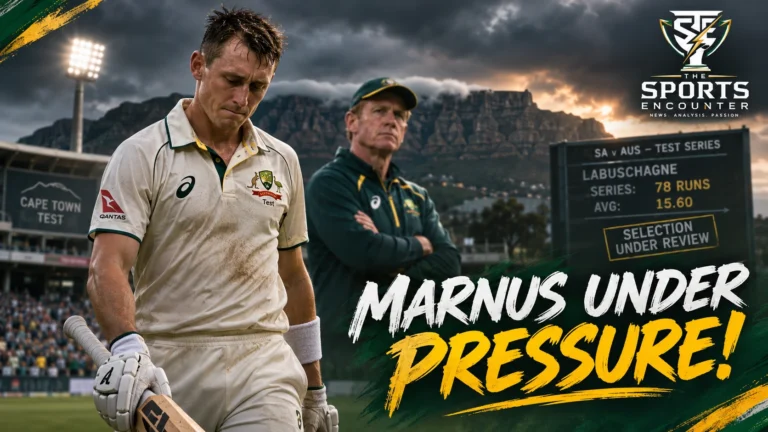 CricketAustralia Face a Marnus Labuschagne Reckoning as McDonald Orders Selection Review Before NZ Tests
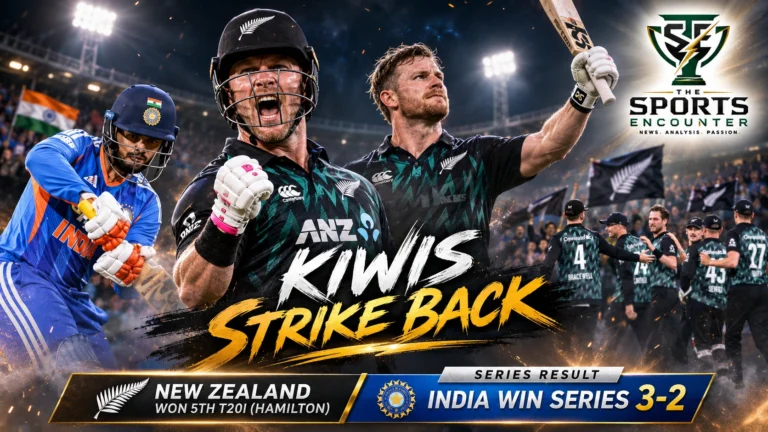 CricketSeifert’s 93, Phillips’ Final Flourish Seal New Zealand’s Comeback But India Escape With 3-2 T20I Series Win
 CricketSouth Africa’s Australian Comeback Puts WTC Final Within Reach, But Anything’s Possible Yet
India have made their own workload and availability adjustments before the Tests.
As detailed in TSE’s India Test squad investigation, the visitors are also balancing white-ball cricket with World Test Championship preparation.
New Zealand vs India 2026: Complete ODI and Test Schedule
| Match | Date | Venue | Important Context |
|---|---|---|---|
| First ODI | November 4 | Eden Park, Auckland | Opening selection test after squad changes |
| Second ODI | November 7 | Wellington | Early series momentum |
| Third ODI | November 10 | Hamilton | Last ODI for several first-group players |
| Fourth ODI | November 13 | Mount Maunganui | Revised final-two-ODI squad takes over |
| Fifth ODI | November 15 | Mount Maunganui | Series conclusion |
| First Test | November 19–23 | Wellington | World Test Championship points at stake |
| Second Test | November 27–December 1 | Christchurch | Final Test of the tour |
The schedule explains New Zealand’s reluctance to rush injured players.
Only four calendar days separate the final ODI on November 15 from the beginning of the first Test on November 19.
That interval is particularly important for bowlers and fielders returning from physical setbacks.
2027 ODI World Cup: What Can New Zealand Learn From This Series?
The upcoming five ODIs are valuable preparation for the 2027 ICC Men’s Cricket World Cup in South Africa, Zimbabwe and Namibia.
The absence of Ravindra and Chapman is a setback, but it also creates a chance to evaluate alternative combinations against strong international opposition.
Seifert can demonstrate whether his recent batting form translates into the longer white-ball format.
Nicholls can provide evidence of his continuing value as an experienced ODI batter, while Foxcroft can challenge for future opportunities.
New Zealand can also assess the strength of its seam-bowling depth while Henry’s readiness remains uncertain.
What Are the Main World Cup Selection Questions?
| Question | What India Series Can Reveal | What Remains Unresolved |
|---|---|---|
| Who covers Ravindra’s absence? | Batting combinations and additional spin options | Long-term depth in batting and bowling |
| Who supports the middle order? | Performance of Nicholls and Foxcroft | Preferred combination when Chapman returns |
| Can Seifert become an ODI regular? | Batting adaptability over 50 overs | Role and long-term selection consistency |
| Who leads the pace attack if Henry is unavailable? | Performance of Duffy, Jamieson and other seamers | Best attack when all players return |
| Can New Zealand manage split squads effectively? | Results and cohesion across five matches | Best tournament squad when fully available |
It would be premature to treat the series as a final World Cup selection trial.
However, strong performances may create genuine pressure for places once Ravindra, Chapman and other established players become available.
The longer-term challenge is to turn short-term opportunity into a balanced tournament squad rather than continually relying on temporary replacements.
New Zealand vs India ODI Series 2026: Frequently Asked Questions
Is Rachin Ravindra Playing the ODI Series Against India?
No. Ravindra has been ruled out of all five matches while continuing his recovery from a right shoulder injury.
Why Is Mark Chapman Not Playing?
Chapman’s left hamstring requires approximately two more weeks of rehabilitation, according to New Zealand Cricket.
Who Has Replaced Ravindra and Chapman?
New Zealand have expanded Tim Seifert’s availability to the entire series, recalled Henry Nicholls for the first three matches and added Dean Foxcroft for the final two.
Will Tim Seifert Play All Five ODIs?
He is available for all five, but selection in every playing XI has not been confirmed.
Is Matt Henry Fit for the First ODI?
His readiness is being assessed after a quadriceps injury. New Zealand have not confirmed that he is cleared to play.
Why Is Matt Fisher’s Name Missing From One Squad List?
New Zealand Cricket says his availability has been extended to the full series, but its published first-three-ODI list omits him. That inconsistency should be clarified before treating the list as definitive.
When Does New Zealand vs India First ODI Start?
Wednesday, November 4, 2026, at Eden Park in Auckland.
Who Captains New Zealand Against India?
Mitchell Santner is captain in both ODI squad groups.
When Does the Test Series Begin?
The first Test begins November 19 in Wellington, followed by the second Test in Christchurch from November 27.
Did India Win the T20I Series?
Yes. India won 3-2, although New Zealand won the final two matches.
New Zealand Must Protect Ravindra Without Losing Their ODI Momentum
New Zealand’s selection problem is not simply the loss of two batters.
Ravindra provides left-handed batting and additional spin options. Chapman offers another left-handed presence in the middle order. Their absence changes how the team can distribute roles across its playing XI.
Seifert, Nicholls and Foxcroft offer different potential solutions, but none should be expected to reproduce every aspect of the missing players’ contributions.
The opportunity for New Zealand is to use the India series to discover which alternative combinations can withstand international pressure.
The risk is that multiple selection changes weaken continuity at the same time that the team is attempting to protect its Test players.
India will arrive with confidence from their T20I series win, but New Zealand’s final two victories demonstrated that the hosts can respond strongly.
The first ODI at Eden Park will provide the earliest evidence of whether New Zealand can carry that confidence into a different format while absorbing the loss of two important batters.
Official sources: New Zealand Cricket’s November 2 squad and injury announcement confirms the changes; the ICC’s injury update provides independent governing-body confirmation; and the ICC’s original split-squad announcement and schedule explains the selection framework and upcoming fixtures.