MADRID, Spain, November 20, 2026: Real Madrid have secured Aurélien Tchouaméni’s future until June 30, 2032, handing the France international a new six-year agreement that strengthens the foundations of José Mourinho’s midfield. The 26-year-old joined Madrid from Monaco in 2022 and has developed into a central figure in the club’s transition away from the midfield generation that delivered multiple Champions League titles under Carlo Ancelotti and his predecessors.
The Tchouameni contract extension follows Arda Güler’s renewal through the same date just 24 hours earlier. Together, the agreements reveal a deliberate effort to preserve the defensive and creative components of Madrid’s next midfield generation. But securing players for another six years does not automatically produce a balanced team. Mourinho must still determine how Tchouaméni, Federico Valverde, Jude Bellingham, Eduardo Camavinga, Güler and Bernardo Silva can function together without exposing the defense or restricting the attacking freedom that makes them valuable.
Key Takeaways
- Real Madrid have secured Aurélien Tchouaméni’s future until June 30, 2032, handing the France international a new six-year agreement that strengthens the foundations of José Mourinho’s midfield.
- The Tchouameni contract extension follows Arda Güler’s renewal through the same date just 24 hours earlier.
- Tchouaméni joined Real Madrid from AS Monaco in the summer of 2022, arriving as one of Europe’s most highly regarded young defensive midfielders.
- Tchouaméni reached his 200th competitive appearance for Madrid against Villarreal on October 10, 2026.
Tchouameni Contract Extension Reveals Madrid’s Midfield Priorities
Madrid’s decision is significant because Tchouaméni occupies a position where elite players are difficult to replace and their contributions are not always immediately visible.
Story at a glance
Tchouameni Contract Extension Reveals Madrid’s Midfield Priorities
Madrid’s decision is significant because Tchouaméni occupies a position where elite players are difficult to replace and their contributions are not always immediately visible.
From Monaco Prospect to Real Madrid’s Long-Term Anchor
Tchouaméni joined Real Madrid from AS Monaco in the summer of 2022, arriving as one of Europe’s most highly regarded young defensive midfielders.
What 200 Real Madrid Appearances Reveal About His Development
Tchouaméni reached his 200th competitive appearance for Madrid against Villarreal on October 10, 2026.
Why Mourinho Needs Tchouaméni Behind His Creative Midfielders
Madrid’s recent reconstruction has significantly expanded Mourinho’s attacking and midfield options.
Does the New Contract Change Madrid’s Interest in Rodri?
One of the more interesting questions involves Manchester City midfielder Rodri.
A defensive midfielder can influence a match without scoring, creating a clear chance or making a spectacular tackle. Much of the work involves denying opponents space, maintaining defensive distances, supporting the first phase of possession and preventing dangerous counterattacks.
Those responsibilities have become particularly important in a squad containing several players whose strongest qualities emerge further forward.
Madrid confirmed the agreement through their official contract announcement, establishing June 30, 2032, as the new expiry date.
The previous agreement was due to expire in 2028. The new contract therefore adds four years to his existing commitment, rather than representing six additional years beyond the earlier expiry.
That distinction matters because the agreement provides Madrid with substantial long-term contractual security while allowing Mourinho to build around a player approaching what should be the prime years of his career.
Why the Tchouameni Contract Extension Matters Beyond the Expiry Date
The midfielder’s immediate value lies in how he allows teammates to operate.
Bellingham is most dangerous when he can advance toward the penalty area. Valverde brings considerable energy through his movement and ability to cover large distances. Camavinga offers ball-carrying and defensive versatility, while Güler and Bernardo provide different forms of technical creativity.
None of those characteristics automatically produces a stable defensive structure.
Tchouaméni gives Madrid a player capable of maintaining central protection while others move into advanced positions.
That does not mean he must always play as a lone defensive midfielder. Mourinho can pair him with Valverde or Bernardo, depending on whether the team needs greater defensive coverage, improved circulation or additional control against a compact opponent.
The key is maintaining a clear division of responsibilities without limiting the natural strengths of his teammates.
From Monaco Prospect to Real Madrid’s Long-Term Anchor
Tchouaméni joined Real Madrid from AS Monaco in the summer of 2022, arriving as one of Europe’s most highly regarded young defensive midfielders.
His recruitment came during a period when Madrid were preparing for the eventual departure of the midfielders who had defined their previous era.
Casemiro left for Manchester United shortly afterward. Toni Kroos subsequently retired, while Luka Modrić eventually moved on.
Replacing such influential players required more than signing footballers capable of occupying similar positions on a team sheet.
Casemiro provided exceptional defensive awareness and an understanding of how to protect the central spaces behind Madrid’s attacking midfielders.
Kroos supplied passing precision, tempo and control. Modrić contributed press resistance, creativity and the ability to change the direction of possession under pressure.
Tchouaméni was never a direct replacement for all three.
His responsibility has instead evolved around the defensive foundation that allows other midfielders to contribute their individual strengths.
He has also been used in central defense when circumstances demanded it, demonstrating positional adaptability but occasionally raising questions about whether moving him away from midfield reduced the team’s effectiveness elsewhere.
That versatility remains useful. However, the new agreement reinforces the case for treating defensive midfield as his primary long-term responsibility.
What 200 Real Madrid Appearances Reveal About His Development
Tchouaméni reached his 200th competitive appearance for Madrid against Villarreal on October 10, 2026.
According to Real Madrid’s official milestone report, the midfielder had accumulated eight trophies with the club by that point.
| Competition | Appearances at 200-match milestone |
|---|---|
| La Liga | 129 |
| UEFA Champions League | 43 |
| Copa del Rey | 11 |
| FIFA Club World Cup | 9 |
| Spanish Super Cup | 6 |
| UEFA Super Cup | 2 |
| Total | 200 |
The distribution is instructive.
His 129 La Liga appearances represented 64.5% of his first 200 competitive appearances for the club. Another 43 came in the Champions League, meaning 172 of those matches were played across Madrid’s two principal competitions.
These calculations use the official appearance totals at the October milestone, not his complete career figures as of November 20.
The numbers demonstrate that Madrid have repeatedly relied on him in major competitions rather than using him primarily as a rotational option.
He has also contributed to a Champions League triumph, two Club World Cup titles, two UEFA Super Cups, a La Liga championship, a Copa del Rey and a Spanish Super Cup.
Trophies alone do not establish individual performance quality. Their relevance here is that Tchouaméni has gained substantial experience within a team operating under unusually demanding expectations.
Why Mourinho Needs Tchouaméni Behind His Creative Midfielders
Madrid’s recent reconstruction has significantly expanded Mourinho’s attacking and midfield options.
Bernardo Silva arrived from Manchester City during the summer, introducing a player accustomed to controlling possession, receiving under pressure and creating passing angles in congested areas.
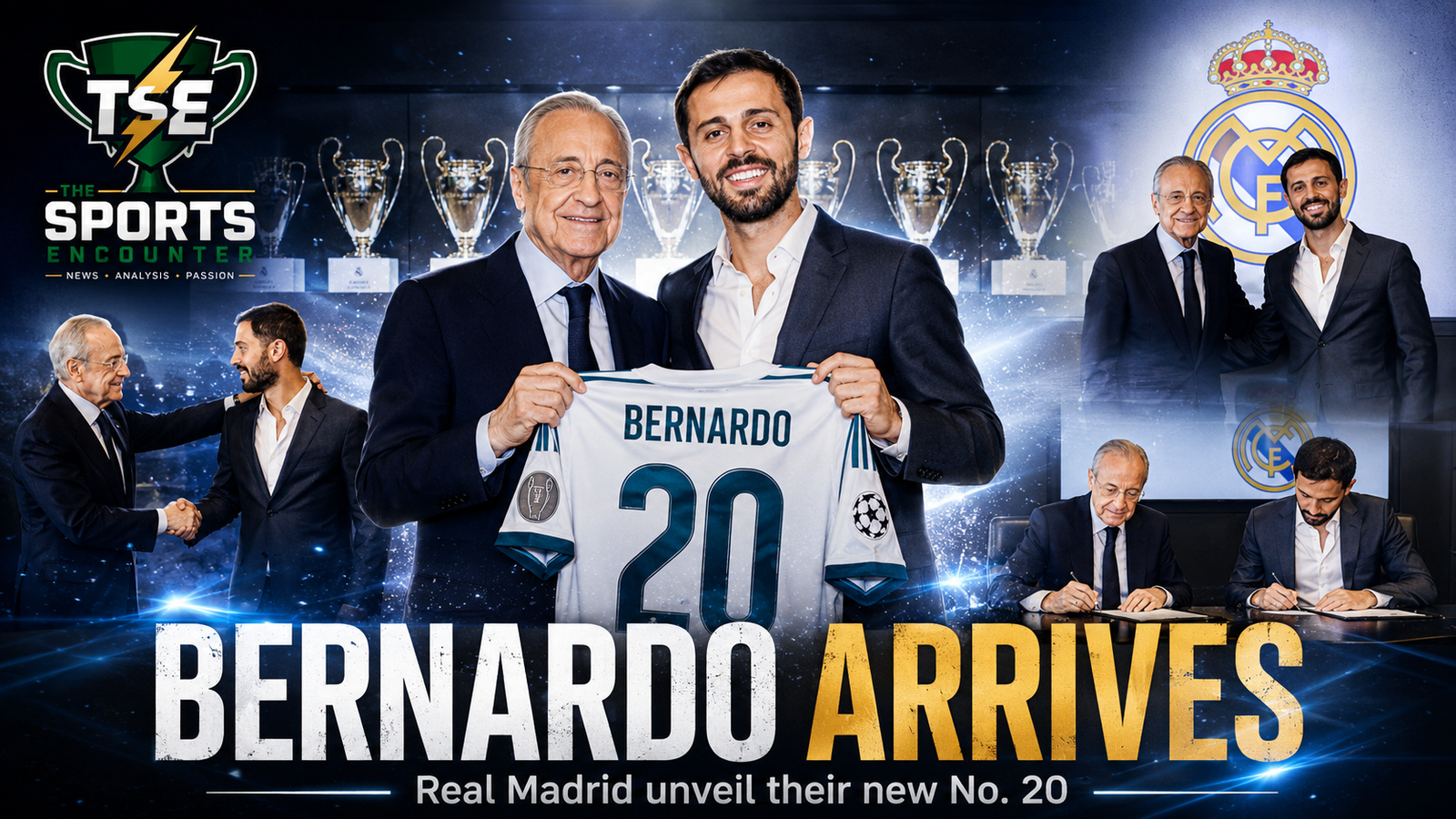
The Sports Encounter’s analysis of Bernardo’s arrival examined how his technical intelligence could help Madrid become more effective against opponents defending in compact formations.
Tchouaméni serves a different function.
Where Bernardo can move toward the ball to create a passing option, Tchouaméni must often consider what happens if the next pass fails.
When an opponent wins possession, the defensive midfielder may be responsible for delaying the counterattack, protecting the central passing lane or forcing the opposition into a less dangerous area.
These actions can determine whether Madrid regain control or expose their central defenders to a direct attack.
One possible partnership involves Tchouaméni and Bernardo operating behind more advanced attackers.
Bernardo could provide progressive passing and positional flexibility while Tchouaméni maintains defensive balance.
Another involves Valverde alongside the Frenchman, increasing the team’s ability to cover ground and defend transitions.
The most suitable pairing will depend on the opponent, available players and Mourinho’s intended attacking structure.
There is no evidence that the new contract commits Madrid to one permanent formation or midfield combination.
Does the New Contract Change Madrid’s Interest in Rodri?
One of the more interesting questions involves Manchester City midfielder Rodri.
Madrid were linked with the Spain international during the summer as they considered ways to improve their control in central areas.
TSE’s analysis of Madrid’s reported interest in Rodri examined the potential complications of adding another specialist midfielder to a squad already containing Tchouaméni, Camavinga, Bellingham and Valverde.
The new agreement changes the context of that discussion.
Madrid have now made an explicit long-term commitment to Tchouaméni. Any future pursuit of another expensive defensive midfielder would therefore need to account for positional overlap, squad costs and the existing player’s role.
However, the renewal does not prove that Madrid have ended their interest in Rodri or any other midfielder.
Elite clubs regularly maintain several players capable of operating in overlapping positions, particularly when competing across domestic and European tournaments.
The distinction is between strengthening squad depth and committing substantial resources to players whose preferred responsibilities may be difficult to accommodate simultaneously.
Madrid must determine whether additional recruitment would complement their existing options or create unnecessary duplication.
The Tchouameni contract extension makes that decision more consequential because the club has clearly identified him as part of its long-term plans.
Güler and Tchouaméni Give Madrid Two Very Different Long-Term Assets
The timing of the announcement is especially revealing.
On November 18, Madrid confirmed that Arda Güler had also signed a contract lasting until June 30, 2032.
The club’s official Güler renewal announcement established the same expiry date as Tchouaméni’s new agreement.
The two players represent contrasting footballing qualities.
Güler offers creative passing, close control and the ability to operate between defensive lines. Tchouaméni provides defensive positioning, physical coverage and the capacity to protect central spaces.
Securing both players allows Madrid to preserve complementary profiles rather than concentrate investment in only one type of midfielder.
| Midfielder | Primary contribution | Long-term tactical value |
|---|---|---|
| Aurélien Tchouaméni | Defensive coverage and midfield positioning | Protects central areas and supports transitions |
| Arda Güler | Creative passing and attacking combinations | Connects midfield possession with advanced attackers |
| Jude Bellingham | Progressive movement and attacking runs | Adds goalscoring threat from midfield |
| Federico Valverde | Running capacity and tactical versatility | Supports defensive recovery and forward transitions |
| Eduardo Camavinga | Ball carrying and defensive adaptability | Provides different options in possession and recovery |
| Bernardo Silva | Possession control and positional intelligence | Helps regulate tempo and create passing angles |
The roles above describe playing characteristics, not a confirmed starting lineup or a permanent tactical hierarchy.
The main challenge is integration.
Madrid possess several midfielders capable of influencing games in different ways. The task is ensuring those abilities complement one another instead of leaving gaps between defensive and attacking units.
The Contract Strengthens Madrid’s Position After an Expensive Rebuild
Madrid’s long-term planning has extended beyond midfield.
Vinícius Júnior signed a new agreement through 2032 during the summer, ending considerable speculation about his future.
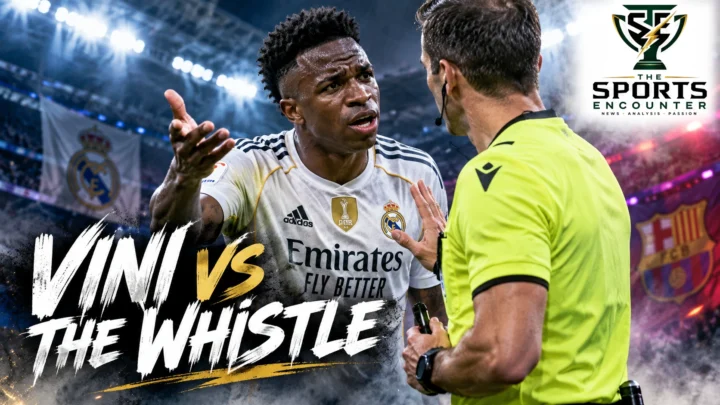
As TSE examined when Madrid renewed Vinícius’s contract, preserving established attacking talent was a major component of the club’s reconstruction.
The club also invested heavily in younger players, including Yan Diomande, while introducing experienced footballers capable of helping Mourinho compete immediately.
Continue the La Liga Story

The Tchouameni contract extension follows that broader pattern of protecting players already considered important to Madrid’s future.
It also provides a different form of security from a major transfer.
A new signing must adapt to teammates, tactics, the league and expectations. Tchouaméni has already spent more than four years at the club and understands the pressures associated with representing Madrid.
That familiarity does not guarantee future performance, but it reduces the uncertainty associated with integrating an entirely new player.
The financial details of the latest agreement were not disclosed in Madrid’s official announcement. Although Spanish media have reported salary estimates, those figures should not be presented as confirmed contractual terms.
Similarly, a long agreement does not make a future transfer impossible. It gives Madrid greater contractual control, but any eventual move would depend on the circumstances and agreements between the relevant parties.
What Madrid’s Recent Performances Reveal About the Midfield Challenge
Mourinho’s squad has already demonstrated the difference between individual attacking quality and reliable collective control.
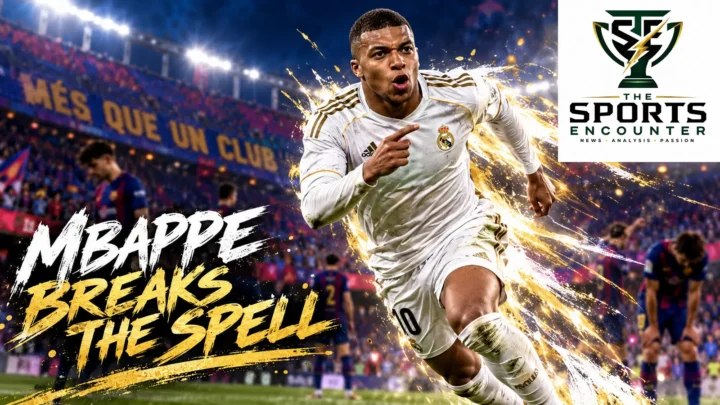
During Madrid’s 4-1 victory over Real Sociedad in August, the team recovered from a difficult opening period before Kylian Mbappé’s finishing helped transform the contest.
TSE’s detailed match analysis examined the importance of midfield balance and the defensive problems that appeared when Madrid lost possession.
That performance provides useful context for Tchouaméni’s long-term role.
Madrid can field several players capable of creating goals. The harder challenge is ensuring their attacking freedom does not repeatedly expose the defense.
This is particularly relevant against opponents who can counterattack quickly after recovering possession.
A midfielder positioned correctly before the ball is lost can prevent a dangerous attack from developing.
That contribution may never appear in a conventional goals-and-assists comparison, but it can be essential to sustaining results over an entire season.
For Mourinho, the objective is building a midfield that can defend transitions without sacrificing the passing options and forward movement necessary to break down organized opponents.
What Madrid Must Still Resolve Before 2032
The agreement answers the immediate question about Tchouaméni’s contractual future. It does not settle every aspect of his role.
Madrid must continue managing competition for midfield positions, the physical demands of multiple competitions and the development of younger players.
Tchouaméni’s recent international fitness concerns also underline why squad planning cannot depend exclusively on one midfielder’s availability.
His withdrawal from France’s November international fixtures affected the national team’s options, as documented in TSE’s report on France’s squad changes.
That development should not be interpreted as evidence of a long-term medical problem. It does, however, reinforce the need to preserve reliable alternatives in a demanding position.
The club must also decide how midfield responsibilities evolve as Bellingham, Güler and Camavinga continue developing while experienced players such as Bernardo move through different stages of their careers.
Long-term contracts create stability. Effective coaching determines whether that stability translates into competitive advantage.
For Tchouaméni, the challenge is maintaining his defensive influence while adapting to changing teammates, opponents and tactical requirements.
For Mourinho, the challenge is making Madrid’s considerable investment in midfield produce a coherent team rather than simply an impressive collection of individual footballers.
The Tchouameni contract extension confirms that Real Madrid want the French international to remain central to that project through 2032. His renewal secures an important defensive foundation, but the next measure of success will be how effectively Madrid use that foundation to create a balanced, adaptable and consistently competitive midfield.
Real Madrid
- Tchouameni Contract Extension Shows Real Madrid’s Midfield Plan
- China Opens Dialogue with Real Madrid Over Mbappé’s Mao Remarks, but LaLiga’s €10M Broadcast Risk Remains
- Champions League Chaos: Valverde Rescues Real Madrid, Liverpool Collapse at Fenerbahce as Como Hit Nine
- Real Madrid Turn El Clásico Momentum Into a 36-Minute Rout as Diomande Fuels the Title Chase
- Mbappé Double Ends Barcelona’s Perfect Start as Real Madrid Win Clásico 2-1