Connect with us

Published

on

Inter Milan will begin the 2026-27 Serie A season as champions, double winners and the team everyone else must catch.

That sounds like stability.

Look underneath it, though, and Italian soccer is entering a season shaped by change almost everywhere that matters.

Inter are trying to defend the Scudetto while replacing important members of an aging core. AC Milan have handed their latest rebuild to Rúben Amorim. Napoli have turned to Massimiliano Allegri. Juventus are giving Luciano Spalletti more time to make a long-term reconstruction work. Roma are back in the Champions League under Gian Piero Gasperini, while Como are preparing for European soccer’s biggest competition after one of the most remarkable rises in recent Serie A history.

The 2026-27 Serie A season officially begins on the weekend of August 22-23, and for perhaps the first time in several years, there is no obvious reason to believe the defending champions will have the race under control by spring.

Inter deserve to start as favorites.

The more interesting question is whether everyone chasing them has finally become dangerous enough to make that status uncomfortable.

Serie A 2026-27 title race at a glance

ClubHead coachMajor storylineTSE early outlook
Inter MilanCristian ChivuChampions rebuilding an aging defenseFavorites
AC MilanRúben AmorimAggressive tactical reset after finishing fifthSerious challenger if attack improves
NapoliMassimiliano AllegriNew coach, new striker, more pragmatic identityTitle contender
JuventusLuciano SpallettiLong-term rebuild must finally show progressOutside title contender
RomaGian Piero GasperiniChampions League return after third-place finishCould disrupt the title race
ComoCesc FàbregasChampions League newcomers protecting an exciting young corePotential season disruptor

Inter remain the benchmark, but this is no longer the same Inter

Winning a championship is one challenge. Refreshing the team while defending it is another.

Cristian Chivu enters the new campaign with Inter having won both Serie A and the Coppa Italia last season, yet the squad beneath those trophies is changing.

Yann Sommer has departed. Denzel Dumfries has moved to Real Madrid. Stefan de Vrij has left for Panathinaikos. Those departures matter because they remove experience from a defensive unit that spent years developing an almost automatic understanding of positioning, rotations and pressure.

Inter have responded aggressively rather than sentimentally.

John Stones has arrived after a decade at Manchester City. Manuel Akanji remains after his loan spell, while Djed Spence adds athleticism and width. Ivan Provedel has joined the goalkeeping group, with Josep Martínez expected to carry greater responsibility.

There is also a tactical advantage in pairing Stones and Akanji. The two already understand many of the positional demands associated with possession-heavy football from their years together at Manchester City. That does not guarantee an immediate fit in Italy, but it reduces some of the uncertainty that normally accompanies a defensive rebuild.

Inter also know what the rest of the league already knows.

Lautaro Martínez and Marcus Thuram remain the attacking reference points.

As long as that partnership stays healthy and productive, Chivu starts with something his rivals would love to possess: a proven attacking pair surrounded by a team that already knows how to survive pressure at the top of the table.

The biggest danger may be assuming last season’s winning margin reflects an enormous competitive gap.

It probably does not.

Napoli and Milan both suffered damaging drops in form during the 2025-26 campaign. Inter were stable when others became unstable. That is a championship quality, but it also means the defending champions may face a very different race if their rivals remain functional for 38 matches.

AC Milan have changed the coach because they need to change the feeling

There may be no more fascinating team in Italy this season than Milan.

A fifth-place finish was not merely disappointing. It left one of European soccer’s biggest clubs outside the Champions League again and brought another managerial reset.

Massimiliano Allegri is gone. Rúben Amorim has taken over.

The contrast is significant.

Amorim arrives with a reputation for aggressive pressing, structured buildup and systems that demand physical and tactical commitment without the ball. Milan have not simply changed the person standing on the touchline. They are trying to change how the team behaves.

The recruitment supports that idea.

Gonçalo Ramos has arrived from Paris Saint-Germain to address one of last season’s most obvious weaknesses: Milan did not consistently receive enough goals from their forwards.

Rafael Leão and Christian Pulisic can create, carry and destabilize defenses, but asking wide attackers to solve every offensive problem leaves a team vulnerable when their form drops. Ramos gives Amorim a more natural penalty-area reference point and someone capable of occupying central defenders while others attack around him.

Mario Gila strengthens the defense, while Luka Modrić staying at Milan until 2027 provides something harder to quantify than speed or youth: control.

At 40, Modrić cannot be expected to carry Amorim’s midfield physically every week. He can still recognize spaces, control rhythm and help a changing team understand when a match needs speed and when it needs patience.

Milan’s ceiling may depend on how Amorim balances those competing demands.

If he can add pressing intensity without turning every match into chaos, Milan have enough attacking quality to return to the Champions League and enough individual talent to enter the Scudetto conversation.

If the latest rebuild becomes another season of tactical confusion, patience at San Siro will disappear quickly.

Napoli have gone from Conte to Allegri, and that changes the conversation

Napoli’s appointment of Massimiliano Allegri produced a mixed reaction for understandable reasons.

The club’s most celebrated modern teams were associated with attacking personalities, technical freedom and players capable of giving the city an emotional connection to what happened on the pitch.

Allegri is different.

He is usually more concerned with solving the match in front of him than satisfying a wider philosophical argument about how soccer should look.

That pragmatism can frustrate supporters when results are poor. When it works, however, Allegri has repeatedly shown that he understands how to navigate a long Italian season.

Napoli also enter the campaign with a significant change at center forward.

Romelu Lukaku has left for Fenerbahçe after an injury-disrupted season, leaving Rasmus Højlund as the primary attacking reference point.

The Dane has already shown signs of settling into Allegri’s setup during preseason. His challenge now is much larger. Napoli need him to convert athletic potential into week-to-week production.

A strong Højlund season changes the title picture considerably.

Napoli already possess players capable of carrying the ball, creating from midfield and controlling territory. A reliable striker would give Allegri the kind of focal point around which he can build one of his typically competitive teams.

Juventus cannot keep calling this a rebuild forever

Luciano Spalletti received something increasingly rare at an elite European club after an underwhelming campaign: time.

Juventus decided against another reset and instead backed the longer project.

That is admirable in theory.

Now it needs evidence.

Randal Kolo Muani has returned to Turin and gives the attack another proven option, but Juventus’ bigger challenge is collective. They need a recognizable team identity that survives difficult moments.

Spalletti’s best sides have played intelligent positional soccer, moved the ball confidently and created attacking structures based on relationships rather than isolated individual moments.

Juventus showed pieces of that last season. They did not show it consistently enough.

The expectations around the club make another transitional year difficult to sell. Juventus do not necessarily have to win Serie A to demonstrate progress, but they should be close enough to the champions for the title race to matter deep into the season.

Anything significantly below that will reopen familiar questions about the direction of the project.

Roma may be closer to the elite than people realize

Roma finished third last season and returned to the Champions League after a seven-year absence.

That alone should change how they are discussed.

Gian Piero Gasperini’s team ended the campaign with seven matches unbeaten, developing momentum at exactly the stage when several rivals were beginning to wobble.

Gasperini also has something that many coaches entering this season do not: continuity.

His players already understand much of his positional language, pressing triggers and demands in possession. Roma are therefore not beginning from a blank page while Milan and Napoli adapt to new managers.

That advantage can be significant during August, September and October when teams are still discovering what works.

The complication is Europe.

Champions League soccer brings prestige, money and opportunity, but it also changes the weekly physical equation. Roma will need enough depth to maintain domestic intensity while facing elite European opposition.

If they manage that workload, third place last season may look less like a peak and more like the foundation of something bigger.

Como have become the team nobody can dismiss anymore

Calling Como a surprise worked for a while.

It no longer feels adequate.

Cesc Fàbregas has taken a club that recently lived far from the highest levels of European soccer and built a team preparing for its first Champions League campaign.

Their biggest summer success may not even be a signing.

It is keeping Nico Paz.

The Argentine has become a tactical reference point for Fàbregas, helping Como create overloads, connect transitions and find space between opposition midfield and defensive lines. Real Madrid’s interest made his future one of the obvious questions of the summer, but Como have retained him.

Trevoh Chalobah adds experience and defensive quality to a squad that will now be tested across multiple competitions.

The Champions League creates a new problem, of course.

Teams that rise quickly often discover that European competition changes the rhythm of an entire season. Recovery becomes shorter. Opponents have more preparation time. Injuries become harder to absorb. Squad depth suddenly matters as much as the first XI.

How Como respond to that burden will tell us whether their rise has entered its next stage.

The overlooked factor: Serie A’s contenders are rebuilding in completely different ways

The most interesting part of this title race is not simply that several clubs can challenge Inter.

It is that they are trying to do it through very different models.

Inter are replacing experience while protecting continuity.

Milan are chasing tactical transformation.

Napoli are turning toward pragmatism.

Juventus are betting on patience.

Roma are trying to convert continuity into another step forward.

Como are testing whether rapid development can survive the demands of Europe.

That variety matters because there is no single dominant blueprint across the league.

It also helps explain the strange contrast currently surrounding Italian soccer. At club level, Serie A remains tactically varied, commercially relevant and capable of producing fascinating teams. At international level, Italy continue to confront much deeper structural problems, which The Sports Encounter recently examined in detail.

The same league that continues to produce respected coaches, sophisticated systems and competitive clubs has not translated those strengths into a functioning national-team pathway.

That contradiction will sit in the background throughout this season.

Why the Inter defense could decide the Scudetto

Goals will dominate the highlights, but the championship may be decided by how quickly Inter’s rebuilt defensive unit becomes comfortable.

Dumfries offered more than width. He could turn defensive situations into attacking territory through power and direct running. De Vrij provided years of positional understanding. Sommer brought experience behind them.

Replacing individual quality is possible.

Replacing accumulated understanding takes longer.

Stones and Akanji bring elite experience, and Spence gives Inter a different athletic profile. On paper, Chivu has enough quality.

The real test will come when the defensive line is forced to react rather than organize.

How does it handle counters after possession is lost? Who communicates when opponents rotate between the lines? How quickly does the unit adjust when wing-backs advance? How comfortable are the new defenders when Inter have to protect narrow leads?

Those details tend to decide championships long after transfer-window excitement has disappeared.

Inter’s ability to replenish defensive quality is especially important after losing out on other options during the wider market. Chelsea’s move for Marco Palestra after Inter had pursued the Atalanta talent was another reminder that Serie A’s champions are competing in a transfer economy where Premier League clubs can change negotiations very quickly.

Players who could shape Serie A 2026-27

Lautaro Martínez, Inter Milan

The champions still revolve around their captain when matches become difficult. Lautaro’s finishing matters, but so do his pressing, movement and ability to set Inter’s emotional temperature.

Marcus Thuram, Inter Milan

His speed and physicality create a different problem from Lautaro. Keeping both forwards available gives Inter one of the strongest established partnerships in Italy.

Gonçalo Ramos, AC Milan

Milan needed a striker capable of turning territorial dominance into goals. If Ramos provides that consistently, Amorim’s first season could accelerate quickly.

Rafael Leão, AC Milan

Amorim must find a structure that preserves Leão’s unpredictability without leaving Milan dependent on it.

Rasmus Højlund, Napoli

Napoli’s ceiling may depend heavily on whether Højlund becomes a reliable 90-minute reference point rather than merely a dangerous athlete.

Randal Kolo Muani, Juventus

His return gives Spalletti another way to stretch defenses and attack space. Juventus need his production as much as his movement.

Nico Paz, Como

Keeping Paz may prove as valuable as any transfer completed in Italy this summer. His ability to connect phases of play is central to how Fàbregas wants Como to attack.

AC Milan are also playing for something bigger than one season

Milan enter the campaign carrying the weight of their own history.

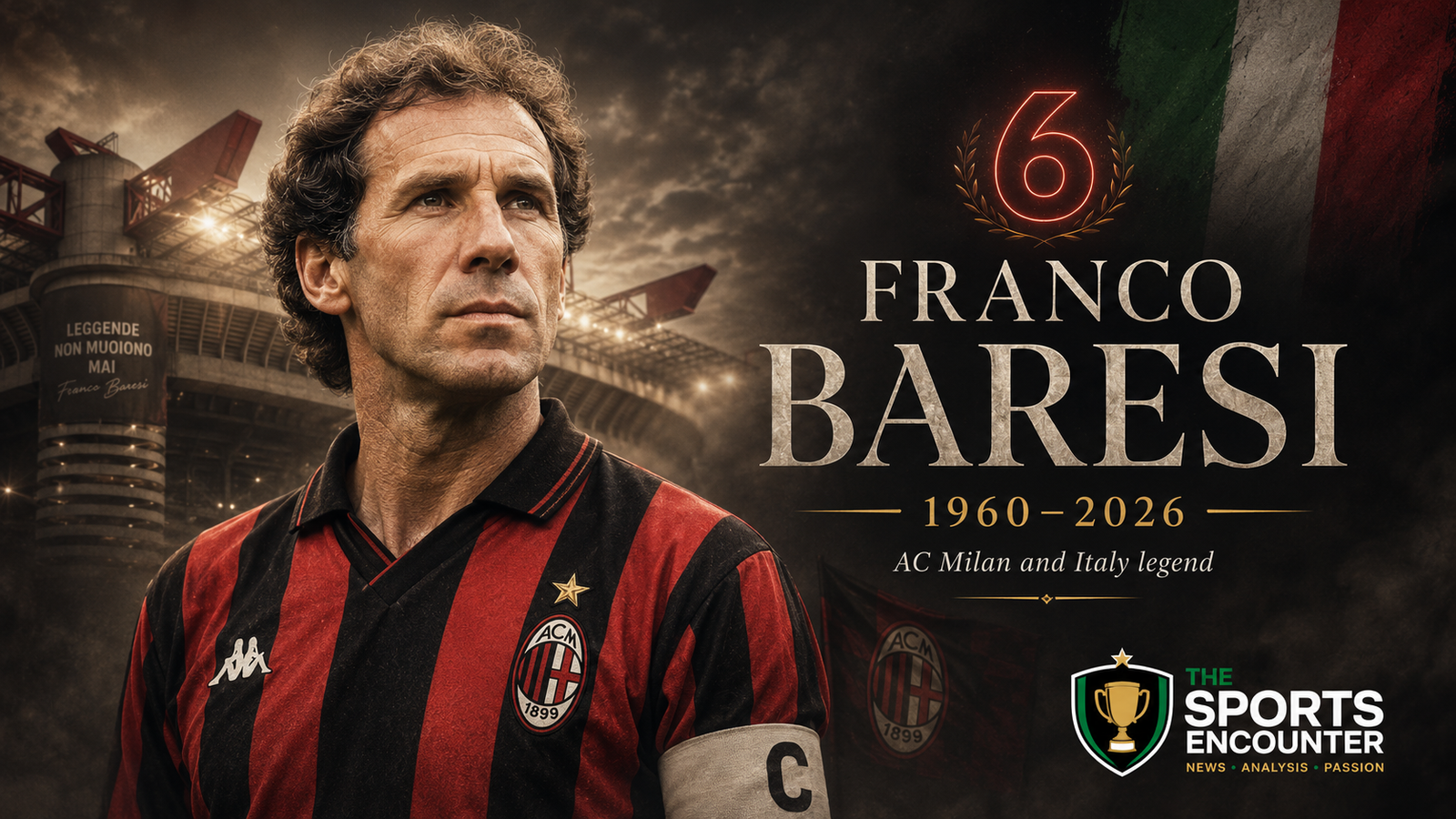
The recent passing of Franco Baresi brought fresh attention to an era when the Rossoneri represented one of soccer’s clearest standards of identity, leadership and tactical authority. Baresi’s extraordinary Milan career remains part of the standard against which modern teams are inevitably measured.

That history cannot win Amorim matches.

It does explain why extended mediocrity is never accepted.

Milan have missed Champions League qualification, changed managers again and committed to another sporting direction. Amorim therefore has a difficult job beyond tactics.

He has to make supporters believe there is finally a coherent destination.

What would make Serie A 2026-27 a great title race?

Inter won last season because they delivered when the clubs around them could not.

The simplest route to a more compelling championship is therefore consistency from the challengers.

Milan cannot afford another extended midseason collapse.

Napoli cannot allow a difficult month to become a tactical identity crisis.

Juventus need to turn possession and ideas into points.

Roma must cope with Champions League demands without sacrificing their domestic rhythm.

Como need to prove they can recover physically and mentally from European nights.

If two or three of those teams solve their biggest weakness, Inter’s margin for error becomes dramatically smaller.

TSE prediction: Inter start first, but the gap is shrinking

Inter deserve to enter the season as favorites because champions should be displaced by evidence, not preseason optimism.

They retain Lautaro Martínez and Marcus Thuram. Chivu has continuity. The club identified the need to refresh an aging defense and moved early enough to provide replacements.

There is no obvious reason to downgrade them simply because the squad is evolving.

There is, however, a strong reason to believe retaining the title will be harder.

Milan have addressed their most obvious attacking weakness and appointed a coach with a very different tactical vision. Napoli have placed an experienced Serie A winner in charge. Juventus have resisted another managerial reset. Roma arrive with momentum and continuity. Como have stopped behaving like grateful outsiders.

The defending champions remain the team to beat.

They no longer look like the only team capable of winning.

That distinction could define Serie A 2026-27.

A season that could tell us where Italian club soccer really stands

The wider context makes this campaign even more important.

Italy’s recent uncertainty around its national-team coaching direction has reinforced a painful debate about the condition of the country’s soccer system.

Yet its leading clubs continue to generate new coaching ideas, invest in international talent and compete for relevance in Europe.

Serie A therefore begins with two stories unfolding at the same time.

One concerns the Scudetto.

The other concerns whether Italy’s domestic game can continue strengthening while the national side searches for a way back to the world’s biggest stage.

The league itself should provide plenty of evidence.

Inter begin on top. Milan are rebuilding aggressively. Napoli have chosen experience. Juventus are asking for patience to finally pay off. Roma believe third place can become something more. Como are about to discover what happens when the surprise team becomes a Champions League team.

On August 22, speculation gives way to points.

For continuing match reports, tactical analysis, transfer coverage and major European soccer stories throughout the season, follow The Sports Encounter’s soccer coverage.
Elma Victors is a London-based accounting professional and sports writer covering cricket, soccer, tennis, major international competitions, and the business and commercial side of sport. Her analytical background shapes a detail-oriented approach to sports journalism, with particular attention to statistics, performance trends, financial developments, sponsorships, contracts, and the wider context behind major sporting stories. At The Sports Encounter, Elma contributes match reports, breaking news, player-focused features, tournament analysis, and stories examining the commercial forces influencing modern sport. Her work combines clear reporting with statistical context and a practical understanding of how decisions made away from the field can affect teams, athletes, competitions, and supporters. Based in London, she brings both a global sports perspective and an analytical mindset to coverage across major leagues, tournaments, and international events.

Breaking News

Fans Join Global Revolt Against Infantino as FIFA Presidency Faces Unprecedented Pressure

The pressure on Gianni Infantino has moved beyond football executives and national associations. Supporter groups across Europe, Africa and North America are now demanding his resignation as FIFA faces growing questions over governance, World Cup commercialization, ticket prices and leadership accountability.

Published

on

Gianni Infantino surrounded by protesting football supporters in a cinematic FIFA crisis visual highlighting the global petition demanding his resignation.

Gianni Infantino’s crisis is no longer confined to FIFA offices, confederation boardrooms and national association politics.

It has reached the supporters.

Fan organizations from Europe, Africa and North America have joined roughly 40 national supporter groups in backing a global petition calling for the FIFA president to resign and demanding structural reform of world soccer’s governing body.

The campaign, promoted under the hashtag #InfantinoOut, follows the collapse of Infantino’s controversial attempt to bring private investors into a new commercial structure tied to future World Cup and FIFA revenues.

The proposal was eventually abandoned after fierce resistance from major regional confederations, national federations, senior FIFA figures and other stakeholders.

Now the backlash has taken on another dimension.

Supporters are arguing that the failed investment proposal was not an isolated mistake. Their petition connects it to wider concerns about governance, transparency, executive power, consultation, World Cup ticket pricing and the relationship between FIFA leadership and the people who actually fill stadiums.

That matters because Infantino is already facing the most serious institutional challenge of his presidency.

UEFA, the Asian Football Confederation and CONCACAF have openly challenged FIFA’s leadership. Officials are discussing the possibility of an unprecedented no-confidence move. Several national federations have withdrawn support for Infantino’s 2027 reelection campaign. A senior FIFA executive who criticized the investment project has left the organization.

Infantino still has powerful allies.

That is what makes this crisis more complicated than a simple resignation campaign.

World soccer is dividing into competing political camps, and the supporter petition has now added a public legitimacy battle to a struggle that was already about money, governance and control.

For more global soccer coverage, follow The Sports Encounter’s soccer section.

Infantino Crisis at a Glance

IssueCurrent Position
FIFA presidentGianni Infantino
Main triggerAbandoned proposal involving private investment in FIFA commercial rights
Fan responseGlobal petition calling for Infantino’s resignation and FIFA reform
Major fan organizations involvedFootball Supporters Europe, Football Supporters Africa, Independent Supporters Council and national groups
Confederations opposing leadershipUEFA, AFC and CONCACAF leadership
Potential governance actionDiscussion of a no-confidence vote or Extraordinary Congress
Infantino’s positionIntends to seek reelection in March 2027
Nomination deadlineNovember 18, 2026
Support remainsParts of CAF, CONMEBOL and several Arab national associations

The Fan Petition Changes the Nature of the Crisis

Institutional opposition can be dismissed politically.

Confederations compete for influence.

National associations have electoral interests.

Executives disagree over money and authority.

Supporter anger is harder to frame in the same way.

The petition is being backed by Football Supporters Europe, Football Supporters Africa and North America’s Independent Supporters Council, alongside dozens of national fan groups. Both the Associated Press and Reuters reported the coordinated campaign on August 20. The Associated Press report details the supporter coalition and its calls for resignation and reform. :contentReference[oaicite:0]{index=0}

The central accusation is severe.

Supporters believe the attempt to sell part of FIFA’s future commercial value represented a breach of trust involving the World Cup itself.

The petition does not stop at asking Infantino to leave.

It calls for FIFA to be rebuilt in a way that prevents a similar governance crisis from happening again.

That is the more important demand.

This Is No Longer Only About One Failed Deal

The investment proposal triggered the crisis.

The backlash has expanded beyond it.

Supporter organizations are now linking the controversy to long-running concerns around:

  • concentration of presidential power;
  • limited consultation with football stakeholders;
  • opaque decision-making;
  • World Cup ticket pricing;
  • previous proposals for biennial World Cups;
  • FIFA’s relationship with supporters;
  • and the lack of strong internal checks on executive authority.

That transformation matters.

A dispute over one commercial proposal can theoretically be solved by withdrawing the proposal.

A crisis of trust cannot.

What Infantino Actually Tried to Do

The abandoned plan would have created a new FIFA commercial structure and invited private investment into future revenues generated by the World Cup and other FIFA competitions.

Reuters reported that the proposed arrangement involved selling around 20% of the new commercial entity for approximately $4.2 billion, implying a valuation of roughly $20 billion. Reuters’ timeline traces the proposal from development through its eventual collapse. :contentReference[oaicite:1]{index=1}

The objection was not simply that private investors might make money from football.

Commercial partners already do.

Broadcasters do.

Sponsors do.

Hospitality companies do.

The deeper concern was about governance.

Who approved the idea?

Who was consulted?

How much control would investors receive?

What revenues would be transferred?

How would decisions affecting future World Cups be protected?

Those questions became politically explosive because many senior football officials believed they were being asked to react to a project after too much of the architecture had already been developed.

The Proposal Collapsed, but the Political Damage Did Not

Infantino ultimately abandoned the plan.

That would normally end a policy dispute.

This one kept growing.

UEFA declared that trust had been damaged.

AFC and CONCACAF leadership joined the criticism.

Some national associations withdrew support for Infantino’s reelection.

Senior figures inside FIFA publicly distanced themselves from the project.

The resignation or departure of FIFA officials deepened the perception that the problem was broader than one commercial miscalculation.

The Associated Press reported that former FIFA chief operating officer Kevin Lamour had criticized the proposal and accused the leadership of misleading staff before leaving the organization. :contentReference[oaicite:2]{index=2}

Kevin Lamour’s Exit Intensified the Governance Question

Internal criticism matters differently from external criticism.

A confederation president can be accused of protecting regional interests.

A supporter group can be accused of activism.

When senior executives inside the organization begin challenging how decisions were made, the argument becomes harder to contain.

Lamour’s departure was described by FIFA Vice President Sandor Csanyi as the “final straw” in his own withdrawal of support for Infantino.

That development added another senior figure to the growing list of officials questioning the president’s leadership. :contentReference[oaicite:3]{index=3}

UEFA, AFC and CONCACAF Are Considering an Extraordinary Step

The institutional challenge is potentially historic.

Senior figures familiar with discussions told Reuters that UEFA, the AFC and CONCACAF have considered pursuing a no-confidence vote against Infantino.

Reuters could find no previous case in FIFA’s 122-year history of Congress formally holding such a vote against a sitting president. :contentReference[oaicite:4]{index=4}

That does not mean removing Infantino would be straightforward.

FIFA’s statutes do not contain a specific no-confidence mechanism for the presidency.

The political route would likely begin with an Extraordinary Congress.

How Could FIFA’s Members Force the Issue?

FIFA has 211 member associations.

Under its statutes, an Extraordinary Congress must be called if at least one-fifth of them submit a written request specifying the agenda.

That means 43 associations.

UEFA has 55 members.

The AFC has 47.

Either confederation contains enough national associations in theory to reach the threshold without help from another region.

In practice, confederation leadership cannot simply cast all of those votes as one bloc.

Individual associations would have to support the request.

Reuters’ analysis of the process notes that a simple majority of valid votes is generally sufficient for Congress decisions, although FIFA’s statutes do not explicitly define a presidential no-confidence procedure. The procedural uncertainty is one reason opponents have to consider their strategy carefully. :contentReference[oaicite:5]{index=5}

A Failed Challenge Could Actually Help Infantino

This is the central strategic danger facing his opponents.

A no-confidence effort sounds powerful.

Losing one could strengthen the president.

If opponents force an Extraordinary Congress and Infantino survives comfortably, he would emerge with fresh evidence that the public criticism of his leadership does not reflect FIFA’s voting arithmetic.

That could make challenging him in March 2027 even more difficult.

Reuters reported that senior figures supporting a no-confidence move are aware of precisely this risk. :contentReference[oaicite:6]{index=6}

That is why the crisis cannot be understood through headlines alone.

Infantino is under enormous pressure.

He is not powerless.

FIFA Elections Are Won by Associations, Not Headlines

This distinction is crucial.

Each of FIFA’s 211 members gets one vote.

England gets one.

Brazil gets one.

Malawi gets one.

Tahiti gets one.

The system gives small and large football nations equal electoral weight at Congress.

Infantino has built much of his political strength around that structure.

FIFA Forward development funding and direct relationships with smaller associations have created constituencies that may view his presidency very differently from UEFA leadership or European supporter groups.

That is why counting public critics is not the same thing as counting votes.

Infantino Still Has Significant Support

Six Arab football associations publicly backed him earlier this month.

They included Qatar, Morocco, Egypt, Lebanon, Sudan and Mauritania.

Four of the signatories also sit on the FIFA Council.

CAF President Patrice Motsepe has said Africa continues to support Infantino and that leadership should ultimately be determined democratically by FIFA’s members. :contentReference[oaicite:7]{index=7}

CONMEBOL leadership has also remained supportive.

Mexico and Argentina have publicly offered backing despite the position adopted by CONCACAF leadership, illustrating how little guarantee there is that confederation presidents can deliver unified regional voting blocs. :contentReference[oaicite:8]{index=8}

The AFC Split Shows How Complicated the Politics Are

Asia may provide the clearest example.

AFC President Sheikh Salman bin Ebrahim Al-Khalifa joined UEFA and CONCACAF leaders in criticizing Infantino.

Qatar strongly objected to the AFC position and argued that Sheikh Salman had not adequately consulted member associations before acting.

The dispute became unusually public, with the AFC president defending his responsibility to protect the sport’s interests while Qatar continued supporting Infantino. :contentReference[oaicite:9]{index=9}

That tells us something important.

There is no simple “Asia versus Infantino” story.

There is an internal Asian political argument happening inside the larger FIFA crisis.

European Opposition Is Growing, but It Is Not the Whole Electorate

Several European associations have withdrawn previously declared support for Infantino’s 2027 reelection.

Serbia, Sweden and Wales were among the countries reported to have done so, with further opposition developing elsewhere. :contentReference[oaicite:10]{index=10}

Norway has gone further.

Norwegian federation president Lise Klaveness has publicly called for Infantino to resign and sharply criticized FIFA’s management culture. :contentReference[oaicite:11]{index=11}

Europe can produce enormous political pressure.

It cannot elect or remove a FIFA president by itself unless it builds alliances across other confederations.

New Zealand Shows the Crisis Has Reached Oceania Too

New Zealand Football withdrew support for Infantino’s reelection and called for an independent review following the investment controversy.

The wider Oceania response remains less unified, with some associations continuing to support him.

That pattern is repeating across world football.

Leadership opposition does not automatically equal bloc opposition.

Regional politics remain fragmented. :contentReference[oaicite:12]{index=12}

The Fan Petition Attacks the Source of Infantino’s Legitimacy Differently

National associations determine FIFA elections.

Supporters determine whether FIFA’s competitions retain cultural legitimacy.

That is the leverage fan groups are trying to use.

They cannot vote Infantino out.

They can make staying politically expensive.

They can organize.

They can influence national associations.

They can pressure sponsors.

They can turn governance disputes into public stories.

They can connect elite institutional arguments with ordinary supporters who may care far more about ticket prices than corporate structure.

World Cup Ticket Prices Have Become Part of the Anger

The petition does not treat the investment proposal as an isolated controversy.

It also cites the ticketing policy used for the 2026 World Cup in the United States, Canada and Mexico.

Supporter groups criticized FIFA for introducing record prices without meaningful consultation with organized fan representatives.

Some ticket categories later became available at dramatically reduced prices for loyal supporters after the initial backlash, according to the AP report supplied for this article. :contentReference[oaicite:13]{index=13}

That episode matters because ticketing creates a direct relationship between governance and ordinary fans.

Private equity can feel abstract.

A ticket costing hundreds or thousands of dollars does not.

Fans Are Asking a Fundamental Question About the World Cup

Who is the tournament for?

That question sits underneath both controversies.

FIFA sees the World Cup as a commercial asset capable of generating enormous revenue that can then be redistributed throughout global football.

Supporters see it as a cultural institution that should remain accessible and protected from excessive commercialization.

Both views can coexist up to a point.

The conflict begins when fans believe the commercial logic has started dictating the sporting logic.

FIFA’s Financial Argument Is Not Trivial

There is another side that needs to be acknowledged.

FIFA distributes billions of dollars to national associations around the world.

Many smaller federations depend heavily on FIFA funding for infrastructure, youth programs, coaching, women’s football and national-team development.

Under the abandoned investment proposal, associations could potentially have accessed one-off funding of up to $20 million for development purposes, according to Reuters. :contentReference[oaicite:14]{index=14}

That helps explain why some associations remain supportive.

For a wealthy federation, concerns about long-term commercial governance may dominate.

For a smaller federation, $20 million can transform football infrastructure.

Those competing incentives are real.

The Problem Was How the Proposal Was Governed

This is why the debate cannot simply be reduced to “private money bad” or “development money good.”

The larger issue is process.

Were FIFA’s members fully informed?

Were confederations consulted early enough?

Were commercial assumptions independently tested?

Was the World Cup’s long-term value being protected?

Were conflicts and relationships disclosed appropriately?

Could the same amount of capital have been raised differently?

Those are governance questions rather than ideological ones.

The Supporter Campaign Wants Structural Reform, Not Just a New President

This is probably the most important part of the petition.

Replacing Infantino without changing FIFA’s power structure could leave the same incentives intact.

The campaign calls for stronger transparency, checks and balances, accountability and protection against excessive concentration of authority.

Reuters reported that supporter groups explicitly want reforms capable of preventing future leadership from repeating the current crisis. :contentReference[oaicite:15]{index=15}

What Would Meaningful FIFA Reform Actually Look Like?

A serious reform agenda would have to go beyond slogans.

Potential areas include:

  • clearer FIFA Council approval requirements for major commercial restructurings;
  • independent valuation of material commercial transactions;
  • mandatory disclosure of potential conflicts;
  • earlier consultation with confederations and member associations;
  • formal supporter consultation on ticketing and major fan-facing policies;
  • stronger independent audit and ethics powers;
  • clear presidential authority limits;
  • transparent publication of major FIFA Council decisions;
  • and better protection for senior staff who raise governance concerns.

Some of these measures would restrict executive freedom.

That is the point of institutional checks.

Infantino’s Leadership Style Is Now Part of the Debate

The controversy has moved beyond the merits of one proposal into the way FIFA is managed.

Norway’s Klaveness accused the organization of operating through fear after Lamour’s departure.

Supporter groups describe power as excessively concentrated around the presidency.

Confederation leaders complain about inadequate consultation.

Those accusations do not automatically prove misconduct.

They show that opponents increasingly believe the governance problem is cultural rather than procedural. :contentReference[oaicite:16]{index=16}

FIFA Has Already Apologized for How the Proposal Was Handled

That is important context.

FIFA has acknowledged mistakes around the investment project and withdrew it.

The organization’s leadership has also continued to express support for Infantino.

His allies can therefore argue that the system corrected itself.

A proposal was developed.

Stakeholders objected.

The proposal was abandoned.

The counterargument is that it should never have reached that stage without broader approval.

The entire political crisis turns partly on which interpretation FIFA members accept.

Infantino’s Opponents Still Need a Candidate

Criticizing an incumbent is easier than replacing one.

No major challenger had publicly emerged at the time of the latest reporting.

The nomination deadline is November 18.

The presidential election is scheduled for March 2027.

That gives the opposition limited time to identify someone capable of uniting Europe, parts of Asia, North America and enough associations elsewhere to win.

Premier League chief executive Richard Masters has already publicly called for a candidate who could bring the confederations together. :contentReference[oaicite:17]{index=17}

A Purely European Candidate May Struggle

This is one reason the opposition has a difficult problem.

If the campaign is framed as Europe attempting to retake control of FIFA, many African, Asian, Caribbean and smaller associations may rally around Infantino regardless of their concerns about the investment proposal.

A successful challenger would probably need to campaign on:

  • institutional reform;
  • continued development funding;
  • respect for smaller associations;
  • regional balance;
  • commercial growth without privatizing governance;
  • and protection of the World Cup as a global public sporting asset.

That is a much more difficult coalition to build than a simple anti-Infantino movement.

The Premier League Has Entered the Governance Debate Too

Richard Masters’ intervention illustrates how far the dispute has spread beyond FIFA’s formal voting membership.

The Premier League has no vote in FIFA Congress.

Its economic and political influence is enormous.

Masters said world football needs leadership capable of bringing confederations back together and emphasized the importance of examining FIFA’s governance structure rather than treating the conflict as merely personal. :contentReference[oaicite:18]{index=18}

European Clubs Have Their Own Leverage

European Football Clubs, representing hundreds of clubs, has aligned with demands for governance change.

Reuters reported that clubs have warned they could refuse participation in future Club World Cups if concerns around governance and their relationship with FIFA are not addressed. :contentReference[oaicite:19]{index=19}

Clubs cannot remove the president.

They can damage FIFA competitions commercially.

A Club World Cup without Europe’s biggest clubs would lose enormous broadcast and sponsorship value.

Sponsors Are the Missing Public Voice

One group has remained conspicuously quiet.

FIFA’s commercial partners.

No major sponsor had publicly broken with Infantino over the crisis at the time of Reuters’ reporting. :contentReference[oaicite:20]{index=20}

That silence matters.

Sponsors generally avoid entering governance disputes unless brand risk becomes impossible to ignore.

A growing global supporter campaign could change that calculation.

If public anger begins attaching directly to sponsor brands, pressure can accelerate quickly.

This Is Where the Petition Could Become Politically Important

The number of signatures matters less than what happens after them.

Does the petition become a one-week online story?

Or do supporter groups turn it into sustained pressure?

Potential escalation could include:

  • organized stadium banners;
  • national federation lobbying;
  • letters to FIFA sponsors;
  • coordinated supporter statements;
  • ticketing protests;
  • fan congresses;
  • and pressure on presidential candidates to adopt formal reform commitments.

That would make the campaign much harder to ignore.

World Cup Ticketing Gives Fans a Powerful Organizing Issue

Governance language can feel distant from ordinary supporters.

Ticket prices do not.

The 2026 World Cup became the largest edition ever, with 48 teams and 104 matches across the United States, Canada and Mexico.

Its commercial success has also intensified arguments over affordability and access.

The supporter petition connects those concerns directly to Infantino’s broader leadership record.

That is strategically effective because it gives fans a personal reason to care about a governance dispute.

The World Cup’s Record Revenue Creates a Difficult Optics Problem

FIFA expects enormous revenue from the current commercial cycle.

That makes the argument for external investment harder for critics to understand.

If the World Cup is already generating unprecedented income, why sell part of its future economics?

Supporters naturally ask whether maximizing capital has become an end in itself.

FIFA’s answer would likely focus on accelerating development investment globally.

The credibility of that explanation depends on trust.

Trust is precisely what the crisis has damaged.

The 2026 World Cup Should Have Been Infantino’s Political High Point

This may be the strangest part of the story.

The expanded World Cup was commercially enormous.

Infantino had overseen a tournament of unprecedented scale.

Normally, that should strengthen an incumbent FIFA president heading toward reelection.

Instead, the weeks following the tournament have become the most dangerous period of his leadership.

The investment proposal transformed a moment of commercial triumph into a governance crisis.

The Timing Could Not Be Worse for FIFA

The organization should be using the period after the World Cup to celebrate growth, review sporting outcomes and prepare the next cycle.

Instead, attention is focused on:

  • leadership legitimacy;
  • potential no-confidence action;
  • executive departures;
  • withdrawn electoral support;
  • fan petitions;
  • club threats;
  • and open divisions among confederations.

That is an extraordinary reversal.

Infantino’s Supporters Have a Strong Counterargument

They can point to FIFA’s expansion of development funding.

They can point to revenue growth.

They can point to expanded tournaments.

They can argue that Europe is uncomfortable with an organization increasingly focused on the wider global membership.

They can say that one abandoned proposal should not erase a decade of institutional growth.

Those arguments will resonate with some member associations.

Dismissing them would underestimate the politics of the election.

The Opposition’s Strongest Argument Is About Process

Not geography.

Not personalities.

Process.

If major commercial decisions affecting the future of the World Cup can be developed without sufficiently broad consultation, opponents argue that the governance model itself is too dependent on presidential authority.

That case can potentially unite associations across regions because it is not inherently European.

Every member association has an interest in knowing how FIFA’s largest assets are governed.

The Supporter Petition Reinforces That Argument

Fans are essentially making the same point from another direction.

They want institutions larger than one president.

They want rules capable of surviving leadership changes.

They want consultation before decisions that affect the supporter experience.

They want the World Cup protected from decisions they consider excessively commercial.

Whether one agrees with every accusation in the petition, those demands are structurally significant.

Could Infantino Simply Survive Until the Election?

Yes.

That may remain the most likely political route.

Unless opponents force an Extraordinary Congress or Infantino voluntarily steps aside, the scheduled March 2027 election provides the conventional mechanism for deciding his future.

CAF President Motsepe has explicitly argued that the election is where members should make that choice. :contentReference[oaicite:21]{index=21}

The question is whether the crisis remains stable enough to wait that long.

What Happens if Infantino Is Removed Early?

Reuters reports that FIFA statutes would place the longest-serving vice president into the presidency temporarily until the next election.

That person is currently AFC President Sheikh Salman bin Ebrahim Al-Khalifa. :contentReference[oaicite:22]{index=22}

That possibility adds another layer to the politics because Sheikh Salman is himself one of the confederation leaders challenging Infantino.

Any early removal would therefore create immediate questions about interim authority, reform priorities and electoral neutrality.

There Is Almost No Historical Roadmap

FIFA has experienced leadership crises before.

Sepp Blatter faced enormous internal and external pressure.

Governance scandals have repeatedly damaged the organization.

What FIFA has not developed is a clear constitutional tradition for removing a sitting president through a no-confidence mechanism.

Reuters found that similar political efforts were discussed around Blatter in 2001 and 2002, but no formal no-confidence vote took place. :contentReference[oaicite:23]{index=23}

That makes the current situation institutionally unusual.

The Petition’s Success Should Not Be Measured Only in Signatures

Online petitions are easy to dismiss because many accumulate attention without institutional consequences.

This one is different because established supporter organizations are using it as part of a broader campaign.

Football Supporters Europe already has formal relationships with UEFA and experience influencing issues such as ticket pricing.

The involvement of groups from Africa and North America gives the campaign more legitimacy than a purely European initiative.

The important metric will therefore be access.

Can these organizations get meetings with national federations?

Can they influence election platforms?

Can they force ticketing reform?

Can they persuade sponsors to speak?

The Absence of Supporter Voting Power Is the Structural Problem

Fans ultimately have no formal vote in FIFA governance.

National associations do.

That creates a recurring tension.

The people who consume the sport most passionately have influence but little constitutional authority.

FIFA’s critics argue that stronger supporter consultation mechanisms could reduce that disconnect.

Should Fans Have a Formal FIFA Role?

Direct voting rights would be difficult to design.

Who represents “the fans”?

How are groups selected?

Would wealthy supporter organizations dominate?

Would organized ultras have the same role as family supporters?

Those questions are real.

A formal advisory council is much easier to imagine.

UEFA already works with organized supporter networks on ticketing and fan issues.

FIFA could adopt something similar globally.

The Broader Lesson Is About Stakeholder Governance

Modern sports bodies are no longer accountable only to national federations.

They interact with players.

Clubs.

Leagues.

Broadcasters.

Sponsors.

Governments.

Supporters.

Commercial investors.

Each group has different incentives.

Strong governance requires processes capable of balancing them without allowing one constituency to capture the organization.

FIFA’s Challenge Is Larger Because the World Cup Is Larger

The tournament is no longer merely a sporting competition.

It is one of the world’s largest recurring media and commercial events.

Its scale creates opportunities.

It also makes governance failures more expensive.

A controversial decision affecting a small federation may remain local.

A controversial decision involving the future economics of the World Cup becomes global instantly.

TSE Analysis: The Most Dangerous Change for Infantino Is the Coalition Forming Against Him

No single opponent is decisive yet.

That is exactly why the situation is dangerous.

Confederations are objecting.

National federations are withdrawing support.

Senior FIFA figures have criticized the investment project.

European clubs are threatening leverage.

Premier League leadership is calling for change.

Supporter organizations are demanding resignation.

Those groups do not share identical interests.

They do share a growing concern about how FIFA is governed.

If those separate grievances become one political coalition, Infantino’s position changes dramatically.

The Coalition Is Still Fragile

This point matters just as much.

UEFA and AFC do not always want the same things.

European supporter priorities may differ from African association priorities.

Clubs may want more commercial control themselves.

Smaller federations may fear losing development money under a new leadership structure.

CONMEBOL and CAF remain important sources of support for Infantino.

Turning shared dissatisfaction into 106 or more votes is a completely different task.

Why the Fans’ Entry Could Help Hold the Coalition Together

Supporters provide a simple public message.

Trust.

That is easier to communicate than the details of private equity structures or Congress procedures.

A campaign framed around protecting the World Cup and restoring governance standards can create political cover for national associations considering whether to abandon Infantino.

It can also make neutrality harder.

The Next Three Months Could Decide Everything

The November 18 nomination deadline is approaching.

Before then, several things could happen:

  • a challenger could emerge;
  • more associations could withdraw support;
  • Infantino could rebuild alliances;
  • supporter pressure could grow;
  • sponsors could finally intervene;
  • an Extraordinary Congress request could develop;
  • or the crisis could gradually lose momentum.

Each scenario changes the election.

What Infantino Needs to Do if He Intends to Survive

Simply insisting on his record may not be enough.

A credible recovery would probably require:

  • full transparency around the abandoned commercial proposal;
  • an independent review with published conclusions;
  • clear commitments limiting future unilateral commercial initiatives;
  • direct engagement with confederations;
  • supporter consultation on ticketing;
  • internal protections for dissenting senior staff;
  • and a reform agenda strong enough to convince skeptical associations that the lesson has been learned.

Without that, the opposition can continue portraying the issue as unresolved.

What Infantino’s Opponents Need to Do

They need more than anger.

They need arithmetic.

A credible candidate.

A policy platform.

Commitments to development funding.

Support outside Europe.

Clear governance reforms.

And reassurance that removing Infantino would not simply transfer power from Zurich to another entrenched regional bloc.

That is a much harder campaign than signing a joint statement.

What Supporters Need to Do

If fan groups want the petition to matter institutionally, the next step is organization.

National campaigns need to engage their own football associations.

Questions need to be asked before Congress votes.

Election candidates should be asked publicly what reforms they support.

Ticketing and fan consultation should become measurable commitments rather than general promises.

That is how public anger becomes governance pressure.

The 2027 Election Is Becoming a Referendum on FIFA’s Structure

It may begin as a vote on Gianni Infantino.

It is increasingly becoming something larger.

How powerful should the FIFA president be?

How much consultation should major commercial decisions require?

Who protects the World Cup’s long-term economics?

How should development funding be balanced against commercial risk?

What role should clubs and fans have?

Those questions will remain even if Infantino wins.

Final Verdict: The Crisis Has Escaped FIFA’s Walls

The failed investment proposal could once have been managed as an internal governance dispute.

That moment has passed.

UEFA, AFC and CONCACAF leadership have challenged Infantino.

National federations have withdrawn support.

Senior figures have questioned FIFA’s management culture.

Clubs have threatened commercial leverage.

Now supporters are organizing internationally and demanding resignation.

That does not mean Gianni Infantino is about to lose the FIFA presidency.

His support remains substantial, particularly across parts of Africa, South America, the Arab world and other associations that value the development model built during his presidency.

It does mean the argument has fundamentally changed.

Infantino is no longer defending one failed business proposal.

He is defending the legitimacy of the way FIFA has been governed under his leadership.

His opponents face their own test.

They must turn public anger into a workable reform coalition, find a credible candidate and prove they can protect the interests of all 211 associations rather than simply replace one center of power with another.

The supporter petition makes that political contest harder to contain.

The crisis has moved from the executive suite to the stands.

For FIFA, that may be the point where a governance problem becomes something much more dangerous.

A legitimacy problem.

FAQs

Why are soccer fans calling for Gianni Infantino to resign?

Supporter organizations are protesting Infantino’s failed attempt to bring private investment into a commercial structure linked to future World Cup and FIFA revenues, while also raising broader concerns about governance, consultation and World Cup ticket pricing.

Who is supporting the petition?

Groups include Football Supporters Europe, Football Supporters Africa, the Independent Supporters Council in North America and dozens of national supporter organizations.

What was Infantino’s private investment proposal?

The plan involved creating a new FIFA commercial entity and selling a minority stake to private investors. Reuters reported that approximately 20% could have been sold for around $4.2 billion.

Did FIFA abandon the proposal?

Yes. Infantino withdrew the plan following widespread opposition.

Are UEFA, AFC and CONCACAF trying to remove Infantino?

Senior figures from the three confederations have discussed the possibility of pursuing a no-confidence vote, according to Reuters.

Can FIFA hold a no-confidence vote against its president?

FIFA’s statutes do not specifically define a presidential no-confidence mechanism. However, 43 of FIFA’s 211 associations can require an Extraordinary Congress to be convened.

How many votes would be needed to remove Infantino?

The exact procedure is legally unclear because no specific no-confidence rule exists, although FIFA Congress decisions generally require a simple majority of valid votes.

Does Infantino still have support?

Yes. He retains support from several national associations, including six Arab federations that publicly backed him, as well as important constituencies within Africa and South America.

Is Gianni Infantino running for reelection?

Yes. Infantino intends to seek reelection at the March 2027 FIFA Congress.

When is the deadline for FIFA presidential candidates?

The nomination deadline is November 18, 2026.

Why are World Cup ticket prices part of the controversy?

Supporter groups have criticized FIFA for record 2026 World Cup ticket prices and what they say was insufficient consultation with organized fan representatives.

Could fan pressure actually remove Infantino?

Fans have no direct vote in FIFA elections, but organized supporter pressure can influence national federations, sponsors, clubs and the wider political environment surrounding the 2027 election.

Continue Reading

Breaking News

James Harden Stays in Cleveland on $97M Deal as Cavaliers Double Down on Their Title Window

James Harden is staying in Cleveland on a three-year, $97 million contract as the Cavaliers choose continuity over another major reset. With Donovan Mitchell, Evan Mobley, Jarrett Allen and Peyton Watson around him, Cleveland is betting that Harden can still help turn a conference-finals team into an NBA champion.

Marcos Wetherfield | The Sports Encounter

Published

on

James Harden in a cinematic Cleveland Cavaliers setting after agreeing to a three-year, $97 million contract as Cleveland pushes deeper into its NBA championship window.

Cleveland’s decision on James Harden was never really about whether he could still play.

It was about whether the Cavaliers believed the 36-year-old guard could still help them win the four rounds that matter most.

They have now answered that question with money.

Harden has agreed to a three-year, $97 million contract to remain with Cleveland, according to multiple reports, with the deal including a player option for the 2028-29 season and a trade kicker. He had declined a $42.3 million player option earlier in the summer, opening the door to a longer arrangement that gives him greater security while keeping Cleveland’s championship core together. :contentReference[oaicite:0]{index=0}

The contract is significant because the Cavaliers are not paying Harden to lead a rebuild.

They are paying him to help finish one.

Cleveland reached the Eastern Conference finals last season before being swept by the eventual champion New York Knicks. The postseason exposed enough weaknesses to make change inevitable, especially around ball security, perimeter defense and the need for more two-way support around Donovan Mitchell and Evan Mobley.

Instead of moving away from Harden, Cleveland has doubled down.

The Cavaliers have also added Peyton Watson in a major offseason trade, giving them a younger, longer wing who should help cover some of the defensive pressure created by a Harden-Mitchell backcourt. Watson is expected to sign a four-year, $88 million deal after arriving from Denver. :contentReference[oaicite:1]{index=1}

The result is a roster that looks more balanced than the one Cleveland took into the 2026 playoffs.

Whether it is balanced enough to beat New York, Philadelphia and the other Eastern contenders is now the $97 million question.

For more basketball coverage, visit The Sports Encounter’s NBA section.

James Harden’s New Cavaliers Contract at a Glance

DetailInformation
PlayerJames Harden
TeamCleveland Cavaliers
Contract3 years, $97 million
Player option2028-29 season
Additional clauseTrade kicker
Previous option declined$42.3 million for 2026-27
Age36
NBA season ahead18th
Joined ClevelandFebruary 2026
TradeAcquired from LA Clippers for Darius Garland and a second-round pick

Cleveland Is Betting on the Version of Harden That Still Organizes Winning Offense

Harden is no longer the player who routinely challenged for scoring titles in Houston.

Cleveland does not need him to be.

What the Cavaliers still need is his control.

Harden remains one of the league’s most experienced pick-and-roll operators. He can slow a possession down, manipulate a switch, get a big man involved, create a corner three and manufacture free throws when the offense becomes static.

Those skills matter more in May than they do in January.

Cleveland’s previous playoff failures often became too dependent on Mitchell creating difficult offense late in the shot clock. Harden gives the Cavaliers another player who can initiate actions without requiring the system to collapse into isolation basketball.

That was the logic behind the February trade that sent Darius Garland to the Clippers and brought Harden to Cleveland. NBA.com confirmed the deal at the time, with the Cavaliers making a clear win-now move despite Harden being a decade older than Garland. :contentReference[oaicite:2]{index=2}

The decision to extend Harden now confirms that Cleveland still believes the short-term benefit outweighs the age curve.

There Is One Statistical Discrepancy Worth Clearing Up

The Associated Press report supplied for this story lists Harden at 10.7 points per game across 26 regular-season appearances with Cleveland.

Other current reporting, including Reuters, lists him at 20.5 points and 7.7 assists per game over those 26 contests. Reuters also reports that Harden averaged 25.4 points and 8.1 assists before the February trade while still with the Clippers. :contentReference[oaicite:3]{index=3}

The 20.5-point figure is consistent with the broader statistical record around his Cleveland stint, so that is the figure used for analysis here.

The Playoffs Complicated the Evaluation

Harden’s postseason was not easy to interpret.

His scoring increased.

His mistakes did too.

The source material supplied for this article lists Harden at 19.7 points per game during Cleveland’s playoff run, but also notes that his turnovers rose to 4.7 per game and that he committed at least five turnovers in 10 of the Cavaliers’ 18 postseason games.

That is the tension Cleveland is accepting.

Harden still creates enough offense to improve a contender.

He can also become a target when possessions tighten.

The Knicks made that distinction painfully clear during the Eastern Conference finals.

The Knicks Sweep Is the Context Behind Every Cleveland Move

Cleveland did not lose a competitive seven-game series to New York.

The Cavaliers were swept.

Game 4 became a 130-93 rout as the Knicks reached the NBA Finals for the first time since 1999. New York dominated the glass 60-33, produced a 20-0 run in the first half and never allowed Cleveland to turn the elimination game into a contest. :contentReference[oaicite:4]{index=4}

The Sports Encounter covered the broader significance of that sweep in our analysis of the Knicks reaching the NBA Finals.

That series exposed a harsh truth.

Cleveland had enough talent to reach the conference finals.

It did not have enough answers once the matchup turned against it.

Harden’s Turnovers Were Only Part of the Problem

It would be too easy to make Harden the entire explanation.

Cleveland lost the series collectively.

The Cavaliers struggled to protect the ball.

They struggled defensively against New York’s physicality.

They were beaten on the glass.

The offense became increasingly predictable.

The transition defense suffered when possessions ended badly.

Harden’s turnovers made those weaknesses more visible, but they did not create all of them.

That matters because Cleveland’s front office appears to believe the right answer is to improve the structure around Harden rather than replace him.

Peyton Watson Is the Most Important Clue

The addition of Watson helps explain the Harden extension.

Cleveland needed a wing who could defend bigger players, cover ground and bring more physical length into lineups built around Mitchell and Harden.

Watson fits that description.

Reuters reports that Cleveland acquired the 24-year-old after a breakout 2025-26 season in which he averaged 14.6 points and produced career highs in rebounds, assists and steals. The deal sends an unprotected 2031 first-round pick to Denver, showing how aggressively Cleveland is treating the current window. :contentReference[oaicite:5]{index=5}

This is not a cautious roster.

The Cavaliers are spending future flexibility to solve present problems.

A Projected Starting Five Now Looks More Balanced

PositionPlayerPrimary Role
GuardJames HardenPrimary organizer, pick-and-roll creator
GuardDonovan MitchellLead scorer, late-clock shot creator
ForwardPeyton WatsonPerimeter defense, athleticism, transition play
ForwardEvan MobleyDefensive anchor, secondary scorer
CenterJarrett AllenRim protection, screening, rebounding

That five makes more basketball sense than asking Harden and Mitchell to survive defensively without enough size around them.

Watson can take difficult wing assignments.

Mobley can erase mistakes behind the play.

Allen protects the rim and rebounds.

Harden and Mitchell can carry the creation load.

On paper, the responsibilities are cleaner.

The Harden-Mitchell Fit Is Still the Central Question

Two high-usage guards can work together.

The challenge is defining what happens when neither has the ball.

Mitchell is most dangerous when he attacks quickly and forces the defense to react before it gets organized.

Harden often prefers to manipulate a possession more slowly.

Neither style is wrong.

The Cavaliers have to make them complementary.

That means Harden cannot dominate every half-court possession.

Mitchell cannot spend entire stretches standing away from the action.

The offense needs movement before the pick-and-roll, not only after it.

Harden’s Value Increases If Cleveland Uses Him as an Organizer Rather Than a Volume Scorer

The best version of this team probably does not require Harden to average 25.

It requires him to make the game easier for everyone else.

Get Mobley touches in favorable areas.

Create lob opportunities for Allen.

Find Watson in transition.

Reduce the number of possessions where Mitchell has to beat two defenders by himself.

That version of Harden can still be immensely valuable.

The Cavaliers are effectively paying for intelligence, control and shot creation rather than expecting the Houston scoring machine to return.

Donovan Mitchell Remains the Franchise’s Main Offensive Player

The contract does not change the hierarchy.

Mitchell is still Cleveland’s primary scorer.

The Cavaliers need Harden to strengthen Mitchell’s environment rather than compete with him for control.

That distinction is vital in the postseason.

Mitchell is younger, more explosive and better equipped to carry the scoring load through four rounds.

Harden should become the player who makes sure Mitchell does not have to manufacture every difficult possession.

Evan Mobley May Be the Player Who Makes the Entire Experiment Possible

Cleveland can live with an older Harden defensively because Mobley changes the geometry behind him.

The 2025 NBA Defensive Player of the Year can switch, recover, protect the rim and cover errors in ways most big men cannot.

That does not mean Harden can stop competing defensively.

It means Cleveland has a safety net few teams can replicate.

Mobley’s development may ultimately matter more than Harden’s contract when assessing the Cavaliers’ championship ceiling.

Jarrett Allen Still Gives Cleveland Necessary Size

Allen’s role becomes especially important against teams like New York.

The Cavaliers cannot repeat a conference final in which they are physically overwhelmed on the glass.

Allen gives them an interior presence.

Mobley gives them mobility.

Watson gives them another long defender.

That combination should allow Cleveland to build more defensive lineups around its two guards.

The Contract Is More Reasonable Than the Headline Number Looks

Three years and $97 million sounds substantial for a player entering his late 30s.

The structure matters.

Harden declined $42.3 million for 2026-27 and accepted a multiyear arrangement with a lower annual average.

That gives Cleveland greater year-to-year flexibility than simply paying the option figure and then negotiating again.

The Sports Encounter identified this logic earlier in the offseason in our analysis of Harden’s Cleveland negotiations, where a lower annual salary in exchange for longer security already looked like the sensible outcome.

Harden Also Gets What He Wanted

Security.

He could have taken the $42.3 million option and entered another contract year.

Instead, he gets a three-year framework and an option on the final season.

The trade kicker provides another layer of protection.

For a 36-year-old star, that matters.

For Cleveland, the lower annual salary provides more room to maneuver around one of the NBA’s strictest tax and apron environments.

The Cavaliers’ February Gamble Is Now a Multi-Year Commitment

Trading Garland was already a major philosophical change.

Garland was 26.

Harden was 36.

One represented long-term continuity.

The other represented urgency.

Cleveland chose urgency.

The new contract confirms that choice was not intended to last five months.

The Cavaliers believe the Mitchell-Mobley era has reached a point where waiting carries its own risk.

Why Cleveland Could Not Simply Start Over

Championship windows are rarely as wide as teams imagine.

Mitchell is in his prime.

Mobley is established enough to be a Defensive Player of the Year.

Allen remains a high-level starting center.

Cleveland just reached the conference finals.

The front office could have interpreted the Knicks sweep as proof that the roster had reached its ceiling.

Instead, it interpreted the run as evidence that the Cavaliers were close enough to keep pushing.

The Eastern Conference Has Become More Difficult, Not Less

Cleveland’s biggest problem is that everyone else is moving too.

The Knicks are defending champions.

Philadelphia added LeBron James to a group already featuring Joel Embiid, Tyrese Maxey and Jaylen Brown.

Boston remains dangerous.

Milwaukee still has elite talent.

Other younger teams are improving.

The Sports Encounter recently asked whether Philadelphia now has the NBA’s best starting five, a question that matters directly to Cleveland because any route to the Finals could require surviving that level of star power.

The Knicks Remain Cleveland’s Immediate Measuring Stick

New York ended the Cavaliers’ season.

Then the Knicks finished the job by winning their first NBA championship in 53 years.

The Sports Encounter covered the culmination in our report on New York’s five-game Finals victory over San Antonio.

Cleveland’s offseason has to be judged against that standard.

Can Watson help with the physical matchups?

Can Harden protect the ball better?

Can Mitchell create more efficiently?

Can Mobley punish smaller lineups?

Can Allen keep Cleveland from being overwhelmed on the boards?

Those are the questions the Knicks forced the Cavaliers to answer.

The Champion Knicks Are Not Even Clear Favorites

That gives Cleveland another reason to push now.

The NBA does not have an unbeatable team.

The Sports Encounter’s analysis of early 2026-27 championship odds showed that the defending champion Knicks opened behind San Antonio, Oklahoma City and Boston.

That tells every contender the same thing.

The league is open enough to justify risk.

Cleveland is behaving accordingly.

Could Harden Eventually Become a Smaller Part of the Offense?

He should.

That is not criticism.

It is the natural evolution of a great player moving through his late 30s.

Harden’s value can remain high even as his usage falls.

He can organize second units.

Close some games and sit late in others.

Run possessions through Mobley.

Allow Mitchell to dominate stretches.

The contract should not force the Cavaliers to play Harden like a superstar from 2019.

The Player Option Protects Harden’s Final Years

The option for 2028-29 is important.

Harden controls the final season.

If he remains productive, he can stay under the agreement.

If the market unexpectedly offers something better, he retains leverage.

For Cleveland, the tradeoff is accepting some late-career risk in exchange for keeping the annual salary below the declined option figure.

The Trade Kicker Sends Another Signal

Harden wanted stability.

A trade kicker makes it more expensive or complicated for Cleveland to move him later.

That does not make a future trade impossible.

It makes the contract feel more like a commitment than a temporary bridge.

Harden appears to want Cleveland to be more than the sixth stop in a late-career sequence.

His Career Has Become a Search for the Championship That Still Eludes Him

Harden has accumulated almost every individual credential possible.

NBA MVP.

Eleven All-Star selections.

Scoring titles.

Assists title.

All-NBA honors.

Historic offensive seasons.

The championship remains missing.

That is why Cleveland makes sense.

The Cavaliers are close enough to contend without requiring Harden to carry an entire franchise.

The 2026-27 Season Could Become One of Harden’s Last Serious Chances

Time changes the stakes.

At 26, a playoff loss can be treated as experience.

At 36, each season has more finality.

Cleveland gives Harden Mitchell, Mobley, Allen and Watson around him.

That is enough talent to justify belief.

The question is whether the group can survive four playoff matchups without its weaknesses being exposed again.

The Defensive Problem Has Not Magically Disappeared

Watson helps.

Mobley helps enormously.

Allen protects the paint.

Harden still has to defend.

Playoff teams will test him in screening actions.

They will try to involve him repeatedly.

They will force switches and make him move laterally.

The Cavaliers cannot hide him on every possession.

That means effort and conditioning remain central to whether the deal works.

Turnovers May Be the Bigger Concern

Defense gets more attention because Harden is older.

Ball security may decide Cleveland’s ceiling.

Four or five turnovers against a transition-heavy playoff opponent can become 10 easy points.

Those possessions also prevent Cleveland from establishing its half-court defense, where Mobley and Allen are most valuable.

The 4.7 turnover figure from last postseason is therefore not cosmetic.

It is probably the most important number Harden needs to improve.

Watson Can Help Without Touching the Ball Much

This is why the new wing fit is promising.

Watson does not need Harden-level usage.

He can defend.

Run the floor.

Cut.

Finish plays.

Attack closeouts.

That is exactly the type of player a roster with multiple creators needs.

Cleveland does not need another player asking for 18 shots.

Cleveland Is Spending Draft Capital Like a Team That Knows the Clock Is Running

The unprotected 2031 first-round pick sent out in the Watson move is significant.

Future first-round picks are among the NBA’s most valuable assets because nobody knows where a team will be five years later.

Cleveland gave one up anyway.

That tells us the front office does not want to waste the current Mitchell-Mobley window protecting a future that may look completely different.

The Harden Deal Also Changes Any LeBron-Cleveland Conversation

The Sports Encounter previously ranked Cleveland as a possible late-career destination for LeBron James because of the emotional pull of another homecoming and the quality around Mitchell and Mobley. Our analysis also identified Harden’s fit as one of the major questions.

LeBron has since chosen Philadelphia, but the underlying point remains useful.

Cleveland is operating like a franchise that believes it can win now.

Harden’s extension reinforces that identity.

The Cavaliers Cannot Evaluate This Deal on Regular-Season Wins

That is the key standard.

Cleveland is already good enough to win a lot of regular-season games.

The contract succeeds only if Harden helps solve playoff problems.

Can he control a Game 6 on the road?

Can he protect the ball against elite pressure?

Can he create when Mitchell is trapped?

Can he survive defensively when opponents hunt him?

Those questions determine whether $97 million is good value.

What Harden Must Give Cleveland in 2026-27

  • Reliable half-court organization
  • Fewer live-ball turnovers
  • Enough catch-and-shoot willingness to complement Mitchell
  • Consistent effort defensively
  • Playmaking for Mobley and Allen
  • Controlled minutes that preserve his legs for the playoffs
  • Leadership when postseason possessions become uncomfortable

What Cleveland Must Give Harden

  • A clearly defined offensive role
  • Enough wing defense around the backcourt
  • Regular-season workload management
  • Lineups with sufficient shooting
  • More involvement for Mobley as a creator
  • Alternative ball-handling when Harden sits
  • A system that does not ask a 36-year-old guard to solve every difficult possession

TSE Analysis: The Contract Makes Sense Because Cleveland’s Alternative Was Less Convincing

The Cavaliers could have let Harden leave.

Then what?

They would still need another high-level playmaker.

They would still have a win-now core.

They would still face the pressure created by last season’s conference-finals sweep.

Finding a better creator on a cheaper contract would have been difficult.

Harden is imperfect.

He is also already integrated into the roster, wants to stay and remains capable of running elite offense.

At an annual value below the option he declined, the logic is understandable.

The Real Gamble Is Not the First Two Years

The first two seasons should be the easier part to defend.

The concern is 2028-29.

Harden will be approaching 39.

If his decline accelerates, the player option could become expensive.

That is the price Cleveland is paying for securing a lower annual number now.

Championship teams accept some future pain when the present opportunity is real enough.

Prediction: Cleveland Will Be Better, but Harden Alone Does Not Solve the Knicks Problem

The Cavaliers should enter 2026-27 with a stronger and more balanced roster.

Watson helps defensively.

Harden provides continuity as the primary organizer.

Mitchell remains an elite scorer.

Mobley gives Cleveland one of the league’s best defensive foundations.

That makes another deep playoff run realistic.

It does not make Cleveland the obvious Eastern Conference favorite.

Philadelphia’s star power is enormous.

New York has championship proof.

Boston remains a major threat.

The Cavaliers have moved closer.

They still have something to prove when the postseason becomes physical and every possession matters.

Final Verdict: Cleveland Has Chosen Its Window

The Cavaliers could have treated the Knicks sweep as the end of an experiment.

They treated it as unfinished business.

That is the clearest message behind James Harden’s three-year, $97 million agreement.

Cleveland traded for him because it wanted more immediate control and playoff creation than Garland could provide at that moment.

Five months later, the front office still believes in the idea.

Watson has been added to cover defensive weaknesses.

Mitchell remains the scorer.

Mobley remains the foundation.

Allen remains the interior presence.

Harden remains the organizer.

The Cavaliers are not building for 2031.

They are spending 2031 assets to win now.

That is why the contract should be judged differently from a normal veteran extension.

If Cleveland reaches the Finals, $97 million will look like the cost of keeping a championship window open.

If the Cavaliers suffer another playoff collapse defined by Harden turnovers and defensive targeting, the same contract will become evidence that they doubled down on the wrong solution.

There is no ambiguity anymore.

Cleveland has chosen its core.

Now that core has to prove it can finish the job.

FAQs

How much is James Harden’s new Cavaliers contract worth?

Harden has agreed to a three-year, $97 million deal to remain with Cleveland.

Does James Harden’s new contract include a player option?

Yes. The deal includes a player option for the 2028-29 season.

Did James Harden decline his previous player option?

Yes. Harden declined a $42.3 million option for the 2026-27 season before agreeing to the new multiyear contract.

When did James Harden join the Cavaliers?

Cleveland acquired Harden from the Los Angeles Clippers in February 2026 in a trade that sent Darius Garland and a second-round pick to Los Angeles.

How did James Harden perform for Cleveland?

Reuters reports that Harden averaged 20.5 points and 7.7 assists across 26 regular-season games after joining the Cavaliers.

How did the Cavaliers finish the 2026 playoffs?

Cleveland reached the Eastern Conference finals before being swept 4-0 by the New York Knicks, who went on to win the NBA championship.

Who did Cleveland add this offseason?

The Cavaliers acquired Peyton Watson from Denver in a major trade. Watson is expected to join Cleveland on a four-year, $88 million contract.

What could Cleveland’s starting lineup look like?

A projected starting group features James Harden, Donovan Mitchell, Peyton Watson, Evan Mobley and Jarrett Allen.

Why did Cleveland re-sign Harden?

The Cavaliers still value his playmaking, half-court control and ability to create offense alongside Mitchell. The lower annual value of his new deal compared with the declined option also offers Cleveland greater roster flexibility.

Can the Cavaliers win the 2027 NBA championship?

Cleveland remains a legitimate contender, but the Knicks, 76ers, Celtics and other Eastern Conference teams present major challenges. The Harden extension improves continuity without eliminating the questions exposed during last season’s playoffs.

Continue Reading

Cricket

Australia vs Bangladesh 2nd Test: Mackay Becomes the Stage for a Shock Series Decider

Australia enter the second Test in Mackay under serious pressure after Bangladesh’s historic nine-wicket win in Darwin. With the visitors leading 1-0, Pat Cummins’ side must respond at Great Barrier Reef Arena while Bangladesh chase their first Test series victory on Australian soil.

Nadine Mills - The Sports Encounter

Published

on

Australia and Bangladesh players face off in a cinematic Mackay Test setting as the hosts try to level the series and Bangladesh chase a historic series victory.

Australia were supposed to spend this two-Test series reinforcing their position at the top of the World Test Championship standings.

Instead, they arrive in Mackay trying to avoid a home series defeat to Bangladesh.

That single fact changes the entire meaning of the second Test.

Bangladesh’s nine-wicket victory in Darwin was not a narrow upset built on one extraordinary spell or a late collapse. They outplayed Australia across four days, claimed their first Test victory on Australian soil and turned what looked like a low-risk northern winter series for the hosts into one of the most uncomfortable home assignments Australia have faced in years.

The response now comes at Great Barrier Reef Arena from August 22 to 26, where Mackay will host the first men’s Test match in its history.

Australia still have the deeper squad, greater home experience and one of the strongest bowling attacks in world cricket.

Bangladesh have something more valuable at this particular moment.

Proof.

They have already beaten this Australian team once.

They no longer need to imagine what a historic series victory would feel like.

They are one draw away from achieving it.

For more international cricket coverage, follow The Sports Encounter’s cricket section.

Australia vs Bangladesh 2nd Test: Match Details

DetailInformation
MatchAustralia vs Bangladesh, 2nd Test
SeriesBangladesh tour of Australia 2026
DateAugust 22-26, 2026
VenueGreat Barrier Reef Arena, Mackay
Start time10:00 AM local / AEST
Series positionBangladesh lead 1-0
First Test resultBangladesh won by nine wickets
CompetitionICC World Test Championship 2025-27
Broadcast in AustraliaChannel Seven, 7plus, Kayo Sports and Foxtel

Cricket Australia confirms that the Mackay Test begins on August 22 at 10:00 AM local time and will make Great Barrier Reef Arena Australia’s 12th men’s Test venue. :contentReference[oaicite:1]{index=1}

Bangladesh Have Already Changed the Series

The first Test was supposed to tell us whether Bangladesh could remain competitive in unfamiliar northern Australian conditions.

They answered with a nine-wicket victory.

The significance goes far beyond taking a 1-0 series lead.

Bangladesh had never won a Test in Australia before Darwin.

They did so without Nahid Rana, one of the fastest bowlers in world cricket, and without Shoriful Islam in the XI.

That made the performance harder to dismiss as a one-off created by one special player.

The entire bowling unit contributed.

The batting did enough.

The fielding held.

Australia were outplayed badly enough that selectors responded immediately.

Jake Weatherald has been dropped after scores of 23 and 0 in Darwin, while Matthew Renshaw has been recalled for Mackay. :contentReference[oaicite:2]{index=2}

Australia Are No Longer Playing for Momentum

They are playing to save the series.

That changes the psychology for Pat Cummins’ side.

A draw is enough for Bangladesh.

A draw is failure for Australia.

The hosts therefore carry the greater urgency from the first session.

That does not necessarily mean attacking recklessly.

It means they cannot afford another Test where Bangladesh are allowed to settle into the match and gradually take control.

Australia need early authority.

Batting partnerships.

Pressure with the new ball.

Clean catching.

And far more consistency against Bangladesh’s spinners.

Matthew Renshaw’s Recall Is More Than a Selection Change

Renshaw has been brought back after Weatherald’s difficult Darwin Test.

On form and familiarity with Mackay, the decision makes sense.

There is also an interesting local angle.

Renshaw is the only player with two first-class centuries at Great Barrier Reef Arena, having scored 135 against Victoria in 2023-24 and 170 against New South Wales in 2015. :contentReference[oaicite:3]{index=3}

That does not guarantee Test runs.

It does mean Australia are replacing a struggling opener with someone who already understands the sightlines, surface and dimensions of the ground.

In a must-win Test, small advantages matter.

Travis Head Could Set the Tone Again

Head remains one of Australia’s most destructive Test batters.

His recent numbers underline that importance: 912 runs across his last 10 Tests at an average of 45.60 and a strike rate above 77.

Bangladesh will know that Australia are most dangerous when Head turns a 60-run partnership into a 140-run partnership before the bowling side can adjust.

That means the first 30 balls he faces could become a match within the match.

If Bangladesh keep him quiet early, the pressure shifts back toward Australia’s middle order.

If he breaks free, the Mackay Test can accelerate rapidly.

Steve Smith Has Personal History Within Reach

Smith begins the Test on 10,878 runs.

He needs 50 to pass Steve Waugh’s 10,927 and become Australia’s third-highest Test run-scorer behind Ricky Ponting and Allan Border. :contentReference[oaicite:4]{index=4}

That milestone will attract attention.

Australia need something more important.

A major innings.

Darwin showed that Bangladesh’s bowling can expose Australia if the top order fails to convert starts.

Smith is the batter most capable of changing the series through occupation.

A 150 from him would force Bangladesh to defend for long periods and allow Australia’s bowlers more time to attack later.

Marnus Labuschagne Needs a Statement Test

Labuschagne remains central to Australia’s batting structure because of the role he plays between the aggressive Head and the experienced Smith.

His job is rarely glamorous.

He has to absorb the new ball.

Make bowlers return for another spell.

Turn 30 into 80.

Australia will need that kind of innings in Mackay.

Bangladesh already know that a few early wickets can change the entire feel of the Australian batting order.

Bangladesh’s Biggest Strength Is That Their Batting No Longer Looks Fragile

The names matter.

Najmul Hossain Shanto.

Mushfiqur Rahim.

Mominul Haque.

Litton Das.

Mehidy Hasan Miraz.

This is not an inexperienced lineup hoping to survive Australian conditions.

Shanto has scored 897 runs across his last 10 Tests at an average above 56.

Mushfiqur has 835 at an average above 52.

Those numbers suggest a team with enough red-ball stability to build innings rather than merely counterattack.

Najmul Hossain Shanto Has a Different Kind of Captaincy Test Now

Captaining an underdog into a series opener is one challenge.

Captaining a team that suddenly leads 1-0 is another.

Shanto now has to manage expectations.

Bangladesh do not need to chase history from ball one.

They need to understand that the series situation already favors them.

The smart approach is to make Australia earn every bit of control.

Leave well.

Bat time.

Force Cummins and Starc into second spells.

Let the match become uncomfortable for the team that has to win it.

Mushfiqur Rahim’s Experience Could Become Priceless

Mushfiqur finally played his first Test in Australia at 39, more than two decades after his international debut.

He contributed 36 in Darwin and celebrated Bangladesh’s historic victory with obvious emotion. :contentReference[oaicite:5]{index=5}

Mackay gives him a chance to help complete something much bigger.

Bangladesh need experienced batters who can read changing conditions and understand when to slow the game down.

Mushfiqur is built for that responsibility.

Mehidy Hasan Miraz Could Again Be the Tactical Key

Australia’s biggest technical concern heading into Mackay may be spin.

Mehidy has taken 34 wickets across his last eight Tests while conceding only 2.46 runs an over.

Those numbers are dangerous because they represent both control and wicket-taking threat.

Australia cannot simply wait for him to disappear from the attack.

They have to find a method.

That may mean using the feet.

Rotating strike earlier.

Refusing to allow long sequences of dot balls.

And attacking only when the ball is genuinely there.

Taijul Islam Gives Bangladesh a Second Spin Problem for Australia

Taijul’s recent numbers are even more striking.

He has 54 wickets across his last 10 Tests.

That gives Bangladesh two experienced spin options capable of attacking different batters and different parts of the pitch.

If Mackay offers any significant turn, Australia’s middle order will face the same problem from both ends.

That could become the tactical center of the Test.

Shoriful Islam’s Return Creates a Selection Dilemma Bangladesh Would Love to Have

Shoriful missed Darwin because of a hamstring issue.

He has now passed his fitness test and is available for selection in Mackay. :contentReference[oaicite:6]{index=6}

The obvious temptation is to bring the left-arm quick straight back.

The problem is that Bangladesh’s existing attack just dismissed Australia twice across roughly 140 overs.

Changing a successful bowling unit carries risk.

Keeping Shoriful out also means leaving one of the country’s better pace options on the bench.

That is the kind of selection problem strong teams enjoy.

Nahid Rana’s Absence Still Matters

Bangladesh will again be without Nahid Rana, who returned home to recover from a side strain.

The 23-year-old regularly exceeds 150kph and would have offered a very different problem on an Australian surface.

His absence looked significant before the tour.

Bangladesh’s performance in Darwin has changed the interpretation.

They have already demonstrated that their bowling attack does not depend on raw speed.

Australia’s Bowling Attack Still Looks Frightening on Paper

Pat Cummins.

Mitchell Starc.

Josh Hazlewood.

Nathan Lyon.

There are few more experienced attacks in Test cricket.

Scott Boland is also waiting.

The names are not the issue.

The challenge is applying sustained pressure against a Bangladesh lineup that no longer appears intimidated by Australian conditions.

Mitchell Starc Is Closing in on Another Milestone

Starc has taken 397 international wickets in Australia across formats.

Three more would make him only the third bowler to reach 400 international wickets on Australian soil, behind Shane Warne and Glenn McGrath. :contentReference[oaicite:7]{index=7}

That milestone would be appropriate for Mackay.

Australia need Starc to do more than reach it.

They need him to produce breakthroughs when Bangladesh’s partnerships begin to settle.

Scott Boland Is Waiting if Australia Want a Different Attack

Boland did not play the first Test.

He is fully available for Mackay. :contentReference[oaicite:8]{index=8}

That gives selectors another decision.

Do they retain the same frontline attack and trust proven quality?

Or do they use Boland’s relentless accuracy to change the type of pressure Bangladesh face?

His recent record remains strong: 26 wickets across six Tests at an economy just above three.

Leaving him out again would be defensible.

Bringing him in would be equally understandable.

Nathan Lyon Could Become More Important as the Test Ages

The venue’s limited Test history means nobody can be completely certain how the pitch will behave over five days.

That increases Lyon’s importance.

If the surface slows and begins offering more grip, his role could expand dramatically from day three onward.

Australia would prefer to bowl last.

That may influence the toss if the pitch looks dry enough.

Mackay Is the Great Unknown

This is the venue’s first men’s Test.

Great Barrier Reef Arena becomes Australia’s 12th men’s Test venue and the fourth in Queensland to host a men’s Test. :contentReference[oaicite:9]{index=9}

That lack of history makes prediction more difficult.

There are first-class clues.

Brendan Doggett took 6 for 15 there for Australia A against India A in October 2024.

Renshaw has made two first-class centuries at the ground.

Those results suggest that both batting and pace bowling can succeed.

The exact balance will depend on preparation and weather.

The Weather Could Help Produce a Full Five-Day Contest

Cricket Australia’s venue guidance expects warm and sunny conditions through the Mackay Test. :contentReference[oaicite:10]{index=10}

That reduces the likelihood of rain becoming the defining story.

It also means pitch deterioration may become more relevant as the match progresses.

A dry surface under repeated heat could bring spin increasingly into play.

That possibility should interest Bangladesh enormously.

The Toss Could Carry More Weight Than Usual

With no men’s Test history at the venue, both captains will be interpreting rather than relying on precedent.

If the surface looks firm and dry, batting first may become attractive.

If there is visible grass and early moisture, Cummins may be tempted to unleash Starc and Hazlewood immediately.

Bangladesh’s decision could be even more interesting.

A team protecting a 1-0 lead may prefer first use of the pitch and scoreboard control.

But passing up helpful new-ball conditions against an Australian batting lineup under pressure would also be difficult.

Australia’s Batting Approach Needs to Change More Than the Personnel

Replacing Weatherald alone will not fix the batting.

Australia need better decisions collectively.

Bangladesh’s spinners cannot be allowed to bowl long, cheap spells.

The seamers cannot be rewarded for simply hitting the top of off stump.

Australia need to turn good balls into singles rather than dots whenever possible.

That sounds elementary.

In Test cricket, long sequences of dots create pressure that changes shot selection later.

Bangladesh used that pressure effectively in Darwin.

Cameron Green and Beau Webster Give Australia Flexibility

Australia retained both all-rounders in the likely XI for Mackay.

That provides batting depth and additional seam options.

Green is also approaching a personal milestone.

He needs 101 runs to reach 1,000 Test runs in Australia. :contentReference[oaicite:11]{index=11}

More importantly, Australia need him to continue developing into the kind of middle-order batter capable of rescuing difficult innings rather than simply adding to strong ones.

Alex Carey’s 50th Test Adds Another Subplot

Carey is set to play his 50th Test in Mackay.

He will become the seventh Australian wicketkeeper to reach the mark.

His current Test batting average of 35.55 is better than every Australian wicketkeeper to have reached 50 Tests apart from Adam Gilchrist. :contentReference[oaicite:12]{index=12}

That is significant because Carey’s batting may become crucial if Bangladesh again take wickets through the middle order.

Australia cannot afford to expose the tail too early.

Bangladesh Have Nothing to Gain From Becoming Defensive

The natural instinct when leading 1-0 is to protect the position.

Bangladesh should resist that temptation.

Trying to play five days purely for a draw can create exactly the pressure Australia need.

The better approach is the one that worked in Darwin.

Attack when the opportunity appears.

Defend when the match requires it.

Trust the bowlers.

Make Australia uncomfortable.

A draw can be the result without becoming the plan.

Australia Need to Make Bangladesh Feel the Series Pressure

So far, almost all of the pressure sits with the hosts.

Australia can change that only through scoreboard dominance.

A first-innings total of 450.

Bangladesh 40 for three.

A lead above 150.

Those are the types of match situations that can remind the visitors they are trying to win a series in Australia.

Without that pressure, Bangladesh will continue playing with freedom.

The World Test Championship Stakes Have Suddenly Become Serious

Australia remain on top of the WTC standings, but Darwin reduced their points percentage from 87.50 to 77.78. :contentReference[oaicite:13]{index=13}

Bangladesh moved closer to the top two after recording only the 10th away Test victory in their history.

Shanto has wisely resisted getting carried away with final qualification scenarios.

Still, a series victory in Australia would change their WTC campaign dramatically.

Bangladesh’s Recent Form Is No Longer Easy to Ignore

Their recent record reads four wins from the last five Tests.

Across the broader 10-match sequence, Bangladesh have won six.

That is not the profile of a side simply hoping to steal occasional upsets.

They are increasingly building repeated results.

Australia should treat the Darwin defeat as part of that development rather than assuming it was an isolated shock.

The Head-to-Head Record Has Suddenly Become More Interesting

Australia still hold the historical advantage.

They won both Tests in Bangladesh in 2006 and one of the two in 2017.

Bangladesh won in Dhaka in 2017.

Now they have added Darwin.

Across the last three Tests between the teams, Bangladesh have won twice.

That statistic would have sounded improbable not long ago.

Five Players Who Could Decide the Mackay Test

Steve Smith, Australia

Australia need a long innings from their best problem-solver. His pursuit of Steve Waugh’s career tally provides the personal subplot.

Travis Head, Australia

If Head dominates the first session he bats, the entire Test can move quickly toward Australia.

Mitchell Starc, Australia

His ability to take early wickets is the fastest way to prevent Bangladesh from settling.

Najmul Hossain Shanto, Bangladesh

The captain’s batting and game management will be central to whether Bangladesh can control the series position rather than become trapped by it.

Mehidy Hasan Miraz, Bangladesh

Australia’s ability to handle his spin may decide whether their batting recovers from Darwin.

Australia’s Likely XI

Cricket Australia’s current projected XI has Matthew Renshaw replacing Jake Weatherald at the top of the order:

  • Travis Head
  • Matthew Renshaw
  • Marnus Labuschagne
  • Steve Smith
  • Cameron Green
  • Alex Carey (wk)
  • Beau Webster
  • Pat Cummins (c)
  • Mitchell Starc
  • Nathan Lyon
  • Josh Hazlewood

Scott Boland and Josh Inglis are both expected to be fully fit and available, giving Australia alternatives if selectors want broader changes. :contentReference[oaicite:14]{index=14}

Bangladesh’s Likely XI

After such a complete victory in Darwin, major changes would be surprising:

  • Tanzid Hasan Tamim
  • Shadman Islam
  • Mominul Haque
  • Najmul Hossain Shanto (c)
  • Mushfiqur Rahim
  • Litton Das (wk)
  • Mehidy Hasan Miraz
  • Hasan Mahmud
  • Taijul Islam
  • Taskin Ahmed
  • Ebadot Hossain

Shoriful Islam is available again after passing his fitness test, but forcing his way into a successful bowling attack is not automatic. :contentReference[oaicite:15]{index=15}

The Key Battle: Australia’s Top Six vs Bangladesh’s Spin

This is where the Test could turn.

Australia should expect Bangladesh to bring spin into the game as soon as conditions allow.

Mehidy and Taijul will target different batters with different angles.

The hosts must avoid becoming stationary.

Feet.

Strike rotation.

Soft hands.

Clear attacking options.

If Australia allow Bangladesh’s spinners to control both scoring and wickets, the series may be lost before the fourth innings begins.

The Second Key Battle: Starc and Hazlewood vs Bangladesh’s Openers

Bangladesh’s confidence depends on surviving the new ball.

Australia know that.

Expect Starc to attack the stumps and pads from the left-arm angle while Hazlewood relentlessly tests the outside edge.

If Bangladesh emerge from the first 15 overs with one wicket down or fewer, Australia will immediately begin feeling the pressure of the series situation.

If they lose three, the match changes.

The Third Key Battle: Cummins vs Shanto’s Patience

Captaincy will matter most when the match slows.

Cummins needs to resist chasing wickets with field changes that release pressure.

Shanto needs to resist the temptation to play for the draw too early.

The captain who understands the state of the match more clearly may influence the Test as much as any individual performance.

Why Mackay Could Suit Bangladesh More Than Australia Want to Admit

The venue is unfamiliar to both sides at Test level.

That reduces Australia’s traditional home-knowledge advantage.

Warm, dry conditions could also bring spin into the game as the pitch ages.

Bangladesh will welcome that.

They have two high-quality slow bowlers and batters accustomed to playing long periods against spin.

Australia still begin with the stronger pace attack.

The surface may gradually reduce that advantage.

What Australia Must Do to Win

  • Take early wickets in Bangladesh’s first innings.
  • Prevent Mehidy and Taijul from dictating the tempo.
  • Get at least one century from the top five.
  • Use Renshaw’s local familiarity effectively.
  • Avoid chasing the match emotionally because of the 1-0 deficit.
  • Build a first-innings lead large enough to force Bangladesh away from their preferred pace.

What Bangladesh Must Do to Win or Draw the Series

  • Survive Australia’s opening pace spells.
  • Keep Shanto and Mushfiqur batting through long periods.
  • Continue attacking Australia with spin rather than merely containing.
  • Make the hosts feel the scoreboard pressure of needing a victory.
  • Avoid changing a successful XI without a strong tactical reason.
  • Remember that they do not need to manufacture history. Australia have to take it away from them.

TSE Analysis: Australia’s Biggest Opponent Is Now Urgency

The instinct after a humiliating home defeat is to respond aggressively.

That can be useful.

It can also become destructive.

Australia do not need to win the second Test in two days.

They need to win enough sessions.

Bangladesh’s best chance is to turn Australian urgency into impatience.

A batter reaching 30 and trying to force a boundary.

A bowler searching for a wicket instead of building pressure.

A captain spreading the field too early.

Those small decisions can protect Bangladesh’s series lead far more effectively than outright defensive cricket.

Bangladesh’s Biggest Challenge Is Believing Without Becoming Comfortable

Darwin should give them confidence.

It should not give them complacency.

Australia remain Australia.

Smith, Head, Cummins, Starc, Hazlewood and Lyon have built careers around responding to difficult situations.

Bangladesh cannot assume the same mistakes will repeat.

They have to earn the result again.

Prediction: Australia to Win, but Bangladesh to Push Them Deep

Australia remain the stronger side on paper and should produce a sharper response after Darwin.

Renshaw’s recall makes sense.

The bowling attack retains enormous quality.

Home conditions should still provide opportunities.

The gap is much smaller than it appeared before the series.

Bangladesh have already shown they can survive Australia’s pace, attack with spin and remain calm under pressure.

This should be far more competitive than a routine home rebound.

TSE prediction: Australia to win a close Test and level the series 1-1.

Final Verdict: Australia Are Fighting for the Series, Bangladesh Are Fighting for History

The first Test changed everything.

Mackay is no longer the second match of a comfortable winter series.

It is a decider.

Australia need to restore control.

Bangladesh need only protect what they have already earned.

That difference will shape almost every tactical decision.

Pat Cummins’ team know they cannot afford another slow start.

Renshaw’s recall shows selectors have already acted.

Smith approaches another career milestone.

Carey plays his 50th Test.

Starc closes in on 400 international wickets in Australia.

None of those achievements will matter much if Bangladesh leave Mackay with the series trophy.

For Shanto’s side, the opportunity is enormous.

Bangladesh have won Tests against Australia before.

They had never done it in Australia until last week.

Now they stand one draw or victory away from something much more significant.

A Test series win on Australian soil.

That is why Mackay’s first men’s Test already feels historic before the first ball has been bowled.

FAQs

When does the Australia vs Bangladesh second Test start?

The second Test begins on Saturday, August 22, 2026. The match runs through August 26.

Where is the second Test being played?

The match will be played at Great Barrier Reef Arena in Mackay, Queensland.

What time does play start?

Play begins at 10:00 AM local time and AEST each day.

What is the series score?

Bangladesh lead the two-match series 1-0 after winning the opening Test in Darwin by nine wickets.

Has Bangladesh ever won a Test series in Australia?

No. Bangladesh are attempting to secure their first Test series victory on Australian soil.

Who has been dropped by Australia?

Jake Weatherald has been removed from the squad after scores of 23 and 0 in Darwin. Matthew Renshaw has been recalled.

Is Shoriful Islam available?

Yes. Shoriful has passed his fitness test after recovering from a hamstring injury and is available for selection.

Is Nahid Rana playing?

No. Nahid Rana has returned to Bangladesh to rehabilitate a side strain and is unavailable.

Who are the players to watch?

Key players include Travis Head, Steve Smith, Mitchell Starc and Matthew Renshaw for Australia, with Najmul Hossain Shanto, Mushfiqur Rahim, Mehidy Hasan Miraz and Taijul Islam central to Bangladesh’s chances.

Why is the Mackay Test historic?

It will be the first men’s Test ever staged at Great Barrier Reef Arena and will make Mackay Australia’s 12th men’s Test venue.

Continue Reading

FIFA World Cup 2026 Hub

Gianni Infantino at the center of a cinematic FIFA power struggle as UEFA, AFC and CONCACAF weigh a possible no-confidence move against the FIFA president. Gianni Infantino at the center of a cinematic FIFA power struggle as UEFA, AFC and CONCACAF weigh a possible no-confidence move against the FIFA president.
Breaking News3 hours ago

Can FIFA Oust Gianni Infantino? Regional Powerhouses Now Weigh Historic No-Confidence Vote

Gianni Infantino is facing the most serious political challenge of his FIFA presidency as UEFA, the AFC and CONCACAF discuss...

AFC President Sheikh Salman and Qatar football officials depicted in a dramatic split-screen graphic as the Gianni Infantino crisis deepens divisions inside Asian football. AFC President Sheikh Salman and Qatar football officials depicted in a dramatic split-screen graphic as the Gianni Infantino crisis deepens divisions inside Asian football.
Editor's Choice2 days ago

AFC-Qatar Rift Deepens as Infantino Crisis Divides Asian Football

AFC President Sheikh Salman bin Ebrahim Al-Khalifa has hit back at Qatar after its football federation challenged the confederation’s stance...

Kevin Lamour and Gianni Infantino feature in a FIFA governance graphic highlighting Lamour’s departure after criticism of the abandoned World Cup investment plan. Kevin Lamour and Gianni Infantino feature in a FIFA governance graphic highlighting Lamour’s departure after criticism of the abandoned World Cup investment plan.
Breaking News3 days ago

Why FIFA COO Kevin Lamour Was Shown the Exit Way

FIFA COO Kevin Lamour has left the organization weeks after accusing staff of being deceived over the abandoned FIFA Forward...

Gianni Infantino pictured against an Ireland football backdrop as the FAI withdraws support for his FIFA re-election campaign. Gianni Infantino pictured against an Ireland football backdrop as the FAI withdraws support for his FIFA re-election campaign.
Breaking News1 week ago

Ireland Turns on Infantino as FIFA Election Revolt Spreads Beyond Europe’s Heavyweights

Ireland has withdrawn its support for Gianni Infantino’s re-election as FIFA president, adding another national association to a widening governance...

Donald Trump backs Gianni Infantino as UEFA, AFC and CONCACAF intensify pressure on the FIFA president ahead of the 2027 election. Donald Trump backs Gianni Infantino as UEFA, AFC and CONCACAF intensify pressure on the FIFA president ahead of the 2027 election.
Breaking News1 week ago

Donald Trump Comes to Gianni Infantino’s Rescue as FIFA Crisis Turns Political

Donald Trump has thrown his support behind Gianni Infantino as UEFA, AFC and CONCACAF deepen their challenge to the FIFA...

Gianni Infantino appears under intense scrutiny as UEFA, AFC and CONCACAF challenge his FIFA leadership over the abandoned World Cup commercial rights stake-sale plan. Gianni Infantino appears under intense scrutiny as UEFA, AFC and CONCACAF challenge his FIFA leadership over the abandoned World Cup commercial rights stake-sale plan.
Editor's Choice1 week ago

UEFA, AFC and CONCACAF Turn on Infantino as FIFA Crisis Becomes a Fight for His Presidency

UEFA, the AFC and CONCACAF have jointly accused FIFA President Gianni Infantino of breaking trust over the abandoned World Cup...

Gianni Infantino stands under intense scrutiny in a cinematic FIFA leadership crisis scene, surrounded by press cameras, officials, global football imagery, and the headline “Infantino Under Pressure.” Gianni Infantino stands under intense scrutiny in a cinematic FIFA leadership crisis scene, surrounded by press cameras, officials, global football imagery, and the headline “Infantino Under Pressure.”
Editor's Choice2 weeks ago

FIFA Says Infantino Is Being Undermined as Leadership Crisis Turns Into a Battle Over Legitimacy

FIFA has escalated its defense of Gianni Infantino, warning of a concerted effort to undermine its president as the fallout...

Lionel Messi raises both index fingers toward the sky in Argentina’s No. 10 jersey during a match, illustrating the uncertainty around when the 39-year-old legend will retire from international football. Lionel Messi raises both index fingers toward the sky in Argentina’s No. 10 jersey during a match, illustrating the uncertainty around when the 39-year-old legend will retire from international football.
Editor's Choice2 weeks ago

When Will Lionel Messi Retire? Argentina President Says Only Messi Has the Answer

Lionel Messi’s retirement remains an open question after his eight-goal 2026 World Cup. Argentina president Claudio Tapia says only Messi...

Cinematic FIFA governance graphic showing a somber football executive at a FIFA Congress podium, a glowing FA letter stamped “Support Withdrawn,” the headline “FA Turns Against Infantino,” international flags, a connected globe, and The Sports Encounter logo. Cinematic FIFA governance graphic showing a somber football executive at a FIFA Congress podium, a glowing FA letter stamped “Support Withdrawn,” the headline “FA Turns Against Infantino,” international flags, a connected globe, and The Sports Encounter logo.
Breaking News2 weeks ago

English FA Turns Its Back on Gianni Infantino, Withdraws Support for Re-Election

The English FA has formally withdrawn its support for Gianni Infantino’s bid for another term as FIFA president, adding major...

A suited FIFA official bows at a crisis meeting beneath a fractured world football graphic, surrounded by delegates, torn $4.2 billion deal papers and the headline “World Cup Not for Sale.” A suited FIFA official bows at a crisis meeting beneath a fractured world football graphic, surrounded by delegates, torn $4.2 billion deal papers and the headline “World Cup Not for Sale.”
Editor's Choice2 weeks ago

FIFA President Apologizes to Member Nations After FIFA World Cup Selloff Plan Fails to Inspire

FIFA has apologized to its member associations after abandoning a controversial plan to sell a 20% stake in a new...

Gianni Infantino stands under pressure as FIFA officials hold crisis talks in Morocco following the rejected World Cup commercial stake sale proposal. Gianni Infantino stands under pressure as FIFA officials hold crisis talks in Morocco following the rejected World Cup commercial stake sale proposal.
Breaking News2 weeks ago

Infantino in Survival Mode After World Cup Stake Sale Idea Results in Global Revolt

Gianni Infantino’s abandoned World Cup commercial rights proposal has triggered an internal FIFA revolt, lost European support, and drawn a...

Gianni Infantino stands isolated at a FIFA podium as Arsène Wenger, Mattias Grafstrom, Prince Ali and divided football officials surround him, with fractured blue-and-red VFX imagery, The Sports Encounter logo, and the headline “Allies Break Ranks.” Gianni Infantino stands isolated at a FIFA podium as Arsène Wenger, Mattias Grafstrom, Prince Ali and divided football officials surround him, with fractured blue-and-red VFX imagery, The Sports Encounter logo, and the headline “Allies Break Ranks.”
Editor's Choice2 weeks ago

Crisis Plagues FIFA as Wenger, Grafstrom and Federations Break Ranks

Gianni Infantino’s grip on FIFA is under growing pressure after senior officials, European federations and former allies distanced themselves from...

Gianni Infantino stands between representatives of smaller football nations and the rejected UEFA and CONCACAF blocs, with a glowing world map, voting imagery, and the headline “Small Nations, Big Power” beneath The Sports Encounter logo. Gianni Infantino stands between representatives of smaller football nations and the rejected UEFA and CONCACAF blocs, with a glowing world map, voting imagery, and the headline “Small Nations, Big Power” beneath The Sports Encounter logo.
Editor's Choice2 weeks ago

Infantino Looks to Smaller Nations After UEFA, CONCACAF Snub

Gianni Infantino’s FIFA future may depend on smaller and emerging nations after UEFA and CONCACAF lost confidence in his leadership....

Gianni Infantino appears under a fractured World Cup trophy as UEFA, AFC, and other football stakeholders reject FIFA’s failed private investment stake plan. Gianni Infantino appears under a fractured World Cup trophy as UEFA, AFC, and other football stakeholders reject FIFA’s failed private investment stake plan.
Editor's Choice3 weeks ago

FIFA’s World Cup Stake Plan Failed in Three Days. The Damage to Gianni Infantino May Last Much Longer

FIFA’s attempt to sell a 20% stake in a new World Cup commercial entity collapsed within days after a global...

Cinematic tribute to Cristiano Ronaldo’s World Cup career, showing his rise, record-breaking goals and six-tournament journey on one side, and his emotional final farewell with Portugal on the other, under the headline “Goals. Records. Farewell.” with The Sports Encounter logo. Cinematic tribute to Cristiano Ronaldo’s World Cup career, showing his rise, record-breaking goals and six-tournament journey on one side, and his emotional final farewell with Portugal on the other, under the headline “Goals. Records. Farewell.” with The Sports Encounter logo.
Editor's Choice3 weeks ago

Cristiano Ronaldo’s World Cup Career: Goals, Records and Final Farewell

Cristiano Ronaldo became the first man to score in six FIFA World Cups, but football’s greatest tournament never gave him...

Cinematic VFX featured image showing fictionalized World Cup legend silhouettes walking toward a glowing stadium tunnel, with farewell confetti, The Sports Encounter logo, and the headline “The Last Dance: World Cup Legends Say Goodbye.” Cinematic VFX featured image showing fictionalized World Cup legend silhouettes walking toward a glowing stadium tunnel, with farewell confetti, The Sports Encounter logo, and the headline “The Last Dance: World Cup Legends Say Goodbye.”
Editor's Choice3 weeks ago

The Golden Generation Saying Goodbye After the FIFA World Cup 2026

The 2026 World Cup did more than crown a champion. It marked the emotional farewell of a generation that shaped...

Cinematic tribute to Neymar Jr.’s World Cup journey, showing his Brazilian flair and rainbow-flick skill on one side and his pain, injuries and emotional heartbreak on the other, with the headline “Skill. Pain. Legacy.” and The Sports Encounter logo. Cinematic tribute to Neymar Jr.’s World Cup journey, showing his Brazilian flair and rainbow-flick skill on one side and his pain, injuries and emotional heartbreak on the other, with the headline “Skill. Pain. Legacy.” and The Sports Encounter logo.
Editor's Choice3 weeks ago

Neymar’s World Cup Career: Skill, Pain, and the Rainbow Flick Legacy

Neymar carried Brazil’s World Cup hopes across four tournaments, producing unforgettable goals while enduring injuries, criticism and elimination heartbreak. His...

Cinematic FIFA World Cup 2030 graphic showing the golden trophy at the center of a global football revolt, with protesting delegates, distressed executives, collapsing financial charts, torn investment documents, and the headline “World Cup 2030: Not for Sale?” alongside The Sports Encounter logo. Cinematic FIFA World Cup 2030 graphic showing the golden trophy at the center of a global football revolt, with protesting delegates, distressed executives, collapsing financial charts, torn investment documents, and the headline “World Cup 2030: Not for Sale?” alongside The Sports Encounter logo.
Editor's Choice3 weeks ago

Is the FIFA World Cup 2030 Not for Sale Anymore?

FIFA’s proposal to sell a minority stake in a $20 billion World Cup commercial company appears to have collapsed after...

A cinematic World Cup 2030 graphic compares a 48-team format with a proposed 64-team expansion, surrounded by national teams, global flags, the trophy, and contrasting calls to grow or protect the tournament. A cinematic World Cup 2030 graphic compares a 48-team format with a proposed 64-team expansion, surrounded by national teams, global flags, the trophy, and contrasting calls to grow or protect the tournament.
Editor's Choice3 weeks ago

FIFA Explores 64-Nation World Cup for 2030: Is Another Expansion Worth It?

FIFA is examining whether the 2030 World Cup should expand from 48 to 64 teams. The proposal could increase global...

Gianni Infantino faces mounting internal opposition at FIFA as Carlos Cordeiro resigns and Kevin Lamour publicly challenges the proposed World Cup stake sale. Gianni Infantino faces mounting internal opposition at FIFA as Carlos Cordeiro resigns and Kevin Lamour publicly challenges the proposed World Cup stake sale.
Editor's Choice3 weeks ago

FIFA Revolt Moves Inside Infantino’s Office as Cordeiro Quits and Kevin Lamour Condemns World Cup Selloff

FIFA’s World Cup stake crisis has moved inside the organization. Carlos Cordeiro has resigned in protest, while chief operating officer...

ASEAN Championship 2026

English Premier League 2026

NHL 2026

The Hundred 2026

Wimbledon 2026

French Open 2026

Lanka Premier League 2026

Global Super League 2026

The World of LeBron James

NFL 2026-27

Boxing Gloves On

US Open 2026

Breaking News