


Côte d’Ivoire came into this match with pressure on their shoulders.
Curaçao came in with pride to protect.
By full time in Philadelphia, both stories had survived.
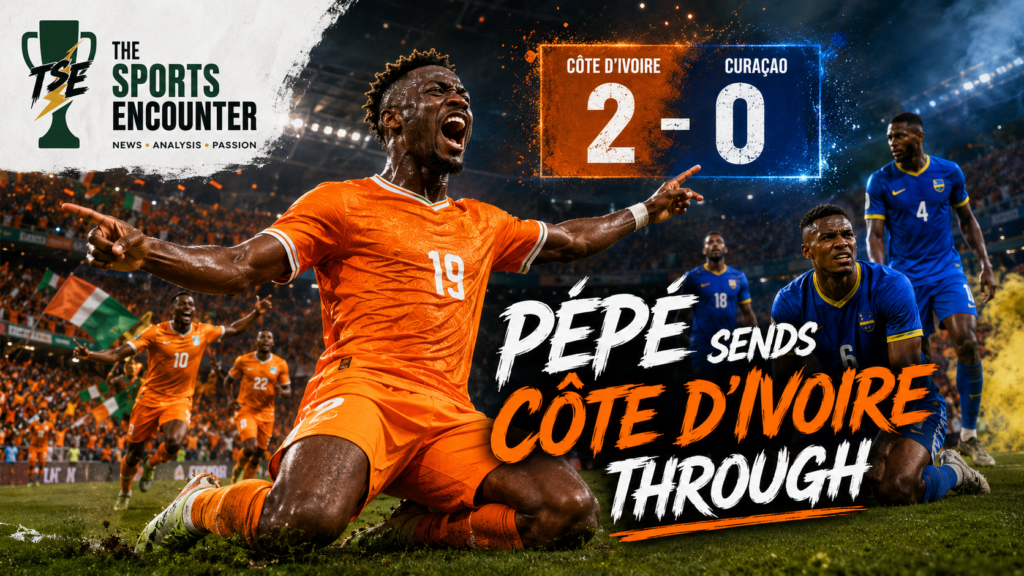
Côte d’Ivoire beat Curaçao 2-0 in their final FIFA World Cup 2026 Group E match, with Nicolas Pépé scoring once in each half to send the Elephants into the knockout stage for the first time in their World Cup history.
It was not a wild performance. It was not a 90-minute attacking storm. It was something more valuable in tournament football: control, patience, and punishment.
Curaçao had 11 shots to Côte d’Ivoire’s seven. They created nine chances to Côte d’Ivoire’s six. They competed in duels, pushed bodies forward, and refused to let the night become a quiet farewell.
But Côte d’Ivoire had the player who made the big moments count.
Pépé scored after seven minutes to settle Ivorian nerves, then struck again in the 64th minute to finish the job. That second goal changed the emotional temperature of the match. Curaçao still ran, still pressed, still believed, but the road back became too steep.
The result puts Côte d’Ivoire into the Round of 32, where they will face the Group I runner-up, which will be either France or Norway depending on the final Group I standings.
For more tournament coverage, fixtures, match reports, and fan-first analysis, follow The Sports Encounter’s FIFA World Cup 2026 hub.
Pépé Picked the Perfect Night to Become the Difference
Nicolas Pépé’s performance was not just about two goals.
It was about timing.
Côte d’Ivoire needed a senior attacker to turn anxiety into authority. Pépé gave them that inside seven minutes. His first goal punished Curaçao before the underdogs could fully settle into the match. In a game carrying knockout implications, that early strike mattered as much psychologically as it did on the scoreboard.
His second goal was even more important. Curaçao had stayed alive, kept asking questions, and had enough possession in dangerous spells to keep Côte d’Ivoire uncomfortable. Pépé’s 64th-minute finish gave the Elephants breathing room and forced Curaçao to chase the game with more risk.
That is what match-winning players do in tournament football.
They may not dominate every phase. They may not touch the ball every minute. But when the chance arrives, they change the scoreboard.
Pépé’s night also carried a personal edge. For a player whose international role has not always been guaranteed, this was a reminder that form, experience, and composure still matter when the lights get hot. Côte d’Ivoire did not need a highlight reel. They needed clean execution. Pépé gave them exactly that.
That kind of individual decisiveness has shaped several World Cup 2026 group-stage stories already, including Brazil’s attacking response in their Group C win over Scotland.
Côte d’Ivoire Showed the Kind of Control Knockout Football Demands
This was not Côte d’Ivoire at their most explosive.
That may actually be the bigger lesson.
The Elephants had 63.3% possession and completed 558 accurate passes with 89.4% passing accuracy. They controlled long spells and made Curaçao defend for extended periods. Yet the match still had tension because Curaçao created more total shots and more chances.
That balance tells us something about Côte d’Ivoire heading into the knockouts.
They can manage the ball. They can slow the game down. They can protect a lead. But they cannot afford to invite pressure too casually against stronger opponents.
France or Norway will punish loose transitions more ruthlessly than Curaçao could. If Côte d’Ivoire want to go deeper, they will need the same defensive maturity with sharper attacking rhythm around Pépé, Amad Diallo, Franck Kessié, Ibrahim Sangaré, and the wide runners.
The good news is clear: Côte d’Ivoire now have proof that they can win a pressure match without needing chaos.
That matters in the knockout rounds.
It also places them in the same wider tournament conversation as teams that have already shown how pressure can harden a side rather than break it, much like South Africa did in their historic win over South Korea.
Curaçao’s Tournament Deserved Respect, Not Sympathy
Curaçao are out, but this campaign should not be reduced to elimination.
This was a gutsy World Cup debut from the smallest nation ever to qualify for the tournament. They were hit hard by Germany in their opener, but they did not collapse emotionally. They responded with a disciplined 0-0 draw against Ecuador, then pushed Côte d’Ivoire harder than the final score suggests.
Their numbers from this match tell the story of a team that did not simply sit back and wait for mercy.
Curaçao had 11 shots, four corners, 12 successful dribbles, and 15 interceptions. They won more duels than Côte d’Ivoire and showed real courage in possession. The issue was not heart. The issue was final-third quality.
At this level, that gap is brutal.
Curaçao had moments through their wide players and midfield carriers, but they lacked the killer edge that Pépé provided for Côte d’Ivoire. That is often the difference between a brave story and a historic upset.
Still, Curaçao leave the World Cup with something valuable. They proved they belonged in the conversation. Their draw against Ecuador will remain one of the proud moments of their football history, and their refusal to fold after a heavy opening defeat says plenty about the group’s character.
World Cups are remembered for champions, but they are also shaped by teams that stretch the idea of who gets to stand on the biggest stage. Curaçao did that.
For more football stories built around team identity, pressure, and tournament meaning, visit The Sports Encounter’s soccer coverage.
What This Means for Group E
Group E ended with real drama.
Germany still advanced, but Ecuador’s 2-1 win over the Germans changed the feel of the group. Côte d’Ivoire’s victory over Curaçao gave the Elephants second place and sent them into the Round of 32 with belief.
For Côte d’Ivoire, this campaign has already crossed a historic line. Previous Ivorian World Cup teams carried major talent but never reached the knockout stage. This team has now done it.
That matters for African football, too.
Côte d’Ivoire have moved beyond being a dangerous group-stage name. They are now a knockout team with a chance to build a deeper run.
The next test will be harder. If the opponent is France, Côte d’Ivoire will face elite pace, depth, and tournament know-how. If it is Norway, they will face physical power, direct threat, and a team capable of punishing defensive hesitation.
Either way, the Elephants have earned the right to find out how far this story can go.
The knockout race has already turned several group-stage results into bigger stories, including Mexico’s controlled run in their Group A victory over Czechia.
Were There Any Red or Yellow Cards?
There were no red cards in Curaçao vs Côte d’Ivoire.
Curaçao received two yellow cards, while Côte d’Ivoire received one yellow card. The match had competitive edge, but it never turned into a disciplinary mess.
That matters for Côte d’Ivoire going into the knockouts. They avoided a red-card disaster, managed the emotional pressure well, and kept their key players available for the next stage.
Discipline, game management, and stoppages have become major talking points at this tournament, especially after the debate around World Cup 2026 hydration breaks and how coaches use every pause to reshape matches.
The Bigger Picture: Pépé Gives Côte d’Ivoire a Knockout Identity
Côte d’Ivoire’s win was historic, but the bigger question is what kind of team they are becoming.
Against Curaçao, they looked like a side learning how to win tournament matches without losing control. They had possession, experience, and enough attacking quality to punish mistakes. They also had moments where they allowed an underdog to stay alive longer than necessary.
That is the next step.
Good teams reach the knockouts. Dangerous teams improve once they get there.
Pépé has now given Côte d’Ivoire a headline moment. The challenge for the Elephants is to turn that moment into a full knockout identity: disciplined without becoming passive, patient without becoming slow, and ruthless when chances arrive.
Curaçao leave with pride.
Côte d’Ivoire move forward with history.
And Nicolas Pépé leaves Philadelphia as the man who turned pressure into progress.