GETAFE, Spain: Celta Vigo had the ball, the extra man and most of the second-half momentum.
They still left the Coliseum without their first La Liga victory of the season.
Getafe and Celta drew 1-1 on Monday in Matchday 4 of the 2026-27 La Liga season, with Martín Satriano scoring for the hosts in the 21st minute before Carl Starfelt equalized in the 57th.
The game then changed again when Getafe defender Zaid Romero was sent off in the 67th minute.
Story at a glance

Getafe vs Celta: Match at a Glance
The fixture formed part of La Liga Matchday 4, completing another important piece of a round that had already produced major results across Spain.
Satriano Gives Getafe Exactly the Start Bordalás Wanted
Getafe did not need much of the ball to establish control of the scoreline.
Celta’s 70% Possession Again Raises the Same Question
Celta are becoming one of the clearest early examples of why possession alone cannot define attacking quality.
Carl Starfelt Turns Territorial Control Into a Goal
Celta finally converted their pressure in the 57th minute.
Zaid Romero’s Red Card Should Have Been Celta’s Opening
Zaid Romero was dismissed in the 67th minute.
Celta had more than 20 minutes, plus stoppage time, to turn numerical superiority into three points.
They could not do it.
The visitors finished with 70% possession, completed 568 passes and attempted 14 shots. Getafe had only 30% possession and 235 passes, but José Bordalás’ side remained compact enough to protect the draw despite playing the final phase with 10 men.
That contrast is the real story.
Celta continue to move the ball far more comfortably than many teams around them in the table, but possession has not yet become enough goals or victories. Getafe remain almost the opposite: limited possession, direct attacking phases, physical defending and an ability to stay alive inside games that appear to be moving away from them.
Both clubs gained a point.
Neither solved its biggest early-season problem.
Getafe vs Celta: Match at a Glance
| Detail | Getafe | Celta Vigo |
|---|---|---|
| Final score | 1 | 1 |
| Goals | Martín Satriano 21′ | Carl Starfelt 57′ |
| Possession | 30% | 70% |
| Shots | 7 | 14 |
| Shots on target | 2 | 3 |
| Passes | 235 | 568 |
| Pass accuracy | 70% | 89% |
| Corners | 3 | 5 |
| Yellow cards | 3 | 2 |
| Red cards | 1 | 0 |
The fixture formed part of La Liga Matchday 4, completing another important piece of a round that had already produced major results across Spain.
Satriano Gives Getafe Exactly the Start Bordalás Wanted
Getafe did not need much of the ball to establish control of the scoreline.
That distinction matters.
Celta were already dominating possession when Satriano struck in the 21st minute, but Getafe’s game plan was never built around matching the visitors pass for pass.
Bordalás wanted his side compact without the ball, aggressive in duels and willing to move forward quickly whenever possession changed.
Satriano’s goal rewarded that approach.
The striker has already become an important outlet because Getafe need forwards who can turn relatively limited possession into meaningful attacking moments.
That was the same underlying challenge visible in their previous league defeat against Osasuna.
The Sports Encounter’s analysis of Getafe’s 1-0 loss at El Sadar showed a team capable of competing physically and territorially without consistently creating enough clean chances.
Against Celta, Getafe improved the most important part of that equation.
They scored first.
One Goal Changed the Entire Tactical Shape
Once ahead, Getafe no longer needed to chase possession.
They could defend the spaces Celta wanted, force the visitors to circulate around the block and wait for opportunities to counter.
The possession split became increasingly extreme.
Celta completed more than twice as many passes.
That did not automatically mean the visitors were twice as dangerous.
Getafe understood the distinction between conceding possession and conceding control.
For long spells of the first half, the ball belonged to Celta.
The score belonged to Getafe.
Celta’s 70% Possession Again Raises the Same Question
Celta are becoming one of the clearest early examples of why possession alone cannot define attacking quality.
They finished with 70% of the ball and completed 568 passes at 89% accuracy.
Those are strong technical numbers.
The attacking return was much more modest.
Fourteen shots produced only three efforts on target.
That means more than 500 completed passes ultimately produced only three attempts that required David Soria to make a save or resulted in the goal.
The issue is becoming familiar.
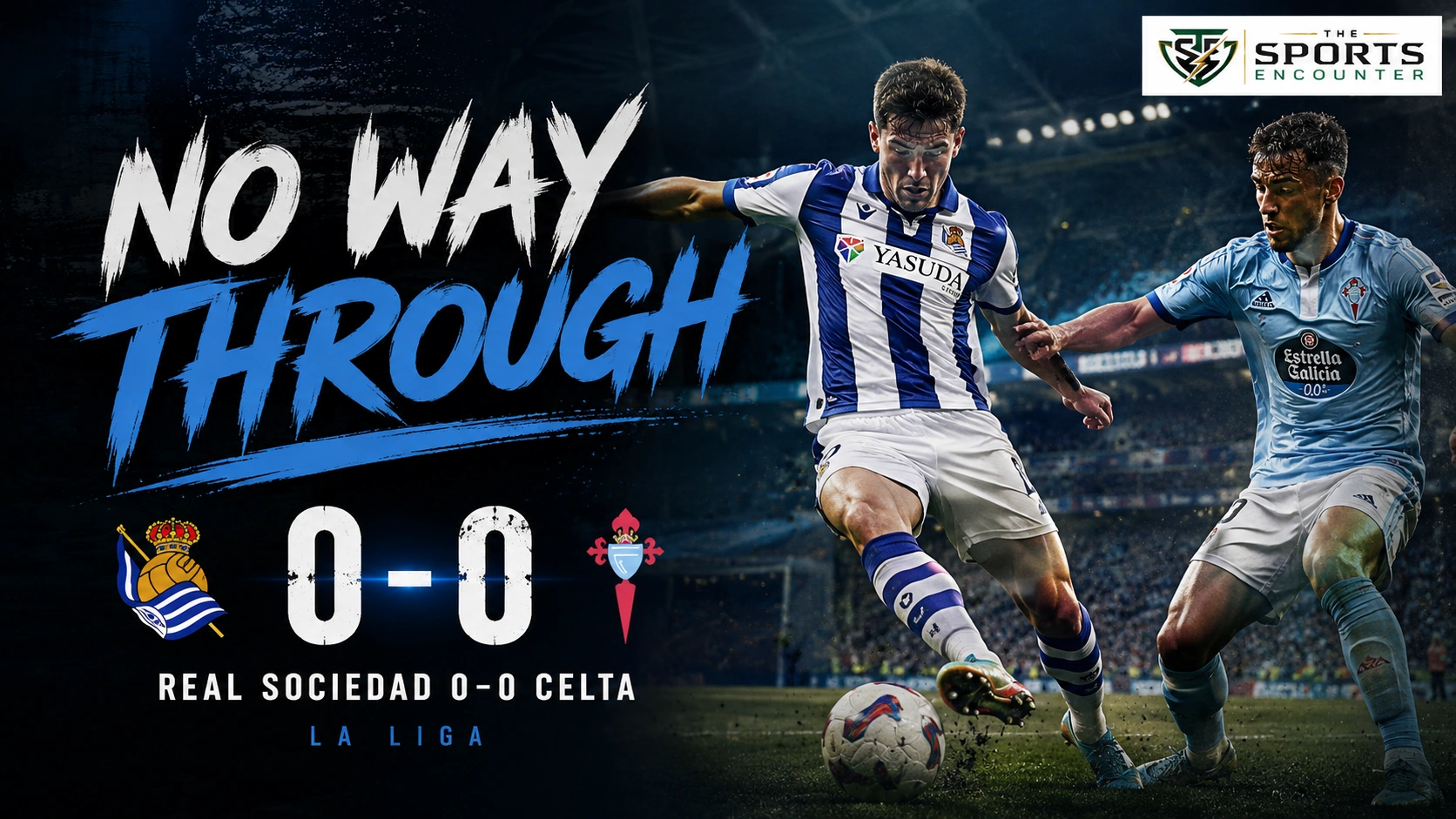
Only four days earlier, Celta drew 0-0 at Real Sociedad despite spending long periods inside another controlled possession game. The Sports Encounter’s analysis of that goalless draw at Anoeta showed how Celta’s defensive discipline could earn a point even when their own attack offered little cutting edge.
Getafe presented a different challenge.
The ball was available.
The central spaces were not.
Claudio Giráldez Needs More Penetration Between the Passes
Celta’s passing quality is not the problem.
The team can circulate the ball through defenders and midfielders with confidence.
The more difficult question is how often those sequences force an opponent to make an uncomfortable defensive decision.
Does a center-back have to step out?
Does a fullback become isolated?
Does a holding midfielder have to turn toward his own goal?
Does Soria face a shot from inside the penalty area?
Too many Celta possessions ended before reaching that stage.
The ball moved.
Getafe’s defensive structure often did not.
Carl Starfelt Turns Territorial Control Into a Goal
Celta finally converted their pressure in the 57th minute.
Carl Starfelt supplied the equalizer.
The center-back’s involvement was appropriate for the way the match had developed.
Celta had pushed greater numbers forward and increasingly forced Getafe to defend close to their own penalty area.
Starfelt’s goal changed the score without dramatically changing the pattern.
The visitors continued to control possession.
Getafe continued to defend deeper.
The difference was that Celta no longer had to chase the match from behind.
At 1-1, the next question became whether their territorial advantage could produce a second goal.
Ten minutes later, the conditions became even more favorable.
Zaid Romero’s Red Card Should Have Been Celta’s Opening
Zaid Romero was dismissed in the 67th minute.
Getafe were reduced to 10 men with almost a quarter of the match still to play.
For Celta, this was the opportunity the previous hour had failed to provide.
Numerical superiority should have made it easier to stretch Getafe horizontally, create overloads and force the defensive block to move further than it wanted.
Instead, the final phase became another example of possession failing to produce enough end product.
Celta remained on the ball.
They continued attacking.
They never found the decisive second goal.
Celta Have Already Been on the Other Side of a Red-Card Swing
The frustration will be sharper because Celta know how dramatically a dismissal can alter a league match.
Earlier this season, Marcos Alonso was sent off against Osasuna while Celta were leading 1-0.
Osasuna reacted immediately, equalized through Kike Barja and eventually completed a 2-1 comeback.
The Sports Encounter covered that turning point in our analysis of Celta’s collapse against Osasuna.
Monday gave Giráldez’s team the opposite scenario.
This time, their opponent lost a defender.
This time, Celta already had momentum.
This time, they could not turn the advantage into victory.
Getafe’s Final 20 Minutes Explain Why Bordalás Teams Are So Difficult to Kill
Getafe’s response to the red card deserves credit.
Playing with 10 men is not simply a matter of dropping deeper.
The distances between players have to become cleaner.
Wide areas need to be protected without opening the middle.
Central midfielders have to decide when to press and when to stay connected.
Clearances need to move beyond the immediate pressure rather than return the ball straight to the opponent.
Getafe did enough of those things correctly.
The home side did not suddenly become comfortable.
They became harder to break.
That has long been one of Bordalás’ strongest coaching traits.
His teams may not always produce attractive possession statistics, but they understand how to protect a result when circumstances become hostile.
Celta Still Have No League Win
The biggest problem for Celta is no longer theoretical.
The season is beginning to accumulate.
They remain without a La Liga victory after their latest draw.
The draws have provided some protection from a disastrous start, but single points do not move a team away from the lower part of the table quickly enough.
The broader context was already visible during The Sports Encounter’s opening La Liga weekend review, when Celta began the campaign with a goalless draw against Valencia.
That result looked acceptable in isolation.
Similar patterns repeating across subsequent games make it more concerning.
Celta’s Problem Is Not That They Cannot Compete
This distinction matters.
Celta are not being overwhelmed every week.
They have shown they can defend.
They can control possession.
They can move the ball through midfield.
They have experienced players such as Iago Aspas, Starfelt and Marcos Alonso alongside younger attacking options.
The issue is converting competitive performances into victories.
At this stage of a season, the difference between a respectable draw and three points begins to shape the table much faster than performances shape public perception.
Getafe Also Needed More Than a Draw
Celta will leave frustrated.
Getafe should not pretend one point solves everything either.
The hosts entered Matchday 4 with only one victory from their opening three matches.
They beat Racing Santander 1-0 before defeats against Alavés and Osasuna.
The Sports Encounter’s review of the Osasuna defeat showed the same attacking limitations that remained visible in parts of Monday’s game.
Getafe can stay competitive.
They are still not generating enough goals.
Satriano’s finish therefore matters beyond the point it helped earn.
Getafe need more players capable of converting the few opportunities their style tends to produce.
Matchday 4 Has Already Punished Teams That Cannot Finish Their Work
This draw fits the wider pattern of a fascinating La Liga weekend.
Barcelona destroyed Valencia 5-0.
Real Betis beat Real Madrid.
Athletic Club put three past Atlético Madrid.
Deportivo La Coruña came from behind twice to beat Villarreal.
Alavés scored five against Osasuna.
The Sports Encounter’s full Matchday 4 analysis through Sunday showed a league already splitting between teams that convert pressure and teams allowing strong positions to disappear.
Celta belong uncomfortably close to the second group.
Barcelona’s Start Makes Dropped Points Feel More Expensive
The problem for clubs in the middle and lower sections of the table is that La Liga’s strongest teams are already creating separation.
Barcelona have won four from four.
They have scored 17 goals.
Their 5-0 victory against Valencia added another dominant performance after similarly strong wins earlier in the campaign.
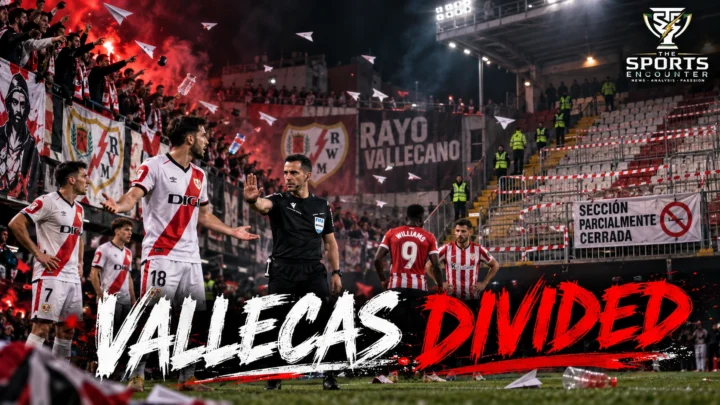
That attacking clarity has been a theme since the opening weeks, including Barcelona’s 5-2 win over Rayo Vallecano.
Getafe and Celta operate with very different objectives, of course.
The wider lesson remains relevant.
Teams climbing a table need to turn favorable situations into three points whenever possible.
Celta had that favorable situation after Romero’s dismissal.
They left with one.
Celta’s Attack Has Already Seen Several Different Defensive Problems
The opening weeks have provided Giráldez with a useful but uncomfortable set of tactical tests.
Valencia defended deeply and the game finished 0-0.
Osasuna punished Celta after Alonso’s red card.
Real Sociedad generated more attacking volume while Celta protected another scoreless draw.
Getafe gave up possession almost completely and challenged Celta to break a compact block.
These are different opponents.
The output remains inconsistent.
That is why the next phase of Celta’s season needs to be about attacking variety rather than simply more possession.
Starfelt’s Goal Shows One Route Celta Can Use More Often
Starfelt’s equalizer also offers a tactical clue.
When open-play combinations become slow, defenders can become valuable attacking pieces through set plays, second balls and sustained pressure after dead-ball situations.
Celta have enough size to make those moments meaningful.
The danger is relying on them because the forwards are not creating enough.
Starfelt scoring is useful.
Starfelt needing to score because the attacking unit cannot consistently break through is a different matter.
Getafe’s Low-Possession Identity Is Working Better Than Its Goal Return
Thirty percent possession is not inherently a problem for Getafe.
They do not want to play like Barcelona.
Bordalás is comfortable allowing opponents to have long spells on the ball when those spells remain outside the most dangerous areas.
The problem comes when Getafe’s own possessions produce too little.
Seven shots and two on target are modest numbers.
Satriano made one count.
That efficiency kept Getafe competitive.
It will not always be enough.
Getafe Need Their Forwards to Turn Direct Football Into More Than Territory
The squad contains several players capable of giving Getafe a more complete threat.
Satriano can run the channels.
Enes Ünal provides penalty-area presence.
Borja Mayoral offers another scoring profile when available.
The challenge is connecting those forwards with midfield quickly enough after possession changes.
If the first pass after a turnover is inaccurate, Getafe simply invite another wave of pressure.
Against 11 men, that becomes tiring.
Against 10, it becomes dangerous.
Celta’s Next Match Carries More Pressure Than the Table Alone Suggests
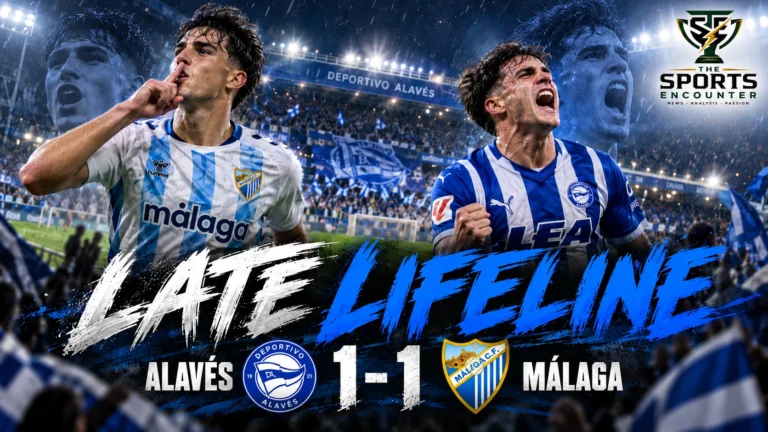
Celta return home to face Málaga on September 13.
On paper, that looks like a manageable opportunity.
In reality, it carries considerable pressure because another game without victory would turn an underwhelming start into a genuine early-season problem.
Giráldez does not need to abandon his possession structure.
He needs to make it more threatening.
More movement between center-back and fullback.
Faster switches when opponents compress one side.
More runs beyond the striker.
Earlier crosses when the box is occupied.
More willingness to shoot before defensive blocks become fully established.
Celta’s technical quality gives them the tools.
Now they need the output.
Getafe Face an Unbeaten Deportivo Side Next
Getafe remain at the Coliseum for their next league fixture against Deportivo La Coruña on September 13.
The club’s official September schedule confirms that three of Getafe’s four league games this month are at home.
That sequence offers an opportunity to build points.
It also creates pressure.
Deportivo have started the season strongly and remain unbeaten, including a dramatic 3-2 comeback victory at Villarreal.
Getafe cannot assume home organization alone will be enough.
The Draw Also Adds Context to Real Sociedad’s Earlier Celta Frustration
Celta’s ability to stay competitive away from home should not be dismissed.
Real Sociedad discovered that only days earlier.
Sociedad produced 17 shots and 11 corners but could not score against Celta, a performance examined in our tactical breakdown of the 0-0 draw at Anoeta.
Monday revealed the other side of Celta’s profile.
They are difficult to beat.
They are also finding victories difficult to create.
La Liga’s Early Middle Class Is Already Crowded
The distinction between a strong start and a dangerous one remains small after only four or five matches.
Several teams are separated by only a few points.
One victory can move a club several positions.
One winless month can do the opposite.
Real Sociedad have experienced similar early inconsistency after losing to Betis and Real Madrid before drawing with Celta. The Sports Encounter covered their opening defeat in our report on Betis’ 1-0 victory.
That is the environment Getafe and Celta now occupy.
There is time.
There is very little room to waste it.
TSE Analysis: Celta Controlled the Match but Getafe Controlled the Damage
The statistics make Celta look dominant.
Seventy percent possession.
Fourteen shots.
Five hundred sixty-eight passes.
An 89% completion rate.
More corners.
An extra player for the final 20-plus minutes.
Those numbers should normally describe a winning performance.
They did not.
Getafe allowed Celta to dominate the ball without allowing them to dominate enough decisive moments.
Starfelt’s equalizer was deserved.
The absence of a winner was equally revealing.
Celta need to become more ruthless when the game gives them structural advantages.
Getafe need to become less dependent on surviving those advantages.
That is why the point feels different for each side.
For Getafe, playing the final phase with 10 men makes the draw defensible.
For Celta, facing 10 men after already controlling the match makes the same draw feel like an opportunity lost.
Neither club leaves Matchday 4 transformed.
Getafe showed resilience.
Celta showed control.
Both still need more goals.
Continue the La Liga Story


Frequently Asked Questions
What was the Getafe vs Celta score?
Getafe and Celta Vigo drew 1-1 in La Liga Matchday 4 on September 7, 2026.
Who scored for Getafe against Celta?
Martín Satriano scored for Getafe in the 21st minute.
Who scored for Celta against Getafe?
Carl Starfelt equalized for Celta in the 57th minute.
Who was sent off in Getafe vs Celta?
Getafe defender Zaid Romero was shown a red card in the 67th minute.
How much possession did Celta have?
Celta finished with 70% possession compared with Getafe’s 30%.
How many shots did Celta have?
Celta attempted 14 shots and put three on target.
How many shots did Getafe have?
Getafe had seven shots, including two on target.
Did Celta win their first La Liga game of the season?
No. Celta remain without a league victory after the 1-1 draw at Getafe.
Who do Getafe play next?
Getafe host Deportivo La Coruña at the Coliseum on September 13.
Who do Celta play next?
Celta host Málaga on September 13 in their next La Liga fixture.