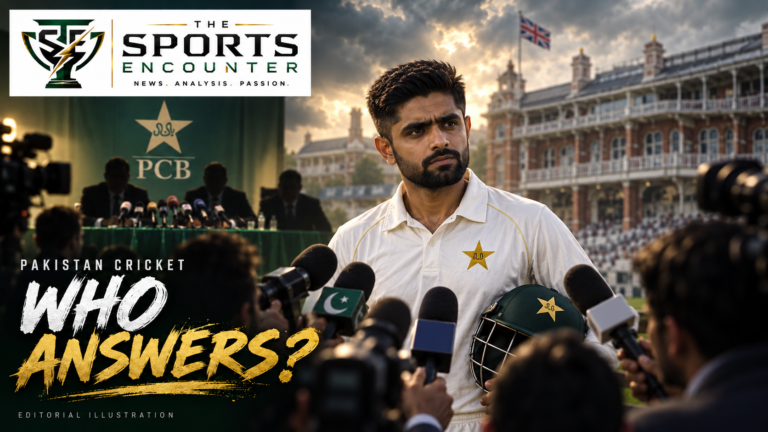
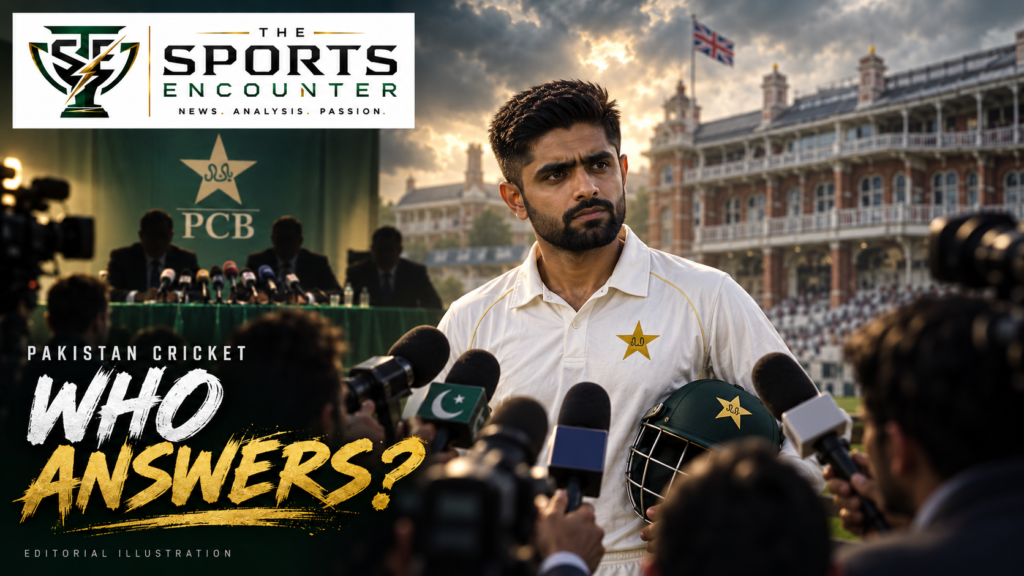
Pakistan sent Salman Ali Agha into the opening Test against England as captain. By the second match, he had lost his place in the XI. Before the third, he was heading home.
That sequence captures the uncertainty surrounding a tour that has moved from heavy defeats to a public examination of how Pakistan cricket operates. England hold an unassailable 2-0 lead, seven players have been released, two coaches have been replaced, and the Pakistan Cricket Board has launched a disciplinary inquiry.
The players cannot escape scrutiny. Pakistan failed to reach 200 in four completed innings. Yet the scale of the response raises questions for the officials who selected the squad, appointed its coaches and approved its preparation.
Former Pakistan coach Jason Gillespie has challenged the board’s treatment of players and Aaqib Javed’s decision-making. Nasser Hussain, Michael Atherton and Australian broadcaster Jim Maxwell have added different perspectives on the instability.
Story at a glance
Pakistan’s England Tour: What Is Confirmed?
The reported scope of PCB’s investigation does not establish that every allegation circulating on social media is true. Squad release also should not automatically be described as a disciplinary conviction or contract termination.
Pakistan’s Batting Gave England Control
Before examining the boardroom, the cricket deserves a clear assessment.
Seven Players Released, but What Was the Plan?
The players sent home included Mohammad Rizwan, Salman Ali Agha, Imam-ul-Haq, Ali Usman, Khurram Shahzad, Aamir Jamal and Muhammad Awais Zafar.
Jason Gillespie Challenges PCB’s Treatment of Players
Former Pakistan head coach and Australian fast bowler Jason Gillespie questioned whether the board’s decisions were making consistent performances harder to achieve.
Aaqib Javed’s Influence Requires a Public Accounting
Aaqib’s involvement in selection and high-performance planning places him close to decisions that shape Pakistan’s international readiness. His appointment as director of high performance expanded an already influential role.
For PCB chairman Mohsin Naqvi, the difficult task now is explaining how another round of changes will address problems that have survived several previous rounds.
TL;DR
- England secured the series with convincing victories at Headingley and Lord’s.
- Pakistan released seven players and replaced Sarfaraz Ahmed and Umar Gul before the final Test.
- Gillespie criticized selection instability, communication and attempts to blame former coaches.
- PCB confirmed a disciplinary inquiry, but several circulating allegations remain unresolved.
- Reports involving nine fined players concern an earlier Caribbean incident, not an established England bar incident.
- Pakistan’s history in England provides context, but allegations, disciplinary findings and proven corruption require separate treatment.
Pakistan’s England Tour: What Is Confirmed?
| Issue | Position as of September 7 |
|---|---|
| Series | England lead the three-Test series 2-0 |
| Opening Test | England won at Headingley by an innings and 103 runs |
| Second Test | England won at Lord’s by 194 runs |
| Coaching changes | Mike Hesson and Ashley Noffke replaced Sarfaraz Ahmed and Umar Gul |
| Squad changes | Seven players released before the final Test |
| Disciplinary investigation | PCB confirmed an inquiry into discipline and conduct |
| Nine-player fines | Reported in connection with an earlier Caribbean incident |
| Final Test | Edgbaston, September 9–13 |
The reported scope of PCB’s investigation does not establish that every allegation circulating on social media is true. Squad release also should not automatically be described as a disciplinary conviction or contract termination.
Pakistan’s Batting Gave England Control
Before examining the boardroom, the cricket deserves a clear assessment.
| Test | England | Pakistan | Result |
|---|---|---|---|
| Headingley | 409 | 171 and 135 | England won by an innings and 103 runs |
| Lord’s | 290 and 208 | 110 and 194 | England won by 194 runs |
Pakistan accumulated 610 runs across four innings, an average of 152.5. Those returns repeatedly left the bowlers defending inadequate totals or trying to repair damage they had not created.
Mohammad Abbas took nine wickets at Lord’s, while Saud Shakeel scored 97 in the second innings. Their contributions showed that individual players could compete. Pakistan’s batting unit still failed to sustain resistance, as explored in The Sports Encounter’s analysis of the Lord’s defeat and proposed rebuild.
The review should examine preparation against movement, judgment outside off stump and the ability to build partnerships after early wickets. Those are technical and tactical questions. A disciplinary inquiry cannot answer them.
Pakistan had an opportunity to respond after Headingley. Our assessment of their prospects before Lord’s outlined the need for a substantial improvement. Instead, another defeat exposed the same shortage of collective batting control.
Seven Players Released, but What Was the Plan?
The players sent home included Mohammad Rizwan, Salman Ali Agha, Imam-ul-Haq, Ali Usman, Khurram Shahzad, Aamir Jamal and Muhammad Awais Zafar.
Changing an unsuccessful team can be necessary. Reconstructing a substantial part of a touring squad with one Test remaining demands a fuller explanation.
What did selectors learn in England that they had not established beforehand? Which changes addressed form, which concerned fitness, and which reflected longer-term planning?
Salman’s treatment makes those questions particularly sharp. He became captain after Babar Azam’s injury ruled him out of the opening Test. His subsequent omission and release created a difficult sequence for supporters to understand.
The replacements also inherited a demanding assignment. They entered a beaten team amid intense public criticism, with limited time to settle. Reporting on the squad overhaul underlined how extensive the disruption had become.
Jason Gillespie Challenges PCB’s Treatment of Players
Former Pakistan head coach and Australian fast bowler Jason Gillespie questioned whether the board’s decisions were making consistent performances harder to achieve.
His criticism focused on selection, communication and the pressure surrounding the dressing room. He suggested that the players appeared fearful, while highlighting Salman’s rapid movement from captain to omission and departure. The Australian reported his intervention.
Players Deserve Direct Communication
Gillespie alleged that some released players learned about their removal through relatives, friends or media reports before receiving direct communication from the relevant officials.
That allegation requires a response from PCB. Whatever the merits of a selection decision, players should hear it from the people responsible for making it. The Nation’s account of Gillespie’s comments documented his concerns about that process.
Poor communication can damage trust beyond the individuals involved. Remaining squad members see how colleagues are treated and draw conclusions about their own security and standing.
Gillespie Rejects Blame Directed at Former Coaches
Gillespie also challenged Aaqib’s criticism of him and former white-ball coach Gary Kirsten. He argued that departed coaches could not reasonably carry responsibility for recent decisions made after they had left.
“I think Javed needs to look at himself in the mirror,” Gillespie said, according to coverage of his remarks.
Their disagreement predates this tour. In March 2025, Gillespie accused Aaqib of working against him and Kirsten behind the scenes. Those remain attributed allegations, rather than independently established findings. Contemporary reporting on their dispute nevertheless shows how long arguments over authority have persisted.
Gillespie’s difficult departure forms part of the context for his criticism. His experience inside the setup also makes the operational questions he raises worth examining.
Aaqib Javed’s Influence Requires a Public Accounting
Aaqib’s involvement in selection and high-performance planning places him close to decisions that shape Pakistan’s international readiness. His appointment as director of high performance expanded an already influential role.
It would be too absolute to say he never accepts responsibility. The evidence supports a more precise demand: supporters deserve a fuller explanation of decisions made under his influence.
Who recommended the original squad? What preparation did selectors consider sufficient? How did they define success for the coaching staff?
Pakistan’s decision to restore Babar Azam as Test captain was another major intervention. Such appointments need clear objectives and a consistent review process.
If the board holds players accountable for execution, selectors should explain their judgments with comparable specificity.
The Inquiry and the Bar Allegations Must Remain Separate
The disciplinary investigation has become one of the most widely discussed parts of the tour. It also carries the greatest risk of rumor overtaking evidence.
PCB’s announcement concerned discipline and conduct. It did not publicly establish every offense being alleged online.
Reports about phone examinations do not establish what investigators found. Similarly, an image of a player at a public venue cannot independently prove alcohol consumption, a curfew breach or a connection to poor performance.
The nine-player fines require their proper context. They reportedly concerned football viewing during an earlier Caribbean trip. The Guardian’s account should not be repackaged as confirmation of an England bar incident.
A credible process should explain the applicable rules, establish any breaches and give those involved a fair opportunity to respond. Public punishment without a clear explanation would add uncertainty to a tour already struggling with it.
What Broad, Hussain and Atherton Are Questioning
Stuart Broad and Imam-ul-Haq’s Injury
Stuart Broad questioned Imam’s public batting movements while the player was unavailable with a reported calf problem.
His observation added to the debate about communication and professionalism. It was not a medical finding establishing that Imam had fabricated an injury. Reporting on Broad’s comments needs that qualification.
Clear medical updates could have reduced the space for speculation. When visible activity appears difficult to reconcile with an injury report, the team should explain what the player can and cannot do.
Hussain and Atherton Look Beyond Individual Errors
Nasser Hussain’s criticism focused on the disruption surrounding Pakistan’s players. Michael Atherton also expressed sympathy for Babar amid the pressure.
Their analysis brings attention to the working environment. Players need to understand their roles, receive consistent guidance and trust that selection follows a coherent process. Sky Sports’ discussion of the upheaval placed administrative decisions at the center of that concern.
Instability cannot excuse every dismissal. It can make sustained improvement more difficult, particularly when a team changes personnel before establishing why its previous approach failed.
Jim Maxwell’s Criticism Puts Mohsin Naqvi Under Scrutiny
Jim Maxwell, the Australian broadcaster, directed unusually strong criticism toward Pakistan’s leadership.
Responding to a post carrying Naqvi’s remarks about selection criticism, Maxwell wrote: “Leadership vacuum and the players are the victims.” His original post also contained broader political accusations, which should be understood as his opinions rather than findings against particular officials.
Naqvi’s reported statement was:
“There is always criticism when it comes to team selection and I am not bothered by it.”
The quotation appeared in coverage of his defense of the changes.
A chairman need not respond to every angry reaction. He should explain major decisions that affect the national team.
What failed in the original selection? Why were coaching replacements necessary during the series? How will the next appointments receive the support their predecessors apparently lacked?
Those answers would give supporters more confidence than a general declaration that criticism does not matter.
Pakistan’s Problems Predate This Tour
The England defeats sit within a longer period of disappointing results and coaching turnover.
Bangladesh’s historic 2-0 series victory in Pakistan in 2024 exposed substantial weaknesses. Another Bangladesh series victory at home in 2026 reinforced the need for improvement.
Kirsten departed in October 2024, followed by Gillespie that December. Coverage of Gillespie’s resignation documented another breakdown in Pakistan’s coaching arrangements.
Repeated appointments create a responsibility to review the appointment process itself. Otherwise, the board risks measuring each coach’s failures while leaving the conditions surrounding those failures untouched.
Why Pakistan’s England Tours Carry So Much Baggage
The rivalry’s history helps explain the intensity of present coverage. It does not justify treating every controversy as the same offense.
| Year | Episode | Essential context |
|---|---|---|
| 1987 | Pakistan’s first series victory in England; later Gatting–Rana confrontation | The confrontation occurred in Faisalabad during England’s separate tour of Pakistan |
| 1992 | Reverse-swing controversy and ball-tampering allegations | Suspicion and accusation did not establish every claim |
| 1996 | Imran Khan won the Botham–Lamb libel case | The verdict concerned the specific litigation |
| 2006 | Pakistan forfeited the Oval Test | Inzamam later received a ball-tampering acquittal but a disrepute sanction |
| 2010 | Lord’s spot-fixing scandal | Proven wrongdoing resulted in sanctions |
| 2026 | Personnel overhaul and disciplinary inquiry | Current allegations require their own evidence |
1987 and 1992: Keep the Events Accurate
Pakistan won their first Test series in England under Imran Khan in 1987. The famous Mike Gatting–Shakoor Rana confrontation came later that year in Faisalabad and concerned a fielding dispute and its aftermath. ESPNcricinfo’s retrospective explains the episode.
In 1992, Pakistan’s 2-1 victory became entangled with suspicion surrounding reverse swing. Wasim Akram and Waqar Younis possessed exceptional skill with the older ball, while accusations about their methods generated intense coverage.
Wisden’s contemporary account captures the dispute. Technical excellence and proven illegality should not be treated as interchangeable.
Imran, Botham and Lamb: The Courtroom Battle
Imran won the libel case brought by Ian Botham and Allan Lamb in July 1996. Contemporary reporting recorded the verdict.
The outcome belongs in the rivalry’s history. It was not a legal judgment on every accusation made throughout that era.
2006: The Forfeit and the Acquittal
At the Oval, umpires penalized Pakistan for alleged ball tampering. Pakistan refused to resume play, and the Test ended in forfeiture.
Inzamam-ul-Haq was subsequently cleared of ball tampering but found guilty of bringing the game into disrepute, receiving a four-ODI suspension. Reporting on the hearing records both findings.
Any account that repeats the accusation while omitting the acquittal leaves readers with an incomplete history.
2010: Proven Spot-Fixing
The Lord’s spot-fixing scandal occurred in 2010, not 2009. Salman Butt, Mohammad Asif and Mohammad Amir received sanctions following an independent tribunal, as documented in the ICC’s statement.
Nothing publicly established about the current inquiry justifies presenting it as an equivalent scandal.
England Exposes Problems, but Does Not Explain Them All
English conditions test technique, while sustained media attention magnifies disagreements. Pakistan’s history gives each new dispute an immediate backdrop.
There have also been major successes. Pakistan’s 2017 Champions Trophy semifinal victory over England challenges any suggestion that these encounters inevitably end in controversy. The wider history, reflected in our Celebration of 5000 ODIs collection, contains achievement as well as conflict.
Scrutiny should apply consistently. England’s own decision to omit Brydon Carse during a regulatory investigation also requires careful separation between an investigation and an established finding.
What Meaningful PCB Accountability Would Look Like
A useful review would connect decisions to the people authorized to make them.
| Area | Question requiring an answer |
|---|---|
| Selection | Why did selectors consider the original squad ready? |
| Preparation | Did training address the demands of English conditions? |
| Coaching | What authority and support did the coaches receive? |
| Discipline | Which breaches have been established, and through what process? |
| Communication | Did players receive decisions directly and promptly? |
| Leadership | Were the captain’s responsibilities clearly defined? |
| Administration | Which senior officials owned the decisions that failed? |
Players should answer for poor performance and proven misconduct. Coaches must explain their methods, while selectors should account for their judgments. Senior administrators need to assess whether their own interventions helped or hindered the team.
Without that full review, another overhaul may change the names while preserving the weaknesses.
Edgbaston Cannot Answer Every Question
A stronger final Test would give Pakistan something tangible to take home. The players need runs, wickets and evidence that they can compete.
Even a victory would leave the larger questions unresolved. Supporters following The Sports Encounter’s international cricket coverage deserve to know why the touring plan failed and how the board intends to improve it.
Gillespie’s criticism has sharpened that debate. Once an administration has repeatedly changed captains, coaches and squads, it owes the public an equally serious examination of its own decisions.
Continue the Cricket Story
 CricketPSL Eyes Six-a-Side Tournament to Reach Smaller Cities, but Can Another Cricket League Make Money?
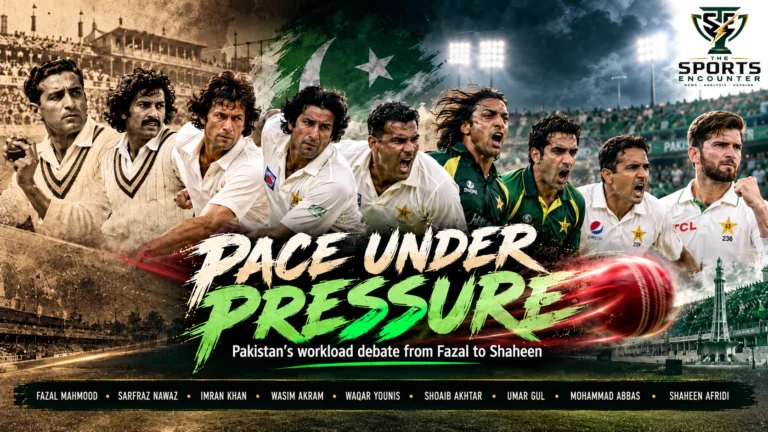 CricketThe Vanishing Workhorse: How Pakistan’s Fast-Bowling Burden Really Changed Over the Years
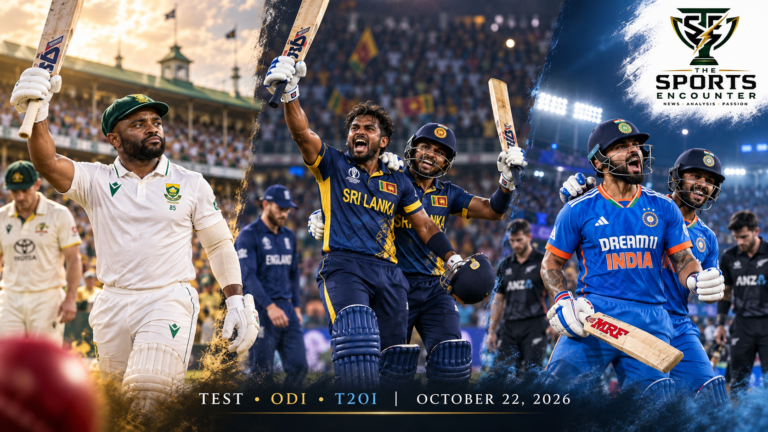 CricketOctober 22, 2026: Cricket’s Three Formats Deliver an Innings Victory, Two Record Chases and a Rare Day of Drama
Frequently Asked Questions
Have Pakistan already lost the England Test series?
Yes. England won at Headingley and Lord’s to secure an unassailable 2-0 lead before the final Test.
Which coaches replaced Sarfaraz Ahmed and Umar Gul?
Mike Hesson and Ashley Noffke took over for the remainder of the tour.
What did Jason Gillespie criticize?
He questioned selection instability, communication with released players and Aaqib Javed’s attempts to blame former coaches for Pakistan’s current problems.
Were nine players fined for visiting bars in England?
The reporting cited here does not establish that claim. The reported nine-player fines concerned an earlier Caribbean incident.
England
- How Rocky Flintoff Is Breaking Andrew Flintoff’s Records: Stats, Milestones, and Career Story
- The Straight Re(a)d: England’s Wembley Warning, Haaland’s Habit and Manchester City’s Reckoning
- From Prime Time to 4 A.M.: How Asia-Pacific Fans Live a Premier League Weekend
- From Chelsea’s Swagger to Arsenal’s Control: How a London Rivalry Flipped in a Decade
- A Celebration of 5000 ODIs Match 39: England Win the World Cup on Boundary Count After New Zealand Tie Them Twice