JOHANNESBURG / SYDNEY: South Africa and Australia have made two very different selection decisions before their multi-format showdown begins later this month.
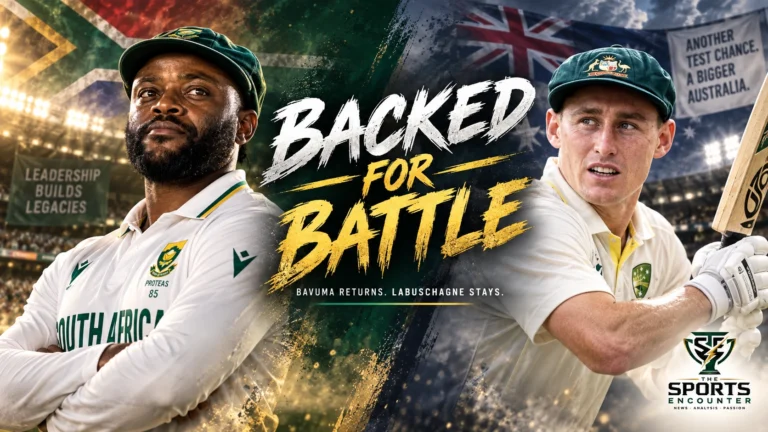
South Africa have placed Temba Bavuma back at the center of their ODI plans, naming the 36-year-old captain of a 16-player squad for the three-match series against Australia from September 24 to 30.
Australia, meanwhile, have chosen continuity where the evidence has become considerably less comfortable.
Marnus Labuschagne has retained his place in Australia’s 16-player Test squad despite scoring only 36 runs across three innings during the recent 1-1 series draw against Bangladesh. Cooper Connolly, Michael Neser and Matthew Kuhnemann have been added to the group for the three Tests in Durban, Gqeberha and Cape Town.
Story at a glance
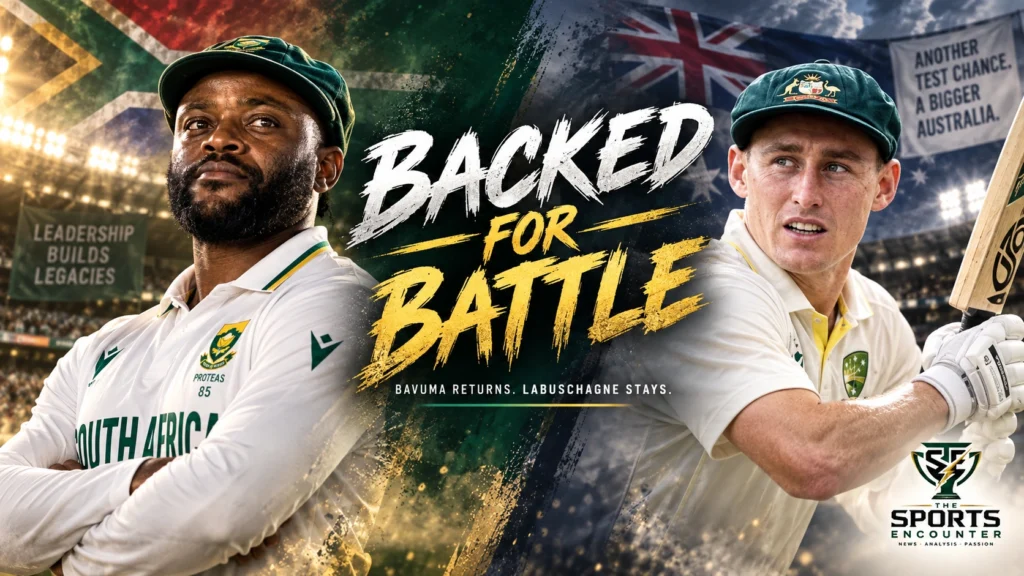
Bavuma Returns to a South Africa Side That Has Spent Weeks Testing Its Depth
The timing of Bavuma’s return matters.
South Africa ODI Squad vs Australia
Cricket South Africa’s official ODI squad announcement confirms Bavuma as captain, Coetzee’s recall and the absence of Rabada through injury.
Gerald Coetzee’s Recall Gives South Africa Another Fast-Bowling Question to Answer
Coetzee has not played an ODI for South Africa since the 2023 World Cup in India.
Dewald Brevis Is the Most Interesting Omission
Brevis’ absence immediately stands out because he has spent recent weeks producing some of South Africa’s most destructive white-ball batting.
The 2027 World Cup Is Already Influencing South Africa’s Decisions
The 2027 Men’s Cricket World Cup sits only a little more than a year away.
Those decisions are connected by more than the opposition.
South Africa are trying to define who they want to become before co-hosting the 2027 ICC Men’s Cricket World Cup. Australia are trying to decide how long previous achievement should protect an established batter whose recent Test output has declined sharply.
One selection is about restoring a trusted leader to a side that has spent recent weeks testing its depth.
The other is about giving a proven player another opportunity to show that form, rather than decline, explains the problem.
South Africa vs Australia 2026: The Key Selection Decisions
| Team | Format | Major Decision | Why It Matters |
|---|---|---|---|
| South Africa | ODI | Temba Bavuma named captain | Senior leadership returns before 2027 World Cup preparations intensify |
| South Africa | ODI | Gerald Coetzee recalled | Fast bowler returns to 50-over setup for first time since 2023 World Cup |
| South Africa | ODI | Kagiso Rabada unavailable | Creates opportunities for younger and fringe pace options |
| Australia | Test | Marnus Labuschagne retained | No. 3 receives another opportunity after poor Bangladesh series |
| Australia | Test | Cooper Connolly added | Creates another middle-order and potential No. 3 option |
| Australia | Test | Michael Neser recalled | South Africa-born seamer returns after recovering from calf injury |
| Australia | Test | Matthew Kuhnemann included | Gives Australia second specialist spin option alongside Nathan Lyon |
Bavuma Returns to a South Africa Side That Has Spent Weeks Testing Its Depth
The timing of Bavuma’s return matters.
South Africa have just completed a period in which many of their established players were absent and younger cricketers were given significant international responsibility.
Bjorn Fortuin captained an experimental Proteas squad during the recent Namibia-Zimbabwe T20I tri-series in Windhoek, a competition previewed in depth by The Sports Encounter before South Africa began testing their next generation.
The experiment did not begin smoothly.
Namibia defeated South Africa by 18 runs in the opening game, with Dewald Brevis providing most of the resistance during a flawed chase. Our analysis of Namibia’s second T20I victory over the Proteas showed why South Africa’s depth could not be judged purely by reputation.
The response was considerably stronger.
Lhuan-dre Pretorius, Brevis, Fortuin and several younger players began taking greater responsibility. Pretorius made 94 against Zimbabwe before later scoring his maiden T20I century, developments followed in our reports on South Africa’s 43-run win over Zimbabwe and Pretorius’ breakthrough hundred against Namibia.
That tournament tested the edges of South Africa’s player pool.
The Australia ODI series begins the next phase.
Bavuma, Quinton de Kock, David Miller, Marco Jansen, Keshav Maharaj and other established names bring senior structure back into the squad while selectors continue evaluating players who could matter in 2027.
South Africa ODI Squad vs Australia
| Player | Role / Selection Context |
|---|---|
| Temba Bavuma | Captain |
| Ottneil Baartman | Fast bowler, death-overs option |
| Corbin Bosch | Seam-bowling all-rounder |
| Matthew Breetzke | Middle-order batting option |
| Gerald Coetzee | Recalled to ODI squad |
| Quinton de Kock | Top-order batting / wicketkeeping option |
| Tony de Zorzi | Top-order batter |
| Bjorn Fortuin | Left-arm spinner |
| Marco Jansen | Fast-bowling all-rounder |
| Keshav Maharaj | Specialist spinner |
| Kwena Maphaka | Left-arm fast bowler |
| Aiden Markram | Available for second and third ODIs |
| David Miller | Experienced middle-order finisher |
| Lungi Ngidi | Fast bowler |
| Ryan Rickelton | Top-order / wicketkeeping option |
| Tristan Stubbs | Middle-order power hitter |
Cricket South Africa’s official ODI squad announcement confirms Bavuma as captain, Coetzee’s recall and the absence of Rabada through injury.
Gerald Coetzee’s Recall Gives South Africa Another Fast-Bowling Question to Answer
Coetzee has not played an ODI for South Africa since the 2023 World Cup in India.
His return comes at an important moment.
Rabada will miss the ODI series through injury, removing the attack’s most established fast bowler and creating greater responsibility for Ngidi, Jansen, Maphaka, Bosch, Baartman and Coetzee.
South Africa do not lack pace options.
The harder question is role clarity.
Which bowler takes the new ball?
Who attacks through the middle overs?
Who is trusted at the death?
How many all-rounders can the side carry without weakening specialist batting?
Head coach Shukri Conrad has indicated that Baartman’s death-bowling ability remains an important part of the evaluation, while Coetzee’s pace gives South Africa another aggressive wicket-taking option.
The Australia series provides three high-quality matches in which those roles can be tested before the World Cup cycle becomes less experimental.
Dewald Brevis Is the Most Interesting Omission
Brevis’ absence immediately stands out because he has spent recent weeks producing some of South Africa’s most destructive white-ball batting.
He scored 75 against Namibia in the tri-series opener and continued to threaten attacks throughout the Windhoek tournament.
Yet South Africa have preferred Breetzke, Miller and Stubbs among their primary middle-order options for Australia.
That does not necessarily mean Brevis has moved backward in the selectors’ plans.
It suggests South Africa are separating roles.
Conrad wants a middle order capable of attacking but also absorbing pressure and extending an innings when conditions demand restraint.
That distinction becomes particularly important in ODI cricket.
Twenty-over form can demonstrate hitting ability.
Fifty-over batting asks whether the same player can survive a difficult 15-over period without allowing the innings to stall completely.
The 2027 World Cup Is Already Influencing South Africa’s Decisions
The 2027 Men’s Cricket World Cup sits only a little more than a year away.
South Africa, Zimbabwe and Namibia will co-host it.
That fact has been central to TSE’s recent African cricket coverage because selection decisions made now carry unusually clear consequences.
Our tri-series preview framed the Windhoek tournament partly as an early test of the three co-hosts’ depth and regional development.
The Australia ODIs represent a different level of preparation.
South Africa are no longer simply identifying players who might eventually become useful.
They are beginning to define the combinations that could actually play at the World Cup.
Bavuma’s captaincy therefore matters beyond three September matches.
Leadership stability gives South Africa one fewer question to answer while the selectors work through batting combinations, bowling roles and squad balance.
South Africa’s Australia ODI Series Has Three Distinct Tests
| Date | Match | Venue |
|---|---|---|
| September 24 | 1st ODI | Kingsmead, Durban |
| September 27 | 2nd ODI | Wanderers, Johannesburg |
| September 30 | 3rd ODI | JB Marks Oval, Potchefstroom |
The Johannesburg game is South Africa’s annual Pink Day fixture, adding another layer to a series already carrying selection and World Cup significance.
South Africa also have useful recent history against Australia at home.
Their previous home ODI series against the Australians in 2023 began with two defeats before the Proteas won three consecutive games to take the series 3-2.
Australia’s Selection Question Is Much Less Comfortable
South Africa are trying to decide which players deserve larger future roles.
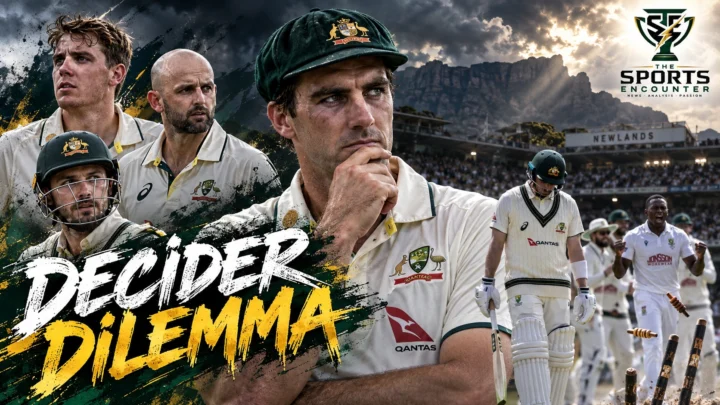
Australia are trying to determine whether one of their most established batters still deserves his current one.
Labuschagne remains in the Test squad after scores of 1, 31 and 4 against Bangladesh.
Those 36 runs came during a two-Test series that exposed Australia’s batting fragility even though Pat Cummins’ side recovered to draw 1-1.
The warning began in Darwin.
Bangladesh bowled Australia out for 198 before winning by nine wickets, a defeat examined in detail in our analysis of Australia’s batting crisis and aging core.
Labuschagne made one in the first innings and 31 in the second.
The problem continued in Mackay.
He made four before Shoriful Islam bowled him during a remarkable spell that briefly threatened another Australian batting collapse.
Australia eventually won by an innings and 51 runs behind Mitchell Starc’s 10-wicket haul, but our review of the 1-1 Bangladesh series noted that the bowling recovery did not eliminate every concern around the top order.
Labuschagne’s Numbers Now Require More Than a Temporary Explanation
Labuschagne’s form issue is not confined to one series.
He has gone more than three years without a Test century.
His last came when he made 111 against England at Manchester in 2023.
Cricket Australia’s own selection analysis notes that he has averaged 24.69 across 43 Test innings since that hundred.
For a player who once pushed his Test average beyond 60 and made the No. 3 position his own, that decline is significant.
The question facing selectors is therefore no longer whether Labuschagne can bat at Test level.
He has already proved that.
The question is whether the version of Labuschagne that built that reputation remains recoverable.
Australia Test Squad for South Africa
| Player | Selection Context |
|---|---|
| Pat Cummins | Captain |
| Scott Boland | Fast bowler |
| Alex Carey | Wicketkeeper-batter |
| Cooper Connolly | Added to squad, primarily selected as batter |
| Cameron Green | Top-order / middle-order option |
| Josh Hazlewood | Fast bowler |
| Travis Head | Opening batter, possible role flexibility |
| Josh Inglis | Backup wicketkeeper and batting option |
| Matthew Kuhnemann | Second specialist spinner |
| Marnus Labuschagne | Retained despite poor recent form |
| Nathan Lyon | Lead spinner |
| Michael Neser | Returns after calf injury |
| Matthew Renshaw | Retained after returning as opener |
| Steve Smith | Senior batter, possible No. 3 option |
| Mitchell Starc | Fast bowler |
| Beau Webster | All-rounder |
Cricket Australia’s official Test squad announcement confirms Labuschagne’s retention and the additions of Connolly, Kuhnemann and Neser.
Australia Have Retained Labuschagne Without Guaranteeing Him No. 3
This is the most important distinction in the Australian announcement.
Labuschagne is on the plane.
That does not necessarily mean he is guaranteed to remain at first drop.
Selection chair George Bailey has acknowledged that Australia’s batting group has not functioned as consistently as the selectors would like and has left several structural options open.
Steve Smith has substantial experience at No. 3.
Travis Head could move back into the middle order.
Connolly is viewed as capable of batting higher as his career develops.
Josh Inglis provides another flexible batting option.
Australia therefore have not resolved their batting question by selecting Labuschagne.
They have delayed the final decision until closer to Durban.
The ODI Omission May Actually Help Labuschagne
Australia left Labuschagne out of the ODI squad that will play South Africa immediately before the Tests.
That could become useful.
Instead of moving between white-ball and red-ball preparation, Labuschagne can focus exclusively on rebuilding the technical and mental patterns required for Test cricket.
Australia also have a two-day tour match in Potchefstroom on October 3 and 4 before the first Test.
That may be the most important innings Labuschagne plays before the series begins.
He does not need another reminder that selectors are watching.
He needs runs substantial enough to simplify their decision.
Cooper Connolly Adds Pressure Even if He Was Not Selected to Replace Labuschagne
Connolly’s inclusion creates an important competitive dynamic.
The 23-year-old made 149 in an ODI against Bangladesh in June and continues to be viewed as one of Australia’s most adaptable young batting options.
Bailey has indicated that Connolly was selected primarily for his batting rather than his spin because a back issue has restricted his bowling workload.
That places his batting more directly into the conversation.
Connolly has limited first-class experience at No. 3.
He does not need to become the immediate answer.
His presence means Australia possess another answer if Labuschagne continues to fail.
Matthew Renshaw Gets Another Opportunity at the Top
Renshaw replaced Jake Weatherald for the second Bangladesh Test and has retained his place.
He made only eight in his sole innings at Mackay, but Australia have resisted another opening change.
That means several positions around Labuschagne remain connected.
If Head continues opening, Renshaw has another opportunity alongside him.
If Australia move Head down the order, the opening combination changes again.
If Smith moves to No. 3, the middle order shifts.
A single change can therefore affect three or four batting positions.
This is why Australia’s selectors are reluctant to solve the Labuschagne problem in isolation.
South Africa Will Test Australia’s Batting More Severely Than Bangladesh Did
That may sound strange after Bangladesh won in Darwin.
The point concerns bowling depth rather than the series result.
South Africa can construct attacks around Rabada, Jansen, Ngidi, Maharaj and several additional fast-bowling options, depending on fitness and final Test selection.
Home surfaces also provide different challenges across Durban, Gqeberha and Cape Town.
Australia’s previous Bangladesh series had already been framed as an important preparation block in TSE’s full Australia-Bangladesh Test preview.
Darwin then exposed the batting problems more sharply than expected.
The South Africa series will determine whether Australia actually solved them.
Australia Return to South Africa for Their First Test Series There Since 2018
The historical context is impossible to ignore.
Australia have not played a Test series in South Africa since 2018.
That tour became one of the darkest episodes in modern Australian cricket after the ball-tampering scandal at Newlands.
Only six players from Australia’s 2026 squad were involved in that tour in some capacity: Cummins, Hazlewood, Lyon, Smith, Starc and Renshaw.
Eight years later, the rivalry returns with both teams carrying very different identities.
South Africa are the reigning World Test Championship holders.
Australia have remained one of Test cricket’s most consistent teams but enter the tour with legitimate questions surrounding the top order.
Cricket South Africa’s official 2026-27 home schedule confirms the three Tests will be played from October 9 to 31.
South Africa vs Australia 2026 Test Schedule
| Match | Dates | Venue |
|---|---|---|
| 1st Test | October 9-13 | Kingsmead, Durban |
| 2nd Test | October 18-22 | St George’s Park, Gqeberha |
| 3rd Test | October 27-31 | Newlands, Cape Town |
Gqeberha Could Make Australia’s Spin Selection Important
Kuhnemann’s inclusion should not be treated as simple squad depth.
St George’s Park has developed differently from many South African Test venues in recent years, with spin playing a more meaningful role than the country’s broader reputation for pace might suggest.
That gives Australia the option of pairing Kuhnemann with Lyon if conditions support two specialist spinners.
Connolly could eventually offer another slow-bowling option, although his recent back issue means his bowling workload remains limited.
The squad has therefore been built around conditions rather than a fixed XI.
Michael Neser’s Return Adds a Personal South African Story
Neser missed the Bangladesh series because of a calf injury but has been included for South Africa with selectors expecting him to complete his bowling reintegration before the Tests begin.
His selection carries an additional layer.
Neser was born in South Africa.
So was Labuschagne.
Both now return with very different pressures.
Neser is trying to earn an opportunity inside an Australian pace attack containing Cummins, Starc, Hazlewood and Boland.
Labuschagne is trying to protect a position he once appeared to own indefinitely.
The Bangladesh Series Changed the Meaning of Australia’s South Africa Tour
Before Bangladesh arrived, Australia could approach South Africa primarily as another major Test assignment.
Darwin changed the context.
Bangladesh’s nine-wicket victory revealed how fragile Australia’s batting could become when the top order failed together.
The Sports Encounter’s Darwin analysis identified Labuschagne as the clearest individual symbol of a broader batting problem.
Mackay then showed Australia’s other side.
Starc took 10 wickets, Bangladesh were dismissed for 64 and 95, and Australia won inside two days.
Our series review argued that the violent response could not completely erase the questions created by the first Test.
The final 1-1 scoreline contained both realities.
Australia still possess an attack capable of destroying opponents.
The batting still needs to become less dependent on somebody rescuing the innings.
Australia’s 2026 Schedule Has Left Little Time to Hide Red-Ball Problems
The Bangladesh series formed part of an unusually dense period of Test cricket that TSE examined in our analysis of 19 consecutive scheduled days of Test cricket in August.
Australia now move from one significant assignment into another without a long rebuilding window.
That increases the importance of getting the batting structure right before Durban.
South Africa’s fast bowlers will not provide much time for technical experimentation once the series begins.
The ODI Series Will Also Revisit One of Cricket’s Great Bilateral Rivalries
South Africa-Australia ODI cricket has repeatedly produced matches in which normal score expectations become almost meaningless.
The 2016 Durban ODI remains one of the most obvious examples. Australia made 371, only for South Africa to chase it through David Miller’s unbeaten 118.
That match features in The Sports Encounter’s Celebration of 5000 ODIs project, which tracks the games that shaped the format across more than five decades.
The rivalry’s history should not obscure the modern stakes.
For South Africa, September is about World Cup preparation.
For Australia, the ODIs also serve as the immediate lead-in to a Test series carrying much larger red-ball questions.
TSE Analysis: South Africa Are Defining Roles, Australia Are Defending Trust
The two squad announcements reveal very different selection philosophies.
South Africa’s ODI group feels forward-looking.
Bavuma provides stability.
Miller, de Kock, Markram and Maharaj provide experience.
Maphaka, Baartman, Bosch, Breetzke and Coetzee provide competition.
The omission of Brevis shows that strong form alone does not guarantee a place when selectors are trying to build a specific 50-over structure.
South Africa can afford that selectivity because recent tournaments have exposed them to a broader range of emerging players.
The experimental Windhoek squad produced both failure and growth.
September’s Australia series now asks which lessons survive when the established players return.
Australia’s decision on Labuschagne is more delicate.
The selectors are relying on history.
They know the player who once became one of the world’s most productive Test batters still exists somewhere inside the current technical struggle.
What they cannot know is whether another series will bring him back.
His Bangladesh scores offer no reassurance.
The three-year century drought offers even less.
Yet dropping him before South Africa would also mean abandoning a player with 95 innings of experience at No. 3 just before a series likely to place extraordinary pressure on that position.
Australia have chosen one more examination rather than an immediate verdict.
That is defensible.
It is not consequence-free.
If Labuschagne scores heavily in South Africa, the selectors will be praised for trusting established quality through a prolonged downturn.
If the same pattern continues, the argument that experience justified patience will become much harder to sustain.
Bavuma enters the tour with authority restored.
Labuschagne enters it with authority to regain.
Those two positions capture the difference between South Africa and Australia before a six-match contest that will stretch from late September through the end of October.
Continue the Cricket Story
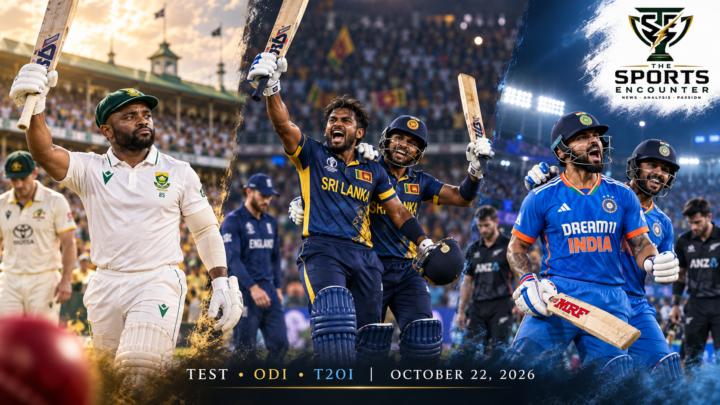
 CricketOctober 22, 2026: Cricket’s Three Formats Deliver an Innings Victory, Two Record Chases and a Rare Day of Drama
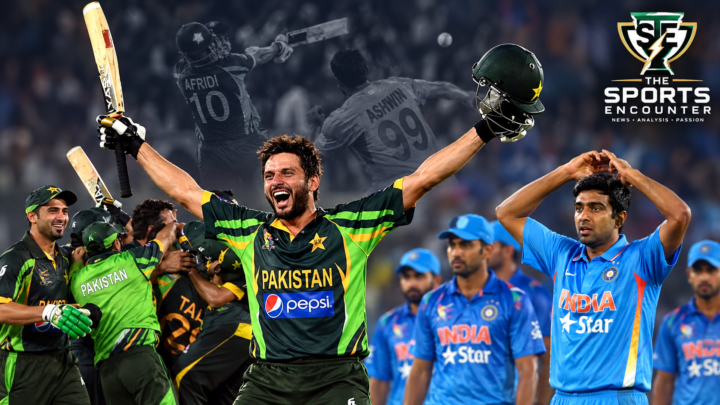
 A Celebration of 5000 ODIsA Celebration of 5000 ODIs Match 61: Pakistan Need 10 With One Wicket Left, Afridi Smashes Ashwin for Two Sixes to Break India’s Heart
 Big Bash LeagueBig Bash 2026-27: Perth Sign Aneurin Donald, Renegades Lose Behrendorff as WBBL Injuries Force Changes
Frequently Asked Questions
Who will captain South Africa in the ODI series against Australia?
Temba Bavuma will captain South Africa in the three-match ODI series from September 24 to 30, 2026.
When is the South Africa vs Australia ODI series?
The first ODI will be played in Durban on September 24, followed by Johannesburg on September 27 and Potchefstroom on September 30.
Has Gerald Coetzee returned to South Africa’s ODI squad?
Yes. Coetzee has been recalled to the ODI squad after last playing the format for South Africa during the 2023 Men’s Cricket World Cup.
Why is Kagiso Rabada not in South Africa’s ODI squad?
Rabada will miss the ODI series because of injury. South Africa hope to have him available for the Test matches that follow.
Is Dewald Brevis in South Africa’s ODI squad against Australia?
No. Brevis was not selected, with South Africa choosing Matthew Breetzke, David Miller and Tristan Stubbs among the primary middle-order options.
Is Marnus Labuschagne in Australia’s Test squad for South Africa?
Yes. Labuschagne has retained his place in Australia’s 16-player Test squad despite scoring only 36 runs across three innings against Bangladesh.
How did Marnus Labuschagne perform against Bangladesh?
Labuschagne made 1, 31 and 4 across the two-Test series, giving him 36 runs from three innings.
Who has been added to Australia’s Test squad?
Cooper Connolly, Michael Neser and Matthew Kuhnemann have been added to the group that will tour South Africa.
When is the South Africa vs Australia Test series?
The Tests are scheduled for October 9-13 in Durban, October 18-22 in Gqeberha and October 27-31 in Cape Town.
When did Australia last play a Test series in South Africa?
Australia last toured South Africa for Test cricket in 2018. The 2026 series will therefore be their first Test tour of the country in eight years.