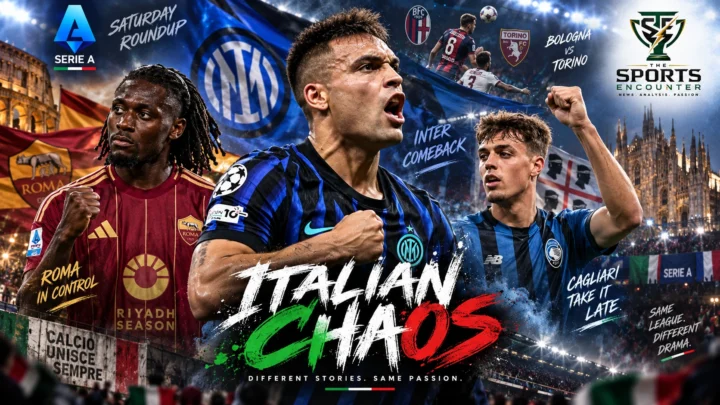
Serie A 2026 Opening Weekend: Inter Set the Pace as Milan and Napoli Win
Inter set the early standard with a 4-1 win over Monza, while AC Milan, Napoli, Juventus and Atalanta also collected victories across Serie A’s opening weekend.
Serie A returned with eight weekend matches, 18 goals and enough early evidence to suggest that Italy’s 2026-27 title race may become far more complicated than a simple question of whether anyone can stop Inter.
The defending champions produced the most complete performance, beating promoted Monza 4-1 at San Siro after surviving an uncomfortable first half. Napoli needed patience and Massimiliano Allegri’s bench to break Genoa late. AC Milan gave Rúben Amorim a winning league debut at Torino, with 19-year-old Alphadjo Cissè providing the most memorable individual story of the weekend.
Juventus won without convincing. Atalanta responded quickly after Sassuolo equalized. Lecce spoiled Venezia’s return to Serie A. Cagliari stole a valuable away victory at Parma, while Como showed enough control at Udinese to leave with a point.
Eight matches produced seven decisive results and only one draw.
Bologna vs Lazio and Roma vs Fiorentina were scheduled for Monday and are therefore not included in this Saturday-Sunday opening-weekend wrap. The complete Matchday 1 program can be checked through the official Lega Serie A opening-round schedule.
The opening weekend did not settle anything. It did show which teams arrived with clarity, which clubs are still adjusting to new managers and which contenders may already be carrying pressure into Matchday 2.
For the wider season picture, The Sports Encounter’s complete Serie A 2026-27 curtain raiser examines all 20 clubs, the Scudetto contenders, managerial changes, major transfers and the relegation battle.
Serie A Opening Weekend Results
| Fixture | Result |
|---|---|
| Inter Milan vs Monza | Inter 4-1 Monza |
| Udinese vs Como | Udinese 1-1 Como |
| Genoa vs Napoli | Genoa 0-2 Napoli |
| Parma vs Cagliari | Parma 0-1 Cagliari |
| Frosinone vs Juventus | Frosinone 0-1 Juventus |
| Venezia vs Lecce | Venezia 0-2 Lecce |
| Atalanta vs Sassuolo | Atalanta 2-1 Sassuolo |
| Torino vs AC Milan | Torino 1-2 AC Milan |
Serie A Opening Weekend at a Glance
| Matches played | 8 |
| Total goals | 18 |
| Home wins | 2 |
| Away wins | 5 |
| Draws | 1 |
| Biggest win | Inter 4-1 Monza |
| Best late impact | Kevin De Bruyne and Antonio Vergara for Napoli |
| Breakout performance | Alphadjo Cissè for AC Milan |
| Most uncomfortable victory | Juventus 1-0 Frosinone |
Inter Begin Like Champions
Inter did not start their title defense perfectly.
They started it like a team that knows how to regain control before an uncomfortable match becomes dangerous.
Cristian Chivu’s side beat Monza 4-1 at San Siro, producing the weekend’s biggest scoreline and the clearest statement from any of the traditional title contenders.
Hakan Çalhanoğlu gave Inter the lead after only six minutes with a superb first-time strike from distance.
At that stage, the evening appeared ready to develop into the routine home victory most expected.
Monza refused to cooperate.
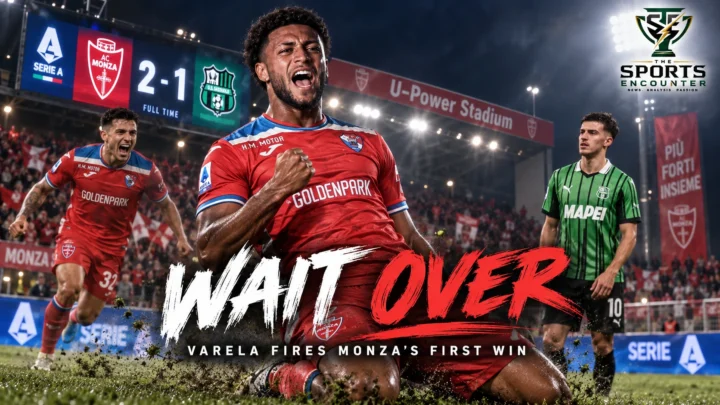
Gustavo Varela collected the ball around the edge of the area, turned Manuel Akanji and finished to make it 1-1.
The equalizer gave the promoted visitors genuine hope and reminded Inter that reputation offers no protection from opening-day uncertainty.
The second half showed why the champions remain the team everyone must catch.
Piotr Zieliński restored the lead shortly after the restart.
Francesco Pio Esposito then produced a memorable backheel finish before Yann Bisseck completed the 4-1 victory.
Inter’s official match coverage confirms the four goals from Çalhanoğlu, Zieliński, Esposito and Bisseck as the champions opened their campaign with three points. Inter’s official 4-1 match report and video coverage provides the club’s account of the opener.
Inter’s Squad Already Looks Built for a Long Season
The larger warning to Serie A may not have been the score.
It was the number of players capable of influencing the match.
Çalhanoğlu scored.
Zieliński scored.
Esposito scored.
Bisseck scored.
John Stones made his Inter debut, while further summer additions continue to settle into the squad.
Chivu is not attempting to rebuild a broken champion.
He is trying to evolve a team that already knows how to win.
That distinction matters over 38 matches.
Our detailed early Serie A title-race analysis identified Inter’s continuity as one of the most important advantages they carry into the season. Opening weekend reinforced that argument.
The club has replaced important experience without removing the spine of the team.
That makes the champions easier to evolve than several of the clubs chasing them.
Napoli Need Allegri’s Bench to Solve Genoa
Napoli’s opening victory looked completely different.
For more than 80 minutes, Genoa kept last season’s runners-up frustrated.
The visitors controlled possession without turning that territorial advantage into enough clear chances.
Then Massimiliano Allegri changed the game.
Kevin De Bruyne came from the bench.
Antonio Vergara followed.
Both scored.
Napoli left Genoa with a 2-0 victory that looked comfortable on the final scoreline but demanded patience for most of the night.
De Bruyne broke the deadlock in the 82nd minute.
Five minutes later, Napoli had their second through Vergara.
The match immediately supplied an example of why elite squads need more than one way to win.
Napoli were not particularly fluid for long periods.
They still possessed enough quality on the bench to transform the final phase.
Allegri’s First Lesson: Control Is Useful, Solutions Matter More
Allegri has never required beautiful football for its own sake.
He values control, efficiency and players who recognize when a match needs another rhythm.
Genoa gave Napoli precisely that test.
The first 70 minutes were not impressive enough to erase the structural concerns surrounding the team.
The final 20 minutes explained why dismissing Napoli from the Scudetto race would be premature.
The Sports Encounter’s full Serie A preview identified Napoli as Inter’s most obvious challenger because they entered from second place with a strong defensive foundation.
The Genoa win showed the other side of that case.
They also possess match-winners capable of changing a game that is not following the original plan.
AC Milan Start the Amorim Era With a Win and an Unexpected Hero
Rúben Amorim’s first Serie A match as AC Milan coach ended with three points.
The player who defined it was not one of the club’s expensive summer arrivals.
It was 19-year-old Alphadjo Cissè.
Milan beat Torino 2-1 after scoring twice in quick succession during the second half before surviving a late response from the hosts.
Cissè opened the scoring in the 64th minute.
Adrien Rabiot doubled the advantage two minutes later.
Ché Adams pulled one back in stoppage time, but Milan held on.
The official AC Milan match report confirms Cissè and Rabiot as the scorers in Amorim’s winning league debut. Milan also noted that Cissè became the youngest Italian player to score for the club in Serie A since Patrick Cutrone in 2017. :contentReference[oaicite:1]{index=1}
Cissè’s Goal Carries a Bigger Italian Football Story
The goal matters beyond Milan.
Italian football continues to debate whether young domestic players receive enough meaningful responsibility at elite clubs.
The Sports Encounter recently examined that wider problem in our analysis of why Serie A’s club revival has not automatically repaired Italy’s national-team decline.
Cissè’s performance does not solve a structural development problem.
It does provide the kind of evidence reformers keep asking for.
A teenager was trusted in a meaningful away match.
He scored.
He helped Milan win.
The performance should encourage more than applause.
It should encourage opportunity.
The same wider development conversation has surrounded figures such as Andrea Pirlo and the future direction of the national team. Our earlier piece on Italy’s attempt to rebuild around a new football identity explored why the youth pathway matters as much as the name of the national coach.
Amorim’s Structure Already Looks Recognizable
Milan controlled significant periods without immediately creating enough chances.
That matters because Amorim’s football requires time.
His system depends on spacing, pressing triggers, overloads and players understanding exactly when to move into central areas.
Those mechanisms rarely operate perfectly in August.
Torino frustrated Milan before the break.
The visitors eventually raised their tempo and found the quick two-goal burst that decided the match.
A new manager does not need perfect football in his opening month.
He needs enough results to create time for the football to develop.
Modrić Still Matters to Milan’s Transition
Milan’s tactical reset also continues to lean on experience.
The Sports Encounter recently explained why Luka Modrić’s extension through 2027 gives Amorim an on-field organizer while the new structure takes shape.
The opening victory reinforced that logic.
Milan have younger legs.
They have expensive attacking additions.
They still need players capable of slowing a frantic match, progressing the ball through pressure and recognizing when possession is becoming rushed.
Modrić remains useful because those decisions cannot be taught overnight.
The opening round also carried another emotional layer for Milan after the recent death of one of the club’s greatest defenders. The Sports Encounter’s tribute to Franco Baresi examined the standards and identity he represented across two decades with the Rossoneri.
Juventus Win, but Spalletti Wants More
Juventus beat promoted Frosinone 1-0.
That sentence contains both the positive and the concern.
Luciano Spalletti’s side collected three points.
They also spent too much of the match protecting a narrow advantage against a newly promoted opponent.
Gleison Bremer scored the only goal in the 22nd minute from a set-piece situation.
Juventus created enough opportunities to make the match considerably more comfortable but failed to convert them.
Frosinone remained alive until stoppage time and nearly equalized when a header struck the crossbar.
Juventus’ own match report confirms that Bremer’s header decided the contest and acknowledges that the Bianconeri created several opportunities to add a second. :contentReference[oaicite:2]{index=2}
Kolo Muani Immediately Comes Under Pressure
Spalletti did not disguise his frustration with the team’s inability to finish the game.
That directness matters.
Juventus finished sixth last season.
This is not a club entering the campaign with patience as its primary emotion.
The rebuild has already lasted long enough for supporters to expect visible progress.
A 1-0 opening victory buys breathing room.
The performance did not eliminate the questions.
The Sports Encounter’s report on Guglielmo Vicario’s move to Juventus also showed how aggressively the club has tried to strengthen the squad without creating another uncontrolled spending cycle.
That recruitment means Spalletti now has more options.
It also means the standard must rise.
Frosinone Lose but Give Themselves Something to Build On
Promoted teams rarely receive praise for losing.
Frosinone earned some.
They stayed inside the match against Juventus for 90 minutes and refused to allow the early goal to become the beginning of a collapse.
That resilience matters.
Survival will not depend on whether they can outplay Juventus every week.
It will depend on whether they can reproduce this defensive organization against the teams around them and turn competitive performances into points.
Frosinone may have lost the opening fixture, but they did not look intimidated by the level.
Atalanta Respond Immediately After Sassuolo Push Back
Atalanta’s 2-1 victory over Sassuolo contained a brief period when the evening threatened to become complicated.
Giacomo Raspadori opened the scoring after only six minutes.
Sassuolo equalized through Timo Odenthal early in the second half.
Atalanta needed only 10 minutes to restore their lead.
Nikola Krstović scored the decisive goal in the 65th minute.
That response may be the most useful element of the performance.
Opening-day matches can become dangerous when a team starts well, loses control and then begins worrying about points slipping away.
Atalanta did not panic.
They simply regained the lead and protected it.
Atalanta Continue Adjusting After Major Summer Change
The club entered the season after another period of transition, including the loss of highly rated wing-back Marco Palestra.
The Sports Encounter covered Chelsea’s move to take Palestra from Atalanta after beating Inter to the deal, a transfer that highlighted how difficult it can be for Italian clubs to retain emerging talent once Premier League money enters the conversation.
Atalanta’s recruitment model has repeatedly survived player departures.
The opening victory suggests the structure remains capable of absorbing change.
Lecce Spoil Venezia’s Return to Serie A
Venezia spent only one season outside the top flight.
Their return began with a reminder of how quickly Serie A can punish missed opportunities.
Lecce won 2-0 at the Stadio Pier Luigi Penzo through second-half goals from Jayden Gorter and Tiago Gabriel.
Venezia also had two goals ruled out following VAR intervention.
That made the defeat particularly frustrating because the home side created enough attacking moments to believe the match might have developed differently.
Lecce were simply more clinical when their opportunities arrived.
Lecce Collect the Kind of Points That Can Define Survival
For clubs expecting to spend much of the season around the lower half, opening matches against newly promoted opponents carry additional weight.
Lecce did what an established Serie A team should do.
They stayed patient.
They survived difficult periods.
They took their chances.
An away victory in August can look routine when viewed in isolation.
By May, it could be one of the results separating safety from relegation.
Cagliari Steal Three Valuable Points at Parma
Parma and Cagliari spent most of their opening match cancelling each other out.
Then Cagliari found the decisive moment.
Romano scored in the 79th minute to give the visitors a 1-0 victory.
It was another example of how unforgiving Serie A becomes when matches remain level deep into the second half.
Parma had enough possession and territory to believe a point was the minimum.
Cagliari stayed inside the contest until the decisive chance arrived.
That may not create many opening-weekend highlight reels.
It remains an effective survival skill.
Como Leave Udine With a Point and Another Sign of Growing Maturity
Udinese and Como produced the only draw of the weekend.
Hassane Kamara gave Udinese the lead in the 29th minute.
Tasos Douvikas equalized for Como nine minutes after halftime.
The 1-1 result may not attract the attention surrounding Inter, Milan or Napoli, but Como enter this season under a completely different standard from a traditional mid-table club.
They finished fourth last season.
They qualified for the Champions League for the first time.
Cesc Fàbregas is now managing a club expected to balance domestic ambition with European football.
A point away at Udinese is respectable.
The real test will come when Champions League matches begin placing pressure on depth and recovery.
The Title Contenders Have Started in Different Ways
Inter were the most convincing.
Napoli were the most patient.
Milan were the most intriguing.
Juventus were the least comfortable.
One match does not establish a title hierarchy.
It gives us the first meaningful comparison.
Inter look like champions improving through rotation rather than rebuilding through necessity.
Napoli look capable of winning when the football is not flowing.
Milan are clearly undergoing a tactical transformation but may possess enough depth to survive the learning period.
Juventus still look like a team trying to turn individual quality into a more convincing collective.
Those themes closely mirror the questions raised before kickoff in our Serie A title-race preview.
Opening Weekend Winners
| Category | TSE Pick | Why |
|---|---|---|
| Best team performance | Inter Milan | Responded to Monza’s equalizer by scoring three second-half goals |
| Best managerial intervention | Massimiliano Allegri | De Bruyne and Vergara came from the bench and decided Napoli’s match |
| Breakout player | Alphadjo Cissè | Scored in Milan’s 2-1 win at Torino |
| Best away result | Napoli | Stayed patient and won 2-0 at Genoa |
| Best survival result | Lecce | Won 2-0 away to promoted Venezia |
| Best late steal | Cagliari | Won 1-0 at Parma through a 79th-minute goal |
Opening Weekend Concerns
| Team | Concern |
|---|---|
| Juventus | Failed to kill the match and nearly conceded a stoppage-time equalizer |
| Monza | Competitive first half followed by a three-goal collapse |
| Venezia | Missed opportunities and VAR frustration in a home defeat |
| Parma | Lost a low-margin home match that could matter later |
| Torino | Allowed Milan to score twice in quick succession |
The Bigger Italian Football Story Is Still Youth
The most interesting individual story may belong to Cissè because it connects Serie A’s opening weekend to something larger.
Italian clubs remain tactically competitive and commercially ambitious.
The national-team pathway remains less convincing.
Our analysis of Italy’s deeper football crisis argued that Serie A’s renewed club strength has not translated into enough meaningful opportunities for domestic players in high-responsibility roles.
This weekend supplied a small counterpoint.
Cissè scored for Milan.
Pio Esposito scored for Inter.
Antonio Vergara scored for Napoli.
Young players affected important games rather than arriving only when results were already secure.
One weekend cannot repair a national development system.
It can demonstrate what happens when clubs trust players early enough to matter.
Serie A’s Opening Weekend Also Shows How Much Has Changed on the Touchline
Italy’s title race is being shaped as much by coaching change as by transfer spending.
Chivu is defending a championship.
Allegri is rebuilding Napoli.
Amorim is introducing another tactical identity at Milan.
Spalletti is trying to restore Juventus.
Several other clubs are changing direction at the same time.
That is why the table may require patience before it reflects genuine strength.
Inter possess continuity inside change.
Several rivals are learning almost from scratch.
What We Learned From the First Eight Matches
1. Inter Remain the Team to Beat
The champions were not perfect.
They were still clearly the strongest side of the weekend.
Their response after Monza equalized looked like championship behavior.
2. Napoli Already Have a Different Personality Under Allegri
They did not require constant dominance.
They needed patience, squad depth and the correct substitutions.
That is a very Allegri way to win.
3. Milan May Be More Interesting Than Expected
Amorim’s system will require time.
The squad already contains enough energy, experience and young talent to make the transition competitive.
The Modrić decision, examined in our Milan rebuild analysis, becomes more important for exactly that reason.
4. Juventus Still Have Work to Do
Three points matter.
So does nearly allowing promoted Frosinone to equalize in stoppage time.
Spalletti knows the difference.
5. The Mid-Table and Survival Race Could Be Extremely Tight
Lecce won away.
Cagliari won away.
Como took a point.
Venezia and Frosinone competed despite losing.
There may be very little separating a large group of clubs in the bottom half.
The Sports Encounter Verdict
Serie A’s opening weekend produced no major title shock.
That does not make the league predictable.
Inter were the strongest team.
Napoli found another route to victory.
Milan found an unexpected young hero.
Juventus found three points and several reasons to remain dissatisfied.
Atalanta responded well after being challenged.
Lecce and Cagliari immediately collected the kind of away wins capable of shaping survival campaigns.
Como showed that last season’s rise may have left behind something more permanent than momentum.
The most important difference between the leading contenders may already be visible.
Inter know what they are.
Napoli, Milan and Juventus are still discovering what they can become under changing managerial conditions.
That gives the champions an early advantage.
It does not guarantee another Scudetto.
The league has enough tactical quality, enough coaching change and enough ambitious challengers to prevent any serious conclusion being made in August.
For now, Inter have set the opening standard.
Everyone else has 37 matches to answer it.
Frequently Asked Questions
Who had the best opening weekend in Serie A 2026-27?
Inter produced the strongest performance, beating promoted Monza 4-1 at San Siro.
How many Serie A matches were played on Saturday and Sunday?
Eight matches were completed. Bologna vs Lazio and Roma vs Fiorentina were scheduled for Monday and were not included in this weekend wrap.
How many goals were scored?
The eight completed weekend matches produced 18 goals.
How did Inter begin their title defense?
Inter defeated Monza 4-1 after the visitors briefly equalized during the first half.
How did Napoli start under Massimiliano Allegri?
Napoli beat Genoa 2-0 after substitutes Kevin De Bruyne and Antonio Vergara scored late.
How did AC Milan begin under Rúben Amorim?
Milan beat Torino 2-1, with teenager Alphadjo Cissè and Adrien Rabiot scoring the decisive goals.
Who scored Juventus’ winner against Frosinone?
Gleison Bremer scored the only goal in Juventus’ 1-0 victory.
What happened in Atalanta vs Sassuolo?
Atalanta won 2-1 through goals from Giacomo Raspadori and Nikola Krstović after Sassuolo briefly equalized.
How did promoted Venezia perform?
Venezia lost 2-0 at home to Lecce and also had two goals ruled out following VAR intervention.
What was the only draw of the Serie A weekend?
Udinese and Como drew 1-1.

Breaking News
LeBron James Partners With PGA Tour for Akron Golf Event as Firestone Gets New Life
LeBron James is bringing professional golf back to Akron through a new PGA Tour-backed Invitational at Firestone Country Club, combining player development, youth mentorship, and his growing post-basketball legacy.
LeBron James is taking his growing interest in golf back to the city where his story began. The NBA icon and the PGA Tour are launching the LeBron James Family Foundation Invitational at Firestone Country Club in Akron, Ohio, combining competitive golf, player development and opportunities for young people from James’ I PROMISE program.
The two-day event will take place on July 6-7, 2027 on Firestone’s South Course, bringing professional golf back to a venue that has hosted some of the sport’s biggest names and most important tournaments for more than seven decades.
Yet this is not being built as a celebrity golf exhibition with LeBron’s name attached to it.
The structure gives the announcement considerably more substance. Players emerging through the PGA Tour’s development pipeline will compete at Firestone, while students from James’ Akron-based education programs will gain access to mentorship, golf exposure and career opportunities around a sport many may never previously have considered accessible.
That combination makes the event an unusually natural extension of two parts of James’ life that have become more visible in recent years: his investment in Akron and his increasing fascination with golf.
LeBron James Family Foundation Invitational: Key Facts
| Detail | Information |
|---|---|
| Event | LeBron James Family Foundation Invitational |
| Dates | July 6-7, 2027 |
| Venue | Firestone Country Club, South Course |
| Location | Akron, Ohio |
| Partners | LeBron James Family Foundation and PGA Tour |
| Golf development component | PGA Tour Pathway to Progression / Pro-Bound Five |
| Youth component | I PROMISE students and Akron-area youth |
| Competition | Professionals and amateurs connected to the development pathway |
| Primary purpose | Golf development, mentorship, youth exposure and community impact |
This Is More Than LeBron Trying a New Sport
James has increasingly embraced golf during the later stage of his basketball career, but Tuesday’s announcement moves the relationship into a different category.
Playing golf recreationally is one thing.
Using his foundation, hometown and commercial reach to create a development event with the PGA Tour is another.
James recently launched golf-focused video content and has spoken publicly about how the game has introduced him to new relationships and opportunities. The attraction is understandable for an athlete approaching the final years of one of the longest careers in NBA history.
Golf gives him competition without the physical punishment of professional basketball. More importantly, it offers another sporting ecosystem in which his influence can extend beyond his own performance.
That matters because James is entering a dramatically different phase of his public career.
The Sports Encounter has already been following that transition closely. His decision to join the Philadelphia 76ers for a record-extending 24th NBA season created another championship pursuit, but it also reinforced how little playing time remains relative to the career already behind him.
The Firestone project offers a glimpse at what influence after basketball could look like.
Why Firestone Is the Perfect Venue
Firestone Country Club is not simply a recognizable golf course located conveniently near James’ hometown.
It is one of the most historically important tournament venues in American professional golf.
Professional events have been staged there since the 1950s. The South Course has hosted the World Series of Golf, the World Golf Championships-Bridgestone Invitational, PGA Tour Champions competition and three PGA Championships.
The PGA Tour’s history of Firestone Country Club details the venue’s extraordinary relationship with generations of elite players, from Jack Nicklaus and Gary Player to Tiger Woods.
That history makes the new event more interesting than starting from scratch at another course.
Akron is getting professional golf back at a venue whose identity has been built around it.
Tiger Woods Turned Firestone Into One of His Personal Kingdoms
No modern player is more closely associated with the South Course than Tiger Woods.
Woods won at Firestone eight times, including seven victories between 1999 and 2009 before adding another in 2013.
The PGA Tour records eight victories at Firestone as one of the highest totals any player has accumulated at a single course.
That history gives James’ involvement another fascinating sporting layer.
He is entering a golf environment where another transcendent American athlete once dominated in a way that resembles the territorial control James enjoyed on NBA courts for much of his career.
The comparison should not be pushed too far. James is not attempting to become a professional golfer.
What connects the two athletes is the scale of their influence.
Firestone became nationally recognizable to an entire generation partly because Woods kept winning there.
James now has enough cultural reach to introduce another audience to the same property.
What the PGA Tour’s Pathway to Progression Actually Does
The development component is central to understanding why the partnership matters.
The PGA Tour’s Pathway to Progression program is designed to expand opportunities for golfers from historically underrepresented communities through junior, collegiate and professional development.
Its professional pathway includes the Pro-Bound Five, providing selected players with access to the APGA Tour alongside development resources, competitive opportunities and assistance designed to reduce some of the barriers involved in pursuing professional golf.
The Firestone event will connect players coming through that system with young people from Akron.
That creates two distinct development tracks inside the same project.
Some participants are already trying to become professional golfers.
Others may be encountering the sport, its careers and its network for the first time.
That is much more meaningful than inviting students to watch professionals from behind a rope for two days.
I PROMISE Is the Part of the Story That Makes the Partnership Make Sense
James has spent years building education and community programs in Akron through the LeBron James Family Foundation.
The foundation’s official I PROMISE program says it serves more than 1,400 students and has grown from an initiative focused on at-risk children into a broader support system involving students and families.
The golf partnership fits that philosophy because exposure has always been part of the program’s logic.
A child cannot realistically imagine a career, network or opportunity that he or she has never encountered.
Golf remains particularly relevant to that problem.
The game has traditionally carried financial, geographic and cultural barriers that make access uneven. Equipment costs money. Courses require space. Coaching can be expensive. Professional networks often begin long before adulthood.
Bringing the pathway to Akron lowers at least the first barrier: awareness.
TSE Analysis: LeBron Is Building an Athlete Legacy That Does Not Need Basketball
The most interesting part of this announcement may be what it tells us about James himself.
For more than two decades, almost every major decision around him could be understood through basketball.
Which team gives him the best chance to win?
Who should play beside him?
How many championships can he reach?
How many records remain?
That framework is slowly becoming too small.
James’ move to Philadelphia still carries enormous sporting consequences. The Sports Encounter examined how his No. 23 arrival immediately changed expectations around the 76ers.
We also analyzed whether Philadelphia now possesses the NBA’s most intimidating starting five.
Those questions belong to the remaining basketball chapter.
Firestone belongs to what comes after it.
Akron Remains the Constant in Every Version of LeBron
James has played professionally in Cleveland, Miami, Los Angeles and now Philadelphia.
Akron has remained the geographic center of his personal identity throughout all of it.
That is why staging the Invitational there carries more meaning than placing it at a more commercially obvious golf destination.
The city is where James grew up.
It is where his foundation concentrated its education work.
It is where the I PROMISE School opened.
Now it becomes the location where his growing interest in another sport intersects with his existing community infrastructure.
For an athlete whose every career move has generated arguments about legacy, that continuity is striking.
Philadelphia Has LeBron the Player, Akron Still Has LeBron the Builder
James’ basketball attention is about to shift heavily toward Philadelphia.
His first 76ers season already carries an unusually demanding schedule.
The Sports Encounter’s report on LeBron’s Philadelphia debut and Christmas return to Los Angeles showed how quickly the NBA has turned his final chapter into national television theater.
The wider 2026-27 NBA schedule reinforces the same point.
James remains one of basketball’s most commercially powerful attractions even at 41.
His influence in Akron works differently.
There, the value is not measured by national broadcasts or ticket demand.
It is measured by whether programs remain after the celebrity leaves the building.
That distinction is important when evaluating athlete philanthropy.
LeBron’s Commercial Gravity Can Help Golf Reach a Different Audience
The PGA Tour also receives something valuable from this partnership.
James reaches people who may never intentionally search for a golf tournament.
That audience effect has already been visible around Philadelphia.
The Sports Encounter examined how LeBron’s arrival transformed the 76ers into one of the NBA’s biggest national television attractions before he had played a game for them.
Golf cannot assume that every member of that audience will become a regular fan.
It does not need to.
If a percentage become curious about Firestone, the APGA pathway or the players competing in Akron, the event has expanded its reach beyond a conventional developmental tournament.
James gives golf a doorway into a different sporting audience.
This Is Also a Diversity Story for Professional Golf
The connection to the APGA ecosystem deserves attention because representation remains a long-running issue within professional golf.
The APGA Tour was created to expand competitive opportunities for golfers from underrepresented backgrounds, with Black golfers an important part of that mission.
The PGA Tour’s development system now tries to connect those opportunities across multiple stages, beginning before a player reaches the professional level.
James’ involvement adds visibility, but visibility alone will not determine whether the initiative works.
The meaningful measurements will come later.
Do more players receive genuine competitive opportunities?
Do young people remain connected to the game?
Does mentorship become a pathway rather than a one-week experience?
Those outcomes will tell us much more than celebrity attendance.
Golf Could Become Part of LeBron’s Post-NBA Identity
James has not publicly mapped every part of his life after basketball, and speculation around his future remains constant.
Even questions about the 2028 Olympics continue to follow him. The Sports Encounter examined whether Team USA could still tempt LeBron into one final Olympic appearance despite his stated expectation that he will be watching rather than playing.
Golf offers a very different form of competitive involvement.
It does not require James to chase another professional athletic career.
He can participate as a player recreationally, a promoter, a mentor, a media personality, an investor or a philanthropic partner.
That flexibility makes the sport unusually compatible with retirement from the NBA.
His Golf Move Also Fits a Career Built Around Controlling the Next Chapter
James has rarely allowed the next phase of his career to arrive accidentally.
His moves between NBA franchises were deliberate, and even the uncertainty surrounding his final destination produced months of strategic speculation.
The Sports Encounter explored that process when we asked where LeBron would spend his 24th NBA season, before Philadelphia eventually became the answer.
Earlier, the possibility of joining Stephen Curry produced another fascinating late-career scenario, which we examined through Golden State’s reported interest in pairing LeBron with the Warriors’ veteran core.
The Firestone partnership is different because it does not depend on another franchise deciding what role he should occupy.
It is his foundation, his hometown and an initiative that can continue regardless of which basketball jersey he wears.
Why Bringing Professional Golf Back to Firestone Matters
There is also a local sporting story that should not get lost behind James’ name.
Firestone’s relationship with professional tournament golf has been unusually long.
The course was part of the professional calendar in different forms for roughly seven decades before its recent PGA Tour Champions event moved away.
Losing that presence meant more than losing a tournament.
Events bring volunteers, spectators, sponsorship, charitable activity and national attention into a local sporting ecosystem.
The new Invitational will operate on a different competitive scale from the WGC era, but it preserves the connection between Akron and professional golf.
That continuity matters.
The Best Version of This Event Will Eventually Outgrow LeBron’s Name
The inaugural edition will inevitably be discussed as LeBron James’ golf event.
That is useful in Year 1.
The stronger long-term outcome would be different.
If the Invitational succeeds, players should eventually become stories themselves.
A Pro-Bound Five golfer could use Firestone as part of a route toward a larger professional career.
An I PROMISE student might encounter golf through the program and later find a place in coaching, course management, sports business, broadcasting or another part of the industry.
Those stories would demonstrate that the event has become more than an extension of James’ celebrity.
They would prove the structure worked.
TSE Verdict: The Venue Makes This Partnership Smarter Than It First Appears
A basketball legend becoming interested in golf is not inherently important.
LeBron James could play famous courses, launch golf videos and participate in celebrity events for years without changing much about the sport.
Firestone gives this project another dimension.
The venue connects elite golf history to Akron.
The foundation connects Akron’s young people to resources.
The PGA Tour pathway connects emerging golfers to professional opportunities.
James connects all three groups through an audience few athletes in the world can match.
That is why the LeBron James Family Foundation Invitational has more potential than its celebrity headline suggests.
The NBA has spent more than two decades watching James build one of basketball’s greatest careers.
Akron may now be watching him build something designed to last after the final season ends.
Frequently Asked Questions
What is the LeBron James Family Foundation Invitational?
It is a new two-day golf event created through a partnership between the LeBron James Family Foundation and the PGA Tour. It will combine competition, player development, mentorship and youth engagement.
When is the LeBron James golf event at Firestone?
The inaugural LeBron James Family Foundation Invitational is scheduled for July 6-7, 2027.
Where will the LeBron James Family Foundation Invitational be played?
The event will take place on the South Course at Firestone Country Club in Akron, Ohio.
Will LeBron James play in the tournament?
The announced purpose of the event centers on player development, competition, mentorship and community programs. It should not be treated as a LeBron James professional golf appearance unless organizers later confirm that he will compete.
What is the PGA Tour Pro-Bound Five?
The Pro-Bound Five is part of the PGA Tour’s Pathway to Progression development system. Selected golfers receive opportunities including access to the APGA Tour and additional player-development support.
What is LeBron James’ I PROMISE program?
The LeBron James Family Foundation’s I PROMISE program supports students and families in Akron through education, mentorship and community resources. The foundation says the program serves more than 1,400 students.
Why is Firestone Country Club famous?
Firestone has hosted major professional golf for decades, including three PGA Championships, the World Series of Golf and the WGC-Bridgestone Invitational.
How many times did Tiger Woods win at Firestone?
Tiger Woods won eight times at Firestone Country Club, making the South Course one of the most successful venues of his career.
Which NBA team does LeBron James play for in 2026-27?
James joined the Philadelphia 76ers for the 2026-27 NBA season, his record-extending 24th season in the league.
Breaking News
NFL 2026: Trey Moore Set for Surgery, Brian Thomas Avoids Major Scare as Lions Meet Kareem Hunt
The NFL’s final preseason stretch brought injury concerns, roster moves and a major off-field honor, with Trey Moore set for surgery, Brian Thomas Jr. avoiding a serious setback, Kareem Hunt visiting Detroit and Colin Kaepernick recognized by the Muhammad Ali Center.
The final week of the NFL preseason delivered another reminder of how quickly roster plans can change. Miami Dolphins rookie Trey Moore is headed for ankle surgery, Jacksonville Jaguars receiver Brian Thomas Jr. escaped what appears to be a more serious shoulder injury, Detroit met with veteran running back Kareem Hunt amid a growing backfield problem, and Arizona secured starting center Hjalte Froholdt through 2028. Away from the roster scramble, former quarterback Colin Kaepernick was named the Muhammad Ali Center’s 2026 Humanitarian of the Year.
Those developments arrived on Tuesday, August 25, with the regular season moving close enough that teams can no longer treat injuries, depth questions and contract decisions as abstract training-camp concerns.
Miami has already lost a promising rookie for an extended period. Jacksonville appears to have avoided a potentially damaging injury to one of its most important offensive players. Detroit is considering veteran help because its running-back room has been hit repeatedly, while Arizona has removed one significant future question by extending the player who has started every game at center since arriving in 2023.
The broader pattern should be familiar to anyone who has followed The Sports Encounter’s NFL training-camp injury and roster coverage: August plans rarely survive August intact.
NFL August 25 Developments at a Glance
| Team/Player | Development | Immediate Meaning |
|---|---|---|
| Miami Dolphins / Trey Moore | Left ankle surgery required | Rookie expected to miss an extended period |
| Jacksonville Jaguars / Brian Thomas Jr. | Shoulder injury scare in joint practice | Coach Liam Coen says receiver appears to be all right |
| Detroit Lions / Kareem Hunt | Veteran running back visited team | Detroit exploring depth amid multiple backfield injuries |
| Arizona Cardinals / Hjalte Froholdt | Two-year extension | Starting center under contract through 2028 |
| Colin Kaepernick | Muhammad Ali Humanitarian of the Year | Recognition for activism and community work |
Trey Moore’s Surgery Gives Miami an Early Defensive Setback
The most significant football injury of the day belongs to Trey Moore.
The Dolphins rookie linebacker will undergo surgery on his left ankle after being injured during Miami’s 26-3 preseason loss to the New York Giants on Saturday.
Head coach Jeff Hafley indicated Tuesday that Miami hopes Moore can return at some stage during the season, but he also made clear that the recovery will take time.
That places the fourth-round pick’s rookie year on hold just as Miami was preparing to transition from evaluation into regular-season planning.
Moore arrived with an intriguing production profile. The Miami Dolphins’ official rookie profile credits him with 30.5 sacks, 50 tackles for loss and 175 total tackles across 57 college games at UTSA and Texas.
Miami selected him with the 130th overall pick in April after Moore developed from a highly productive UTSA pass rusher into an SEC defender at Texas.
His injury matters because rookies taken in the middle rounds often use preseason football to force themselves into rotational roles before veterans have completely established the depth chart.
Moore had that opportunity.
Now Miami must plan its early-season defensive rotation without knowing exactly when he will return.
Miami Has Already Seen How Quickly Depth Can Become a Problem
The Dolphins are hardly alone in dealing with August attrition.
The Sports Encounter recently covered how former Miami lineman Kion Smith joined the San Francisco 49ers as another team responded to its own depth concerns.
Those individual roster moves can appear minor when viewed in isolation.
They become more important once injuries begin accumulating.
Moore was unlikely to enter Week 1 carrying the same defensive responsibility as an established starter, but his versatility gave Miami another option across the edge and linebacker levels.
That type of flexibility becomes especially useful once the regular season begins and teams have fewer available bodies than they carried through camp.
Miami concludes its preseason against Atlanta before opening the regular season at Las Vegas on September 13.
The Dolphins now have to decide how much of Moore’s expected workload can be redistributed internally and whether another roster move is required before Week 1.
Brian Thomas Jr. Injury Scare Could Have Been Far More Damaging
Jacksonville received a more encouraging injury update Tuesday.
Brian Thomas Jr. landed on his shoulder during the first 11-on-11 play of the Jaguars’ joint practice with the Tampa Bay Buccaneers.
Trainers examined him, and Thomas briefly returned for another play before Jacksonville removed him from the remainder of the session.
Head coach Liam Coen characterized the decision as precautionary and said Thomas appeared to be all right.
That distinction is enormously important for Jacksonville.
Thomas is not merely another receiver competing for snaps.
His 2024 rookie season produced 87 receptions, 1,282 yards and 10 touchdowns after the Jaguars selected him 23rd overall.
His second season was far less productive. Thomas finished 2025 with 48 catches for 707 yards and two touchdowns, missed three games and tied for second in the NFL with 10 drops.
Jacksonville entered this summer trying to reconnect the explosive rookie version of Thomas with Trevor Lawrence.
An extended shoulder absence now would have interrupted that work at almost the worst possible time.
Jacksonville Needs the 2024 Version of Thomas Back
The significance of the injury scare becomes clearer when placed beside Jacksonville’s broader offseason.
The Jaguars have spent camp trying to stabilize an offense that needs more dependable production around Lawrence.
The Sports Encounter has already tracked Jacksonville’s roster uncertainty through stories such as Trystan Colon’s retirement before his Jaguars career could begin.
Thomas carries a much larger offensive role.
If he can recover the vertical explosiveness and confidence that defined his rookie year, Jacksonville gains a receiver capable of changing coverages before the ball is snapped.
If the drops and inconsistent availability of 2025 continue, the offense becomes easier to defend.
That is why holding him out Tuesday was an easy decision.
The Jaguars do not need Thomas proving his toughness in an August joint practice.
They need him available when Jacksonville opens the regular season against Cleveland on September 13.
Kareem Hunt Visits Detroit as Lions’ Backfield Starts Running Out of Healthy Options
Detroit’s problem is less about one injury than the cumulative effect of several.
Veteran free-agent running back Kareem Hunt visited the Lions on Tuesday as the club considered adding depth behind Jahmyr Gibbs.
Isiah Pacheco is dealing with an MCL sprain.
Sione Vaki has been managing a back issue.
Jabari Small is in concussion protocol.
Raheem Blackshear was placed on injured reserve Monday.
That is enough damage to turn an available veteran into a legitimate roster consideration.
The NFL’s official August 25 news roundup confirmed Hunt’s visit as Detroit assessed its running-back depth before the regular season.
Hunt Would Give Detroit Familiar Production Without Changing Gibbs’ Role
The attraction is fairly straightforward.
Hunt is 31, so Detroit would not be signing him as the centerpiece of the running game.
That job belongs to Gibbs.
What Hunt can provide is experience, short-yardage reliability and enough pass-catching ability to prevent the offense from becoming one-dimensional when Gibbs leaves the field.
He rushed for 611 yards and eight touchdowns across 17 games with Kansas City last season.
Across his NFL career, Hunt has 5,775 rushing yards and 55 rushing touchdowns, along with 267 receptions for 2,209 yards and 18 receiving scores.
He also knows Pacheco from their time together with the Chiefs.
The larger question is how urgently Detroit believes it needs external help.
The Lions have become one of the league’s most closely watched teams, and The Sports Encounter recently examined the organization’s wider transition when Detroit appointed Richard Haddad as its new president and CEO.
The football operation is dealing with a much more immediate calculation.
Healthy running backs are disappearing faster than the preseason calendar.
TSE Analysis: Detroit’s Hunt Visit Is Really About Protecting Gibbs
The most important reason to add Hunt may have little to do with Hunt himself.
It concerns Gibbs.
When a backfield loses depth, the temptation is to increase the starter’s workload because he is the most trusted available player.
That can solve an immediate problem while creating a larger one later.
Detroit has a long season ahead and should have postseason ambitions.
Using Gibbs excessively in September because the reserve group was damaged in August would be a poor trade.
A veteran such as Hunt could absorb carries that Detroit would rather not place on its most important running back.
That is what roster depth is supposed to do.
Hjalte Froholdt Extension Gives Arizona Something August Injuries Cannot Take Away
While Miami, Jacksonville and Detroit were reacting to physical uncertainty, Arizona created contractual certainty.
The Cardinals signed center Hjalte Froholdt to a two-year extension that keeps him under contract through 2028.
The Arizona Cardinals officially confirmed the extension Tuesday and noted that Froholdt has started all 51 games during his three seasons with the franchise.
The reported value of the agreement is $20 million over two years, although Arizona’s own announcement did not disclose the financial terms.
That distinction is worth maintaining.
The contract length is official.
The dollar figure remains reported.
Froholdt’s Value Is Easier to See Through Availability Than Highlights
Centers rarely dominate NFL highlight packages.
Their importance becomes obvious when they are missing.
Froholdt has not missed a start since joining Arizona in 2023.
He played at least 98 percent of the Cardinals’ offensive snaps in each of his first three seasons with the franchise and became a team captain in 2025.
That durability carries even more value for a team that has already experienced offensive-line injuries this preseason.
The Sports Encounter’s training-camp coverage of offensive-line uncertainty around the league has repeatedly shown how quickly one injury can disturb an entire blocking structure.
Arizona has chosen to secure the player responsible for making protection calls and helping coordinate the line before the snap.
That is less glamorous than signing a star receiver.
It may be considerably more useful.
Froholdt’s Deal Fits the NFL’s Wider August Contract Economy
Late summer is not exclusively about cuts and injuries.
It is also when teams identify players they do not want reaching future contract uncertainty.
Arizona has already seen Froholdt produce three seasons of availability.
That reduces the projection risk usually attached to extensions.
The deal also arrives during a period in which NFL franchise economics continue moving sharply upward.
The Sports Encounter recently reported how NFL team valuations surged as the Dallas Cowboys reached $15.5 billion.
Growing league revenues do not eliminate salary-cap decisions, but they reinforce the extraordinary financial environment surrounding roster construction.
Teams still have to decide which players deserve long-term security.
Arizona has decided Froholdt does.
Colin Kaepernick’s Muhammad Ali Award Extends a Very Different NFL Story
The day’s fifth major NFL-related development belongs outside the usual injury and transaction cycle.
Colin Kaepernick will receive the Muhammad Ali Center’s Humanitarian of the Year award in Louisville on November 7.
The former San Francisco 49ers quarterback was selected for his advocacy around racial injustice and his work supporting underserved communities, including through the Know Your Rights Camp.
Kaepernick has not played in the NFL since the 2016 season, yet his connection to the league remains unusually powerful because his protest during the national anthem became one of the most consequential intersections of sports, race and politics in modern American athletics.
He began kneeling during the anthem in 2016 to protest police brutality and racial inequality.
The gesture drew support, criticism and national political attention while influencing other athletes across American sports.
The Ali Connection Gives the Award More Meaning Than a Generic Honor
The recognition carries unusual symbolism because Muhammad Ali understood the professional cost of public conviction better than almost any American athlete.
Ali sacrificed prime competitive years after refusing induction into the U.S. military during the Vietnam War and remained one of sport’s defining political voices long after returning to boxing.
Kaepernick’s career followed a very different path, but the comparison around athlete activism is obvious.
He has repeatedly argued that the consequences attached to his protest were secondary to the reason for protesting.
That is why an award carrying Ali’s name has a different resonance than a conventional sports honor.
The Sports Encounter’s coverage of the 2026 Pro Football Hall of Fame class recently examined another way the NFL remembers influential careers after the playing years end.
Kaepernick’s recognition comes through activism rather than Canton, but it similarly demonstrates how an athlete’s significance can continue after his final snap.
Kaepernick Still Occupies a Unique Place in NFL History
Kaepernick’s final NFL season came a decade ago with San Francisco.
He later filed a grievance alleging that NFL teams had colluded to prevent him from being signed because of his activism. The case ended with a confidential settlement in 2019.
His football résumé remains substantial enough to be remembered independently of the protest.
Kaepernick helped lead the 49ers to Super Bowl XLVII and reached another NFC Championship Game before his career changed direction.
Yet the reason his name still carries global recognition is broader than wins and passing statistics.
Few NFL players have ever influenced political and cultural conversation at the scale he did.
August NFL Football Is Becoming a Roster Survival Exercise
Tuesday’s developments fit a pattern that has dominated the month.
Injuries have changed depth charts.
Veterans have found new opportunities.
Rookies have lost them.
Teams have begun deciding which players belong in their longer-term plans.
The Sports Encounter’s earlier NFL roster roundup featuring Stefon Diggs and Jalon Walker showed the same collision between additions and losses.
Two weeks later, the stakes are higher because the regular season is much closer.
A minor camp issue in July can be treated patiently.
The same problem in late August can change a Week 1 game plan.
The Preseason Has Already Produced More Than Box-Score Evaluation
That is why preseason coverage should extend beyond final scores.
The Sports Encounter’s NFL Preseason Week 1 wrap focused on players such as Fernando Mendoza, Drew Allar and Cam Ward because August games are primarily evaluation environments.
The deeper consequences often emerge several days later.
Coaches review tape.
Medical tests reveal injuries.
Depth charts move.
Veterans get phone calls.
Contracts are signed.
Trey Moore’s surgery and Detroit’s meeting with Hunt are direct products of that process.
Roster Pressure Will Only Increase From Here
NFL teams are moving toward final roster construction, which means every remaining practice has consequences.
Players near the bottom of depth charts are competing for employment.
Coaches are balancing development against the danger of injuries.
Front offices are monitoring other teams for players who could become available.
The Sports Encounter’s training-camp roundup featuring Maxx Crosby, Kirk Cousins and Cam Taylor-Britt captured how rapidly circumstances were already changing earlier in August.
The final preseason stage compresses those decisions even further.
TSE Verdict: The Most Important NFL Story Tuesday Was Depth
Five separate headlines can easily look unrelated.
Four of Tuesday’s developments actually revolve around the same football problem.
Miami lost a rookie it hoped to develop into a defensive contributor.
Jacksonville protected its leading receiver after a shoulder scare.
Detroit invited a 31-year-old running back for a visit because injuries have reduced its options behind Gibbs.
Arizona paid to preserve continuity at the position responsible for organizing the middle of its offensive line.
Different teams. Different positions. Different responses.
The underlying issue is roster resilience.
The healthiest 53-man roster on paper in July rarely remains intact by September.
Teams that survive the NFL season are usually the ones capable of absorbing disruption without allowing one injury to distort the entire structure.
Miami must now prove it can do that without Moore.
Jacksonville hopes Thomas never becomes that problem.
Detroit may be preparing for it before Week 1.
Arizona has bought itself one piece of long-term certainty.
Kaepernick’s award sits outside that weekly calculation, but it offers a useful reminder that NFL careers can continue generating consequences long after the roster decisions stop.
What Happens Next?
Miami will move forward with Moore’s surgery and establish a clearer rehabilitation timeline once the procedure is complete.
Jacksonville will monitor Thomas’ shoulder ahead of the regular-season opener against Cleveland.
Detroit must decide whether Hunt’s visit becomes a contract or whether the Lions trust their current backfield to recover in time.
Arizona can move toward Week 1 knowing Froholdt’s future is settled through 2028.
Kaepernick will receive his humanitarian award in Louisville on November 7.
For the rest of the league, the immediate calendar keeps moving toward the point where evaluation ends and the games begin to count.
Frequently Asked Questions
What happened to Dolphins rookie Trey Moore?
Moore suffered a left ankle injury during Miami’s preseason loss to the New York Giants and will require surgery. Head coach Jeff Hafley said the Dolphins hope he can return during the season, but he is expected to miss an extended period.
Is Brian Thomas Jr. seriously injured?
The Jaguars do not currently believe so. Thomas landed on his shoulder during a joint practice with Tampa Bay and was held out afterward as a precaution. Liam Coen said he appeared to be all right.
Why did Kareem Hunt visit the Detroit Lions?
Detroit is dealing with multiple running-back injuries behind Jahmyr Gibbs, including an MCL sprain for Isiah Pacheco. Hunt visited as the Lions consider adding experienced depth.
Did the Lions sign Kareem Hunt?
No signing had been announced at the time of publication. Hunt visited the team as a free agent.
How long is Hjalte Froholdt under contract with Arizona?
The Cardinals signed Froholdt to a two-year extension that keeps him under contract through the 2028 season.
How much is Hjalte Froholdt’s extension worth?
The deal has been reported at two years and $20 million. Arizona officially confirmed the two-year extension but did not disclose its financial value in the club announcement.
What award will Colin Kaepernick receive?
Kaepernick will receive the Muhammad Ali Center’s 2026 Humanitarian of the Year award at a ceremony in Louisville on November 7.
Why was Colin Kaepernick selected for the award?
The Muhammad Ali Center cited his advocacy against racial injustice and his work supporting underserved communities through the Know Your Rights Camp and other initiatives.
When does the 2026 NFL regular season begin for the Dolphins?
Miami opens its regular season on September 13 at Las Vegas.
Cricket
India Tighten Screws on Sri Lanka as Colombo Test Battles Rain
India remain 238 runs ahead after Sri Lanka closed Day 3 of the second Test on 265/8 in Colombo, where rain cut play short after strong resistance from Pasindu Sooriyabandara and Sonal Dinusha.
India remain firmly in control of the second Test in Colombo after Sri Lanka closed a rain-shortened third day on 265 for eight, still 238 runs behind the visitors’ imposing 503 for nine declared. Pasindu Sooriyabandara’s composed 80 and Sonal Dinusha’s unbeaten 85 gave the hosts their best resistance, but another weather-hit day still ended with Shubman Gill’s side holding the stronger hand.
The third day at the Sinhalese Sports Club produced 257 runs, six wickets and 80.4 overs before evening rain arrived again and forced an early finish. Sri Lanka began on eight for two and recovered enough to avoid complete collapse, but they remain 39 runs short of the follow-on mark of 304 with only two wickets in hand.
The scoreboard still belongs to India.
The more interesting story lies underneath it.
Sri Lanka have spent most of this series reacting to damage rather than dictating terms, yet Sooriyabandara and Dinusha gave them two performances with value beyond this match. One came from a batter playing only his second Test innings after a debut duck. The other came from a player who is starting to make the lower middle order look like the wrong place for him.
India, meanwhile, will know that the final 38 overs exposed one weakness in an otherwise dominant position. They claimed only one wicket during that period, and once the new-ball movement disappeared, the attack found it much harder to turn control into dismissals.
The ICC’s official Day 3 report described Sri Lanka’s late partnerships as a fightback but confirmed that India remain in control of the second World Test Championship contest.
Sri Lanka vs India 2nd Test: Day 3 Scorecard
| Match Detail | Situation at Stumps |
|---|---|
| Competition | ICC World Test Championship 2025-27 |
| Match | Sri Lanka vs India, 2nd Test |
| Venue | Sinhalese Sports Club, Colombo |
| India first innings | 503/9 declared |
| Sri Lanka first innings | 265/8 in 83.4 overs |
| Sri Lanka trail | 238 runs |
| Follow-on mark | 304 |
| Runs still needed to avoid follow-on | 39 |
| Top Sri Lanka scorer | Sonal Dinusha 85* |
| Pasindu Sooriyabandara | 80 from 133 balls |
| Best India bowling | Prasidh Krishna 3/47, Manav Suthar 3/83 |
| Overs bowled on Day 3 | 80.4 |
| Day 3 runs | 257 |
| Day 3 wickets | 6 |
India Started Day 3 Like a Team Ready to Finish the Job
Sri Lanka resumed on eight for two after losing Lahiru Udara and nightwatchman Prabath Jayasuriya late on the second evening. The danger was obvious. India had already put 503 on the board, and another early cluster of wickets could have turned the third day into a procession.
Prasidh Krishna made that threat immediate.
Kamil Mishara fell for 19, caught by Dhruv Jurel, leaving Sri Lanka 35 for three and exposing a middle order already under enormous scoreboard pressure.
India had seen almost exactly this type of situation in Galle. During the first Test, Sri Lanka also lost early wickets before their lower order was forced into rescue mode. The Sports Encounter’s Day 3 report from the first Test documented how Sonal Dinusha and Niroshan Dickwella had to rebuild from 90 for five simply to keep the follow-on out of play.
Colombo began threatening another version of the same story.
Sooriyabandara refused to let it repeat immediately.
Pasindu Sooriyabandara Turns a Debut Duck Into an 80 That Matters
Sooriyabandara’s 80 from 133 balls may eventually become one of the most important Sri Lankan innings of this short series, even if it does not save the Test.
His debut had produced a duck.
His second innings in Test cricket produced something completely different.
He played late against pace, resisted the temptation to reach for deliveries outside off stump and looked unusually comfortable when Siraj and Prasidh tried to push him backward with short balls.
That last detail mattered.
Young batters entering Test cricket in Sri Lanka are often judged first by how they handle spin. India deliberately tested another part of Sooriyabandara’s game. Once the early seam began fading, their quicks tried to create discomfort through bounce and body-line pressure.
Sooriyabandara kept finding ways to remain balanced.
His half-century came from 76 deliveries, and he built an 87-run fourth-wicket partnership with Kamindu Mendis that carried Sri Lanka from 35 for three to 122 for four.
For a team that entered this series with several batting absences, that matters beyond the current scorecard. The Sports Encounter’s Sri Lanka vs India series preview identified the hosts’ batting depth as one of the central concerns before the first ball was bowled.
Sooriyabandara has now supplied one possible answer.
India Break the Partnership Before Lunch, Then Suthar Hits the Middle Order
Kamindu Mendis made 32 from 58 balls and briefly gave Sooriyabandara the partner Sri Lanka needed.
The stand was not fast enough to change the match, but it was long enough to force India to work through a second phase of the ball rather than simply continuing their opening burst.
Prasidh ended it by removing Kamindu, his third wicket of the innings.
That dismissal reopened the middle order.
Manav Suthar then removed captain Dhananjaya de Silva for eight, leaving Sri Lanka 137 for five.
The left-arm spinner has now become one of India’s biggest stories of the series. He took ten wickets in Galle and entered Colombo with greater responsibility after India again backed a spin-heavy attack.
The first Test had already shown how quickly Suthar can alter a game. By Day 4 in Galle, India were six wickets away from victory after strangling Sri Lanka’s top order, with Suthar central to the control India established across the match.
His Colombo spell has been more expensive, but the wickets have again arrived at useful moments.
Sooriyabandara Falls at 80, and Sri Lanka Threaten to Unravel
Ravindra Jadeja eventually ended Sooriyabandara’s innings for 80.
The wicket came at 171, and Mohammed Siraj then removed Niroshan Dickwella for a three-ball duck two deliveries later.
Sri Lanka had gone from 137 for five to 173 for seven.
This was the moment India appeared ready to run through the remaining batting.
They did not.
That failure to finish the innings is the one part of Day 3 India may revisit critically before the fourth morning.
Sonal Dinusha Is Starting to Make No. 7 Look Too Low
Dinusha has now produced three consecutive scores of 50 or more in Test cricket.
That sequence includes his maiden century in Galle, another important second-innings contribution in the first Test, and this unbeaten 85 in Colombo.
At some point, Sri Lanka’s selectors have to ask whether a batter producing this level of control should continue walking in after so much of the innings has already disappeared.
His 85 has come from 137 deliveries with six fours and two sixes.
The innings did not begin as a counterattack. Dinusha absorbed the pressure first, particularly while wickets were still falling around him. Once India’s bowlers became less threatening, he expanded his scoring options.
He reached fifty from 82 balls.
That is a useful contrast with his century at Galle, where he and Dickwella had to rescue Sri Lanka from collapse. The Sports Encounter’s first-Test analysis showed how Dinusha’s ability to survive long pressure sequences helped Sri Lanka avoid the follow-on there.
He is now doing something similar again.
The pattern is becoming too consistent to dismiss as lower-order resistance.
TSE Analysis: Sri Lanka May Have Found a Batter Who Belongs Higher
Dinusha’s current role gives Sri Lanka insurance.
It may also be wasting part of his value.
A No. 7 batter often has to manage two conflicting jobs. If the top order succeeds, he may be required to accelerate with the tail approaching. If the top order fails, he becomes an emergency repair option.
Dinusha has spent much of this series doing the second job.
His technique suggests he may be capable of more.
He does not appear dependent on one scoring zone. He has shown patience against spin, enough judgment outside off stump to handle pace and the temperament to bat with weaker partners.
Sri Lanka’s recent batting problems make that worth exploring.
The same instability was visible during their Caribbean tour, where the final T20I series defeat again exposed how heavily the innings could depend on a small number of established players. The Sports Encounter examined that pattern after West Indies completed a series win over Sri Lanka.
Test cricket demands a different method, but the structural issue is familiar. Sri Lanka need more batters who can occupy time without becoming trapped.
Dinusha is increasingly looking like one of them.
Keshara Nuwantha Helps Dinusha Turn Survival Into Resistance
Keshara Nuwantha’s 18 from 74 balls will not dominate any scorecard.
It mattered enormously to the shape of the afternoon.
He added 57 with Dinusha for the eighth wicket and forced India to spend more than 20 overs trying to break a partnership that appeared vulnerable when it began.
Suthar eventually removed him at 230 for eight.
India expected that wicket to open the tail.
Lahiru Kumara had other ideas.
India Took Only One Wicket in the Final 38 Overs
This is the part of the day that should concern India most.
Dickwella fell at 173 for seven after 45.3 overs.
Sri Lanka reached stumps at 265 for eight after 83.4 overs.
Across those final 38 overs, India claimed only one wicket.
The problem was not effort.
The problem was declining threat.
Siraj and Prasidh had been dangerous while the ball moved through the air and off the surface. Once that movement disappeared, both quicks increasingly turned toward short-ball plans.
Those tactics produced discomfort without producing wickets.
The spinners also struggled to create sustained uncertainty.
Saransh Jain’s first spell on Test debut was genuinely encouraging. He bowled with flight and drift, repeatedly inviting batters forward rather than simply firing the ball into the surface.
His second spell offered less.
Jadeja and Suthar largely settled into flatter trajectories aimed at the stumps.
That produced control, but not enough chances.
It is the difference India will have to correct quickly on Day 4.
Saransh Jain Shows Enough on Debut to Keep India Interested
Jain finished the day wicketless after 18 overs for 51.
That figure does not tell the whole story.
His first spell contained enough drift and shape to suggest why India selected him for Colombo.
The challenge is maintaining those qualities after batters have seen him once.
Test cricket forces a spinner to solve the same batter several times.
The first spell is introduction.
The second becomes adaptation.
That is where Jain’s work begins.
India’s willingness to introduce another spinner also reflects the deeper transition taking place inside their Test squad. The Sports Encounter’s 19 straight days of Test cricket feature highlighted how this Sri Lanka series sits inside a demanding red-ball stretch where squad depth matters more than ever.
Prasidh Krishna Was India’s Most Effective Bowler
Prasidh’s 3 for 47 from 14 overs gave India the penetration they needed during the first half of the day.
He removed Mishara, broke the Sooriyabandara-Kamindu stand and repeatedly tested Sri Lanka with extra bounce.
His spell also demonstrated why India value him in conditions that do not necessarily scream fast bowling.
Height creates opportunities even when conventional seam movement fades.
The challenge is converting that bounce into dismissals once batters begin expecting it.
The repeated short-ball plan late in the day became increasingly predictable.
Prasidh had already done enough damage to finish as India’s joint-leading wicket-taker, but the final session showed where the attack still missed Jasprit Bumrah’s ability to create wickets from apparently neutral conditions.
Manav Suthar Has Three Wickets, but Colombo Has Been Harder Than Galle
Suthar’s 3 for 83 from 21 overs looks productive.
It has also cost almost four runs per over.
That difference from Galle matters.
The first-Test surface increasingly rewarded spin as the match developed. Colombo has offered less consistent assistance so far, particularly once the ball softened.
Suthar still removed Jayasuriya, Dhananjaya and Nuwantha.
He has therefore continued taking wickets even without dominating every over.
That may actually tell India something useful about his development.
Young spinners cannot expect every surface to behave like Galle.
Finding wickets on flatter days is a different test.
Rain Is Now Sri Lanka’s Most Useful Teammate
Evening rain arrived at 5:02 p.m. local time and ended play roughly an hour earlier than scheduled.
It was another interruption in a Test already shaped by weather.
The covers came on quickly as the light deteriorated and Colombo became increasingly overcast.
India would have preferred another hour with the second new ball.
They took it after 80.3 overs, immediately gaining the harder ball they had been waiting for during a long and increasingly frustrating final session.
Only a few deliveries were possible before the weather intervened.
That timing may have helped Sri Lanka more than anything else during the final hour.
Rain has already been the clearest variable capable of reducing India’s winning time. The same issue appeared during the first Test, when weather repeatedly threatened to interfere with a match India otherwise controlled. Our Galle Day 4 report showed how India had to manage both the scoreboard and the clock before completing the job.
Colombo is beginning to create a similar calculation.
The Follow-On Is Still Technically Alive
Sri Lanka need 39 more runs to reach 304 and remove the follow-on option.
Whether India would actually enforce it is another matter.
The visitors have already spent 80.4 overs in the field on Day 3.
If Sri Lanka are dismissed below 304 on the fourth morning, Gill would have to balance the attraction of making the hosts bat again immediately against the physical cost of asking his bowlers to continue without meaningful recovery.
Weather complicates the decision.
India lead the series 1-0 after winning the first Test in Galle by 165 runs. The ICC’s official first-Test report confirmed how important that result was for India’s World Test Championship position.
A draw in Colombo would still deliver the series.
A victory would provide more valuable WTC points.
That may encourage India to prioritize time over convention.
Would India Really Bat Again?
If Sri Lanka fall short of 304, Gill has three broad choices.
He can enforce the follow-on immediately.
He can bat again and try to create a massive fourth-innings target.
Or he can make the decision based almost entirely on the weather forecast and the condition of his bowlers.
The traditional logic of Test cricket would favor the follow-on when a team leads by more than 200.
Modern workload management makes the decision less automatic.
India’s quicks have already bowled long spells. The spinners have carried substantial workloads. Colombo’s heat and humidity add another physical layer.
The ICC World Test Championship schedule also reinforces why every result matters. India cannot simply think about winning the series. Championship points travel beyond Colombo.
The likely preference may therefore depend on how quickly the final two Sri Lankan wickets fall.
India’s 503 Has Made Every Sri Lankan Partnership Defensive
The central reason India remain so far ahead is still their first innings.
Devdutt Padikkal made 117.
Dhruv Jurel finished unbeaten on 115.
Rishabh Pant contributed 63, Shubman Gill made 50 and Ravindra Jadeja added 43.
That depth pushed India to 503 for nine before Gill declared.
The total means Sri Lanka have spent their entire innings measuring themselves against survival thresholds.
First came the need to avoid collapse.
Then came the follow-on.
Next comes the first-innings deficit.
India’s ability to generate runs from several parts of the order has been visible throughout their recent cricket. The Sports Encounter saw the same broader batting depth during India’s white-ball tour of England, including the ODI victory built around contributions from multiple experienced batters and Axar Patel.
The formats are different. The underlying advantage is familiar.
India are difficult to contain because the innings does not depend on one scorer.
SSC Has Already Produced Very Different Cricket This Summer
The Sinhalese Sports Club has seen plenty of high-level cricket during the Sri Lankan season, including the Lanka Premier League.
The Sports Encounter covered Galle Gallants’ five-wicket win over Colombo Kaps at the SSC, a match in which 379 runs were scored across 39.2 overs.
Test cricket has presented the same venue with a completely different problem.
The surface has been good enough for long partnerships, yet not so flat that wickets are impossible.
That balance explains why India’s first-innings total carries so much value.
They occupied enough time to remove much of Sri Lanka’s freedom.
The Bigger World Test Championship Picture Still Favors India
This series began with both teams needing points.
India arrived outside the top two in the World Test Championship standings.
Sri Lanka were also trying to keep themselves relevant after an inconsistent start to the cycle.
India’s victory at Galle strengthened their position.
A second consecutive win would change the conversation again.
The Sports Encounter’s original series analysis described these two Tests as a litmus test for two injured, evolving squads.
Three days into the second Test, India have handled that examination better.
TSE Verdict: India Own the Test, Sri Lanka Own the Best Individual Story
Day 3 belonged to India in the only measurement that ultimately decides Test matches.
They remain 238 runs ahead.
Sri Lanka have only two first-innings wickets remaining.
The follow-on remains possible.
India still possess enough time to force a result if the weather cooperates.
Yet the most encouraging individual developments belonged to Sri Lanka.
Sooriyabandara responded to a debut duck with an 80 that looked technically secure against both pace and spin.
Dinusha followed his first-Test century with another unbeaten innings that strengthens the argument for moving him higher in the batting order.
Those performances may matter considerably after this series ends.
India have fewer long-term questions arising from the day.
Their concern is narrower: once the ball became old and the pitch stopped offering movement, the attack struggled to finish the innings.
One wicket in the final 38 overs is a statistic Gill and the bowling group will notice.
The second new ball should give them another opportunity on Thursday morning.
Whether Colombo’s weather allows them to use it for long enough remains the larger uncertainty.
What India Need on Day 4
The immediate objective is straightforward.
Remove Dinusha before he converts another lower-order rescue into a century.
Dismiss Kumara and Asitha Fernando quickly.
Then decide whether the follow-on, another batting innings or an aggressive declaration offers the clearest route to victory.
The second new ball should make Siraj and Prasidh more dangerous than they looked during the final session.
India cannot afford another 30-over lower-order partnership if rain continues removing playing time.
What Sri Lanka Need on Day 4
Dinusha is the entire equation.
The hosts need 39 runs to avoid the follow-on and another 238 simply to draw level with India.
Those are very different objectives.
The first is realistic.
The second requires something extraordinary.
Dinusha must protect the tail without becoming so defensive that Sri Lanka stop moving toward 304.
Kumara has already survived 50 balls for his eight runs.
If he can continue occupying the crease, Dinusha has enough form to take Sri Lanka beyond the follow-on line.
From there, the weather and India’s tactical decisions become increasingly relevant.
Final Analysis
India have not produced a flawless third day.
They did not need one.
The 503 they built across the first two days gave them enough margin to absorb Sri Lanka’s best batting resistance and still finish Tuesday with control of the match.
Sooriyabandara’s 80 was a genuine Test innings from a player who needed one badly.
Dinusha’s unbeaten 85 was another piece of evidence that Sri Lanka may be batting one of their most composed players too low.
The hosts can take encouragement from both.
They cannot take much comfort from the scoreboard.
India remain 238 runs ahead, have the second new ball available and require only two wickets to end the innings.
The most effective resistance Sri Lanka received all day may ultimately have come from the Colombo sky.
Rain ended play early again.
If it stays away on Day 4, India still have more than enough control to turn this advantage into a series-clinching victory.
Frequently Asked Questions
What is the score in the Sri Lanka vs India second Test after Day 3?
Sri Lanka are 265 for eight in their first innings after India declared on 503 for nine. Sri Lanka trail by 238 runs.
How many runs does Sri Lanka need to avoid the follow-on?
Sri Lanka need another 39 runs to reach 304 and prevent India from having the option to enforce the follow-on.
Who top-scored for Sri Lanka on Day 3?
Pasindu Sooriyabandara made 80, while Sonal Dinusha remains unbeaten on 85 at stumps.
How many wickets did India take on Day 3?
India took six wickets during the 80.4 overs bowled on the third day.
Who is India’s leading wicket-taker in Sri Lanka’s first innings?
Prasidh Krishna and Manav Suthar have taken three wickets each. Prasidh has figures of 3 for 47, while Suthar has 3 for 83.
How did Saransh Jain bowl on Test debut?
Saransh Jain finished Day 3 wicketless with 0 for 51 from 18 overs. His first spell showed encouraging flight and drift, although he created fewer problems during his second spell.
Why did play end early in Colombo?
Rain arrived shortly after 5 p.m. local time and eventually forced stumps before the scheduled close.
Will India enforce the follow-on?
India will only have that option if Sri Lanka are dismissed below 304. Whether Shubman Gill uses it will likely depend on how quickly the innings ends, the condition of his bowlers and the weather forecast.
Who won the first Test between Sri Lanka and India?
India won the first Test in Galle by 165 runs and lead the two-match series 1-0.
When does Day 4 begin?
Day 4 is scheduled to begin at 9:45 a.m. local time in Colombo, weather permitting.
-
Cricket4 weeks agoIs The Hundred Losing Its Oomph Among English Cricket Fans?
-
Editor's Choice3 weeks agoPremier League 2026–27 Curtain Raiser: Fixtures, Teams, Title Contenders, Transfers and Season Predictions
-
Editor's Choice4 weeks agoUS Open 2026 Curtain-Raiser: Players, Schedule, Title Contenders, New York Storylines and Everything Fans Need to Know