Ahman Green Reveals Parkinson’s Diagnosis: A Packers Legacy Story Far More Human
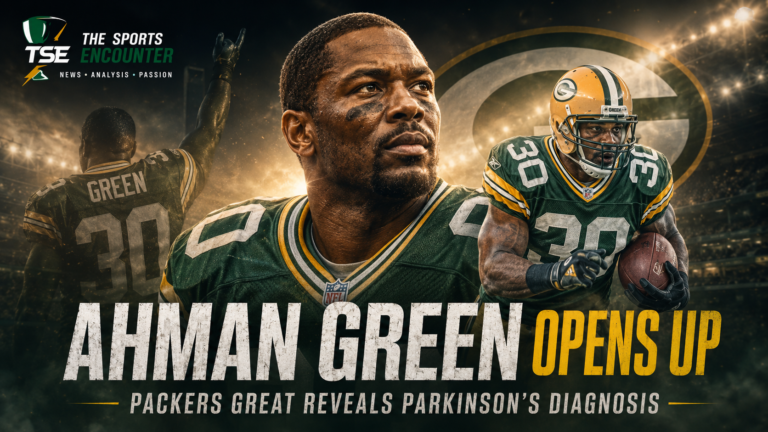
Ahman Green’s Parkinson’s diagnosis turns a football story into something more personal, forcing fans to look beyond records and remember the person behind one of Green Bay’s greatest careers.
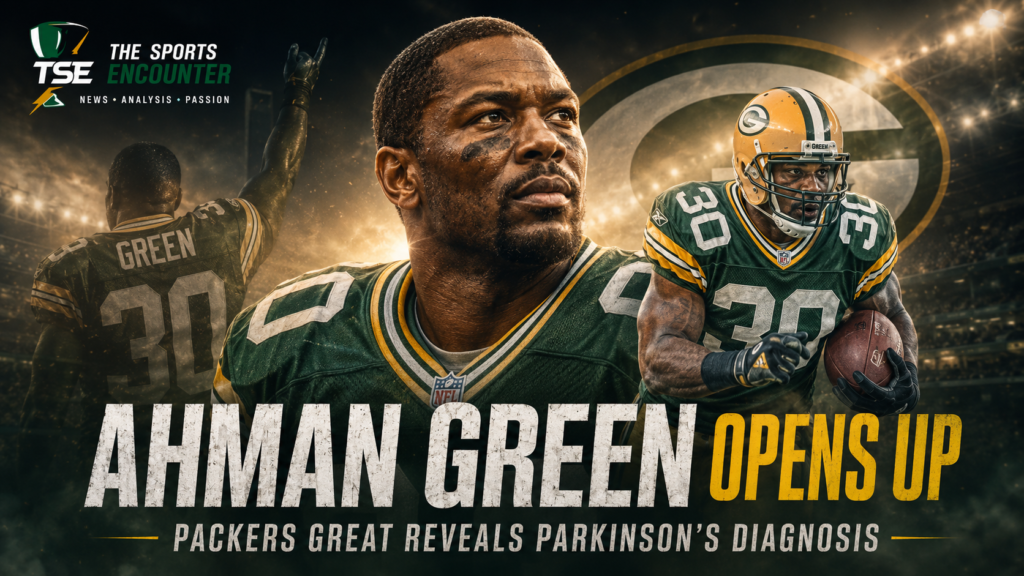
Ahman Green spent years powering through defenders, carrying the Green Bay Packers offense, and building one of the most productive careers in franchise history. Now, the former Pro Bowl running back is facing a challenge that has nothing to do with yards after contact or breaking free in the open field.
Green, the Packers’ all-time leading rusher, has publicly revealed that he is living with Parkinson’s disease. He said he was diagnosed with early-onset Parkinson’s in January 2025 and had, until now, only shared the news with family members and a small circle of trusted friends.
For football fans, the immediate instinct is to process the news through emotion. Green is not just another retired player. He is one of the defining runners in modern Packers history, the man who broke Jim Taylor’s long-standing franchise rushing record, and a player whose best years helped stabilize Green Bay’s offense in the post-Brett Favre peak era.
But this story should not be framed only through nostalgia.
It is also about dignity, control, vulnerability, and what happens when a former athlete who once looked almost indestructible chooses to speak openly about a serious neurological condition. Green’s announcement was deeply personal, but it also carried broader meaning for the football world and for any fan who has ever wondered what life looks like after the cheering stops.
Readers can continue exploring broader football coverage through The Sports Encounter’s NFL section and the site’s wider featured stories archive.
TL;DR
- Packers great Ahman Green has revealed that he is living with Parkinson’s disease.
- Green said he received an early-onset Parkinson’s diagnosis in January 2025.
- He first noticed signs such as feet twitching during sleep and pursued medical testing.
- The former running back said he feels he is ahead of the disease and staying disciplined with medication, diet, and routine.
- Green remains the Green Bay Packers’ career rushing leader with 8,322 rushing yards for the franchise.
- He retired with 9,205 rushing yards, 2,883 receiving yards, and 74 total touchdowns.
- His decision to speak publicly shifts the conversation from football legacy to long-term health, resilience, and support.
Ahman Green Parkinson’s Diagnosis: Key Information
| Detail | Information |
|---|---|
| Player | Ahman Green |
| Age | 49 |
| Diagnosis | Early-onset Parkinson’s disease |
| Diagnosis timing | January 2025 |
| Team most associated with him | Green Bay Packers |
| Packers rushing record | 8,322 rushing yards |
| Career rushing yards | 9,205 |
| Career receiving yards | 2,883 |
| Rushing touchdowns | 60 |
| Receiving touchdowns | 14 |
| Peak season | 1,883 rushing yards in 2003 |
| Pro Bowls | 4 |
| Core message from Green | He says he is in control and does not intend to let the disease control him |
Official league and team information can be found on the official NFL website and the official Green Bay Packers website.
This News Hits Differently Because Ahman Green Is More Than a Former Player
Every franchise has well-known players. Fewer have figures who come to represent a specific football identity.
For Green Bay, Ahman Green belongs in that conversation.
He arrived in 2000 after beginning his NFL career with the Seattle Seahawks and became one of the most explosive runners of his era. Between 2000 and 2006, he gave the Packers a consistent ground threat, a physical running style, and enough receiving ability to remain dangerous in different offensive structures. He later returned briefly in 2009 after two seasons with the Houston Texans.
His numbers still carry real weight. Green rushed for 8,322 yards in a Packers uniform and passed Hall of Famer Jim Taylor’s franchise mark of 8,207. His 2003 season, when he ran for 1,883 yards, remains one of the greatest individual rushing campaigns in team history.
That is why this announcement lands with so much emotional force. Fans are not hearing difficult news about a distant name from an old stat sheet. They are hearing it about one of the most important runners the franchise has ever had.
When supporters revisit Green’s legacy, they usually remember his cutback ability, his acceleration into the second level, and the punishment he absorbed while keeping the offense balanced. They remember the production. They remember the reliability. They remember the sense that, for several seasons, he was one of the NFL’s most complete backs.
Now they also have to confront the reality that a player who gave so much to the game is dealing with a degenerative condition that will shape the rest of his life.
What Green Actually Said Matters
Green did not announce his diagnosis with self-pity. He sounded focused, pragmatic, and unusually direct about how he is approaching it.
He said he had noticed symptoms, including feet twitching during sleep, before eventually seeking medical evaluation and going through the testing process that led to the diagnosis. He also made clear that he believes he has caught the disease early enough to act decisively.
That part of the story is important.
Green’s comments were not framed around helplessness. They were framed around awareness and response. He described staying on his medication protocol and treating food as part of his broader health discipline. He said he feels “ahead of it” and emphasized that he remains in control rather than allowing the condition to define him.
That does not make Parkinson’s any less serious. It does show how he wants to meet it.
And that perspective is worth highlighting because public discussions around major diagnoses often flatten the person involved. The condition becomes the whole story. The public sometimes forgets that the individual is still thinking, deciding, planning, and fighting to preserve agency.
Green’s language pushed back against that. He made it clear that the disease is part of his reality, but not the full story of who he is.
What Parkinson’s Disease Means in This Context
According to the Mayo Clinic, Parkinson’s disease is a progressive movement disorder of the nervous system. Over time, it can affect movement, coordination, gait, balance, and other physical functions.
That broad definition matters here because Green himself pointed to subtle physical signs that doctors identified more clearly once they evaluated how he walked and how his shoulders carried themselves. He said medical professionals noted early indicators that may not have been obvious to a casual observer.
That reality helps explain why the diagnosis can feel so unsettling in stories involving former athletes. These are people whose bodies once performed at a world-class level. When signs emerge, they are often processed against a mental image of strength and power that fans still carry.
It is also important to stay responsible here.
This article is not a medical guide, and it should not pretend to be one. The public does not need speculation or dramatic leaps. What matters most is what Green himself has disclosed: he was diagnosed in early 2025, he recognized signs that something was wrong, he pursued testing, and he believes he is managing the condition actively.
That is the accurate frame.
Why Going Public Took Courage
Many former athletes deal with health issues privately for as long as possible. That instinct is understandable.
Fame changes the emotional cost of illness. A public figure is not only dealing with the disease itself. He is also dealing with headlines, social media reactions, old highlights recirculating, public sympathy, unsolicited medical opinions, and the uncomfortable reality that strangers now see him through a lens of concern rather than performance.
Green said he had shared the diagnosis only with family and selected friends before speaking publicly. That tells you something important about the weight of the moment.
He did not casually drop the information into the public space. He kept it protected first. Then, when he was ready, he chose to speak.
That decision creates a different kind of leadership.
Athletes are often praised for leadership when they produce, take pain, or speak after a tough loss. There is another version of leadership in telling the truth about life after football, especially when the truth is difficult and deeply personal. Green’s announcement may help other former players, or even ordinary fans, take early warning signs more seriously and seek help sooner.
That does not make his diagnosis a lesson or a public service project. It remains his life. It does show that honesty at the right moment can have value beyond the individual.
Ahman Green’s Career Deserves Its Own Respectful Reframing
Whenever a legendary athlete shares major health news, the temptation is to turn the career summary into a quick obituary-style recap. That would undersell Green’s place in football history.
He was not simply good for a few years. At his best, he was one of the NFL’s most effective offensive weapons.
Green combined vision, contact balance, lower-body power, burst, and enough versatility as a receiver to stay relevant on passing downs. His style was never built around flash alone. He could grind out difficult yards, hit the edge, and punish a defense that had already spent four quarters dealing with Brett Favre and the Packers passing game.
His 2003 campaign remains the most iconic statistical expression of his talent. Rushing for 1,883 yards in a season is not a lucky spike. It is a statement of dominance. That year was the clearest evidence of how central he could be to an offense.
He also produced in the postseason, adding 521 rushing yards in eight playoff games. That part of his résumé matters because star running backs are often judged by whether they remain useful when games tighten and defenses improve. Green did.
The Sports Encounter often explores how sports history changes when new context arrives. A different kind of legacy conversation appeared recently in our feature on why Rodri’s World Cup greatness had to be understood beyond flashy statistics. Green’s story raises a similar challenge in a different sport: how do you discuss greatness once the player’s life after the spotlight becomes part of the public story?
The right answer is not to erase the achievements or allow the diagnosis to become the only thing remembered. It is to hold both truths together.
This Story Is Also About Life After Football
Professional football celebrates toughness in a way that can make retirement seem like a neat narrative finish. The player leaves, the records remain, the highlight packages live forever, and the public gradually moves on.
Real life is rarely that tidy.
Former players continue living with the physical consequences of elite competition. Their bodies do not retire just because the uniform does. Their routines change. Their identities change. Their relationships with pain, health, fitness, and public attention also change.
Green’s announcement forces that truth back into view.
It asks fans to look beyond franchise records and remember that the player they once cheered is a person managing medical appointments, symptoms, uncertainty, and long-term lifestyle adjustments. That should not turn into performative pity. It should become perspective.
The same broader human perspective shaped how The Sports Encounter approached the story of Ron Duguay’s hospitalization. In both cases, the most responsible sports writing had to move beyond the instant headline and consider the person at the center of the story.
Ahman Green’s announcement belongs in that category of sports stories that start with a recognizable name but demand a more mature response.
Fans Will Revisit the Packers Era Through a New Lens
One unavoidable effect of this news is that it will change how some fans remember Green’s playing days.
That change may be subtle, but it is real.
Supporters who watched him run through tacklers and carry the offense will now revisit those images with an added awareness of how fragile athletic certainty can be. They will remember the collisions differently. They may think more seriously about the cost of NFL careers. They may wonder, quietly and cautiously, about the long-term wear that professional football places on the body.
That conversation should remain careful. The public should not draw conclusions beyond what is known or make irresponsible claims about direct causation in Green’s case. His diagnosis deserves respect, not speculation.
Still, the emotional connection between football labor and post-career health is impossible to ignore. Every former star who goes public with a serious condition reminds fans that sports glory and private struggle often exist much closer together than the highlight reel suggests.
In that sense, Green’s diagnosis is not just Packers news. It is part of the wider ongoing story about what elite athletes carry with them after the game ends.
What Makes His Response So Compelling
The most striking part of Green’s announcement may be the way he talked about control.
He did not sound resigned. He sounded disciplined.
He said he has the reins. He said he is in control. He talked about medication and food, about following protocol, and about not allowing the diagnosis to dictate his identity. That mindset does not erase the seriousness of Parkinson’s. It does reveal something essential about his character.
Athletes who excel at the highest level often build their lives around routine, discipline, repetition, and accountability. Those habits do not automatically disappear after retirement. In Green’s case, they appear to be part of how he is approaching this chapter as well.
That can matter deeply for fans and families because stories like this often feel overwhelming at first glance. Hearing a former player speak in practical terms about management rather than surrender can provide a different emotional entry point into the story.
He is not pretending nothing is wrong. He is showing what determined response looks like.
The Football World Should Respond With Respect, Not Noise
There are moments in sports when the proper response is not hot takes, debates, or forced framing.
This is one of those moments.
Green’s diagnosis should not be used as a vehicle for shallow legacy arguments, crude speculation, or attention-seeking commentary. The appropriate public response is support, respect, and enough restraint to let the man at the center of the news remain human rather than symbolic.
That includes the media.
A responsible sports feature should not reduce Green to a condition. Nor should it strip the story of context. It should recognize his achievements, take his words seriously, explain why the news matters, and leave room for dignity.
That editorial balance matters across sports. The Sports Encounter has applied the same principle when writing about leadership changes, personal setbacks, and moments of vulnerability, whether in Joe Root’s return to England Test captaincy, the WNBA controversy involving teenage fans and institutional conduct, or the LeBron James documentary discussion. Different stories require different tones, but all demand the same basic standard: let the reporting stay grounded in the person and the moment.
Green’s Legacy Was Already Secure
One important truth in all of this is that Ahman Green did not need another football achievement to secure his place in Packers history.
That part of his life is already settled.
He remains the franchise’s career rushing leader. He was a four-time Pro Bowler. He produced across multiple seasons and helped define an important era of Green Bay football. He retired with 9,205 rushing yards, 2,883 receiving yards, and 74 total touchdowns in 148 career games.
Those are not marginal numbers. They belong to one of the better running back careers of his generation.
The announcement does not change that legacy. If anything, it humanizes it further.
It reminds fans that athletes are not museum pieces trapped forever in their best season. They continue aging, adjusting, and dealing with realities that the public only sees in fragments.
That is why stories like this can feel heavier than a normal sports update. They pull the athlete out of the past and place him back in the present, where admiration meets vulnerability.
What Comes Next for Ahman Green
No outsider can fully define what Green’s next chapter should look like. He has already given the clearest available guidance himself.
He intends to stay ahead of the condition. He intends to follow his protocol. He intends to stay in control.
That is enough for now.
There is no need to force a dramatic narrative about triumph or decline. Real life is usually more measured than that. Some days will be better than others. Public interest will spike now and likely fade. The actual work of living with Parkinson’s will continue long after the headlines move on.
That is why Green’s own discipline matters so much. He is the one who will live the routine, not the public.
Fans can support him, respect him, and remember him properly. They cannot live the process for him. What they can do is avoid reducing him to the diagnosis and continue honoring the full picture of who he is: a former star, a record-holder, a public figure, and now a man choosing openness while navigating a serious health challenge.
Final Analysis: This Is a Football Story, a Human Story, and a Reminder
Ahman Green’s announcement begins as sports news because his name carries football history. It becomes something more meaningful the longer you sit with it.
It is a football story because Green remains one of the greatest running backs in Packers history.
It is a human story because Parkinson’s does not care about rushing titles, Pro Bowls, or highlight reels.
And it is a reminder because fans so often consume sports as if the athletes exist only in the moments when they produce for us. Announcements like this reintroduce the person behind the performance.
Green’s words offered more than disclosure. They offered a tone. He spoke with seriousness, but also with control. He did not deny the challenge in front of him. He made it clear that he intends to meet it on his terms as much as possible.
That deserves admiration of a different kind.
Not the admiration reserved for a great running season or a record-breaking performance. A steadier kind. A more human one.
Ahman Green’s football legacy was already written in rushing yards, franchise records, and seasons that Packers fans still remember vividly. This new chapter does not erase any of that. It asks the public to see the man more fully.
And in the end, that may be the most respectful way to tell this story.
For more long-form sports features, athlete legacy stories, and major football coverage, visit The Sports Encounter’s NFL coverage section, the site’s sports features archive, and our broader American sports coverage.
Editor's Choice
Glasgow 2026 Day 8 Wrap-Up: Pathirage Stuns the Javelin Giants as Hunter Bell, Hodge and Australia Own the Night
Rumesh Tharanga Pathirage stunned the javelin field with a Commonwealth Games record, while Georgia Hunter Bell, Adaejah Hodge and Sinesipho Dambile claimed major athletics titles on a dramatic Glasgow 2026 Day 8.
Rumesh Tharanga Pathirage broke the Commonwealth Games javelin record to defeat Neeraj Chopra and Yashvir Singh, Georgia Hunter Bell controlled the women’s 800m, Adaejah Hodge and Sinesipho Dambile ruled the 200m finals, and Australia extended its commanding medal-table lead on a dramatic Day 8 at Glasgow 2026.
Day 8 delivered the upset Glasgow had been waiting for.
The men’s javelin final had been promoted around Neeraj Chopra and Arshad Nadeem, two of the most recognizable athletes in world track and field. Sri Lanka’s Rumesh Tharanga Pathirage changed the script with a Commonwealth Games-record throw of 89.75 meters.
Chopra took silver with 85.83m, while India’s Yashvir Singh produced a personal-best 85.41m to claim bronze. Nadeem, the defending Commonwealth champion and Olympic record holder, finished outside the medals after struggling to rediscover the rhythm that carried him to global titles.
That result gave Sri Lanka its first gold medal of Glasgow 2026 and transformed Pathirage from a respected challenger into one of the defining athletes of the Games.
The javelin shock was only part of a busy Friday. England’s Georgia Hunter Bell won the women’s 800m, Adaejah Hodge delivered the British Virgin Islands its first gold of the Games in the women’s 200m, South Africa’s Sinesipho Dambile won the men’s 200m, and Australia collected another velodrome gold rush.
For every result, medal-table movement and athlete feature, visit The Sports Encounter’s Glasgow 2026 Commonwealth Games hub.
Glasgow 2026 Day 8 at a Glance
| Category | Day 8 Highlight | Why It Mattered |
|---|---|---|
| Performance of the Day | Rumesh Tharanga Pathirage, 89.75m | Broke the Commonwealth Games javelin record and defeated Chopra and Nadeem |
| Track Highlight | Georgia Hunter Bell won the women’s 800m | Secured her first major outdoor title at age 32 |
| Sprint Breakthrough | Adaejah Hodge won the women’s 200m in 22.07 | Delivered a historic gold for the British Virgin Islands |
| Men’s Sprint Champion | Sinesipho Dambile won the men’s 200m in 19.96 | Gave South Africa another major athletics title |
| Para Athletics | Melanie Woods won the rerun of the women’s T54 1500m | The Scot retained gold after being asked to race the event again |
| Combined Events | Lindon Victor won a third decathlon title | Completed a Commonwealth Games hat-trick for Grenada |
| Track Cycling | Australia swept the men’s 4000m individual pursuit podium | Extended Australia’s dominance at the Sir Chris Hoy Velodrome |
| Judo | India won its first two Commonwealth judo gold medals | Asmita Dey and Harsh Singh ended a 36-year wait |
| Medal Table | Australia reached 55 golds and 128 medals | The overall title race became increasingly one-sided |
Pathirage Turns the Javelin Final Into Sri Lankan History
The men’s javelin final arrived with enormous expectations.
Chopra and Nadeem had become the faces of one of athletics’ most compelling rivalries. Chopra brought Olympic, world and Commonwealth success. Nadeem arrived as the defending Commonwealth champion and the man whose 92.97m Olympic-record throw had changed Pakistan’s sporting history.
Pathirage refused to serve as background.
His 89.75m effort broke the Commonwealth Games record and immediately placed pressure on every athlete who followed. It was long enough to survive Chopra’s best response and far enough beyond the rest of the field to turn the final into a landmark moment for Sri Lankan athletics.
This was not a fortunate medal secured through poor competition. Pathirage defeated a field containing Olympic champions, global medalists and three strong Indian throwers.
The quality of the winning mark matters. An 89.75m throw belongs close to the sport’s elite 90-meter territory. It showed that Pathirage can now enter major competitions with a genuine expectation of challenging the established names.
Sri Lanka finished Day 8 with one gold and one silver overall, with Pathirage responsible for the country’s first Glasgow title. His victory also gave the wider Commonwealth a reminder of why field events remain unpredictable.
Reputations can shape the build-up. The runway settles the result.
The javelin final became the natural continuation of a Glasgow campaign covered throughout The Sports Encounter’s Day 7 wrap-up, when athletics and track cycling took control of the Games after swimming ended.
Neeraj Chopra Takes Silver as Yashvir Singh Delivers a Personal Best
Chopra’s silver will feel disappointing because he entered the final expecting gold.
His 85.83m throw would have won many Commonwealth finals. It could not match Pathirage’s record-breaking mark.
The result still extended Chopra’s extraordinary record of reaching major podiums. Even on a night when his technique and rhythm did not produce his highest level, he remained strong enough to finish second.
Yashvir Singh’s bronze carried a different kind of value.
His personal-best 85.41m confirmed that India’s javelin strength now extends beyond Chopra. India placed two athletes on the podium and left Glasgow with evidence that the national system is developing genuine depth.
The outcome pushed India to five golds, 12 silvers and six bronzes in the overall standings after Day 8.
India’s growing medal range had already been visible during earlier competition days. The Sports Encounter’s Day 6 results and medal-table analysis tracked how the nation’s athletes were finding podiums across athletics, weightlifting and other sports.
Arshad Nadeem Leaves Glasgow Without a Medal
For Pakistan, the final produced the night’s deepest disappointment.
Nadeem qualified with a season-best 78.63m and entered the medal round hoping to defend the Commonwealth title he won at Birmingham 2022.
He could not find the technical sequence required to challenge the podium.
Javelin throwing depends on the complete connection between approach speed, crossover steps, block position, release timing and the athlete’s confidence to attack the throw. A small disruption at the front of the runway can remove several meters.
Nadeem’s Glasgow result should not erase his standing as one of the great throwers of his generation. It does, however, create questions about preparation, competition rhythm and how Pakistan manages his workload before the next major championship.
The most useful response will be technical rather than emotional.
Was his approach speed below its normal level? Did he struggle with the changing conditions? Was his body protecting an earlier injury? Did limited competition before Glasgow leave him short of rhythm?
Those questions require careful answers from Nadeem and his coaching team.
Pakistan still leaves Glasgow with historic progress in women’s boxing, a breakthrough examined in The Sports Encounter’s Day 5 wrap-up.
Nadeem’s result will receive more attention because of his stature. The wider Pakistani campaign should still be judged across every athlete who moved the country into new competitive territory.
Georgia Hunter Bell Controls the Women’s 800m
Georgia Hunter Bell entered the women’s 800m final carrying the favorite’s responsibility after Keely Hodgkinson did not compete in Glasgow.
She handled it with authority.
Hunter Bell won in 1:59.51, finishing more than a second ahead of Kenya’s Lilian Odira. Australia’s Sarah Billings collected bronze.
The victory gave the 32-year-old her first major outdoor title and added another chapter to one of British athletics’ most unusual career paths.
Hunter Bell stepped away from elite competition, built a professional career outside sport and later returned to athletics. Her rise since that comeback has included Olympic and world-level success.
The Commonwealth gold carried value because the field included several internationally competitive runners. Hunter Bell did not simply inherit an empty race. She controlled a final containing athletes capable of punishing a tactical mistake.
Her decision-making was excellent.
She remained close enough to cover any move, avoided wasting energy through unnecessary surges and committed decisively when the race entered its final phase.
England ended Day 8 with 17 gold medals and 80 medals overall. Hunter Bell’s victory became the leading track contribution to a campaign built largely through depth across sports.
Adaejah Hodge Gives the British Virgin Islands a Golden Night
Adaejah Hodge won the women’s 200m in 22.07 seconds, defeating a field containing several of the Commonwealth’s strongest sprinters.
The result delivered the British Virgin Islands its first gold medal of Glasgow 2026.
Hodge’s performance showed impressive control through the bend. She built enough speed without tightening, entered the home straight in command and maintained her mechanics while others began losing efficiency.
Trinidad and Tobago’s Shaniqua Bascombe took silver, while Jamaica’s Alana Reid earned bronze.
The result carried national importance far beyond the medal table.
Small Commonwealth territories rarely possess the athlete population or financial structures available to Australia, England or Canada. A single world-class athlete can therefore reshape how a country sees its place in international sport.
Hodge gave the British Virgin Islands that moment.
Sinesipho Dambile Wins the Men’s 200m in 19.96
South Africa’s Sinesipho Dambile produced a sub-20-second performance to win the men’s 200m.
His 19.96 gave South Africa another important athletics gold and confirmed that the country’s sprint program can challenge the traditional Caribbean and British powers.
Nigeria’s Udodi Chudi Onwuzurike won silver, while Jamaica’s Christopher Taylor claimed bronze.
The final punished athletes who failed to control the curve. Dambile built his race without reaching for speed too early, entered the straight with balance and maintained enough relaxation to hold his form through the final 50 meters.
Australia’s Lachlan Kennedy and Torrie Lewis had entered the day with medal expectations after strong sprint performances earlier in the Games, but neither reached the 200m podium.
The result illustrated a recurring Day 8 theme. Glasgow rewarded the athletes who handled the decisive moment rather than those carrying the largest pre-race profile.
Lindon Victor Completes a Decathlon Hat-Trick
Grenada’s Lindon Victor secured his third consecutive Commonwealth Games decathlon title.
Victor entered the second day with enough control to absorb pressure from Canadian Olympic champion Damian Warner. Season-best performances in the pole vault and javelin helped preserve his advantage before the closing 1500m.
The competition included controversy after one of Victor’s discus throws was measured incorrectly and discounted. He responded without allowing the problem to derail the wider event.
Warner took silver, while India’s Tejaswin Shankar won bronze.
Victor’s title completed a remarkable sequence across three Commonwealth Games. Combined events punish inconsistency more severely than almost any discipline. A poor hurdle race, missed pole-vault height or technical breakdown in the throws can erase two days of work.
Victor avoided that collapse and added another gold to Grenada’s distinguished Commonwealth athletics history.
Melanie Woods Wins the T54 1500m Again
Scotland’s Melanie Woods had already crossed the line first in the women’s T54 1500m earlier in the Games.
A crash involving Mauritius’ Noemi Alphonse and Australia’s Eliza Ault-Connell led officials to order a rerun.
Woods returned and won again.
The second victory required a different kind of resilience. Athletes normally prepare their bodies and emotions for one final. Woods had to rebuild both after believing the race had already been settled.
Alphonse won silver in the rerun, while Ault-Connell took bronze.
The result gave the home crowd another reason to celebrate and reinforced the importance of Para athletics within Glasgow’s integrated program.
Scotland’s earlier Glasgow success, including emotional home medals across Para sport, was also central to The Sports Encounter’s Day 4 analysis.
Australia Sweeps the Men’s Individual Pursuit Podium
Australia’s control of the Sir Chris Hoy Velodrome intensified on Day 8.
Oliver Bleddyn won the men’s 4000m individual pursuit, Conor Leahy took silver and James Moriarty completed an Australian podium sweep with bronze.
The result formed part of a triple-gold day for Australia at the velodrome.
Australia has now won six track cycling and Para track cycling gold medals, alongside five silvers and two bronzes.
The nation’s strength lies in depth. Riders are arriving across endurance, sprint and Para classifications with the technical preparation required to win at championship level.
Bleddyn’s victory also extended a track cycling story that began with team events, records and rivalries on Day 7.
Australia’s wider Glasgow dominance has been developing throughout the week. The country passed 100 medals during the program covered in The Sports Encounter’s Day 6 wrap-up and reached 128 after the latest Day 8 results.
India Wins Its First Commonwealth Judo Gold Medals
India waited 36 years for a Commonwealth Games judo gold.
Then two arrived within 20 minutes.
Asmita Dey defeated Canada’s Heidi Quach in the women’s -48kg final after a contest that moved into Golden Score.
Harsh Singh followed by defeating Australia’s Joshua Katz in the men’s -60kg final.
Singh’s title completed a difficult return from a knee injury that required a year of rehabilitation and rebuilding.
India added a third medal when Yamini Mourya took silver in the women’s -57kg division. England’s Acelya Toprak won that final, upgrading the silver medal she earned at Birmingham 2022.
Canada also enjoyed a successful opening judo day. Evelyn Beaton won the women’s -52kg title, while Julien Frascadore defeated defending champion Georgios Balarjishvili in the men’s -66kg final.
India’s double gold gave its Glasgow campaign a fresh source of momentum before the busiest medal day of the Games.
Boxing and Netball Move Toward Their Final Decisions
Day 8 did not decide boxing gold medals, but it established the athletes who will fight for them.
England’s Chantelle Reid reached the women’s 70kg final, while Welsh boxer Rosie Eccles secured bronze.
Several nations added guaranteed medals as the semifinal program narrowed each division toward the weekend finals.
The boxing competition had already produced major stories, including Pakistan’s breakthrough women’s medals and the controversial heavyweight disqualification examined in the Day 7 report.
Netball also moved toward its decisive phase.
Australia remained the standard-setter, while England, Jamaica and New Zealand prepared for the knockout battles that will determine the podium.
The final days will test whether anyone can prevent Australia from adding another major team-sport title to its already overwhelming Games campaign.
Glasgow 2026 Medal Table After Day 8
| Position | Nation | Gold | Silver | Bronze | Total |
|---|---|---|---|---|---|
| 1 | Australia | 55 | 30 | 43 | 128 |
| 2 | England | 17 | 34 | 29 | 80 |
| 3 | Canada | 17 | 15 | 21 | 53 |
| 4 | Scotland | 10 | 8 | 16 | 34 |
| 5 | Nigeria | 9 | 6 | 3 | 18 |
Australia’s lead is now effectively unassailable.
The more interesting battle involves England and Canada, who both held 17 gold medals after the latest Day 8 updates. England remained second because it possessed far more silver medals.
Scotland’s 10 golds have made the host nation one of the Games’ strongest stories, while Nigeria’s nine titles reflect a highly efficient campaign built across Para powerlifting, weightlifting and athletics.
Fans can check live updates through the official Glasgow 2026 Commonwealth Games website.
What Day 8 Changed
Day 8 did not change the identity of the overall medal-table winner.
Australia has controlled that discussion for most of the Games.
It changed the list of athletes Glasgow 2026 will be remembered for.
Pathirage entered the javelin final beside two global superstars and left with the Games record. Hodge gave the British Virgin Islands a title. Dambile ran below 20 seconds. Hunter Bell converted years of persistence into a first major outdoor crown.
Woods won the same Para athletics final twice. Victor remained Commonwealth decathlon champion for a third consecutive edition. India waited decades for judo gold and then won two titles almost immediately.
Those stories gave Day 8 an identity beyond the standings.
The best multi-sport days create connections between athletes who may never share an arena again. A Sri Lankan thrower, a British middle-distance runner, a Caribbean teenager, a Scottish wheelchair racer and two Indian judokas became part of the same sporting narrative.
What to Watch on Day 9
Saturday brings the busiest day of Glasgow 2026, with 44 gold medals scheduled across athletics, boxing, track cycling and judo.
The athletics program will conclude with the men’s 800m, men’s 5000m, women’s mile, long jump finals and the major relay events.
Boxing will crown its champions after a week of qualifiers, controversies and national breakthroughs.
Judo moves into heavier weight categories, while the velodrome continues producing opportunities for Australia, England, Wales, Scotland and the leading Para cycling nations.
Netball’s medal picture will also become clearer as the leading teams move closer to the final.
The next wrap-up will complete the athletics story with the final medal table, records, biggest stars and a detailed assessment of what happened to Nadeem’s title defense.
Final Verdict
Glasgow 2026 Day 8 belonged to athletes who refused to accept the roles assigned to them before competition began.
Pathirage was expected to challenge the famous javelin rivalry. He broke the Games record and won the title.
Hodge entered a strong 200m field and delivered the British Virgin Islands a golden moment. Dambile ran below 20 seconds to place South Africa at the center of the sprint story.
Hunter Bell treated the absence of a celebrated teammate as an opportunity and won the biggest outdoor title of her career.
India’s judokas ended a 36-year wait. Woods proved that asking a champion to repeat her victory does not always change the champion.
Australia continued stacking medals, but the nation’s dominance did not drown out the smaller delegations.
The medal table says Australia owns Glasgow 2026.
Day 8 belonged to Sri Lanka, the British Virgin Islands, South Africa, Grenada and every athlete who changed the expected ending.
The Sports Encounter’s Glasgow 2026 coverage focuses on verified results, medal-table movement, athlete stories, tactical context, national trends and the moments that shape the Commonwealth Games beyond the podium.
Frequently Asked Questions
Who won the Glasgow 2026 men’s javelin gold medal?
Sri Lanka’s Rumesh Tharanga Pathirage won gold with a Commonwealth Games-record throw of 89.75 meters.
Who finished second and third in the men’s javelin final?
India’s Neeraj Chopra won silver with 85.83m, while teammate Yashvir Singh took bronze with a personal-best 85.41m.
Did Arshad Nadeem win a medal at Glasgow 2026?
No. The defending Commonwealth champion finished outside the top three in the men’s javelin final.
Who won the Glasgow 2026 women’s 800m?
England’s Georgia Hunter Bell won gold in 1:59.51, ahead of Kenya’s Lilian Odira and Australia’s Sarah Billings.
Who won the women’s 200m final?
Adaejah Hodge of the British Virgin Islands won in 22.07 seconds.
Who won the men’s 200m final?
South Africa’s Sinesipho Dambile won the men’s 200m in 19.96 seconds.
Who led the Glasgow 2026 medal table after Day 8?
Australia led with 55 gold medals and 128 medals overall.
Which country was second after Day 8?
England ranked second with 17 golds, 34 silvers and 29 bronzes for 80 medals.
Who won India’s first Commonwealth judo gold medal?
Asmita Dey won India’s first Commonwealth Games judo title in the women’s -48kg division. Harsh Singh added a second gold shortly afterward in the men’s -60kg event.
How many decathlon titles has Lindon Victor won?
Victor has won three consecutive Commonwealth Games decathlon titles.
Editor's Choice
Franco Baresi Dies at 66: Farewell to the Defender Who Became the Soul of AC Milan
Franco Baresi, the legendary AC Milan and Italy defender, has died at the age of 66. Across a 20-year career, he stayed with Milan through relegation and revival, captained one of football’s greatest teams, won six Serie A titles and three European Cups, and transformed the sweeper role through intelligence, courage, and leadership.
Franco Baresi, the legendary AC Milan and Italy defender who transformed the art of defending through intelligence, courage, anticipation, and leadership, has died at the age of 66. His passing removes one of the strongest living links to Italian football’s golden age and leaves AC Milan mourning the captain who stayed through relegation, led the club back to greatness, and made the number six immortal.
Football has lost a defender who rarely needed to chase a game because he understood where it was going before everyone else.
Franco Baresi, the former AC Milan and Italy captain, has died at the age of 66. AC Milan announced his passing on Friday, describing a club in tears and promising that his integrity, example, and iconic number six would remain part of its identity forever.
The words carried more meaning than the familiar language of a sporting tribute.
Baresi was not simply one of Milan’s greatest players. He represented the history, suffering, recovery, discipline, and eventual dominance of the Rossoneri across two defining decades. He joined as a teenager, stayed when the club fell into Serie B, led it back to the top, and later captained one of the finest teams the sport has produced.
His 20-year playing career never took him away from Milan. He made 719 official appearances, scored 33 goals, won six Serie A championships, lifted three European Cups, claimed two Intercontinental Cups, and collected four Italian Super Cups.
At international level, Baresi was a member of Italy’s 1982 World Cup-winning squad and later captained the Azzurri at the 1994 tournament. His display in that final, only 25 days after knee surgery, became one of the most extraordinary examples of physical courage in World Cup history.
He played all 120 minutes against Brazil.
Italy lost on penalties, and Baresi missed the first kick of the shootout. Yet the enduring meaning of that night was never the miss. It was the sight of a defender, recently operated on and carrying the responsibility of a nation, performing at the highest level through pain that should have kept him away from the field.
His passing arrives at a difficult time for Italian football, which continues to search for the leadership, defensive identity, institutional clarity, and long-term thinking that once made the country an international reference point. The Sports Encounter recently examined those concerns in its analysis of why Italian soccer has lost direction.
Baresi belonged to a different Italy. It was not always successful, glamorous, or stable, but it understood the value of defensive intelligence, tactical discipline, and loyalty to an idea.
Franco Baresi’s Career at a Glance
| Category | Record |
|---|---|
| Full name | Franchino Baresi |
| Born | May 8, 1960, Travagliato, Italy |
| Died | July 31, 2026, aged 66 |
| Club | AC Milan |
| Senior seasons with Milan | 20 |
| Official Milan appearances | 719 |
| Official Milan goals | 33 |
| Serie A appearances | 470 |
| Serie A titles | Six |
| European Cups | Three |
| Intercontinental Cups | Two |
| Italian Super Cups | Four |
| Italy caps | 81 |
| World Cup achievement | Winner in 1982, captain and runner-up in 1994 |
| Milan shirt number | 6, retired after his final season |
AC Milan Mourn the Man Who Carried Their History
AC Milan’s official tribute said the entire history of the club was in tears.
That was not an exaggeration.
Some players belong to a successful period. Baresi connected several versions of Milan that felt almost like different institutions.
He experienced the late years of Gianni Rivera, the humiliation of relegation, the uncertainty of Serie B, the return to the top flight, Silvio Berlusconi’s ambitious transformation, Arrigo Sacchi’s tactical revolution, and Fabio Capello’s domestic domination.
Through each version, Baresi remained.
He played his first senior matches during the 1977-78 season and established himself as a regular the following year, when Milan won their tenth Scudetto. The teenager was already demonstrating the calmness, positioning, and authority that would later define his career.
His official record can be explored through AC Milan’s Franco Baresi Hall of Fame profile, which documents 719 matches across 20 seasons and the collection of trophies that followed.
The numbers are enormous, but they cannot fully explain his place in Milan culture.
Baresi did not merely wear the captain’s armband. He gave it meaning during moments when the club’s identity was under pressure.
Loyalty Was Tested Before It Became Romantic
Modern football often celebrates loyalty after success has already made staying comfortable.
Baresi’s loyalty was established when remaining at Milan carried real professional risk.
The club suffered relegation to Serie B in 1980 following the Totonero match-fixing scandal. Baresi could have pursued stability elsewhere. He stayed and helped Milan return to Serie A.
The recovery did not last.
Milan were relegated again in 1982, this time because of poor results rather than a disciplinary punishment. Baresi remained loyal again and led the club back into the top division.
Those years matter because they separate his story from the simpler version of a one-club legend who spent his entire career surrounded by trophies.
Baresi knew instability. He played in front of frustrated supporters, traveled to smaller grounds in the second tier, and carried the weight of a club whose famous history no longer guaranteed success.
His decision to stay was later described by Italian football leaders as romantic. It was also practical, demanding, and brave. At the time, there was no guarantee that Milan would become the dominant European power of the late 1980s.
He stayed because the shirt already meant something to him.
How Baresi Redefined the Sweeper
Baresi was often described as a libero or sweeper, but those labels can create the wrong image for modern readers.
Traditional sweepers operated behind the defensive line, clearing danger after teammates had been beaten. Baresi did far more.
He controlled the line, stepped into midfield, initiated attacks, anticipated passes, covered teammates, and decided when Milan should advance or retreat. His role required defensive judgment, technical quality, courage, and tactical command.
He was not physically imposing by the standards of elite central defenders. At approximately 5 feet 9 inches, he lacked the height associated with dominant aerial defenders.
He compensated through timing and awareness.
Baresi often reached the ball before a larger opponent had fully recognized the opportunity. He studied the angle of the pass, the orientation of the attacker’s body, and the space developing behind the midfield.
A clean interception could look simple. The work had been done seconds earlier in his mind.
His tackling was controlled rather than reckless. He defended aggressively without turning every duel into a physical confrontation. When he stepped forward, he usually did so with a clear picture of what would happen if he missed.
That intelligence allowed Milan to defend higher up the field than many teams of the era.
The Captain at the Center of Sacchi’s Revolution
Arrigo Sacchi’s arrival in 1987 changed European football.
His Milan side pressed collectively, compressed the field, defended through coordinated movement, and treated space as something the team could control together.
The system required exceptional discipline from the back four.
Baresi became its organizer.
Alongside Mauro Tassotti, Alessandro Costacurta, and the young Paolo Maldini, he helped form a defense that combined technical skill with tactical unity. Their movement was synchronized. When one stepped forward, the others understood the signal.
The offside trap became one of Milan’s most feared weapons. Baresi would raise an arm, move the line, and leave an opponent stranded beyond the last defender.
It looked dangerous because one mistimed movement could expose the goalkeeper. Milan executed it with such clarity that attacking teams began to appear uncertain about when to make their runs.
Sacchi’s system is often remembered for Ruud Gullit, Marco van Basten, Frank Rijkaard, pressing, and European spectacle. It worked because Baresi gave the structure an intelligent foundation.
Milan won the European Cup in 1989 and successfully defended it in 1990. They also won back-to-back Intercontinental Cups and became the standard against which elite European teams were measured.
Baresi did not command through constant theatrical gestures. His authority came from the accuracy of his decisions.
The Invincibles and the 58-Match Unbeaten Run
Fabio Capello succeeded Sacchi and adjusted Milan’s style without weakening its authority.
The team became known as Gli Invincibili, the Invincibles, after completing the 1991-92 Serie A season without defeat and extending an unbeaten league run to 58 matches.
Baresi remained central to that success.
The team could dominate possession, control territory, and punish opponents through attacking quality, but its defensive concentration gave it an extraordinary margin for error.
During the 1993-94 Serie A season, Milan conceded only 15 goals in 34 league matches. The same campaign ended with a 4-0 victory over Barcelona in the European Cup final, one of the most celebrated tactical performances in the competition’s history.
Baresi and Costacurta were suspended for the final in Athens. Their absence was widely expected to weaken Milan. Instead, Capello’s team delivered a near-perfect performance.
Even in absence, Baresi’s influence remained visible in the defensive principles the team had learned through years of working beside him.
Paolo Maldini’s Tribute Reveals Baresi’s Human Influence
Paolo Maldini’s tribute carried the emotional force of a younger teammate saying goodbye to the man who shaped him.
Maldini remembered Baresi as the player who protected him when he was a child, guided him as a young man, and continued to inspire him as an adult.
He described Baresi as the greatest footballer he had the honor of playing alongside.
That statement matters because Maldini shared fields with van Basten, Gullit, Rijkaard, Roberto Baggio, Andrea Pirlo, Kaká, Andriy Shevchenko, and many other all-time greats.
Baresi’s influence on Maldini also created a direct line between two eras of Milan leadership.
The number six retired with Baresi. The number three was later retired in Maldini’s honor.
Italian football has struggled in recent years to reproduce that type of generational transmission. Leadership once passed naturally from experienced defenders to younger players inside stable club and national structures.
The recent debate around Maldini’s reported departure from the Italian federation reflects a wider concern, as explored in The Sports Encounter’s report on Italy’s crisis of football leadership and identity.
Italy, the 1982 World Cup and an Unusual International Beginning
Baresi’s international career did not follow a simple path.
He was included in Italy’s squad for the 1982 World Cup in Spain but did not play during the tournament. Enzo Bearzot’s team recovered from a slow group stage and defeated Argentina, Brazil, Poland, and West Germany to become world champions.
Baresi earned a World Cup medal, but his true international influence developed later.
His ability was never in doubt. The tactical role available to him was more complicated because Italy already possessed experienced defensive leaders and coaches did not always build the team around the same high-line principles used at Milan.
He eventually became the captain and defensive reference point of the national side.
Baresi earned 81 caps and represented Italy at the 1990 World Cup on home soil, where the Azzurri did not concede a goal until the semifinal against Argentina.
The defeat on penalties in Naples prevented Italy from reaching the final, but Baresi’s performances reinforced his position among the tournament’s strongest defenders.
Four years later, the United States provided the defining international image of his career.
The 1994 World Cup Final Was His Greatest Defeat and Finest Act of Courage
Italy’s 1994 World Cup story is often remembered through Roberto Baggio.
Baggio carried a struggling team through the knockout rounds before missing the final penalty against Brazil. The Sports Encounter revisited that painful campaign in Roberto Baggio: The Man Who Died Standing.
Baresi’s journey through the same tournament was equally extraordinary.
He injured his knee during the group stage against Norway and underwent surgery. His World Cup appeared finished.
Italy continued advancing, and Baresi began a race against time that should have been impossible to win.
Twenty-five days after surgery, he returned for the final against Brazil at the Rose Bowl.
He did not return for a ceremonial appearance or a protected role. He played 120 minutes against Romário and Bebeto, two forwards capable of punishing a moment of hesitation.
Baresi read attacks, closed spaces, controlled the defense, and performed with astonishing composure. Brazil failed to score through regular time and extra time.
His penalty went over the crossbar during the shootout. Daniele Massaro and Roberto Baggio also missed, allowing Brazil to win their fourth World Cup.
Baresi cried after his miss.
The tears did not reduce the performance. They revealed how much the responsibility meant to him.
Football sometimes compresses a player’s life into one image. Baggio became the man staring at the ground after the final kick. Baresi became the captain in tears.
Both men deserved to be remembered for the courage that carried Italy into the final rather than only for the penalties that followed.
A Defender Who Made Intelligence Visible
Great defending can be difficult to celebrate because its best moments often prevent drama before it begins.
A striker scores and creates an obvious event. A defender moves three yards at the correct moment and removes the possibility of a shot.
Baresi made those invisible decisions noticeable.
Supporters watched his positioning because he controlled the shape around him. Teammates responded to his steps. Opponents altered their runs because they knew he was reading them.
He could move forward with the ball and break the first line of pressure. His passing was clean and purposeful rather than decorative.
Modern central defenders are expected to begin attacks, defend large spaces, control a high line, and remain comfortable in possession. Baresi was performing those tasks before they became standard descriptions in recruitment reports.
He would have suited the modern game because his qualities were based on thought, technique, and timing rather than the protection of a deeper defensive block.
Rules, pressing schemes, and athletic standards have evolved. The ability to understand space remains timeless.
The Number Six Became More Than a Shirt
When Baresi retired in 1997, Milan withdrew his number six.
He became the first player in the club’s history to receive that honor.
The decision acknowledged more than appearances and trophies. It recognized that the number had become inseparable from his identity.
Milan’s official archive of the 1996-97 season recalls the emotional farewell given to Baresi and Tassotti on the final day of that difficult campaign.
Milan finished 11th, far below the standards established during the previous decade. Baresi’s career ended without another trophy or perfect conclusion.
That felt appropriate in one sense.
His relationship with Milan had never depended only on winning. He had already proved that by staying through two relegations.
The number six remains unavailable because another player could wear the digits but could not inherit the complete meaning attached to them.
His Death Comes After a Public Health Battle
AC Milan announced in 2025 that Baresi had undergone surgery to remove a pulmonary nodule. The club said he would receive treatment under the supervision of a cancer specialist.
Baresi later returned to public life.
In February 2026, he appeared as a torchbearer during the opening ceremony of the Milano Cortina Winter Games. He carried the Olympic flame alongside Giuseppe Bergomi, the former Inter Milan and Italy defender who had spent years as his club rival and international teammate.
The sight of the two men together carried symbolic weight.
Milan and Inter shaped Italian football through fierce competition, but players such as Baresi and Bergomi also represented a national tradition larger than club rivalry.
That appearance now feels like a final public connection between Baresi, Milan, Italy, and the city whose football history he helped define.
Tributes Crossed Rivalries and Borders
Inter Milan, Juventus, Roma, Napoli, and other Italian clubs expressed condolences after news of Baresi’s death.
Real Madrid honored him as one of the great legends of Milan, Italian football, and the global game.
Italian Prime Minister Giorgia Meloni described him as both a historic champion and an example of seriousness, loyalty, and dedication.
The Italian Football Federation also promised to commemorate him during upcoming national-team matches. Its official national-team coverage and announcements are available through the Italian Football Federation’s Azzurri portal.
The breadth of the tributes reflected the respect Baresi earned beyond Milan.
Rivals could dislike the club he represented. They struggled to dismiss the integrity, ability, and competitive courage of its captain.
Baresi and the Lost Italian Art of Defensive Authority
Italy still produces gifted defenders, but Baresi’s death has reopened a larger conversation about what the country has lost.
The strongest Italian teams once treated defending as a collective intellectual exercise. Positioning, distances, communication, anticipation, and emotional control were taught as serious technical skills.
Baresi became the clearest expression of that culture.
He did not defend through fear. His high line required confidence. Stepping into midfield required trust. Directing experienced teammates demanded authority.
Italian football’s current struggles cannot be solved by searching for another Baresi. Players of his quality do not appear through institutional instructions.
The system can still learn from what formed him: patient development, tactical education, meaningful responsibility at a young age, stable coaching relationships, and respect for football intelligence.
Italy’s recent coaching uncertainty was explored in The Sports Encounter’s analysis of why the federation turned toward Andrea Pirlo. Whatever direction the Azzurri take, the team will need to rediscover the authority Baresi once provided naturally.
A Standard for One-Club Greatness
Football still celebrates one-club players because they have become increasingly rare.
Commercial opportunity, changing ownership, tactical fit, agent influence, and short managerial cycles make long careers at one institution difficult.
Baresi’s story should not be used to criticize every player who changes clubs. His circumstances belonged to another era.
His loyalty still offers an important lesson.
He did not stay because every season was comfortable. He stayed when Milan’s future looked uncertain. Success later rewarded that commitment, but the loyalty existed before the reward.
That is why supporters saw him as more than an employee.
His bond with Milan resembled the relationship between a person and a community. The club’s pain became his pain. Its return became his return. Its greatest team carried his armband.
How Baresi Compares With Football’s Greatest Defenders
Comparing players across eras is always imperfect.
Franz Beckenbauer transformed the libero role through elegance and attacking movement. Bobby Moore became the image of English defensive composure. Gaetano Scirea represented intelligence and dignity for Juventus and Italy. Paolo Maldini offered extraordinary longevity, versatility, and technical perfection.
Baresi belongs comfortably within that group.
His strongest case combines:
- Twenty seasons at one elite club
- 719 official appearances
- Leadership through relegation and restoration
- Six Serie A championships
- Three European Cups
- A central role in two tactical revolutions
- World Cup victory and captaincy
- Technical quality beyond traditional defending
- Influence on Maldini and the next Milan generation
- A retired number that became part of the club’s identity
Greatness cannot be reduced to medals. Baresi also changed how defenders were understood.
Football History Is Built by Those Who Shape the Next Generation
Baresi’s influence continued after retirement through ambassadorial, youth, and executive roles at Milan.
He served as honorary vice president and represented the club internationally. His presence connected modern players, supporters, and commercial partners with the standards of an earlier generation.
Football legends matter partly because they preserve memory.
Young fans may discover Baresi through old footage, historical articles, or comparisons with modern defenders. The grainy images do not always communicate the speed, tactical risk, and emotional pressure of the matches he controlled.
The responsibility now passes to Milan, Italian football, and sports media to tell the story properly.
The Sports Encounter has approached other football lives through the same historical lens, including the tribute to Andrés Escobar and the tragedy that followed the 1994 World Cup.
Both defenders remind us that football memory must extend beyond the final mistake, final score, or famous image.
What Today’s Defenders Can Learn From Baresi
Modern defenders can study several parts of Baresi’s game without trying to imitate his era completely.
Read the attacker before attacking the ball
Baresi rarely treated the ball as the only source of information. He watched hips, shoulders, passing angles, supporting runners, and the spaces opening behind teammates.
Control the line through communication
A high defensive line works only when every player understands the collective movement. Baresi made communication part of defending rather than an emotional reaction after danger appeared.
Use possession to defend
His ability to pass forward prevented Milan from returning the ball immediately to the opposition. A defender who starts an attack can protect the team as effectively as one who makes a tackle.
Separate aggression from recklessness
Baresi defended assertively but did not depend on uncontrolled challenges. His aggression came from stepping into the correct space with conviction.
Leadership begins before the trophy
He demonstrated commitment during relegation years. The great captain of European champions was formed when Milan were struggling in Serie B.
His Legacy Reaches Beyond Milan
Baresi will always belong most closely to AC Milan, but his influence crosses clubs and countries.
Coaches used his Milan teams as teaching material. Defenders studied his anticipation. Supporters recognized him as the image of a football culture that valued structure without removing creativity.
His career also challenges the idea that defenders cannot become central protagonists.
He did not score frequently or perform elaborate celebrations. His presence still dominated matches because he controlled their geography.
The modern game often celebrates attackers through goals, assists, and individual highlight packages. Baresi’s legacy asks viewers to watch what happens before the highlight.
Who closed the passing lane? Who moved the line? Who recognized the danger? Who played the first pass that changed defense into attack?
Very often, for Milan and Italy, the answer was Baresi.
Final Tribute: The Captain Leaves, but Number Six Remains
Franco Baresi’s death has removed one of football’s most respected living symbols.
It has not removed his presence from Milan.
He remains in the number six that no player will wear, the European nights that transformed the club, the defensive line that moved with one mind, the young Maldini who learned beside him, and the supporters who watched him remain when leaving would have been easier.
His career contained almost every experience football can offer.
He won the World Cup without playing. He lost another final after producing one of the finest defensive displays of his life. He lifted European trophies, suffered relegation, returned from surgery, missed a penalty, and continued leading.
The contradictions make the story human.
Baresi was not great because football protected him from pain. He was great because he carried responsibility through it.
AC Milan’s history will continue. New players will arrive, trophies will be pursued, managers will change, and generations of supporters will enter San Siro.
Number six will remain absent.
That empty space is not a loss of identity. It is a permanent reminder of the man who gave the shirt its meaning.
Frequently Asked Questions
How old was Franco Baresi when he died?
Franco Baresi was 66 years old. He was born on May 8, 1960, and died on July 31, 2026.
What was Franco Baresi’s cause of death?
AC Milan confirmed his death but did not immediately provide a detailed cause. The club had announced in 2025 that Baresi underwent surgery to remove a pulmonary nodule and was receiving specialist cancer treatment.
How many games did Franco Baresi play for AC Milan?
Baresi made 719 official appearances for AC Milan across 20 senior seasons.
Did Franco Baresi play for any club other than AC Milan?
No. He spent his entire senior playing career with AC Milan, making him one of football’s most celebrated one-club players.
How many Serie A titles did Baresi win?
He won six Serie A championships with AC Milan.
How many European Cups did Franco Baresi win?
Baresi won three European Cups with Milan, including consecutive titles in 1989 and 1990 and another triumph in 1994.
Did Franco Baresi win the World Cup?
Yes. He was part of Italy’s squad that won the 1982 FIFA World Cup, although he did not appear during the tournament.
What happened to Baresi at the 1994 World Cup?
Baresi suffered a knee injury during the group stage and underwent surgery. He returned only 25 days later to play all 120 minutes of the final against Brazil. Italy lost on penalties, with Baresi among the players who missed in the shootout.
How many international matches did Baresi play?
He earned 81 senior caps for Italy and captained the national team during the 1994 World Cup.
Why did AC Milan retire Baresi’s number six?
Milan retired the number to honor his 20-year career, leadership, loyalty, 719 appearances, and central role in the club’s most successful era.
Was Baresi part of AC Milan’s Invincibles team?
Yes. He captained the Milan side that completed the 1991-92 Serie A season unbeaten and helped establish a 58-match undefeated league run.
Who played alongside Baresi in Milan’s famous defense?
His best-known defensive teammates included Paolo Maldini, Alessandro Costacurta, and Mauro Tassotti.
What position did Franco Baresi play?
He played primarily as a central defender and libero. His anticipation, passing, leadership, and control of the defensive line helped redefine the sweeper role.
What role did Baresi hold after retirement?
He remained connected with AC Milan through ambassadorial, coaching, youth-development, and executive responsibilities. He served as the club’s honorary vice president from 2020.
Why is Franco Baresi considered one of the greatest defenders ever?
Baresi combined tactical intelligence, technical ability, anticipation, leadership, loyalty, major trophies, and influence on future generations. He controlled high defensive lines and helped Milan dominate Italy, Europe, and world club football.
Editor's Choice
FIFA Explores 64-Nation World Cup for 2030: Is Another Expansion Worth It?
FIFA is examining whether the 2030 World Cup should expand from 48 to 64 teams. The proposal could increase global representation and commercial revenue, but it also raises concerns about match quality, player welfare, logistics, qualification value, and tournament saturation.
FIFA has commissioned an accelerated study into the viability of expanding the 2030 World Cup from 48 to 64 teams. The proposal promises more nations, matches, revenue, and global representation, but it also raises serious questions about competitive quality, player welfare, scheduling, logistics, and whether football’s biggest tournament is growing faster than the game can support.
The first 48-team FIFA World Cup has barely entered history, yet the governing body is already considering another major expansion.
FIFA wants an independent agency to examine whether the 2030 World Cup should increase from 48 to 64 national teams. Such a move would add another 16 countries to a tournament that expanded from 32 teams only four years earlier.
The study will assess the sporting, financial, operational, and commercial consequences of a 64-team competition. FIFA wants detailed analysis of ticket revenue, sponsorship, media rights, qualification structures, player welfare, competitive balance, tournament duration, and market demand.
The timetable is unusually tight. FIFA plans to select the research agency on August 14, with the final recommendation due by September 11. The chosen firm will therefore have only four weeks to evaluate a structural change capable of reshaping international football.
The proposal originated with CONMEBOL, whose leaders believe a 64-team tournament would allow more nations to participate in the World Cup’s centenary celebration. The 2030 edition will be hosted primarily by Morocco, Portugal, and Spain, while Argentina, Paraguay, and Uruguay will each stage one commemorative match.
Those six hosts are already guaranteed places under the current plan. Expanding the field could reduce the political and competitive pressure created by automatic qualification while giving every confederation additional places.
The central question is not whether FIFA can organize a 64-team World Cup. With enough money, stadiums, broadcasters, and host cities, it almost certainly can.
The real question is whether it should.
FIFA’s 64-Team World Cup Study at a Glance
| Category | Current or Proposed Position |
|---|---|
| Current World Cup size | 48 national teams |
| Proposed 2030 size | 64 national teams |
| Additional teams | 16 |
| Likely match total | Potentially 128 matches if FIFA retains a similar format |
| 2026 match total | 104 matches |
| Main 2030 hosts | Morocco, Portugal, and Spain |
| Centenary match hosts | Argentina, Paraguay, and Uruguay |
| Proposal promoted by | CONMEBOL |
| Research agency selection | August 14, 2026 |
| Study deadline | September 11, 2026 |
| Main opposition | UEFA and AFC leadership |
Why FIFA Is Seriously Considering 64 Teams
The proposal offers an attractive political message.
A 64-team World Cup would allow nearly one-third of FIFA’s 211 member associations to participate. More countries would experience qualification, national celebration, commercial exposure, and the developmental benefits connected with reaching football’s biggest stage.
Regions with limited historical access would receive additional opportunities. Africa, Asia, Concacaf, Oceania, and South America could all gain places without reducing Europe’s representation.
Qualification could become more inclusive for emerging football nations that often reach the final stages of their confederation campaigns but fall short because of limited allocations.
The expanded 2026 tournament already demonstrated how broader representation can generate new narratives. The Sports Encounter’s guide to the 48-team World Cup qualification system showed how the additional places changed the competitive picture before and during the tournament.
More participants also mean more national television audiences, sponsors, traveling supporters, merchandise markets, and digital engagement. Each new qualifier brings millions of potential viewers who might otherwise follow the competition less intensely.
That commercial opportunity will sit near the center of FIFA’s research.
The Revenue Case Could Be Difficult for FIFA to Resist
A 64-team tournament could create 128 matches if FIFA uses 16 groups of four followed by a 32-team knockout stage.
That would mean 24 more matches than the 104-game schedule used in 2026 and twice as many as the 64 matches played under the old 32-team structure.
Each additional fixture creates another television window, ticket inventory, sponsorship activation, hospitality package, betting market, licensing opportunity, and stream of digital content.
The commercial potential becomes even clearer after the 2026 competition proved the scale of global demand. The expanded tournament ran across three countries and generated a five-week calendar of matches, content, and commercial activity.
Its final between Spain and Argentina became a major global event, as reflected in The Sports Encounter’s complete build-up to the 2026 World Cup final.
FIFA will examine whether a larger field can generate sustainable incremental value rather than one cycle of temporary revenue growth.
That distinction matters. More matches do not guarantee stronger demand. The 2026 tournament showed that ticket interest could change sharply when host nations and globally popular teams were eliminated. Our analysis of the World Cup ticket-market decline during the knockout stage demonstrated how dependent commercial value can become on specific teams and star players.
A 64-team World Cup would increase the supply of matches. FIFA must prove that global demand can absorb that supply without reducing the importance and value of individual fixtures.
Did the 48-Team World Cup Work?
FIFA should not decide the future of the tournament without conducting an honest review of 2026.
The 48-team format produced more participating nations, a Round of 32, and a longer period of meaningful football. It also created a complicated system in which eight of the 12 third-placed teams advanced.
That structure kept more countries alive until the final group matches. Goal difference, goals scored, and comparisons between separate groups became central to qualification.
The uncertainty generated drama, but it also weakened the consequences of finishing third. Two-thirds of the teams survived the group stage, meaning only 16 of 48 participants were eliminated before the knockout rounds.
The Sports Encounter’s examination of the Lucky 8 race for the Round of 32 captured the tension created by the new system.
Later results offered a more complicated verdict. Seven of the eight third-place qualifiers were eliminated immediately, while Paraguay became the only Lucky 8 team to survive the Round of 32.
Our follow-up analysis of what happened to the World Cup’s third-place qualifiers raised an important question: did the expanded system create genuine contenders or mainly delay elimination?
FIFA should answer that before increasing the tournament again.
Competitive Dilution Is the Strongest Argument Against Expansion
A World Cup should bring together the strongest national teams from every part of the game.
Expansion improves representation, but every additional qualification place lowers the entry threshold. Some confederations may struggle to provide enough teams capable of competing with established powers.
That could produce more one-sided games, cautious underdog strategies, and group-stage fixtures with limited global appeal.
Smaller nations can surprise stronger opponents. Football’s history is filled with upsets that justify giving emerging teams a chance.
The concern is not that lower-ranked teams do not belong. It is whether adding 16 more countries produces enough competitive value to justify the larger tournament.
A competition becomes diluted when quantity grows faster than quality. FIFA’s agency must examine score margins, expected-goal differences, possession imbalances, shot totals, competitive match time, and the percentage of games carrying meaningful qualification consequences.
The 2026 Round of 32 produced several compelling moments, as explored in The Sports Encounter’s analysis of the first expanded knockout round. FIFA must determine whether those moments justified the added layer or merely increased the journey before elite teams reached one another.
Player Welfare Cannot Become a Footnote
Modern football already carries severe concerns about workload.
Players move between expanded club competitions, domestic leagues, continental tournaments, international qualifiers, Nations League matches, and preseason tours. Adding another week to the World Cup could place more physical strain on athletes who arrive after demanding club seasons.
A larger field does not necessarily require individual teams to play more matches. The champion could still complete an eight-game route, as under the 2026 format.
The wider event would last longer, however, and require more players to remain in tournament camps. Travel, training, recovery, media duties, and emotional pressure all contribute to workload even when a team is not playing.
The six-country 2030 structure already creates unusual logistical demands. Argentina, Paraguay, and Uruguay will each host a centenary match before the main competition continues in Morocco, Portugal, and Spain.
FIFA’s official 2030 World Cup hosting plan includes additional rest and travel periods for teams involved in South America.
Adding 16 teams and potentially 24 matches would increase the strain on training sites, hotels, airports, security systems, medical services, transport networks, and broadcast operations.
A 64-Team Format Would Be Cleaner in One Important Way
The proposal does contain a structural advantage.
Sixty-four teams can be divided neatly into 16 groups of four. The top two in each group could advance into a 32-team knockout stage.
That would eliminate the need to compare third-placed teams across different groups.
Every nation would know that finishing first or second guarantees progression, while third and fourth mean elimination. The bracket could become more predictable and easier for fans to understand.
The format would restore some of the clarity lost in 2026, when teams depended on results from other groups and a complex table of third-place qualifiers.
Such simplicity is valuable, but it comes at a high price: 16 additional teams and another 24 matches.
FIFA must decide whether fixing one structural weakness justifies making the overall tournament considerably larger.
The Four-Week Study Raises Governance Questions
The quality of FIFA’s decision will depend on the quality and independence of its research.
Four weeks is a remarkably short period for evaluating a tournament that could involve six host countries, 64 teams, 128 matches, dozens of stadiums, and billions of dollars in commercial rights.
The research agency must model several formats, confederation allocations, travel schedules, venue requirements, broadcast packages, ticket demand, player workloads, security costs, and long-term market effects.
It must also consult players, coaches, leagues, clubs, confederations, broadcasters, sponsors, supporters, and host authorities.
A compressed study risks becoming a financial forecast rather than a genuine assessment of football’s interests.
The timing will attract further scrutiny because FIFA is already facing a governance crisis over its separate proposal to bring private investors into a commercial company connected with the World Cup.
The Sports Encounter has examined why the proposed World Cup stake sale has alarmed football stakeholders. More matches would create more commercial inventory, making expansion especially sensitive while FIFA debates private investment.
Why UEFA and the AFC Oppose the Proposal
UEFA President Aleksander Čeferin has described the 64-team concept as a poor idea. Asian Football Confederation President Sheikh Salman bin Ebrahim Al-Khalifa has also questioned where continuous expansion will end.
Their concerns involve competitive dilution, calendar congestion, and the loss of qualification value.
Europe may also fear a reduced share of global influence if other confederations receive most of the additional places. That political interest should be acknowledged, but it does not invalidate UEFA’s sporting concerns.
Qualification matters partly because it is difficult. A World Cup place represents years of planning, pressure, and national ambition.
Expanding access can inspire new football cultures. Expanding too far can make qualification feel routine for established countries while weakening the drama of regional campaigns.
Would a 64-Team World Cup Be Worth It?
The answer depends on what FIFA values most.
From a financial perspective, the proposal could become extremely attractive. More matches and participating nations should create additional media, ticketing, sponsorship, and hospitality opportunities.
From a development perspective, more countries would gain exposure, funding, experience, and national engagement.
The sporting case remains less convincing.
FIFA has not yet allowed the 48-team model to establish itself across multiple cycles. The format debuted in 2026 and would disappear after one edition if the 2030 tournament expands again.
Four years is not enough time to measure its effect on qualification, confederation development, competitive balance, fan interest, or commercial sustainability.
Constant expansion also risks turning the World Cup into a permanent experiment.
The tournament’s power comes from rarity, difficulty, and concentration. More access can strengthen its global meaning. Too much access can weaken the value of reaching it.
Final Verdict
A 64-team World Cup is operationally possible and commercially tempting. That does not make it necessary.
The centenary provides an emotional argument for inclusion, particularly when the tournament returns symbolically to Uruguay, where the first World Cup was held in 1930.
Yet football should not make a permanent structural decision because one edition carries ceremonial importance.
FIFA first needs a complete and transparent evaluation of the 48-team tournament. It should publish evidence on match quality, player workload, supporter demand, ticket performance, environmental impact, operational pressure, and the value created for participating nations.
The governing body must also allow enough time for serious consultation. Four weeks may produce financial projections, but it is difficult to believe such a brief process can fully assess the future of the world’s biggest sporting competition.
A 64-team format could create cleaner groups, broader representation, and historic moments for emerging nations. It could also produce 128 matches, another week of football, diluted qualification, heavier logistical demands, and a tournament whose scale overwhelms its meaning.
For now, FIFA should improve the 48-team model rather than immediately replacing it.
The World Cup does not need to become larger after every successful commercial cycle. Its next challenge should be becoming better.
Frequently Asked Questions
Is FIFA expanding the 2030 World Cup to 64 teams?
No final decision has been made. FIFA is commissioning an independent study to assess whether expansion from 48 to 64 teams would be viable and beneficial.
Why is FIFA considering a 64-team World Cup?
Supporters of the proposal believe it would allow more countries to participate in the tournament’s centenary edition while generating additional ticketing, sponsorship, media, and development revenue.
Who proposed the 64-team World Cup?
CONMEBOL formally promoted the proposal as a way to broaden participation in the 2030 centenary celebration.
How many matches would a 64-team World Cup have?
A structure featuring 16 groups of four and a 32-team knockout stage would produce 128 matches.
How many matches were played at the 2026 World Cup?
The 48-team tournament contained 104 matches, up from 64 under the previous 32-team format.
Where will the 2030 World Cup be held?
Morocco, Portugal, and Spain will host the main tournament. Argentina, Paraguay, and Uruguay will each stage one centenary celebration match.
Why do UEFA and the AFC oppose expansion?
Their leaders have raised concerns about competitive dilution, calendar congestion, operational complexity, player welfare, and continuous tournament growth.
Would the 64-team format include third-place qualifiers?
Not necessarily. Sixteen groups of four could send the top two teams directly into a Round of 32, eliminating the third-place qualification system used in 2026.
When will FIFA receive the expansion study?
FIFA expects to appoint the research agency on August 14, with the final analysis scheduled for September 11, 2026.
Is a 64-team World Cup worthy of the centenary?
It could broaden global participation, but FIFA must prove that the sporting and developmental benefits outweigh concerns about quality, workload, logistics, and commercial saturation.