England Beat Australia 19-17 To Defend Commonwealth Games 3×3 Gold
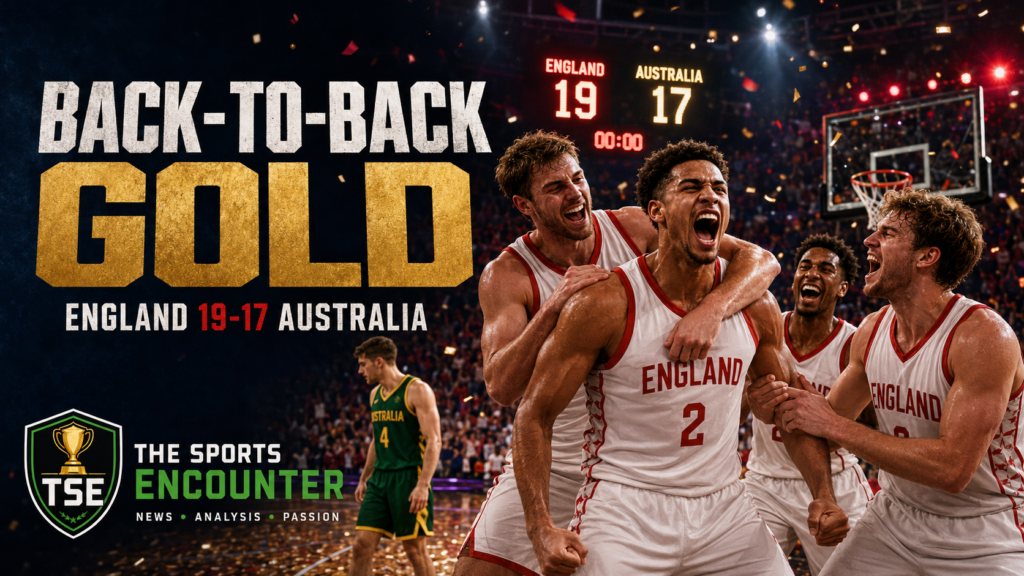
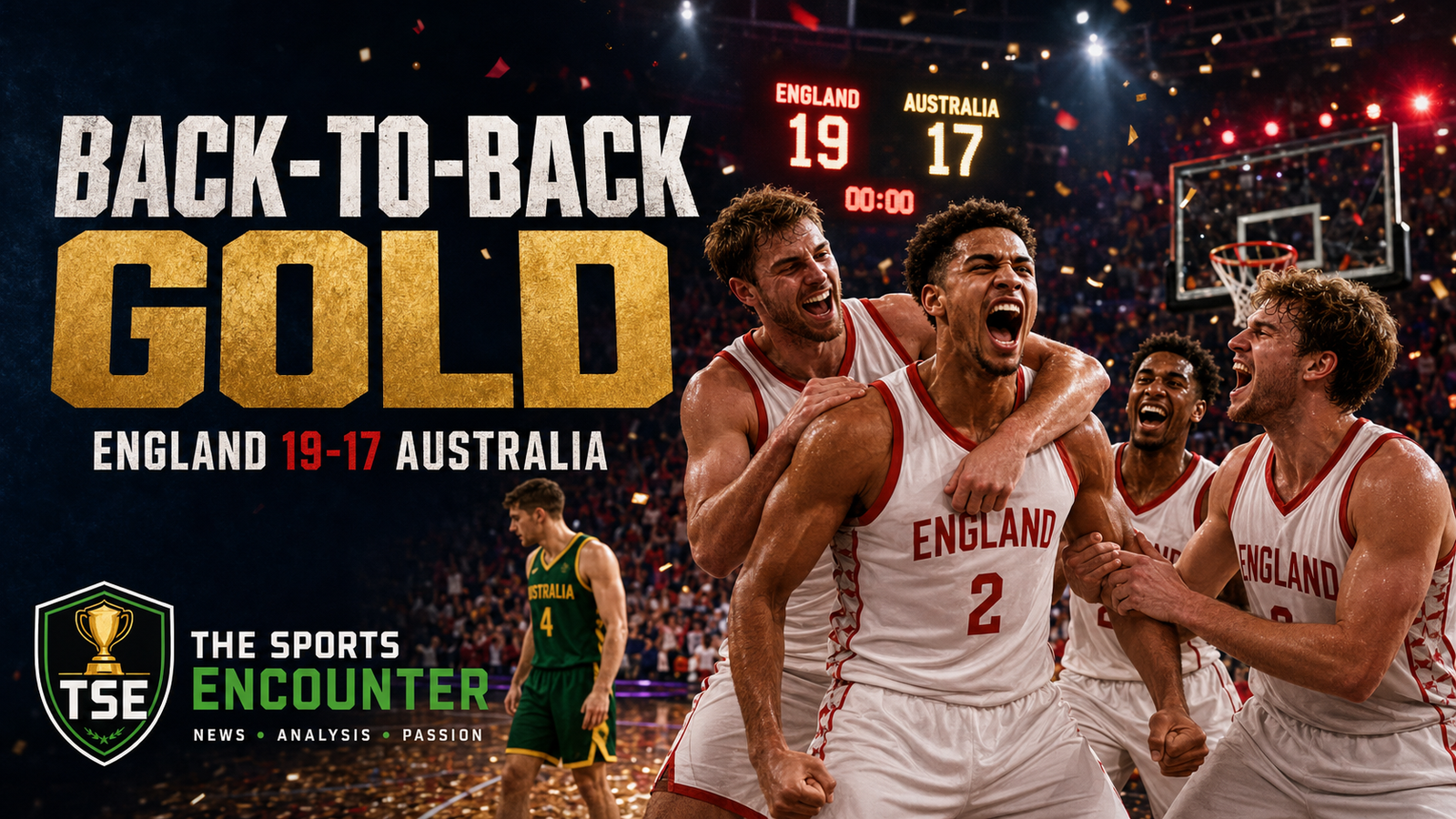
England defeated Australia 19-17 in a tense Glasgow 2026 men’s 3×3 basketball final to become back-to-back Commonwealth Games champions.
England held off Australia 19-17 in a tense Glasgow 2026 men’s 3×3 basketball final to win a second consecutive Commonwealth Games gold medal.
The defending champions entered the final minute with a four-point advantage before Australia launched one last attempt to reverse the result of the Birmingham 2022 gold-medal game. England’s defense survived the late pressure, Australia missed its final opportunities from behind the arc, and the closing buzzer confirmed another English title at the SEC Centre.
Dwayne Lautier-Ogunleye led England with seven points and five rebounds. Jamell Anderson contributed five points and three rebounds, Ashley Hamilton recorded four points and four boards, and Evan Walshe added three points as every member of the squad influenced the final.
The 19-17 result gave England an unbeaten tournament record and continued its perfect Commonwealth Games history in men’s 3×3 basketball. England won the inaugural title at Birmingham 2022 and successfully defended it four years later with only Anderson returning from the original championship squad.
Australia collected another silver medal after losing to England in the final for the second consecutive Games. The margin remained narrow throughout, and neither side led by more than three points until England created an 18-14 advantage during the final minute.
That short burst separated two teams whose physicality, defensive pressure, and familiarity with high-stakes basketball produced one of the closest finals of Glasgow 2026.
England Vs Australia 3×3 Final At A Glance
| Category | Final Details |
|---|---|
| Competition | Glasgow 2026 Commonwealth Games |
| Event | Men’s 3×3 Basketball Gold-Medal Game |
| Result | England 19-17 Australia |
| Gold Medal | England |
| Silver Medal | Australia |
| Bronze Medal | Scotland |
| England’s Leading Scorer | Dwayne Lautier-Ogunleye, 7 points |
| England’s Leading Rebounder | Dwayne Lautier-Ogunleye, 5 rebounds |
| Venue | SEC Centre, Glasgow |
| Date | July 29, 2026 |
| Previous Men’s Champion | England, Birmingham 2022 |
| England’s Tournament Record | Seven wins, no defeats |
The final formed part of a busy sixth day of competition in Glasgow. Readers can follow the wider results, medal-table movement, and major performances through The Sports Encounter’s dedicated Glasgow 2026 coverage hub.
A Final Built On Patience, Contact And Defensive Pressure
The score remained low during the opening minutes because both teams understood the danger of allowing easy two-point attempts. Australia used its size and physical defense to disrupt England’s movement, while England stayed close enough to contest shots and protect the basket.
Neither team passed five points during the first four minutes. Possessions became physical around the arc, and every attempt to create separation met a switch, body contact, or help defender.
Australia’s approach suited a roster built around experience and strength. Jesse Wagstaff, Jonah Antonio, Jarred Bairstow, and Samuel McDaniel had already demonstrated their ability to control games through rebounding and direct offense. Wagstaff, a member of Australia’s Gold Coast 2018 five-on-five championship team, brought composure and a clear memory of losing the 2022 3×3 final to England.
England accepted the physical contest. Anderson later described that style of game as exactly what his team wanted. His assessment explained why England rarely appeared uncomfortable, even when Australia forced the champions into difficult possessions.
The score remained within one possession for most of the contest. Whenever either side threatened to move clear, a defensive stop or contested basket restored the balance.
England’s lineup gave the defending champions several ways to attack. Lautier-Ogunleye could drive, rebound, and finish through contact. Hamilton offered strength inside and shooting range outside the arc. Walshe brought movement and late-clock scoring, while Anderson’s size and experience helped England manage defensive switches.
That balance became decisive when fatigue increased. In 3×3 basketball, players have only 12 seconds to create a shot. The game also restarts almost immediately after a made basket, leaving little time to recover or reorganize.
England remained composed as the final entered its most important passage.
England’s Four-Point Burst Creates The Winning Gap
The final stayed close until England built an 18-14 lead during the last minute. It was the first time either team had moved more than three points ahead.
Walshe contributed to the surge before Anderson attacked the rim and finished with a powerful dunk. Lautier-Ogunleye then converted a layup, giving England the largest advantage of the game at precisely the right moment.
The sequence showed the value of England’s collective offense. Australia could not concentrate its defense on one scorer because all four English players had already contributed.
Lautier-Ogunleye’s seven points led the team, but the remaining 12 came from Anderson, Hamilton, and Walshe. Each player gave Australia a different problem to solve.
Anderson’s dunk carried particular significance. A successful shot inside the arc counts for only one point in 3×3, but his finish gave England more than a numerical advantage. It forced Australia to restart quickly while the English players carried fresh energy into the next defensive possession.
Lautier-Ogunleye’s layup extended the margin to four. With the clock approaching its final seconds, Australia needed to score quickly and consider the greater value of shots from behind the arc.
The Australians responded and reduced the deficit to 19-17. Suddenly, England’s apparently secure lead had become vulnerable. One successful Australian two-pointer could have tied the score and changed the entire final.
Australia created more than one late opportunity. England protected the basket, challenged the perimeter attempts, and trusted the defensive habits that had carried the team through the tournament.
The final shots missed their target. Time expired before Australia could complete the comeback, releasing the England players into another gold-medal celebration.
Why England Did Not Need To Reach 21
A 3×3 game can end in two ways during regulation. The first team to reach 21 points wins immediately, even if time remains. If neither side reaches 21, the team leading when the 10-minute clock expires wins.
England finished with 19 points but held a two-point lead at the end of regulation. The champions therefore secured the victory without reaching the automatic winning target.
The closing score reflected the quality of both defenses. England had reached 21 in six earlier games, while Australia had also passed the target repeatedly during its route to the final. Neither team allowed the other to produce the sustained scoring run required to end the championship game early.
Lautier-Ogunleye Delivers In His Commonwealth Games Debut
Dwayne Lautier-Ogunleye entered Glasgow without previous Commonwealth Games experience. He finished the tournament as England’s leading scorer and rebounder in the gold-medal game.
The London-born guard has built a varied professional career across Europe after playing college basketball at Bradley University in the United States. His experience includes basketball in Italy, France, Germany, the Netherlands, Austria, and Iceland.
Those different environments helped shape a skill set suited to 3×3. Lautier-Ogunleye can handle physical contact, defend multiple positions, create his own shot, and contribute on the boards despite operating primarily as a guard.
His five rebounds mattered almost as much as his seven points against Australia. Every defensive rebound prevented a second opportunity and allowed England to clear the ball beyond the arc before beginning another attack.
Lautier-Ogunleye also produced the layup that helped England move 18-14 ahead. The finish required control under pressure because an unsuccessful attempt would have offered Australia possession with enough time to attack the smaller margin.
His performance completed a strong knockout day. England had earlier defeated New Zealand 21-16 in the semifinal, with Lautier-Ogunleye contributing six points and four rebounds before converting the free throw that ended the contest.
Glasgow gave him the opportunity to represent England at senior Commonwealth level for the first time. He responded by becoming one of the central figures in a successful title defense.
Jamell Anderson Connects England’s Two Championship Teams
Jamell Anderson is the only player who appeared in England’s Birmingham 2022 and Glasgow 2026 men’s 3×3 gold-medal squads.
At Birmingham, England defeated Australia 17-16 in overtime after Myles Hesson made the title-winning two-pointer. Hesson, Jaydon Henry-McCalla, and Orlan Jackman did not return for Glasgow, leaving Anderson as the sole direct link between the two campaigns.
His presence gave the new roster practical knowledge of Commonwealth tournament basketball and the pressure associated with facing Australia for gold.
Before the Games, Anderson acknowledged that England had become a target for other nations. He also said he would be deeply disappointed if the team failed to win another gold medal. The comments carried accountability rather than empty confidence because England had rebuilt most of its squad.
Anderson scored five points and collected three rebounds in the final. His dunk formed part of the decisive late run, while his physical defense helped England survive Australia’s strength around the basket.
His second gold also confirmed that England’s success extends beyond one exceptional Birmingham lineup. England replaced three members of the original team, adjusted its tactical approach, and retained the title against an expanded 12-team field.
The ability to rebuild without losing competitive standards is a meaningful indicator of program strength. It suggests that England now possesses a broader group of players who understand the tactical and physical demands of international 3×3 basketball.
England Complete An Unbeaten Glasgow 2026 Campaign
England qualified for Glasgow through the Home Nations event and entered Pool B alongside Jamaica, Fiji, Kenya, Malaysia, and Singapore.
The defending champions won every group game and finished first, securing direct passage to the semifinals.
| Stage | Opponent | Result |
|---|---|---|
| Pool Stage | Jamaica | England won 22-16 |
| Pool Stage | Fiji | England won 21-16 |
| Pool Stage | Kenya | England won 21-9 |
| Pool Stage | Malaysia | England won 21-19 |
| Pool Stage | Singapore | England won 21-13 |
| Semifinal | New Zealand | England won 21-16 |
| Gold-Medal Game | Australia | England won 19-17 |
The 21-19 result against Malaysia offered an early warning about the danger of short-format basketball. England had the stronger roster on paper, but Malaysia remained within one successful two-pointer of changing the game.
That experience became useful in the final. England had already faced a tight finish and understood how quickly possession, shot value, and the game clock could alter the pressure.
The champions scored at least 21 points in their first six games. Australia finally prevented them from reaching that mark, but England adapted and won through defense.
Their unbeaten run contributed another important result to England’s wider campaign. The Sports Encounter’s Glasgow 2026 Day 4 wrap-up and Day 5 results and medal-table analysis explain how the leading nations built momentum before the sixth day of competition.
New Zealand Push England Before A Late Semifinal Collapse
England’s place in the final was far from automatic. New Zealand recovered repeatedly during a fluctuating semifinal and tied the score at 16-16.
England had earlier led 6-2 and 15-11, but New Zealand answered both runs. Christian Martin scored eight points for the Tall Blacks and helped create the possibility of an upset.
Walshe changed the game during the closing passage. He scored four of England’s final five points as the champions moved from 16-16 to the brink of victory.
Lautier-Ogunleye then converted from the free-throw line to complete a 21-16 win. Hamilton led England with eight points, including two successful shots from behind the arc, while Walshe and Lautier-Ogunleye supplied the late control.
The semifinal strengthened England before the Australia game. New Zealand forced the defending champions to respond after surrendering two separate leads. England remained disciplined and closed the contest with five unanswered points.
Australia reached the final through a more commanding 21-14 semifinal victory over host nation Scotland. McDaniel scored 10 points as the Australians ended Scotland’s hopes of reaching the championship game.
Scotland recovered to beat New Zealand 18-16 in the bronze-medal game, securing the host nation’s first Commonwealth men’s 3×3 medal.
Australia Suffer Another Narrow Final Defeat Against England
Australia arrived in Glasgow carrying one of the clearest motivations in the tournament.
At Birmingham 2022, the Australians lost the final 17-16 in overtime after Hesson’s decisive long-range shot. Four years later, a completely reshaped England lineup defeated them by two points.
Wagstaff was part of the Australian team that won traditional five-on-five Commonwealth basketball gold at Gold Coast 2018. He also experienced the transition to 3×3 at Birmingham and returned for another attempt to reach the top of the podium.
The other members of the Glasgow roster, Antonio, Bairstow, and McDaniel, made their Commonwealth Games debuts. Together, the quartet brought size, experience, perimeter shooting, and a direct physical style.
Australia began its tournament strongly and reached the semifinal as one of the leading contenders. McDaniel’s 10-point performance against Scotland demonstrated the team’s scoring potential before England held the Australians to 17 in the final.
The silver represents another major international result, although the closeness of the defeat will make it difficult to absorb immediately. Australia had several late shots capable of tying the final and forcing overtime.
Those opportunities missed, leaving the program with consecutive Commonwealth silver medals and consecutive gold-medal defeats against England.
Australia still enjoyed major success in Glasgow basketball. Its women defeated Uganda 21-11 to win gold, a result examined in The Sports Encounter’s report on Australia’s women’s 3×3 triumph and Uganda’s historic silver.
Why Back-To-Back Gold Matters For English 3×3 Basketball
Basketball does not traditionally produce a large share of England’s Commonwealth medals. Consecutive men’s 3×3 titles therefore give the national program a clear area of international strength.
The sport rewards qualities that England has developed effectively: versatile players, physical guards, defensive switching, strong rebounding, and the ability to attack without requiring long tactical possessions.
Success also creates a more credible pathway for players who may sit outside the most visible five-on-five national-team structure. A four-player 3×3 roster offers fewer places, but specialists can build international careers through FIBA events, regional competitions, and major multisport Games.
England’s title defense carried additional value because the field expanded from eight teams at Birmingham to 12 in Glasgow. More countries brought dedicated squads, and group winners needed to survive a longer pool phase before reaching the medal games.
England handled seven opponents without losing. The champions scored freely when games opened up and defended effectively when Australia reduced the final to a physical struggle.
The result may encourage Basketball England and British basketball decision-makers to invest further in dedicated preparation, international competition, and player continuity.
Three-on-three basketball has been an Olympic sport since Tokyo 2020. Commonwealth success does not automatically translate into Olympic qualification because Great Britain competes as one nation at the Olympics, while England, Scotland, Wales, and Northern Ireland compete separately at the Commonwealth Games.
However, England’s results identify players capable of contributing to future Great Britain 3×3 programs. They also offer a tactical model for converting experienced professional basketball players into a cohesive short-format team.
How England’s Collective Approach Decided The Final
England’s scoring distribution provides the clearest explanation of the victory. Lautier-Ogunleye scored seven, Anderson five, Hamilton four, and Walshe three.
Australia could not isolate one primary scorer or force a single player to carry the offense. England could attack through drives, post mismatches, long-range shots, cuts, and offensive rebounds.
That variety becomes especially valuable under a 12-second shot clock. Teams rarely have enough time to reset a failed action, so every player must recognize space and make a quick decision.
England trusted four players to make those decisions. Their late scoring run emerged from different contributors and different types of finishes, forcing Australia to defend the entire half-court.
How 3×3 Basketball Works At The Commonwealth Games
Three players from each team compete on a half-court using one basket. Each squad includes a fourth player who can enter during a dead-ball situation.
A successful shot inside the arc earns one point. A shot from behind the arc counts for two, making perimeter accuracy especially valuable.
The first team to score 21 points wins immediately if it reaches that total within the 10-minute regulation period. If neither team reaches 21, the side leading when time expires wins.
A tied game moves into overtime, where the first team to score two points wins. England used that rule to defeat Australia 17-16 at Birmingham 2022.
The shot clock lasts only 12 seconds. After securing possession, a team must clear the ball beyond the arc before attempting to score. Following a made basket, the defending side collects the ball beneath the hoop and can begin its next possession almost immediately.
The rapid restart creates a continuous game with limited recovery time. Substitutions occur quickly, and teams must communicate defensive assignments without the regular stoppages available in five-on-five basketball.
Why Two-Point Shooting Changes Every Late-Game Decision
A shot from behind the arc is worth twice as much as an interior basket. That difference shapes strategy during the final minute.
When Australia trailed 18-14, a series of one-point attempts would have consumed too much time. Long-range shots provided the fastest route back into the game.
Australia reduced the deficit to 19-17 and created chances to tie the contest. England understood the threat and prioritized perimeter contests while avoiding an unnecessary foul that could have stopped the clock.
The final seconds captured the tension of 3×3 basketball. England held a two-point lead, but one Australian shot could still have forced overtime.
Glasgow Delivers Two Very Different 3×3 Champions
England’s men and Australia’s women claimed the two able-bodied 3×3 titles on the same day.
Australia’s women reached the 21-point target against Uganda with 54 seconds remaining. Marena Whittle scored 15 points despite Australia playing the final without an available substitute.
The men’s final followed a different pattern. Neither England nor Australia reached 21, and the championship remained undecided until the final possession.
Together, the two finals showed the range within 3×3 basketball. One game was decided by exceptional perimeter shooting and ended early. The other developed into a defensive contest in which two points separated the teams when time expired.
Glasgow’s broader program has produced significant individual performances alongside the team events. Nigeria’s Goodness Nwachukwu set a women’s F42 discus world record of 39.66m, covered in our report on Goodness Nwachukwu’s historic Commonwealth gold.
Scottish swimmer Angharad Evans also completed a breaststroke double, with her second victory detailed in The Sports Encounter’s story on Angharad Evans’ second Glasgow 2026 gold medal.
Final Verdict
England arrived in Glasgow as the defending men’s 3×3 champion and completed its campaign without losing a game.
The final demanded a different response from the free-scoring victories that came earlier in the tournament. Australia controlled the tempo, contested the perimeter, and used physical pressure to keep the score below 21.
England remained patient. Lautier-Ogunleye led the scoring and rebounding, Anderson supplied experience and a critical late dunk, Hamilton contributed at both ends, and Walshe added the movement and scoring required to stretch Australia’s defense.
The decisive run arrived during the final minute. England moved 18-14 ahead before Australia reduced the deficit and created multiple opportunities to force overtime.
England defended every remaining possession and watched the final Australian attempts miss. The 19-17 victory secured another gold medal and extended England’s perfect Commonwealth Games record in the format.
Australia must settle for silver again after another final decided by the smallest moments. Scotland’s victory over New Zealand completed the podium and gave the host nation a historic bronze.
For Anderson, the result delivered a second Commonwealth title with two different groups of teammates. For Lautier-Ogunleye, Hamilton, and Walshe, Glasgow provided gold on their first Commonwealth Games appearances.
Official schedules, results, basketball information, and Games updates are available through the official Glasgow 2026 basketball website.
Readers looking for broader basketball analysis can also explore The Sports Encounter’s evidence-led comparison of LeBron James, Michael Jordan, and Kareem Abdul-Jabbar.
Frequently Asked Questions About England Vs Australia 3×3 Basketball
Who Won The Glasgow 2026 Men’s 3×3 Basketball Gold Medal?
England won the men’s 3×3 basketball gold medal at the Glasgow 2026 Commonwealth Games. The defending champions defeated Australia 19-17 in the final.
What Was The England Vs Australia 3×3 Final Score?
England defeated Australia 19-17 in the men’s gold-medal game at the SEC Centre in Glasgow.
Who Scored The Most Points For England Against Australia?
Dwayne Lautier-Ogunleye led England with seven points. He also collected a team-high five rebounds.
Who Played For England In The Glasgow 2026 3×3 Final?
England’s championship squad featured Jamell Anderson, Ashley Hamilton, Dwayne Lautier-Ogunleye, and Evan Walshe.
Who Played For Australia In The Men’s 3×3 Final?
Australia’s Glasgow 2026 roster consisted of Jonah Antonio, Jarred Bairstow, Samuel McDaniel, and Jesse Wagstaff.
Did England Also Win 3×3 Basketball At Birmingham 2022?
Yes. England won the inaugural Commonwealth Games men’s 3×3 title at Birmingham 2022, defeating Australia 17-16 in overtime.
How Many Commonwealth 3×3 Gold Medals Has England Won?
England has won both men’s 3×3 basketball titles staged at the Commonwealth Games. The team claimed gold at Birmingham 2022 and Glasgow 2026.
Who Was The Only Returning Player From England’s 2022 Team?
Jamell Anderson was the only member of England’s Birmingham 2022 championship squad who returned for Glasgow 2026.
How Did England Reach The Glasgow 2026 Final?
England won all five Pool B games to advance directly to the semifinals. The team then defeated New Zealand 21-16 before beating Australia 19-17 in the final.
Who Won Bronze In Men’s 3×3 Basketball?
Scotland won bronze by defeating New Zealand 18-16. Kyle Jimenez led Scotland with nine points in the medal game.
How Long Is A 3×3 Basketball Game?
A regulation 3×3 basketball game lasts up to 10 minutes. It ends earlier if one team reaches 21 points.
Why Did England Win With Only 19 Points?
Neither team reached 21 before the 10-minute clock expired. England led 19-17 when regulation ended, so it won the game.
How Does Scoring Work In 3×3 Basketball?
Shots made inside the arc count for one point. Successful shots from behind the arc count for two points, while free throws are worth one point.
What Happens If A 3×3 Game Is Tied?
A tied game enters overtime. The first team to score two points during overtime wins.
Where Was The Glasgow 2026 3×3 Basketball Final Played?
The men’s final was played at the SEC Centre in Glasgow, Scotland, on July 29, 2026.
Can England’s Commonwealth Players Represent Great Britain At The Olympics?
Yes. England competes separately at the Commonwealth Games, but eligible English players can represent Great Britain in Olympic basketball. Olympic selection and qualification follow separate FIBA rules and Great Britain team processes.
Editor's Choice
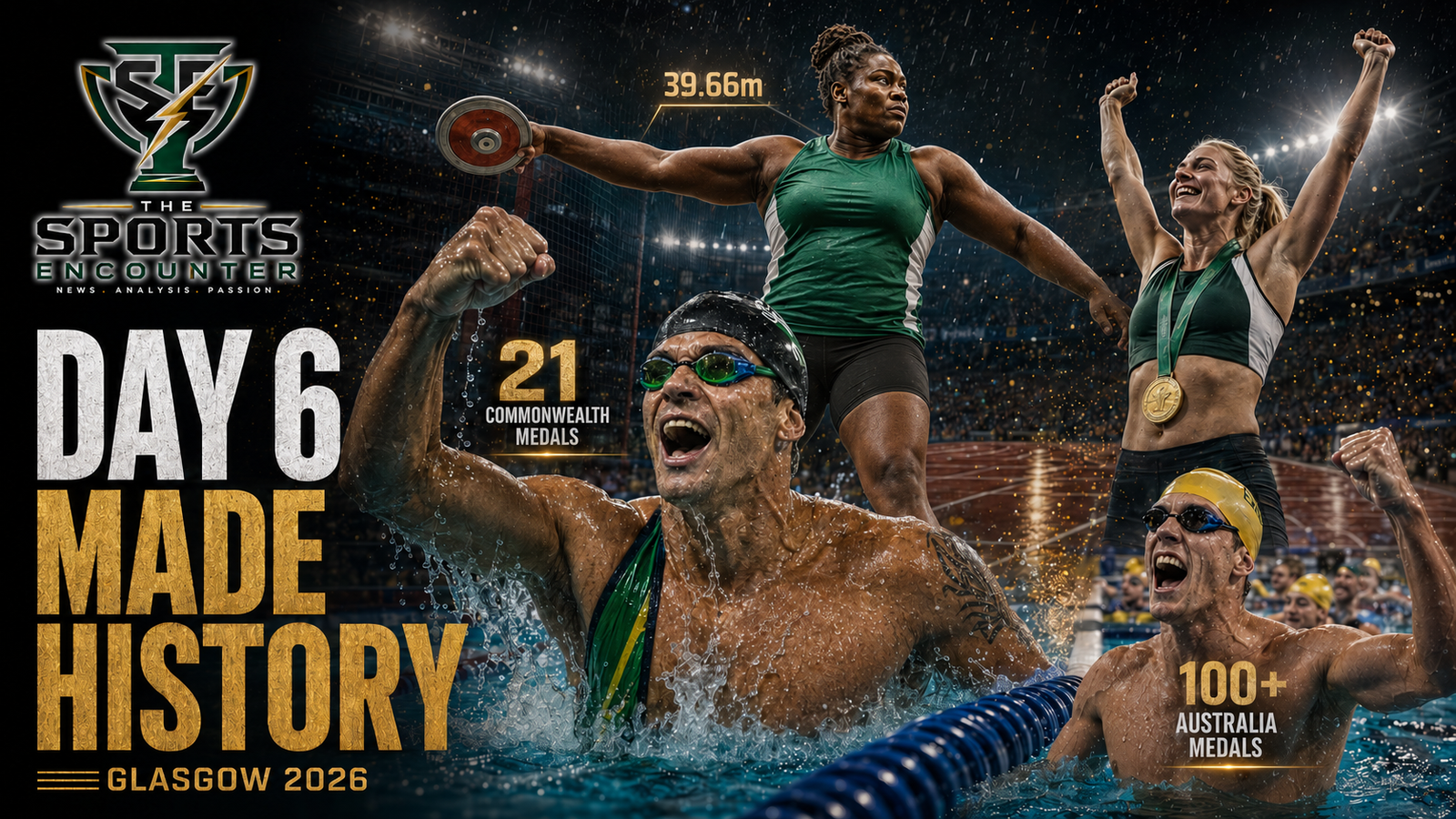
Glasgow 2026 Day 6 Wrap-Up: Australia Passes 100 Medals as Records Fall Across the Games
Australia passed 100 medals, Chad le Clos made Commonwealth Games history, Goodness Nwachukwu broke the world record, and four 3×3 basketball titles were decided on a remarkable Day 6 in Glasgow.
Australia passed 100 medals, Chad le Clos became the most decorated athlete in Commonwealth Games history, Goodness Nwachukwu shattered a world record, and four basketball championships were decided during an extraordinary sixth day of competition at Glasgow 2026.
Day 6 brought the swimming program to a spectacular conclusion at Tollcross, completed the 3×3 basketball tournaments at the SEC Centre, produced major Para athletics performances at Scotstoun Stadium, and extended Australia’s dominance of the overall medal table.
Australia finished the day with 47 gold, 21 silver and 35 bronze medals for a total of 103. Canada remained second on gold medals with 14, while England moved to 12 golds and 56 medals overall. Host nation Scotland strengthened its campaign through home victories and emotional podium finishes.
The raw totals capture Australia’s superiority but cannot explain everything that made the day important.
South Africa’s le Clos moved beyond Emma McKeon to stand alone with 21 career Commonwealth medals. Nigeria’s Nwachukwu improved her own world record by more than three meters. Northern Ireland’s Kate O’Connor completed a commanding heptathlon victory. Samoa and Malaysia added weightlifting titles, while India secured a Para athletics one-two.
England retained the men’s 3×3 basketball title and won women’s wheelchair basketball gold. Australia claimed the women’s able-bodied and men’s wheelchair competitions. Uganda’s Gazelles earned a historic silver medal during their first Commonwealth basketball campaign.
Readers can retrace how the medal race reached this point through The Sports Encounter’s complete Glasgow 2026 Day 5 report.
Glasgow 2026 Day 6 At A Glance
| Category | Day 6 Highlight | Why It Mattered |
|---|---|---|
| Leading Nation | Australia | Passed 100 total medals and ended swimming with 76 medals |
| Historic Achievement | Chad le Clos | Became the most decorated Commonwealth Games athlete with 21 medals |
| Performance Of The Day | Goodness Nwachukwu | Broke the women’s Para discus world record with 39.66m |
| Home-Nation Highlight | Melanie Woods | Won Scotland’s women’s T54 1500m title in a Games record |
| Multi-Event Champion | Kate O’Connor | Won Northern Ireland’s first gold of Glasgow 2026 in the heptathlon |
| Swimming Milestone | Australia | Finished the meet with 37 gold medals and 76 medals overall |
| Basketball Breakthrough | Uganda Women | Won silver during their Commonwealth 3×3 debut |
| Weightlifting Breakthrough | Seine Stowers | Delivered Samoa’s first Glasgow 2026 gold |
| Medal-Table Milestone | Australia | Reached 103 medals after beginning Day 6 with 80 |
All 26 Medal Events Decided On Day 6
| Sport | Event | Gold Medalist | Leading Result |
|---|---|---|---|
| Swimming | Men’s 100m Backstroke | Pieter Coetze, South Africa | Games record |
| Swimming | Women’s 200m Breaststroke | Angharad Evans, Scotland | 2:23.79 |
| Swimming | Men’s 200m Freestyle | Kai Taylor, Australia | 1:45.22 |
| Swimming | Women’s 50m Freestyle | Meg Harris, Australia | Australian podium sweep |
| Swimming | Men’s 50m Butterfly | Kyle Chalmers and Ben Armbruster, Australia | Joint Games record, 22.73 |
| Para Swimming | Women’s S9 100m Freestyle | Lakeisha Patterson, Australia | 1:02.99 |
| Para Swimming | Men’s S7 50m Freestyle | Australia | Final-session gold |
| Swimming | Women’s 200m Butterfly | Brittany Castelluzzo, Australia | Beat Keanna MacInnes |
| Swimming | Men’s 1500m Freestyle | Sam Short, Australia | Completed freestyle treble |
| Swimming | Women’s 4x100m Medley Relay | Australia | 3:54.25 |
| Swimming | Men’s 4x100m Medley Relay | Australia | Games record, 3:28.71 |
| Athletics | Women’s Heptathlon | Kate O’Connor, Northern Ireland | Controlled competition after record javelin |
| Athletics | Men’s Long Jump | Tajay Gayle, Jamaica | 8.15m |
| Athletics | Women’s Shot Put | Sarah Mitton, Canada | 19.88m |
| Athletics | Women’s 3000m Steeplechase | Faith Cherotich, Kenya | Games record |
| Para Athletics | Women’s T54 1500m | Melanie Woods, Scotland | Games record, 3:33.39 |
| Para Athletics | Men’s T47 100m | Dilip Mahadu Gavit, India | India one-two |
| Para Athletics | Women’s F42-44/F61-64 Discus | Goodness Nwachukwu, Nigeria | World record, 39.66m |
| Para Athletics | Men’s F42-44/F61-64 Discus | Day 6 champion | Cross-classification final |
| Weightlifting | Women’s 77kg | Seine Stowers, Samoa | 237kg total |
| Weightlifting | Men’s 94kg | Mohamad Syahmi Nor-Ghazali, Malaysia | 347kg total |
| Weightlifting | Women’s 86kg | Eileen Cikamatana, Australia | 248kg total |
| 3×3 Basketball | Men’s Final | England | Beat Australia 19-17 |
| 3×3 Basketball | Women’s Final | Australia | Beat Uganda 21-11 |
| Wheelchair 3×3 Basketball | Men’s Final | Australia | Gold-medal victory |
| Wheelchair 3×3 Basketball | Women’s Final | England | Beat Scotland 18-10 |
Chad Le Clos Stands Alone With 21 Commonwealth Medals
The final swimming race delivered the day’s most important career milestone.
South Africa finished third in the men’s 4x100m medley relay behind Australia and England. That bronze gave Chad le Clos his 21st Commonwealth Games medal, moving him beyond Australian swimming great Emma McKeon’s total of 20.
Le Clos had drawn level with McKeon earlier in the meet. His relay bronze placed him alone at the top of the all-time list.
The achievement spans several editions of the Games and reflects unusual durability in a sport where careers can turn quickly. Le Clos has competed against different generations of swimmers, adapted his program as his body changed, and remained valuable enough to contribute to South Africa’s medal-winning relay team.
His record also carries more weight because Commonwealth swimming attracts many of the strongest programs in the world. Australia, England, Canada, Scotland, South Africa and New Zealand regularly bring Olympic and world championship medalists.
Le Clos’ 21st medal did not arrive with another individual victory. The bronze still represented something larger: a career that has remained relevant across changing events, rivals and competitive cycles.
Australia Breaks The Men’s Medley Relay Games Record
Australia won the final race of the swimming program in 3:28.71, setting a Commonwealth Games record. England secured silver, while South Africa’s bronze completed le Clos’ historic collection.
The women’s relay produced another Australian title. The team clocked 3:54.25 to beat Scotland, with South Africa taking bronze.
Those victories completed an unbeaten Australian relay campaign. The country won every men’s, women’s and mixed relay available across freestyle and medley competition.
Relay supremacy demonstrates more than one exceptional athlete. A program requires depth across all four strokes, quality reserves for the heats, reliable exchanges, and enough fitness to survive a congested schedule.
Australia had every component.
Australia Finishes Swimming With 76 Medals
Australia ended the Glasgow swimming program with 37 gold, 16 silver and 23 bronze medals. Its total of 76 was more than three times South Africa’s second-best swimming return of 22.
Day 6 added another series of clean sweeps, records and breakthrough champions.
Meg Harris won the women’s 50m freestyle ahead of Alex Perkins and Shayna Jack, giving Australia all three medals. Harris completed the meet with six golds after succeeding in individual sprints and relays.
Kyle Chalmers and Ben Armbruster touched together in the men’s 50m butterfly at 22.73 seconds. Both received gold medals after matching the Games record, while Cameron McEvoy completed another Australian sweep with bronze.
Chalmers entered the event after losing the 100m freestyle title to younger teammate Flynn Southam. His 50m butterfly success showed that the established star could still respond within a team experiencing a generational shift.
Kai Taylor supplied one of the session’s finest surprises. Swimming from an outside lane, he won the men’s 200m freestyle in 1:45.22. England’s James Guy and Wales’ Matt Richards recorded the same 1:45.72 time behind him.
Taylor’s victory carried a family connection. His mother, Hayley Lewis, won five Commonwealth Games gold medals during her career. The younger Taylor earned his first senior individual international title by trusting his race from lane one and preventing the central favorites from controlling him.
Sam Short won the men’s 1500m freestyle ahead of Northern Ireland Olympic champion Daniel Wiffen and Australian teammate Benjamin Goedemans. The result completed a 400m, 800m and 1500m freestyle treble for Short.
Angharad Evans Gives Scotland A Breaststroke Double
Australia controlled the overall swimming table, but some of Tollcross’ loudest moments belonged to Scotland.
Angharad Evans won the women’s 200m breaststroke in 2:23.79, defeating South Africa’s Kaylene Corbett and Northern Ireland’s Ellie McCartney. The result completed a breaststroke double after Evans had already won the 100m title.
Her complete Glasgow return included two individual gold medals and bronze in Scotland’s mixed medley relay. The Sports Encounter’s profile of Angharad Evans’ second Commonwealth title examines her progression, technical strengths and growing international reputation.
Brittany Castelluzzo restored Australian control in the women’s 200m butterfly. Scotland’s Keanna MacInnes took silver, with Lizzy Dekkers earning bronze for Australia.
South Africa’s Pieter Coetze completed his sweep of the men’s backstroke events by winning the 100m in a Games record. England’s Oliver Morgan claimed silver and South Africa’s Ruard van Renen took bronze.
Lakeisha Patterson led an Australian one-two in the women’s S9 100m freestyle, beating Emily Beecroft. Scotland’s Toni Shaw collected bronze in front of the home crowd.
Why Australia’s Swimming Total Changed The Entire Medal Race
Australia began Day 6 with 35 gold medals and ended it with 47. Much of that movement came from the pool.
The country possessed leading contenders in almost every discipline, but its real advantage emerged through medal density. When Australia missed gold, another Australian frequently took it. When one swimmer won, teammates often filled the remaining podium positions.
This pattern limited the gains available to every rival. England, Scotland, South Africa and Canada could produce world-class performances and still collect only one medal from an event dominated by Australian depth.
The swimming program ended on Day 6, meaning Australia’s rate of accumulation will now slow. Its advantage has already become large enough to survive that transition.

Goodness Nwachukwu Smashes Her Own World Record
Nigeria’s Goodness Nwachukwu produced the most statistically significant performance of the day in the women’s F42-44/F61-64 discus final.
Her final throw traveled 39.66m, improving her previous world record by more than three meters. Funmi Oduwaiye of Wales won silver, while Welsh teammate Bree Cronin took bronze.
Nwachukwu entered the competition as the defending Commonwealth champion and world-record holder. Those credentials created a different challenge. She was expected to win, leaving improvement as the main measure of her performance.
The Nigerian responded with the finest throw of her career.
Her world record strengthened Nigeria’s Glasgow campaign and confirmed the value of the integrated Para sport program. The result occupied the same evening session and medal-table space as the long jump, shot put, heptathlon and distance races.
A detailed account of the performance appears in The Sports Encounter’s report on Goodness Nwachukwu’s 39.66m world record.
Kate O’Connor Completes A Commanding Heptathlon Victory
Kate O’Connor delivered Northern Ireland’s first gold medal of Glasgow 2026 by winning the women’s heptathlon.
O’Connor began the second day with a narrow lead over England’s Jade O’Dowda. She then changed the shape of the competition through the long jump and javelin.
An outdoor personal best of 6.37m strengthened her position before she threw 52.85m in the javelin. That effort established a Commonwealth Games heptathlon record and gave her a 258-point advantage before the closing 800m.
The final race became a celebration rather than a desperate defense. O’Connor crossed the line first and secured gold, with O’Dowda taking silver and Australia’s Tori West earning bronze.
Her victory continued an exceptional multi-event sequence. O’Connor had won medals at five consecutive major championships before Glasgow, including world indoor bronze and Commonwealth silver.
The progression from Birmingham runner-up to Glasgow champion showed how effectively she had strengthened the events that once limited her overall total.
Melanie Woods Creates A Home Para Athletics Memory
Scotland’s Melanie Woods won the women’s T54 1500m in a Games-record 3:33.39.
The race was affected by contact and a crash behind the leader. Woods had positioned herself near the front, which kept her clear of the worst trouble and allowed her to maintain momentum.
Canadian Nandini Sharma initially finished second but was disqualified. England’s Ellis Kottas moved to silver, while Australia’s Mikaela Dingley received bronze.
Woods described the crowd’s roar along the back straight as a physical boost. Her victory became one of the clearest examples of home support influencing the emotional shape of a race without changing its competitive demands.
India also enjoyed a major Para athletics result. Dilip Mahadu Gavit won the men’s T47 100m, followed by compatriot Mohammed Basil Morssinganakath. England’s Kevin Santos took bronze.
Tajay Gayle And Faith Cherotich Deliver Major Athletics Titles
Jamaica’s Tajay Gayle won a high-quality men’s long jump final with a season-best 8.15m.
India’s Murali Sreeshankar led during the early rounds after jumping 8.09m. Gayle overtook him in the fourth round, while Scotland’s Stephen Mackenzie secured bronze with 8.08m.
The margins were extremely small. Six centimeters separated gold and silver, with Mackenzie finishing another centimeter behind Sreeshankar.
Gayle’s title added to Jamaica’s growing Glasgow athletics campaign. The former world champion entered the event with greater international pedigree than most of the field, but he still needed a late technical correction after an uneven opening sequence.
Faith Cherotich gave Kenya victory in the women’s 3000m steeplechase with a Games-record performance. Uganda’s Peruth Chemutai challenged through much of the race before England’s Elise Thorner passed her late to take silver. Chemutai finished with bronze.
Canada’s Sarah Mitton controlled the women’s shot put. Her winning throw of 19.88m placed her comfortably ahead of Nigeria’s Jessica Oji and Jamaica’s Lloydricia Cameron.
England And Australia Divide The 3×3 Basketball Titles
Four basketball finals produced two gold medals for England and two for Australia.
England retained the men’s 3×3 title by defeating Australia 19-17. The final remained undecided until the closing possession, with Australia still capable of forcing overtime through a successful two-point shot.
Dwayne Lautier-Ogunleye led England with seven points, while Jamell Anderson contributed a critical late dunk. England completed the tournament without losing and became champion for the second time in as many Commonwealth appearances.
The full tactical story appears in The Sports Encounter’s report on England’s 19-17 victory over Australia.
Scotland defeated New Zealand 18-16 in the bronze-medal game, giving the host nation its first men’s Commonwealth 3×3 medal.
Australia won the women’s final 21-11 against Uganda. Marena Whittle scored 15 points despite Australia entering the game without an available substitute following Emma Clarke’s injury.
Uganda’s silver carried enormous significance. The Gazelles were making their Commonwealth 3×3 debut and reached the final after defeating New Zealand in the semifinal.
The Sports Encounter’s analysis of Australia’s gold and Uganda’s historic silver explains how the final developed and why the result matters for African women’s basketball.
Wheelchair Basketball Adds Two Different Champions
England won the women’s wheelchair 3×3 final by beating Scotland 18-10. Joy Haizelden, Charlotte Moore, Jade Atkin and Lucy Robinson converted their defensive control into a clear victory.
Scotland’s silver still represented a successful home campaign and delivered another medal in front of an invested SEC crowd.
Australia won the men’s wheelchair title, completing its share of the four basketball championships. The split reflected the wider Day 6 pattern: Australia owned the medal volume, while England remained especially effective in high-pressure team finals.
Samoa, Malaysia And Australia Win Weightlifting Gold
Seine Stowers delivered Samoa’s first gold medal of Glasgow 2026 in the women’s 77kg competition.
The 18-year-old completed all six successful lifts and totaled 237kg through a 107kg snatch and 130kg clean and jerk. Both marks established Games records in the new weight category.
England’s Isabella Brown won silver with 229kg, while Wales’ Laura Hughes took bronze with 224kg.
Malaysia’s Mohamad Syahmi Nor-Ghazali won the men’s 94kg title through a dramatic one-kilogram margin. He totaled 347kg after lifting 150kg in the snatch and a Games-record 197kg in the clean and jerk.
Canada’s Alex Bellemarre finished second with 346kg, while Australia’s Oliver Saxton took bronze on 336kg.
Eileen Cikamatana completed Australia’s Day 6 weightlifting success by winning the women’s 86kg class with a 248kg total. England’s Madias Ngake led after a 108kg snatch but finished second with 239kg. Canada’s Rose Beaudoin earned bronze with 230kg.
Ngake’s silver completed one of the Games’ most compelling personal stories. She represented Cameroon at the London 2012 Olympics, left the national setup after facing persecution over her sexuality, spent years away from elite competition, and returned to the sport in Britain.
Boxing Creates New National Milestones
Day 6 boxing did not award gold medals, but its quarterfinals guaranteed a series of podium finishes.
England secured six medals through its successful quarterfinalists. Scotland’s Caitlin Rainey continued her historic campaign by ensuring the host nation would win its first Commonwealth women’s boxing medal.
Jasmine Daunakamakama defeated Sri Lanka’s Keshani Hansika in the women’s 57kg quarterfinal, becoming Fiji’s first female boxer to secure a Commonwealth Games medal.
Those results continued the widening medal story established on Day 5, when Pakistan’s Fatima Zahra became the first woman from her country to guarantee a Commonwealth boxing medal.
The importance of a quarterfinal victory in Commonwealth boxing differs from most sports. With two bronze medals awarded in each division, reaching the semifinal guarantees a place on the podium.
Netball Pool Races Tighten Before The Knockout Stage
Jamaica survived its sternest challenge from host nation Scotland, winning 45-43 after being forced to recover from a difficult start.
Scotland’s performance did not produce a victory, but it showed the progress made since finishing ninth at Birmingham 2022. The hosts matched one of the world’s strongest teams through defensive pressure, disciplined possession and an energized home crowd.
New Zealand defeated Wales 65-37 to retain control of its qualification route. The Silver Ferns gradually separated after Wales competed well during the opening stages.
England faced Tonga, while Australia and South Africa met in the central Pool A contest. The Diamonds were pushed harder than in their earlier victories, with a strong second quarter providing the platform for a 10-goal Australian win.
The result preserved Australia’s unbeaten record and reinforced its status as the tournament favorite. South Africa remained dangerous enough to make the later medal rounds far less predictable.
Glasgow 2026 Medal Table After Day 6
Australia added 23 medals to the 80 it held after Day 5, becoming the first nation to pass 100 at Glasgow 2026.
| Rank | Nation | Gold | Silver | Bronze | Total |
|---|---|---|---|---|---|
| 1 | Australia | 47 | 21 | 35 | 103 |
| 2 | Canada | 14 | 11 | 14 | 39 |
| 3 | England | 12 | 27 | 17 | 56 |
| 4 | Scotland | 9 | 7 | 7 | 23 |
| 5 | Nigeria | 7 | 5 | 2 | 14 |
| 6 | South Africa | 6 | 8 | 8 | 22 |
| 7 | Malaysia | 6 | 2 | 3 | 11 |
| 8 | India | 3 | 9 | 3 | 15 |
| 9 | New Zealand | 3 | 7 | 4 | 14 |
| 10 | Jamaica | 3 | 0 | 1 | 4 |
Medal standings are ordered by gold medals, followed by silver and bronze. Canada therefore remained second despite England possessing 17 more medals overall.
Australia began the previous day with 35 golds and 80 total medals. Its Day 6 surge increased those numbers to 47 and 103, respectively.
The change from the Glasgow 2026 Day 4 standings, when Australia held 26 golds and 59 medals, demonstrates how rapidly swimming and the early athletics program transformed the competition.
Official schedules, complete results, medal standings and subsequent updates are available through the official Glasgow 2026 results platform.
What Day 6 Revealed About The Medal Race
Australia has effectively removed suspense from the contest for first place.
The more competitive questions concern the order behind it, the ability of smaller nations to convert limited opportunities into gold, and whether Scotland can remain inside the leading group after swimming ends.
Canada has built an efficient campaign through gymnastics, weightlifting, swimming and field events. England has greater overall depth but continues to collect more silver and bronze medals than golds.
Scotland’s nine titles represent a strong return for the host nation. The team has produced home champions in swimming, Para swimming, athletics and bowls while adding important team medals in basketball.
Nigeria and Malaysia remain among the most efficient delegations. Their medal totals are smaller than those of England, Canada, Scotland or South Africa, but weightlifting and Para sport have given both countries a high gold conversion rate.
Swimming accounted for 76 of Australia’s 103 medals. The end of that program changes the daily balance, although track cycling now gives Australia another traditionally strong discipline.
Fans can follow every daily report and athlete feature through The Sports Encounter’s Glasgow 2026 coverage hub.
Final Verdict: Records Gave Day 6 Its Identity
Australia owned the numbers again. Its swimmers finished with 76 medals, the national team passed 100 overall, and the gold total reached 47.
Day 6 will still be remembered through individual records and national breakthroughs.
Chad le Clos became the most decorated athlete in Commonwealth Games history. Goodness Nwachukwu extended the limits of her Para athletics classification. Kate O’Connor moved from Birmingham silver to Glasgow gold. Melanie Woods gave the home crowd another performance to keep.
England defended the men’s 3×3 basketball title, while Uganda’s Gazelles turned a debut campaign into a silver medal. Samoa found its first Glasgow champion through an 18-year-old weightlifter. Fiji entered a new chapter in women’s boxing.
The medal table showed a dominant nation extending its lead. The competition itself showed something broader.
A compact Commonwealth Games can still create space for established stars, new champions, smaller delegations and Para athletes to share the same stage without becoming secondary stories.
Day 6 offered the clearest evidence yet.
Frequently Asked Questions About Glasgow 2026 Day 6
Who Led The Glasgow 2026 Medal Table After Day 6?
Australia led the medal table with 47 gold, 21 silver and 35 bronze medals. Its overall total reached 103.
What Happened On Day 6 Of The Commonwealth Games 2026?
Day 6 included 26 medal events across swimming, Para swimming, athletics, Para athletics, weightlifting, 3×3 basketball and wheelchair 3×3 basketball. Boxing and netball also continued with quarterfinal and pool-stage competition.
Who Became The Most Decorated Commonwealth Games Athlete?
South African swimmer Chad le Clos became the most decorated athlete in Commonwealth Games history after winning his 21st career medal in the men’s 4x100m medley relay.
How Many Medals Did Australia Win In Swimming At Glasgow 2026?
Australia completed the swimming and Para swimming program with 76 medals: 37 gold, 16 silver and 23 bronze.
What World Record Was Broken On Glasgow 2026 Day 6?
Nigeria’s Goodness Nwachukwu set a women’s F42 discus world record of 39.66m in the combined F42-44/F61-64 final.
Who Won The Glasgow 2026 Women’s Heptathlon?
Kate O’Connor won the heptathlon for Northern Ireland. England’s Jade O’Dowda took silver and Australia’s Tori West earned bronze.
Who Won The Men’s 3×3 Basketball Gold Medal?
England defeated Australia 19-17 to retain the Commonwealth Games men’s 3×3 basketball title.
Who Won The Women’s 3×3 Basketball Final?
Australia defeated Uganda 21-11. Marena Whittle scored 15 points for the champions, while Uganda earned a historic silver medal.
Who Won The Glasgow 2026 Men’s Long Jump?
Jamaica’s Tajay Gayle won gold with a jump of 8.15m. India’s Murali Sreeshankar took silver with 8.09m, and Scotland’s Stephen Mackenzie won bronze with 8.08m.
Who Won The Women’s 200m Breaststroke At Glasgow 2026?
Scotland’s Angharad Evans won in 2:23.79, completing a Glasgow breaststroke double after also winning the 100m event.
How Many Gold Medals Did Meg Harris Win At Glasgow 2026?
Meg Harris completed the swimming meet with six gold medals, including the women’s 50m and 100m freestyle titles and several relay victories.
Who Won The Men’s 1500m Freestyle?
Australia’s Sam Short won gold ahead of Northern Ireland’s Daniel Wiffen and Australian teammate Benjamin Goedemans. Short completed a 400m, 800m and 1500m freestyle treble.
Which Country Was Second In The Medal Table After Day 6?
Canada ranked second with 14 gold medals. England had more medals overall but ranked third because it had won 12 golds.
When Did Australia Pass 100 Medals At Glasgow 2026?
Australia passed 100 total medals during Day 6. It finished the day with 103 medals.
Where Can Fans Find The Official Glasgow 2026 Results?
Fans can find live schedules, event results and medal standings on the official Glasgow 2026 results platform.
What Sports Were Still To Come After Day 6?
Track cycling and Para track cycling were due to begin on the following competition day. Athletics, boxing, bowls, netball, weightlifting and later judo events also remained on the Glasgow 2026 program.
Cricket
Stephen Fleming Expected to Become England Test Coach as ECB Chooses Experience for Red-Ball Rebuild
Stephen Fleming is expected to become England’s new Test coach after impressing the ECB during interviews, with the former New Zealand captain facing an immediate red-ball rebuild.
Stephen Fleming is expected to become England’s new Test head coach after emerging as the successful candidate from an extensive England and Wales Cricket Board recruitment process.
The former New Zealand captain has impressed ECB decision-makers during interviews and is now finalizing the terms of an appointment that would place him in charge of an England Test team facing its most significant leadership transition since 2022.
Fleming, 53, would replace Brendon McCullum as red-ball coach. McCullum lost the Test role following England’s 4-1 Ashes defeat in Australia, a 2-1 home series loss to New Zealand, and a run of seven defeats in nine Tests. He remains responsible for England’s white-ball teams under a contract running through the end of 2027.
The anticipated appointment carries a strong New Zealand connection, but it does not represent a simple continuation of McCullum’s methods. Fleming built his reputation through tactical restraint, long-term planning, role clarity, and one of the most stable team cultures in franchise cricket. England now need those qualities after a period shaped by declining results, disciplinary problems, and the retirement of former captain Ben Stokes.
An official announcement has yet to be made, and final contract discussions remain important. Fleming may also be unable to take charge before England begin their three-Test home series against Pakistan on August 19. Marcus Trescothick is considered the likely interim option if the permanent coach cannot begin immediately.
Whenever Fleming formally assumes control, he will inherit a team carrying unresolved questions about captaincy, selection, batting discipline, workload management, and the future of the aggressive approach that became known as Bazball.
Stephen Fleming’s Expected England Appointment At A Glance
| Category | Current Position |
|---|---|
| Expected Appointment | England Men’s Test Head Coach |
| Coach Being Replaced | Brendon McCullum |
| Appointment Status | Expected, with final contract discussions reportedly continuing |
| Other Interviewed Candidates | Jonathan Trott, Richard Dawson, and Tom Moody |
| Former Leading Candidate | Andy Flower, who withdrew from consideration |
| Possible Interim Coach | Marcus Trescothick |
| England’s Next Test | Against Pakistan at Headingley, beginning August 19, 2026 |
| Fleming’s Test Record | 111 matches, 7,172 runs, average of 40.06 |
| New Zealand Test Captaincy | 80 matches, 28 victories |
| Major Coaching Titles | Five IPL titles and two Champions League T20 titles |
| International Head-Coaching Experience | None at senior national-team level |
Readers can follow wider developments involving the national side through The Sports Encounter’s cricket news, match reports, and analysis hub.
Why The ECB Chose Stephen Fleming
England’s coaching search began with a broad list of candidates because the ECB needed someone capable of restoring results without removing every positive feature of the previous era.
Former England coach Andy Flower initially appeared to be a strong option. His knowledge of English cricket, international experience, and success across franchise competitions gave him a compelling profile. Flower decided to remain within franchise cricket, leaving Fleming as the candidate who most clearly combined leadership experience, tactical authority, and familiarity with England’s existing structure.
Jonathan Trott, Richard Dawson, and Tom Moody were among the other candidates interviewed. Trott has international head-coaching experience with Afghanistan, Dawson understands the English system, and Moody has worked across international and franchise environments. Fleming reportedly made the strongest impression during the interview process.
His candidacy also arrived at an ideal moment. Fleming stepped down as Chennai Super Kings head coach in July after an association that began during the inaugural Indian Premier League season in 2008. He played for the franchise before becoming its coach in 2009.
Leaving Chennai removed the largest obstacle to accepting a demanding international role. Fleming had previously resisted full-time national-team coaching because of family commitments and the year-round pressures attached to international cricket. Reports indicate that his personal circumstances have changed as his children have grown older, making the England position more practical.
The split-coaching arrangement may also help. McCullum will continue running the white-ball teams, allowing Fleming to focus primarily on Test preparation, red-ball selection, and long-term development.
That structure still carries potential tension. England have several important multi-format players, including Harry Brook, Joe Root, Jamie Smith, Jofra Archer, and Mark Wood. Test and white-ball priorities may collide during crowded periods. Fleming and McCullum will need clear authority, regular communication, and an agreed system for managing player availability.
Their existing relationship should make those conversations easier. Fleming captained McCullum for New Zealand, later became an influential mentor, and worked with him in business. Familiarity can support cooperation, although the ECB must ensure that the two coaches retain distinct responsibilities.
England Need A Rebuild After Bazball Lost Its Balance
McCullum and Stokes transformed England Test cricket when they took charge in 2022. The team won 10 of its first 12 Tests under their leadership and completed an extraordinary 3-0 series victory in Pakistan.
England attacked more freely, scored faster, and pursued results from situations that earlier teams might have accepted as draws. Players felt liberated, crowds responded, and Test cricket regained energy around the national side.
The Sports Encounter’s analysis of how Bazball changed and eventually exposed England explains how that original freedom gradually became vulnerable to predictability and poor decision-making.
Aggressive cricket works when players read conditions, bowlers, match situations, and risk. England increasingly treated aggression as an automatic response. Batters sometimes attacked without first earning control. Tactical errors received public protection rather than meaningful examination. Preparation also came under scrutiny as the schedule compressed and England’s results declined.
The 4-1 Ashes defeat in Australia exposed those weaknesses at the highest level. A home series loss to New Zealand then removed the sense that England’s problems belonged only to difficult overseas conditions.
England’s defeat in the second New Zealand Test, covered in The Sports Encounter’s report on New Zealand’s dominant victory and England’s growing pressure, showed how quickly matches could move away from a team that lacked control.
Fleming is unlikely to abandon positive cricket. His Chennai teams regularly backed experienced players, trusted instinct, and accepted calculated risk. His greater contribution may involve helping England separate purposeful aggression from impulsive shot selection.
What Fleming Could Change Without Removing England’s Identity
England do not need to return to fearful batting or defensive captaincy. Their strongest path lies between the caution of the pre-2022 period and the excesses that appeared during the later Bazball years.
Fleming can preserve scoring intent while demanding stronger match awareness. A batter can attack a weak bowler and still respect a difficult new-ball spell. A captain can pursue victory without sacrificing control of an entire session. Bowlers can use aggressive fields while retaining plans for containment and pressure.
His Chennai record suggests that he values clear roles. Players generally knew why they were selected, where they would bat, and how the team expected them to influence a game. England have sometimes shifted between instinct, loyalty, and short-term reaction when making selection decisions.
Fleming will also need to bring greater honesty to performance reviews. Confidence matters, but international teams improve when coaches identify tactical errors clearly and privately. England’s public messaging under McCullum occasionally made legitimate criticism sound like opposition to positive cricket.
A more measured culture could help players retain confidence while accepting responsibility for avoidable mistakes.
A New Coach Will Inherit England’s Captaincy Crisis
Fleming’s first major decision may involve the identity of England’s permanent Test captain.
Stokes retired from international cricket after the home series against New Zealand, ending one of the most influential captaincy periods in recent English history. His departure removed the emotional and tactical center of the team at the same time as McCullum lost the Test coaching position.
The full background to his decision appears in The Sports Encounter’s report on Ben Stokes’ retirement and England’s leadership crisis.
Joe Root offers experience and immediate stability. He captained England in a record 64 Tests and remains the side’s most accomplished batter. Returning to the position, however, would increase the burden on a player whose runs remain critical to England’s chances.
Harry Brook represents the longer-term option. His aggressive instincts fit the team’s established identity, and Stokes reportedly identified him as a possible successor. Brook already carries white-ball leadership responsibilities, raising serious workload questions in a calendar filled with overlapping formats.
Fleming’s arrival could influence the final decision. His record as New Zealand captain gives him the standing to mentor a younger leader. He may prefer to support Brook through a long-term transition, or he could recommend Root as a stabilizing captain while England prepare another candidate.
There is also public discussion about a possible Stokes return. His history includes reversing an ODI retirement, and Australia coach Andrew McDonald has described an Ashes comeback as a potential “fairytale.” England cannot plan around an uncertain reversal, but a new environment may leave the door open if Stokes changes his mind.
The Sports Encounter previously examined the pressures surrounding the former captain in The Curious Case of Ben Stokes and His Opponents.
Who Is Stephen Fleming And What Is His Cricket Record?
Stephen Paul Fleming is a former New Zealand opening batter, national captain, and one of the most successful coaches in franchise cricket history.
Born in Christchurch on April 1, 1973, Fleming made his Test debut against India in 1994. The left-hander played 111 Tests and scored 7,172 runs at an average of 40.06. His record included nine centuries, 46 fifties, and a highest score of 274 not out against Sri Lanka in Colombo in 2003.
Fleming became the first New Zealand batter to pass 7,000 Test runs. He also played 280 one-day internationals, scoring 8,037 runs with eight centuries and 49 fifties. His highest ODI score was an unbeaten 134 against South Africa during the 2003 World Cup.
His reputation extended far beyond his batting statistics. Fleming captained New Zealand in 80 Tests, winning 28, losing 27, and drawing 25. He remains the country’s most successful Test captain by victories.
In ODIs, he led New Zealand in 218 matches and recorded 98 wins. He also captained the Black Caps to the 2000 ICC KnockOut Trophy, later renamed the Champions Trophy. That victory gave New Zealand its first major ICC title.
Fleming rarely had access to the depth available to Australia, India, or South Africa during his captaincy years. He built competitive teams through tactical awareness, accurate use of limited resources, strong field placements, and a clear understanding of opposition weaknesses.
Shane Warne once described Fleming as the best captain in world cricket, recognition that reflected the New Zealander’s strategic reputation among his opponents.
| Playing Category | Stephen Fleming’s Record |
|---|---|
| Test Matches | 111 |
| Test Runs | 7,172 |
| Test Batting Average | 40.06 |
| Test Centuries | 9 |
| Test Fifties | 46 |
| Highest Test Score | 274 not out |
| ODI Matches | 280 |
| ODI Runs | 8,037 |
| Tests As Captain | 80 |
| Test Wins As Captain | 28 |
| ODIs As Captain | 218 |
| ODI Wins As Captain | 98 |
Stephen Fleming’s Coaching Record With Chennai Super Kings
Fleming joined Chennai Super Kings as a player in 2008 and became head coach the following year. His partnership with captain MS Dhoni developed into one of cricket’s most successful coach-captain relationships.
Chennai won five IPL titles under Fleming in 2010, 2011, 2018, 2021, and 2023. The franchise also claimed the Champions League T20 title in 2010 and 2014 and reached 10 IPL finals during his tenure.
He later extended his work across the Super Kings network, coaching Joburg Super Kings in South Africa’s SA20 and Texas Super Kings in Major League Cricket. Fleming also coached Melbourne Stars and Rising Pune Supergiant.
His success came from continuity rather than constant reinvention. Chennai often retained experienced players whom other teams considered too old, then placed them in clearly defined roles. Fleming and Dhoni created a calm environment in a tournament known for rapid change and intense scrutiny.
England will ask him to transfer parts of that culture into Test cricket. The formats differ greatly, but leadership principles involving trust, preparation, tactical clarity, and emotional control remain relevant.
Why Fleming’s Lack Of International Coaching Experience Matters
Fleming has never served as the full-time head coach of a senior international team. That gap will become the clearest question surrounding his appointment.
Franchise coaching involves shorter competitions, player drafts, overseas limits, and squads assembled for a defined window. International coaching demands year-round planning, coordination with domestic cricket, management of central contracts, and development across multiple Test cycles.
Test cricket also creates problems that a T20 franchise coach rarely faces. A five-day match can change through weather, pitch deterioration, player fatigue, and tactical pressure built across several sessions. The coach must prepare players to manage long periods without immediate reward.
Fleming’s playing and captaincy experience reduces that concern. He spent 14 years in international cricket and led New Zealand through 303 matches across formats. He understands national-team scrutiny and the emotional weight attached to Test results.
His challenge will involve translating that knowledge into modern England management. Players now move between Test cricket, white-ball internationals, the IPL, The Hundred, and other franchise leagues. Rest, injury management, and availability influence selection almost as heavily as form.
The ECB must give Fleming enough authority to make difficult decisions. A famous coach cannot repair structural problems if selection, scheduling, and workload policies pull in different directions.
Pakistan Series Creates An Immediate Deadline
England’s next Test assignment begins against Pakistan at Headingley on August 19. The teams then meet at Lord’s from August 27 and Edgbaston from September 9.
The series belongs to the 2025-27 ICC World Test Championship and gives England little time to settle its coaching and captaincy structure.
Pakistan will arrive under Babar Azam, who has returned for a second spell as Test captain. England must prepare for an opponent with strong batting experience, a varied bowling attack, and recent knowledge of the conditions.
If Fleming cannot begin before the series, Trescothick may lead the side on an interim basis. That arrangement would allow the ECB to complete contract discussions without rushing the permanent coach into a Test campaign with limited preparation.
It would also delay Fleming’s practical influence. England need to choose a captain, define the leadership group, assess player availability following The Hundred, and establish how much of the previous tactical philosophy should remain.
Official England fixtures, team announcements, and national-team information are available through the England and Wales Cricket Board’s official England Men website.
What Stephen Fleming’s Appointment Could Mean For Bazball
Fleming’s expected arrival should begin a period of refinement rather than an immediate tactical revolution.
England’s aggressive identity still has value. Root, Brook, Ben Duckett, Jamie Smith, and other established players have produced important performances within that environment. Removing freedom completely could create fresh uncertainty.
The new coach must add judgment to that freedom. England need batters who understand when a scoring opportunity carries acceptable risk. They need bowlers capable of defending a total as well as attacking for wickets. The captain must recognize when a match requires imagination and when it rewards patience.
Fleming’s career suggests that he will focus on adaptable cricket. His New Zealand teams competed through tactical intelligence, while Chennai succeeded by matching roles to conditions and personnel.
That approach could also reshape England’s selection policy. Loyalty helped players feel secure under Stokes and McCullum, but prolonged faith sometimes protected poor performance. Fleming has a reputation for backing experienced players, although his support usually operates within a defined tactical role.
England’s next phase should therefore be judged through clarity. Players need to know what the team expects, how selection decisions are made, and which standards apply when results decline.
The debate over England’s great all-rounders, including the scale of Stokes’ contribution, appears in The Sports Encounter’s comparison of Ben Stokes, Ian Botham, and Andrew Flintoff.
The McCullum Relationship Brings Opportunity And Risk
Fleming and McCullum share a long professional relationship. Fleming captained McCullum during his early international career and became a trusted mentor. Their familiarity could help England manage the division between Test and white-ball cricket.
Both coaches understand aggressive cricket, player confidence, and the pressures surrounding the modern international schedule. They should be able to discuss shared players without spending months developing trust.
The arrangement may become difficult when priorities conflict. A fast bowler preparing for an important Test series may also be needed for a white-ball tournament. Brook could emerge as Test captain while continuing to lead in limited-overs cricket. Fleming and McCullum may hold different views on rest, preparation, or tactical development.
Rob Key, England’s managing director of men’s cricket, will need to establish firm decision-making boundaries. Fleming must have authority over the Test program, while McCullum requires enough control to run the white-ball teams effectively.
The friendship between the two New Zealanders can support the structure, but governance must carry more weight than personal understanding.
Final Verdict
Stephen Fleming appears ready to accept the largest international coaching challenge of his career.
His playing record gives him credibility with elite Test cricketers. His captaincy record shows that he can build competitive teams without relying on overwhelming resources. Five IPL championships and two Champions League titles demonstrate sustained success across changing squads and competitive cycles.
England still present a difficult assignment. Results have deteriorated, Stokes has retired, McCullum has lost the Test role, and no permanent captain has been confirmed. The next series begins in less than a month, while a demanding 2027 calendar already waits beyond it.
Fleming’s first responsibility will involve restoring stability. England need a clear captaincy decision, honest performance assessment, stronger preparation, and an attacking philosophy guided by match awareness.
His expected appointment also tells us something about the ECB’s preferred direction. Decision-makers have chosen experience, calm leadership, and tactical depth over a complete cultural reset.
Fleming will inherit the energy created by Bazball and the damage caused when that philosophy lost its balance. His success will depend on whether he can preserve England’s courage while rebuilding discipline around it.
For a coach who spent years turning Chennai Super Kings into one of cricket’s most stable organizations, England now offer a very different test of the same leadership qualities.
The announcement may still be pending, but the red-ball rebuild appears to have found its preferred architect.
Frequently Asked Questions About Stephen Fleming And England
Is Stephen Fleming The New England Test Coach?
Stephen Fleming is expected to become England’s new Test head coach after impressing during the ECB’s interview process. An official appointment had not been announced at the time of publication, and final contract discussions were reportedly continuing.
Who Will Stephen Fleming Replace As England Test Coach?
Fleming is expected to replace Brendon McCullum, who was removed from the Test role after England lost seven of nine matches. McCullum remains England’s white-ball head coach.
Why Was Brendon McCullum Sacked As England Test Coach?
The ECB removed McCullum from the Test role following a prolonged decline that included a 4-1 Ashes defeat in Australia and a 2-1 home series loss to New Zealand. Questions also emerged around preparation, tactical discipline, and dressing-room culture.
When Will Stephen Fleming Start As England Coach?
A confirmed starting date has not been announced. Fleming may be unable to take charge before England’s first Test against Pakistan on August 19, leaving Marcus Trescothick as a possible interim coach.
Has Stephen Fleming Coached An International Team Before?
No. The England position would be Fleming’s first full-time head-coaching role with a senior international team. He has extensive experience as a New Zealand captain and franchise coach.
How Many IPL Titles Has Stephen Fleming Won As Coach?
Fleming coached Chennai Super Kings to five IPL championships in 2010, 2011, 2018, 2021, and 2023.
What Is Stephen Fleming’s Test Cricket Record?
Fleming played 111 Tests for New Zealand and scored 7,172 runs at an average of 40.06. He registered nine centuries, 46 fifties, and a highest score of 274 not out.
How Successful Was Stephen Fleming As New Zealand Captain?
Fleming captained New Zealand in 80 Tests and won 28, making him the country’s most successful Test captain by victories. He also led New Zealand to the 2000 ICC KnockOut Trophy.
Who Were The Other Candidates For The England Test Coach Job?
Jonathan Trott, Richard Dawson, and Tom Moody were among the candidates interviewed. Andy Flower had been viewed as a leading option but withdrew from consideration.
Will Brendon McCullum Continue Coaching England?
Yes. McCullum remains head coach of England’s ODI and T20I teams under his existing contract, which runs through 2027.
Are Stephen Fleming And Brendon McCullum Friends?
Fleming captained McCullum for New Zealand and later became a mentor and business associate. Their longstanding relationship may help England operate separate Test and white-ball coaching structures.
Who Will Be England’s Next Test Captain?
The ECB has not confirmed a permanent successor to Ben Stokes. Joe Root and Harry Brook are considered leading options, while Marcus Trescothick may support the team on an interim basis if required.
When Is England’s Next Test Match?
England are scheduled to face Pakistan at Headingley from August 19 to 23, 2026. Further Tests will follow at Lord’s and Edgbaston.
Will Stephen Fleming End Bazball?
Fleming is unlikely to remove England’s attacking approach completely. His greater task will be to add tactical control, preparation, and match awareness so that aggressive cricket becomes more adaptable.
Could Ben Stokes Return To Test Cricket Under Stephen Fleming?
Stokes has retired from international cricket, and England must plan without him. A future return remains possible because he previously reversed an ODI retirement, but neither Stokes nor the ECB has confirmed that he intends to resume his Test career.
Editor's Choice
Goodness Nwachukwu Breaks Discus World Record To Win Glasgow 2026 Gold
Nigeria’s Goodness Nwachukwu produced a final-round throw of 39.66m to break her own F42 discus world record and retain her Commonwealth Games title at Glasgow 2026.
Nigeria’s Goodness Chiemerie Nwachukwu defended her Commonwealth Games women’s discus title with a stunning F42 world-record throw of 39.66 meters at Glasgow 2026.
Nwachukwu saved her finest throw for the final round at Scotstoun Stadium. The discus traveled more than three meters beyond her previous world record of 36.56m, giving Team Nigeria another gold medal and completing one of the most commanding title defenses of the Games.
Welsh throwers Funmi Oduwaiye and Bree Cronin secured silver and bronze respectively in the combined women’s F42-44/F61-64 event. Oduwaiye had led during the competition before Nwachukwu transformed the final standings with her last attempt.
The throw confirmed Nwachukwu as the leading F42 discus athlete of her era. She had already broken the world record twice while winning gold at Birmingham 2022. Four years later, she returned to the Commonwealth stage and pushed the record into new territory.
The result also strengthened Nigeria’s impressive Glasgow campaign. The country had already converted a high proportion of its medal opportunities into gold, particularly in weightlifting and Para sport. Nwachukwu’s performance extended that pattern while giving Nigeria one of the most significant individual achievements of the entire competition.
Her victory formed part of a wider Day 6 program that included athletics, swimming, basketball, wheelchair basketball, weightlifting, netball, and boxing. Yet few performances carried the statistical authority of a world record improved by 3.10m.
Goodness Nwachukwu’s World-Record Performance At A Glance
| Category | Information |
|---|---|
| Athlete | Goodness Chiemerie Nwachukwu |
| Nation | Nigeria |
| Event | Women’s Discus F42-44/F61-64 |
| Sport Class | F42 |
| Winning Throw | 39.66m |
| Previous F42 World Record | 36.56m |
| Improvement | 3.10m |
| Previous Record Location | Birmingham 2022 Commonwealth Games |
| Gold Medalist | Goodness Nwachukwu, Nigeria |
| Silver Medalist | Funmi Oduwaiye, Wales |
| Bronze Medalist | Bree Cronin, Wales |
| Venue | Scotstoun Stadium, Glasgow |
| Date | July 29, 2026 |
Nwachukwu’s gold followed several Nigerian successes across the opening half of the Games. The Sports Encounter’s Glasgow 2026 Day 4 report detailed how Nigerian weightlifters helped the country climb into fourth place with six gold medals.
A Final Throw That Changed The Entire Competition
The women’s combined-class discus final had developed into a contest led by Wales before Nwachukwu stepped into the throwing area for the last time.
Oduwaiye had established the early standard and remained in position to claim gold as the competition approached its conclusion. Her control reflected the progress she has made since representing Great Britain at the Paris 2024 Paralympic Games and winning bronze at the 2025 World Para Athletics Championships in New Delhi.
Cronin also placed herself inside the medal positions, giving Wales the possibility of a one-two finish at its first Glasgow Commonwealth appearance.
Nwachukwu still had one throw remaining.
The Nigerian settled herself inside the circle, created the required rotational force despite the balance challenges associated with her classification, and released a throw that immediately looked different. The discus carried beyond the previous distances and landed at 39.66m.
The measurement confirmed a new F42 world record.
It was 3.10m longer than Nwachukwu’s previous mark, an enormous improvement in an event where elite progress often comes through centimeters. The distance also represented an increase of almost 8.5 percent over her 36.56m record from Birmingham.
The timing intensified its impact. Nwachukwu had no later attempt to correct an error, while her rivals had no remaining opportunity to respond. She converted the final throw of her title defense into the greatest measured performance of her career.
World records often arrive when athletes build momentum through several strong rounds. Nwachukwu’s finish carried a different pressure. She needed to produce her best throw while the competition was reaching its decisive point.
Her execution transformed a Welsh-led final into another Nigerian Commonwealth triumph.
Why The 39.66m Distance Represents A Major Leap
Nwachukwu entered the final as the F42 world-record holder at 36.56m. She had set that mark at Birmingham 2022 after improving her own record twice during the same competition.
Adding 3.10m to an established world mark is rare at the highest level. The increase suggests that her training has improved several connected areas, including release speed, stability, rotational control, throwing angle, and confidence under competitive pressure.
Her progression becomes clearer when viewed against the 32.95m record she held before Birmingham 2022. She has now advanced the F42 world standard by 6.71m across two Commonwealth Games cycles.
| Competition | Record Distance | Improvement From Previous Mark |
|---|---|---|
| World Para Athletics Grand Prix, Tunis 2021 | 32.95m | Starting Reference |
| Birmingham 2022 Commonwealth Games | 36.56m | 3.61m |
| Glasgow 2026 Commonwealth Games | 39.66m | 3.10m |
Across those two advances, Nwachukwu has improved her record by more than 20 percent. That development reflects sustained technical progress rather than a marginal statistical adjustment.
How The Combined-Class Discus Competition Works
The Glasgow final brought together athletes from the F42, F43, F44, F61, F62, F63, and F64 classifications. These classes cover athletes with different forms and levels of lower-limb impairment.
F42 athletes generally compete with coordination or movement limitations affecting one or both lower limbs. F44 athletes typically have a lower-limb impairment but compete without a prosthesis. The F61-64 classifications include athletes with limb deficiencies who compete using prostheses or comparable equipment.
A combined-class event cannot always be ranked by raw distance alone because athletes from different classifications face different functional challenges. Organizers use a points-based system derived from classification-specific records and performance standards to compare results.
A throw is therefore assessed in relation to the athlete’s classification. This allows competitors from several eligible classes to share one medal event while preserving a more equitable method of determining the podium.
Why Nwachukwu’s Throw Remains A Specific F42 World Record
Although Glasgow staged a combined F42-44/F61-64 final, records remain tied to each athlete’s individual sport class.
Nwachukwu competes in F42. Her 39.66m performance therefore established a new women’s F42 discus world record. It did not replace the separate F44 or F64 records, which belong to athletes competing under different classifications.
This distinction matters when describing the result. Nwachukwu became the combined Commonwealth champion while breaking the world record for her own F42 class.
Readers can follow other classifications, medal events, and daily developments through The Sports Encounter’s dedicated Glasgow 2026 coverage hub.
Nwachukwu Defends The Title She Won At Birmingham 2022
Glasgow represented a title defense as well as a pursuit of another record.
Nwachukwu arrived at Birmingham 2022 as a developing athlete with a 32.95m F42 world record. Her opening two throws at Alexander Stadium both surpassed that mark. The second reached 36.56m and delivered the gold medal.
That performance introduced her to a much larger international audience. She left Birmingham as a Commonwealth champion, world-record holder, and visible example of Nigeria’s strength in Para athletics.
The four years between Birmingham and Glasgow brought sporting and personal challenges. Nwachukwu lost her father and completed his burial earlier in 2026. She then returned her attention to training and qualification for Glasgow.
In an interview published by Commonwealth Sport before the Games, she spoke about wanting to work harder, inspire younger athletes, and build upon the opportunities created by her Birmingham victory.
Her Glasgow performance gave those ambitions a measurable outcome. She returned as the defending champion, faced an expanded field, and delivered a mark far beyond anything she had previously achieved.
Nwachukwu’s sustained success has also been connected to the Commonwealth Sport GAPS program. The initiative supports athletes and coaches from Commonwealth nations that may lack the resources, competition access, or specialist development structures available to larger sporting systems.
She entered the program as an athlete with potential and developed into one of its clearest competitive success stories. Her results show what targeted access, structured coaching, and international opportunity can produce when combined with an athlete’s own discipline.
Who Is Goodness Chiemerie Nwachukwu?
Goodness Chiemerie Nwachukwu is a Nigerian Para athlete who specializes in the discus throw and competes in the F42 classification.
Born on October 6, 1998, she emerged internationally through Para athletics events before producing her breakthrough at the Birmingham 2022 Commonwealth Games.
She competes with limited movement affecting her lower limbs. Discus throwing requires athletes to generate force through the legs, hips, torso, shoulder, and throwing arm in a connected sequence. Any limitation in balance or lower-body movement changes how that sequence must be built.
Nwachukwu has developed a technique suited to her functional ability. Her throwing depends on controlled balance, upper-body power, release timing, and the ability to maintain direction while rotating inside the circle.
Her Glasgow result suggests that her technical model continues to evolve. A 3.10m improvement cannot come from strength alone. The throw required several mechanical elements to work together at precisely the right moment.
She is now a two-time Commonwealth champion and a multiple world-record breaker. Her record progression has occurred on two of the largest integrated sporting stages available to Commonwealth Para athletes.
Nwachukwu’s success belongs within a Nigerian campaign that has repeatedly produced high-value gold medals. Our Glasgow 2026 Day 5 wrap-up examined how Nigeria’s achievements formed part of an increasingly broad medal map across the Games.
Why The Result Matters For Team Nigeria
Nigeria entered Glasgow with realistic medal expectations in weightlifting, Para powerlifting, athletics, Para athletics, and boxing. Nwachukwu’s victory strengthened the country in an area where it had already established Commonwealth credibility.
The gold carried additional value because it came with a world record. Medal tables measure first-place finishes equally, but world-record performances create a deeper legacy. They connect the national result to the highest recognized standard in the athlete’s classification.
Nwachukwu also gave Nigeria another prominent female champion. Nigerian women have played a central role in the country’s Glasgow campaign, particularly through strength and Para events.
That visibility can influence funding decisions, athlete recruitment, federation planning, and media interest. It gives younger athletes a recognizable national figure whose progress can be studied rather than treated as a distant international example.
Nigeria’s results at Glasgow have also challenged simplistic assumptions about African sporting success. The country’s strongest performances have arrived across sprinting, throwing, weightlifting, Para powerlifting, and swimming development.
Abduljabar Adama’s progress into a Commonwealth swimming final, discussed in our Day 5 analysis, showed another side of that expanding profile. Nwachukwu’s gold provided a more established expression of the same idea: Nigeria’s competitive identity extends across conventional and Para sport.
Wales Takes Two Medals Through Oduwaiye And Cronin
Nwachukwu’s world record decided the title, but Wales still produced an excellent team result.
Oduwaiye claimed silver after leading during part of the final. The F44 thrower had already represented Great Britain at Paris 2024 and won a World Para Athletics Championships bronze medal in New Delhi in 2025.
Cronin completed the podium for Wales. She had finished fifth at the 2025 World Para Athletics Championships and entered Glasgow as one of the developing athletes capable of challenging for a Commonwealth medal.
Both athletes are connected to Cardiff Athletics, giving their shared podium a strong local development story. Their results showed that Wales has built genuine depth in women’s Para throwing.
The silver and bronze also carried broader value for a Welsh team that had already created Games history through other disciplines. Glasgow has repeatedly given smaller national programs and developing athletes a stage on which one performance can alter wider expectations.
A similar dynamic appeared when 16-year-old Amalie Smith turned junior success into a senior Commonwealth swimming medal, explored in The Sports Encounter’s profile of England’s emerging individual medley star.
African Women Continue To Shape Glasgow 2026
Nwachukwu’s gold joined a wider series of influential performances by African women across the Games.
Nigeria’s strength athletes have contributed major medals. Uganda reached the women’s 3×3 basketball final on its Commonwealth Games debut. African swimmers, boxers, runners, and team-sport athletes have also created several national milestones.
These results matter because the Commonwealth Games provides visibility across sports that do not always receive consistent global coverage. An athlete who performs well in Glasgow can return home with stronger public recognition, increased commercial value, and a clearer case for institutional support.
For Para athletes, that visibility has another function. It helps audiences understand elite classification-based competition through performance rather than limiting the discussion to disability.
Nwachukwu’s 39.66m throw demands analysis in athletic terms. It required power, balance, technique, composure, and the ability to produce a career-best result under championship pressure.
Gazelles Show Why African Progress To A Major Final Matters
Uganda’s Gazelles offered another important African story by reaching the Glasgow 2026 women’s 3×3 basketball final.
Uganda defeated New Zealand 21-9 in the semifinal before losing 21-11 to Australia in the gold-medal game. The silver was earned during the Gazelles’ first Commonwealth Games appearance.
Their progress matters for many of the same structural reasons that make Nwachukwu’s record important. High-level results create evidence. They show federations, sponsors, young athletes, and national decision-makers that investment can produce international competitiveness.
Uganda entered Glasgow without Australia’s basketball resources or established 3×3 infrastructure. The Gazelles still reached the final through physical defense, interior scoring, rebounding, and collective confidence.
Nwachukwu followed with a world record for Nigeria in Para athletics. Together, the performances showed two different forms of African progress: a developing team reaching a historic final and an established individual champion redefining the global standard in her event.
Readers can follow wider developments in the sport through The Sports Encounter’s basketball coverage. The growing audience for women’s basketball is also examined in our analysis of rising WNBA demand and ticket prices.
Para Sport Holds A Central Place At Glasgow 2026
Glasgow 2026 features 10 sports and six Para sports, with the Para program integrated into the main schedule rather than separated into a secondary competition.
Nwachukwu competed at Scotstoun Stadium during the same athletics program that featured leading sprinters, distance runners, throwers, jumpers, and multi-event athletes.
This integrated model gives Para champions access to the same Games audience, medal ceremonies, national attention, and event atmosphere as other Commonwealth competitors.
The women’s discus final illustrated the competitive value of that model. Oduwaiye led, two Welsh athletes moved into medal contention, and Nwachukwu needed a world record to secure the title.
Glasgow has also included Para swimming, Para powerlifting, wheelchair basketball, Para bowls, and track racing. These events have supplied several of the competition’s most important records and home-nation moments.
The presence of 16 Para athletics medal events gives athletes across multiple classifications a meaningful Commonwealth target between Paralympic cycles. It also broadens the number of nations capable of earning medals and building sustainable performance programs.
The Sports Encounter’s swimming coverage follows the major conventional and Para results from Tollcross, while our boxing section tracks another sport producing national breakthroughs in Glasgow.
What Comes Next For Goodness Nwachukwu?
The immediate outcome is another Commonwealth gold medal and a substantially improved world record.
The longer-term challenge involves carrying this form into World Para Athletics competition and the Los Angeles 2028 Paralympic cycle.
Nwachukwu’s Glasgow distance offers a stronger performance benchmark, but remaining at the top will require continued technical development. Record holders become the target for every emerging athlete in their classification.
Her experience should help. She has now managed the pressure of defending a title, competing after personal loss, and producing a record when another athlete appeared to have control of the final.
There is also room for her influence to grow beyond her own results. Nwachukwu has spoken about becoming an inspiration to upcoming athletes. Her work through the GAPS pathway gives her experience of the development barriers faced by competitors from countries with limited specialist resources.
Athletes can influence sporting systems most effectively when their public message rests on clear competitive authority. Two Commonwealth gold medals and multiple world records give Nwachukwu that authority.
Final Verdict
Goodness Nwachukwu arrived at Scotstoun Stadium as the defending Commonwealth champion and F42 world-record holder. She left with another gold medal and a record of 39.66m.
The final demanded patience. Oduwaiye established herself at the front of the competition, Cronin placed Wales in position for a second medal, and Nwachukwu reached her last attempt with the title still undecided.
Her response was the finest throw of her career.
The 39.66m mark improved her former record by 3.10m and extended the development she began before Birmingham 2022. Across five years, she has advanced the F42 world standard from 32.95m to 39.66m.
That progression reflects athletic power, technical learning, structured support, and competitive resilience. It also gives Nigeria a world record that carries significance beyond the Glasgow medal standings.
Wales left the final with silver and bronze through Oduwaiye and Cronin. Nigeria left with the champion. Para athletics gained another performance capable of drawing attention to the standard of competition rather than the limitations assigned to its participants.
Official schedules, results, athlete information, and Games updates are available through the official Glasgow 2026 Commonwealth Games website.
Frequently Asked Questions About Goodness Nwachukwu
Who Broke The Women’s Discus World Record At Glasgow 2026?
Nigeria’s Goodness Chiemerie Nwachukwu broke the women’s F42 discus world record at the Glasgow 2026 Commonwealth Games. She threw 39.66m to win gold.
What Was Goodness Nwachukwu’s World-Record Throw?
Nwachukwu recorded a distance of 39.66 meters in the women’s F42-44/F61-64 discus final.
Who Won The Glasgow 2026 Women’s Para Discus Gold Medal?
Goodness Nwachukwu of Nigeria won the combined women’s F42-44/F61-64 discus title. Funmi Oduwaiye of Wales took silver, while Welsh teammate Bree Cronin earned bronze.
How Much Did Goodness Nwachukwu Improve The World Record?
She improved her previous F42 world record by 3.10m, moving the mark from 36.56m to 39.66m.
When Did Goodness Nwachukwu Set Her Previous World Record?
Nwachukwu set the previous record of 36.56m while winning the women’s discus title at the Birmingham 2022 Commonwealth Games.
Is Flora Ugwunwa The Athlete Who Broke The Discus Record?
No. Goodness Chiemerie Nwachukwu broke the F42 discus world record at Glasgow 2026. Flora Ugwunwa is a different Nigerian Para athlete who primarily competes in the F54 javelin throw.
What Classification Does Goodness Nwachukwu Compete In?
Nwachukwu competes in the F42 classification. This class includes athletes with lower-limb movement or coordination impairments.
Why Were Different Classifications Included In One Discus Final?
The Commonwealth Games combined eligible F42-44 and F61-64 athletes into one medal event. A classification-based points system allows performances from different classes to be compared.
How Many Commonwealth Games Gold Medals Has Goodness Nwachukwu Won?
Nwachukwu has won two Commonwealth Games gold medals. She won the women’s discus title at Birmingham 2022 and successfully defended it at Glasgow 2026.
Where Was The Glasgow 2026 Discus Final Held?
The women’s F42-44/F61-64 discus final took place at Scotstoun Stadium in Glasgow, Scotland, on July 29, 2026.
Who Is Goodness Nwachukwu?
Goodness Chiemerie Nwachukwu is a Nigerian Para athlete and F42 discus specialist. She is a two-time Commonwealth champion and multiple world-record breaker.
Who Finished Second And Third Behind Nwachukwu?
Funmi Oduwaiye won silver and Bree Cronin claimed bronze. Both athletes represented Wales.
What Was The F42 Discus Record Before Glasgow 2026?
The previous record was 36.56m, also held by Nwachukwu. She established it at Birmingham 2022.
Could Goodness Nwachukwu Compete At The Los Angeles 2028 Paralympics?
Nwachukwu’s Glasgow performance places her among the leading athletes in her classification heading toward the Los Angeles 2028 cycle. Selection will depend on qualification standards, future results, and Nigeria’s final team decisions.