
Australia Beat Uganda’s Gazelles 21-11 To Win Glasgow 2026 Basketball Gold
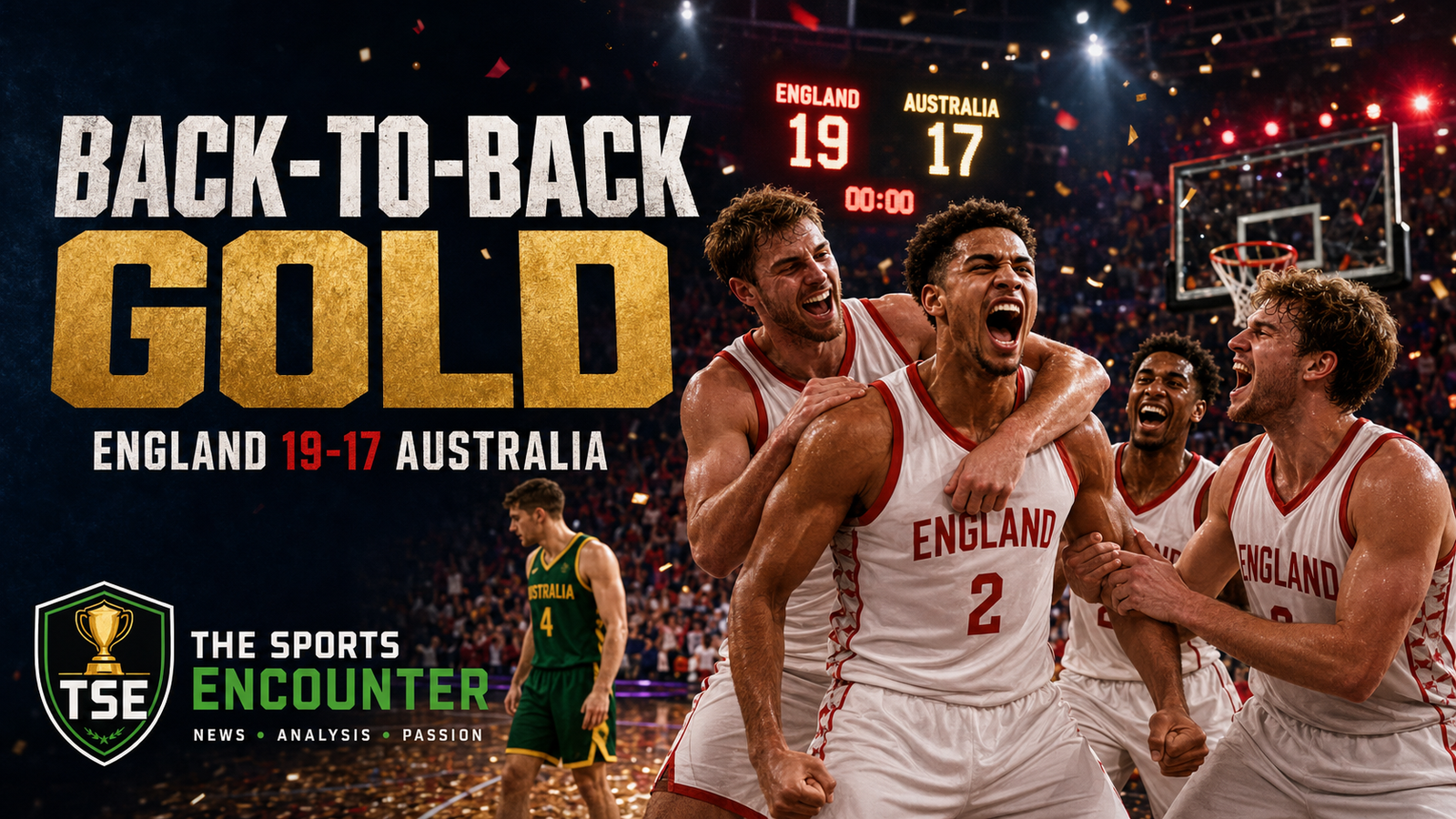
Marena Whittle scored 15 of Australia’s 21 points as the Gangurrus overcame Emma Clarke’s absence to defeat Uganda’s Gazelles 21-11 and win the Glasgow 2026 women’s 3×3 basketball gold medal.
Marena Whittle produced a remarkable 15-point performance as Australia defeated Uganda’s Gazelles 21-11 to win the women’s 3×3 basketball gold medal at the Glasgow 2026 Commonwealth Games.
Australia entered the final at the SEC Centre with only three available players after Emma Clarke was ruled out through injury. With no substitute to offer rest or tactical relief, Amy Atwell, Lara McSpadden, and Whittle had to remain on the court against a Ugandan team that had built its historic campaign on physical pressure, rebounding, and relentless energy.
Whittle removed the uncertainty almost single-handedly.
The 32-year-old scored 15 of Australia’s 21 points, making five shots from inside the arc and five from long range. Her fifth two-point basket completed the contest with 54 seconds remaining, giving Australia its first Commonwealth Games women’s 3×3 basketball title.
McSpadden added four points from five attempts inside the arc, while Atwell contributed two. Melissa Akullu led Uganda with seven points, but the Gazelles could not produce enough perimeter scoring to remain with Australia once Whittle found her rhythm.
Australia shot 43 percent from behind the arc. Uganda made only 11 percent of its long-range attempts. That difference shaped the final more decisively than possession, effort, or physical commitment.
Uganda left the court with silver, but the loss could not erase the significance of its campaign. The Gazelles reached the final on their Commonwealth Games debut, defeated New Zealand 21-9 in the semifinal, and secured one of the most important women’s basketball medals in Ugandan history.
Australia Vs Uganda Women’s 3×3 Final Scorecard
| Category | Australia | Uganda |
|---|---|---|
| Final Score | 21 | 11 |
| Leading Scorer | Marena Whittle, 15 | Melissa Akullu, 7 |
| One-Point Shooting | 69% | 38% |
| Two-Point Shooting | 43% | 11% |
| Free Throws | 0 From 3 | Limited Impact |
| Available Players | 3 | 4 |
| Time Remaining At 21 Points | 54 Seconds | Game Ended |
The result extended Australia’s exceptional Glasgow 2026 campaign. The country had already opened a commanding lead in the medal standings through swimming, gymnastics, athletics, and weightlifting, as documented in The Sports Encounter’s Glasgow 2026 Day 5 results and medal-table analysis.
Marena Whittle Takes Control Of The Gold-Medal Game
Australia needed someone to carry an unusual share of the offensive responsibility. Whittle accepted it immediately.
Her scoring came from both areas of the half-court. She converted five of six attempts from one-point range and five of eight attempts from behind the two-point arc. In traditional basketball scoring, those five long-range baskets would have produced 15 points. Under 3×3 rules, they delivered 10, almost half the total required to end the game early.
Whittle finished with 15 points from 14 field-goal attempts. Uganda’s entire team scored 11.
The value of her performance went beyond the total. Australia had no fourth player available to enter from the sideline, absorb contact, or provide a short recovery period. Whittle, McSpadden, and Atwell had to manage their energy while maintaining the pace that makes Australia so dangerous.
Whittle’s outside shooting changed Uganda’s defensive calculations. The Gazelles could not remain compact around Akullu and protect the basket because Whittle kept punishing space from beyond the arc. When the defenders moved higher, Australia found routes inside.
That balance gave McSpadden opportunities closer to the basket. She converted four of five one-point attempts and became the dependable secondary scorer Australia needed.
Atwell had dominated the semifinal against Jamaica with 13 points, including five successful two-point shots. Uganda held her to two points and only one successful attempt from five behind the arc. Under normal circumstances, stopping Australia’s hottest semifinal scorer might have transformed the final.
Whittle ensured it did not.
Why Whittle’s 15 Points Were So Exceptional
A 3×3 game ends as soon as a team reaches 21 points, provided that mark arrives before the 10-minute clock expires. One player scoring 15 therefore accounts for more than 71 percent of the winning total.
The condensed format adds to the difficulty. Players operate with a 12-second shot clock, clear the ball rapidly after defensive rebounds, and transition between attack and defense without the lengthy stoppages found in conventional basketball.
Whittle had to shoot, rebound, defend, and recover while knowing Australia had no substitute available. Her efficiency allowed the Gangurrus to reach the target before fatigue or foul trouble could expose their reduced rotation.
Performances of this quality invite comparisons across different basketball formats. The statistical language changes between 3×3 and the NBA, but the question of how an individual controls a decisive game remains central to basketball debates such as The Sports Encounter’s ranking of LeBron James, Michael Jordan, and Kareem Abdul-Jabbar.
🗣️ “I thought we had enough to get the gold.”
— OMUTEGEKE | 🇺🇬🎙️ (@CliveKyazze) July 29, 2026
Coach Nicholas Natuhereza noted after the Gazelles lost 21-11 to Australia at the #Glasgow2026 #CommonwealthGames 3X3 final #CKSports #MoreInCommon pic.twitter.com/LYUVR1Sq1m
How Australia Won The Tactical Battle
The final was decided by spacing and shot value.
Australia made 69 percent of its attempts from inside the arc and 43 percent from outside it. Uganda converted 38 percent of its one-point shots and only 11 percent from long range.
Those percentages matter more in 3×3 than in conventional basketball because a long-range shot is worth twice as much as an inside basket. One successful two-pointer can erase two strong defensive possessions. A short burst can move a game from level to almost unreachable within a minute.
Whittle gave Australia that mathematical advantage repeatedly.
Uganda attempted to respond through Akullu’s interior strength. She converted six of seven attempts from inside the arc and finished with seven points. Her efficiency gave the Gazelles a dependable scoring route whenever they could establish position near the basket.
The problem came from the perimeter. Jane Asinde, one of Uganda’s most influential players throughout the tournament, missed all seven of her two-point attempts in the final. Each miss allowed Australia to retrieve the ball, clear it beyond the arc, and attack a defense still trying to reset.
Asinde’s difficult shooting night should be understood within Australia’s defensive pressure. Atwell and Whittle closed space quickly, while McSpadden used her size to contest without conceding easy lanes. Australia encouraged Uganda to take the lower-percentage shots it believed it could survive.
The Gangurrus also showed composure after missing all three of their free throws. Those failures could have created anxiety in a closer final. Their field-goal accuracy kept the result under control.
The Two-Point Arc Decided The Gold Medal
Australia’s five successful two-point baskets from Whittle alone created 10 points. Uganda’s limited return from behind the arc forced the Gazelles to build their score largely one point at a time.
That difference placed constant pressure on Uganda. Every Australian two-pointer required two Ugandan baskets simply to restore parity. The Gazelles could compete physically, but the arithmetic kept moving against them.
Australia Won Gold With Only Three Available Players
Emma Clarke’s absence created the final’s greatest risk for Australia.
Clarke had contributed during the pool stage but did not play in either the semifinal or the gold-medal game. Australia entered the final with Whittle, Atwell, and McSpadden as its only available players.
A standard 3×3 squad contains four players, with three on court and one substitute. Substitutions take place quickly during dead-ball situations, allowing teams to preserve intensity in a game that demands repeated sprints, physical switches, and rapid shot creation.
Australia had no such option.
Any injury, disqualification, or severe foul trouble could have left the Gangurrus unable to compete with a full on-court lineup. Uganda also had an opportunity to use its deeper rotation to increase physical pressure and force Australia’s three players to work on every possession.
The quick finish protected Australia. Reaching 21 with 54 seconds left prevented the game from becoming a final-minute endurance test.
Australia’s ability to overcome the shortage reflected the wider depth and confidence visible across its Glasgow campaign. By the end of Day 4, the nation had already built a commanding overall advantage, covered in The Sports Encounter’s Glasgow 2026 Day 4 wrap-up and medal table.
Australia’s Route To The Women’s 3×3 Gold Medal
Australia entered the knockout phase as the tournament favorite after winning all five of its pool games.
The Gangurrus also faced Uganda during the group stage and won 21-9. Atwell led that meeting with 11 points, while Whittle added four and collected eight rebounds. Australia controlled the glass 21-13, blocked four shots, and held the Gazelles without a successful two-pointer.
The pool result sent Australia directly into the semifinals. Uganda, which finished second, had to negotiate an additional playoff against Tonga.
Australia then overwhelmed Jamaica 21-8 in the semifinal, reaching the target in only five minutes and 26 seconds. Atwell scored 13, Whittle added six, and McSpadden contributed two. The Gangurrus made eight of 14 attempts from behind the arc.
The final created a different scoring leader but the same outcome. Uganda reduced Atwell’s influence, yet Whittle moved from secondary scorer to match-winner.
| Stage | Opponent | Result | Key Australian Performance |
|---|---|---|---|
| Pool Stage | Uganda | Australia Won 21-9 | Amy Atwell Scored 11 |
| Semifinal | Jamaica | Australia Won 21-8 | Amy Atwell Scored 13 |
| Gold-Medal Final | Uganda | Australia Won 21-11 | Marena Whittle Scored 15 |
The campaign showed how difficult Australia is to contain. One opponent may successfully limit a leading scorer, but the team possesses enough shooting and experience for another player to assume control.
Gazelles Reach The Final Through Courage And Physical Control
Uganda’s path to silver contained far more work.
The Gazelles began their Commonwealth Games debut with an 18-17 overtime victory against Jamaica. Asinde scored seven points, while Jamila Nansikombi converted the decisive free throw after the teams finished regulation level at 16-16.
Uganda then defeated the Cayman Islands 21-7, with Akullu producing 10 points and nine rebounds. Asinde scored 10 in a 21-5 victory over Kenya before the Gazelles added a fourth consecutive win against Fiji.
The 21-9 pool defeat against Australia ended Uganda’s perfect start and forced Natuhereza’s team into the playoff round.
Uganda responded by beating Tonga 21-12. The victory secured a semifinal meeting with an unbeaten New Zealand team that had entered the knockout phase as a serious gold-medal contender.
The Gazelles produced their best performance of the competition.
Asinde and Akullu scored eight points each as Uganda dismantled New Zealand 21-9. The result guaranteed Uganda a medal and sent the country into the final in its first Commonwealth Games appearance.
Australia proved too accurate in the championship match, but Uganda still improved the score from 21-9 in the pool meeting to 21-11 in the final. The Gazelles also forced Atwell, Australia’s leading scorer in the earlier game, into a difficult shooting performance.
Coach Nicholas Natuhereza had set a podium finish as the minimum target before the tournament. After the final, his reflections centered on what the players had achieved despite falling short of gold. The silver confirmed the progress he had identified before Glasgow and gave Uganda a stronger foundation for future 3×3 qualification campaigns.
Uganda’s semifinal qualification had already emerged as an important part of the Games’ widening medal story in The Sports Encounter’s complete report on Glasgow 2026 Day 5.
Why Uganda’s Gazelles Reaching The Final Matters
Gazelles Turn A Commonwealth Debut Into Ugandan Basketball History
Uganda’s silver carries a significance that extends beyond the final score.
The Gazelles entered Glasgow 2026 as Commonwealth Games debutants. They left with a medal after winning six of their eight games, eliminating New Zealand, and competing against Australia twice.
For an established basketball nation, silver may create disappointment. For Uganda, it offers visible proof that a developing program can compete on an international multi-sport stage.
The result matters for players seeking professional opportunities, coaches trying to expand development pathways, and administrators making the case for better preparation, facilities, international competition, and financial support.
Uganda’s roster contained Melissa Akullu, Jane Asinde, Jamila Nansikombi, and Perus Nyamwenge. Each player contributed to a clear team identity based on physical strength, rebounding, interior scoring, and competitive confidence.
Akullu gave Uganda one of the tournament’s most reliable inside presences. Asinde carried significant offensive responsibility and delivered eight points in the semifinal. Nansikombi converted the overtime free throw that began the campaign with victory. Nyamwenge brought experience, defensive effort, and discipline.
The Gazelles also gave young Ugandan players a result they can see and understand. National development becomes more credible when athletes from the same system reach a major final.
Women’s basketball is experiencing stronger global attention, audience growth, and commercial interest. The Sports Encounter’s analysis of rising WNBA ticket prices and fan demand demonstrates how quickly women’s basketball can grow when competitive quality, recognizable players, and public visibility converge.
Uganda remains far from the commercial scale of the WNBA or Australia’s basketball system. Glasgow has nevertheless given the Gazelles a recognizable achievement around which future growth can be built.
What The Gold Means For Australia’s 3×3 Program
Women’s 3×3 basketball entered the Commonwealth Games program at Birmingham 2022. Australia won bronze at that edition, while Canada defeated England for gold.
Glasgow represented the next stage of Australia’s development.
Whittle was the only member of the Glasgow women’s squad who had experienced the Birmingham campaign. Her role connected the bronze-medal team with the new group that climbed to the top of the podium.
Atwell, Clarke, and McSpadden made their Commonwealth Games debuts in Glasgow. Together, the squad combined established 3×3 experience with shooting, size, and positional flexibility.
Australia’s success also continued its strong international 3×3 record. The country entered Glasgow after winning another FIBA 3×3 Asia Cup title earlier in 2026, reinforcing its position as one of the leading women’s programs in the format.
The Commonwealth title will strengthen the case for continued investment in specialist 3×3 preparation. The game requires different spacing, decisions, and physical conditioning from conventional five-on-five basketball. Placing talented professional players on a half-court does not automatically create an elite 3×3 team.
Australia looked prepared for the specific demands of the format. Its players understood shot value, attacked immediately after clearing the ball, and switched defensively without surrendering easy mismatches.
That tactical clarity also appears in elite five-on-five roster analysis, where complementary skills often matter as much as star names. The same principle shapes The Sports Encounter’s assessment of whether the Philadelphia 76ers possess the NBA’s best starting five.
How 3×3 Basketball Works At The Commonwealth Games
Three players from each team compete on a half-court using one basket. A squad normally contains a fourth player who can substitute during dead-ball situations.
A basket scored from inside the arc is worth one point. A shot from behind the arc is worth two. The first team to reach 21 points wins immediately, provided it does so within the 10-minute regulation period.
If neither side reaches 21, the team leading when the clock expires wins. A tied game moves into overtime, where the first team to score two points wins.
The 12-second shot clock creates almost continuous action. After gaining possession, the defending team must clear the ball beyond the arc before it can score. Following a made basket, play resumes quickly without the same inbounding routine used in traditional basketball.
Glasgow 2026 expanded the men’s and women’s 3×3 fields from eight teams to 12. The larger competition gave more Commonwealth nations, including Uganda, an opportunity to test their programs on a major stage.
The condensed format can also turn one individual scoring burst into the decisive passage. Whittle’s final demonstrated that perfectly. Her five successful two-point shots accounted for almost half the total Australia required for victory.
Readers interested in how basketball roles and individual influence change across eras can explore our evidence-led NBA all-time player comparison.
Final Verdict
Australia entered the final with no substitute and left with gold.
Whittle’s 15 points converted a potentially dangerous situation into a commanding 21-11 victory. McSpadden provided efficient interior support, Atwell continued drawing defensive attention, and the Gangurrus reached the winning target with 54 seconds left.
Uganda could not match Australia’s perimeter shooting. Akullu remained excellent around the basket, scoring seven points, but Asinde’s seven missed two-point attempts reflected the pressure created by Australia’s defense and the difficulty of chasing a team converting long-range shots at 43 percent.
The final produced two meaningful outcomes.
Australia secured its first Commonwealth women’s 3×3 title and demonstrated the depth, tactical preparation, and competitive control of its basketball system.
Uganda secured a historic silver on debut. The Gazelles defeated Jamaica in overtime, dominated the Cayman Islands and Kenya, overcame Tonga in the playoff, and dismantled New Zealand in the semifinal. Their progress gave Ugandan women’s basketball a result capable of shaping future expectations.
Natuhereza wanted his players to return home with a medal. They will return with silver, a landmark victory over New Zealand, and the knowledge that only Australia stood above them.
Schedules, official results, competition information, and updates are available through the official Glasgow 2026 3×3 basketball website.
For more young-athlete and Commonwealth breakthrough stories, read how Amalie Smith won a senior swimming medal at only 16.
Frequently Asked Questions About Australia Vs Uganda Gazelles
Who Won The Glasgow 2026 Women’s 3×3 Basketball Gold Medal?
Australia won the Glasgow 2026 women’s 3×3 basketball gold medal by defeating Uganda’s Gazelles 21-11 in the final at the SEC Centre.
What Was The Australia Vs Uganda 3×3 Basketball Final Score?
Australia defeated Uganda 21-11. The game ended when Australia reached the 21-point target with 54 seconds remaining.
Who Scored The Most Points In The Women’s 3×3 Final?
Marena Whittle scored 15 points for Australia. She made five one-point baskets and five two-point shots, accounting for more than 71 percent of Australia’s total.
Why Did Australia Have Only Three Players In The Final?
Emma Clarke was ruled out through injury. Australia therefore played Amy Atwell, Lara McSpadden, and Marena Whittle throughout the final without an available substitute.
Who Scored For Australia Against Uganda?
Marena Whittle scored 15 points, Lara McSpadden added four, and Amy Atwell contributed two as Australia reached 21.
Who Was Uganda’s Leading Scorer In The Final?
Melissa Akullu led the Gazelles with seven points. She converted six of seven attempts from inside the arc.
Who Are The Uganda Gazelles?
The Gazelles are Uganda’s senior women’s national basketball team. The Glasgow 2026 3×3 squad featured Melissa Akullu, Jane Asinde, Jamila Nansikombi, and Perus Nyamwenge under coach Nicholas Natuhereza.
How Did Uganda Reach The Glasgow 2026 Final?
Uganda won four of its five pool matches, defeated Tonga 21-12 in the playoff, and beat New Zealand 21-9 in the semifinal. Asinde and Akullu scored eight points each against New Zealand.
Was This Uganda’s First Commonwealth Games Basketball Medal?
Yes. Uganda won silver in its first appearance in the Commonwealth Games women’s 3×3 basketball competition.
Did Australia And Uganda Play Earlier In The Tournament?
Yes. Australia defeated Uganda 21-9 during the pool stage. Atwell scored 11 points in that meeting before Whittle became Australia’s leading scorer in the final.
How Many Points Did Marena Whittle Score?
Whittle scored 15 points from 14 field-goal attempts. She made five of six one-point shots and five of eight attempts from behind the two-point arc.
How Long Is A 3×3 Basketball Game?
A 3×3 game lasts up to 10 minutes. It ends earlier if either team reaches 21 points. Australia reached 21 with 54 seconds left against Uganda.
How Does Scoring Work In 3×3 Basketball?
Shots made from inside the arc count for one point, while shots made from behind the arc count for two. Free throws are generally worth one point.
Who Won Women’s 3×3 Basketball At Birmingham 2022?
Canada won the inaugural Commonwealth Games women’s 3×3 title at Birmingham 2022, with England taking silver and Australia earning bronze.
Could Uganda’s Gazelles Qualify For Future Olympic 3×3 Basketball?
The Glasgow silver strengthens Uganda’s development and international profile, but Olympic qualification requires strong results in eligible FIBA 3×3 competitions and sufficient ranking progress. Continued international participation will be essential.
Editor's Choice
Goodness Nwachukwu Breaks Discus World Record To Win Glasgow 2026 Gold
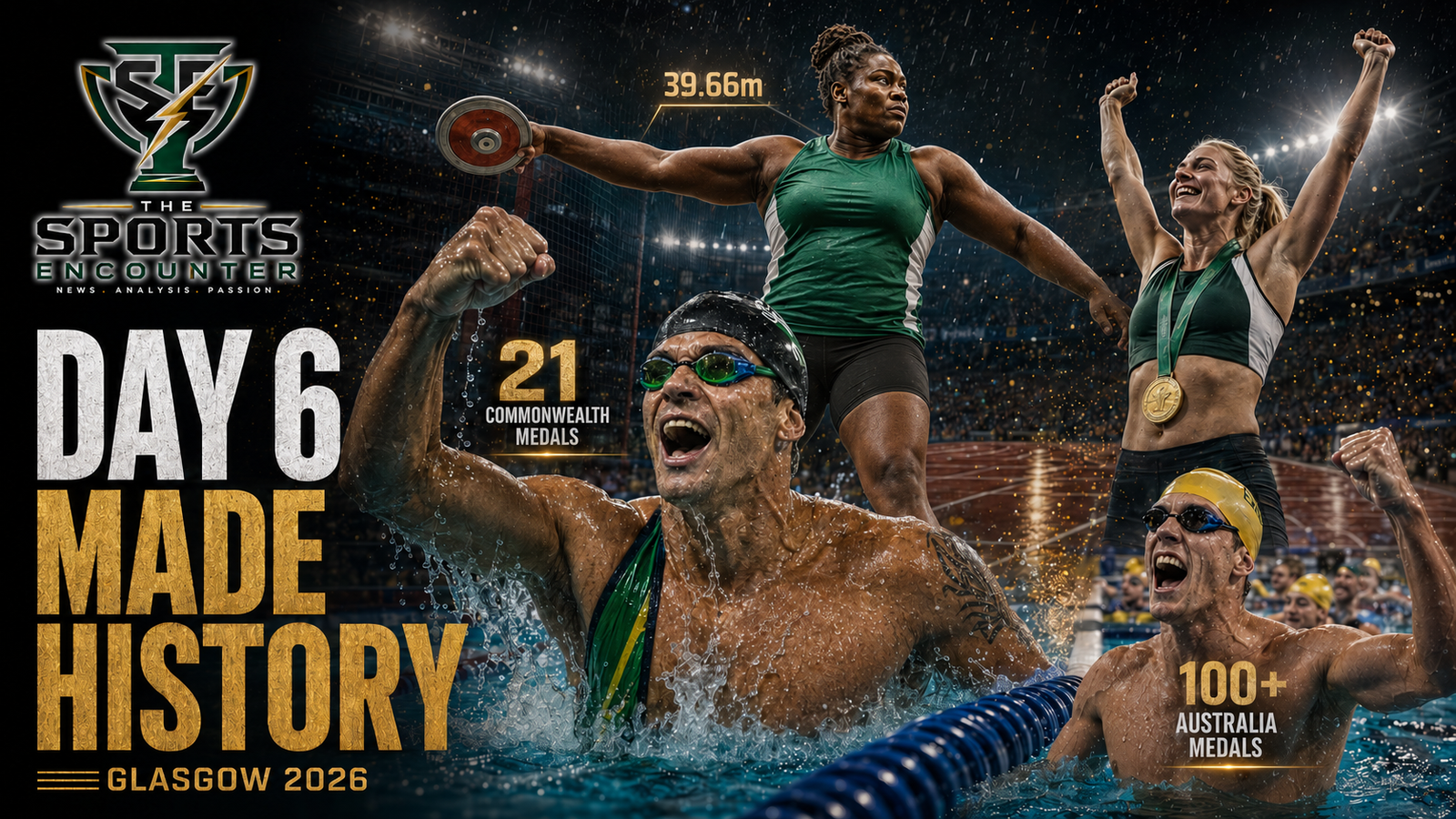
Nigeria’s Goodness Nwachukwu produced a final-round throw of 39.66m to break her own F42 discus world record and retain her Commonwealth Games title at Glasgow 2026.
Nigeria’s Goodness Chiemerie Nwachukwu defended her Commonwealth Games women’s discus title with a stunning F42 world-record throw of 39.66 meters at Glasgow 2026.
Nwachukwu saved her finest throw for the final round at Scotstoun Stadium. The discus traveled more than three meters beyond her previous world record of 36.56m, giving Team Nigeria another gold medal and completing one of the most commanding title defenses of the Games.
Welsh throwers Funmi Oduwaiye and Bree Cronin secured silver and bronze respectively in the combined women’s F42-44/F61-64 event. Oduwaiye had led during the competition before Nwachukwu transformed the final standings with her last attempt.
The throw confirmed Nwachukwu as the leading F42 discus athlete of her era. She had already broken the world record twice while winning gold at Birmingham 2022. Four years later, she returned to the Commonwealth stage and pushed the record into new territory.
The result also strengthened Nigeria’s impressive Glasgow campaign. The country had already converted a high proportion of its medal opportunities into gold, particularly in weightlifting and Para sport. Nwachukwu’s performance extended that pattern while giving Nigeria one of the most significant individual achievements of the entire competition.
Her victory formed part of a wider Day 6 program that included athletics, swimming, basketball, wheelchair basketball, weightlifting, netball, and boxing. Yet few performances carried the statistical authority of a world record improved by 3.10m.
Goodness Nwachukwu’s World-Record Performance At A Glance
| Category | Information |
|---|---|
| Athlete | Goodness Chiemerie Nwachukwu |
| Nation | Nigeria |
| Event | Women’s Discus F42-44/F61-64 |
| Sport Class | F42 |
| Winning Throw | 39.66m |
| Previous F42 World Record | 36.56m |
| Improvement | 3.10m |
| Previous Record Location | Birmingham 2022 Commonwealth Games |
| Gold Medalist | Goodness Nwachukwu, Nigeria |
| Silver Medalist | Funmi Oduwaiye, Wales |
| Bronze Medalist | Bree Cronin, Wales |
| Venue | Scotstoun Stadium, Glasgow |
| Date | July 29, 2026 |
Nwachukwu’s gold followed several Nigerian successes across the opening half of the Games. The Sports Encounter’s Glasgow 2026 Day 4 report detailed how Nigerian weightlifters helped the country climb into fourth place with six gold medals.
A Final Throw That Changed The Entire Competition
The women’s combined-class discus final had developed into a contest led by Wales before Nwachukwu stepped into the throwing area for the last time.
Oduwaiye had established the early standard and remained in position to claim gold as the competition approached its conclusion. Her control reflected the progress she has made since representing Great Britain at the Paris 2024 Paralympic Games and winning bronze at the 2025 World Para Athletics Championships in New Delhi.
Cronin also placed herself inside the medal positions, giving Wales the possibility of a one-two finish at its first Glasgow Commonwealth appearance.
Nwachukwu still had one throw remaining.
The Nigerian settled herself inside the circle, created the required rotational force despite the balance challenges associated with her classification, and released a throw that immediately looked different. The discus carried beyond the previous distances and landed at 39.66m.
The measurement confirmed a new F42 world record.
It was 3.10m longer than Nwachukwu’s previous mark, an enormous improvement in an event where elite progress often comes through centimeters. The distance also represented an increase of almost 8.5 percent over her 36.56m record from Birmingham.
The timing intensified its impact. Nwachukwu had no later attempt to correct an error, while her rivals had no remaining opportunity to respond. She converted the final throw of her title defense into the greatest measured performance of her career.
World records often arrive when athletes build momentum through several strong rounds. Nwachukwu’s finish carried a different pressure. She needed to produce her best throw while the competition was reaching its decisive point.
Her execution transformed a Welsh-led final into another Nigerian Commonwealth triumph.
Why The 39.66m Distance Represents A Major Leap
Nwachukwu entered the final as the F42 world-record holder at 36.56m. She had set that mark at Birmingham 2022 after improving her own record twice during the same competition.
Adding 3.10m to an established world mark is rare at the highest level. The increase suggests that her training has improved several connected areas, including release speed, stability, rotational control, throwing angle, and confidence under competitive pressure.
Her progression becomes clearer when viewed against the 32.95m record she held before Birmingham 2022. She has now advanced the F42 world standard by 6.71m across two Commonwealth Games cycles.
| Competition | Record Distance | Improvement From Previous Mark |
|---|---|---|
| World Para Athletics Grand Prix, Tunis 2021 | 32.95m | Starting Reference |
| Birmingham 2022 Commonwealth Games | 36.56m | 3.61m |
| Glasgow 2026 Commonwealth Games | 39.66m | 3.10m |
Across those two advances, Nwachukwu has improved her record by more than 20 percent. That development reflects sustained technical progress rather than a marginal statistical adjustment.
How The Combined-Class Discus Competition Works
The Glasgow final brought together athletes from the F42, F43, F44, F61, F62, F63, and F64 classifications. These classes cover athletes with different forms and levels of lower-limb impairment.
F42 athletes generally compete with coordination or movement limitations affecting one or both lower limbs. F44 athletes typically have a lower-limb impairment but compete without a prosthesis. The F61-64 classifications include athletes with limb deficiencies who compete using prostheses or comparable equipment.
A combined-class event cannot always be ranked by raw distance alone because athletes from different classifications face different functional challenges. Organizers use a points-based system derived from classification-specific records and performance standards to compare results.
A throw is therefore assessed in relation to the athlete’s classification. This allows competitors from several eligible classes to share one medal event while preserving a more equitable method of determining the podium.
Why Nwachukwu’s Throw Remains A Specific F42 World Record
Although Glasgow staged a combined F42-44/F61-64 final, records remain tied to each athlete’s individual sport class.
Nwachukwu competes in F42. Her 39.66m performance therefore established a new women’s F42 discus world record. It did not replace the separate F44 or F64 records, which belong to athletes competing under different classifications.
This distinction matters when describing the result. Nwachukwu became the combined Commonwealth champion while breaking the world record for her own F42 class.
Readers can follow other classifications, medal events, and daily developments through The Sports Encounter’s dedicated Glasgow 2026 coverage hub.
Nwachukwu Defends The Title She Won At Birmingham 2022
Glasgow represented a title defense as well as a pursuit of another record.
Nwachukwu arrived at Birmingham 2022 as a developing athlete with a 32.95m F42 world record. Her opening two throws at Alexander Stadium both surpassed that mark. The second reached 36.56m and delivered the gold medal.
That performance introduced her to a much larger international audience. She left Birmingham as a Commonwealth champion, world-record holder, and visible example of Nigeria’s strength in Para athletics.
The four years between Birmingham and Glasgow brought sporting and personal challenges. Nwachukwu lost her father and completed his burial earlier in 2026. She then returned her attention to training and qualification for Glasgow.
In an interview published by Commonwealth Sport before the Games, she spoke about wanting to work harder, inspire younger athletes, and build upon the opportunities created by her Birmingham victory.
Her Glasgow performance gave those ambitions a measurable outcome. She returned as the defending champion, faced an expanded field, and delivered a mark far beyond anything she had previously achieved.
Nwachukwu’s sustained success has also been connected to the Commonwealth Sport GAPS program. The initiative supports athletes and coaches from Commonwealth nations that may lack the resources, competition access, or specialist development structures available to larger sporting systems.
She entered the program as an athlete with potential and developed into one of its clearest competitive success stories. Her results show what targeted access, structured coaching, and international opportunity can produce when combined with an athlete’s own discipline.
Who Is Goodness Chiemerie Nwachukwu?
Goodness Chiemerie Nwachukwu is a Nigerian Para athlete who specializes in the discus throw and competes in the F42 classification.
Born on October 6, 1998, she emerged internationally through Para athletics events before producing her breakthrough at the Birmingham 2022 Commonwealth Games.
She competes with limited movement affecting her lower limbs. Discus throwing requires athletes to generate force through the legs, hips, torso, shoulder, and throwing arm in a connected sequence. Any limitation in balance or lower-body movement changes how that sequence must be built.
Nwachukwu has developed a technique suited to her functional ability. Her throwing depends on controlled balance, upper-body power, release timing, and the ability to maintain direction while rotating inside the circle.
Her Glasgow result suggests that her technical model continues to evolve. A 3.10m improvement cannot come from strength alone. The throw required several mechanical elements to work together at precisely the right moment.
She is now a two-time Commonwealth champion and a multiple world-record breaker. Her record progression has occurred on two of the largest integrated sporting stages available to Commonwealth Para athletes.
Nwachukwu’s success belongs within a Nigerian campaign that has repeatedly produced high-value gold medals. Our Glasgow 2026 Day 5 wrap-up examined how Nigeria’s achievements formed part of an increasingly broad medal map across the Games.
Why The Result Matters For Team Nigeria
Nigeria entered Glasgow with realistic medal expectations in weightlifting, Para powerlifting, athletics, Para athletics, and boxing. Nwachukwu’s victory strengthened the country in an area where it had already established Commonwealth credibility.
The gold carried additional value because it came with a world record. Medal tables measure first-place finishes equally, but world-record performances create a deeper legacy. They connect the national result to the highest recognized standard in the athlete’s classification.
Nwachukwu also gave Nigeria another prominent female champion. Nigerian women have played a central role in the country’s Glasgow campaign, particularly through strength and Para events.
That visibility can influence funding decisions, athlete recruitment, federation planning, and media interest. It gives younger athletes a recognizable national figure whose progress can be studied rather than treated as a distant international example.
Nigeria’s results at Glasgow have also challenged simplistic assumptions about African sporting success. The country’s strongest performances have arrived across sprinting, throwing, weightlifting, Para powerlifting, and swimming development.
Abduljabar Adama’s progress into a Commonwealth swimming final, discussed in our Day 5 analysis, showed another side of that expanding profile. Nwachukwu’s gold provided a more established expression of the same idea: Nigeria’s competitive identity extends across conventional and Para sport.
Wales Takes Two Medals Through Oduwaiye And Cronin
Nwachukwu’s world record decided the title, but Wales still produced an excellent team result.
Oduwaiye claimed silver after leading during part of the final. The F44 thrower had already represented Great Britain at Paris 2024 and won a World Para Athletics Championships bronze medal in New Delhi in 2025.
Cronin completed the podium for Wales. She had finished fifth at the 2025 World Para Athletics Championships and entered Glasgow as one of the developing athletes capable of challenging for a Commonwealth medal.
Both athletes are connected to Cardiff Athletics, giving their shared podium a strong local development story. Their results showed that Wales has built genuine depth in women’s Para throwing.
The silver and bronze also carried broader value for a Welsh team that had already created Games history through other disciplines. Glasgow has repeatedly given smaller national programs and developing athletes a stage on which one performance can alter wider expectations.
A similar dynamic appeared when 16-year-old Amalie Smith turned junior success into a senior Commonwealth swimming medal, explored in The Sports Encounter’s profile of England’s emerging individual medley star.
African Women Continue To Shape Glasgow 2026
Nwachukwu’s gold joined a wider series of influential performances by African women across the Games.
Nigeria’s strength athletes have contributed major medals. Uganda reached the women’s 3×3 basketball final on its Commonwealth Games debut. African swimmers, boxers, runners, and team-sport athletes have also created several national milestones.
These results matter because the Commonwealth Games provides visibility across sports that do not always receive consistent global coverage. An athlete who performs well in Glasgow can return home with stronger public recognition, increased commercial value, and a clearer case for institutional support.
For Para athletes, that visibility has another function. It helps audiences understand elite classification-based competition through performance rather than limiting the discussion to disability.
Nwachukwu’s 39.66m throw demands analysis in athletic terms. It required power, balance, technique, composure, and the ability to produce a career-best result under championship pressure.
Gazelles Show Why African Progress To A Major Final Matters
Uganda’s Gazelles offered another important African story by reaching the Glasgow 2026 women’s 3×3 basketball final.
Uganda defeated New Zealand 21-9 in the semifinal before losing 21-11 to Australia in the gold-medal game. The silver was earned during the Gazelles’ first Commonwealth Games appearance.
Their progress matters for many of the same structural reasons that make Nwachukwu’s record important. High-level results create evidence. They show federations, sponsors, young athletes, and national decision-makers that investment can produce international competitiveness.
Uganda entered Glasgow without Australia’s basketball resources or established 3×3 infrastructure. The Gazelles still reached the final through physical defense, interior scoring, rebounding, and collective confidence.
Nwachukwu followed with a world record for Nigeria in Para athletics. Together, the performances showed two different forms of African progress: a developing team reaching a historic final and an established individual champion redefining the global standard in her event.
Readers can follow wider developments in the sport through The Sports Encounter’s basketball coverage. The growing audience for women’s basketball is also examined in our analysis of rising WNBA demand and ticket prices.
Para Sport Holds A Central Place At Glasgow 2026
Glasgow 2026 features 10 sports and six Para sports, with the Para program integrated into the main schedule rather than separated into a secondary competition.
Nwachukwu competed at Scotstoun Stadium during the same athletics program that featured leading sprinters, distance runners, throwers, jumpers, and multi-event athletes.
This integrated model gives Para champions access to the same Games audience, medal ceremonies, national attention, and event atmosphere as other Commonwealth competitors.
The women’s discus final illustrated the competitive value of that model. Oduwaiye led, two Welsh athletes moved into medal contention, and Nwachukwu needed a world record to secure the title.
Glasgow has also included Para swimming, Para powerlifting, wheelchair basketball, Para bowls, and track racing. These events have supplied several of the competition’s most important records and home-nation moments.
The presence of 16 Para athletics medal events gives athletes across multiple classifications a meaningful Commonwealth target between Paralympic cycles. It also broadens the number of nations capable of earning medals and building sustainable performance programs.
The Sports Encounter’s swimming coverage follows the major conventional and Para results from Tollcross, while our boxing section tracks another sport producing national breakthroughs in Glasgow.
What Comes Next For Goodness Nwachukwu?
The immediate outcome is another Commonwealth gold medal and a substantially improved world record.
The longer-term challenge involves carrying this form into World Para Athletics competition and the Los Angeles 2028 Paralympic cycle.
Nwachukwu’s Glasgow distance offers a stronger performance benchmark, but remaining at the top will require continued technical development. Record holders become the target for every emerging athlete in their classification.
Her experience should help. She has now managed the pressure of defending a title, competing after personal loss, and producing a record when another athlete appeared to have control of the final.
There is also room for her influence to grow beyond her own results. Nwachukwu has spoken about becoming an inspiration to upcoming athletes. Her work through the GAPS pathway gives her experience of the development barriers faced by competitors from countries with limited specialist resources.
Athletes can influence sporting systems most effectively when their public message rests on clear competitive authority. Two Commonwealth gold medals and multiple world records give Nwachukwu that authority.
Final Verdict
Goodness Nwachukwu arrived at Scotstoun Stadium as the defending Commonwealth champion and F42 world-record holder. She left with another gold medal and a record of 39.66m.
The final demanded patience. Oduwaiye established herself at the front of the competition, Cronin placed Wales in position for a second medal, and Nwachukwu reached her last attempt with the title still undecided.
Her response was the finest throw of her career.
The 39.66m mark improved her former record by 3.10m and extended the development she began before Birmingham 2022. Across five years, she has advanced the F42 world standard from 32.95m to 39.66m.
That progression reflects athletic power, technical learning, structured support, and competitive resilience. It also gives Nigeria a world record that carries significance beyond the Glasgow medal standings.
Wales left the final with silver and bronze through Oduwaiye and Cronin. Nigeria left with the champion. Para athletics gained another performance capable of drawing attention to the standard of competition rather than the limitations assigned to its participants.
Official schedules, results, athlete information, and Games updates are available through the official Glasgow 2026 Commonwealth Games website.
Frequently Asked Questions About Goodness Nwachukwu
Who Broke The Women’s Discus World Record At Glasgow 2026?
Nigeria’s Goodness Chiemerie Nwachukwu broke the women’s F42 discus world record at the Glasgow 2026 Commonwealth Games. She threw 39.66m to win gold.
What Was Goodness Nwachukwu’s World-Record Throw?
Nwachukwu recorded a distance of 39.66 meters in the women’s F42-44/F61-64 discus final.
Who Won The Glasgow 2026 Women’s Para Discus Gold Medal?
Goodness Nwachukwu of Nigeria won the combined women’s F42-44/F61-64 discus title. Funmi Oduwaiye of Wales took silver, while Welsh teammate Bree Cronin earned bronze.
How Much Did Goodness Nwachukwu Improve The World Record?
She improved her previous F42 world record by 3.10m, moving the mark from 36.56m to 39.66m.
When Did Goodness Nwachukwu Set Her Previous World Record?
Nwachukwu set the previous record of 36.56m while winning the women’s discus title at the Birmingham 2022 Commonwealth Games.
Is Flora Ugwunwa The Athlete Who Broke The Discus Record?
No. Goodness Chiemerie Nwachukwu broke the F42 discus world record at Glasgow 2026. Flora Ugwunwa is a different Nigerian Para athlete who primarily competes in the F54 javelin throw.
What Classification Does Goodness Nwachukwu Compete In?
Nwachukwu competes in the F42 classification. This class includes athletes with lower-limb movement or coordination impairments.
Why Were Different Classifications Included In One Discus Final?
The Commonwealth Games combined eligible F42-44 and F61-64 athletes into one medal event. A classification-based points system allows performances from different classes to be compared.
How Many Commonwealth Games Gold Medals Has Goodness Nwachukwu Won?
Nwachukwu has won two Commonwealth Games gold medals. She won the women’s discus title at Birmingham 2022 and successfully defended it at Glasgow 2026.
Where Was The Glasgow 2026 Discus Final Held?
The women’s F42-44/F61-64 discus final took place at Scotstoun Stadium in Glasgow, Scotland, on July 29, 2026.
Who Is Goodness Nwachukwu?
Goodness Chiemerie Nwachukwu is a Nigerian Para athlete and F42 discus specialist. She is a two-time Commonwealth champion and multiple world-record breaker.
Who Finished Second And Third Behind Nwachukwu?
Funmi Oduwaiye won silver and Bree Cronin claimed bronze. Both athletes represented Wales.
What Was The F42 Discus Record Before Glasgow 2026?
The previous record was 36.56m, also held by Nwachukwu. She established it at Birmingham 2022.
Could Goodness Nwachukwu Compete At The Los Angeles 2028 Paralympics?
Nwachukwu’s Glasgow performance places her among the leading athletes in her classification heading toward the Los Angeles 2028 cycle. Selection will depend on qualification standards, future results, and Nigeria’s final team decisions.
Editor's Choice
Angharad Evans Holds On For 2nd Glasgow 2026 Gold In Breaststroke Double
Angharad Evans completed a memorable Commonwealth breaststroke double by holding off Kaylene Corbett and Ellie McCartney to win the Glasgow 2026 women’s 200m final in 2:23.79. It was the Scottish swimmer’s second gold and third medal of the Games.
Angharad Evans completed a golden Commonwealth Games double for Scotland by winning the women’s 200m breaststroke final in 2:23.79 at Glasgow 2026, holding off South Africa’s Kaylene Corbett and Northern Ireland’s Ellie McCartney during another emotional night at Tollcross International Swimming Centre.
The 23-year-old entered the final as the fastest qualifier and the woman to beat. She carried the fastest 200m breaststroke time in the world this year, the British record, a home crowd’s expectation, and the emotional weight of having already survived a far more anxious 100m final three days earlier.
Evans handled all of it.
Corbett stayed close enough to make the closing stages uncomfortable, but the Scot protected her advantage and reached the wall in 2:23.79. Corbett secured silver in 2:24.46, while McCartney produced a strong finish to claim bronze for Northern Ireland in 2:24.73.
The winning margin over Corbett was 0.67 seconds. McCartney finished 0.94 behind the champion.
It was Evans’ second individual gold medal of Glasgow 2026, following her dramatic victory in the women’s 100m breaststroke. Strictly speaking, the 200m title took her overall Games collection to three medals because she had also helped Scotland win bronze in the mixed 4x100m medley relay.
Two individual races. Two titles. One relay bronze. In a Scottish team filled with experienced international names, Evans has become one of the defining home athletes of these Games.
Women’s 200m Breaststroke Final Results
| Position | Swimmer | Nation | Time | Margin |
|---|---|---|---|---|
| Gold | Angharad Evans | Scotland | 2:23.79 | Winner |
| Silver | Kaylene Corbett | South Africa | 2:24.46 | +0.67 |
| Bronze | Ellie McCartney | Northern Ireland | 2:24.73 | +0.94 |
Evans did not need to approach her British record of 2:19.70 to win. Championship finals are measured by position, control, and the ability to respond when another swimmer refuses to disappear. Her 2:23.79 was sufficient because she managed the field and retained enough control to resist the pressure behind her.
The result gave Scotland another major home success after a Games in which the host nation had already produced memorable victories across swimming, Para swimming, athletics, gymnastics, and bowls. The broader trajectory of the Scottish campaign can be followed through The Sports Encounter’s Glasgow 2026 Day 4 wrap-up and medal table.
How Angharad Evans Won The 200m Breaststroke Gold
The 200m breaststroke often punishes impatience. A swimmer can win the first 100 meters and lose the race during the third length, when the arms begin to tighten, the kick loses force, and every glide feels longer than it should.
Evans entered the final with enough speed to attack, but her greater responsibility was to control the race. She had already shown at the 2026 Aquatics GB Swimming Championships that she could swim 2:19.70, a British record that placed her among the fastest women in the history of the event.
That made her the favorite. It did not make the final comfortable.
Corbett is an experienced South African breaststroker with major international racing behind her. McCartney arrived with confidence after establishing herself as one of Northern Ireland’s strongest medal prospects. Both had the endurance to remain dangerous over the final 50 meters.
Evans built the position she needed and then held it under pressure. As the three medal contenders approached the wall, the Scot’s advantage had narrowed enough to keep the Tollcross crowd tense. Her touch ended the uncertainty.
The celebration carried joy, but the expression on Evans’ face also showed relief. BBC analyst and former world champion Karen Pickering described it as a beautiful swim with a strong finish, noting the visible combination of relief and happiness after the result was confirmed.
Why The Winning Time Was Slower Than Her British Record
Evans’ 2:23.79 was 4.09 seconds outside the 2:19.70 British record she set in April 2026. That difference does not reduce the quality or importance of the victory.
Record attempts and championship finals create different demands. At a national selection meet, a swimmer may be chasing a time, qualification standard, or record in a race designed around peak performance. At a major final, the only essential objective is touching the wall before every rival.
Evans had already completed several rounds of competition, won the 100m title, and contributed a demanding breaststroke leg to Scotland’s mixed medley relay. The accumulated physical and emotional workload mattered.
The final also developed as a direct contest rather than a record chase. Evans adapted to the field and secured the result Scotland wanted most.
The Final Margin Explained
A 0.67-second winning margin over 200 meters is narrow enough to create tension but clear enough to avoid any doubt over the touch. Corbett needed a substantial gain during the final strokes and could not quite produce it.
McCartney remained only 0.27 seconds behind Corbett, making the battle for silver even tighter than the contest between first and second. All three medalists finished inside one second of each other.
A Breaststroke Double Built On Two Very Different Victories
Evans won the 100m and 200m titles, but the two races tested her in different ways.
The 100m final on July 26 became a contest against fear as much as a race against South Africa’s Aimee Canny. Evans entered as the world’s fastest swimmer of 2026 and had posted the best times in the heats and semifinals. The home crowd expected gold.
Canny led through the opening 50 meters and remained ahead deep into the second length. Evans later admitted that her body had felt tense for two days and that she was concerned it would not deliver the result she wanted.
Her finish changed the race. Evans recovered the deficit during the final meters and won in 1:06.07, edging Canny by 0.12 seconds.
That was her first major individual international title. She described it as overcoming fear after leaving everything in the pool for Scotland.
The 200m final required a different kind of nerve. Evans was no longer trying to prove that she could win a major title. She was trying to return to the blocks, carry the expectation again, and confirm her superiority in her strongest event.
Winning once brought release. Winning again established authority.
Her double also added a Scottish counterpoint to Australia’s commanding control of the swimming medal table. Australia accumulated titles through exceptional depth, as documented in The Sports Encounter’s Glasgow 2026 Day 5 results and medal analysis, but Evans ensured that some of the loudest moments at Tollcross belonged to the host nation.
Evans Had Already Added A Relay Bronze
The 200m gold is widely being described as Evans’ second Glasgow 2026 medal because it was her second individual title. Her complete Games record, however, stands at three medals.
Between her two individual victories, Evans joined Matthew Ward, Keanna MacInnes, and Duncan Scott in Scotland’s mixed 4x100m medley relay final. Dean Fearn and Lucy Grieve also earned medals after contributing during the heats.
Ward opened with a 53.55 backstroke leg. Evans then delivered a superb 1:04.52 breaststroke split, helping Scotland remain second behind Australia at that stage.
MacInnes followed on butterfly before Scott produced a 48.03 freestyle anchor to pull Scotland back through the field and secure bronze in 3:43.70.
Australia won in a Commonwealth Games record of 3:40.46, while South Africa took silver in 3:42.61. Scotland held off Canada, which finished fourth in 3:44.23.
The relay medal broadened the meaning of Evans’ Games. Her individual golds belong to her name, but the bronze demonstrated her value to Scotland’s wider swimming team. It also added to the record medal contribution made by University of Stirling athletes during the competition.
That relay formed one of the major swimming stories emerging around Glasgow 2026’s record-breaking fifth day, when historic performances arrived from large teams and smaller Commonwealth nations alike.
Who Is Angharad Evans And What Has She Achieved?
Who Is Angharad Evans?
Angharad Evans is a 23-year-old British breaststroke specialist who represents Scotland at the Commonwealth Games and Great Britain in Olympic, world, and European competition.
She was born in Cambridge, England, on April 25, 2003. Her American mother and British father gave her an international family background, while her Welsh first name reflects her father’s Welsh-speaking parents.
Evans developed through West Suffolk Swimming Club and spent time studying and competing at the University of Georgia in the United States. Her career accelerated after she moved into the University of Stirling’s high-performance program, where she has worked under coaches Ben Higson and Bradley Hay.
The 2024 season transformed her from a promising domestic swimmer into an international contender. She won the British 100m breaststroke title in 1:06.54 and qualified for the Paris Olympic Games.
Evans then lowered the British record to 1:05.54 at the AP Race International meeting in London. At Paris 2024, her first Olympics, she reached the women’s 100m breaststroke final and finished sixth in 1:05.85 after turning third at halfway.
Later that year, she swam the breaststroke leg for Great Britain’s silver medal-winning women’s 4x100m medley relay at the World Short Course Championships. That result delivered her first senior world medal.
Her progress continued in 2025. Evans retained the British 100m title and lowered her national record to 1:05.37, becoming the first British woman to break 66 seconds in the event.
At the 2025 World Aquatics Championships in Singapore, she finished fourth in the 200m breaststroke, narrowly missing a place on the podium. The result confirmed that her range had expanded beyond the shorter event.
In December 2025, Evans won silver in the 200m breaststroke at the European Short Course Championships. It was her first individual medal at a major senior international championship.
April 2026 provided another leap. She lowered the British long-course records to 1:04.96 in the 100m breaststroke and 2:19.70 in the 200m. Those performances placed her inside elite historical territory in both distances and made her the fastest woman in the world that year entering Glasgow.
She arrived at her first Commonwealth Games with international medals and major expectations, but without a senior individual gold. Six days into Glasgow 2026, she had two.
| Year | Competition | Event | Achievement |
|---|---|---|---|
| 2024 | Aquatics GB Championships | 100m Breaststroke | British champion |
| 2024 | AP Race International | 100m Breaststroke | British record, 1:05.54 |
| 2024 | Paris Olympic Games | 100m Breaststroke | Sixth in the final |
| 2024 | World Short Course Championships | 4x100m Medley Relay | Silver |
| 2025 | Aquatics GB Championships | 100m Breaststroke | British record, 1:05.37 |
| 2025 | World Aquatics Championships | 200m Breaststroke | Fourth |
| 2025 | European Short Course Championships | 200m Breaststroke | Silver |
| 2026 | Aquatics GB Championships | 100m Breaststroke | British record, 1:04.96 |
| 2026 | Aquatics GB Championships | 200m Breaststroke | British record, 2:19.70 |
| 2026 | Commonwealth Games | 100m Breaststroke | Gold, 1:06.07 |
| 2026 | Commonwealth Games | Mixed 4x100m Medley Relay | Bronze |
| 2026 | Commonwealth Games | 200m Breaststroke | Gold, 2:23.79 |
Why Glasgow 2026 Could Change Evans’ Career
Before Glasgow, Evans already possessed the times required to compete with the world’s best breaststrokers. She had reached an Olympic final, finished fourth at a long-course World Championship, won a world relay medal, and broken British records.
The missing piece was an individual senior international title.
Glasgow has now given her two.
The emotional value matters because Evans had previously experienced the other side of major-meet expectation. She entered the 2025 World Championships as a leading contender in the 100m breaststroke but failed to progress to the final. That disappointment remained part of her thinking when she approached the Commonwealth 100m final.
Her response has been convincing. She won a race in which she trailed and felt tense, contributed a high-quality relay split, and returned to win the 200m as the leading favorite.
Those are different competitive problems. Evans solved all three.
Her emergence also strengthens a British women’s swimming group that contains established senior medalists and fast-developing teenagers. England’s Amalie Smith, whose rapid progress was explored in The Sports Encounter’s profile of the 16-year-old Commonwealth medley medalist, represents another part of that promising picture.
Evans is further along. At 23, her attention will increasingly turn toward converting world-leading seasonal times into World Championship and Olympic podium finishes.
What Comes Next For Angharad Evans?
The Los Angeles 2028 Olympic cycle offers the clearest long-term target.
Evans will be 25 during those Games, an age that should place her near the heart of her physical prime. Her sixth-place finish in Paris gave her experience of an Olympic final. Her British records show that she already possesses world-level speed.
The next challenge is repeatability.
Elite breaststroke fields can change quickly. Young swimmers emerge, established champions adjust their programs, and tenths of a second decide whether an athlete finishes first, fourth, or outside a final. Evans must continue producing her fastest performances when the pressure reaches its highest level.
Glasgow does not guarantee future medals. It gives her stronger evidence that she can manage expectation, recover between rounds, and win when an entire arena anticipates her success.
The Games have also increased her national profile. Scottish supporters have now watched her win twice at Tollcross, heard “Flower of Scotland” played in her honor, and seen her contribute to a relay medal alongside Scott and MacInnes.
Her success arrives during a Commonwealth Games shaped by Australian control and breakthrough performances from many smaller delegations. The wider significance of those results is detailed in our complete Glasgow 2026 Day 5 report.
What Evans’ Double Means For Scotland
Host-nation success changes the atmosphere of a multi-sport event. International stars may deliver the fastest performances, but home champions give local crowds a direct emotional connection to the Games.
Evans has provided that connection twice.
Her 100m victory delivered Scotland’s second swimming gold of the competition after Duncan Scott won the men’s 200m individual medley. The 200m title strengthened the host nation’s swimming identity during a meet otherwise dominated by Australia.
Scotland could not match Australia’s depth across every event. It did possess swimmers capable of winning the races that mattered most to the home crowd.
Evans also represents the value of Scotland’s high-performance swimming structure. The University of Stirling has developed and supported numerous Olympic and Commonwealth athletes. Its swimmers reached a record Glasgow medal total before Evans entered the 200m final.
Her success will also matter to younger Scottish swimmers watching from the stands or at home. Major events become more influential when athletes from the host nation are visible at the center of them.
The Sports Encounter’s Day 4 analysis showed how Scottish victories had already helped the hosts maintain a strong position among the leading nations. Evans’ second gold gave that campaign another defining performance.
Final Verdict
Angharad Evans arrived at Glasgow 2026 as a British record holder, Olympic finalist, and one of the fastest breaststrokers in the world. She will leave as a double Commonwealth champion.
The 100m title demanded a late recovery against Aimee Canny and a personal victory over the tension that had followed her into the final. The 200m required control, endurance, and the ability to defend favorite status against Corbett and McCartney.
Evans won the second race in 2:23.79, finishing 0.67 seconds ahead of Corbett and 0.94 clear of McCartney. The time was outside her British record, but the medal was never awarded for a record. It was awarded for reaching the wall first.
Her Glasgow collection now contains gold in the 100m breaststroke, bronze in the mixed medley relay, and gold in the 200m breaststroke.
Three medals. Two individual titles. A home Games transformed into the finest senior competition of her career so far.
Full schedules, official results, athlete information, and Games updates are available through the official Glasgow 2026 Commonwealth Games website.
For another example of a young British swimmer making a major Glasgow breakthrough, read our profile of Amalie Smith’s rise from junior champion to Commonwealth medalist.
Frequently Asked Questions About Angharad Evans
Who Is Angharad Evans?
Angharad Evans is a 23-year-old British breaststroke swimmer who represents Scotland at the Commonwealth Games and Great Britain at the Olympic Games, World Championships, and European Championships. She trains through the University of Stirling’s high-performance swimming program.
What Did Angharad Evans Win At Glasgow 2026?
Evans won gold medals in the women’s 100m and 200m breaststroke events. She also earned bronze as part of Scotland’s mixed 4x100m medley relay team.
How Many Medals Did Angharad Evans Win At Glasgow 2026?
Evans has won three Glasgow 2026 medals: two individual golds and one relay bronze. Her 200m breaststroke victory was her second individual title and third medal overall.
What Was Angharad Evans’ 200m Breaststroke Winning Time?
Evans won the Glasgow 2026 women’s 200m breaststroke final in 2:23.79.
Who Finished Behind Angharad Evans In The 200m Breaststroke Final?
South Africa’s Kaylene Corbett won silver in 2:24.46, while Northern Ireland’s Ellie McCartney claimed bronze in 2:24.73.
What Was Angharad Evans’ Winning Margin?
Evans defeated Corbett by 0.67 seconds in the women’s 200m breaststroke final. McCartney finished 0.94 seconds behind Evans.
Did Angharad Evans Win The 100m Breaststroke At Glasgow 2026?
Yes. Evans won the women’s 100m breaststroke in 1:06.07 after overtaking South Africa’s Aimee Canny during the closing stages. Her winning margin was 0.12 seconds.
What Is Angharad Evans’ British Record In The 200m Breaststroke?
Evans holds the British long-course women’s 200m breaststroke record of 2:19.70, set at the 2026 Aquatics GB Swimming Championships.
What Is Angharad Evans’ British Record In The 100m Breaststroke?
Her British long-course record in the women’s 100m breaststroke is 1:04.96, set at the 2026 Aquatics GB Swimming Championships.
Did Angharad Evans Compete At The Olympics?
Yes. Evans represented Great Britain at the Paris 2024 Olympic Games and finished sixth in the women’s 100m breaststroke final.
Where Was Angharad Evans Born?
Evans was born in Cambridge, England, on April 25, 2003. She represents Scotland at the Commonwealth Games and trains at the University of Stirling.
How Old Is Angharad Evans?
Angharad Evans is 23 years old. She was born on April 25, 2003.
Where Does Angharad Evans Train?
Evans trains through the University of Stirling’s high-performance swimming program. She has credited coaches Ben Higson and Bradley Hay for helping shape her development.
What Are Angharad Evans’ Main Career Achievements?
Her major achievements include two Glasgow 2026 Commonwealth gold medals, a Commonwealth relay bronze, sixth place at the Paris Olympics, World Short Course Championship relay silver, European Short Course Championship 200m silver, fourth place at the 2025 World Championships, multiple British titles, and British records in both the 100m and 200m breaststroke.
Could Angharad Evans Win An Olympic Medal At Los Angeles 2028?
Evans has the speed and international experience to become a Los Angeles 2028 medal contender. She has already reached an Olympic final and recorded world-class times in both breaststroke distances, but qualification and Olympic success will depend on her form during the 2028 season.
Editor's Choice
Wimbledon 2026 Withstands FIFA World Cup Clash, Breaks Attendance Record
Wimbledon attracted a record 550,151 spectators and generated 4.8 billion social media impressions in 2026. Dry weather, Arthur Fery’s semifinal run, strong finals, and the famous Queue helped the tournament prosper despite competing with the FIFA World Cup.
Wimbledon welcomed a record 550,151 spectators in 2026, proving that the grass-court Grand Slam could hold public attention even while competing with the FIFA World Cup. The tournament also generated 4.8 billion social media impressions, increased its social following by 11%, and delivered one of its strongest broadcasting performances.
The final attendance figure was 1,381 higher than the 548,770 spectators recorded in 2025. That represents growth of approximately 0.25%, a modest percentage that carries greater significance when viewed against the extraordinary competition for sporting attention during the fortnight.
Soccer’s biggest tournament was being played in North America, England made a deep run, and many of the World Cup’s most consequential matches overlapped with Wimbledon. The All England Club still filled its grounds, set three daily attendance records, sold merchandise in unprecedented quantities, and expanded its worldwide digital audience.
The numbers suggest Wimbledon has developed a commercial and cultural identity capable of surviving outside pressure. It remains a tennis tournament first, but its appeal now stretches into fashion, tourism, tradition, hospitality, digital culture, and the experience of spending a summer day at SW19.
Wimbledon 2026 Attendance And Audience Figures At A Glance
| Category | Wimbledon 2026 Result | Why It Matters |
|---|---|---|
| Total attendance | 550,151 | A new Wimbledon record |
| Increase from 2025 | 1,381 spectators | Growth despite the World Cup clash |
| Daily attendance records | Days 7, 12 and 14 | Demand remained strong throughout the fortnight |
| Social media impressions | 4.8 billion | Shows Wimbledon’s global digital reach |
| Digital unique users | 138.5 million | An 8% increase from 2025 |
| Social following growth | 11% | Audience growth across Wimbledon platforms |
| Official hats sold | 117,995 | A tournament retail record |
| Official towels sold | 59,687 | Further evidence of merchandising demand |
| ESPN average audience | 853,000 viewers | An 18% year-over-year increase |
| Czech women’s final audience share | 38.5% | Shows the local impact of national representation |
The official Wimbledon attendance and digital audience report confirmed that daily records were established on Days 7, 12, and 14. The last of those came when Jannik Sinner defeated Alexander Zverev in the gentlemen’s singles final.
Why Wimbledon’s Attendance Record Matters
Wimbledon is accustomed to demand exceeding available capacity. Its Centre Court seats, public ballot, debenture tickets, hospitality packages, and same-day Queue create several different routes into the grounds, yet entry remains limited by the physical size and character of the All England Club.
That makes year-to-year growth harder than it is for tournaments with larger sites, longer schedules, or qualifying events staged on the main grounds. Wimbledon takes place over 14 days, while the other Grand Slam tournaments can use additional days and greater site capacity to generate higher total attendance.
The 550,151 figure should therefore be judged within Wimbledon’s operating limits. The Championships did not suddenly add hundreds of thousands of seats. It extracted more attendance from an already crowded and highly controlled venue.
Wimbledon’s sustained demand also reflects the historical value of the tournament. Its champions are tied to almost 150 years of tennis history, from Spencer Gore in 1877 to the modern careers examined in The Sports Encounter’s guide to every Wimbledon men’s singles champion.
How Much Did Wimbledon Attendance Increase?
Attendance rose from 548,770 in 2025 to 550,151 in 2026. The increase of 1,381 spectators works out to approximately 0.25%.
That percentage might look small in isolation. However, Wimbledon was already operating near capacity and faced direct competition from the World Cup. Maintaining demand under those conditions would have represented a solid result. Setting a record made the achievement more meaningful.
How Wimbledon Survived The World Cup Clash
The 2026 FIFA World Cup created an unusual challenge. It commanded television schedules, news coverage, social media conversation, sponsorship campaigns, and public viewing spaces during the same period as Wimbledon.
Soccer and tennis do not always compete for identical audiences, but major global events inevitably fight for a limited supply of attention. Fans have only so much time to watch live sport, follow highlights, read coverage, and interact with social content.
Wimbledon protected its position through a combination of favorable conditions and strong sporting narratives.
Rain-Free Weather Kept The Schedule Moving
The 2026 Championships were the first rain-free Wimbledon since 2019. That reduced delays, limited scheduling disruption, and gave ticket holders more predictable access to live tennis.
Weather has always shaped the Wimbledon experience. Rain can suspend play on the outside courts, create congested schedules, and leave spectators waiting for action. Centre Court and No. 1 Court have retractable roofs, but most courts remain exposed.
Fourteen dry days allowed the tournament to maintain its rhythm. Fans who entered through the Queue had a better chance of seeing a full program, while broadcasters could carry matches without lengthy weather interruptions.
Why Dry Weather Helps Attendance
Wimbledon tickets are valuable even in poor conditions, but good weather improves the entire grounds experience. Spectators can move between outside courts, watch matches from Henman Hill, explore the retail areas, and remain on site longer.
The commercial effect reaches food, beverages, merchandise, and sponsor activations. A dry fortnight therefore supports far more than the match schedule.
Arthur Fery Gave British Fans A Home Story
British wildcard Arthur Fery became one of Wimbledon 2026’s most valuable sporting stories by reaching the men’s semifinals.
Fery’s run carried particular weight after several better-known British players were absent or eliminated early. His progress gave domestic fans a reason to remain emotionally invested deep into the second week.
The Wimbledon resident became the first British men’s wildcard to reach the semifinals in the Open Era. His campaign ended against Alexander Zverev, but the home interest he generated helped Wimbledon preserve momentum while England’s soccer team was also competing for the World Cup.
Fery entered the final stages alongside several established stars as the tournament asked whether Sinner, Zverev, or Fery could stop Novak Djokovic from pursuing an eighth Wimbledon championship.
Jannik Sinner And The Finals Sustained Global Interest
Jannik Sinner completed a successful title defense by beating Alexander Zverev in the men’s final. His complete campaign included an early five-set escape and victories over Djokovic and Zverev, adding competitive depth to a tournament already receiving exceptional crowd support.
The Italian’s path through the draw is examined in The Sports Encounter’s detailed account of Jannik Sinner’s road to Wimbledon 2026 glory.
Sinner’s victory on Day 14 coincided with one of the three daily attendance records. That was important because some sporting events experience softer demand once local contenders are eliminated. Wimbledon remained full through its final Sunday.
The doubles competitions also produced notable stories. Guo Hanyu and Kristina Mladenovic turned a new partnership into a championship run, defeating Gabriela Dabrowski and Luisa Stefani in the final. Their achievement is covered in our report on Guo and Mladenovic’s women’s doubles triumph.
Jelena Ostapenko and Marcelo Arevalo added another international storyline by recovering from a set down to claim the mixed doubles championship. Read the full account of how Ostapenko and Arevalo won the Wimbledon mixed doubles title.
All-Czech Women’s Final Delivered A Broadcast Breakthrough
The women’s singles final between Linda Noskova and Karolina Muchova became one of the clearest examples of how national representation can transform a tournament’s audience in a specific market.
Eurosport sub-licensed the match to Czech free-to-air broadcaster Prima. The final secured a 38.5% audience share in the Czech Republic and peaked at 900,000 viewers.
Those are substantial figures for a country with a population of roughly 11 million. They show why local access matters when players from the same country reach a Grand Slam final.
The matchup developed after Muchova saved match point against Coco Gauff and Noskova defeated Marta Kostyuk. Our semifinal analysis explains how Muchova and Noskova created the historic all-Czech final.
Their progress had already placed Czech women’s tennis at the center of Wimbledon’s second week. The Sports Encounter examined their respective styles, careers, and historical opportunity as Noskova and Muchova chased Czech Wimbledon history.
Why The Czech Audience Was So Large
Two Czech finalists guaranteed a national champion before the first ball was struck. Free-to-air coverage then removed the subscription barrier for viewers who might not ordinarily watch the full tournament.
The combination of national relevance, easy access, and Grand Slam stakes created an event larger than a normal tennis broadcast in the Czech Republic.
Wimbledon’s Digital Audience Reached Far Beyond Television
Wimbledon generated 4.8 billion social media impressions during the Championships. Its combined following grew by 11%, while 138.5 million unique users engaged with its digital platforms, an increase of 8% from 2025.
An impression does not mean 4.8 billion different people viewed Wimbledon content. It records the number of times content was displayed, meaning one user may account for several impressions across different posts and platforms.
The figure still demonstrates the frequency with which Wimbledon entered global digital feeds. Match clips, player reactions, fashion, celebrity appearances, archive footage, the Queue, and behind-the-scenes content allowed the tournament to remain visible between live matches.
This digital breadth helped Wimbledon compete with the World Cup. A fan could watch soccer on television while still encountering Wimbledon scores, highlights, photographs, and short videos on a phone.
ESPN Recorded Its Second-Most-Viewed Wimbledon
ESPN’s coverage across ABC, ESPN, and ESPN2 averaged approximately 853,000 viewers, an increase of 18% from 2025. It was the network’s second-most-viewed Wimbledon tournament.
The women’s championship match became ESPN’s most-watched Wimbledon ladies’ final, reinforcing the broader international success of the Noskova-Muchova matchup.
These results indicate that Wimbledon did not have to defeat the World Cup in overall reach. It needed to protect its position among tennis fans, casual sports audiences, and viewers drawn toward individual players or championship matches. The tournament achieved that objective.
Record Hat Sales Reveal Wimbledon’s Commercial Strength
Wimbledon sold 117,995 official hats during the fortnight, establishing another record. It also sold 59,687 towels, one of the tournament’s most recognizable merchandise items.
The hat figure works out to more than one for every five spectators who entered the grounds, although merchandise can also be purchased online and by international customers.
Wimbledon’s retail appeal is rooted in a visual identity that remains unusually consistent. The green and purple colors, white clothing, grass courts, strawberries and cream, towels, floral displays, and championship trophies are immediately recognizable.
That identity turns merchandise into a memory of the event. A hat or towel carries a connection to Wimbledon even when the buyer did not watch every match.
Commercial growth also supports the tournament’s ability to increase prize money, improve facilities, invest in digital products, and compete with other Grand Slam events. The challenge will be protecting accessibility as demand and premium experiences become more valuable.
What The Attendance Record Says About Wimbledon’s Future
Wimbledon’s 2026 performance offers evidence that heritage and modern audience development can work together.
The Queue remains one of the oldest and most distinctive ticketing traditions in global sport. At the same time, billions of social impressions and more than 138 million digital users show an event operating at a contemporary media scale.
That combination gives Wimbledon protection against changes in viewing behavior. Older fans may maintain lifelong television habits, while younger audiences can enter through short-form video, player personalities, fashion, or the social experience surrounding the grounds.
The attendance record also strengthens the All England Club’s argument that demand has exceeded the current site’s capacity. Expansion could create more public access, additional courts, and higher revenue, although it would need to preserve the atmosphere that makes Wimbledon distinctive.
The greatest lesson from 2026 is that Wimbledon did not depend on one champion or one market. Fery energized Britain, Noskova and Muchova delivered a major Czech audience, Sinner strengthened his international standing, and doubles champions extended interest across Asia, Europe, and the Americas.
Soccer owned much of the sporting conversation during the World Cup. Wimbledon still found 550,151 people willing to enter its gates and millions more willing to follow from elsewhere.
Frequently Asked Questions About Wimbledon 2026 Attendance
What Was The Wimbledon 2026 Attendance?
Wimbledon attracted a record 550,151 spectators across the 14 days of the 2026 Championships.
Did Wimbledon Break Its Attendance Record In 2026?
Yes. The 2026 attendance of 550,151 exceeded the 2025 total of 548,770 by 1,381 spectators.
Why Was Wimbledon Attendance So High In 2026?
The first rain-free Wimbledon since 2019 helped maintain the schedule and improve the grounds experience. Arthur Fery’s unexpected semifinal run also sustained British interest, while strong singles and doubles storylines kept audiences engaged through the second week.
Did The FIFA World Cup Affect Wimbledon 2026?
The World Cup competed with Wimbledon for television audiences, media coverage, and digital attention. Wimbledon nevertheless broke its attendance record, generated 4.8 billion social impressions, and delivered ESPN’s second-most-viewed Wimbledon coverage.
How Many Social Media Impressions Did Wimbledon 2026 Generate?
Wimbledon generated approximately 4.8 billion social media impressions during the 2026 Championships. Its social following increased by 11% across all platforms.
How Many People Watched Wimbledon 2026 On ESPN?
ESPN’s coverage across ABC, ESPN, and ESPN2 averaged approximately 853,000 viewers, an 18% increase from 2025. It became ESPN’s second-most-viewed Wimbledon tournament.
Who Won Wimbledon 2026?
Jannik Sinner defeated Alexander Zverev to win the 2026 men’s singles championship. Linda Noskova won the women’s singles title after defeating fellow Czech finalist Karolina Muchova.
Who Was Arthur Fery At Wimbledon 2026?
Arthur Fery was a British wildcard who reached the men’s singles semifinals. He became the first British men’s wildcard to reach that stage during the Open Era before losing to Alexander Zverev.
Was Wimbledon 2026 Affected By Rain?
No significant rain interruptions affected the tournament. Wimbledon 2026 was the first completely rain-free edition since 2019.
Which Days Set Wimbledon Attendance Records?
Wimbledon established new daily attendance records on Days 7, 12, and 14 of the 2026 Championships.
How Does Wimbledon Attendance Compare With Other Grand Slams?
Wimbledon’s total attendance is lower than some other Grand Slam tournaments because it has a smaller site, a 14-day main draw, and stages qualifying away from the main grounds. Its 550,151 attendance figure remains a tournament record.
How Many Hats Did Wimbledon Sell In 2026?
Wimbledon sold a record 117,995 official hats during the fortnight. The tournament also reported sales of 59,687 official towels.
Does Wimbledon Still Use The Queue For Tickets?
Yes. Wimbledon’s Queue continues to offer a limited number of same-day tickets. Tens of thousands of spectators used the system during the 2026 Championships.