Meet the Top 10 Goal Scorers of the FIFA World Cup 2026
Kylian Mbappé’s speed, movement, and ruthless finishing produced 10 goals and another Golden Boot, but the FIFA World Cup 2026 scoring race also delivered historic campaigns from Lionel Messi, Jude Bellingham, Erling Haaland, and Spain’s title-winning attack.
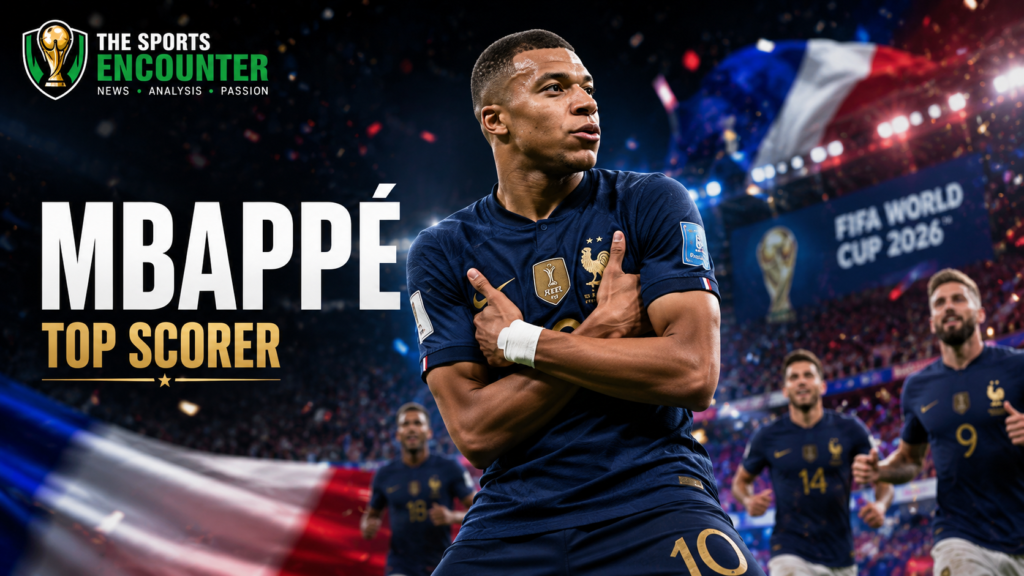
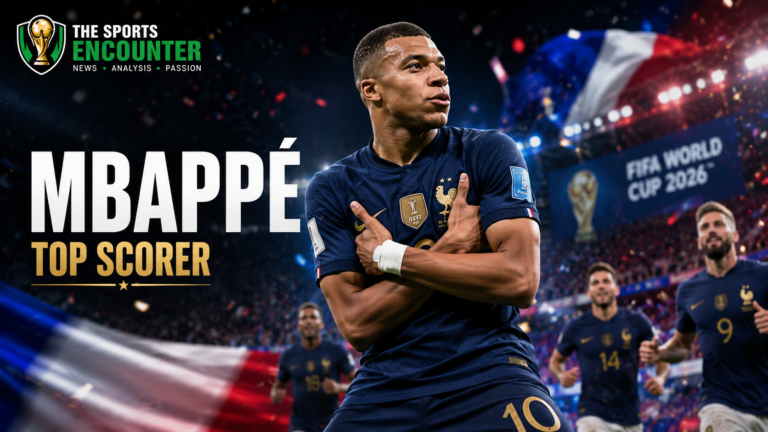
Kylian Mbappé finished as the top scorer at the FIFA World Cup 2026, winning the Golden Boot with 10 goals as his pace, agility, movement, and ruthless finishing carried France to fourth place.
The tournament ended with Spain lifting the trophy, Argentina finishing second, and England claiming third place. Yet the individual scoring race belonged to Mbappé. France’s captain scored in the group stage, the Round of 32, the Round of 16, the quarterfinal, and the third-place playoff.
His two goals against England took him into double figures and moved him clear of Lionel Messi, who finished with eight. Mbappé also reached 22 career World Cup goals, strengthening his claim as the most productive tournament scorer of his generation.
The final list of the top goal scorers at the FIFA World Cup 2026 featured established superstars, a breakout World Cup debutant, two England players, and one member of Spain’s championship team.
FIFA World Cup 2026 Top Scorers at a Glance
| Rank | Player | Country | Goals |
|---|---|---|---|
| 1 | Kylian Mbappé | France | 10 |
| 2 | Lionel Messi | Argentina | 8 |
| 3 | Jude Bellingham | England | 7 |
| 4 | Erling Haaland | Norway | 7 |
| 5 | Ousmane Dembélé | France | 6 |
| 6 | Harry Kane | England | 6 |
| 7 | Mikel Oyarzabal | Spain | 5 |
| 8 | Ismaïla Sarr | Senegal | 4 |
| 9 | Julián Quiñones | Mexico | 4 |
| 10 | Vinícius Júnior | Brazil | 4 |
1. Kylian Mbappé, France: 10 Goals
Mbappé began the World Cup as one of the favorites for the Golden Boot and quickly turned expectation into production. He scored twice against Senegal, added another brace against Iraq, and struck twice more as France defeated Sweden in the Round of 32.
His movement made him almost impossible to contain. Mbappé could begin on the left, drift centrally, attack the gap between defenders, or accelerate behind the back line before opponents had time to reorganize. His goals came through speed, sharp positioning, controlled finishing, and an ability to recognize danger a second earlier than everyone around him.
Further goals against Paraguay and Morocco helped France reach the semifinals. Spain denied him space during its disciplined 2-0 victory, but Mbappé responded with two goals in the extraordinary 6-4 third-place playoff defeat against England.
France finished fourth, below its pre-tournament target, but Mbappé remained the tournament’s most devastating scorer. He became the first man to win two FIFA World Cup Golden Boots after also leading the scoring table in 2022.
2. Lionel Messi, Argentina: 8 Goals
At 39, Messi produced another World Cup campaign filled with records and moments of individual brilliance.
He opened with a hat trick against Algeria, scored twice against Austria, and added a free kick against Jordan. Further goals against Cape Verde and Egypt took him to eight for the tournament.
Messi’s influence stretched beyond scoring. He supplied decisive passes during Argentina’s path through the knockout rounds and helped the defending champions reach another final. Spain eventually won 1-0 after extra time, but Messi remained Argentina’s main creative reference throughout the competition.
His eight goals earned second place in the scoring chart and the Silver Ball behind Spain captain Rodri.
3. Jude Bellingham, England: 7 Goals
Bellingham delivered one of the strongest tournament performances ever produced by an England midfielder.
He scored against Croatia and Panama, struck twice during England’s comeback victory over Mexico, and added another double in the quarterfinal against Norway. His extra-time winner in that match carried England into the semifinals.
A final goal against France in the third-place playoff brought his total to seven. That made Bellingham the first England player to score seven times at a single World Cup.
His goals reflected his complete attacking range. Some came from late runs into the penalty area. Others required physical strength, timing, or calm finishing under pressure.
4. Erling Haaland, Norway: 7 Goals
Haaland’s first World Cup produced exactly the kind of impact Norway had hoped for.
The striker scored twice against Iraq and twice against Senegal before finding the winner against Ivory Coast in the Round of 32. He then delivered two more goals as Norway stunned Brazil in the Round of 16.
Norway’s run ended against England in the quarterfinals, but Haaland left with seven goals and proof that his club-level scoring power could transfer to international football’s biggest stage.
His finishing was direct and unforgiving. Norway rarely needed to create several chances for him. One loose ball, mistimed defensive step, or accurate cross was often enough.
5. Ousmane Dembélé, France: 6 Goals
Dembélé gave France a second player among the tournament’s leading scorers.
His campaign gathered momentum after he scored against Iraq. A hat trick against Norway pushed him into the Golden Boot conversation, while another goal against Morocco helped France reach the semifinals.
Dembélé completed his tournament by scoring against England in the third-place playoff. His six goals, combined with his creative contribution, made him one of the most productive attackers at the competition.
France’s attack often depended on Mbappé’s directness, but Dembélé provided unpredictability from different positions. His ability to use either foot made defenders reluctant to force him in one direction.
6. Harry Kane, England: 6 Goals
Kane remained England’s reliable penalty-area finisher even as Bellingham and Bukayo Saka produced major attacking moments around him.
He scored twice against Croatia and added another goal against Panama. A brace against DR Congo moved England through the Round of 32, while his penalty against Mexico helped complete a difficult comeback.
Kane’s six-goal campaign also carried historical weight. He moved beyond Gary Lineker to become England’s leading scorer in World Cup finals.
England missed the final after losing to Argentina, but its victory over France secured third place and completed another productive tournament for its captain.
7. Mikel Oyarzabal, Spain: 5 Goals
Spain won the World Cup through collective control, defensive discipline, and attacking variety. Oyarzabal emerged as their leading scorer.
He struck twice against Saudi Arabia and scored another double against Austria in the Round of 32. His penalty against France in the semifinal took him to five goals.
Oyarzabal did not score in the final, where Ferran Torres produced the decisive extra-time finish against Argentina. His earlier goals, however, gave Spain a dependable central threat during its journey to the title.
His presence also prevented opponents from focusing entirely on Lamine Yamal, Nico Williams, and Spain’s midfield runners.
8. Ismaïla Sarr, Senegal: 4 Goals
Sarr was Senegal’s most dangerous attacker during a tournament that ended in the Round of 32.
He scored twice against Norway, found the net against Iraq, and struck again as Senegal built a lead against Belgium. The African side could not protect that advantage, but Sarr’s four goals underlined his importance.
His acceleration and direct running repeatedly stretched defensive lines. Senegal’s elimination arrived earlier than supporters hoped, although Sarr left as one of the tournament’s leading African scorers.
9. Julián Quiñones, Mexico: 4 Goals
Quiñones became one of the central figures in Mexico’s home World Cup campaign.
He scored during the group stage against South Africa and Czechia, then struck against Ecuador in the Round of 32. His fourth goal came in Mexico’s 3-2 defeat against England.
Mexico did not reach the quarterfinals, but Quiñones gave the co-hosts power, athleticism, and a reliable finishing presence. His performances also made him one of the tournament’s standout scorers from the CONCACAF region.
10. Vinícius Júnior, Brazil: 4 Goals
Vinícius opened his tournament with an outstanding strike against Morocco and followed it with a goal against Haiti. Two more against Scotland brought him to four before the knockout stage.
Brazil then defeated Japan but suffered a surprise Round of 16 loss to Norway. Vinícius could not add to his total during those matches, leaving his World Cup with a sharp divide between an explosive group stage and a frustrating knockout campaign.
His four goals still earned him a place among the competition’s 10 leading scorers.
Why Mbappé Won the FIFA World Cup 2026 Golden Boot
Mbappé separated himself through consistency across the tournament. He scored against different opponents, in different rounds, and through different types of finishes.
His agility allowed him to change direction without losing momentum. Elite acceleration made defensive recovery difficult, while improved movement through central areas gave him more routes to goal than in previous tournaments.
France fell short of the final after losing to Spain, but Mbappé kept producing until the last match. His brace against England became the difference between sharing the scoring lead and winning the Golden Boot outright.
The World Cup ultimately belonged to Spain. Its scoring crown belonged to Mbappé.
Frequently Asked Questions
Who was the top scorer at the FIFA World Cup 2026?
Kylian Mbappé finished as the tournament’s top scorer with 10 goals and won the FIFA World Cup 2026 Golden Boot.
How many goals did Mbappé score at World Cup 2026?
Mbappé scored 10 goals in eight matches for France.
Who finished second in the 2026 World Cup scoring chart?
Lionel Messi finished second with eight goals for Argentina.
How many goals did Jude Bellingham score?
Bellingham scored seven goals and became the first England player to reach that total in a single World Cup.
Who was Spain’s leading scorer at World Cup 2026?
Mikel Oyarzabal led the champions with five goals.
Did Mbappé win consecutive World Cup Golden Boots?
Yes. Mbappé won the Golden Boot in 2022 and again in 2026, becoming the first male player to win the award twice.
The Sports Encounter’s World Cup 2026 coverage focuses on fixtures, team news, match analysis, fan stories, tournament trends, and the biggest talking points from football’s global stage.
Editor's Choice
How Youngster Lamine Yamal Came of Age in the FIFA World Cup 2026
Lamine Yamal arrived at the FIFA World Cup 2026 as football’s most celebrated teenager. He left as a world champion whose creativity, composure, identity, and global appeal helped define a new generation.
Lamine Yamal arrived at the FIFA World Cup 2026 as the most famous teenager in soccer. He left North America as a world champion, a symbol of modern Spain, and the young player who connected the tournament with a new generation of fans.
His campaign did not unfold through a simple collection of goals or a procession of spectacular individual performances. Spain asked Yamal to occupy defenders, create space, carry the ball through pressure, and provide the unpredictability that a possession-heavy team still needed.
At 19 years and six days, he became one of the youngest players ever to win the men’s World Cup. He also became the first teenager to appear in both a European Championship final and a FIFA World Cup final, having already helped Spain win Euro 2024 as a 17-year-old.
By the time Spain defeated Argentina 1-0 after extra time in the final, Yamal had completed a journey that stretched far beyond one tournament. The fearless boy who broke records at Barcelona had learned how to influence games when opponents designed entire defensive plans around stopping him.
Lamine Yamal at the FIFA World Cup 2026
- Age during the final: 19 years and six days
- Country: Spain
- Position: Right winger
- Tournament finish: FIFA World Cup champion
- World Cup appearance: Tournament debut
- Major role: Wide creator, dribbler, chance-maker, and attacking outlet
- Historic achievement: First teenager to play in both a European Championship final and a World Cup final
How Did Lamine Yamal Perform at the FIFA World Cup 2026?
Yamal scored once during Spain’s title run, but his value could not be reduced to his goal total.
He remained one of Spain’s primary sources of width and creativity from the right. Opposing left backs rarely defended him alone. Midfielders moved across to close the inside channel, while center backs prepared for the moment he cut toward goal on his stronger left foot.
That attention changed Spain’s attacking geometry.
When two defenders moved toward Yamal, teammates gained room elsewhere. Pedri and Dani Olmo could receive between the lines. Fullbacks found wider passing lanes. Mikel Oyarzabal, Ferran Torres, and Nico Williams benefited from defensive units leaning toward Spain’s right side.
Yamal’s influence appeared in passes that opened attacks, dribbles that forced fouls, and moments when a defender had to abandon his position to confront him. His tournament became a study in how an elite young player can affect matches even when the scoring numbers remain modest.
FIFA consistently included him among the leading candidates for the tournament’s Young Player Award, although the honor eventually went to his Spain teammate Pau Cubarsí. Yamal’s fellow teenager earned the award through outstanding defensive performances, while Yamal supplied much of Spain’s attacking imagination.
The World Cup Tested Yamal Differently
Yamal had already won major trophies before arriving in North America. He had become Spain’s youngest international and goalscorer, played a central role in the Euro 2024 triumph, and established himself as one of Barcelona’s most important players.
The World Cup brought a different level of attention.
Every match carried global scrutiny. Every quiet spell became a debate. Defenders understood his preferred movements, while coaches built compact structures to prevent him from receiving the ball near the penalty area.
Spain’s opening draw against Cape Verde provided an early warning. Yamal found limited room against a disciplined defensive block, and Spain struggled to turn possession into clear chances. The result became one of the tournament’s early surprises and forced Luis de la Fuente’s team to become more varied in attack.
Rather than chasing the game on his own, Yamal adapted. He released the ball earlier, combined more frequently with midfield runners, and learned when to hold his width instead of constantly moving inside.
That tactical growth mattered as Spain progressed through the competition. Their route included victories over Austria, Portugal, Belgium, France, and Argentina, opponents with very different defensive approaches.
Lamine Yamal’s Best World Cup 2026 Performances
Yamal’s attacking importance became clearer during the knockout rounds.
Against Austria in the Round of 32, his movement stretched a defense that struggled to contain Spain’s wide threats. Portugal then presented a more physical and experienced challenge, forcing the teenager to work through tighter spaces during Spain’s 1-0 victory.
The quarterfinal against Belgium offered another stage for his creativity. Belgium attempted to crowd central areas and break quickly through its own attacking talent, but Yamal continued to carry Spain forward from the right as the champions won 2-1.
His composure before the semifinal also revealed how comfortable he had become under the brightest lights. Yamal turned 19 on July 13, one day before facing France. Asked about pressure, he treated the occasion with the relaxed confidence of someone playing a familiar neighborhood game rather than a World Cup semifinal. He had already scored against France at ages 16 and 17, and he entered the match focused on another Spanish victory rather than personal recognition.
Spain won 2-0, controlling a French side led by Kylian Mbappé and Ousmane Dembélé. Rodri and Spain’s midfield dictated the match, but Yamal’s presence continued to influence where France placed its defensive protection.
That victory sent Spain into the FIFA World Cup 2026 final against Argentina, where Yamal faced the player who had shaped so much of his own football imagination.
Lamine Yamal vs Lionel Messi Became the Story of Generations
The final carried an irresistible narrative.
In 2007, a young Lionel Messi held six-month-old Yamal during a charity calendar photo shoot organized by Barcelona, UNICEF, and the Spanish newspaper Sport. Nearly two decades later, they met on opposite sides of a World Cup final.
The image returned throughout the tournament because it captured the passage of football time with remarkable clarity. Messi represented the most influential playing career of the modern era. Yamal stood as one of the clearest candidates to lead the sport’s next generation.
That storyline could easily have overwhelmed a teenager. Yamal handled it with maturity.
He spoke respectfully about Messi without treating the final as a ceremonial handover. Spain’s goal was to win, and Yamal played with the aggression of a competitor rather than the hesitation of an admirer.
During the final, he repeatedly attempted to isolate Argentina’s defenders and thought he had scored the opening goal before the effort was ruled out. Argentina contained him for long stretches, yet his movement kept their defensive line occupied while Spain maintained territorial control.
Ferran Torres eventually scored in the 106th minute, ending Argentina’s resistance and securing Spain’s second World Cup title.
After the match, Yamal approached Messi and embraced him. The moment carried respect rather than theatrical symbolism. One Barcelona generation had met another on the largest stage, and the younger player left with the trophy.
Why Lamine Yamal Inspired Young Soccer Fans
Yamal’s influence extended well beyond Spain’s tactical structure.
Young fans saw a 19-year-old playing decisive World Cup matches with visible joy. His game included the qualities that attract children to soccer in the first place: dribbling, invention, quick changes of direction, daring passes, and the willingness to challenge defenders.
His background added another layer to that appeal.
Yamal grew up in Rocafonda, a working-class and culturally diverse neighborhood near Barcelona. He represents that community with his “304” celebration, a reference to the final digits of the local postal code. Born to a Moroccan father and an Equatorial Guinean mother, he has spoken through his career and public image to a Spain shaped by migration, mixed identities, and neighborhood pride.
During the World Cup, residents of Rocafonda gathered around the story of a local child reaching the final against Messi. His success carried social meaning because he remained connected to the place that formed him.
For young players in Barcelona, Madrid, Casablanca, Malabo, Karachi, Lagos, New York, and countless other cities, Yamal made elite soccer appear closer. His journey showed that global fame does not require abandoning local identity.
His popularity across social media also helped the tournament reach audiences who experience soccer through clips, short videos, player-led content, and mobile-first storytelling. By the end of the World Cup, his Instagram audience had grown beyond 50 million followers, reflecting a global appeal that already stretched beyond traditional club loyalties.
Yamal Led a Remarkable Generation of Young Players
The FIFA World Cup 2026 featured several young players who looked ready to shape the next decade.
Pau Cubarsí won the Young Player Award after anchoring Spain’s defense. Désiré Doué impressed for France. Nico O’Reilly strengthened England’s midfield options, while Ayyoub Bouaddi emerged as another high-level prospect.
Yamal remained the most visible figure among them.
His fame, playing style, championship pedigree, and ability to connect with younger audiences gave him a different kind of influence. Cubarsí earned the official youth award, but Yamal became the tournament’s clearest generational symbol.
He was also central to a Spain side that blended teenage talent with experienced leaders such as Rodri. The balance allowed young players to express themselves within a disciplined structure rather than carrying the team alone.
That framework helps explain why Spain won. Yamal offered freedom and improvisation. Rodri supplied control. Cubarsí brought defensive composure, while the wider squad contributed goals from several positions.
How Old Was Lamine Yamal When Spain Won the World Cup?
Yamal was 19 years and six days old when Spain defeated Argentina in the final on July 19, 2026.
FIFA’s tournament statistics placed him among the youngest World Cup winners in history. Only a small group, including Pelé and Giuseppe Bergomi, lifted the trophy at a younger age.
The achievement became even more remarkable because Yamal was already a European champion. He had won Euro 2024 shortly after turning 17, then added the World Cup two years later.
Few players in soccer history have accumulated that level of international experience before their 20th birthday.
Did Lamine Yamal Win the World Cup Young Player Award?
No. Spain center back Pau Cubarsí received the FIFA World Cup 2026 Young Player Award.
That result did not diminish Yamal’s tournament. The two young Spaniards influenced different parts of the game, and Cubarsí’s defensive consistency helped Spain concede only one goal across eight matches.
Yamal’s contribution appeared through creativity, width, defensive attention, and attacking progression. He entered the tournament as a global star and left as a world champion who had learned to contribute even when opponents prevented him from dominating individually.
What the 2026 World Cup Changed for Lamine Yamal
Before the tournament, Yamal was already viewed as football’s leading young talent.
After it, he had become part of World Cup history.
The distinction matters. Club brilliance creates fame, while World Cups create memories shared across countries and generations. Yamal’s tournament now belongs to children who watched him challenge defenders, lift the trophy, embrace his younger brother on the field, and share a respectful moment with Messi after the final.
That family celebration softened the scale of the occasion. His three-year-old brother, Keyne, ran onto the field wearing Yamal’s shirt and became one of the tournament’s most widely shared post-final images. The scene reminded millions of viewers that the new world champion was still a young man surrounded by family.
Yamal did not need to win the Golden Ball, Golden Boot, or Young Player Award to define the youth story of the World Cup.
His broader achievement was making elite football feel adventurous again. Every touch carried possibility. Every one-on-one duel invited anticipation. Young fans watched him play and saw someone close enough to their own age to make ambition feel immediate.
Frequently Asked Questions
How many goals did Lamine Yamal score at the FIFA World Cup 2026?
Yamal scored once during Spain’s championship campaign, while contributing through chance creation, dribbling, width, and attacking combinations.
Did Lamine Yamal play in the 2026 World Cup final?
Yes. Yamal started for Spain against Argentina and became the first teenager to appear in both a European Championship final and a World Cup final.
How old was Lamine Yamal in the World Cup final?
He was 19 years and six days old when Spain won the final on July 19, 2026.
Did Lamine Yamal win the Best Young Player award?
No. His Spain teammate Pau Cubarsí won the FIFA Young Player Award.
Is Lamine Yamal the youngest World Cup winner?
No. Pelé remains the youngest men’s World Cup winner. Yamal nevertheless became one of the youngest players ever to lift the trophy.
Why is Lamine Yamal so popular with young soccer fans?
His expressive playing style, age, multicultural background, neighborhood identity, social media presence, and success at Barcelona and with Spain make him highly relatable to younger audiences worldwide.
A World Champion Before His 20th Birthday
The FIFA World Cup 2026 did not represent Yamal’s arrival. That had already happened at Barcelona and Euro 2024.
It marked his maturation.
He learned to influence matches when space disappeared, remained composed under global pressure, helped Spain navigate the knockout rounds, and started a World Cup final against his childhood idol.
By the end, Yamal stood with a winner’s medal, a trophy, and a place inside the next chapter of soccer history.
The generation inspired by Messi now has a champion of its own age to follow.
The Sports Encounter’s World Cup 2026 coverage focuses on fixtures, team news, match analysis, fan stories, tournament trends, and the biggest talking points from football’s global stage.
Editor's Choice
Why FIFA Picked Rodri as the Best Player of the FIFA World Cup 2026
Rodri did not lead the FIFA World Cup 2026 scoring charts, but Spain’s captain controlled the spaces, passing lanes, defensive transitions, and match tempo that carried La Roja to the title.
Rodri won the FIFA World Cup 2026 Golden Ball because he controlled the part of the game that decided Spain’s championship: the space between defending and attacking.
Kylian Mbappé scored 10 goals. Lionel Messi led Argentina back to the final. Lamine Yamal provided Spain with imagination, width, and youthful nerve. Yet when FIFA selected the Player of the Tournament, the award went to the man who gave every part of Spain’s football its balance.
Rodri, Spain’s captain and midfield anchor, received the adidas Golden Ball after La Roja defeated Argentina 1-0 following extra time in the final at New York New Jersey Stadium. His tournament was built on control rather than highlight-reel production. He moved the ball, protected the defense, managed transitions, organized teammates, and repeatedly made difficult matches feel comfortable for Spain.
For supporters asking why Rodri won the 2026 World Cup Golden Ball, the clearest answer lies in his total influence. He was Spain’s tactical reference point across all eight matches.
Why Did Rodri Win the FIFA World Cup 2026 Golden Ball?
FIFA highlighted Rodri’s ability to connect defense with attack, intervene at the right moments, and pass with exceptional accuracy. Those qualities shaped Spain’s entire campaign.
Rodri completed more passes than any other player at the tournament. He finished with 655 accurate passes from 705 attempts, giving him a completion rate of almost 93 percent. His distribution remained accurate even when he advanced the ball into crowded attacking areas.
The numbers describe only part of his value. Spain trusted Rodri to receive possession under pressure, turn away from opponents, and decide whether the next action required patience or speed. He rarely forced the game. His decisions allowed Pedri, Fabián Ruiz, Dani Olmo, Nico Williams, and Yamal to operate with greater freedom.
During Spain’s World Cup final victory over Argentina, Rodri completed 101 of his 105 passes. He also won 80 percent of his duels and created two scoring chances. Those figures came in the highest-pressure match of the tournament, against a team built to punish mistakes and disrupt central midfield rhythm.
Rodri Controlled the World Cup Final Against Argentina
The final offered the strongest explanation for FIFA’s decision.
Argentina entered the match with Messi operating between midfield and attack, Enzo Fernández attempting to progress the ball, and Lautaro Martínez looking for opportunities behind Spain’s defense. Rodri’s positioning reduced the space available to all three.
He rarely chased Messi recklessly. Instead, Rodri stayed connected to Spain’s center backs, blocked forward passing lanes, and moved across the field as Argentina changed the point of attack. When Messi dropped deeper, Rodri helped prevent him from turning into open space.
One of his most important interventions came late in the contest when he dispossessed Messi during a dangerous Argentine transition. It was the kind of moment that defined Rodri’s tournament. The action did not produce a goal or assist, but it stopped Argentina from creating the moment that could have changed the final.
Spain eventually broke through when Ferran Torres scored in the 106th minute. The goal earned the headlines. Rodri had spent the previous 105 minutes ensuring Spain remained in control long enough for the breakthrough to arrive.
Spain’s Defensive Record Strengthened Rodri’s Case
Spain conceded only one goal across eight World Cup matches. That record belonged to the entire team, including Golden Glove winner Unai Simón and a disciplined defense led by Pau Cubarsí and Aymeric Laporte.
Rodri provided the protection in front of them.
He led the tournament with 26 tackles and won 63.3 percent of his ground duels. Spain’s opponents produced only 2.37 expected goals across the competition, a remarkably low figure for an eight-match run through an expanded World Cup.
His defensive intelligence was especially valuable because Spain committed numbers forward. Fullbacks advanced, wide attackers stayed high, and midfielders moved between the lines. Rodri monitored the spaces they left behind and slowed counterattacks before they developed into clear chances.
That structure helped Spain eliminate Austria, Portugal, Belgium, France, and Argentina during the knockout stage. The 2-0 semifinal victory over France offered another example. Mbappé and Ousmane Dembélé entered as major attacking threats, but Spain controlled the center and denied France the transitions they needed.
Rodri Gave Spain More Than Passing Accuracy
Defensive midfielders are often judged through pass-completion percentages, but safe passing alone does not explain Rodri’s importance.
His value came from choosing the right pass at the right moment.
Rodri could recycle possession when Spain needed stability, break the first defensive line with a vertical pass, switch play toward Yamal or Williams, or draw an opponent forward before releasing a teammate into the space behind him.
He completed more final-third passes than any other player and maintained an accuracy rate above 90 percent in advanced areas. That distinction matters. Passing accurately near one’s own defense is far easier than finding teammates around a compact penalty area.
Spain experienced the difficulty of breaking down deep defenses during their opening goalless draw with Cape Verde. As the competition progressed, Rodri helped Spain improve the speed and direction of their possession. La Roja became more purposeful without losing control.
Was Rodri Better Than Messi and Mbappé at World Cup 2026?
That question depends on how tournament excellence is measured.
Mbappé was the outstanding goalscorer and deserved the Golden Boot after scoring 10 times. Messi remained Argentina’s attacking leader and received the Silver Ball after guiding the defending champions to another final.
Rodri influenced more phases of the game.
He contributed to Spain’s buildup, defensive organization, pressing structure, game management, and leadership. While Mbappé decided matches near the penalty area and Messi created Argentina’s most dangerous moments, Rodri shaped how Spain played from the opening pass to the final defensive action.
Before the final, The Sports Encounter’s ranking of the top players at the FIFA World Cup 2026 reflected how difficult it was to compare goalscorers with midfield controllers. The final strengthened Rodri’s argument because he delivered his most complete performance on the tournament’s biggest night.
Rodri’s Leadership Mattered During Spain’s Title Run
Rodri also carried the captaincy during a campaign that required Spain to manage different kinds of pressure.
The team began with questions after drawing against Cape Verde. It responded by beating Saudi Arabia 4-0 and Uruguay 1-0 before finding a stronger rhythm in the knockout rounds.
Spain then defeated Austria 3-0, eliminated Portugal 1-0, overcame Belgium 2-1, shut out France 2-0, and finally defeated Argentina.
Rodri gave the side emotional stability throughout those changes. He communicated constantly, slowed matches when opponents gained momentum, and helped younger players remain connected to Spain’s structure.
Yamal, Cubarsí, and several other members of the squad experienced their first World Cup under intense expectations. Rodri’s calm authority gave Luis de la Fuente an experienced leader in the most important area of the pitch.
Why Rodri Was the Right FIFA World Cup 2026 Player of the Tournament
Golden Ball debates often favor goals, assists, and individual attacking moments. Rodri’s victory recognized a broader form of football influence.
He completed the most passes, maintained elite accuracy, won tackles and duels, protected the tournament’s best defense, controlled the final, and captained Spain to its second world championship.
FIFA’s choice reflected the story of the tournament. Spain won through collective intelligence, positional discipline, technical quality, and patience. Rodri embodied every one of those qualities.
Ferran Torres scored the goal that won the final. Unai Simón protected Spain’s net. Yamal supplied invention, while Cubarsí represented the team’s emerging generation.
Rodri made the entire system function.
Frequently Asked Questions
Who won the FIFA World Cup 2026 Golden Ball?
Spain captain Rodri won the adidas Golden Ball as the best player of the FIFA World Cup 2026.
Why did Rodri win Player of the Tournament?
Rodri won because of his passing accuracy, defensive work, midfield control, leadership, consistency, and major influence during Spain’s championship campaign.
What were Rodri’s statistics in the 2026 World Cup final?
Rodri completed 101 of 105 passes, won 80 percent of his duels, and created two chances against Argentina.
Who finished behind Rodri in the Golden Ball voting?
Lionel Messi received the Silver Ball, while Kylian Mbappé received the Bronze Ball and also won the Golden Boot.
How many goals did Spain concede at the 2026 World Cup?
Spain conceded only one goal across eight matches, with Rodri playing a central role in protecting the defense.
The Sports Encounter’s World Cup 2026 coverage focuses on fixtures, team news, match analysis, fan stories, tournament trends, and the biggest talking points from football’s global stage.
Editor's Choice
The Activity Lasts an Hour. The Coordination Lasts All Week
Youth sports offer children confidence, fitness, friendship, and belonging. Behind every practice and game, however, families manage a demanding web of schedules, transportation, equipment, meals, communication, and last-minute changes that can make participation difficult to sustain.
Why the invisible work surrounding youth sports may be one of the biggest challenges families face today.
Every youth sports season begins with optimism. Parents register their children because they want them to build confidence, stay active, make friends, learn discipline, and experience the sense of belonging that a team can provide.
Families accept early mornings, muddy uniforms, long drives, crowded weekends, and hours spent beside fields or courts because those experiences often feel worthwhile. For many children, they are. Sports can create friendships, improve physical health, and provide lessons that stay with them long after the season ends.
Yet some families quietly step away for a reason that receives far less attention than coaching quality, competitive pressure, or a child losing interest. They become overwhelmed by everything required to make participation possible.
The activity may last an hour. The coordination can consume the entire week.
Key Takeaways
- Youth sports participation depends heavily on transportation, scheduling, communication, equipment, meals, and family availability.
- The mental effort of managing these responsibilities can create significant cognitive load for parents and caregivers.
- Late schedule changes and fragmented communication can affect work, childcare, meals, transportation, and sibling activities.
- Sports organizations can improve retention by giving families earlier notice, clearer information, and more predictable schedules.
- Sustainable participation should support the athlete while respecting the capacity of the entire family.
The Youth Sports Season Nobody Sees
The visible part of youth sports is easy to recognize. Practices, games, tournaments, coaching sessions, team photographs, and end-of-season celebrations all appear on the calendar.
The invisible season happens everywhere else.
It unfolds while parents coordinate work schedules, check weather forecasts, wash uniforms, locate equipment, prepare snacks, arrange transportation, monitor team messages, and plan dinner around practice. Families with more than one child may repeat the process across different teams, locations, and start times.
A single practice can require far more than the hour listed on the schedule. There may be travel in both directions, preparation time, a stop for food, waiting during the session, and another round of organization after returning home.
None of these tasks appears especially difficult in isolation. The pressure develops when families must carry all of them together, every week, alongside jobs, school responsibilities, household duties, medical appointments, and other commitments.
That hidden workload often determines whether youth sports feel sustainable.
The Cost That Does Not Appear on a Registration Form
Conversations about youth sports frequently focus on money, and for good reason. Registration fees, uniforms, equipment, private coaching, tournament entry, travel, hotels, and meals can quickly increase the cost of participation.
The Aspen Institute’s Project Play research on youth sports access reports that half of surveyed Americans who played youth sports or had children who participated struggled to afford the associated costs. Financial pressure remains one of the clearest barriers to keeping children involved.
Families also absorb another cost that is harder to calculate: cognitive load.
Parents may think about pickup arrangements during work meetings. They mentally review the next day’s schedule while making dinner. They remember which child needs a clean uniform, which field has changed, whether rain will cancel practice, and whose turn it is to bring refreshments.
Transportation, cost, scheduling, and family support rarely operate as separate issues. They overlap. A changed venue can increase travel time. A late practice can create childcare costs. A weekend tournament can affect work availability, meals, rest, and another child’s activities.
The price of youth sports therefore extends beyond the amount paid at registration. Families also invest time, attention, flexibility, and emotional energy.
Participation Depends on Families Too
Youth sports are built around young athletes, but consistent participation depends heavily on the adults making everything happen.
Coaches, league administrators, volunteers, referees, and team managers often invest tremendous effort in creating positive environments for children. Families value that contribution, particularly when organizations provide structure, safety, and clear expectations.
At the same time, every unexpected adjustment can create consequences beyond the field. Moving a practice by 30 minutes may require a parent to leave work early, rearrange childcare, change dinner plans, cancel another appointment, or ask a relative for help.
Similar welfare and logistical considerations become even more important when young athletes enter elite environments. The Sports Encounter recently examined how safeguarding rules affect teenage cricketer Vaibhav Sooryavanshi as he moves into senior international cricket. His case involves an exceptional athlete, but the wider principle applies throughout youth sports: sporting opportunity must develop alongside age-appropriate support.
Most families understand that weather, facility problems, staffing issues, and competition schedules sometimes force changes. Predictability will never be absolute. Clear and timely communication, however, can reduce the disruption.
Small Changes Can Create Large Ripple Effects
Consider a family with two working parents and two children. One child has soccer practice at 5:30 p.m. The other has a school event at 6:00 p.m. A last-minute venue change adds 20 minutes to the journey.
The adjustment affects more than transportation. One parent may need to leave work earlier. Dinner must move. The second child may need another ride. Equipment packed for the original location may no longer be suitable. A manageable evening can become a stressful sequence of decisions within minutes.
These situations are common enough to feel ordinary, but their cumulative effect can wear families down.
Burnout Does Not Always Belong to the Athlete
Athlete burnout deserves serious attention. Emotional exhaustion, reduced enjoyment, pressure to specialize, overtraining, and insufficient recovery can affect a young person’s physical and psychological well-being.
The American Academy of Pediatrics’ clinical guidance recommends that young athletes participate in no more than one organized sport per day and receive at least one day of rest each week from organized sports. AAP experts also encourage regular time away from a specific sport during the year.
That guidance recognizes the value of recovery for children. Families need breathing room as well.
Parents rarely withdraw support because they have stopped believing in sports. Many reach a point where the time, travel, expense, and organizational effort exceed the household’s available capacity.
The decision to step away may begin quietly. A family skips an optional training session. It declines a travel tournament. Another season starts to feel unrealistic. Eventually, the child leaves the activity even though the sport itself was never the main problem.
Sports organizations often analyze athlete retention through the child’s experience. A fuller assessment should also examine whether the surrounding demands remain manageable for the family.
How Sports Organizations Can Make Participation Sustainable
Many useful improvements require better planning rather than major spending.
1. Publish Schedules Earlier
Families can make better decisions when they receive practice, game, and tournament schedules well in advance. Early information helps parents coordinate work, transportation, meals, and sibling commitments.
2. Centralize Team Communication
Information becomes difficult to manage when updates arrive through several email chains, messaging groups, social platforms, and scheduling applications. One reliable communication channel reduces confusion and missed changes.
3. Limit Avoidable Last-Minute Adjustments
Some changes cannot be prevented. Organizations should still consider the household consequences before altering times, venues, or requirements at short notice.
4. Make Expectations Clear at Registration
Families should know the likely number of practices, travel requirements, tournament commitments, equipment costs, volunteer duties, and seasonal time demands before enrolling.
5. Build Transportation Support
Team carpool systems, shared travel plans, and community-based programs can help families who face transportation barriers. Organizers should establish appropriate safeguarding and consent procedures before coordinating rides involving children.
6. Protect Rest and Family Time
The Centers for Disease Control and Prevention recommends that children and adolescents between 6 and 17 receive at least 60 minutes of physical activity each day. Organized competition is one way to achieve that goal, but children can also benefit from free play, cycling, walking, informal games, and other forms of movement.
A healthy sports culture leaves room for recovery, schoolwork, family relationships, and unstructured time. The broader debate over workload management in professional cricket shows that sports at every level continue to wrestle with the balance between preparation, performance, and physical sustainability.
Parents Also Need Permission to Set Limits
Modern youth sports can create a sense that every opportunity must be accepted. Families may worry that missing a tournament, declining private coaching, or choosing a local league will place a child behind others.
That pressure can turn ordinary participation into a year-round commitment.
Parents should feel able to ask practical questions. Does the child still enjoy the activity? Is the schedule affecting sleep or schoolwork? Can the family afford the financial and logistical demands? Does the program respect recovery and age-appropriate development?
Choosing fewer activities can sometimes protect a child’s long-term relationship with sports. The Aspen Institute’s sport-sampling guidance also highlights the developmental benefits of children experiencing different sports rather than specializing too early.
Sustainability does not require families to maximize every available opportunity. It requires enough space for children to enjoy the opportunities they already have.
A Better Way to Measure Success in Youth Sports
Wins, trophies, rankings, and individual improvement matter within competitive environments. Youth sports also serve a broader purpose. They help children move, connect, cooperate, recover from setbacks, and discover what they enjoy.
The Sports Encounter’s coverage of the WNBA’s community work supporting girls’ sports programs reflects the value of creating access and visibility for the next generation. That access remains meaningful only when families can realistically maintain it.
A successful youth sports system should therefore ask more than whether children have opportunities to register. It should consider whether families have the information, time, flexibility, affordability, and support required to keep those children involved.
Youth sports have always depended on families. Recognizing their contribution is the first step. Designing programs that respect their capacity is the next.
The more effectively sports organizations support the people making participation possible, the more children they can help stay active, connected, and in the game.
Because the activity may last an hour.
The coordination lasts all week.
About the Author
Alec Bantel is the founder of ACTIQO, a family activity intelligence platform that helps parents better understand the time, cost, coordination, and emotional investment behind children’s activities. He writes about youth sports, family coordination, and the invisible work shaping modern family life.
The views expressed in this contributed article are those of the author. The article has been reviewed and edited according to The Sports Encounter’s editorial standards.
Sources and Further Reading
- Aspen Institute Project Play: State of Play 2025
- Project Play: Challenges Affecting Youth Sports Participation
- American Academy of Pediatrics: Overuse Injuries, Overtraining and Burnout in Young Athletes
- HealthyChildren.org: Burnout in Young Athletes
- CDC: Physical Activity Recommendations for Children