Editor's Choice
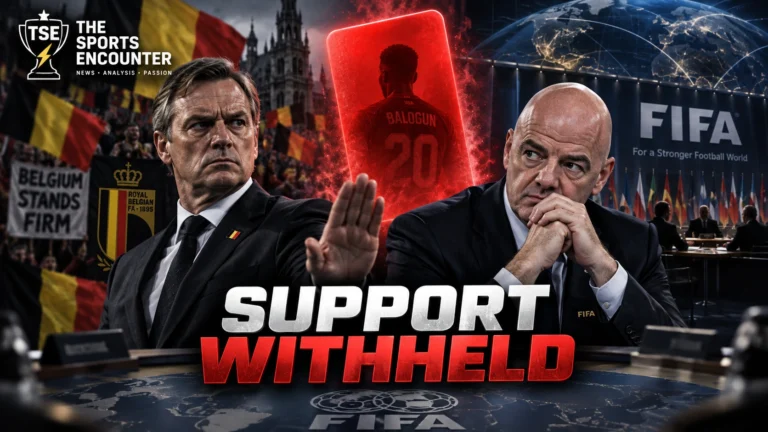
How Trump Turns USA vs Belgium Into FIFA World Cup’s Most Explosive Rules Debate
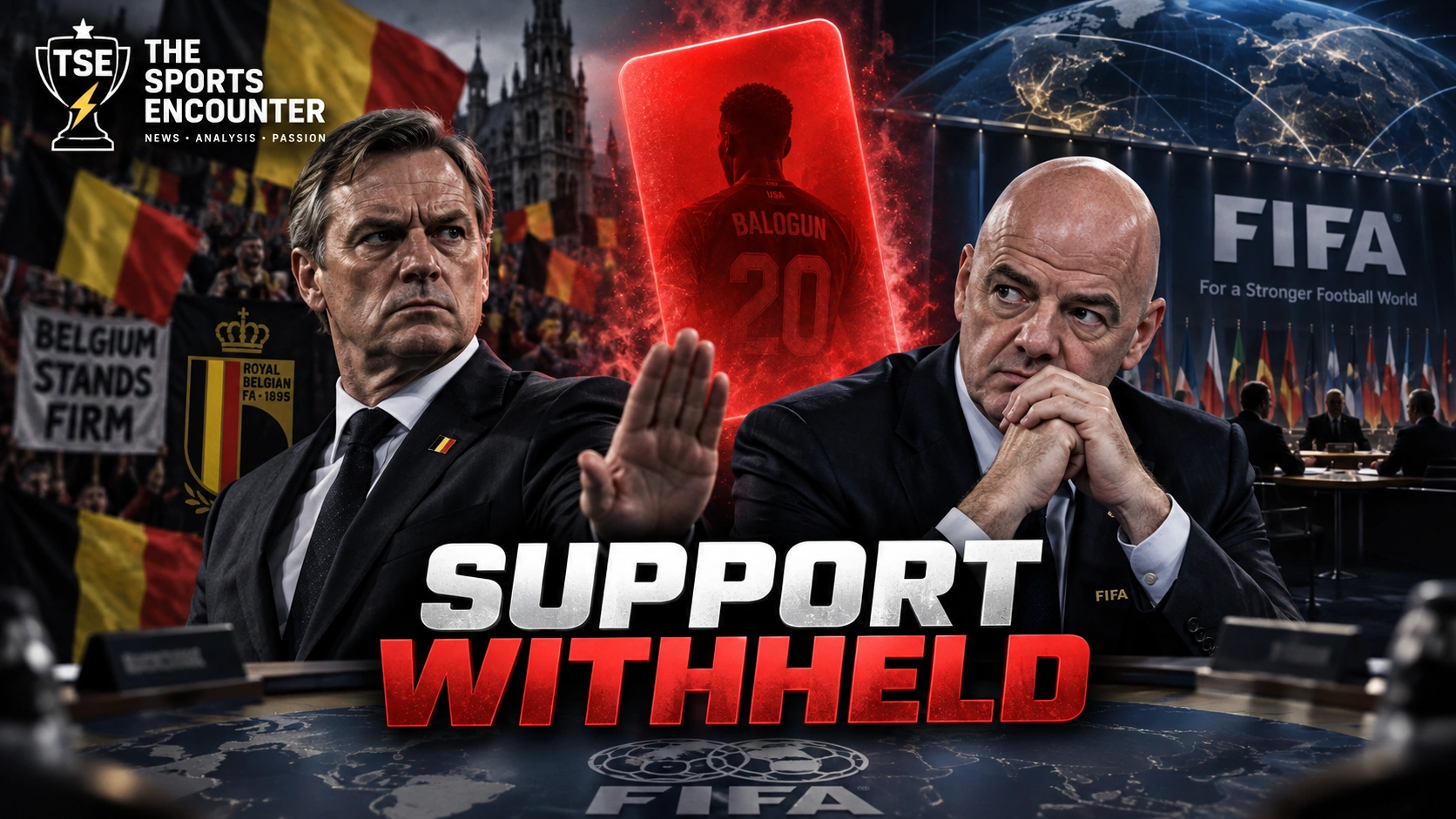
FIFA’s decision to suspend Folarin Balogun’s red-card ban before USA vs Belgium has turned a Round of 16 match into a global debate about rules, power, fairness, and football’s credibility.
Seattle was supposed to host a World Cup knockout match. Instead, it now hosts a test of football’s trust.
USA vs Belgium already had enough tension. A host nation chasing a historic quarterfinal. A Belgian team trying to begin life after its golden generation. A young American forward, Folarin Balogun, carrying three World Cup goals and the emotional weight of a breakout tournament.
Then FIFA changed the story.
Key Facts Box
| Key Point | What It Means |
|---|---|
| Player involved | Folarin Balogun, United States striker |
| Original incident | Red card against Bosnia and Herzegovina |
| Normal red-card consequence | Automatic suspension for the next match |
| FIFA decision | Suspension of the ban, not cancellation of the red card |
| Rule cited by FIFA | Article 27 of the FIFA Disciplinary Code |
| Belgium’s objection | Red cards should trigger automatic next-match bans |
| Match affected | USA vs Belgium, FIFA World Cup 2026 Round of 16 |
| Bigger issue | Political influence, rule consistency, and tournament integrity |
Balogun, sent off in the United States’ Round of 32 win over Bosnia and Herzegovina, has been cleared to face Belgium after FIFA suspended the implementation of his automatic one-match ban. The decision followed a reported call from U.S. President Donald Trump to FIFA President Gianni Infantino asking the governing body to review the sending-off.
FIFA did not erase the red card. That distinction matters. The card still stands. What FIFA suspended was the enforcement of the match suspension, placing Balogun under a one-year probationary period.
For American fans, this feels like a lifeline.
For Belgium fans, it feels like the ground moved under their feet.
For neutral fans, it creates one of the most uncomfortable questions of FIFA World Cup 2026: when politics enters the frame, can football still convince the world that the pitch remains fair?
For readers tracking the full knockout picture, this controversy now sits at the heart of the wider FIFA World Cup 2026 Round of 16 drama, where VAR, disciplinary calls, and emotional swings have already shaped the tournament’s most unpredictable phase.
The Red Card That Became Bigger Than the Match
Balogun’s tournament had been moving in one direction before the controversy: upward.
He scored his third goal of the World Cup in the United States’ 2-0 win over Bosnia and Herzegovina, strengthening his status as one of the host nation’s most important attacking players. The U.S. did not simply need his goals. They needed his presence, movement, pressing, and ability to stretch defensive lines.
Then came the challenge.
Balogun planted his boot into the ankle of Bosnia defender Tarik Muharemovic. After a VAR review, the referee showed him a red card. Under the normal understanding of tournament rules, that should have ruled him out of the next match.
That next match happened to be Belgium.
This is why the dispute exploded. This was not a minor disciplinary adjustment in a low-stakes game. This was a knockout tie. A Round of 16 match. A night where one elite forward’s availability can change both tactical plans and emotional confidence.
Belgium had every reason to prepare as if Balogun would miss the game. Then, less than 24 hours before kickoff, FIFA reopened the door.
The decision also lands in a World Cup already shaped by tight margins. The United States had reached this stage after a controlled performance against Bosnia, while other knockout stories, including Brazil’s devastating exit against Norway, showed how one moment can flip an entire tournament.
What FIFA Actually Did
To understand the anger, fans first need to understand the mechanism.
FIFA allowed Balogun to play without rescinding the red card. That means the governing body did not say the referee or VAR got everything wrong. Instead, FIFA used disciplinary discretion to suspend the enforcement of the one-match ban.
In simple terms, FIFA treated the punishment like a suspended sentence.
The sanction exists, but Balogun does not serve it immediately. If he commits another similar offense within the one-year probationary period, the suspended punishment can return, along with any additional sanction for the new offense.
FIFA’s official website remains the main reference point for tournament governance, disciplinary updates, and competition information. Readers can follow FIFA’s official tournament coverage and governance material through FIFA.com.
On paper, FIFA can argue that it used an available disciplinary tool. Article 27 of the FIFA Disciplinary Code gives its judicial bodies discretion to suspend the implementation of a sanction fully or partially.
That is the legal argument.
But World Cup fairness depends on more than legal language.
It depends on consistency. It depends on transparency. It depends on whether fans, players, coaches, and federations believe the same rules apply in the same way, no matter who is hosting, who is playing, or who makes a phone call.
Why Belgium Are Furious
Belgium’s anger comes from the automatic nature of red-card suspensions.

The Royal Belgian Football Association argued that a red card automatically results in suspension for the team’s next match. Belgium pointed to FIFA’s disciplinary code and the tournament regulations, which state that a player or team official sent off through a direct or indirect red card will automatically be suspended from the team’s subsequent match.
That word matters.
Automatically.
Belgium’s point is simple: if the World Cup regulations tell teams that a red card means suspension for the next game, then using a separate disciplinary article to suspend that enforcement at the knockout stage creates confusion.
From Belgium’s side, this is not just about Balogun.
It is about predictability.
Belgium prepared for one version of the match. Then FIFA delivered another. That changes defensive preparation, pressing triggers, video analysis, player matchups, and the emotional temperature of the dressing room.
Belgium coach Rudi Garcia called the decision an “April Fool’s Day” moment and said the issue was about football’s ethics and integrity. Goalkeeper Thibaut Courtois tried to keep the focus on the match, insisting Belgium must win on the pitch whoever plays, but even that calm response carried a deeper truth.
Belgium cannot control FIFA’s decision now.
They can only answer it through football.
That makes this Round of 16 match more than a tactical battle. It becomes a test of how Belgium’s new generation handles perceived injustice. Their earlier knockout path already carried danger and identity questions, especially after a tense buildup to the Belgium vs Senegal Round of 32 clash, where Belgium had to prove that reputation alone would not carry them.
Now they face an even sharper test.
Why Trump’s Reported Call Changes Everything
A U.S. president calling FIFA’s president during a home World Cup was always going to change the optics.
The reported call does not automatically prove FIFA acted under political pressure. FIFA can say its disciplinary committee acted independently and used the rulebook. That may be true.
But football is not judged only by internal procedure.
It is judged by public trust.

When the president of the host country reportedly contacts the FIFA president, and the host nation’s striker then becomes available for a knockout match, the story becomes impossible to separate from politics. Even if FIFA’s decision rests on a valid legal basis, the timing makes the ruling feel bigger than football.
That is why Belgium fans will feel this so intensely.
They are not only watching Balogun walk back into the American squad. They are watching a host nation gain from a decision that appeared after political intervention entered the story. In a tournament where one call, one card, one offside line, or one missed chance can end a country’s dream, perception matters almost as much as the official explanation.
World Cup history has always carried moments where rules and power collide. Sometimes the controversy comes through VAR. Sometimes it comes through scheduling. Sometimes it comes through refereeing. This time, it comes through disciplinary discretion and political proximity.
The tournament already had enough sporting drama, from Portugal’s tense Round of 32 battle with Croatia to the pressure-filled debates around host-nation momentum. Now FIFA has created a governance drama inside the football drama.
Was FIFA Right to Clear Balogun?
FIFA has a defensible case.
Disciplinary systems need flexibility. Every red card is not the same. A deliberate violent act, a reckless challenge, a denial of a goal-scoring opportunity, and a second yellow do not carry the same moral weight. A governing body should have space to assess severity.
If FIFA’s judicial body believed Balogun’s challenge deserved a suspended sanction rather than immediate enforcement, it can point to Article 27 as the legal basis.
There is also precedent for suspended sanctions in football. Cristiano Ronaldo was allowed to play in Portugal’s opening World Cup matches after FIFA suspended the remaining part of a ban he had received in qualifying. That does not make the Balogun decision automatically correct, but it shows FIFA has used suspended enforcement before.
So, legally, FIFA may have had the right tool.
The stronger question is whether it used that tool wisely.
A World Cup knockout match is not an ordinary disciplinary context. The timing was explosive. The opponent was Belgium. The beneficiary was the host nation. The reported political call involved the U.S. president. The red card came after VAR review. The normal public understanding was that Balogun would miss the next game.
All of that made this a high-trust decision.
FIFA needed more than a rule citation. It needed a detailed public explanation.
Was FIFA Wrong?
FIFA’s biggest problem is not the existence of Article 27.
Its biggest problem is how the decision looks.
Fans can accept difficult rulings when they understand the reasoning. They may disagree, but they can still follow the process. Here, many fans will see a red card, an automatic suspension rule, a reported call from Trump, and then Balogun’s reinstatement.
That sequence damages trust.
Belgium’s argument also has emotional power because red-card discipline is one of football’s clearest ideas. A player sent off normally pays the immediate price. If FIFA can suspend that price in a knockout match, supporters need to know why this case deserved exceptional treatment.
Otherwise, the decision creates a dangerous impression: rules are automatic until they are inconvenient.
That is the feeling FIFA must avoid.
For Belgium fans, this is where the pain sits. Their team is trying to build a new identity after the golden generation’s unfinished journey. Courtois remains a bridge to that era, but this squad carries younger players who want their own chapter. They should be walking into USA vs Belgium thinking only about tactics, courage, and execution.
Instead, they walk into a match shaped by a disciplinary debate.
For broader context on how emotional knockout pressure has already shaped this World Cup, The Sports Encounter’s report on England’s comeback against DR Congo showed how quickly a game can swing when pressure, timing, and belief collide.
Belgium now face that same emotional storm, with a governance dispute added on top.
What Balogun’s Return Means Tactically
Balogun’s availability changes the match.
The United States can now start its most dangerous tournament finisher. He gives Mauricio Pochettino a striker who can run behind Belgium’s back line, press from the front, and force defenders to turn toward their own goal.
That matters against Belgium.
If Belgium push their defensive line too high, Balogun can attack space. If they drop too deep, the U.S. midfield can move higher and give Christian Pulisic more freedom between the lines. Balogun also changes the emotional confidence of the U.S. attack. His teammates only found out through social media on the way to training, but the reaction was immediate: relief, surprise, and energy.
Belgium must now adjust quickly.
Courtois will need to organize the back line with authority. Belgium’s center backs must manage Balogun’s depth runs without losing sight of Pulisic. Midfield pressure will matter because the easiest way to stop Balogun is not always through the defender chasing him. It is often through stopping the pass that releases him.
The danger for Belgium is distraction.
Garcia’s players cannot spend the first 20 minutes playing against FIFA. They must play against the United States. Anger can sharpen a team, but it can also pull it out of shape. Belgium need controlled aggression, not emotional chaos.
This is where leadership matters.
Courtois has lived through World Cup pressure before. His voice may matter as much as his saves. Belgium do not need a speech about injustice. They need a plan for space, pressure, second balls, and transition defense.
Belgium’s New Era Gets Its First Fire Test
This controversy touches Belgium fans because it arrives at a symbolic moment.
The golden generation gave Belgium global status. It also gave Belgium pain. Quarterfinals in 2014. Semifinals in 2018. A group-stage exit in 2022. Talent, expectation, beautiful football, and unfinished business.
Now Belgium are trying to write something different.
Courtois has called this a new era. Younger players want to step out of the shadow of Eden Hazard, Kevin De Bruyne, Romelu Lukaku, and the names that made Belgium feel close to greatness without reaching the final step.
USA vs Belgium should have been the next sporting test.
Can Belgium control a host nation? Can they survive American intensity? Can they manage the pressure of Seattle? Can they turn a new squad into a real knockout team?
Now the test has become emotional too.
Can Belgium stay calm when they feel wronged?
Can they turn frustration into clarity?
Can they make FIFA’s ruling irrelevant by winning the match anyway?
This is why Belgium fans will connect deeply with the moment. It is not only about one striker being cleared. It is about the fear that a new Belgian dream could be complicated by forces outside the pitch.
The country has known enough tournament heartbreak. It does not want another chapter defined by a decision it never controlled.
The Bigger World Cup Problem
The Balogun case has now become a World Cup governance issue.
FIFA World Cup 2026 is already the largest edition in history. More teams, more matches, more cities, more travel, more money, more pressure. With that scale comes a bigger responsibility to explain decisions clearly.
FIFA cannot ask fans to trust the tournament while communicating only through narrow legal language.
If Article 27 can override or suspend the immediate effect of automatic red-card bans, fans need that explained before controversy erupts. Teams need to understand how often it can happen. Federations need to know what thresholds apply. Players need to know whether similar challenges will receive similar treatment.
This matters because the World Cup is not just a competition. It is a shared emotional contract.
Fans accept heartbreak when they believe the game was fair. They accept penalties, red cards, VAR lines, missed chances, and cruel exits when they believe the rules applied equally.
When they stop believing that, the tournament loses something no sponsor can replace.
Trust.
That trust has already been tested by other controversial elements in this World Cup, including hydration breaks becoming one of the tournament’s most divisive rules. Balogun’s case adds another layer: disciplinary transparency in the knockout stage.
Final Verdict: Legal, Maybe. Wise, Not Without a Better Explanation
FIFA may have had the legal authority to clear Balogun.
That does not mean the decision was handled well.
The governing body needed to explain why this case deserved suspended enforcement, how Article 27 interacts with automatic red-card suspension rules, and why the decision should not be viewed as political influence benefiting the host nation.
Without that explanation, Belgium’s anger is understandable.
Football does not need every decision to please every team. That is impossible. But it does need every major decision to feel explainable, consistent, and independent. In this case, FIFA has invited a credibility problem before one of the biggest matches of the Round of 16.
For the United States, Balogun’s return may become a defining boost.
For Belgium, it may become emotional fuel.
For FIFA, it is now a warning.
At the World Cup, rules do not live in documents alone. They live in the eyes of players, coaches, federations, and fans watching from every corner of the world.
When those fans believe the game is fair, football can survive almost anything.
When they begin to doubt it, even one red card can shake the whole tournament.
FAQs
Why did FIFA allow Folarin Balogun to play against Belgium?
FIFA allowed Folarin Balogun to play by suspending the enforcement of his one-match ban. The red card itself was not erased. FIFA used disciplinary discretion to delay the punishment under a probationary period, which means the sanction can return if Balogun commits a similar offense during that period.
Why are Belgium angry about FIFA’s Balogun decision?
Belgium are angry because a red card usually brings an automatic suspension for the next match. The Royal Belgian Football Association argued that FIFA’s decision went against the normal understanding of red-card discipline and created confusion before a World Cup knockout match.
Did Donald Trump influence FIFA’s decision?
Reuters reported that U.S. President Donald Trump called FIFA President Gianni Infantino to ask for the red card to be reviewed. FIFA can argue that its disciplinary body acted under the rulebook, but the timing of the reported call has created serious questions about optics, influence, and tournament fairness.
Was Balogun’s red card cancelled?
No. FIFA did not cancel Balogun’s red card. The governing body suspended the implementation of the match ban, which allowed him to play against Belgium while keeping the disciplinary sanction under probation.
What rule did FIFA use in the Balogun case?
FIFA relied on Article 27 of the FIFA Disciplinary Code, which allows its judicial bodies to suspend the implementation of a disciplinary sanction fully or partly. Belgium, however, pointed to rules that state a red card should automatically lead to suspension for the next match.
Why does this decision matter for USA vs Belgium?
Balogun’s availability changes the tactical and emotional balance of the match. The United States get back one of their most dangerous attacking players, while Belgium must adjust their defensive plan late and manage the frustration caused by the ruling.
Is FIFA’s decision fair?
The decision may have a legal basis under FIFA’s disciplinary code, but fairness depends on consistency, timing, and transparency. FIFA needed to explain clearly why this case deserved special treatment, especially because it involved the host nation, a knockout match, and a reported call from the U.S. president.

Breaking News
Manchester United Agree £50m Deal With Chelsea for Andrey Santos
Manchester United have reportedly agreed a £50m deal with Chelsea to sign Brazilian midfielder Andrey Santos, with the package including £48m guaranteed, £2m in add-ons and a 10 percent sell-on clause.
Manchester United have reportedly agreed a £50m deal with Chelsea to sign Brazilian midfielder Andrey Santos, in a move that could reshape the next phase of United’s midfield rebuild.
According to Sky Sports’ report on the Andrey Santos agreement, the deal is worth £50m in total. The structure includes a guaranteed £48m payment, £2m in add-ons and a 10 percent sell-on clause for Chelsea. Sky also reported that Santos joined Chelsea from Vasco da Gama in January 2023 and later spent loan spells at Nottingham Forest and Strasbourg.
At the time of writing, Manchester United and Chelsea had not both published full official club confirmation of the transfer. That makes the wording important: this is a reported agreement between the clubs, not yet a completed unveiled signing.
Still, the scale and structure of the deal suggest United have moved decisively for a player they see as part of their long-term midfield core.
Why United Wanted Santos
Santos, 22, gives Manchester United a younger midfield option with Premier League experience, European development time and a profile that fits the club’s need for energy through the middle of the pitch.

United have been linked with several midfielders this summer, but Santos offers a different blend. He can operate as a deeper midfielder, but his best work at Strasbourg also showed his box-to-box instincts. He can carry the ball, arrive in attacking areas and compete physically, which gives United more than a holding-midfield body.
The Guardian had reported earlier this week that United were targeting Santos as Chelsea valued him around £50m, with the Brazilian open to leaving Stamford Bridge for more regular minutes. That background matters because Santos’ path at Chelsea was blocked by strong competition in midfield, especially with Moisés Caicedo and Enzo Fernández central to the club’s plans. (The Guardian)
Chelsea Turn Potential Into Profit
For Chelsea, the agreement represents another significant sale from a player signed during their long-term recruitment push.
Santos arrived from Vasco da Gama in 2023 as one of Brazil’s most highly rated young midfielders. His early Chelsea journey was not straightforward. A loan spell at Nottingham Forest failed to give him consistent momentum, but his time at Strasbourg changed the picture. Sky noted that he later returned to Chelsea and featured 43 times in all competitions last season, scoring three goals and adding four assists.
The Times also reported that United have finalized a £50m deal for Santos, with Chelsea securing the same 10 percent sell-on clause. Its report noted that Santos impressed during his Strasbourg loan spell and that United were looking for midfield reinforcements after Casemiro’s departure and Manuel Ugarte’s injury concerns. (The Times)
Chelsea may view the deal as smart business. They developed Santos through the BlueCo pathway, brought him into the Premier League picture and are now set to receive a major fee while retaining upside through the sell-on clause.
What Santos Adds to Manchester United
Santos gives United midfield legs, age-profile balance and room for tactical growth.
His arrival would not solve every issue at Old Trafford, but it would address a clear need. United have needed younger midfielders who can cover ground, progress play and handle Premier League intensity. Santos fits that profile better than a short-term veteran signing.
The fee also tells its own story. United are not treating Santos as a squad gamble. A £50m package suggests they believe he can become an important first-team player, not simply a developmental option.
There will be pressure, of course. Moving from Chelsea to Manchester United brings immediate scrutiny. The price tag will follow him, especially because Santos has not yet established himself as an undisputed Premier League starter. But his age, Brazil pedigree and Strasbourg development make this a transfer with clear upside.
For more Premier League transfer updates, follow The Sports Encounter’s latest soccer coverage.
Verdict: A Bold Midfield Bet From United
Manchester United’s reported £50m agreement for Andrey Santos is bold, expensive and highly strategic.
It gives United a young Brazilian midfielder with Premier League exposure and room to grow. It gives Chelsea a strong return on a player who still had limited guaranteed minutes in their midfield structure. It also adds another major move to a summer window where Premier League clubs are acting early to secure midfield control.
If Santos develops quickly, United may look back on this as a smart long-term investment.
If he struggles for minutes or rhythm, the fee will become a talking point almost immediately.
That is the risk with a deal like this.
But United clearly believe the upside is worth it.
FAQs
Have Manchester United signed Andrey Santos?
Manchester United have reportedly agreed a £50m deal with Chelsea to sign Andrey Santos, but full official club confirmation should still be checked before treating the transfer as completed.
How much will Manchester United pay for Andrey Santos?
The reported deal is worth £50m, made up of £48m guaranteed and £2m in add-ons.
Is there a sell-on clause in the Andrey Santos deal?
Yes. Reports say Chelsea have secured a 10 percent sell-on clause as part of the agreement.
What position does Andrey Santos play?
Andrey Santos is a Brazilian midfielder who can play in deeper midfield roles and as a box-to-box player.
When did Andrey Santos join Chelsea?
Santos joined Chelsea from Vasco da Gama in January 2023.
Breaking News
Leeds United Sign Harry Wilson on Four-Year Deal After Fulham Exit
Leeds United have confirmed the signing of Wales forward Harry Wilson on a four-year contract after his Fulham deal expired, making him the club’s first summer signing.
Leeds United have confirmed the signing of Wales forward Harry Wilson on a four-year contract, making him their first signing of the summer transfer window after his departure from Fulham.
The 29-year-old joins the Whites following the expiry of his contract at Craven Cottage, with Leeds stating that Wilson chose Elland Road “over several offers from elsewhere.” The club announced the deal on Wednesday, ending weeks of speculation around one of the more attractive free-agent options in the Premier League market. Leeds confirmed the four-year agreement in their official Harry Wilson announcement.
For Leeds, this is a smart early-market move. Wilson brings Premier League experience, international pedigree, set-piece quality and the kind of final-third versatility that can help Daniel Farke’s side add more control and creativity in attacking areas.
The Sports Encounter has been tracking how Premier League clubs are moving early in the summer market, including Arsenal’s decision to permanently sign Piero Hincapie after his loan from Bayer Leverkusen. Leeds’ move for Wilson fits the same pattern: clubs are trying to solve squad needs before the market becomes more expensive and chaotic.
Why Leeds Wanted Harry Wilson
Wilson is not a gamble in the normal sense of a free transfer. He arrives with a deep top-flight CV and a clear profile.
Leeds described him as an experienced top-flight and international attacker who can operate across the forward line. That versatility matters because Wilson can play wide, drift inside, link midfield with attack and threaten from dead-ball situations. He is not only a touchline winger. He gives Leeds a player who can create, finish and add variety to the right side or central attacking zones.
Sky Sports had reported in June that Leeds had agreed a deal to sign Wilson once his Fulham contract expired, with Aston Villa and Everton also among the interested clubs. Sky also noted that Fulham tried to keep Wilson after a career-best Premier League campaign, but he chose Leeds on a long-term deal.
That makes the deal more meaningful. Leeds have not simply picked up a player nobody wanted. They have beaten competition for a proven Premier League forward without paying a transfer fee.
For more football transfer context and wider market movement, readers can follow The Sports Encounter’s Soccer coverage.
Wilson Leaves Fulham After Productive Final Season
Wilson spent five years at Fulham after joining from Liverpool in 2021. Leeds’ official statement credited him with helping Fulham earn promotion to the Premier League during his first season at Craven Cottage, scoring 12 goals in that campaign. The club also noted that he leaves West London after making just shy of 200 appearances.
His final season strengthened his market position. Leeds said Wilson produced 11 goals and eight assists last term, was named Fulham’s Player of the Season, and won the BBC Goal of the Season award for his strike against Crystal Palace.
Those numbers explain why Fulham wanted him to stay and why Leeds moved with urgency.
Wilson’s exit also leaves Fulham with an attacking gap to address. The Guardian recently reported that Fulham were looking at Crysencio Summerville as part of their search for wide options after losing Wilson, showing how his departure has already shaped Fulham’s recruitment planning.
A Career Built Through Loans, Set Pieces and Wales Duty
Wilson’s career has rarely followed a straight line, but it has produced steady experience.
He began at Liverpool and made two senior appearances for the first team before building his reputation on loan. Leeds highlighted his impact at Hull City, where he scored seven goals in 13 appearances, and his later spell at Derby County, where he produced a memorable 30-yard free kick against Manchester United in the League Cup and finished the season with 15 goals.
A Premier League loan at Bournemouth followed, then a spell with Cardiff City, before Wilson settled at Fulham and became a key figure across their promotion and Premier League years.
Internationally, Wilson also brings major-tournament experience. Leeds said he became Wales’ youngest-ever player when he debuted in October 2013, taking the record from Gareth Bale, and has earned 69 caps. He has represented Wales at Euro 2020 and the 2022 World Cup, and scored an international hat-trick in a 7-1 win over North Macedonia.
That matters for a Leeds side trying to build more maturity around its Premier League core.
What This Means for Leeds
Wilson gives Leeds an immediate attacking option who does not need a long adaptation period. He knows the league, understands the physical demands, and arrives after one of the strongest seasons of his career.
For Farke, the key question will be role. Wilson can start wide, operate as an inverted creator, or serve as a flexible attacking piece depending on the opponent. His set-piece quality also adds value in tight Premier League matches where one delivery can change the result.
This is not a headline-grabbing superstar signing. It is a practical, experienced, low-fee-market move that strengthens Leeds without draining transfer funds.
The wider Premier League picture remains active, and The Sports Encounter will continue tracking how clubs reshape squads before the new season through our latest football news and transfer coverage.
FAQs
Has Harry Wilson joined Leeds United?
Yes. Leeds United have officially signed Harry Wilson on a four-year contract after his Fulham deal expired.
How long is Harry Wilson’s Leeds contract?
Harry Wilson has signed a four-year contract with Leeds United.
Why did Harry Wilson leave Fulham?
Wilson left Fulham after his contract expired. Fulham tried to keep him, according to Sky Sports, but he chose Leeds on a long-term deal.
What position does Harry Wilson play?
Wilson is a forward who can play across the attacking line, especially as a winger or inside forward.
How did Harry Wilson perform last season?
Leeds said Wilson scored 11 goals and provided eight assists last season, while also winning Fulham’s Player of the Season award.
Editor's Choice
Linda Noskova, Karolina Muchova Give Czechs Two Shots at Wimbledon Glory
Linda Noskova reached her first Grand Slam semi-final as Karolina Muchova joined her in the Wimbledon 2026 last four, putting Czech women’s tennis one win away from a possible all-Czech final at the All England Club.
Linda Noskova beat Elise Mertens 6-3, 7-5 to reach her first Grand Slam semi-final. Karolina Muchova defeated Naomi Osaka 7-6(4), 6-4 to complete her set of Grand Slam semi-final appearances and reach the Wimbledon last four for the first time.
However, they are not going to face each other in the semi-finals.
Noskova plays Marta Kostyuk, while Muchova faces Coco Gauff. If both Czech players win, Wimbledon 2026 will have a historic all-Czech women’s final.
Key Facts: Wimbledon 2026 Women’s Semi-Finals
| Player | Quarter-Final Result | Semi-Final Opponent | Main Storyline |
|---|---|---|---|
| Linda Noskova | Beat Elise Mertens 6-3, 7-5 | Marta Kostyuk | First Grand Slam semi-final |
| Karolina Muchova | Beat Naomi Osaka 7-6(4), 6-4 | Coco Gauff | First Wimbledon semi-final |
| Marta Kostyuk | Beat Jasmine Paolini 6-3, 6-2 | Linda Noskova | First Wimbledon semi-final |
| Coco Gauff | Beat Jessica Pegula 4-6, 6-3, 6-3 | Karolina Muchova | First Wimbledon semi-final |
Czech Tennis Has Returned to Wimbledon’s Deepest Stage
Wimbledon has seen Czech women write this kind of story before.
That is why Linda Noskova and Karolina Muchova reaching the 2026 semi-finals feels bigger than two strong individual runs. It feels like another chapter in a national tennis tradition that keeps finding new voices on grass.
Noskova is 21, direct, powerful and now a Grand Slam semi-finalist for the first time. Muchova is 29, elegant, tactically mature and into her first Wimbledon semi-final after years of injury interruptions and near-breakthroughs. They are not the same player. They do not win points in the same rhythm. Their careers have not moved at the same speed.
Yet they now carry the same possibility.
One more win each, and Wimbledon will have an all-Czech women’s singles final.
That is the emotional hook of the women’s draw now. The wider tournament chaos that The Sports Encounter captured in its Wimbledon 2026 curtain raiser has produced something with deeper roots. The women’s field has changed quickly, but Czech tennis has not appeared from nowhere. It has been building, surviving and renewing itself for decades.
Noskova Did Not Need Noise to Announce Herself
Linda Noskova’s 6-3, 7-5 win over Elise Mertens on Court One was not loud in the way some Wimbledon moments are loud.
It was controlled.
Reuters reported that Noskova became the second Czech woman into this year’s Wimbledon semi-finals after beating Mertens with powerful returns, pinpoint groundstrokes and smart variation in the lunchtime heat. The ninth seed also became the youngest Czech women’s Wimbledon semi-finalist since Petra Kvitova.
That detail matters.
Kvitova won Wimbledon in 2011 and 2014. Barbora Krejcikova won the title in 2024. Marketa Vondrousova won it in 2023. Jana Novotna lifted the trophy in 1998. Martina Navratilova, born in what was then Czechoslovakia before representing the United States, won nine Wimbledon singles titles between 1978 and 1990.
Noskova has grown up with that history around her. After beating Mertens, she spoke about how a small country can still do big things when players look up to those who did it before. That was more than a polite tribute. It explained why Czech women’s tennis keeps regenerating.
For more context on how the women’s draw opened up earlier in the tournament, The Sports Encounter’s Wimbledon 2026 Day 6 report showed how quickly major names began falling and how opportunity moved toward the players brave enough to take it.
Noskova took hers.
How Noskova Broke Mertens’ Resistance
Mertens was never going to hand Noskova the match.
The Belgian came in as a six-time Grand Slam doubles champion and had already knocked out former Wimbledon champion Elena Rybakina earlier in the tournament. She knew how to absorb pressure, reset points and force younger players to prove themselves again and again.
Noskova kept asking the same question with her return game.
Mertens saved nine break points, but the Czech pressure eventually became too much. Noskova broke in the eighth game of the first set and again in the 11th game of the second. She then served out the match with a big delivery that Mertens could only send wide.
That was the most important part of the win. Noskova did not drift when the finishing line appeared. She stayed clear.
Her next opponent, Marta Kostyuk, will test that clarity in a different way. Kostyuk beat 2024 Wimbledon runner-up Jasmine Paolini 6-3, 6-2 in just 69 minutes on Centre Court. Reuters reported that Kostyuk did not face a break point, won 90% of her first-serve points and used her forehand to control the match from the start.
That creates a semi-final between two players who have both broken new ground at Wimbledon.
Noskova’s advantage is weight of shot and return pressure. Kostyuk’s advantage is speed, forehand aggression and confidence from a near-perfect quarter-final. If Noskova allows Kostyuk to turn the match into a first-strike sprint, the Ukrainian can take time away. If Noskova gets enough depth on return, she can make Kostyuk play through heavier resistance than Paolini managed.
Muchova’s Win Over Osaka Was a Different Kind of Statement
If Noskova’s breakthrough was built on clean power, Karolina Muchova’s win over Naomi Osaka was built on variation, patience and decision-making.
Muchova beat Osaka 7-6(4), 6-4 to reach her first Wimbledon semi-final. Reuters reported that both players hit 24 winners, but the difference came in control: Muchova made 21 unforced errors compared with Osaka’s 42.
That number tells the story.
Osaka had arrived with momentum after knocking out top seed Aryna Sabalenka. She brought power, confidence and the sense that her Wimbledon run was turning into one of the tournament’s big comeback stories.
Muchova refused to give her one steady rhythm to attack.
She not only used slice but also moved forward and changed pace. She served and volleyed at smart moments. When Osaka tried to hit through her, Muchova made the match more complicated.
That is the beauty of Muchova’s tennis. It can look light, but it is demanding. Her variety forces opponents to keep solving points from different positions. Against a power player like Osaka, that can become mentally expensive.
The win also completed Muchova’s set of Grand Slam semi-finals. She had already reached major semi-finals before, including her run to the French Open final in 2023. Wimbledon had been the missing piece. Now she has solved that too.
The Sports Encounter’s Wimbledon 2026 title preview looked at how the women’s draw could become unpredictable if the biggest names failed to settle. Muchova has turned that uncertainty into a tactical statement.
Muchova vs Gauff May Be the Semi-Final of Fine Margins
Muchova’s semi-final against Coco Gauff is loaded with contrast.
Gauff reached her first Wimbledon semi-final by beating Jessica Pegula 4-6, 6-3, 6-3. Reuters reported that Gauff called her run a “bit of a breakthrough on grass,” an important admission from a player who had already won the US Open in 2023 and French Open in 2025 but had never previously gone beyond the fourth round at Wimbledon.
Gauff is now the only Grand Slam champion left in the women’s singles draw. She also carries a strong head-to-head record against Muchova, leading their tour meetings 6-1. Reuters noted an important detail, though: none of those meetings came on grass.
That gives Muchova a real opening.
Grass rewards her variety and helps her slice stay low. It gives her net play more value besides allowing her to disrupt a rhythm player before longer baseline exchanges become too physical.
Gauff will try to turn the match into a movement and pressure test. Muchova will try to turn it into a thinking test.
That is why this semi-final feels so compelling. Gauff may have the bigger recent major title profile, but Muchova has the surface tools to make this uncomfortable.
The official Wimbledon website lists the last-four route through its ladies’ singles draw, with Muchova facing Gauff and Noskova facing Kostyuk for places in Saturday’s final.
The Czech Legacy Is No Accident
Czech women’s tennis has become one of the most reliable production lines in the sport.
That is not because every player looks the same. It is because the system keeps producing different ways to win.

Navratilova gave Wimbledon its greatest women’s grass-court dynasty. Novotna gave it one of the most emotional title stories. Kvitova brought left-handed force and fearless first-strike tennis. Vondrousova showed how creativity and touch could win on grass. Krejcikova brought structure, doubles intelligence and quiet resilience.
Noskova and Muchova now fit into that history without copying it.
Noskova is the new force. Her game is built on timing, return pressure and clean hitting. Muchova is the problem-solver. She wins by making opponents uncomfortable, then choosing the right moment to accelerate.
That contrast is exactly why a possible all-Czech final would be fascinating.
It would not be a mirror match. It would be a debate inside Czech tennis itself: power against craft, youth against experience, rising force against refined variation.
What an All-Czech Wimbledon Final Would Mean
An all-Czech Wimbledon final would be one of the strongest women’s tennis stories of 2026.
It would confirm Noskova’s arrival at the top table of the sport. It would reward Muchova’s persistence after the injuries and missed chances that have shaped her career. More important than everything else, it would extend a Czech Wimbledon legacy that has already produced champions across multiple eras.
For The Sports Encounter’s growing tennis coverage, this is exactly the kind of tournament story that matters beyond the scoreline. It is about national depth, player identity and how a Grand Slam draw can suddenly reveal which tennis cultures are still producing answers.
There is also a broader women’s tennis angle.
With Sabalenka out, Osaka gone, Paolini beaten and Pegula eliminated, Wimbledon 2026 has created space for a new champion. WTA’s official tournament coverage noted that a new Wimbledon women’s singles champion is guaranteed from this last-four lineup, with Gauff, Muchova, Noskova and Kostyuk all chasing their first title at the All England Club.
That makes the final weekend feel open, but not random.
Each semi-finalist has earned her place with a clear tennis identity.
What Noskova and Muchova Must Do Next
Noskova Must Make Kostyuk Play Under Pressure
Noskova cannot allow Kostyuk to dictate early with the forehand. The Ukrainian’s quarter-final win over Paolini showed how dangerous she becomes when she controls first-strike patterns. Noskova must return deep, protect her second serve and use her heavier ball to push Kostyuk behind the baseline.
If she does that, the semi-final can tilt toward her.
Muchova Must Keep Gauff Out of Rhythm
Muchova cannot let Gauff settle into a physical baseline match. She must vary height, pace and direction. Her slice, net approaches and serve placement will be central. If Gauff starts reading patterns early, Muchova’s head-to-head disadvantage can become relevant again.
If Muchova keeps changing the match, she has a real chance.
Verdict: Czech Tennis Is One Match Away From a Wimbledon Moment That Would Travel Far Beyond Prague
Linda Noskova and Karolina Muchova have already made Wimbledon 2026 a Czech tennis story.
Now they have a chance to make it a Czech tennis final.
Noskova’s run carries the emotion of arrival. She is young, fearless and into her first Grand Slam semi-final. Muchova’s run carries the emotion of persistence. She is experienced, creative and finally into the Wimbledon last four after years of building a game that always looked made for grass.
Neither semi-final will be easy.
Kostyuk is playing fast, clean and with the belief of someone who just dismissed last year’s runner-up in 69 minutes. Gauff is the only major champion left in the draw and has finally found her grass-court breakthrough.
Still, the Czech possibility is real.
If Noskova and Muchova both win, Saturday’s final will become more than a title match. It will become a showcase of how one small country keeps producing women who understand Wimbledon in different ways.
Noskova has the firepower to announce a new era.
Muchova has the craft to complete a long-awaited grass-court story.
Czech tennis has the history to make either ending feel earned.
FAQs
Who are the Wimbledon 2026 women’s semi-finalists?
The Wimbledon 2026 women’s semi-finalists are Linda Noskova, Karolina Muchova, Marta Kostyuk and Coco Gauff.
Are Linda Noskova and Karolina Muchova playing each other in the Wimbledon semi-finals?
No. Linda Noskova will face Marta Kostyuk in one semi-final, while Karolina Muchova will face Coco Gauff in the other. If both Czech players win, they will meet in the Wimbledon final.
Did Linda Noskova reach her first Grand Slam semi-final at Wimbledon 2026?
Yes. Linda Noskova reached her first Grand Slam semi-final by beating Elise Mertens 6-3, 7-5 in the Wimbledon quarter-finals.
How did Karolina Muchova reach the Wimbledon 2026 semi-finals?
Karolina Muchova reached the Wimbledon 2026 semi-finals by beating Naomi Osaka 7-6(4), 6-4. She used variety, net play and better control, finishing with fewer unforced errors than Osaka.
What would an all-Czech Wimbledon final mean?
An all-Czech Wimbledon final would be a major moment for Czech women’s tennis. It would continue a strong Wimbledon tradition that includes Martina Navratilova, Jana Novotna, Petra Kvitova, Marketa Vondrousova and Barbora Krejcikova.
Who will Linda Noskova play next at Wimbledon 2026?
Linda Noskova will play Marta Kostyuk in the Wimbledon 2026 semi-finals. Kostyuk reached the last four by beating Jasmine Paolini 6-3, 6-2.
Who will Karolina Muchova play next at Wimbledon 2026?
Karolina Muchova will play Coco Gauff in the Wimbledon 2026 semi-finals. Gauff reached her first Wimbledon semi-final by beating Jessica Pegula in three sets.
Can Linda Noskova win Wimbledon 2026?
Yes, Linda Noskova can win Wimbledon 2026. She has the power, return game and confidence to beat Marta Kostyuk, but she must handle the pressure of her first Grand Slam semi-final.
Can Karolina Muchova win Wimbledon 2026?
Yes, Karolina Muchova can win Wimbledon 2026. Her variety and grass-court instincts make her dangerous, especially if she can disrupt Coco Gauff’s rhythm in the semi-final.
Is a new Wimbledon women’s champion guaranteed in 2026?
Yes. A new Wimbledon women’s singles champion is guaranteed because none of the four semi-finalists has previously won the Wimbledon singles title.