DOHA, Qatar, November 18, 2026: Forty-eight national teams will begin their pursuit of youth soccer’s biggest prize when the FIFA U-17 World Cup opens in Qatar on November 19. Brazil, Argentina, France, Spain and Italy are among the leading contenders, but the defending champions will not be there. Portugal, which defeated Austria to win its first title last year, failed to qualify, guaranteeing a new champion when the tournament concludes on December 13.
The FIFA U-17 World Cup brings 104 matches across 12 groups and an expanded knockout stage, making it one of the most demanding competitions in international youth soccer. Qatar hosts the tournament for the second consecutive year, with 48 nations competing across the Aspire Zone before the championship reaches its conclusion at Khalifa International Stadium. A late change to the field has added another storyline, with the Dominican Republic replacing the United States following the American federation’s withdrawal over security concerns.
Key Takeaways
- Forty-eight national teams will begin their pursuit of youth soccer’s biggest prize when the FIFA U-17 World Cup opens in Qatar on November 19.
- The FIFA U-17 World Cup brings 104 matches across 12 groups and an expanded knockout stage, making it one of the most demanding competitions in international youth soccer.
- African teams have historically enjoyed significant success at the Under-17 World Cup, making it difficult to assess the title race through European and South American reputations alone.
- Qatar begin their campaign against Panama on November 19 in Group A, with kickoff scheduled for 6:30 p.m. local time, equivalent to 8:30 p.m.
The central question is whether the established youth development systems of Brazil, Spain, France, Argentina and Italy will dominate again or whether the expanded field can produce a breakthrough champion. Morocco, Senegal, Mali, Japan and Uzbekistan are among the teams capable of challenging familiar expectations.
Story at a glance

FIFA U-17 World Cup: Dates, Format and Tournament Structure
The competition is the second edition under FIFA’s expanded 48-team format and annual scheduling model. The tournament previously featured 24 teams and was normally staged every two years.
All 12 Groups: The Complete Tournament Draw
FIFA conducted the draw in Zurich on May 21. The final composition includes the Dominican Republic in Group J after the United States withdrew, while Uganda and Mozambique occupy the two African qualification positions initially left open at the draw.
Why Portugal Will Not Defend the World Title
The absence of Portugal is one of the tournament’s most consequential developments.
Brazil: Can the Four-Time Champions Win Another World Title?
Brazil enter the competition among the most recognizable contenders, supported by a long tradition of developing technically accomplished attacking players.
Spain: Can a Successful Youth System Deliver the U-17 Crown?
Spain enter Group H alongside Morocco, China PR and Fiji, with expectations shaped by the country’s wider success in international soccer.
FIFA U-17 World Cup: Dates, Format and Tournament Structure
The competition is the second edition under FIFA’s expanded 48-team format and annual scheduling model. The tournament previously featured 24 teams and was normally staged every two years.
| Tournament Detail | Confirmed Information |
|---|---|
| Host | Qatar |
| Opening date | November 19, 2026 |
| Final | December 13, 2026 |
| Participating teams | 48 |
| Groups | 12 groups of four |
| Total matches | 104 |
| Group-stage matches | 72 |
| Teams reaching knockout stage | 32 |
| Primary tournament complex | Aspire Zone, Qatar |
| Final venue | Khalifa International Stadium |
| Previous champions | Portugal |
| Defending champions participating? | No |
Each team plays three group matches. The top two teams from every group qualify automatically for the Round of 32, joined by the eight best third-place finishers.
That structure allows 32 of the 48 teams to progress beyond the first round, but the margin for error becomes much smaller once the knockout stage begins.
How Qualification Works at the FIFA U-17 World Cup
The 12 group winners and 12 runners-up account for 24 knockout positions. Eight more places go to the strongest third-place teams, meaning four third-place finishers are eliminated.
The distinction is important because finishing third does not guarantee progression. Teams must still compare their group-stage records with those of competitors in other groups under FIFA’s official ranking criteria.
A side that loses its opening fixture can recover, but goal difference, goals scored and other applicable tiebreak factors may become decisive.
The expanded structure also means winning a group is not sufficient for a direct quarterfinal place. Every eventual champion must navigate five knockout matches after the group stage.
This creates a different challenge from smaller youth tournaments. Teams need enough squad depth to manage a long campaign while preserving the quality of their strongest lineup for the decisive matches.
All 12 Groups: The Complete Tournament Draw
FIFA conducted the draw in Zurich on May 21. The final composition includes the Dominican Republic in Group J after the United States withdrew, while Uganda and Mozambique occupy the two African qualification positions initially left open at the draw.
| Group | Participating Nations |
|---|---|
| A | Qatar, Panama, Egypt, Greece |
| B | Korea Republic, Uganda, New Caledonia, Ecuador |
| C | Argentina, Australia, Mozambique, Denmark |
| D | France, Haiti, Saudi Arabia, Uruguay |
| E | Italy, Jamaica, Côte d’Ivoire, Uzbekistan |
| F | Senegal, Croatia, Cuba, Tajikistan |
| G | Mali, New Zealand, Belgium, Vietnam |
| H | Spain, China PR, Fiji, Morocco |
| I | Brazil, Republic of Ireland, Tanzania, Costa Rica |
| J | Dominican Republic, Montenegro, Chile, Algeria |
| K | Mexico, Romania, Cameroon, Venezuela |
| L | Japan, Colombia, Serbia, Honduras |
The official FIFA tournament draw established the 12-group structure. The Dominican Republic’s subsequent inclusion replaces the United States in the original lineup.
Several groups present particularly demanding combinations. Spain must compete against Morocco, China PR and Fiji, while Italy face Uzbekistan, Côte d’Ivoire and Jamaica.
France’s group includes Uruguay and Saudi Arabia, and Argentina must negotiate matches against Australia, Denmark and Mozambique.
For the strongest teams, the objective will be securing qualification while developing a consistent starting lineup. For less experienced nations, a single surprise victory could transform their chances of reaching the Round of 32.
Why Portugal Will Not Defend the World Title
The absence of Portugal is one of the tournament’s most consequential developments.
The Portuguese won their first Under-17 World Cup in Qatar last year, defeating Austria 1-0 in the final through Anísio Cabral’s goal.
The championship completed an impressive campaign in which Portugal demonstrated defensive consistency during the knockout rounds.
However, the country’s current Under-17 generation did not qualify through the European pathway. That means the title will change hands regardless of what happens in Doha.
The situation illustrates an important distinction in youth international soccer: success at one tournament does not automatically transfer to the following edition.
Age eligibility changes the available player pool, and the next generation must establish its own credentials through continental qualifying.
Portugal’s absence also creates an opportunity for other European nations. Italy, Spain, France, Croatia, Belgium, Denmark, Greece, Romania, Serbia and Montenegro all have an opportunity to compete for a title currently held by a European rival.
Brazil: Can the Four-Time Champions Win Another World Title?
Brazil enter the competition among the most recognizable contenders, supported by a long tradition of developing technically accomplished attacking players.
The country has won four men’s Under-17 World Cups, most recently in 2019 on home soil.
Its current generation will face the Republic of Ireland, Tanzania and Costa Rica in Group I.
Brazil’s challenge will be establishing attacking control without exposing its defense to transitions. Youth tournament matches can change rapidly when technically gifted teams commit too many players forward.
Eduardo Conceição is among the Brazilian prospects attracting attention after contributing during South American qualification.
However, previous achievements provide context rather than proof of superiority. Brazil must demonstrate that the current squad can combine creativity with consistency against opponents from different confederations.
Winning the group would provide an encouraging start, although progressing through five knockout matches will require substantially more than attacking flair.
Spain: Can a Successful Youth System Deliver the U-17 Crown?
Spain enter Group H alongside Morocco, China PR and Fiji, with expectations shaped by the country’s wider success in international soccer.
The senior national team’s World Cup victory earlier this year strengthened Spain’s reputation for developing technically accomplished players capable of handling pressure at the highest level.
At Under-17 level, the immediate challenge is different. Coach David Cubillo must develop an effective competitive structure around teenagers who are still progressing through their club academies.
Spain’s ability to circulate possession, create numerical advantages and recover the ball quickly could be important against teams with contrasting playing styles.
Morocco presents a particularly interesting challenge because of its recent youth tournament experience and increasingly competitive development system.
Spain’s ambition is also historically significant. Despite reaching the final on several occasions, the country has never won the men’s Under-17 World Cup.
That record gives this generation an opportunity to achieve something its predecessors could not.
Italy, France and Argentina Bring Different Strengths
Italy enter the tournament as European Under-17 champions after winning the continental title earlier this year.
The achievement provides direct evidence of this generation’s ability to compete successfully in tournament soccer.
However, Group E will test the Italians against opponents offering different technical and physical challenges. Uzbekistan are capable of disciplined team performances, while Côte d’Ivoire and Jamaica bring their own attacking threats.
Italy’s challenge is particularly interesting given the country’s wider questions about the effectiveness of its youth development system. The Sports Encounter previously examined the structural challenges facing Italian soccer, including the pathway from youth development to senior competition.
France possess another established youth development system and have reached multiple finals in the competition. Their Group D opponents include Uruguay, Haiti and Saudi Arabia.
The French will need to manage the physical demands of their group while ensuring that defensive organization matches their attacking potential.
Argentina face Australia, Mozambique and Denmark in Group C. The South Americans have a history of producing outstanding individual talents, but the country’s Under-17 World Cup record has not matched its senior national-team achievements.
For Argentina, this competition offers another opportunity to demonstrate that its academy and national youth programs can produce sustained tournament success.
Morocco, Senegal and Mali Could Challenge the Established Favorites
African teams have historically enjoyed significant success at the Under-17 World Cup, making it difficult to assess the title race through European and South American reputations alone.
Morocco’s recent development has been especially encouraging. Its youth teams have gained experience against strong opponents, and the current Under-17 group includes players familiar with the demands of FIFA competition.
Morocco reached the quarterfinals of the 2025 tournament, demonstrating its ability to compete deep into the expanded knockout stage.
Senegal face Croatia, Cuba and Tajikistan in Group F. Their immediate task will be maintaining defensive discipline while making the most of opportunities against opponents with different competitive backgrounds.
Mali, another nation with a strong Under-17 tournament history, enter Group G alongside Belgium, New Zealand and Vietnam.
The group presents contrasting tactical challenges. Belgium’s technical development system, Vietnam’s organization and New Zealand’s physical approach could all demand adjustments.
It would be premature to classify any of these teams as automatic semifinalists. Nevertheless, Africa’s historical performances and recent development programs provide credible reasons to consider its leading representatives serious contenders.
Asian Teams Face a Major Opportunity in Qatar
Japan, Korea Republic, Uzbekistan, Saudi Arabia, Qatar, China PR, Tajikistan and Vietnam are among the Asian representatives in the tournament.
Japan’s Group L opponents are Colombia, Serbia and Honduras, creating a demanding schedule against established international development systems.
Korea Republic face Uganda, New Caledonia and Ecuador in Group B, providing an opportunity to improve on their 2025 performance, when they reached the Round of 32 before losing to England.
Uzbekistan enter Group E against Italy, Jamaica and Côte d’Ivoire. Their challenge will involve controlling defensive spaces while attempting to progress through midfield against opponents capable of pressing aggressively.
Saudi Arabia face France, Haiti and Uruguay in Group D, while Tajikistan compete against Senegal, Croatia and Cuba.
For host nation Qatar, the competition offers a chance to improve on recent international youth performances while benefiting from familiar conditions and strong local support.
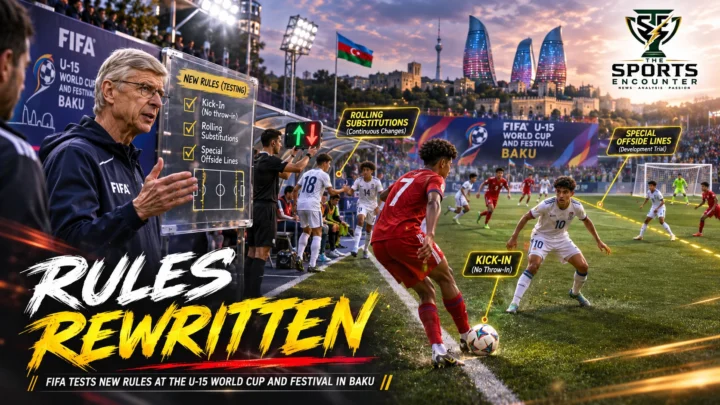
The development of younger players is also becoming an increasingly important topic in international soccer. TSE’s examination of FIFA’s experimental Under-15 tournament in Baku explored how the governing body is testing different methods of providing international competitive opportunities.
Unlike that experimental youth event, the Under-17 World Cup follows the conventional international tournament structure, with teams competing for the world championship.
Qatar vs Panama Opens the Hosts’ Campaign
Qatar begin their campaign against Panama on November 19 in Group A, with kickoff scheduled for 6:30 p.m. local time, equivalent to 8:30 p.m. Pakistan Standard Time.
The hosts also face Egypt and Greece during the group stage.
The opening fixture will provide an immediate test of Qatar’s ability to handle expectation and maintain defensive concentration under tournament pressure.
Qatar previously finished fourth at the 1991 Under-17 World Cup, its best result in the competition.
The current generation has an opportunity to build on that history, although qualification from a group containing three demanding opponents cannot be assumed.
The Aspire Zone will host the bulk of the tournament, using multiple pitches to accommodate the large match schedule.
That arrangement differs from the senior World Cup model, where matches are distributed among major stadiums. The youth competition is designed around a more concentrated playing and operational environment.
Key Opening Fixtures and Group-Stage Dates
The group stage begins on November 19 and continues through November 27. Each team plays three matches before the knockout qualification positions are settled.
| Date | Fixture or Event | Why It Matters |
|---|---|---|
| November 19 | Qatar vs Panama | Hosts begin their Group A campaign |
| November 19 | Korea Republic vs Uganda | Opening test for two Group B contenders |
| November 19 | Mozambique vs Denmark | Important early match in Argentina’s group |
| November 20 | Belgium vs Vietnam | Contrasting youth development systems meet |
| November 21 | Japan vs Colombia | Demanding Group L opener |
| November 22 | Korea Republic vs New Caledonia | Second group match for Korea Republic |
| November 24 | Japan vs Serbia | Potentially important qualification contest |
| November 25 | Korea Republic vs Ecuador | Final Group B match for Korea Republic |
| November 27 | Group stage concludes | Final Round of 32 lineup determined |
| December 13 | Championship final | New world champion crowned |
The full match-by-match schedule and updates are available through the official FIFA fixtures and results center. Kickoff times should be checked there before individual match previews are published.
Dominican Republic Replace the United States After Late Withdrawal
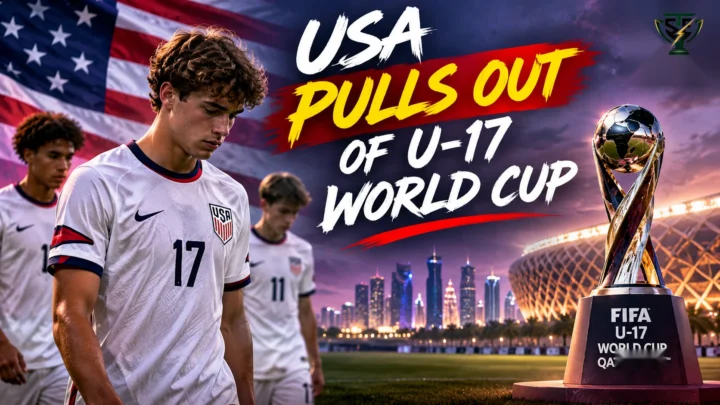
One of the tournament’s most significant pre-event developments occurred when U.S. Soccer withdrew its team because of security concerns relating to travel to Qatar.
The decision came shortly before the opening matches and initially raised questions about the composition of Group J.
FIFA subsequently confirmed that the Dominican Republic would take the vacant place after consultation with CONCACAF and the application of the relevant tournament regulations.
The Dominican Republic now join Montenegro, Chile and Algeria in Group J.
The selection preserves the competition’s planned 48-team structure and gives the Dominican Republic an opportunity to compete on the global stage.
For the United States, the withdrawal represents a substantial loss of competitive experience for a group of young players who had already earned qualification.
The Sports Encounter investigated the American withdrawal and its implications for the selected players before FIFA confirmed the replacement.
The distinction is now important. Group J no longer faces an unresolved vacancy, and the Dominican Republic should be treated as a confirmed participant rather than a potential replacement.
Young Players Who Could Make an Impact
One of the tournament’s primary attractions is the opportunity to observe players before they establish themselves at senior international level.
Brazil’s Eduardo Conceição is among the prospects identified by FIFA following his contributions during South American qualification.
Japan’s Maki Kitahara, Jamaica’s Jahmarie Nolan and Italy’s Diego Perillo are also among the young players highlighted ahead of the tournament.
These names represent early scouting interest rather than a definitive ranking of the competition’s strongest players.
At this age, the difference between academy performances and tournament consistency can be considerable.
A forward may arrive with an exceptional scoring record but struggle against unfamiliar defensive systems. A defender accustomed to dominating domestic youth competition may face a different challenge against faster or more physical international opponents.
Continue the FIFA U17 World Cup Story

That uncertainty is part of the tournament’s attraction.
The wider football world has also begun paying closer attention to the pressure placed on young prospects before they reach senior level. TSE addressed the expectations surrounding famous football families in its feature on Cristiano Ronaldo Jr. and the development challenges facing young players.
For the competitors in Qatar, performances should be assessed through tactical contribution, decision-making, consistency and development potential rather than goals or viral moments alone.
What the Expanded Format Means for Smaller Nations
The 48-team structure creates opportunities for countries that previously had fewer realistic chances of qualifying for a global youth tournament.
Fiji, New Caledonia, Cuba, Haiti and other developing soccer nations can gain international experience against teams from established football systems.
The benefits are competitive as well as developmental. Players encounter different defensive approaches, training standards and technical demands.
However, greater participation also creates questions about competitive balance.
Large differences in physical development, squad depth and technical experience can produce uneven matches, particularly when strong teams face opponents with limited international exposure.
For smaller nations, the most useful assessment may therefore extend beyond the final score. Defensive organization, attacking progression and the ability to remain competitive across successive matches provide meaningful measures of improvement.
These considerations are especially relevant in youth soccer, where individual players develop at different rates and a strong result does not necessarily translate directly into future senior international success.
The Sports Encounter has followed the wider international youth game, including the competitive challenges facing Morocco, Germany and other nations at the Under-17 Women’s World Cup. Although the men’s and women’s competitions are separate, both highlight the expanding international opportunities available to young players.
Can Qatar’s Hosting Model Sustain an Annual World Cup?
FIFA awarded Qatar the men’s Under-17 World Cup for five consecutive editions, from 2025 through 2029.
The decision accompanied the tournament’s expansion and transition to an annual event.
Qatar’s existing sporting infrastructure, accommodation capacity and experience staging international competitions were central considerations.
The concentrated Aspire Zone model also reduces the need for teams to travel between distant host cities during the group stage.
Nevertheless, running an expanded tournament annually creates logistical and sporting challenges.
National federations must prepare new generations of players every year, coordinate academy releases and manage the welfare of teenagers facing an intense international schedule.
Organizers must also maintain playing surfaces, training facilities, medical support and competition operations across more than 100 matches.
The latest security concerns surrounding the American withdrawal demonstrate that tournament delivery depends on more than the availability of stadiums.
FIFA and the participating associations must continue evaluating the practical requirements of staging international competitions involving minors.
The Teams Best Positioned to Challenge for the Trophy
Brazil, Spain, Italy, France and Argentina enter with established development systems and significant tournament expectations.
Italy can point to recent European championship success, while Brazil possess the history of a four-time winner.
Spain have the opportunity to claim a title that has repeatedly escaped them, and France remain a credible contender based on their competitive tradition at youth level.
Morocco, Mali, Senegal and Japan also deserve serious consideration, particularly if they carry strong qualifying performances into the opening group matches.
However, a fair assessment must distinguish organizational reputation from the evidence supplied by this particular generation.
The most convincing contender will be the team that combines attacking quality with defensive consistency, effective squad rotation and the ability to respond to unexpected setbacks.
A favorable group-stage performance can establish momentum, but the knockout rounds will demand repeated results against increasingly difficult opposition.
That is why early predictions should remain provisional rather than treating the most recognizable national teams as guaranteed finalists.
For readers following the FIFA U-17 World Cup, three developments will be especially revealing: whether the European champions maintain their form, whether Brazil and Argentina can turn attacking talent into consistent results, and whether an African or Asian challenger can disrupt the familiar title race.
The competition begins with 48 nations and no defending champion on the field. By December 13, one generation will have secured a world title of its own. The decisive evidence will come from how these young teams adapt, recover and perform when the margins become smallest.