Key Takeaways
- The incidents occurred in separate matches during the same round of the 2026-27 Segunda División season, officially known as LaLiga Hypermotion.
- Albacete were leading Sabadell 2-0 at the Estadio Carlos Belmonte when the first incident occurred in the closing minutes of the first half.
- Two days after the Albacete-Sabadell incident, another Segunda División fixture produced an even more devastating outcome.
- The events of October 31 and November 2 have left Spanish football confronting two profoundly different outcomes.
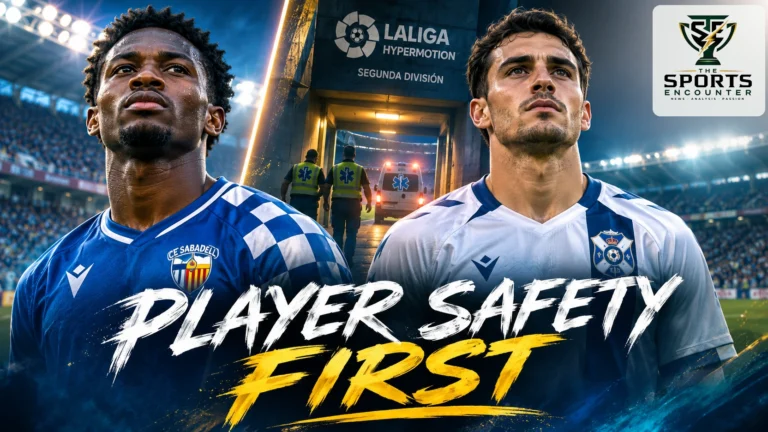
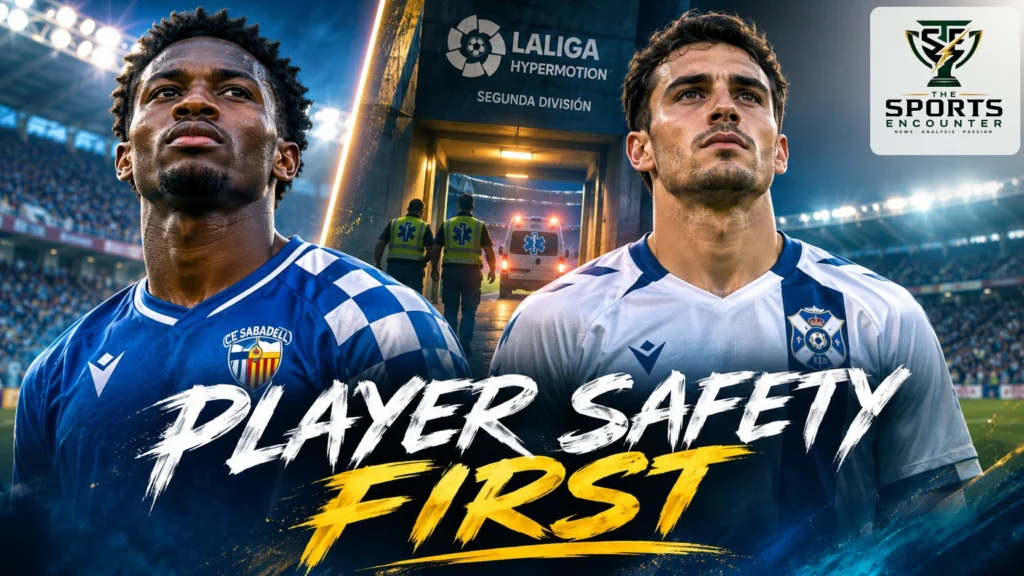
MADRID, Spain, November 4, 2026: Two serious on-field collisions within three days have brought player safety into sharp focus in Spain’s Segunda División, after Sabadell midfielder Quadri Liameed suffered a frightening head injury against Albacete on October 31 and Tenerife forward Jesús de Miguel died following a collision with FC Andorra goalkeeper Jesús Owono on November 2. Liameed was taken to a hospital and discharged later that evening after medical assessments, while De Miguel, 30, suffered cardiorespiratory arrest after a blow to his chest and died in hospital the following morning. Spanish police have opened an investigation into the circumstances of his death.
Both incidents resulted in straight red cards, but their medical outcomes and legal implications are fundamentally different. Albacete’s José Corpas was dismissed for a high challenge that struck Liameed’s head during a 2-1 victory, while Owono was sent off after colliding with De Miguel in stoppage time of a Tenerife-Andorra match abandoned at 2-2. The second incident has prompted mourning across Spanish football, a judicial investigation and questions about the protection available to players when challenges become dangerous. Neither the disciplinary decisions nor the investigation establish that the players responsible for the challenges intended to cause injury.
What Happened in the Two Segunda División Incidents?
The incidents occurred in separate matches during the same round of the 2026-27 Segunda División season, officially known as LaLiga Hypermotion.
Story at a glance
What Happened in the Two Segunda División Incidents?
The incidents occurred in separate matches during the same round of the 2026-27 Segunda División season, officially known as LaLiga Hypermotion.
José Corpas Sent Off After High Challenge Leaves Quadri Liameed Unconscious
Albacete were leading Sabadell 2-0 at the Estadio Carlos Belmonte when the first incident occurred in the closing minutes of the first half.
How Did Albacete Win 2-1 After Going Down to Ten Men?
The match continued after Liameed was removed from the field.
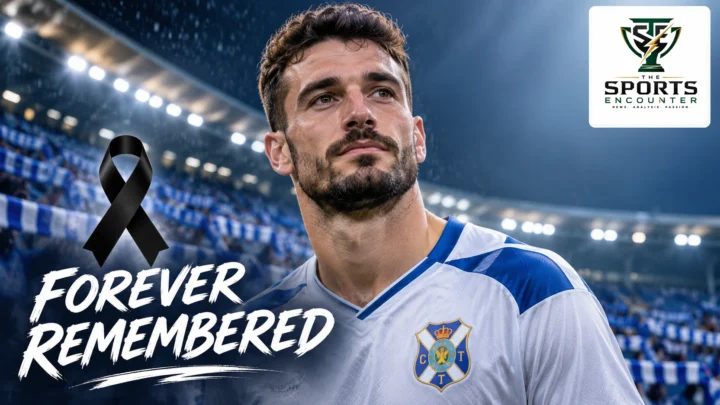
Jesús de Miguel’s Death Leaves Tenerife and Spanish Football Mourning
Two days after the Albacete-Sabadell incident, another Segunda División fixture produced an even more devastating outcome.
Why Are Spanish Police Investigating Jesús de Miguel’s Death?
Spanish police opened an investigation following De Miguel’s death, with the matter placed under judicial supervision.
The first involved a midfielder struck in the head by an opponent’s raised foot. The second involved a goalkeeper rushing out to challenge an attacker and making forceful contact that preceded a fatal medical emergency.
Both players received immediate medical attention, and both matches were stopped. But only the Tenerife-Andorra fixture was abandoned.
| Detail | Albacete vs Sabadell | Tenerife vs FC Andorra |
|---|---|---|
| Date | October 31, 2026 | November 2, 2026 |
| Injured player | Quadri Liameed | Jesús de Miguel |
| Opponent involved | José Corpas | Jesús Owono |
| Nature of collision | Raised foot strikes head during challenge for ball | Goalkeeper collides with attacker, with reported impact to chest |
| Match timing | 42nd minute, recorded by LaLiga | Second-half stoppage time |
| Referee’s decision | Straight red card to Corpas | Straight red card to Owono |
| Match status | Completed, Albacete won 2-1 | Abandoned at 2-2 |
| Medical outcome | Hospital assessment and discharge | Cardiorespiratory arrest and death on November 3 |
| Investigation | No equivalent criminal investigation independently established | Police and judicial proceedings confirmed |
These distinctions matter. Two serious collisions occurring close together may raise legitimate questions about player welfare, but they do not establish that the matches involved the same type of injury, the same failures or a wider statistically demonstrated increase in dangerous play.
José Corpas Sent Off After High Challenge Leaves Quadri Liameed Unconscious
Albacete were leading Sabadell 2-0 at the Estadio Carlos Belmonte when the first incident occurred in the closing minutes of the first half.
Liameed moved toward a contested ball outside his team’s penalty area. Corpas attempted to reach the ball with a raised foot and struck the midfielder in the head.
The impact caused Liameed to fall immediately. Spanish reports said he briefly lost consciousness before regaining it.
Players called for assistance, and medical personnel from the two clubs attended to the injured midfielder.
The match was interrupted while Liameed was immobilized and prepared for transportation.
Referee José Corpas’ challenge was punished with a straight red card. LaLiga’s match record places the dismissal in the 42nd minute.
The incident demonstrated why challenges involving a raised boot at head height carry potentially severe consequences, even when the challenging player is attempting to reach the ball.
The central issue is the danger created by the action, not simply whether the player intended to make contact with an opponent.
Why Did Corpas Receive a Straight Red Card?
Under football’s Laws of the Game, challenges that endanger an opponent’s safety or involve excessive force can constitute serious foul play.
Referees do not need to establish that a player intended to injure somebody before issuing a red card for a dangerous challenge.
Corpas’ foot made contact with Liameed’s head at considerable height. The referee’s decision reflected the dangerous nature of the challenge.
The incident also illustrates the difference between an ordinary foul and an action serious enough to warrant dismissal.
The Sports Encounter’s guide to fouls, tackles and disciplinary decisions in football explains the basic distinctions between careless, reckless and excessively forceful challenges.
Liameed Was Discharged From Hospital, but What Does That Mean?
Liameed was transported to Hospital Quirón Santa Cristina for assessment after the club activated its concussion-related response procedures.
Sabadell subsequently reported that he was conscious, medical tests had produced reassuring initial findings and he had been discharged.
That was encouraging news after the distressing scenes at the stadium.
However, hospital discharge must not be confused with automatic clearance to resume training or competitive football.
It is possible for symptoms associated with head injuries to emerge or change after an initial examination.
Any return-to-play decision requires an appropriate clinical assessment rather than an assumption based on a player’s departure from hospital.
🇪🇸 WTF IS GOING ON IN SPAIN’S SECOND DIVISION?Just days after the fatal collision involving Tenerife’s Jesús de Miguel, another brutal challenge left a player unconscious.In Albacete vs. Sabadell, José Corpas went for a high volley and caught Quadri Liameed directly in the head.Liameed went down unconscious, Corpas was shown a straight red, and the Sabadell midfielder had to be taken away by ambulance.Dude 💀Writer: Sol https://t.co/O5jLllpGCv
— Mario Nawfal (@MarioNawfal) November 3, 2026
There is no independently verified post-discharge return date for Liameed in the information reviewed for this article.
How Did Albacete Win 2-1 After Going Down to Ten Men?
The match continued after Liameed was removed from the field.
Albacete had established a two-goal advantage before the incident, including an own goal by Sabadell goalkeeper Diego Fuoli in the 38th minute.
Corpas’ dismissal left Albacete with ten players for the remainder of the contest.
Sabadell attempted to recover and reduced the deficit through Yanis Rahmani, but the home team protected its lead to secure a 2-1 victory.
Nevertheless, the sporting outcome became secondary to concern over Liameed’s condition.
| Match Event | Time or Stage | Effect |
|---|---|---|
| Albacete establish early advantage | First half | Home team take control of scoreline |
| Diego Fuoli own goal | 38′ | Albacete lead 2-0 |
| Corpas challenges Liameed | 42′ | Play stopped for serious injury |
| Corpas sent off | 42′ | Albacete reduced to ten players |
| Liameed substituted | First-half stoppage time | Pere Pons replaces injured midfielder |
| Sabadell score | Later in match | Rahmani reduces deficit |
| Final result | Full time | Albacete 2-1 Sabadell |
The official LaLiga match record confirms the score, dismissal, injury interruption and substitution.
Jesús de Miguel’s Death Leaves Tenerife and Spanish Football Mourning
Two days after the Albacete-Sabadell incident, another Segunda División fixture produced an even more devastating outcome.
Tenerife were playing FC Andorra at the Heliodoro Rodríguez López stadium on November 2.
The match had reached second-half stoppage time with the teams level at 2-2 when forward Jesús de Miguel moved toward an attacking opportunity.
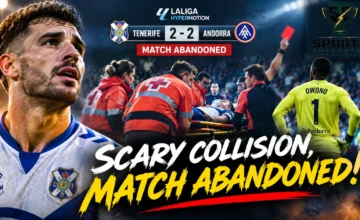
Andorra goalkeeper Jesús Owono came out to challenge for the ball and collided with the Tenerife attacker.
Reports described forceful contact to De Miguel’s chest.
The forward collapsed and suffered cardiorespiratory arrest.
Emergency personnel attempted resuscitation, and he was transported to Hospital Nuestra Señora de La Candelaria.
He was treated in intensive care but died on the morning of November 3.
He was 30 years old.
The match was abandoned, and the result remained recorded as 2-2 at the time of suspension.
Owono was shown a straight red card for the challenge.
Tenerife’s players, staff and supporters were left confronting the loss of a teammate whose final appearance came during an ordinary league match.
The Sports Encounter’s original report on the abandoned Tenerife-Andorra match and De Miguel’s hospitalization documents the events before his death was confirmed.
Our subsequent report on the death of Jesús de Miguel records the devastating outcome and the initial response from Spanish football.
Why Are Spanish Police Investigating Jesús de Miguel’s Death?
Spanish police opened an investigation following De Miguel’s death, with the matter placed under judicial supervision.
Investigators are examining the circumstances of the collision and the events that followed.
However, the existence of an investigation must not be presented as proof that Owono committed a criminal offense.
Judicial authorities in the Canary Islands have explained that deaths arising from non-natural causes ordinarily lead to official proceedings.
This process can apply even when the circumstances initially appear accidental.
Prosecutors have indicated that criminal proceedings may be difficult to sustain because the collision occurred during play.
They nevertheless intend to consider the referee’s report and relevant disciplinary findings before drawing conclusions.
There has been no verified judicial finding that Owono deliberately injured De Miguel.
Nor should a red card be treated as equivalent to a criminal conviction.
What Is Confirmed About the Police Investigation?
| Question | Verified Position | What Remains Unresolved |
|---|---|---|
| Was an investigation opened? | Yes, by Spain’s National Police | Final investigative findings |
| Is the case subject to judicial oversight? | Yes | Any final judicial decision |
| Was Owono sent off? | Yes | Separate disciplinary consequences |
| Did De Miguel suffer cardiac arrest? | Reported and confirmed by contemporary accounts | Complete medical findings concerning the underlying fatal injury |
| Was deliberate violence established? | No | Investigators must assess the evidence |
| Does an investigation imply guilt? | No | Criminal responsibility, if any, remains undetermined |
| Was the match completed? | No, abandoned at 2-2 | Any later competition ruling |
The principle is especially important when an incident ends in a player’s death.
Public anger and grief are understandable, but an accurate report must distinguish the sporting incident, medical outcome, disciplinary decision and criminal investigation.
The Sports Encounter has previously examined the growing scrutiny of football refereeing decisions, an issue that becomes particularly sensitive when officials must respond to serious physical contact.
Two Straight Red Cards, but Were the Challenges Legally and Technically the Same?
No. The incidents involved different actions, and their medical consequences were not the same.
Corpas raised his foot in an attempted challenge and struck an opposing midfielder’s head.
Owono rushed out of his goal and collided with an attacker during an attempted intervention.
The referee dismissed both players, but that does not establish identical misconduct under the Laws of the Game.
A red card can be shown for several different offenses, including serious foul play, violent conduct or denying an obvious goal-scoring opportunity under applicable conditions.
The precise disciplinary classification must be established from the referee’s report and the relevant competition authority rather than inferred solely from the color of the card.
What Do Football’s Laws Say About Dangerous Challenges?
Football’s governing rules require referees to sanction challenges that endanger the safety of an opponent or involve excessive force.
An attempt to play the ball does not automatically make a dangerous challenge permissible.
At the same time, an unfortunate injury does not automatically mean a player committed a deliberate act of violence.
These principles protect both player safety and fairness in disciplinary decisions.
The Sports Encounter’s earlier analysis of disciplinary controversy surrounding Vinícius Júnior illustrates the wider importance of consistent officiating and clearly explained decisions.
Similarly, our coverage of Neymar’s disciplinary case examines how an on-field decision can lead to subsequent sanctions.
Neither case is medically comparable to the two Segunda División incidents, but both demonstrate why disciplinary classifications and later rulings require careful reporting.
What Is Football’s Concussion Protocol After a Head Injury?
Liameed’s injury raises an important question about how football handles suspected concussions.
The International Football Association Board allows competitions to introduce additional permanent concussion substitutions.
Under the approved protocol, a player with an actual or suspected concussion can be replaced without that change counting toward the team’s ordinary substitution allowance.
The affected player must not return to the match after the concussion substitution is used.
The protocol also gives the opposing team an option to make an additional substitution to maintain competitive balance.
However, competitions must adopt and implement the protocol. It should not be assumed that every match automatically operates under the same arrangements.
There is insufficient independently confirmed information here to state which specific substitution designation Sabadell used after Liameed’s injury.
What is verified is that he was removed from the match, received emergency assessment and was transported to hospital.
Player-Safety Procedures and Their Different Purposes
| Measure | Purpose | Important Limitation |
|---|---|---|
| Referee stops play | Allows assessment of serious injury | Does not diagnose injury |
| On-field medical assessment | Identifies immediate danger and need for treatment | May not establish a complete diagnosis |
| Additional permanent concussion substitution | Permits removal of player with actual or suspected concussion | Requires competition implementation |
| Ambulance transfer | Provides access to advanced medical care | Does not by itself establish injury severity or prognosis |
| Hospital discharge | Indicates hospital treatment or observation has ended | Does not automatically clear an athlete for competitive play |
| Medical return-to-play assessment | Determines suitability for resuming sport | Must be individualized |
The official IFAB concussion-substitution protocol explains these procedures and their relationship to the Laws of the Game.
Head-injury concerns extend beyond football. The Sports Encounter’s report on Devon Conway’s concussion examines the impact of suspected head injury in international cricket, where separate sport-specific medical procedures apply.
Why De Miguel’s Cardiac Arrest Must Not Be Confused With a Concussion
The fatal Tenerife incident involved a reported blow to De Miguel’s chest followed by cardiorespiratory arrest.
That is medically distinct from a player being struck in the head and evaluated for a possible concussion.
Cardiorespiratory arrest describes a life-threatening failure of normal circulation and breathing, requiring immediate emergency intervention.
It does not independently establish the precise injury or physiological mechanism that caused the arrest.
The full medical findings concerning De Miguel’s death have not been publicly established in the reporting reviewed here.
It would therefore be inappropriate to diagnose a specific traumatic cardiac condition, make claims about an underlying heart disorder or suggest that a particular treatment would certainly have changed the outcome.
The difference between a known emergency and an unconfirmed underlying diagnosis is essential to responsible sports-health reporting.
The Sports Encounter previously explored the medical implications of Jenny Simpson’s rare heart-condition diagnosis. That is a separate case and should not be used to infer anything about De Miguel’s medical history.
What Do the Two Incidents Reveal About Emergency Medical Preparedness?
Both matches illustrate the importance of trained medical teams being available immediately when players suffer serious injuries.
In Albacete, medical personnel responded to Liameed’s head injury and arranged hospital transportation.
In Tenerife, emergency care began after De Miguel’s collapse and continued during his transfer to hospital.
Those actions confirm that medical assistance was provided. They do not establish that every possible response was optimal or that a different intervention would have prevented De Miguel’s death.
Such conclusions require medical records and a professional assessment of the emergency response.
Player welfare also depends on procedures established before an incident occurs, including clear lines of communication between officials, medical teams and emergency services.
The Sports Encounter’s feature on international sports medical assistance discusses the broader operational challenges involved in coordinating urgent medical support at sporting events.
The relevance here is the need for preparation and coordination, not an allegation that either Segunda División medical team was unprepared.
Can Dangerous Football Collisions Be Eliminated?
Physical challenges are an unavoidable part of competitive football.
Players run at speed, contest aerial balls and make split-second decisions in crowded areas.
Not every collision is a foul, and not every serious injury results from prohibited conduct.
Continue the La Liga Story
 La LigaJesús de Miguel Dies at 30 After Tenerife-Andorra Collision, Leaving Spanish Football in Mourning
 La LigaReal Madrid Turn El Clásico Momentum Into a 36-Minute Rout as Diomande Fuels the Title Chase
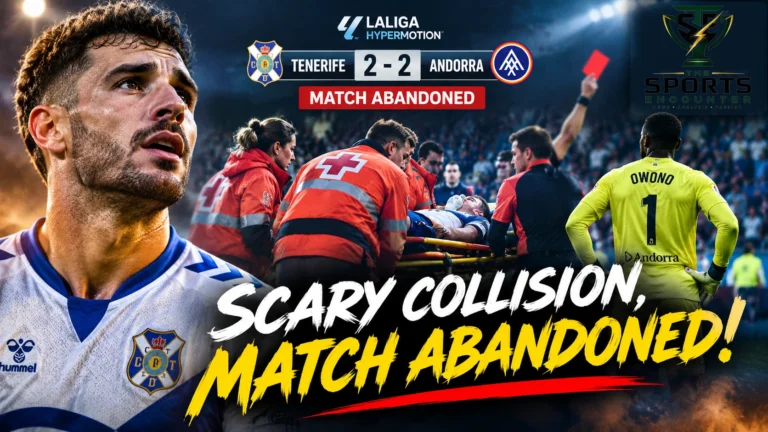 SoccerTenerife Star Jesús de Miguel in Intensive Care After Terrifying Collision Forces Andorra Match to Be Abandoned at 2-2
Nevertheless, football’s rules are designed to discourage actions that create unacceptable risks.
Consistent refereeing can help deter dangerous challenges. Proper medical assessment can protect players after an injury. Education can improve awareness of when a player should not continue.
No single measure guarantees that a serious injury will never occur.
That distinction is also visible in other sports. Our reporting on the death of cyclist Finlay Tarling examined a different sporting tragedy in which safety questions arose after a fatal incident.
Similarly, our report on the death of New York City Marathon runner Rachel Apa emphasizes the need to separate established facts from incomplete medical findings.
Neither incident is directly comparable to the collisions in Spain, but both reinforce the importance of careful evidence-based reporting when sport and serious medical emergencies intersect.
What Happens Next for Sabadell, Tenerife and Spanish Football?
For Sabadell, the immediate priority is ensuring that Quadri Liameed receives appropriate follow-up care before any return to competition.
His hospital discharge on October 31 was an encouraging development, but his future availability requires separate confirmation.
For Tenerife, attention is focused on mourning De Miguel and supporting his family, teammates and club staff.
The club has announced a period of mourning and requested changes to its immediate schedule.
Spanish police and judicial authorities will continue reviewing the circumstances of his death. Any subsequent sporting sanctions or competition rulings should be reported when formally confirmed.
The abandoned match against FC Andorra also requires a competition decision concerning its sporting status.
LaLiga officially records the fixture as abandoned at 2-2, rather than a completed draw.
The league’s official Tenerife-Andorra match center confirms the abandoned status, scoreline and Owono’s red card.
Key Outstanding Questions
| Question | Confirmed Position | Information Still Needed |
|---|---|---|
| When can Liameed return? | Discharged after hospital assessment | Medical and club clearance |
| Will Corpas receive additional suspension? | Sent off against Sabadell | Final competition disciplinary ruling |
| What caused De Miguel’s fatal emergency? | Collision followed by cardiorespiratory arrest | Complete official medical findings |
| Will Owono face further sporting sanctions? | Sent off against Tenerife | Disciplinary decision |
| Does the investigation establish criminal liability? | No; investigation confirmed | Police, prosecution and judicial findings |
| What happens to Tenerife-Andorra? | Abandoned at 2-2 | Formal competition ruling |
| Will additional safety measures be introduced? | No specific new Segunda División measure independently confirmed | Any announcement from football authorities |
The Most Important Lesson Is to Protect Players Without Prejudging Individuals
The events of October 31 and November 2 have left Spanish football confronting two profoundly different outcomes.
Quadri Liameed survived a frightening head injury and was discharged from hospital.
Jesús de Miguel died after a collision that caused a life-threatening medical emergency.
Both incidents led to red cards and immediate medical intervention.
But it would be inaccurate to suggest that they were identical collisions, that they prove a league-wide safety failure or that the players involved deliberately caused harm.
Those conclusions are not supported by the evidence currently available.
What the incidents demonstrate is the potentially devastating consequence of a split-second collision and the importance of rules, medical preparedness and consistent follow-up.
For Tenerife, the loss of De Miguel is far greater than a question of disciplinary procedure or a suspended fixture.
For Sabadell, Liameed’s recovery must remain the priority.
For Spanish football, the challenge is to respond with compassion, reliable evidence and careful scrutiny, without allowing grief or anger to become a substitute for established facts.
Segunda División Player-Safety Incidents: Frequently Asked Questions
What happened to Quadri Liameed against Albacete?
Liameed was struck in the head by José Corpas’ raised foot during a challenge for the ball on October 31, 2026. He briefly lost consciousness, received medical attention and was transported to hospital.
Was Quadri Liameed discharged from hospital?
Yes. Sabadell reported that he was discharged after medical assessments that evening. His discharge did not automatically confirm that he was ready to play again.
Why was José Corpas sent off?
Corpas received a straight red card after his raised foot struck Liameed’s head. LaLiga records the dismissal in the 42nd minute.
What was the result of Albacete vs Sabadell?
Albacete won 2-1 despite finishing with ten players following Corpas’ dismissal.
How did Jesús de Miguel die?
De Miguel suffered cardiorespiratory arrest following a collision with FC Andorra goalkeeper Jesús Owono on November 2. He died in hospital on November 3. The complete underlying medical findings have not been publicly established in the reviewed reporting.
Was Jesús de Miguel struck in the head?
The principal reports describe forceful contact to his chest. It would therefore be inaccurate to classify his death as a confirmed head-injury case.
Why are Spanish police investigating De Miguel’s death?
Spanish authorities opened an investigation because his death occurred under non-natural circumstances. Such investigations can be required even when a death may have resulted from an accident.
Has Jesús Owono been found criminally responsible?
No criminal responsibility has been established. Owono was sent off during the match, but the sporting dismissal and the judicial investigation are separate matters.
What happened to Tenerife vs FC Andorra?
The match was abandoned in second-half stoppage time with the score at 2-2. Any subsequent ruling on the fixture requires official competition confirmation.
What is a concussion substitution?
It is an additional permanent substitution available in competitions implementing IFAB’s approved protocol. A player replaced because of an actual or suspected concussion cannot return to the match.
Can a footballer be sent off for an unintentional dangerous challenge?
Yes. A challenge that endangers an opponent or uses excessive force can justify dismissal without evidence that the player intended to cause injury.
Have Spanish football authorities announced new safety rules following these incidents?
No specific new Segunda División safety regulation has been independently confirmed in the information reviewed for this report. Future announcements should be checked against official league and federation communications.