Key Takeaways
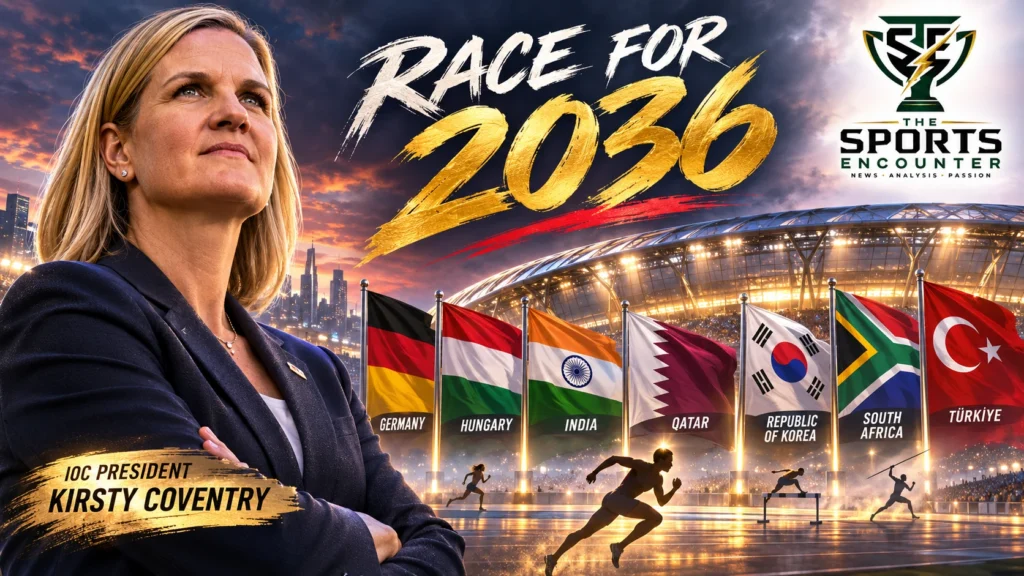
- The IOC has identified seven interested parties currently participating in Continuous Dialogue for the 2036 Summer Games.
- The IOC intends to elect the 2036 Summer Olympic host at an IOC Session in mid-2029.
- The 2036 selection is the first Summer Olympics host election to use the revised process endorsed under the IOC’s Fit for the Future reforms.
- Germany has hosted the Summer Olympics twice, in Berlin in 1936 and Munich in 1972.
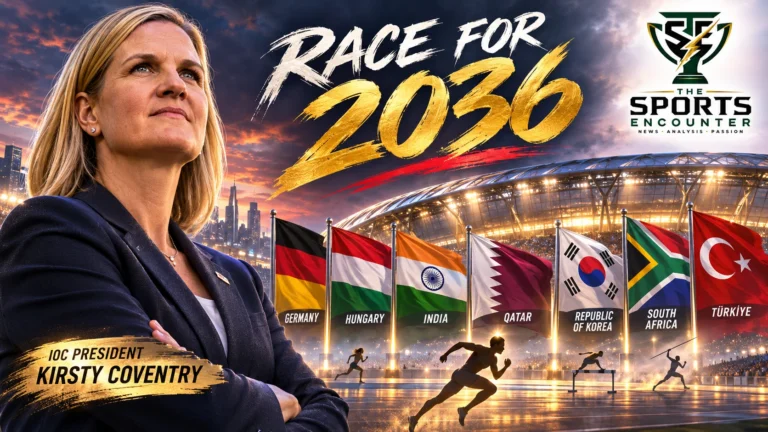
LAUSANNE, Switzerland, November 4, 2026: Seven nations have entered the International Olympic Committee’s formal dialogue process for the 2036 Summer Olympics, but the race to stage the Games will be decided by more than national ambition or stadium capacity. Germany, Hungary, India, Qatar, the Republic of Korea, South Africa and Türkiye are the seven interested parties recognized for the 2036 edition under the IOC’s new host-selection framework. The governing body will assess their projects through independent feasibility studies, public opinion research and technical evaluation before selecting countries for deeper discussions in March 2027. The final host election is scheduled for mid-2029.
The selection process marks an important change in how the Olympic movement evaluates potential hosts. IOC President Kirsty Coventry wants the experience of athletes to guide planning decisions, while new financial guarantees, restrictions on international promotion and an additional evaluation stage aim to reduce uncertainty for organizers and host communities. The seven interested nations represent three continents, contrasting levels of Olympic hosting experience and different infrastructure challenges. None has secured the Games, and the IOC has not published an official ranking of their prospects. The central question is which project can demonstrate that staging the Olympics would leave lasting benefits without imposing unjustified costs or operational risks.
Which Seven Countries Are Competing to Host the 2036 Olympics?
The IOC has identified seven interested parties currently participating in Continuous Dialogue for the 2036 Summer Games.
Story at a glance
Which Seven Countries Are Competing to Host the 2036 Olympics?
The IOC has identified seven interested parties currently participating in Continuous Dialogue for the 2036 Summer Games.
When Will the 2036 Olympic Host Be Announced?
The IOC intends to elect the 2036 Summer Olympic host at an IOC Session in mid-2029.
How Does the IOC’s New Four-Stage Olympic Host Selection Process Work?
The 2036 selection is the first Summer Olympics host election to use the revised process endorsed under the IOC’s Fit for the Future reforms.
Why Kirsty Coventry Wants Athletes at the Center of Every 2036 Olympic Proposal
IOC President Kirsty Coventry has emphasized that athletes must remain the central consideration in host planning.
Germany’s 2036 Olympic Prospects: Experience Is an Advantage, but Public Support Matters
Germany has hosted the Summer Olympics twice, in Berlin in 1936 and Munich in 1972.
The distinction between an interested country and an officially selected candidate is important.
These countries have expressed interest and entered discussions with the IOC, but they have not all advanced into Strategic Dialogue or received the designation of Preferred Host.
The present process also allows hosting proposals involving several cities or regions rather than requiring every project to fit a conventional single-city model.
| Country | Previous Summer Olympics Hosting | Potential Advantage | Major Question |
|---|---|---|---|
| Germany | Berlin 1936; Munich 1972 | Established sports infrastructure and major-event experience | Which hosting configuration can demonstrate sufficient public and political support? |
| Hungary | Never | Budapest’s international sporting-event experience | Can the project establish a financially credible, broadly supported Olympic plan? |
| India | Never | Large domestic audience, growing sports investment and potential legacy opportunities | Can the proposed venues, transport and athlete services meet Olympic requirements? |
| Qatar | Never | Experience delivering major international competitions | How will the project address summer climate conditions and athlete welfare? |
| Republic of Korea | Seoul 1988 | Previous Summer Games experience and developed sporting infrastructure | Can the proposed project demonstrate a strong legacy and competitive financial model? |
| South Africa | Never | Potential to bring the Summer Games to Africa for the first time | Can financing, infrastructure and delivery commitments be demonstrated? |
| Türkiye | Never | Istanbul’s international-event experience and established sporting ambitions | Can the proposal establish financial certainty and a practical venue plan? |
The table identifies possible strengths and questions requiring evaluation. It is not an IOC assessment, probability forecast or ranking of the seven projects.
The IOC’s official October 2026 announcement confirms all seven interested countries and establishes the next selection milestones.
When Will the 2036 Olympic Host Be Announced?
The IOC intends to elect the 2036 Summer Olympic host at an IOC Session in mid-2029.
That places the decision approximately seven years before the Games.
The exact date and location of the election have not yet been confirmed.
The immediate milestone is November 2026, when the seven interested parties have been invited to deliver virtual presentations to the Future Host Commission.
Technical feasibility assessments are expected by March 2027, followed by an Executive Board decision identifying which projects can advance into Strategic Dialogue.
2036 Olympics Host Selection Timeline: 2026 to 2029
| Date or Period | Selection Milestone | What It Means |
|---|---|---|
| June 24, 2026 | IOC endorses revised selection framework | Strategic Dialogue becomes part of the process |
| October 6, 2026 | 2036 Host Selection Handbook published | Timetable and application requirements made public |
| October 31, 2026 | Deadline for additional interested parties | No new interested parties considered for the 2036 edition after this date |
| November 2026 | Virtual presentations to Future Host Commission | Interested parties present initial project concepts |
| By March 2027 | IOC feasibility assessments | Technical evaluation supports the shortlist decision |
| March 2027 | Strategic Dialogue begins | Selected projects enter deeper evaluation |
| 2027-2028 | Questionnaires, guarantees and site visits | IOC examines delivery, finance, venues and legacy |
| December 2028 | Targeted Dialogue begins | Preferred Hosts enter final negotiations |
| First half of 2029 | Final submissions and guarantees | IOC receives detailed project documentation |
| Mid-2029 | IOC Session election | IOC Members choose the host |
The schedule establishes an orderly sequence, but it does not mean every country will participate in every stage.
The first major reduction in the field is expected in March 2027.
Projects not selected for Strategic Dialogue will not continue along the same 2036 pathway.
The IOC has also indicated that certain National Olympic Committees remain engaged in noncommittal discussions about editions beyond 2036. Those discussions should not be confused with the seven countries currently identified for this particular election.
How Does the IOC’s New Four-Stage Olympic Host Selection Process Work?
The 2036 selection is the first Summer Olympics host election to use the revised process endorsed under the IOC’s Fit for the Future reforms.
The framework consists of four stages: Continuous Dialogue, Strategic Dialogue, Targeted Dialogue and the host election.
Each stage involves different requirements and a greater level of commitment from prospective organizers.
| Stage | Participants | Principal Requirements | Decision or Outcome |
|---|---|---|---|
| 1. Continuous Dialogue | Interested Parties | Initial project discussions, feasibility work and technical evaluation | Executive Board selects projects for Strategic Dialogue |
| 2. Strategic Dialogue | Shortlisted Interested Parties | Initial Future Host Questionnaire, core guarantees, technical support and site visits | Executive Board identifies Preferred Hosts |
| 3. Targeted Dialogue | Preferred Hosts | Final questionnaire, full guarantees, refined venue and delivery plans | Executive Board recommends projects for election |
| 4. Host Election | IOC Members and approved Preferred Hosts | Presentations, evaluation reports and voting under IOC rules | 2036 host selected |
The IOC’s explanation of how Olympic hosts are selected confirms the responsibilities and progression through these four stages.
Why Was Strategic Dialogue Added?
The new Strategic Dialogue stage is designed to provide a more substantial evaluation period before the IOC reaches the final selection phase.
During this period, potential hosts can refine their plans using technical guidance from the IOC while developing the financial and legal commitments necessary to stage the Games.
The Future Host Commission will examine the projects and carry out visits to the proposed hosting regions.
That creates an opportunity to identify potential problems before the final election.
For a country proposing a major new transport connection, for example, the IOC can assess whether that infrastructure is sufficiently advanced, funded and realistic.
For a project relying on existing facilities, the assessment can examine whether those venues meet the requirements of international federations and the needs of athletes.
The reform does not eliminate hosting risk, but it gives the IOC a more structured opportunity to challenge assumptions before choosing the final host.
Why Kirsty Coventry Wants Athletes at the Center of Every 2036 Olympic Proposal
IOC President Kirsty Coventry has emphasized that athletes must remain the central consideration in host planning.
Coventry competed at five Olympic Games across four continents before becoming the first woman and first African to lead the IOC.
Her experience informs a straightforward principle: the sporting environment should be designed around the competitors rather than requiring them to adapt unnecessarily to decisions driven by political or commercial considerations.
In the IOC’s announcement, Coventry stressed that athletes must be central to the project and that their experience should guide every future host.
That commitment has practical implications.
An Olympic Village located far from training venues can increase travel time and complicate athletes’ recovery schedules.
Inadequate heat-management arrangements can create avoidable welfare risks.
Poorly coordinated transport, competition schedules and accommodation can place additional pressure on athletes who have prepared for years to compete.
The IOC’s new evaluation approach recognizes that impressive architecture is not enough.
The performance environment matters just as much.
What Should an Athlete-First Olympic Bid Demonstrate?
| Evaluation Area | Evidence a Credible Project Should Provide | Potential Athlete Impact |
|---|---|---|
| Olympic Village | Accommodation capacity, accessibility, services and proximity to venues | Rest, recovery and daily routine |
| Transport | Reliable travel plans and realistic journey times | Reduced fatigue and schedule uncertainty |
| Competition venues | Federation-compliant facilities and operational readiness | Fair and safe competition conditions |
| Climate resilience | Heat, weather and environmental risk management | Athlete safety and performance |
| Training facilities | Suitable locations, equipment and access arrangements | Consistent preparation |
| Medical services | Emergency response, sports medicine and rehabilitation arrangements | Health protection |
| Accessibility | Integrated planning for Olympic and Paralympic participants | Equitable access and operational quality |
| Scheduling | Competition times coordinated with environmental conditions and recovery needs | More predictable preparation |
These are editorially proposed indicators for assessing athlete experience. They should not be mistaken for an official IOC scoring sheet.
They reflect the practical meaning of Coventry’s athlete-first position.
The Sports Encounter recently examined a comparable operational challenge in its analysis of a proposed Lake Placid-New York City Winter Olympics project.
That exploratory concept raises questions about the substantial distance between competition locations and how travel could affect athletes and event delivery.
The 2042 project is separate from the 2036 Summer Olympics process, but the logistical lesson is relevant to both.
Germany’s 2036 Olympic Prospects: Experience Is an Advantage, but Public Support Matters
Germany has hosted the Summer Olympics twice, in Berlin in 1936 and Munich in 1972.
It therefore possesses historical Olympic experience that several other interested countries cannot claim.
Germany also has major stadiums, sporting venues, transportation infrastructure and extensive experience organizing international competitions.
Those assets could support a proposal emphasizing existing facilities rather than entirely new construction.
However, experience alone does not guarantee public acceptance.
German Olympic ambitions have previously encountered resistance, including referendums that disrupted earlier hosting plans.
A credible 2036 project will therefore need to demonstrate not only technical readiness but also political continuity, transparent financing and genuine public support.
The IOC’s evaluation of opinion polling and local backing makes those questions particularly important.
No official IOC assessment has yet established Germany as the frontrunner.
Can India Win the Right to Host Its First Olympic Games in 2036?
India has never hosted the Summer Olympics.
Its interest in 2036 reflects wider ambitions to expand the country’s international sporting profile, modernize infrastructure and create opportunities for future athletes.
India has experience staging major events, including the 2010 Commonwealth Games in New Delhi and the 2023 Cricket World Cup.
However, the Olympic Games involve a much broader range of sports, far more complex athlete accommodation requirements and a longer delivery schedule.
For India, the key questions concern venue readiness, transport networks, accommodation, financing and the practical legacy of any new facilities.
Its scale and potential audience represent commercial advantages, but audience size is not an official substitute for a technically credible bid.
India’s involvement in future Olympic competition is already becoming more significant through the return of cricket at Los Angeles 2028.
The Sports Encounter’s analysis of the revised LA28 Olympic cricket qualification schedule examines the qualification pathways and the importance of rankings before the 2028 Games.
That tournament is separate from India’s 2036 hosting interest, but it highlights the interaction between Olympic participation, national sporting ambition and long-term athlete development.
Qatar’s 2036 Olympics Interest: Can Major-Event Experience Overcome the Climate Question?
Qatar has become one of the world’s most recognizable hosts of major international sporting events.
Its experience includes the 2022 FIFA World Cup and other large-scale competitions.
Doha therefore offers an established record of event management and significant investment in sporting facilities.
However, a Summer Olympics proposal would face demanding environmental questions.
Heat, humidity, competition scheduling and the outdoor performance environment must all be addressed through credible technical planning.
The IOC will need evidence that athlete welfare can be protected without compromising competition quality or creating unrealistic operational demands.
Qatar’s previous football hosting experience demonstrates major-event capability, but staging a football tournament and staging the Summer Olympics are different logistical challenges.
The IOC has not publicly determined that Qatar’s climate-management proposals satisfy every requirement for 2036.
South Africa’s Olympic Ambition Could Be Historic for an Entire Continent
No African country has hosted the Summer Olympic Games.
South Africa therefore represents a potentially historic opportunity for the Olympic movement.
The country staged the 2010 FIFA World Cup and possesses experience organizing international sporting competitions.
However, hosting the Olympics would require a much broader operational framework than any one football tournament.
Financing, transport, venue distribution, athlete accommodation and long-term maintenance obligations would all require detailed assessment.
Public support is equally important.
An Olympic proposal must demonstrate that the benefits to residents justify the commitments required from government and other stakeholders.
The symbolic importance of bringing the Games to Africa could strengthen the project’s broader appeal, but it should not be treated as proof of technical readiness.
The IOC has not published an official conclusion that South Africa holds an advantage over the other interested parties.
Could the Republic of Korea Bring the Summer Olympics Back After Seoul 1988?
The Republic of Korea has previous experience hosting both major summer and winter sporting events.
Seoul hosted the 1988 Summer Olympics, while PyeongChang staged the 2018 Winter Games.
That gives Korea a valuable record of organizing international multi-sport competitions.
Existing sporting venues and transport systems may offer advantages when constructing a financially and environmentally sustainable proposal.
However, the IOC will assess the actual 2036 project rather than award points solely for historical achievements.
The country must still establish the suitability of its proposed venues, funding strategy, athlete services and local support.
The broader significance of hosting a large multi-sport competition is also evident in Japan’s recent experience.
The Sports Encounter’s preview of the 2026 Aichi-Nagoya Asian Games examined the requirements of staging 43 sports and 469 medal events across a major continental competition.
The Asian Games and Olympics have different organizational requirements, but the scale of venue planning, athlete services and event logistics provides useful context.
Hungary and Türkiye: Can Budapest or Istanbul Finally Secure the Olympics?
Hungary and Türkiye have longstanding ambitions connected to the Olympic movement.
Budapest has previously pursued Summer Olympic hosting opportunities, including a campaign for the 2024 Games that was withdrawn after domestic opposition.
That experience makes political and public support a particularly important part of any renewed Hungarian proposal.
Budapest has hosted major international competitions and has sporting facilities that could contribute to an Olympic master plan.
The question is whether those assets can be assembled into a project with credible financing, manageable public costs and long-term benefits.
Türkiye’s interest is closely associated with Istanbul, one of the world’s best-known cities and a major international travel destination.
Istanbul has pursued Olympic hosting rights several times, including an unsuccessful bid for the 2020 Games.
Its experience organizing international football finals and other major events provides evidence of sporting-event capability.
Yet a convincing Olympic proposal must address more than an attractive location.
Transport integration, accommodation, venue readiness, public finances and the practical experience of athletes will be central considerations.
Neither Hungary nor Türkiye has been formally selected as a Preferred Host for 2036.
What Financial Guarantees Must Potential Olympic Hosts Provide?
The IOC’s revised process requires progressively stronger commitments from prospective hosts.
During Strategic Dialogue, interested parties will be expected to provide an initial response to the Future Host Questionnaire and core financial and legal guarantees.
During Targeted Dialogue, Preferred Hosts must submit more complete documentation and a full set of guarantees.
These requirements are intended to provide greater certainty that a selected host can fulfill its obligations.
That involves distinguishing between projects that are politically attractive and projects that are properly funded.
For example, a proposed new Olympic Village must be supported by credible financing and a realistic construction schedule.
Similarly, a plan to upgrade transport infrastructure needs to show how the work would be delivered and how it fits into wider development priorities.
Financial guarantees do not automatically eliminate the possibility of cost overruns. They provide the basis for evaluating who bears responsibility if planned expenditure changes.
Readers can consult the IOC’s official Olympic host-selection documents, including the October 2026 handbook.
Why Does the IOC Restrict Promotion During the Bidding Process?
One of the less visible elements of the revised selection process concerns how interested countries may promote their projects.
Under the published framework, promotion during Continuous Dialogue and Strategic Dialogue is restricted primarily to domestic activity.
International promotion is permitted once a project reaches Targeted Dialogue, subject to the applicable IOC conduct rules.
The restrictions are designed to support a more controlled and equitable selection environment.
Historically, international bidding campaigns could involve extensive promotion, lobbying and significant expenditure.
Restricting promotional activity encourages attention to the underlying merits of the project rather than the scale of an international marketing campaign.
Prospective hosts must also comply with governance requirements for consultants and relevant financial oversight arrangements.
These rules should not be confused with a prohibition on normal public reporting or discussion of Olympic hosting ambitions.
The distinction concerns official promotional activities undertaken as part of a hosting campaign.
What Will the IOC Actually Evaluate Before Choosing the 2036 Host?
The IOC has identified several broad evaluation categories.
They include the venue master plan and athlete experience, funding strategy, political and public support, delivery capabilities, and long-term legacy.
These categories create a more useful framework for comparing the seven countries than speculative predictions about which nation has the strongest lobbying influence.
| IOC Evaluation Category | What Must Be Demonstrated | Main Risk if Inadequate |
|---|---|---|
| Venue master plan | Suitable competition facilities and workable venue distribution | Construction, operational or travel problems |
| Athlete experience | Effective accommodation, training, transport and competition conditions | Reduced athlete welfare or sporting quality |
| Funding strategy | Credible capital and operational financing | Unfunded obligations and budget uncertainty |
| Political support | Commitment from relevant authorities | Delays or withdrawal of essential backing |
| Public support | Evidence of community acceptance | Opposition to expenditure or development |
| Delivery capability | Organizational readiness and practical implementation plans | Inability to meet Games requirements |
| Legacy | Long-term benefits linked to community and development priorities | Underused facilities or weak post-Games outcomes |
The table organizes the IOC’s stated evaluation areas and explains the corresponding risks. It does not assign unofficial scores or weighting percentages.
Could Existing Venues Give Some Countries an Advantage?
The IOC’s current hosting philosophy encourages the use of existing and temporary facilities where appropriate.
That approach can reduce the need for expensive new construction.
However, a venue’s existence does not automatically prove it is suitable for the Olympics.
Facilities must satisfy competition requirements, provide appropriate services and fit into the wider transport and accommodation plan.
Several interested countries possess extensive sporting infrastructure, but the financial advantage will depend on the actual condition, location and suitability of their facilities.
The Sports Encounter’s report on the opening of the 2026 Asian Games in Japan provides another example of how a large multi-sport event depends on coordination among venues, transport networks and athletes from many nations.
For the 2036 Olympics, the IOC will need to distinguish between existing infrastructure that can be used effectively and facilities requiring substantial additional investment.
What Can the 2036 Candidates Learn From Los Angeles 2028?
Los Angeles will host the next Summer Olympics in July 2028.
Its organizing committee has emphasized the use of existing venues and a broad regional event plan.
The Games will also demonstrate the logistical implications of distributing competitions across several locations.
Potential 2036 hosts will have opportunities to observe Olympic operations during the Los Angeles edition while their own selection process continues.
Such observation can provide practical information about transport, athlete accommodation, media operations and crowd management.
These areas matter because an Olympic host must serve more than its spectators.
National delegations, officials, broadcasters, medical teams, volunteers and journalists all depend on reliable event operations.
TSE’s guide to the Los Angeles 2028 media accreditation process illustrates the extensive planning involved even in one operational area, with 6,000 press places allocated through a structured international system.
Our analysis of LA28 ticket sales and the 2027 public-sale process provides another example of how Olympic organizers must plan for large audiences years before the Games begin.
How Does the Olympic Sports Program Influence Hosting Costs?
The final sports and discipline program for a future Olympics can influence venue requirements, athlete numbers and operational planning.
Organizers must therefore ensure their proposals are flexible enough to accommodate the applicable Olympic program.
Los Angeles 2028 provides useful examples of how newer or returning sports create additional planning considerations.
Cricket will return to the Olympics, while flag football will make its debut.
Those developments require qualification systems, suitable competition facilities and international coordination.
The Sports Encounter’s guide to Olympic flag football explains how the new competition will work.
Our analysis of the LA28 flag football qualification pathway also shows how host allocations and international tournaments determine which teams reach the Games.
These examples do not establish which sports will form part of the 2036 program.
They demonstrate why host planning requires flexibility and coordination with the IOC and international federations.
Why Long-Term Legacy Matters More Than a Spectacular Opening Ceremony
The Olympic Games last only a few weeks.
The financial and infrastructure consequences of hosting can endure for decades.
That makes legacy one of the most important considerations in the IOC’s assessment.
A successful project should demonstrate how its venues, housing, transport improvements and other investments will serve communities after the Games.
A stadium without a credible long-term use may become a financial burden.
An athlete village integrated into a wider housing strategy could create more durable benefits, provided the project is appropriately designed and financed.
Those outcomes cannot be guaranteed merely through an attractive bid document.
They depend on implementation and post-Games management.
Recent changes across international sport also show how major competitions can accelerate the development of new participation pathways.
For example, the Sports Encounter’s report on the NFL-backed Premier Flag league examines how a new professional competition is being developed ahead of flag football’s Olympic debut in 2028.
That initiative is separate from the 2036 hosting race, but it illustrates how Olympic inclusion and commercial development can interact over a longer period.
Are Germany, India or Qatar the Favorites to Host the 2036 Olympics?
There is no official IOC ranking establishing a favorite among the seven interested countries.
Each potential host presents a different combination of advantages and unresolved questions.
Germany and the Republic of Korea possess previous Summer Olympic hosting experience.
India and South Africa offer the possibility of staging the Games in countries that have never hosted the Summer Olympics.
Qatar has substantial major-event experience but faces questions about outdoor summer competition conditions.
Hungary and Türkiye have established hosting ambitions and international sporting credentials, but must demonstrate the financial and public-policy strength of their actual projects.
The IOC’s assessment will depend on the detailed proposals submitted during the next stages.
Consequently, selecting a favorite before the March 2027 shortlist would require assumptions not established by the published evaluation results.
What Happens If a Country Fails to Reach Strategic Dialogue?
The March 2027 shortlist is a decisive milestone.
Countries that advance will enter a more detailed phase of assessment involving financial commitments, technical support and eventual site visits.
Those not selected will not continue toward the 2036 election under the same process.
However, failing to advance for 2036 would not necessarily prevent a country from considering a different Olympic edition in the future.
The IOC’s wider system allows ongoing discussions about future hosting opportunities.
Any later project would need to satisfy the applicable selection requirements.
This distinction prevents an early-stage setback from being confused with a permanent exclusion from Olympic hosting.
Who Will Actually Vote for the 2036 Olympic Host?
The host will be elected by IOC Members at an IOC Session, following recommendations from the Executive Board and reports from the Future Host Commission.
The vote is not a worldwide public referendum.
Under the IOC’s general host-election rules, the election is conducted by secret ballot and requires a majority of valid votes.
Additional rounds may be required where the applicable voting procedures provide for them.
Those rules preserve the authority of IOC Members to select the host even though the preliminary evaluation involves technical specialists and the Executive Board.
The final decision therefore combines evidence-based project assessment with institutional voting.
The Sports Encounter Analysis: The Strongest 2036 Bid Will Have to Prove Its Value
The Olympic host-selection process has entered a different phase.
The seven interested countries represent contrasting opportunities for the Olympic movement, from established European sporting infrastructure to the possibility of bringing the Games to India or Africa for the first time.
Yet symbolic appeal should not replace detailed evaluation.
Coventry’s emphasis on athletes provides a practical standard against which every proposal can be assessed.
Can athletes reach competition venues reliably? Will accommodation and training facilities support performance? Are medical and environmental arrangements adequate? Can the host deliver the Games without leaving communities with unjustified financial obligations?
Those questions are more important than promotional slogans.
The revised process also introduces clearer moments of accountability.
The March 2027 shortlist will reveal which projects the IOC considers sufficiently developed for deeper assessment.
The December 2028 Targeted Dialogue decision will identify those considered ready for the final stage.
The mid-2029 vote will establish the host.
Until those decisions are made, the race remains open.
The seven countries have declared their interest. The next three years will determine which one can prove it is ready.
Continue the Athletics Story
 AthleticsRachel Apa, 24, Dies Near NYC Marathon Finish as Family Reports Rare Muscle Condition
 AthleticsNew York’s 2042 Winter Olympics Dream Faces a Five-Hour Journey and a Billion-Dollar Question
 AthleticsGlasgow 2026 Delivers £223 Million Economic Boost, but the Commonwealth Games’ Cheaper Future Comes With a Catch
Frequently Asked Questions About the 2036 Olympics
Which countries want to host the 2036 Olympics?
Germany, Hungary, India, Qatar, the Republic of Korea, South Africa and Türkiye are the seven interested parties identified by the IOC for the 2036 Summer Games.
When will the 2036 Olympic host be selected?
The IOC plans to elect the host in mid-2029. The exact election date and location have not yet been confirmed.
Has India been selected to host the 2036 Olympics?
No. India is one of seven interested countries participating in the IOC’s Continuous Dialogue process.
Is Qatar the favorite for the 2036 Olympics?
The IOC has not published an official ranking of the seven interested projects. Qatar’s position will depend on the technical and financial evaluation of its proposal.
Could South Africa host Africa’s first Summer Olympics?
Yes, if selected. No African country has hosted the Summer Olympic Games, but South Africa has not been awarded the 2036 edition.
What is Strategic Dialogue in the Olympic bidding process?
It is a selection stage during which shortlisted interested parties provide detailed initial project information, financial guarantees and other evidence while receiving additional IOC technical support.
When will the IOC shortlist the countries?
The first major shortlist for Strategic Dialogue is scheduled for March 2027.
What is Targeted Dialogue?
Targeted Dialogue is the final detailed evaluation stage involving Preferred Hosts, full guarantees and refined proposals before the host-election process.
What are the four stages of Olympic host selection?
Continuous Dialogue, Strategic Dialogue, Targeted Dialogue and the host election.
Can another country still enter the race for 2036?
Under the IOC’s published timetable, no additional interested parties will be considered for the 2036 Games after October 31, 2026.
Who is the current IOC President?
Kirsty Coventry is President of the International Olympic Committee and has emphasized an athlete-first approach to future Games hosting.
Where will the 2028 and 2032 Summer Olympics be held?
Los Angeles will host the 2028 Summer Olympics, followed by Brisbane, Australia, in 2032.