Key Takeaways
- Cricket South Africa confirmed the following squad on November 2.
- The squad contains 15 players, meaning four must miss each Test’s final playing XI.
- South Africa’s victory over Australia returned the team to No. 1 in the ICC Men’s Test Team Rankings.
- Returning to No. 1 represents a major achievement for Bavuma’s team.
JOHANNESBURG, South Africa, November 3, 2026: South Africa have recalled Tony de Zorzi and Zubayr Hamza for their two-match Test series against Bangladesh, beginning November 15 at the Wanderers Stadium, as the newly crowned world No. 1 side reshapes its batting options following a remarkable series victory over Australia. Fast bowler Anrich Nortje also returns after recovering from a groin injury, while Lungi Ngidi remains unavailable because of a hamstring problem. Captain Temba Bavuma will lead a 15-player squad containing six seam-bowling options, including all-rounders Corbin Bosch, Marco Jansen and Wiaan Mulder.
The announcement on November 2 follows South Africa’s 2-1 comeback against Australia, secured through an innings victory in Gqeberha and a 176-run triumph at Cape Town. However, the selection brings an important change: David Bedingham and Kyle Verreynne have not been retained, while Marques Ackerman, Matthew Breetzke and Ryan Rickelton remain in contention for batting places. De Zorzi’s return from a hamstring injury and Hamza’s first Test call-up since 2024 create additional competition in the top order. With South Africa sitting second in the 2025–27 World Test Championship standings despite leading the ICC Test Team Rankings, the Bangladesh series could have significant consequences for another appearance in the championship final.
South Africa Test Squad vs Bangladesh 2026: All 15 Players
Cricket South Africa confirmed the following squad on November 2.
Story at a glance

South Africa Test Squad vs Bangladesh 2026: All 15 Players
Cricket South Africa confirmed the following squad on November 2.
Why Tony de Zorzi’s Return Creates a Difficult Opening-Batting Decision
De Zorzi missed the three-Test series against Australia because of a hamstring injury.
Zubayr Hamza Returns After More Than Two Years Away From Test Cricket
Hamza’s inclusion is another significant decision.
David Bedingham and Kyle Verreynne Miss Out: What Changed?
One of the most revealing aspects of the announcement is the absence of David Bedingham and Kyle Verreynne.
Anrich Nortje Returns, but Ngidi’s Absence Shapes South Africa’s Pace Attack
Nortje recovered from the groin problem that interrupted his participation in the Australia series.
Read next Pakistan Close on South Africa in ODI Rankings After Lahore Triumph, but World Cup Test Lies Ahead
| Player | Primary Role | Selection Significance |
|---|---|---|
| Temba Bavuma | Captain, middle-order batter | Leads world No. 1 team after Australia series win |
| Marques Ackerman | Top-order batter | Retained after contributing against Australia |
| Matthew Breetzke | Specialist batter | Competing for a middle-order position |
| Corbin Bosch | Seam-bowling all-rounder | Provides pace and lower-order batting |
| Tony de Zorzi | Top-order batter | Returns following hamstring recovery |
| Simon Harmer | Off-spin bowler | Match-winner against Australia in Cape Town |
| Zubayr Hamza | Top-order batter | Recalled after last playing Tests in 2024 |
| Marco Jansen | Left-arm seam-bowling all-rounder | Major batting and bowling contributor |
| Keshav Maharaj | Left-arm orthodox spinner | Experienced specialist spin option |
| Aiden Markram | Top-order batter | Established opening candidate |
| Wiaan Mulder | Seam-bowling all-rounder | Important middle-order and bowling option |
| Anrich Nortje | Fast bowler | Returns after groin injury |
| Dane Paterson | Seam bowler | Specialist pace-bowling depth |
| Kagiso Rabada | Fast bowler | Leading strike-bowling option |
| Ryan Rickelton | Top-order batter, wicketkeeper | Offers batting and wicketkeeping flexibility |
The squad contains 15 players, meaning four must miss each Test’s final playing XI.
That leaves Conrad with several genuine choices rather than an automatically settled team.
South Africa have sufficient resources to select a pace-heavy attack, use two specialist spinners or adjust their batting order without adding another player.
The challenge is deciding which combination best suits the conditions.
Why Tony de Zorzi’s Return Creates a Difficult Opening-Batting Decision
De Zorzi missed the three-Test series against Australia because of a hamstring injury.
Cricket South Africa has now confirmed his recovery and inclusion for Bangladesh.
His return gives the selectors an established top-order option alongside Aiden Markram.
However, his absence against Australia created an opportunity for Marques Ackerman.
Ackerman subsequently produced an encouraging performance during the series, including half-centuries in the deciding Test.
That means the selectors cannot simply evaluate De Zorzi’s availability in isolation.
They must also decide whether Ackerman has earned another opportunity and, if so, where he should bat.
Should De Zorzi Open With Aiden Markram?
Restoring a familiar opening combination would offer continuity and allow Ackerman to compete for another top-order position.
But there is no official confirmation that De Zorzi will open in Johannesburg.
Conrad has explicitly indicated that the team will assess its options before settling on the strongest combination.
That makes several batting configurations possible.
The decision may also depend on whether South Africa prefer an additional specialist batter or a deeper bowling attack.
What Has Ackerman Done to Complicate the Decision?
Ackerman made 163 runs across three innings against Australia, including two half-centuries in the Cape Town Test, according to contemporary statistical reporting.
For a player brought into the side during an injury-related reshuffle, that represents a meaningful contribution.
He also accumulated experience against an Australian attack featuring established international fast bowlers.
But three innings represent a limited sample.
The selectors must balance those encouraging returns against longer-term batting plans and the different conditions expected against Bangladesh.
TSE’s fourth-day Cape Town report examines the batting partnerships that changed the deciding Test.
Zubayr Hamza Returns After More Than Two Years Away From Test Cricket
Hamza’s inclusion is another significant decision.
The 31-year-old last represented South Africa in Test cricket against New Zealand in February 2024.
He has eight previous Test appearances and a career batting average of 19.18.
Those figures show that his earlier international career did not establish him as a permanent member of the side.
However, recent domestic and South Africa A performances provide a stronger case for reconsideration.
Why Did South Africa Recall Hamza?
Hamza scored 343 runs in four matches during the previous domestic four-day competition, averaging 57.16.
He also produced scores of 78 and 68 against Bangladesh A earlier this year.
Those performances provide recent evidence of his ability to contribute in longer-form cricket.
His South Africa A runs are particularly relevant because they came against an opponent from the same cricket system South Africa will face this month.
However, Bangladesh A performances cannot be treated as a direct prediction of his results against the full international side.
The standard of bowling, match conditions and international pressure may differ.
Does Hamza Have a Guaranteed Place?
No.
The selectors have recalled him to the squad, not confirmed him in the starting XI.
He faces competition from Ackerman, Breetzke, Rickelton and De Zorzi, depending on the batting positions available.
The strength of his domestic record makes him a credible candidate, but the final decision belongs to Conrad and the selectors.
David Bedingham and Kyle Verreynne Miss Out: What Changed?
One of the most revealing aspects of the announcement is the absence of David Bedingham and Kyle Verreynne.
Both were included in South Africa’s earlier Australia Test plans.
Neither appears in the official 15-player squad for Bangladesh.
The squad announcement does not provide a detailed individual explanation for every omission.
It would therefore be misleading to claim that either player was excluded solely because of one innings or one disciplinary incident.
In particular, Verreynne’s absence should not automatically be linked to his recent ICC reprimand following the Cape Town DRS controversy.
No official evidence establishes that connection.
Who Benefits From Bedingham’s Absence?
Bedingham’s omission increases the competition for a place in the upper middle order.
Ackerman could move away from the opening position if De Zorzi returns.
Hamza is another candidate.
Breetzke remains available.
Rickelton also provides a batting option and can perform wicketkeeping duties.
The team therefore has several ways to distribute the available batting positions.
South Africa’s Main Selection Changes Explained
| Player | Latest Situation | Selection Consequence |
|---|---|---|
| Tony de Zorzi | Returns after hamstring injury | Opening and top-order competition increases |
| Zubayr Hamza | Recalled after last Test in 2024 | Additional specialist batting option |
| Anrich Nortje | Returns following groin recovery | Extra specialist pace option |
| Lungi Ngidi | Not considered during hamstring rehabilitation | Fast-bowling depth remains affected |
| David Bedingham | Not included | Upper-middle-order place becomes available |
| Kyle Verreynne | Not included | Wicketkeeping and batting balance changes |
| Marques Ackerman | Retained | Selectors can reward recent performances |
| Simon Harmer | Retained | Strong specialist spin alternative |
Anrich Nortje Returns, but Ngidi’s Absence Shapes South Africa’s Pace Attack
Nortje recovered from the groin problem that interrupted his participation in the Australia series.
He was unable to play the decisive Cape Town Test.
His return strengthens a fast-bowling unit already featuring Kagiso Rabada, Dane Paterson, Marco Jansen, Wiaan Mulder and Corbin Bosch.
Ngidi, however, remains unavailable while recovering from his hamstring injury.
His absence prevents South Africa from selecting every established pace option.
Even so, Conrad has enough available bowlers to construct several different attacks.
Why Is a Seam-Heavy Attack Likely?
Conrad emphasized the traditional pace and bounce associated with pitches on the Highveld.
He also acknowledged that the Wanderers has offered assistance to spin in recent matches.
That creates a genuine selection dilemma.
South Africa could choose four seam-bowling options alongside one specialist spinner.
Alternatively, they could retain both Maharaj and Harmer and rely on the seam-bowling contributions of their all-rounders.
The latter approach proved highly effective during the series against Australia.
Does Simon Harmer’s Ten-Wicket Cape Town Performance Demand Selection?
Harmer was one of South Africa’s decisive performers against Australia.
At Cape Town, he claimed 10 wickets in the match as the hosts completed a remarkable comeback.
That performance came after Bavuma’s team had conceded a 100-run first-innings lead.
The combination of South Africa’s second-innings batting recovery and their final-innings bowling established one of the defining results of the series.
TSE’s full report on Harmer’s ten-wicket Cape Town performance reconstructs the match and its consequences for the Test rankings.
Harmer’s form makes a strong case for selection.
But the conditions at Johannesburg and Centurion may differ from those at Newlands.
Conrad must decide whether the balance that worked in Cape Town offers the best approach on the Highveld.
Should South Africa Play Both Maharaj and Harmer?
The case for two specialist spinners is based on wicket-taking variety and the possibility of deteriorating surfaces later in the match.
Two different spin styles also give Bavuma more tactical flexibility.
However, selecting both reduces the number of places available for specialist pace bowlers or extra batters.
The decision is particularly complicated because Jansen, Bosch and Mulder can all contribute with the ball while also strengthening the batting.
That flexibility gives South Africa an advantage that a team containing only specialist batters and bowlers would not possess.
Three Possible South Africa Playing XI Strategies Against Bangladesh
Cricket South Africa has not announced the final XI.
Instead of presenting a speculative lineup as confirmed, the following table identifies three selection approaches available from the 15-player squad.
| Strategy | Possible Composition | Advantage | Main Trade-Off |
|---|---|---|---|
| Highveld pace emphasis | Rabada, Nortje and another specialist seamer, supported by all-rounders | Extra pace and bounce | Less room for a second spinner |
| Two specialist spinners | Maharaj and Harmer alongside Rabada, Jansen and seam-bowling support | Greater spin variety across five days | Fewer specialist seam options |
| Additional batting cover | More specialist batters with fewer frontline bowlers | Greater protection against top-order collapses | Potentially heavier workload for the selected attack |
Which Approach Offers the Strongest Balance?
A pace-heavy structure appears reasonable given Conrad’s comments about the conditions.
However, automatically excluding Harmer after his outstanding Cape Town performance would also involve a difficult decision.
The strongest balance may depend on the pitch inspection, the expected weather and the physical condition of the returning fast bowlers.
It would be premature to declare one configuration correct before those details are available.
What South Africa Learned From Their 2-1 Victory Over Australia
South Africa’s recent series demonstrated both the strength of their bowling and the vulnerability of their batting.
The opening Test in Durban exposed the hosts’ difficulties when an opponent recovered from a poor position.
Australia were 124/6 before Matt Renshaw’s 190 changed the contest.
The visitors eventually won by 214 runs.
TSE’s Durban Test analysis examines how Renshaw and Josh Hazlewood secured Australia’s opening advantage.
South Africa answered in Gqeberha.
They fell to 110/6 before Bavuma’s remarkable 179 and important lower-order contributions transformed their innings.
Our analysis of Bavuma’s innings explains how the captain prevented another collapse.
The Proteas completed an innings-and-31-run victory, leveling the series.
TSE’s complete second-Test report documents the batting recovery and the bowling performances that secured the win.
The deciding match then brought another dramatic reversal.
Australia took a 100-run first-innings lead, only for South Africa to recover through Ryan Rickelton and Mulder.
Rabada and Harmer subsequently dismantled the Australian chase.
The lesson for the Bangladesh series is straightforward: South Africa cannot rely on their bowlers to rescue every batting collapse.
The Underlying Batting Problem: Can South Africa Prevent Early Wicket Clusters?
South Africa have demonstrated an ability to recover from poor positions.
That is encouraging, but repeatedly needing such recoveries is not a sustainable strategy.
Against Australia, the top order suffered important failures in both Durban and Gqeberha.
The team survived because Bavuma and the lower order produced exceptional performances.
Those efforts deserve recognition.
However, the Bangladesh series creates an opportunity to establish greater stability before facing England in December.
Restoring De Zorzi and recalling Hamza could support that objective.
But neither change guarantees improved batting results.
The selected players must convert opportunities into substantial partnerships.
Why Bangladesh’s Fast Bowlers Could Be Dangerous on the Highveld
Bangladesh should not be assessed only through their historical record in South Africa.
The hosts’ pitches may offer seam movement and bounce, conditions that could also help visiting fast bowlers.
Conrad acknowledged the threat posed by Bangladesh’s quicks when discussing the squad.
That is significant because a pace-friendly surface does not automatically favor the home team.
If South Africa’s batters lose early wickets, Bangladesh may be able to exploit the conditions and create pressure.
The first Test at the Wanderers will therefore test both sides’ ability to handle the new ball.
Bangladesh last toured South Africa for a Test series in 2022, when the hosts won 2-0.
That historical result provides context but cannot determine what will happen in November 2026.
South Africa vs Bangladesh 2026 Test Schedule
| Match | Dates | Venue | Scheduled Start |
|---|---|---|---|
| First Test | November 15–19, 2026 | DP World Wanderers Stadium, Johannesburg | 10:00 a.m. South African time |
| Second Test | November 23–27, 2026 | SuperSport Park, Centurion | 10:00 a.m. South African time |
The squad is scheduled to assemble in Johannesburg on November 11.
That gives the selectors and coaching staff an opportunity to assess the returning players before the opening Test.
The schedule has been confirmed by Cricket South Africa.
World Test Championship: Why South Africa Cannot Afford Complacency
South Africa’s victory over Australia returned the team to No. 1 in the ICC Men’s Test Team Rankings.
But the World Test Championship uses a separate points-percentage system.
Under that system, South Africa occupy second place with a points percentage of 71.43.
Bangladesh are fifth on 47.62.
New Zealand lead the championship standings.
The difference between those rankings is central to understanding the significance of the upcoming matches.
How Many World Test Championship Points Are Available?
Each Test victory normally earns 12 WTC points.
A draw earns four points for each side, while a tie awards six points to each.
Across the two Bangladesh Tests, South Africa could therefore collect a maximum of 24 points.
| Two-Test Series Outcome | South Africa Points Earned | Competitive Meaning |
|---|---|---|
| Two victories | 24 | Maximum points available |
| One victory, one draw | 16 | Strong return but below maximum |
| One victory, one defeat | 12 | Series shared, points lost |
| Two draws | 8 | Limited points accumulation |
| One draw, one defeat | 4 | Major missed opportunity |
| Two defeats | 0 | No points gained |
These scenarios exclude possible penalties for slow over rates or other regulatory adjustments.
The final impact on South Africa’s WTC percentage will also depend on the points available across their completed schedule and results involving rival teams.
TSE’s World Test Championship qualification analysis examines South Africa’s remaining fixtures and why another final is possible but not yet guaranteed.
Why Does Winning Both Tests Matter?
Two victories would provide the maximum 24 points and strengthen South Africa’s position before England’s visit.
However, winning the series 2-0 would not automatically qualify the Proteas for the WTC final.
New Zealand, Australia, India and other contenders still have opportunities to influence the standings.
The qualification race must therefore be evaluated through points percentages and remaining fixtures, not simply the number of series won.
South Africa’s Next Challenge After Bangladesh Is England
The Bangladesh series is part of a demanding international schedule.
South Africa are scheduled to host England in a three-Test series beginning December 17.
That makes selection decisions against Bangladesh relevant to the team’s longer-term planning.
The selectors may want to establish an opening partnership, determine the strongest middle-order combination and assess Nortje’s effectiveness following injury.
But the immediate objective must remain winning the two Tests against Bangladesh.
Using the series solely as preparation for England could underestimate the visitors and create unnecessary World Test Championship risk.
Could South Africa’s Ranking Lead Become a Distraction?
Returning to No. 1 represents a major achievement for Bavuma’s team.
It followed one of South Africa’s strongest Test series recoveries in recent years.
Nevertheless, rankings describe accumulated performance rather than guarantee future victories.
A team’s position can change as new results are added.
The ICC’s latest rankings place South Africa above Australia, while the WTC standings still require the Proteas to continue accumulating points.
TSE’s original South Africa-Australia Test series preview
The Bangladesh series presents a different challenge.
Continue the Cricket Story
 CricketAustralia Face a Marnus Labuschagne Reckoning as McDonald Orders Selection Review Before NZ Tests
 CricketSouth Africa’s Australian Comeback Puts WTC Final Within Reach, But Anything’s Possible Yet
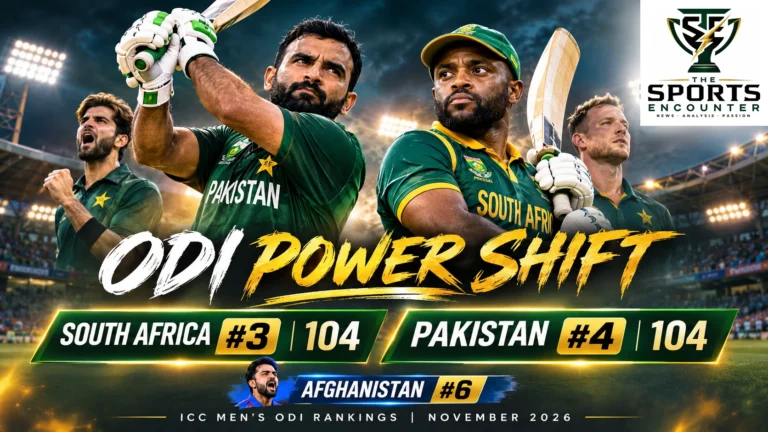 CricketPakistan Close on South Africa in ODI Rankings After Lahore Triumph, but World Cup Test Lies Ahead
South Africa are expected to be competitive at home, but the selected batting lineup must demonstrate consistency under conditions that may also suit the opposition’s bowlers.
What South Africa’s Australia Series Revealed About Highveld Selection
One of the more revealing performances occurred during the opening day at Durban.
South Africa’s seam bowlers collected all six Australian wickets to fall on the day, despite the team selecting two specialist spinners.
That illustrated the value of seam options on a helpful surface.
Our opening-day Durban analysis explains the contrast between the contributions of South Africa’s seamers and spinners.
However, the Cape Town decider demonstrated the opposite danger of assuming spin would be unimportant.
Harmer’s match-winning performance showed how valuable a high-quality specialist spinner can become.
The lesson is not that South Africa must always select pace or spin.
It is that the strongest combination depends on venue conditions, match duration and the roles of the available all-rounders.
Why the Returning Players Must Earn Their Places
De Zorzi, Hamza and Nortje have different reasons to view the Bangladesh series as an opportunity.
De Zorzi wants to regain a place after an injury-related absence.
Hamza is attempting to revive an international Test career interrupted since 2024.
Nortje needs to demonstrate that he can contribute effectively after his groin problem.
Yet South Africa’s success against Australia creates competition rather than guaranteeing positions to returning players.
Ackerman and Harmer were important members of the winning side.
Other players contributed through difficult batting conditions and crucial spells with the ball.
Those achievements should form part of selection discussions.
The selectors must balance current form, fitness, established records and the tactical requirements of each ground.
Why This Series Could Shape South Africa’s Next Test Era
South Africa’s squad combines experienced international players with cricketers still seeking long-term positions.
Bavuma, Rabada and Maharaj provide established leadership and experience.
Markram, Rickelton, Jansen and Mulder contribute across different departments.
De Zorzi, Hamza, Ackerman and Breetzke compete for opportunities in the batting lineup.
The composition suggests that the selectors are willing to reconsider individual roles despite the team’s recent success.
That may prove important as South Africa attempt to defend their position among the leading Test nations.
The series against Australia demonstrated that strong results can coexist with questions about batting stability and bowling balance.
The next two Tests provide an opportunity to address those questions.
South Africa vs Bangladesh Tests 2026: Frequently Asked Questions
Who Has Returned to South Africa’s Test Squad?
Tony de Zorzi, Zubayr Hamza and Anrich Nortje are the principal returning players.
Why Did Tony de Zorzi Miss the Australia Series?
He was unavailable because of a hamstring injury and has now recovered.
When Did Zubayr Hamza Last Play Test Cricket?
His previous Test appearance came against New Zealand in February 2024.
Why Is Anrich Nortje Back?
He has recovered from the groin injury that prevented him from completing the Australia series.
Why Was Lungi Ngidi Not Selected?
He remains in rehabilitation following a hamstring injury and was not considered for selection.
Is David Bedingham in the Squad?
No. Bedingham is not among the 15 players selected against Bangladesh.
Is Kyle Verreynne Included?
No. The wicketkeeper-batter has not been selected in this squad.
Who Will Captain South Africa?
Temba Bavuma will captain the Proteas.
When Does the First Test Start?
The first Test begins on November 15, 2026, at the Wanderers Stadium in Johannesburg.
When Is the Second Test?
November 23–27, 2026, at SuperSport Park in Centurion.
Are South Africa No. 1 in the World Test Championship?
No. They lead the ICC Test Team Rankings but occupy second place in the 2025–27 World Test Championship standings as of the official November 2 update.
How Many WTC Points Can South Africa Earn Against Bangladesh?
A maximum of 24 points from two victories, before any applicable penalties or adjustments.
South Africa Have Reclaimed No. 1. Now They Must Prove Their Depth.
South Africa’s recovery against Australia established the team’s ability to overcome significant adversity.
They lost the first Test, recovered from a batting collapse in the second and overturned a substantial first-innings deficit in the decider.
The result returned them to the top of the ICC Test Team Rankings.
But the Bangladesh series presents a different examination.
The selectors must decide whether De Zorzi should immediately reclaim his opening position.
They must determine how Hamza fits into a batting group that already contains players seeking to establish themselves.
They must also choose whether to emphasize pace on the Highveld or retain the dual-spin option that proved so effective against Australia.
Those choices will influence more than the immediate series.
South Africa are pursuing another World Test Championship final, and every available point matters.
Winning against Bangladesh will require the same discipline that delivered their comeback against Australia, but preferably without needing repeated recoveries from serious batting collapses.
De Zorzi, Hamza and Nortje have returned.
What remains unresolved is who makes the final XI and whether the combinations chosen in Johannesburg and Centurion can give South Africa the consistency needed to remain among Test cricket’s leading sides.
Official sources: Review Cricket South Africa’s complete squad announcement and schedule, the ICC’s November 2 squad and World Test Championship analysis, and the official ICC rankings for the current Test Team Rankings.
Further reading: TSE’s analysis of the controversial Labuschagne dismissal explains another important moment from the Cape Town decider.