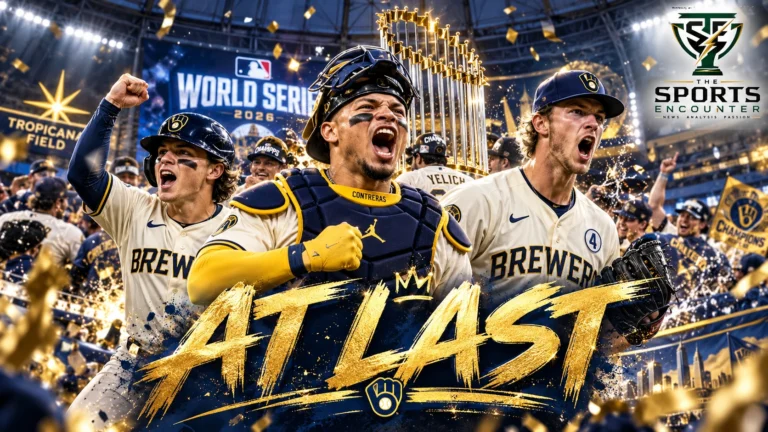
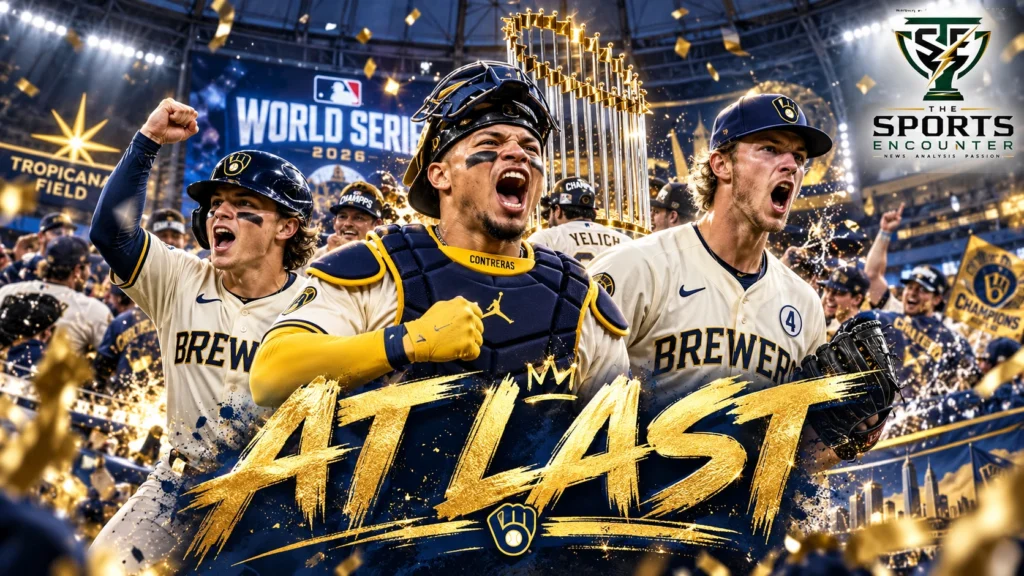
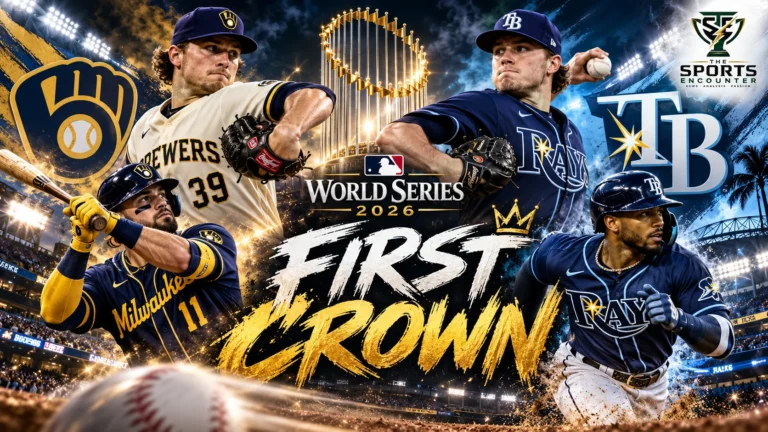
ST. PETERSBURG, United States, October 28, 2026: The Milwaukee Brewers are World Series champions for the first time in their 57-season history. Jacob Misiorowski pitched 5⅔ scoreless innings, rookie Cooper Pratt drove in two runs, and Milwaukee defeated the Tampa Bay Rays 4-1 in Game 5 at Tropicana Field on Wednesday to win the 2026 World Series four games to one. The victory ended a championship drought stretching back to the franchise’s beginnings as the Seattle Pilots in 1969 and gave Milwaukee its first Major League Baseball title since the Braves won the World Series in 1957.
The championship was secured through the kind of contributions that have defined Milwaukee’s season. Pratt delivered a second-inning RBI single and a sixth-inning sacrifice fly, William Contreras added a crucial run-scoring double, and Misiorowski kept Tampa Bay scoreless despite leaving with a right calf cramp. Trevor Megill recorded the final six outs after the Rays briefly threatened in the ninth. Contreras, who hit .381 during the five-game series while controlling Tampa Bay’s running game, received World Series MVP honors. Milwaukee completed an extraordinary 11-2 postseason after winning a franchise-record 103 regular-season games, finishing the redemption story introduced in The Sports Encounter’s original Brewers-Rays World Series preview.
Milwaukee Brewers vs Tampa Bay Rays: World Series Game 5 Final Score
Milwaukee secured the championship with four runs on eight hits. Tampa Bay scored once on four hits, with both errors committed by the Brewers.
The final numbers reveal an important feature of the contest. Milwaukee did not hit a home run, yet produced runs through well-timed contact, baserunning, a sacrifice fly and offensive contributions from several positions.
Story at a glance
Milwaukee Brewers vs Tampa Bay Rays: World Series Game 5 Final Score
Milwaukee secured the championship with four runs on eight hits. Tampa Bay scored once on four hits, with both errors committed by the Brewers.
How Cooper Pratt Put Milwaukee on the Path to Its First Championship
The first decisive offensive contribution came from a player who began the season without a World Series appearance to his name.
Jacob Misiorowski Overcomes Calf Trouble to Deliver His Biggest Start
Jacob Misiorowski entered the championship game with the responsibility of preventing another dramatic Tampa Bay comeback.
Why William Contreras Deserved the World Series MVP Award
William Contreras finished the 2026 World Series with a .381 batting average, four RBIs and the Willie Mays World Series MVP Award.
Why the Brewers Recovered From Their Game 4 Collapse
The championship appeared almost certain Tuesday night.
| Team | 1 | 2 | 3 | 4 | 5 | 6 | 7 | 8 | 9 | R | H | E |
|---|---|---|---|---|---|---|---|---|---|---|---|---|
| Milwaukee Brewers | 0 | 1 | 0 | 0 | 1 | 2 | 0 | 0 | 0 | 4 | 8 | 2 |
| Tampa Bay Rays | 0 | 0 | 0 | 0 | 0 | 0 | 0 | 0 | 1 | 1 | 4 | 0 |
Game details: World Series Game 5, October 28, 2026, Tropicana Field, St. Petersburg, Florida. Winning pitcher: Jacob Misiorowski. Losing pitcher: Drew Rasmussen. Series result: Milwaukee Brewers win 4-1. World Series MVP: William Contreras.
The official MLB Game 5 record and video highlights confirm the 4-1 result, inning-by-inning scoring, team hits, errors and winning and losing pitchers.
How Cooper Pratt Put Milwaukee on the Path to Its First Championship
The first decisive offensive contribution came from a player who began the season without a World Series appearance to his name.
Cooper Pratt, Milwaukee’s 22-year-old rookie shortstop, entered Game 5 carrying the momentum of an exceptional performance in Tuesday’s defeat.
In the second inning, Brice Turang doubled against Tampa Bay starter Drew Rasmussen. Sal Frelick was then hit by a pitch, placing additional pressure on the Rays’ defense.
Pratt responded with an RBI single that brought Turang home and gave Milwaukee a 1-0 advantage.
The hit continued a remarkable individual streak. Pratt had produced four hits in Game 4, including a dramatic 12th-inning home run that briefly brought Milwaukee within three outs of winning the championship. His first two hits in Game 5 extended that sequence to six consecutive plate appearances with a hit, establishing a World Series rookie record.
Pratt’s contribution became even more important in the sixth inning, when his sacrifice fly scored Contreras and extended Milwaukee’s lead to 4-0.
He finished the championship game with two hits in three official at-bats, two RBIs and a run scored.
Those numbers establish his direct contribution. The deeper significance is that Milwaukee’s decisive offensive player was a rookie who had already experienced the disappointment of almost winning the championship the previous night.
Pratt had an opportunity to retreat into frustration after Tampa Bay’s Game 4 comeback. Instead, he continued producing under the pressure of another potential title-clinching game.
Game 5 Scoring Plays and Decisive Sequences
| Inning | Player / Event | Score | Why It Mattered |
|---|---|---|---|
| Top 2nd | Cooper Pratt RBI single | Milwaukee 1-0 | Opened the scoring after Brice Turang’s double |
| Top 5th | David Hamilton RBI single | Milwaukee 2-0 | Provided an important insurance run |
| Top 6th | William Contreras RBI double | Milwaukee 3-0 | Scored Christian Yelich and widened the margin |
| Top 6th | Cooper Pratt sacrifice fly | Milwaukee 4-0 | Scored Contreras and put the Rays under greater pressure |
| Bottom 6th | Misiorowski exits with a right calf cramp | Milwaukee 4-0 | Required Milwaukee to finish the game with its bullpen |
| Bottom 9th | Chandler Simpson RBI double | Milwaukee 4-1 | Ended Tampa Bay’s shutout but left a three-run deficit |
| Bottom 9th | Trevor Megill records final out | Final: Milwaukee 4-1 | Secured the franchise’s first World Series championship |
The sixth inning was the critical offensive sequence. Milwaukee’s lead grew from two runs to four, reducing the danger of a single late Tampa Bay rally.
That additional separation became particularly valuable when Misiorowski left the mound before completing the sixth inning.
Jacob Misiorowski Overcomes Calf Trouble to Deliver His Biggest Start
Jacob Misiorowski entered the championship game with the responsibility of preventing another dramatic Tampa Bay comeback.
The previous evening, Milwaukee had been three outs from winning the World Series before the Rays staged an improbable 12th-inning recovery.
Misiorowski gave the Brewers the stability they needed.
He completed 5⅔ scoreless innings, allowing only two hits, one walk and a hit batter while recording two strikeouts. He required 86 pitches, with his fastball averaging 101.1 mph according to MLB’s postgame analysis.
The limited strikeout total makes his performance particularly revealing.
Misiorowski entered the World Series with an extraordinary reputation for velocity and swing-and-miss pitching. Yet his championship-clinching outing depended on keeping hitters from generating sustained offensive pressure even when they made contact.
He did not record his first strikeout until the fourth inning, an unusual development for a pitcher whose fastball frequently overwhelms opposing hitters.
That did not prevent him from controlling the game.
His ability to avoid damaging innings allowed Milwaukee to maintain its lead while the offense gradually increased the margin.
The only significant setback came in the sixth, when a right calf cramp forced him to leave with two outs recorded.
MLB reported that the problem appeared to be a recurrence of an issue that had affected him earlier in the season. The public information establishes the cramping and his removal, but does not justify speculation about a more serious injury or a future recovery timetable.
By the time he departed, the Brewers led 4-0.
The assignment shifted to the bullpen, which had played an important role throughout Milwaukee’s postseason.
Brewers Pitching Performance in World Series Game 5
| Pitcher | IP | Hits | Runs | Earned Runs | BB | K |
|---|---|---|---|---|---|---|
| Jacob Misiorowski | 5⅔ | 2 | 0 | 0 | 1 | 2 |
| Abner Uribe | ⅔ | 0 | 0 | 0 | 0 | 0 |
| JoJo Romero | ⅔ | 0 | 0 | 0 | 0 | 1 |
| Trevor Megill | 2 | 2 | 1 | 1 | 0 | 3 |
| Total | 9 | 4 | 1 | 1 | 1 | 6 |
Pitching notation: Baseball innings are expressed in thirds. Misiorowski’s 5⅔ innings represent five complete innings and two outs in the sixth.
Milwaukee’s relievers covered the remaining 3⅓ innings and allowed one run. Megill handled the final two, striking out three batters and securing the decisive out.
The bullpen’s job was especially important because the starter’s departure was unexpected. A four-run lead gave manager Pat Murphy breathing room, but Tampa Bay had already demonstrated how quickly a seemingly safe advantage could disappear.
Why William Contreras Deserved the World Series MVP Award
William Contreras finished the 2026 World Series with a .381 batting average, four RBIs and the Willie Mays World Series MVP Award.
His offensive numbers made him a credible candidate. His work behind the plate made the case substantially stronger.
Contreras threw out four attempted Tampa Bay base stealers during the five-game series, restricting an important part of the Rays’ offensive approach.
He also excelled with Major League Baseball’s Automated Ball-Strike challenge system.
Across the World Series, Contreras won 10 of his 13 challenges, according to postgame reporting. That represents a success rate of approximately 76.9%.
The figure is especially important because this was the first World Series played with the automated challenge system.
A successful challenge can change a called ball into a strike, alter a plate appearance and affect the choices available to a pitcher. Those decisions do not appear in conventional batting lines, but they can materially influence how a game develops.
Contreras’ contributions therefore stretched across hitting, receiving, decision-making and the management of opposing baserunners.
His RBI double in the sixth inning of Game 5 gave Milwaukee a 3-0 lead. He subsequently scored on Pratt’s sacrifice fly, helping turn a manageable advantage into one that Tampa Bay could not overcome.
The official MLB analysis of Contreras’ World Series MVP performance details his offensive production, four caught-stealing contributions and influence behind the plate.
Why Contreras’ Value Was Greater Than His Batting Average
A traditional World Series MVP discussion might begin with the player who hit the most home runs or delivered the biggest single hit.
Contreras offers a more complete explanation of how Milwaukee won.
He contributed on offense while also helping pitchers attack the strike zone, limiting Tampa Bay’s running game and applying the new challenge system effectively.
Those contributions helped the Brewers reduce the opportunities available to their opponents.
There were legitimate alternative candidates.
Pratt produced the rookie hit streak and important RBIs, Jackson Chourio collected 11 hits across the five-game series, and Misiorowski supplied valuable starting pitching.
The award ultimately recognized the breadth and consistency of Contreras’ influence.
Why the Brewers Recovered From Their Game 4 Collapse
The championship appeared almost certain Tuesday night.
Milwaukee entered World Series Game 4 holding a commanding 3-0 series lead and moved ahead in the 12th inning through Pratt’s solo home run.
The Brewers were three outs from the championship.
But Tampa Bay recovered in circumstances that threatened to reshape the series.
A defensive error by Joey Ortiz helped begin the Rays’ final rally. Junior Caminero reached base, Liam Hicks followed with a hit, and Jonny DeLuca delivered the tying run.
Chandler Simpson kept the inning alive before Ben Williamson’s bases-loaded grounder brought home the winning run.
The Rays won 4-3 in 12 innings, extending a series that had seemed destined to end in a sweep.
That victory carried considerable emotional weight for Tampa Bay. A team that had been one inning from elimination suddenly had another opportunity to build momentum.
It also gave Milwaukee an uncomfortable reminder that strong pitching, a talented lineup and a commanding series lead do not eliminate the possibility of costly mistakes.
Game 5 demonstrated how the Brewers responded.
Instead of allowing the previous defeat to alter their approach, they returned to disciplined offensive execution and strong starting pitching.
Pratt, whose home run had nearly ended the series in Game 4, drove in the opening run the following evening. Misiorowski protected that advantage, and the lineup gradually added insurance runs.
The response was important because Tampa Bay’s Game 4 victory could have become the beginning of a larger comeback had Milwaukee struggled again.
Instead, the Brewers ended the series immediately.
Every Result From the 2026 World Series: Brewers vs Rays
The 2026 World Series contained two narrow Milwaukee victories, one emphatic win, Tampa Bay’s dramatic extra-inning escape and the title-clinching Game 5.
| Game | Date | Result | Series Position |
|---|---|---|---|
| 1 | Oct. 23 | Brewers 3-2 Rays | Milwaukee lead 1-0 |
| 2 | Oct. 24 | Brewers 5-4 Rays | Milwaukee lead 2-0 |
| 3 | Oct. 26 | Brewers 10-1 Rays | Milwaukee lead 3-0 |
| 4 | Oct. 27 | Rays 4-3 Brewers, 12 innings | Milwaukee lead 3-1 |
| 5 | Oct. 28 | Brewers 4-1 Rays | Milwaukee win 4-1 |
The official MLB 2026 postseason results and final bracket confirm every World Series score and Milwaukee’s route through the National League playoffs.
The Brewers won the championship despite losing the opportunity to sweep the World Series. Across five games, they demonstrated different forms of superiority, including late-inning resilience, timely offense and run prevention.
Tampa Bay’s path to the World Series had been impressive in its own right.
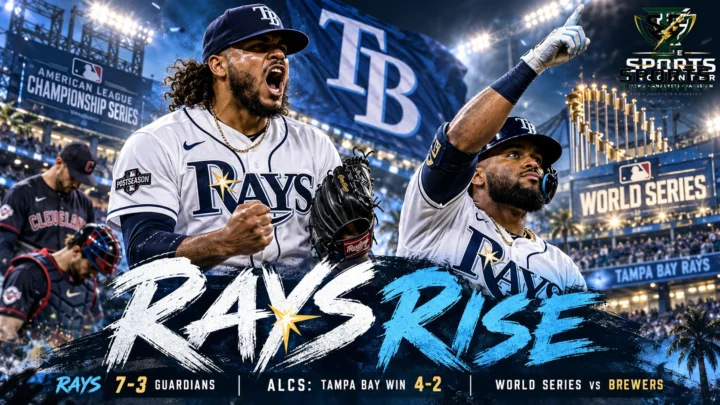
The Rays defeated the Cleveland Guardians in six games in the American League Championship Series, with Freddy Peralta winning ALCS MVP honors.
Peralta’s unusual route from Milwaukee to Tampa Bay created one of the most compelling personal stories of the postseason. The former Brewers pitcher helped his new club reach the championship series before watching his old organization claim the title.
TSE’s detailed report on Tampa Bay’s ALCS victory and Peralta’s reunion with Milwaukee traces that journey and the Rays’ path past Cleveland.
TSE Statistical Discovery: How Milwaukee Controlled the 2026 World Series
Milwaukee’s final series margin was three victories, but its advantage in runs reveals more about the overall competition.
Across five games, the Brewers scored 25 runs and allowed 12.
That produced a positive run differential of 13, with Milwaukee averaging five runs scored and 2.4 runs allowed per game.
The comparison highlights the team’s ability to maintain offensive production while limiting Tampa Bay’s scoring opportunities.
| TSE Measure | Brewers | Rays |
|---|---|---|
| World Series victories | 4 | 1 |
| Total runs scored | 25 | 12 |
| Average runs per game | 5.0 | 2.4 |
| Run differential | +13 | -13 |
| Games scoring at least four runs | 3 | 2 |
| Largest victory margin | 9 runs | 1 run |
TSE calculations: Milwaukee’s total runs were 3 + 5 + 10 + 3 + 4 = 25. Tampa Bay’s were 2 + 4 + 1 + 4 + 1 = 12. The run differential was 25 minus 12, or +13 for Milwaukee. Both averages divide total runs by the five completed games.
The nine-run Game 3 victory accounts for a substantial share of the overall margin. That means the +13 differential should not be interpreted as proof that every individual contest was comfortable.
Games 1, 2 and 4 were decided by a single run.
The more revealing finding is that Milwaukee won both tight games at home, produced an overwhelming performance in Game 3 and recovered from the narrow Game 4 defeat to clinch on the road.
That combination explains why the Brewers won the series in five games despite Tampa Bay remaining competitive for significant stretches.
Jackson Chourio, David Hamilton and the Contributors Beyond the MVP
The championship will be associated with Contreras, Misiorowski and Pratt, but several other players made important contributions.
Jackson Chourio recorded 11 hits across the five-game World Series, setting a record for a five-game Fall Classic.
Chourio’s consistent contact gave Milwaukee another reliable offensive presence across the series, reinforcing its ability to produce runs without depending entirely on one hitter.
David Hamilton’s fifth-inning RBI single in Game 5 was another important contribution.
His hit doubled Milwaukee’s lead from 1-0 to 2-0 at a stage when Rasmussen and the Tampa Bay pitching staff had prevented the Brewers from opening a substantial advantage.
Brice Turang also played a central role in the early scoring. His second-inning double created the opportunity Pratt converted into the opening run.
Christian Yelich, one of Milwaukee’s most established leaders, scored on Contreras’ sixth-inning double. His role within the team extended across years of postseason frustration that preceded the championship.
Trevor Megill supplied the final pitching contribution, recording six outs to close the game.
Manager Pat Murphy deserves recognition for overseeing a team that combined experienced leaders and younger players throughout a demanding postseason.
The club’s success also reflects the longer-term player development and roster-building decisions that allowed Milwaukee to compete against organizations with greater financial resources.
Milwaukee’s 57-Season Wait Ends, but Bob Uecker Is Missing From the Celebration
The championship carries particular emotional significance for Milwaukee because one of the most recognizable figures in franchise history did not live to witness it.
Bob Uecker, the beloved broadcaster who spent more than five decades calling Brewers games, died in January 2025.
His voice accompanied generations of Milwaukee supporters through losing seasons, rebuilding years, playoff appearances and the frustrations of coming close without winning baseball’s ultimate prize.
In October 2026, the Brewers finally returned to the World Series for the first time since 1982.
Uecker’s family marked that achievement with an emotional tribute, recalling his extraordinary relationship with the franchise and the people who followed it.
TSE’s tribute to Bob Uecker and his family’s reaction to Milwaukee’s World Series return explores why the championship opportunity meant so much to the city.
The historical significance is substantial.
The Brewers franchise began as the Seattle Pilots in 1969 before relocating to Milwaukee in 1970. Its only previous World Series appearance came in 1982, when the St. Louis Cardinals won the championship in seven games.
Milwaukee had celebrated a Major League Baseball championship before the Brewers arrived. The Milwaukee Braves won the 1957 World Series, defeating the New York Yankees.
Wednesday’s victory therefore ended two different waits: the Brewers’ search for their first franchise championship and the city’s 69-year wait for another World Series title.
Why the Brewers’ Championship Challenges Baseball’s Payroll Hierarchy
Milwaukee’s victory also raises an important question about how smaller-market teams compete in Major League Baseball.
The Brewers do not possess the commercial scale of the New York Yankees or Los Angeles Dodgers, yet they finished the regular season with 103 wins and defeated the defending champion Dodgers in the National League Championship Series.
Their postseason success followed a combination of player development, effective roster construction, disciplined hitting and pitching depth.
Tampa Bay reached the World Series through a similarly resource-conscious organizational model, making the championship matchup unusual in a league frequently associated with the financial advantages of its largest markets.
Those advantages remain real, but they do not determine every outcome.
The contrast is particularly striking when examined against TSE’s analysis of Brian Cashman’s return for a 30th season with the Yankees, which explored the club’s continuing championship drought and the questions surrounding its roster construction.
Continue the MLB Story
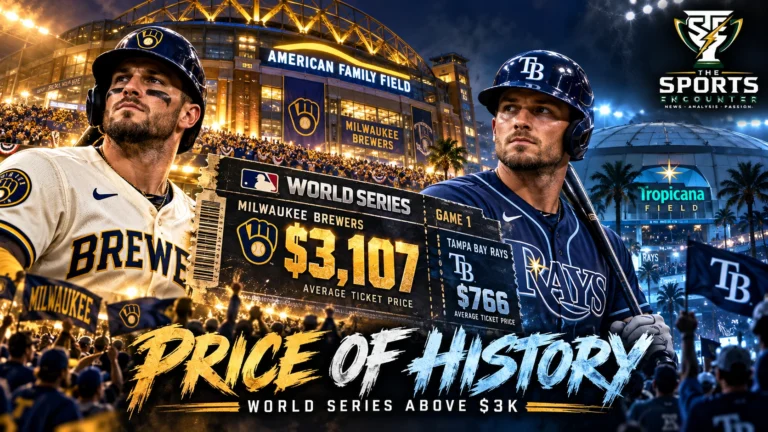 MLBWorld Series Tickets Hit $3,107 as Milwaukee’s 44-Year Wait Creates a Super Bowl-Sized Price Gap with Tampa Bay
 MLB44 Years of Waiting, One First-Time Champion: Rays vs Brewers World Series Schedule and Stakes
 MLBBob Uecker’s Family Salutes Brewers’ Historic World Series Return: ‘He’s Right Here Cheering Alongside Us’
At the other end of the standings, our examination of the Los Angeles Angels’ 100-loss campaign and managerial change documented the consequences of a disappointing season and an impending organizational reset.
Milwaukee provides a different example: a club that translated sustained regular-season success into a championship rather than allowing another promising campaign to end without a title.
However, the Brewers’ victory does not establish that lower payrolls are inherently superior or that spending has little influence on success.
It demonstrates that a well-constructed roster can overcome some of the financial disadvantages associated with competing against larger-market opponents.
The wider commercial significance of championship baseball also relates to the sports broadcasting industry. TSE’s analysis of the record $65.82 billion global sports media-rights market examined how marquee live events remain valuable to broadcasters even as viewing habits change.
The Brewers’ championship supplies a powerful example of the appeal of live sport: an outcome that has remained unresolved for generations, finally decided on the field.
Why Tampa Bay’s World Series Defeat Should Not Erase Its Achievements
The Rays will leave the 2026 World Series disappointed, having lost their third appearance in baseball’s championship series.
They previously fell to the Philadelphia Phillies in 2008 and the Los Angeles Dodgers in 2020.
The 2026 defeat extends their wait for a first title, but their route to the Fall Classic deserves recognition.
Tampa Bay finished the regular season with 98 wins, defeated the New York Yankees in the Division Series and overcame Cleveland in six games to win the American League pennant.
Manager Kevin Cash guided a team that balanced experienced contributors with younger talent, including Junior Caminero.
In the World Series, the Rays faced an opponent that excelled at creating runs from relatively modest opportunities.
Their Game 4 victory demonstrated that Tampa Bay could respond under pressure. But surviving one elimination game did not address the broader challenge of scoring consistently against Milwaukee’s pitching staff.
The Rays scored 12 runs across five games, averaging 2.4 per contest.
They will need to assess whether their offensive limitations reflected the quality of Milwaukee’s pitching, their own execution, or both.
That question matters more for the club’s future than reducing the series to a simple failure.
World Series 2026: Frequently Asked Questions
Who won the 2026 World Series?
The Milwaukee Brewers won the 2026 World Series, defeating the Tampa Bay Rays four games to one for the first championship in franchise history.
What was the final score of World Series Game 5?
Milwaukee defeated Tampa Bay 4-1 at Tropicana Field in St. Petersburg, Florida, on October 28, 2026.
Who was the 2026 World Series MVP?
Milwaukee Brewers catcher William Contreras was named World Series MVP after hitting .381 with four RBIs and making important defensive contributions, including throwing out four attempted base stealers.
How did Jacob Misiorowski perform in Game 5?
Misiorowski pitched 5⅔ scoreless innings, allowing two hits and one walk while striking out two. He left in the sixth inning because of a right calf cramp.
What record did Cooper Pratt set?
Pratt established a World Series rookie record with hits in six consecutive plate appearances across Games 4 and 5. He also drove in two runs in the championship-clinching game.
Did anyone hit a home run in World Series Game 5?
No. Neither Milwaukee nor Tampa Bay hit a home run in Game 5. The Brewers scored through an RBI single by Pratt, an RBI single by Hamilton, an RBI double by Contreras and Pratt’s sacrifice fly.
How many games did the Brewers lose during the 2026 postseason?
Milwaukee lost only two games, finishing the postseason with an 11-2 record after winning the NL Division Series, sweeping the Dodgers in the NL Championship Series and defeating the Rays in five games.
When did the Brewers last reach the World Series before 2026?
Milwaukee previously appeared in the 1982 World Series, losing to the St. Louis Cardinals in seven games.
Have the Tampa Bay Rays ever won the World Series?
No. The Rays have now reached the World Series three times, in 2008, 2020 and 2026, without winning the championship.
When was Milwaukee’s previous Major League Baseball championship?
The Milwaukee Braves won the World Series in 1957. The Brewers’ 2026 victory was the city’s first MLB championship since then.
The Championship That Finally Changes Milwaukee’s Baseball History
The 2026 Milwaukee Brewers completed one of the most successful seasons in franchise history.
They led Major League Baseball with 103 regular-season victories, defeated San Diego in the Division Series, swept the defending champion Dodgers and overcame Tampa Bay in five games to win the World Series.
Across that journey, their most important contributions came from different players at different moments.
Misiorowski delivered the starting pitching needed in Game 5, Pratt provided crucial run production, Contreras influenced the series with his bat and his defensive intelligence, and Megill recorded the final outs.
The championship also rewarded the years of commitment represented by Yelich, Murphy and the wider organization.
Milwaukee supporters had spent decades waiting for a team capable of finishing the job. The 1982 Brewers came close, but the franchise’s first World Series ended in defeat.
Forty-four years later, Milwaukee finally returned to baseball’s biggest stage and left with the Commissioner’s Trophy.
The victory will be remembered for the players who made it possible, but its importance extends across generations of supporters who followed the Brewers before winning a World Series seemed realistic.
The next chapter will examine how Milwaukee maintains its competitive standards, manages the development of its young stars and approaches defending the championship in 2027.
For now, the historical question has been answered.
The Milwaukee Brewers are World Series champions.
Milwaukee Brewers
- Milwaukee Brewers Win First World Series as Misiorowski, Pratt and Contreras End 57-Year Wait
- 44 Years of Waiting, One First-Time Champion: Rays vs Brewers World Series Schedule and Stakes
- World Series Tickets Hit $3,107 as Milwaukee’s 44-Year Wait Creates a Super Bowl-Sized Price Gap with Tampa Bay
- Bob Uecker’s Family Salutes Brewers’ Historic World Series Return: ‘He’s Right Here Cheering Alongside Us’
- Rays End Cleveland’s World Series Dream as Peralta Sets Up Reunion With Milwaukee