LISBON, Portugal, September 9, 2026: Galatasaray had more of the ball, completed far more passes and were gifted the first goal. Sporting CP still looked like the team that understood more clearly what to do when the match reached the areas that mattered.
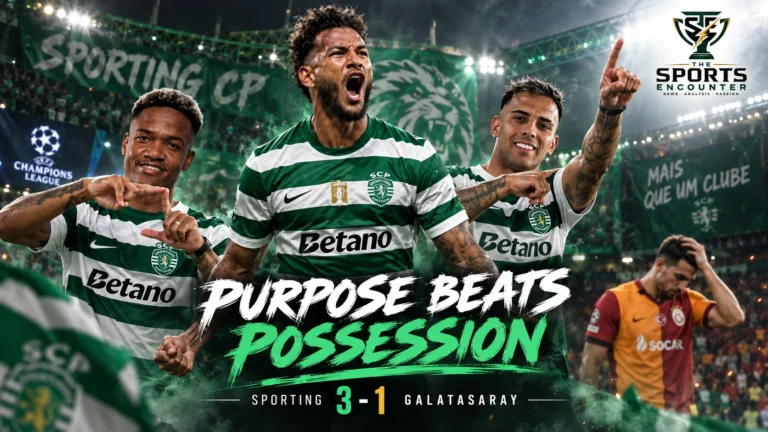
Geny Catamo, Luis Suárez and Rodrigo Zalazar scored as Sporting recovered from an early Gonçalo Inácio own goal to beat Galatasaray 3-1 at Estádio José Alvalade in their opening UEFA Champions League league-phase match.
The Turkish champions finished with 59% possession, attempted nine shots to Sporting’s eight and completed 486 passes compared with the hosts’ 343. Their passing accuracy reached 89%. None of those numbers translated into control where the scoreboard was concerned.
Sporting put five of their eight attempts on target. Galatasaray managed four from nine. More importantly, Rui Borges’ side turned three different phases of pressure into goals after falling behind inside six minutes.
Story at a glance
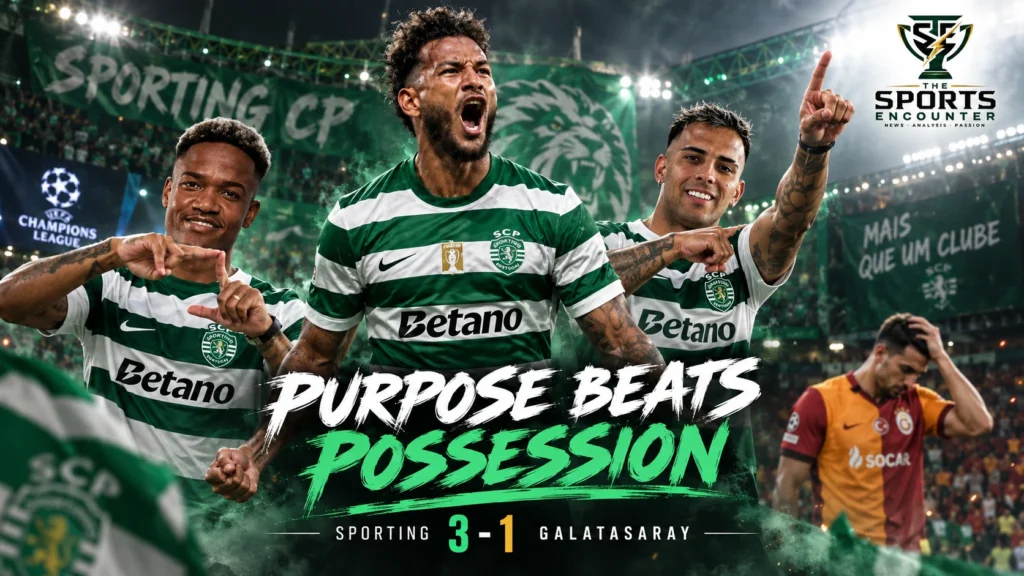
Galatasaray Got the Perfect Start Without Creating It
Six minutes into their Champions League campaign, Galatasaray had exactly what an away side wants at Alvalade: a lead.
Geny Catamo Changed the Direction of the Night
The equalizer arrived in the 27th minute, and Geny Catamo’s involvement felt increasingly inevitable by the time Sporting finally broke through.
Galatasaray’s 59% Possession Hid the Real Problem
At first glance, the match statistics appear surprisingly balanced.
Luis Suárez Turned Pressure Into the Lead
The second half began with the match still balanced at 1-1, but the next major incident gave Sporting the advantage they had been threatening to take.
Zalazar Needed Six Minutes to Turn Pressure Into Separation
Galatasaray still had more than half an hour to respond after Suárez made it 2-1.
The result gave Sporting three points from a fixture that The Sports Encounter’s Champions League draw analysis had already identified as one of the more important home assignments in a schedule that will later bring Barcelona, Manchester United and LASK to Lisbon.
Sporting CP 3-1 Galatasaray: Match at a Glance
| Statistic | Sporting CP | Galatasaray |
|---|---|---|
| Final score | 3 | 1 |
| Goals | Geny Catamo 27′, Luis Suárez 57′ (P), Rodrigo Zalazar 63′ | Gonçalo Inácio 6′ (OG) |
| Shots | 8 | 9 |
| Shots on target | 5 | 4 |
| Possession | 41% | 59% |
| Passes | 343 | 486 |
| Pass accuracy | 84% | 89% |
| Fouls | 13 | 10 |
| Yellow cards | 3 | 2 |
| Offsides | 3 | 0 |
| Corners | 1 | 4 |
Galatasaray Got the Perfect Start Without Creating It
Six minutes into their Champions League campaign, Galatasaray had exactly what an away side wants at Alvalade: a lead.
The problem was that Sporting had largely created it for them.
Gonçalo Inácio turned the ball into his own net, giving Galatasaray an early advantage and immediately changing the tactical possibilities available to Okan Buruk’s team.
An away side leading after six minutes can slow the game, draw the opponent forward and attack the spaces that appear behind an increasingly aggressive home structure.
Galatasaray had enough technical quality in midfield to make that strategy particularly uncomfortable for Sporting. Lucas Torreira, Mario Lemina and the players around them could circulate possession rather than chase the game.
Yet the early lead never developed into sustained authority.
That distinction became crucial.
Possession increasingly belonged to Galatasaray, but Sporting began finding the clearer routes toward goal. The visitors moved the ball frequently without consistently moving the Sporting defense into positions from which decisive chances followed.
UEFA had noted before kickoff that this was the first competitive meeting between Sporting and Galatasaray. There was therefore no recent tactical history between the clubs to lean on.
Sporting adapted more effectively as the game developed.
Geny Catamo Changed the Direction of the Night
The equalizer arrived in the 27th minute, and Geny Catamo’s involvement felt increasingly inevitable by the time Sporting finally broke through.
Catamo gave Sporting something Galatasaray’s possession could not provide at the other end: acceleration.
Every time Sporting escaped the visitors’ first layer of pressure, the Mozambique international offered a direct route into dangerous territory. He did not need repeated touches or a long spell of buildup to alter the geometry of the attack.
His goal brought Sporting level at 1-1 and changed the emotional balance inside Alvalade.
The own goal had threatened to turn the home crowd’s anticipation into anxiety. Catamo reversed that pressure before halftime.
His contribution also continued a productive opening to Sporting’s domestic season. He had already played a decisive role when Sporting entered the Champions League amid a strong run of early-season form, and his ability to stretch defensive structures gives Rui Borges an important alternative when his side cannot dominate possession.
That became one of the defining tactical themes of the night.
Sporting did not need to have the ball most often.
They needed to be more dangerous when they had it.
Galatasaray’s 59% Possession Hid the Real Problem
At first glance, the match statistics appear surprisingly balanced.
Galatasaray attempted nine shots.
Sporting attempted eight.
The visitors completed 486 passes at 89% accuracy, while Sporting completed 343 at 84%. Galatasaray also won four corners to Sporting’s one.
Those numbers describe territory and circulation better than they describe attacking quality.
Sporting put five of eight shots on target, a 62.5% on-target rate. Galatasaray managed four from nine.
The difference became even more significant after halftime because Sporting began attacking the moments between Galatasaray’s possession sequences rather than trying to win a stylistic contest over who could keep the ball longer.
It is a pattern Champions League Matchday 1 has already produced elsewhere.
Real Madrid beat Inter despite having only 41% possession, with Kylian Mbappé and Federico Valverde punishing the moments Inter failed to control rather than competing for statistical dominance.
Sporting offered another version of the same lesson.
Possession can tell us who had the ball.
It cannot tell us which team made the ball hurt.
Luis Suárez Turned Pressure Into the Lead
The second half began with the match still balanced at 1-1, but the next major incident gave Sporting the advantage they had been threatening to take.
Luis Suárez converted from the penalty spot in the 57th minute.
The Colombian forward’s goal put Sporting ahead for the first time and forced Galatasaray into a completely different game.
For most of the opening hour, the visitors could possess the ball knowing that a draw remained acceptable and that one attacking moment could restore their early advantage.
At 2-1 down, possession needed to produce something.
That requirement exposed the difference between circulating around Sporting and breaking Sporting open.
Suárez has already shown an ability to finish decisive moves since arriving in Lisbon. He scored in Sporting’s 3-1 league victory over Alverca, while the club’s official Champions League preview listed him at the point of the attack Rui Borges had repeatedly used before the Galatasaray game.
His penalty gave that structure its most important reward yet.
Zalazar Needed Six Minutes to Turn Pressure Into Separation
Galatasaray still had more than half an hour to respond after Suárez made it 2-1.
Rodrigo Zalazar reduced that recovery window dramatically.
Six minutes after the penalty, Zalazar scored Sporting’s third.
That sequence between the 57th and 63rd minutes decided the game.
A contest that had remained level through halftime was suddenly 3-1. Galatasaray still possessed enough attacking talent to threaten, but the psychological equation had changed completely.
One goal would no longer restore parity.
The visitors needed two merely to get back to level terms.
Sporting, meanwhile, could defend with the knowledge that Galatasaray now had to take greater risks in possession.
This was not relentless Sporting pressure producing wave after wave of chances. It was something more efficient.
The hosts recognized when the game opened and struck twice before Galatasaray could stabilize it.
Victor Osimhen’s Absence Became More Important as Galatasaray Chased
Galatasaray arrived in Lisbon without Victor Osimhen, their biggest attacking reference and a player who had scored half of their 12 league goals before Matchday 1.
Sporting’s official preview confirmed his absence through injury before kickoff.
The effect became most obvious once Galatasaray fell behind.
A team can circulate possession effectively without a dominant central striker when the score is level or favorable. Chasing a two-goal deficit is different.
Crosses need a target.
Central defenders need someone occupying them.
Loose balls in the penalty area need a forward expecting them.
Galatasaray still produced four shots on target, but the possession advantage never became the sustained siege they needed after Zalazar made it 3-1.
That missing penalty-area presence helped Sporting defend the final phase without the scoreline feeling as fragile as Galatasaray’s 59% possession might suggest.
Sporting’s Win Matters Because Their Schedule Gets Much Harder
Three points at home against Galatasaray carry additional value when Sporting’s remaining Champions League schedule is considered.
Rui Borges’ side will also host Barcelona, Manchester United and LASK at Alvalade.
The away schedule contains Manchester City, Roma, Shakhtar Donetsk and Lens.
Our full league-phase draw breakdown showed why Sporting could not afford a slow European start. Several of their later fixtures carry a considerably higher degree of difficulty.
UEFA’s official 2026-27 Champions League fixture list confirms the league phase runs through January, with every club playing eight different opponents before the final standings determine direct qualification, playoff places and elimination.
Home victories therefore carry more than three points in practical terms.
They reduce the pressure attached to the more difficult away assignments that follow.
Continue the UEFA Champions League 2026-27 Story
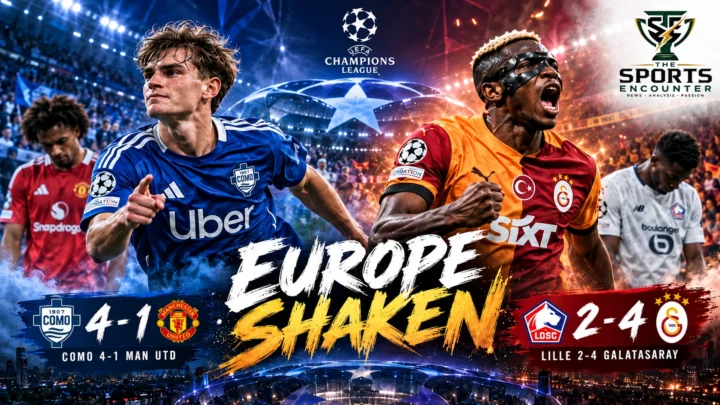
 UEFA Champions League 2026-27Champions League: Nico Paz Tears Manchester United Apart as Galatasaray Explode in a 4-Goal Comeback
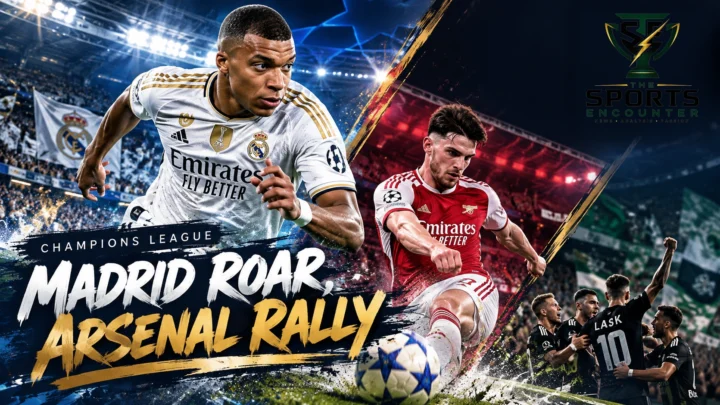
 UEFA Champions League 2026-27Champions League: Madrid’s Perfect Start, Arsenal’s Munich Escape and LASK’s Sporting Upset Redraw the European Race
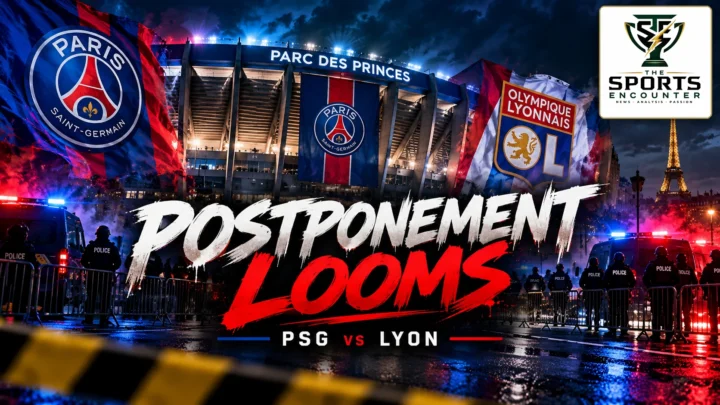
 UEFA Champions League 2026-27PSG vs Lyon Faces Postponement as France’s Unrest Threatens Ballon d’Or Scheduling Clash
Matchday 1 Is Already Rewarding Teams That Attack the Decisive Moment
Sporting’s victory fits neatly into the pattern emerging from the opening Champions League fixtures.
Real Betis followed another route entirely, recovering twice before Marc Bartra and Troy Parrott helped turn Lille’s advantage into a 3-2 Betis comeback.
Different games have produced different tactical stories, but one theme keeps returning.
Champions League matches punish teams that confuse control with safety.
Galatasaray learned that lesson in Lisbon.
Galatasaray’s Champions League Path Offers Little Time for Repair
The defeat becomes more concerning when Galatasaray’s next European assignments are considered.
Barcelona visit Istanbul in October.
Trips to Lille and AEK Athens follow later in the league phase, while Aston Villa, Feyenoord and Stuttgart also appear on the schedule before a final trip to Paris Saint-Germain.
The Sports Encounter had already identified that route in its guide to UEFA draw week and the new league-phase landscape.
There are opportunities in that schedule, but there are few matches Galatasaray can treat casually after leaving Lisbon empty-handed.
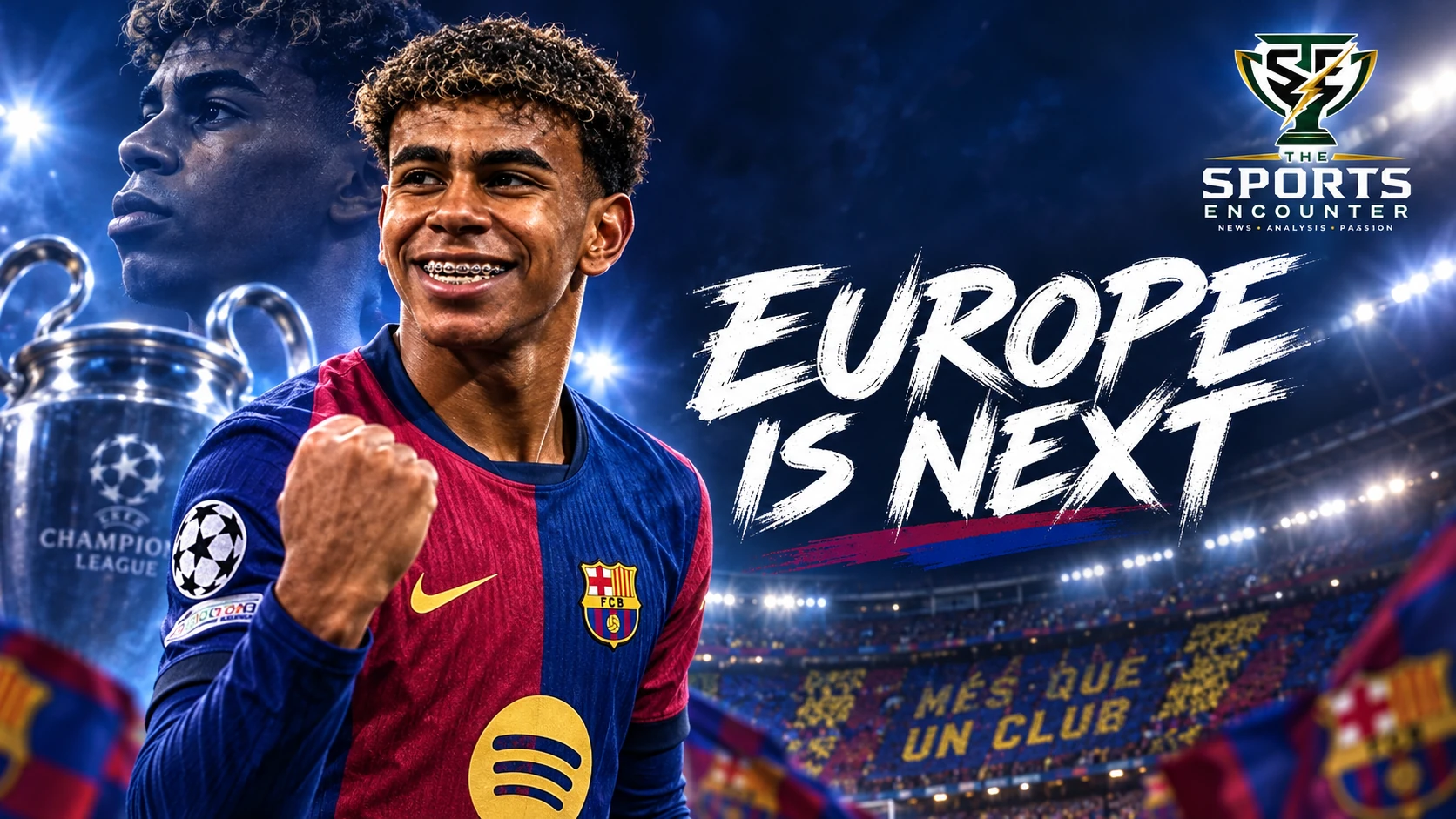
The upcoming Barcelona fixture carries particular significance because Lamine Yamal has already made Barcelona’s Champions League ambitions explicit entering a campaign in which the Catalans expect to challenge deep into the competition.
Galatasaray therefore leave Portugal with more than a defeat to correct.
They need to determine why so much control produced so little protection.
The Sports Encounter Verdict
Galatasaray can look at 59% possession, 486 completed passes and four corners and argue that they were never overwhelmed at Estádio José Alvalade.
They would be right.
They were not overwhelmed.
They were outplayed in the moments that decided the match.
Sporting recovered from an own goal instead of allowing it to define the night. Catamo restored parity before halftime. Suárez turned a penalty into the lead. Zalazar struck again before Galatasaray had recovered from going behind.
Three goals arrived from three different players, and each one changed the psychological shape of the contest.
That is why this was more than an efficient home victory.
Sporting showed they can lose the possession battle without losing their identity. They remained direct, recognized transition opportunities and made their best attacking moments count.
Galatasaray had the ball for longer.
Sporting had the game when it mattered.
For continuing coverage of Matchday 1 and the road through Europe’s expanded league phase, follow The Sports Encounter’s UEFA Champions League 2026-27 coverage.