Connect with us

Published

on

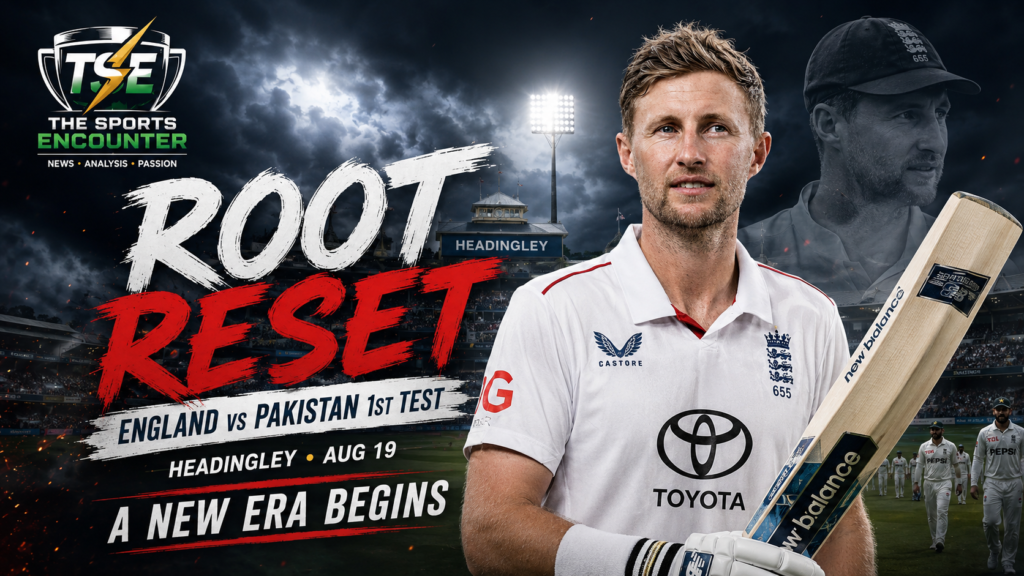
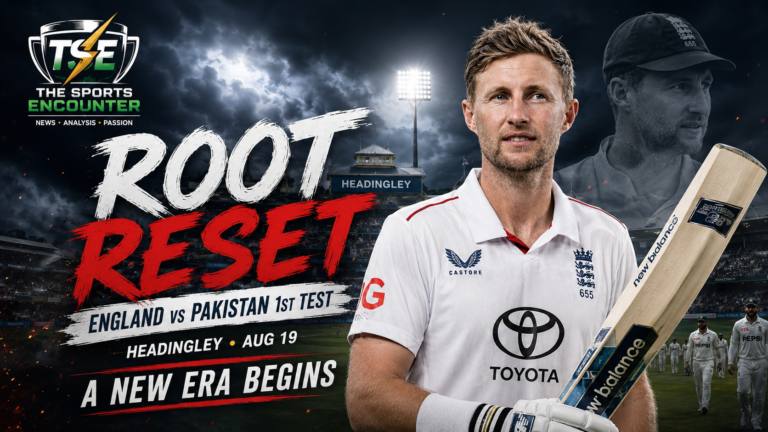
England should beat Pakistan at Headingley. That is precisely why this first Test feels dangerous.

Pakistan arrive without captain Babar Azam, their most established batter and the player around whom much of their pre-series planning revolved. Salman Ali Agha will lead them in a Test for the first time. Their recent red-ball record remains poor, their batting can collapse quickly, and a cloudy Leeds forecast appears far more inviting to England’s seamers than to a touring side still trying to rebuild.

England have advantages everywhere.

What they do not have is much credibility left to waste.

Joe Root begins his second permanent spell as Test captain on Wednesday, August 19, at the ground where his first captaincy journey formally began nine years ago. He inherits a team that has won only two of its last 10 Tests, lost 4-1 in Australia, surrendered a home series to New Zealand and watched the Ben Stokes-Brendon McCullum era collapse under a mixture of declining results, tactical excess and off-field disruption.

Pakistan therefore represent more than an opponent.

They are England’s first chance to prove that the reset means something.

The Sports Encounter’s broader England vs Pakistan 2026 Test series preview examined the two teams entering the series from different forms of instability. Headingley now brings the English half of that equation into sharper focus.

England vs Pakistan 1st Test: Key Details

DetailInformation
MatchEngland vs Pakistan, 1st Test
SeriesPakistan tour of England 2026
DateAugust 19-23, 2026
VenueHeadingley, Leeds
England captainJoe Root
England interim coachMarcus Trescothick
Pakistan captainSalman Ali Agha
Babar AzamRuled out with right-hand injury
England series situationOpening Test of three-match series
CompetitionICC World Test Championship 2025-27

The ECB has confirmed that the three-Test series begins at Headingley on August 19 before moving to Lord’s and Edgbaston. The official England squad contains 16 players, with the final XI expected at the toss.

TL;DR: What England Need From Headingley

  • Joe Root starts his second permanent spell as England Test captain.
  • England need their first Test series win since late 2024.
  • Babar Azam’s absence gives England a major advantage before the first ball.
  • Jordan Cox is expected to bat at No. 3 and has a significant opportunity to establish himself.
  • Dan Lawrence is likely to help fill the all-round role left vacant by Ben Stokes.
  • England are waiting on the readiness of seamers who recently completed The Hundred.
  • Cloud, rain and Headingley conditions could favor the fast bowlers.
  • Pakistan still possess a genuine threat in Mohammad Abbas, whose control could trouble England’s top order.
  • A convincing victory would restore some confidence. A defeat would immediately deepen England’s crisis.

This Is Joe Root’s Team Again, but It Cannot Become the Old Joe Root Team

Root knows exactly what happened during his first spell as captain.

He led England more often than anyone before him, won 27 Tests and lost 27 during his first 64 matches in charge before later returning on an interim basis.

The numbers tell only part of the story.

His first captaincy became increasingly exhausting. England’s batting deteriorated, Root carried an enormous scoring burden and leadership often appeared to consume the player rather than amplify him.

The version returning in 2026 is older, more secure in his batting and far less interested in pretending captaincy has to follow one fixed philosophy.

England have already framed his return around stability. Our analysis of why Root and Stephen Fleming were chosen to repair England’s red-ball cricket argued that the central task would be preserving the confidence of the previous era while restoring judgment.

Headingley is where that theory meets a scoreboard.

Root’s Most Important Sentence Before the Test

Root offered the clearest indication yet of how England intend to move beyond Bazball.

“I don’t believe there is one way of playing Test cricket.”

That sentence may matter more than any selection decision this week.

England’s best cricket under Stokes and McCullum came when aggression liberated players who had become frightened of failure.

The worst version emerged when aggression stopped being a tool and became an obligation.

Root appears determined to remove that obligation.

England can still attack.

They can still chase quickly.

Harry Brook can still dismantle attacks. Ben Duckett can still force bowlers away from their preferred lengths.

The difference should come when the match asks England to wait.

That is the skill this team lost too often.

England Do Not Need to Erase Bazball

The phrase will continue appearing around the team because four years of cricket cannot disappear overnight.

England should resist the temptation to define every decision as either Bazball or anti-Bazball.

The useful parts remain obvious.

Batters became less afraid of dismissal.

Chases that once looked intimidating became achievable.

Players learned to apply pressure rather than wait for opponents to make mistakes.

Headingley itself contains some of the strongest evidence. England have successfully chased 294, 251 and 371 in their last three Tests at the venue.

The problem was never aggression itself.

It was England’s declining ability to recognize when aggression stopped serving the situation.

Root does not need to take the team backward.

He needs to restore the steering wheel.

Ben Stokes Leaves a Tactical Hole Bigger Than His Statistics

The most difficult part of England’s transition has little to do with captaincy style.

Stokes allowed England to build Test XIs that would otherwise have looked structurally awkward.

He could bat in the middle order, provide seam overs, change the energy of a fielding session and captain the team from an attacking position around the bat.

Removing him changes several positions at once.

Dan Lawrence is expected to return as a spin-bowling all-round option, two years after one of the stranger chapters of his international career saw him opening the batting.

Lawrence cannot replace Stokes.

England should not ask him to.

His job is to make the XI functional.

That distinction matters.

Root acknowledged the same issue when discussing how England move forward without their former captain. The Sports Encounter previously examined what Stokes’ retirement left behind and why England cannot simply manufacture another version of him.

Jordan Cox Has the Clearest Opportunity of His England Career

No England batter may benefit more from the reset than Jordan Cox.

He will play only his second Test and is expected to bat at No. 3.

That is a major promotion in responsibility.

It also comes with something international cricket rarely gives developing players: clarity.

Cox has been told where he will bat.

He knows he has the opening two Tests to make the position his while Jacob Bethell recovers from injury.

The message appears simple.

Do not manufacture a Test technique for the occasion.

Use the game that earned selection.

Why No. 3 Could Suit Cox Better Than No. 7

The position looks unfamiliar on paper because Cox has limited first-class experience specifically at first drop.

His broader batting history makes the move less dramatic.

He has opened regularly.

That means facing the new ball, leaving outside off stump and handling bowlers before they tire are already part of his cricket.

At No. 3, the challenge depends heavily on Duckett and Emilio Gay.

A wicket in the opening overs effectively makes Cox another opener.

A strong first-wicket partnership gives him the opportunity to attack an older ball.

England need him to respond to both scenarios rather than arrive with one pre-planned tempo.

Emilio Gay Faces a Much Harsher Examination Than His Statistics Suggest

Gay has already shown enough to intrigue England.

Two fifties in his first three Test innings created an encouraging start.

The next phase has become messier.

A shoulder problem interrupted his preparation, and he made a pair in Pakistan’s warm-up fixture.

Headingley now places him opposite one of the bowlers most naturally suited to exposing uncertainty around off stump.

Mohammad Abbas does not need 90 mph to make an opener uncomfortable.

He needs movement, patience and enough cloud to make the batter wonder which deliveries should be played.

If Gay survives Abbas, England will learn more about him than another easy fifty on a flat surface might have revealed.

Ben Duckett Has to Set the Tone Without Becoming Reckless

Duckett remains one of the clearest survivors of the Stokes-McCullum philosophy.

His aggression suits England.

His ability to score in unusual areas disrupts conventional new-ball plans.

Headingley may ask for restraint before invention.

If the ball swings under cloud cover, attempting to dominate every over could become exactly the kind of old Bazball reflex Root wants England to move beyond.

The better version of Duckett is still positive.

He simply recognizes that surviving the first 40 deliveries may create far more attacking opportunities later.

Harry Brook Returns to His Home Ground With a Different Responsibility

Headingley belongs naturally in the Harry Brook story.

The Yorkshire batter understands the venue, its dimensions, atmosphere and rhythms better than almost anyone in England’s lineup.

His role has also changed.

Brook is no longer merely the explosive young batter entering a successful team.

He is one of its senior match-winners.

The absence of Stokes increases that responsibility.

Root will carry leadership.

Brook must carry more of the game-changing batting burden.

Against Pakistan’s attack, the temptation will be to dominate once the ball softens.

That is exactly where England should want him.

England’s Probable XI Still Depends on the Fast Bowlers

England have deliberately avoided naming their XI early.

That represents a noticeable change from the Stokes era, when teams were often announced well before the toss.

The reasoning is practical.

Gus Atkinson and Josh Tongue arrived in Leeds after playing in The Hundred final, leaving them with limited red-ball preparation before the Test.

England want to assess how the bowlers recover before committing.

The 16-man squad gives Root and interim coach Marcus Trescothick considerable flexibility.

England Probable XI

  1. Emilio Gay
  2. Ben Duckett
  3. Jordan Cox
  4. Joe Root (captain)
  5. Harry Brook
  6. Dan Lawrence
  7. Jamie Smith (wicketkeeper)
  8. Gus Atkinson
  9. Jofra Archer
  10. Ollie Robinson
  11. Josh Tongue

Brydon Carse, Sam Cook and Matthew Fisher give England alternatives if Atkinson or Tongue are not considered sufficiently fresh.

The ECB’s official 16-player squad announcement confirms the depth Root has available.

The Hundred Turnaround Is England’s First Selection Trap

English cricket has spent years arguing that elite players should move comfortably between formats.

Headingley offers an immediate stress test.

Atkinson and Tongue have barely had time to move from a white-ball final to preparations for a five-day Test.

Fast bowling makes that transition particularly demanding.

Lengths change.

Workloads change.

Field settings change.

A four-over burst becomes the possibility of 20 overs in a day.

Root’s first major decision as returning captain may therefore come before the toss.

England have to decide whether their best theoretical attack is also their best physically prepared attack.

Jofra Archer Could Define the New England Attack

Without Stokes, England need their specialist quicks to carry more of the wicket-taking responsibility.

Archer gives them something Pakistan cannot easily replicate.

Speed.

Abbas can be more accurate.

Pakistan may find seam movement.

Archer can change the physical character of an innings.

If the pitch offers traditional Headingley movement and Archer maintains high pace, Pakistan’s top order could face an awkward combination.

Playing forward becomes dangerous because of movement.

Playing back becomes uncomfortable because of speed.

That is the kind of conflict England need to create.

Ollie Robinson May Be More Important Than the Fastest Bowler

Headingley does not always reward the bowler who tries hardest to make something happen.

It often rewards the bowler who hits the same difficult area repeatedly and lets the atmosphere do the rest.

That is where Robinson can matter.

If cloud hangs above the ground, England may not need every bowler chasing magic deliveries.

They need control.

That word keeps returning to this England preview because the broader rebuild depends on it.

The Pakistan Batting Order Has Lost Its Center

Babar’s withdrawal changes England’s tactical preparation considerably.

Pakistan had restored him to the Test captaincy in July, only for a right-hand problem first suffered in the Caribbean and aggravated during the warm-up match to rule him out of Headingley.

The Sports Encounter tracked the uncertainty in our Babar Azam injury report before the first Test.

From England’s perspective, his absence removes the batter most capable of making their bowlers work through multiple spells.

Pakistan still have skill.

They have far less certainty.

Pakistan Probable XI

  1. Azan Awais
  2. Imam-ul-Haq
  3. Abdullah Shafique
  4. Shan Masood
  5. Saud Shakeel
  6. Salman Ali Agha (captain)
  7. Mohammad Rizwan (wicketkeeper)
  8. Aamer Jamal or Khurram Shahzad
  9. Ali Usman
  10. Mohammad Abbas
  11. Mohammad Ali

Pakistan may adjust that combination at the toss, but the central weakness remains unchanged.

Babar is unavailable.

England Should Target Pakistan Before Saud Shakeel Settles

Pakistan’s likely top six contains players who can make England pay if the first hour becomes comfortable.

Shan Masood knows Headingley better than most visiting batters after spending two seasons with Yorkshire.

Abdullah Shafique arrives after his unbeaten 160 helped Pakistan beat West Indies in Port of Spain.

Saud Shakeel scored a century in the tour game.

Those are meaningful warning signs.

England’s opportunity comes before those players settle.

Movement against the top order should encourage Root to keep multiple catchers around the bat rather than retreating at the first sign of a boundary.

Shan Masood Is Pakistan’s Most Interesting Headingley Batter

Masood is no longer captain.

That may simplify his job.

He knows this ground intimately from county cricket and averaged more than 50 in the County Championship during his Yorkshire period.

England cannot treat him like a visiting batter learning Leeds for the first time.

He understands which lengths feel dangerous here.

He understands the wind.

He understands the outfield.

Most importantly, he understands that Headingley can look terrifying for 30 minutes and then become surprisingly good for batting.

Root should view Masood’s wicket as one of England’s highest-value early targets.

Mohammad Abbas Is the Bowler England Cannot Dismiss as Medium Pace

Pakistan lack the extreme pace historically associated with their best touring attacks.

That does not make them harmless.

Abbas may be the bowler most suited to conditions at Headingley.

His strength comes from repetition.

He attacks the channel.

He changes the angle subtly.

He makes batters play.

England have occasionally struggled against exactly that kind of bowler because aggression creates an instinct to manufacture scoring opportunities when patience would work better.

Gay, Duckett and Cox should expect Abbas to ask the same question for long periods.

Can you leave?

England’s answer may tell us whether anything has genuinely changed.

Headingley’s Weather Could Make the Toss More Important

England have spent much of the summer playing through unusually dry conditions.

Leeds has finally brought rain back into the conversation.

Showers are possible across the opening two days, while cloud cover could keep seam movement relevant even when play continues.

Headingley has always been a venue where captains are advised to look up before they look down.

The surface itself often remains usable deep into a Test.

The air can change everything.

That creates an interesting toss decision.

Bowling first may look irresistible under dark skies.

England should remember how often Headingley has rewarded batting later in matches.

Why England Should Be Careful About Bowling First Automatically

Recent history at the ground includes successful fourth-innings chases of 294, 251 and 371 by England.

That tells us the surface does not necessarily deteriorate in the same way as a traditional turning Test pitch.

If conditions are only mildly overcast, batting first and forcing Pakistan to face England’s attack later may provide the stronger match structure.

The decision should depend on what Root actually sees on Wednesday morning.

That sounds obvious.

England’s previous era sometimes turned predetermined philosophy into a substitute for observation.

This is a perfect early opportunity to show that the new captaincy will be more responsive.

Headingley Has Become One of England’s Safest Test Grounds

England have won their last six Tests at the venue.

The sequence includes some extraordinary games.

Ben Stokes produced the 2019 Ashes miracle here.

England completed another major Ashes comeback in 2023.

Jonny Bairstow’s brutal batting against New Zealand in 2022 helped define the beginning of the Stokes-McCullum era.

Pakistan also know the less romantic side of Headingley.

England beat them by an innings here in 2018.

That history should increase confidence.

It should not create complacency.

Root Returning at Headingley Feels Almost Too Neat

Root was formally presented as England Test captain at Headingley in 2017.

Nine years later, he starts again at the same venue.

The symmetry is obvious.

The circumstances are completely different.

First time around, Root represented England’s next generation.

This time he represents experience being called back to stabilize a team that moved too quickly and lost control.

He does not need a romantic second beginning.

He needs better decisions.

Marcus Trescothick Has One Series to Make the Transition Work

England’s coaching arrangement adds another temporary layer.

Trescothick leads the team through the Pakistan series before Stephen Fleming assumes full control.

The Sports Encounter has already examined why Fleming was selected for England’s longer-term Test rebuild.

For now, the future coach watches from outside the dressing room while Root and Trescothick manage the immediate repair.

That arrangement could become distracting.

England need to make it boring.

Players should not spend three Tests auditioning theatrically for Fleming.

They should win sessions.

The World Test Championship Table Makes This More Than a Reset Series

England and Pakistan enter this series near the bottom of the ICC World Test Championship standings.

According to the ICC’s latest published state of play, both countries have substantial ground to recover if they want to re-enter the race for the 2027 final.

The current table can be followed through the official ICC World Test Championship standings.

England can discuss long-term rebuilding.

WTC mathematics still rewards wins immediately.

Dropping home points against Pakistan would make the pathway even narrower.

England Cannot Keep Looking Toward the Ashes

English Test cricket has a habit of turning every home series into Ashes preparation.

Root has correctly pushed against that thinking.

South Africa comes later.

Australia comes later.

Pakistan are here now.

The obsession with future Ashes combinations can become an excuse to undervalue the match directly in front of the team.

England desperately need the opposite approach.

Pick the best XI for Headingley.

Win at Headingley.

Then move to Lord’s.

The Darwin Result Should Have Made England Uncomfortable

Bangladesh’s stunning victory over Australia in Darwin arrived at an awkward time for England.

Australia had beaten England 4-1 only months earlier.

Bangladesh then went to Australia and produced a disciplined nine-wicket victory built around better batting, stronger bowling and superior match management.

The Sports Encounter’s analysis of how Bangladesh broke Australia in Darwin showed how quickly reputations lose value when execution disappears.

England should absorb that lesson.

Home advantage and famous names will not beat Pakistan automatically.

TSE Analysis: England’s Real Opponent at Headingley Is Their Own Lack of Judgment

Pakistan can hurt England.

Abbas can move the ball.

Masood knows the venue.

Shakeel can occupy the crease.

Shafique arrives with confidence.

Yet England possess the stronger team on paper, deeper bowling options and home conditions.

The biggest danger lies elsewhere.

England have repeatedly turned manageable Tests into difficult ones through poor situational decisions.

A batter attacks when consolidation is required.

A bowler chases wickets when pressure would suffice.

A captain keeps attacking fields for one over too long or removes them one over too early.

The post-Bazball era will not be defined by England becoming cautious.

It will be defined by whether they become accurate.

Five England Questions Headingley Must Begin to Answer

1. Can Root captain without damaging Root the batter?

This is the largest long-term question surrounding his return.

England need the captain.

They need the world-class No. 4 even more.

2. Is Jordan Cox a genuine Test No. 3?

Two Tests of role clarity give him the cleanest opportunity he has received.

3. Can England build a balanced XI without Stokes?

Lawrence can help, but the structural problem will not disappear simply because somebody bowls part-time spin.

4. Can the bowlers handle the format transition?

The Hundred ended only days before Headingley. England must manage workloads rather than pretending fatigue does not exist.

5. Can England win normally?

This may be the most revealing question.

Not every victory requires chaos.

A good Test team should occasionally bat well, bowl accurately, hold catches and win without creating a crisis first.

Key Battle: Emilio Gay vs Mohammad Abbas

Pakistan’s most obvious route into the match starts with Abbas against England’s inexperienced opener.

If Gay survives, England can expose Pakistan’s lack of high-end pace.

If Abbas removes him early, Cox walks in against a new ball under cloud cover.

That brings Root closer to the crease.

Pakistan’s entire attack begins to look more dangerous.

This battle could shape the first morning.

Key Battle: Joe Root vs Pakistan’s Patience

Pakistan know Root can destroy them if they become impatient.

They should resist searching for the miracle ball.

Root’s weakness has rarely been a technical hole obvious enough to attack repeatedly.

The better plan involves discipline.

Force him to start again every over.

Remove easy singles.

Make the new captain spend emotional energy before he spends runs.

England need Root to keep those two jobs separate.

Key Battle: Jofra Archer vs Pakistan’s Middle Order

If England remove the openers but allow Masood and Shakeel to settle, Archer becomes the disruption option.

His pace can make a middle order comfortable against medium-fast seam suddenly adjust its footwork.

Babar would ordinarily provide Pakistan with their best buffer against that kind of pressure.

Without him, England should attack the middle order aggressively once the new ball softens.

What Would a Good England Performance Actually Look Like?

A five-wicket win after collapsing to 80 for 5 would generate drama.

England have had enough drama.

A genuinely encouraging performance would look simpler.

The top three survive the moving ball.

Root and Brook build rather than rescue.

Lawrence contributes without being asked to impersonate Stokes.

The seamers maintain consistent areas.

Root adjusts his fields before problems become crises.

England win because they control more sessions than Pakistan.

That would tell us far more about the rebuild than another miracle chase.

Can Pakistan Still Upset England Without Babar?

Absolutely.

Pakistan’s unpredictability has survived generations of selection chaos, leadership changes and administrative instability.

England have experienced that firsthand.

The tourists also won their warm-up match by seven wickets and arrive with more confidence than the Babar news alone suggests.

Abbas is particularly dangerous if the weather helps him.

Shakeel and Masood can bat long periods.

Rizwan can disrupt defensive fields.

An England collapse would immediately bring Salman’s side into the contest.

The hosts should treat Babar’s absence as an advantage rather than permission to relax.

England vs Pakistan 1st Test Prediction

England should win.

The conditions favor their bowling depth, Pakistan have lost their best batter, and Headingley has become an extremely productive venue for the hosts.

The match may still become uncomfortable if Abbas removes England’s inexperienced top order early.

Rain could also reduce the available playing time.

Across five days, England possess more routes to 20 wickets.

TSE prediction: England to win, with the seam attack creating the decisive advantage.

Frequently Asked Questions

When does the England vs Pakistan first Test start?

The first Test begins on Wednesday, August 19, 2026, at Headingley in Leeds.

Who is England’s captain against Pakistan?

Joe Root has returned as England’s permanent Test captain. This series begins his second full spell in the role.

Who is England’s coach for the Pakistan series?

Marcus Trescothick is serving as interim Test coach. Stephen Fleming will take over England’s Test side after the Pakistan series.

Is Babar Azam playing the first Test?

No. Pakistan have ruled Babar out because of a right-hand injury that was aggravated during the warm-up match in England.

Who will captain Pakistan at Headingley?

Salman Ali Agha will captain Pakistan in a Test for the first time.

Who will bat at No. 3 for England?

Jordan Cox is expected to bat at No. 3. England have given him clarity over the role for the opening two Tests while Jacob Bethell recovers from injury.

Will England name their XI before the toss?

England are expected to wait until the toss because they want to assess the readiness of several seamers following The Hundred.

What is the weather forecast for Headingley?

Rain showers and cloud cover are possible during the opening two days, conditions that could favor seam bowling if the forecast holds.

When did Pakistan last win a Test series in England?

Pakistan last won a Test series in England in 1996. Since then, they have drawn three series and lost three.

How have England performed recently at Headingley?

England have won their last six Tests at the venue, including several memorable fourth-innings chases.

Where are England and Pakistan in the World Test Championship?

Both teams enter the series near the bottom of the 2025-27 World Test Championship standings and need victories to revive their campaigns.

England Need a Beginning That Looks Like Progress

Headingley does not need another miracle.

England have produced enough of those here.

What this team needs now is evidence of competence.

Joe Root does not have to recreate Ben Stokes.

Jordan Cox does not have to become England’s long-term No. 3 in one innings.

Dan Lawrence does not have to solve the all-rounder problem permanently.

The bowlers do not have to announce the next Ashes attack.

England simply need to make better decisions than they have been making.

Babar Azam’s absence has made the first assignment easier.

It has also made failure much harder to explain.

A convincing Headingley victory would not prove that England’s Test crisis is over.

It would show that the repair has started.

After everything that has happened over the past nine months, that would be enough for now.

Follow The Sports Encounter’s cricket coverage for the Headingley Test, daily match analysis, team news and the complete England-Pakistan series.

Kimberly Statton is a London-based sports writer covering cricket, soccer, basketball, hockey, and major international competitions. Her work spans breaking news, match reports, tournament developments, player performances, team decisions, and the wider stories influencing professional sport across different leagues and regions. At The Sports Encounter, Kimberly contributes across competitions including The Hundred, the Premier League, NBA, NHL, and major international sporting events. Her coverage combines timely reporting with match context, performance analysis, and a clear focus on the consequences behind results, transfers, injuries, and team decisions. She writes for readers who want more than the headline, connecting individual performances and breaking developments with the broader competitive picture shaping teams, players, and tournaments.

Breaking News

Barbados Tridents Beat St Lucia Kings by 8 Wickets as CPL 2026 Playoff Race Becomes Five-Team Fight

Barbados Tridents chased 139 in 17.5 overs to defeat St Lucia Kings by eight wickets in CPL 2026 Match 29. With Guyana and Antigua already through, Barbados, Jamaica, St Lucia, St Kitts and TKR are now fighting for the final two playoff places.

Published

on

Barbados Tridents celebrate an eight-wicket win over St Lucia Kings as the CPL 2026 playoff race tightens for the final two qualification spots.

BRIDGETOWN, Barbados: Barbados Tridents are still sitting seventh in the Caribbean Premier League table.

That position has rarely looked more misleading.

A controlled eight-wicket victory over St Lucia Kings at Kensington Oval on Sunday moved the Tridents to six points, improved their net run rate and, more importantly, gave them three remaining matches in which they can still reach 12 points.

St Lucia posted 138 for six after being sent in, with Kamil Pooran making 37 from 24 balls and captain Roston Chase contributing 34 from 28. Mujeeb Ur Rahman took 3 for 22 and Daniel Sams added 2 for 20 as Barbados prevented a workable middle-overs position from becoming a competitive finish.

The chase never developed into the pressure game St Lucia needed.

Brandon King and Zachary Carter put Barbados on course before Quinton de Kock and Rivaldo Clarke closed the match without another wicket falling. De Kock finished unbeaten on 47 from 31 balls, Clarke made 36 not out from 34, and the Tridents reached 139 for two in 17.5 overs.

They won with 13 balls remaining.

For an ordinary league match, that would be a comfortable home victory.

At this stage of CPL 2026, it did far more.

Guyana Amazon Warriors and Antigua and Barbuda Falcons have now secured two of the four playoff positions. Five teams remain mathematically alive for the final two places: Jamaica Kingsmen, St Lucia Kings, St Kitts and Nevis Patriots, defending champions Trinbago Knight Riders and Barbados.

The Tridents have fewer points than four of those teams.

They also have more cricket left than any of them.

That combination has turned the final week of the league phase into a qualification puzzle in which almost every remaining match changes somebody else’s season.

The Sports Encounter has followed that shifting equation throughout the closing stages, including our full CPL 2026 playoff race and qualification analysis.

Barbados Tridents vs St Lucia Kings: Match 29 at a Glance

Match Detail Information
Competition Caribbean Premier League 2026
Match Match 29
Date September 6, 2026
Venue Kensington Oval, Bridgetown
Toss Barbados Tridents elected to field
St Lucia Kings 138/6 in 20 overs
Barbados Tridents 139/2 in 17.5 overs
Result Barbados Tridents won by 8 wickets with 13 balls remaining
Top Tridents scorer Quinton de Kock, 47* from 31 balls
Top Kings scorer Kamil Pooran, 37 from 24 balls
Best bowling Mujeeb Ur Rahman, 3/22

Official competition scores, fixtures and match information are available through the Cricket West Indies CPL 2026 match center.

The Real Result Was What Happened to the Playoff Table

Barbados did not climb several places by winning.

They remain at the bottom because TKR also have six points and possess the better current net run rate.

The more important number is games played.

Barbados have completed only seven matches.

Every other team below the already-qualified top two has played nine.

CPL 2026 standings after Match 29

Pos. Team P W L NR Pts NRR Maximum
1 Guyana Amazon Warriors 6 6 0 0 12 +1.977 20
2 Antigua and Barbuda Falcons 9 5 3 1 11 -0.267 13
3 Jamaica Kingsmen 9 4 5 0 8 -0.096 10
4 St Lucia Kings 9 4 5 0 8 -0.903 10
5 St Kitts and Nevis Patriots 9 3 5 1 7 +0.405 9
6 Trinbago Knight Riders 9 3 6 0 6 +0.066 8
7 Barbados Tridents 7 3 4 0 6 -0.645 12

Guyana formally secured their playoff place earlier Sunday by beating St Kitts and Nevis Patriots by seven wickets. The official CPL report confirmed the Warriors’ qualification after Mohammad Nabi took 4 for 17 and Guyana completed another controlled chase.

Antigua are also mathematically safe on 11 points. Only Guyana and Barbados can still finish above 11, meaning the Falcons cannot fall outside the top four even if they lose their remaining match.

That leaves two tickets.

Five teams want them.

Why Barbados Are Suddenly More Dangerous Than Seventh Place Suggests

Look only at points and Barbados appear behind the race.

Look at maximum points and the picture changes completely.

Among the five teams competing for the final two positions, only Barbados can still reach 12.

Jamaica and St Lucia can reach 10.

The Patriots can reach nine.

TKR can reach eight.

Barbados therefore have something nobody else in the chasing pack possesses: enough games in hand to move beyond every direct rival without relying entirely on net run rate.

Barbados’ remaining fixtures

Date Fixture Why It Matters
September 10 Barbados Tridents vs St Kitts and Nevis Patriots Direct playoff collision; Patriots can reach nine
September 12 Barbados Tridents vs Jamaica Kingsmen Direct playoff collision; Jamaica currently sit on eight
September 13 Barbados Tridents vs Guyana Amazon Warriors Final league match against already-qualified opposition

The official CPL 2026 fixture schedule confirms the sequence.

The first two games are particularly important because Barbados do not merely collect two points if they win.

They also prevent a direct rival from collecting two.

If the Tridents beat both the Patriots and Jamaica, they reach 10 points while holding the Patriots on seven and Jamaica on eight.

At that stage, Barbados would be guaranteed a playoff place regardless of what happens against Guyana because only St Lucia could still join them on 10.

That is the cleanest Barbados qualification route.

Beat the Patriots.

Beat Jamaica.

The final game stops being about survival.

The Tridents Have Now Beaten St Lucia Twice

The value of Sunday’s victory becomes even clearer when placed alongside the first meeting.

Barbados also defeated St Lucia in Match 9, winning by nine runs after Sherfane Rutherford made 61 from 31 balls and the Tridents’ spin attack controlled the closing stages.

The Sports Encounter’s analysis of the first Tridents-Kings meeting showed how Barbados used middle-overs spin to disrupt a chase that had remained alive deep into the innings.

The return meeting followed a different pattern.

St Lucia never built the total required to put Barbados under serious scoreboard pressure.

The end result was the same.

Four league points from two meetings with a direct playoff rival could become one of the decisive details of the season.

Mujeeb Stops St Lucia From Building a Platform

St Lucia’s innings never completely collapsed.

That was part of the problem.

They kept enough wickets intact to remain functional but never produced the acceleration normally expected from that stability.

Tim Seifert was gone for seven at the end of the second over, caught off Gudakesh Motie.

Kamil Pooran supplied the innings’ most aggressive early contribution.

His 37 came from 24 balls, including five fours and a six, and helped move the Kings to 54 for two after seven overs.

Mujeeb ended his innings with the final ball of the seventh.

That wicket changed the middle phase.

St Lucia’s innings progression

Stage Score What Happened
2 overs 7/1 Seifert dismissed
7 overs 54/2 Kamil Pooran removed after 37 from 24
12.1 overs 81/3 John Campbell falls for 24
15.4 overs 111/4 Roston Chase dismissed for 34
18.5 overs 127/6 Mujeeb removes Forde after dismissing Asalanka
20 overs 138/6 Kings finish below seven runs per over

John Campbell made 24 from 27.

Chase scored 34 from 28.

Charith Asalanka managed only 12 from 18.

Those innings kept wickets intact without putting enough strain on Barbados’ attack.

The Last 26 Balls Exposed St Lucia’s Biggest Problem

When Chase was dismissed at 111 for four after 15.4 overs, St Lucia still had 26 deliveries remaining.

They scored only 27 more runs.

For a side defending its playoff position, that phase was costly.

Two wickets fell, but Barbados never needed a dramatic collapse to control the innings.

Mujeeb removed Asalanka and Matthew Forde within three deliveries in the 19th over.

The Kings reached 138 rather than forcing Barbados toward a chase in the 160 range.

The difference became obvious once de Kock settled.

Mujeeb and Sams gave Barbados control

Bowler Overs Runs Wickets Economy
Mujeeb Ur Rahman 4 22 3 5.50
Daniel Sams 4 20 2 5.00
Gudakesh Motie 3 30 1 10.00
Jakeem Pollard 4 26 0 6.50

Mujeeb delivered 12 dot balls in his four overs.

Pollard also produced 12 dots despite going wicketless.

Sams removed Campbell and Chase, the two batters attempting to hold the middle together.

Barbados did not rely on one spectacular spell. Different bowlers interrupted different phases before St Lucia could connect them into one sustained scoring surge.

De Kock and Clarke Refuse to Complicate the Chase

A target of 139 can become uncomfortable if a side loses early wickets and allows the required rate to creep upward.

Barbados avoided that problem.

Brandon King made 22 from 20 and Zachary Carter struck 32 from 22, including three sixes.

King fell at 41 in the sixth over.

Carter followed at 63 for two after 8.2 overs.

That gave St Lucia a small opening.

De Kock and Clarke closed it.

At the 10-over strategic timeout Barbados were 73 for two, requiring 66 from the final 60 balls.

There was no need to manufacture risk.

Clarke concentrated on keeping the chase stable while de Kock supplied the stronger acceleration.

They added an unbroken 76 for the third wicket.

Batter Runs Balls 4s 6s Strike Rate
Quinton de Kock 47* 31 3 2 151.61
Rivaldo Clarke 36* 34 2 1 105.88

Barbados reached 100 after 14.6 overs.

They needed another 39 from 30 balls.

They used only 17.

The Margin Matters Because Net Run Rate May Decide Fourth Place

The Tridents did not simply need two points.

They needed a result large enough to begin repairing a damaged net run rate.

Before this game, their NRR had been around -0.929 after the 35-run defeat to TKR.

The eight-wicket victory improved it to approximately -0.645.

That still leaves Barbados behind several direct rivals, but the direction matters.

St Lucia slipped to -0.903.

Jamaica sit at -0.096.

TKR are at +0.066.

The Patriots hold the most valuable NRR among the chasing teams at +0.405.

The Sports Encounter explained why these margins matter in our updated TKR playoff qualification scenarios after their win over Barbados.

At this stage, winning by eight wickets is not the same tournament outcome as scraping home from the final ball.

Both produce two points.

Only one provides meaningful NRR repair.

Jamaica Kingsmen: Eight Points, One Match and No Guarantee

Jamaica currently occupy third place.

They also have only one match remaining.

That match is against Barbados.

A Jamaica victory takes the Kingsmen to 10 points.

That would create a strong qualification position, but it does not yet guarantee a place because St Lucia can also reach 10 and Barbados could still potentially finish on 10 depending on their other results.

If multiple teams finish level, NRR becomes decisive.

Jamaica’s current -0.096 figure is considerably healthier than St Lucia’s and Barbados’.

They also know how quickly the table can change. Guyana beat Jamaica by eight wickets in Match 26, leaving them stuck on eight and transforming what had looked like a relatively secure position. Our Match 26 playoff analysis explained why that defeat reopened the race below them.

St Lucia Kings Are Still Alive, but They Now Need Guyana

The Kings have not been eliminated.

They remain on eight points with one match left against Guyana Amazon Warriors.

A victory would take them to 10.

A defeat leaves them on eight and dependent almost entirely on other results and NRR.

The problem is the NRR.

St Lucia were already damaged by the 137-run defeat against St Kitts, when Dasun Shanaka smashed the fastest century in CPL history.

Our Match 25 playoff analysis showed how that defeat pushed the Kings’ NRR deep into negative territory, while our separate breakdown of Shanaka’s 121 not out from 43 balls detailed how severe the damage was.

The Barbados defeat has now added another problem.

St Lucia no longer control the cutoff simply by sitting on eight points.

The Patriots Have the Best NRR but Need One More Result

St Kitts and Nevis Patriots are fifth on seven points.

Their final league match is against Barbados.

A victory takes them to nine.

A defeat eliminates them because Jamaica and St Lucia already have eight, while Barbados would also move to eight.

A no-result would move the Patriots to eight and keep them mathematically alive, although the exact NRR comparisons would then matter.

The Patriots’ biggest advantage is their +0.405 NRR.

That number was transformed by two extraordinary performances.

They first chased 218 against Barbados, with Johnson Charles making 78 in one of the tournament’s biggest successful chases. The Sports Encounter’s full report on the historic 218 chase explained how that result revived their season.

They then destroyed St Lucia by 137 runs.

Guyana stopped that momentum in Match 28 and formally booked a playoff place, but the Patriots remain alive.

Thursday’s Barbados match is effectively another elimination game.

TKR’s Path Is Still Open, but It Is the Narrowest

Trinbago Knight Riders remain on six points from nine matches.

The defending champions can reach only eight.

That means one condition is non-negotiable.

They must beat Guyana.

A loss eliminates them.

A no-result eliminates them.

Victory merely keeps the calculation alive.

TKR then need enough of Jamaica, St Lucia, St Kitts and Barbados to finish on eight or fewer, followed by a favorable NRR comparison.

The important detail is that TKR’s current +0.066 NRR is better than Jamaica, St Lucia and Barbados.

It is worse than St Kitts.

That makes their final margin against Guyana almost as important as the result itself.

Our original TKR qualification explainer tracked how the defending champions reached this position, while the latest version shows how their 35-run win over Barbados preserved the mathematical route.

Maximum Points Explain the Race Better Than the Current Table

Team Current Points Games Left Maximum Current Situation
Jamaica Kingsmen 8 1 10 Beat Barbados to reach 10; NRR may still matter
St Lucia Kings 8 1 10 Beat Guyana to reach 10; poor NRR makes a loss dangerous
St Kitts and Nevis Patriots 7 1 9 Must avoid defeat to Barbados; win puts them on nine
Trinbago Knight Riders 6 1 8 Must beat Guyana and need extensive help
Barbados Tridents 6 3 12 Still control the strongest route among the chasing teams

This is why seventh place should not be confused with seventh-best qualification chances.

Barbados have the lowest current NRR among most of the race.

They have only six points.

They also possess six league points still available.

Three Remaining Barbados Games Could Decide Everyone Else’s Season

No team will influence the final playoff race more directly than the Tridents.

They play St Kitts.

They play Jamaica.

They finish against Guyana.

Two of those games are against direct rivals for the final two places.

That creates a series of double swings.

If Barbados beat the Patriots

Barbados move to eight.

St Kitts remain on seven and are eliminated.

If Barbados then beat Jamaica

Barbados move to 10.

Jamaica remain on eight.

The Tridents qualify because only St Lucia can still reach 10 among the other chasing teams.

If Barbados lose either direct contest

The picture changes immediately.

A Patriots victory moves St Kitts to nine.

A Jamaica victory moves the Kingsmen to 10.

Barbados would still retain mathematical routes in some combinations, but the clean qualification path would disappear.

How Barbados Went From Early Leaders to Survival Mode

The Tridents’ season has not followed a straight line.

They began with consecutive victories and briefly sat at the top of the standings.

The first win over St Lucia was part of that start.

Then came three consecutive defeats.

Antigua triggered a dramatic collapse in Match 16 when Barbados lost seven wickets for 32 runs after reaching 93 for three. Our analysis of Joshua James and the Falcons dismantling the Tridents showed how quickly a controlled chase disappeared.

TKR subsequently beat them through spin.

St Kitts then chased 218.

Another defeat to TKR followed in Match 27.

Barbados entered Sunday’s match knowing that games in hand meant very little if they could not turn them into wins.

Against St Lucia, they finally did.

What Went Wrong for St Lucia?

The Kings’ defeat can be reduced to three connected failures.

1. Too many middle-order balls produced too little

Campbell, Chase and Asalanka used 73 deliveries between them for 70 runs.

That left the innings dependent on somebody producing a late surge.

Nobody did.

2. Barbados owned the final four overs

Once Chase departed, St Lucia were unable to turn wickets in hand into boundary volume.

Mujeeb’s double strike in the 19th over removed the possibility of a final-over explosion.

3. The Kings could not create scoreboard pressure

Forde bowled economically and Charith Asalanka conceded only eight from two overs, but defending 138 gave St Lucia almost no margin for one expensive over or one missed opportunity.

Amari Goodridge conceded 30 from 1.5 overs.

Against a target that small, that was enormously damaging.

The Next Two Barbados Matches May Be More Important Than the Final One

Guyana await on September 13.

That sounds like the hardest fixture on the schedule, and statistically it is.

The Warriors are unbeaten at six wins from six and already qualified.

Yet Barbados can potentially settle their own playoff position before reaching that game.

Two home victories against the Patriots and Jamaica take the Tridents to 10 and remove those two teams from the ability to finish above them.

That turns the sequence into something approaching a two-game qualification series at Kensington Oval.

St Kitts arrive first.

Jamaica follow.

The playoffs themselves will also be staged at Kensington Oval, with third facing fourth in the Eliminator before the top two contest Qualifier 1. The official CPL knockout schedule confirms all four postseason matches will be played in Barbados.

The Tridents therefore have another incentive beyond qualification.

If they can survive the league phase, they will already be operating on the ground where the title will ultimately be decided.

The Sports Encounter Verdict

Barbados Tridents did not move out of seventh place by beating St Lucia Kings.

They changed the playoff race anyway.

Mujeeb Ur Rahman and Daniel Sams prevented St Lucia from building a finish. Quinton de Kock and Rivaldo Clarke then made sure a manageable chase never became complicated.

The cricket was controlled.

The consequence was anything but.

Guyana and Antigua are through.

Five teams remain for two positions.

Jamaica and St Lucia have the points.

The Patriots have the best NRR among the chasing pack.

TKR have the defending champions’ experience but almost no mathematical margin.

Barbados have games.

That may be the most valuable asset of all.

The Tridents can still reach 12 points. Nobody else fighting for the final two positions can reach more than 10.

More importantly, Barbados play the Patriots and Jamaica themselves.

They do not need to sit in a dressing room hoping somebody else delivers the right result.

Beat St Kitts.

Beat Jamaica.

And the playoff ticket is theirs before Guyana even arrives in Bridgetown.

Sunday’s eight-wicket victory therefore did much more than keep Barbados alive.

It handed them back a measure of control.

For a team sitting seventh, that is a remarkably powerful position to hold.

Frequently Asked Questions

Who won Barbados Tridents vs St Lucia Kings in CPL 2026 Match 29?

Barbados Tridents defeated St Lucia Kings by eight wickets at Kensington Oval, chasing 139 in 17.5 overs with 13 balls remaining.

What was the St Lucia Kings score against Barbados?

St Lucia Kings scored 138 for six from their 20 overs.

Who top-scored for Barbados Tridents?

Quinton de Kock finished unbeaten on 47 from 31 balls, while Rivaldo Clarke made 36 not out from 34.

Who was Barbados’ best bowler?

Mujeeb Ur Rahman took three wickets for 22 runs from four overs. Daniel Sams claimed two for 20.

Have Guyana Amazon Warriors qualified for the CPL 2026 playoffs?

Yes. Guyana secured their playoff place after defeating St Kitts and Nevis Patriots in Match 28 and currently have 12 points from six matches.

Have Antigua and Barbuda Falcons qualified for the CPL playoffs?

Yes. Antigua have 11 points, and the remaining maximum-points combinations mean they can no longer finish outside the top four.

Which teams are still fighting for the final two CPL 2026 playoff spots?

Jamaica Kingsmen, St Lucia Kings, St Kitts and Nevis Patriots, Trinbago Knight Riders and Barbados Tridents remain mathematically alive for the final two positions.

Can Barbados Tridents still qualify for the playoffs?

Yes. Barbados have six points from seven matches and can still reach 12. If they beat both St Kitts and Jamaica in their next two games, they will reach 10 points and guarantee a playoff position regardless of their final match against Guyana.

Can TKR still qualify for the CPL 2026 playoffs?

Yes, but TKR must beat Guyana in their final match to reach eight points and then require favorable results involving Barbados, Jamaica, St Lucia and St Kitts, along with a strong enough net run rate.

Are St Lucia Kings eliminated from CPL 2026?

No. St Lucia remain on eight points and can reach 10 by defeating Guyana Amazon Warriors in their final league match.

What do the Patriots need to qualify?

St Kitts have seven points and one match remaining against Barbados. A win takes them to nine and keeps them strongly in contention. A defeat eliminates them, while a no-result would leave them alive on eight with NRR and other results becoming decisive.

When do Barbados Tridents play next?

Barbados next face St Kitts and Nevis Patriots at Kensington Oval on September 10, 2026.

Continue Reading

Breaking News

Guyana Storm Into CPL 2026 Playoffs at 6-0 as Patriots Defeat Reopens TKR Door

Guyana Amazon Warriors extended their perfect CPL 2026 run to six wins from six with a seven-wicket victory over St Kitts and Nevis Patriots, securing a playoff place while giving Trinbago Knight Riders a narrow lifeline in the qualification race.

Published

on

Guyana Amazon Warriors celebrate a seven-wicket win over St Kitts and Nevis Patriots to remain unbeaten at 6-0 and secure a CPL 2026 playoff place.

PROVIDENCE, Guyana: Guyana Amazon Warriors have reached the Caribbean Premier League playoffs without losing a match, and their sixth consecutive victory has created consequences far beyond their own qualification.

The Warriors defeated St Kitts and Nevis Patriots by seven wickets at Providence on September 6, chasing 129 with nine balls remaining to move to 12 points from six matches. That total mathematically guarantees them a place in the CPL 2026 playoffs, even though they still have four league games left to play.

For St Kitts, the defeat could hardly have arrived at a worse time. The Patriots remain on seven points from nine matches and can now reach a maximum of only nine. Their final league game has effectively become an elimination contest.

And somewhere in Trinidad and Tobago, the defending champions have been given another reason to believe.

Trinbago Knight Riders sit last on six points after nine matches, but the Patriots’ failure to reach nine points has kept one narrow qualification route open. TKR can still finish on eight if they beat unbeaten Guyana in their final league match. They will then need help from results involving St Kitts, Jamaica Kingsmen, Saint Lucia Kings and Barbados Tridents.

That is why this was more than Guyana’s sixth win.

It confirmed the first major playoff breakthrough of the CPL run-in while keeping one of the tournament’s most unlikely qualification stories alive.

Guyana Amazon Warriors vs St Kitts Patriots: Match Summary

Match Detail Information
Competition Caribbean Premier League 2026
Match 28th Match
Venue Providence Stadium, Guyana
St Kitts and Nevis Patriots 128 all out in 19.2 overs
Guyana Amazon Warriors 132/3 in 18.3 overs
Result Guyana Amazon Warriors won by seven wickets
Guyana record 6 wins, 0 losses
Guyana points 12
Guyana NRR +1.977
Best bowling Mohammad Nabi, 4/17
Top Patriots scorer Alick Athanaze, 52 from 39 balls
Top Guyana scorer Rahmanullah Gurbaz, 39 from 25 balls

The full innings details are available through the completed Guyana vs St Kitts scorecard.

Six Matches, Six Wins, and Guyana Are Already Through

The most remarkable part of Guyana’s qualification is how little of their league schedule they have needed to complete.

Every other team near the top of the table has played more cricket. Antigua and Barbuda Falcons have completed nine matches. Jamaica have played nine. St Kitts have played nine. TKR have also played nine.

Guyana have played six.

They have won all six.

That gives them 12 points and the strongest net run rate in the competition at +1.977. The official CPL points table can be followed as the remaining league matches alter the positions beneath them.

The qualification calculation is now straightforward.

Only Antigua, Saint Lucia and Barbados can still finish on 12 points or more. Even if all three eventually reach or pass Guyana’s current total, no fourth team can do so. The Warriors therefore cannot finish below fourth.

They are mathematically into the playoffs.

That completes a process The Sports Encounter identified after their eight-wicket victory over Jamaica Kingsmen, when one more Guyana win was enough to guarantee qualification.

The Patriots were given the chance to delay that celebration.

They could not.

Mohammad Nabi Broke the Patriots Innings Apart

St Kitts had reason to believe they could carry the momentum of their extraordinary previous victory into Providence.

Dasun Shanaka had just produced the fastest century in CPL history during a 137-run demolition of Saint Lucia Kings, a performance that dragged the Patriots back into the playoff race.

Guyana did not allow that momentum to survive.

Kyle Mayers made 20 from 12 balls and helped St Kitts reach 34 before Romario Shepherd removed him. Andre Fletcher followed for four, Johnson Charles departed for 13, and the Patriots suddenly found themselves 39 for three.

Alick Athanaze attempted to rebuild the innings.

His 52 from 39 balls contained two fours and four sixes and was comfortably the strongest batting contribution St Kitts produced. Yet while Athanaze was trying to establish something around which the innings could recover, wickets continued disappearing at the other end.

Jason Holder made seven from 13 balls. Wanindu Hasaranga managed four. Shanaka, whose previous innings had produced 121 not out from only 43 deliveries, was restricted to 20 from 20.

Then Nabi took over.

The Afghanistan all-rounder removed Holder, Hasaranga, Navin Bidaisee and Jeremiah Louis to finish with 4 for 17 from four overs.

Shepherd was nearly as damaging with 3 for 16, while Shamar Joseph collected two wickets.

St Kitts had reached 109 for five before Shanaka fell. From there they lost their final five wickets for only 19 runs and were bowled out for 128 in 19.2 overs.

That collapse turned Athanaze’s half-century from a potential platform into a rescue attempt that never received enough support.

Nabi Has Been Central to Guyana’s Entire Unbeaten Run

This was not the first time Nabi had dictated a Guyana match this season.

When the Warriors opened their CPL campaign against Jamaica, he played a decisive role in a victory that immediately announced Guyana as a serious contender. The Sports Encounter’s report from that opening win showed how quickly his ability to affect every phase of a T20 match became important to the Warriors.

Against St Kitts, he did it again.

Four wickets should have been enough to define his evening.

Instead, he returned with the bat when Guyana still needed the chase to be completed safely.

After three wickets had fallen for 20 runs, Nabi joined Shai Hope with the Warriors on 78 for three. The target was modest, but a second cluster of wickets could have created the kind of pressure St Kitts needed.

Nabi prevented it.

He made an unbeaten 25 from 21 balls, including two fours and a six, while Hope remained 38 not out from 44. Their unbroken partnership carried Guyana from 78 for three to 132 for three without another serious opening appearing for the Patriots.

Gurbaz Made Sure the Chase Never Became Too Difficult

Rahmanullah Gurbaz had already reduced much of the required rate pressure before Hope and Nabi settled the match.

The Afghanistan opener attacked from the start, scoring 39 from 25 balls with five fours and two sixes.

Guyana reached 50 in only 4.2 overs, and the opening partnership had reached 58 when Hasaranga dismissed Gurbaz in the sixth over.

Mavendra Dindyal made 17 from 16 before Navin Bidaisee removed him. Bidaisee struck again when Shimron Hetmyer departed for one, leaving Guyana 78 for three after 10.3 overs.

That was the Patriots’ best moment in the chase.

They needed another wicket immediately.

Instead, Hope absorbed the slower middle phase while Nabi supplied enough intent to make sure the asking rate never became dangerous.

The Warriors completed the chase in 18.3 overs, preserving both their perfect record and the sense that different players can solve different match situations.

That depth has been visible throughout the season. Guyana’s earlier seven-wicket win over Saint Lucia showed the same ability to control a match without relying on one superstar performance.

CPL 2026 Points Table After Guyana’s Sixth Win

Pos. Team P W L NR Pts NRR
1 Guyana Amazon Warriors 6 6 0 0 12 +1.977
2 Antigua and Barbuda Falcons 9 5 3 1 11 -0.267
3 Jamaica Kingsmen 9 4 5 0 8 -0.096
4 Saint Lucia Kings 8 4 4 0 8 -0.888
5 St Kitts and Nevis Patriots 9 3 5 1 7 +0.405
6 Trinbago Knight Riders 9 3 6 0 6 +0.066
7 Barbados Tridents 6 2 4 0 4 -0.929

The standings reveal why the remaining fixtures matter so much more to the teams beneath Guyana than they do to the Warriors themselves.

The Sports Encounter’s earlier CPL playoff race analysis emphasized that matches played would eventually become as important as points. That stage has now arrived.

Why the Patriots Defeat Gives TKR a Lifeline

Trinbago Knight Riders remain in last place.

They also remain alive.

Those two statements can exist together because the bottom half of the table has compressed at exactly the right moment for the defending champions.

TKR entered the final stretch needing almost everything to go their way. The Sports Encounter previously calculated the narrow path in our full TKR qualification scenarios analysis.

Their 35-run victory over Barbados kept the mathematical possibility alive. The Patriots’ defeat has now removed one additional obstacle.

St Kitts remain on seven points.

They have only one match left.

Their maximum is nine.

TKR have six points and one match remaining. A victory takes them to eight.

That means Trinbago can still finish above the Patriots if TKR beat Guyana and St Kitts lose their final game.

But that is only the beginning of the scenario.

What TKR Need to Reach the CPL Playoffs

The Patriots’ loss creates hope, not control.

Trinbago must first defeat Guyana Amazon Warriors on September 11. Anything less leaves them on six or seven points and ends the qualification discussion.

The problem is obvious.

The team TKR absolutely must beat is the only team in the league that has not lost a match.

Even victory over Guyana would take Trinbago only to eight points.

Jamaica already have eight. Saint Lucia already have eight. Barbados still have four matches available and can reach 12. St Kitts can still reach nine.

So TKR need a collection of favorable results:

  • TKR must beat Guyana to finish on eight points.
  • St Kitts must lose their final match or otherwise remain below eight.
  • Jamaica must fail to move beyond eight, bringing net run rate into the comparison.
  • Saint Lucia must also remain within reach rather than adding enough points to secure qualification outright.
  • Barbados must drop enough points during their four remaining matches to avoid simply climbing beyond TKR’s maximum.

The precise final tiebreak scenario will depend on the margins of those remaining matches because net run rate may become decisive.

At the current snapshot, TKR’s +0.066 NRR is already better than Jamaica’s -0.096 and Saint Lucia’s -0.888. That gives the Knight Riders something tangible to protect if the teams eventually finish level on eight.

Still, a positive NRR cannot rescue them if other contenders simply collect more points.

Patriots Have Gone From Huge Win to the Edge Again

The emotional swing for St Kitts has been extraordinary.

Only days ago, Shanaka’s record century and Jeremiah Louis’ 5 for 10 transformed their season. The 137-run victory over Saint Lucia dramatically improved both their points position and net run rate.

That performance appeared capable of changing the entire bottom half of the table.

Now the Patriots are back under severe pressure.

Their NRR remains useful at +0.405, comfortably better than several teams around them. The problem is that they can no longer rely on NRR alone because their points ceiling has collapsed to nine.

A victory in their final match takes them to nine and gives them a genuine chance.

A defeat leaves them on seven, where TKR can pass them with one win and where other teams have considerably more control over their own futures.

That makes the Patriots’ final league game close to a knockout fixture before the official playoffs have even begun.

Guyana Can Now Think About Position, Not Survival

The pressure surrounding St Kitts and TKR is very different from the problem Guyana now face.

The Warriors no longer have to worry about qualifying.

The question becomes where they finish.

Remaining unbeaten would obviously strengthen their grip on first place, but the broader objective is securing the strongest possible route through the playoff structure.

Guyana’s upcoming schedule includes Antigua and Barbuda Falcons, Saint Lucia Kings, Trinbago Knight Riders and Barbados Tridents. The official CPL fixture list shows how many of those games directly involve teams still fighting for position or survival.

That gives Guyana unusual influence over the rest of the playoff race.

The Warriors can beat teams that desperately need points without those games carrying the same qualification risk for Guyana themselves.

In effect, the league leaders have become both playoff participants and playoff gatekeepers.

Guyana’s Season Has Been Built on More Than One Match Winner

Six consecutive victories in T20 cricket rarely happen because one player stays hot for an entire month.

Guyana have shown something more sustainable.

Nabi has won games with the ball and contributed with the bat. Shepherd has taken wickets at key moments. Gurbaz can damage attacks in the powerplay. Hope provides control when the chase requires patience. Hetmyer offers another explosive option, while Imran Tahir gives Guyana leadership and tactical flexibility.

Earlier in the tournament, the Warriors’ victory over Antigua and Barbuda Falcons pushed their net run rate close to +3.0 and demonstrated the scale of their early dominance.

The NRR has since fallen to +1.977 as the season has developed, but it remains comfortably the best figure in the table.

That matters because the Warriors have not simply accumulated six wins.

They have generally controlled those wins strongly enough to build a statistical cushion that could become important when playoff seeding is settled.

The TKR Story Has Come Full Circle

There is another piece of symmetry in the qualification race.

TKR began their title defense by beating these same Patriots under the DLS method, with Sunil Narine producing a dominant bowling performance. The Sports Encounter covered that opening victory in our full TKR vs Patriots report.

At that stage, nobody imagined that the defending champions would enter their final league match in last place needing Guyana to be beaten and several rivals to stumble.

Yet this is where the season has taken them.

The Patriots, meanwhile, may now regret every point dropped before their late surge.

TKR may regret a series of defeats in matches where opportunities existed, including the loss to Antigua in which Shadab Khan’s late assault overturned a strong Trinbago position.

When a playoff race becomes this tight, earlier mistakes stop feeling old.

They become part of the final equation.

TSE Analysis: Guyana Have Changed From Contenders Into the Team Controlling Everyone Else’s Fate

The most important development from Providence is not simply that Guyana are through.

It is how early they have done it.

Six matches have produced six victories, 12 points and mathematical qualification while most of the league is already approaching its final fixture.

That gives the Warriors a competitive luxury nobody else currently possesses.

Antigua are trying to secure their position. Jamaica are trying to protect eight points. Saint Lucia are trying to recover from the damage of the Shanaka defeat. St Kitts are fighting to stay alive. TKR need a near-perfect sequence of events. Barbados still have games in hand but must convert them.

Guyana can concentrate on winning.

They will still care deeply about finishing first and securing the best playoff route, but the fear of elimination has disappeared.

That could make them even more dangerous.

It also makes their final match against TKR one of the most intriguing games left in the league stage. The defending champions may arrive needing victory simply to remain mathematically alive, while Guyana could arrive still chasing an unbeaten regular season and first place.

Providence therefore produced two very different emotions.

For the Warriors, qualification has arrived with four matches to spare.

For everyone beneath them, the race has become more desperate.

And for TKR, a door that looked almost closed is still open just wide enough to see daylight through it.

Continue Reading

Breaking News

South Africa Win Africa T20I Tri-Series: Why Their 48-Run Final Victory Over Zimbabwe Mattered Beyond the Trophy

South Africa completed a strong development campaign by beating Zimbabwe by 48 runs in the Africa T20I Tri-Series final in Windhoek. Jordan Hermann scored 53, Duan Jansen and Bjorn Fortuin took three wickets each, while the tournament also produced major breakthroughs for Lhuan-dre Pretorius and Dewald Brevis.

Published

on

South Africa players celebrate winning the 2026 Africa T20I Tri-Series in Windhoek after beating Zimbabwe by 48 runs in the final.

WINDHOEK, September 6, 2026: South Africa completed one of the most useful development tournaments they could have asked for by beating Zimbabwe by 48 runs in the final of the 2026 Namibia T20I Tri-Series and lifting the trophy in Windhoek.

The result itself was convincing. South Africa chose to bat, made 205 for five, then reduced Zimbabwe to 25 for four inside 3.5 overs before eventually dismissing them for 157 in 18 overs.

Jordan Hermann struck 53 from 29 balls and earned Player of the Match. Dewald Brevis added 32, Rubin Hermann made 27, and Duan Jansen finished the innings with an unbeaten 23 from 14 deliveries.

With the ball, South Africa were even more decisive. Duan Jansen took three wickets, captain Bjorn Fortuin claimed three more, Eathan Bosch removed two of Zimbabwe’s top three, and the chase was effectively broken before it had properly begun.

Brad Evans fought back with an unbeaten 56 from 31 balls, but by then Zimbabwe were trying to reduce a margin rather than win a final.

The Sports Encounter’s pre-tournament analysis argued that South Africa’s young squad should not be dismissed as a weakened team simply because several senior players were absent.

By the end of the tournament, that distinction had become the defining story.

South Africa vs Zimbabwe Final: Match at a Glance

Match Detail Information
Competition Namibia T20I Tri-Series 2026
Stage Final
Venue Namibia Cricket Ground, Windhoek
Toss South Africa elected to bat
South Africa 205/5 in 20 overs
Zimbabwe 157 all out in 18 overs
Result South Africa won by 48 runs
Player of the Match Jordan Hermann, 53 from 29 balls
Best Zimbabwe Batter Brad Evans, 56* from 31 balls
Best South Africa Bowling Duan Jansen 3/38, Bjorn Fortuin 3/24
Series Winner South Africa

South Africa Won the Final in the First 23 Balls of Zimbabwe’s Chase

The final was effectively decided during one brutal opening sequence.

Zimbabwe were chasing 206.

They needed aggression.

They got wickets instead.

Ben Curran fell for a duck to Bosch in the opening over.

Brian Bennett followed at the end of the second over, caught behind off Jansen for six.

Innocent Kaia was dismissed for nine.

Wessly Madhevere then fell for six.

After only 23 legal deliveries, Zimbabwe were 25 for four.

That was the moment the trophy began moving toward South Africa.

A required rate above 10 runs per over is difficult enough with a full batting lineup intact. Attempting it after losing four of the top order before the end of the fourth over turns the chase into a recovery exercise.

Zimbabwe never truly escaped that position.

Jansen and Bosch Set the Tone With the New Ball

Duan Jansen and Eathan Bosch were particularly important because they did not allow Zimbabwe the aggressive start they needed.

Bosch removed Curran and Kaia.

Jansen accounted for Bennett and Madhevere.

Neither bowler tried to overcomplicate the assignment.

The lines were disciplined, the lengths forced attacking batters into uncomfortable strokes, and Zimbabwe’s plan to attack the powerplay created exactly the dismissals South Africa wanted.

The sequence reinforced something South Africa had already shown earlier in the tournament.

In their 43-run league-stage win over Zimbabwe, the Proteas reduced Raza’s side to 54 for seven before the lower order repaired some of the damage.

The final followed an almost identical structural pattern.

South Africa attacked the top order.

Zimbabwe’s lower order then tried to repair the score.

Zimbabwe’s Repeated Top-Order Problem Finally Became Terminal

Sikandar Raza’s post-match comments were revealing.

“Our tail has been scoring a lot. That doesn’t mean top- and middle-order doesn’t do the job. They keep taking us to respectable totals, but that is not enough.”

That was the clearest summary of Zimbabwe’s tournament.

The tail repeatedly gave the scorecard respectability.

The top order repeatedly created the emergency.

Against South Africa in Match 4, Zimbabwe collapsed to 54 for seven before reaching 142.

In the final, they fell to 61 for seven before Brad Evans began another rescue.

The problem is not that Zimbabwe lack lower-order resistance.

The problem is that lower-order resistance has become a recurring requirement.

Brad Evans Produced Another Rescue, but This Time the Match Was Already Gone

Evans has been one of Zimbabwe’s most valuable players during the tournament.

He had already played a decisive all-round role in the five-run thriller against Namibia, scoring 37 not out and taking three wickets.

In the final, his 56 not out from 31 balls gave Zimbabwe another late recovery.

He hit four fours and four sixes at a strike rate above 180.

Kundai Matigimu added 19 from 11, and the ninth-wicket partnership reached 50 from 27 balls.

That stand reduced the margin.

It never changed the contest.

By the time Zimbabwe reached 100, eight wickets were already down or imminent.

The difference between resistance and a chase had disappeared.

South Africa’s Batting Was Built Around Depth Rather Than One Giant Innings

The batting innings was equally instructive.

No South African batter scored more than 53.

Six players reached double figures.

Five scored at strike rates above 139.

That is exactly the type of innings Fortuin had been asking for throughout the tournament.

South Africa did not need one batter to make 90 or 100.

They needed the lineup to keep moving.

It did.

Jordan Hermann Sets the Final Up With 53 From 29

Jordan Hermann was the most fluent batter in the innings.

He struck eight fours and one six, reaching 53 from only 29 balls at a strike rate of 182.75.

His partnership with Connor Esterhuizen gave South Africa the platform for a total above 200.

The pair added 84 for the first wicket.

Esterhuizen contributed 32 from 23.

By the eighth over, South Africa were already well ahead of the scoring pace Zimbabwe would later struggle to match.

Hermann’s innings was especially valuable because Lhuan-dre Pretorius did not play the final due to a niggle.

Instead of exposing South Africa’s dependence on their leading run-scorer, his absence created another opportunity.

Hermann took it.

Brevis Did Not Dominate the Final, but His Tournament Still Defined South Africa’s Batting Depth

Dewald Brevis made 32 from 23 balls in the final.

He did not produce the innings that won the match.

He did not need to.

His larger contribution had already been made across the tournament.

Brevis finished with 226 runs in five innings at an average of 56.50 and a strike rate of 166.18.

That included two half-centuries.

He was named Player of the Tournament.

Those numbers matter because Brevis was the only South African batter to appear in all five matches and still match Pretorius for total runs.

The contrast between them is interesting.

Pretorius produced the more explosive peak.

Brevis produced slightly broader tournament continuity.

Lhuan-dre Pretorius Won Batter of the Tournament After 226 Runs in Four Innings

Pretorius’ tournament was extraordinary even though he missed the final.

He scored 226 runs from only four innings.

His average was 56.50.

His strike rate was 179.37.

The sequence included:

Opponent Score
Namibia 9
Zimbabwe 22
Zimbabwe 94
Namibia 101

The last two innings changed his tournament completely.

The Sports Encounter’s report on his maiden T20I century captured the moment he turned strong form into a genuine international breakthrough.

He reached his hundred from 52 balls against Namibia and finished with 101 from 53.

That came only three days after he had made 94 against Zimbabwe.

Pretorius was therefore not simply the leading batter statistically.

He produced two of the tournament’s defining innings when the final race was still open.

South Africa’s Final League Match Showed Their Batting Ceiling

Pretorius’ 101 came in South Africa’s 228 for four against Namibia.

Connor Esterhuizen made 88 from 40 balls in the same innings.

The pair added 156 for the first wicket.

Namibia then produced a remarkable chase, reaching 217 for three and taking the match to the final ball.

The Sports Encounter covered that drama in detail in our full final-ball report.

That match did two things at once.

It confirmed South Africa’s place in the final.

It also demonstrated how high the batting ceiling of this experimental group could become.

Duan Jansen Leaves Windhoek as Bowler of the Tournament

Jansen’s 11 wickets from four matches made him the leading wicket-taker in the competition.

He was named Bowler of the Tournament.

The final was a fitting conclusion.

He removed Bennett and Madhevere early before returning to dismiss Blessing Muzarabani with the final ball of the match.

That last wicket gave Jansen figures of 3 for 38.

It also gave captain Fortuin the winning catch.

The image was appropriate for the tournament.

Jansen had created another opportunity.

Fortuin completed it.

Jansen’s Tournament Was Exactly What This Tour Was Designed to Discover

South Africa did not bring a full-strength side to Windhoek.

That was the point.

The tour was designed to expose younger and fringe players to international responsibility.

Jansen entered the series as one of the players with the most to gain.

The Sports Encounter’s tournament preview identified his call-up as a direct reward for strong domestic performance.

Eleven wickets later, the experiment looks worthwhile.

He did not simply take wickets against weaker batters at the end of innings.

He repeatedly struck inside phases South Africa needed to control.

Bjorn Fortuin’s Tournament Was About Leadership as Much as Spin

Fortuin finished the series with 10 wickets.

He also captained a squad missing a long list of established players.

His final figures of 3 for 24 reinforced his own value with the ball, but his post-match comments were more revealing than the numbers.

“Pleasing to see different guys stand up. We don’t want to be a team that is reliant on two-three guys.”

That sentence describes South Africa’s tournament better than any single statistic.

Pretorius dominated two matches.

Brevis carried the batting at other times.

Fortuin took four wickets against Zimbabwe in the league stage.

Jansen led the tournament wicket table.

Jordan Hermann won Player of the Match in the final.

Esterhuizen nearly made a hundred against Namibia.

Bosch delivered with the new ball when the trophy was on the line.

Different players mattered on different days.

South Africa’s Tournament Began With a Defeat

That should not be forgotten.

Namibia beat South Africa by 18 runs in the opening match.

Jan Frylinck scored 60, Namibia made 163 for nine, and South Africa could only reach 145 for nine despite Brevis’ 75.

The Sports Encounter’s opening-match report argued that the defeat exposed a dangerous dependence on one batter.

The trophy run that followed was essentially an answer to that criticism.

South Africa responded by becoming less dependent.

From 0-1 to Champions: South Africa’s Tournament Arc

Match Opponent Result Defining Performance
Match 1 Namibia Lost by 18 runs Brevis 75
Match 2 Zimbabwe Won South Africa regain control
Match 4 Zimbabwe Won by 43 runs Pretorius 94, Fortuin 4/24
Match 6 Namibia Won by 11 runs Pretorius 101, Esterhuizen 88
Final Zimbabwe Won by 48 runs Jordan Hermann 53, Fortuin and Jansen three wickets each

The journey matters because South Africa did not simply dominate from the first day.

They adjusted.

That is a more valuable tournament outcome than an easy unbeaten run would have been.

Zimbabwe Reached the Final Because They Found a Way to Survive the League Stage

Zimbabwe’s tournament should not be dismissed because of the final.

They twice defeated Namibia.

Their first win was one of the best matches of the competition, a five-run thriller in which Brad Evans played a major role.

Their second was more controlled.

Innocent Kaia struck 72 from 42 balls as Zimbabwe chased 157 with 11 balls remaining, keeping their final hopes alive.

The Sports Encounter covered that performance in our Zimbabwe-Namibia Match 5 analysis.

That win forced Namibia to beat South Africa in the last league match.

When South Africa defended 228 by 11 runs, Zimbabwe advanced.

Zimbabwe’s Final Exposed the Same Problem South Africa Had Already Identified

Raza admitted South Africa had shown Zimbabwe how to bowl.

“South Africa showed us how to bowl.”

That is a severe statement from a captain after a final.

It points to the difference in execution.

Zimbabwe’s bowlers had enough skill to recover from difficult positions during the tournament.

Blessing Muzarabani was excellent in the final, conceding only 25 from four overs.

Brad Evans took two wickets.

Newman Nyamhuri took two more.

But South Africa scored around them.

Zimbabwe’s batting then failed before it could create the same pressure.

South Africa Scored 205 Without Pretorius

This may be one of the most important pieces of evidence from the final.

The Batter of the Tournament did not play.

South Africa still made 205.

That is the depth Fortuin was talking about.

Jordan Hermann scored 53.

Esterhuizen made 32.

Brevis made 32.

Rubin Hermann made 27.

Jansen added 23 not out.

The absence of the tournament’s leading batter did not collapse the innings.

South Africa’s Lower Order Also Added Value

The last three overs could have stalled after Brevis and Rubin Hermann were dismissed.

Instead, Jansen and Bosch added enough late runs to push South Africa beyond 200.

Jansen’s unbeaten 23 came from only 14 balls.

Bosch finished seven not out from four.

Those contributions matter because tournament-winning teams need scoring beyond the top five.

South Africa had it.

The Trophy Validates the Development-Squad Model

South Africa travelled without several established names, including Aiden Markram, David Miller, Tristan Stubbs, Kagiso Rabada, Marco Jansen, Lungi Ngidi and Keshav Maharaj.

That created risk.

It also created opportunity.

Instead of asking whether the squad could replicate a full-strength South Africa team, the better question was whether enough players could prove they belonged in the wider national conversation.

Several did.

South Africa’s Most Important Tournament Winners

Player Series Contribution Why It Mattered
Lhuan-dre Pretorius 226 runs, SR 179.37 Produced the two biggest breakthrough innings
Dewald Brevis 226 runs, SR 166.18 Consistent attacking output across five matches
Duan Jansen 11 wickets Led the tournament wicket table
Bjorn Fortuin 10 wickets and captaincy Combined leadership with match-winning bowling
Connor Esterhuizen Key top-order contributions Expanded batting depth
Jordan Hermann 53 in the final Delivered when Pretorius was unavailable
Eathan Bosch 2 wickets in final powerplay Broke Zimbabwe’s chase immediately

Pretorius and Brevis Both Finished on 226 Runs, but They Got There Differently

This statistical coincidence deserves attention.

Both players finished with exactly 226 runs.

Pretorius did it in four innings.

Brevis did it in five.

Pretorius’ strike rate was 179.37.

Brevis finished at 166.18.

The equality in aggregate hides two different tournament profiles.

Pretorius produced the tournament’s biggest acceleration late in the league stage.

Brevis was present throughout.

That is why Pretorius received Batter of the Tournament while Brevis was named Player of the Tournament.

Final Tournament Batting Leaders

Player Team Runs Average Strike Rate
Lhuan-dre Pretorius South Africa 226 56.50 179.37
Dewald Brevis South Africa 226 56.50 166.18
Jan Frylinck Namibia 162 40.50 138.46
Gerhard Erasmus Namibia 149 74.50 150.51

Final Tournament Bowling Leaders

Player Team Wickets
Duan Jansen South Africa 11
Bjorn Fortuin South Africa 10
Brad Evans Zimbabwe 10

Namibia’s Tournament Also Deserves Respect

The hosts did not reach the final.

They still shaped the competition.

They beat South Africa in the opener.

They came within five runs of beating Zimbabwe.

They pushed South Africa’s 229 target to the final ball.

Gerhard Erasmus, Jan Frylinck, Louren Steenkamp and the younger batters all contributed significant moments.

The tournament would have been far less valuable if Namibia had simply made up the numbers.

They did not.

The Tri-Series Did What African Cricket Needed It to Do

The tournament also mattered beyond South Africa’s trophy.

Namibia, Zimbabwe and South Africa will co-host the 2027 ICC Men’s Cricket World Cup.

This series created repeated competitive matches among three neighboring countries that rarely receive this type of structured regional schedule.

Cricket Namibia described the event as a landmark series when it was announced, with all seven matches staged in Windhoek. The official announcement outlined the double round-robin format and September 6 final. Cricket Namibia’s official tournament announcement provides the broader context.

The ICC also highlighted the value of the competition after South Africa’s league-stage win over Namibia confirmed the final matchup with Zimbabwe. The ICC’s official report documented how the final was set.

Why South Africa’s Trophy Matters for 2027

The tournament was T20 cricket.

The next major African event is a 50-over World Cup.

The formats are different.

The player-development lesson is not.

South Africa used Windhoek to test depth.

They found international contributions from players outside the established core.

That reduces future selection risk.

It also gives the national side more flexibility when injuries, rest periods and schedule congestion arrive.

Fortuin’s Final Message Captured the Bigger Success

“Pleasing to see different guys stand up.”

That was the tournament.

The trophy matters.

The variety of contributors matters more.

South Africa were not carried through Windhoek by one superstar.

They were carried by a sequence of players taking responsibility when their moment arrived.

The Sports Encounter Verdict

South Africa arrived in Windhoek with a development squad and left with a trophy.

That alone would make the trip successful.

The manner of the success gives it greater value.

They lost the opening match.

They responded.

They beat Zimbabwe twice in the league phase.

They survived Namibia’s final-ball challenge.

They entered the final without their leading batter.

They still scored 205.

Then they destroyed Zimbabwe’s top order before the chase could develop.

Jordan Hermann won the final.

Pretorius won the batting award.

Jansen won the bowling award.

Brevis won Player of the Tournament.

Fortuin led the side and took three wickets in the final.

That distribution of success is what makes this trophy meaningful.

Zimbabwe leave with another reminder that lower-order courage cannot repeatedly compensate for top-order failure.

Namibia leave without the final, but with enough evidence to show why they belong in more regional competitions of this type.

South Africa leave with the silverware and a much deeper picture of their next generation.

That may ultimately be worth more than the trophy itself.

For continuing international cricket coverage, tournament analysis and player development stories, visit The Sports Encounter Cricket Hub.


Frequently Asked Questions

Who won the 2026 Namibia T20I Tri-Series?

South Africa won the 2026 Namibia T20I Tri-Series by beating Zimbabwe by 48 runs in the final in Windhoek.

What was the score in the South Africa vs Zimbabwe final?

South Africa scored 205 for five before bowling Zimbabwe out for 157 in 18 overs.

Who was Player of the Match in the final?

Jordan Hermann was named Player of the Match after scoring 53 from 29 balls.

Who was Player of the Tournament?

Dewald Brevis was named Player of the Tournament after scoring 226 runs across five innings.

Who was Batter of the Tournament?

Lhuan-dre Pretorius won Batter of the Tournament after scoring 226 runs from four innings at a strike rate of 179.37.

Who was Bowler of the Tournament?

Duan Jansen was named Bowler of the Tournament after taking 11 wickets.

How many runs did Dewald Brevis score in the series?

Brevis scored 226 runs at an average of 56.50 and a strike rate of 166.18.

How many wickets did Bjorn Fortuin take in the tournament?

Fortuin finished with 10 wickets, including three for 24 in the final.

Why did Zimbabwe lose the final?

Zimbabwe lost four wickets inside the first 23 legal balls of their chase and fell too far behind despite Brad Evans scoring an unbeaten 56.

Why was the tri-series important beyond the trophy?

The tournament gave South Africa, Zimbabwe and Namibia regular high-level regional competition ahead of their joint hosting of the 2027 ICC Men’s Cricket World Cup and gave emerging players valuable international experience.

Continue Reading

FIFA World Cup 2026 Hub

Gianni Infantino and UEFA officials featured in a cinematic FIFA governance graphic highlighting the escalating legal and political fight over the abandoned FIFA Forward Enterprise plan. Gianni Infantino and UEFA officials featured in a cinematic FIFA governance graphic highlighting the escalating legal and political fight over the abandoned FIFA Forward Enterprise plan.
Breaking News4 days ago

FIFA Accuses UEFA of “Smear Campaign” as Infantino Fight Enters US Courts

FIFA has accused UEFA of using U.S. court proceedings as part of a smear campaign against Gianni Infantino as the...

Leandro Paredes and Argentina players during the fallout from the 2026 FIFA World Cup final as FIFA announces suspensions and disciplinary sanctions. Leandro Paredes and Argentina players during the fallout from the 2026 FIFA World Cup final as FIFA announces suspensions and disciplinary sanctions.
Breaking News2 weeks ago

FIFA Hits Argentina with Heavy World Cup Sanctions as Paredes Gets 10-Game Ban

FIFA has handed Argentina major disciplinary sanctions after the 2026 World Cup final brawl, including a 10-game suspension for Leandro...

Gianni Infantino at the center of a cinematic FIFA power struggle as UEFA, AFC and CONCACAF weigh a possible no-confidence move against the FIFA president. Gianni Infantino at the center of a cinematic FIFA power struggle as UEFA, AFC and CONCACAF weigh a possible no-confidence move against the FIFA president.
Breaking News3 weeks ago

Can FIFA Oust Gianni Infantino? Regional Powerhouses Now Weigh Historic No-Confidence Vote

Gianni Infantino is facing the most serious political challenge of his FIFA presidency as UEFA, the AFC and CONCACAF discuss...

AFC President Sheikh Salman and Qatar football officials depicted in a dramatic split-screen graphic as the Gianni Infantino crisis deepens divisions inside Asian football. AFC President Sheikh Salman and Qatar football officials depicted in a dramatic split-screen graphic as the Gianni Infantino crisis deepens divisions inside Asian football.
Editor's Choice3 weeks ago

AFC-Qatar Rift Deepens as Infantino Crisis Divides Asian Football

AFC President Sheikh Salman bin Ebrahim Al-Khalifa has hit back at Qatar after its football federation challenged the confederation’s stance...

Kevin Lamour and Gianni Infantino feature in a FIFA governance graphic highlighting Lamour’s departure after criticism of the abandoned World Cup investment plan. Kevin Lamour and Gianni Infantino feature in a FIFA governance graphic highlighting Lamour’s departure after criticism of the abandoned World Cup investment plan.
Breaking News3 weeks ago

Why FIFA COO Kevin Lamour Was Shown the Exit Way

FIFA COO Kevin Lamour has left the organization weeks after accusing staff of being deceived over the abandoned FIFA Forward...

Gianni Infantino pictured against an Ireland football backdrop as the FAI withdraws support for his FIFA re-election campaign. Gianni Infantino pictured against an Ireland football backdrop as the FAI withdraws support for his FIFA re-election campaign.
Breaking News4 weeks ago

Ireland Turns on Infantino as FIFA Election Revolt Spreads Beyond Europe’s Heavyweights

Ireland has withdrawn its support for Gianni Infantino’s re-election as FIFA president, adding another national association to a widening governance...

Donald Trump backs Gianni Infantino as UEFA, AFC and CONCACAF intensify pressure on the FIFA president ahead of the 2027 election. Donald Trump backs Gianni Infantino as UEFA, AFC and CONCACAF intensify pressure on the FIFA president ahead of the 2027 election.
Breaking News4 weeks ago

Donald Trump Comes to Gianni Infantino’s Rescue as FIFA Crisis Turns Political

Donald Trump has thrown his support behind Gianni Infantino as UEFA, AFC and CONCACAF deepen their challenge to the FIFA...

Gianni Infantino appears under intense scrutiny as UEFA, AFC and CONCACAF challenge his FIFA leadership over the abandoned World Cup commercial rights stake-sale plan. Gianni Infantino appears under intense scrutiny as UEFA, AFC and CONCACAF challenge his FIFA leadership over the abandoned World Cup commercial rights stake-sale plan.
Editor's Choice4 weeks ago

UEFA, AFC and CONCACAF Turn on Infantino as FIFA Crisis Becomes a Fight for His Presidency

UEFA, the AFC and CONCACAF have jointly accused FIFA President Gianni Infantino of breaking trust over the abandoned World Cup...

Gianni Infantino stands under intense scrutiny in a cinematic FIFA leadership crisis scene, surrounded by press cameras, officials, global football imagery, and the headline “Infantino Under Pressure.” Gianni Infantino stands under intense scrutiny in a cinematic FIFA leadership crisis scene, surrounded by press cameras, officials, global football imagery, and the headline “Infantino Under Pressure.”
Editor's Choice4 weeks ago

FIFA Says Infantino Is Being Undermined as Leadership Crisis Turns Into a Battle Over Legitimacy

FIFA has escalated its defense of Gianni Infantino, warning of a concerted effort to undermine its president as the fallout...

Lionel Messi raises both index fingers toward the sky in Argentina’s No. 10 jersey during a match, illustrating the uncertainty around when the 39-year-old legend will retire from international football. Lionel Messi raises both index fingers toward the sky in Argentina’s No. 10 jersey during a match, illustrating the uncertainty around when the 39-year-old legend will retire from international football.
Editor's Choice1 month ago

When Will Lionel Messi Retire? Argentina President Says Only Messi Has the Answer

Lionel Messi’s retirement remains an open question after his eight-goal 2026 World Cup. Argentina president Claudio Tapia says only Messi...

Cinematic FIFA governance graphic showing a somber football executive at a FIFA Congress podium, a glowing FA letter stamped “Support Withdrawn,” the headline “FA Turns Against Infantino,” international flags, a connected globe, and The Sports Encounter logo. Cinematic FIFA governance graphic showing a somber football executive at a FIFA Congress podium, a glowing FA letter stamped “Support Withdrawn,” the headline “FA Turns Against Infantino,” international flags, a connected globe, and The Sports Encounter logo.
Breaking News1 month ago

English FA Turns Its Back on Gianni Infantino, Withdraws Support for Re-Election

The English FA has formally withdrawn its support for Gianni Infantino’s bid for another term as FIFA president, adding major...

A suited FIFA official bows at a crisis meeting beneath a fractured world football graphic, surrounded by delegates, torn $4.2 billion deal papers and the headline “World Cup Not for Sale.” A suited FIFA official bows at a crisis meeting beneath a fractured world football graphic, surrounded by delegates, torn $4.2 billion deal papers and the headline “World Cup Not for Sale.”
Editor's Choice1 month ago

FIFA President Apologizes to Member Nations After FIFA World Cup Selloff Plan Fails to Inspire

FIFA has apologized to its member associations after abandoning a controversial plan to sell a 20% stake in a new...

Gianni Infantino stands under pressure as FIFA officials hold crisis talks in Morocco following the rejected World Cup commercial stake sale proposal. Gianni Infantino stands under pressure as FIFA officials hold crisis talks in Morocco following the rejected World Cup commercial stake sale proposal.
Breaking News1 month ago

Infantino in Survival Mode After World Cup Stake Sale Idea Results in Global Revolt

Gianni Infantino’s abandoned World Cup commercial rights proposal has triggered an internal FIFA revolt, lost European support, and drawn a...

Gianni Infantino stands isolated at a FIFA podium as Arsène Wenger, Mattias Grafstrom, Prince Ali and divided football officials surround him, with fractured blue-and-red VFX imagery, The Sports Encounter logo, and the headline “Allies Break Ranks.” Gianni Infantino stands isolated at a FIFA podium as Arsène Wenger, Mattias Grafstrom, Prince Ali and divided football officials surround him, with fractured blue-and-red VFX imagery, The Sports Encounter logo, and the headline “Allies Break Ranks.”
Editor's Choice1 month ago

Crisis Plagues FIFA as Wenger, Grafstrom and Federations Break Ranks

Gianni Infantino’s grip on FIFA is under growing pressure after senior officials, European federations and former allies distanced themselves from...

Gianni Infantino stands between representatives of smaller football nations and the rejected UEFA and CONCACAF blocs, with a glowing world map, voting imagery, and the headline “Small Nations, Big Power” beneath The Sports Encounter logo. Gianni Infantino stands between representatives of smaller football nations and the rejected UEFA and CONCACAF blocs, with a glowing world map, voting imagery, and the headline “Small Nations, Big Power” beneath The Sports Encounter logo.
Editor's Choice1 month ago

Infantino Looks to Smaller Nations After UEFA, CONCACAF Snub

Gianni Infantino’s FIFA future may depend on smaller and emerging nations after UEFA and CONCACAF lost confidence in his leadership....

Gianni Infantino appears under a fractured World Cup trophy as UEFA, AFC, and other football stakeholders reject FIFA’s failed private investment stake plan. Gianni Infantino appears under a fractured World Cup trophy as UEFA, AFC, and other football stakeholders reject FIFA’s failed private investment stake plan.
Editor's Choice1 month ago

FIFA’s World Cup Stake Plan Failed in Three Days. The Damage to Gianni Infantino May Last Much Longer

FIFA’s attempt to sell a 20% stake in a new World Cup commercial entity collapsed within days after a global...

Cinematic tribute to Cristiano Ronaldo’s World Cup career, showing his rise, record-breaking goals and six-tournament journey on one side, and his emotional final farewell with Portugal on the other, under the headline “Goals. Records. Farewell.” with The Sports Encounter logo. Cinematic tribute to Cristiano Ronaldo’s World Cup career, showing his rise, record-breaking goals and six-tournament journey on one side, and his emotional final farewell with Portugal on the other, under the headline “Goals. Records. Farewell.” with The Sports Encounter logo.
Editor's Choice1 month ago

Cristiano Ronaldo’s World Cup Career: Goals, Records and Final Farewell

Cristiano Ronaldo became the first man to score in six FIFA World Cups, but football’s greatest tournament never gave him...

Cinematic VFX featured image showing fictionalized World Cup legend silhouettes walking toward a glowing stadium tunnel, with farewell confetti, The Sports Encounter logo, and the headline “The Last Dance: World Cup Legends Say Goodbye.” Cinematic VFX featured image showing fictionalized World Cup legend silhouettes walking toward a glowing stadium tunnel, with farewell confetti, The Sports Encounter logo, and the headline “The Last Dance: World Cup Legends Say Goodbye.”
Editor's Choice1 month ago

The Golden Generation Saying Goodbye After the FIFA World Cup 2026

The 2026 World Cup did more than crown a champion. It marked the emotional farewell of a generation that shaped...

Cinematic tribute to Neymar Jr.’s World Cup journey, showing his Brazilian flair and rainbow-flick skill on one side and his pain, injuries and emotional heartbreak on the other, with the headline “Skill. Pain. Legacy.” and The Sports Encounter logo. Cinematic tribute to Neymar Jr.’s World Cup journey, showing his Brazilian flair and rainbow-flick skill on one side and his pain, injuries and emotional heartbreak on the other, with the headline “Skill. Pain. Legacy.” and The Sports Encounter logo.
Editor's Choice1 month ago

Neymar’s World Cup Career: Skill, Pain, and the Rainbow Flick Legacy

Neymar carried Brazil’s World Cup hopes across four tournaments, producing unforgettable goals while enduring injuries, criticism and elimination heartbreak. His...

Cinematic FIFA World Cup 2030 graphic showing the golden trophy at the center of a global football revolt, with protesting delegates, distressed executives, collapsing financial charts, torn investment documents, and the headline “World Cup 2030: Not for Sale?” alongside The Sports Encounter logo. Cinematic FIFA World Cup 2030 graphic showing the golden trophy at the center of a global football revolt, with protesting delegates, distressed executives, collapsing financial charts, torn investment documents, and the headline “World Cup 2030: Not for Sale?” alongside The Sports Encounter logo.
Editor's Choice1 month ago

Is the FIFA World Cup 2030 Not for Sale Anymore?

FIFA’s proposal to sell a minority stake in a $20 billion World Cup commercial company appears to have collapsed after...

ASEAN Championship 2026

English Premier League 2026

NHL 2026

The Hundred 2026

Wimbledon 2026

French Open 2026

Lanka Premier League 2026

Global Super League 2026

The World of LeBron James

NFL 2026-27

Boxing Gloves On

US Open 2026

Breaking News