


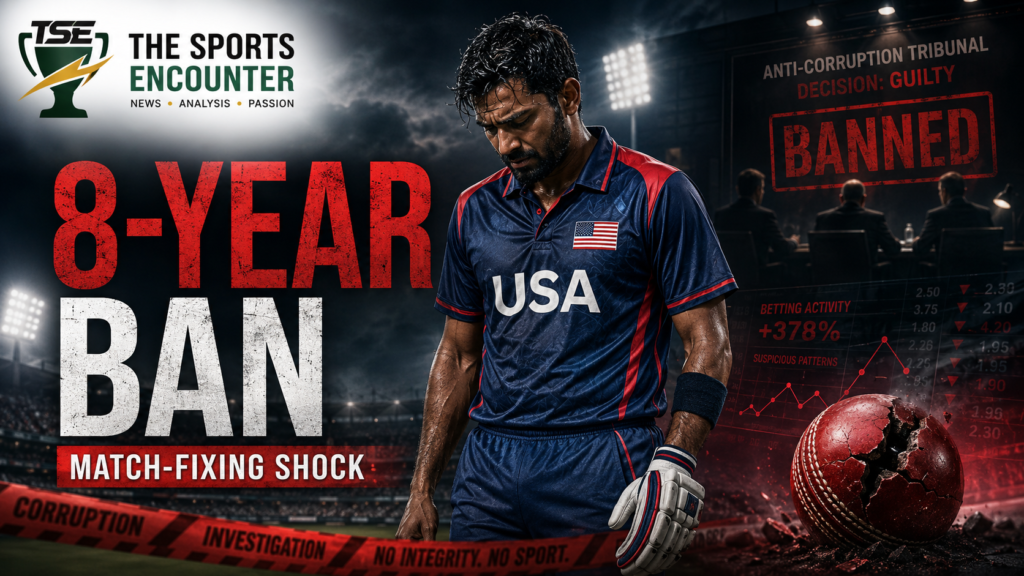
United States international Akhilesh Reddy has been banned from all cricket for eight years after an International Cricket Council Anti-Corruption Tribunal found him guilty of attempting to influence matches, trying to recruit another player into corrupt activity, and deleting material relevant to the investigation.
The ICC announced the sanction on Monday, August 3, 2026, following disciplinary proceedings connected to the 2025 Abu Dhabi T10 tournament in the United Arab Emirates.
Reddy, whose full name is Bodugum Akhilesh Reddy, denied all three charges. However, the tribunal accepted evidence that he approached another player and asked him to deliberately concede extra runs while bowling.
The other player rejected the approach and reported it to anti-corruption officials. The proposed manipulation did not succeed, but the tribunal ruled that Reddy’s attempt was sufficient to establish a serious breach of cricket’s anti-corruption rules.
Reddy’s suspension has been backdated to November 21, 2025, when he was provisionally suspended. Unless the sanction is reduced or overturned through an applicable appeal process, he will remain ineligible to participate in cricket until November 2033.
The case brings match-fixing back into the spotlight at a time when franchise cricket continues to expand across countries, formats, and commercial markets. Short matches can create fertile conditions for corrupt approaches because one over, one delivery, or one individual performance can influence betting markets without necessarily determining the final result.
Readers can follow major investigations, match reports, player sanctions, and governance stories through The Sports Encounter’s Cricket coverage.
TL;DR
- USA international Akhilesh Reddy has received an eight-year ban from cricket.
- The case arose from alleged conduct during the 2025 Abu Dhabi T10 tournament.
- An ICC tribunal found him guilty of three anti-corruption offences.
- Reddy attempted to influence matches by asking another player to concede extra runs deliberately.
- He also tried to encourage that player to participate in corrupt activity.
- The approached player refused and quickly reported the conversation.
- Reddy was also found guilty of deleting data and messages relevant to the investigation.
- The ban has been backdated to November 21, 2025.
- Reddy last represented the United States in April 2025.
Akhilesh Reddy’s Eight-Year Ban at a Glance
| Category | Detail |
|---|---|
| Player | Bodugum Akhilesh Reddy |
| International team | United States |
| Age | 26 |
| Tournament involved | Abu Dhabi T10 2025 |
| Initial charges announced | November 2025 |
| Final sanction announced | August 3, 2026 |
| Length of suspension | Eight years |
| Effective starting date | November 21, 2025 |
| Expected end of ban | November 2033 |
| Charges proven | Three |
| Attempted corrupt activity | Improperly influencing matches and encouraging another player to participate |
| Obstruction offence | Deleting potentially relevant data and messages from a mobile device |
| Outcome of approach | The other player refused and reported it |
What the ICC Found Akhilesh Reddy Guilty Of
The ICC confirmed that its Anti-Corruption Tribunal found Reddy guilty of breaching three provisions of the sport’s Anti-Corruption Code.
The charges related to the Abu Dhabi T10, for which the ICC had been appointed by the Emirates Cricket Board as the Designated Anti-Corruption Official.
The first offence involved attempting to fix, contrive, or improperly influence the result, progress, conduct, or another aspect of matches during the tournament.
The second concerned soliciting, encouraging, inducing, or attempting to persuade another participant to commit the same type of corrupt conduct.
The third involved obstructing the anti-corruption investigation by deleting data and messages from a mobile device that may have been relevant to the case.
The complete sanction was confirmed through the ICC’s official announcement of Reddy’s eight-year ban.
The ICC had initially detailed the accusations when it formally charged Reddy under the Anti-Corruption Code in November 2025.
The Alleged Approach Inside a Hotel Room
The central incident in the case involved a conversation between Reddy and another player during the Abu Dhabi T10 tournament.
According to the tribunal’s findings, Reddy approached the player inside a hotel room on November 19, 2025. The player was told that he was expected to receive opportunities in upcoming matches but would need to provide a “favour.”
When asked what that meant, Reddy allegedly explained that the player should concede extra runs while bowling.
That request was significant because cricket corruption does not always require an entire match to be fixed.
A participant can manipulate a specific over, delivery, score, dismissal, or individual performance. Betting operators may offer markets on these isolated events, allowing corruptors to profit even when the overall winner of the match remains unaffected.
The player refused the approach.
Reddy denied that the conversation involved corruption. His defence was that he had discussed a possible United States training camp ahead of an international assignment.
The tribunal did not accept that explanation.
It found the other player’s evidence more convincing when assessed alongside the timing of his report, his subsequent actions, and the surrounding circumstances.
The Player’s Immediate Report Became Critical Evidence
The player approached by Reddy did not wait for the tournament to end before speaking.
He contacted his agent shortly after the conversation and explained what had happened. The agent advised him to report the approach to the relevant anti-corruption officials.
The matter was then brought to the attention of the ICC’s anti-corruption personnel.
That rapid reporting strengthened the player’s credibility. It showed that he reacted immediately rather than developing an allegation days or weeks later.
Investigators and the tribunal also considered the consistency of his account. The player reportedly gave substantially the same version of events to his agent, anti-corruption officials, another teammate, and the tribunal.
His refusal prevented the proposed corrupt conduct from progressing. However, Reddy’s failure to recruit the player did not erase the attempted offence.
The ICC code covers efforts to solicit or encourage another participant even when the attempted recruitment does not succeed.
Why an Attempt Can Lead to a Major Ban
Some supporters may question how a player can receive an eight-year punishment when no manipulated over or confirmed fixed result followed the approach.
The answer lies in the preventive purpose of anti-corruption rules.
Cricket authorities do not need to wait for a match to be corrupted before taking action. An approach can damage trust, place another player under pressure, and expose a wider competition to manipulation.
If sanctions applied only after a successful fix, participants would have less incentive to report suspicious conversations before damage occurred.
The rules therefore treat attempts, agreements, inducements, instructions, and encouragement as punishable conduct.
The same principle separates this case from the recent English club-cricket controversy examined in The Sports Encounter’s explanation of how an alleged finger click may have deceived an umpire into awarding a false wicket.
That incident concerned alleged deception during a match rather than a betting-related corruption approach. Both cases still demonstrate how one deliberate act can undermine confidence in the fairness of competition.
Deleting Messages Deepened Reddy’s Problems
Reddy was not punished only for the alleged approach.
The tribunal also found him guilty of obstructing the investigation through the deletion of data and messages from a mobile device.
Digital records can provide vital evidence in corruption inquiries. Messages, call logs, contact histories, deleted files, location data, and communication patterns may help investigators understand whether a participant acted alone or communicated with outside figures.
Deleting information after an investigation begins can prevent officials from reconstructing events accurately. It may also hide evidence concerning potential associates, financial arrangements, or previous approaches.
The ICC did not need to prove that every deleted message contained direct evidence of match-fixing. The relevant issue was whether the removal of potentially useful material obstructed or delayed the investigation.
The tribunal concluded that it did.
This aspect of the case turned an attempted corrupt approach into a wider integrity failure. It suggested that the investigation itself had not received the cooperation expected from a professional cricketer.
The Three Anti-Corruption Breaches Explained
| ICC Code Article | Offence | Why It Matters |
|---|---|---|
| Article 2.1.1 | Attempting to fix, contrive, or improperly influence a match or part of a match | Cricket can be corrupted through one delivery, over, dismissal, or performance without changing the final result. |
| Article 2.1.4 | Soliciting, encouraging, or attempting to induce another participant to commit a corruption offence | Recruiting players allows corrupt networks to control more events and betting markets. |
| Article 2.4.7 | Obstructing or delaying an investigation, including through the deletion of relevant material | Investigators rely on messages and digital records to trace approaches and identify other people involved. |
The ICC’s wider rules and educational material can be reviewed through its official Anti-Corruption Code and integrity framework.
Why T10 Cricket Can Be Vulnerable to Corruption
T10 cricket compresses an entire innings into 60 legal deliveries.
That speed creates excitement, but it also increases the significance of individual moments. One expensive over can change a team’s total. A deliberate no-ball, dropped catch, slow scoring passage, or sequence of boundaries can affect several betting markets.
Short-format franchise competitions also bring together players from different countries, domestic systems, financial backgrounds, and levels of international experience.
Some earn substantial contracts. Others may be playing for comparatively modest fees while trying to establish professional careers.
Corruptors can exploit those inequalities by identifying players who appear financially vulnerable, isolated from their usual support structures, or uncertain about future contracts.
That does not mean T10 cricket is inherently corrupt. Most participants compete honestly, and anti-corruption officials operate at sanctioned tournaments.
The format does, however, require strong monitoring because manipulation of a small passage of play can be difficult for viewers to distinguish from an ordinary bad performance.
The commercial expansion of franchise cricket has already raised other governance concerns. The Sports Encounter recently examined Mitchell Santner’s allegations over an unpaid portion of his Mumbai Indians contract, highlighting how player protection can become complicated when leagues, franchises, and national boards share authority.
Spot-Fixing and Match-Fixing Are Not Always the Same
Match-fixing generally refers to corruptly arranging or influencing the overall result or conduct of a contest.
Spot-fixing focuses on a smaller, predetermined event within a match.
A bowler may agree to deliver a no-ball at a particular moment. A batter may deliberately score below a certain rate. A fielder could intentionally concede a boundary or fail to attempt a catch.
These incidents may not determine which team wins, but they can still generate profits in illegal or manipulated betting markets.
The allegation that another player was asked to concede extra runs resembles an attempt to influence a specific part of a match. The ICC charge was broad enough to cover attempts to improperly influence the result, progress, conduct, or another aspect of Abu Dhabi T10 matches.
That distinction matters because spectators often look only for obviously strange match results. Modern corruption can operate at a much smaller level.
Why Recruiting Another Player Made the Case More Serious
A player acting alone has limited control over a cricket match.
Recruiting a bowler, batter, wicketkeeper, captain, or team official gives a corrupt operation more options.
A bowler can influence runs conceded, extras, dismissals, or delivery patterns. A batter can affect scoring rates and dismissal timing. A captain can influence bowling changes and field placements.
Attempting to bring another participant into corrupt conduct also spreads risk through a dressing room. The approached player must decide whether to refuse, report the conversation, remain silent, or become involved.
That pressure can damage team trust even when the player rejects the offer.
The tribunal found that the attempted recruitment in Reddy’s case did not succeed. The teammate’s refusal and report prevented the alleged plan from moving forward.
His response provides an example of why education and confidential reporting systems remain central to cricket’s anti-corruption strategy.
The ICC provides a dedicated channel through which players and others can report suspected corruption or improper approaches.
What the Eight-Year Ban Prevents Reddy From Doing
An anti-corruption suspension applies much more broadly than selection for an international team.
During the ban, Reddy cannot participate in cricket covered by the applicable code. That can include playing, coaching, officiating, managing, or taking part in other recognized cricket activities.
The sanction removes most of what should have been the prime years of his playing career.
Reddy was 26 when the punishment was announced. He will be approximately 33 or 34 when the suspension expires, depending on the precise completion date and his birthday.
A return at that age would be difficult. He would need to rebuild his fitness, reputation, competitive experience, and eligibility after spending eight years outside organized cricket.
The length of the ban reflects the tribunal’s view that the combined offences went beyond a momentary error. The findings involved an attempted manipulation, an effort to recruit another player, and obstruction of the investigation.
Reddy’s USA Cricket Career
Reddy last represented the United States in April 2025.
His punishment creates another unwanted governance issue for a cricket system that has worked to expand the sport’s reach in the American market.
The United States has gained greater international attention through improved national-team performances, Major League Cricket, international tournaments, and increased investment in facilities.
USA Cricket remains responsible for governing, promoting, and developing the game nationally. Supporters can follow official national-team and administrative updates through the official USA Cricket website.
Reddy’s conduct during a franchise tournament does not establish wider wrongdoing within the United States team. The ICC ruling concerns his individual actions and should be reported with that distinction intact.
However, the case will still place pressure on American cricket administrators to demonstrate that players understand reporting obligations, corruption risks, and the consequences of associating with suspicious individuals.
A Difficult Moment for Cricket’s Growth in the United States
Cricket has spent years trying to move from a specialist immigrant sport into the broader American sporting market.
The national team’s international progress and the growth of professional T20 competition have helped introduce the game to new audiences.
An eight-year corruption ban involving a U.S. international creates damaging headlines at a sensitive stage of that expansion.
The response should not involve treating the scandal as proof that American cricket lacks legitimacy. Established cricket nations have faced match-fixing, spot-fixing, illegal betting, and reporting failures for decades.
The lesson is that emerging cricket systems must build integrity programs alongside leagues, stadiums, academies, and commercial partnerships.
Rapid growth without equally strong governance creates openings for people who understand how to exploit players and competitions.
Cricket Has Faced This Scourge Before
Match-fixing is not a new problem.
Cricket has endured major corruption scandals involving international captains, established players, domestic competitions, franchise leagues, bookmakers, and team officials.
Each scandal produces familiar promises about stronger monitoring and education. The threat returns because illegal betting markets continue to offer large financial incentives.
Technology has changed the methods.
Corrupt communication no longer requires a visible meeting with a bookmaker. Approaches can begin through messaging applications, social media, encrypted platforms, agents, acquaintances, or people presenting themselves as commercial contacts.
Players can also be targeted far from home while participating in short tournaments where teammates and officials may barely know one another.
The sport’s response depends on quick reporting and firm sanctions. A player who receives an unusual request must understand that silence can become an offence even when the approach is rejected.
Integrity Problems Extend Beyond Match-Fixing
Cricket’s credibility can be damaged by several forms of misconduct.
The recent “Clicky Ponting” controversy showed how alleged deception during a club match could trigger widespread anger even without evidence of betting-related corruption. The Sports Encounter later reported that Saltburn Cricket Club suspended the player at the center of the finger-clicking scandal while the league investigation continued.
Franchise cricket has also faced concerns involving player payments, ownership, governance, conflicts of interest, and unclear contractual protection.
The Sports Encounter’s coverage of the ownership and sponsorship crisis surrounding Jaffna Kings showed how off-field instability can spill into the playing environment.
These issues differ in seriousness and legal character, but they share one consequence: supporters begin questioning whether what happens on the field reflects fair competition.
Franchise Cricket Cannot Treat Integrity as a Formality
Anti-corruption briefings should be more than a presentation completed before a tournament begins.
Players need practical guidance about the approaches they may receive, the people who may target them, and the correct reporting channels.
Education must also account for language, financial circumstances, cultural differences, and the pressures facing players without long-term contracts.
Tournament organizers should ensure that every participant understands several basic principles:
- Report every suspicious approach immediately.
- Do not delete communications that may be relevant to investigators.
- Do not discuss confidential team information with unauthorized people.
- Do not assume an approach is harmless because no money has changed hands.
- Do not attempt to investigate a suspected corruptor independently.
- Preserve messages, call records, and contact details.
- Seek help from the designated anti-corruption official.
The growth of tournaments such as the Global Super League demonstrates how quickly teams and players now move across jurisdictions. The Sports Encounter has covered that developing landscape through reports including Lahore Qalandars’ Global Super League opening victory and Guyana Amazon Warriors’ tense win over San Francisco Unicorns.
Cross-border competitions create sporting opportunities, but they also require clear responsibility for integrity enforcement.
The Responsibility Does Not Belong Only to Players
Players must reject and report corrupt approaches, but cricket administrators cannot place the entire burden on individuals.
Leagues need properly funded anti-corruption units. Franchises should conduct background checks on people with dressing-room access. Governing bodies must investigate suspicious betting patterns and share intelligence across jurisdictions.
Delayed salaries and insecure contracts can also create vulnerabilities. Paying players properly will not eliminate corruption, but financial instability can make some participants easier targets.
Team environments should protect whistleblowers rather than isolate them. A player who reports an approach may fear losing selection, damaging relationships, or being blamed for bringing investigators into the dressing room.
The integrity system fails when an honest participant believes silence is safer than reporting.
Why the Teammate Deserves Recognition
The unnamed player’s conduct prevented a bad situation from becoming worse.
He rejected the proposal, contacted his representative, and reported the conversation quickly. Those actions gave investigators an opportunity to intervene before the alleged plan progressed.
His identity has remained protected, which is important. Witness confidentiality can encourage other players to report corruption without fearing public exposure or retaliation.
Cricket often focuses its attention on the person punished. The reporting player’s decision deserves equal recognition because anti-corruption systems depend on participants who are prepared to speak.
Without that report, the alleged approach may never have reached investigators.
How the Case Could Affect Reddy’s Future
The immediate effect is clear: Reddy cannot participate in recognized cricket during the eight-year period.
The longer-term consequences extend beyond the suspension.
Any future return would require cricket authorities, teams, and teammates to assess whether trust can be rebuilt. Sponsors and employers may also consider the tribunal’s findings when evaluating potential roles.
Rehabilitation should remain possible after a sanction has been completed, but an eight-year absence from elite sport is difficult to overcome.
Reddy will lose competitive seasons, development opportunities, possible international selection, franchise contracts, and professional connections during the ban.
His case is therefore likely to be used in anti-corruption education as an example of how one approach and subsequent obstruction can effectively end a player’s career.
Why This Case Matters Beyond Akhilesh Reddy
The significance of the ruling reaches beyond one United States player.
Cricket continues to create new leagues and shorter formats because they attract audiences, broadcasters, sponsors, and investors. Every new competition also creates more matches, more betting markets, and more potential entry points for corruptors.
The sport cannot rely on reputation alone.
Each sanctioned tournament needs credible monitoring, independent reporting channels, player education, digital evidence procedures, and the authority to act against participants regardless of nationality or status.
The Abu Dhabi T10 case shows that officials can pursue an attempted fix even when the other player refuses and the manipulated event never occurs.
That is an important deterrent. Corrupt conduct begins with the approach, not only with the delivery that follows.
Final Verdict
Akhilesh Reddy’s eight-year ban is among the most serious recent sanctions involving a United States international.
The tribunal found that he attempted to influence matches, tried to bring another player into corrupt activity, and deleted data that may have assisted the investigation.
The proposed fix did not succeed because the approached player refused and reported what had happened.
That detail provides the most important lesson from the case.
Cricket’s fight against corruption depends on participants recognizing an improper approach, preserving evidence, and speaking to investigators before a match can be compromised.
Reddy’s age and international status did not protect him from the consequences. The eight-year suspension removes the central years of his professional career and sends a warning across franchise cricket.
T10 may last only 60 deliveries per innings, but its integrity cannot be treated as a shortened version of the standards applied elsewhere.
Every run must be earned honestly. Every player approached by a corruptor must know where to turn. Every league earning money from cricket must invest in protecting the competition that makes that money possible.
Frequently Asked Questions
Why was Akhilesh Reddy banned from cricket?
Reddy was found guilty of attempting to improperly influence matches, trying to encourage another player to participate in corrupt activity, and deleting data and messages relevant to the investigation.
How long is Akhilesh Reddy’s suspension?
He has been banned from cricket for eight years.
When did Akhilesh Reddy’s ban begin?
The suspension was backdated to November 21, 2025, when he was provisionally suspended.
Which tournament was involved in the case?
The charges related to the 2025 Abu Dhabi T10 tournament in the United Arab Emirates.
Did the attempted match-fixing succeed?
No. The other player rejected the approach and reported it to anti-corruption officials.
What was the player allegedly asked to do?
According to the tribunal findings, he was asked to concede extra runs deliberately while bowling.
Why was deleting messages an offence?
The messages and data may have been relevant to the investigation. Deleting potentially useful evidence can obstruct or delay anti-corruption proceedings.
Did Akhilesh Reddy admit the charges?
No. Reddy denied the allegations, but the tribunal found him guilty after assessing the evidence.
When did Akhilesh Reddy last play for the United States?
He last represented the United States in April 2025.
Can a player be banned for an unsuccessful fixing attempt?
Yes. The ICC Anti-Corruption Code covers attempts to influence matches and efforts to encourage other participants, even when the proposed manipulation does not take place.