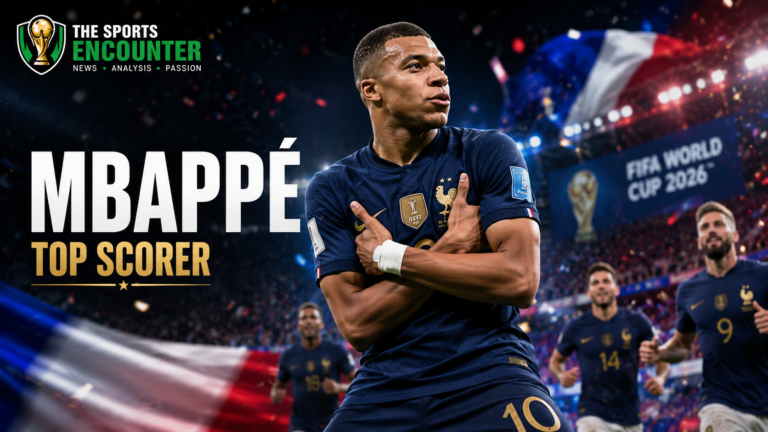
Meet the Top 10 Goal Scorers of the FIFA World Cup 2026
Kylian Mbappé’s speed, movement, and ruthless finishing produced 10 goals and another Golden Boot, but the FIFA World Cup 2026 scoring race also delivered historic campaigns from Lionel Messi, Jude Bellingham, Erling Haaland, and Spain’s title-winning attack.
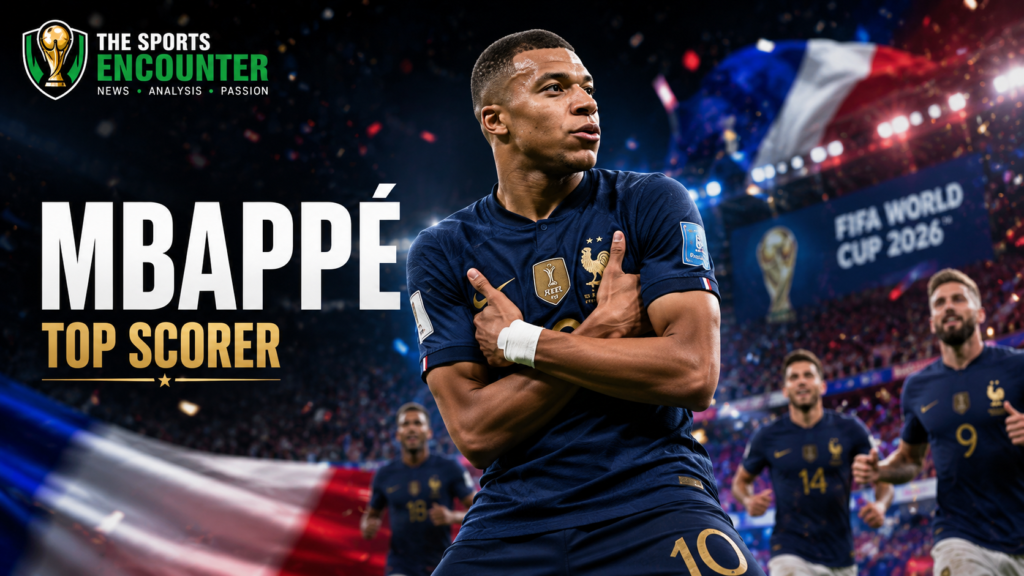
Kylian Mbappé finished as the top scorer at the FIFA World Cup 2026, winning the Golden Boot with 10 goals as his pace, agility, movement, and ruthless finishing carried France to fourth place.
The tournament ended with Spain lifting the trophy, Argentina finishing second, and England claiming third place. Yet the individual scoring race belonged to Mbappé. France’s captain scored in the group stage, the Round of 32, the Round of 16, the quarterfinal, and the third-place playoff.
His two goals against England took him into double figures and moved him clear of Lionel Messi, who finished with eight. Mbappé also reached 22 career World Cup goals, strengthening his claim as the most productive tournament scorer of his generation.
The final list of the top goal scorers at the FIFA World Cup 2026 featured established superstars, a breakout World Cup debutant, two England players, and one member of Spain’s championship team.
FIFA World Cup 2026 Top Scorers at a Glance
| Rank | Player | Country | Goals |
|---|---|---|---|
| 1 | Kylian Mbappé | France | 10 |
| 2 | Lionel Messi | Argentina | 8 |
| 3 | Jude Bellingham | England | 7 |
| 4 | Erling Haaland | Norway | 7 |
| 5 | Ousmane Dembélé | France | 6 |
| 6 | Harry Kane | England | 6 |
| 7 | Mikel Oyarzabal | Spain | 5 |
| 8 | Ismaïla Sarr | Senegal | 4 |
| 9 | Julián Quiñones | Mexico | 4 |
| 10 | Vinícius Júnior | Brazil | 4 |
1. Kylian Mbappé, France: 10 Goals
Mbappé began the World Cup as one of the favorites for the Golden Boot and quickly turned expectation into production. He scored twice against Senegal, added another brace against Iraq, and struck twice more as France defeated Sweden in the Round of 32.
His movement made him almost impossible to contain. Mbappé could begin on the left, drift centrally, attack the gap between defenders, or accelerate behind the back line before opponents had time to reorganize. His goals came through speed, sharp positioning, controlled finishing, and an ability to recognize danger a second earlier than everyone around him.
Further goals against Paraguay and Morocco helped France reach the semifinals. Spain denied him space during its disciplined 2-0 victory, but Mbappé responded with two goals in the extraordinary 6-4 third-place playoff defeat against England.
France finished fourth, below its pre-tournament target, but Mbappé remained the tournament’s most devastating scorer. He became the first man to win two FIFA World Cup Golden Boots after also leading the scoring table in 2022.
2. Lionel Messi, Argentina: 8 Goals
At 39, Messi produced another World Cup campaign filled with records and moments of individual brilliance.
He opened with a hat trick against Algeria, scored twice against Austria, and added a free kick against Jordan. Further goals against Cape Verde and Egypt took him to eight for the tournament.
Messi’s influence stretched beyond scoring. He supplied decisive passes during Argentina’s path through the knockout rounds and helped the defending champions reach another final. Spain eventually won 1-0 after extra time, but Messi remained Argentina’s main creative reference throughout the competition.
His eight goals earned second place in the scoring chart and the Silver Ball behind Spain captain Rodri.
3. Jude Bellingham, England: 7 Goals
Bellingham delivered one of the strongest tournament performances ever produced by an England midfielder.
He scored against Croatia and Panama, struck twice during England’s comeback victory over Mexico, and added another double in the quarterfinal against Norway. His extra-time winner in that match carried England into the semifinals.
A final goal against France in the third-place playoff brought his total to seven. That made Bellingham the first England player to score seven times at a single World Cup.
His goals reflected his complete attacking range. Some came from late runs into the penalty area. Others required physical strength, timing, or calm finishing under pressure.
4. Erling Haaland, Norway: 7 Goals
Haaland’s first World Cup produced exactly the kind of impact Norway had hoped for.
The striker scored twice against Iraq and twice against Senegal before finding the winner against Ivory Coast in the Round of 32. He then delivered two more goals as Norway stunned Brazil in the Round of 16.
Norway’s run ended against England in the quarterfinals, but Haaland left with seven goals and proof that his club-level scoring power could transfer to international football’s biggest stage.
His finishing was direct and unforgiving. Norway rarely needed to create several chances for him. One loose ball, mistimed defensive step, or accurate cross was often enough.
5. Ousmane Dembélé, France: 6 Goals
Dembélé gave France a second player among the tournament’s leading scorers.
His campaign gathered momentum after he scored against Iraq. A hat trick against Norway pushed him into the Golden Boot conversation, while another goal against Morocco helped France reach the semifinals.
Dembélé completed his tournament by scoring against England in the third-place playoff. His six goals, combined with his creative contribution, made him one of the most productive attackers at the competition.
France’s attack often depended on Mbappé’s directness, but Dembélé provided unpredictability from different positions. His ability to use either foot made defenders reluctant to force him in one direction.
6. Harry Kane, England: 6 Goals
Kane remained England’s reliable penalty-area finisher even as Bellingham and Bukayo Saka produced major attacking moments around him.
He scored twice against Croatia and added another goal against Panama. A brace against DR Congo moved England through the Round of 32, while his penalty against Mexico helped complete a difficult comeback.
Kane’s six-goal campaign also carried historical weight. He moved beyond Gary Lineker to become England’s leading scorer in World Cup finals.
England missed the final after losing to Argentina, but its victory over France secured third place and completed another productive tournament for its captain.
7. Mikel Oyarzabal, Spain: 5 Goals
Spain won the World Cup through collective control, defensive discipline, and attacking variety. Oyarzabal emerged as their leading scorer.
He struck twice against Saudi Arabia and scored another double against Austria in the Round of 32. His penalty against France in the semifinal took him to five goals.
Oyarzabal did not score in the final, where Ferran Torres produced the decisive extra-time finish against Argentina. His earlier goals, however, gave Spain a dependable central threat during its journey to the title.
His presence also prevented opponents from focusing entirely on Lamine Yamal, Nico Williams, and Spain’s midfield runners.
8. Ismaïla Sarr, Senegal: 4 Goals
Sarr was Senegal’s most dangerous attacker during a tournament that ended in the Round of 32.
He scored twice against Norway, found the net against Iraq, and struck again as Senegal built a lead against Belgium. The African side could not protect that advantage, but Sarr’s four goals underlined his importance.
His acceleration and direct running repeatedly stretched defensive lines. Senegal’s elimination arrived earlier than supporters hoped, although Sarr left as one of the tournament’s leading African scorers.
9. Julián Quiñones, Mexico: 4 Goals
Quiñones became one of the central figures in Mexico’s home World Cup campaign.
He scored during the group stage against South Africa and Czechia, then struck against Ecuador in the Round of 32. His fourth goal came in Mexico’s 3-2 defeat against England.
Mexico did not reach the quarterfinals, but Quiñones gave the co-hosts power, athleticism, and a reliable finishing presence. His performances also made him one of the tournament’s standout scorers from the CONCACAF region.
10. Vinícius Júnior, Brazil: 4 Goals
Vinícius opened his tournament with an outstanding strike against Morocco and followed it with a goal against Haiti. Two more against Scotland brought him to four before the knockout stage.
Brazil then defeated Japan but suffered a surprise Round of 16 loss to Norway. Vinícius could not add to his total during those matches, leaving his World Cup with a sharp divide between an explosive group stage and a frustrating knockout campaign.
His four goals still earned him a place among the competition’s 10 leading scorers.
Why Mbappé Won the FIFA World Cup 2026 Golden Boot
Mbappé separated himself through consistency across the tournament. He scored against different opponents, in different rounds, and through different types of finishes.
His agility allowed him to change direction without losing momentum. Elite acceleration made defensive recovery difficult, while improved movement through central areas gave him more routes to goal than in previous tournaments.
France fell short of the final after losing to Spain, but Mbappé kept producing until the last match. His brace against England became the difference between sharing the scoring lead and winning the Golden Boot outright.
The World Cup ultimately belonged to Spain. Its scoring crown belonged to Mbappé.
Frequently Asked Questions
Who was the top scorer at the FIFA World Cup 2026?
Kylian Mbappé finished as the tournament’s top scorer with 10 goals and won the FIFA World Cup 2026 Golden Boot.
How many goals did Mbappé score at World Cup 2026?
Mbappé scored 10 goals in eight matches for France.
Who finished second in the 2026 World Cup scoring chart?
Lionel Messi finished second with eight goals for Argentina.
How many goals did Jude Bellingham score?
Bellingham scored seven goals and became the first England player to reach that total in a single World Cup.
Who was Spain’s leading scorer at World Cup 2026?
Mikel Oyarzabal led the champions with five goals.
Did Mbappé win consecutive World Cup Golden Boots?
Yes. Mbappé won the Golden Boot in 2022 and again in 2026, becoming the first male player to win the award twice.
The Sports Encounter’s World Cup 2026 coverage focuses on fixtures, team news, match analysis, fan stories, tournament trends, and the biggest talking points from football’s global stage.
Editor's Choice
Wimbledon Men’s Singles Champions: How Triumph on Grass Changed Their Careers
From Spencer Gore and William Renshaw to Roger Federer, Novak Djokovic, Carlos Alcaraz, and Jannik Sinner, discover how every Wimbledon men’s champion won and what the title meant for his career.
Wimbledon has crowned champions since Spencer Gore won the inaugural gentlemen’s singles tournament in 1877. Across nearly 150 years, the championship has moved from wooden rackets, challenge rounds, and amateur-only competition to today’s global professional game.
This guide covers every unique Wimbledon men’s singles champion through Jannik Sinner’s successful 2026 title defense. Rather than repeating players for every year they won, it gives each champion two concise sections: how he captured Wimbledon and what the victory meant for his wider career.
ALSO READ: Guo Hanyu and Kristina Mladenovic Turn Trust Into Wimbledon 2026 Glory
Wimbledon used the challenge-round system until 1921, allowing the reigning champion to advance directly to the following year’s final. The modern all-comers format began in 1922, while professionals gained admission when the Open Era started in 1968. The Gentlemen’s Singles Trophy currently presented on Centre Court dates to 1887.
Wimbledon Men’s Singles Champions at a Glance
| Record | Player |
|---|---|
| Most Wimbledon men’s singles titles | Roger Federer, 8 |
| Most consecutive titles | William Renshaw, 6 |
| Most Open Era titles after Federer | Pete Sampras and Novak Djokovic, 7 |
| First champion | Spencer Gore, 1877 |
| First Open Era champion | Rod Laver, 1968 |
| First unseeded Open Era champion | Boris Becker, 1985 |
| First wild-card champion | Goran Ivanisevic, 2001 |
| First Italian men’s champion | Jannik Sinner, 2025 |
| Latest champion | Jannik Sinner, 2026 |
The Modern Champions: 2000 to 2026
Jannik Sinner
Sinner won his first Wimbledon title in 2025 by recovering from a set down to defeat Carlos Alcaraz 4-6, 6-4, 6-4, 6-4. He returned in 2026 and survived an opening-round five-set scare before beating Novak Djokovic in straight sets in the semifinal and Alexander Zverev 6-7(7), 7-6(2), 6-3, 6-4 in the final. The second victory made him the 10th man to defend the Wimbledon title in the Open Era.
The two titles established Sinner as far more than a hard-court specialist. His 2026 triumph gave him a fifth major championship and his 100th Grand Slam match win. Becoming Italy’s first Wimbledon men’s singles champion, then repeating the achievement one year later, strengthened his standing as the leading player of his generation and the central figure in modern men’s tennis.
Carlos Alcaraz
Alcaraz won his first Wimbledon title in 2023 by recovering from a disastrous opening set against Djokovic and prevailing 1-6, 7-6(6), 6-1, 3-6, 6-4. He defended the championship in 2024 with a far more authoritative performance, beating Djokovic 6-2, 6-2, 7-6(4).
Those victories proved that Alcaraz’s explosive movement and improvisational tennis could succeed on grass as effectively as on clay and hard courts. The 2023 final carried particular historical weight because he defeated a seven-time champion who had not lost a completed Wimbledon match since 2016. Alcaraz’s back-to-back titles confirmed him as a generational champion rather than a young player enjoying an early surge.
Novak Djokovic
Djokovic won Wimbledon seven times, beginning in 2011 when he defeated Rafael Nadal in four sets. His later titles included victories over Roger Federer in 2014, 2015, and the unforgettable 2019 final, when he saved two championship points and won the first deciding-set tiebreak used in a Wimbledon singles final.
Wimbledon became one of the foundations of Djokovic’s claim as the most accomplished men’s player in Grand Slam history. His movement, return of serve, balance, and ability to defend on grass changed assumptions about how the surface had to be played. The seven titles also placed him alongside Pete Sampras and one behind Federer’s men’s record.
Roger Federer
Federer won his first Wimbledon title in 2003 by defeating Mark Philippoussis in straight sets. He then captured five consecutive championships through 2007, added emotionally significant victories in 2009 and 2012, and won a record eighth title in 2017 without dropping a set.
Wimbledon became inseparable from Federer’s identity. His fluid movement, attacking instincts, disguised serve, and ability to take the ball early appeared perfectly designed for Centre Court. The 2003 victory began his transformation into a global sporting icon, while the 2017 title, won at age 35, extended his career narrative from early genius to enduring greatness.
ALSO READ: Jannik Sinner’s Wimbledon Defense Against Novak Djokovic and Alexander Zverev
Andy Murray
Murray defeated Djokovic 6-4, 7-5, 6-4 in 2013 to become the first British man to win the Wimbledon singles title since Fred Perry in 1936. He won again in 2016, overcoming Milos Raonic in straight sets after surviving several demanding matches earlier in the tournament.
The first triumph lifted one of the heaviest burdens carried by any British athlete. Murray had already won the 2012 US Open and Olympic gold, but Wimbledon changed his public standing at home and completed his rise into the elite group challenging Federer, Nadal, and Djokovic. His second title reinforced that the first was a career-defining achievement built on sustained excellence.
Rafael Nadal
Nadal produced one of Wimbledon’s greatest victories in 2008, defeating Federer 9-7 in the fifth set after four hours and 48 minutes of changing momentum, rain delays, and fading light. He claimed the championship again in 2010 with a straight-sets win over Tomas Berdych.
The 2008 title expanded Nadal’s career beyond his early image as a clay-court phenomenon. Beating Federer on the surface where the Swiss had won five consecutive championships demonstrated the reach of Nadal’s athleticism, competitive force, and tactical adaptability. His second title confirmed that the first had come from a genuine command of grass rather than one extraordinary afternoon.
Lleyton Hewitt
Hewitt defeated David Nalbandian 6-1, 6-3, 6-2 in the 2002 final. His return game, speed, passing shots, and constant pressure overwhelmed an opponent playing his first major championship match.
The title gave Hewitt his second Grand Slam crown after the 2001 US Open and strengthened his position as the world’s leading player before Federer’s ascent. He also became the last men’s champion before the long period of dominance associated with Federer, Nadal, Djokovic, and Murray.
Goran Ivanisevic
Ivanisevic entered Wimbledon in 2001 as a wild card after injuries and declining form had pushed his ranking outside the normal entry range. After three previous final defeats, he beat Pat Rafter 9-7 in the fifth set on an emotional Monday final staged before a loud, unconventional Centre Court crowd.
The championship transformed Ivanisevic’s career story. Without it, he might have been remembered as one of the greatest servers never to win a major. The victory completed his sporting redemption and made him the first men’s wild-card champion in Wimbledon history, a distinction officially recognized by the tournament.
Pete Sampras
Sampras won seven Wimbledon titles between 1993 and 2000. His first came against Jim Courier, while his final championship required a comeback against Pat Rafter in a match that finished in fading evening light.
The grass amplified every defining feature of Sampras’s game: his serve, athletic overhead, first volley, and calm under pressure. Wimbledon became the center of his legacy, and his seventh title gave him what was then the men’s record of 13 Grand Slam championships. Federer later surpassed his Wimbledon record, but Sampras remains one of the tournament’s most dominant champions.
The Champions of the 1980s and 1990s
Richard Krajicek
Krajicek won the 1996 title by defeating Mal Washington 6-3, 6-4, 6-3. His defining performance came earlier, when he ended Sampras’s 25-match Wimbledon winning streak in the quarterfinals.
The championship remained Krajicek’s only major title and the greatest achievement of his career. It showed how destructive his serve-and-volley game could become on fast grass and made him the first Dutchman to win a Grand Slam singles championship.
Andre Agassi
Agassi defeated Ivanisevic in a five-set 1992 final, winning 6-4 in the deciding set. His return of serve and baseline precision allowed him to succeed against one of the most dangerous servers of the era despite widespread doubts about whether his game suited grass.
Wimbledon was Agassi’s first Grand Slam title. It changed the trajectory of a career already shaped by celebrity, expectation, and near misses. The victory gave substance to his fame and began a major-winning journey that eventually produced the career Grand Slam.
Michael Stich
Stich defeated Boris Becker 6-4, 7-6(4), 6-4 in the 1991 final after eliminating defending champion Stefan Edberg in a semifinal decided without Edberg losing serve. Stich then played composed, varied tennis to defeat his more celebrated German compatriot.
The title became the defining achievement of Stich’s career and established him as more than a gifted player living in Becker’s shadow. He later reached major finals in Paris and New York, but Wimbledon remained the clearest expression of his elegant, all-court talent.
Boris Becker
Becker won Wimbledon in 1985 at age 17, defeating Kevin Curren in four sets. He became the youngest men’s champion of the Open Era and the first unseeded player to win the title. He defended it in 1986 and reclaimed the trophy in 1989 with a straight-sets victory over Edberg.
The championships turned Becker into a global star almost overnight. His diving volleys, explosive serve, and emotional presence made him one of Centre Court’s defining figures. Three titles and seven final appearances ensured Wimbledon remained the tournament most closely connected to his career.
Stefan Edberg
Edberg defeated Becker in the 1988 final and again in a five-set 1990 championship match. The latter required him to recover after Becker erased a two-set deficit and threatened to complete the comeback.
Wimbledon rewarded the purity of Edberg’s serve-and-volley game. His movement into the net, backhand volley, and calm demeanor made him one of the finest grass-court players of his era. The two titles became central to a six-major career and his rise to world No. 1.
Pat Cash
Cash defeated Ivan Lendl 7-6(5), 6-2, 7-5 in the 1987 final. After championship point, he climbed into the stands to celebrate with his family and team, creating one of Wimbledon’s most memorable traditions.
The title was Cash’s only Grand Slam singles championship and the high point of a career repeatedly disrupted by injuries. His aggressive net play and fearless athleticism found their ideal stage on grass, while the climb into the players’ box became part of modern Wimbledon culture.
John McEnroe
McEnroe lost the historic 1980 final to Bjorn Borg despite winning an 18-16 fourth-set tiebreak. He returned in 1981 and ended Borg’s reign, then added titles in 1983 and 1984. His 1984 demolition of Jimmy Connors, 6-1, 6-1, 6-2, remains one of the finest men’s final performances.
The three titles captured McEnroe at the height of his creative and competitive powers. His left-handed serve, reflex volleys, touch, and court awareness made him almost impossible to pass when fully engaged. Wimbledon also became the setting for both his greatest tennis and many of the emotional confrontations that defined his public image.
Jimmy Connors
Connors won Wimbledon in 1974 by crushing Ken Rosewall 6-1, 6-1, 6-4. Eight years later, he defeated McEnroe in five sets to win a second title in one of the finest late-career victories of the period.
The gap between his championships told the story of Connors’s longevity. His first title formed part of a dominant three-major season, while the 1982 victory re-established him after younger rivals had appeared to move beyond him. Wimbledon showcased his flat groundstrokes, fierce return game, and refusal to surrender relevance.
Bjorn Borg
Borg won five consecutive Wimbledon titles from 1976 through 1980. He defeated Ilie Nastase without losing a set for the first, survived five sets against Connors in 1977, and beat McEnroe 8-6 in the fifth set of the 1980 final after losing the famous fourth-set tiebreak.
Those victories transformed conventional ideas about grass-court tennis. Borg stayed back more often than traditional champions, using heavy topspin, speed, and extraordinary concentration. His ability to dominate both Roland Garros and Wimbledon made him the first modern symbol of complete surface versatility.
ALSO READ: Ostapenko and Arevalo Win Wimbledon 2026 Mixed Doubles Title
The First Open Era Champions
Arthur Ashe
Ashe defeated heavily favored defending champion Connors 6-1, 6-1, 5-7, 6-4 in 1975. He used changes of pace, sliced approaches, and intelligent placement to prevent Connors from settling into the hard, repetitive exchanges he preferred.
The victory gave Ashe his third major singles title and made him the first Black man to win Wimbledon. It remains one of the most tactically admired final performances in tournament history. The title also expanded the cultural reach of a player whose influence later extended far beyond competition.
Jan Kodes
Kodes defeated Alex Metreveli in the 1973 final during a championship affected by a major player boycott. He handled the unusual circumstances and won in straight sets, adding Wimbledon to his two French Open titles.
The depleted field has often complicated perceptions of the victory, but Kodes still had to navigate the draw and perform under pressure. Wimbledon completed a three-major career and gave the Czech player a grass-court achievement that broadened his legacy beyond clay.
Stan Smith
Smith defeated Nastase 7-5 in the fifth set of the 1972 final. The match featured two contrasting personalities, with Smith relying on his serve, composure, and direct attacking game to survive a shifting contest.
The title followed his 1971 US Open victory and confirmed him as one of the leading players of the early 1970s. Wimbledon also gave lasting competitive meaning to a name that later became globally familiar through footwear and fashion.
John Newcombe
Newcombe won in 1967 before the Open Era and added championships in 1970 and 1971. Both Open Era victories came through five-set finals, first against Rosewall and then against Smith.
His three titles established Newcombe as one of Australia’s great grass-court champions. A powerful serve, strong forehand, athletic net game, and competitive confidence carried him to seven major singles titles overall. Wimbledon remained the venue where his classic attacking style looked most natural.
Rod Laver
Laver won Wimbledon in 1961 and 1962 as an amateur, then returned after professionals were readmitted and captured the 1968 and 1969 titles. His 1969 victory over Newcombe formed part of his second calendar-year Grand Slam.
The Wimbledon championships connect every major phase of Laver’s career. He won before professional exclusion, endured years when he could not enter, and returned to dominate the Open Era. That span strengthened his standing as one of the most complete players tennis has produced.
The Great Amateur-Era Champions
Manuel Santana
Santana defeated Dennis Ralston 6-4, 11-9, 6-4 in the 1966 final. The Spaniard adjusted a game developed largely on clay, using intelligent placement and a willingness to move forward.
The victory made Santana the first Spanish man to win Wimbledon. It also completed a career that included championships in Paris and New York, proving his success could travel across surfaces during an era when grass dominated much of the international calendar.
Roy Emerson
Emerson defeated Fred Stolle in consecutive Wimbledon finals in 1964 and 1965. His fitness, return game, efficient volleying, and relentless competitive intensity helped him control two all-Australian championship matches.
The titles formed part of Emerson’s 12-major singles record, which stood for decades. Although many leading professionals were excluded during the amateur era, his durability and consistent winning across all four majors remain major components of Australian tennis history.
Chuck McKinley
McKinley defeated Stolle 9-7, 6-1, 6-4 in the 1963 final. His fast, aggressive style and constant movement toward the net disrupted the taller Australian.
Wimbledon became McKinley’s only major singles title and the peak of his career. The victory also confirmed the United States as a continuing force during a period increasingly dominated by Australian men.
Neale Fraser
Fraser defeated Laver 6-4, 3-6, 9-7, 7-5 in the 1960 final. His left-handed serve and net coverage helped him win the critical points against a younger opponent who would soon dominate world tennis.
The title completed an exceptional major season and added Wimbledon to Fraser’s US Championships success. It also gave him a prominent place within the deep generation of Australian champions who controlled the sport around the turn of the 1960s.
Alex Olmedo
Peruvian-born Olmedo, representing the United States, defeated Laver in straight sets in the 1959 final. His attacking play and confidence prevented the young Australian from settling into the match.
Wimbledon followed Olmedo’s Australian Championships victory and formed the centerpiece of his brief but brilliant period at the top. His achievements also gave Latin American tennis an important early connection to major championship success.
Ashley Cooper
Cooper recovered from losing the opening set to defeat Fraser 3-6, 6-3, 6-4, 13-11 in 1958. The long final set tested the serve-and-volley precision and endurance of both Australians.
The title came during a season in which Cooper won three of the four major championships. Wimbledon therefore helped define one of the great amateur campaigns, although his professional move soon removed him from Grand Slam competition.
Lew Hoad
Hoad defeated Rosewall in 1956 and Cooper in 1957 to win consecutive Wimbledon titles. The first completed the third leg of what appeared to be a possible calendar Grand Slam before Hoad lost the US final.
The championships captured Hoad’s immense natural power and athletic freedom. Many contemporaries considered his peak level among the highest they had seen. Wimbledon gave permanent weight to that reputation before his professional career became increasingly affected by back problems.
Tony Trabert
Trabert defeated Kurt Nielsen 6-3, 7-5, 6-1 in the 1955 final. His controlled aggression and physical strength gave him command of the rallies and denied Nielsen a second-set route back into the contest.
The victory formed part of a remarkable season in which Trabert won three major singles titles. Wimbledon strengthened his standing as the world’s leading amateur before he turned professional and left the Grand Slam stage.
Jaroslav Drobny
Drobny defeated Rosewall 13-11, 4-6, 6-2, 9-7 in 1954 after losing two previous Wimbledon finals. The Egyptian representative, born in Czechoslovakia, finally broke through at age 32.
The championship became the emotional culmination of his long tennis journey. Drobny had already won two French titles, but Wimbledon gave his career a victory built on perseverance, political displacement, and repeated attempts at the same elusive prize.
Vic Seixas
Seixas defeated Nielsen 9-7, 6-3, 6-4 in 1953. He handled the pressure of a tight opening set and then used his athletic net play to take control.
Wimbledon became his first major singles championship, followed by the US title in 1954. The victory established Seixas as the leading American player of the period and helped sustain US prominence as Australian depth continued to grow.
Frank Sedgman
Sedgman recovered from losing the opening set to beat Drobny in the 1952 final. His speed, serve-and-volley timing, and ability to dominate the front of the court steadily changed the match.
The championship came during the final phase of an extraordinary amateur career before Sedgman turned professional. It formed part of a five-major singles résumé and strengthened his reputation as one of Australia’s first postwar global stars.
Dick Savitt
Savitt defeated Ken McGregor 6-4, 6-4, 6-4 in 1951. His heavy serve and forceful groundstrokes gave him control throughout a final between two players seeking a first Wimbledon crown.
The victory followed Savitt’s Australian Championships title earlier that year. His elite career was relatively short, making Wimbledon an especially important part of his legacy and one of the great early achievements by a Jewish American athlete.
Budge Patty
Patty beat Sedgman 6-1, 8-10, 6-2, 6-3 in 1950. After losing the long second set, he recovered his composure and used touch, movement, and tactical variety to regain control.
The title completed a rare Roland Garros-Wimbledon double in the same season. It became the defining achievement of a cosmopolitan career largely built in Europe and placed Patty among the most accomplished American players of the postwar period.
Ted Schroeder
Schroeder defeated Drobny in a five-set 1949 final, recovering from setbacks in the first and fourth sets. His serve and willingness to attack under pressure proved decisive late in the match.
The championship gave Schroeder a second major singles title after the US Championships. His selective international schedule meant he did not build the volume of results associated with some contemporaries, but Wimbledon secured his historical standing.
Bob Falkenburg
Falkenburg defeated John Bromwich 7-5 in the fifth set of the 1948 final after trailing badly and saving championship points. His aggressive serving and attacking instincts allowed him to escape a match that appeared lost.
The title remained his only major singles championship. Its dramatic nature ensured Falkenburg retained a distinct place in Wimbledon history, even as his later life became better known for successful business ventures in Brazil.
Jack Kramer
Kramer overwhelmed Tom Brown 6-1, 6-3, 6-2 in the 1947 final. His serve, forehand, and systematic approach to attacking tennis made the match one-sided.
The victory completed his dominance of the amateur game before he joined the professional circuit. Kramer later shaped tennis as a promoter, tour organizer, and influential thinker, but Wimbledon represented the clearest championship display of his playing philosophy.
Yvon Petra
Petra defeated Geoff Brown in five sets in 1946, the first Wimbledon held after World War II. He recovered after losing the third and fourth sets to win 6-4 in the fifth.
The Frenchman’s title carried historic resonance because Petra had survived wartime imprisonment and returned to competition. Wimbledon became his only major singles championship and a symbol of both personal endurance and the tournament’s postwar revival.
The Interwar Champions
Bobby Riggs
Riggs defeated Elwood Cooke in five sets in 1939 after trailing by two sets to one. His tactical intelligence, anticipation, and control proved more important than physical power.
The Wimbledon title formed part of a remarkable tournament in which Riggs won singles, men’s doubles, and mixed doubles. It established him as one of the era’s leading players decades before his role in the 1973 “Battle of the Sexes” shaped his wider public identity.
Don Budge
Budge defeated Gottfried von Cramm in 1937 and Bunny Austin in 1938. His second final was a 6-1, 6-0, 6-3 demonstration during the season when he became the first player to complete the calendar Grand Slam.
The titles showcased a revolutionary backhand and a game without an obvious weakness. Wimbledon became central to Budge’s claim as the dominant player of his era and one of the earliest men considered in all-time-great discussions.
Fred Perry
Perry won three consecutive Wimbledon titles from 1934 through 1936. His final victory, a 6-1, 6-1, 6-0 defeat of von Cramm, was one of the most emphatic championship performances.
The titles made Perry Britain’s defining men’s champion for generations. His 1936 win remained the country’s last in men’s singles until Murray succeeded in 2013. Perry’s career later gained broader cultural influence through the fashion brand carrying his name.
Jack Crawford
Crawford defeated Ellsworth Vines in five sets in 1933. The victory followed championships in Australia and France, leaving him one US title away from completing what journalists began calling a Grand Slam.
Although he narrowly missed that clean sweep, Wimbledon strengthened Crawford’s standing as the outstanding player of 1933. His smooth strokes and all-court control placed him among Australia’s earliest international tennis greats.
Ellsworth Vines
Vines defeated Bunny Austin 6-2, 6-2, 6-0 in the 1932 final. His explosive serve and powerful groundstrokes overwhelmed the British challenger.
The title confirmed Vines as one of the sport’s most naturally gifted attacking players. He later became a major professional star and an accomplished golfer, but Wimbledon preserved the clearest record of his amateur peak.
Sidney Wood
Wood became champion in 1931 when Frank Shields withdrew before the final because of injury. The walkover remains the only one in a Wimbledon men’s singles championship match.
The unusual ending sometimes overshadows Wood’s achievement in reaching the final without losing a set. At 19, he became one of the youngest champions in tournament history, and Wimbledon remained the defining result of his career.
Bill Tilden
Tilden won Wimbledon in 1920, 1921, and 1930. His final title came at age 37, when he defeated Wilmer Allison in straight sets and became the oldest men’s singles champion of the modern all-comers period.
The championships extended Tilden’s influence beyond his dominance in the United States. His tactical sophistication, serving variation, and commanding personality helped turn tennis into a larger international spectacle. His later life and criminal convictions severely complicated his legacy, but his competitive impact remains historically significant.
Henri Cochet
Cochet won in 1927 and 1929. His first title came through a two-set comeback against Jean Borotra, 4-6, 4-6, 6-3, 6-4, 7-5.
The victories formed part of the French “Four Musketeers” era that controlled Wimbledon from 1924 through 1929. Cochet’s ability to improvise, defend, and turn losing positions into victories made him one of the defining players of that celebrated generation.
Rene Lacoste
Lacoste defeated Borotra in 1925 and Cochet in 1928. His methodical baseline game, concentration, and ability to identify opponents’ patterns contrasted with the more flamboyant styles around him.
The titles helped build a seven-major career and reinforced the dominance of French tennis during the 1920s. Lacoste’s influence later expanded through racket innovation and the clothing company represented by the crocodile emblem.
Jean Borotra
Borotra won Wimbledon in 1924 and 1926. His first championship required a five-set victory over Lacoste, while his second came in straight sets against Howard Kinsey.
Known as the “Bounding Basque,” Borotra brought energy, athletic net play, and theatrical appeal to the court. His two titles formed part of the Musketeers’ golden period and helped popularize French tennis internationally.
Bill Johnston
Johnston defeated Frank Hunter 6-0, 6-3, 6-1 in 1923. His forehand, often considered one of the finest of the period, controlled the match from the beginning.
Wimbledon added an international championship to a career already distinguished by repeated US success. The title strengthened Johnston’s place alongside Tilden as one of America’s outstanding players of the early 1920s.
Gerald Patterson
Patterson won Wimbledon in 1919 and 1922. The first came through an all-Australian victory over Norman Brookes, while the second followed the abolition of the challenge round.
His huge serve earned him the nickname “The Human Catapult.” The championships established Patterson as one of the leading power players of his period and extended Australia’s early influence at Wimbledon.
The Challenge-Round Champions
Norman Brookes
Brookes became the first overseas man to win Wimbledon when he defeated Arthur Gore in 1907. He captured a second title in 1914 by beating Anthony Wilding, another champion from the Australasian tennis tradition.
The victories broke Britain’s early control of the tournament and announced the global expansion of elite tennis. Brookes later became a major administrator, and the Australian Open men’s trophy now carries his name.
Anthony Wilding
Wilding won four consecutive Wimbledon titles from 1910 through 1913. His athleticism, fitness, heavy forehand, and ability to compete successfully on different surfaces made him the dominant player of the period immediately before World War I.
The championships created the foundation of his sporting fame and made the New Zealander one of tennis’s first international celebrities. Wilding died during military service in 1915, giving his achievements a lasting association with a brilliant career and life cut short.
Arthur Gore
Gore won Wimbledon in 1901, 1908, and 1909. His 1909 victory required a five-set comeback after he lost the first two sets to Major Ritchie.
His final championship came at age 41, making him the oldest men’s singles winner in Wimbledon history. The three titles reflected extraordinary longevity during the challenge-round era and established him as one of Britain’s most enduring early champions.
Laurence Doherty
Laurence Doherty won five consecutive singles titles from 1902 through 1906. He defeated players including Gore, Frank Riseley, and Brookes while combining precise placement with exceptional movement.
The run made him one of the first great sustained champions after the Renshaw era. Together with his brother Reginald, he also dominated doubles, helping turn the Doherty name into a central part of early Wimbledon history.
Reginald Doherty
Reginald Doherty won four consecutive Wimbledon singles titles from 1897 through 1900. His victories included a five-set comeback against Gore in 1899.
The championships established him as the leading player of the late 1890s. His doubles partnership with Laurence further expanded his record and made the brothers one of tennis’s earliest sporting dynasties.
Harold Mahony
Mahony defeated Wilfred Baddeley in a five-set final in 1896. He recovered after falling behind by two sets to one and won the deciding set 6-3.
The victory was the greatest singles achievement of his career and made him the only Irish-born man to win Wimbledon singles. His title preserved an important Irish presence within the tournament’s predominantly British early history.
Wilfred Baddeley
Baddeley won Wimbledon in 1891, 1892, and 1895. His final triumph required one of the tournament’s early great comebacks, as he recovered from two sets down against Wilberforce Eaves.
The championships made Baddeley the leading player of the early 1890s. Together with twin brother Herbert, he also achieved major doubles success, continuing the tradition of family partnerships established by the Renshaws.
Joshua Pim
Pim won consecutive titles in 1893 and 1894, defeating Baddeley on both occasions. His aggressive style and precise volleying helped him reverse earlier losses against his chief rival.
The championships made the Irish player one of the dominant figures of the decade. His success in singles and doubles placed him among the most accomplished competitors of the challenge-round period.
Willoughby Hamilton
Hamilton defeated six-time defending champion William Renshaw in the 1890 all-comers event before beating him again in the challenge round. He recovered from two sets to one down to take the final 6-1 in the fifth.
The victory ended Renshaw’s extended hold over Wimbledon and became Hamilton’s defining result. Illness later limited his career, making the championship an especially important record of his ability at full strength.
William Renshaw
Renshaw won seven Wimbledon singles titles, including six consecutive championships from 1881 through 1886 and another in 1889. His dominance was aided by the challenge-round system, but his attacking play, powerful serving, and success over changing opponents separated him from his contemporaries.
Wimbledon credits Renshaw as a foundational figure in the growth of lawn tennis. His winning streak generated public interest, expanded attendance, and helped move the sport beyond a small social pastime. His seven-title record stood alone for more than a century before Sampras and later Federer matched or surpassed it.
Ernest Renshaw
Ernest defeated Herbert Lawford 6-3, 7-5, 6-0 to win the 1888 title. He had previously lost championship matches to twin brother William in 1882 and 1883.
The victory gave Ernest an individual place in history beyond the brothers’ celebrated doubles partnership. Although William collected more singles championships, Ernest’s title ensured both twins became Wimbledon champions.
Herbert Lawford
Lawford defeated Ernest Renshaw in five sets in 1887 after losing several earlier finals. His heavy forehand, played with significant topspin for the period, gave him a distinctive attacking weapon.
The championship rewarded years of persistence against the Renshaw brothers. Lawford’s forehand technique also made him an important figure in the tactical development of early lawn tennis.
John Hartley
Hartley won Wimbledon in 1879 and 1880. He defeated Vere St. Leger Goold in straight sets for his first title and then overcame Lawford in four sets to retain it.
The clergyman became the first player to win consecutive Wimbledon singles championships. His reign ended when William Renshaw defeated him decisively in 1881, but his two titles established the tournament’s first successful defense.
Frank Hadow
Hadow defeated inaugural champion Spencer Gore 7-5, 6-1, 9-7 in 1878. He used the lob effectively against Gore’s frequent net attacks, helping popularize a shot that became fundamental to tennis strategy.
Hadow never returned to defend his title, making him one of Wimbledon’s most unusual champions. His sole appearance still influenced the tactical evolution of the sport and gave him a permanent place in its earliest history.
Spencer Gore
Gore won the first Wimbledon tournament in 1877, defeating William Marshall 6-1, 6-2, 6-4. The competition featured 22 entrants and was staged at the All England Croquet and Lawn Tennis Club.
The victory made Gore the first champion of what became the world’s most famous tennis tournament. He reportedly doubted that lawn tennis would develop into a major sport, but his place at the beginning of Wimbledon history remains secure.
What Wimbledon Victory Has Meant Across Tennis History
The meaning of becoming Wimbledon champion has changed with the sport. Early winners competed within a largely British amateur culture. Later champions represented the growth of Australian, American, French, German, Spanish, Serbian, Italian, and other tennis traditions.
Yet the career impact has remained remarkably consistent. For some players, including Federer, Sampras, Djokovic, Borg, and Renshaw, Wimbledon became the centerpiece of sustained dominance. For Ivanisevic, Cash, Krajicek, Stich, and several early champions, one victory reshaped an entire career narrative.
The surface has changed too. Grass became firmer, equipment became more powerful, movement improved, and baseline play became increasingly important. Champions adapted. Serve-and-volley players once controlled Centre Court, but modern winners have shown that aggressive baseline tennis, elite returning, and complete defensive movement can also dominate Wimbledon.
The official tournament history reflects each stage of that evolution, from the challenge round and the emergence of overseas champions to the Open Era and the global spectacle Wimbledon has become.
Final Perspective
Every Wimbledon champion won the same tournament, but each title answered a different career question.
Could Nadal conquer grass? Could Murray carry British expectation? Could Ivanisevic recover from three final defeats? Could Federer return late in his career? Could Sinner defend the crown after arriving with doubts?
The answers arrived on Centre Court.
Some champions built dynasties. Others experienced one perfect fortnight. All joined a lineage stretching from Gore in 1877 to Sinner in 2026, connected by a trophy, a grass court, and one of the hardest achievements in sport.
FAQs
Who has won the most Wimbledon men’s singles titles?
Roger Federer holds the men’s record with eight titles, won between 2003 and 2017.
Who won Wimbledon six consecutive times?
William Renshaw won six straight championships from 1881 through 1886 under the challenge-round system.
Who has won seven Wimbledon men’s titles?
William Renshaw, Pete Sampras, and Novak Djokovic have each won seven. Renshaw competed during the amateur challenge-round era, while Sampras and Djokovic won in the Open Era.
Who was the first Wimbledon men’s champion?
Spencer Gore won the inaugural tournament in 1877.
Who was the first overseas Wimbledon champion?
Australian Norman Brookes became the first non-British men’s singles champion in 1907.
Who was the first Open Era Wimbledon men’s champion?
Rod Laver won the first Open Era edition in 1968.
Who was the youngest Wimbledon men’s champion?
Boris Becker won in 1985 at age 17.
Has a wild card ever won Wimbledon men’s singles?
Yes. Goran Ivanisevic won the 2001 championship after entering as a wild card.
Who was the first Italian man to win Wimbledon?
Jannik Sinner became the first Italian men’s singles champion in 2025 and successfully defended the title in 2026.
Was Wimbledon held every year?
No. The tournament was suspended during World War I from 1915 to 1918, during World War II from 1940 to 1945, and in 2020 because of the COVID-19 pandemic.
Editor's Choice
How Youngster Lamine Yamal Came of Age in the FIFA World Cup 2026
Lamine Yamal arrived at the FIFA World Cup 2026 as football’s most celebrated teenager. He left as a world champion whose creativity, composure, identity, and global appeal helped define a new generation.
Lamine Yamal arrived at the FIFA World Cup 2026 as the most famous teenager in soccer. He left North America as a world champion, a symbol of modern Spain, and the young player who connected the tournament with a new generation of fans.
His campaign did not unfold through a simple collection of goals or a procession of spectacular individual performances. Spain asked Yamal to occupy defenders, create space, carry the ball through pressure, and provide the unpredictability that a possession-heavy team still needed.
At 19 years and six days, he became one of the youngest players ever to win the men’s World Cup. He also became the first teenager to appear in both a European Championship final and a FIFA World Cup final, having already helped Spain win Euro 2024 as a 17-year-old.
By the time Spain defeated Argentina 1-0 after extra time in the final, Yamal had completed a journey that stretched far beyond one tournament. The fearless boy who broke records at Barcelona had learned how to influence games when opponents designed entire defensive plans around stopping him.
Lamine Yamal at the FIFA World Cup 2026
- Age during the final: 19 years and six days
- Country: Spain
- Position: Right winger
- Tournament finish: FIFA World Cup champion
- World Cup appearance: Tournament debut
- Major role: Wide creator, dribbler, chance-maker, and attacking outlet
- Historic achievement: First teenager to play in both a European Championship final and a World Cup final
How Did Lamine Yamal Perform at the FIFA World Cup 2026?
Yamal scored once during Spain’s title run, but his value could not be reduced to his goal total.
He remained one of Spain’s primary sources of width and creativity from the right. Opposing left backs rarely defended him alone. Midfielders moved across to close the inside channel, while center backs prepared for the moment he cut toward goal on his stronger left foot.
That attention changed Spain’s attacking geometry.
When two defenders moved toward Yamal, teammates gained room elsewhere. Pedri and Dani Olmo could receive between the lines. Fullbacks found wider passing lanes. Mikel Oyarzabal, Ferran Torres, and Nico Williams benefited from defensive units leaning toward Spain’s right side.
Yamal’s influence appeared in passes that opened attacks, dribbles that forced fouls, and moments when a defender had to abandon his position to confront him. His tournament became a study in how an elite young player can affect matches even when the scoring numbers remain modest.
FIFA consistently included him among the leading candidates for the tournament’s Young Player Award, although the honor eventually went to his Spain teammate Pau Cubarsí. Yamal’s fellow teenager earned the award through outstanding defensive performances, while Yamal supplied much of Spain’s attacking imagination.
The World Cup Tested Yamal Differently
Yamal had already won major trophies before arriving in North America. He had become Spain’s youngest international and goalscorer, played a central role in the Euro 2024 triumph, and established himself as one of Barcelona’s most important players.
The World Cup brought a different level of attention.
Every match carried global scrutiny. Every quiet spell became a debate. Defenders understood his preferred movements, while coaches built compact structures to prevent him from receiving the ball near the penalty area.
Spain’s opening draw against Cape Verde provided an early warning. Yamal found limited room against a disciplined defensive block, and Spain struggled to turn possession into clear chances. The result became one of the tournament’s early surprises and forced Luis de la Fuente’s team to become more varied in attack.
Rather than chasing the game on his own, Yamal adapted. He released the ball earlier, combined more frequently with midfield runners, and learned when to hold his width instead of constantly moving inside.
That tactical growth mattered as Spain progressed through the competition. Their route included victories over Austria, Portugal, Belgium, France, and Argentina, opponents with very different defensive approaches.
Lamine Yamal’s Best World Cup 2026 Performances
Yamal’s attacking importance became clearer during the knockout rounds.
Against Austria in the Round of 32, his movement stretched a defense that struggled to contain Spain’s wide threats. Portugal then presented a more physical and experienced challenge, forcing the teenager to work through tighter spaces during Spain’s 1-0 victory.
The quarterfinal against Belgium offered another stage for his creativity. Belgium attempted to crowd central areas and break quickly through its own attacking talent, but Yamal continued to carry Spain forward from the right as the champions won 2-1.
His composure before the semifinal also revealed how comfortable he had become under the brightest lights. Yamal turned 19 on July 13, one day before facing France. Asked about pressure, he treated the occasion with the relaxed confidence of someone playing a familiar neighborhood game rather than a World Cup semifinal. He had already scored against France at ages 16 and 17, and he entered the match focused on another Spanish victory rather than personal recognition.
Spain won 2-0, controlling a French side led by Kylian Mbappé and Ousmane Dembélé. Rodri and Spain’s midfield dictated the match, but Yamal’s presence continued to influence where France placed its defensive protection.
That victory sent Spain into the FIFA World Cup 2026 final against Argentina, where Yamal faced the player who had shaped so much of his own football imagination.
Lamine Yamal vs Lionel Messi Became the Story of Generations
The final carried an irresistible narrative.
In 2007, a young Lionel Messi held six-month-old Yamal during a charity calendar photo shoot organized by Barcelona, UNICEF, and the Spanish newspaper Sport. Nearly two decades later, they met on opposite sides of a World Cup final.
The image returned throughout the tournament because it captured the passage of football time with remarkable clarity. Messi represented the most influential playing career of the modern era. Yamal stood as one of the clearest candidates to lead the sport’s next generation.
That storyline could easily have overwhelmed a teenager. Yamal handled it with maturity.
He spoke respectfully about Messi without treating the final as a ceremonial handover. Spain’s goal was to win, and Yamal played with the aggression of a competitor rather than the hesitation of an admirer.
During the final, he repeatedly attempted to isolate Argentina’s defenders and thought he had scored the opening goal before the effort was ruled out. Argentina contained him for long stretches, yet his movement kept their defensive line occupied while Spain maintained territorial control.
Ferran Torres eventually scored in the 106th minute, ending Argentina’s resistance and securing Spain’s second World Cup title.
After the match, Yamal approached Messi and embraced him. The moment carried respect rather than theatrical symbolism. One Barcelona generation had met another on the largest stage, and the younger player left with the trophy.
Why Lamine Yamal Inspired Young Soccer Fans
Yamal’s influence extended well beyond Spain’s tactical structure.
Young fans saw a 19-year-old playing decisive World Cup matches with visible joy. His game included the qualities that attract children to soccer in the first place: dribbling, invention, quick changes of direction, daring passes, and the willingness to challenge defenders.
His background added another layer to that appeal.
Yamal grew up in Rocafonda, a working-class and culturally diverse neighborhood near Barcelona. He represents that community with his “304” celebration, a reference to the final digits of the local postal code. Born to a Moroccan father and an Equatorial Guinean mother, he has spoken through his career and public image to a Spain shaped by migration, mixed identities, and neighborhood pride.
During the World Cup, residents of Rocafonda gathered around the story of a local child reaching the final against Messi. His success carried social meaning because he remained connected to the place that formed him.
For young players in Barcelona, Madrid, Casablanca, Malabo, Karachi, Lagos, New York, and countless other cities, Yamal made elite soccer appear closer. His journey showed that global fame does not require abandoning local identity.
His popularity across social media also helped the tournament reach audiences who experience soccer through clips, short videos, player-led content, and mobile-first storytelling. By the end of the World Cup, his Instagram audience had grown beyond 50 million followers, reflecting a global appeal that already stretched beyond traditional club loyalties.
Yamal Led a Remarkable Generation of Young Players
The FIFA World Cup 2026 featured several young players who looked ready to shape the next decade.
Pau Cubarsí won the Young Player Award after anchoring Spain’s defense. Désiré Doué impressed for France. Nico O’Reilly strengthened England’s midfield options, while Ayyoub Bouaddi emerged as another high-level prospect.
Yamal remained the most visible figure among them.
His fame, playing style, championship pedigree, and ability to connect with younger audiences gave him a different kind of influence. Cubarsí earned the official youth award, but Yamal became the tournament’s clearest generational symbol.
He was also central to a Spain side that blended teenage talent with experienced leaders such as Rodri. The balance allowed young players to express themselves within a disciplined structure rather than carrying the team alone.
That framework helps explain why Spain won. Yamal offered freedom and improvisation. Rodri supplied control. Cubarsí brought defensive composure, while the wider squad contributed goals from several positions.
How Old Was Lamine Yamal When Spain Won the World Cup?
Yamal was 19 years and six days old when Spain defeated Argentina in the final on July 19, 2026.
FIFA’s tournament statistics placed him among the youngest World Cup winners in history. Only a small group, including Pelé and Giuseppe Bergomi, lifted the trophy at a younger age.
The achievement became even more remarkable because Yamal was already a European champion. He had won Euro 2024 shortly after turning 17, then added the World Cup two years later.
Few players in soccer history have accumulated that level of international experience before their 20th birthday.
Did Lamine Yamal Win the World Cup Young Player Award?
No. Spain center back Pau Cubarsí received the FIFA World Cup 2026 Young Player Award.
That result did not diminish Yamal’s tournament. The two young Spaniards influenced different parts of the game, and Cubarsí’s defensive consistency helped Spain concede only one goal across eight matches.
Yamal’s contribution appeared through creativity, width, defensive attention, and attacking progression. He entered the tournament as a global star and left as a world champion who had learned to contribute even when opponents prevented him from dominating individually.
What the 2026 World Cup Changed for Lamine Yamal
Before the tournament, Yamal was already viewed as football’s leading young talent.
After it, he had become part of World Cup history.
The distinction matters. Club brilliance creates fame, while World Cups create memories shared across countries and generations. Yamal’s tournament now belongs to children who watched him challenge defenders, lift the trophy, embrace his younger brother on the field, and share a respectful moment with Messi after the final.
That family celebration softened the scale of the occasion. His three-year-old brother, Keyne, ran onto the field wearing Yamal’s shirt and became one of the tournament’s most widely shared post-final images. The scene reminded millions of viewers that the new world champion was still a young man surrounded by family.
Yamal did not need to win the Golden Ball, Golden Boot, or Young Player Award to define the youth story of the World Cup.
His broader achievement was making elite football feel adventurous again. Every touch carried possibility. Every one-on-one duel invited anticipation. Young fans watched him play and saw someone close enough to their own age to make ambition feel immediate.
Frequently Asked Questions
How many goals did Lamine Yamal score at the FIFA World Cup 2026?
Yamal scored once during Spain’s championship campaign, while contributing through chance creation, dribbling, width, and attacking combinations.
Did Lamine Yamal play in the 2026 World Cup final?
Yes. Yamal started for Spain against Argentina and became the first teenager to appear in both a European Championship final and a World Cup final.
How old was Lamine Yamal in the World Cup final?
He was 19 years and six days old when Spain won the final on July 19, 2026.
Did Lamine Yamal win the Best Young Player award?
No. His Spain teammate Pau Cubarsí won the FIFA Young Player Award.
Is Lamine Yamal the youngest World Cup winner?
No. Pelé remains the youngest men’s World Cup winner. Yamal nevertheless became one of the youngest players ever to lift the trophy.
Why is Lamine Yamal so popular with young soccer fans?
His expressive playing style, age, multicultural background, neighborhood identity, social media presence, and success at Barcelona and with Spain make him highly relatable to younger audiences worldwide.
A World Champion Before His 20th Birthday
The FIFA World Cup 2026 did not represent Yamal’s arrival. That had already happened at Barcelona and Euro 2024.
It marked his maturation.
He learned to influence matches when space disappeared, remained composed under global pressure, helped Spain navigate the knockout rounds, and started a World Cup final against his childhood idol.
By the end, Yamal stood with a winner’s medal, a trophy, and a place inside the next chapter of soccer history.
The generation inspired by Messi now has a champion of its own age to follow.
The Sports Encounter’s World Cup 2026 coverage focuses on fixtures, team news, match analysis, fan stories, tournament trends, and the biggest talking points from football’s global stage.

Editor's Choice
Why FIFA Picked Rodri as the Best Player of the FIFA World Cup 2026
Rodri did not lead the FIFA World Cup 2026 scoring charts, but Spain’s captain controlled the spaces, passing lanes, defensive transitions, and match tempo that carried La Roja to the title.
Rodri won the FIFA World Cup 2026 Golden Ball because he controlled the part of the game that decided Spain’s championship: the space between defending and attacking.
Kylian Mbappé scored 10 goals. Lionel Messi led Argentina back to the final. Lamine Yamal provided Spain with imagination, width, and youthful nerve. Yet when FIFA selected the Player of the Tournament, the award went to the man who gave every part of Spain’s football its balance.
Rodri, Spain’s captain and midfield anchor, received the adidas Golden Ball after La Roja defeated Argentina 1-0 following extra time in the final at New York New Jersey Stadium. His tournament was built on control rather than highlight-reel production. He moved the ball, protected the defense, managed transitions, organized teammates, and repeatedly made difficult matches feel comfortable for Spain.
For supporters asking why Rodri won the 2026 World Cup Golden Ball, the clearest answer lies in his total influence. He was Spain’s tactical reference point across all eight matches.
Why Did Rodri Win the FIFA World Cup 2026 Golden Ball?
FIFA highlighted Rodri’s ability to connect defense with attack, intervene at the right moments, and pass with exceptional accuracy. Those qualities shaped Spain’s entire campaign.
Rodri completed more passes than any other player at the tournament. He finished with 655 accurate passes from 705 attempts, giving him a completion rate of almost 93 percent. His distribution remained accurate even when he advanced the ball into crowded attacking areas.
The numbers describe only part of his value. Spain trusted Rodri to receive possession under pressure, turn away from opponents, and decide whether the next action required patience or speed. He rarely forced the game. His decisions allowed Pedri, Fabián Ruiz, Dani Olmo, Nico Williams, and Yamal to operate with greater freedom.
During Spain’s World Cup final victory over Argentina, Rodri completed 101 of his 105 passes. He also won 80 percent of his duels and created two scoring chances. Those figures came in the highest-pressure match of the tournament, against a team built to punish mistakes and disrupt central midfield rhythm.
Rodri Controlled the World Cup Final Against Argentina
The final offered the strongest explanation for FIFA’s decision.
Argentina entered the match with Messi operating between midfield and attack, Enzo Fernández attempting to progress the ball, and Lautaro Martínez looking for opportunities behind Spain’s defense. Rodri’s positioning reduced the space available to all three.
He rarely chased Messi recklessly. Instead, Rodri stayed connected to Spain’s center backs, blocked forward passing lanes, and moved across the field as Argentina changed the point of attack. When Messi dropped deeper, Rodri helped prevent him from turning into open space.
One of his most important interventions came late in the contest when he dispossessed Messi during a dangerous Argentine transition. It was the kind of moment that defined Rodri’s tournament. The action did not produce a goal or assist, but it stopped Argentina from creating the moment that could have changed the final.
Spain eventually broke through when Ferran Torres scored in the 106th minute. The goal earned the headlines. Rodri had spent the previous 105 minutes ensuring Spain remained in control long enough for the breakthrough to arrive.
Spain’s Defensive Record Strengthened Rodri’s Case
Spain conceded only one goal across eight World Cup matches. That record belonged to the entire team, including Golden Glove winner Unai Simón and a disciplined defense led by Pau Cubarsí and Aymeric Laporte.
Rodri provided the protection in front of them.
He led the tournament with 26 tackles and won 63.3 percent of his ground duels. Spain’s opponents produced only 2.37 expected goals across the competition, a remarkably low figure for an eight-match run through an expanded World Cup.
His defensive intelligence was especially valuable because Spain committed numbers forward. Fullbacks advanced, wide attackers stayed high, and midfielders moved between the lines. Rodri monitored the spaces they left behind and slowed counterattacks before they developed into clear chances.
That structure helped Spain eliminate Austria, Portugal, Belgium, France, and Argentina during the knockout stage. The 2-0 semifinal victory over France offered another example. Mbappé and Ousmane Dembélé entered as major attacking threats, but Spain controlled the center and denied France the transitions they needed.
Rodri Gave Spain More Than Passing Accuracy
Defensive midfielders are often judged through pass-completion percentages, but safe passing alone does not explain Rodri’s importance.
His value came from choosing the right pass at the right moment.
Rodri could recycle possession when Spain needed stability, break the first defensive line with a vertical pass, switch play toward Yamal or Williams, or draw an opponent forward before releasing a teammate into the space behind him.
He completed more final-third passes than any other player and maintained an accuracy rate above 90 percent in advanced areas. That distinction matters. Passing accurately near one’s own defense is far easier than finding teammates around a compact penalty area.
Spain experienced the difficulty of breaking down deep defenses during their opening goalless draw with Cape Verde. As the competition progressed, Rodri helped Spain improve the speed and direction of their possession. La Roja became more purposeful without losing control.
Was Rodri Better Than Messi and Mbappé at World Cup 2026?
That question depends on how tournament excellence is measured.
Mbappé was the outstanding goalscorer and deserved the Golden Boot after scoring 10 times. Messi remained Argentina’s attacking leader and received the Silver Ball after guiding the defending champions to another final.
Rodri influenced more phases of the game.
He contributed to Spain’s buildup, defensive organization, pressing structure, game management, and leadership. While Mbappé decided matches near the penalty area and Messi created Argentina’s most dangerous moments, Rodri shaped how Spain played from the opening pass to the final defensive action.
Before the final, The Sports Encounter’s ranking of the top players at the FIFA World Cup 2026 reflected how difficult it was to compare goalscorers with midfield controllers. The final strengthened Rodri’s argument because he delivered his most complete performance on the tournament’s biggest night.
Rodri’s Leadership Mattered During Spain’s Title Run
Rodri also carried the captaincy during a campaign that required Spain to manage different kinds of pressure.
The team began with questions after drawing against Cape Verde. It responded by beating Saudi Arabia 4-0 and Uruguay 1-0 before finding a stronger rhythm in the knockout rounds.
Spain then defeated Austria 3-0, eliminated Portugal 1-0, overcame Belgium 2-1, shut out France 2-0, and finally defeated Argentina.
Rodri gave the side emotional stability throughout those changes. He communicated constantly, slowed matches when opponents gained momentum, and helped younger players remain connected to Spain’s structure.
Yamal, Cubarsí, and several other members of the squad experienced their first World Cup under intense expectations. Rodri’s calm authority gave Luis de la Fuente an experienced leader in the most important area of the pitch.
Why Rodri Was the Right FIFA World Cup 2026 Player of the Tournament
Golden Ball debates often favor goals, assists, and individual attacking moments. Rodri’s victory recognized a broader form of football influence.
He completed the most passes, maintained elite accuracy, won tackles and duels, protected the tournament’s best defense, controlled the final, and captained Spain to its second world championship.
FIFA’s choice reflected the story of the tournament. Spain won through collective intelligence, positional discipline, technical quality, and patience. Rodri embodied every one of those qualities.
Ferran Torres scored the goal that won the final. Unai Simón protected Spain’s net. Yamal supplied invention, while Cubarsí represented the team’s emerging generation.
Rodri made the entire system function.
Frequently Asked Questions
Who won the FIFA World Cup 2026 Golden Ball?
Spain captain Rodri won the adidas Golden Ball as the best player of the FIFA World Cup 2026.
Why did Rodri win Player of the Tournament?
Rodri won because of his passing accuracy, defensive work, midfield control, leadership, consistency, and major influence during Spain’s championship campaign.
What were Rodri’s statistics in the 2026 World Cup final?
Rodri completed 101 of 105 passes, won 80 percent of his duels, and created two chances against Argentina.
Who finished behind Rodri in the Golden Ball voting?
Lionel Messi received the Silver Ball, while Kylian Mbappé received the Bronze Ball and also won the Golden Boot.
How many goals did Spain concede at the 2026 World Cup?
Spain conceded only one goal across eight matches, with Rodri playing a central role in protecting the defense.
The Sports Encounter’s World Cup 2026 coverage focuses on fixtures, team news, match analysis, fan stories, tournament trends, and the biggest talking points from football’s global stage.