


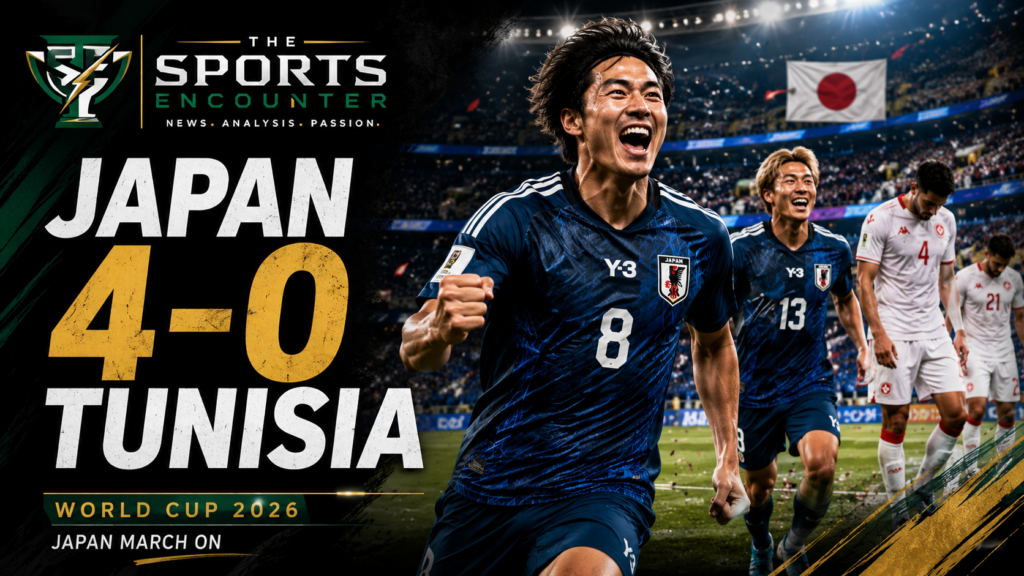
Japan delivered one of the cleanest performances of the FIFA World Cup 2026 group stage so far, sweeping Tunisia aside 4-0 in Monterrey and moving closer to the knockout rounds with a display built on speed, control, and ruthless finishing.
Daichi Kamada opened the scoring in the fourth minute, Ayase Ueda doubled Japan’s lead in the 31st minute, Junya Ito added the third in the 69th minute, and Ueda completed his brace in the 83rd minute. The result left Japan on four points from two Group F matches after their earlier 2-2 draw with the Netherlands.
For Japan, this was more than a big win. It was a statement.
For Tunisia, it was another painful night in a campaign that has slipped away quickly after the heavy opening defeat against Sweden.
Japan now head into their final group match against Sweden with their knockout hopes firmly in their own hands. Tunisia, meanwhile, are left searching for pride and answers before facing the Netherlands.
For more World Cup coverage, visit our FIFA World Cup 2026 hub.
Japan Set the Tone Inside Four Minutes
Japan did not wait for the match to settle.
Inside four minutes, they moved the ball across the pitch with purpose, stretched Tunisia’s defensive line, and forced the opening. Keito Nakamura’s low delivery from the left created panic in the box, and Kamada finished the move to give Japan the perfect start.
That early goal shaped the rest of the match.
Tunisia had arrived under pressure after conceding five against Sweden. Falling behind so early created the same old problem. They had to chase the game, but they did not look comfortable enough in possession to push Japan back.
Japan, by contrast, looked calm and prepared. Hajime Moriyasu’s side used a 3-4-3 structure that gave them width, numbers in midfield, and enough defensive security to stop Tunisia from building any sustained pressure.
The Samurai Blue were sharper in every important area. They pressed better. They passed cleaner. They attacked with more runners. They also looked like a team that knew exactly where Tunisia were vulnerable.
Ayase Ueda Leads Japan’s Attack With Power and Intelligence
Ayase Ueda was the clear star of the match.
His first goal came in the 31st minute after Tunisia gave him too much room near the edge of the attacking area. Ueda received the ball, turned quickly, and drove his shot through the defense into the bottom corner.
That goal told the story of Tunisia’s night. The defenders were present, but the pressure was not. Japan kept finding space between lines, and Tunisia kept reacting a step late.
Ueda’s second goal in the 83rd minute completed a brilliant individual performance. His movement troubled Tunisia throughout the match, and his link-up play also helped bring Japan’s wide players into dangerous positions.
This was the kind of center-forward performance every knockout team needs. Ueda gave Japan a focal point, but he also made their attack less predictable.
Junya Ito Adds the Third as Japan Turn Control Into Punishment
Japan’s third goal arrived in the 69th minute through Junya Ito, and it came from another moment of loose Tunisian defensive organization.
Ueda was involved again, flicking the ball into Ito’s path. Tunisia’s defensive line failed to move together, and Ito took full advantage.
By that stage, the match was no longer about whether Japan would win. It was about how much damage they could do.
Ito’s goal showed Japan’s biggest strength in this match: they did not waste Tunisia’s mistakes. Some teams dominate possession without creating enough danger. Japan played with a sharper edge. When Tunisia lost shape, Japan punished them.
That made the 4-0 scoreline fair.
Japan were not just the better team. They were better in every phase.
Tunisia Struggle Again After Heavy Sweden Defeat
Tunisia’s World Cup 2026 campaign has turned into a painful one.
After losing 5-1 to Sweden in their opening Group F match, they needed a disciplined, brave, and organized response against Japan. Instead, they conceded early, lost midfield control, and spent most of the match chasing shadows.
The appointment of Hervé Renard before the game gave Tunisia a fresh voice, but there was very little time to change the team’s structure or confidence. The problems looked deeper than one managerial switch.
Tunisia lacked defensive conviction. The back line was often too passive. The midfield could not slow Japan’s rhythm. The attack offered moments of effort, but very little genuine threat.
Hannibal Mejbri tried to bring energy, while Omar Rekik and Montassar Talbi had to deal with constant Japanese movement. Still, Tunisia never looked settled enough to turn the match into a contest.
Their final group game against the Netherlands now becomes a pride match. They need to show structure, fight, and some sign that this tournament can still leave behind lessons rather than only damage.
For another look at how group-stage pressure can expose teams quickly, read our report on DR Congo stunning Portugal as Ronaldo’s World Cup question grows louder.
Japan’s Dominance Was Tactical, Not Just Technical
Japan’s performance was impressive because it had layers.
They did not rely only on energy. They controlled spaces.
Their wing-backs pushed Tunisia wide. Their midfielders moved the ball before pressure arrived. Their front three kept rotating enough to pull defenders out of position.
Even without Takefusa Kubo, Japan did not lose creativity. Kamada and Ito gave the team intelligence and width, while Ueda gave them penalty-box threat.
Defensively, Japan were just as strong. Tunisia rarely found clean central routes, and when they attempted to play longer, Japan were ready for second balls.
That balance matters.
World Cup knockout matches often punish teams that attack well but defend carelessly. Japan showed against Tunisia that they can dominate a weaker opponent without losing discipline.
That is the biggest takeaway from this win.
Japan Move Closer to the Knockout Rounds
Japan now sit on four points after two matches in Group F.
Their 2-2 draw with the Netherlands already showed they could compete with a major European side. This 4-0 win over Tunisia showed they could also dominate when expected to take control.
That matters because Japan’s World Cup history has often carried a theme of promise, frustration, and near breakthroughs.
Japan reached the Round of 16 in 2002, 2010, 2018, and 2022, but they have never gone beyond that stage. Their 2022 campaign was especially memorable after wins over Germany and Spain, before a penalty-shootout defeat to Croatia ended their run.
This 2026 team looks mature enough to challenge that ceiling.
The final group match against Sweden will decide Japan’s exact route, but the direction is clear. Japan look organized, confident, and dangerous.
For a broader look at how World Cup momentum can shift quickly, read our feature on Mexico edging Korea Republic in a tense World Cup fight.
Tunisia’s World Cup Story Turns Into a Reality Check
Tunisia have appeared at multiple World Cups, but they have never reached the knockout stage. The 2026 campaign was supposed to give them another chance to change that story.
Instead, two games have exposed the gap between intention and execution.
Conceding nine goals across two matches against Sweden and Japan leaves little room for positive spin. Tunisia can still show character against the Netherlands, but their tournament has already become a harsh reminder of how quickly World Cup football punishes weak defensive structure.
The challenge now is not only tactical. It is psychological.
Tunisia need to rebuild confidence, protect their players from a damaging finish, and use the final match to restore some competitive pride.
What This Result Means for Group F
Group F now has a clear shape.
The Netherlands and Japan are leading the race, Sweden remain dangerous, and Tunisia are at the bottom after two defeats.
Japan’s final match against Sweden could decide whether they finish first, second, or face a more complicated knockout route. Given the expanded 48-team format, four points place Japan in a strong position, but Moriyasu will not want his team to depend on outside calculations.
A win or draw against Sweden would strengthen Japan’s case and maintain momentum before the Round of 32.
For Tunisia, the Netherlands match is about avoiding a winless exit and repairing some pride after two heavy losses.
For more group-stage drama, read our report on Switzerland crushing Bosnia in Group B and our analysis of England beating Croatia as Kane and Bellingham turned chaos into a World Cup statement.
Final Word
Japan’s 4-0 win over Tunisia was one of those group-stage performances that carries more meaning than the scoreline alone.
The Samurai Blue were fast, organized, disciplined, and clinical. Ueda gave them a true attacking reference point. Kamada and Ito gave them creativity and timing. The defensive structure gave Tunisia almost nothing to hold onto.
Tunisia looked overwhelmed, and their World Cup campaign now feels like a missed opportunity.
Japan, though, look ready for something bigger.
Their next test against Sweden will tell us where they finish in Group F. This performance already told us something more important.
Japan are not just trying to survive the group stage. They are playing like a team that believes it can finally push beyond its old World Cup limits.