



Kane Williamson did not leave international cricket with noise. That was never his way.
He walked away in the middle of a Test series in England, after scores of 0 and 18 at Lord’s. For most great players, that would feel like an awkward ending. But for Williamson, it somehow felt true to the man. No grand farewell tour, no demand for attention, no attempt to control the emotion of the room.
Instead, he simply knew. The time had come.
After 16 years, more than 19,000 international runs, 33 Test hundreds, a World Test Championship title, a World Cup final heartbreak, and a generation of quiet leadership, New Zealand cricket now has to say goodbye to its most complete modern batter.
For readers following The Sports Encounter’s wider cricket coverage, Williamson’s retirement belongs beside the biggest turning points in the game because this is about more than one player leaving. It is about the end of a New Zealand era, the fading of cricket’s famous Fab Four generation, and the departure of a man who made greatness feel calm.
Kane Williamson Leaves as New Zealand’s Greatest Run-Maker
Kane Williamson retires as New Zealand’s most prolific international run-scorer.
That sentence alone explains his scale.
He finished with more than 19,000 runs across formats. In Test cricket, he made 9,515 runs from 110 matches, including 33 centuries. He also played 175 ODIs and 93 T20Is, giving New Zealand stability in every format during its most successful modern period.
However, numbers only tell part of his story.
Williamson’s true value was how he made New Zealand feel bigger than its size. The Black Caps have never had the player pool of India, Australia, or England. Yet under Williamson’s influence, they played with clarity, courage, and self-belief.
That is why his retirement hurts.
New Zealand are not only losing runs. They are losing rhythm, calm, identity, and one of the safest minds the game has seen.
The Boy From Tauranga Who Became New Zealand’s Standard
Williamson’s rise never felt loud.
He made his Test debut against India in Ahmedabad in 2010 and immediately showed the patience that would define him. Over time, he became the batter New Zealand trusted when conditions were hard, totals were uncertain, or pressure began to close in.
His technique was never built for theatre. It was built for answers.
The bat came down straight. The head stayed still. The hands worked late. Because of that, he could score in England, survive in India, resist in Australia, and control tempo at home.
More importantly, he rarely looked rushed.
Even when bowlers attacked him, Williamson seemed to move at his own speed. That made him different from many modern greats. Virat Kohli brought fire. Steve Smith brought eccentric genius. Joe Root brought movement and elegance. Williamson brought stillness.
That stillness became New Zealand’s greatest weapon.
The Best Point: World Test Championship Glory in 2021
Every great career needs one golden frame.
For Kane Williamson, that frame came in Southampton in 2021.
New Zealand beat India in the inaugural World Test Championship final, and Williamson stood at the center of the achievement. As captain, he had guided a small cricket nation to the top of the Test world.
It was not a lucky title. It was the result of years of method, selection clarity, seam-bowling depth, and a dressing-room culture that never looked consumed by ego.
For New Zealand fans, that victory meant everything.
They had suffered World Cup heartbreaks. They had often been admired without being crowned. However, the World Test Championship final gave them a global trophy in the purest format of the game.
Williamson did not celebrate like a man trying to own the moment.
Instead, he looked relieved, proud, and quietly satisfied. That reaction made the victory feel even more powerful. It was not only New Zealand’s win. It was a reward for the way they had played the game.
Why the WTC Title Defines Captaincy of Kane Williamson
Kane Williamson captained New Zealand to 22 wins in 40 Tests.
That record matters. Still, the deeper achievement was cultural.
Under him, New Zealand played tough cricket without losing their dignity. They fought hard without becoming unpleasant. They chased excellence without copying louder teams. As a result, they built one of the most respected dressing rooms in world cricket.
The WTC title was the proof.
New Zealand could be calm and ruthless at the same time.
The Worst Point: The 2019 World Cup Final That Refused to Make Sense
If 2021 was the summit, 2019 was the wound.
The ODI World Cup final at Lord’s remains one of cricket’s most painful endings. New Zealand tied England in the match. Then they tied the Super Over. Yet England lifted the trophy because of the boundary countback rule, a rule that was scrapped soon afterward.
For New Zealand, it was brutal.
For Williamson, it was almost impossible to explain.
He had led his team to the edge of immortality. New Zealand had matched England ball for ball, nerve for nerve, moment for moment. Still, they did not get the trophy.
Many players would have been angry. Many captains would have questioned the system openly. Williamson did something harder.
He accepted the pain with grace.
That response turned defeat into part of his legacy. In one of cricket’s cruelest moments, Williamson showed the world what sportsmanship looks like when it costs something.
Why That Defeat Still Hurts Kane Williamson Fans
The 2019 final was not a normal loss.
New Zealand were not outplayed in the usual sense. They were separated by a rule most fans now remember with discomfort. Because of that, the defeat still feels unfinished.
For Williamson, it became the moment that showed his character more clearly than any century could.
His calm did not mean he hurt less.
It meant he carried the hurt without making the game smaller.
That is why fans still respect him so deeply.
The Highest Batting Peaks of Kane Williamson’s Career
Williamson’s best batting years put him among the finest players of his generation.
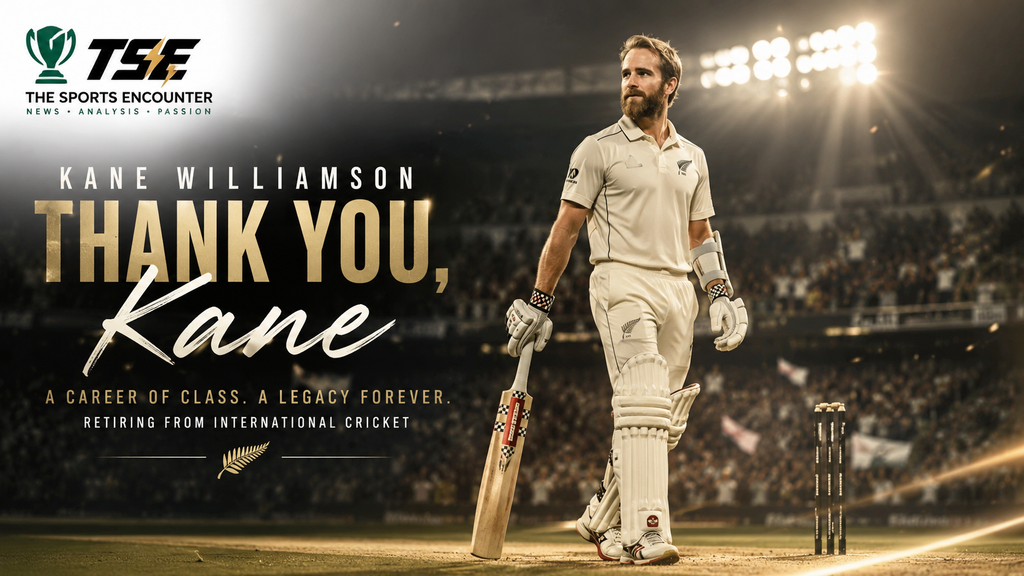
He scored heavily in Test cricket, built long innings, and gave New Zealand the rare luxury of a No. 3 who could both save and shape matches. When he was at his best, he did not overpower bowling attacks. He dissolved them.
That made his batting beautiful in a different way.
He was not a destroyer like some modern white-ball stars. Instead, he was a problem-solver. He read length early, found gaps, and absorbed spells. Then, slowly, he changed the match.
Kane Williamson’s 33 Test centuries show his consistency. His double hundreds show his appetite. His ability to perform across formats shows his range.
However, his greatest batting gift was trust.
New Zealand trusted him to stay.
The Art of Looking Unmoved
Williamson rarely gave bowlers emotional rewards.
A good ball was met with respect. A bad ball was punished. A dropped chance did not create drama. A milestone did not create theatre.
Because of that, he made batting look like a private conversation between ball, bat, and mind.
That style may not dominate highlight reels in the same way as power-hitting. Even so, it built something more lasting.
It built belief.
The Lowest Point: A Quiet Exit After Lord’s Struggles
There is also sadness in how Williamson’s international career ended.
He stepped away during the England series after scores of 0 and 18 in the opening Test at Lord’s. For a player of his class, that was a painful final snapshot.
Yet it also made the decision feel honest.
Williamson was not chasing one more applause line. He was looking at the team around him and the journey ahead. He saw younger players ready to grow. Then he decided the right thing was to move aside.
That is rare.
Many legends stay until the game pushes them out. Williamson chose to leave before the story became too heavy.
Even so, the timing will hurt New Zealand fans. They would have wanted one last century, one final long innings; they would have wanted him to walk off with the crowd standing and the scoreboard glowing.
Instead, they got something more Williamson-like.
A quiet goodbye.
The Fab Four Era Begins to Fade
Williamson’s retirement also changes the mood of world cricket.
For more than a decade, fans debated the Fab Four: Williamson, Virat Kohli, Joe Root, and Steve Smith. Each represented a different version of batting greatness.
Kohli brought intensity and chase-master hunger. Root brought balance and fluency. Smith brought strange angles and relentless production. Williamson brought calm control and classical judgment.
Together, they gave Test cricket a modern golden thread.
Now, that thread is thinning.
Kohli has already scaled back his international commitments and is active only in ODIs. Root and Smith remain important, but they are also deep into the later chapters of their careers. Williamson’s exit makes the generational shift feel real.
Cricket is moving on.
However, it may not easily replace what this group gave the game.
Williamson’s Captaincy Was Built on Trust
Williamson never looked like a captain who needed to dominate every room.
That was part of his strength.
He led through tone, consistency, and trust. Players seemed to understand where they stood. The team seemed to know what it valued. Even in defeat, New Zealand did not often look broken under him.
That matters because cricket leadership is not only about field placements.
It is about emotional temperature, about how a team reacts after losing a session. It is about whether players feel safe enough to perform under pressure. Williamson gave New Zealand that kind of environment.
As a result, the Black Caps punched above their weight for years.
They reached major finals, they won the WTC, and they competed across formats. Most importantly, they became a team the wider cricket world admired.
The Gentleman Label Was Earned, Not Given
Cricket often uses the word “gentleman” too easily.
With Williamson, it felt earned.
He was competitive, but never theatrical about it. He wanted to win, but he rarely made victory look like ego. Even when New Zealand suffered the worst kind of sporting heartbreak in 2019, he did not turn bitterness into a public performance.
That does not mean he lacked edge.
In fact, his quietness sometimes hid how fierce he was. A player does not score more than 19,000 international runs without deep ambition. A captain does not lead New Zealand to a world title without steel.
Williamson simply carried that steel differently.
He showed that calm can be competitive.
He proved that humility does not weaken greatness.
What New Zealand Lose Now
New Zealand lose their greatest run-maker.
They also lose the player who made difficult moments feel manageable.
That second loss may be harder to replace.
Young batters can make runs. Some may even become stars. However, replacing Williamson’s presence will take years. He gave the dressing room balance, gave fans confidence, gave opponents a problem that rarely solved itself quickly.
New Zealand now enter a transition phase.
The batting order must find a new center. The leadership group must protect the standards he helped set. Younger players must learn that calmness is not passive. It is a discipline.
That will be Williamson’s invisible challenge to the next generation.
His Best Career Points
Williamson leaves behind many great moments, but a few stand above the rest.
The 2021 World Test Championship title will sit at the top. It gave New Zealand a world crown in Test cricket and confirmed Williamson’s captaincy legacy.
His 33 Test hundreds also define his greatness. They show he was not only admired for character. He was elite by any statistical measure.
The 2019 World Cup campaign remains another high point, even though it ended in pain. Williamson’s leadership and batting carried New Zealand to the final and won global respect.
His rise to become New Zealand’s all-time leading international run-scorer may be the broadest achievement of all. It shows longevity, excellence, and rare consistency across formats.
Finally, his reputation for sportsmanship became a career achievement in itself. Few modern cricketers have been admired so widely by rival fans.
His Worst Career Points
Williamson’s career had pain too.
The 2019 World Cup final was the deepest sporting wound. New Zealand came as close as a team could come without lifting the trophy.
Injuries also interrupted his later years. They affected rhythm, availability, and the natural flow of his final stretch.
His first-innings duck and second-innings 18 at Lord’s in his final Test appearance created a quiet, painful ending. For a batter of his class, that was far from the farewell fans imagined.
New Zealand’s failure to turn more white-ball excellence into trophies will also remain part of the story. The Black Caps reached great heights, but some of their biggest white-ball campaigns ended in heartbreak.
Even so, those lows make Williamson’s legacy stronger, not weaker.
They show how much he carried. They also show how gracefully he absorbed the weight.
Why Kane Williamson Will Be Remembered Differently
Some players are remembered for shots.
Some are remembered for trophies.
A few are remembered for changing how people feel about the sport.
Williamson belongs in that last group.
Kane Williamson made cricket feel calmer without making it dull. He made leadership feel gentle without making it soft. He made New Zealand feel powerful without making them arrogant.
That combination is rare.
For fans, he gave memories. For teammates, he gave standards. But for opponents, he gave respect. For young cricketers, he gave a model of greatness that did not require noise.
That may be his greatest legacy.
Final Verdict
Kane Williamson’s retirement closes one of cricket’s most graceful modern careers.
He leaves as New Zealand’s top international run-scorer. Kane Williamson leaves as a World Test Championship-winning captain. He leaves as a central figure in the Fab Four generation. He leaves with centuries, records, memories, and respect from every corner of the cricket world.
However, he also leaves with heartbreak attached to his name.
The 2019 World Cup final will always hurt. The Lord’s ending will feel too quiet. The missed chance to reach 10,000 Test runs may stay as a small statistical ache. Yet none of that reduces him.
In many ways, it makes him more human.
Williamson was never cricket’s loudest genius but its calmest one.
He did not need rage to show greatness. He did not need theatre to show leadership. Neither did he need bitterness to prove pain. Instead, he gave New Zealand cricket something far more valuable.
He gave it belief.
Then, when the time felt right, he stepped away the same way he played.
Softly.
Clearly.
And with the game still standing to applaud.
For more cricket stories, match reports, and long-form analysis, follow The Sports Encounter’s cricket coverage.
FAQs
When did Kane Williamson retire from international cricket?
Kane Williamson retired from international cricket on June 12, 2026, ending a 16-year career with New Zealand.
How many international runs did Kane Williamson score?
Kane Williamson finished with more than 19,000 international runs, making him New Zealand’s most prolific run-scorer across formats.
How many Test runs and centuries did Kane Williamson score?
Williamson scored 9,515 runs in 110 Tests, including 33 Test centuries.
What was Kane Williamson’s greatest achievement as captain?
His greatest achievement as captain was leading New Zealand to victory over India in the inaugural World Test Championship final in 2021.
Why is the 2019 World Cup final important to Williamson’s legacy?
The 2019 World Cup final showed Williamson’s sportsmanship under extreme heartbreak. New Zealand tied the match and the Super Over, but England won the trophy on boundary countback. Williamson’s calm response became one of the defining moments of his career.
Was Kane Williamson part of cricket’s Fab Four?
Yes. Williamson was widely considered part of the modern Fab Four alongside Virat Kohli, Joe Root, and Steve Smith.
What will New Zealand miss most after Williamson’s retirement?
New Zealand will miss his runs, but they may miss his calm presence even more. Williamson gave the Black Caps stability, leadership, and belief across formats.
The Sports Encounter’s cricket coverage focuses on match reports, player stories, tactical analysis, team trends, fan impact, and the biggest talking points from the global game.