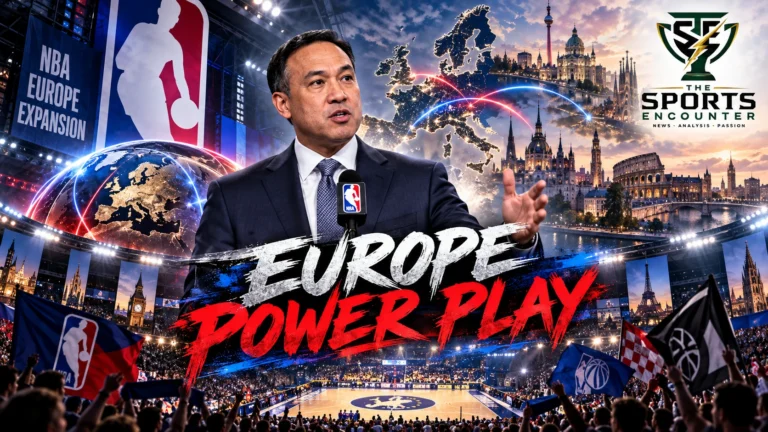
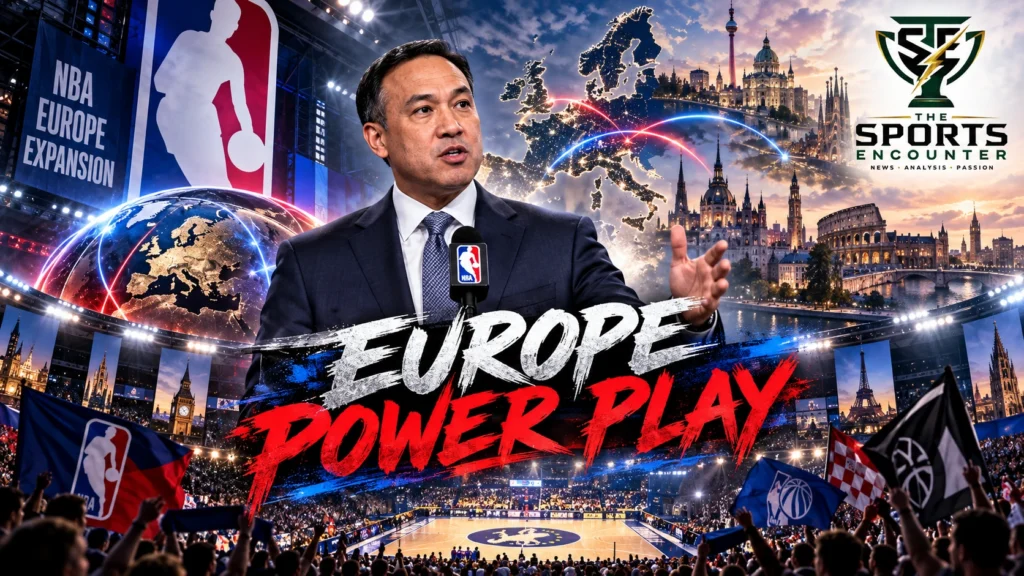
NEW YORK, United States, October 20, 2026: The NBA is finalizing its first European club agreements and expects to announce participating franchises soon, Deputy Commissioner Mark Tatum confirmed Tuesday, keeping the proposed NBA Europe competition on course for an October 2027 launch despite the failure of recent partnership negotiations with EuroLeague. The announcement marks a significant advance in the league’s attempt to establish a permanent commercial and sporting presence in Europe’s established club basketball market.
The NBA, working with the International Basketball Federation (FIBA), plans a competition combining permanent franchises with places earned through sporting qualification. The project is attracting substantial investment interest, with permanent-franchise bids reportedly starting at $500 million across its 12 target cities. EuroLeague, meanwhile, has responded with its own ambitious financial and expansion strategy. The resulting competition could reshape European basketball’s ownership structure, broadcasting arrangements and opportunities for domestic clubs.
NBA Europe 2027: What Mark Tatum Confirmed
Speaking to international reporters on the opening day of the 2026-27 NBA season, Tatum confirmed that work on the proposed European competition is advancing and that negotiations with prospective founding clubs are approaching completion.
The league expects to begin its European project in October 2027.
Story at a glance
NBA Europe 2027: What Mark Tatum Confirmed
Speaking to international reporters on the opening day of the 2026-27 NBA season, Tatum confirmed that work on the proposed European competition is advancing and that negotiations with prospective founding clubs are approaching completion.
NBA Europe vs EuroLeague: Two Visions for European Club Basketball
The biggest difference is not simply the number of teams.
Why EuroLeague Rejected the NBA’s Recent Partnership Proposal
EuroLeague’s existing shareholder clubs recently considered a proposal involving cooperation with the NBA’s European project.
The 12 Cities at the Center of NBA Europe’s Franchise Plan
NBA Europe has identified 12 cities as target markets for permanent franchises.
Franchise Bids of $500 Million or More Raise the Financial Stakes
Reports surrounding the NBA Europe’s investment process indicate that prospective permanent-franchise bids reached at least $500 million in the targeted markets.
It has not yet announced a complete list of confirmed participating clubs or finalized the precise date of its inaugural game.
Tatum said the NBA remains prepared to proceed with its partners and investors even without reaching a formal agreement with EuroLeague.
The NBA’s leadership continues to leave the possibility of future cooperation open, however.
According to Reuters’ October 20 report, Tatum expects the project to generate substantial investment in European basketball, extending beyond the new competition itself.
Proposed investment areas include club infrastructure, training academies, grassroots development, league operations and commercial expansion.
The official NBA and FIBA announcement establishes the partnership’s objectives, including providing qualified clubs a pathway into the competition and supporting the wider European basketball ecosystem.
NBA Europe vs EuroLeague: Two Visions for European Club Basketball
| Issue | NBA Europe Proposal | EuroLeague Strategy |
|---|---|---|
| Governance | NBA and FIBA-backed competition | Existing Euroleague Basketball structure |
| Proposed size | 16 teams initially | Expansion toward 24 teams |
| Permanent membership | 12 proposed permanent franchises | Long-term licenses and expanded franchise arrangements |
| Sporting qualification | Proposed annual qualification opportunities | Existing competition qualification and licensing framework |
| Financial priorities | New capital, arena infrastructure, commercial growth | Long-term club valuations, revenue growth and financial sustainability |
| Relationship status | Willing to negotiate but proceeding independently | Open to talks while opposing market fragmentation |
| Key uncertainty | Founding clubs, final terms and commercial execution | Delivering projected growth and retaining leading clubs |
The biggest difference is not simply the number of teams.
NBA Europe aims to introduce substantial permanent-franchise investment while preserving a competitive pathway for clubs that qualify through sporting performance.
EuroLeague wants to expand its established competition and strengthen the commercial position of existing and new license holders.
Both organizations identify financial sustainability as a central objective.
They disagree over which ownership and competition structure is best positioned to achieve it.
Why EuroLeague Rejected the NBA’s Recent Partnership Proposal
EuroLeague’s existing shareholder clubs recently considered a proposal involving cooperation with the NBA’s European project.
They declined to accept the arrangement during discussions in Italy.
EuroLeague CEO Chus Bueno has nevertheless indicated that the organization remains willing to explore further cooperation.
His central concern is that two competing international club competitions could divide Europe’s basketball market.
That fragmentation could affect the scheduling, sponsorship opportunities, commercial rights and long-term commitments of participating clubs.
Existing EuroLeague clubs also have contractual and ownership obligations that could make departure expensive.
Those obligations matter because a club cannot necessarily abandon its present competition without financial consequences.
The NBA has maintained that its proposed project can advance independently if negotiations fail.
Consequently, the next stage could involve parallel competitions competing for investment and broadcasting partners.
Could Two Leagues Divide the Same Market?
The risk is most apparent when considering fans, broadcasters and sponsors.
Europe’s leading basketball clubs already attract substantial regional audiences.
If the NBA-backed competition and EuroLeague operate separately, broadcasters may need to decide whether to acquire rights to both.
Some sponsors could face a similar decision when allocating their basketball budgets.
For supporters, the result might mean following elite clubs across different competitions, schedules and streaming platforms.
However, competition between organizers could also encourage innovation, stronger production standards and greater investment.
The eventual outcome will depend on actual club participation, commercial agreements and audience behavior.
The 12 Cities at the Center of NBA Europe’s Franchise Plan
NBA Europe has identified 12 cities as target markets for permanent franchises.
| Country | Target Cities |
|---|---|
| United Kingdom | London, Manchester |
| France | Paris, Lyon |
| Spain | Madrid, Barcelona |
| Italy | Milan, Rome |
| Germany | Berlin, Munich |
| Greece | Athens |
| Turkey | Istanbul |
These are target markets, not a confirmed list of 2027 participating teams.
The selection reflects the NBA’s desire to enter large commercial markets while maintaining a presence in cities with established basketball traditions.
Madrid, Barcelona, Athens and Istanbul have particularly strong basketball histories.
London, Manchester, Milan and Rome offer opportunities to develop the sport’s audience in major metropolitan markets.
The final value of any franchise will depend on ownership, facilities, local commercial interest and the financial terms attached to participation.
Franchise Bids of $500 Million or More Raise the Financial Stakes
Reports surrounding the NBA Europe’s investment process indicate that prospective permanent-franchise bids reached at least $500 million in the targeted markets.
Some proposals reportedly exceeded $1 billion.
These figures demonstrate significant investor interest, but their financial meaning requires careful interpretation.
A franchise bid is an offer or proposed commitment. It is not necessarily a completed transaction, recognized revenue or a verified market valuation.
Individual proposals may also contain different investment, ownership and infrastructure arrangements.
If the proposed 12 permanent positions each attracted at least $500 million, the aggregate headline value of those bids would be at least $6 billion.
That calculation is illustrative. It should not be confused with confirmed capital received by the league.
What Would Investors Actually Be Buying?
Permanent franchise positions would offer investors access to a proposed elite European basketball competition backed by the NBA and FIBA.
Potential commercial benefits could include media rights distributions, sponsorships, ticketing, licensing and stronger international brand exposure.
However, investors would also assume operating costs, player expenses, travel obligations, facility requirements and commercial execution risks.
The value of a franchise ultimately depends on its ability to generate sustainable cash flow and retain long-term commercial appeal.
That is also why valuations of established NBA teams continue to attract attention.
The Sports Encounter’s analysis of the proposed $12.5 billion Los Angeles Lakers ownership transaction examined how franchise scarcity, international recognition and media revenue influence investor expectations.
NBA Europe is a different proposition because its franchises do not yet possess the established revenue histories of leading NBA teams.
High bidding interest is encouraging, but proven operating results will ultimately determine financial success.
Mark Tatum Predicts Profitability by Year Three
One of Tatum’s most ambitious statements concerns the projected profitability of NBA Europe’s permanent franchises.
The NBA expects those clubs to reach profitability by their third year of operation.
Tatum also anticipates multibillion-dollar distributions to participating clubs over the first decade.
Both figures are forward-looking business projections.
The league has not yet demonstrated that the proposed model will produce those results.
Profitability will depend on actual franchise operating costs, commercial revenue, broadcasting agreements and the scale of investment required.
The challenge is particularly important because European basketball clubs have historically struggled to convert passionate support into consistent financial returns.
Even popular teams can face substantial payroll, infrastructure and operational expenses.
The NBA’s proposal therefore rests on the expectation that new investment and stronger commercialization can materially improve the economics of European basketball.
EuroLeague Responds With a 10-Year Financial Plan
EuroLeague is not standing still while the NBA advances its project.
Its shareholder clubs recently approved a 10-year business strategy designed to increase franchise values and improve the financial stability of participating organizations.
The plan includes expansion toward 24 teams and a larger group of long-term license holders.
EuroLeague’s Published Financial Targets
| Financial Measure | Projected Target |
|---|---|
| Collective licensed-club value | €5.4 billion |
| Total league valuation | €7.98 billion |
| Annual commercial revenue | €648 million |
| Ten-year distributions to teams | €3.4 billion |
| Target competition size | 24 clubs |
These figures are EuroLeague’s business projections rather than verified future financial outcomes.
The organization’s strategy aims to make club ownership more attractive by increasing recurring commercial revenue and strengthening long-term license values.
EuroLeague has also reported receiving binding investment offers during its expansion process.
Its challenge is implementing this growth plan while protecting the relationships with clubs, broadcasters and sponsors that support its existing competition.
Why Media Rights Could Determine Which Model Succeeds
Broadcasting is central to the commercial calculations of both organizations.
The NBA benefits from an established global brand, major entertainment partnerships and considerable experience negotiating media agreements.
Its current United States broadcasting agreements with Disney, NBCUniversal and Amazon are widely valued at approximately $76 billion over 11 seasons.
That provides an illustration of the commercial strength of NBA programming.
However, European basketball rights cannot be assumed to attract comparable valuations.
Local purchasing power, viewing behavior, established club rivalries and broadcaster demand differ substantially between markets.
TSE’s investigation into the $65.82 billion global sports media rights market found that broadcasting value remains heavily concentrated in the United States.
That concentration helps explain why European basketball investors see room for improvement.
But it also shows why entering a new market does not automatically reproduce American media economics.
Could European Fans End Up Paying More?
Two major competitions could potentially divide desirable basketball content between different broadcasters or streaming services.
That might require fans to maintain access to more than one subscription platform.
Alternatively, competition for audience share could encourage more accessible distribution arrangements.
Neither outcome has been established because the final NBA Europe media rights model has not been announced.
The practical issue will be whether commercial growth increases access to basketball or makes the viewing experience more fragmented.
FIBA’s Role Gives NBA Europe a Different Sporting Structure
FIBA’s involvement distinguishes the proposed competition from a purely closed franchise model.
The NBA-FIBA framework includes permanent positions alongside opportunities for clubs to qualify based on sporting results.
The proposed pathway includes FIBA’s Basketball Champions League and other qualifying mechanisms.
The competition is also expected to coordinate its calendar with domestic leagues and international national-team windows.
That arrangement could allow clubs to compete in domestic championships while pursuing a place in NBA Europe.
In principle, it gives ambitious clubs outside the permanent franchise group a route toward the top competition.
But important details remain unresolved, including the precise qualifying rules, financial requirements and ongoing access for non-franchise teams.
The Difference Between Permanent Franchises and Merit-Based Qualification
| Feature | Permanent Franchise | Merit-Based Qualifier |
|---|---|---|
| Access | Long-term participation under franchise agreement | Qualification through a sporting pathway |
| Financial model | Potential ownership investment and recurring commercial rights | Participation terms subject to competition rules |
| Sporting opportunity | Regular access to the competition | Entry earned through results |
| Main uncertainty | Investment returns and franchise obligations | Qualification availability and revenue distribution |
The unresolved question is how equitably revenue will be distributed between permanent members and clubs reaching the competition through qualification.
If non-franchise teams receive substantially fewer resources, the system could preserve a formal qualification route without guaranteeing comparable competitive opportunities.
That issue deserves particular attention as the final rules emerge.
NBA Europe’s Arena Investment Could Affect Domestic Basketball
The NBA expects infrastructure investment to form an important part of the project.
Modern arenas can support basketball through greater seating capacity, hospitality offerings, better broadcast production and expanded commercial facilities.
Such investments may also benefit domestic competitions when facilities are used throughout the year.
However, construction and arena modernization involve significant capital requirements.
Investors must assess whether expected attendance and commercial demand justify those commitments.
This issue is familiar from NBA expansion discussions in the United States.
In TSE’s examination of Bill Foley’s Las Vegas NBA expansion bid, venue readiness, ownership experience and market demand emerged as central factors in evaluating a potential franchise.
The proposed European project adds more complexity because market conditions differ substantially across 12 cities and six countries.
Could Established Soccer Clubs Become NBA Europe Owners?
The NBA has received interest from existing basketball and soccer organizations as well as prospective investors.
Major soccer clubs possess commercial infrastructure that could support a basketball operation, including brand recognition, marketing departments, sponsor relationships and international fan networks.
Some European soccer organizations already operate successful basketball divisions.
However, a recognizable soccer brand cannot guarantee that its basketball venture will become profitable.
The economics of the two sports are different.
Player payrolls, sponsorship demand, ticket prices and media income would need to be evaluated independently.
Continue the NBA Story
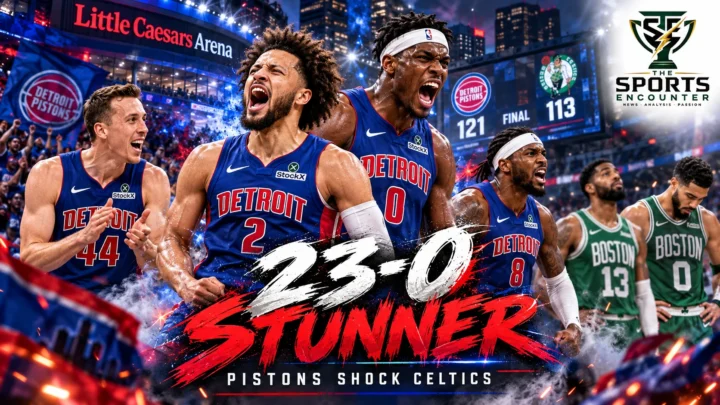
 NBAJavonte Green and Duncan Robinson Bury Paul George’s Record Celtics Debut in a 23-0 Pistons Comeback
 NBAKnicks Raise First NBA Championship Banner in 53 Years as LeBron and Jaylen Brown Launch Philadelphia’s Title Challenge
 NBAAngel Reese Turns Game 1 Frustration Into Finals History as Atlanta Dream Silence Golden State
NBA Europe could attract organizations seeking to diversify their sports portfolios, but those decisions will depend on final franchise terms.
What NBA Europe’s Expansion Means for Existing NBA Owners
The European competition is a separate undertaking from the NBA’s possible domestic expansion into Las Vegas and Seattle.
The two projects share broader business themes involving franchise investment, media distribution and international growth.
However, they should not be treated as the same ownership process.
Established NBA franchise valuations have risen substantially, as demonstrated by the Lakers’ recent ownership developments.
TSE examined the implications for team identity and ownership expectations in its analysis of the Lakers’ $12.5 billion transaction and Luka Dončić’s emerging franchise leadership.
European franchises would begin with a different commercial profile.
Their future value would depend on the performance of an entirely new competition, rather than participation in an established North American league.
Why the October 2027 Deadline Matters
The NBA has approximately one year to turn its plans into an operating competition.
Important decisions remain outstanding.
Founding clubs must be confirmed, investment agreements completed, governance rules finalized and the competition’s schedule established.
Commercial arrangements involving media rights, sponsorships and venues will also need to advance.
These steps cannot all be treated as complete merely because preliminary bids have attracted substantial interest.
NBA Europe Launch Readiness Checklist
- Announce the confirmed founding clubs and ownership groups.
- Finalize franchise agreements and participation requirements.
- Publish the full sporting qualification structure.
- Confirm the inaugural season calendar and domestic-league coordination.
- Establish broadcasting and commercial distribution arrangements.
- Confirm arena availability and required infrastructure improvements.
- Clarify club financial obligations and revenue-sharing terms.
- Publish governance and dispute-resolution procedures.
- Confirm any agreement or final separation from EuroLeague.
These are key readiness questions, not claims that the NBA has failed to address them privately.
The 2026-27 NBA Season Opens as a New International Project Approaches
Tatum’s announcement coincided with the beginning of the 2026-27 NBA regular season.
The opening schedule includes the defending champion New York Knicks against Philadelphia and a Western Conference matchup between Oklahoma City and San Antonio.
The Sports Encounter’s opening-night analysis examined the major team and roster developments shaping the new season.
The league’s domestic and European initiatives are developing simultaneously, but the European project is aimed at a different market and competitive structure.
TSE’s 2026-27 NBA schedule guide provides further context on the league’s broadcasting and major-event calendar.
NBA Europe’s successful launch would extend the organization’s international commercial reach while creating new relationships with European clubs and federations.
NBA Europe 2027: Frequently Asked Questions
When is NBA Europe expected to launch?
The NBA is targeting October 2027.
Has NBA Europe confirmed its founding teams?
Not yet. Mark Tatum said initial club agreements are being finalized and announcements are expected soon.
How many teams will compete in NBA Europe?
The proposed initial format contains 16 teams, including 12 permanent franchises and four places available through qualification.
Which organization is partnering with the NBA?
FIBA is the NBA’s principal international governing-body partner in the project.
Has EuroLeague agreed to join NBA Europe?
No. EuroLeague rejected a recent partnership proposal, although both sides have indicated that further discussions remain possible.
How much could NBA Europe franchises cost?
Reported bids for permanent positions have started at approximately $500 million, with some exceeding $1 billion. Individual finalized agreements have not been publicly confirmed.
Will NBA Europe have promotion and relegation?
The proposed system includes merit-based qualification opportunities. The final long-term structure and all qualification rules have not yet been fully published.
Which cities are NBA Europe targeting?
The 12 markets include London, Manchester, Paris, Lyon, Madrid, Barcelona, Milan, Rome, Berlin, Munich, Athens and Istanbul.
Will NBA Europe replace EuroLeague?
There is no confirmed agreement for NBA Europe to replace EuroLeague. Both organizations are currently advancing separate plans while leaving room for further negotiations.
What financial return does the NBA expect?
NBA executives project that permanent franchises could become profitable by Year 3 and anticipate substantial distributions over the first decade. These remain forecasts rather than guaranteed results.
The Battle for European Basketball Will Be Decided by Clubs and Fans
The NBA has moved beyond discussing whether a new European basketball competition is desirable. It is now negotiating the agreements needed to establish one.
EuroLeague has responded by advancing its own ambitious commercial reforms, making it clear that Europe’s established basketball structure will not surrender its position without competition.
The next phase will be defined by practical decisions.
Which clubs commit to the NBA-backed venture? How much capital is actually invested? Will domestic competitions retain meaningful access to the highest level? Can the proposed financial returns survive the costs of operating an elite international league?
Those answers will determine whether NBA Europe creates a stronger basketball economy or contributes to a more fragmented one.
The investment interest is substantial, but club agreements, confirmed broadcasting arrangements and financial performance will provide more meaningful evidence of the project’s prospects.
With October 2027 approaching, the NBA and EuroLeague are increasingly competing over how European basketball should be organized, financed and presented to future generations of supporters.