Carabao Cup: Bradford Stun Burnley as Everton, Spurs and Brentford Light Up the Night
Bradford City knocked Burnley out on penalties, Thierno Barry hit a hat-trick for Everton, Tottenham scored five and Brentford struck six as Carabao Cup Round Two delivered shocks, statements and standout performances.
ENGLAND: Bradford City delivered the shock, Thierno Barry supplied the individual masterpiece, Tottenham rediscovered their attacking pulse and Newcastle needed Harvey Barnes to rescue them from a genuine scare.
The latest wave of Carabao Cup second-round action had almost everything the competition promises at this stage of the season: a Premier League casualty, a hat-trick, a debut goal, late drama and enough evidence to show that squad depth can matter just as much as league status once knockout football begins.
Bradford produced the headline result by holding Burnley to a goalless draw before winning 4-2 on penalties. Everton were far more comfortable, dismantling Preston North End 4-0 as Barry scored the first hat-trick of his Everton career and created the fourth goal for Brennan Johnson.
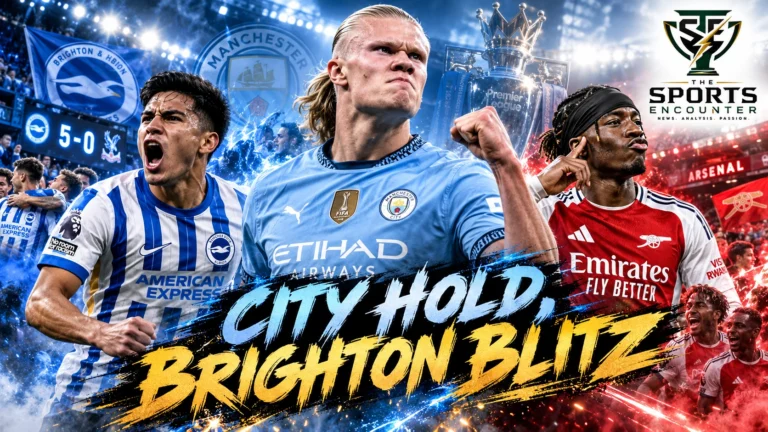
Tottenham responded to their difficult start to the Premier League season with a 5-1 victory over Charlton Athletic, with Mikey Moore, Dominic Solanke, Kevin Danso, Sávio and Ben Davies all scoring. Newcastle’s evening was considerably less comfortable. West Brom twice threatened an upset at St James’ Park before substitute Harvey Barnes completed a second-half brace to secure a 3-2 win.
Those results followed another emphatic display earlier in Round Two when Brentford destroyed Birmingham City 6-1 despite making eight changes from the side that had beaten Tottenham in the Premier League.
The pattern running through these ties was difficult to miss.
The teams that treated rotation as an opportunity generally prospered. The ones unable to translate reputation into control discovered again why the Carabao Cup can become uncomfortable remarkably quickly.
Carabao Cup Round Two: Latest Results
| Fixture | Result | Key Story |
|---|---|---|
| Bradford City vs Burnley | 0-0, Bradford won 4-2 on penalties | Bradford eliminate Burnley after Joe McCracken’s shootout intervention |
| Newcastle United vs West Brom | 3-2 | Harvey Barnes scores twice as Newcastle survive |
| Preston North End vs Everton | 0-4 | Thierno Barry scores hat-trick and assists Brennan Johnson |
| Tottenham Hotspur vs Charlton Athletic | 5-1 | Sávio scores on debut as Spurs respond emphatically |
| Birmingham City vs Brentford | 1-6 | Eight-change Brentford side exposes its squad depth |
| Nottingham Forest vs Leeds United | 0-2 | Leeds beat Forest for the second time in days |
| Ipswich Town vs Leicester City | 3-1 | Marcelino Núñez scores twice, including a spectacular long-range goal |
The wider competition schedule and official Round Two information can be followed through the English Football League’s Carabao Cup coverage.
Bradford Turn Burnley’s Escape Act Into an Exit
There was something especially fitting about the way Burnley left the competition.
Earlier in the Carabao Cup, Burnley had needed penalties to survive Notts County after a 1-1 draw. That narrow escape formed part of The Sports Encounter’s Round One North review, where the early warning was already obvious: divisional status offers little protection once a knockout tie becomes uncomfortable.
This time, the shootout turned against them.
Bradford resisted for 90 minutes without conceding and then handled the pressure from the spot with considerably greater composure.
Zeki Amdouni failed to convert for Burnley before Bradford goalkeeper Joe McCracken saved Jacob Bruun Larsen’s penalty. Ibou Touray strengthened Bradford’s position before Marcus Edwards temporarily kept Burnley alive.
Adam Phillips then finished the job.
His successful penalty sealed a 4-2 shootout victory and sent Bradford into the third round.
The upset was built before the penalties
Shootouts naturally dominate the memory of games like this, but Bradford’s achievement began much earlier.
Keeping Burnley scoreless across 90 minutes required organisation, concentration and enough defensive discipline to prevent the stronger squad from turning possession into a decisive moment.
Burnley had already experienced the danger of this competition in Round One. Bradford made sure the warning became elimination in Round Two.
That is what gives this result genuine giant-killing value.
Bradford did not require a freak early goal and an hour of desperate survival. They remained level long enough to move the contest into the part of knockout football where reputation stops carrying any weight.
Four Bradford penalties later, Burnley’s Carabao Cup campaign was over.
Thierno Barry Gives Everton Something Far More Valuable Than Progression
Everton were never interested in penalties at Deepdale.
David Moyes returned to Preston, the club he left for Everton in 2002, and watched his current side produce one of the cleanest performances of the round.
The 4-0 scoreline tells only part of the story.
Thierno Barry scored three times and then created Everton’s fourth for Brennan Johnson.
For a striker who managed eight goals across 41 appearances last season, the timing could hardly have been better.
Barry had already scored against Crystal Palace in Everton’s Premier League opener. His hat-trick at Preston took him to four goals in the early stages of the new campaign and offered Moyes something every manager wants to discover in August: a forward who appears to have returned sharper, more confident and more decisive.
Barry’s hat-trick showed three different striker instincts
The first arrived in the 25th minute.
Kiernan Dewsbury-Hall lifted an intelligent pass beyond Preston’s defense for Vitalii Mykolenko, whose control allowed him to square across goal. Barry arrived where a center-forward should and converted.
Preston emerged with greater purpose after halftime, but their resistance lasted only until the 59th minute.
Dewsbury-Hall again played a central role, combining in the buildup before forcing a save. Barry reacted quickest to the rebound and finished from close range.
The hat-trick arrived 11 minutes later when Johnson crossed unselfishly toward the far post and Barry tapped in.
Then came the detail that completed the performance.
Barry could have ended the evening satisfied with three goals. Instead, he split Preston’s defense with the pass that allowed Johnson to score Everton’s fourth.
Three goals and an assist made Barry the outstanding individual performer from the latest group of ties.
Everton may have found an early-season attacking answer
Cup performances can mislead when opponents rotate heavily, and Preston made seven changes.
Even allowing for that context, Everton’s attacking fluency mattered.
They controlled the match, created chances repeatedly and avoided the kind of awkward second-round contest that can drain confidence from a team still finding its rhythm.
For broader context on where Everton and the rest of England’s top-flight clubs stand at the start of the campaign, see The Sports Encounter’s complete 2026-27 Premier League preview.
Tottenham Needed a Response and Found Five Goals
Tottenham’s situation carried a different kind of pressure.
Roberto De Zerbi’s team had opened its Premier League campaign with a bruising 3-0 defeat at Brentford.
Early-season setbacks rarely become crises after one match, but a new-look side trying to establish confidence does not want another difficult night four days later.
Charlton therefore arrived at Tottenham Hotspur Stadium with an opportunity to create genuine discomfort.
For 40 minutes, they stayed in the game.
Then Tottenham accelerated.
Mikey Moore opened the scoring in the 41st minute before Dominic Solanke doubled the advantage just before halftime.
Kevin Danso made it 3-0 after the break.
The fourth provided the evening’s most obvious headline.
Sávio needed only minutes to introduce himself
Tottenham completed the signing of Sávio shortly before the tie, and De Zerbi had admitted beforehand that he was unsure how much the Brazilian would be able to play.
The answer was enough.
Sávio came from the bench and scored on his debut, offering supporters an immediate glimpse of the one-on-one threat Tottenham believe they have added to their attack.
His influence did not stop with the goal. He remained heavily involved as Spurs continued to stretch Charlton late in the contest.
Ben Davies scored the fifth before Lloyd Jones headed Charlton’s consolation.
The final score read 5-1.
For a team coming directly from a three-goal defeat, the emotional value of the result was obvious.
Mikey Moore’s contribution should not disappear behind the new signing
Sávio will naturally command attention because of his transfer fee and debut goal, but Moore’s performance deserves its own recognition.
The academy product scored the opener and repeatedly carried attacking threat.
His development also gives De Zerbi something valuable during a season in which Tottenham’s senior attacking options will inevitably encounter injuries, rotation and fixture congestion.
The result cannot erase what went wrong against Brentford.
It did show that Tottenham were capable of responding immediately rather than allowing that defeat to define the beginning of their season.
Tottenham’s broader challenge forms part of our Premier League coverage, where managerial changes, squad construction and the early shape of the 2026-27 campaign remain central themes.
Harvey Barnes Saves Newcastle From a Much More Difficult Night
If Tottenham and Everton enjoyed relatively comfortable progress, Newcastle had to earn every part of theirs.
West Brom arrived at St James’ Park prepared to compete rather than simply admire Premier League opposition.
Isaac Price gave the visitors the lead after 19 minutes with a 25-yard free kick that Newcastle goalkeeper Ewen Jaouen got a hand to but could not keep out.
The home side responded before halftime.
Teenager Sean Steur helped release Amar Dedic, whose cross was finished at close range by Bazoumana Touré for his first Newcastle goal.
The equalizer carried particular significance because several of Newcastle’s newer players combined in its creation.
That development matters for Matthias Jaissle, who inherited a club undergoing significant change and has had limited time to build his preferred structure.
Our earlier analysis of Jaissle’s Newcastle rebuild focused on precisely that problem: integrating new players quickly enough to produce competitive results before the season gathered speed.
Barnes changed the tie after halftime
Touré was replaced by Harvey Barnes at the interval.
Three minutes later, Newcastle were ahead.
Barnes reacted after a corner broke inside the penalty area and converted at the second attempt.
West Brom refused to disappear.
Lewis Hall handled inside the area, allowing Price to score his second of the match from the penalty spot in the 78th minute.
At 2-2, Newcastle were suddenly facing the possibility of penalties and another frustrating night under their new coach.
Barnes prevented it.
Dedic delivered another dangerous low cross, and Barnes swept home the winner in the 82nd minute.
Newcastle had their first competitive victory under Jaissle.
The performance raised questions even as the result delivered relief
A 3-2 cup win over Championship opposition is not evidence that Newcastle’s transition is complete.
West Brom caused serious problems and scored twice. Price repeatedly found ways to hurt the home side, while Newcastle needed a substitute to rescue them after the break.
There was also plenty to encourage Jaissle.
Dedic influenced multiple goals, Touré scored, Steur played a role in the first and Barnes looked decisive when introduced.
For a team still putting together a new identity, progression accompanied by contributions from several different players is more useful than a comfortable win built entirely around familiar names.
Brentford’s 6-1 Rout Was the Round’s Clearest Squad-Depth Statement
Brentford had already set an intimidating benchmark before Wednesday’s ties began.
Keith Andrews changed eight players from the starting lineup that had beaten Tottenham 3-0 in the Premier League.
Such rotation can sometimes turn League Cup nights into disjointed performances.
Brentford instead scored six.
Callum Wilson marked his first competitive start for the club with a goal after only six minutes.
Birmingham equalized through Demarai Gray, but the response from the Premier League side was ruthless.
Aaron Hickey restored the lead, Nathan Collins scored twice, Mikkel Damsgaard added another and Igor Thiago completed the rout.
The 6-1 result was significant beyond progression.
Brentford rotated without losing their identity
The most impressive part of the performance was not simply the number of goals.
Only Collins, Vitaly Janelt and Dango Ouattara retained their places from the league victory over Spurs.
Brentford still pressed aggressively, attacked quickly and exposed Birmingham whenever the Championship side attempted to play through pressure.
New players contributed immediately.
Wilson scored. Hickey scored. Damsgaard scored. Thiago scored. Collins, the captain, scored twice.
That is exactly what managers hope cup competitions will reveal.
Rotation did not weaken Brentford’s structure. It exposed how many players already understand it.
The contrast with Tottenham’s Premier League defeat only days earlier also sharpened the picture. Brentford had beaten Spurs 3-0 with one lineup and then dismantled Birmingham 6-1 with another.
That is an early warning for the rest of the domestic season.
Leeds Beat Nottingham Forest Again
Leeds United’s second-round victory carried a particularly uncomfortable message for Nottingham Forest.
Daniel Farke’s side had already beaten Forest 1-0 in the Premier League.
Days later, Leeds returned to the City Ground and won again.
This time the margin was 2-0.
Dan James opened the scoring in the 50th minute before Lukas Nmecha added the second in the 75th, according to Leeds United’s official match report.
Two defeats against the same opponent in such a short period inevitably tell both clubs something.
Leeds have discovered an early matchup they can control.
Forest have already been shown twice where the problems lie.
Marcelino Núñez Produces the Goal of the Round Candidate
Ipswich’s 3-1 victory over Leicester contained one of the most memorable individual moments of Round Two.
The first half ended goalless before Sindre Walle Egeli put Ipswich ahead in the 62nd minute.
Leicester responded five minutes later when 19-year-old Olabade Aluko scored his first senior goal.
Then Marcelino Núñez took over.
The Chilean restored Ipswich’s lead in the 71st minute before producing the moment everyone will remember.
Deep into stoppage time, Núñez saw goalkeeper Jakub Stolarczyk away from his line and struck from close to the halfway line.
The ball flew over the goalkeeper and completed a 3-1 win.
Leicester’s own official match center records Núñez’s brace at 71 and 90+1 minutes.
Cup football often needs one moment to turn an ordinary second-round result into something supporters remember months later.
Núñez supplied it.
What the Latest Carabao Cup Results Actually Tell Us
Looking at these matches together reveals more than a collection of scores.
1. Squad depth is already becoming visible
Brentford provided the clearest example.
Eight changes produced six goals.
Everton rotated without losing attacking control. Tottenham were able to introduce an expensive new signing from the bench and immediately receive a goal. Newcastle used Barnes as a halftime replacement and watched him decide the match.
This is what the League Cup can expose very early in a season.
First-choice teams tell us how strong a club’s starting XI is. Cup rotation begins revealing whether the second layer can preserve the same standards.
2. Reputation still offers no protection
Burnley entered their tie with a stronger recent top-flight pedigree than Bradford.
Bradford sent them home.
The penalty shootout was simply the final stage of a contest Burnley had already failed to control over 90 minutes.
That is why the Carabao Cup remains useful even when some managers make wholesale changes.
Once the match begins, the name of the league on a club’s fixture list cannot score for them.
3. New signings are being asked to contribute immediately
Sávio scored on his Tottenham debut.
Wilson scored on his first competitive Brentford start.
Touré opened his Newcastle account.
Johnson scored for Everton after Barry returned the favor following the winger’s assist for the hat-trick goal.
August traditionally allows managers to talk about players needing time.
The fixture calendar rarely offers much of it.
4. The cup can repair confidence quickly
Tottenham needed that badly.
A 3-0 league defeat to Brentford raised immediate questions about De Zerbi’s new-look team.
Five goals against Charlton do not answer every one of them, but football psychology rarely operates in neat tactical categories.
Players who have just suffered a heavy defeat benefit from seeing passes connect, forwards score and supporters enjoy the evening again.
Everton gained something similar through Barry’s performance.
Newcastle gained it through Jaissle’s first competitive win.
A cup tie can therefore become more useful than its place on the calendar initially suggests.
The Biggest Winner of the Latest Round Two Action
Bradford owned the biggest result.
Brentford produced the strongest collective performance.
Tottenham scored five and introduced Sávio successfully.
Newcastle survived the most dramatic contest.
Yet if one individual stands above the rest, it is difficult to look beyond Thierno Barry.
A hat-trick would have been enough.
Adding an assist made the night exceptional.
What gives the performance additional significance is what came before it.
Barry’s first Everton season was difficult. Eight goals in 41 games left plenty of room for doubt over whether he could become the consistent finisher the club required.
He has now started the new campaign with four goals in his opening matches.
That does not prove a complete transformation.
It gives Everton a reason to believe one may be developing.
The Biggest Loser: Burnley Had Been Warned Already
Burnley’s elimination is the result most difficult to explain away.
They had already needed a penalty shootout to survive Notts County in the previous round.
The second warning arrived against Bradford.
There was no survival this time.
For a club trying to rebuild after relegation from the Premier League, early cup elimination is not automatically disastrous. League priorities will carry much greater long-term importance.
Still, losing without scoring against Bradford and then failing from the spot removes an opportunity for competitive minutes, momentum and a potentially valuable cup run.
More importantly, it gives Burnley’s coaching staff another early indication that greater attacking authority is required.
Why These Nights Still Matter in the Carabao Cup
The Carabao Cup’s early rounds often arrive while transfer windows remain open and managers are still learning what their squads can actually do.
That makes them unusually revealing.
League tables after one or two matches tell very little.
A knockout game asks a different question.
Can a changed lineup maintain the team’s identity?
Can a young player handle senior responsibility?
Can a new signing influence a competitive game immediately?
Can a stronger club respond when a lower-ranked opponent refuses to follow the expected script?
This week’s answers were varied.
Brentford’s second team looked frighteningly comfortable.
Everton discovered a striker in ruthless form.
Spurs found a response and a promising debut.
Newcastle found enough quality on the bench to escape trouble.
Bradford found belief when Burnley could not find a goal.
That is a useful amount of information from a competition some supporters are tempted to treat as secondary until the later rounds.
For continuing English football coverage, follow The Sports Encounter’s Soccer hub and our dedicated Premier League section.
The Final Word: Bradford Owned the Shock, Barry Owned the Night
Carabao Cup Round Two has already reminded several clubs that August does not provide immunity from consequences.
Burnley are out because Bradford stayed disciplined for 90 minutes and then handled the shootout better.
Everton are through because Barry turned a potentially awkward trip to Preston into his personal showcase.
Tottenham are through because their attack finally found the freedom that disappeared at Brentford a few days earlier.
Newcastle are through because Barnes entered a level contest and changed it.
Brentford had already made perhaps the loudest squad-depth statement of the round by scoring six with eight changes.
Leeds demonstrated repeatable superiority over Nottingham Forest, while Ipswich received a moment of extraordinary quality from Núñez.
The competition will become harder from here. Bigger clubs will enter, rotations will become more strategic and the consequences will carry greater weight.
That can wait.
The latest results deserve their own conclusion.
Bradford produced the upset everybody will remember.
Barry delivered the performance nobody at Preston could stop.
And across several grounds, the Carabao Cup again showed why seemingly routine early-round fixtures have a habit of becoming anything but routine.
Frequently Asked Questions
Who knocked Burnley out of the Carabao Cup?
Bradford City eliminated Burnley in Round Two. The match finished 0-0 after 90 minutes before Bradford won the penalty shootout 4-2.
Who scored Everton’s goals against Preston?
Thierno Barry scored a hat-trick and Brennan Johnson added Everton’s fourth in the 4-0 victory at Deepdale.
How many goals did Thierno Barry score against Preston?
Barry scored three goals and also assisted Johnson, giving him direct involvement in all four Everton goals.
Who scored for Tottenham against Charlton?
Mikey Moore, Dominic Solanke, Kevin Danso, Sávio and Ben Davies scored for Tottenham in the 5-1 victory. Lloyd Jones scored Charlton’s late consolation.
Did Sávio score on his Tottenham debut?
Yes. Sávio came off the bench and scored during Tottenham’s 5-1 Carabao Cup victory over Charlton.
What was the Newcastle vs West Brom score?
Newcastle defeated West Brom 3-2 at St James’ Park. Harvey Barnes scored twice after coming on at halftime, while Bazoumana TourĂ© scored Newcastle’s other goal. Isaac Price scored both West Brom goals.
Was this Matthias Jaissle’s first competitive Newcastle win?
Yes. The 3-2 victory over West Brom gave Jaissle his first competitive win as Newcastle head coach.
What was the Birmingham vs Brentford Carabao Cup score?
Brentford defeated Birmingham City 6-1 despite making eight changes from their previous Premier League starting lineup.
Who scored for Brentford against Birmingham?
Callum Wilson, Aaron Hickey, Nathan Collins, Mikkel Damsgaard and Igor Thiago scored. Collins finished with two goals.
Who won Nottingham Forest vs Leeds in the Carabao Cup?
Leeds won 2-0 at the City Ground through second-half goals from Dan James and Lukas Nmecha.
What happened in Ipswich vs Leicester?
Ipswich beat Leicester 3-1. Sindre Walle Egeli scored the opener before Olabade Aluko equalized. Marcelino Núñez then scored twice, including a spectacular long-range goal in stoppage time.

Breaking News
NFL Ends the Pro Bowl Game: Why a Football Tradition Finally Ran Out of Steam
The NFL has ended the Pro Bowl game but preserved the honor itself, creating a fixed 88-player class while shifting attention toward recognition, flag football and the road to LA28.
The NFL has finally made official what the Pro Bowl had been telling us for years: the honor still mattered, but the game increasingly did not.
Beginning with the 2026 season, the league will continue naming Pro Bowlers, but there will be no AFC versus NFC Pro Bowl game. Instead, 88 players will form a fixed annual Pro Bowl class, receive enhanced recognition for the achievement and gather with their families in Los Angeles during the traditional Pro Bowl weekend in early 2027.
The decision closes another chapter in the long history of the NFL’s all-star showcase. It also represents something more significant than canceling an exhibition that had struggled to justify its place on the calendar.
The NFL has separated two ideas that had become increasingly difficult to reconcile: being selected as one of the league’s best players and asking those players to produce another credible football competition after one of the most physically demanding seasons in professional sport.
That distinction explains why the Pro Bowl game has disappeared while the Pro Bowl honor survives.
NFL Pro Bowl Changes at a Glance
| Area | What Changes |
|---|---|
| Pro Bowl game | The NFL will no longer stage an AFC versus NFC Pro Bowl game. |
| Pro Bowl selections | 88 players will make the official Pro Bowl class each season. |
| Replacement selections | There will be no replacement additions to the official 88-player class. |
| Voting | Players, coaches and fans will continue to have equal weight in selection. |
| 2027 celebration | The selected players and their families will gather in Los Angeles during traditional Pro Bowl weekend. |
| Player recognition | Selections will receive additional visible and commemorative recognition. |
| Flag football | Flag events will continue around Pro Bowl and Super Bowl programming, but they will be separate from an AFC-NFC Pro Bowl game. |
| LA28 connection | The NFL will continue supporting flag football ahead of its Olympic debut at Los Angeles 2028. |
The league confirmed the changes in its official announcement on the future of the Pro Bowl.
For readers following the league into the new season, The Sports Encounter’s NFL coverage tracks the games, players, injuries, roster battles and wider developments shaping American football.
The NFL Has Killed the Game, Not the Pro Bowl Honor
The wording matters.
The NFL is not abolishing Pro Bowl selection. In several ways, it is attempting to make that distinction more exclusive.
Beginning with the 2026 season, exactly 88 players will comprise the official Pro Bowl class. Unlike previous editions, replacement players will not be added to that class when an original selection cannot participate.
The voting system itself remains familiar. Fans, players and coaches will continue to contribute equally to the selection process.
What changes is what happens after those names are announced.
There will be no attempt to turn the selected players into two conference teams for another exhibition contest. The NFL instead plans to place more emphasis on the announcement, recognition and long-term value attached to making the Pro Bowl.
Each selection will receive visible recognition associated with his uniform and a personalized commemorative item. The league also plans an expanded late-December roster announcement built around the 88 players who earned the honor.
This changes the meaning of the event without removing the achievement from a player’s career record.
An NFL player can still say he was a Pro Bowler. He simply will not have to play in a Pro Bowl game to validate that status.
Why the Pro Bowl Game Had Become Such a Difficult Product
Football creates a problem that basketball, baseball and hockey do not face in quite the same way.
The sport asks players to collide with each other repeatedly at extraordinary speed. Even routine NFL games leave athletes managing bruises, strains, soreness and accumulated fatigue. A full season can stretch into January for playoff teams and into the conference championship weekend for the players operating closest to the Pro Bowl window.
The league had therefore been asking its best players to emerge from months of physical punishment and somehow produce another entertaining competition in which almost nobody wanted the stakes to resemble a real NFL game.
NFL executive vice president of football operations Troy Vincent said player conversations had made the issue increasingly clear. Players coming out of the postseason did not want another genuinely competitive game, while attempting to imitate normal NFL physicality in an exhibition setting produced something that could feel disconnected from the football fans had watched throughout the season.
The tension was visible long before the league ended the event.
Players had good reasons to protect their bodies. Fans had equally good reasons to expect recognizable NFL football when the league promoted an all-star game.
Both positions made sense.
They simply became harder to satisfy at the same time.
The physical demands of NFL football remain a constant theme throughout the calendar. Training-camp injuries can alter careers before the regular season even begins, as seen in our August examination of injuries and roster pressure across NFL camps. By the time elite players have completed 17 regular-season games and potentially several playoff rounds, another exhibition contest becomes an entirely different proposition.
The Pro Bowl Had Been Trying to Reinvent Itself for Years
The NFL did not abandon the game at the first sign of trouble.
It repeatedly changed the format, location and competitive structure in an effort to keep the event relevant.
The modern version of the Pro Bowl was revived in 1951, when all-stars from the league’s conferences met at the Los Angeles Memorial Coliseum. The concept became deeply associated with Hawaii after the event moved to Honolulu in 1980, creating one of the most recognizable settings in American sports.
For decades, the Pro Bowl carried a distinctive end-of-season identity. Elite NFL players traveled to Hawaii, families joined them and fans watched stars who normally competed against each other gather in a much more relaxed environment.
As the sport became faster, richer and more physically demanding, however, the competitive problem became harder to ignore.
The league experimented with unconferenced teams drafted by former NFL stars. It moved the event from Hawaii to other cities. The traditional AFC-NFC format returned in Orlando. Las Vegas later became another home.
The biggest change came in 2023.
Tackle football disappeared from the Pro Bowl and was replaced by flag football and skills competitions. That allowed elite players to display athletic ability without reproducing the collisions of a normal NFL game.
For several seasons, that compromise kept a competitive element alive.
Now the NFL has taken the final step.
The Pro Bowl’s Long Road From 1939 to 2026
| Year | Key Development |
|---|---|
| 1939 | The first game carrying the Pro Bowl name was played in Los Angeles, with the New York Giants facing a team of professional all-stars. |
| 1951 | The Pro Bowl was revived under a conference all-star format at the Los Angeles Memorial Coliseum. |
| 1980 | Honolulu began its long association with the event. |
| 2014-2016 | The league experimented with unconferenced teams selected through a Pro Bowl draft. |
| 2017 | The AFC-NFC structure returned as the event moved to Orlando. |
| 2021 | The Pro Bowl scheduled after the 2020 season was canceled because of the COVID-19 pandemic. |
| 2022 | The final traditional tackle Pro Bowl was played in Las Vegas. |
| 2023 | The Pro Bowl Games replaced tackle football with flag football and skills competitions. |
| 2026 | The AFC and NFC met in flag football during Super Bowl LX week in the San Francisco Bay Area. |
| 2027 | The Pro Bowl class will be honored in Los Angeles without an AFC-NFC Pro Bowl game. |
That history makes the league’s decision significant.
This is not a temporary scheduling adjustment or another experimental format. The NFL has decided that the all-star game itself is no longer necessary to preserve the status of being selected to the Pro Bowl.
A Fixed 88-Player Class Could Make Selection More Meaningful
One of the most important changes may receive less attention than the disappearance of the game.
The official Pro Bowl class will contain 88 players, with no replacement selections.
That creates a cleaner distinction between being selected initially as one of the best players at a position and subsequently being invited because another player became unavailable.
Replacement selections served a practical purpose when the league needed enough players to stage an actual event. Injuries, playoff commitments and other absences created vacancies that had to be filled.
Once the game disappears, that logistical need disappears with it.
The league can now freeze the class at the moment the voting process ends.
For historical comparisons, contracts, player biographies and Hall of Fame discussions, that may eventually prove more consequential than many of the entertainment changes surrounding Pro Bowl weekend.
The phrase “Pro Bowler” remains part of the way NFL careers are measured. A fixed class gives the selection clearer boundaries from season to season.
Football’s Physical Reality Finally Beat the All-Star Game Concept
The Pro Bowl’s decline should not be interpreted as evidence that elite players stopped caring about recognition.
The NFL says its conversations with players produced almost the opposite conclusion.
The distinction matters deeply. The additional game did not carry the same value.
That makes sense within the modern NFL calendar.
Players spend training camp fighting for jobs, then enter a 17-game regular season followed by postseason football for the league’s strongest teams. Injuries and availability influence almost every stage of that process.
The Sports Encounter’s 2026 preseason roster and injury roundup showed how quickly teams are forced to alter plans before meaningful games even begin, while our Week 1 preseason analysis highlighted the evaluation pressure placed on quarterbacks and developing players months before the Pro Bowl conversation enters the picture.
By January, the league’s best players have already given the NFL the product for which they are paid: competitive tackle football played at the highest level.
The league has now accepted that an all-star honor does not require asking them to recreate it one more time.
Flag Football Survives, but It Is No Longer the Pro Bowl Game
This distinction is especially important as flag football grows rapidly.
The NFL is not abandoning flag football because it has abandoned the Pro Bowl game.
Quite the opposite.
The league says flag football events will take place during Pro Bowl weekend and Super Bowl week in Los Angeles. Programming will span multiple levels of the sport and include a showcase connected with the professional flag league the NFL is developing with TMRW Sports.
Those events, however, should not be confused with another version of an AFC-NFC Pro Bowl.
The Pro Bowl becomes an individual honor and celebration. Flag football continues along its own increasingly important competitive path.
That separation may ultimately benefit both.
Fans wanting to understand the sport before its Olympic debut can begin with The Sports Encounter’s complete guide to flag football rules and scoring.
The LA28 Timing Is Impossible to Ignore
Los Angeles is not a random destination for the first Pro Bowl celebration without a game.
Flag football will make its Olympic debut there in 2028, and the NFL has become deeply involved in the sport’s international growth.
The league says more than 200 NFL players representing more than 25 countries have already expressed interest in potentially representing their nations in Olympic flag football.
USA Football is expected to begin acclimation camps in early 2027 for NFL players interested in pursuing places on the American national team, with similar processes developing elsewhere.
That creates a striking contrast with the Pro Bowl decision.
The NFL is walking away from an exhibition flag game between its two conferences while simultaneously helping build flag football into an international Olympic competition where national-team selection, qualification and medals provide genuine stakes.
Those are very different competitive environments.
An NFL superstar playing flag football for Olympic gold has a reason to accept the competitive demands of the event. An NFL superstar playing an exhibition after the playoffs faces a much less convincing risk-reward equation.
Our analysis of what NFL stars must learn before competing in Olympic flag football explains why the LA28 version cannot simply be treated as tackle football without pads.
Olympic Flag Football Already Has Something the Pro Bowl Lost: Stakes
The transformation becomes clearer when the two competitions are compared.
Pro Bowl flag football involved NFL stars representing conferences in an exhibition designed primarily around entertainment.
Olympic flag football will involve national teams competing for medals after navigating an international qualification system.
The football may look similar at first glance. The consequences are completely different.
Qualification itself is difficult. Only six men’s teams and six women’s teams will reach LA28, a pathway explained in our guide to Olympic flag football qualification.
International competition has also shown that the United States cannot simply assume athletic superiority will settle every game. The 2026 World Championships produced major results and strengthened several challengers, which we examined when asking which countries could realistically challenge Team USA at LA28.
The difference returns to one word: stakes.
The Pro Bowl spent years searching for them.
Olympic flag football already has them.
The NFL Is Moving Flag Football Toward Its Own Identity
The demise of the Pro Bowl game may actually help prevent flag football from being viewed simply as a safer NFL exhibition.
International flag football has its own athletes, tactics, rules, specialists and competitive history.
Five-on-five spacing changes offensive structures. Quarterbacks make different reads. Defenders attack flags rather than bodies. Roster versatility becomes more important because Olympic teams are much smaller than NFL squads.
Our detailed breakdown of Olympic flag football tactics examines the strategic differences beneath the familiar football terminology.
There is also an established group of international stars who should remain part of the conversation even as famous NFL names begin pursuing Olympic places. The Sports Encounter’s guide to the players shaping flag football before LA28 profiles several of those athletes.
That broader ecosystem matters.
The NFL no longer needs the Pro Bowl to provide flag football with visibility. By 2028, the sport will have Olympic qualification races, national rivalries, international specialists and potentially some of the biggest names in American professional football competing for roster places.
Other American Sports Leagues Will Notice This Decision
The NFL’s move also raises a larger question about the future of all-star events.
Every major American league has had to balance tradition, television value, player motivation and the changing habits of sports audiences.
Football presents the most extreme version of that challenge because genuine competitive intensity requires physical contact that players understandably do not want to reproduce unnecessarily.
The NFL chose to stop trying to solve an increasingly unsolvable equation.
That may prove more important than the Pro Bowl itself.
Major sports organizations often preserve traditional events because removing them can be interpreted as admitting decline. The NFL has instead decided that the individual honor retains value even when the associated game has lost its competitive purpose.
Other leagues do not necessarily need to follow.
Their sports carry different physical demands and their all-star products serve different audiences.
Still, the NFL has established a precedent: an all-star selection can survive without an all-star game.
The Most Important Part of the Pro Bowl Was Never the Final Score
Ask fans to remember great Super Bowls and the scores come quickly.
Ask them to remember classic conference championship games and individual plays remain embedded in NFL history.
The Pro Bowl occupied a different space.
Its lasting value was often attached to the roster rather than the result.
Fans remember that a quarterback made 10 Pro Bowls. Hall of Fame debates cite Pro Bowl selections. Player biographies list them. Contract negotiations and career summaries use them as shorthand for sustained excellence.
Very few careers are defined by how many Pro Bowl games a player won.
The NFL’s new structure acknowledges that reality.
The game disappears.
The credential remains.
The 2027 Pro Bowl Weekend Will Show Whether the New Model Works
There are still unanswered questions.
The NFL has not yet announced every detail surrounding the Los Angeles celebration, player recognition or accompanying flag-football schedule.
Those details will matter because eliminating the game leaves the league with a different challenge: how to make Pro Bowl weekend feel meaningful to fans when its primary competitive event no longer exists.
The answer may involve access, storytelling, player recognition, family involvement, skills programming and flag football at other levels.
The league also has an opportunity to make the selection announcement itself more valuable.
Late December could become the emotional center of the Pro Bowl, especially if the NFL gives each selection the production, visibility and career recognition usually reserved for postseason awards.
If that happens, making the Pro Bowl may eventually feel more significant even though playing in it has disappeared.
The Final Word: The NFL Finally Stopped Asking the Pro Bowl to Be Something It Wasn’t
The Pro Bowl game lasted because the idea behind it was strong.
Fans wanted to see the league’s best players recognized. Players valued being chosen. Teams and historians used selections as markers of individual excellence.
The problem was the extra football game attached to that honor.
Over time, the gap between real NFL competition and Pro Bowl competition became impossible to hide. Players understandably resisted the physical demands of another serious contest. Fans could see when the intensity fell below normal league standards. Format changes, venue changes, skills events and eventually flag football delayed the decision without fully resolving that contradiction.
The NFL has now removed the part that had stopped working while protecting the part players still value.
That makes the end of the Pro Bowl game less an act of surrender than an overdue clarification of purpose.
The 88 best players will still receive recognition. Their Pro Bowl selections will still become part of their career records. Families will still celebrate the achievement. Fans will still debate who deserved a place.
Meanwhile, flag football will continue moving toward a much bigger competitive stage in Los Angeles, where Olympic medals will provide exactly the kind of consequence that an exhibition game could never manufacture.
A tradition stretching through generations of NFL history has reached the end of its competitive road.
The honor that created that tradition survives.
Frequently Asked Questions
Has the NFL canceled the Pro Bowl?
The NFL has ended the AFC versus NFC Pro Bowl game, but Pro Bowl selections will continue. Beginning with the 2026 season, 88 players will form the official Pro Bowl class.
Will there be a Pro Bowl game in 2027?
No. The 2027 Pro Bowl class will gather in Los Angeles for an in-person celebration, but the NFL will not stage an AFC-NFC Pro Bowl game.
How many players will be selected to the Pro Bowl?
The official class will contain 88 players.
Will replacement players still become Pro Bowlers?
Under the new structure, there will be no replacement additions to the official 88-player Pro Bowl class.
How will Pro Bowl players be selected?
Fans, players and coaches will continue to vote, with each group carrying equal weight in the selection process.
Why did the NFL end the Pro Bowl game?
The league said discussions with players showed that Pro Bowl selection remained highly valued while another competitive game after the postseason did not. The NFL had already moved away from tackle football in 2023 before deciding to eliminate the AFC-NFC game entirely.
When was the first Pro Bowl?
The first game carrying the Pro Bowl name was played in 1939. The modern conference all-star version was revived in 1951 at the Los Angeles Memorial Coliseum.
When was the last tackle Pro Bowl?
The final traditional tackle Pro Bowl was played in February 2022 in Las Vegas. The NFL switched to flag football and skills competitions beginning with the 2023 Pro Bowl Games.
Will flag football continue during Pro Bowl weekend?
Yes. The NFL plans flag football programming during Pro Bowl weekend and Super Bowl week in Los Angeles, although those events will be separate from an AFC-NFC Pro Bowl game.
Does ending the Pro Bowl game affect Olympic flag football?
No. The NFL is continuing to expand its support for flag football ahead of the sport’s Olympic debut at Los Angeles 2028.
Can NFL players compete in flag football at LA28?
Yes, subject to national-team selection and participation requirements. The NFL says more than 200 players representing more than 25 countries have expressed interest in potentially competing at the Olympics.
Where can I follow NFL and flag football coverage?
Readers can follow The Sports Encounter’s NFL section for league coverage and our expanding LA28 flag football series for rules, qualification, tactics, players and Olympic analysis.
Athletics
Hana Moll Beats Early Trouble to Enter Diamond League Final in Zurich
Hana Moll survived third-attempt scares at 4.50m and 4.65m before clearing a personal-best 4.90m to win in Zurich and secure her place in the Diamond League Final in Brussels.
ZURICH: Hana Moll was two failed attempts away from being eliminated at 4.50 meters.
Then she was two failed attempts away from disappearing at 4.65m.
By the end of the night, the 21-year-old American was standing above everybody else at 4.90m with a personal best, a second consecutive Diamond League victory and a ticket to the season-ending final in Brussels.
That progression tells the story of Moll’s remarkable Wednesday evening inside Zurich Central Station better than the winning height alone.
Five days after claiming the first Diamond League victory of her career in Lausanne, Moll defeated another world-class women’s pole vault field at the Weltklasse ZĂĽrich city event, clearing 4.90m at her first attempt to beat home favorite Angelica Moser.
Moser finished second with 4.85m, setting a Swiss indoor record in front of approximately 3,000 spectators. Americans Katie Moon and Sandi Morris shared third at 4.75m, while Tina Ĺ utej and Imogen Ayris also cleared 4.75m.
The result sends Moll into the Wanda Diamond League Final in Brussels on September 4-5 with something more valuable than qualification points.
She goes there knowing she has just produced the highest clearance of her career under pressure, against established global medalists, after beginning the competition badly enough that an early exit looked entirely possible.
Zurich became a test of recovery before it became a celebration of height.
Hana Moll’s Zurich Win at a Glance
| Detail | Result |
|---|---|
| Athlete | Hana Moll, United States |
| Age | 21 |
| Event | Women’s pole vault |
| Meeting | Weltklasse ZĂĽrich, Wanda Diamond League |
| Venue | Zurich Central Station |
| Winning height | 4.90m |
| Performance | Personal best |
| Previous PB | 4.88m |
| Previous Diamond League win | Lausanne, 4.84m |
| Zurich placing | 1st |
| Diamond League significance | Qualified for Brussels Final |
| Diamond League Final | September 4-5, Brussels |
The official Wanda Diamond League report confirmed Moll’s 4.90m personal best and qualification for Brussels, while her career progression can be followed through her World Athletics athlete profile.
Two Heights Nearly Ended Moll’s Night Before It Really Began
The final result looks clean.
The route there was anything but.
Moll opened at 4.50m and missed twice.
A third failure would have ended her competition before several of the leading contenders had even begun to establish themselves.
She cleared it on her third attempt.
The next height produced almost exactly the same problem.
Two misses at 4.65m left Moll staring at another elimination.
Again, she survived on the third attempt.
At that stage, the American had already taken six jumps to clear two heights. In pole vault, that matters physically as well as psychologically. Every run-up consumes energy. Every failed attempt creates another technical question. Every third-attempt clearance arrives with the knowledge that there is no safety net remaining.
Moll could easily have spent the rest of the competition fighting herself.
Instead, the event changed completely.
From Survival Mode to Perfect at 4.75m
Moll cleared 4.75m at the first attempt.
That jump appears almost ordinary when placed beside the eventual 4.90m winning clearance, but it may have been the most important technical moment of her evening.
For the first time, she completed a height without needing a second chance.
The hesitation disappeared.
The run-up looked more settled.
The competition stopped being about survival and became a contest Moll could attack.
She then cleared 4.85m on her second attempt.
Moser matched the height on her second try, producing a Swiss indoor record and sending the home crowd into celebration.
Zurich suddenly had exactly the contest organizers would have wanted.
The young American who had won in Lausanne against the Swiss star attempting to win at home.
The bar moved to 4.90m.
Moll needed one jump.
4.90m Was the Jump That Changed the Meaning of the Night
A personal best is always significant.
The circumstances surrounding this one gave it considerably more weight.
Moll’s previous best was 4.88m, achieved in Seattle earlier in 2026.
She had won Lausanne with 4.84m.
In Zurich, with Moser still alive in the competition and experienced world-level opponents behind her, Moll attacked 4.90m immediately.
The bar stayed up.
The reaction inside the train station reflected more than another successful clearance.
Moll had moved into a different performance range.
There is a psychological difference between knowing 4.90m should eventually be possible and seeing yourself clear it during one of the most competitive meetings in world athletics.
She no longer has to imagine what a 4.90m vault feels like.
She has done it.
Why 4.90m Carries Serious Global Meaning
The number also becomes more revealing when placed beside Moll’s performance at the 2025 World Athletics Championships in Tokyo.
Katie Moon won that world title with 4.90m.
Moll finished tied sixth after clearing 4.65m.
Less than a year later, Moll has now cleared the same height that won the previous world championship.
Competition conditions differ. Championship medals cannot be projected from one Diamond League result, and the women’s pole vault field continues to contain athletes capable of going higher.
The progression is still substantial.
Moving from 4.65m at a global championship to 4.90m during the following season represents a 25-centimeter difference at the highest level of an event where improvements are normally measured in much smaller increments.
Moll’s Zurich result therefore deserves to be treated as part of a development curve rather than an isolated personal best.
Lausanne Changed Her Diamond League Status Five Days Earlier
Zurich becomes even more impressive when placed directly beside Lausanne.
Moll arrived at Athletissima on August 21 without a Diamond League victory.
She left with one.
The American cleared 4.84m on her third attempt to defeat Moser, who finished second with 4.74m, while Moon took third.
That result established that Moll could win against established international competition.
Zurich immediately asked whether she could repeat it.
She responded with a higher winning mark, a personal best and another victory over Moser.
Two Diamond League wins in five days change the conversation around an athlete.
One breakthrough victory can arrive when circumstances align perfectly.
Winning again days later, against another elite field and after an ugly start, begins showing repeatability.
That is where reputation starts being built.
Angelica Moser Made Moll Earn Every Part of the Win
Moser deserves considerable credit for turning the Zurich competition into something memorable.
The Swiss vaulter was competing in front of a home crowd in one of the most unusual athletics venues anywhere on the Diamond League calendar.
She cleared 4.85m on her second attempt, setting a Swiss indoor record.
For several minutes, the atmosphere belonged entirely to her.
Had Moll failed at 4.90m, the pressure dynamic could have changed again.
Instead, Moll answered immediately.
That exchange is what made the competition valuable.
Neither athlete was collecting a result in isolation. Each clearance increased the demand on the other.
Moser’s performance also continued a remarkable Swiss athletics season that has already produced major performances elsewhere.
Audrey Werro’s European 800m title in Birmingham gave Switzerland one of its defining track moments of the summer, and Moser’s Zurich performance showed similar quality in the field events.
The Field Made Moll’s Victory Harder to Dismiss
This was not a developmental competition built around emerging athletes.
Moon is the reigning world champion.
Morris has spent years among the world’s leading vaulters and has multiple global medals.
Ĺ utej is an established international championship performer.
Moser is one of Europe’s strongest vaulters.
Ayris has become an increasingly serious presence for New Zealand.
Moll beat all of them.
World Athletics lists Moon and Morris tied for third in Zurich at 4.75m. Ĺ utej finished fifth and Ayris sixth at the same height, separated through the competition’s countback rules and attempt records.
The names behind Moll matter because they establish the level of the performance.
A 4.90m personal best would have been important anywhere.
Doing it while beating athletes with Olympic, world and continental championship experience gives the result greater authority.
Zurich Central Station Gave Pole Vault Something Athletics Often Needs
The setting deserves its own attention.
This competition did not take place inside the Letzigrund Stadium.
The pole vault runway was built inside Zurich Central Station as part of Weltklasse ZĂĽrich’s city event, placing world-class athletics directly inside one of Switzerland’s busiest public spaces.
Approximately 3,000 spectators surrounded the competition.
Instead of an athletics stadium separating spectators through stands, barriers and distance, the vaulters performed inside a compressed arena where every successful clearance generated immediate noise.
Moll clearly felt it.
She described it as “the most amazing crowd I’ve ever been in.”
The setting matters for the sport as well.
Athletics continues searching for ways to present field events so that their tension is easier for casual audiences to follow.
A pole vault competition works particularly well in that environment because its basic drama requires little explanation.
The bar rises.
The attempts disappear.
The margin for error becomes visible.
Zurich placed that drama almost on top of the spectators.
Our recent analysis of World Athletics’ radical Ultimate Championship format examined the same larger question: how can athletics preserve genuine sporting performance while presenting it in ways that compete more effectively for modern attention?
Zurich offered one answer without changing the sport itself.
Change the environment.
Moll’s Career Has Been Building Toward a Senior Breakthrough
The suddenness of two Diamond League victories should not create the impression that Moll appeared from nowhere.
Her international development began years earlier.
She won the World U20 pole vault title in Cali in 2022 at only 17.
She later became an NCAA champion at the University of Washington and established herself among the leading collegiate vaulters in American history.
At the 2025 World Championships, she reached the final and finished tied sixth.
Those stages matter because elite pole vault careers rarely develop in straight lines.
The technical demands are unusually high. Speed, pole selection, grip height, takeoff position, body control and confidence have to align within a few seconds.
An athlete can be physically stronger without immediately jumping higher.
Technical breakthroughs often arrive in centimeters after months of work.
Moll’s progression from junior champion to NCAA champion to world finalist and now multiple Diamond League winner suggests the different parts of her career are beginning to connect.
American Women’s Pole Vault Has Become Brutally Competitive
Moll’s rise also has to be viewed through the depth of American women’s pole vault.
Moon remains a world champion.
Morris continues competing at elite heights.
Moll’s twin sister Amanda has produced world-class marks of her own.
That makes domestic competition unusually demanding.
An American athlete can produce a height capable of challenging for medals internationally and still face a serious battle simply to secure championship selection.
For Hana Moll, that environment may ultimately be an advantage.
She cannot build confidence by dominating weak domestic fields.
She is constantly measured against athletes who understand global finals, major championships and the technical demands of the event at its highest level.
Zurich showed that she is increasingly comfortable inside that company.
The 2026 Season Has Become a Breakthrough Year for Young Athletics Stars
Moll’s rise fits a wider pattern across global athletics this summer.
Several athletes who entered 2026 carrying potential have begun converting it into results that alter their status.
Amy Hunt’s historic European 100m-200m double moved the British sprinter from rising star into established continental champion.
Werro’s extraordinary 800m season followed a similar progression, combining historically fast Diamond League performances with championship success.
Moll has not yet collected the same kind of senior championship title.
Brussels gives her another opportunity to move closer.
Readers can revisit the wider summer of championship performances through The Sports Encounter’s Birmingham 2026 coverage, which tracked many of the athletes who are now carrying their form into the final weeks of the international season.
Brussels Is Where This Breakthrough Gets Tested Again
The Diamond League Final changes the context.
Zurich was about collecting points and securing qualification.
Brussels is about winning the Diamond Trophy.
The two-day final takes place at King Baudouin Stadium on September 4-5, bringing together the athletes who earned their places across the 14 qualifying meetings.
For Moll, qualification itself is meaningful because she was still outside a secure Final position entering the closing stages of the season.
The Zurich victory removed any uncertainty.
Moser, Moon, Ĺ utej and Ayris also qualified through the final points picture, while Olympic champion Nina Kennedy had already secured her place before Zurich.
The quality of that group explains why a second consecutive victory does not suddenly make Moll an overwhelming favorite.
Brussels will require another clean competition.
Early misses will become even more expensive.
The difference is that Moll now arrives knowing 4.90m is available to her.
The Diamond Trophy Carries Extra Weight in 2026
This is also an unusual season on the global athletics calendar.
There is no Olympic Games and no traditional World Athletics Championships in 2026.
That places even more competitive value on the Diamond League Final.
All 32 Diamond League disciplines will crown season champions in Brussels, while the two-day event carries a total prize-money pool of $2.24 million.
The winners receive something else with long-term significance.
Diamond League champions earn automatic qualification for the inaugural World Athletics Ultimate Championship in Budapest later in September.
TSE recently examined why the Ultimate Championship could become one of track and field’s most important experiments, with its condensed format, major prize money and new competition rules.
Moll is now one Brussels victory away from automatically securing her place there.
That raises the stakes considerably.
What Moll Still Has to Prove
Zurich establishes potential.
Consistency will determine what follows.
The 4.90m clearance is now part of Moll’s rĂ©sumĂ©, but the next stage is producing performances in that range repeatedly.
Elite pole vault punishes technical inconsistency more brutally than many events.
Zurich itself demonstrated that.
The same athlete who looked capable of exiting at 4.50m eventually cleared 4.90m.
That 40-centimeter journey happened inside one competition.
For Moll’s long-term development, reducing those early technical battles may matter almost as much as raising the ultimate height.
At Brussels, third-attempt escapes at opening heights could leave her carrying too many failures into countback situations against athletes of similar ability.
The next challenge is therefore obvious.
Keep the resilience.
Remove some of the danger that makes the resilience necessary.
Why This Zurich Win Matters More Than a Routine Diamond League Result
There are several reasons Moll’s second victory deserves more attention than an ordinary meeting result.
She produced a personal best.
She defeated a field containing global champions and medalists.
She recovered after twice reaching a third-attempt situation at low opening heights.
She defeated Moser five days after beating her in Lausanne.
She secured qualification for the Diamond League Final.
And she did all of it at 21.
The combination matters.
Young athletes often produce one spectacular result before the rest of their performance level catches up.
Moll has now begun stacking evidence.
Lausanne supplied the first Diamond League win.
Zurich supplied another win and the highest clearance of her career.
Brussels will show whether the sequence can become a title.
The Final Word: Hana Moll Is Arriving Faster Than Expected
At 4.50m, Hana Moll’s Zurich night was almost over.
At 4.65m, it nearly ended again.
At 4.90m, she became the winner.
That is why this competition should stay with her regardless of what happens in Brussels.
The personal best is important. The Diamond League points matter. Qualification for the Final matters.
The recovery reveals something else.
Moll experienced the technical uncertainty that can destroy a pole vault competition, survived it twice, corrected the problem while the event was still unfolding and then produced the best jump of her life when the bar reached its highest point.
Five days earlier, Lausanne gave her a first Diamond League victory.
Zurich showed it was not an isolated afternoon.
The athlete who finished tied sixth at the 2025 World Championships with 4.65m has now cleared 4.90m, the same height that won the world title in Tokyo.
That does not make Moll a world champion.
It does tell the rest of the women’s pole vault field that the distance between her and the established top level has become very small.
Brussels arrives next.
Moll will face Olympic champions, world champions and athletes with far more senior experience.
For the first time in her Diamond League career, she arrives at the Final carrying consecutive victories.
More importantly, she arrives knowing that when a competition becomes messy, she can still find 4.90m on the other side of it.
Follow The Sports Encounter for continuing Diamond League coverage, international athletics, major championships and the athletes reshaping the global track and field landscape.
Frequently Asked Questions
Who won the women’s pole vault at the 2026 Zurich Diamond League?
Hana Moll of the United States won the women’s pole vault at Weltklasse ZĂĽrich with a personal-best clearance of 4.90 meters.
What is Hana Moll’s pole vault personal best?
Moll’s new personal best is 4.90m, set at the 2026 Weltklasse ZĂĽrich Diamond League city event.
Who finished second behind Hana Moll in Zurich?
Switzerland’s Angelica Moser finished second after clearing 4.85m, a Swiss indoor record.
Who finished third in the Zurich women’s pole vault?
World Athletics lists Katie Moon and Sandi Morris as sharing third place after both cleared 4.75m.
How did Hana Moll perform at the opening heights?
Moll needed all three attempts to clear both 4.50m and 4.65m. She then cleared 4.75m on her first attempt, 4.85m on her second and 4.90m on her first.
Did Hana Moll also win the Lausanne Diamond League?
Yes. Moll won in Lausanne five days earlier with 4.84m, earning the first Diamond League victory of her career.
Has Hana Moll qualified for the 2026 Diamond League Final?
Yes. Her Zurich victory secured her place in the Wanda Diamond League Final in Brussels.
When is the 2026 Diamond League Final?
The Wanda Diamond League Final will take place in Brussels on September 4-5, 2026.
Where will the Diamond League Final be held?
The two-day Final will be staged at King Baudouin Stadium in Brussels, Belgium.
How old is Hana Moll?
Moll is 21 years old. She was born on January 31, 2005.
Has Hana Moll won an NCAA title?
Yes. Moll is an NCAA pole vault champion and has won multiple collegiate national titles during her career at Washington.
Has Hana Moll competed at the World Athletics Championships?
Yes. Moll reached the women’s pole vault final at the 2025 World Championships in Tokyo and finished tied for sixth.
Why is Hana Moll’s 4.90m clearance significant?
It is the highest clearance of her career and matches the height Katie Moon cleared to win the women’s pole vault world title at the 2025 World Athletics Championships.
What does winning the Diamond League Final mean in 2026?
The Brussels winner will claim the Diamond Trophy, and 2026 Diamond League champions also earn automatic qualification for the World Athletics Ultimate Championship in Budapest.
Breaking News
UEFA Draw Week: 108 Clubs Enter Three League Phases with No Safety Net Below 24th
UEFA’s league-phase draw week will place 108 clubs across the Champions League, Europa League and Conference League. The top eight advance directly, ninth to 24th enter knockout play-offs, and teams finishing 25th or lower are eliminated from Europe.
MONACO: European football is about to reshuffle 108 clubs across three competitions, and one of the most important details has nothing to do with who draws Real Madrid, Paris Saint-Germain or Manchester United.
It is what happens much later.
Finish inside the top eight and the reward is direct qualification for the round of 16.
Finish between ninth and 24th and the season continues through a knockout-phase play-off.
Finish 25th or lower and Europe is over.
No Europa League lifeline.
No Conference League landing spot.
No second competition waiting below.
That rule gives this week’s UEFA league-phase draws much greater significance than the old group-stage ceremonies they replaced.
The 2026-27 UEFA Champions League league-phase draw takes place at the Grimaldi Forum in Monaco on Thursday, August 27, from 18:00 CET. One day later, the Europa League and Conference League league-phase draws begin from 13:00 CET on Friday, August 28.
Each competition contains 36 clubs.
That means 108 teams will eventually enter UEFA’s three league phases, but the journeys they receive from Monaco will be very different.
Champions League and Europa League clubs will each face eight different opponents, four at home and four away. Conference League clubs will play six opponents, with three home fixtures and three away.
The league table then decides everything.
This is why the draw is no longer simply about avoiding one difficult group.
It is about the entire eight-match or six-match route a club receives, how much room for error that route allows and whether a bad opening month could leave a team fighting to stay above 25th place before winter has even arrived.
UEFA League-Phase Draws 2026: Key Details
| Competition | Draw | Teams | League-Phase Opponents | Home/Away Split |
|---|---|---|---|---|
| UEFA Champions League | August 27, 18:00 CET | 36 | 8 | 4 home, 4 away |
| UEFA Europa League | August 28, from 13:00 CET | 36 | 8 | 4 home, 4 away |
| UEFA Conference League | August 28, from 13:00 CET | 36 | 6 | 3 home, 3 away |
UEFA has outlined the full process in its official guide to the Champions League, Europa League and Conference League league-phase draws.
Readers can also follow The Sports Encounter’s Soccer coverage for the latest European football news, match analysis and tournament developments.
The Champions League Field Is Complete
The Champions League arrives at Thursday’s draw with all 36 places settled.
Twenty-nine clubs qualified automatically.
The final seven emerged from the qualifying rounds that began on July 7 and concluded on August 26.
Those seven are Sabah, LASK, Bodø/Glimt, AEK Athens, Viking FK, Slovan Bratislava and Fenerbahçe.
Their routes could hardly have been more different.
Sabah survived an extra-time thriller against Hapoel Beer-Sheva.
LASK overturned Celtic in another tie requiring extra time.
Bodø/Glimt eliminated NEC Nijmegen 6-1 on aggregate.
AEK Athens swept Levski Sofia aside 4-0.
Viking made club history by defeating Dinamo Zagreb 5-3 on aggregate.
Slovan Bratislava needed extra time in Celje before advancing 3-2 overall.
Fenerbahçe ended one of the competition’s longest absences among major European names by beating Lyon 3-2 on aggregate.
UEFA’s official qualifying record confirms that all seven play-off winners now join the 29 automatic entrants in Thursday’s draw.
For Fenerbahçe, Viking, AEK and Slovan, that transition happened only hours before the league-phase field was finalized.
The Champions League qualifying night itself produced four very different stories, from Fenerbahçe ending a long wait to Viking reaching the competition proper for the first time.
The Draw Matters Differently for Clubs With Different Expectations
A single league-phase format does not create a single definition of success.
For Paris Saint-Germain, the target will begin with the top eight.
PSG enter the season as defending European champions and have already added another UEFA trophy after beating Aston Villa 2-1 in Salzburg, a match examined in The Sports Encounter’s UEFA Super Cup final analysis.
A club operating at that level does not want the additional uncertainty of the knockout play-offs.
The top eight provide direct access to the round of 16 and remove two potentially dangerous February fixtures from the calendar.
For a newcomer such as Viking, the psychology is completely different.
Every league-phase match will already represent new territory.
Reaching the top 24 may feel like a major achievement.
For clubs sitting between those extremes, the draw becomes especially complicated.
Manchester United provide a good example.
Michael Carrick returned the club to the Champions League after guiding United from seventh to third in the Premier League, a transformation explored in our analysis of Manchester United’s rebuild.
United are large enough to expect progression.
They are also returning to a competition that punishes inconsistency quickly.
The difference between receiving a manageable collection of opponents and a route containing several established European powers could decide whether February becomes comfortable or chaotic.
This Is No Longer the Old Eight-Group Champions League
The change introduced from the 2024-25 season fundamentally altered the way the opening phase works.
There are no eight four-team groups.
All 36 clubs now sit inside one league table.
A Champions League club plays eight different opponents instead of playing three opponents twice.
Four matches are at home.
Four are away.
The Europa League uses the same eight-opponent structure.
The Conference League reduces the schedule to six matches.
The consequence is a broader competitive sample.
Under the old format, one difficult opponent could still leave four matches against the other two teams in the group.
Under the league phase, every opponent is different.
There is no return fixture where a team can immediately correct what went wrong in the first meeting.
If a club loses badly away from home, that opponent disappears from its league schedule.
The next challenge is somebody else.
The Top Eight Have the Most Valuable Position in the Table
The top eight spots carry more value than simple prestige.
Those teams advance directly to the round of 16.
That means avoiding the knockout-phase play-offs contested by teams finishing ninth through 24th.
In an already overloaded European calendar, two fewer matches can matter enormously.
Top clubs spend the winter balancing domestic title races, cup competitions, injuries, international commitments and Champions League ambitions.
Removing an entire knockout round gives players more recovery time and managers more room to prepare.
The league-phase draw therefore begins influencing February before a ball has even been kicked in September.
A favorable route does not guarantee the top eight.
A brutal route does not make it impossible.
But margins become important when 36 teams are being separated inside one table.
Ninth to 24th Means Another European Fight
The middle section of the table creates perhaps the most interesting part of the format.
Sixteen teams qualify for the knockout-phase play-offs.
They are not eliminated.
They are also not secure.
The winners progress to the round of 16.
The losers disappear.
That structure means a club can survive the league phase and still find itself playing for its European season immediately afterward.
It also changes how the final league-phase matchdays are viewed.
A team sitting 10th may be trying to climb into the top eight.
A team sitting 22nd may be protecting its place in Europe.
A club in 25th may need victory simply to stay alive.
Those teams can all appear on the same table on the same night with completely different objectives.
Twenty-Fifth Place Is the Hardest Line in UEFA’s New System
This is the rule that deserves far more attention than it often receives.
Teams finishing 25th or lower are eliminated from Europe.
They do not move from the Champions League into the Europa League.
Europa League teams do not drop into the Conference League.
The old safety net is gone.
That has two major consequences.
First, UEFA’s competitions become more distinct once the league phase begins.
A Champions League club can no longer rescue a poor campaign by dropping into another tournament and potentially winning it.
Second, the lower end of the league table gains genuine jeopardy.
Twenty-fourth remains alive.
Twenty-fifth is finished.
One place can therefore separate another European knockout round from complete elimination.
The Europa League Draw Has a More Complicated Route Into Its 36
The Champions League draw field is now settled.
The Europa League field reaches Monaco through a more complicated combination of routes.
UEFA says the 36-team Europa League league phase will contain:
- 13 automatic qualifiers;
- 12 Europa League play-off winners;
- four teams transferring from the Champions League third qualifying round league path;
- and seven teams defeated in the Champions League play-offs.
Those seven Champions League play-off losers are already known after qualifying concluded on August 26.
The remaining Europa League places will be confirmed before Friday’s draw.
This is an important detail because the transition between UEFA competitions still exists during qualifying.
It disappears once the league phase begins.
A club can lose a Champions League qualifying tie and still reach the Europa League league phase.
A club finishing 25th in the Champions League league phase cannot.
The Conference League Completes the European Pyramid
The Conference League has the simplest league-phase entry structure of the three.
Its draw contains 24 play-off winners and 12 teams defeated in the Europa League play-offs.
Again, the safety mechanism exists before the league phase.
After that, it ends.
Conference League teams play six matches rather than eight.
Three are at home.
Three are away.
The same qualification lines then apply.
The top eight move directly into the round of 16.
Ninth through 24th enter the knockout-phase play-offs.
Twenty-fifth through 36th are eliminated.
The shorter league phase makes individual results even more valuable because there are fewer matches available to recover from a poor start.
108 Clubs, but Three Very Different Competitive Economies
Putting all three draws together reveals the scale of UEFA’s modern club system.
There will be 108 league-phase teams across the Champions League, Europa League and Conference League.
They operate at dramatically different financial levels.
At one end are clubs with global commercial operations, enormous wage bills and squads built to win continental trophies.
At the other are teams for whom league-phase qualification itself can change the economics of an entire season.
Shakhtar Donetsk provide one of the most unusual examples of how European participation can also become an institutional lifeline.
The Ukrainian champions will stage their Champions League home fixtures at Stamford Bridge because displacement continues to prevent them from playing in Donetsk. TSE’s analysis of Shakhtar’s London arrangement examined why Champions League access now carries significance far beyond football for the club.
The draw will determine which European opponents visit Stamford Bridge under Shakhtar’s name.
That is the kind of fixture that shows how one ceremony in Monaco can create very different meanings around the continent.
Home and Away Allocation Will Shape the Difficulty of Every Route
Playing eight different opponents sounds balanced in theory.
The actual difficulty depends heavily on where those matches are played.
A heavyweight opponent at home is not the same challenge as facing the same club away.
Travel matters.
Atmosphere matters.
Pitch familiarity matters.
So does the sequence of fixtures once UEFA publishes the complete schedules.
The draw tells each club who it will face.
It does not immediately provide the full calendar.
UEFA says Champions League match dates and kickoff times will be published no later than Saturday, August 29.
Europa League and Conference League schedules will follow no later than Sunday, August 30.
That second stage is important because a difficult run of opponents can become even harder if the order collides with major domestic fixtures.
Supporters will therefore need to wait beyond the draw itself before the true shape of a club’s European autumn becomes clear.
Champions League Matches Begin Almost Immediately
The Champions League league phase starts on September 8.
Matchday One runs from September 8 through September 10.
That gives clubs little time between learning their route and beginning it.
The remaining Champions League league-phase dates are spread through January, with the eighth and final matchday scheduled for January 27, 2027.
The Europa League begins on September 16.
The Conference League league phase begins later, on October 15.
By the time winter arrives, all three competitions will have created league tables where every point carries multiple meanings.
The Draw Can Create Immediate Heavyweight Matches
The league-phase structure has changed the value of big early fixtures.
Traditional group stages often separated many of Europe’s strongest clubs until the knockout rounds.
The expanded league phase creates more opportunities for elite teams to meet earlier.
A club chasing a top-eight finish may therefore have several marquee opponents before Christmas.
That is attractive for spectators.
It can be unforgiving for teams attempting to manage domestic and European ambitions simultaneously.
Paris Saint-Germain enter as defending champions.
Manchester United return after their domestic revival.
Shakhtar bring a unique home arrangement.
Fenerbahçe are back after years away.
Viking arrive for the first time.
Those clubs can all sit inside the same 36-team league table while carrying completely different ideas of what constitutes success.
Fans following the English clubs involved can also visit The Sports Encounter’s Premier League hub for domestic context around their European campaigns.
The Draw Is Only the First Half of the Story
Thursday and Friday will answer the obvious question.
Who plays whom?
The more useful question comes afterward.
Who has the hardest route?
Which team has the strongest home schedule?
Who has been handed several difficult away assignments?
Which returning or debuting clubs suddenly have a realistic top-24 path?
Which heavyweight looks vulnerable to dropping into the knockout play-offs?
And which team might enter January discovering that 25th place is far closer than expected?
Those questions cannot be answered responsibly until the full draw is known.
That is why the first serious analysis should begin after Monaco rather than before it.
Where to Watch the UEFA League-Phase Draws
UEFA will stream all three draws live and free through UEFA.com and UEFA.tv.
The Champions League ceremony begins on Thursday, August 27.
The Europa League and Conference League follow on Friday.
UEFA will then publish the complete match schedules after processing the draw outcomes and calendar requirements.
The Final Word: The Draw Creates the Route, but the Table Removes the Excuses
The old group stage offered a familiar rhythm.
Four teams.
Three opponents.
Home and away against each one.
The new UEFA system is much less forgiving.
Champions League and Europa League clubs receive eight different opponents.
Conference League clubs receive six.
All 36 teams in each competition share one table.
The top eight gain the reward every major club wants: direct entry into the round of 16.
The next 16 survive, but must fight again.
The bottom 12 disappear.
That final line is what gives this week’s draw its real edge.
There is no longer a consolation route waiting beneath a failed league phase.
A Champions League giant finishing 25th goes home.
An ambitious Europa League club finishing 25th goes home.
A Conference League outsider finishing 25th goes home.
Reputation does not alter the rule.
Thursday and Friday will decide the opponents.
By January, the table will decide who used that route well enough to stay alive.
Follow The Sports Encounter for the Champions League draw, Europa League and Conference League coverage, fixture analysis and the biggest European football stories of the 2026-27 season.
Frequently Asked Questions
When is the 2026-27 Champions League league-phase draw?
The UEFA Champions League league-phase draw takes place on Thursday, August 27, 2026, from 18:00 CET at the Grimaldi Forum in Monaco.
When are the Europa League and Conference League draws?
The UEFA Europa League and UEFA Conference League league-phase draws take place from 13:00 CET on Friday, August 28, 2026.
How many teams are in the Champions League league phase?
There are 36 clubs in the Champions League league phase.
How many teams are in the Europa League league phase?
The Europa League also contains 36 clubs.
How many teams are in the Conference League league phase?
The Conference League league phase contains 36 clubs.
How many opponents does each Champions League team face?
Each Champions League club faces eight different opponents, four at home and four away.
How many opponents does each Europa League team face?
Europa League clubs also face eight different opponents, with four home matches and four away matches.
How many opponents does each Conference League team face?
Conference League teams play six different opponents, with three fixtures at home and three away.
What happens to the top eight teams?
The top eight clubs in each league phase qualify directly for the round of 16.
What happens to teams finishing ninth to 24th?
Teams finishing from ninth through 24th enter the knockout-phase play-offs. The winners advance to the round of 16.
What happens to teams finishing 25th or lower?
They are eliminated from European competition. UEFA no longer allows league-phase teams to drop into another competition.
How many clubs are involved across all three UEFA league phases?
There are 108 clubs in total across the Champions League, Europa League and Conference League league phases, with 36 teams in each competition.
Which teams qualified for the Champions League through the play-offs?
Sabah, LASK, Bodø/Glimt, AEK Athens, Viking FK, Slovan Bratislava and Fenerbahçe secured the seven qualifying places.
When will Champions League fixtures be confirmed?
UEFA says the complete Champions League fixture list, including match dates and kickoff times, will be communicated no later than Saturday, August 29.
When will Europa League and Conference League fixtures be confirmed?
UEFA says their complete fixture lists will be communicated no later than Sunday, August 30.
Where can fans watch the UEFA league-phase draws?
UEFA will stream the Champions League, Europa League and Conference League draws live and free on UEFA.com and UEFA.tv.
-
Cricket4 weeks agoIs The Hundred Losing Its Oomph Among English Cricket Fans?
-
Editor's Choice3 weeks agoPremier League 2026–27 Curtain Raiser: Fixtures, Teams, Title Contenders, Transfers and Season Predictions
-
Editor's Choice4 weeks agoUS Open 2026 Curtain-Raiser: Players, Schedule, Title Contenders, New York Storylines and Everything Fans Need to Know