Connect with us
Ruben Santos | The Sports Encounter

Published

on

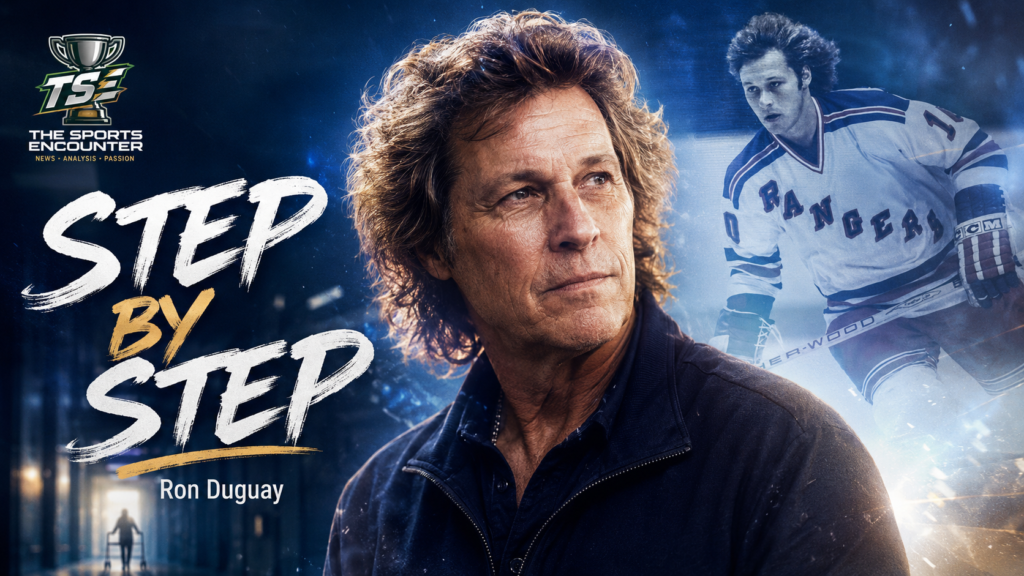
On August 12, Shay Thomas watched her father, Ron Duguay, walk without a walker.

For a man who spent 12 NHL seasons moving at full speed through crowded ice, the distance covered inside a rehabilitation facility may have been modest. In the context of what his body has endured over the past few weeks, however, those unaided steps carried considerably more weight.

Duguay, 69, is recovering from a frightening July collapse that left him unconscious, severely dehydrated and nursing significant facial and dental injuries. Doctors also discovered internal bleeding, varices, portal hypertensive gastropathy and an ulcer while treating a patient already living with Stage 4 colon cancer that has spread to his liver.

Now the story has moved again.

Thomas says her father has begun a new cancer treatment while continuing rehabilitation, and the family is waiting to see how his body responds and what upcoming tests reveal. She also shared perhaps the clearest physical sign of progress yet: Duguay walked without the aid of a walker.

There is still no basis for declaring that his cancer is improving, and his family has been careful not to do so. What has changed is his immediate condition. The former New York Rangers star who recently required hospitalization, blood transfusions and close monitoring is out of that acute phase, rebuilding his mobility and receiving treatment again.

After the uncertainty surrounding his late-July collapse, that qualifies as meaningful progress.

Ron Duguay Health Update at a Glance

Key DetailLatest Information
Age69
DiagnosisStage 4 colon cancer involving the liver
Latest recovery milestoneWalked without a walker during rehabilitation
Current treatmentFamily says he has started a new treatment and is awaiting evidence of how his body responds
Previously planned therapyBizengri (zenocutuzumab-zbco), according to an earlier family update
Recent emergencyCollapsed at home on July 24 after becoming severely dehydrated
Hospital findingsVarices, portal hypertensive gastropathy, internal bleeding and an ulcer
Fall injuriesFacial trauma, loss of veneers and multiple natural teeth
Current priorityRehabilitation, nutrition, mobility and monitoring response to the new treatment

The Latest Update Is Encouraging, but It Is Not a Cancer Verdict

Thomas framed the newest development carefully. There was no declaration of remission, shrinking tumors or a dramatic medical breakthrough. Instead, she said her father had started his new treatment and that the family was waiting for upcoming testing to show how his body responds.

That distinction matters.

Cancer treatment can begin long before doctors know whether it is working. Imaging, laboratory testing and other clinical assessments normally help the treating team determine whether a therapy is controlling disease, producing a response or failing to halt progression. Duguay’s family has not publicly released such results from the new treatment.

The positive development is functional rather than oncological, at least for now.

Thomas wrote that there remains “a long road ahead,” but watching her father walk without a walker “felt huge.” Her reaction makes sense when placed against what happened less than three weeks earlier.

The Sports Encounter previously reported how Duguay’s cancer battle suddenly became a medical emergency when he lost consciousness at home on July 24.

At the time, the lost teeth provided the most visually startling evidence of the fall. The deeper concern was what doctors discovered after he reached the hospital.

The Collapse Exposed How Fragile His Physical Condition Had Become

According to his daughter, Duguay had been feeling sick and struggling to eat. By the time he collapsed, doctors found him extremely dehydrated.

Testing also identified varices, portal hypertensive gastropathy, internal bleeding and an ulcer. His family explained that cancer involving his liver, together with the effects of surgery, chemotherapy and previous liver-directed treatment, had contributed to increased pressure in and around the liver. That pressure could affect blood flow toward the stomach and contribute to bleeding.

Duguay received blood transfusions while doctors monitored him.

The fall added another layer of physical damage. Thomas later said he had lost all of his veneers and two natural teeth, while additional teeth came out after he returned home because they may have been loosened during the accident. Dental reconstruction would have to wait until his overall physical condition improved.

Yet the frightening episode did not produce the prolonged decline his family feared.

By early August he was out of the hospital, managing small amounts of food and trying to rebuild his strength. Rehabilitation followed. The latest update suggests that process is beginning to produce visible results.

Why Walking Without a Walker Really Does Matter

It would be easy to turn Duguay’s unaided steps into sports symbolism. The medical significance is more useful.

Physical rehabilitation for people undergoing cancer treatment is designed to restore movement, strength, balance and independence. City of Hope’s rehabilitation program specifically identifies difficulty walking, reduced mobility, weakness, fatigue and recovery after falls among the problems physical therapists address.

That makes Duguay’s progress relevant for reasons beyond emotion.

A patient who can walk more safely and independently has regained a degree of functional capacity after a serious setback. It does not indicate what the cancer itself is doing, but it can improve daily independence and help a patient cope with the wider physical demands of ongoing care.

Duguay’s situation is especially complicated because nutritional problems contributed to the dehydration preceding his collapse. Rebuilding strength therefore involves more than exercise. His body also needs adequate hydration and nutrition while simultaneously coping with advanced disease and treatment.

His daughter previously described him taking recovery one day at a time and trying to manage small amounts of food, including soup.

The walker milestone should be understood in that context. It represents recovery from the consequences of the medical crisis, rather than evidence that the underlying cancer has retreated.

Has Ron Duguay Started Bizengri?

This is where the latest reporting requires precision.

When Thomas announced on August 4 that her father had left the hospital, she identified Bizengri, also known as zenocutuzumab-zbco, as his planned next treatment. She described it as a targeted therapy intended to interfere with signals that can help certain cancer cells grow.

In the newer update, Thomas says Duguay has now “started his new treatment.” The publicly accessible text of that update does not explicitly repeat the name Bizengri.

It is therefore reasonable to connect the two developments as part of the same treatment plan, but The Sports Encounter cannot independently confirm from the latest public statement that the therapy he has begun is Bizengri.

That may sound like a small distinction. In a story involving experimental, targeted or off-label cancer treatment, it is an important one.

What Is Bizengri, and Why Is It Different?

Bizengri is the brand name for zenocutuzumab-zbco, a bispecific antibody designed to target HER2 and HER3 signaling associated with certain cancers carrying a genetic alteration known as an NRG1 fusion.

In simple terms, targeted cancer therapies attempt to interfere with specific biological machinery helping particular tumors grow. That differs from conventional chemotherapy, which generally attacks rapidly dividing cells more broadly.

The FDA first granted Bizengri accelerated approval in December 2024 for certain advanced NRG1 fusion-positive non-small cell lung cancers and pancreatic adenocarcinomas after prior systemic treatment. In 2026, the agency also approved it for advanced NRG1 fusion-positive cholangiocarcinoma, a cancer of the bile ducts.

The current FDA prescribing information does not list colorectal cancer among Bizengri’s approved indications.

That does not allow outsiders to determine why Duguay’s medical team considered it. Physicians can sometimes use FDA-approved drugs outside their labeled indications when they believe the scientific and clinical circumstances support doing so, while other patients may receive therapies through research or special-access mechanisms.

Duguay’s family has not publicly disclosed enough molecular information about his tumor for anyone outside his treating team to explain the precise rationale. In particular, no reliable public source reviewed by The Sports Encounter establishes that his colorectal cancer carries an NRG1 fusion.

That information belongs with his physicians unless the family chooses to make it public.

What can be reported is narrower: his daughter previously identified Bizengri as the planned next therapy, and she now says her father has begun a new treatment while the family waits for testing to reveal the response.

City of Hope Has Been Central to Duguay’s Cancer Fight

Duguay’s family has repeatedly credited his move into the care system in Orange County with stabilizing his condition after an extremely difficult earlier period in Florida.

Public accounts have identified Dr. Pashtoon Kasi as one of the physicians involved in his care. City of Hope lists Kasi as medical director of gastrointestinal medical oncology in Orange County, with expertise in colorectal cancer, gastrointestinal cancers, clinical trials, cancer genomics and precision medicine.

That background is relevant because Duguay’s treatment journey has increasingly involved individualized decisions rather than a simple, uninterrupted chemotherapy schedule.

In March, Duguay reported improved blood markers after a difficult stretch and was being evaluated for an immunotherapy clinical trial. Other public reports later documented his participation in a clinical trial before the treatment plan changed again.

His cancer has required repeated adaptation.

That is one reason the newest update should be interpreted cautiously. Starting another treatment is meaningful, but the decisive information will come later, when doctors can assess whether his disease is responding.

Ron Duguay Has Been Fighting Cancer Since 2024

The public learned about Duguay’s cancer in February 2026, but the fight had already been going on for more than a year.

His daughter has said he was diagnosed with Stage 4 colon cancer in November 2024 after experiencing fatigue and gastrointestinal discomfort. The disease had already reached his liver by the time doctors identified it.

His treatment history has included chemotherapy, surgical procedures and liver-directed care. Duguay has said he lost his appendix and gallbladder during the course of treatment, while his weight at one stage fell from approximately 210 pounds to around 170.

For an athlete whose public image had always been tied to fitness, appearance and physical confidence, the transformation was difficult to accept.

He told reporters earlier this year that part of him initially felt embarrassed because he had viewed himself as a model of good health. Eventually, that thinking changed. Duguay began talking publicly about the disease and about his own decision to avoid colon screening.

His perspective shifted toward awareness.

The Screening Message May Become the Most Important Part of His Public Legacy

Duguay has said he avoided colonoscopy because he considered the procedure invasive. After receiving a Stage 4 diagnosis, he began telling people to get their colon checked.

That message aligns with current guidance from the American Cancer Society, which recommends that adults at average risk begin regular colorectal cancer screening at age 45. People with higher-risk factors may need earlier or more frequent screening based on medical advice.

Colorectal cancer can develop without obvious early symptoms. Potential warning signs can include persistent changes in bowel habits, rectal bleeding or blood in the stool, abdominal pain, unexplained weight loss, weakness and fatigue. Those symptoms can have many causes, which is why evaluation by a healthcare professional matters.

Duguay’s experience does not prove what would have happened had he undergone screening earlier. No responsible report can reconstruct that counterfactual.

His own conclusion is simpler: he wishes he had been checked.

For a former athlete with an audience that spans generations of hockey fans, that may eventually carry more public-health value than any discussion of which treatment he receives next.

The Financial Fight Has Become Part of the Story Too

Advanced cancer care has also transformed Duguay’s finances.

His daughters Shay Thomas and Amber Stavros launched a GoFundMe after watching the physical and financial pressure grow. The family explained that Duguay could no longer work as he normally had, while regular travel between Florida and Orange County added airfare, accommodation and other expenses to treatment costs.

The campaign has attracted more than 1,000 donations and six-figure financial support.

His family initially had difficulty persuading him to accept that help. Duguay had spent much of his public life appearing at charity events and supporting other causes, which made becoming the person asking for assistance uncomfortable.

The response nevertheless shows how far his connection with hockey extends.

Sudbury, where Duguay grew up and became a junior hockey star, has rallied around him. Former opponents and teammates have reached out. NHL alumni have offered support. Rangers fans continue to follow each medical update even though his final NHL game came decades ago.

Why Ron Duguay Still Means So Much to Hockey Fans

For younger readers, the hair and photographs can make Duguay look like a cultural character from another hockey era. He was much more accomplished than the image sometimes suggests.

The New York Rangers selected him 13th overall in the 1977 NHL Draft. He scored 20 goals as a rookie and helped New York reach the 1979 Stanley Cup Final in his second NHL season.

His best Rangers year came in 1981-82, when he scored 40 goals and 76 points in 72 games and earned his only NHL All-Star selection.

He later produced even bigger numbers with Detroit, reaching 80 points in 1983-84 and a career-high 89 points the following season.

According to his official NHL record, Duguay finished with 274 goals, 346 assists and 620 points in 864 regular-season games for the Rangers, Detroit Red Wings, Pittsburgh Penguins and Los Angeles Kings.

He was never in the Wayne Gretzky or Mario Lemieux tier examined in The Sports Encounter’s ranking of the 10 greatest NHL players ever. That was never the reason New York remembered him.

Duguay represented personality at a time when hockey frequently discouraged it. He played without a helmet, wore his hair long, moved through New York celebrity culture and became recognizable outside the sport. His fame took him to Studio 54, an Andy Warhol magazine cover and mainstream advertising while he was still producing at an All-Star level.

After playing, he remained connected to Rangers fans through broadcasting, including more than a decade as an MSG Network analyst.

Hockey careers continue long after statistics stop accumulating. The Sports Encounter recently explored that idea through Jonathan Toews’ retirement after his own long health battle and through the legacies honored in the Hockey Hall of Fame Class of 2026.

Duguay occupies a different place in hockey history, but the emotional principle is similar. Fans do not stop caring about players when their careers end.

Ron Duguay Cancer Timeline

DateDevelopment
November 2024Duguay is diagnosed with Stage 4 colon cancer after the disease has spread beyond its original site, including involvement of the liver.
2025 to early 2026He undergoes chemotherapy, surgery and other treatments while largely keeping the diagnosis private.
February 2026His family publicly reveals the cancer battle and launches a fundraiser to help with treatment and travel costs.
March 2026Duguay reports improved blood markers and is being considered for an immunotherapy clinical trial at City of Hope.
Spring and summer 2026His treatment continues, including participation in a clinical trial and ongoing specialist care.
July 24, 2026Duguay collapses at home and is taken to the hospital by ambulance.
Late July 2026Doctors identify severe dehydration, internal bleeding, varices, portal hypertensive gastropathy and an ulcer. He receives blood transfusions and remains under monitoring.
Early August 2026Duguay leaves the hospital. His family says he remains weak, is struggling to eat and needs to rebuild his strength. Bizengri is identified as the planned next treatment.
August 12, 2026Shay Thomas says her father has started a new treatment and that the family is awaiting upcoming tests. She also watches him walk without a walker during rehabilitation.

What Happens Next?

The next meaningful Ron Duguay health update will probably come from evidence rather than another dramatic event.

His family is waiting for tests to show how his body responds to the new therapy. Until those results arrive, it is impossible to say whether the treatment is controlling his cancer.

Meanwhile, rehabilitation remains important in its own right. Regaining mobility, restoring nutritional intake, avoiding another dehydration episode and recovering from the injuries caused by his fall can determine how much independence he retains during treatment.

The dental damage will also need attention once he is strong enough for further procedures.

None of those challenges is minor. Together they explain why Thomas could celebrate something as basic as walking across a rehabilitation facility without assistance.

For continuing developments around Duguay and the league, readers can follow The Sports Encounter’s NHL coverage.

Cautious Hope Is the Only Honest Conclusion

There is a temptation in sports writing to turn illness into another competition, complete with the familiar language of toughness, winning and refusing to lose. Cancer does not respect that vocabulary. Great athletes become sick. Determined people sometimes deteriorate. Treatments can work for reasons that have little to do with willpower, and they can fail despite extraordinary courage.

Duguay himself naturally approaches the experience with an athlete’s mentality. Earlier this summer he said that when circumstances demand it, he will fight until he drops and get back up.

The past three weeks have given that statement an uncomfortable literal meaning.

He collapsed. He went to the hospital. Doctors treated dehydration and bleeding while his family confronted another serious interruption in an already exhausting cancer journey. Now he is in rehabilitation, taking independent steps again and receiving a new treatment while doctors prepare to measure what happens next.

That is where Ron Duguay’s story stands today.

There is no evidence yet that the cancer has retreated, and there is no responsible way to predict what the new treatment will accomplish. There is, however, a meaningful difference between the frightening picture that emerged in late July and the one his daughter shared this week.

He is out of the hospital. He is rebuilding strength. Treatment has resumed. He walked without a walker.

For now, that is enough to justify hope without pretending certainty.

Frequently Asked Questions About Ron Duguay’s Health

What is Ron Duguay’s latest health update?

Duguay is undergoing physical rehabilitation following his recent hospitalization. His daughter Shay Thomas says he has started a new cancer treatment and that the family is awaiting upcoming tests to determine how his body responds. She also reported that he walked without a walker, an encouraging mobility milestone.

What type of cancer does Ron Duguay have?

Duguay has Stage 4 colon cancer. Public accounts from his family say the disease involves his liver.

When was Ron Duguay diagnosed with cancer?

His daughter has said Duguay was diagnosed in November 2024. He kept the illness largely private for more than a year before his family publicly disclosed it in February 2026.

Why was Ron Duguay hospitalized in July 2026?

Duguay collapsed at home on July 24 and was found unconscious. His family said he was extremely dehydrated after struggling to eat. Hospital testing also found varices, portal hypertensive gastropathy, internal bleeding and an ulcer. He received blood transfusions while being monitored.

What injuries did Ron Duguay suffer in the fall?

He suffered facial and dental injuries, losing all of his veneers and multiple natural teeth. His family said dental repairs would be addressed after his physical condition became stronger.

Is Ron Duguay receiving Bizengri?

His daughter identified Bizengri, or zenocutuzumab-zbco, as his planned next treatment in an earlier August update. Her newest public update says he has started a new treatment but does not explicitly identify it by name in the publicly accessible text. The Sports Encounter therefore cannot independently confirm that the treatment currently underway is Bizengri.

Is Bizengri approved for colon cancer?

No. The current FDA-approved indications for Bizengri cover certain advanced cancers carrying an NRG1 gene fusion, including non-small cell lung cancer, pancreatic adenocarcinoma and cholangiocarcinoma. Colorectal cancer is not currently among its FDA-labeled indications. A patient’s physician may have clinical reasons for considering treatment outside an approved indication, but Duguay’s specific medical rationale has not been publicly disclosed.

Why is Duguay in rehabilitation?

He became physically weakened during his cancer treatment and recent medical emergency. Physical rehabilitation can help restore strength, balance, mobility and independence after illness, treatment and falls.

How many points did Ron Duguay score in the NHL?

Duguay recorded 620 regular-season NHL points, consisting of 274 goals and 346 assists in 864 games.

How can fans support Ron Duguay?

His daughters created a public GoFundMe campaign to help with treatment-related, travel and supportive-care expenses. The campaign has received more than 1,000 donations. Fans have also continued sending messages of support through Duguay and his family’s public social media accounts.

Medical note: This article reports publicly disclosed information about Ron Duguay’s health and treatment. It does not provide medical advice. Treatment decisions, drug eligibility, and interpretation of cancer testing belong to patients and their qualified healthcare teams.


Ruben Santos is a North America-focused sports writer covering the NBA, NHL, NFL, MLB, MLS, and major international competitions across the United States, Canada, and Mexico. His work follows the leagues, teams, players, trades, roster decisions, playoff races, and major developments shaping sports conversations across the region. At The Sports Encounter, Ruben contributes breaking news, game coverage, league analysis, player-focused features, and stories examining the wider business, governance, and cultural forces influencing modern sport. His reporting combines clear news judgment with statistical context, historical perspective, and an understanding of the fan experience surrounding major teams and competitions. He also covers FIFA and international soccer stories when they intersect with North American sport, major tournaments, and global sports governance.

A Celebration of 5000 ODIs

A Celebration of 5000 ODIs Match 8: Australia Break Pakistan’s World Cup Dream in Lahore

Steve Waugh transformed the final over before Craig McDermott dismantled Pakistan’s chase, sending Australia into the 1987 World Cup final by the narrowest of margins.

Hamad Hussain | The Sports Encounter

Published

on

A Celebration of 5000 ODIs Match 8: Australia Break Pakistan’s World Cup Dream in Lahore

Eighteen runs separated Pakistan from a home World Cup final. Australia had collected exactly 18 from the last over of its innings.

That symmetry still defines the 1987 semifinal in Lahore. Pakistan recovered from 38 for three through Javed Miandad and Imran Khan, giving a packed Gaddafi Stadium reason to believe. Yet the runs Steve Waugh extracted at the end of Australia’s innings became a burden Pakistan could never shed.

Craig McDermott then took five wickets, including four during the closing stages, as Australia dismissed Pakistan for 249 to win by 18 runs.

That combination of late-innings calculation, a courageous recovery and ruthless fast bowling earns the semifinal its place as Match 8 in A Celebration of 5000 ODIs, The Sports Encounter’s journey through the matches that shaped one-day international cricket.

TL;DR

  • Australia defeated Pakistan by 18 runs in the 1987 World Cup semifinal.
  • Steve Waugh’s unbeaten 32 helped Australia score 18 from the final over and reach 267 for eight.
  • Pakistan fell to 38 for three before Javed Miandad and Imran Khan added 112.
  • Craig McDermott claimed five for 44 and won the Player of the Match award.
  • Pakistan conceded 34 extras, a costly loss of control in a tight knockout match.
  • Australia advanced to the final and secured its first World Cup title by beating England.

Match Information

DetailInformation
MatchAustralia vs Pakistan, 1987 World Cup semifinal
DateNovember 4, 1987
VenueGaddafi Stadium, Lahore
TossAustralia won the toss and batted
Australia267/8 in 50 overs
Pakistan249 all out in 49 overs
ResultAustralia won by 18 runs
Player of the MatchCraig McDermott, 5/44
Turning PointAustralia scored 18 runs from the final over
Tournament ImpactAustralia advanced to the World Cup final

Complete Match Scorecard

Australia Batting

BatterDismissalRunsBalls4s6s
Geoff MarshRun out315720
David BoonSt Javed Miandad b Saleem Malik659140
Dean Jonesb Tauseef Ahmed384530
Allan BorderRun out182220
Mike Velettab Imran Khan485020
Steve WaughNot out322841
Simon O’DonnellRun out0200
Greg Dyerb Imran Khan0100
Craig McDermottb Imran Khan1300
Tim MayNot out0200
Bruce ReidDid not bat
Extras34 (b 1, lb 19, nb 1, w 13)
Total267/8 in 50 overs

Fall of wickets: 73, 155, 155, 215, 236, 236, 241, 249.

Pakistan Bowling

BowlerOversMaidensRunsWickets
Imran Khan101363
Saleem Jaffar60570
Wasim Akram100540
Abdul Qadir100390
Tauseef Ahmed101391
Saleem Malik40221

Pakistan Batting

BatterDismissalRunsBalls4s6s
Ramiz RajaRun out1100
Mansoor Akhtarb McDermott91900
Saleem Malikc McDermott b Waugh253130
Javed Miandadb Reid7010340
Imran Khanc Dyer b Border588440
Wasim Akramb McDermott201302
Ijaz Ahmedc Jones b Reid8710
Saleem Yousufc Dyer b McDermott211520
Abdul QadirNot out201620
Saleem Jaffarc Dyer b McDermott0200
Tauseef Ahmedc Dyer b McDermott1300
Extras16 (lb 6, w 10)
Total249 all out in 49 overs

Fall of wickets: 2, 37, 38, 150, 177, 192, 212, 236, 247, 249.

Australia Bowling

BowlerOversMaidensRunsWickets
Craig McDermott100445
Bruce Reid102412
Steve Waugh91511
Simon O’Donnell101450
Tim May60360
Allan Border40261

David Boon Gives Australia Its Platform

David Boon’s 65 provided the control Australia needed after choosing to bat. His partnership with Geoff Marsh settled the innings, while Dean Jones maintained the tempo with 38.

Pakistan fought back when Jones and Boon departed at 155. Mike Veletta responded with 48 from 50 balls, keeping Australia above a run-a-ball trajectory without taking reckless risks.

Imran Khan led Pakistan’s attack superbly, conceding only 36 runs and taking three wickets. However, the support bowling lacked the same discipline. Pakistan conceded 34 extras, including 13 wides and 19 leg byes. In a match decided by 18 runs, those concessions were damaging.

Steve Waugh Turns One Over Into the Winning Margin

Australia slipped from 215 for three to 249 for eight as Imran attacked the lower order. Pakistan appeared to have limited the damage, but Waugh changed the shape of the contest in the final six deliveries.

His unbeaten 32 from 28 balls drove Australia to 267. The last over, delivered by Saleem Jaffar, cost 18 runs. Waugh’s calm, clean striking gave Australia a total that demanded an exceptional chase under semifinal pressure.

It echoed the composure Australia had shown in its one-run victory over India in Chennai. Once again, a handful of late runs proved decisive.

Javed Miandad and Imran Khan Rescue Pakistan

Pakistan’s chase began disastrously. Ramiz Raja was run out before McDermott removed Mansoor Akhtar. Waugh then dismissed Saleem Malik, leaving the hosts 38 for three.

Miandad and Imran refused to let the occasion collapse around them. Their 112-run partnership restored order through controlled rotation, selective aggression and a clear understanding of the required rate.

Imran made 58 before Allan Border dismissed him at 150. Miandad continued to 70, but Bruce Reid bowled him with Pakistan still needing 56 runs. Wasim Akram, Saleem Yousuf and Abdul Qadir attacked bravely, though Australia retained just enough control.

Craig McDermott Owns the Semifinal

McDermott delivered the performance that separated the teams. After removing Mansoor early, he returned to stop Pakistan’s lower-order charge.

Wasim Akram had struck two sixes in a rapid 20 when McDermott bowled him. Saleem Yousuf followed after making 21 from 15 balls. McDermott then dismissed Saleem Jaffar and Tauseef Ahmed to complete figures of five for 44.

The spell earned him the Player of the Match award and carried Australia into the final. Pace mattered, but so did his ability to attack the stumps when Pakistan’s batters had no time to settle.

Why This Semifinal Belongs in the 5,000 ODIs Collection

The match captured the unforgiving mathematics of knockout cricket. Australia’s final-over acceleration, Pakistan’s 34 extras and McDermott’s closing spell all contributed directly to an 18-run result.

Pakistan had enjoyed a powerful home campaign, winning five of its six group matches. The semifinal offered Imran’s team the chance to reach a World Cup final on home soil. Instead, Australia absorbed the atmosphere and survived Pakistan’s strongest partnership.

The victory also prepared the way for Australia’s seven-run win over England in the 1987 final, which secured the country’s first men’s World Cup title.

Readers can explore more landmark matches through The Sports Encounter’s Celebration of 5000 ODIs collection, including India’s 1983 final triumph and Kapil Dev’s rescue against Zimbabwe.

Pakistan found courage after losing three early wickets, but Australia owned the smaller moments. Waugh won the final over, McDermott won the closing passage, and those two interventions ended a nation’s dream within sight of the final.

Continue Reading

Breaking News

Vietnam Break Malaysia’s Resistance as Xuân Son Double Sets Up Thailand Final Rematch

Nguyễn Xuân Son came off the bench to score twice as defending champion Vietnam completed a 4-0 aggregate semifinal victory and booked another ASEAN final against Thailand.

Published

on

Vietnam Break Malaysia’s Resistance as Xuân Son Double Sets Up Thailand Final Rematch

Malaysia survived an hour in Hanoi with their comeback hopes technically alive. Within three minutes of Nguyễn Xuân Son entering the contest, those hopes had all but disappeared.

The striker scored twice after coming off the bench as Vietnam defeated Malaysia 2-0 at a packed Mỹ Đình National Stadium on Wednesday, August 19. Combined with their two-goal first-leg victory in Kuala Lumpur, the result carried the defending champions into the ASEAN Hyundai Cup 2026 final with a convincing 4-0 aggregate win.

Vietnam will now face Thailand in a repeat of the 2024 final. Kim Sang-sik’s team enters the decider with greater momentum, while the seven-time champion has an additional recovery day and will host Saturday’s opening leg in Bangkok.

TL;DR

  • Vietnam defeated Malaysia 2-0 in the semifinal second leg and advanced 4-0 on aggregate.
  • Substitute Nguyễn Xuân Son scored in the 62nd and 89th minutes.
  • Xuân Son earned the official Hyundai Player of the Match award.
  • Malaysia goalkeeper Azri Ghani made seven saves and delayed Vietnam’s breakthrough.
  • No yellow or red cards appeared in the accessible official ASEAN and Google event feeds.
  • Vietnam will visit Thailand on August 22 before hosting the return leg on August 26.

Vietnam vs Malaysia Match Information

DetailInformation
CompetitionASEAN Hyundai Cup 2026
StageSecond semifinal, second leg
ResultVietnam 2-0 Malaysia
Aggregate ResultVietnam won 4-0
VenueMỹ Đình National Stadium, Hanoi
DateWednesday, August 19, 2026
GoalscorerNguyễn Xuân Son 62’, 89’
Player of the MatchNguyễn Xuân Son
Turning PointXuân Son scored three minutes after entering as a substitute
Yellow CardsNone
Red CardsNone
FinalThailand vs Vietnam, August 22 and 26

The score, goalscorer and official match award were confirmed by the ASEAN Championship’s match report. Additional national-team updates are available through the Vietnam Football Federation and the Football Association of Malaysia.

Vietnam Control the Tie Before Xuân Son Finishes It

Vietnam began with the authority expected from a team protecting a 2-0 advantage. Nguyễn Đình Bắc attacked the right channel inside the opening minute, while Đoàn Văn Hậu forced Azri into an important intervention after 10 minutes.

Pressure continued through Đình Bắc, Nguyễn Quang Hải and Văn Hậu. Malaysia’s goalkeeper repeatedly prevented an early goal, including a flying save when Đình Bắc appeared ready to find the top corner.

Vietnam recorded 26 shots, with 10 reaching the target. Their 11 corners reflected the amount of time spent around Malaysia’s penalty area. The hosts had already shown this attacking depth while winning Group A against Cambodia and during their 3-0 victory over Indonesia.

Malaysia remained level at halftime because Azri performed superbly and Vietnam missed several presentable openings. Holding out was only part of the visitors’ task, however. They still needed two goals to force extra time.

Nguyễn Xuân Son Turns Pressure Into Goals

Kim introduced Xuân Son in the 59th minute after Vietnam’s starting attack had created chances without finding the finish.

The decision produced an almost immediate return. Azri saved Xuân Son’s first close-range header, but the striker remained alert when Trương Tiến Anh’s effort was blocked in the 62nd minute. He collected the loose ball and converted from close range.

Xuân Son added his second in the 89th minute, powering down the left, cutting inside and beating Azri to complete the semifinal.

His six shots and four attempts on target made him the match’s most dangerous player despite spending only half an hour on the field. The double took his tournament total to five goals, level with Đình Bắc at the top of Vietnam’s scoring chart.

Xuân Son’s influence also strengthens Vietnam’s final prospects. Their route to the semifinals had already demonstrated that goals could come from different areas. Now the forward who scored eight times during the 2024 title campaign has found his sharpest form at the ideal moment.

Patrik Lê Giang Preserves Another Clean Sheet

Malaysia enjoyed its best spell shortly after halftime. G. Pavithran forced Patrik Lê Giang into a reaction save before Paulo Josué’s follow-up was deflected over.

Those opportunities offered Malaysia a brief route back into the semifinal. A goal would have reduced the aggregate deficit and placed pressure on a home side growing frustrated by Azri’s saves.

Lê Giang ended the match with four stops and another clean sheet. His calm handling prevented Malaysia from building momentum and allowed Vietnam to continue attacking without panic.

The goalkeeper had also played an important role in Kuala Lumpur. His consistency across both legs helped Vietnam complete a semifinal without conceding.

Malaysia Compete, but Lack the Required Cutting Edge

Malaysia held 52 percent possession and completed 363 accurate passes, yet much of that control occurred away from Vietnam’s most vulnerable areas.

Tan Cheng Hoe’s team needed an early goal but struggled to place runners behind Vietnam’s back three. Paulo Josué lacked sustained service, while Malaysia’s wide attacks rarely created clear opportunities before the interval.

Azri was Malaysia’s outstanding performer. His seven saves kept the game scoreless for 61 minutes and prevented the aggregate margin from becoming heavier.

Reaching the semifinals still represented a respectable campaign. Malaysia secured qualification by defeating the Philippines in their final group game, but losses to Thailand and Vietnam exposed the gap between a competitive semifinalist and the tournament’s two strongest teams.

Vietnam vs Thailand: Who Has the Advantage in the Final?

The ASEAN Championship semifinal history pointed toward another meeting between the region’s dominant programs. Both have arrived, although their semifinal performances created different moods.

Vietnam enters as the slight favorite. The defending champion won both semifinal legs, kept two clean sheets and produced a 4-0 aggregate victory. Kim can also introduce Xuân Son from the bench or restore him to the starting lineup.

Thailand holds the logistical advantage before the opening leg. Anthony Hudson’s players have one additional recovery day and remain in Bangkok, where Saturday’s match will take place. Thailand also won all four group matches and scored 10 unanswered goals before the semifinals.

Concern emerged during their 2-1 home defeat to Singapore. After progressing 4-3 on aggregate, Hudson admitted he was “disappointed with the performance” and said there were “a lot of things we need to fix.”

Vietnam will host the second leg in Hanoi, which gives the defending champion the more valuable structural advantage. If Kim’s team remains level or close after Bangkok, the title will be decided before its own crowd at Mỹ Đình.

Thailand brings seven titles, a record 12th final appearance and the experience of surviving uncomfortable knockout situations. Vietnam carries stronger form, a deeper range of scorers and home advantage in the decisive leg.

The 2024 final ended with Vietnam defeating Thailand 5-3 on aggregate. Two years later, the War Elephants have a chance to settle that account, while Vietnam can confirm that Southeast Asian football’s balance of power has shifted.

Follow continuing tournament analysis through The Sports Encounter’s soccer coverage, its ASEAN Championship qualification archive and the broader FIFA World Cup 2026 hub.https://chatgpt.com/backend-api/sentinel/frame.html?sv=20260810913b

Continue Reading

Breaking News

Harry Sawyer Breaks APIA Hearts as Melbourne Victory Reach Australia Cup Semifinals

Harry Sawyer came off the bench to score the decisive extra-time goal as Melbourne Victory edged APIA Leichhardt 1-0 at Leichhardt Oval and booked a Hahn Australia Cup 2026 semifinal against Sydney FC.

Published

on

Harry Sawyer celebrates after scoring the extra-time winner for Melbourne Victory against APIA Leichhardt in the Hahn Australia Cup 2026 quarterfinal.

SYDNEY, August 19, 2026: Melbourne Victory needed 120 minutes to end APIA Leichhardt’s latest Australia Cup challenge, with substitute Harry Sawyer scoring the decisive extra-time goal in a tense 1-0 quarterfinal victory at Leichhardt Oval.

The result makes Victory the second team through to the Hahn Australia Cup 2026 semifinals and sets up a heavyweight meeting with Sydney FC for a place in the final.

According to the official Australia Cup match report, APIA frustrated the two-time Cup winners through 90 scoreless minutes before Sawyer finally found the breakthrough in the first half of extra time.

Victory had been warned repeatedly that this would not be a routine assignment. The Sports Encounter’s quarterfinal preview highlighted APIA’s home advantage, strong NPL NSW form and history of eliminating A-League opposition.

That warning proved accurate.

Melbourne had more of the ball for long periods, but APIA stayed organized, threatened after halftime and even had the ball in the net before an offside decision preserved the deadlock.

Sawyer eventually supplied the difference, continuing an impressive personal Australia Cup run and ensuring Giovanni Savarese’s side survived another difficult knockout night in New South Wales.

APIA Leichhardt 0-1 Melbourne Victory: Match Summary

Competition Hahn Australia Cup 2026
Round Quarterfinal
Result APIA Leichhardt 0-1 Melbourne Victory after extra time
Scorer Harry Sawyer
Venue Leichhardt Oval
Melbourne Victory coach Giovanni Savarese
Full-time score 0-0
Semifinal opponent Sydney FC

Melbourne Victory Control the Ball but Find No Easy Route Through APIA

Victory entered the quarterfinal as favorites, but the opening half quickly demonstrated why APIA had reached the last eight.

The NPL NSW side defended with discipline and refused to allow Melbourne’s possession to translate into clear chances.

Keegan Jelacic became increasingly involved as Victory tried to build through midfield, while Louis D’Arrigo sent a left-footed effort narrowly wide during one of the visitors’ better first-half moments.

APIA were without two important attacking options from the starting lineup, with Presley Ortiz and Michael Konestabo having dealt with illness during the week. Both were available from the bench.

The absences contributed to a cautious opening, although APIA gradually grew into the contest.

Jordan Segreto tested his range from a free kick late in the first half, while Frans Deli went down seeking a penalty after contact with Jordi Valadon. The appeal did not produce a spot kick.

At halftime, the game remained 0-0.

APIA Turn Up the Pressure After the Break

The balance changed after halftime.

APIA began pushing forward with greater confidence, forcing Melbourne to defend rather than simply dictate possession.

Jack Stewart created one of the first genuine moments of danger when he drove toward goal from a tight angle. Victory goalkeeper Jack Duncan stood firm, and Jason Davidson then blocked an effort from Deli during the same attacking sequence.

Moments later, Leichhardt Oval thought the underdogs had found their breakthrough.

Sean Symons converted at the back post following a well-delivered set piece, only for the assistant referee’s flag to rule the goal out for offside.

It was the type of moment that can completely change a knockout game.

APIA had gone from believing they were ahead to watching Victory immediately attack at the other end.

Matthew Grimaldi was given an excellent opportunity at the back post but sent his attempt over the crossbar.

APIA’s Defensive Resistance Pushes Victory Toward Extra Time

Melbourne continued to have more possession, yet APIA’s defensive structure held.

Victory manager Giovanni Savarese eventually turned to his bench.

Harry Shillington entered before Sawyer was introduced to give the visitors a stronger central presence in the penalty area.

The move nearly paid off quickly when a Jason Davidson cross reached Sawyer at the far post, forcing Oliver Kalac to remain alert.

The match then moved toward the type of finish APIA wanted.

Every scoreless minute increased the pressure on the A-League side while strengthening the belief inside the home ground.

Victory almost avoided extra time entirely.

Deep in second-half stoppage time, Jelacic and Grimaldi both found shooting opportunities in dangerous positions, only for APIA defenders to block the efforts and preserve the 0-0 score.

Ninety minutes had not been enough.

Harry Sawyer Changes Another Australia Cup Tie

Sawyer had already established himself as one of Melbourne Victory’s important Cup figures before arriving at Leichhardt Oval.

He scored in extra time against Western Sydney Wanderers in the previous round before Victory eventually advanced through a penalty shootout.

The striker delivered again when another knockout match required a decisive intervention.

Victory patiently moved possession through midfield before Valadon found Jelacic in space. Jelacic spotted Sawyer’s movement inside the penalty area and threaded the ball into his path.

Sawyer finished across goal into the bottom corner.

After more than 90 minutes of frustration, Melbourne finally had the lead.

The official Melbourne Victory match report credited the move to patient buildup through Valadon and Jelacic before Sawyer supplied the finishing touch.

Sawyer Is Building an Australia Cup Reputation Quickly

There is an interesting pattern developing around the striker.

Sawyer joined Victory during the offseason and has not needed long to become influential in knockout competition.

He scored his first competitive goal for the club during the Round of 16 against Western Sydney.

Now another extra-time goal has taken Victory into the semifinals.

Those are valuable contributions from a player who does not necessarily need to dominate entire matches to change them.

In cup competition, that quality can become decisive.

The difference between elimination and progression is frequently one movement, one pass or one composed finish after more than an hour of tactical stalemate.

Sawyer has now delivered those moments twice.

Jack Duncan Makes Sure Sawyer’s Goal Is Enough

The story could easily have changed again after Melbourne went ahead.

APIA had little choice but to commit more players forward.

Presley Ortiz, introduced from the bench, provided the home side with another attacking threat and eventually forced Duncan into an important save during the second period of extra time.

Duncan moved across his goal to keep out Ortiz’s low attempt and protect Melbourne’s advantage.

His contribution continues an excellent Cup campaign.

The goalkeeper was already Victory’s hero against Western Sydney, where he saved three penalties during the Round of 16 shootout.

This time he did not need penalties.

He still produced the intervention Melbourne required.

APIA Leave the Australia Cup With Their Reputation Enhanced

The result ends APIA Leichhardt’s tournament, but the manner of the defeat deserves context.

They took an established A-League club beyond 90 minutes and were separated by a single extra-time goal.

Their quarterfinal appearance was built on substance rather than novelty.

APIA entered the match as NPL NSW leaders and had already survived a dramatic penalty shootout against Sydney United 58 in the previous round.

The Sports Encounter’s pre-match analysis also noted the club’s previous Australia Cup victories over A-League opposition, including its memorable win against Melbourne Victory in 2018.

Another upset did not arrive in 2026.

The possibility remained alive until extra time.

Victory Avoid Another Australia Cup “Cupset”

The 2026 tournament has again demonstrated why professional status provides no guarantee in one-off knockout soccer.

NPL clubs have repeatedly tested A-League opponents, and several have already eliminated professional teams.

Melbourne understood that danger better than most.

APIA had beaten them in this competition before.

The location was the same.

The home crowd understood the history.

Victory therefore deserve credit for avoiding the emotional trap that can consume favorites in cup competition.

They did not panic when APIA stayed level.

They survived the disallowed goal.

They continued building attacks even as the game moved deeper into uncomfortable territory.

Eventually, their professional depth provided the answer.

Sydney FC vs Melbourne Victory Is Now Confirmed

Victory’s reward is one of the biggest fixtures available in Australian domestic soccer.

Sydney FC will face Melbourne Victory in the semifinals, renewing the Big Blue rivalry with a place in the Australia Cup final at stake.

Sydney became the first team through after beating SD Raiders 1-0, a match covered in full in The Sports Encounter’s Sydney FC vs SD Raiders quarterfinal report.

Takahiro Sekine scored the only goal at Fairfield Showground, although the Raiders pushed Sydney much harder than the final score might suggest.

The official Sydney FC quarterfinal report confirmed the Sky Blues’ progression after their 1-0 win.

The Big Blue Adds a Different Dimension to the Semifinal

Australia Cup knockout matches involving NPL clubs often draw attention because of the possibility of an upset.

Sydney against Victory brings a different type of pressure.

Both clubs will believe they should reach the final.

Both have major domestic histories.

Neither will carry the psychological freedom APIA or SD Raiders enjoyed in the quarterfinals.

The semifinal will therefore become a more traditional battle between two professional squads with expectations attached.

Sydney are chasing another Australia Cup trophy.

Melbourne Victory are two-time winners and are now one victory away from returning to the final.

Giovanni Savarese’s Victory Keep Finding Ways to Win

The result also continues Giovanni Savarese’s encouraging start at Melbourne Victory.

His side have experienced very different tests during this Cup run.

They comfortably handled Kingborough Lions United in the Round of 32.

Western Sydney Wanderers forced them through extra time and penalties.

APIA then turned the quarterfinal into another long, tactical contest.

Victory progressed from all three.

That adaptability matters at this stage of preseason.

Savarese is still developing combinations and assessing his squad ahead of the domestic campaign, yet the Australia Cup offers no room for experimental defeats.

Every match has consequences.

Australian Soccer’s Knockout Summer Keeps Delivering Tight Margins

There has been a familiar theme running through Australian soccer in 2026: knockout matches refusing to follow simple expectations.

The Socceroos experienced exactly that at the FIFA World Cup.

Australia opened the tournament with an impressive 2-0 victory over Türkiye, before tactical questions emerged following their defeat against the United States.

They then survived a demanding 0-0 draw with Paraguay to reach the knockout stage.

Australia’s run eventually ended when Egypt eliminated the Socceroos on penalties.

The circumstances are different, but the competitive lesson travels well.

Knockout soccer rewards teams that remain emotionally stable when the match does not follow the expected script.

Melbourne Victory did that at Leichhardt.

Australia Cup 2026 Quarterfinal Picture

QuarterfinalResult/Status
SD Raiders vs Sydney FCSydney FC won 1-0
APIA Leichhardt vs Melbourne VictoryMelbourne Victory won 1-0 after extra time
Lions FC vs North Sunshine EaglesUpcoming
Preston Lions vs South MelbourneUpcoming

The wider tournament can be followed through The Sports Encounter’s soccer coverage, while our FIFA World Cup 2026 hub provides additional coverage of Australia’s international campaign and the major soccer stories shaping 2026.

TSE Turning Points

APIA’s disallowed goal

Sean Symons putting the ball into the net early in the second half briefly changed the atmosphere inside Leichhardt Oval. The offside flag prevented APIA from gaining the kind of lead that could have transformed the final half-hour.

Grimaldi misses at the other end

Victory immediately generated a major opportunity after APIA’s disallowed goal, but Matthew Grimaldi could not keep his attempt down. Both teams had their chance to seize control during the same frantic period.

APIA’s stoppage-time blocks

Jelacic and Grimaldi both saw late attempts blocked as APIA forced the match beyond 90 minutes.

Sawyer changes the game

Melbourne’s substitutes ultimately mattered. Sawyer found the space and finish that had been missing throughout regulation time.

Duncan denies Ortiz

APIA still created one last major opportunity, but Duncan’s late extra-time save ensured Sawyer’s goal remained enough.

TSE Verdict: Victory Were Tested, and That May Help Them Against Sydney

Melbourne Victory did not dominate APIA Leichhardt into submission.

They had to solve them.

That distinction is important.

APIA defended intelligently, grew into the match and came close enough to an upset that Victory were forced into extra time before finally finding the decisive opening.

Sawyer deserves the headline because his finish separated the teams.

Duncan deserves considerable credit because APIA still had an opportunity to take the semifinal away from Melbourne after falling behind.

Jelacic’s involvement in the winning move also reflected his growing influence throughout the contest.

For Savarese, the most encouraging part may be the variety of ways Victory have progressed through this tournament.

They have won comfortably.

They have survived penalties.

Now they have survived a difficult away quarterfinal against an NPL club that had every reason to believe another upset was possible.

Sydney FC will present a very different challenge.

The Sky Blues have professional depth, Cup pedigree and their own warning from the quarterfinal after SD Raiders pushed them hard.

The semifinal therefore arrives with both teams already reminded that reputation does not win Australia Cup matches.

Victory escaped Leichhardt.

The Big Blue now decides which A-League heavyweight reaches the final.

Frequently Asked Questions

Who won APIA Leichhardt vs Melbourne Victory?

Melbourne Victory defeated APIA Leichhardt 1-0 after extra time in the Hahn Australia Cup 2026 quarterfinal.

Who scored the winning goal for Melbourne Victory?

Harry Sawyer scored the only goal of the match during the first half of extra time.

What was the score after 90 minutes?

The match was 0-0 at the end of regulation time.

Did APIA Leichhardt score against Melbourne Victory?

APIA put the ball in the net during the second half through Sean Symons, but the goal was ruled out for offside.

Who will Melbourne Victory play in the Australia Cup semifinal?

Melbourne Victory will face Sydney FC in the semifinals.

How did Sydney FC reach the semifinal?

Sydney FC defeated SD Raiders 1-0, with Takahiro Sekine scoring the decisive first-half goal.

Did Jack Duncan make an important save in extra time?

Yes. Duncan denied substitute Presley Ortiz as APIA pushed for an equalizer after Melbourne had taken the lead.

Has Harry Sawyer scored in consecutive Australia Cup rounds?

Yes. Sawyer also scored in extra time against Western Sydney Wanderers in the Round of 16 before scoring the quarterfinal winner against APIA.

How many Australia Cup titles have Melbourne Victory won?

Melbourne Victory are two-time winners of the competition and are now chasing a third title.

Where can fans follow official Australia Cup updates?

Fixtures, results, match reports and tournament information are available through the official Australia Cup website.

Continue Reading

FIFA World Cup 2026 Hub

AFC President Sheikh Salman and Qatar football officials depicted in a dramatic split-screen graphic as the Gianni Infantino crisis deepens divisions inside Asian football. AFC President Sheikh Salman and Qatar football officials depicted in a dramatic split-screen graphic as the Gianni Infantino crisis deepens divisions inside Asian football.
Editor's Choice1 day ago

AFC-Qatar Rift Deepens as Infantino Crisis Divides Asian Football

AFC President Sheikh Salman bin Ebrahim Al-Khalifa has hit back at Qatar after its football federation challenged the confederation’s stance...

Kevin Lamour and Gianni Infantino feature in a FIFA governance graphic highlighting Lamour’s departure after criticism of the abandoned World Cup investment plan. Kevin Lamour and Gianni Infantino feature in a FIFA governance graphic highlighting Lamour’s departure after criticism of the abandoned World Cup investment plan.
Breaking News2 days ago

Why FIFA COO Kevin Lamour Was Shown the Exit Way

FIFA COO Kevin Lamour has left the organization weeks after accusing staff of being deceived over the abandoned FIFA Forward...

Gianni Infantino pictured against an Ireland football backdrop as the FAI withdraws support for his FIFA re-election campaign. Gianni Infantino pictured against an Ireland football backdrop as the FAI withdraws support for his FIFA re-election campaign.
Breaking News6 days ago

Ireland Turns on Infantino as FIFA Election Revolt Spreads Beyond Europe’s Heavyweights

Ireland has withdrawn its support for Gianni Infantino’s re-election as FIFA president, adding another national association to a widening governance...

Donald Trump backs Gianni Infantino as UEFA, AFC and CONCACAF intensify pressure on the FIFA president ahead of the 2027 election. Donald Trump backs Gianni Infantino as UEFA, AFC and CONCACAF intensify pressure on the FIFA president ahead of the 2027 election.
Breaking News1 week ago

Donald Trump Comes to Gianni Infantino’s Rescue as FIFA Crisis Turns Political

Donald Trump has thrown his support behind Gianni Infantino as UEFA, AFC and CONCACAF deepen their challenge to the FIFA...

Gianni Infantino appears under intense scrutiny as UEFA, AFC and CONCACAF challenge his FIFA leadership over the abandoned World Cup commercial rights stake-sale plan. Gianni Infantino appears under intense scrutiny as UEFA, AFC and CONCACAF challenge his FIFA leadership over the abandoned World Cup commercial rights stake-sale plan.
Editor's Choice1 week ago

UEFA, AFC and CONCACAF Turn on Infantino as FIFA Crisis Becomes a Fight for His Presidency

UEFA, the AFC and CONCACAF have jointly accused FIFA President Gianni Infantino of breaking trust over the abandoned World Cup...

Gianni Infantino stands under intense scrutiny in a cinematic FIFA leadership crisis scene, surrounded by press cameras, officials, global football imagery, and the headline “Infantino Under Pressure.” Gianni Infantino stands under intense scrutiny in a cinematic FIFA leadership crisis scene, surrounded by press cameras, officials, global football imagery, and the headline “Infantino Under Pressure.”
Editor's Choice2 weeks ago

FIFA Says Infantino Is Being Undermined as Leadership Crisis Turns Into a Battle Over Legitimacy

FIFA has escalated its defense of Gianni Infantino, warning of a concerted effort to undermine its president as the fallout...

Lionel Messi raises both index fingers toward the sky in Argentina’s No. 10 jersey during a match, illustrating the uncertainty around when the 39-year-old legend will retire from international football. Lionel Messi raises both index fingers toward the sky in Argentina’s No. 10 jersey during a match, illustrating the uncertainty around when the 39-year-old legend will retire from international football.
Editor's Choice2 weeks ago

When Will Lionel Messi Retire? Argentina President Says Only Messi Has the Answer

Lionel Messi’s retirement remains an open question after his eight-goal 2026 World Cup. Argentina president Claudio Tapia says only Messi...

Cinematic FIFA governance graphic showing a somber football executive at a FIFA Congress podium, a glowing FA letter stamped “Support Withdrawn,” the headline “FA Turns Against Infantino,” international flags, a connected globe, and The Sports Encounter logo. Cinematic FIFA governance graphic showing a somber football executive at a FIFA Congress podium, a glowing FA letter stamped “Support Withdrawn,” the headline “FA Turns Against Infantino,” international flags, a connected globe, and The Sports Encounter logo.
Breaking News2 weeks ago

English FA Turns Its Back on Gianni Infantino, Withdraws Support for Re-Election

The English FA has formally withdrawn its support for Gianni Infantino’s bid for another term as FIFA president, adding major...

A suited FIFA official bows at a crisis meeting beneath a fractured world football graphic, surrounded by delegates, torn $4.2 billion deal papers and the headline “World Cup Not for Sale.” A suited FIFA official bows at a crisis meeting beneath a fractured world football graphic, surrounded by delegates, torn $4.2 billion deal papers and the headline “World Cup Not for Sale.”
Editor's Choice2 weeks ago

FIFA President Apologizes to Member Nations After FIFA World Cup Selloff Plan Fails to Inspire

FIFA has apologized to its member associations after abandoning a controversial plan to sell a 20% stake in a new...

Gianni Infantino stands under pressure as FIFA officials hold crisis talks in Morocco following the rejected World Cup commercial stake sale proposal. Gianni Infantino stands under pressure as FIFA officials hold crisis talks in Morocco following the rejected World Cup commercial stake sale proposal.
Breaking News2 weeks ago

Infantino in Survival Mode After World Cup Stake Sale Idea Results in Global Revolt

Gianni Infantino’s abandoned World Cup commercial rights proposal has triggered an internal FIFA revolt, lost European support, and drawn a...

Gianni Infantino stands isolated at a FIFA podium as Arsène Wenger, Mattias Grafstrom, Prince Ali and divided football officials surround him, with fractured blue-and-red VFX imagery, The Sports Encounter logo, and the headline “Allies Break Ranks.” Gianni Infantino stands isolated at a FIFA podium as Arsène Wenger, Mattias Grafstrom, Prince Ali and divided football officials surround him, with fractured blue-and-red VFX imagery, The Sports Encounter logo, and the headline “Allies Break Ranks.”
Editor's Choice2 weeks ago

Crisis Plagues FIFA as Wenger, Grafstrom and Federations Break Ranks

Gianni Infantino’s grip on FIFA is under growing pressure after senior officials, European federations and former allies distanced themselves from...

Gianni Infantino stands between representatives of smaller football nations and the rejected UEFA and CONCACAF blocs, with a glowing world map, voting imagery, and the headline “Small Nations, Big Power” beneath The Sports Encounter logo. Gianni Infantino stands between representatives of smaller football nations and the rejected UEFA and CONCACAF blocs, with a glowing world map, voting imagery, and the headline “Small Nations, Big Power” beneath The Sports Encounter logo.
Editor's Choice2 weeks ago

Infantino Looks to Smaller Nations After UEFA, CONCACAF Snub

Gianni Infantino’s FIFA future may depend on smaller and emerging nations after UEFA and CONCACAF lost confidence in his leadership....

Gianni Infantino appears under a fractured World Cup trophy as UEFA, AFC, and other football stakeholders reject FIFA’s failed private investment stake plan. Gianni Infantino appears under a fractured World Cup trophy as UEFA, AFC, and other football stakeholders reject FIFA’s failed private investment stake plan.
Editor's Choice2 weeks ago

FIFA’s World Cup Stake Plan Failed in Three Days. The Damage to Gianni Infantino May Last Much Longer

FIFA’s attempt to sell a 20% stake in a new World Cup commercial entity collapsed within days after a global...

Cinematic tribute to Cristiano Ronaldo’s World Cup career, showing his rise, record-breaking goals and six-tournament journey on one side, and his emotional final farewell with Portugal on the other, under the headline “Goals. Records. Farewell.” with The Sports Encounter logo. Cinematic tribute to Cristiano Ronaldo’s World Cup career, showing his rise, record-breaking goals and six-tournament journey on one side, and his emotional final farewell with Portugal on the other, under the headline “Goals. Records. Farewell.” with The Sports Encounter logo.
Editor's Choice2 weeks ago

Cristiano Ronaldo’s World Cup Career: Goals, Records and Final Farewell

Cristiano Ronaldo became the first man to score in six FIFA World Cups, but football’s greatest tournament never gave him...

Cinematic VFX featured image showing fictionalized World Cup legend silhouettes walking toward a glowing stadium tunnel, with farewell confetti, The Sports Encounter logo, and the headline “The Last Dance: World Cup Legends Say Goodbye.” Cinematic VFX featured image showing fictionalized World Cup legend silhouettes walking toward a glowing stadium tunnel, with farewell confetti, The Sports Encounter logo, and the headline “The Last Dance: World Cup Legends Say Goodbye.”
Editor's Choice3 weeks ago

The Golden Generation Saying Goodbye After the FIFA World Cup 2026

The 2026 World Cup did more than crown a champion. It marked the emotional farewell of a generation that shaped...

Cinematic tribute to Neymar Jr.’s World Cup journey, showing his Brazilian flair and rainbow-flick skill on one side and his pain, injuries and emotional heartbreak on the other, with the headline “Skill. Pain. Legacy.” and The Sports Encounter logo. Cinematic tribute to Neymar Jr.’s World Cup journey, showing his Brazilian flair and rainbow-flick skill on one side and his pain, injuries and emotional heartbreak on the other, with the headline “Skill. Pain. Legacy.” and The Sports Encounter logo.
Editor's Choice3 weeks ago

Neymar’s World Cup Career: Skill, Pain, and the Rainbow Flick Legacy

Neymar carried Brazil’s World Cup hopes across four tournaments, producing unforgettable goals while enduring injuries, criticism and elimination heartbreak. His...

Cinematic FIFA World Cup 2030 graphic showing the golden trophy at the center of a global football revolt, with protesting delegates, distressed executives, collapsing financial charts, torn investment documents, and the headline “World Cup 2030: Not for Sale?” alongside The Sports Encounter logo. Cinematic FIFA World Cup 2030 graphic showing the golden trophy at the center of a global football revolt, with protesting delegates, distressed executives, collapsing financial charts, torn investment documents, and the headline “World Cup 2030: Not for Sale?” alongside The Sports Encounter logo.
Editor's Choice3 weeks ago

Is the FIFA World Cup 2030 Not for Sale Anymore?

FIFA’s proposal to sell a minority stake in a $20 billion World Cup commercial company appears to have collapsed after...

A cinematic World Cup 2030 graphic compares a 48-team format with a proposed 64-team expansion, surrounded by national teams, global flags, the trophy, and contrasting calls to grow or protect the tournament. A cinematic World Cup 2030 graphic compares a 48-team format with a proposed 64-team expansion, surrounded by national teams, global flags, the trophy, and contrasting calls to grow or protect the tournament.
Editor's Choice3 weeks ago

FIFA Explores 64-Nation World Cup for 2030: Is Another Expansion Worth It?

FIFA is examining whether the 2030 World Cup should expand from 48 to 64 teams. The proposal could increase global...

Gianni Infantino faces mounting internal opposition at FIFA as Carlos Cordeiro resigns and Kevin Lamour publicly challenges the proposed World Cup stake sale. Gianni Infantino faces mounting internal opposition at FIFA as Carlos Cordeiro resigns and Kevin Lamour publicly challenges the proposed World Cup stake sale.
Editor's Choice3 weeks ago

FIFA Revolt Moves Inside Infantino’s Office as Cordeiro Quits and Kevin Lamour Condemns World Cup Selloff

FIFA’s World Cup stake crisis has moved inside the organization. Carlos Cordeiro has resigned in protest, while chief operating officer...

Gianni Infantino faces mounting opposition to FIFA’s proposed World Cup stake sale as UEFA officials threaten a boycott and private investors circle the tournament’s commercial future. Gianni Infantino faces mounting opposition to FIFA’s proposed World Cup stake sale as UEFA officials threaten a boycott and private investors circle the tournament’s commercial future.
Editor's Choice3 weeks ago

Infantino’s World Cup Selloff Crisis Deepens as Adviser Quits and UEFA Backs FIFA Boycott

Gianni Infantino’s plan to bring private investors into a $20 billion FIFA commercial company has triggered a global soccer revolt....

ASEAN Championship 2026

English Premier League 2026

NHL 2026

The Hundred 2026

Wimbledon 2026

French Open 2026

Lanka Premier League 2026

Global Super League 2026

The World of LeBron James

NFL 2026-27

Boxing Gloves On

US Open 2026

Breaking News