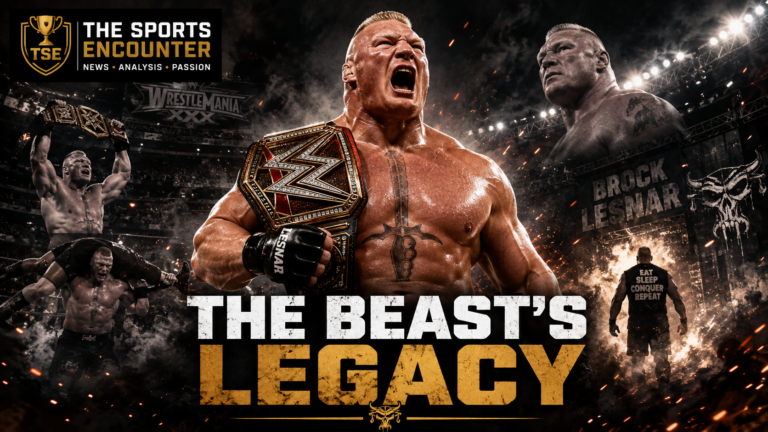
Brock Lesnar has officially retired from professional wrestling, closing one of the most extraordinary, controversial and physically dominant careers WWE has ever witnessed.
He was never the most polished talker, the most dependable full-time performer or the wrestler most interested in tradition. He did not need to be. Lesnar possessed something far rarer: the ability to make professional wrestling feel dangerous again.
From becoming WWE’s youngest world champion to ending The Undertaker’s WrestleMania streak, demolishing John Cena, ruling as Universal Champion for 504 days and eventually helping launch Oba Femi into a new era, Lesnar spent more than two decades operating somewhere between athlete, attraction and natural disaster.
His career contained historic victories, unforgettable destruction and commercial success few wrestlers could match. It also carried abrupt departures, disappointing matches, divisive title reigns and long absences that regularly tested the patience of WWE audiences.
Story at a glance
Before WWE: The Athlete Behind The Beast
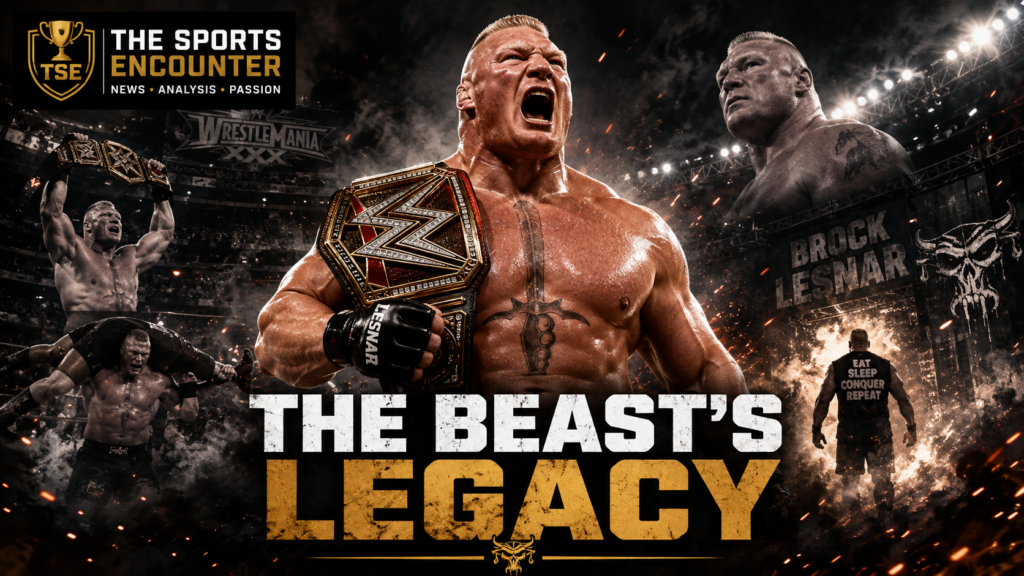
Professional wrestling has always required audiences to suspend disbelief. Brock Lesnar complicated that arrangement because very little about him required imagination.
2002: WWE Unleashes a Once-in-a-Generation Rookie
Lesnar’s arrival on WWE television in 2002 felt less like a debut and more like an invasion.
Kurt Angle and the Rivalry That Proved Lesnar Could Wrestle
Power made Lesnar spectacular. His rivalry with Kurt Angle proved he could do far more than overpower opponents.
The First Major Disappointment: Lesnar Walks Away in 2004
Lesnar’s first WWE run ended almost as quickly as it had begun.
The UFC Years Changed Brock Lesnar’s Wrestling Value
Lesnar’s time away from WWE ultimately made him more valuable.
The result was not a perfect career. It was something more compelling: a wrestling career that remained impossible to ignore.
TL;DR: Brock Lesnar’s WWE Career and Legacy
- Brock Lesnar made his explosive main-roster WWE debut in 2002.
- He became the youngest WWE Champion in history at 25 by defeating The Rock at SummerSlam 2002.
- Lesnar won 10 recognized WWE world championships: seven WWE Championships and three Universal Championships.
- He won the King of the Ring tournament in 2002.
- He won the Royal Rumble in 2003 and 2022.
- He defeated The Undertaker at WrestleMania 30, ending the legendary 21-0 WrestleMania streak.
- He held the Universal Championship for 504 days, one of the defining title reigns of WWE’s modern era.
- Lesnar’s greatest rivalries included The Undertaker, John Cena, Roman Reigns, Kurt Angle, Goldberg, Seth Rollins and Cody Rhodes.
- His career was weakened by his sudden 2004 departure, unpopular part-time championship reigns and several underwhelming marquee matches.
- His final phase helped establish Oba Femi as a major new WWE force.
- Lesnar retires as one of wrestling’s most legitimate, intimidating and commercially valuable attractions.
Brock Lesnar’s WWE Career at a Glance
| Category | Brock Lesnar’s Record |
|---|---|
| WWE main-roster debut | 2002 |
| Recognized world championships | 10 |
| WWE Championship reigns | Seven |
| Universal Championship reigns | Three |
| Longest Universal Championship reign | 504 days |
| Royal Rumble victories | 2003 and 2022 |
| King of the Ring victory | 2002 |
| Money in the Bank victory | 2019 |
| Youngest WWE Champion | 25 years old |
| Most historic victory | Defeating The Undertaker at WrestleMania 30 |
| Most dominant performance | Defeating John Cena at SummerSlam 2014 |
| Final major rivalry | Oba Femi |
Before WWE: The Athlete Behind The Beast
Professional wrestling has always required audiences to suspend disbelief. Brock Lesnar complicated that arrangement because very little about him required imagination.
Before entering WWE, Lesnar had already established himself as an elite amateur wrestler. His physical profile appeared almost unreal: heavyweight strength, explosive speed, balance, athletic coordination and the ability to move with the urgency of a much smaller competitor.
WWE did not need to convince fans that Lesnar was dangerous. It simply needed to place him inside a ring and allow viewers to see it.
That legitimacy became the foundation of his entire professional wrestling identity. Even when Lesnar was performing scripted entertainment, audiences understood that the man behind the character possessed genuine competitive credentials.
His later success as a UFC Heavyweight Champion strengthened that aura even further. When Lesnar returned to WWE in 2012, he was no longer merely a wrestler being presented as a fighter. He had become a proven combat-sports champion entering a wrestling company.
2002: WWE Unleashes a Once-in-a-Generation Rookie
Lesnar’s arrival on WWE television in 2002 felt less like a debut and more like an invasion.
Accompanied by Paul Heyman, Lesnar attacked wrestlers with frightening speed and minimal hesitation. WWE presented him as “The Next Big Thing,” but the phrase quickly felt conservative. Lesnar was not being positioned as a future possibility. He was being accelerated toward the top immediately.
His early victories established the formula that would define much of his career. Opponents were not merely defeated. They were thrown, folded, launched and overwhelmed.
Heyman handled the language. Lesnar supplied the evidence.
Winning the 2002 King of the Ring
Lesnar won the King of the Ring tournament only months after reaching the main roster. That victory gave him a WWE Championship opportunity at SummerSlam and confirmed that WWE had no intention of developing him slowly.
The company was searching for a new generation of main-event stars after the heights of the Attitude Era. Lesnar offered something different from The Rock, “Stone Cold” Steve Austin or Triple H.
He was colder, more physical and less theatrical. His character did not need long speeches. The threat came from what happened after the bell.
Defeating The Rock and Becoming the Youngest WWE Champion
At SummerSlam 2002, Lesnar defeated The Rock to capture the Undisputed WWE Championship.
At 25, he became the youngest WWE Champion in company history, a distinction that remains central to his legacy. WWE’s own historical records continue to recognize Lesnar as the youngest performer to win its premier championship.
The significance extended beyond age.
The Rock was already one of wrestling’s biggest stars. Defeating him cleanly at one of WWE’s largest annual events immediately established Lesnar as a credible centerpiece rather than a temporary experiment.
Few wrestlers in WWE history have moved from debut to world championship with comparable speed. Even fewer appeared so convincing while doing it.
Kurt Angle and the Rivalry That Proved Lesnar Could Wrestle
Power made Lesnar spectacular. His rivalry with Kurt Angle proved he could do far more than overpower opponents.
Angle was an Olympic gold medalist, an elite technical wrestler and one of WWE’s most complete performers. Against him, Lesnar could not rely entirely on intimidation. Their matches demanded timing, athleticism, mat wrestling and sustained storytelling.
The rivalry helped establish Lesnar as a genuine all-round performer.
The 2003 Royal Rumble Victory
Lesnar won the 2003 Royal Rumble, earning a WWE Championship match against Angle at WrestleMania XIX.
That victory made his ascent feel complete. Less than a year after his debut, Lesnar had won King of the Ring, captured the WWE Championship and secured a WrestleMania main event.
WrestleMania XIX and the Shooting Star Press That Nearly Went Wrong
Lesnar defeated Angle at WrestleMania XIX to regain the WWE Championship, but the match is remembered partly for one of the most frightening mistakes of his career.
Late in the contest, Lesnar attempted a Shooting Star Press from the top rope. The move was extraordinary for a wrestler of his size, but he under-rotated and landed dangerously on his head and upper body.
He completed the match and won the championship, but the moment became a lasting reminder that his athletic confidence sometimes pushed him beyond reasonable safety.
It was both a triumph and a warning.
The WrestleMania victory showed his toughness and composure. The failed move exposed the potential cost of trying to make an already extraordinary athlete appear even more superhuman.
The First Major Disappointment: Lesnar Walks Away in 2004
Lesnar’s first WWE run ended almost as quickly as it had begun.
By 2004, he had already won multiple world championships, headlined major events and worked with many of WWE’s biggest names. Yet the demands of the travel schedule and the repetitive nature of life on the road reportedly left him dissatisfied.
He left WWE after WrestleMania XX.
The Goldberg Match That Fans Rejected
Lesnar’s final match of that first run came against Goldberg at WrestleMania XX.
On paper, it appeared to be a confrontation between two of wrestling’s most destructive heavyweights. In practice, the crowd knew both men were leaving WWE and reacted with open hostility.
The match became uncomfortable rather than epic. Fans booed the competitors, rejected the pacing and directed much of their energy toward special referee “Stone Cold” Steve Austin.
Goldberg won, Austin stunned both men and Lesnar left WWE with one of the weakest major matches of his career.
For a performer who had been pushed as the company’s future, the departure felt like a broken promise.
WWE had invested enormous creative capital in Lesnar. He had defeated established stars and reached the championship almost immediately. Walking away after two years made that investment appear vulnerable.
It would take eight years for the relationship to resume.
The UFC Years Changed Brock Lesnar’s Wrestling Value
Lesnar’s time away from WWE ultimately made him more valuable.
He explored professional football before entering mixed martial arts, where he became UFC Heavyweight Champion. His success added a level of sporting credibility no WWE storyline could manufacture.
His combat-sports career also brought serious physical hardship. Lesnar battled diverticulitis, a condition that disrupted his UFC run and contributed to questions about how long he could remain an elite fighter.
When he returned to WWE in 2012, he arrived with a transformed identity.
He was no longer “The Next Big Thing.”
He was “The Beast Incarnate.”
2012 Return: WWE Finally Learns How to Use Brock Lesnar
Lesnar returned on the Raw after WrestleMania 28 and delivered an F-5 to John Cena.
The reaction demonstrated how much his absence had increased his mystique. WWE audiences had watched him succeed in a legitimate combat sport. Every suplex now carried additional credibility.
His new role was clear.
Lesnar would not operate like a normal roster member. He would appear selectively, target the company’s biggest stars and make each match feel like an event.
The Surprising Loss to John Cena
Lesnar faced Cena in an Extreme Rules match in his first contest after returning.
The match was violent, physical and unlike the polished WWE main-event style of the period. Lesnar bloodied Cena and dominated long stretches, only to lose near the finish.
The decision remains one of the most debated booking choices of Lesnar’s career.
Cena was WWE’s established franchise player, but Lesnar had just returned after eight years with an aura the company could have protected more carefully. A defeat in his first match weakened some of the momentum surrounding his comeback.
Lesnar recovered, but WWE had missed an opportunity to present him as immediately unstoppable.
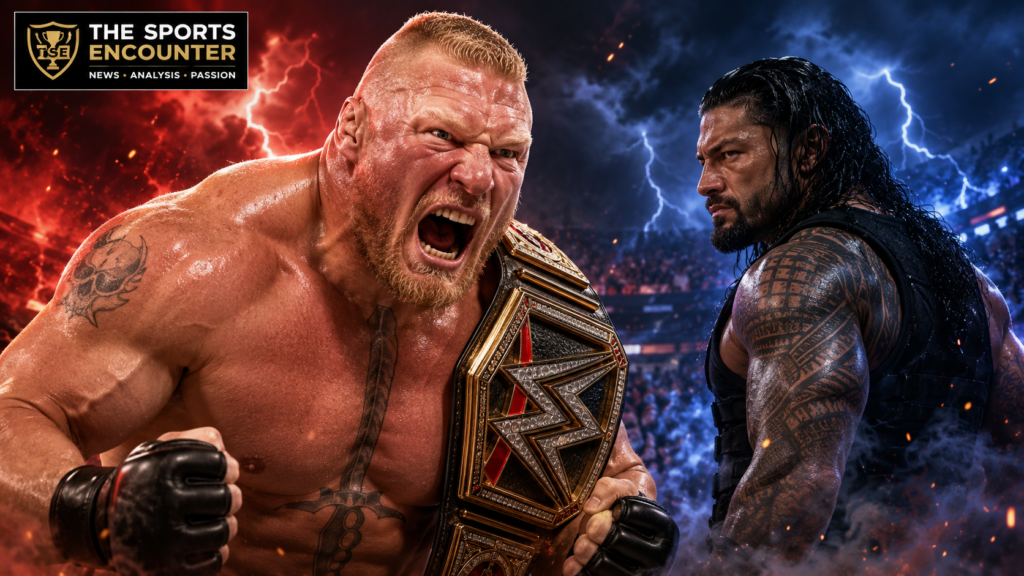
Triple H, The Undertaker and the Reconstruction of The Beast
Lesnar’s subsequent feud with Triple H produced major-event attention but mixed creative results.
The rivalry was built around personal hostility, corporate power and physical violence. Lesnar broke Triple H’s arm in storyline, attacked Shawn Michaels and carried himself like a mercenary hired to dismantle WWE’s leadership.
Their matches were intense, but the rivalry lasted longer than its strongest ideas.
Triple H defeated Lesnar at WrestleMania 29 before Lesnar won their steel cage rematch. The series gave Lesnar victories and visibility, yet it did not fully restore the frightening momentum he would soon achieve.
That transformation came against The Undertaker.
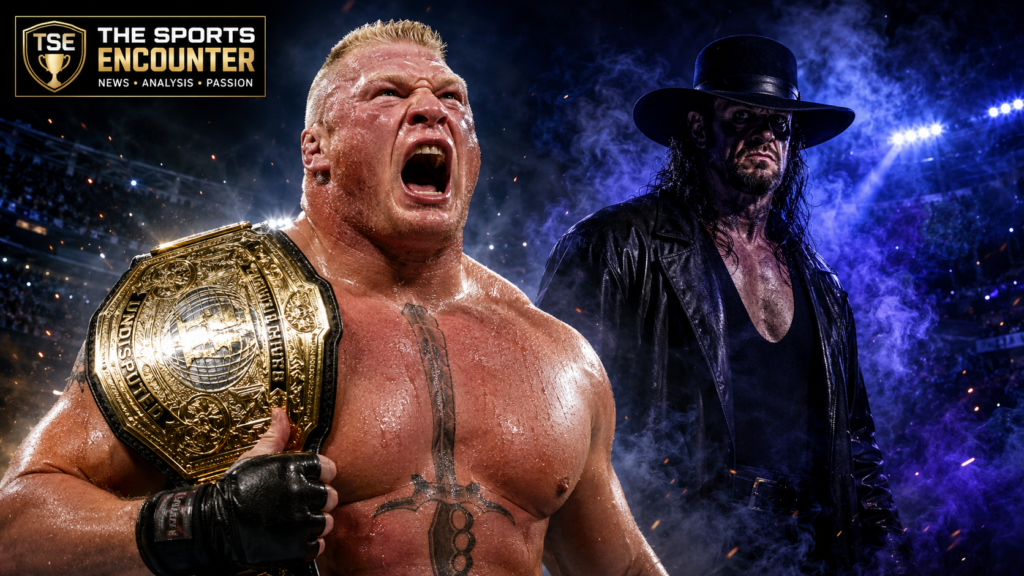
Ending The Undertaker’s Streak: Lesnar’s Most Historic Victory
At WrestleMania 30, Brock Lesnar defeated The Undertaker.
The result ended The Undertaker’s legendary 21-0 WrestleMania winning streak and produced one of the most stunned crowd reactions in wrestling history.
For years, the streak had become part of WrestleMania mythology. Fans understood that The Undertaker would eventually retire, but many believed the undefeated record would remain untouched.
Lesnar shattered that assumption.
The three-count was followed by silence, disbelief and the sight of a graphic confirming that the streak had ended. The moment instantly became bigger than the match itself.
Why WWE Chose Brock Lesnar
There were arguments that a younger, emerging wrestler should have received the victory. Ending the streak could have created a new star overnight.
WWE chose certainty instead.
Lesnar had elite amateur credentials, UFC championship legitimacy and an established reputation as an unstoppable athlete. Fans might reject the decision, but they could not dismiss him as an unbelievable conqueror.
The victory permanently changed his WWE character.
Before WrestleMania 30, Lesnar was dangerous.
After WrestleMania 30, he became the man who had defeated something wrestling audiences thought could never be defeated.
SummerSlam 2014: The Night John Cena Was Destroyed
If ending The Undertaker’s streak created Lesnar’s mythology, SummerSlam 2014 established the full language of his dominance.
Lesnar challenged John Cena for the WWE World Heavyweight Championship and delivered one of the most one-sided defeats ever suffered by a top WWE champion.
He repeatedly suplexed Cena, controlled almost the entire match and reduced WWE’s leading hero to survival mode.
The performance introduced “Suplex City” before the phrase became a formal part of Lesnar’s presentation.
The match was shocking because WWE rarely allowed Cena to appear so powerless. Even in defeat, he normally produced long comebacks and multiple dramatic near-falls.
Against Lesnar, he looked overwhelmed.
That was the point.
Lesnar was no longer simply another champion. He had become WWE’s final boss.
Suplex City: A Brilliant Identity That Eventually Became Repetitive
The phrase “Suplex City” emerged during Lesnar’s WrestleMania 31 match with Roman Reigns and quickly became central to his brand.
It worked because it described the visual experience of a Lesnar match. Opponents were repeatedly launched across the ring, forced to absorb German suplexes and left waiting for the F-5.
For a period, the formula felt revolutionary. WWE’s main events had become increasingly elaborate, with numerous finishing moves and long sequences. Lesnar simplified the structure.
His matches became about impact, panic and survival.
Over time, however, the same formula became one of his limitations.
Some matches began to feel interchangeable. Repeated German suplexes replaced the wider move set Lesnar had displayed during his first WWE run. Fans who remembered his agility, mat wrestling and versatility occasionally saw Suplex City as a reduction of his talent.
The character had become stronger. The wrestler sometimes appeared narrower.
Roman Reigns and WWE’s Long Search for Lesnar’s Successor
No wrestler became more closely connected to Lesnar’s later career than Roman Reigns.
Their rivalry stretched across several years and multiple WrestleManias. WWE repeatedly used Lesnar as the ultimate obstacle Reigns needed to overcome before fully inheriting the company.
WrestleMania 31 and Seth Rollins’ Heist
Lesnar defended the WWE Championship against Reigns at WrestleMania 31 in a brutal main event.
Reigns absorbed enormous punishment and gradually fought back, but the match ended without either man securing the decisive victory. Seth Rollins cashed in his Money in the Bank contract during the contest and escaped as champion.
The finish protected both heavyweights and produced one of WrestleMania’s most memorable endings.
It also delayed the decisive Lesnar-Reigns conclusion.
Too Many Rematches
WWE returned to the rivalry repeatedly, including WrestleMania 34, Crown Jewel, SummerSlam and WrestleMania 38.
Some matches generated enormous interest. Others suffered from familiarity.
WWE frequently described their encounters as the biggest possible match, but the repeated pairings gradually reduced the sense of discovery. By the time their later contests arrived, audiences understood the structure and major story beats.
The rivalry remained commercially powerful, but it also represented WWE’s dependence on a small group of established main-event stars.
The 504-Day Universal Championship Reign
Lesnar defeated Goldberg at WrestleMania 33 to win the Universal Championship.
He held the title for 504 days, establishing the longest world championship reign of WWE’s modern era at that time and giving Raw a champion presented as a rare attraction.
The reign produced important matches against Samoa Joe, Braun Strowman, AJ Styles and Roman Reigns.
It also became one of the most divisive periods of Lesnar’s career.
Why the Reign Worked
Lesnar made the championship feel difficult to reach.
His limited appearances created anticipation, and challengers had to prove they belonged in the same physical environment. Samoa Joe’s confrontation with Lesnar gave Joe instant credibility. Braun Strowman looked like one of the few wrestlers capable of matching The Beast’s power. AJ Styles demonstrated how an elite smaller wrestler could create drama through movement and precision.
Why the Reign Frustrated Fans
Raw regularly operated without its world champion.
Lesnar’s contract and part-time schedule meant the title sometimes disappeared from weekly television for extended periods. Other wrestlers competed every week while the champion occupied a separate category.
That scarcity made Lesnar special, but it weakened the championship’s everyday presence.
Fans also grew frustrated when full-time wrestlers appeared to build momentum only to lose to Lesnar or wait months for another opportunity.
His reign therefore created a lasting debate about wrestling’s purpose.
Should a world champion be a weekly leader of the program, or can absence create greater value?
Lesnar proved both answers could be true, depending on how long the absence continued.
Goldberg: Redemption, Shock and a 90-Second Defeat
Goldberg returned to WWE in 2016 and immediately reopened the rivalry that had disappointed fans at WrestleMania XX.
This time, WWE used simplicity as a strength.
At Survivor Series 2016, Goldberg defeated Lesnar in approximately 90 seconds. The result stunned audiences because Lesnar had spent years being presented as nearly unbeatable.
The defeat worked as a shock, but it also temporarily disrupted the hierarchy WWE had built around Lesnar.
The rivalry concluded at WrestleMania 33 in a short, explosive match. Lesnar survived Goldberg’s early offense, won the Universal Championship and finally defeated the opponent who had repeatedly haunted his career.
It was an example of WWE understanding how to present two limited but spectacular heavyweight attractions.
No lengthy technical sequences were required. The appeal came from collisions.
Seth Rollins: The Opponent Who Exposed Lesnar’s Vulnerability
Seth Rollins became one of the few wrestlers capable of repeatedly disrupting Lesnar’s control.
Rollins had already stolen the WWE Championship from Lesnar at WrestleMania 31. In 2019, their rivalry developed into a battle over whether Raw could escape a champion who appeared only selectively.
Rollins defeated Lesnar at WrestleMania 35 and again at SummerSlam 2019.
The SummerSlam match was particularly important because it allowed Rollins to defeat Lesnar in a sustained main event rather than through a surprise cash-in.
Lesnar made Rollins’ victory feel significant by first establishing overwhelming danger.
This was one of Lesnar’s greatest contributions to younger or smaller opponents. When WWE committed to a clean and meaningful payoff, beating him could transform a performer’s standing.
Money in the Bank and the Unexpected Comedy of Brock Lesnar
Lesnar won the Money in the Bank contract in 2019 after entering the ladder match late.
The decision angered fans who wanted the contract to elevate a full-time wrestler, but it also produced an unexpectedly entertaining phase of Lesnar’s character.
He treated the briefcase like a portable music player, danced to its imagined rhythm and frustrated Paul Heyman by appearing unaware of the contract’s rules.
The segments revealed an underused part of Lesnar’s personality.
For years, WWE had relied on his silence, intimidation and physical presence. His comedic timing showed that he could be entertaining without sacrificing danger.
The Kofi Kingston Defeat and One of Lesnar’s Most Criticized Victories
Lesnar defeated Kofi Kingston for the WWE Championship on the first episode of SmackDown on Fox in October 2019.
The match lasted only seconds.
From a promotional perspective, WWE wanted a major title change and a dominant champion for a new television era. From the audience’s perspective, the result abruptly ended one of the company’s most emotional championship stories.
Kingston’s rise at WrestleMania 35 had represented persistence, fan support and a long-delayed opportunity. His title reign ended without a meaningful struggle or substantial follow-up.
Lesnar did what the booking required, but the moment became attached to his legacy because it reflected a recurring criticism.
WWE sometimes protected Lesnar’s dominance at the expense of stories audiences had spent months emotionally investing in.
Drew McIntyre Ends Lesnar’s Reign at an Empty WrestleMania
Drew McIntyre eliminated Lesnar from the 2020 Royal Rumble and defeated him for the WWE Championship at WrestleMania 36.
The story was designed to create a defining coronation for McIntyre.
Unfortunately, the COVID-19 pandemic forced WrestleMania to take place without a live audience.
McIntyre still received the victory, but the moment lost the crowd reaction that should have completed it.
For Lesnar, the defeat demonstrated his value as the obstacle WWE used to authenticate a new champion. For McIntyre, it was a triumph forever accompanied by unfortunate timing.
The match itself was short and heavily dependent on finishing moves. It accomplished the result but lacked the emotional scale the rivalry deserved.
The Cowboy Brock Era Revealed a Different Personality
When Lesnar returned in 2021, he looked and behaved differently.
He wore denim, grew his hair and beard, smiled more often and spoke for himself rather than relying entirely on Paul Heyman.
The “Cowboy Brock” presentation became one of the most popular phases of his later career.
Fans saw more personality without losing the physical credibility that defined him. Lesnar appeared to be enjoying professional wrestling in a way audiences had rarely witnessed.
The transformation also refreshed his rivalry with Roman Reigns, now operating as the dominant Tribal Chief alongside Heyman.
For the first time, Lesnar was not simply the cold final boss. He became a charismatic avenger pursuing a champion who had taken his advocate and position.
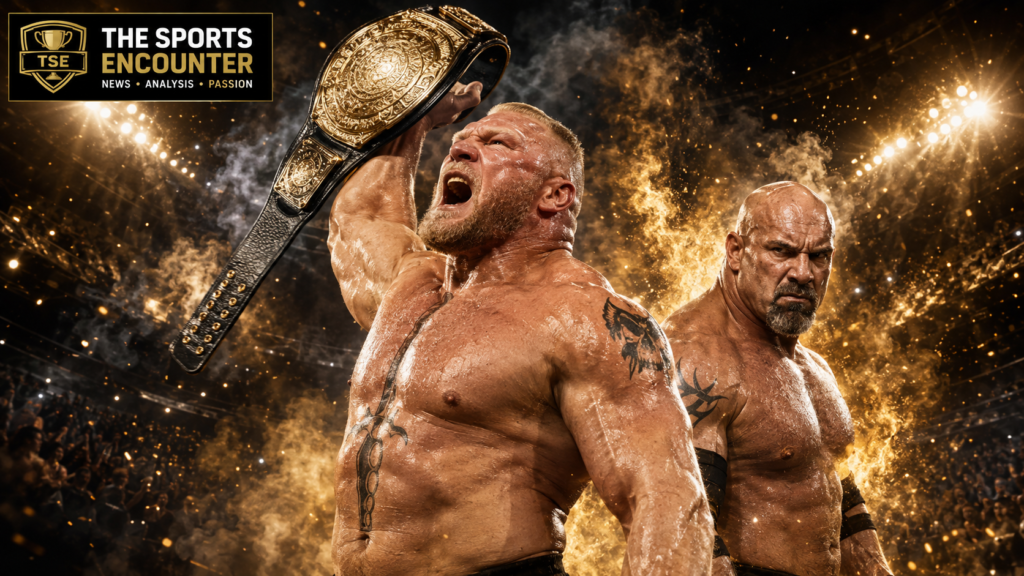
The 2022 Royal Rumble and Another Controversial Victory
Lesnar won the 2022 Royal Rumble after losing the WWE Championship earlier in the evening.
The victory gave him another path to Roman Reigns and helped build their WrestleMania 38 title unification match.
It also produced criticism.
Royal Rumble victories are often used to elevate wrestlers who need a career-defining opportunity. Lesnar was already one of WWE’s biggest stars and did not require the win to justify challenging Reigns.
His victory reinforced the perception that WWE’s main-event plans regularly returned to the same established names, even when the roster contained performers who could have benefited more from the opportunity.
SummerSlam 2022: The Tractor Match That Restored Spectacle
Lesnar and Reigns produced one of their most entertaining matches at SummerSlam 2022.
Lesnar used a tractor to lift part of the ring, creating a visual unlike anything seen in a conventional WWE main event. The Last Man Standing stipulation allowed both wrestlers to embrace chaos rather than repeat the structure of their previous encounters.
The match succeeded because it understood the rivalry’s problem.
Fans had already seen Lesnar and Reigns wrestle numerous times. WWE needed to create an image audiences had never witnessed.
A tilted ring, a tractor and two exhausted heavyweights delivered that image.
Cody Rhodes and Lesnar’s Final Great Rivalry
Lesnar’s 2023 rivalry with Cody Rhodes became one of the strongest closing chapters of his career.
The story initially appeared unusual. Lesnar attacked Rhodes without a detailed explanation, creating a personal conflict driven more by violence than conventional motivation.
The two wrestlers three times, trading victories before Rhodes won the decisive match at SummerSlam.
Afterward, Lesnar acknowledged Rhodes in the ring.
The gesture mattered because Lesnar rarely offered visible approval. By raising Rhodes’ hand and embracing him, he communicated that Rhodes had survived and earned respect.
It was professional wrestling’s version of a transfer of credibility.
Oba Femi and the Final Passing of the Torch
Lesnar’s final major story placed him opposite Oba Femi, one of WWE’s most physically imposing new-generation stars.
The pairing made immediate sense. Femi represented the kind of presence Lesnar himself had introduced in 2002: young, explosive, intimidating and capable of making established wrestlers look physically vulnerable.
Femi defeated Lesnar at WrestleMania 42, giving the emerging star the most important victory of his career. Lesnar left his boots and gloves in the ring afterward, creating the appearance of a farewell.
He later returned to continue the rivalry, but the underlying story remained unchanged.
The Beast had finally encountered someone WWE could present as the beginning of what came next.
Lesnar’s career had started with The Rock giving him a career-making victory at SummerSlam 2002. Its final phase allowed Lesnar to offer similar credibility to Femi.
The symmetry was appropriate.
Brock Lesnar’s 10 WWE World Championships
According to WWE’s official career record, Lesnar retires as a 10-time world champion.
- Seven-time WWE Champion
- Three-time Universal Champion
The number places him among the most decorated world champions in company history, but the importance of his reigns cannot be judged only by totals.
Lesnar’s championships often shaped entire eras.
His 2002 victory over The Rock accelerated WWE’s transition toward a younger generation. His 2014 championship win over John Cena established a new level of dominance. His 504-day Universal Championship reign tested the value and limitations of a part-time champion. His later title runs repeatedly intersected with WWE’s attempt to establish Roman Reigns as the company’s defining modern star.
Few championship careers created as much debate about access, scarcity and star power.
Fans interested in the official record can explore Brock Lesnar’s profile and career archive on WWE’s official website.
Brock Lesnar’s Greatest WWE Achievements
1. Becoming WWE Champion at 25
Winning WWE’s top championship only months after debuting remains one of the fastest and most convincing rises in company history.
2. Ending The Undertaker’s WrestleMania Streak
No victory had greater historical impact. Lesnar became permanently connected to one of wrestling’s most shocking results.
3. Winning 10 World Championships
His seven WWE Championship reigns and three Universal Championship reigns confirmed that Lesnar was not merely a temporary attraction.
4. Holding the Universal Championship for 504 Days
The reign made Lesnar the defining champion of Raw’s post-2016 era, even while producing criticism about his limited schedule.
5. Winning Two Royal Rumbles
His victories in 2003 and 2022 came 19 years apart, demonstrating remarkable longevity at WWE’s highest level.
6. Winning King of the Ring
The 2002 tournament victory accelerated his rise toward the WWE Championship.
7. Winning Money in the Bank
His 2019 victory added another major WWE accomplishment and produced one of the more playful periods of his character.
8. Becoming a Cross-Sport Attraction
Lesnar’s success in amateur wrestling, WWE and UFC gave him a level of legitimate athletic credibility that few professional wrestlers have matched.
9. Elevating Major Opponents
Victories over Lesnar helped validate Seth Rollins, Drew McIntyre, Cody Rhodes and Oba Femi at critical points in their careers.
10. Remaining a Major Attraction Across Three Decades
Lesnar competed at the top of WWE during the 2000s, 2010s and 2020s. Very few performers remained believable as the company’s most dangerous wrestler for so long.
Brock Lesnar’s Biggest Wrestling Disappointments
His Sudden Departure in 2004
Leaving after only two years interrupted what could have become one of WWE’s greatest uninterrupted careers.
The WrestleMania XX Match With Goldberg
The hostile crowd, slow pacing and knowledge that both wrestlers were leaving turned a dream match into a major disappointment.
Losing His First Match After Returning
The defeat to John Cena at Extreme Rules 2012 reduced some of the momentum surrounding Lesnar’s return.
Overreliance on Suplexes and Finishing Moves
Some of his later matches became repetitive and failed to display the athletic variety of his early career.
Part-Time Championship Reigns
Lesnar’s absences occasionally left WWE’s weekly programs without their leading champion and frustrated fans who wanted the title defended more regularly.
The Treatment of Kofi Kingston
The brief defeat that ended Kingston’s WWE Championship reign remains one of the most criticized booking decisions associated with Lesnar.
Too Many Matches Against Roman Reigns
The rivalry produced memorable moments but was repeated so often that some encounters lost their sense of importance.
Missed Opportunities With Other Opponents
Lesnar’s selective schedule meant fans never received sustained rivalries with several wrestlers who could have offered compelling contrasts.
Potential programs with performers such as Bobby Lashley, Bray Wyatt, Daniel Bryan and other elite stars either remained incomplete, arrived briefly or never reached their full creative potential.
Was Brock Lesnar a Great Professional Wrestler?
Yes, although his greatness did not resemble the traditional model.
Lesnar was not a full-time workhorse who produced lengthy television matches every week. He did not build his reputation through hundreds of closely matched contests or extended promotional speeches.
His value came from presence, credibility and controlled scarcity.
When Lesnar entered an arena, the atmosphere changed. Wrestlers who appeared dominant against everyone else suddenly looked vulnerable. Championship matches felt less like athletic exhibitions and more like emergency situations.
He could also wrestle at a much higher technical level than his later move set sometimes suggested. His matches with Kurt Angle, Eddie Guerrero, AJ Styles, Daniel Bryan, Finn Bálor and Seth Rollins showed his ability to adapt to opponents with very different bodies and styles.
Lesnar understood how to sell danger because he looked dangerous even while standing still.
How Brock Lesnar Changed WWE’s Main-Event Style
Lesnar helped move WWE away from the assumption that every major match needed escalating near-falls, long finishing sequences and evenly divided offense.
His matches often followed a different logic.
The opponent entered with a strategy. Lesnar disrupted it through overwhelming force. The central question became whether the challenger could survive long enough to discover one opening.
This structure influenced how WWE presented other dominant performers, including Roman Reigns, Gunther and Oba Femi.
Lesnar also demonstrated the value of asymmetry.
A wrestling match did not always need to look competitive from the opening bell. Sometimes the emotional appeal came from watching one wrestler endure a frightening imbalance.
Paul Heyman’s Role in Building The Beast
Brock Lesnar’s career cannot be fully discussed without Paul Heyman.
Heyman gave language to Lesnar’s threat. His introductions, predictions and declarations helped transform physical dominance into mythology.
He did not merely call Lesnar a champion. He described him as a conqueror, an anomaly and an athlete operating outside normal WWE limitations.
The partnership also protected Lesnar from one of his weaknesses.
Lesnar was never required to carry long verbal segments during his most intimidating years. Heyman created the anticipation, framed the stakes and sold the danger. Lesnar then appeared and fulfilled the promise physically.
It became one of wrestling’s most effective performer-manager partnerships.
The Business Impact of Brock Lesnar
Lesnar remained valuable because he attracted attention beyond the regular wrestling audience.
His UFC history gave WWE access to combat-sports viewers. His limited schedule made appearances feel important. His rivalries could be promoted around recognizable ideas without complicated explanation.
Lesnar versus Cena was dominance against resilience.
Lesnar versus The Undertaker was mortality against mythology.
Lesnar versus Goldberg was collision.
Lesnar versus Reigns was a battle over who owned WWE’s main-event era.
His commercial role resembled that of a prizefighter. WWE did not need him on every show. It needed audiences to believe that his presence made certain shows bigger.
Why Fans Both Admired and Resented Brock Lesnar
Lesnar inspired two powerful and sometimes conflicting reactions.
Fans admired his authenticity. He looked, moved and competed differently from almost everyone around him. His matches could create tension through a single lift, takedown or stare.
They also resented the privileges attached to his position.
He worked fewer dates, received immediate championship opportunities and frequently defeated wrestlers who carried WWE’s weekly programming. His title reigns sometimes appeared designed around his availability rather than the needs of the broader roster.
Both reactions were understandable.
Lesnar’s special treatment could be frustrating precisely because his special qualities were undeniable.
Where Brock Lesnar Ranks Among WWE’s Greatest Stars
Lesnar’s place depends on the criteria being used.
He does not have the week-to-week longevity of Bruno Sammartino, Hulk Hogan, John Cena or The Undertaker. He did not define WWE’s mainstream cultural identity in the manner of The Rock or “Stone Cold” Steve Austin.
As a legitimate physical attraction, however, he belongs near the top of the list.
Few wrestlers have ever combined amateur credentials, combat-sports success, championship history, commercial value and visual intimidation so effectively.
His career resembles those of other elite athletes whose greatness contains both extraordinary achievements and unresolved disappointments. Cristiano Ronaldo’s pursuit of the World Cup, explored in The Sports Encounter’s account of Ronaldo’s records and final World Cup farewell, demonstrates how a career can remain monumental even when the perfect ending never arrives.
Likewise, Neymar’s World Cup legacy shows how talent, physical setbacks and unfinished ambitions can coexist inside one sporting story.
Lesnar’s career belongs to that same complicated category.
It was historically successful without ever becoming emotionally tidy.
Brock Lesnar’s Legacy Scorecard
| Legacy Category | Score | Assessment |
|---|---|---|
| Physical presence | 10/10 | One of the most intimidating athletes in professional wrestling history. |
| Championship success | 10/10 | Ten recognized world championships and a historic 504-day reign. |
| Match quality | 8/10 | Capable of outstanding matches, though some later contests became repetitive. |
| Historical moments | 10/10 | Ending The Undertaker’s streak alone guarantees permanent historical importance. |
| Week-to-week contribution | 6/10 | His part-time schedule protected his aura but limited his weekly involvement. |
| Promotional ability | 7/10 | Improved significantly, especially during the Cowboy Brock phase, but Heyman carried much of the verbal storytelling. |
| Cross-sport credibility | 10/10 | His amateur wrestling and UFC success made his WWE persona uniquely believable. |
| Ability to elevate opponents | 8/10 | Defeating Lesnar created enormous value when WWE committed to the right opponent and payoff. |
| Career consistency | 7/10 | Historic peaks were balanced by absences, abrupt departures and uneven creative periods. |
| Overall legacy | 9/10 | A unique, era-spanning attraction whose credibility may never be reproduced. |
The Final Verdict on Brock Lesnar’s Career
Brock Lesnar did not give professional wrestling a conventional career.
He arrived too quickly, left too early, returned more valuable, disappeared frequently and dominated more aggressively than audiences were accustomed to seeing.
His achievements are undeniable.
He became WWE Champion at 25. He won 10 world titles. He conquered The Undertaker’s WrestleMania streak. He destroyed John Cena at SummerSlam. He ruled as Universal Champion for 504 days. He won two Royal Rumbles, King of the Ring and Money in the Bank.
His disappointments are equally important to the full story.
He walked away in 2004. His first Goldberg match failed. His part-time reigns frustrated audiences. Some later matches became predictable. WWE occasionally used his dominance to end other wrestlers’ stories too abruptly.
Yet even those failures reflected the unusual power Lesnar held.
Fans cared when he appeared, when he won, when he lost and when he stayed away. Indifference never became part of his presentation.
That may be the clearest measurement of his legacy.
The wider sporting world regularly says goodbye to generations that once seemed permanent. The Sports Encounter recently examined the great football generation that reached its final World Cup chapter in 2026. Lesnar’s retirement creates a similar emotional break for wrestling.
An era built around impossible physicality, UFC legitimacy, Paul Heyman’s proclamations and the opening notes of Lesnar’s entrance music has reached its conclusion.
There may be stronger technical wrestlers.
There may be more beloved champions.
There may be performers with longer schedules and cleaner careers.
There will probably never be another Brock Lesnar.
Frequently Asked Questions About Brock Lesnar
Has Brock Lesnar retired from professional wrestling?
Yes. WWE officially announced Brock Lesnar’s retirement from professional wrestling in August 2026.
How many world championships did Brock Lesnar win in WWE?
Lesnar won 10 recognized WWE world championships, consisting of seven WWE Championships and three Universal Championships.
What was Brock Lesnar’s greatest WWE achievement?
His most historic achievement was defeating The Undertaker at WrestleMania 30 and ending the legendary 21-0 WrestleMania streak.
Who did Brock Lesnar defeat to become the youngest WWE Champion?
Lesnar defeated The Rock at SummerSlam 2002 to become WWE Champion at the age of 25.
How long was Brock Lesnar Universal Champion?
His longest Universal Championship reign lasted 504 days.
How many times did Brock Lesnar win the Royal Rumble?
He won the men’s Royal Rumble match twice, first in 2003 and again in 2022.
Who were Brock Lesnar’s greatest rivals?
His most important rivals included Kurt Angle, The Undertaker, John Cena, Roman Reigns, Goldberg, Seth Rollins, Triple H, Cody Rhodes and Oba Femi.
Why was Brock Lesnar’s career controversial among WWE fans?
Fans often criticized his part-time schedule, lengthy absences as champion, repeated matches with Roman Reigns and several booking decisions that placed his dominance above full-time performers.
Was Brock Lesnar a good technical wrestler?
Yes. Although his later matches emphasized suplexes and power, his early work and matches against Kurt Angle, Eddie Guerrero, AJ Styles and Daniel Bryan demonstrated excellent wrestling ability, balance and athletic versatility.
Is Brock Lesnar one of the greatest WWE wrestlers ever?
Lesnar belongs among WWE’s greatest attractions and most dominant world champions. His limited schedule prevents a simple comparison with full-time icons, but his physical credibility, championship history and historic moments give him a unique place in wrestling history.