Nicholas Pooran Powers MI London to 7-Wicket Victory in Hundred 2026 Opener
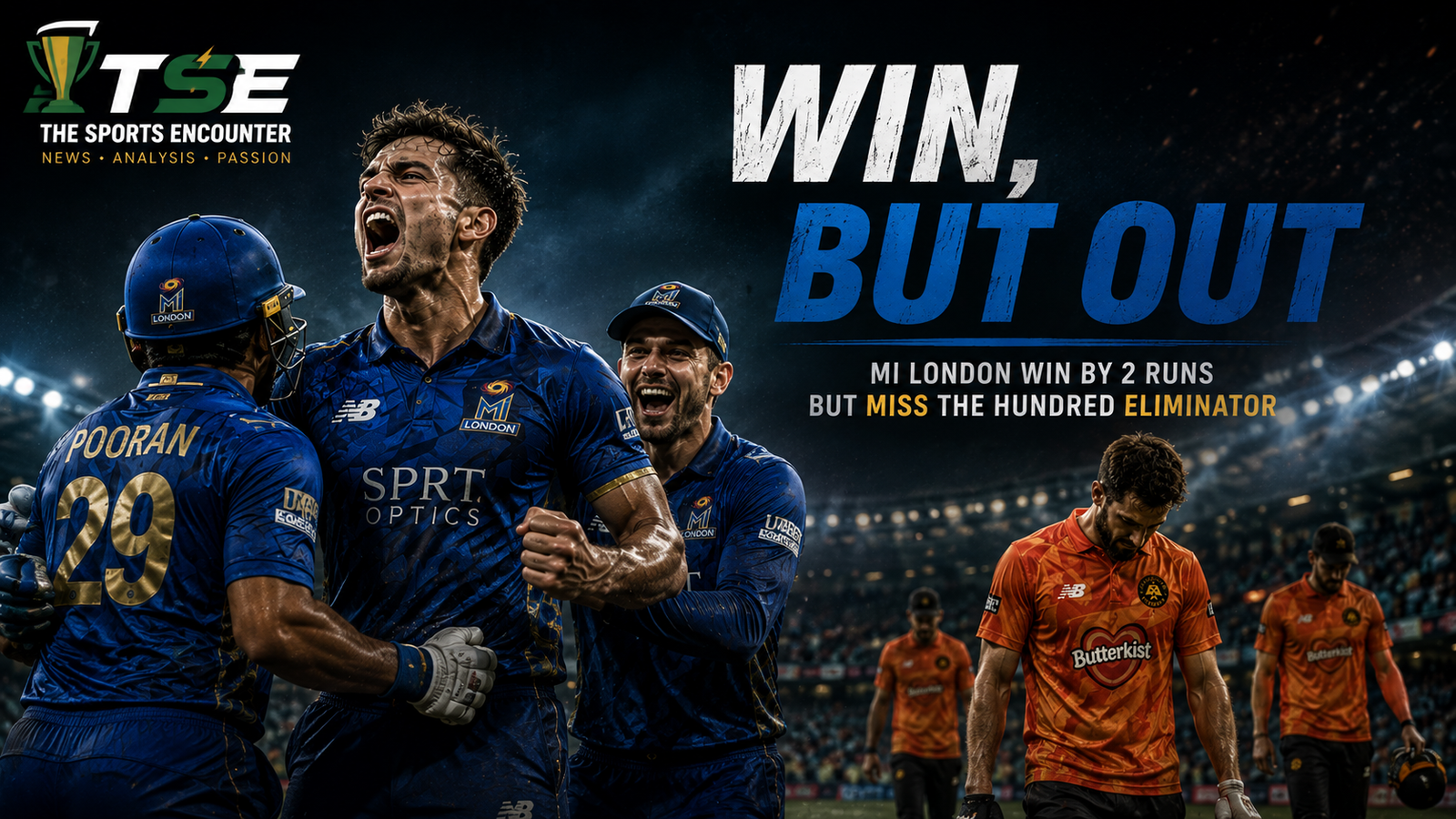
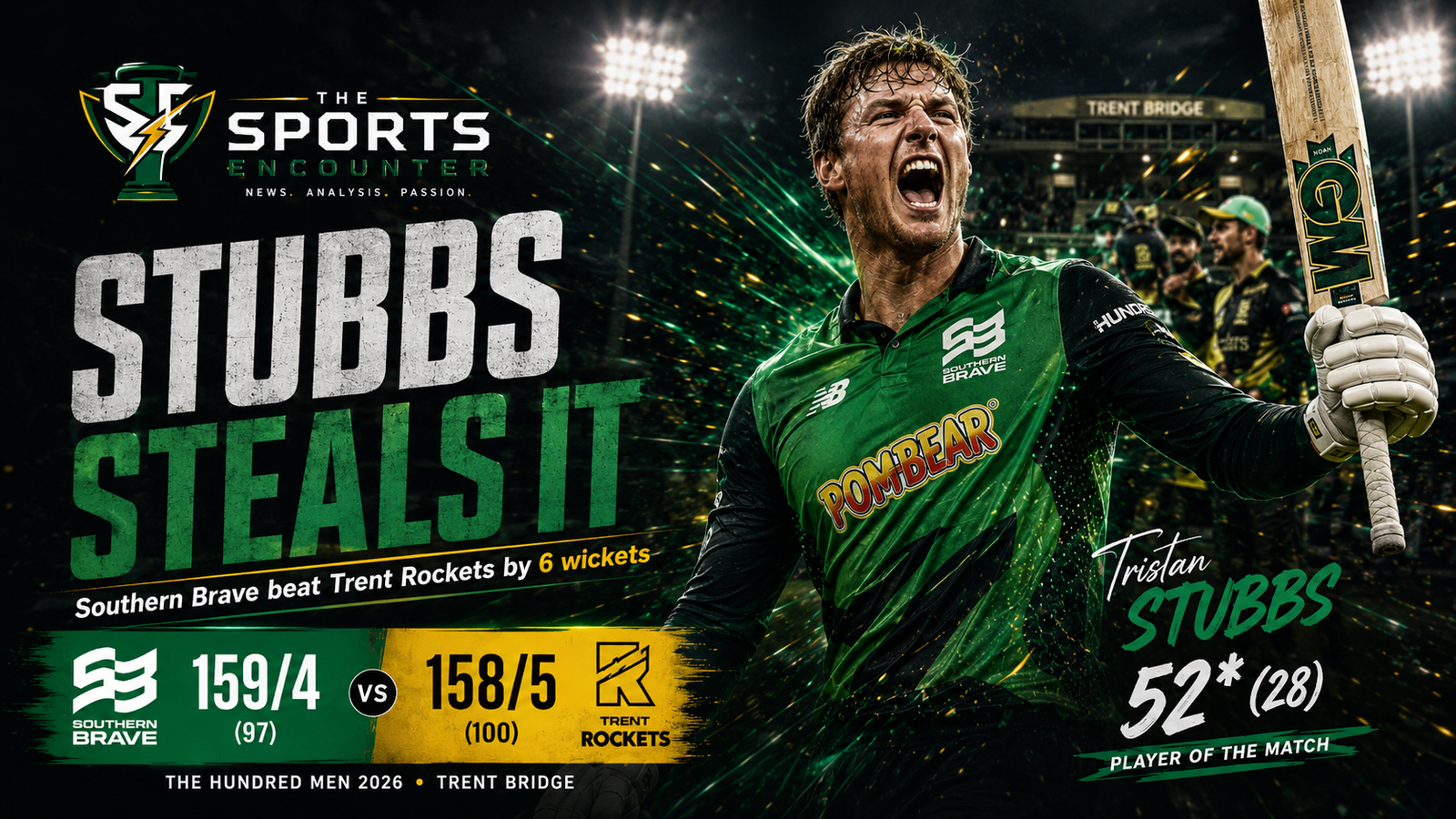
Nicholas Pooran produced a devastating unbeaten 58 from 22 balls as MI London recovered from 4 for 2 to defeat Sunrisers Leeds by seven wickets in the opening match of The Hundred 2026 at The Oval.
Nicholas Pooran turned a difficult chase into a comfortable victory with a brutal unbeaten 58 from only 22 balls as MI London defeated Sunrisers Leeds by seven wickets in the opening match of The Hundred Men’s Competition 2026 at The Oval.
MI London reached their target of 144 in only 84 balls, winning with 16 deliveries to spare despite slipping to 4 for 2 inside the first eight balls of the chase.
Pooran arrived with the score at 51 for 3 and changed the direction of the match almost immediately. His five fours and five sixes dismantled a Sunrisers attack that had controlled much of the early chase. Captain Sam Curran provided the foundation with an unbeaten 60 from 39 balls before Pooran supplied the power that ended the contest.
The pair added an unbroken 93 runs from only 40 balls for the fourth wicket, turning what had looked like a tense opening-night chase into a commanding victory in front of 20,540 spectators.
Readers can follow more match reports, franchise cricket, player performances, and tactical analysis through The Sports Encounter’s Cricket Hub.
TL;DR
- MI London beat Sunrisers Leeds by seven wickets with 16 balls remaining.
- Nicholas Pooran smashed an unbeaten 58 from 22 balls, including five fours and five sixes.
- Sam Curran anchored the chase with 60 not out from 39 deliveries.
- Pooran and Curran added an unbeaten 93 from 40 balls after MI London fell to 51 for 3.
- Richard Gleeson took 4 for 25 as Sunrisers Leeds were dismissed for 143 in 99 balls.
- MI London collected four points from their opening match.
MI London vs Sunrisers Leeds Match Summary
| Match detail | Information |
|---|---|
| Tournament | The Hundred Men’s Competition 2026 |
| Match | MI London vs Sunrisers Leeds, Match 1 |
| Venue | The Oval, London |
| Date | July 21, 2026 |
| Toss | MI London elected to field |
| Sunrisers Leeds | 143 all out in 99 balls |
| MI London | 144/3 in 84 balls |
| Result | MI London won by seven wickets |
| Balls remaining | 16 |
| Player of the Match | Nicholas Pooran |
| Attendance | 20,540 |
| Points | MI London 4, Sunrisers Leeds 0 |
Marsh and Rickelton Give Sunrisers Leeds a Fast Start
Sunrisers Leeds began with purpose after being asked to bat. Ryan Rickelton and Mitchell Marsh attacked the new ball and took the score to 40 within the opening 25-ball powerplay.
Rickelton made 25 from 16 balls, striking one four and three sixes, before Sam Curran trapped him lbw. Marsh continued to push the innings forward and looked capable of carrying Sunrisers towards a much bigger total.
Harry Brook briefly threatened with a six during his eight from seven balls, but Rashid Khan removed him before he could settle.
Marsh remained the central figure. His 41 from 27 balls included three fours and three sixes and came at a strike rate of 151.85. At 84 for 2 after 55 balls, Sunrisers appeared well placed to accelerate through the second half of the innings.
That position disappeared quickly.
Richard Gleeson Triggers the Sunrisers Collapse
Richard Gleeson produced the defining bowling spell of the first innings. His pace and control ripped through the Sunrisers middle and lower order as they lost eight wickets for 59 runs after reaching 84 for 2.
Marsh fell to Tom Curran for 41 before Gleeson removed Dan Lawrence, captain Zak Crawley, Benny Howell, and Nathan Ellis. The experienced fast bowler repeatedly disrupted Sunrisers’ attempts to rebuild and prevented their lower order from producing a sustained finish.
Gleeson completed his spell with four wickets for 25 runs from 19 balls, including nine dot balls.
Trent Boult also played an important role. The New Zealand left-arm seamer conceded only 17 runs from his 20 deliveries and claimed the wicket of Tom Alsop. His economy and eight dot balls restricted scoring at one end while wickets continued to fall at the other.
Boult’s move into franchise cricket reflects the changing demands and opportunities facing modern fast bowlers, an issue explored in The Sports Encounter’s analysis of whether modern workload management is changing the art of fast bowling.
Sam Curran collected two wickets for 27 runs, while Tom Curran and Rashid Khan took one apiece.
Sunrisers were all out for 143 after 99 balls, a total that looked below par given the start they had made.
Tom Alsop’s 31 from 18 balls gave the innings some late substance. He struck three sixes and helped Sunrisers move beyond 140, but the absence of a substantial partnership after Marsh’s dismissal left them short of a truly challenging score.
Carse Gives Sunrisers Hope With Two Early Wickets
MI London’s chase began disastrously.

Will Jacks fell for two, and Jason Roy departed for a two-ball duck as Brydon Carse removed both openers. After only eight balls, MI London were 4 for 2.
Carse bowled with aggression and accuracy, eventually finishing with two wickets for 18 runs from his full allocation of 20 balls. Nathan Ellis supported him well, conceding only 22 runs and removing James Vince.
Vince and Sam Curran were forced to rebuild carefully. Conditions remained slow, and the ball did not initially come onto the bat with the freedom MI London’s hitters would have wanted.
The pair moved the score to 51 before Ellis bowled Vince for 17 from 18 balls. MI London still needed 93 runs from 56 deliveries, and Sunrisers had created the opening they wanted.
Then Pooran walked in.
Nicholas Pooran Changes the Match in 22 Balls
Pooran needed little time to assess the conditions. Once the lights took full effect and the ball began sliding onto the bat, he attacked every weakness in the Sunrisers bowling plans.
His hitting was clean, calculated, and severe. Abrar Ahmed and Benny Howell came under immediate pressure, while Pooran’s ability to clear the straight and leg-side boundaries forced Sunrisers captain Zak Crawley to keep changing his field.

Pooran reached his fifty from only 19 balls. By then, he had struck five sixes and effectively removed the remaining tension from the chase.
Curran played the ideal supporting role. The MI London captain reached his own half-century from 34 balls and finished unbeaten on 60, with five fours and three sixes.
While Pooran supplied the headline moments, Curran’s control held the chase together. He absorbed pressure during the slowest phase of the innings and remained composed when MI London required a steady partnership.
Curran had also played an influential role during England’s recent white-ball series against India. His importance as a flexible all-rounder was evident when England defeated India in the ODI series decider at Lord’s, where he claimed four wickets.
The fourth-wicket partnership reached 50 from only 23 balls, with Pooran contributing 36 of those runs.
Pooran completed the victory by launching Matthew Potts beyond the reach of mid-off for four. The boundary took MI London to 144 for 3 and ended the match with 16 balls unused.
Where Sunrisers Leeds Lost Control
Sunrisers Leeds will leave The Oval frustrated by how quickly the match moved away from them.
They made an excellent start with the bat and an even better one with the ball. At 4 for 2, and later 51 for 3, they had MI London under genuine pressure.
However, their slower bowlers could not contain Pooran once conditions improved for batting. Abrar conceded 30 runs from 10 balls, Howell gave away 24 from his 10, and Dan Lawrence’s five deliveries cost 13.
Those three sets produced 67 runs from only 25 balls. That allowed MI London to score freely without taking major risks against Carse and Ellis, who had been the most threatening bowlers.
Sunrisers also failed to capitalize on their own strong batting position. After reaching 84 for 2, they lost wickets too regularly and could not build the kind of total that might have survived Pooran’s assault.
The rapid shift resembled many games across the modern franchise circuit, where one explosive partnership can erase an opponent’s earlier control. The Sports Encounter recently witnessed another tight finish when the Los Angeles Knight Riders won the MLC 2026 final by one run.
Nicholas Pooran Credits Curran and Vince
Pooran was named Player of the Match for his unbeaten 58 and two catches behind the stumps.
He credited Vince and Curran for surviving the difficult early period before he entered the chase.
“What pleased me about that innings the most is seeing Vincey and Sam weathering the storm for a bit there. It was unlucky for Vince there, but I came in and did what I had to do.”
Pooran said MI London expected the chase to become easier once the lights came on.
“We knew it was going to be tricky. The wicket was a bit slow initially, but we thought once the lights came on and we had a foundation, we could get it done.”
The West Indian also enjoyed reaching his half-century in front of his family, celebrating the milestone by blowing them a kiss.
Sam Curran Welcomes Pooran’s Match-Winning Power
MI London captain Sam Curran understood how destructive Pooran could be before the tournament began.
“I’ve been on the wrong side of that. I think he’s going to have a lot of fun here batting at the Oval.”
That prediction already looks accurate.
Pooran’s combination of power, confidence, and boundary access gives MI London one of the competition’s most dangerous middle-order hitters. With Curran capable of controlling an innings around him, the side possesses a partnership that can recover from early trouble and finish chases rapidly.
What the Result Means for MI London
MI London begin their Hundred 2026 campaign with four points and an impressive home victory.
Their bowling unit showed depth by dismissing Sunrisers inside 100 balls, while their middle order proved capable of recovering from severe early pressure.
Sunrisers Leeds showed enough during the opening stages of both innings to suggest they can compete strongly during the tournament. Their challenge will be maintaining control after gaining favorable positions.
Match 1 ultimately belonged to Pooran. He entered with MI London under pressure, selected the right moment to attack, and turned a competitive contest into a comfortable finish.
The quality and speed of his innings also offered another example of why short-format competitions continue to attract leading international players. Fans can follow similar tournament developments through The Sports Encounter’s Lanka Premier League coverage, which tracks franchise results, player performances, and tactical trends.
MI London will now carry early momentum into their remaining group matches, while Sunrisers must address the middle-order collapse and the expensive second half of their bowling effort. The complete tournament schedule is available through the official The Hundred 2026 fixtures page.
Pooran needed only 22 balls to provide the opening night with its first unforgettable performance.
Breaking News
Kandy Royals Reverse Losing Trend, Register 1st Win in Lanka Premier League 2026
Kandy Royals secured their first victory of the Lanka Premier League 2026 with a commanding 43-run win over Dambulla Sixers. Wanindu Hasaranga delivered an influential all-round performance, while Nuwan Thushara claimed four wickets as Dambulla collapsed after a flying start.
Kandy Royals 194/6 beat Dambulla Sixers 151/8 by 43 runs
Kandy Royals responded to two early defeats with a composed all-round performance, defeating Dambulla Sixers by 43 runs in Match 6 of the Lanka Premier League 2026 at the Rangiri Dambulla International Stadium on Tuesday night.
Lahiru Udara’s second successive half-century gave Kandy’s innings its structure before Wanindu Hasaranga, Angelo Mathews, and Vijay Shankar pushed the total to 194 for six. Dambulla then raced to 106 for one in 11 overs, with Sahibzada Farhan threatening to take the chase away from the Royals.
The match changed sharply once Kandy’s two leg-spinners began attacking the middle overs. Dushan Hemantha removed Farhan and Niroshan Dickwella, Hasaranga tightened the scoring rate, and impact substitute Nuwan Thushara dismantled Dambulla’s middle and lower order with four wickets.
From a commanding position, the Sixers lost seven wickets for 42 runs and finished on 151 for eight. The result lifted Kandy from the bottom of the table to second place and handed Dambulla their second consecutive defeat.
Readers can follow every result, team update, and major performance through The Sports Encounter’s Lanka Premier League coverage hub.
Match 6 Summary
| Match Detail | Information |
|---|---|
| Competition | Lanka Premier League 2026 |
| Match | Dambulla Sixers vs Kandy Royals, Match 6 |
| Venue | Rangiri Dambulla International Stadium |
| Date | July 21, 2026 |
| Toss | Dambulla Sixers elected to field |
| Kandy Royals | 194/6 in 20 overs |
| Dambulla Sixers | 151/8 in 20 overs |
| Result | Kandy Royals won by 43 runs |
| Player of the Match | Wanindu Hasaranga |
| Hasaranga’s performance | 29 off 15 balls and 1/19 from four overs |
Kandy Build 194 Through Contributions Across the Order
Dambulla captain Dinesh Chandimal chose to bowl first, but Kandy’s batting depth prevented the Sixers from controlling the innings for any sustained period.
Vishen Halambage fell for seven in the third over when Fazalhaq Farooqi found the first breakthrough. Kusal Perera and Lahiru Udara then rebuilt without allowing the early wicket to dictate the tempo.
Perera scored 25 from 20 balls and helped Udara add 55 for the second wicket. Their partnership carried Kandy to 68 before Mohammad Wasim removed Perera with the final delivery of the eighth over.
Udara, who had already emerged as one of Kandy’s most reliable batters during their difficult opening matches, continued to manage the innings intelligently. He was selective against the quicker bowlers, used his feet against spin, and maintained a healthy scoring rate without taking unnecessary risks.
His 51 came from 34 balls and included five fours and two sixes. It was his second consecutive half-century and another reminder that Kandy had several competitive individual performances despite losing their first two games.
Those early struggles included an 18-run defeat when Reeza Hendricks and Gulbadin Naib powered Dambulla past Kandy in the teams’ first meeting of the season.
Moeen Ali Changes the Pace of Kandy’s Innings
Moeen Ali gave the innings its first major injection of aggression.
The experienced all-rounder struck three sixes and a four in a 13-ball 24, briefly forcing Dambulla away from their preferred lengths. His 38-run partnership with Udara took only 18 balls and carried Kandy beyond 100 in the 11th over.
Moeen’s innings was short, but it served an important purpose. Dambulla had started to regain control after dismissing Perera, and their spinners were looking for a quiet passage through the middle overs. Moeen refused to allow that phase to settle.
Vishwa Lahiru eventually dismissed him with Kandy on 106 for three. Udara followed at 124 for four after Maheesh Theekshana ended his measured innings.
At that stage, Kandy still needed a strong finish. The Dambulla surface was slower than the SSC pitch used during the opening Colombo leg, and mistimed strokes were becoming increasingly common.
Hasaranga responded by attacking before the bowlers could establish control.
Hasaranga and Mathews Give Kandy a Defendable Total
Hasaranga hit 29 from 15 deliveries at a strike rate of 193.33. His innings included two fours and two sixes and ensured Kandy did not lose momentum after Udara’s departure.
The timing of Hasaranga’s contribution mattered as much as the number of runs. Kandy were 124 for four after 13.3 overs and could easily have been restricted to a total near 170. His pressure-relieving boundaries changed the projected score and allowed Mathews to play a more controlled role at the other end.
Farooqi eventually dismissed Hasaranga at 156 for five, but Mathews remained unbeaten on 29 from 19 balls. The Kandy captain struck four boundaries and guided the innings through the final overs without allowing Dambulla to produce a late collapse.
Vijay Shankar added an unbeaten 13 from seven balls. His 31-run partnership with Mathews occupied only 16 deliveries and carried Kandy to 194 for six.
Farooqi was comfortably Dambulla’s best bowler, taking two for 20 from four overs. He conceded only five runs per over while the rest of the attack struggled to contain Kandy’s middle-order acceleration.
Mohammad Wasim conceded 42 from his four overs, while Vishwa Lahiru was taken for 40 from three. Dambulla also delivered nine wides, giving Kandy additional runs and reducing the margin for error during the closing overs.
Farhan Gives Dambulla the Perfect Launch
A target of 195 appeared challenging on a surface offering some grip, but Dambulla made it look manageable during the opening half of the chase.
Sahibzada Farhan entered as the Sixers’ impact substitute for Farooqi and immediately justified the move. He attacked anything short, drove powerfully through the off side, and disrupted Kandy’s plans with calculated aggression.
Chandimal supported him with three fours in a seven-ball 12. Together, they added 57 in only 5.2 overs.
Thushara removed Chandimal, but Farhan continued to dominate. He reached his half-century from 28 balls, with six fours and three sixes, and helped Dambulla finish the mandatory powerplay on 61 for one.
At the nine-over strategic timeout, the Sixers were 89 for one. They reached 100 in 10.2 overs and moved to 106 for one after 11 overs.
Dambulla required 89 from the final nine overs with nine wickets available. Their scoring rate had kept pace with the target, Farhan was well set, and Kandy appeared to be running out of defensive options.
It was a remarkable position for a side that had suffered a middle-order failure in its previous match, when Bhanuka Rajapaksa led Jaffna Kings past Dambulla by five wickets.
What followed in Match 6 became the decisive tactical phase of the night.
Hemantha’s Breakthrough Opens the Door
Mathews turned to his leg-spinners to slow the chase and attack Dambulla through the middle overs.
Dushan Hemantha produced the breakthrough Kandy desperately needed when Farhan attempted to clear long-off during the 12th over. Shaheen Shah Afridi completed the catch, ending an innings of 74 from 45 balls.
Farhan had struck seven fours and four sixes. His dismissal changed the tone of the contest because none of Dambulla’s remaining batters had established themselves at the crease.
Hemantha then trapped Dickwella leg before for 26. Kandy reviewed the original decision successfully, leaving Dambulla 117 for three during the 14th over.
The Sixers had scored 108 runs before losing their second wicket. Nine balls later, they had lost another batter and were suddenly trying to rebuild against two spinners who were turning the ball and controlling the pace of the game.
Hasaranga Wins the Middle-Overs Battle
Hasaranga’s figures of one for 19 from four overs were more influential than the single wicket might suggest.
He repeatedly bowled into areas that made boundary-hitting difficult. His control forced Dambulla to manufacture strokes against the turn, while Hemantha attacked from the opposite end.
Dhananjaya Lakshan managed only one before hitting Hasaranga to Halambage. Pavan Rathnayake struggled to find the boundary and consumed seven deliveries for three runs.
Between the end of the 11th over and the end of the 16th, Dambulla scored only 30 runs and lost three wickets. The required rate climbed while the lower middle order arrived without time to settle.
“When they bowled, we knew the wicket was better than SSC. We wanted to bowl good areas and turn the ball.”
Wanindu Hasaranga
Hasaranga’s reading of the pitch gave Kandy a simple but effective plan. Rather than chasing wickets with extravagant variations, the leg-spinners attacked disciplined areas and forced Dambulla’s batters to take risks against the turn.
Nuwan Thushara Finishes the Collapse
The spinners created the pressure. Thushara converted it into wickets.
Rathnayake tried to attack the slinging fast bowler in the 17th over but found Dale Phillips. Gulbadin Naib was bowled from the following delivery for a golden duck.

Reeza Hendricks remained Dambulla’s final realistic hope. His 27 from 21 balls included two fours and a six, but the required rate had risen beyond what he could manage without support.
Shaheen removed Hendricks during the 18th over, with the wicketkeeper completing the catch. Thushara then bowled Mohammad Wasim with the first delivery of the 19th.
Dambulla had fallen from 106 for one to 148 for eight. Chameera and Theekshana played out the remaining deliveries, but the chase had already ended as a contest.
Thushara finished with four for 29 from four overs. Three of those wickets came during a seven-ball spell that extinguished any remaining possibility of a Dambulla recovery.
Hemantha returned two for 23 from three overs, while Shaheen claimed one for 32. Hasaranga’s economy rate of 4.75 was the best among Kandy’s bowlers.
Shaheen’s controlled spell was also a welcome response after his difficult first outing. Before the tournament, The Sports Encounter examined why Shaheen Afridi entered the LPL at an important point in his career.
The 7-for-42 Collapse That Decided Match 6
Dambulla’s collapse exposed a familiar T20 problem: the absence of a controlled transition after a set batter departs.
Farhan had supplied the power, pace, and clarity. Once he was dismissed, the incoming batters attempted to continue scoring at the same rate without first understanding the conditions or the bowlers.
Dickwella’s dismissal increased the pressure. Lakshan, Rathnayake, Gulbadin, and Wasim then contributed only five runs from 12 balls between them.
Dambulla did not need every batter to attack. They needed one player to stay with Hendricks and take the chase into the final two overs.
Instead, the Sixers lost wickets in the 12th, 14th, 15th, 17th, 18th, and 19th overs. Their batting powerplay between overs 15.1 and 17 produced only 14 runs and cost them two wickets, compared with the 61 they had scored during the mandatory first six overs.
The collapse showed how quickly a chase can unravel when spin controls the middle and pace attacks new batters at the death.
Mathews Gets the Response He Demanded
Kandy entered the match after losing their opening two fixtures, including a six-wicket defeat against Colombo Kaps.
That loss had been especially painful because Kandy posted 179 and reduced Colombo to 67 for four before losing control. Janith Liyanage and James Neesham added an unbeaten 115 as Colombo recovered to defeat Kandy in Match 5.
Mathews revealed after the Dambulla victory that Kandy had held a direct conversation following that defeat.
“We had a pretty hard conversation. Sometimes, you need a reality check and need to be upfront. The boys responded.”
Angelo Mathews
The captain praised the collective batting performance and highlighted the roles of Udara and Hasaranga. He also credited Kandy’s two leg-spinners for changing the match after Dambulla had scored close to ten runs per over during the first half of the chase.
Mathews admitted he was concerned while Farhan was in control, but Kandy’s response demonstrated the value of maintaining wicket-taking options.
Thushara delivered the most striking figures, although the victory depended on how well the attack worked as a unit. Hemantha removed the established batters, Hasaranga suppressed the scoring rate, Shaheen dismissed Hendricks, and Thushara attacked the exposed lower order.
Why Wanindu Hasaranga Was Player of the Match
Hasaranga’s contribution covered both innings and both major pressure phases.
With the bat, his 29 from 15 balls helped Kandy recover from 124 for four and create a total close to 200. With the ball, he conceded only 19 runs from four overs during a chase in which Dambulla had scored 100 runs in 10.2 overs.
His dismissal of Lakshan was useful, but his control was the greater contribution. The Sixers could not attack him consistently, which increased the pressure on batters facing Hemantha and Thushara.
Hasaranga believed Kandy could have scored another 10 or 15 runs but considered 194 a defendable total. His judgment proved accurate once the surface began offering more assistance to the spinners.
What the Result Means for Kandy Royals
Kandy’s first victory of LPL 2026 repaired much of the damage caused by their opening defeats.
The 43-run margin gave them a major net run rate boost and lifted them into second place behind unbeaten Galle Gallants. More importantly, the performance provided a clearer blueprint for the remainder of their campaign.
Udara has become the anchor at the top. Mathews and Hasaranga offer experience and acceleration through the middle. Their bowling attack possesses variety through Shaheen’s left-arm pace, Thushara’s unusual release, Asitha Fernando’s control, and two attacking leg-spinners.
Kandy must still improve their consistency, but this was a meaningful response from a side under early pressure.
Dambulla Sixers Face a Middle-Order Problem
Dambulla have now lost two matches in succession after beginning their campaign with a victory over Kandy.
Their top order has produced significant innings. Hendricks scored an unbeaten 87 in the first meeting with Kandy, while Farhan’s 74 created an excellent opportunity in the return fixture.
The concern lies beneath them.
Once Kandy removed Farhan and Dickwella, Dambulla’s innings lacked a batter capable of absorbing pressure and managing the required rate. Four batters from positions five to eight produced five runs combined.
Their bowlers also struggled outside Farooqi. The Afghanistan left-armer conceded 20 runs, but Dambulla’s other five bowlers gave away 172 runs from 16 overs, including extras.
Dambulla remain in the playoff positions after Match 6, but their net run rate has fallen sharply. Their next assignment will test whether the Sixers can recover quickly from consecutive defeats.
How the Other LPL 2026 Teams Have Started
Galle Gallants remain the only unbeaten side after winning their opening two matches. They began the tournament when Charith Asalanka and Eshan Malinga led Galle past Jaffna Kings in the opening fixture.
Galle then strengthened their early title credentials when Sam Harper and Sahan Arachchige completed a successful chase against Colombo Kaps in Match 3.
With all five teams already recording at least one victory, the early points table remains tightly packed beneath Galle. Kandy’s large winning margin has pushed them above Colombo, Jaffna, and Dambulla on net run rate.
LPL 2026 Points Table After Match 6
| Position | Team | Played | Won | Lost | No Result | Net Run Rate | Points |
|---|---|---|---|---|---|---|---|
| 1 | Galle Gallants | 2 | 2 | 0 | 0 | +1.121 | 4 |
| 2 | Kandy Royals | 3 | 1 | 2 | 0 | +0.316 | 2 |
| 3 | Colombo Kaps | 2 | 1 | 1 | 0 | -0.054 | 2 |
| 4 | Dambulla Sixers | 3 | 1 | 2 | 0 | -0.612 | 2 |
| 5 | Jaffna Kings | 2 | 1 | 1 | 0 | -0.626 | 2 |
Points table updated after Kandy Royals’ victory over Dambulla Sixers in Match 6. Positions among teams level on points are determined by net run rate.
Final Verdict
Kandy’s first victory of LPL 2026 was built on batting depth, tactical flexibility, and a bowling attack that remained aggressive after being placed under heavy pressure.
Udara anchored the innings. Hasaranga and Mathews supplied the acceleration. Hemantha broke the partnership that had placed Dambulla in control. Hasaranga shut down the middle overs, and Thushara turned growing pressure into a decisive collapse.
Dambulla appeared to have the chase under control at 106 for one. By the end, their early dominance had become a 43-run defeat.
For Kandy, the win provided two points, a major improvement in net run rate, and a badly needed reset. For Dambulla, the defeat offered a warning that even a powerful start can disappear quickly when the middle order fails to manage changing conditions.
For official fixtures, standings, franchise information, and tournament announcements, visit the official Lanka Premier League 2026 website.
Breaking News
Dropped Catch Costs West Indies as New Zealand Win by One Wicket
New Zealand survived Gudakesh Motie’s five-wicket spell and a dramatic dropped catch to beat West Indies by one wicket and secure the ODI series in Barbados.
West Indies had the series alive in the air.
Mitchell Santner mistimed Jayden Seales toward deep cover with New Zealand still needing three runs and only one wicket remaining. Justin Greaves ran back from the circle as another fielder charged in from the boundary. Neither completed the catch.
The ball fell safely between them, Santner collected two runs, and the scores were level.
Minutes later, the New Zealand captain lifted another imperfect shot over the infield for the winning single. The visitors reached 189 for nine, won the fourth ODI by one wicket, and secured an unassailable 3-1 lead in the five-match series.
TL;DR
- New Zealand chased 189 with one wicket remaining to seal the series 3-1.
- Mark Chapman rescued the chase with 80 from 82 balls.
- Mitchell Santner finished unbeaten on 34 and earned Player of the Match.
- Gudakesh Motie scored 41 before taking 5/47 in an outstanding all-round display.
- Amir Jangoo made 51 and shared an 81-run partnership with Motie.
- West Indies dropped Santner when New Zealand needed three runs, losing their final opportunity to force a series decider.
West Indies vs New Zealand Fourth ODI Scorecard
| Detail | Information |
|---|---|
| Match | West Indies vs New Zealand, Fourth ODI |
| Date | July 19, 2026 |
| Venue | Kensington Oval, Bridgetown, Barbados |
| Toss | New Zealand won the toss and bowled |
| West Indies | 188 all out in 44.4 overs |
| Top West Indies batters | Amir Jangoo 51, Gudakesh Motie 41, Ackeem Auguste 33 |
| New Zealand bowling | Matthew Fisher 3/40, Mitchell Santner 2/36, Michael Bracewell 2/35 |
| New Zealand | 189/9 in 44.1 overs |
| Top New Zealand batters | Mark Chapman 80, Mitchell Santner 34*, Michael Bracewell 32 |
| West Indies bowling | Gudakesh Motie 5/47, Matthew Forde 2/44 |
| Result | New Zealand won by one wicket |
| Player of the Match | Mitchell Santner |
| Turning Point | West Indies dropped Santner with New Zealand three runs from victory |
| Series Position | New Zealand lead 3-1 and have won the series |
The complete scorecard shows New Zealand recovering from 180 for nine through Santner and last batter Jayden Lennox, who survived ten scoreless deliveries during the tense finish.
Jangoo and Motie Rescue Another Failing West Indies Innings
West Indies’ final total of 188 looked unlikely after their top and middle order collapsed at Kensington Oval.
Justin Greaves fell for 10 before Keacy Carty, Shai Hope, Ackeem Auguste, Sherfane Rutherford, and Matthew Forde departed in quick succession. The hosts slipped from 54 for one to 81 for six, continuing the batting problems that had already hurt them in New Zealand’s series-leveling second ODI victory and their six-wicket defeat in the third ODI.
Amir Jangoo finally gave the innings a center.
The left-hander made 51 from 73 balls, rotating the strike while resisting New Zealand’s combination of pace changes and spin. His partnership with Motie added 81 runs from 106 deliveries and carried West Indies from a desperate position at 81 for six to 162 for seven.
Motie supplied the aggression. His 41 from 56 deliveries included three fours and a six, giving the innings the energy it had lacked throughout the first 20 overs.
Matthew Fisher ended both innings, dismissing Motie and Jangoo on his way to 3/40. West Indies reached 188, but captain Shai Hope later admitted the surface demanded more responsibility from the batters and believed the total remained below par.
Chapman Turns a Dangerous Chase Back Toward New Zealand
A target of 189 should have favored New Zealand, yet West Indies immediately found a route into the contest.
Matthew Forde dismissed Henry Nicholls for a duck in the opening over and removed Nick Kelly for three. When Seales had Will Young caught behind for 20, the visitors were 46 for three.
Mark Chapman responded with the finest innings of the chase.
His 80 came from 82 balls and included eight fours and four sixes. He attacked whenever West Indies missed their lengths, preventing the required rate from becoming a second source of pressure on an already difficult pitch.
Chapman first rebuilt with Tom Latham, then dominated a 65-run partnership with Michael Bracewell. Their stand moved New Zealand from 77 for four to 142 for five and appeared to have broken West Indies’ resistance.
Motie changed everything.
He dismissed Chapman, bowled Bracewell for 32, and then worked through the lower order. Jacob Duffy and Fisher also fell to the left-arm spinner as New Zealand collapsed from 142 for four to 180 for nine.
Chapman’s dismissal carried the greatest weight. His innings had placed New Zealand in control, but his wicket exposed a tail that suddenly needed nine more runs with only Santner standing between West Indies and a series-leveling victory.
Motie Produces a Performance Worthy of Victory
Motie finished with 5/47 from ten overs after contributing 41 with the bat.
Few losing performances could offer more.
His batting helped West Indies add 107 runs after the sixth wicket fell. His bowling then removed five of New Zealand’s final seven dismissed batters, almost turning an inadequate total into one of the hosts’ most memorable ODI defenses.
Alzarri Joseph also played his part. He conceded only 23 runs from ten overs, removed Nathan Smith, and created pressure through reverse swing. Hope praised both bowlers afterward, recognizing how close their work brought West Indies to an unlikely victory.
Motie deservedly leaves the match with enormous credit, even though Santner received the official award for his broader contribution.
The New Zealand captain took 2/36 during the West Indies innings before absorbing the tension of the chase. His unbeaten 34 occupied 56 balls, an innings shaped by survival, strike management, and an understanding that time remained available.
The Dropped Catch That Ended West Indies’ Series Hopes
At 180 for nine, New Zealand still needed nine runs.
Santner found four through the off side and gradually reduced the target while protecting Lennox, whose task involved defending rather than scoring. The final pair added nine without Lennox contributing a run.
Then came the chance.
Santner lofted Seales into the space between cover and deep cover with three required. Greaves ran backward while the boundary fielder moved forward. Their convergence created confusion, and the catch went down as the batters completed two.
The old principle that catches win matches rarely receives such a direct illustration.
West Indies had fought back from a poor batting performance, dismissed nine New Zealand batters, and placed the visiting captain under extreme pressure. One completed catch would have leveled the series 2-2 and created a deciding fifth ODI.
Instead, the opportunity disappeared between two fielders.
New Zealand’s Adaptability Wins the Series
New Zealand have now won three consecutive matches after losing the series opener.
Their recovery has relied on different contributors. Jayden Lennox dominated the second and third ODIs, performances covered throughout The Sports Encounter’s cricket coverage. Chapman carried the decisive chase in Barbados, while Santner completed the result under the greatest pressure of the series.
That variety reflects a team capable of adjusting when its original plan fails.
West Indies showed plenty of fight, but their batting again left the bowlers with almost no margin. A team cannot repeatedly ask its attack to defend totals below 200 and expect every close moment to fall its way.
The occasion also carried added emotion at Kensington Oval following the death of Caribbean great Sir Garfield Sobers. Readers can revisit The Sports Encounter’s tribute to cricket’s greatest all-rounder and explore further long-form analysis through the site’s Editor’s Choice collection.
West Indies can still win the final ODI, but the series has already gone. Motie’s extraordinary effort gave them a route back into the contest. Chapman’s 80 gave New Zealand the foundation. Santner’s composure, helped by the catch West Indies could not hold, delivered the trophy.
Cricket
Los Angeles Knight Riders Win Maiden MLC Title After Last-Ball Run-Out Drama
Los Angeles Knight Riders defeated Washington Freedom by one run after a dramatic final-ball run-out, securing their first Major League Cricket title in Oakland.
Sunil Narine dismantled Washington Freedom’s top order before Shadley van Schalkwyk and Jahmar Hamilton completed a championship-winning run-out from the final ball at the Oakland Coliseum.
Major League Cricket 2026 Final | Oakland Coliseum | July 18, 2026
Los Angeles Knight Riders waited three difficult seasons for a night like this.
Their first Major League Cricket final delivered tension until the final ball, a late Washington Freedom counterattack that appeared capable of stealing the trophy, and a run-out under pressure that will remain part of the franchise’s history.
Defending 164 at the Oakland Coliseum, the Knight Riders defeated Washington by one run after Lahiru Milantha failed to complete the second run that would have forced a Super Over. Shadley van Schalkwyk chased down the ball, sent a hurried throw toward wicketkeeper Jahmar Hamilton, and the stumps were broken before Milantha could make his ground.
For a moment, nobody seemed entirely sure what had happened. Then Los Angeles erupted.
Players sprinted onto the field. Dwayne Bravo danced among them. Fireworks lit the ground. Andre Russell sank to the turf as teammates raised their arms around him. Jason Holder later lifted the trophy beneath a burst of confetti, completing the Knight Riders’ recovery from years of frustration.
The one-run victory gave Los Angeles their first MLC championship in their first final. Washington, playing their third successive championship match, finished on 163 for 9 after Obus Pienaar’s extraordinary 53 from 24 balls had taken them within touching distance of another title.
Around 11,000 spectators witnessed a final that gave the 2026 tournament the dramatic ending it deserved. Readers can follow more tournament reports, tactical breakdowns, and player stories through The Sports Encounter’s cricket news and analysis hub.
TL;DR
Los Angeles Knight Riders beat Washington Freedom by one run in the 2026 Major League Cricket final at the Oakland Coliseum.
LAKR scored 164, led by Andre Fletcher’s 47, Colin Munro’s 40, and Matthew Tromp’s 39 from 21 balls. Sunil Narine then took 3 for 13 and removed Washington’s top three inside the powerplay.
Washington recovered through Andries Gous and Nikhil Chaudhary before Jason Holder claimed three wickets. Obus Pienaar smashed 53 from 24 balls to revive the chase, but the Knight Riders secured the title through a run-out from the final delivery.
Narine was named Player of the Match, tournament MVP, and joint leading wicket-taker with 18 wickets.
MLC 2026 Final: Key Information
| Match | Los Angeles Knight Riders vs Washington Freedom |
|---|---|
| Venue | Oakland Coliseum, Oakland |
| Los Angeles Knight Riders | 164 all out in 19.4 overs |
| Washington Freedom | 163/9 in 20 overs |
| Result | Los Angeles won by one run |
| Player of the Match | Sunil Narine |
| Player of the Tournament | Sunil Narine |
| Top scorer for LAKR | Andre Fletcher, 47 from 27 balls |
| Top scorer for Washington | Obus Pienaar, 53 from 24 balls |
| Best bowling | Sunil Narine, 3/13 |
| Final-ball moment | Lahiru Milantha run out attempting a second run |
| Attendance | Approximately 11,000 |
| Championship | LAKR’s first MLC title |
Fletcher and Munro Give Los Angeles the Ideal Start
Washington captain Steven Smith won the toss and chose to field, but his bowlers found little early reward.
Andre Fletcher and Colin Munro attacked the powerplay with confidence. Fletcher took the lead, using the pace available to strike seven fours and one six. Munro relied more heavily on aerial power, hitting four sixes without registering a four.
Their partnership reached 50 from 35 balls. Los Angeles closed the powerplay at 54 without loss, immediately placing Washington under pressure. Fletcher appeared especially comfortable, striking cleanly through the field and refusing to allow the bowlers to settle into defensive lengths.
Nikhil Chaudhary finally made the breakthrough in the eighth over. He bowled Fletcher for 47 from 27 balls, ending a 66-run opening stand. Two balls later, Andre Russell was bowled for a duck.
The double strike changed the momentum sharply. Washington had spent seven overs searching for one opening and suddenly found two.
Tromp Keeps the Knight Riders Moving
Matthew Tromp joined Munro with the innings at 66 for 2 and ensured the early momentum did not disappear.
The 2026 Under-23 Player of the Tournament played with the confidence of someone far more experienced than his age suggested. He struck three fours and three sixes in a 21-ball 39, maintaining a strike rate of 185.71 on the biggest stage of his career.
Munro continued supporting him until Rachin Ravindra dismissed the opener for 40 in the 12th over. Ravindra struck again two deliveries later when he bowled Narine for a duck. Los Angeles had moved from 109 for 2 to 111 for 4, leaving the middle order to rebuild again.
Tromp continued attacking, but Ben Dwarshuis removed him at 135. The Australian left-arm seamer then trapped Rovman Powell lbw for four in the same over.
Dwarshuis later dismissed Holder for eight to finish with 3 for 31. Los Angeles had reached 135 for 4 before losing four wickets for 19 runs. Washington’s bowling changes and fielding pressure had brought the innings back under control.
The fluctuations reflected the kind of pressure franchise cricketers now face across compressed competitions, a theme explored in The Sports Encounter’s analysis of how modern cricket workloads have changed the demands on elite players.
Washington Restrict LAKR to 164
The Knight Riders’ lower order pushed the score forward without creating a major final surge.
Hamilton made 10 from 10 balls. Saif Badar struck a six during his eight from four, while van Schalkwyk finished unbeaten on three.
Mitchell Owen dismissed Badar and Ali Khan from consecutive deliveries to complete the innings at 164 in 19.4 overs.
Washington had conceded 100 in the first 9.5 overs but allowed only 64 more while taking all 10 wickets. Dwarshuis claimed three, while Owen, Chaudhary, and Ravindra collected two apiece. Saurabh Netravalkar returned the most economical figures, taking 1 for 23 from four overs.
Smith later described the target as gettable, and his assessment made sense. Washington needed 8.25 runs per over, possessed an experienced batting order, and had pulled the match back impressively with the ball.
Narine changed that equation almost immediately.
Narine Destroys Washington’s Top Order
Holder handed Narine a major role inside the powerplay, an attacking decision influenced by head coach Bravo.

The move defined the final.
Mitchell Owen survived a first-ball review but fell in Narine’s second over for nine. Holder completed the catch, giving Los Angeles their first breakthrough at 12.
Ravindra made seven before Narine removed him in the fifth over, with Ali Khan taking the catch. Three deliveries later came the biggest wicket.
Narine bowled Smith for eight with a delivery the Washington captain failed to read. The ball defeated his defense and left the reigning finalists at 29 for 3.
Washington had lost their captain and two attacking top-order players within 29 runs. Narine had taken all three wickets, conceded almost nothing, and forced the chase into survival mode.
“Sunny’s exceptional. It’s hard to get him away on a pitch like that. You’ll struggle if you don’t read him.”
Steven Smith, Washington Freedom captain
Narine completed his four overs with 3 for 13, including 13 dot balls. His economy rate of 3.25 in a major final was remarkable. Across the tournament, he finished with 18 wickets and an economy rate of 4.74, comfortably the strongest among the leading wicket-takers.
The spell offered another example of how a specialist can control a T20 match through accuracy and tactical clarity, a pattern also seen across The Sports Encounter’s growing collection of cricket match reports and analysis.
Gous and Chaudhary Rebuild the Chase
Andries Gous and Nikhil Chaudhary responded with a patient 65-run partnership.
Their immediate task involved preventing a deeper collapse. Both batters accepted a slower scoring rate against Narine and focused on taking the chase into the second half.
Washington reached only 35 for 3 after six overs and 65 for 3 at the halfway point.
Gous used his experience to hold the innings together. Chaudhary struck three fours in his 25 from 24 balls and helped bring the equation back within reach.
Holder broke the partnership in the 14th over when Chaudhary was caught by substitute fielder Unmukt Chand. Two balls later, Holder removed Dwarshuis for one.
Washington had gone from 94 for 3 to 96 for 5. The required rate had climbed, Narine had already completed his spell, and Los Angeles appeared to be closing in.
Holder struck once more in the 16th over. Gous tried to accelerate but found Russell, departing for 40 from 35 balls.
At 109 for 6, Washington needed 56 runs from 26 deliveries. The final looked nearly settled.
Pienaar refused to accept that conclusion.
Obus Pienaar Turns the Final Upside Down
Pienaar launched one of the fiercest counterattacks of the tournament.
He targeted van Schalkwyk and Ali Khan, hitting cleanly through the arc and clearing the boundary five times. His fifty arrived from only 23 balls, with three fours alongside those five sixes.
Washington passed 150 in the 19th over. A chase that had appeared over became a genuine contest. The pressure moved back onto Los Angeles, whose bowlers began missing their lengths as Pienaar attacked without hesitation.
Van Schalkwyk carried the greatest punishment. His first three overs had been expensive, and his final figures would eventually read 2 for 50.
Holder still trusted him with the last over.
Washington needed eight runs from six balls. Pienaar had transformed the situation so dramatically that the final remained close even after he was dismissed.
Van Schalkwyk Recovers From Pienaar’s Assault
The final over began with the championship balanced between one batter’s momentum and one bowler’s nerve.
Van Schalkwyk bowled Pienaar with the second delivery, ending the innings at 53 from 24 balls. The next ball brought another wicket. Ian Holland was caught by Holder without scoring.
Washington were 157 for 8, but Lockie Ferguson kept the game alive by striking a boundary during his unbeaten five from two balls.
Three runs were required from the final delivery. Two would force a Super Over.
Van Schalkwyk delivered a yorker to Milantha, who reached forward and pushed it toward the vacant mid-on region. The first run came easily enough.
The second carried the trophy.
Van Schalkwyk sprinted after the ball and released an imperfect throw back toward the wicket. Hamilton reacted in front of the stumps and broke them as Milantha dived for safety.
The batter was short. Los Angeles had won by one run.
The finish evoked the pressure and confusion of cricket’s most famous final-ball run-outs. Players charged from the dugout while Bravo celebrated and danced across the field.
Van Schalkwyk had conceded 50 runs. He also took Pienaar’s wicket and helped complete the run-out that won the championship. His final over became a lesson in staying present after a difficult spell.
Holder Leads From the Front
Holder finished with 3 for 31, taking the wickets of Chaudhary, Dwarshuis, and Gous.
His spell carried tactical importance because it followed Washington’s recovery against the supporting bowlers. Narine had produced the initial damage, but Holder prevented Gous and Chaudhary from taking the chase into the closing overs with wickets in hand.
The captain also held two catches and remained involved throughout the defensive effort.
“Credit to each individual for playing their part. The crowd came out and supported us. My message to the boys is to have fun. One of the best ways to enjoy is by winning.”
Jason Holder, Los Angeles Knight Riders captain
Holder explained that belief had spread gradually across the team, with Bravo playing an important role in shaping the environment.
“We picked momentum at the right time after a dip in the middle,” Holder said. “We’ve had tough times in the past. Credit to each individual, and the win is a testament to our hard work and belief.”
Narine Completes a Historic Individual Season
Narine collected almost every major individual honor available.
He was named Player of the Match for his 3 for 13 in the final. He also won the tournament MVP award and shared the leading wicket-taker honor after finishing with 18 wickets.
His economy rate of 4.74 separated him from every other leading bowler.
“Words can’t describe how I’m feeling. I’m trying to embrace the moment. We struggled for three seasons. The team and support staff gelled together with plans, and we executed to the best of our ability.”
Sunil Narine
Narine also credited the work completed away from match days.
“No matter how much cricket you play, you have to put in the hours. Everyone bought in this year, which is amazing.”
Bowling three overs during the powerplay required him to accept an unusual tactical role. Narine said Bravo’s experience convinced him to trust the plan.
“Bowling in the powerplay was down to our crazy coach Bravo,” he said. “You have to buy in and trust his experience. Thankfully, it worked.”
The decision did more than work. It removed Washington’s top three and shaped the championship.
Bravo’s Influence Runs Through the Victory
Bravo’s fingerprints appeared throughout the Knight Riders’ campaign.
He encouraged Narine to attack inside the powerplay. He helped restore belief after the franchise’s difficult early seasons. During the final celebration, he moved through the team as coach, motivator, former teammate, and fellow champion.
Tromp said Bravo had challenged the players to win for the franchise’s senior Caribbean stars.
“Bravo said we’ll do it for the GOATs, Russell and Narine,” Tromp explained.
The younger player delivered with both bat and in the field. His 39 gave Los Angeles the middle-overs acceleration required after Russell fell for a duck. He also caught Dwarshuis during Holder’s key double-wicket over.
Tromp described the final as the biggest stage of his career.
“I’ve got the best coaches. They’ve given incredible confidence,” he said after receiving the Under-23 Player of the Tournament award. “I started at nine this season, and I felt ready when I got the opportunity. Biggest stage I’ve played on, but I kept things simple.”
The nerves were present. His execution remained clear.
Russell and Powell Finally Win With the Knight Riders
The title carried different meanings across the Los Angeles dressing room.
For Russell, the franchise represents more than another short-term T20 contract.
“Age is a number. Experience is everything,” he said. “We played well collectively as a team and deserve to celebrate.”
Russell admitted that winning with the franchise still affects him emotionally after more than a decade within the wider Knight Riders family.
“Every time I win for this franchise, I get teary-eyed,” he said. “You can’t take it for granted when you play for over a decade.”
Powell had also represented Knight Riders teams for years without winning a title.
“It means everything,” he said. “I’ve played for Knight Riders for many years, never won it. We planned and pulled it off.”
Ali Khan returned while still carrying stitches in his hand. He said the title reflected the combination of overseas experience and domestic contributions.
The celebration belonged to veterans and emerging players alike. The balance between established international names and developing talent is also visible across other franchise tournaments covered by The Sports Encounter, including its dedicated Lanka Premier League section.
Washington’s Third Final Ends in Heartbreak
Washington reached a third consecutive MLC final but could not complete the chase.
Smith remained proud of a team that had recovered from early trouble and reached another championship match.
“Three wickets in the powerplay always hurts,” he said. “But the guys have shown great character.”
The final came down to one run, one throw, and one attempted second.
Smith refused to shift attention away from the champions.
“Proud of the team,” he said. “We’ve played really good cricket to make three finals. Credit should go down to LA tonight.”
Gous Finishes as the Tournament’s Leading Scorer
Gous ended the season with 547 runs, the highest total in the competition.
His 40 in the final lacked the free-flowing quality of some of his earlier innings, but it gave Washington a foundation after Narine’s three-wicket burst.
Gous described the award as bittersweet.
“From the start, I felt I was batting well,” he said. “At the end, it clicked, and I just got going on a roll.”
He also received the Domestic Player of the Tournament award, recognition of his role in Washington’s run to another final.
MLC 2026 Awards
| Award | Winner |
|---|---|
| Champions | Los Angeles Knight Riders |
| Runners-up | Washington Freedom |
| Player of the Match | Sunil Narine |
| Tournament MVP | Sunil Narine |
| Leading run-scorer | Andries Gous, 547 runs |
| Leading wicket-taker | Sunil Narine, 18 wickets jointly |
| Domestic Player of the Tournament | Andries Gous |
| Under-23 Player of the Tournament | Matthew Tromp |
A Defining Night for Cricket in California
The final carried significance beyond the result.
Around 11,000 supporters filled the Oakland Coliseum for the tournament’s championship match. They watched a first-time finalist beat one of the league’s established powers through a finish that required no explanation of cricket’s emotional appeal.
MLC continues to combine established international stars with domestic players developing in the American system. That model has been central to the league’s growth and is reflected in the opportunities earned by players such as Tromp and Gous.
Fixtures, team information, official videos, and tournament updates are available through the official Major League Cricket website.
The final offered the strongest possible advertisement for the competition. There was tactical depth, elite individual skill, a young domestic player thriving under pressure, a veteran spinner controlling the powerplay, a late hitting assault, and a title decided by inches from the last ball.
For readers following the wider growth of international and franchise cricket, The Sports Encounter’s report on Galle Gallants’ emphatic LPL opening win offers another example of how emerging tournaments create new stages for experienced stars and younger players.
Where the Final Was Won
Narine’s Powerplay Spell
Removing Owen, Ravindra, and Smith reduced Washington to 29 for 3. His four overs created scoreboard pressure that remained relevant until the final delivery.
Tromp’s Counterattack
Tromp’s 39 from 21 balls prevented the Knight Riders’ innings from losing momentum after Fletcher and Russell departed in the same over.
Holder’s Middle-Overs Wickets
Washington rebuilt to 94 for 3, but Holder dismissed Chaudhary, Dwarshuis, and Gous before the chase could fully stabilize.
Van Schalkwyk’s Last-Over Recovery
Pienaar had punished him earlier, yet van Schalkwyk returned to bowl the match’s most demanding over. He dismissed the main threat and chased down the final ball to help complete the championship run-out.
The pressure management seen in Oakland also mirrors the decisive finishing explored in The Sports Encounter’s report on Bhanuka Rajapaksa’s rescue act for Jaffna Kings, where one senior batter controlled a chase after an early collapse.
Final Verdict
Los Angeles Knight Riders’ first MLC title came through belief that survived pressure from beginning to end.
Their opening partnership provided the platform. Tromp supplied the acceleration. Narine dismantled Washington’s top order. Holder broke the recovery.
Pienaar still threatened to take everything away.
That made the final delivery a test of instinct rather than planning. Van Schalkwyk chased the ball. Hamilton reached for the stumps. Milantha dived.
One run separated a trophy lift from a Super Over.
After three seasons of struggle, Los Angeles finally owned the decisive inch.
Holder lifted the trophy. Narine collected the tournament’s biggest awards. Russell fought back tears. Bravo danced beneath the confetti.
The Knight Riders had arrived at their first MLC final. They left Oakland as champions.
FAQs
Who won the Major League Cricket 2026 final?
Los Angeles Knight Riders defeated Washington Freedom by one run to win their first MLC title.
What was the score in the MLC 2026 final?
Los Angeles scored 164 before restricting Washington to 163 for 9.
Who was the Player of the Match?
Sunil Narine was named Player of the Match after taking 3 for 13 from four overs.
Who won the MLC 2026 MVP award?
Narine was also named the tournament MVP.
What happened on the final ball?
Washington needed three runs to win and two to force a Super Over. Milantha completed one run but was run out attempting the second after van Schalkwyk retrieved the ball and Hamilton broke the stumps.
How many runs did Obus Pienaar score?
Pienaar struck 53 from 24 balls, including three fours and five sixes.
Who scored the most runs in MLC 2026?
Andries Gous finished as the tournament’s leading scorer with 547 runs.
Who took the most wickets in MLC 2026?
Narine finished as joint leading wicket-taker with 18 wickets. His economy rate was 4.74.
How many people attended the MLC final?
Approximately 11,000 spectators attended the final at the Oakland Coliseum.
The Sports Encounter covers cricket match reports, player performances, tournament developments, tactical trends, and the stories shaping the global game.