CHRISTCHURCH, New Zealand, October 21, 2026: New Zealand Cricket (NZC) has ended its partnership with US-based True North Sports Ventures (TNS) to establish a Major League Cricket (MLC) franchise in 2027, withdrawing from an ambitious international expansion arrangement before investing any capital. The governing body says strengthening domestic cricket and its high-performance system must take priority over entering the American franchise market.
The decision reverses a partnership announced in April 2025 and removes the proposed involvement of an ICC full-member national governing body from the venture. NZC chief executive Geoff Allott acknowledged the commercial potential of American cricket but concluded that the timing was unsuitable. The announcement leaves an important distinction: New Zealand Cricket’s participation has ended, while the fate of the franchise itself remains a separate question for its American backers and MLC.
At a Glance: What New Zealand Cricket Has Decided
| Key Question | Confirmed Position |
|---|---|
| Which organizations were involved? | New Zealand Cricket and True North Sports Ventures |
| Original announcement | April 24, 2025 |
| Original target | Launch an MLC franchise in 2027 |
| Partnership termination announcement | October 20, 2026, NZC local publication date |
| NZC’s planned contribution | High-performance services, operational expertise, coaching and management support |
| Capital invested by NZC | None |
| Ongoing NZC involvement | None under the terminated arrangement |
| Stated reason | Prioritize cricket development and high-performance investment in New Zealand |
| Status of the proposed expansion franchise | Not established by NZC’s withdrawal announcement |
Why Did New Zealand Cricket Withdraw From Major League Cricket?
The official explanation centers on resources and timing.
NZC’s October 20 statement says the two organizations mutually agreed to step back from their previous arrangement. Allott’s explanation makes clear that the governing body does not regard the American market as inherently unattractive. Instead, the assessment is that New Zealand’s domestic needs should receive attention before the organization expands its commitments internationally.
Story at a glance
Why Did New Zealand Cricket Withdraw From Major League Cricket?
The official explanation centers on resources and timing.
How the New Zealand Cricket–MLC Partnership Developed
The original arrangement attracted interest because it proposed a closer connection between a national governing body and a commercial franchise league than is common in modern T20 cricket.
The Crucial Financial Detail: NZC Never Invested Capital
The most important financial clarification is also the easiest to overlook.
Why Domestic Cricket Has Become NZC’s Priority
New Zealand Cricket’s decision arrives amid wider debates over the country’s domestic T20 structure, player pathways and the changing financial demands of professional cricket.
What Does the Withdrawal Mean for Major League Cricket?
MLC loses the prospective support of a national governing body with established coaching, talent-development and high-performance infrastructure.
In its official partnership termination announcement, NZC says it will focus on improving the national high-performance environment and investing in opportunities within New Zealand.
That creates a different interpretation from a simple story of an unsuccessful overseas investment. The board has withdrawn from a proposed international operating commitment before committing capital, meaning the decision is primarily about future priorities, organizational capacity and strategic focus rather than recovering a financial loss already incurred.
The distinction matters because launching and supporting a professional franchise requires more than supplying money. A national cricket board may also need to dedicate coaching staff, administrators, player-development resources, commercial management and institutional attention. Those commitments can compete with work already being done for domestic associations and national teams.
NZC has not publicly quantified the resources it would have assigned to the American venture, so the decision cannot reliably be converted into a specific financial saving.
How the New Zealand Cricket–MLC Partnership Developed
The original arrangement attracted interest because it proposed a closer connection between a national governing body and a commercial franchise league than is common in modern T20 cricket.
NZC was expected to contribute expertise and services to an expansion franchise being developed by True North Sports Ventures. MLC co-founders Sameer Mehta and Vijay Srinivasan were connected to the venture, which considered potential locations including Toronto and Atlanta.
| Date | Development | Why It Matters |
|---|---|---|
| April 24, 2025 | NZC announces its agreement with True North Sports Ventures. | Creates a proposed pathway for national-board involvement in an American T20 franchise. |
| 2025 annual reporting | NZC describes a planned high-performance services relationship and an option to take an equity stake. | Clarifies that operational participation and potential equity ownership were distinct components. |
| May 11, 2026 | NZC announces a revised target for its proposed domestic NZ20 competition. | Places a major home-market project on the board’s strategic calendar. |
| October 20, 2026 | NZC announces a mutual decision to end the TNS partnership. | Removes NZC from the planned 2027 franchise arrangement before any capital investment. |
The original April 2025 NZC announcement described the ambitious scope of the partnership, including coaching, management and high-performance services.
It also referenced the possibility of additional opportunities involving a second franchise targeted for 2031. Those possibilities should now be treated as part of the original proposal, not active NZC commitments.
The Crucial Financial Detail: NZC Never Invested Capital
The most important financial clarification is also the easiest to overlook.
NZC has explicitly confirmed that it invested no capital in the partnership. Its annual report had previously explained that its initial involvement would be through high-performance services, with an option to acquire an equity stake.
These are materially different arrangements.
Under a service arrangement, a governing body contributes expertise or operational support. Under an equity arrangement, it acquires an ownership interest and becomes financially exposed to the value of the underlying business. The proposed partnership contemplated the possibility of both, but no NZC capital investment ultimately occurred.
Consequently, reporting that New Zealand Cricket has lost its investment in MLC would be inaccurate. There is no official evidence that NZC suffered an investment write-off from this partnership.
Nor should the absence of a capital investment be interpreted as proof that no work or planning occurred. Evaluating an international venture can consume staff time and resources. NZC has not published a comprehensive financial reconciliation of those preparatory activities.
Why Domestic Cricket Has Become NZC’s Priority
New Zealand Cricket’s decision arrives amid wider debates over the country’s domestic T20 structure, player pathways and the changing financial demands of professional cricket.
One major project is NZ20, a proposed domestic competition intended to strengthen the national T20 ecosystem. NZC said in May 2026 that it was targeting the 2027-28 summer for an inaugural men’s and women’s competition, subject to the necessary arrangements being completed.
That project has not been described by NZC as the sole cause of the American partnership’s termination. Nevertheless, the timing is significant. A governing body working toward a potentially substantial domestic tournament has reasons to assess carefully the personnel, financing and leadership attention available for an overseas franchise.
The challenge becomes sharper because New Zealand players operate in a global cricket economy. Some remain closely attached to the national high-performance pathway while pursuing international franchise contracts. Others prefer contractual arrangements that give them greater flexibility.
The Sports Encounter examined that evolving marketplace in its 2026-27 Big Bash League preview, including the involvement of New Zealand players and the growing competition among franchise leagues for their services.
The lesson for NZC is practical. An effective domestic system needs to offer competitive development opportunities, credible national-team pathways and enough flexibility to keep international players connected to New Zealand cricket.
Those objectives require sustained administration even without the added demands of helping operate an American franchise.
What Does the Withdrawal Mean for Major League Cricket?
MLC loses the prospective support of a national governing body with established coaching, talent-development and high-performance infrastructure.
That is relevant to how an expansion franchise would have been built. Recruiting players and coaching staff is only one part of creating a sustainable team. Operators must establish development systems, organize facilities, manage player availability, recruit support personnel and build commercial relationships.
NZC’s involvement would have offered experience in some of those areas. Its withdrawal means that the proposed franchise cannot rely on NZC to supply the services contemplated by the original agreement.
However, it is important not to overstate what has happened.
The announcement does not confirm that True North Sports Ventures has abandoned its expansion ambitions, that MLC has canceled a 2027 expansion place, or that the league’s wider expansion strategy has changed. Those matters would require separate confirmation from the American parties.
Why MLC’s Recent Progress Still Matters
The American league has continued developing a recognizable competitive identity. Its 2026 championship was decided in extraordinary fashion, with Los Angeles Knight Riders defeating Washington Freedom by one run after a final-ball run-out.
That result, examined in The Sports Encounter’s MLC 2026 final report, illustrated the tournament’s ability to deliver high-pressure cricket involving international stars and domestic players.
The league has also provided an international platform for players connected to other short-format competitions. San Francisco Unicorns, for example, carried their MLC experience into the Global Super League, where Tim Robinson’s unbeaten 68 helped the Unicorns reach the 2026 final.
These developments support the case that American franchise cricket has sporting value. They do not establish that every expansion plan is commercially viable or that losing NZC’s support will have a particular financial consequence.
The uncertainty is therefore concentrated around the individual franchise arrangement rather than the immediate operation of the established league.
What Does This Mean for New Zealand Players?
There is no indication in NZC’s announcement that New Zealand cricketers are barred from joining Major League Cricket or that their existing overseas opportunities have been withdrawn.
The governing body’s proposed role in an MLC franchise is distinct from an individual player’s contract with an independently operated team.
That difference is particularly important in New Zealand, where several leading white-ball players have pursued overseas franchise opportunities while maintaining varying relationships with the national team.
Trent Boult and Lockie Ferguson provide one illustration of the demand for New Zealand pace bowling abroad. Their partnership at Sydney Thunder was examined in our analysis of Boult’s Big Bash League signing.
There are also broader questions about how franchise commitments affect national-team availability and workload. The Sports Encounter’s investigation of fast-bowling workload management explored the competing demands facing modern international players.
The immediate effect of the NZC-TNS decision is institutional rather than contractual. Any future impact on player development or selection will depend on how NZC reallocates its resources and how its domestic plans progress.
What the Decision Reveals About Cricket’s Global Franchise Economy
New Zealand Cricket’s withdrawal comes at a time when national boards, private investors and players are pursuing overlapping interests.
Domestic governing bodies are responsible for developing talent and maintaining national-team systems. Franchise operators concentrate on creating commercially competitive teams. Players may be attracted by contracts that offer substantial earnings and more control over their schedules.
Sometimes those interests align. At other times, a venture that looks attractive as a commercial opportunity may demand resources a national board considers more valuable at home.
The growing influence of international franchise cricket is visible beyond New Zealand. TSE’s examination of Pakistani players winning titles in overseas T20 competitions highlighted how success across different leagues can affect selection discussions and player development.
Player protection introduces another consideration. Our report on Mitchell Santner’s disputed IPL payment claim examined the contractual uncertainties that can emerge when international players operate within powerful franchise structures.
Those issues are not stated reasons for NZC’s decision. They provide context for why national governing bodies must evaluate overseas involvement on more than projected commercial exposure alone.
Does the Decision Affect Cricket’s Expansion in the United States?
American cricket’s longer-term ambitions extend beyond a single MLC franchise partnership.
The return of cricket to the Olympic program at Los Angeles 2028 creates a major international milestone for the sport in the United States. The Sports Encounter’s LA28 coverage has examined the Games’ potential audience and cricket’s return to the Olympic stage.
MLC and Olympic cricket are separate competitions with different organizational structures. NZC’s decision does not change cricket’s Olympic status.
It does, however, illustrate an important reality of international expansion: overseas sporting partnerships must offer enough strategic value to justify the resources their participants commit.
A market can have significant long-term potential even when an individual organization concludes that its own participation should be delayed or discontinued.
What Happens Next for NZC, TNS and Major League Cricket?
Three developments will help establish the lasting consequences of the announcement.
- New Zealand’s domestic investment: Whether NZC provides further detail about how its high-performance priorities and proposed NZ20 structure will be funded and implemented.
- The American franchise: Whether True North Sports Ventures and MLC confirm a revised structure, timetable, ownership arrangement or operational partner for the originally proposed 2027 expansion.
- Future NZC partnerships: Whether the governing body considers a different international opportunity after strengthening its domestic programs.
NZC has indicated that communication with its former American partners will remain open. That leaves room for future discussions, but no replacement agreement has been announced.
Continue the Cricket Story
 CricketPakistan U17 Turn 99-Run Defeat Into Series Triumph as Azan Ahmed and Ammar Khan Sink Sri Lanka
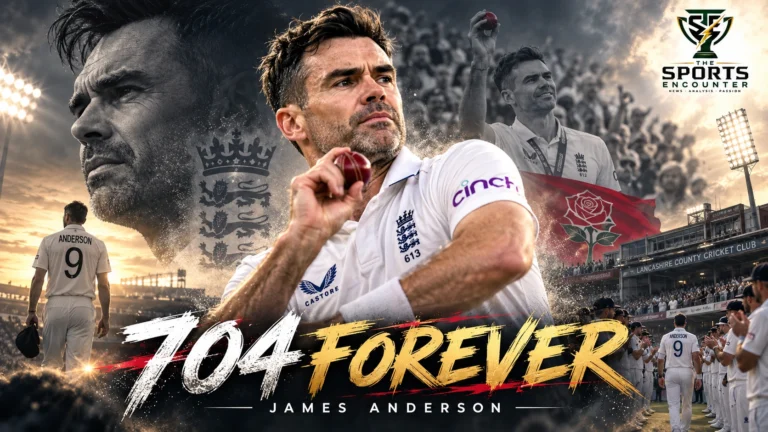 CricketJames Anderson: 704 Test Wickets, 25 Years at Lancashire and the Art of Fast-Bowling Greatness
 CricketThe Hollioake Brothers: Ben Was England’s Next Ian Botham, Adam Was a Born Leader, Until Tragedy Changed Everything
Frequently Asked Questions
Why did New Zealand Cricket withdraw from Major League Cricket?
NZC said the timing was not appropriate and that it wanted to prioritize investment in domestic cricket and its high-performance environment.
When was the original MLC partnership announced?
The agreement between NZC and True North Sports Ventures was announced on April 24, 2025.
Did New Zealand Cricket lose money investing in MLC?
NZC confirmed that it had invested no capital in the partnership. No investment write-off has been announced.
Which company was NZC partnering with?
The partner was True North Sports Ventures, a US-based company associated with the proposed expansion franchise.
Was the new MLC team supposed to debut in 2027?
Yes. The original partnership targeted a new Major League Cricket franchise beginning in the 2027 season.
Has the 2027 MLC expansion franchise been canceled?
NZC has ended its own involvement, but its announcement does not independently establish whether the American backers have canceled or changed the franchise project.
Can New Zealand players still participate in MLC?
The announcement does not impose a ban on New Zealand players joining MLC franchises. Individual contracts and availability arrangements are separate from NZC’s former partnership.
What is NZ20?
NZ20 is a proposed domestic T20 competition involving men’s and women’s cricket. NZC said in May 2026 that it was targeting the 2027-28 summer for its launch, subject to completing the necessary arrangements.
Could NZC return to an American cricket partnership later?
Future cooperation has not been ruled out, but there is no confirmed new investment or operating agreement.
The Sports Encounter’s Analysis: A Strategic Retreat Before the Financial Commitment
The defining feature of this withdrawal is its timing.
New Zealand Cricket had the opportunity to participate in one of cricket’s emerging franchise markets through a partnership offering operational involvement and potential equity ownership. It withdrew before investing capital.
That means the immediate story is about a change in strategic commitment, with few confirmed details of any direct financial cost.
For NZC, the next test is whether the promised emphasis on domestic development produces stronger pathways, better high-performance support and tangible progress toward a sustainable national T20 structure.
For Major League Cricket and its American partners, the question is whether the proposed expansion can move forward without the services and expertise NZC was expected to contribute.
Neither outcome has been determined by the announcement alone. What has been established is that New Zealand Cricket has chosen to concentrate its institutional resources at home rather than pursue this particular international franchise opportunity.
Editorial methodology: This report uses NZC’s original April 2025 partnership announcement, its October 2026 termination statement and its May 2026 domestic competition update as primary sources. Confirmed decisions are distinguished from potential implications for players, investors and Major League Cricket’s expansion plans.
New Zealand Cricket
- New Zealand Cricket Abandons MLC Franchise Deal as Domestic Funding Takes Priority
- A Celebration of 5000 ODIs Match 45: Fakhar Makes 402 Look Reachable Before Rain Seals Pakistan’s World Cup Lifeline
- A Celebration of 5000 ODIs Match 41: Head’s Return Ignites 771-Run Epic Before Australia Survive Ravindra and Neesham by Five Runs
- A Celebration of 5000 ODIs Match 32: Brathwaite Falls One Swing Short as New Zealand Escape by Five Runs
- A Celebration of 5000 ODIs Match 29: Elliott’s Six Breaks New Zealand’s Semifinal Barrier and South African Hearts