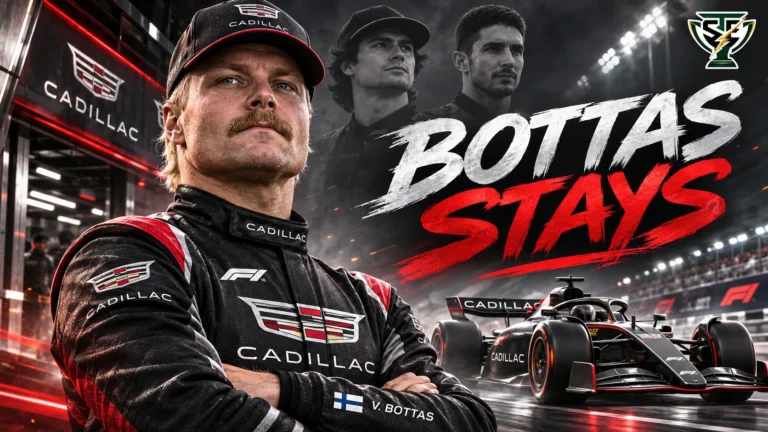
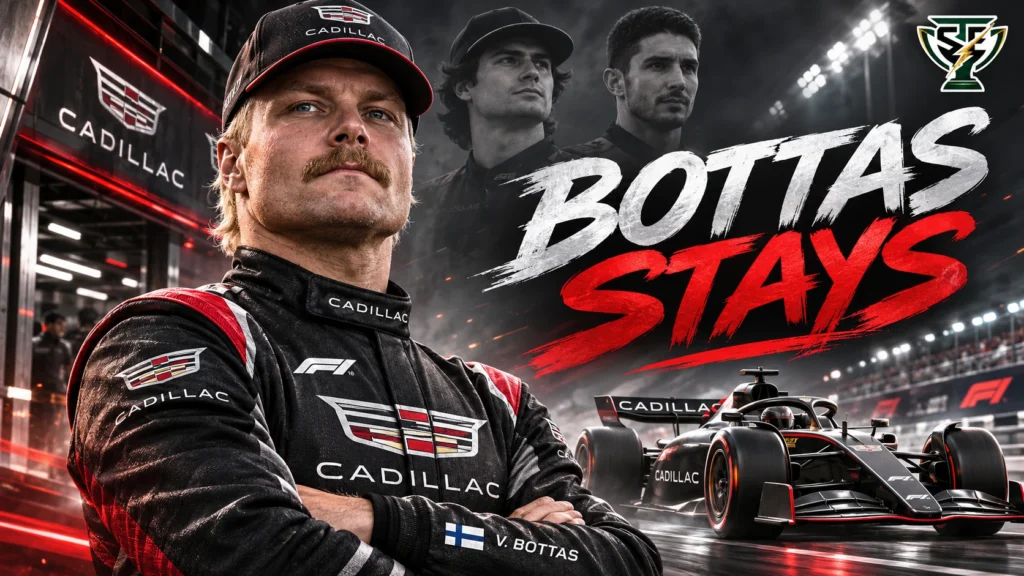
LAS VEGAS, United States, November 19, 2026: Valtteri Bottas has secured his Formula 1 future after Cadillac confirmed the Finnish veteran will remain with the American team for the 2027 season, ending weeks of speculation that Colton Herta or Esteban Ocon could replace him. The decision, announced Wednesday ahead of the Las Vegas Grand Prix, preserves Cadillac’s partnership of Bottas and Sergio Pérez for a second consecutive campaign despite the team’s difficulties during its inaugural year in Formula 1.
The Cadillac Bottas 2027 announcement is a significant decision for more than one driver. Herta, the American prospect who left IndyCar to pursue a Formula 1 opportunity, must continue waiting for a permanent race seat despite progressing through Cadillac’s development program. Ocon, meanwhile, has lost another potential destination after his departure from Haas. For Cadillac, the decision signals that establishing technical stability and improving its car will take priority over promoting a younger driver or making a high-profile change to the lineup.
TL;DR: Cadillac’s 2027 Formula 1 Driver Decision
- Confirmed: Cadillac will retain Valtteri Bottas for the 2027 Formula 1 season.
- Driver partnership: Bottas will continue alongside Sergio Pérez, whose longer-term future was previously confirmed.
- Colton Herta: The American test driver will not receive Cadillac’s 2027 race seat.
- Esteban Ocon: The former Haas driver loses another possible opportunity to remain on the Formula 1 grid.
- 2026 performance: Cadillac has struggled for pace and remains without championship points ahead of the Las Vegas Grand Prix.
- Strategic priority: Driver experience, development feedback and continuity during the team’s early growth.
- Competitive challenge: Cadillac must improve the performance and reliability of its car to move closer to the established midfield teams.
- Next race: The Las Vegas Grand Prix provides another opportunity to evaluate progress before the final rounds of 2026.
Cadillac Confirms Valtteri Bottas and Sergio Pérez for Formula 1 2027
Cadillac ended uncertainty surrounding its second race seat on November 18 by confirming that Bottas will continue with the team next season.
The decision completes the American outfit’s 2027 driver pairing following the earlier confirmation that Pérez would remain.
Story at a glance
Cadillac Confirms Valtteri Bottas and Sergio Pérez for Formula 1 2027
Cadillac ended uncertainty surrounding its second race seat on November 18 by confirming that Bottas will continue with the team next season.
Why Cadillac Chose Experience Over Colton Herta’s American Appeal
Cadillac entered Formula 1 with an ambition that extended beyond participating in the championship.
Colton Herta’s Formula 1 Dream Is Delayed, Not Necessarily Defeated
For Herta, the announcement represents a significant setback after the substantial commitment involved in changing his career direction.
Esteban Ocon’s Formula 1 Future Becomes More Uncertain
Cadillac’s confirmation also carries consequences for Esteban Ocon.
Cadillac’s Difficult First Season Explains the Bottas Decision
Cadillac made its Formula 1 debut in 2026 as the championship’s 11th team.
The official Formula 1 announcement confirms that Cadillac has chosen to retain its existing lineup rather than promote Colton Herta.
The outcome is especially important because Bottas was initially signed on a multiyear agreement when Cadillac prepared to enter Formula 1 in 2026.
Despite that original arrangement, questions emerged about whether he would remain in the seat for the second season.
Herta’s development program and Pérez’s contract extension intensified those questions.
Cadillac has now provided a clear answer.
Bottas remains part of the team’s plans, and the organization will enter 2027 without changing either of its race drivers.
Cadillac’s Confirmed 2027 Driver Lineup
| Driver | Nationality | 2027 role | Relevant experience |
|---|---|---|---|
| Valtteri Bottas | Finland | Confirmed race driver | 10 Grand Prix victories, five constructors’ titles with Mercedes |
| Sergio Pérez | Mexico | Confirmed race driver | Six Grand Prix victories, extensive midfield and championship-winning team experience |
| Colton Herta | United States | Not promoted to 2027 race seat | IndyCar success, Formula 2 experience and Cadillac F1 testing |
| Esteban Ocon | France | Not joining Cadillac as a race driver | Grand Prix winner and former Haas, Alpine and Force India driver |
Cadillac’s decision preserves one of Formula 1’s most experienced driver partnerships.
Bottas and Pérez have a combined 16 Grand Prix victories, and both have spent significant periods racing for established, front-running organizations.
That experience is valuable to a new team attempting to solve problems that cannot be addressed through driving talent alone.
Why Cadillac Chose Experience Over Colton Herta’s American Appeal
Cadillac entered Formula 1 with an ambition that extended beyond participating in the championship.
The team wanted to establish a lasting American presence in the sport while developing the technical infrastructure required to compete against manufacturers and organizations with decades of experience.
That made Colton Herta an attractive candidate.
Herta’s success in IndyCar and his American nationality offered a compelling sporting and commercial story for the General Motors-backed project.
His appointment as a test driver in September 2025 also demonstrated that Cadillac considered him a serious part of its long-term plans.
However, the transition from IndyCar to Formula 1 involves substantial differences in car behavior, tire management, qualifying performance and the demands of technical development.
Cadillac subsequently arranged an extensive preparation program that included Formula 2 competition and Formula 1 practice opportunities.
Herta progressed toward obtaining the necessary FIA Super Licence eligibility, removing one of the major procedural obstacles to a potential promotion.
But eligibility and readiness are different questions.
A driver may qualify to compete in Formula 1 without being considered the best choice for a particular team at a particular stage of development.
Cadillac’s decision suggests that the organization believes another season with Bottas will provide greater immediate value.
That does not mean Herta’s Formula 1 ambitions are over.
It means his route to a race seat must continue beyond the team’s 2027 lineup announcement.
Colton Herta’s Formula 1 Dream Is Delayed, Not Necessarily Defeated
For Herta, the announcement represents a significant setback after the substantial commitment involved in changing his career direction.
The American moved away from an established IndyCar career to gain experience in Formula 2 and prepare for Formula 1.
His 2026 program included development work and opportunities to drive Cadillac’s Formula 1 machinery during official practice sessions.
Those opportunities helped him become more familiar with the procedures, technical demands and competitive environment of the championship.
However, his Formula 2 performances did not create an overwhelming case for immediate promotion.
That matters because a new Formula 1 team may be particularly reluctant to introduce another major variable while its car remains uncompetitive.
Formula 1’s October analysis of the Cadillac driver decision examined Herta’s challenge and the competing considerations surrounding Bottas.
Herta’s long-term prospects now depend on how Cadillac structures its development program and whether another opportunity emerges in 2028 or beyond.
No permanent 2028 race seat has been announced for him.
What Cadillac’s Decision Means for Colton Herta
| Issue | Position after November 18 | What remains unresolved |
|---|---|---|
| 2027 race seat | Bottas retained | Herta will not replace him next season |
| FIA Super Licence pathway | Development program progressed | Future competitive opportunities |
| Cadillac relationship | Established test and development association | Exact future duties and duration |
| Formula 2 experience | Completed significant preparation in 2026 | Whether further development is needed |
| Future F1 ambitions | Promotion delayed | No confirmed race seat for a later season |
There is a wider lesson here about the transition from junior and alternative racing series into Formula 1.
Strong results elsewhere can establish a driver’s potential, but they do not guarantee an immediate opening.
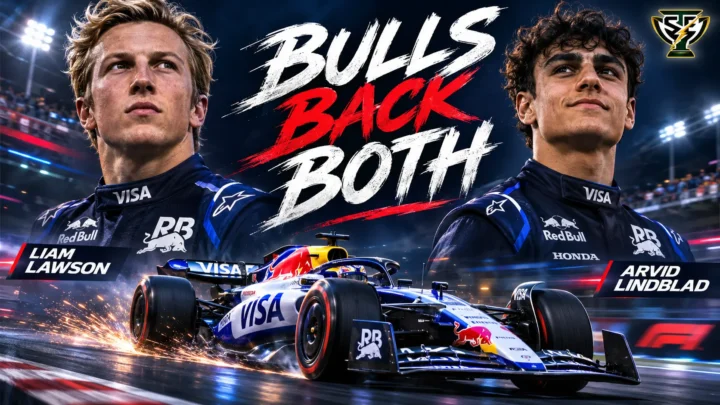
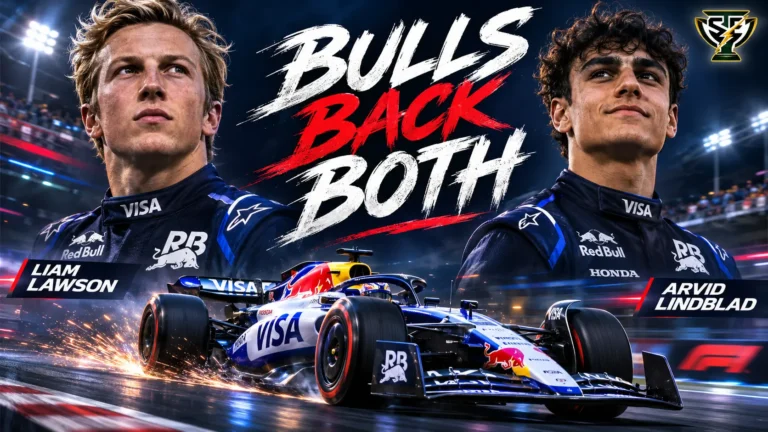
The Sports Encounter recently examined a comparable decision in Racing Bulls’ confirmation of Liam Lawson and Arvid Lindblad, where continuity prevailed over an immediate promotion for another promising young driver.
The circumstances are different, but the underlying question is similar: when should a team prioritize a developing prospect over drivers who already understand its machinery and technical processes?
Esteban Ocon’s Formula 1 Future Becomes More Uncertain
Cadillac’s confirmation also carries consequences for Esteban Ocon.
The French driver had been linked with the American team after his departure from Haas was confirmed.
Ocon brings experience from several Formula 1 organizations and won the 2021 Hungarian Grand Prix while driving for Alpine.
That experience made him a potential alternative if Cadillac decided not to retain Bottas.
However, his prospects were always complicated by the number of drivers competing for a limited number of seats.
Cadillac’s announcement removes one of the possibilities available to him.
With other teams already confirming their 2027 lineups, Ocon’s immediate route back onto the grid appears increasingly narrow.
That does not mean he has announced retirement or permanently left Formula 1.
Drivers can return after periods away from racing, as Bottas himself demonstrated when he joined Cadillac following a reserve role at Mercedes in 2025.
But a comeback requires an available seat and a team willing to commit to that driver.
At present, Cadillac is no longer such an opportunity.
Cadillac’s Difficult First Season Explains the Bottas Decision
Cadillac made its Formula 1 debut in 2026 as the championship’s 11th team.
The American project brought together General Motors, TWG Motorsports and a technical organization established to compete against teams with far more experience.
Launching a new Formula 1 team is an unusually demanding undertaking.
It requires designing and manufacturing a competitive car, assembling experienced engineers, establishing race operations and developing the processes needed to improve performance throughout a season.
Cadillac has experienced significant difficulties during its first year.
The team has struggled with outright pace, reliability and operational problems while attempting to establish itself at the back of the grid.
Neither Bottas nor Pérez had scored championship points ahead of the Las Vegas Grand Prix.
That is an important fact, but it should not automatically be interpreted as evidence that both drivers have performed poorly.
A driver can deliver useful feedback and extract the maximum available performance from a car without finishing in the points.
When the underlying machinery lacks sufficient speed or reliability, driver results provide an incomplete measure of individual contribution.
Cadillac must therefore judge Bottas against the realistic capabilities of its car rather than simply comparing his championship points with those of drivers at established teams.
The official Cadillac Formula 1 team profile provides the team’s background and current driver information.
Cadillac Needs Technical Progress More Than a Driver-Market Headline
The clearest explanation for retaining Bottas lies in the work Cadillac must complete before it becomes a regular points contender.
During a team’s first seasons, development is rarely linear.
Aerodynamic changes may improve performance in one type of corner while making the car more difficult to drive elsewhere.
Cooling, braking, mechanical reliability and tire behavior can create problems that require weeks or months of engineering work.
Experienced drivers can help identify whether a change produces meaningful improvement or merely shifts a problem from one area to another.
Bottas brings considerable experience from Mercedes, Williams, Sauber and Cadillac.
Pérez has worked with major teams, including Red Bull Racing, and has extensive experience managing difficult race situations.
Together, they provide Cadillac with two established reference points.
That continuity is useful when a team needs to evaluate whether its development program is working.
A rookie might bring energy, commercial attention and long-term potential, but would also be learning Formula 1 race procedures while the organization attempts to solve fundamental performance problems.
Cadillac has decided that the immediate engineering benefits of experience outweigh the advantages of changing its lineup.
Why Bottas’ Mercedes Experience Still Matters
Bottas spent five seasons alongside Lewis Hamilton at Mercedes between 2017 and 2021.
During that period, he won ten Grands Prix and contributed to five consecutive constructors’ championships.
Those seasons exposed him to the operating standards of one of Formula 1’s most successful organizations.
He understands how a leading team approaches qualifying preparation, race strategy, data analysis and long-term car development.
He also has experience competing under the pressure of championship expectations.
Cadillac cannot simply reproduce Mercedes’ success by signing one of its former drivers.
But the knowledge Bottas accumulated during that period can help the American team identify gaps in its own processes.
The same principle applies to Pérez, who spent several seasons competing for Red Bull.
The value of such experience is difficult to measure through championship points alone.
Cadillac Bottas 2027: The Real Trade-Off Between Experience and Youth
Cadillac’s decision can be evaluated against three competing priorities.
The first is immediate technical development.
The second is long-term driver succession.
The third is the commercial and sporting value of having an American Formula 1 race driver.
Herta offers a potential long-term solution and a powerful connection to the team’s home market.
Bottas provides established Formula 1 knowledge and continuity during a critical phase of development.
Ocon offers another experienced option but would require the team to establish a new working relationship.
| Driver option | Primary strength | Main uncertainty | 2027 outcome |
|---|---|---|---|
| Valtteri Bottas | Experience, technical feedback and established team relationship | Competitive performance in Cadillac’s developing car | Retained |
| Colton Herta | Long-term potential, American identity and IndyCar pedigree | Readiness for a full Formula 1 season | Not promoted |
| Esteban Ocon | Grand Prix experience and previous race victory | Adaptation to Cadillac and limited available seats | Not selected |
TSE original analytical finding: Cadillac was not choosing between an experienced driver and an untested outsider in isolation. It was choosing between preserving two established technical reference points and introducing a new variable into an organization that is still developing its competitive foundation.
That distinction explains why retaining Bottas may be rational even without championship points.
What the Decision Reveals About Formula 1’s New Teams
Cadillac’s decision illustrates a recurring problem for new racing organizations.
Public expectations frequently focus on drivers because their names, nationalities and performances are immediately recognizable.
But the competitive limitations of a new team may be rooted primarily in its engineering structure.
Changing drivers can produce an immediate publicity advantage, yet it does not necessarily improve aerodynamic efficiency, mechanical reliability or race operations.
The same tension appears in other motorsport championships when organizations decide whether to promote a promising younger competitor or continue developing an existing program.
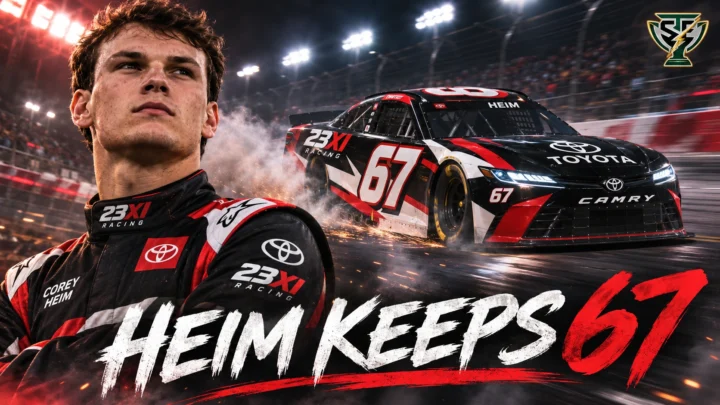
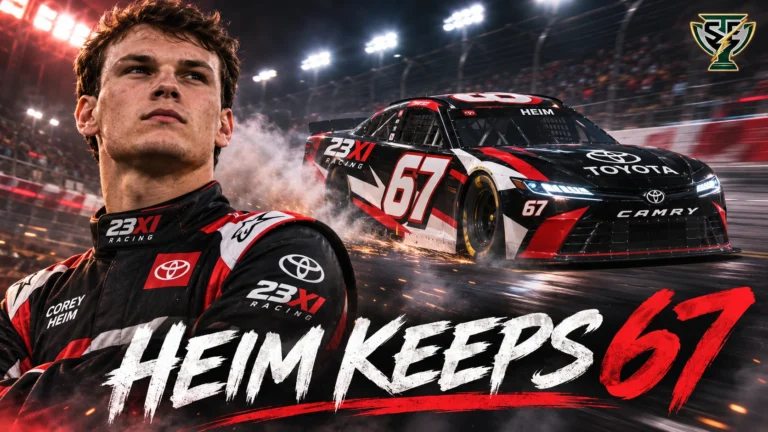
TSE explored that broader question in its report on Corey Heim and 23XI Racing’s revised NASCAR Cup Series plans.
Although NASCAR and Formula 1 have different technical systems and career pathways, both stories involve decisions about development timing and the use of experienced racing personnel.
Cadillac’s choice reflects the belief that its immediate competitive problem is bigger than one race seat.
How the 2027 Grid Is Taking Shape
Cadillac’s announcement removes one of the most prominent remaining uncertainties in Formula 1’s 2027 driver market.
Racing Bulls had already confirmed Liam Lawson and Arvid Lindblad for another season.
Red Bull Racing’s senior pairing of Max Verstappen and Isack Hadjar was also settled.
Other teams have similarly moved to resolve contractual decisions before the end of the 2026 campaign.
That leaves fewer obvious opportunities for drivers hoping to enter or return to Formula 1 next season.
Ocon’s situation is particularly difficult because his Haas departure has already been confirmed.
Herta, meanwhile, must determine how best to continue his development while waiting for a suitable opening.
The Formula 1 driver market remains capable of late changes, but Cadillac’s confirmed lineup should no longer be treated as an unresolved seat.
What Cadillac Must Improve Before the 2027 Season
Keeping the same drivers removes one source of uncertainty, but it does not guarantee better results.
Cadillac needs improvements across several areas of performance.
| Development priority | Why it matters | How Bottas and Pérez can contribute |
|---|---|---|
| Qualifying pace | Better grid positions reduce the difficulty of scoring points | Experienced comparison of car balance and one-lap performance |
| Race reliability | Mechanical failures prevent useful finishes and limit data collection | Consistent feedback on recurring technical problems |
| Tire management | Effective tire use improves stint pace and strategy flexibility | Experience across different compounds and race conditions |
| Aerodynamic development | Improved efficiency increases performance across circuit types | Evaluation of upgrades and changes in handling characteristics |
| Race operations | Strategy, pit stops and communication influence final results | Feedback from drivers familiar with established front-running teams |
| Long-term driver development | Ensures future race-seat options remain available | Provides time for junior drivers to gain experience |
These are analytical priorities rather than an officially published Cadillac development plan.
The most important improvement will be a car capable of competing more consistently with established midfield teams.
Without that progress, even an accomplished lineup will remain restricted by the machinery available.
Why Formula 1’s Remaining 2026 Races Still Matter to Cadillac
Although Cadillac has already confirmed its next-season drivers, the remaining races provide opportunities to collect useful technical information.
Las Vegas, Qatar and Abu Dhabi feature different circuit characteristics and operating conditions.
Running the same drivers through those events gives the team an opportunity to compare performance and identify weaknesses that may influence its 2027 development program.
The significance of the final two venues has increased because Formula 1 recently confirmed that the Qatar and Abu Dhabi races would proceed as scheduled, subject to continuing safety assessments.
TSE examined those circumstances in its report on the Qatar and Abu Dhabi finales.
For Cadillac, finishing the season without another significant disruption would help preserve valuable race-running opportunities.
Every completed session offers additional information that the engineering group can use before the next campaign.
What the Bottas Decision Means for American Formula 1 Fans
Cadillac’s arrival in Formula 1 has raised expectations that the United States could eventually have another full-time American driver on the grid.
Herta was widely considered a candidate to fulfill that ambition.
His decision to move toward Formula 1 through the Cadillac program reinforced those expectations.
However, the team has chosen not to accelerate his promotion simply because an American driver would have considerable symbolic value.
That may disappoint supporters hoping to see Herta race for Cadillac in 2027.
But the decision also recognizes that a rushed promotion into an uncompetitive car could place enormous pressure on a developing driver.
A more gradual transition could benefit Herta if Cadillac eventually offers him a race seat when the team has improved its technical foundation.
That remains a possible long-term outcome, not a confirmed plan.
The Wider Motorsport Context: Continuity Before Expansion
Cadillac’s approach reflects a broader theme across motorsport.
New teams and manufacturers frequently face pressure to demonstrate immediate results even when building the infrastructure required for sustainable success takes several seasons.
Technical development can be particularly challenging when regulations, race calendars and operational demands are changing.
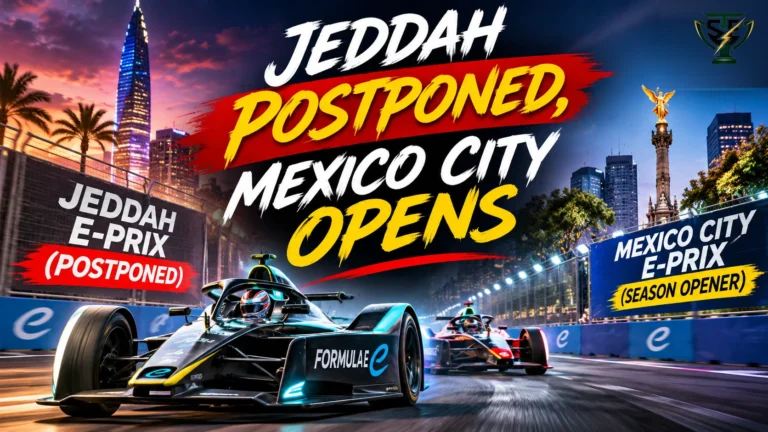
The Sports Encounter’s coverage of Formula E’s GEN4 calendar changes examined how teams must manage major technical transitions alongside operational uncertainty.
Cadillac faces a different challenge in Formula 1, but the importance of continuity, structured testing and reliable feedback remains relevant.
Retaining Bottas and Pérez removes a significant personnel decision from the team’s preparation for 2027.
The organization can now concentrate more directly on improving the car and strengthening its competitive processes.
Cadillac’s 2027 Decision: Confirmed Outcomes and Open Questions
| Issue | Confirmed position | What remains unknown |
|---|---|---|
| Bottas’ race seat | Retained for 2027 | His competitive results next season |
| Pérez’s race seat | Confirmed for 2027 | How the team performs with the unchanged pairing |
| Herta’s promotion | No Cadillac race seat in 2027 | His future pathway to a full-time F1 drive |
| Ocon’s Cadillac prospects | Seat unavailable | Whether another F1 opportunity emerges |
| Cadillac’s competitiveness | Debut-season difficulties continue | Extent of technical improvement in 2027 |
| First championship points | Not yet achieved before Las Vegas | When Cadillac will break through |
The table highlights why the driver announcement should be viewed as one component of Cadillac’s development strategy rather than a solution to its performance problems.
Formula 1 success ultimately depends on the interaction of car design, engineering execution, driver performance and team operations.
Cadillac has settled the driver element for 2027. Its next challenge is to improve the machinery and organization surrounding them.
Continue the Motorsport Story
Frequently Asked Questions About Cadillac’s 2027 F1 Lineup
Will Valtteri Bottas race for Cadillac in 2027?
Yes. Cadillac confirmed on November 18, 2026, that Bottas will remain with the American Formula 1 team for the 2027 season.
Who will be Bottas’ teammate at Cadillac in 2027?
Sergio Pérez will continue alongside Bottas, preserving Cadillac’s original race-driver partnership for another season.
Why did Cadillac retain Valtteri Bottas?
The decision prioritizes experience, technical feedback and continuity as the team attempts to improve its performance after a difficult debut season.
Will Colton Herta drive for Cadillac in 2027?
No. Cadillac has retained Bottas, meaning Herta will not take that race seat in 2027. His future development and racing plans require further confirmation.
Did Colton Herta qualify for a Formula 1 Super Licence?
Herta progressed through a Formula 2 and Formula 1 practice program designed to secure the necessary Super Licence eligibility. Cadillac nevertheless chose to retain its experienced lineup.
What happens to Esteban Ocon after Cadillac’s decision?
Ocon will not replace Bottas at Cadillac. With his Haas departure already confirmed, his options for a 2027 Formula 1 race seat are limited.
How many Formula 1 races has Valtteri Bottas won?
Bottas has won ten Formula 1 Grands Prix, all during his five seasons with Mercedes between 2017 and 2021.
Has Cadillac scored Formula 1 championship points in 2026?
Cadillac remained without championship points ahead of the Las Vegas Grand Prix, reflecting the difficulties of the team’s inaugural season.
When did Cadillac join Formula 1?
Cadillac joined the Formula 1 grid in 2026 as the championship’s 11th team, initially fielding Valtteri Bottas and Sergio Pérez.
Final Verdict: Cadillac Bottas 2027 Decision Puts Development Before Hype
The Cadillac Bottas 2027 announcement removes one of the most closely watched uncertainties in Formula 1’s driver market.
Bottas retains his race seat, Pérez remains his teammate, and Colton Herta must wait for another opportunity to turn his Formula 1 ambitions into a full-time drive.
Esteban Ocon also faces a more uncertain future after losing another possible route onto the 2027 grid.
For Cadillac, however, the decision is about more than individual careers.
The team has concluded that continuity and experience offer the strongest immediate foundation for technical progress.
That judgment is understandable given the challenges of its first Formula 1 season, but it will ultimately be tested by results.
Retaining Bottas and Pérez may provide valuable stability, yet neither driver can compensate indefinitely for a car that lacks competitive pace and reliability.
Cadillac has chosen the drivers it believes can help build its future. The next task is producing a Formula 1 car worthy of their experience.