LISBON, Portugal, November 18, 2026: Bernardo Silva’s departure from Portugal’s national team camp has raised questions about his fitness, limited playing time and leadership role following Cristiano Ronaldo’s international retirement. The Portuguese Football Federation says the midfielder was released after its medical department deemed him unfit for the UEFA Nations League match against Wales, while coach Jorge Jesus has explained why the decision was taken between the team’s final two group-stage fixtures.
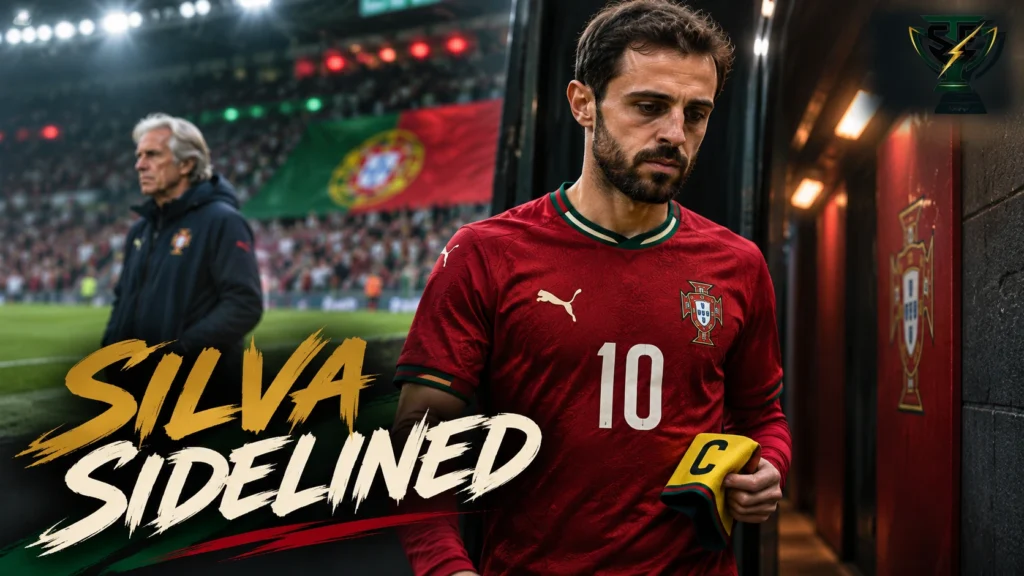
The Bernardo Silva Portugal exit came after Portugal’s 4-1 defeat to Denmark in Braga, a match in which the newly appointed captain came off the bench and scored his country’s only goal. His departure followed a difficult period of reduced international playing time, but there is no verified evidence establishing that a dispute with Bruno Fernandes or a struggle over the captain’s armband caused him to leave.
Key Takeaways
- Bernardo Silva’s departure from Portugal’s national team camp has raised questions about his fitness, limited playing time and leadership role following Cristiano Ronaldo’s international retirement.
- The Bernardo Silva Portugal exit came after Portugal’s 4-1 defeat to Denmark in Braga, a match in which the newly appointed captain came off the bench and scored his country’s only goal.
- Portugal’s football federation announced on November 15 that Silva, Rúben Dias and João Palhinha had been released from the national team camp ahead of the final Nations League group match against Wales.
- According to the federation’s explanation, Silva underwent an examination by its Health and Performance Department and was declared unfit to participate in the Cardiff fixture.
The circumstances matter because Silva had recently inherited one of international football’s most prominent leadership responsibilities. Ronaldo’s retirement ended an era in which Portugal’s captaincy was closely associated with its record goalscorer, leaving Jesus to redistribute responsibility among several senior players.
Story at a glance
Bernardo Silva Portugal Exit: What the Federation Confirmed
Portugal’s football federation announced on November 15 that Silva, Rúben Dias and João Palhinha had been released from the national team camp ahead of the final Nations League group match against Wales.
Jorge Jesus Explains the Medical Decision
Jesus addressed Silva’s departure before Portugal’s match against Wales.
Portugal’s Captaincy After Cristiano Ronaldo
Silva’s leadership role became more prominent following Ronaldo’s departure from international football.
What Is Verified About Portugal’s Leadership Transition?
The confirmed developments establish a significant period of change, but they do not prove allegations of a conflict between Portugal’s senior midfielders.
Limited Playing Time Creates a Different Question
Silva’s reduced international involvement is a legitimate subject for analysis independently of any allegations about personal relationships.
Bernardo Silva Portugal Exit: What the Federation Confirmed
Portugal’s football federation announced on November 15 that Silva, Rúben Dias and João Palhinha had been released from the national team camp ahead of the final Nations League group match against Wales.
The reasons for their departures were different. Dias and Palhinha were unavailable because of suspensions, while Silva was released following a medical assessment.
According to the federation’s explanation, Silva underwent an examination by its Health and Performance Department and was declared unfit to participate in the Cardiff fixture.
The announcement came after Silva had appeared as a substitute during the defeat to Denmark.
The distinction between the three departures is important. Silva’s absence was officially attributed to his physical condition, not disciplinary action, while the other two players were already ruled out by suspension.
Portuguese public broadcaster RTP reported the federation’s announcement and confirmed that the midfielder would not travel to Wales.
Why the Bernardo Silva Portugal Exit Attracted Attention
Although the federation gave a medical explanation, Silva’s limited involvement in recent matches made the situation more closely scrutinized than an ordinary injury withdrawal.
The 32-year-old had lost his regular starting position during Portugal’s recent international fixtures.
He had also assumed the captaincy after Ronaldo’s retirement, creating a contrast between his senior leadership status and his relatively limited time on the field.
That contrast helps explain why the decision received significant attention, but it does not establish an undisclosed dispute within the squad.
A player’s reduced playing time can reflect tactical choices, competition for positions, fitness considerations or a combination of factors. Without direct evidence, none of those circumstances should be presented as proof of a personal conflict.
Jorge Jesus Explains the Medical Decision
Jesus addressed Silva’s departure before Portugal’s match against Wales.
The coach explained that the midfielder had reported muscular discomfort following the Denmark fixture and had been assessed by the national team’s medical department.
With only a short recovery period before the next match, the medical staff did not consider him ready to participate.
The explanation became particularly important after reports suggested that Silva’s club, Real Madrid, did not expect the physical problem to cause a prolonged absence.
However, being unavailable for a national-team match does not necessarily mean a player must be ruled out for an extended period.
A medical assessment made shortly after a match can reasonably reach a different conclusion from one performed several days later, particularly when evaluating recovery time before the next scheduled fixture.
beIN Sports examined the different medical assessments and the explanation provided by Portuguese federation medical director José Carlos Noronha.
Those developments justify scrutiny of the decision and its timing. They do not establish that the original medical explanation was fabricated.
Portugal’s Captaincy After Cristiano Ronaldo
Silva’s leadership role became more prominent following Ronaldo’s departure from international football.
Ronaldo announced his retirement from Portugal’s national team after a lengthy career that included European Championship success and two UEFA Nations League titles.
His exit followed an earlier dispute with Jesus over his involvement in the national team.
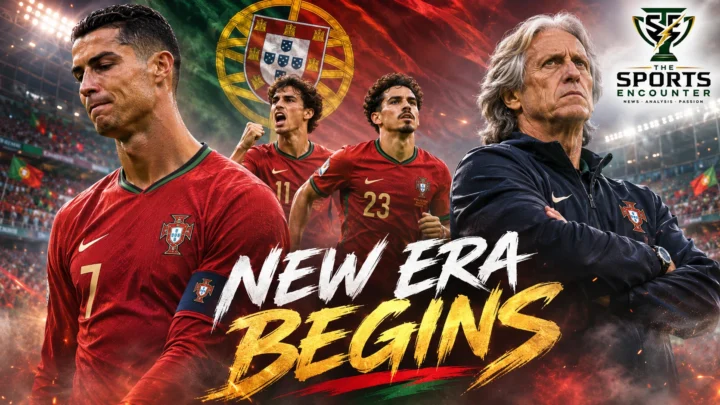
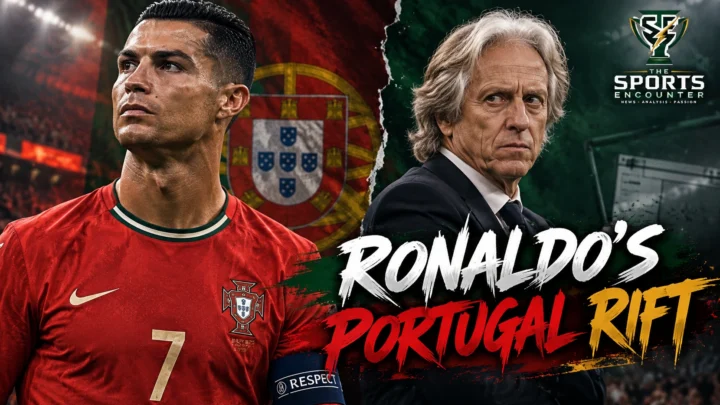
The Sports Encounter previously examined the breakdown between Ronaldo and Jesus, including the disagreements that preceded the player’s retirement.
Following Ronaldo’s departure, Silva moved to the front of Portugal’s captaincy hierarchy because of his international experience.
Jesus also identified other experienced players capable of assuming leadership responsibilities, including Bruno Fernandes, Rúben Dias, João Cancelo and Rúben Neves.
The coach explained that international appearances help determine the captaincy order, although the player wearing the armband in an individual match depends on selection and availability.
That arrangement creates an important distinction between being the senior captain and wearing the armband whenever the senior captain is absent.
Fernandes can therefore captain Portugal in a match without that responsibility automatically representing a permanent change in the team’s hierarchy.
The federation’s official squad information confirms that Silva and Fernandes were both part of Jesus’ selected group for the November Nations League fixtures.
What Is Verified About Portugal’s Leadership Transition?
The confirmed developments establish a significant period of change, but they do not prove allegations of a conflict between Portugal’s senior midfielders.
| Issue | Verified Position | Editorial Significance |
|---|---|---|
| Cristiano Ronaldo | Retired from international football | Portugal required a new leadership structure |
| Bernardo Silva | Moved to the front of the captaincy hierarchy | Senior leadership role despite limited recent minutes |
| Bruno Fernandes | Among the experienced players eligible to captain the team | Can wear the armband when selected and appropriate |
| Silva’s camp departure | Federation cited a medical assessment | Officially a fitness-related release |
| Jorge Jesus | Explained the muscular discomfort and recovery concerns | Provided the coaching staff’s account of the decision |
| Alleged personal confrontation | No independently authenticated evidence established | Cannot responsibly be reported as fact |
The relevant difference is between confirmed events and explanations inferred from those events.
Silva’s departure occurred. Portugal’s leadership structure changed after Ronaldo retired. Fernandes is part of that leadership group.
None of those facts, separately or together, establishes that Fernandes orchestrated the exit of another player.
Limited Playing Time Creates a Different Question
Silva’s reduced international involvement is a legitimate subject for analysis independently of any allegations about personal relationships.
The midfielder remains an accomplished player with extensive club and international experience, but Portugal have been expanding their midfield and attacking options.
Jesus has emphasized the importance of renewal, bringing younger players into a squad preparing for future international competitions.
That process creates selection pressure for established internationals, especially when several players can perform overlapping tactical responsibilities.
Fernandes, Vitinha, João Neves and other midfielders offer different combinations of passing range, ball progression, chance creation and defensive work.
Silva’s strengths include retaining possession in congested areas, controlling tempo and helping his team move through defensive pressure.
The relevant tactical question is how Jesus intends to use those qualities within the current Portugal lineup.
In TSE’s examination of Portugal’s post-Ronaldo squad, the changing midfield and leadership responsibilities were already identified as important developments.
The Denmark defeat added urgency to those questions because Portugal struggled defensively despite having qualified for the Nations League quarterfinals.
Portugal’s Results Show Why Squad Decisions Matter
Portugal’s November results revealed both the team’s attacking capacity and its defensive vulnerabilities.
Denmark defeated Portugal 4-1 in Braga, ending the defending champions’ winning start to the competition.
Silva appeared as a substitute and scored Portugal’s only goal.
Portugal then recovered with a 3-2 victory over Wales, securing first place in Group A4 with 15 points.
That result demonstrated the team’s ability to respond after a heavy defeat, although conceding twice against Wales also reinforced questions about defensive consistency.
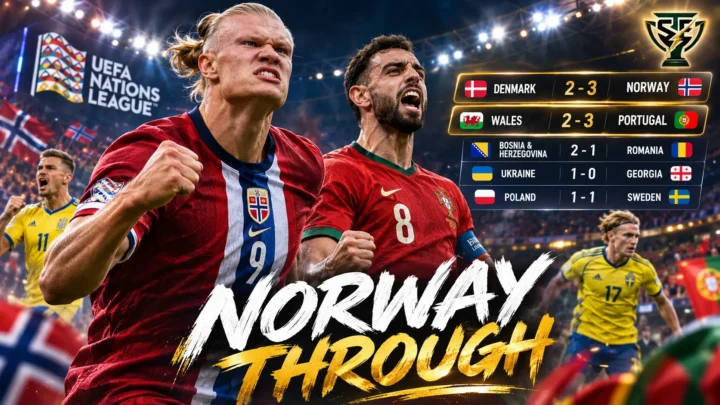
The Sports Encounter’s consolidated Nations League report examined the Wales victory and Norway’s decisive win over Denmark, which settled the group’s remaining quarterfinal position.
Portugal’s successful qualification does not remove the need to assess individual performances and tactical combinations.
For Jesus, the challenge is to balance the experience of established internationals with the different qualities available in the current squad.
Silva’s availability will be one factor in that process, but it is not the only question facing the national team.
What Ronaldo’s Departure Changed for Portugal
Ronaldo’s retirement created changes beyond the captaincy.
For more than two decades, Portugal’s attacking identity and public profile were closely connected to its most recognizable player.
Continue the UEFA Nations League Story
 UEFA Nations LeagueLife After Legend: Jorge Jesus Begins Portugal’s Post-Cristiano Ronaldo Era as Federation Promises Tribute
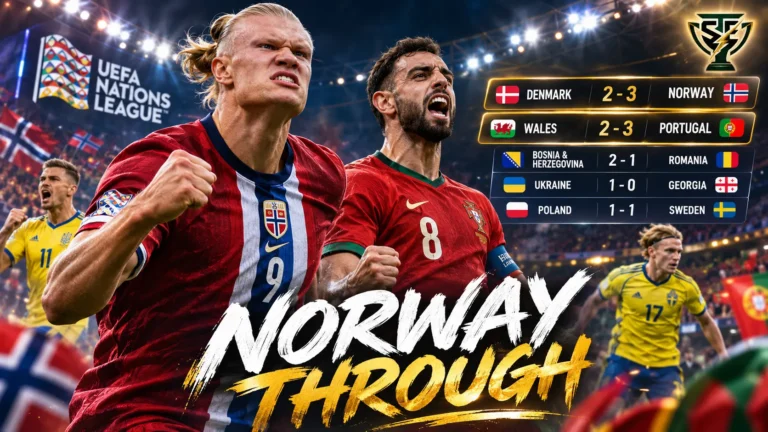 UEFA Nations LeagueNorway Edge Denmark as Portugal Whelm Wales in UEFA Nations League Thriller
 UEFA Nations LeagueNations League Final-Day Stakes: Denmark, Norway and Northern Ireland Face Deciders
His departure has required other senior internationals to assume greater responsibility both on and off the field.
Fernandes is an important creative player, while Silva brings experience in possession-based systems and high-pressure international competition.
Defenders such as Rúben Dias also provide leadership through organization and communication.
The transition should therefore be understood as a broader redistribution of responsibilities rather than a competition in which only one player can exercise influence.
TSE’s report on Ronaldo’s international retirement documented the scale of the transition after 234 appearances and 146 goals.
Earlier results had also indicated that Portugal could remain competitive when Ronaldo was not in the starting lineup.
Portugal’s Nations League victory in Norway illustrated how João Félix and Gonçalo Ramos could contribute to a less Ronaldo-dependent attacking structure.
The subsequent results against Denmark and Wales showed that the transition remains a work in progress.
Why Unverified Captaincy Claims Need Caution
Major changes involving a famous national team can quickly generate speculation about dressing-room relationships.
In Portugal’s case, Ronaldo’s retirement, Silva’s reduced playing time and the presence of several senior players have created an environment in which captaincy decisions attract considerable attention.
However, allegations of deliberate interference by an individual player require direct, attributable evidence.
An anonymous social-media post or a quotation without an authenticated original source is not sufficient to establish that a confrontation occurred.
That standard is particularly important when the accusation concerns a player’s professional conduct and reputation.
Questions about captaincy succession are legitimate. Claims that one player forced another out of the squad should not be treated as equivalent to those questions.
What Happens Next for Bernardo Silva?
The next meaningful developments will concern Silva’s fitness, his club availability and his role when Portugal next assemble.
Any updated medical assessment may clarify whether the muscular discomfort has resolved.
His subsequent national-team selection and playing time will also provide evidence about how Jesus intends to use him.
Portugal have already advanced to the Nations League quarterfinals, making the next competitive phase a more demanding test of the manager’s decisions.
The team will need experienced players who can contribute effectively, whether as starters, substitutes or senior voices within the squad.
Silva’s standing as a long-serving international remains relevant, but the armband alone does not determine his playing opportunities.
The Bernardo Silva Portugal exit is therefore a story about a medically explained withdrawal occurring during a significant leadership transition. His limited playing time and the coach’s future plans deserve scrutiny. The available evidence, however, does not justify turning those questions into accusations against Bruno Fernandes.